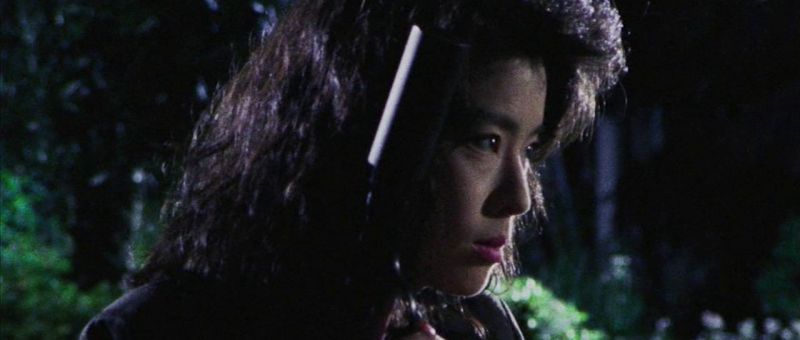
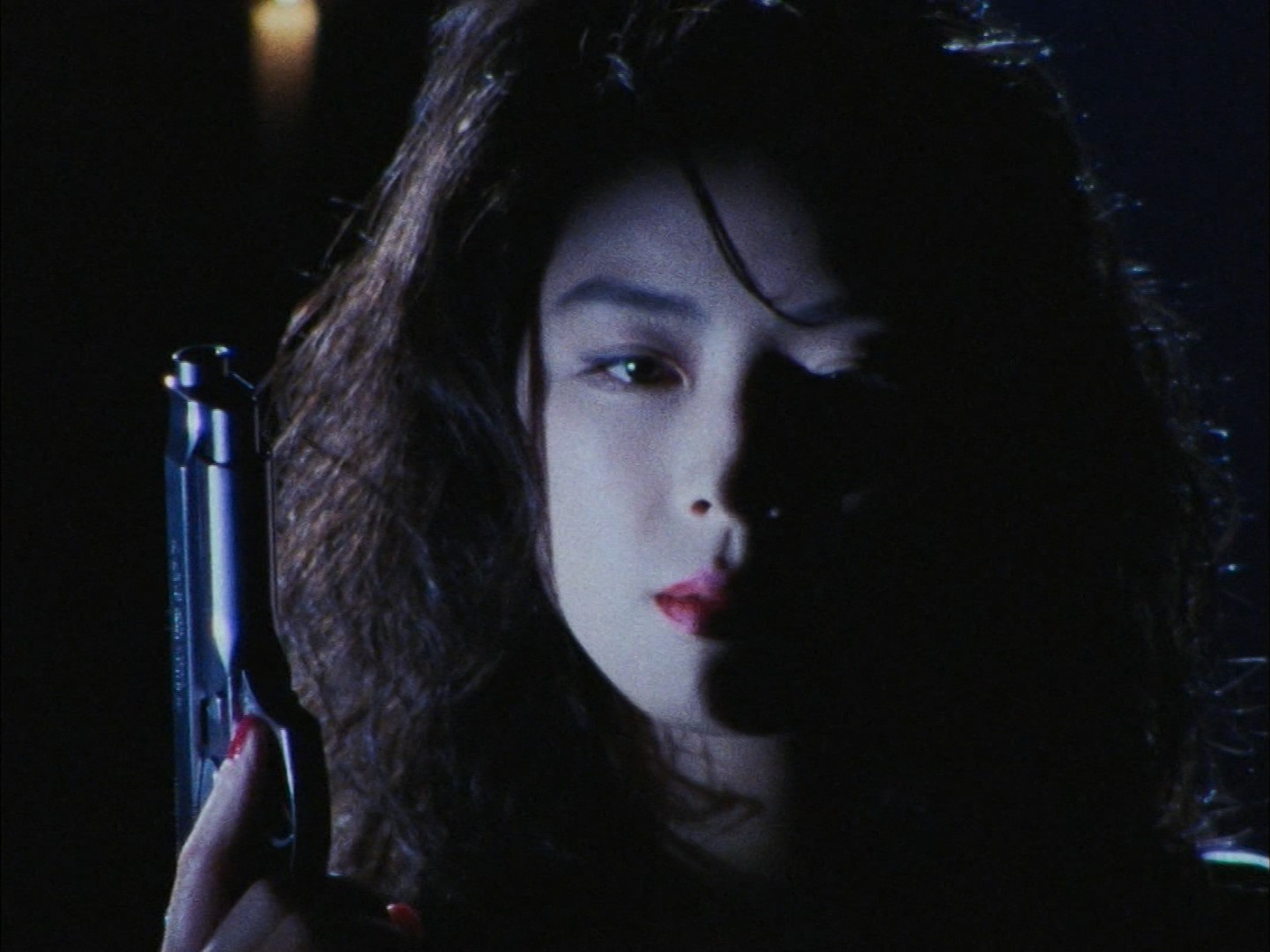
Bayside Shakedown (踊る大捜査線 THE MOVIE, Katsuyuki Motohiro, 1998)

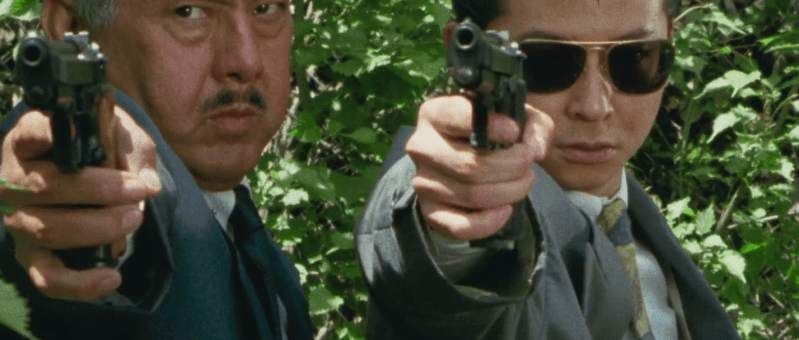
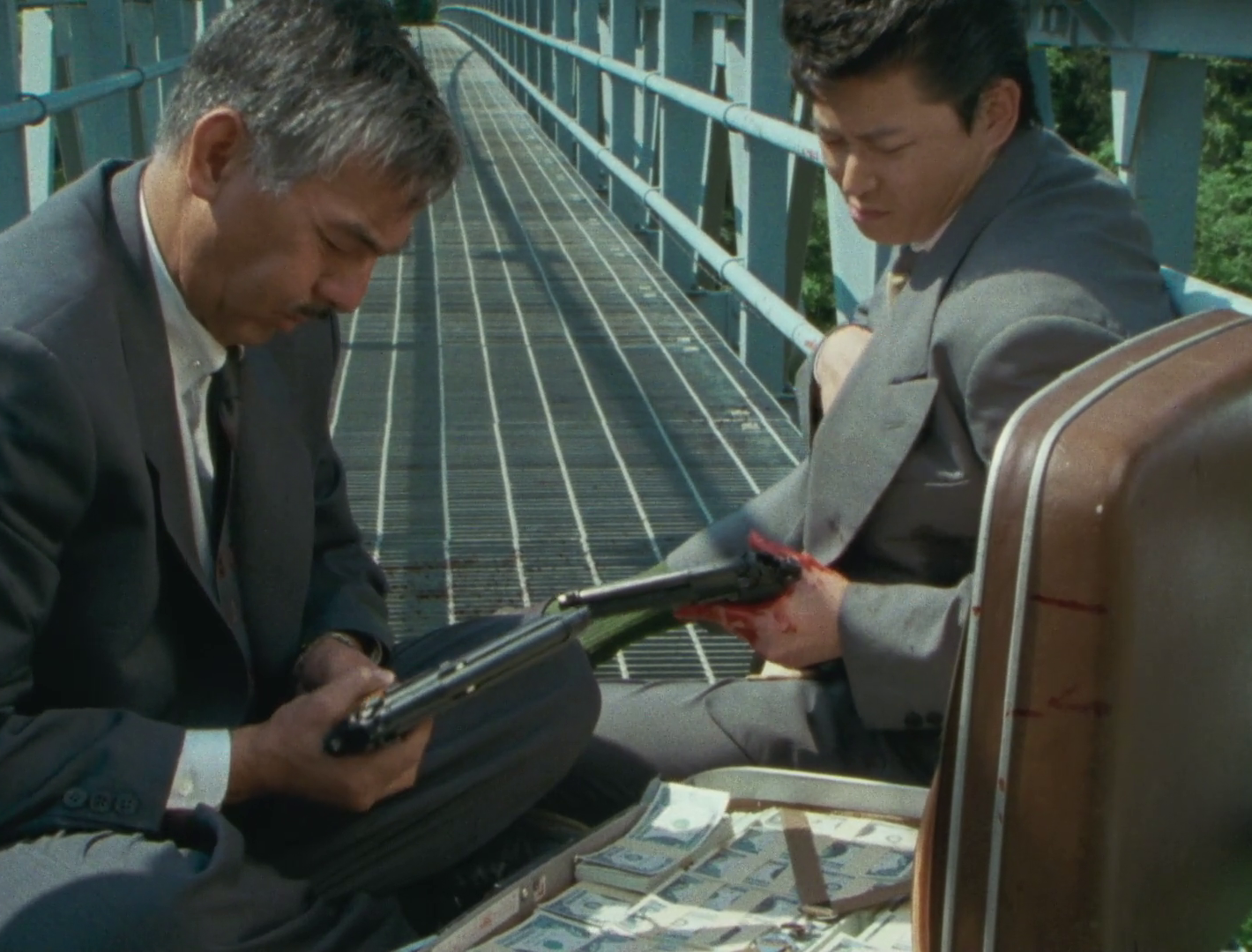
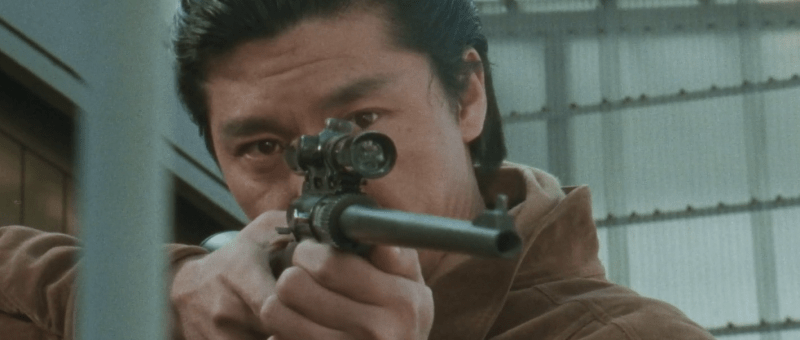
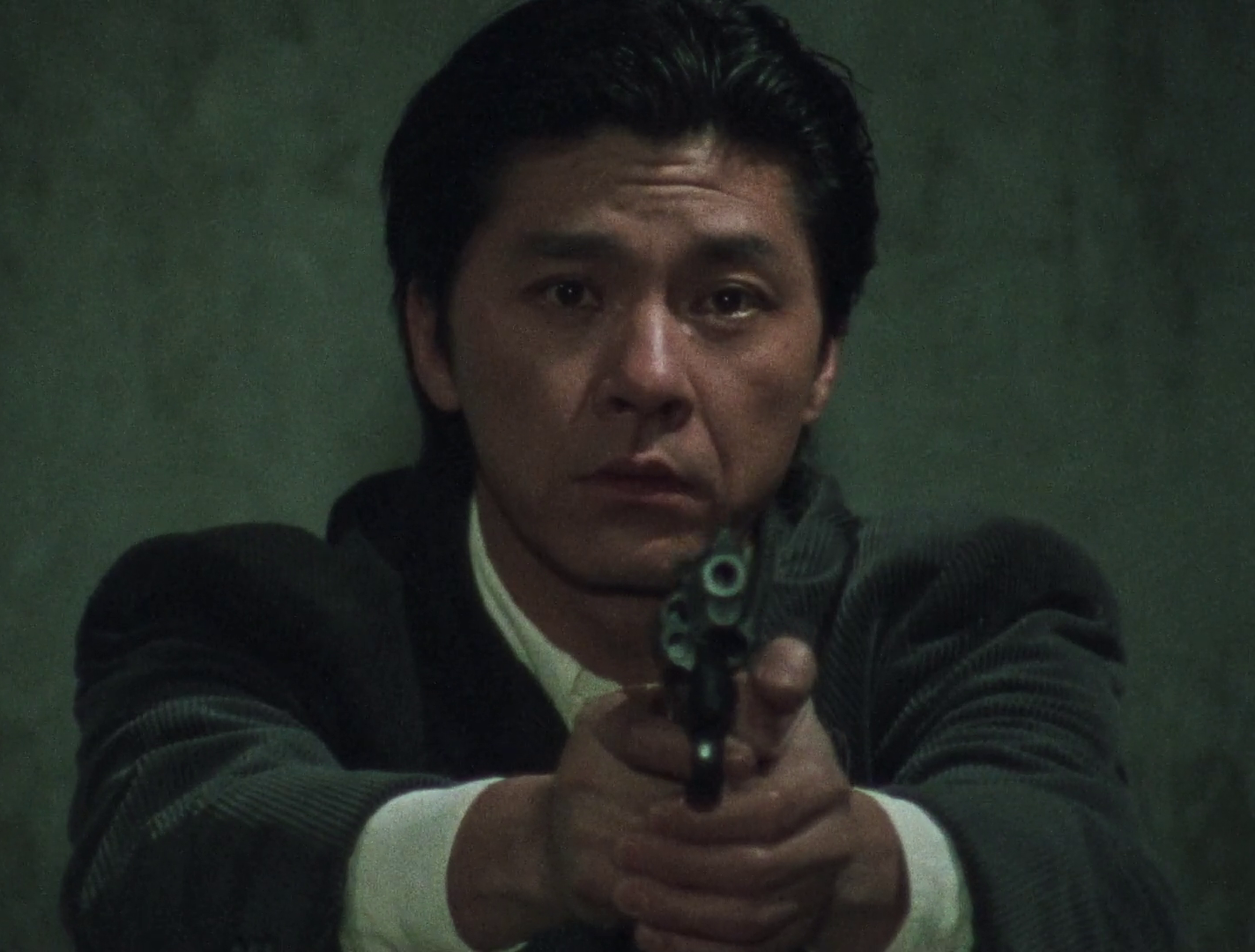
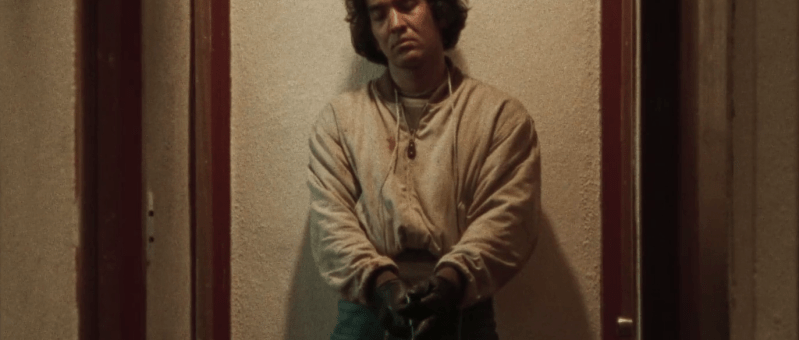
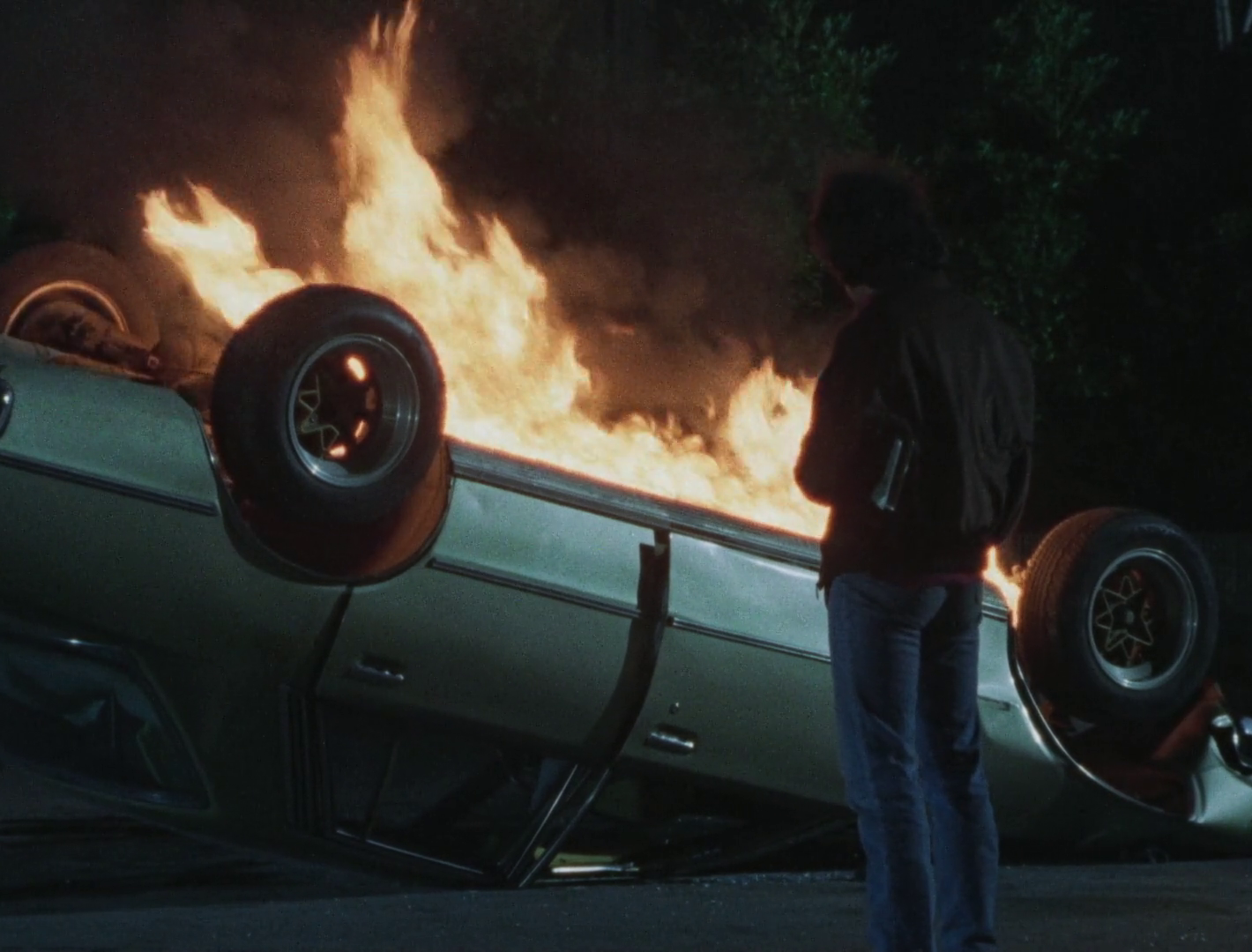
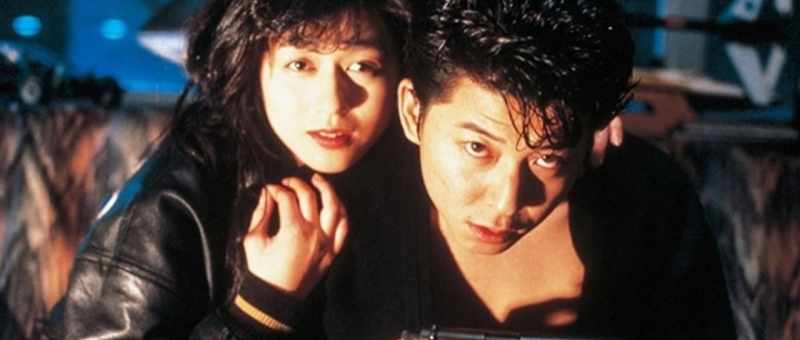
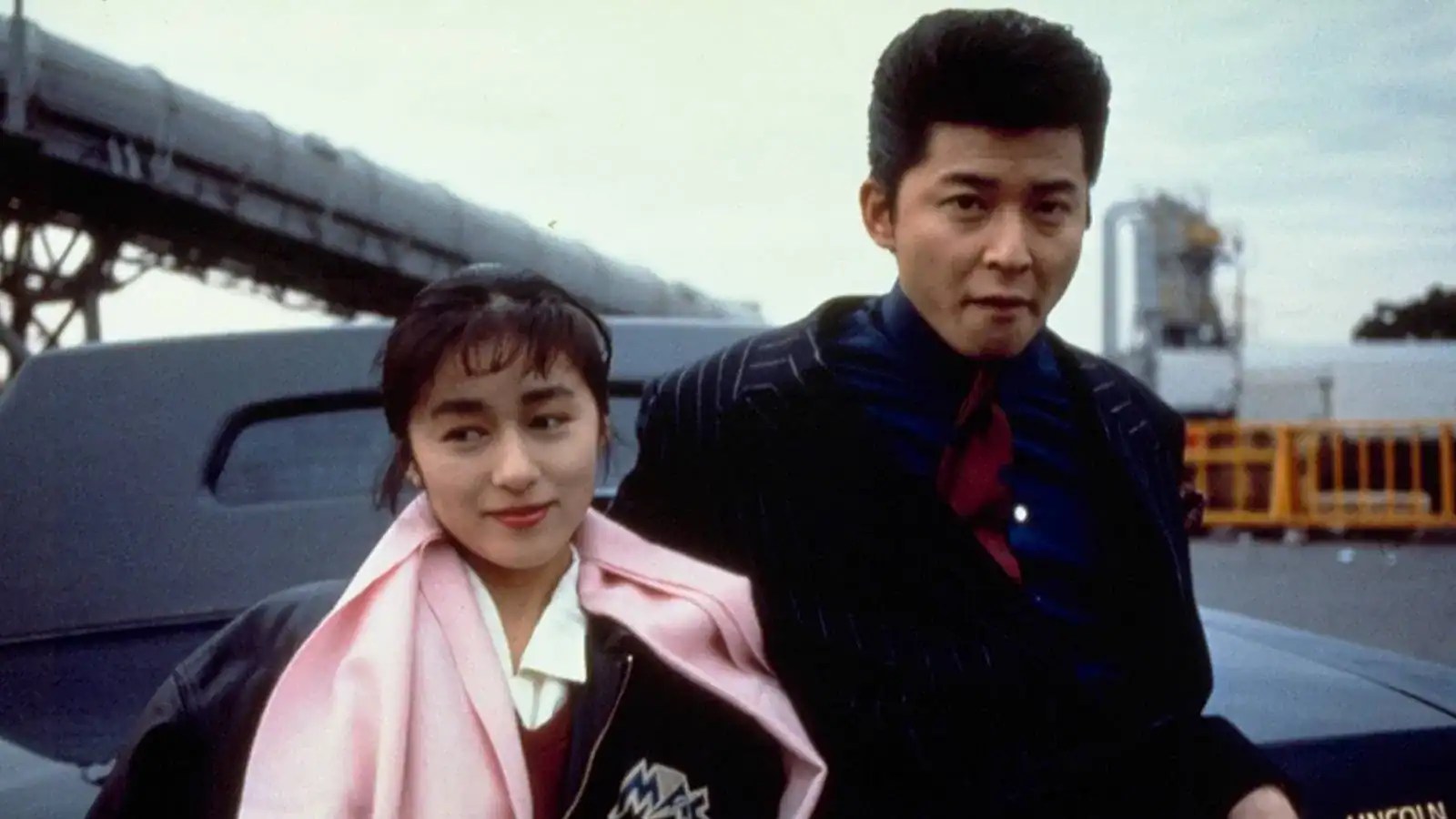
Those who believe that Japanese cinema has continued to decline throughout the 21st century often cite the release of Bayside Shakedown (踊る大捜査線, Odoru Daisosasen) as a turning point arguing that its vast and unexpected success ushered in an era of populist filmmaking dominated by existing franchises such as television drama, manga, and light novels. Leaving aside the question of whether the industry can really be said to be in a creative decline, the criticism is in itself a little unfair in that the film is exactly what it’s intended to be, perfectly enjoyable mainstream entertainment, while like the television series quietly subversive in its criticisms of police bureaucracy using humour to make subtle digs at the service in a way more “serious” films may not be able to. 

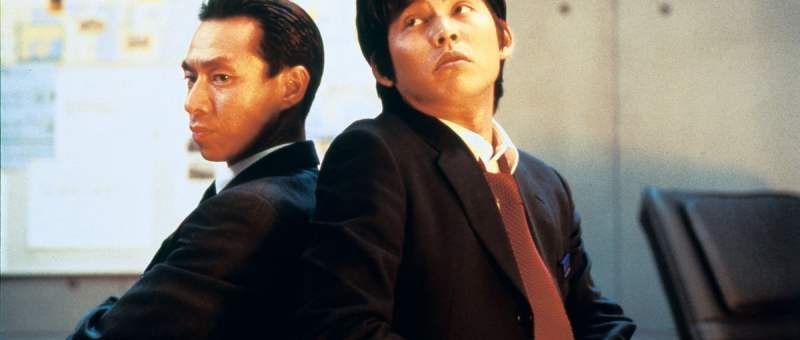
Director Katsuyuki Motohiro signals his intentions in the opening scene in which grizzled, trenchcoat-wearing detective Aoshima (Yuji Oda) stakes out a pleasant suburban house later joined by two colleagues who appear equally serious, yet as it turns out they aren’t on the look out for criminals but simply waiting for their boss, Police Commissioner Yoshida (Shigeru Koyama), to emerge so they can drive him to a police golfing tournament. Ironically enough, the scene is soon repeated, only for Yoshida to be tasered and kidnapped for ransom. Meanwhile, another difficult case arises when a body is found floating in a local river and is discovered to have been murdered, a soft toy found sewn into his stomach. 

The bizarre murder is a problem for the detectives at Wangan Police Station because whenever there’s a difficult case they have to call in the guys from HQ and are then financially responsible for them which is why the guys in accounts would really rather they write down suicide and leave it at that. Budgetary constraints are a persistent theme, the other random case hovering in the background being a phantom thief who keeps stealing the detectives’ receipts so they can’t claim their expenses. In any case, the kidnapping means HQ are involved anyway, quickly taking over an upper floor of the station and locking the local cops out of their investigation or else relegating them to demeaning leg work such as traffic stops and info gathering. 

The conflict between HQ and the local branch is further brought out by the awkward friendship between careerist policeman Muroi (Toshiro Yanagiba) and the earnest Aoshima who have each made a promise to each other that Muroi will climb the ladder while Aoshima takes care of business in the streets to ensure the police force continues to function correctly. Muroi is however in a difficult position, another officer informing him that he’s being put in charge because he’d be an easy fall guy as he went to a regional college while the others are all Todai alumni and minded to look out for each other. He finds himself compromised, unable to keep his promise to Aoshima because of the pressure from above while feeling guilty about the way the local cops are being treated by the bigwigs from the city. Meanwhile the police chiefs sit around a large circular table not unlike the war room in Stanley Kubrick’s Dr Strangelove issuing orders via video link while spending most of their time trying to make sure the local force is sidelined and squabbling over who actually gets to make an arrest. 

Pressured over their expenses, expected to work long hours, and generally made to feel unappreciated the detectives start to wonder what it’s all for, energetic female detective Sumire (Eri Fukatsu) in particular keeping a resignation letter in her desk uncertain whether or not to hand it in. Nevertheless through their quest to save the commissioner along with all the other cases including a potential serial killer operating through a murder fantasy website and a thief who seems to enjoy sneaking into people’s workplaces and stealing small personal items including those of the police officers, they each come to re-appreciate the importance of compassionate local policing along with their responsibility to each other as friends and colleagues even making sure they hold their fellow officers to account especially those involved with the budget. Lighthearted in tone yet boasting a fair few impressive action sequences Bayside Shakedown has in the past been unfairly maligned but is undeniably entertaining with a series of solid mysteries at its centre along with a few jibes at the overly bureaucratised nature of modern policing. 


Trailer (no subtitles)

Female Prisoner Scorpion: Death Threat (女囚さそり 殺人予告, Toshiharu Ikeda, 1991)

It had been 14 years since the conclusion of the rebooted Female Prisoner Scorpion series and 18 since the iconic Meiko Kaji had stepped away from the role when Toshiharu Ikeda decided to resurrect the iconic Nami Matsushima for Toei’s V-Cinema line. Ikeda was reportedly a fan of the original series and put his name forward to direct with the intention of getting Kaji to return as a now middle-aged Sasori but she turned him down flat so they instead embarked on a quasi sequel in which the original Nami has died and another woman slowly takes her place to become the next incarnation of the legend.

Consequently, Scorpion is not the protagonist of this film that otherwise bears her name. Cast in the lead role of a nameless hit woman, Natsuki Okamoto was then a popular pinup model known as “High Leg Queen”. The film opens with her emerging from a barrel of concrete after being dumped by a group of men who had gang raped and then left her for dead. She’s then rescued by a yakuza, Kaizu (Minori Terada), who teaches her how to kill and is effectively her handler. After posing as a bigger to knock off an obnoxious businessman, he’s recruited by Goda (Kenji Imai), the former warden prison stabbed in the eye (though not by Nami as he claims here) in the original trilogy but now a local councillor with aspirations of being elected to parliament. The prison is about to be redeveloped and Goda claims he’s been keeping Nami a prisoner in the dungeon for the last 20 years so he needs her knocked off before anyone bothers to have a look down there.

Of course, there are a few things that don’t make sense with this scenario and are out of continuity with the events of the original trilogy. In any case, now called 701 the assassin infiltrates the prison and knocks off a woman she’s been led to believe is the original scorpion but may not actually be. It seems Scorpion has already passed into legend and the woman has become less important than the idea or the inspiration she provides to the other inmates who are then minded to rebel against authority. By hiding Scorpion away, the authorities have made a rod for their own back in allowing her apotheosis into a goddess of vengeance of all women kind.

701 is in a way reborn as Sasori. Betrayed by the people who hired her, she’s crucified in the courtyard until rescued by fellow inmate and Sasori fan Shindo (Mineko Nishikawa) who helps her try to escape from the prison in an attempt to find out what happened to the “real” Nami. It’s she who first likens the fire in 701’s eyes to that of the Scorpion and begins to give her permission to take on her name and mission. A line is drawn between the two in Nami’s incasement in concrete and 701’s breaking out of it in the opening sequence. Though it would be wrong to call this horror film, Ikeda makes frequent use of ghostly techniques to imply Nami’s apotheosis such as the sound of her spoon scraping the concrete which she later bequeaths to 701 who then becomes the “new” Scorpion. 

The film was in fact a big hit for Toei video and theatrical sequel was planned as a co-production with Golden Harvest in Hong Kong though the project fell through when Okamoto took a break from show business ostensibly for health reasons though there were rumours she had objected to the requirements for nudity. Contrary to expectations for a straight to video release, there is not actually a lot of sexual content in the film which is mainly restricted to a single sequence in which two prisoners pretend to get it on in order to distract a guard to facilitate an escape attempt. Unlike other instalments in the series, the film doesn’t have a lot of women in prison elements either, though it does make space for Dump Matsumoto, a popular villain character from women’s wrestling, as a sadistic guard with a crush on another warden who is she says the only one who treated her like a woman. Instead, it focuses on 701’s passage towards becoming Scorpion and the fulfilment of her twin missions as an avenger of wronged women breaking free from the concrete dungeon of patriarchal oppression to take bloody revenge on the forces of corruption.


Trailer (English subtitles)

Angel Guts: Red Flash (天使のはらわた 赤い閃光, Takashi Ishii, 1994)

Sent to cover a pornographic movie shoot, a young woman finds herself confronted by the teenage trauma that continues to haunt her in the final instalment in the Angel Guts series, Red Flash (天使のはらわた 赤い閃光, Tenshi no harawata: Akai senko). Adapting his own manga, Ishii draws on giallo and classic noir as the heroine attempts to reclaim herself from the spectres that are haunting her even as Japan itself seems to be a land of predatory and dangerous men.

Nevertheless, as the film begins, Nami (Maiko Kawakami) seems to be holding her own aside from an apparent problem with alcohol that sees her drink far to much and end up in vulnerable, potentially dangerous situations. She has a job as an editor and ad hoc photographer where she’s regularly subjected to extreme imagery, while her sleazy boss is also sexually harassing her and in fact attempts to force himself on her in the lift. It’s being sent to take photos at a porno shoot featuring intense rape scenes that awakens her buried teenage trauma of having been abducted and raped on her way home from school.

Nami is haunted by the spectre of her attacker, though as her new ally Muraki (Jinpachi Nezu) tells her it’s only by killing this ghost that she might be able to “erase” the harmful memories of her rape and overcome the repulsion she feels towards sex with men. Perhaps problematically, the film then phrases Nami’s journey as one of repair in which the ultimate goal is being able to enjoy heterosexual sex which seems to be something Nami herself desires to the extent her inability to do so leaves her feeling as if there’s something wrong with her. Even so, it seems she is able to have successful and enthusiastic sex with bar owner Chihiro (Noriko Hayami) who seduces, or perhaps takes advantage of, Nami after bringing her home because she’d had too much to drink at the bar.

On another drunken occasion, Nami is ushered into a love hotel where she wakes up naked several hours later with no recollection of how she got there. Looking around, she spots not only a bloody knife in the sink, but the body of a middle-aged man hidden under the duvet, and camera which has apparently been filming the whole thing. The act of watching her assault, of which she has no memory, echoes the out of body experience of her rape in which she sees another version of herself save her by killing the attacker. What Nami is essentially trying to do is kill the attacker in her mind through discovering what really happened in the hotel room. As Nami has developed a fear of sex of men, she has a tendency to kick and punch violently in self-defence which, coupled with her drunkeness, lead her to fear that she killed this man after waking up during the assault. In another kind of haunting, Nami begins receiving unpleasant phone calls from someone using a voice disguiser who knows she was at the hotel and attempts to blackmail her in exchange for sexual favours. 

Her first suspect is Muraki, which makes sense because he was at the bar and saw her leave with the other customer so could easily have followed her and either observed her entering the hotel and put two and two together after seeing the crime on the news, or actually committed the murder himself while she was unconscious. She’s also been given a negative impression of Muraki by her jealous boss who tells her that his wife killed herself because his constant infidelities. But Muraki is also carrying traumas of his own in his guilt over his wife’s death which he acknowledges was influenced by his behaviour even if because of a misunderstanding or irrational jealousy rather than sexual or emotional betrayal. Thus, Nami becomes to him a means of atonement in the form of a woman he could save in place of the wife he could not.

Which is to say, Nami is pulled towards trusting the improbable presence of a “good” man even as Chihiro insists that they don’t exist. After they made love, Chihiro deepened the intimacy between them by revealing that she had been abused by her stepfather, though it does not prompt Nami to reveal her own traumatic memories of her rape and abduction. She is reluctant to go to the police not because she fears she is guilty of the crime and wants to avoid punishment, but feels ashamed and can’t bear the idea of the police watching the tape which would amount to a kind of second rape. She does eventually allow Muraki to watch it, but on realising that it may exonerate her is still reluctant to let the police see it while torn by her civic duty in knowing that she has evidence that may help catch the “real” killer. She and Chihiro wonder why it is men like to watch the rape videos she was sent photograph, but can’t come up with much of an answer though it hints and an ingrained misogyny, a desire for control and dominance of a woman and her sexuality. The fact that she was sent to photograph it all by this otherwise mainstream company again hints at a kind of desensitisation amid an overly sexualised atmosphere even as her boss tells her the UN has been critical of Japanese attitudes to sex. Nevertheless it seems that Nami is able to overcome her trauma, to an extent, through reclaiming her identity even if she still has the occasional red flashes of violent fantasy.


Angel Guts: Red Flash is available as part of Third Window Films’ Takashi Ishii: 4 Tales of Nami boxset.

Alone in the Night (夜がまた来る, Takashi Ishii, 1994)

A woman enters the homosocial world of the yakuza in search of revenge for her murdered husband, but discovers only more degradation and hopelessness in Takashi Ishii’s rain-soaked noir, Alone in the Night (夜がまた来る, Yoru ga mata Kuru). Then again, perhaps it’s not really revenge Nami (Yui Natsukawa) is after so much as death itself, her relentless fall one of self-harm born of her sense of futility in world ruled by irony in which there is no such thing as truth or justice.

Indeed, one of the things that propels Nami on her mission is the injustice that her husband Mitsuru (Toshiyuki Nagashima), killed while working undercover investigating a gang dealing drugs, is then accused of taking the drugs he seized and selling them on himself. After her husband dies, she’s hounded by the press who paint him as a corrupt cop while she’s also denied his police pension because he died in disgrace. What she wants is to clear his name and thereby drag her husband back from the netherworld in an affirmation of their love for each other. 

But she too becomes corrupted by the darkness of the criminal underworld. Soon after the funeral, yakuza thugs break into her home and rape her while looking for the drugs they assume Mitsuru stashed somewhere. Amid the chaos, she attempts to take her own life by slashing her wrist with one of Mitsuru’s bones but is unexpectedly saved by a mysterious man. Reborn after her brush with death, she reinvents herself as bar hostess “Mitsuru” as a means of getting close to the gang boss, Ikejima (Minori Terada), she believes to be responsible for her husband’s death. Her attempts to kill him, however, prove unsuccessful. She’s once again raped, this time by Ikejima, and thereafter becomes his mistress until another opportunity arises which she then botches by stabbing him in a non-lethal way which only gets her beaten and tortured by his underling Shibata (Kippei Shiina) and eventually sold to a brothel in Chiba where they get her hooked on drugs to make her easy to control. 

In fact, she’s only spared death once again thanks to the intervention of the mysterious man, Muraki (Jinpachi Nezu), a middle-aged yakuza seemingly weary of life and perhaps drawn to Nami as to death. He seems uncomfortable and out of place in this world of brutal masculinity while his modernity is singled by his association with the gun to counter Shibata’s with the sword. He has other reasons for his duality, but is charged with rooting out moles in the yakuza of which there seem to be an inordinately large number. Despite warning her off, he does what he can to help Nami, in part of out of guilt and a need for atonement, but also a kind of escape from his own entrapment within the purgatorial space of the yakuza underworld. 

Permanently raining and shot in an eerie blue, the world around Nami and Muraki takes on an etherial, dream-like quality as if taking place somewhere between sleeping and waking. After rescuing her from an attempt to drown herself, Muraki remarks that Nami slept like the dead or perhaps as if someone was calling to her from the other side. Death seems to be beckoning each of them, even as Muraki desperately tries to keep Nami alive by tenderly nursing her back to health and helping her beat drugs so she can finally free them both by achieving their mutual revenge.

But the film’s irony is that Nami cannot achieve her vengeance on her own. She’s constantly rescued by Muraki who achieves some if for her while each of her attempts only plunge her further down the cycle of degradation and in danger of losing herself entirely. She is and remains an ordinary woman venturing into hell in search of justice, but discovering only cruel ironies and futility. Muraki too is unable to transcend himself and meets a personal apocalypse in embracing his authentic identity. Nami has been chasing a ghost all along, though in some ways it may be her own as she tries to make her way back into the world of the living by reclaiming a vision of the world she had before in which her husband was a good and honest man and there was justice in the world even she declared herself largely disinterested in world outside of their romance and their private paradise just for two.


Alone in the Night is available as part of Third Window Films’ Takashi Ishii: 4 Tales of Nami boxset.

The Killer (喋血雙雄, John Woo, 1989)

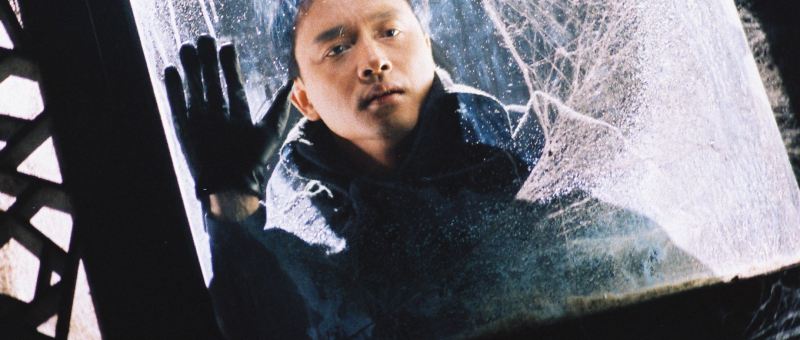
“We’re outmoded characters,” a dying man laments, having previously advanced that “nostalgia is one of our saving graces.” The heroes of The Killer (喋血雙雄) are indeed remnants of an earlier time, out of place amid the modern city and adhering to a code that has long since fallen by the wayside. “Our world is changing so fast,” hitman Jeff (Chow Yun-fat) exclaims of a Hong Kong hurtling not only towards the Handover but an increasingly amoral capitalism in which friendship and brotherhood no longer have any currency.

We can tell this straightaway from the fact that the man who ordered the hit on the drug lord Jeff took out at the dragon boat races was his own nephew, Weng (Shing Fui-on). To tie up loose ends, Weng also sends his own hitmen to take out Jeff, who can’t be sure if his handler and best friend Sidney (Chu Kong) is involved in the plot to knock him off. Later in the film, Inspector Li (Danny Lee) asks what Jeff will do if Sidney betrays him, but he merely says that he will still treat him as a friend because he has been good to him in the past. Jeff says this in an abandoned church, echoing not only the codes of jianghu brotherhood now largely absent in the contemporary society but Christianising notions of forgiveness and acceptance. 

Jeff claims that he isn’t a religious man but appreciates the tranquillity of the disused chapel. Inspector Li meanwhile is often pictured next a statue of the Buddhist god of war and dressed in black in opposition to Jeff’s white, but what emerges is that the two men are effectively the same and somewhat interchangeable. Jennie (Sally Yeh), the nightclub singer Jeff accidentally blinded during a a chaotic hit and subsequently falls in love with, first mistakes Li for Jeff while Woo also pictures him sitting in Jeff’s chair and pulling a gun on his partner in much the same way Jeff cooly dispatched an assassin sent by Weng. Chang had told Li that he looked exactly like what he was, an undercover policeman, which is obviously a problem, but Jeff remarks that he is a “very unusual cop,”while Li agrees he’s a very unusual killer. 

In some senses, Li will also become the killer of the film’s title in the closing moments, a man who believes in justice but is not himself believed and knows that there will be no real justice for a man like Weng. Both men share a code which is essentially the same, a more primal kind of morality largely incompatible with the modern society and in many ways rightly so. Li even says that Jeff does not look like a killer, that there’s something “heroic” about him, and that his eyes are full of passion as if he had a dream. His words have a kind of irony to them, but Jeff does indeed have a dream in the desire to gain redemption for himself by restoring Jennie’s eyesight, which is the reason for his last big job having now been reformed by her no longer believing that the people he killed deserved to die but that everyone has a right to live.

Despite the triangular relationship with Jennie, there is an undeniably homoerotic tension in the connection between Li and Jeff even if they are also two sides of the same coin. They train their guns on each other and lock eyes, but unexpectedly find a kindred spirit in a man who should be an enemy. “The only person who really knows me turns out to be a cop,” Jeff chuckles but has an equally deep relationship with handler Sidney just as Li has with parter Chang (Kenneth Tsang) while the homosociality that defines their world is subverted by Weng who simply shoots his own underling when he becomes inconvenient to him. 

Both Li and Jeff are effectively men left with “no way out” and “nowhere to go” because their code of brotherhood is no longer understood by the contemporary society. Jennie’s progressive loss of sight also echoes their dwindling futures as if the light were going out of their world long before Woo shatters the statue of the Virgin Mary and unleashes the doves of futility inside the no longer quite so tranquil church that becomes the final resting place of manly honour and brotherly love. “Perhaps we are too nostalgic,” Jeff sighs but nostalgia is indeed his saving grace in a world in which honour and friendship exist only in a mythologised past or may never have really existed at all.


Trailer (no subtitles)

Ghost in Love (자귀모, Lee Kwang-hoon, 1999)

Caught in limbo, a young woman finds herself torn between the desire for revenge and letting go in Lee Kwang-hoon’s supernatural drama, Ghost in Love (자귀모, Jagwimo). Is love really what Chae-byul (Kim Hee-sun) was in, or is it more the sense of humiliation that’s she’s carried into the afterlife while obsessing over her cheating ex-boyfriend who was two-timing her with the boss’ daughter? Her colleague Kantorates (Lee Sung-jae), by contrast, had a love that was purer and reminds her that though it’s painful, if she really loved him, she’d be rooting for her ex’s future happiness rather than plotting how to mess up his life. 

Then again, the Korean title is “Suicide Ghost Club” and refers to the group into which Chae-byul is press-ganged after two of its grim reaper agents help her on her way having overheard her say she wanted to die because of all the romantic drama in her life. This literal purgatorial space located between heaven and hell is run like an exploitative company/cult in which the only metric of success is claiming more members. Chae-byul is warned that she doesn’t really have any choice but to join them, because otherwise she’ll become a vengeful spirit and lose all her memories, though she’s drawn to a mysterious presence known as Pale Face who does indeed become a terrifying spirit of vengeance, taking revenge primarily on the men who gang raped her while her fiancé, who later dumped her, looked on helplessly.

There is a kind of misogyny that’s most obvious in the afterlife but exists in the real world too. The film opens with a woman about to take her own life because of persistent fat shaming. She’s fat shamed by the grim reapers too and on into the afterlife, though in ghost form it’s revealed that she could be skinny if she wanted but is happiest in herself like this. Meanwhile, the grim reappears make other suggestive comments, leering over Chae-byul and remarking that a girl should have nice hips. Pale Face took her own life because of the trauma of her rape, the stigma of being a rape victim, and the betrayal of her fiancé who she says broke up with her because he thought that she was tainted. Even in the afterlife, she’s constantly washing in an attempt to make herself clean which is why she’s become so pale. 

Despite being told primarily from Chae-byul’s perspective, the film more or less normalises her boyfriend’s sexist views and behaviour in which he sees nothing really wrong with two-timing each of the women. Chae-byul tries to confront him, but he tells her Hyun-ju (Kim Si-won) was only visiting “to check on her stock transactions,” and shifts the blame onto Chae-byul for being paranoid and unreasonable. He says he liked her because she was “nice and comfortable,” but now she’s changed, so if she’s going to carry on “nagging” him like this, he may as well break up with her. HIs domineering attitude and characterisation of Chae-byul as a crazy girlfriend have the desired effect of causing her to back down and apologise to him. He may be a bit pathetic and materialistic in dating the boss’ daughter solely for advancement claiming it was his only chance to get on, but his behaviour isn’t really regarded as being particularly negative while Chae-byul’s desire for vengeance is, belittled in part because it involves disrupting not only his bright future but pointlessly harming Hyun-ju too.

Then again, perhaps these attitudes are intrinsic to the latent authoritarianism of the afterlife which is governed by the mysterious “messengers” who punish the transgressions of wandering ghosts. One grumpily rants about now having to work for a living, unlike in the old days in which some people would even try to bribe them for a longer life which they don’t do anymore in an allusion to Korea’s recent democratisation. The Messengers From Hades have a serious whiff of the KCIA mercilessly pursuing those who threaten to destabilise the system and then “disappearing” them. Nevertheless, Chae-byul eventually begins to come around to Kantorates point of view while quietly falling for him even as he struggles to move on from his own lost love. He knows he can’t be with her any more, but needs to find a way to tell her to move on so that he can do the same. A strange twist of fate gives them another chance at life and at love to live without wanting to die and try to find happiness even in a world of financial anxiety where consumerist desire has replaced spiritual fulfilment.


Madadayo (まあだだよ, Akira Kurosawa, 1993)

It’s tempting to read Akira Kurosawa’s final film Madadayo (まあだだよ) as a kind of valediction, though he may not have thought of it as a “final” film and if he had, it would have been ironically for film’s title means “not yet” and thematically hints at a desire on hold to a life that is admittedly fleeting. Much of the film is indeed bound up with transience and the difficulties of accepting it, but it’s also a humorous tale of a man who was “pure gold” and managed to maintain his childish heart even into his 77th year. 

Inspired by the life of the writer Hyakka Uchida (Tatsuo Matsumura), the film rather curiously opens with his retirement as he abandons his teaching position to pursue writing full-time much to the disappointment of his doting students. The relationship between Uchida and the boys he taught is at the heart of the film, for much like Mr Chips he had no children of his own and is cared for in his old age by a collection of old boys who almost venerate him as if he were something precious which cannot be allowed to slip from the world. Soon after his retirement, Uchida achieves his Kanreki, that is his 60th birthday or the completion of one cycle of the Chinese zodiac which is also the beginning of a second never to be completed round, which some consider as a second childhood or the beginning of old age.

Uchida is indeed childishly innocent and generally lighthearted forever making incredibly silly puns and approaching even potentially serious situations with good humour. When his wife remarks that the rent may be reasonable on their new home because it is unlucky and prone to being burgled, Uchida simply puts up a series of signs directing thieves to the “burglars entrance” through the “burglars corridor” to the “burglars lounge” and “burglars exit” reasoning any potential robber would find the situation so odd as to want to leave as soon as possible. The house does turn out to be unlucky in a sense as it is burned down during the fire bombing of Tokyo leaving the Uchida and his wife to move into a tiny shack on the grounds of a ruined mansion. 

Signs of a sense of irony and an underlying darkness are, however, present in his improvised version of a march he would have taught the students during the years of militarism on which he comments on the disillusioning realities of new era of “democracy” under the Occupation ruled by bribery and corruption. The students decide to hold a birthday party for the professor they christen the “Not Yet Fest”, taking the lines from a child’s game of hide and seek to ironically ask if he’s ready to throw in the towel first, actually featuring a performance of his funeral which might seem insensitive but Uchida can be relied upon to see the funny side. During the party the former students give various speeches, one announcing he will recite the names of all the stations from one end of the country to the other, but no one really pays very much attention to them. The students even track on a large white dinner plate during a children’s song about the moon to hold behind Uchida’s head as if he were a buddha achieving enlightenment. 

Yet the crisis comes when, shortly after the students buy Uchida and his wife a new house to live in, their beloved cat Alley disappears, plunging the professor into a well of existential despair that leaves him unable to sleep or eat. The depths of his sorrow perhaps hint at his childish sincerity, though there is an undeniable poignancy in the attachment of the childless couple to this cat that chose them as its family. Despite the best efforts of the students along with the local community, Alley never returns though the professor and his wife learn to love a new cat who like Alley wandered into their garden and found a home. As in the poem that inspires Uchida in his “ascetic” life in the hut, life is an ever-flowing river. The waves of students that flowed through his classroom, the homes that were destroyed and rebuilt, the cats who stayed as long as they could and then made way for the new visitor all of them small circles of life that will continue long after he is gone. 

But as Uchida says, “Not Yet”. Like Kurosawa himself who feels the light dimming he asks for more time as if playing hide and seek with death whose presence he must eventually acknowledge even if he’s not quite ready to welcome him in. At the last Not Yet Fest that we see times have clearly changed. Uchida’s wife is now present along with the daughters and granddaughters of the students, one of whom points out they’ll soon be genuine old geezers themselves. For a moment we think we see the boy from 1943. Uchida tells the children to find their passion and give their lives to it, imparting one final not quite lesson while gifting them the cake they’ve just brought him in order of his 77th birthday. A 77th birthday is supposed to be lucky, though seven sevens are also 49 which is the length of a Buddhist mourning period and the time it takes to be reborn. The cycle begins again, as Uchida may know as he dreams of childhood hide and seek only to be distracted by a surrealist sky in its pinks and blues, a vista apparently painted by Kurosawa himself who lets the clouds roll into the credits an endless stream of dream and memory on which our lives are mere bubbles that disappear and form anew. But perhaps, not yet. 


Scorpion: Double Venom 2 (サソリ 殺す天使, Ryoji Niimura, 1998)

Some years after the conclusion of Scorpion Double Venom, Nami (Chiharu Komatsu) is still on the run. Now apparently using the name Sayuri, that of the surrogate sister she again failed to save in the previous film, she’s been working as a dancer in a club while continuing to look for the one-armed man she believes killed her younger sister. Spotting a one-armed gang boss on TV, she becomes convinced that Goda is the man she’s looking for and becomes a cabaret hostess to get close to him. But before she can pull the trigger, Goda is gunned down by a man in a police uniform who turns out to be a hitman hired by a local gang. 

This leaves Scorpion: Double Venom with a problem because Nami no longer has a clear target for her revenge and therefore no reason to live. She takes the gun used to kill Goda and at one point tries to use it to kill herself but is saved by Eiji (Ryo Karato), the hitman she rescued from the scene of the crime. Eiji’s mission of vengeance is however not yet over. Hoping to escape the gangland life, he robbed a bank with his girlfriend Ichiko (Aya Sasaki), but when she got shot in the leg, he ran off with the money and left her there. Nami then becomes determined to rescue Ichiko instead, making use of her old boyfriend, who has since married someone else, to get her a job as the prison doctor.

This is another break with the pattern, as Nami is not a woman in prison but undercover among the corrupt authorities who are in league with the rival yakuza gang to buy cheap drugs to use on the inmates while forcing released prisoners to deal for them. Forced into a straitjacket and sedated, Ichiko is repeatedly raped by the warden’s henchman. A female guard then takes her own life because she can no longer bear to listen to Ichiko’s screams, only the prison get a backstreets doctor to falsify the death certificate to eliminate evidence they’d been drugging her too and make it look like she died in an accident. 

Sucked into a yakuza gang war, Nami is constrained by the darkness of the world around her and once again uses her medical skills for the purposes of revenge. The irony of her using a scalpel to kill is not lost on anyone, though this time she does also use healing abilities to nurse Eiji back to health which might explain the Japanese title “Killing Angel” even if there’s a serious plot hole along given some vague sci-fi style justifications in the film’s closing moments as Nami finally learns some unwelcome information about her sister’s death. In a way, the ending the brings the cycle full circle as Nami is one again betrayed by a man she had trusted and bonded with in a shared desire for justice and liberation.

In essence, they’re all trying to escape the prison of the wider society but as Nami discovers, society is not exactly tolerant of fugitives from order and the implications of the ambiguous ending are fairly bleak. It seems that once again, Nami has been denied her vengeance and granted only a cruel irony that suggests there can be no escape or starting over for those like Nami nor can there be closure for the traumatic past. While trying to rescue Ichiko, she’d encountered one of her former cellmates who had become a turncoat, taking the place of the guard who had killed themselves to facilitate Ichiko’s perpetual rapes. She at first refuses to help Nami because her parole is coming up, but then changes her mind, takes a shot at her own vengeful protest and pays a heavy price for it. 

Moving away from the exploitation roots of the franchise, Niimura takes the sequel in an artier direction with its love scene montage and melancholy blue-tinged colour palette while scaling back a little on the action preferring to focus on Nami’s non-romance with Eiji until her daring attempt to break Ichiko out of prison. But as has become abundantly clear, no one is able to escape from the prison of contemporary Japan and least of all Nami who remains trapped by her desire for vengeance and perhaps a willing victim of it.


Scorpion: Double Venom (サソリ・女囚701号, Ryoji Niimura, 1998)

Scripted by Sasori in USA’s Daisuke Goto, Scorpion: Double Venom (サソリ・女囚701号, Sasori: Joshuu 701-go) brings Nami back to Japan but with an all new backstory and motivation for revenge. In the films up to this point, Nami is betrayed by a man she loves and thereafter seeks a revenge that becomes progressively less personal, striking out against entrenched patriarchy and societal misogyny. This time, however, she’s to avenge the death of a girl she couldn’t save, her sister, Yumi, who was kidnapped and murdered as a child.

Like that of Sasori in the USA, this Nami (Chiharu Komatsu) is a highly educated woman, in fact a doctor. Immediately recognising a patient as the man responsible for abducting her sister all those years ago she is left with a dilemma. She confronts him and he laughs at her. As it turns out, the statute of limitations on his crime ran out the day before, so Nami’s plan to turn him in to the police is rendered a no go. As he continues to taunt her and makes suggestive comments about the little girl inexplicably in the next bed sharing a ward with an adult man, Nami ends up stabbing him to death with her scalpel but just before he dies, he tells her that he didn’t kill her sister after all. It was his accomplice, a one-armed man!

Nevertheless, Nami’s revenge will be delayed because she’s quickly carted off to prison for 10 years of hard labour. Unlike those in the other films, this prison is mainly run by women but the warden is a predatory lesbian who extracts sexual favours from the inmates with the vague promise of early parole and claims that this place is like heaven if you play by the rules. After getting sent to solitary for fighting, Nami befriends another woman, Sayuri (Miho Kiuchi), who reminds her of her younger sister, and discovers that she is shortly to be executed at the gallows hidden in the deepest recesses of the prison. Sayuri is apparently not guilty of the crime for which she is serving her sentence but was talked into taking the fall for a sleazy politician who murdered her friend so that her older sister’s medical bills would be covered. Her death sentence is for accidentally killing a guard during a previous escape attempt. All her subsequent attempts to escape have been so that she could see her sister one last time before she dies.

The theme this time is then sisterhood as the two women fill in the missing half for the other and bond in their shared misuse at the hands of the justice system. Nami becomes determined to save Sayuri in the way she couldn’t save Yumi, but her struggle eventually takes on a larger dimension in keeping with those of the previous films as she tries to get revenge for Sayuri too after discovering that her death sentence was partly handed down by the murderous politician trying to tidy up loose ends as he plans career advancement with the aid of his entire amoral aide, Naruse (Tomorowo Taguchi). Escaping from the prison, she literally and symbolically frees all of the women who then take their own revenge on the sadistic warden.

For all of its seriousness, the film does have its faintly ridiculous qualities such as Nami’s use of electrical wiring as a defibrillator that allows her to resuscitate Sayuri after she’s hanged by the warden at the politician’s instigation. She later uses these same wires ripped from the wall to electrocute the warden’s bruiser male guard though it’s Sayuri who hot wires the prison van so they can escape. Eventually, she’s hunted down by a man with a crossbow and in a nod to the original trilogy, stabs him in the eye. Still, with her own revenge still in progress, Nami effectively avenges all her sisters while fighting for justice. Tracking down the videotape Sayuri had hidden proving the politician’s guilt, she eventually exposes him along with all his corruption bringing down the complex network that had extended out into the prison and trapped so many other women. Now a fugitive, Nami chases the one-armed man and has once again become an avenger of women bringing justice to those failed by an inherently corrupt and misogynistic justice system.


Sasori in U.S.A. (Daisuke Goto, 1997)

An attempt to reboot the Female Prisoner Scorpion series for V-cinema had stalled in the early ‘90s when the then star of Death Threat abruptly pulled out of a sequel that was to be a production with Hong Kong’s Golden Harvest. In 1997, however, Nami Matsushima was once again resurrected only this time as a US co-production with most of the film shot in Los Angeles and in a mix of Japanese and English. 

Relocating the franchise overseas is in some ways surprising given that the first film of the original series opened with the national anthem and shots of the Japanese flag. It was explicitly clear that they were talking primarily about the social conditions of Japan in the 1970s. Likewise, Sasori in U.S.A. seems to walk back on some of the themes of patriarchal oppression that informed the previous instalments preferring instead to refocus on themes such as racism, the failure of the American Dream, and the powerlessness of living under a cruel and arbitrary foreign power, which is an entirely contrary perspective to the earlier film’s attempts at critiquing corruption with Japan itself. 

It’s never really made clear why Jiro (Tetta Sugimoto) and Nami (Yoko Saito) are in the US in the first place, though Nami’s sympathetic journalist friend implies that Jiro came there to make his fortune only to become frustrated with the limits of the American Dream. This Nami is a well-paid interior designer, at least according to her prison file, if one completely in thrall to Jiro whom she met in the US an unspecified amount of time previously. When Jiro is killed by a car bomb, Nami ends up being arrested for his murder because she stood to gain 1.2 million dollars by his death (though they appeared to have a very comfortable life to begin with, so it’s not clear why she’d take such drastic action). Apparently too traumatised to defend herself, Nami failed to hire a proper lawyer or fight her case and has not launched an appeal but spends all her time vowing revenge, which of course means she has to escape from prison. 

That might be a minor problem for the film, which is to some extent in its marketing selling itself as a women in prison picture. This is indeed the most exploitative of the films so far with a salacious shower scene and titivating moments of touching and kissing each other, while Nami is also harassed by an obnoxious blonde prisoner who seems to be running the cell block while in cahoots with the sadistic warden who, as this is America, is incredibly religious and forever quoting from the Bible while raping his inmates. Nami eventually stabs him in the eye in what may be an homage to the original series. 

Nevertheless, Nami soon escapes in the company of another prisoner who is second generation Japanese-American and has been blind since birth. Like Nami, Yukiko (Shizuka Ochi) also has a mission of revenge against the American hoodlums who raped her and shot her Dominican boyfriend Dino to death. Though the narrative actually has almost nothing to do with Female Prisoner Scorpion, the twist will be very obvious to anyone familiar with the series as Nami has indeed been betrayed by a man she thought loved her. Discovering Jiro may have been embezzling money and in fact knocking off the lawyers who tried to sue the car company he worked for for making defective cars rather than being knocked off by them, Nami is forced to reckon with the illusionary quality of her American success story. Jiro meanwhile rails about entrenched racism and unfairness, decrying the police and justice system as “insane” which they well might be or at least in their treatment of Nami. Broken by the failure of his American Dream, he becomes a pitiful and tragic figure.

Even so, Nami’s revenge remains a personal affair rather than an all out attack on a corrupt and oppressive social order ruled by misogyny and male failure. Though the production values are perhaps a little higher than one might expect and the direction leaning towards the artier side with its blue-tinted eroticism, shower scenes aside, the film remains very much of its time and has very little in common with the Female Prisoner Scorpion franchise save its women in prison elements and a late allusion to an actual scorpion. It is though interesting for its perspective on the American Dream and America in general as a place of greed, violence, and intensely hypocritical religious fanaticism.