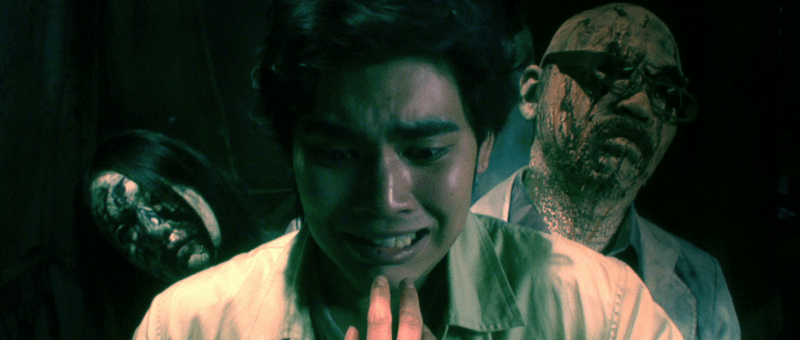
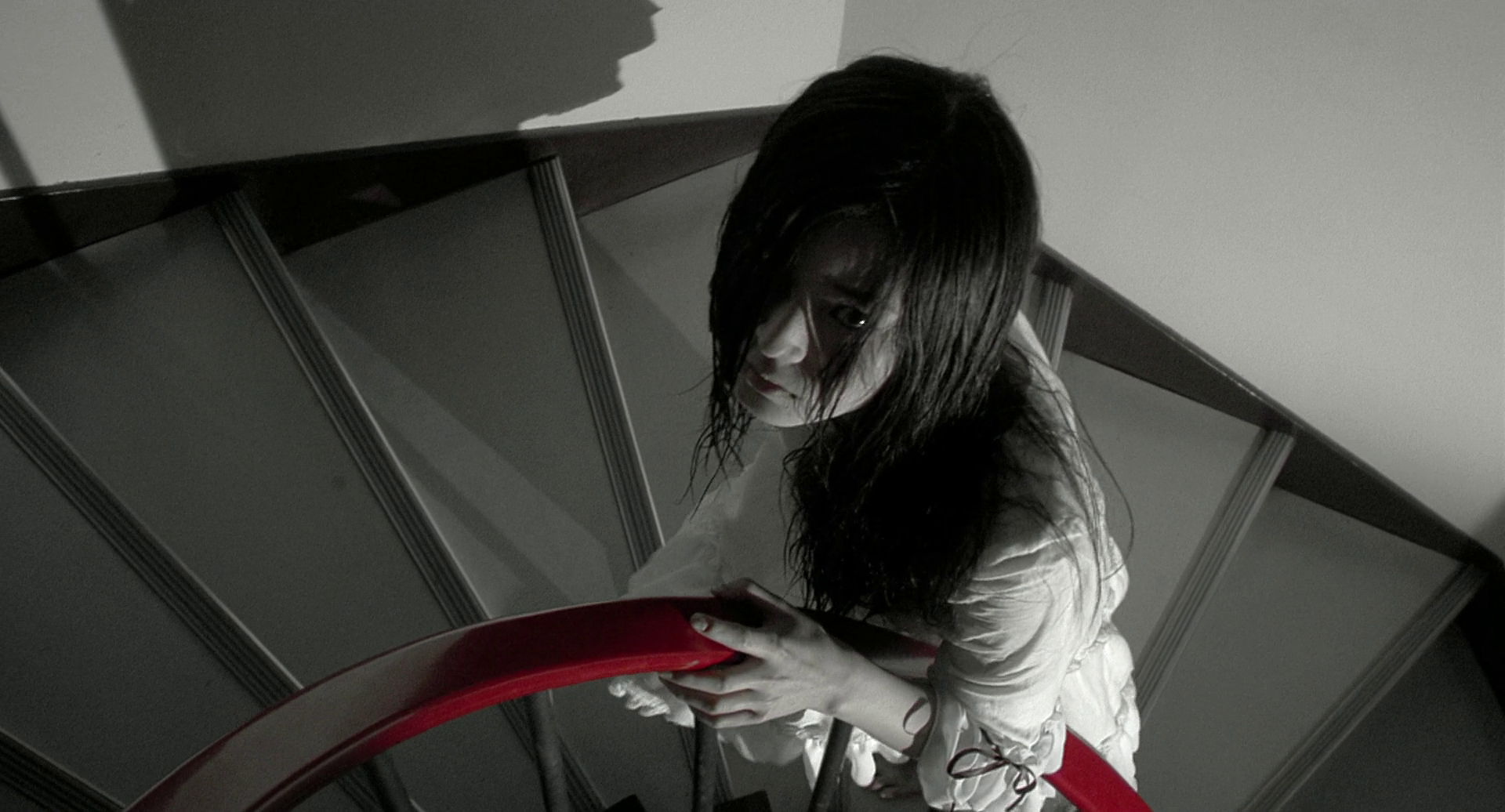
The Shock Labyrinth (戦慄迷宮3D, Takashi Shimizu, 2009)

Is it a good idea to advertise your haunted a house attraction by making a movie in which people get trapped inside haunted house? Whether or not Shock Labyrinth (戦慄迷宮3D, Senritsu Meikyu 3D) had the desired effect of luring more guests to Fuji-Q Highland’s Labyrinth of Horrors is probably lost to time, though Takashi Shimizu’s 2009 ghostly drama is also a strange curio produced during the short-lived resurgence of 3D in the late 2000s though this, of course, also means that it was shot with the flattened aesthetics of early digital technology.

In essence, the film casts traumatic memory as a haunted space of the brain in which the protagonist is plagued by the disappearance of a friend inside the fairground attraction he and his friends snuck into as children. Yuki (Misako Renbutsu) makes a sudden reappearance when Ken returns to his hometown. She claims to have been trapped for a very long time, but has grown along with the others and her clothes have somehow grown with her so that she has the appearance of a ghostly adult woman who behaves like a child. When the gang try to take her to a hospital, they unwittingly end up back at the fake one from the fairground attraction and are forced to face their unresolved guilt and trauma.

Indeed, it seems most of them had completely forgotten about Yuki and got on with their lives. Gradually recovering his memories, Ken (Yuya Yagira) blames himself for Yuki’s death while Motoki, who denies all responsibility, becomes convinced that Yuki’s vengeful ghost brought them back here deliberately to get her revenge for them leaving her there. It’s true enough that the others all ran off after becoming frightened without thinking about Yuki and made no attempt to rescue her, and that they went into the haunted house while knowing they weren’t supposed to, but, on the other hand, they were all children and acted in ways children do. Then again, there were already ructions and petty jealousies dividing the group as it appears Ken was the more popular member liked by both Rin and Yuki, provoking a series of jealousies and resentment from Motoki who declares that he’s not going to bother save Rin because she didn’t love him anyway. Ironically, she’s just told Ken that Motoki was the only one who really cared about her when Ken only helped her out of a sense of pity because she is blind. Miyu, Yuki’s younger sister, had also been jealous of her for being so “perfect and nice” when she was always the “bad” one who got into trouble. 

This shock labyrinth is really the space of repressed memories that Ken talks about. What it seems Yuki wants, like many similar ghosts, is company and to trap her friends with her within this space, or at least as much as she’s a manifestation of Ken’s buried guilt, to prevent him from ever really forgetting her and going on with his life. Ken and the others desperately search for an exit, but are ultimately unable to overcome their traumatic memories. Yuki comes for them as soon as they remember what they did to her, as if they were really being stalked by their own repressed guilt and shame. Still never having dealt with the death of his mother, Ken dreams of her telling him not to go into the haunted hospital or Yuki will him as if she wanted to protect him from this harmful memory though repressing it is evidently as damaging as confronting the truth of the past.

The detectives meanwhile adopt the more rational view that Ken is responsible for everything having taken revenge on his friends for abandoning Yuki when they were children. Perhaps this is all really going on in the shock corridors of Ken’s mind as his traumatic memories have begun to leak out and distort his sense of reality. Then again, perhaps Yuki has found a way to come back for deadly game of hide and seek to keep her occupied in the between space of the fake haunted hospital with its creepy, decomposing mannequins and the unexpectedly gruesome plush rabbit backpack the young Yuki was forever carrying around and refused to let others touch. Either way, it seems Yuki will not let them go but will always be there in the dark corners of their minds to remind them what they’ve done.


Trailer (English subtitles)
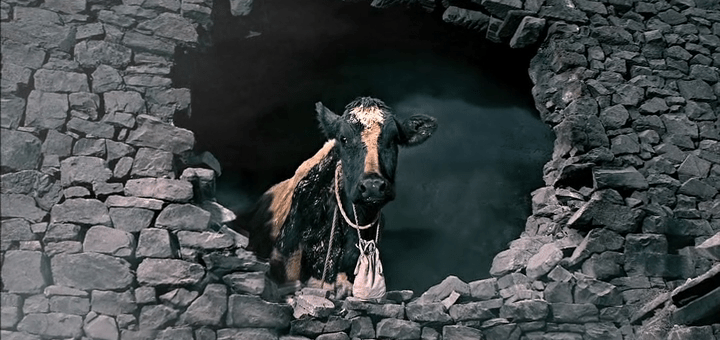
Cow (斗牛, Guan Hu, 2009)

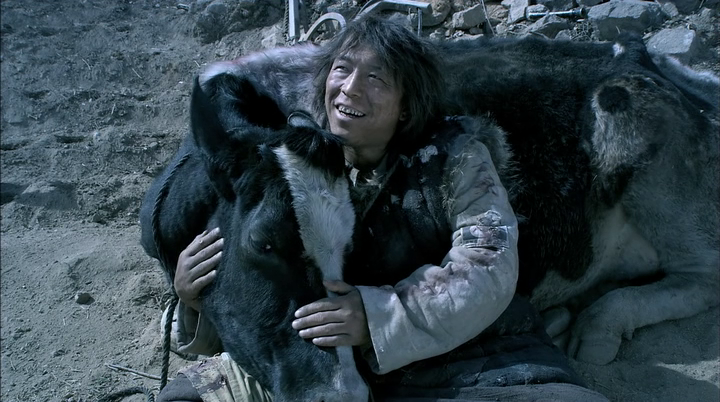
“We’ll stay in the mountains and never go back down,”  embattled peasant Niu Er (Huang Bo) insists having safeguarded his Dutch cow through the Sino-Japanese war and onward towards the new China. A satire revolving around the senselessness of war and the endurance of Chinese everyman, Guan Hu’s Cow (斗牛, Dòu Niú) is also testament to the bond between man and beast who somehow manage to survive through the chaos and the carnage all around them.

That said, Niu Er was not originally happy about being forced to take care of the giant black and white cow he christens Jiu after his feisty wife (Yan Ni). He had a cow of his own. A nice little yellow one he thought was perfectly fine. He didn’t really see why his little yellow cow didn’t deserve the fancy grain reserved for Jiu and got into trouble for giving some of it to her. But when the entire village is wiped out by the Japanese with the cow the only other survivor, Niu Er thinks he has a duty to save it because the village was supposed to be keeping it safe for the 8th Army. It turns out it was an anti-fascist cow sent by the Dutch to feed wounded soldiers busy fighting the Japanese and the 8th Army are supposed to be coming back for it after they return from a strategic retreat. 

But Niu Er’s problem is he’s not just in hiding from the Japanese because there’s also fighting going on between the nationalists and communists. Once bandits have killed all the Japanese who invaded Niu Er’s village, refugees soon turn up with their eyes on the cow. Because he’s a nice man, Niu Er shares some of the milk with a starving woman cradling a baby before realising there’s a whole crowd of other displaced people behind her. But as much as Niu Er gives them, they can’t be satisfied, and insist on over milking Jiu until she becomes ill with mastitis before one of them suggests killing and eating her instead. Not only is this quite shortsighted given that it will only feed them immediately whereas Jiu could still go on producing milk indefinitely if only they were a little less greedy, but it speaks to the loss of their humanity in the midst of their desperation. When Niu Er makes it clear he’s not on board with them killing his cow, the doctor leading the refugees pretends to help cure Jiu’s illness but is really trying to corner Niu Er so they can kill him and eat the cow anyway. In any case, they end up paying for their greed and cruelty by falling foul of all the booby traps the Japanese troops left behind.

To that extent, the Japanese aren’t all that bad. One of them, whom Niu Er finds hiding in a tunnel, used to be a dairy farmer and shows Niu Er how to treat Jiu’s illness which is why Niu Er decides to save him and take him with them to their place of salvation in a cave in the mountains. But a nationalist is already hiding there and the pair end up killing each other. The film seems to ram the point home that there was no real difference between these men who had no particular reason to fight when Niu Er ends up burying them together in a makeshift grave. Setting himself apart from all this war and absurdity, he resolves to stay above it by living in the mountains with Jiu and planting new grain up there for them both to live on.

Seven years later when the PLA eventually turn up, they’ve forgotten all about the cow and are keen to tell Niu Er that they don’t take things off peasants so the cow is now lawfully his. The soldier may be a representative of the new Communist and caring China, but it otherwise seems that Niu Er has been become a guardian of the China that existed before the Japanese with the petty goings of his random village in a way idyllic and filled with nostalgia. Yet it had its problems too. The village chief seems to have had a xenophobe streak, restricting milk from those not born in the village like the widow Jiu who became Niu Er’s wife. She is in many ways an envoy of an idealised communist future in her feminist attitudes and feistiness even amid the sexist and traditionalist culture of the village. Nevertheless, Niu Er and Jiu the cow seem to have found a little alcove of serenity up the mountains of the real China free from the chaos below.


Trailer (Simplified Chinese / English subtitles)

The Faceless Dead (行旅死亡人, Kishu Izuchi, 2009)

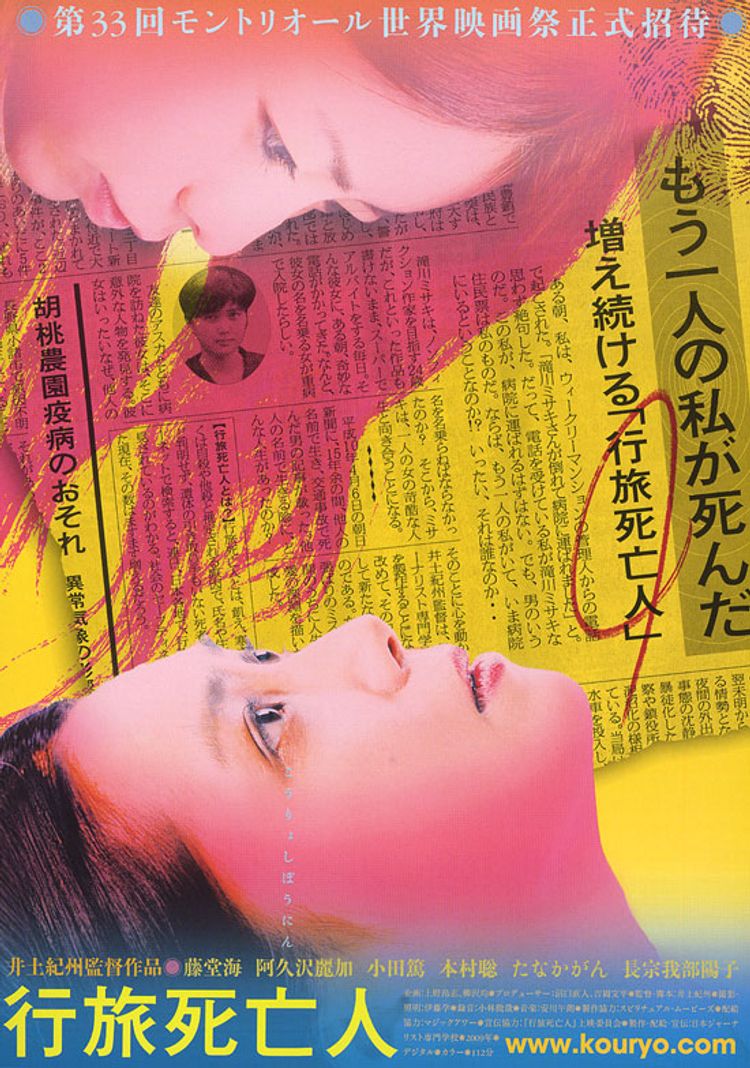
If you suddenly got a phone call one day to tell you that someone with your name living at your address had been taken ill, how would you feel? Sponsored by the Japan Journalist College, Kishu Izuchi’s mystery drama The Faceless Dead (行旅死亡人, Koryo Shibonin) sends its aspiring investigative reporter through a murky world of crime and identity theft to discover why someone would need to discard their name and live a life of constant inconvenience in an ever modernising society. 

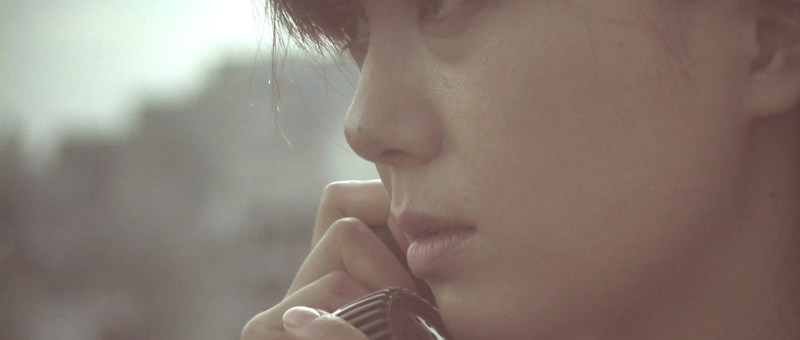
As she explains in her opening voiceover, Misaki’s dream is to become an investigative reporter working on important social issues exposing scandals such as contaminated blood supplies, mislabelled food, and people trafficking but has found little interest from publishers when pitching her ideas. Currently she regards herself as a “job-hopper” working part-time at a local supermarket which has recently been taken over by a larger conglomerate intent on introducing a new creepily cult-like corporate mentality. With her lease about to expire, Misaki is feeling desperate only to receive a weird phone call from another apartment building informing her that “Misaki Takigawa” has been taken ill and is currently in hospital. Obviously this comes as quite a surprise to Misaki as she tries to explain she is Misaki Takigawa and she feels fine to the dumbfounded man on the phone. On venturing to the hospital to find out what’s going on she discovers that the person using her identity to rent a flat is a woman she worked with at a publishing company some years ago, Yasuko. 

Misaki can’t figure out why or how Yasuko would be using her name and documentation but is both curious and feeling a sense of obligation to find out not least because Yasuko also had a bank book with a substantial amount of money in it that’s in her name. Her quest leads her on a meandering path discovering that it obviously wasn’t the first time the woman she knew as Yasuko who had always seemed kind and honest had been living under an assumed name even though it’s something quite difficult and inconvenient to do in contemporary Japan because it makes it all but impossible to access medical care, rent an apartment, or even get a mobile phone all of which require verified documentation. Having access to Misaki’s employment record presumably enabled her to get what she needed to sign a lease and open a bank account in her name and perhaps explains one reason why she elected not to get treatment when a routine workplace checkup highlighted possible medical concerns, the other reason being a sense of guilt which also explains why she chose to live in austerity saving all her money and later instructing Misaki to send it to an older couple living in a remote country village. 

More and more, Misaki is forced to admit that she really didn’t know Yasuko at all even if she felt indebted towards her for having taken her under her wing at her first job, or perhaps that she did in a sense know “Yasuko”, the persona she had adopted at the time, but not the woman underneath it. Apparently based on a real case, Misaki’s quest for the truth takes a rather dark turn that eventually intersects with the weird company that has taken over her supermarket intent on turning all its workers into soulless drones who live only to serve, the boss ominously instructing his subordinate to inject their new philosophy directly into the arms of the unenthusiastic shop staff after failing to achieve their desired sales goals. 

Maybe you could say it was all done for love and Yasuko is simply a hopeless romantic willing to sacrifice her identity but not her life in order reclaim past happiness but even if every life has a price as she reflects in a moment of desperation you can’t simply buy someone else’s no matter how much you’ve lost or suffered in the one you’ve been given. Through her quest to ascertain Yasuko’s true identity along with the original one, Misaki is forced to reflect on and reconsider her relationships with others as well as her own identity while hoping to prove her journalistic skills investigating this very strange and ultimately sad case as borne out by the post-credits sequence which finds her, perhaps strangely, still working at the supermarket trying to organise her life goals around her financial responsibilities in an intransigent society. 


Original trailer (no subtitles)

Torso (トルソ, Yutaka Yamazaki, 2009)

A traumatised woman overcomes her sense of loneliness by sharing her life with a limbless inflatable doll in the aptly named Torso (トルソ). More than a treatise on urban disconnection, the directorial debut from Yutaka Yamazaki is both an exploration of the lingering effects of childhood trauma and a contemplation of contemporary womanhood, the changing relationship dynamics between men and women, and the extent of bodily autonomy in an often conformist society while ending on a note of ambiguity which may represent either liberation or resignation. 

34-year-old Hiroko (Makiko Watanabe) works at an apparel studio where she is among the older of the employees and somewhat aloof with her colleagues, declining invitations to hang out after work or attend the singles mixers one of the other girls is forever organising. She is indeed the sort of person who likes to keep her distance, ostensibly preferring her own company spending her time working on a patchwork quilt but secretly cuddling up at night with a slightly smaller than life-size inflatable male torso which is anatomically correct yet has no head, arms, or legs and into which she must herself breathe life only to let it out again later. Her only other real connection is with her younger half-sister Mina (Sakura Ando) who is her polar opposite in terms of personality, a bubbly, energetic woman who seems to crave the kind of contact her sister is largely unable to give her. 

Even so despite claiming to hate having other people in her space, Hiroko is indulgent of Mina always giving in and allowing her to stay at her apartment at one point for an extended period of time even if not entirely happy about it. While Hiroko has eschewed male contact for the 100% controllable union with the torso pillow, Mina is trapped in an abusive relationship with a man, the otherwise unseen Jiro, whom we later learn to have been a long term boyfriend of Hiroko. Theirs is a relationship frustrated and defined by unresolved resentments, Hiroko complaining that Mina always takes everything she treasures beginning it seems with her mother’s love. A colleague of Hiroko’s around her own age laments that at their age weddings and funerals are the only occasions that they visit their hometowns, but Hiroko is reluctant to visit for reasons other than the usual awkwardness between grownup children and their parents, dressing up and catching a train to attend the funeral of the stepfather we gather must have abused her while her mother (Miyako Yamaguchi) turned a blind eye but finally unable to go through with it. 

For Hiroko’s mother, Hiroko is the embodiment of her resentment towards her first husband who left her, later on another visit snapping back that she must have got her “unpleasant personality” from him while otherwise praising Mina who admittedly has bad taste in men but a generous heart. Hiroko meanwhile projects her own resentment onto her mother who failed to protect her from abuse she wonders possibly because of the resentment she feels towards her while she also projects her feelings of jealous inadequacy onto Mina who may also in a sense resent her for being unable to return the sisterly affection she desires. As she replies, she took Hiroko’s things because she only wanted her love even if vicariously through the otherwise abusive relationship with Jiro whose child she is also carrying. 

In many ways it’s Mina’s pregnancy which forces Hiroko to reassess her life, not least in the accusation that she had wanted to carry Jiro’s child herself. At 34 Hiroko is perhaps at a moment of crisis, her frosty mother coldly telling her she’ll soon have to “give in” and abandon her solitary life for a conventional marriage (despite her recent widowhood her mother has already started another affair with the guy from the funeral parlour). On the other hand, are men actually very necessary anymore or has true independence become not only viable but a respected choice? Despite the constant mixers, some of the younger women at the office have decided not to wait for marriage and have already put a foot on the property ladder getting a good deal on a mortgage by starting young to own their own place and achieve financial independence. “You can’t rely on men these days” one of others agrees while recognising that choosing this kind of independence does not necessarily mean a rejection of romance or long term relationships. 

For her part, Hiroko is wary of men who do in the main seem to be sleazy and predatory, visibly flinching as an over-friendly clerk at the car rental office repeatedly attempts to lean across her while she’s sitting in the driving seat. Aside from its obvious insentience, the torso is symbolically unable to harm her in having no arms to strike, no legs to kick, and no head to hurt while preserving the part she most craves buried in its empty chest which she cradles constantly like a child with a favourite toy. Her attachment to it is not purely physical but emotional, taking it on a mini holiday to the beach dressed in a pair of tiny speedos as they frolic in the sea together alone on a private beach. Yet even this body as empty as she feels her own to be can also betray and be betrayed, another treasure to be stolen if only in the breaking of a spell on realising that Mina has discovered her secret. 

Mina’s final decision is both old-fashioned and ultra-contemporary, vowing to go back to the country and raise the child alone while in a symbolic sense becoming her mother in intending to take over her old part-time job at a nursing home. Hiroko meanwhile is preoccupied with the idea that she’s sacrificing her dreams and aspirations because of something that’s essentially Jiro’s fault, in part stripping her of her own agency in making her decisions and imposing on her the view that struggling in the city even if it doesn’t really suit you is inherently better than making a simple life at home. A brassy gravure model (Sora Aoi) who makes a point of the fact her body is business similarly looks down on Mina, suggesting that she’s simply weak and if she really wanted to pursue her dreams she’d have an abortion without a second thought. Yet does it really need to be an either or? The decision that Hiroko finally comes to may suggest that it might, or then again perhaps she’s merely freeing herself of her long held trauma and looking to lead a more emotionally fulfilling life. “We’re just starting out” Mina shouts back from from across the ticket barriers as she leaves hinting at new beginnings for each of the sisters having each at least laid something to rest. 


Original trailer (no subtitles)

Air Doll (空気人形, Hirokazu Koreeda, 2009)

“Was everything you saw in this world sad? Was there something, anything, what was beautiful?” the heroine of Hirokazu Koreeda’s exploration of urban loneliness Air Doll (空気人形, Kuki Ningyo) is asked by her creator though he can offer her few answers for the strange mystery of her life. Like a child, she takes beauty where she finds it yet much of what she sees is indeed sad as she reflects on the disconnected lives around her, the emptiness and futility of life in the contemporary society where everything is just a substitute for something else which cannot be obtained. 

As for herself, she is quite literally empty inside, an inflatable sex doll owned by middle-aged family restaurant waiter Hideo (Itsuji Itao) who has given her the name of his ex, Nozomi (Bae Doona), which ironically means hope, wish, or desire though not generally of the sexual kind. Yet one day she suddenly wakes up and begins to explore the world rejoicing in its new sensations feeling the rain on her hands and the wind that sounds the chimes as she watches her neighbours go about their daily routine. Dressed in the French maid’s outfit picked out for her by Hideo she gets a job at a local video store and begins living a more independent life while learning how to operate in human society. She feels herself out of place but is repeatedly told that there are others like her, mistaking her literal emptiness for their spiritual despair. 

Yet that sense of emptiness and futility is evident from Nozomi’s first forays into the human world in that the first act of mundanity she witnesses is the bin men sorting rubbish for disposal. “Unfortunately they’re non-burnable” Nozomi’s creator explains when she visits him in search of answers revealing he throws out the broken dolls that are returned to him once a year, “after all, once we die we’re burnable garbage. It’s not such a big difference” he adds, though as it turns out it is quite a big difference to Nozomi in ramming home to her that she can never become human and will always be something else, an inorganic “substitute” for something perceived as the “real”. 

“Your only flaw is that your body’s so cold” Hideo ironically laments as he warms her up in the bath, something she is told repeatedly to remind her that though she has discovered a heart it does not beat and she is not “alive”. Yet an old man (Masaya Takahashi) seeking a different kind of comfort later remarks that those with cold hands often have warm hearts as he reflects on his own life as a “substitute” teacher while she looks over the pictures of the many dogs he’s had through the course of his life as substitutes for the traditional family that have only left him feeling lonelier through their inevitable absences. There is perhaps in this a slightly conservative and uncomfortable implication that the loneliness we see in everybody that we meet is partly caused by the decline of the traditional family itself partly a consequence of the shifting gender roles of the later 20th century society. When they first meet, Nozomi has been rejected by a group of local mothers for inappropriately cooing over a baby in a pushchair the old man comforting her with a tale of the mayfly which is itself empty inside existing only to give birth and then die its own life defined by futility. Nozomi can never truly be human, but more than that she can never truly be a woman because she cannot reproduce as signalled in her final exchange with a little girl in her neighbourhood who swaps her beaten up and broken doll, a substitute for her absent mother now symbolic daughter to Nozomi, in exchange for her ring, a symbol of adulthood. 

In this way Nozomi becomes herself a symbol of something that is broken, an active barrier to societal happiness in providing a way for men like Hideo to escape the responsibility of the traditional family by satisfying his sexual desire through a fantasy of intimacy with an inanimate substitute. When Nozomi throws her pump away, Hideo buys a new model and when she confronts him he asks her to go back to being a passive doll because he finds all the human stuff “annoying” and only wants a woman who can be a selfless embodiment of his desires, will never talk back, challenge him, or hurt his feelings. Meanwhile, when her boss at the store (Ryo Iwamatsu) who seems have experienced a recent familial breakdown of his own blackmails her into having sex with him in the bathroom he is conversely annoyed by her passivity while tearfully calling out his wife’s name. Even her innocent love for coworker Junichi (Arata Iura) has its darkness, not only does she suspect she’s merely a substitute for his ex, his fetishisation of her revolves around his ability to take control over life by letting out her air and then permitting her to live by blowing his own back into her. 

“I am an air doll. A substitute for sexual desire” is how she introduces herself, preoccupied with her literal emptiness yet along with a heart discovering a sense of self as she interacts with others, beginning to wear her own clothes rather than those purchased for her by Hideo. At a moment of crisis she is surrounded by all the treasures she’s collected which ironically include a number of ornaments intended for a doll’s house including a tiny simulacrum of a cake which reappears in her imaginary birthday party suggesting that the only true happiness is to be found in wishful fantasy while the “real” will only ever disappoint. Nevertheless, she uses her last breath to bring happiness to all she can, uniting the old man with a lonely old woman (Sumiko Fuji) who confesses to random crimes just to have someone to talk to. Shot with unusual fluidity by Mark Lee Ping-Bing, Koreeda captures a society in flux in which the easy convenience of disposable consumerism has begun to replace human relationships and left us all empty inside. 


Air Doll in in US cinemas and on VOD Feb. 4 courtesy of Dekanalog

Trailer (English subtitles)
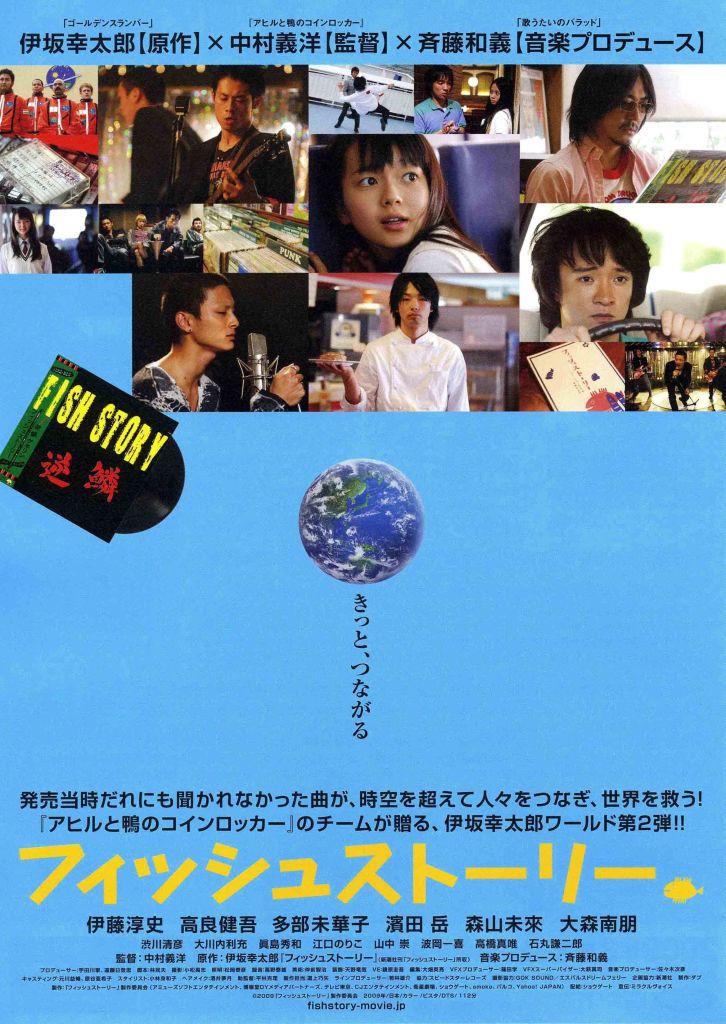
Fish Story (フィッシュストーリー, Yoshihiro Nakamura, 2009)

“Music saves the world” according to a hold out record store owner keeping the doors open in the wake of coming disaster. In one way or another and most particularly at the present time, perhaps it always feels as if the world is ending but somehow we seem to carry on. Yoshihiro Nakamura’s Fish Story (フィッシュストーリー) is, as it says, a story of how music saves the world, but also of how personal acts of quiet integrity echo through time while art finds its audience and its purpose in the proper moment even if the message is not immediately understood. 

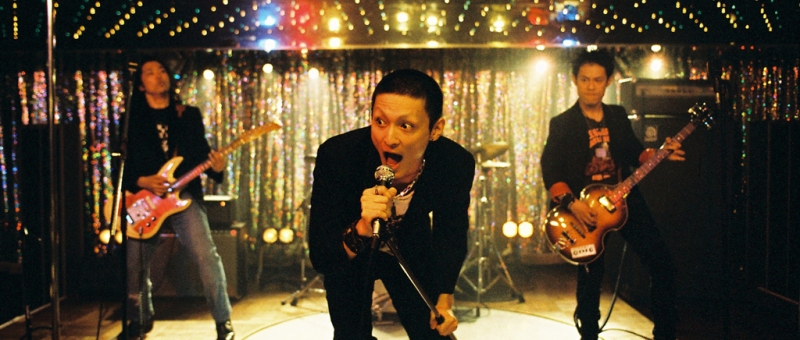
The film opens in the “future” of 2012 during which a fiery comet is headed directly for the Earth resulting in a deadly tsunami set to engulf Mount Fuji, drowning humanity rendered unexpectedly powerless in the face of cosmic destiny. A man in a wheelchair dressed oddly like a cult leader trundles along empty arcades strewn with rubbish, pausing to poke at some trolleys with his walking stick. Eventually he stops outside a record store which is to his surprise open for business despite the coming apocalypse and jumps up, apparently able to walk after all, and heads inside where he takes the boss (Nao Omori) to task for his strange decision to go to work on this day of all days. The shopkeeper however calmly engages in conversation with a customer, sure that “music saves the world”, “this song will save the day”, introducing him to the music of little-known ‘70s punk band Gekirin whose music was too far ahead of its time for the conservative post-war society. 

Their forgotten song, Fish Story, however as we will see does indeed change the world if in small and unexpected ways not least because it’s remembered for an unexpected pause in the middle of a guitar solo, a temporary suspension of living time in which small miracles could occur. “It has a meaning” the shopkeeper insists, though refusing to elaborate. As we discover, it does and it doesn’t, but stays true to the spirit of song, a “fish story” of its own embellished in the telling as curious listeners attempt to explain its existence. For three college students in 1982 who enjoy listening to paranormal tapes, it’s something of a let down seeing as they’d been told that the missing section contained a woman’s scream which is apparently still audible to those with a sixth sense but predictably not to them. Nevertheless, a moment of silence and a woman’s scream eventually result in a timid young man (Gaku Hamada) assuming his destiny, learning to stand up to bullies even if in eventual need of rescue himself. 

Like the young man of 1982, the shopkeeper and his customer are largely passive, sure that someone is coming to save them, idly talking of superheroes in teams of five like classic tokusatsu serial Go-rangers or else Bruce Willis saving the day by heroically sacrificing himself to blow up the asteroid. But the Americans’ “Armageddon” plan soon proves a bust, hinting perhaps at the fallacies of the disaster movie model in which the nation of production saves the world all on its own. The only possible hope now lies in cross-cultural cooperation. “Just as music knows no border, we’ve come together in this emergency” says the team of international experts boarding an Indian rocket as they pursue the only option left for the salvation of humanity no matter that there’s only a one in a million chance it works, because that’s what you do at the end of world, only what you can. 

The old man scoffs at the shopkeeper and his customer, sure the world is going to end even though he previously predicted it would do so 13 years previously in line with Nostradamus. Others concluded it would end in 2009 and took action accordingly, action which almost assures the present destruction in accidentally destroying the mind capable of preventing it. It is all connected, in a cosmic sense, but it’s also all small coincidences that lead to a greater whole. In the post-war chaos of 1953, a struggling father lies about his English skills to get a job as a “translator” only to engage in an avant-garde act of language violence bludgeoning one text into another with the aid of a dictionary. The incomprehensible novel which results is pulped, but survives as a curiosity and eventually finds its way home, inspiring another work of art and becoming a kind of fish story of its own. Gekirin chose to disband rather than compromise their artistic integrity, knowing that no one was going to hear their song. “Does that make everything we’ve done meaningless?” dejected bassist Shigeki (Atsushi Ito) asks, and perhaps it seems that way, but the word is heard in the end. It all matters, we all matter, no matter how insignificant it seems in the moment. 

Adapted from the novel by Kotaro Isaka, Nakamura’s anarchic voyage through a comfortable and nostalgic post-war Japan albeit one in the shadow of coming disaster is imbued with a quiet sense of hope even as it leaves its protagonists passive participants in a history they are unaware of making. Two teams of five do in their way save the world, and all because of a song that no one heard which was inspired by a book that no one read. Life, it’s all a big fish story, but it makes sense in the end so long as you stick around long enough. 


Fish Story is released on blu-ray & VOD in the UK on 10th August courtesy of Third Window Films. On disc extras are presented in standard definition and include: making of featurette, Gekirin live performances, Gekirin talk show, director and cast Q&A, and deleted scenes.

Original trailer (English subtitles)

Accident (意外, Cheang Pou-Soi, 2009)

Accident poster 1Is an accident ever really just an accident? The cosmos may be conspiring against us, but one can’t rule out a man-made conspiracy in a world as venal and corrupt as ours has become. Riffing off The Conversation, Cheang Pou-Soi’s The Accident (意外) stops to ask if you really do reap what you sow or if you merely think you do as its increasingly paranoid hero attempts to manipulate fate for his own ends only to find himself encircled by a net of his own making.

The Brain (Louis Koo Tin-lok) is the head of a very particular gang. A hitman of sorts, he specialises in untraceable crimes, choreographing elaborate pathways to death that appear indistinguishable from accidents. He knows that he is not the only such orchestrator of endings and that he has likely made enemies and rivals as a result of his activities and so is extraordinarily careful when it comes to the execution of his work.

It is, therefore, a concern when a bug appears in a routine job. Uncle (Stanley Fung Shui-fan), the oldest member of the team, drops a cigarette butt. It might seem like a small thing, but it makes a mark and leaves a little piece of Uncle at the crime scene – a tiny fragment that could become a part of a larger whole exposing the entire enterprise. The Brain is so careful that he even uses a hankie to funnel change into the bus driver’s ticket box, but he’s known Uncle a long time and is loath to cut him loose for a “minor” infraction even if the buzzing in the back of his head reminds him that maybe Uncle’s lapse of judgement wasn’t mere sloppiness.

A man attempting to live with tragedy by imposing order on a chaotic world, The Brain’s sense of cosmic coherence begins to unravel after the next job goes horribly wrong. Someone is plotting against him and one (or more) of the team must be in on it. He tracks his mark to an insurance broker (Richie Jen Hsien-chi) who is his mirror image in every respect as another gambler against the random, spies on him, and almost becomes him in installing himself in the apartment beneath his and literally tracking his every move thanks to a madman’s map on the ceiling and some carefully placed bugs.

Yet, is his assumption right? This could all just be a series of coincidences ranging from an old man’s dementia, to inauspicious weather, and unforeseen tragedy. The Brain, however, needs to believe in his own primacy of agency, that there are no “coincidences” and everything that befalls him is a product of his own actions. He wants revenge – against the man he believes has deliberately punctured his carefully controlled world, but also against the universe itself and the various ways it has misused him.

Fate, however, has other ideas and history later repeats itself with relentless and horrifying cruelty. The Brain, perhaps himself wandering into an “accident” of his own making, chases death in his double who finds himself touched by The Brain’s curse – uncertain yet convinced that he has been the victim of more than circumstance and vowing revenge on the (presumed) orchestrator of his fate, becoming just as strung out and paranoid as The Brain himself.

Produced by Milky Way, Accident does indeed share something with To’s whimsical worldview in which it is the random, inexplicable acts of chance which govern our lives. Fate cannot be outrun or out-thought, there is an accident waiting for all of us (who are each products of the accident of birth). Free will is an illusion, and The Brain will pay a heavy price for the depth of his faith its efficacy and rebellion against a chaotic universe through his attempt to use its propensity for random chance against it and for his own ends. A heady mood piece filled with the intense anxiety of existential unease, Cheang Pou-Soi’s perfectly crafted chronicle of a fragmenting consciousness spinning ever deeper into an entropic well of self-destruction is as melancholy an encapsulation of the human condition as one may hope to see as its hero battles valiantly against the inevitable while secretly perhaps longing to lose, like a degenerate gambler betting against fate.


Currently streaming via Netflix in the UK (and possibly other territories).

Original trailer (Cantonese with Traditional Chinese & English subtitles)

Mundane History (เจ้านกกระจอก, Anocha Suwichakornpong, 2009)

mundane history posterIs it possible to live without past or future, exist entirely within the pureness of the now? Anocha Suwichakornpong contemplates the bubble existence in her complex debut, Mundane History (เจ้านกกระจอก, Jao Nok Krajok). Class conflict jostles with the fading grandeur of a declining bourgeoisie while two young men lament their broken dreams, one believing himself a prisoner of his privilege and the other trapped by economic inequality. Yet despite their differences, the familial disconnections, and the austerity of their “soulless” environment, a connection is eventually formed making way for a rebirth, new life birthed in the ashes of the old.

Pun (Arkaney Cherkam), a nurse from a humble background, has travelled from the north to take a job as the full time carer for the son of a wealthy man, Ake (Phakpoom Surapongsanuruk), recently paralysed from the neck down after a mysterious accident. As Pun tells an intimate acquaintance, perhaps his sister, on the telephone, the house is beautiful but drenched in hopelessness and everyone within it seemingly dead inside.

Moody and resentful, Ake is now a virtual prisoner within his father’s household. Enraged by his new found impotence, he treats Pun with contempt, ironically enough embodying the role of the young master which is perhaps the key to his anger with his distant, austere father who has essentially outsourced his son’s care and then had him walled up at home like a guilty secret. Ake angrily refuses visitors, either embarrassed by his disability or not wanting to witness their pity, and spends his days doing nothing at all but staring blankly into the middle distance, unable to reconcile himself to the terrifying “mundanity” of his repetitive, unchanging existence.

As Ake becomes used to Pun’s gentle presence and allows himself to be cared for, a friendship begins to arise. Both men dreamed of becoming writers, one developing an interest in photography and the other film, but neither of them found their dreams fulfilled. Ake’s sense of defeat is palpable as he finds himself literally trapped by his father’s legacy, unable to escape the claustrophobic world of the family home and consumed by resentment as he convinces himself that his dream of becoming a film director is now unattainable thanks to his disability. Pun, meanwhile, is equally melancholy, perhaps secretly resentful but outwardly making the best of the hand he’s been dealt. From a humble background and orphaned young with siblings to support, his artistic dreams were taken from him by bad luck and socio-economic oppression though it hasn’t killed his kindly heart. 

The austere coldness of Ake’s father and the mansion’s emotional deadness perhaps represent an older generation’s longing for the safeties of an authoritarian world of rigid class boundaries and feudalistic loyalties. Ake’s housekeeper, the prim and proper Somjai (Anchana Ponpitakthepkij), is a relic of this all but forgotten world – a career servant who has silently watched Ake grow as her own youth faded and finally decides to puncture the class divide only to ensure its survival in urging Ake to maintain his stiff upper lip and avoid giving in to despair. Somjai resents Pun’s awkward, liminal status in the house as the only other member permitted to walk freely in the upstairs world and seeks to him keep down, eating with the other servants where he belongs. Pun, like the cook Kaew – also a northerner, doubts he can stay in this world indefinitely, already tired of its energy sapping rigidity and entrenched class-based social codes.

Ake’s resentment towards his father is also a rebellion against his old fashioned authoritarianism which stifles the natural desire of the young for freedom. Now literally unable to escape unaided, Ake feels as if his father has trapped him, deliberately, within the confines of his own value system with no possibility of salvation. The house is, in a sense, the eternal present that Pun and Ake talk about in one of their few moments of blissful togetherness as they lie alone on the grass lawn staring at the blue sky, but the inertia crushes them, driving young men to despair. A trip to the planetarium coupled with Ake’s youthful student films provides an opportunity for rebirth if only in destruction. Stars burn out, destroy themselves, but become nebulas in the process. Anocha Suwichakornpong’s fragmentary narrative is indeed nebulised, pulsing in brief fragments until the whole somehow connects and sparks into life. The spiritual rebirth echoes the political, the desire of youth to break free reasserts itself and the mundane history of an ordinary life regains its cosmic grandeur.


Original trailer (English subtitles)
Running Turtle (거북이 달린다, Lee Yeon-woo, 2009)

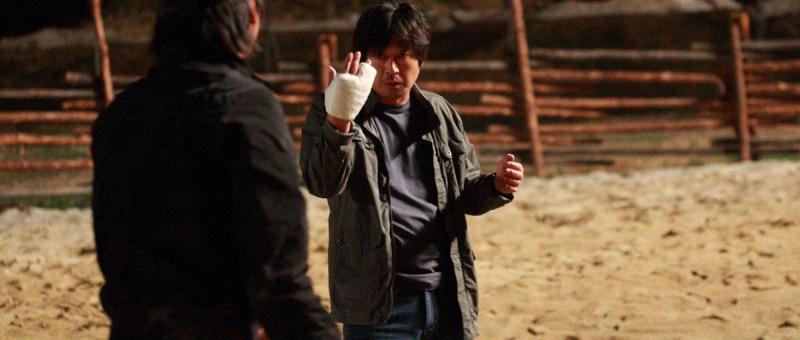
running turtle posterOne has to wonder why anyone becomes a policeman in Korea, or at least in the world of Korean movies. A policeman’s work is never done, yet they rarely prosper and often succeed in making themselves look ridiculous. The hero of Running Turtle (거북이 달린다, Geobuki Dalinda), played by The Chaser’s Kim Yoon-seok, is a case in point. Unlike Joong-ho, Pil-seung is still on the force (for the time being) but even for a small town beat cop he’s pushing his luck. It’s not surprising then that he gets himself all fired up when he comes into contact with a notorious fugitive from justice.

Pil-seung (Kim Yoon-seok) is among the least well-respected on a small team of police officers nominally upholding justice in a tiny fishing village. Mostly his day job involves harassing local sex workers which he mostly does by means of entrapment whilst hanging out with petty crooks like local loser gangster Yong-bae (Shin Jung-geun). Looked down on at work, things don’t improve much for Pil-seung at home where, despite the admiration he receives from the older of his two daughters, Pil-seung fails to pull his weight leaving his wife to supplement the family income by running a moribund manwha cafe whilst reduced to folding socks for the extra pennies. Then again, home is a place Pil-seung rarely goes, preferring to waste his life drinking and gambling.

On a rare occasion of busting his gut for justice, Pil-seung takes things too far with a pimp who’s a little on the heavier side and ends up almost dying after an “undue force” provoked heart attack. Suspended, Pil-seung has another set of problems in being without money for three months and being too afraid to tell his wife the truth. Stealing her savings and betting them on a local bull-fight Pil-seung’s luck comes up only to go down again when escaped fugitive and martial arts expert Gi-tae (Jung Kyung-ho) pinches the money off Yong-bae in payback for Yong-bae getting fresh with his girl (to be fair, Yong-bae had it coming).

What follows is a locking of horns as filled with macho posturing as the central bullfight between the “Bear” and “Typhoon”, though possibly not as elegant. Gi-tae, softly spoken and melancholy, has returned to an old love and means to leave the scenes of his crimes behind him for good. This whole thing with Pil-seung is a major irritation but he has no especial interest in the portly policeman other than needing to get rid of him long enough to escape with his patient lady-love.

Pil-seung’s motivations are different. Yes, he’s originally pissed off and wants his money back, but Gi-tae also represents an opportunity for him prove himself as everything he’s hitherto failed to be – a success, a strong man, someone worthy of respect. Sadly, Pil-seung will have to work quite hard to convince himself he can be any of these things, let alone convince anyone else. Trapped in his tiny rural town, Pil-seung has long felt impotent and oppressed. He can’t provide for his wife whose lack of respect for him is real enough, though noticing the holes in her underwear as he goes in for a not altogether romantic overture reminds Pil-seung that perhaps he needs to shape up and make something of himself before it’s too late. Generally he eases his feelings of inadequacy and existential despair through alcohol, gambling, and being the big guy around petty gangsters to whom he is useful but again, not a figure to be feared, loved, or respected.

Going up against a top criminal like Gi-tae all alone is a fairly stupid proposition in the first place, one only someone as deliberately pig-headed as Pil-seung would ever attempt. It’s his particular quality of bloodymindedness which becomes Pil-seung’s trademark as he absolutely refuses to give up on clawing his way back into the hearts of his wife and family through an act of officially recognised heroism though it’s true enough that if he’s going beat a man like Gi-tae (who often seems the unfair target of Pil-seung’s petty quest) he’ll need to reawaken some of those little grey cells to do it. The turtle of the title, Pil-seung chases his hare with furious, if plodding, determination only to see victory within his grasp through no fault of his own. It just goes to show, slow and steady wins the race but obsessive hard headedness doesn’t hurt either.


Currently available to stream in the UK (and possibly other territories) via Netflix.

Original trailer (English subtitles)

Go Find a Psychic! (曲がれ!スプーン, Katsuyuki Motohiro, 2009)

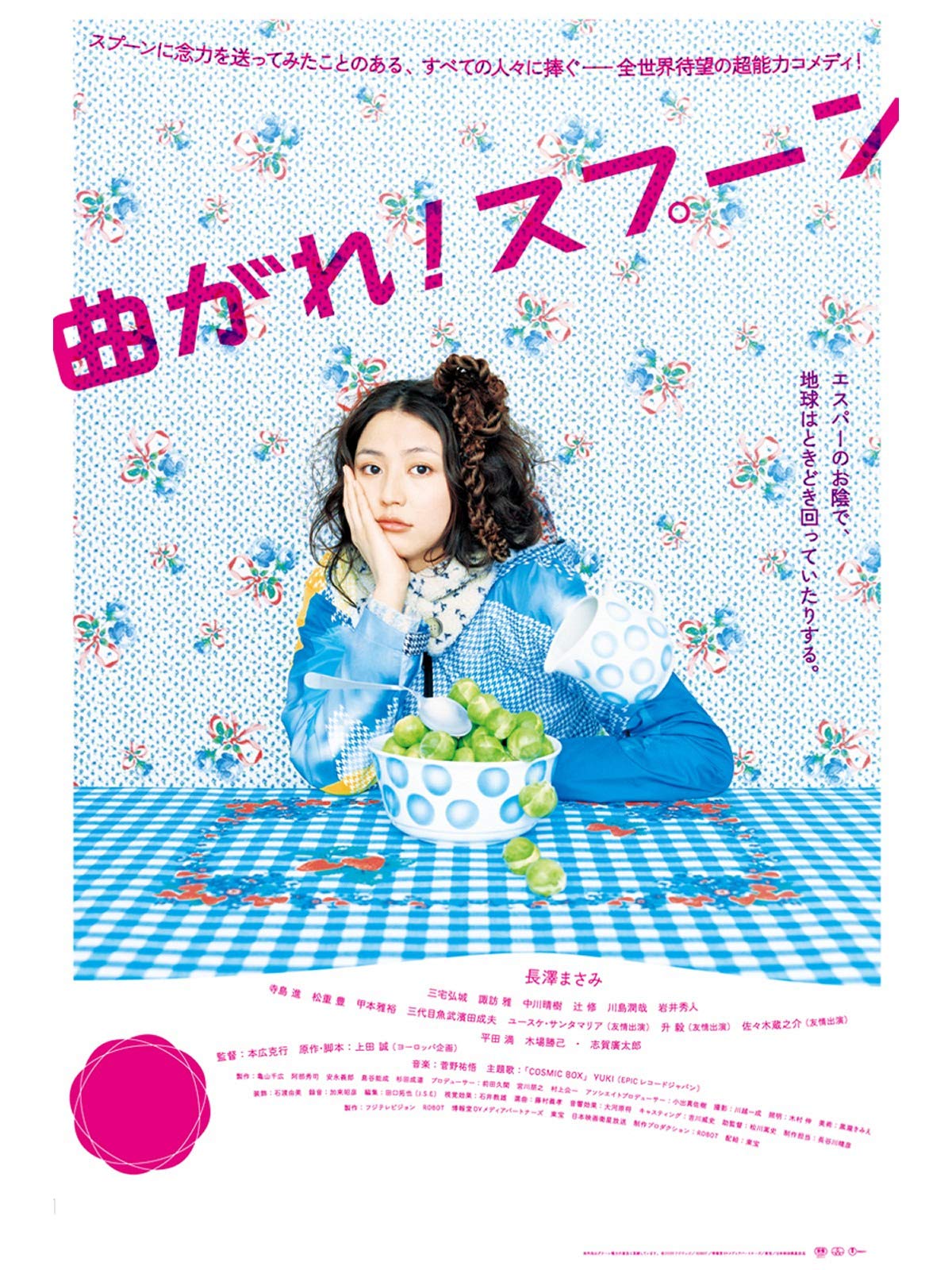
go find a psychic posterHow old is too old to still believe in Santa? Yone Sakurai (Masami Nagasawa), the heroine of Katsuyuki Motohiro’s Go Find a Psychic! (曲がれ!スプーン, Magare! Spoon) longs to believe the truth is out there even if everyone else thinks she must be a bit touched in the head. If there really are people with psychic powers, however, they might not feel very comfortable coming forward. After all, who wants to be the go to sofa moving guy when everyone finds out you have telekinesis? That’s not even factoring in the fear of being abducted by the government and experimented on!

In any case, Yone has her work cut out for her when the TV variety show she works for which has a special focus on paranormal abilities sends her out out in search of “true” psychics after a series of on air disasters has their viewer credibility ratings plummeting. Ideally speaking, Yone needs to find some quality superhero action in time for the big Christmas Eve special, but her lengthy quest up and down Japan brings her only the disappointment of fake yetis and charlatan monks. That is until she unwittingly ends up at Cafe Kinesis which holds its very own psychics anonymous meeting every Christmas Eve so the paranormal community can come together in solidarity without fearing the consequences of revealing their abilities.

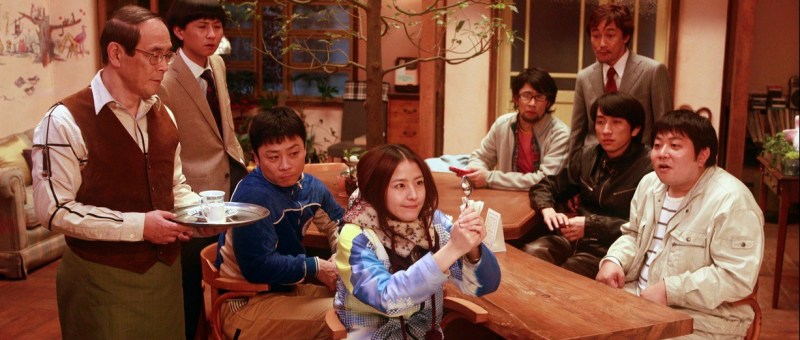
Based on a comic stage play, Go Find a Psychic! roots its humour in the everyday. The psychics of Cafe Kinesis are a bunch of ordinary middle-aged men of the kind you might find in any small town watering hole anywhere in Japan. The only difference is, they have a collection of almost useless superhuman abilities including the manipulation of electronic waves (useful for getting an extra item out of a vending machine), telekinesis (“useful” for throwing your annoying boss halfway across the room), X-ray vision (which has a number of obvious applications), and mind reading (or more like image transmission). The bar owner is not a psychic himself but was once helped by one which is why he set up the bar, hoping to meet and thank the person who frightened off an angry dog that was trying to bite him. Seeing as all the guests are psychic, no one is afraid to show off their talents but when a newcomer, Mr. Kanda (Hideto Iwai), suddenly shows up it creates a problem when the gang realise his “ability” of being “thin” is just the normal kind of skinniness. Seeing as he’s not a proper psychic, can they really let him leave and risk exposing the secrets of Cafe Kinesis?

Meanwhile, Yone’s quest continues – bringing her into contact with a strange man who claims he can withstand the bite of a poisonous African spider. Needless to say, the spider will be back later when the psychics become convinced Yone’s brought it with her presenting them with a conflict. They don’t want her to find out about their psychic powers and risk getting put on TV, but they can’t very well let her walk off with a poisonous spider trapped about her person. Despite small qualms about letting Kanda leave in one piece, the psychics aren’t bad guys and it is Christmas after all. Realising Yone just really loves all sort of psychic stuff and is becoming depressed after getting her illusions repeatedly shattered, the gang decide to put on a real Christmas show to rekindle her faith in the supernatural.

Just because you invite a UFO to your party and it doesn’t turn up it doesn’t mean it doesn’t exist. Some things can’t be explained by science. Maybe those old guys from the bar really can make miracles if only someone points them in the right direction. Like a good magic trick, perhaps it’s better to keep a few secrets and not ask too many questions about how things really work. For Yone the world is better with a little magic in it, even if you have to admit that people who want to go on TV aren’t usually going to be very “genuine”. That doesn’t mean that “genuine” isn’t out there, but if you find it you might be better to keep it to yourself or risk losing it entirely.


Original trailer (no subtitles)