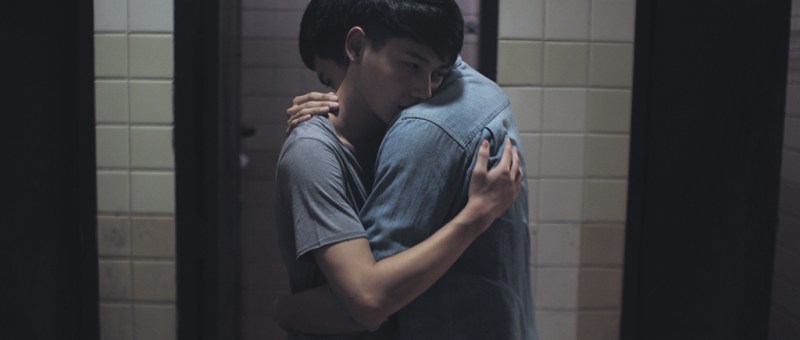

The Long Walk (ບໍ່ມີວັນຈາກ, Mattie Do, 2019)

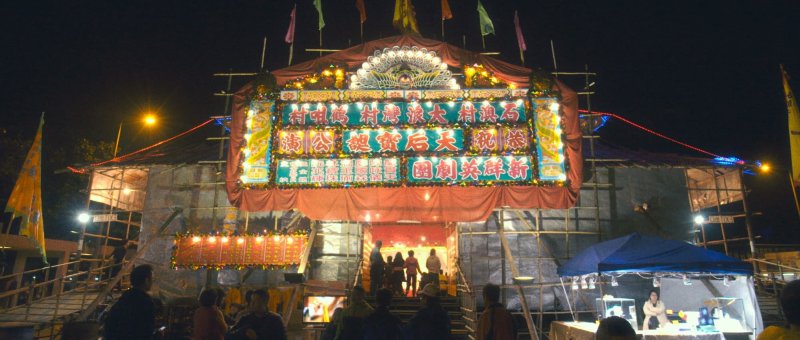
“How long have we been walking this road? Is it 50 years already? And you’ve never said a word” an old man (Yannawoutthi Chanthalungsy) reflects on reuniting with a ghostly presence (Noutnapha Soydala) that has accompanied him for almost all of his life if silently. An elliptical ghost story, Mattie Do’s The Long Walk (ບໍ່ມີວັນຈາກ, Bor Mi Vanh Chark) is indeed about the meandering path we all must take but also a meditation on grief and loneliness and what it means to die. 

Beginning in the near future around 50 years from now, the film opens with an old man literally looting his past freeing an old motorbike before nature can reclaim it so he can take it apart and help it move on to its next life with a little help from the local pawn broker. Though life in this small rural village might not be so distinguishable from that of 50 years previously or even 50 years before that, modernity has crept in with transactions largely carried out via an embedded chip in the forearm which can also tell the time. On his arrival in town, the old man begins to hear a rumour that the old lady who ran the local noodle shop and had apparently been suffering with dementia has gone missing with the worry being that she may have ventured into the forest and become lost as perhaps has the old man if in a less literal sense . 

The old man is well-known locally for the ability to contact spirits often spotted on the road chatting to his ghostly companion whom no one else can see, but as we come to understand his personal cosmology may in a sense be problematic in that the presence of a ghost is like a bug in the system, something trapped in the wheel of time that shouldn’t really be there impeding its movement. The old man knows the noodle seller is dead because he found her body and moved it to be closer to other departed spirits telling her that she will never be alone again, but in doing so he’s unfairly holding on to something that should be let go for the benefit of all. The first ghost, his constant companion, is that of a young woman he found dying in the woods when he was just a child (Por Silatsa), holding her hand until she was gone. In a sense he has never let it go nor she his. 

Nearing the end of his life, the old man’s philosophy has hardened while he himself begins to fear for his own mortality drawn back into the past towards the early bereavement of his mother’s death. We might in a sense read his increasing confusion as a sign of dementia, that he’s trying to reorder a reality of which he is no longer certain while attempting to change his history with the help of his companion who is able to transport him back into the past in the hope that he can ease the pain of his childhood self while in roundabout way bringing his mother into his own old age so that he himself will not be lonely. 

What he discovers, however, is that his interventions send the world in a darker direction than he’d expected in which he discovers unpleasant truths about himself eventually coming to realise the fallacy of his life’s philosophy. “I never helped any of those women” he sighs, “they suffered more for it”, acknowledging that he trapped these lost souls in a kind of limbo in which he is also is mired in preventing them from “moving on” forced on a circular journey caught between life and death. 

At heart a tale of grief, loneliness, and guilt, The Long Walk also hints at the fracturing bonds between people in an increasingly modern society in which everyone is technically connected at all times via the chips embedded in their forearms now essential for everyday life. Looking back on his childhood, the old man remembers his father trying to take advantage of a scheme run by a foreign company supposedly to help farmers that only leads to getting solar panels installed on his farm which are in fact completely useless to him when all he wanted was a tractor, their lives had no need of electricity and its arrival benefitted them not at all. 

Meanwhile, the old man is resentful towards the noodle seller’s daughter (Vilouna “Totlina” Phetmany) for neglecting her elderly mother who was all alone and could no longer care for herself, she having left for the city never to return possibly because as we later find out she feared that her sexuality may not be accepted in the still traditional community. The old man thinks he’s helping people escape lives of loneliness and despair by giving them a painless eternity but in reality his actions are merely self-serving, attempting to hold on to something that should have been set free. Dreamlike and elliptical, Do’s meandering tale is part ghost story and part time loop conundrum, filled with the beauty of nature but also all of its pain and terror in the ever present shadow of mortality. 


The Long Walk is available now in the US on VOD courtesy of Yellow Veil Pictures and will be released on blu-ray on March 29.

Trailer (English subtitles)

Until the Break of Dawn (ツナグ, Yuichiro Hirakawa, 2012)

If you had the opportunity to reunite with someone no longer here for a single night, would you take it? The young hero of Until the Break of Dawn (ツナグ, Tsunagu) is beginning to wonder whether or not it’s a good thing to be able to converse with the dead, if some people regret their choice to meet again, and if it’s better to just move on accepting that there will always be unanswered questions at the end of a life. Arriving shortly after the 2011 earthquake and tsunami, Hirakawa’s moving drama is a meditation on grief and living with loss, but also on life and legacy and everything it means to be alive. 

High schooler Ayumi (Tori Matsuzaka) is being apprenticed by his grandmother Aiko (Kirin Kiki) to become a “connector” able to meet with spirits of the dead. As he explains to his potential clients, each person is allowed to meet only one other from the other side for one time only and should the deceased decline the invitation the petitioner will not be permitted to make another. If all goes to plan, Ayumi sets up a meeting at a fancy hotel where the pair can stay until dawn on the night of a full moon. Obviously this is not exactly a well publicised activity and the first customer Ayumi meets, Hatada (Kenichi Endo), is reluctant to trust him assuming it’s some kind of scam no better than an end of the pier clairvoyant despite repeated assurances that they accept no money and even the hotel expenses are covered.  

Tellingly, in the first reunions which we see the deceased does not tell the living anything they did not already know, Hatada claiming that he wanted to talk to his mother to find out where she put the deeds for their house only for her to tell him he already knows where they are and obviously had some other reason for wanting to see her. Even Aiko admits that she can’t be sure she’s really summoning the spirit of the deceased, Ayumi wondering if they really call someone back from the other side or if it’s more like the memories of a person who is no longer alive that have remained in the world are pulled back to together building a composite picture of someone as others saw and remembered them. He isn’t sure if what they’re doing is ethical, or if some people might wish they’d never chosen to meet again. The subject of another meeting, a young woman who died while presumed missing, is uncertain whether to meet her former boyfriend on hearing that he had spent the last few years waiting for her return realising that the her that had remained in him will die when he is forced to accept her death but deciding it’s worth it so that they both can achieve some closure and he can perhaps begin to move on. 

Moving on is something Ayumi is himself struggling to do, presented with the option of setting up a meeting of his own before he prepares to take over from his grandmother as the connector while meditating on the deaths of his parents wondering if he should meet one of them and simply ask why they left him behind. Meanwhile, he also finds himself proximate to death when a classmate is killed in a traffic accident, her guilt-stricken friend unknowingly asking for his services though for less than altruistic reasons worried her friend may use the service to tell others about their falling out. She’s fond of repeating the phrase that you regret more the things you didn’t do than the things you did though her reunion turns out to have a sting in the tail she may not have been expecting hinting at the bad outcomes Aiko had also warned were possible in such emotionally fraught situations. 

The conclusion that he comes to is to embrace the true nature of his calling as a connector hearing that Aiko only got the power from her brother (Tatsuya Nakadai) to keep her connected to the family while she later gave it to her son for the same reason only to harbour a sense of guilt that her imperfect instruction may have contributed to his death. Learning to see with his heart, Ayumi comes to understand that just because you can’t see something doesn’t mean it isn’t there discovering a source of comfort in the feeling of someone gently watching over those below while accepting that perhaps it doesn’t matter if the reunions are real or illusionary because their true purpose is to comfort those left behind. A gentle meditation on grief and living with loss, Hirakawa’s quietly moving film eventually makes the case for growing old happily with no regrets living to the full until the break of dawn.


Until the Break of Dawn streamed as part of Japanese Film Festival Online 2022.

Original trailer (English subtitles)

The Floating Castle (のぼうの城, Isshin Inudo & Shinji Higuchi, 2012)

What happens if you call the bluff of those who thought they could take your complicity for granted? As it turns out, at least in the case of a small provincial outpost in Isshin Inudo & Shinji Higuchi’s lighthearted historical drama The Floating Castle (のぼうの城, Nobo no Shiro), something and nothing. Inspired by a real life incident which took place in 1590, 10 years prior to the era defining battle of Sekigahara, the film asks how far standing up to corrupt authority will get you but as history tells us this this is the twilight of the Sengoku warring states period and in the end any victory can at best be only partial and temporary. 

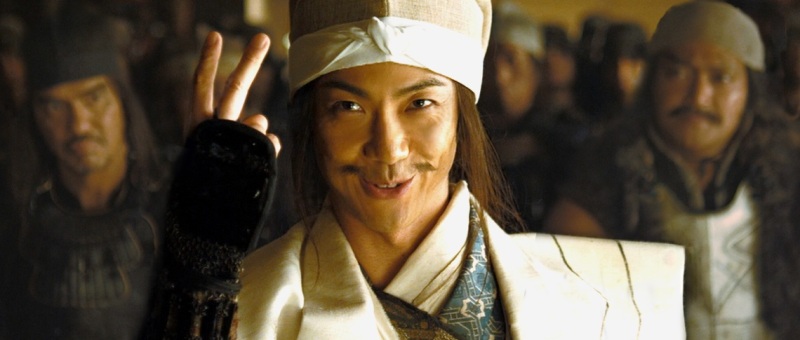
With Hideyoshi Toyotomi (Masachika Ichimura) poised to unify all of Japan under his rule he turns his gaze towards Hojo, the last remaining hold out in the East of Japan. The small castle of Oshi is asked to commit its forces to protecting the main castle at Odawara where lord Ujinaga (Masahiko Nishimura) is to meet with the head of the clan which has decided to resist the Toyotomi invasion. Ujinaga meanwhile is privately doubtful. He knows they do not have the manpower to protect themselves and the only viable course of action is immediate surrender though he cannot of course say this openly even if buffoonish lord in waiting Nagachika (Mansai Nomura) is brave enough to raise the idea of neutrality in front of the messengers. Preparing to head to Odawara, Ujinaga tells his closest retainers to strengthen defences but to open the castle should the enemy approach while revealing that he plans to write to Hideyoshi, whom he apparently knows personally, and privately pledge allegiance in order to avoid destruction. 

Nagachika, however, eventually makes the decision to resist following the arrogant entreaty from Natsuka (Takehiro Hira), the right-hand man of the Toyotomi retainer leading the assault, Mitsunari Ishida (Yusuke Kamiji). He does this largely because Natsuka makes the unreasonable demand that they surrender their princess, Kai (Nana Eikura), herself a fearsome warrior though somewhat sidelined here relegated to the role of contested love interest, to be sent to Hideyoshi as a concubine but also correctly reads that Natsuka and Ishida are overreaching and actually have little more than their bluster to leverage other than the 20,000 men standing behind them which they may not know how to use. Nagachika may play the clown, but he’s not stupid and knows that the 20,000 men are there for the purposes of intimidation and are not expecting a force of a mere 500 to tell them where to go so it stands to reason to think they are not entirely prepared for battle. 

In this he’s mostly correct. Hideyoshi has essentially given Ishida, previously in finance, an easy ride to improve his reputation among the other lords instructing the more experienced Yoshitsugu Otani (Takayuki Yamada) to ensure he comes back painted in glory. Otani had said that others admired Ishida for his “childlike sense of fair play”, but his sense of fair play is often childish as in his gradual realisation that everyone is surrendering to him because of the 20,000 men rather than his prowess as a general annoyed with his enemies for backing down from a challenge which is why he sends Natsuka to alienate Nagachika hoping to provoke a battle which no rational person could ever describe as “fair”. Having assumed that Nagachika would back down or that the castle would be easy to take with only 500 country bumpkin soldiers defending it, the Toyotomi are in for a rude awakening discovering the extent of the counterstrategies in place to protect the small provincial outpost, forced into a humiliating defeat licking their wounds from a nearby hill. 

But then, as Ishida manically proclaims power comes from one thing, gold, using his vast resources to dam two nearby rivers and then burst them to drown the town as Hideyoshi had done once before. Designed by effects specialist Higuchi the flooding of the town is indeed terrifying, a spectacle which delayed the film’s release as the eerie similarities with the catastrophic tsunami of the year before may have been too traumatic for audiences, and speaks to nothing if not Ishida’s intense cruelty in which he is willing to go to any lengths in order to win even destroying the lives of innocent farmers far removed from these petty samurai games. As the film would have it, his arrogance and entitlement eventually come for him, his trap turned back on himself after an ill-advised potshot at Nagachika, a natural leader beloved by all because rather than in spite of his deceptive clownishness, causes disillusionment with his leadership. 

In any case, we already know how this story ends, Ishida is defeated at Sekigahara and beheaded in Kyoto. Nagachika’s victory can be only partial and in fact does not even win him the thing he went into battle for even if he strikes a blow at corrupt government in refusing to simply give in to intimidation, calling their bluff and showing them they cannot continue to push smaller clans around solely with the threat of extinction. In the end they are all at the mercy of their superiors, a truce imposed and imperfect to each side in an act of compromise which spells the end of an era many of those surviving the battles voluntarily renouncing samurai status as if realising their age is drawing to a close, Nagachika proved on the right of history in cultivating links with the Tokugawa soon to take the Toyotomi’s place as rulers of a unified Japan. His resistance was then not foolhardy but justified, necessary, and principled in standing up to injustice even if it could not in the end be fully stopped. 


The Floating Castle streamed as part of Japanese Film Festival Online 2022.

International trailer (English subtitles)

Bread of Happiness (しあわせのパン, Yukiko Mishima, 2012)

“Plain bread is nice too” a short-term visitor concedes having reached an epiphany after a few days’ stay at Cafe Mani in Yukiko Mishima’s slice of comfort cinema, Bread of Happiness (しあわせのパン, Shiawase no Pan). Perhaps in its own way a reaction to the devastating earthquake and tsunami of the previous year which is referenced in the closing arc, Mishima’s drama is one of a series of films from the 2010s advocating for a simpler life built on empathy and mutual compassion as a bulwark against the increasing disappointments of a relentlessly consumerist society. 

The heroine, Rie (Tomoyo Harada), was a lonely child who buried herself in a fantastical children’s book about a little boy, Mani, who was best friends with the Moon. Touched by Mani’s words when the Moon asked him to take down the sun because its brightness made his life unbearable that “what matters most is that it shines on you and that you shine on others”, Rie resolved to find her own Mani but has long since given up. She and her her husband Mizushima (Yo Oizumi) have recently relocated to a Hokkaido ranch where they run a cafe bakery that has quickly become a community hub tending to the wounded souls of the local area and sometimes even beyond. 

The urban/rural contrast is rammed home by the couple’s first guest, Kaori (Kanna Mori ), a young shop girl from Tokyo who was supposed to be going to Okinawa with her boyfriend but he stood her up and she’s come to Hokkaido instead. Although originally grumpy and sullen, Kaori begins to warm to the charms of rural life complaining that in Tokyo people have to force themselves to smile. Her words accidentally hurt the feelings of local boy Tokio (Yuta Hiraoka), conversely jealous of big city opportunity but lacking the courage to strike out from his small-town life in which ironically enough he works as a points switcher at the local railway. What Kaori learns through her various experiences and the kindness of the Mizushimas isn’t that country life is better just that small happinesses are often all you need, there is pleasure in simplicity, and there’s no need to submit herself to the pretentiousness of city life explaining that she’s going to tell her coworkers the truth about her Okinawan holiday and bring some of the wholesome homemade bread back for them too. 

But then, it isn’t always so easy as the couple discover trying to help a sad little girl in the wake of marital breakdown. In a slightly surprising twist, Maki (Yuki Yagi) has been abandoned by her mother who has left the family and is struggling to accept both her loss and the change in circumstances which goes with it. The dilemma revolves around a bowl of pumpkin soup which Maki refuses to eat despite having previously longed to taste her mother’s signature dish. The realisation she comes to is that something can be different but that doesn’t make it bad, bonding with her equally dejected father (Ken Mitsuishi) thanks to the gentle support of the Mizushimas who seem to have a knack for knowing just what everyone who comes through their door needs. 

That goes double for the elderly couple who turn up late one night in the dead of winter, husband Fumio (Katsuo Nakamura) worryingly explaining that they’ve lived long enough, that while you’re young you still have the possibility of change, of becoming “a different you”, but old age has no further possibility nor the ability to change. Having lost their daughter in the tsunami the old couple are trapped in an inertia of grief from which they are gradually awakened by the gentle care of the Mizushimas and the sight of the beautiful moon that shines down on Cafe Mani. 

Rie meanwhile remains privately dejected, longing for her own Mani but convinced she’ll never find him only to realise he’s been there all along. Just like the words in the picture book, Rie and Mizushima have resolved to be the light, Fumio later sending them a letter claiming that they have discovered the ideal form of happiness in their simple life doing as they please surrounded by friends who have already become family and offering love and support to all who come through their doors through the medium of delicious seasonal food. With a host of quirky side characters including an omniscient glass blower (Kimiko Yo), genial postie (Chikara Honda), farmers with an ever expanding family, and a regular customer who carries a mysterious trunk around, while narrated (seemingly) by a sheep with the voice of a child Mishima’s gentle drama is foodie pure comfort cinema in which good bread and a warm fire may yet save the world.


Bread of Happiness until 27th February in several territories as part of Japanese Film Festival Online 2022.

Original trailer (English subtitles)
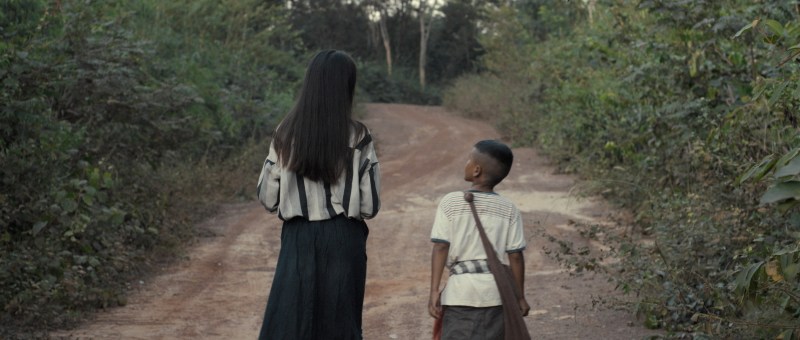
ReLIFE (ReLIFE リライフ, Takeshi Furusawa, 2017)

Is there such a thing as toxic conventionality? The hero of Takeshi Furusawa’s manga adaptation ReLife (ReLIFE リライフ) has driven himself into despair in his failure to achieve conventional success in contemporary Japan, fearing that in having fallen from one of the earliest rungs of the ladder he’ll never be able to climb back up and therefore has no real future. Even so, his dissatisfaction is turned entirely inward rather than channelled into a desire to change society for the better, his eventual epiphany amounting to the determination to help others persevere amid constant disappointment rather than encouraging them to reject the mainstream and search for bespoke happiness. 

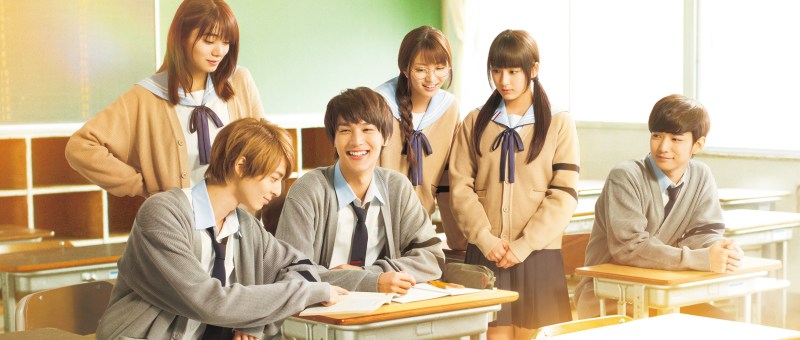
At 27, Arata (Taishi Nakagawa) isn’t sure why his life turned out this way. He thought he’d follow the conventional path, graduate uni, get a steady salaryman job, marry around 25 and settle down into a comfortable middle class life, but now he’s trapped in a perpetual cycle of job seeking and part-time work with his savings running out and final demands pouring in. Invited to a gathering with old friends one of whom is getting married, he shaves and puts on a suit playing the role of the conventional salaryman they all assume him to be too ashamed to let them know he’s struggling. So when he’s accosted in the street by a strangely elfin young man, Yoake (Yudai Chiba), who tries to recruit him into an experimental programme in which they’ll pay his living expenses while he spends a year as a high school senior he finds himself agreeing. 

This is no time travel story, however, the magic pills merely turn Arata back into a 17 year old to enrol in a contemporary high school with kids 10 years younger than himself. He can’t literally change his past but is supposed to use the time to grow as a person, rediscovering a sense of possibility that comes with youth and dwindles with age. His initial intention is just to ride it out seeing as he’ll have no immediate worries for food or shelter and has been guaranteed help with the job hunt when the year is up and he returns to being 28, but inevitably finds himself drawn into teenage intrigue helping each of his new friends reach their own epiphanies in gaining the courage to declare their feelings or overcome their shyness in trying to decide the further course of their lives. 

Part of his own epiphany lies in his renewed desire to be part of a community, no longer isolated in his personal shame but actively participating while embracing his innate kindness and desire to help others. As we later learn, he quit his company job on uncovering workplace sexism and petty harassment, unable tolerate it that a talented colleague (Mikako Ichikawa) found her career sabotaged by men who didn’t like it that she was good at her job and therefore presented a threat to their success. Arata naively brought the matter to the attention of his boss but his boss sided with the guys and had her transferred out. Given this information, it makes little sense that Akira quit his job in protest but then continued to apply for new ones with other companies presumably assuming they would be different rather than accepting workplace bullying is a systemic issue. 

This is the fundamental problem with his experiences in ReLife in that the path he eventually discovers lies in helping other people endure this already corrupt system which isn’t working for anyone, let alone himself. His emphasis on the spirit of never giving up and being there for those in need is noble, but ultimately only enables the system which caused so many to fall into despair in insisting that it is they who need to live up to these culturally defined ideals of conventional success rather than challenging the deeply ingrained social codes which prevent them from pursuing personal happiness. Part high school nostalgia drama complete with a potentially inappropriate romance, ReLIFE is replete with typical genre motifs such as the cultural festival and summer fireworks display along with the continual sense of something coming to an end as Arata finally convinces himself to “treasure the moment” rather than remain trapped between past regret and fear of an uncertain future, but perhaps sends the uncomfortable message that adult life is something you just have bear rather than actively enjoy. 


ReLIFE streams until 27th February in several territories as part of Japanese Film Festival Online 2022.

Original trailer (English subtitles)
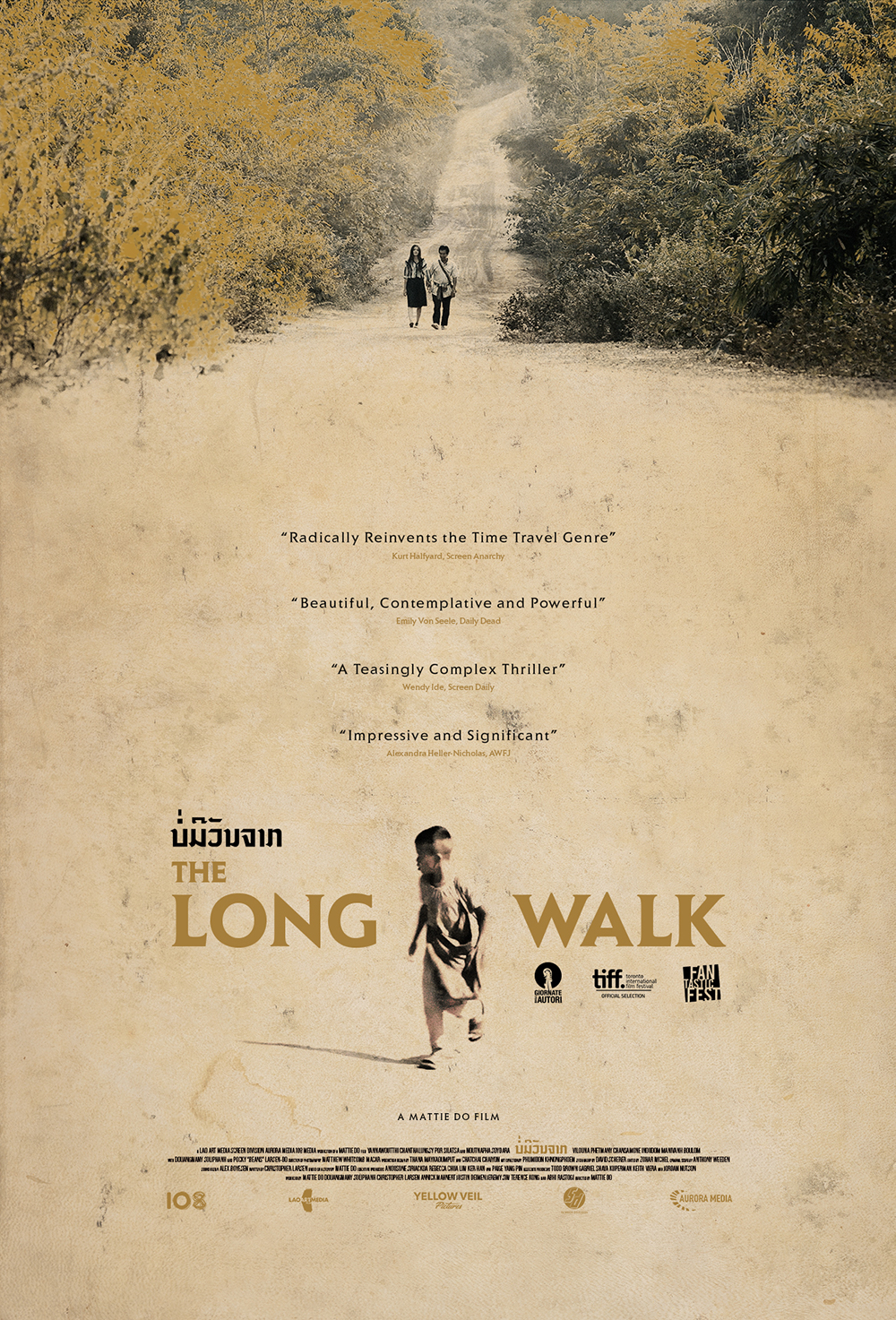
OZLAND (オズランド 笑顔の魔法おしえます。, Takafumi Hatano, 2018)

A snooty elitist gains a new perspective after being unexpectedly transferred to an old school rural theme park in Takafumi Hatano’s heartwarming workplace dramedy Ozland (オズランド 笑顔の魔法おしえます。, Ozland: Egao no Mahou Oshiemasu). Echoing The Wizard of Oz’ Dorothy, Kurumi (Haru) suddenly discovers that she’s not in her familiar Tokyo anymore and is originally resentful, sullen, and aloof refusing to engage with her new coworkers while dismissive of their work but gradually comes to see that there was method in the madness realising the ways she herself has been petty and small-minded while all anyone wanted to do was make people happy. 

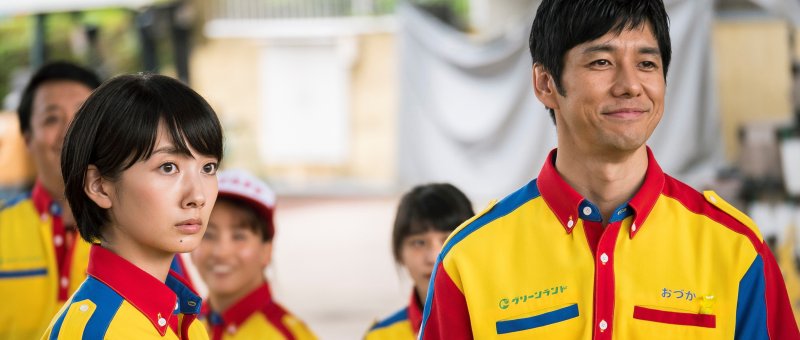
Kurumi’s problem is that she’s a hometown girl. She loved her city, her family, her friends, and most particularly her boyfriend Toshi (Tomoya Nakamura) even going so far as to get a job at the company where he works so they can be together all the time. Tragedy strikes when she’s abruptly transferred to a theme park in provincial Kumamoto, Toshio suggesting she go and make the most of the experience of living alone for the first time while they do long distance. Coming from straight-laced Tokyo she experiences a kind of culture shock especially as her eccentric supervisor, Mr. Ozuka (Hidetoshi Nishijima), chooses to haze her with a pretend bomb scare immediately on her arrival. Aside from that, it seems the boss (Akira Emoto) misread her name on her résumé (as it turns out, the main reason he hired her) so no matter how often she corrects them everyone keeps calling her “Namihei” rather “Namihira”, suggesting that it might be easier if she changed her name because they’ve already had it printed on all her things. 

In a way, the name dilemma hints at Kurumi’s sense of superiority over her new coworkers in that she refuses to simply let it go out of politeness, as well she might in refusing to allow them to get away with calling her by a name that’s easier for them without bothering to learn her own, but equally using it as more evidence of their lack of sophistication rather than deciding to see the funny side. Though she’s been hired as part of the planning department, Ozuka assigns her mostly menial tasks further fuelling her sense of resentment. She might have a point when she says she didn’t go to uni to pick up trash for a living, but obviously looks down on her coworkers while the young man who joined at the same time as her, Yoshimura (Amane Okayama), simply gets on with the job without complaint. Kurumi went to a good university which adds to her snooty sense of elitism but later discovers that Yoshimura went to an even better one yet obviously doesn’t feel the same sense of belittlement in being asked to perform manual labour. 

What she later realises is that all of the “pointless” menial tasks had a point but she missed it because she tried to cheat, hoping to get in Ozuka’s good books in the hopes of being transferred back to Tokyo or allowed to do actual planning work. Not until she’s begun to settle in and accepted that she’s been unfair to her coworkers does Kurumi begin to look at herself realising that her snobbishness has only made her unhappy while the relaxed atmosphere and gentle camaraderie at the park is what has kept her new colleagues so cheerful. The extent of her personal growth is thrown into sharp relief when Toshio visits from Tokyo and immediately begins running the park down, describing her colleagues as “nosey”, and finally exclaiming that he preferred the old snooty Kurumi and wants her to come back to elitist Tokyo with him before she turns into a happy provincial. So changed is she that she can’t quite believe he’d be so snobbish and no longer knows what she saw in him realising that she’s much happier now she’s less judgemental and more engaged with those around her. 

In essence, she’s a Dorothy who decided to stay in Oz discovering a new home and a new family in a rundown theme park in Kumamoto that might quite literally be a dreamland making families happy all year round. Filmed at the real life Mitsui Greenland amusement park, Ozland might come from the sponsored by the tourist board school of Japanese cinema (local mascot Kumamon makes several guest appearances) but undoubtedly has a lot of heart not to mention surreal whimsy in its frequent Oz references and insistence on the importance of magic in everyday life. 


OZLAND streams until 27th February in several territories as part of Japanese Film Festival Online 2022.

Original trailer (English subtitles)
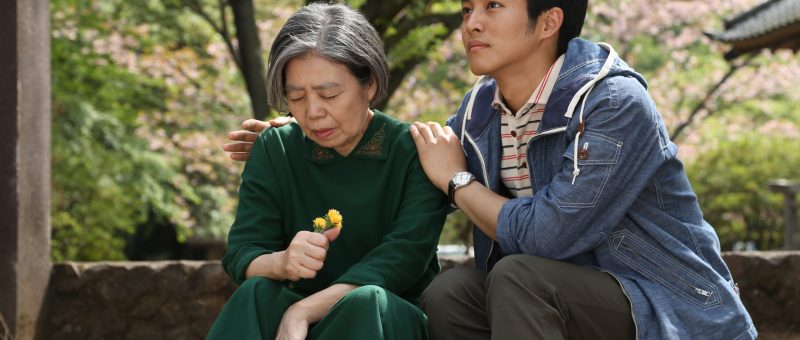
Storytellers (うたうひと, Ryusuke Hamaguchi & Ko Sakai, 2013)

Many tend to forget the folktales and fables they were told when young or at least until they themselves have a child yet it’s often through mystical stories that we first begin to learn about the world and our place within it. Third in a series of documentaries by Ryusuke Hamaguchi & Ko Sakai focussing on the Tohoku region in the wake of the 2011 earthquake and tsunami, Storytellers (Utauhito) follows folklore scholar Kazuko Ono of Miyagi Minwa no Kai as she travels the local area visiting friends in order to hear the various stories they remember from their youth. 

Yet as she explains during a trademark Hamaguchi backseat monologue in a car he and co-director Sakai are driving, folktales may have different meanings and interpretations to different people and in different eras in their own particular context. As an example she cites the tale we’ve just heard recited by an elderly woman titled The Monkey’s Bride in which a farmer with three daughters unwisely promises a wife to a monkey who agrees to help him with his rice paddy. The first two daughters refuse, but the third agrees because her father made a promise only to trick the monkey, who has been nothing but kind to her, into drowning himself in a lake. As a child, Kazuko like many disliked the story feeling sorry for the monkey who had acted only with humanity and does not seem to warrant being killed in such an unkind fashion. But then she began to reconsider how her grandmother from whom she first heard it may have read the tale as a woman married off at 16 who constantly tried to run away and only wanted to escape cruel treatment at the home of her in-laws. To her the daughter in the story was brave, doing that which she could not in freeing herself from a forced marriage after being sold to pay her father’s debt. Looking deeper again she began to wonder if the monkey wasn’t also a metaphor for the rich landowners who oppressed peasant famers with only poor quality paddies who were often forced to sell off their daughters in return for financial assistance. 

Other stories meanwhile speak of the ingenuity of the poor, a little girl rewarded after responding to an ad promising vast riches for anyone who manages to bore the story-loving lord, she managing it quickly by making him repeat a lengthy nonsense phrase at regular intervals. A story apparently meant to encourage young couples to find “clever” ways of sorting out marital disputes similarly finds a husband returning from the city selling his wife’s lover whom she hastily shut in a water jar, getting one over on him and her, getting his hands on 10 ryo, and even getting the jar back too. Such stories tell us something about the world in which they took place, female adultery in this case not so much of problem able to be solved with some comedic shenanigans rather than the point of a sword, while we might equally find it an absurd way to deal with marital infidelity. Then again there are also a series of thematically similar stories cautioning against marginalised members of society who create problems in order to gain fame and fortune through solving them such as two bizarre tales of magical instruments which cause people’s bottoms to sing an absurd and annoying song which only the holder of the object can stop allowing them to leverage their new talents for unearned wealth and status. 

Even so it isn’t perhaps the tales that matter so much as their transmission, many of the elderly storytellers recalling memories of their grandmothers from whom they first heard how the shrimp got its curved back or of eagles who tried to fly to the edge of the ocean. Each of the storytelling sessions begins in ritualised fashion, Kazuko and the other party introducing themselves to each other though they have all been friends for years or sometimes decades and already know each other well. As in the story of the girl and the lord, we’re reminded that tales like these expect call and response, an exchange between the storyteller and the listener that transcends the story itself. A now elderly man recounts that he’d forgotten most of the tales his eccentric grandmother had told him before joining the folktale group in his 40s, but also advances that the stories she gave him were intended to foster a sense of wonder in the world along with a confidence and security that would allow him move freely through the darkness. A lesson in oral history in which these ancient tales are shared and retold before reaching new generations is perhaps a sign of hope that something has and will survive in the simple act of speaking and listening even as Kazuko explains that in order to hear the story she must also change herself so she too may keep moving forward . 


Storytellers streams worldwide (excl. Japan) via DAFilms until Feb. 6 as part of Made in Japan, Yamagata 1989 – 2021 (films stream free until Jan. 24)

My Atomic Aunt (波の向こう, Kyoko Miyake, 2013)

“I can’t let TEPCO ruin my life” the heroine of Kyoko Miyake’s personal documentary My Atomic Aunt (波の向こう, Nami no Mukou) eventually asserts, explaining that when you have no more tears to cry then you become defiant. Having lived in London for 10 years prior to filming the documentary, a lack of defiance was something that had initially interested Miyake, wondering if she’d simply been away too long no longer understanding why everyone in her family’s hometown of Namie in Fukushima continued to refer to the Tokyo Electric Power Company in such affectionate terms. Then again, as her aunt Kuniko points out before losing her patience, “anger won’t get us anywhere”.

Returning to Japan soon after the 2011 earthquake and tsunami, Miyake details her own relationship with Namie, rendered uninhabitable after the Fukushima nuclear disaster, during her opening voiceover describing it as a warm and nostalgic place marked by a sense of rural tranquility. Nevertheless through making the documentary she comes to question both herself and the town, wondering why it was that people were so keen to have the plant come when the prevailing wisdom of her own generation was anti-nuclear and wary of duplicitous heavy industry. As her aunt and her friends reveal, however, post-war Namie was a poor village where farmers often had to leave for city jobs over the winter to make ends meet. Some grew envious of other local towns which had become economically prosperous thanks to corporate investment while others remained sceptical. Those who refused to sell their land for the development of another nuclear plant were harassed into submission by those convinced of its benefits, while TEPCO was keen to invite the local community to inspect existing plants to prove that they were safe. 

An awkward and in fact incredibly sexist propaganda video targeted at local wives and mothers demonstrates that safety was still an issue as late as the ‘90s, a company representative ominously claiming that the plant has been designed to withstand a tsunami before adding “we will never betray your trust”. Many residents still want to believe in TEPCO’s promises, sure that they will somehow fix what is broken even while many of them are trapped in temporary housing with no idea when or if they’ll be allowed to return home. Aunt Kuniko tries to stay cheerful, bored with trying to kill time having previously devoted herself entirely to work. Miyake describes her aunt as a feminist pioneer who showed her how to be glamorous and successful while also having a rich family life. Ironically enough, Kuniko ran both a wedding parlour and a funeral home right next to each other with a bakery in-between. She wanted her children to take the businesses over, but her three sons have already moved on, one buying an apartment and starting a business of his own far away without saying anything at all about it to her. 

The tsunami disaster has deepened a generational divide with the young leaving the area to make new lives elsewhere while as one old lady puts it the elderly are left behind with nothing to do but laugh. These people haven’t just lost their homes, they’ve lost their hometown, in a sense orphaned and free floating in a Japan struggling to find space for them as the heartrending echoes of plaintive folksong Furusato make clear. Forced to accept they may never be able to return, Kuniko looks for new premises but only for her funeral home conceding that there’s not much future in the wedding business, with all of the youngsters gone there’s no one left to get married. “There’s no such thing as absolute safety” she laments, regretting having been duped by TEPCO and the dubious promises they sold even as they positioned themselves as the driving force of the post-war economic miracle. The town felt proud by proxy that the energy they generated went into rebuilding the country, but as Miyake admits as long as the lights stay on in Tokyo no one cares about Fukushima or about the people still living in temporary accommodation caught in a never-ending limbo waiting for someone to tell them what they’re supposed to do now that everything they’ve ever worked for or built is lost in an instant. 

While her husband remains somewhat sympathetic to TEPCO, arguing that the problem isn’t nuclear power but safety, Kuniko begins to lose her patience taking part in protest marches against the plant while trying to salvage what she can from her old life. Miyake bookends the film with images of post-Fukushima Namie now an eerie ghost town, pastries still sitting in Kuniko’s bakery the area’s timelessness ironically mirroring Miyake’s description of it in her childhood memories as a kind of time-warp to post-war Japan from bubble-era Tokyo. An elegy for a community erased, Miyake’s quietly angry documentary takes aim at indifferent government and corporate greed, but finds also a stoical sense of endurance as Kuniko waters her abandoned flowers and prepares to start again. 


My Atomic Aunt streams in the US until Dec. 23 as part of Japan Society New York’s Flash Forward series.

Vision (ビジョン, Naomi Kawase, 2018)

In her most recent work, Naomi Kawase has been moving further towards the mainstream, shooting in a more conventional arthouse register and mainly casting established professional actors in contrast to the amateurs who often took centre stage in her earlier career. Vision (ビジョン) however returns her to her familiar Nara Prefecture with its verdant forests and rolling mists and to more obscure realms of poetic ambiguity and new age philosophy.

French scientist/travel writer Jeanne (Juliette Binoche) has come to Japan in search of a herb so rare it apparently only spores once a millennium but has the capability to “dispel human weakness, agony, and pain”. Tomo (Masatoshi Nagase), a mountain man she ends up lodging with along with her interpreter Hana (Minami), answers only that “happiness exists in each of our hearts”, a somewhat hollow and ironic reply given his general grumpiness and stern expression. He tells them that he’s only lived in the cabin for 20 years having moved to the country because he was “tired” and that his purpose is to save the mountain. Despite his seeming reluctance, he eventually introduces the pair to a blind shamaness who claims to be 1000 years old and was born when the last plant (or as she points out fungus) spored. 

Lost in the beauty of nature, Jeanne begins to wonder if she is really in the present, losing the certainty of the moment. We get occasional snippets of what seems to be memory bathed in a golden light and presented as flashback which might hint at the “pain” Jeanne is trying to cure through finding the “vision” herb even as she engages in a halfhearted though apparently passionate affair with the indifferent Tomo. She sees him as “starving” for something, not knowing what it is he’s longing for, though her friend describes him as “happy” as if silent like the mountain he claims to be saving though all we see him do is destroy it by carving up trees even if he does point again to the transience of things in explaining that the lumber he produces is the work of several generations who planted and grew so he could cut down, perhaps hinting back at Jeanne’s claim that when life develops too far it begins to destroy itself. 

Tomo doesn’t quite seem to buy her new age philosophies, explaining only that “you see, and hear, touch, you feel, that is everything”, rooting his sense of reality firmly within the realms of the sensual. “Sometimes because we have language we can’t understand each other” Jeanne later says, echoing him though perhaps accidentally while expounding on the human condition to a mysterious young man, Rin (Takanori Iwata), discovered injured in the forest. Aki (Mari Natsuki), the shamaness, advances that there are changes in the forest, that it has become unbalanced, and that it will soon be time for the “vision” to present itself though it seems to take a while for Jeanne to understand what form that may take. Aki dances furiously amid the trees as if bending them to her will, her ritualistic dance later echoed in the climatic final sequence that sets a fire in the mountain but causes Tomo to suddenly declare that it is after all alive. 

Jeanne finds her “vision” in an alignment of past and future, a familial, generational reunion which allows her ease her pain just as it was said vision would do. All moments are perhaps one moment. On the train Hana had described a feeling of long forgetten happiness that Jeanne’s travel essay had provoked in her as akin to “nostalgia”, instantly amusing Jeanne who is overcome by the incongruity of this young woman already romanticising a sense of nostalgia for an unlived past. Tomo had declared that it was enough simply to remember that he too was a part of this world, but is suddenly reminded that he is not alone. Literally setting fire to the past they buy themselves the possibility of being reborn, making space for new growth in the knowledge that the mountain is “alive” as indeed are they. Tomo has saved the mountain, and Jeanne has perhaps saved herself. “Isn’t it beautiful?” she exclaims embracing a new vision of a bright and shining future no longer burdened by pain or despair.


Vision streams in the US until Dec. 23 alongside Naomi Kawase’s 1997 debut Suzaku as part of Japan Society New York’s Flash Forward series.

Trailer (English subtitles)

The Albino’s Trees (アルビノの木, Masakazu Kaneko, 2016)

A young man is forced to face up to the nature of existential struggle when tasked with killing a god in Masakazu Kaneko’s meditation on land, modernity, and the taking of a life, The Albino’s Trees (アルビノの木, Albino no Ki). Filled with a sense of unease, Kaneko’s parabolic drama asks if it’s right to force others to live in the way you think is best, if it’s right to take the life of an animal simply because it’s inconvenient to you, and if it’s right to assume ownership over the natural landscape as if it’s yours to do with as you wish. To the young man at the film’s centre, these questions are ones he thinks he can’t afford to ask but is eventually confronted with in committing what to some may be an unforgivable transgression. 

Yuku (Ryohei Matsuoka) used to work in removals but times being what they are, his boss has taken a left turn accepting lucrative contracts working as animal control agents on behalf of local councils carrying out culls of wildlife deemed out of control. His colleague Imamori (Shuichiro Masuda) remains conflicted. He isn’t completely happy with this kind of work but has been persuaded that it’s necessary though it still seems cruel to him if not morally wrong to hunt and kill healthy animals solely for existing. Nemoto (Hiroyuki Matsukage), their boss, is keen for them to take on a well paid “confidential” job but with so little information the guys are reluctant, something about it seems shady. Nevertheless, with his mother seriously ill and needing money for medical treatment Yuku agrees as does Imamori only to discover that not even the local councillor who hired them wants to explain what the job is. 

The councillor does, however, begin to outline the economic history of the town once dependent on coal mining now pivoting towards innovative farming. With barely concealed disdain, he replies to Yuku’s inquiry as to whether the mountain in question is inhabited by briefly remarking on a traditional village on the other side the existence of which seems to fill him with such disgust one half wonders if Yuku’s contract job is even darker than it seems. He laments that they have “no desire to develop”, continuing to live a traditional rural existence rather than succumbing to the dubious conveniences of modernity. On meeting up with their contact (Hatsunori Hasegawa), another hunter living on the ridge, the pair discover that their assignment is to eliminate an albino deer because, according to the hunter, the council is nervous that some may assume its mutation hints at corruption in the soil endangering the stability of their eco farming project. The problem is that the villagers believe the albino deer to be an embodiment of the White Deer God that protects the mountain as part of their Shinto animist beliefs and have been protecting it by dismantling all his traps. Imamori declines to go through with the job, feeling that it’s wrong to kill the deer just because it was born different but thinking only of his mother Yuku is determined to do whatever it takes.  

His dilemma is in a sense mirrored by that of Nagi (Kanako Higashi), a young woman from the village he rescues from an animal trap who tells him that she remains torn between the allure of modernity and a traditional rural existence. Yoichi (Yusuke Fukuchi), a young man making a living carving traditional wooden bowls, is determined to preserve ancient beliefs Yuku regards as backwards and superstitious convincing himself that killing the deer is also an act of liberation that will bring enlightenment to the villagers so that they won’t “need” to live in such an archaic and primitive way. But as Yoichi tries to explain to him, you can’t force people to conform to your own way of thinking, it’s not as if anyone is a prisoner here if they didn’t like it they’d leave as all of the other young people have already done. He asks him if a world in which you simply eliminate things which are “inconvenient” to you is one you really want to live in but Yuku isn’t here for such philosophical questions only baffled by what he sees as primitive superstition that stands in the way of progress. 

Yet, the village is largely untouched by the corruptions of the modern society. The water in its rivers is clean and sweet, the wood in its trees strong and beautiful. As Nagi explains to him, the White Deer God has given them permission to drink from these springs, and permission to harvest the trees. By contrast, there’s an unpleasant look of triumph in Yuku’s eyes as he shoots deer from a distance killing for no reason at all, man overcoming nature. He thinks only of his own survival, taking the lives of other living things in order to preserve his own, determined to save his mother but indifferent to the fates of others. When it comes to killing the white deer his hands shake, struck for the first time by the enormity of what he’s doing while literally preparing to kill a god. While Yoichi venerates and protects the natural environment in a process of symbiotic living, Yuku sides with those willing to exploit it for economic gain brainwashed into believing that living with the land is “backward” and that it’s only “natural” to eliminate “inconveniences” such as “vermin” which impede “modern life” in a capitalistic society. Capturing the natural beauty of the Japanese countryside Kaneko’s existential fable is filled with a quiet unease in the ambivalent relationship between man and landscape but also in the solipsistic struggle for survival that all too often defines human relationships. 


The Albino’s Trees streams in the US Dec. 3 to 23 as part of Japan Society New York’s Flash Forward series.

Original trailer (English subtitles)