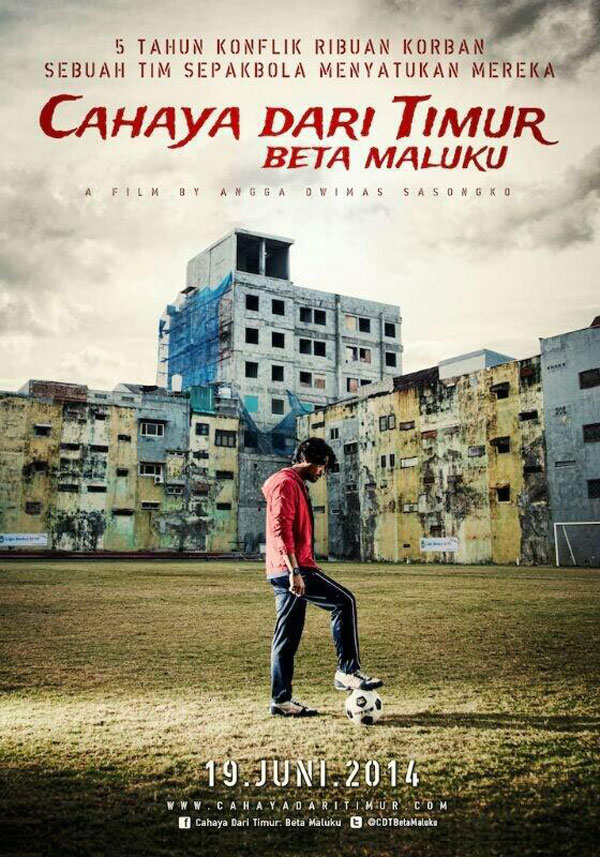
We Are Moluccans (Cahaya Dari Timur: Beta Maluku, Angga Dwimas Sasongko, 2014)

A motorbike courier finds himself torn between conflicting priorities when his community is threatened by internal strife in Angga Dwimas Sasongko’s inspirational sporting drama We Are Moluccans (Cahaya Dari Timur: Beta Maluku). As the title suggests, team sports provide a means of communal healing fostering both hope and unity among the young but even so the traumatic memories of the recent past prove hard to overcome while the older generation struggle in the wake of their own broken dreams and contradictory responsibilities. 

At the turn of the century, a violent conflict breaks out between Muslim and Christian communities who had until that point lived together in relative peace. With his motorcycle courier business disrupted by the ongoing chaos, former youth footballer Sani (Chicco Jerikho) begins coaching a collection of local boys mostly as a means of keeping them away from the immediate violence of the riots. As the situation begins to stabilise, his new responsibility to the children places a strain on his relationship with his wife, Haspa (Shafira Umm), who complains that he spends too much time giving back to the community while the family is struggling economically to the extent that she can no longer extend their tab at the grocery store. His old football friend Rafi (Frans Nendissa) is also struggling with his fishing business having lost most of his crew who fled the area’s violence and so the two of them begin to make the football club more formal but it soon becomes clear that they each have differing goals and responsibilities that endanger their partnership and the commitment they’ve made to the boys.  

At several points Rafi, not to mention Haspa, criticise Sani for what they see as irresponsibility while some of the other village men also accuse him of unmanliness for choosing to look after the children rather than fight with them to protect the village. His problem is that he’s too kind hearted but is entirely unable to order his priorities torn by the necessity of providing for his family and following through on the commitment he’s made to the neighbourhood boys. He often gives his hard won money away to those in need, angering his wife who cannot understand why he continues to help others rather protect his own family even giving away money he’d saved for their youngest daughter’s vaccinations and abruptly selling their goats without discussing it with her when she’d earmarked them as an emergency fund to pay the enrolment fees when the oldest daughter starts school. 

Because of the ongoing violence, many of the boys are in single parent families and live in relative poverty often needed to help out with their parent’s businesses. To begin with many are fine with them playing football so long as it keeps them safe but as they begin to grow older attitudes harden, many believing that it’s a “pointless” waste of time and too much of a distraction when the children should either be earning money or studying. Sani becomes a kind of surrogate father teaching the boys diligence and responsibility even if struggling with the same in his personal life but obviously cannot overcome the social and economic difficulties of small town life all on his own. His original goal was only to keep the children safe and ensure they had happy childhood memories that weren’t about hate, violence, and fear, whereas Rafi is much more ambitious floating the idea of opening an official football school while eventually deciding to run for public office further adding to Sani’s sense of personal inadequacy. 

“Nothing can destroy us as long as we have will to live a better life” Sani later tells the children, mistaken it seems in his belief that they would find it easier to overcome the differences between them when acting as head coach for a team representing the entirety of the local area. Many of the original team resent the introduction of “outsiders” from the nearby Christian town, but the difficulties turn out less to be about religion or community than trauma, the source of the problem being that the father of two of the Christian boys is a policeman whom another of the players blames for his own father’s death. While such tensions exist within the group the team continues to fail, losing not because of a lack of ability but because they cannot overcome the legacy of trauma to work together. The problem is only solved through a reassertion of their commonality as “Moluccans” rather than Muslim or Christian ironically forged in opposition to their current other which happens to be a team from Jakarta, the urban pitted against the rural. 

In any case, Angga Dwimas Sasongko’s inspirational drama eventually makes the case for mutual forgiveness as path toward putting the past to rest in order to move forward into a kinder and more prosperous era. The emotional closing scenes provide both a personal sense of acceptance in as Rafi begins to put his pride aside to support the local team while Muslims and Christians come together to listen to the nail-biting penalty shootout through their respective contacts in the auditorium after the TV broadcast cuts out before extra time. Demonstrating the power of sports to overcome cultural barriers, We Are Moluccans finally advocates for the right to dream as the youngsters begin to develop self-confidence and a sense of possibility while working together towards a clearly defined goal. 


We Are Moluccans streams in Poland until Nov. 29 as part of the 15th Five Flavours Film Festival.

Trailer (English subtitles)

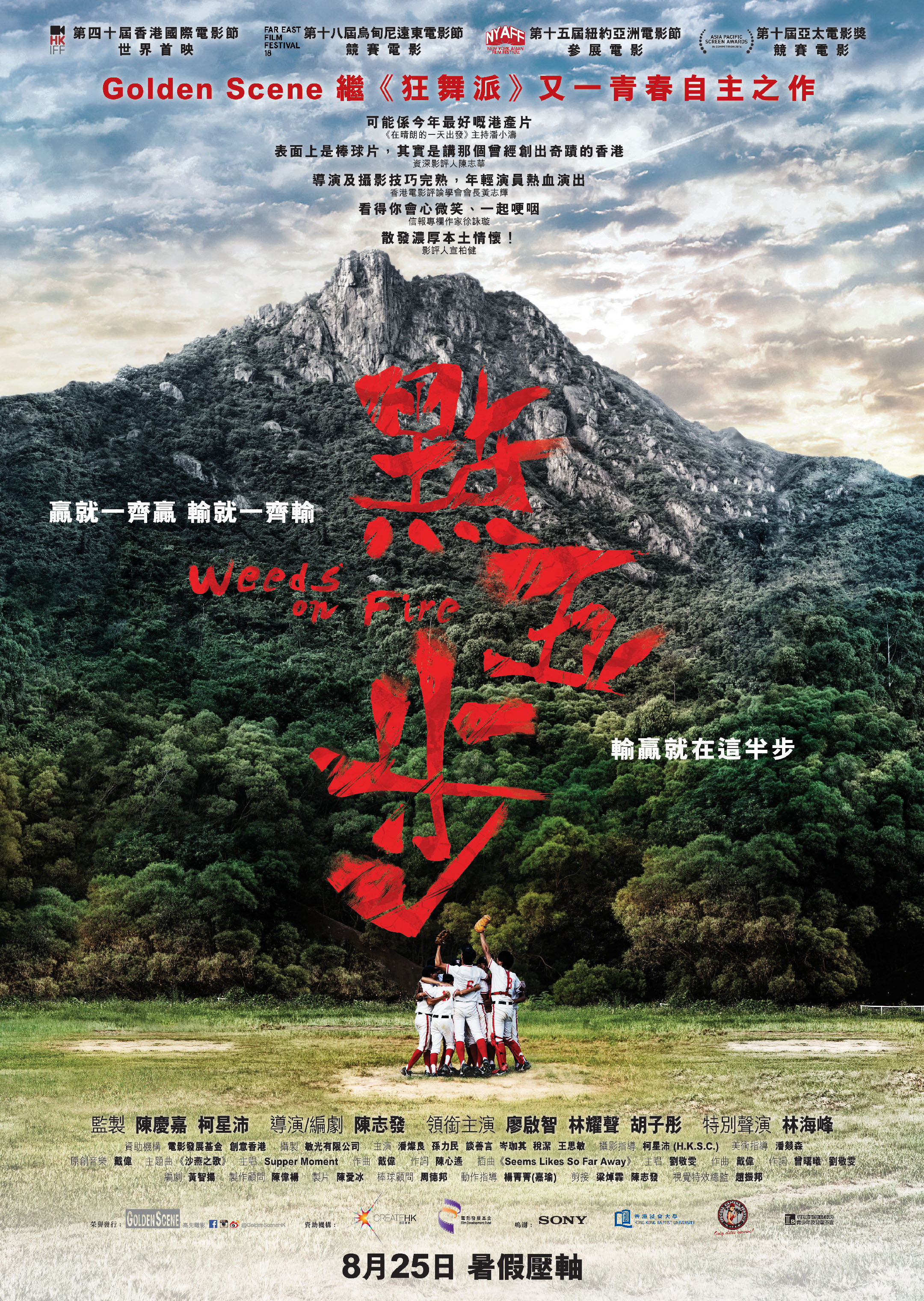
Weeds on Fire (點五步, Steve Chan Chi-Fat, 2016)

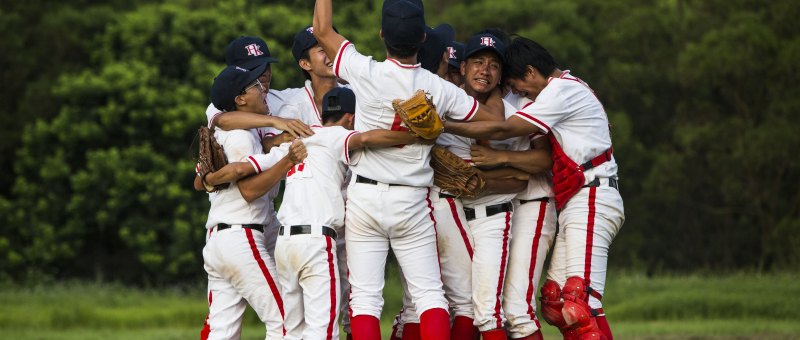
“Even though disappointed, do not lose hope” reads a piece of graffiti in the closing moments of Steve Chan Chi-fat’s nostalgic coming-of-age drama Weeds on Fire (點五步). Though touted as a baseball movie, as incongruous as that may sound given that the sport is a niche interest in contemporary Hong Kong, Chan’s strangely hopeful if quietly melancholy tale of ‘80s Sha Tin is bookended by scenes of the present day city in the midst of the Umbrella Movement protests the story the hero wants to offer seemingly intended for an audience of dejected youngsters as confused and disappointed as he once was in order to encourage them that what’s important isn’t winning or losing but staying the course and gaining the confidence to take the first step. 

Now in his mid-40s, Lung (Lam Yiu-sing) casts his mind back to the Hong Kong of 1984 when he lived on a rundown council estate in Sha Tin and attended a high school with a less than stellar academic record. A shy and nerdy boy, he was often bullied but always had childhood friend Wai (Tony Wu Tsz-tung), physically imposing and with a confident swagger, at his back. When the city comes up with additional funding for schools to use in the promotion of sport their enterprising headmaster Lu Kwong-fai (Liu Kai-chi) hatches on the idea of starting the region’s very first local high school baseball team, recruiting both Wai and Lung in the hope of teaching them teamwork and discipline. Nevertheless, being teammates begins to place a strain on their friendship and it becomes clear that the boys are destined for different paths. Wai quits the team in a huff and leaves school, mooching round in pool bars and hanging out with triads while Lung steps up to the plate but is troubled by the loss of his friendship and the fracturing relationship between his unhappily married parents. 

Chan somewhat unsubtly ties Lung’s personal development to that of Hong Kong as he finds himself coming of age in era of anxiety. The world is literally changing around him, 1984 being as says the year that the redevelopment of Sha Tin began in earnest while it also marked the signing of the Sino-British Declaration paving the way for the transfer of power in the 1997 Handover. A young man, Lung wants to “change” himself in that he longs for the confidence to ask out a young woman he’s developed a crush on but is too shy and disappointed in himself for doing nothing when witnessing her being harassed by a drunken creep in the lift of the apartment block where they both live. Yet in other ways change frightens him and really he wants everything to stay the same believing that saying nothing will maintain the status quo only to realise that there are situations over which he has no real control. 

His headmaster and coach of the baseball team Lu admits that he set Wai and Lung against each other in order to encourage him to come out from his friend’s shadow embracing his own identity and discovering a sense of self-confidence. Yet Lung continues to struggle, a little lost unable to find clear direction in his life while everything changes around him occasionally consumed by a sense of despair as perhaps are the young protestors in believing their movement has failed. In baseball what he realises that it isn’t about winning or losing but having the confidence to step up to the plate, subtly telling the protestors to hang in there because there’s still time to turn this around. “I never said we had to win”, inspirational coach Lu reminds the boys, “but I did say never give up!”.

Loosely based on the real life story of the Shatin Martins though as the closing credit reel reveals the original team were primary school children rather than high schoolers, Chan shifts away from sporting drama towards the more familiar youth movie metaphor of two former friends heading in different directions, the good boy knuckling down while the “bad” becomes a victim of his own hotheaded arrogance even if managing to repair his fractured friendship with Lung before tragedy strikes. Filled with memories of Handover anxiety and a healthy dose of ‘80s nostalgia, the film’s incongruous jauntiness is perhaps at odds with the gravity of the tale though that is perhaps itself part of the message the older Lung has for the young. “This is the city where I grew up. It’s become increasingly unfamiliar” he laments striding through streets filled with tents occupied by student protestors, sympathising with their cause while offering them a note of melancholy hope in his own, sometimes painful, tale of finding his feet in a changing Hong Kong. 


Weeds on Fire streams in Poland until Nov. 29 as part of the 15th Five Flavours Film Festival.

Original trailer (English subtitles)
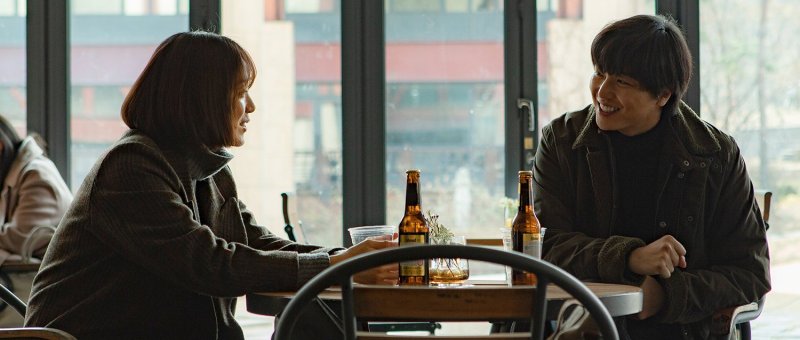
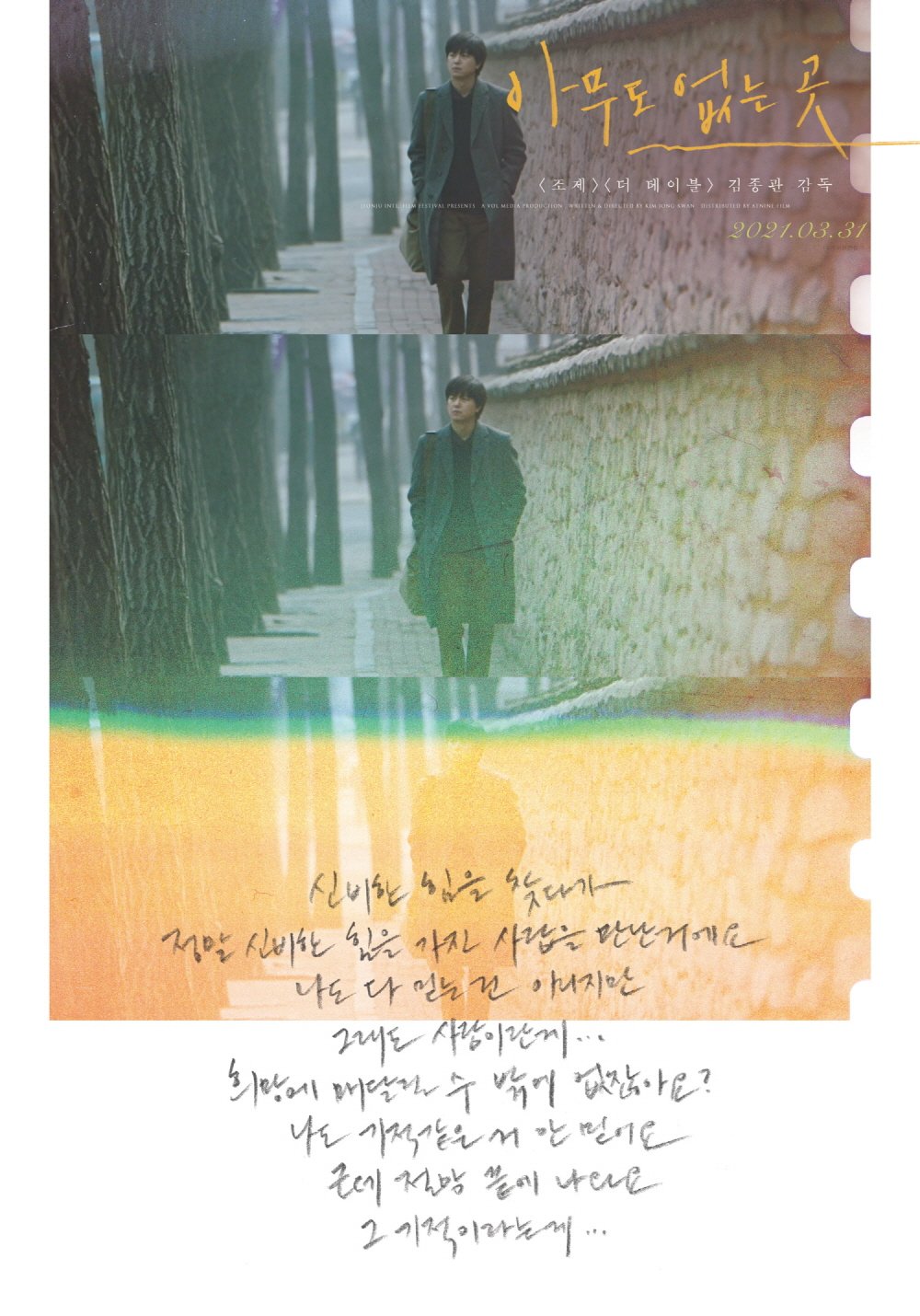
Shades of the Heart (아무도 없는 곳, Kim Jong-kwan, 2021)

“I see hope! Let’s change direction” a distressed woman shouts in a park, “We should follow the wind, let’s hold hands that way you won’t get lost.” Her interjection is perhaps unexpected, in its own way sad, but also a sign offered to the melancholy protagonist of Kim Jong-kwan’s Shades of the Heart (아무도 없는 곳, Amoodo Eobneun Got), a man who has become without quite realising it “someone who waits” yet through encounters serendipitous and otherwise begins to see new paths in front of him, turning a corner into another story.

Novelist Chang-seok (Yeon Woo-Jin) has just returned to Seoul after seven years abroad following the breakdown of his marriage in the UK. He has begun to have strange dreams, seeing an older version of himself and presumably his wife walk away from him and eventually disappear. Yet each of the people he meets is also in someway burdened by a sense of loss or despair, his first meeting with his mother who appears to have some kind of dementia and does not initially recognise him thinking once again she’s on her first date with his father. Her sadness is the loss of past and present but also of future, telling her son on finally recognising him not to smoke so much so he won’t die young like his dad. 

Chang-seok had apparently given up smoking, but is motivated to start again perhaps seeing little point in extending his life, accepting some unusual Indonesian cigarettes from a former colleague now his editor who eventually tells him of her failed love affair with a young exchange student which apparently ended partly because he could not acclimatise himself to the harsh winters of Seoul. The other reason perhaps echoes something in Chang-seok’s own life though also tinged with a different sense of sadness. A serendipitous meeting with a former acquaintance meanwhile takes a turn for the strange, photographer Sung-ha (Kim Sang-Ho) somewhat manic in his ecstasy in having run into Chang-seok explaining that his wife is terminally ill yet a Buddhist monk had told him he’d run into someone he knew who would bring him luck. On the other hand, Sung-ha also shows him a vial of cyanide he’s managed to procure apparently planning to use it to take his own life after his wife dies but now filled with an almost certainly false hope in the strange power of religious mysticism. “I don’t believe in all that, but people.. they need to hang their hope on something” he explains.

Chang-seok may not have much of a sense of hope, but what little he has he’s hung on people or on art. He is forever “waiting” for someone who may or may not arrive or even exist, making notes in his notebook or wandering around the surprisingly lonely streets of Seoul after dark pausing by the now obsolete phone booths filled with the detritus of city life unsure whether or not to make a call. His final conversation is with a woman who tells him that she has no memories of her own, having been robbed of her past, and more, in an accident and now “buys” them off her customers swapping free drinks for personal stories while writing poems about their lives. “No one is coming, but he became someone who waits” she writes of Chang-seok, their meeting oddly mirroring his first in its mixture of fiction and reality along with relationships forged through the exchange of stories true or otherwise. As he’d said, sometimes a made up story can be the more truthful. 

“But they come in the depth of despair, miracles” Sung-ha had added hopefully seconds after saying he didn’t believe in them, each of Chang-seok’s encounters a tiny miracle in itself. Imbued with a deep sense of melancholy and loneliness, Kim’s delicately scripted ethereal drama is an exercise in grief and despair Chang-seok’s sense of fiction and reality beginning to blur even as he begins to find the urge to write again and with it perhaps to live again too. “I see hope!” the woman shouts once more, restored something as she takes her place in a new story, Chang-seok turning the corner and beginning once again to dream. 


Shades of the Heart screens 14th November as part of this year’s London Korean Film Festival.

Original trailer (English subtitles)
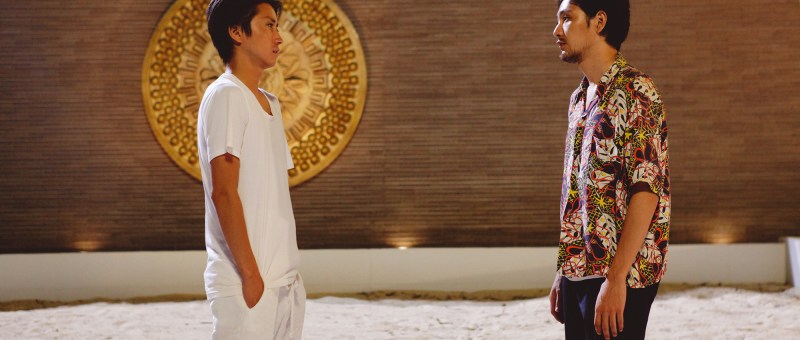
I’m Flash! (Toshiaki Toyoda, 2012)

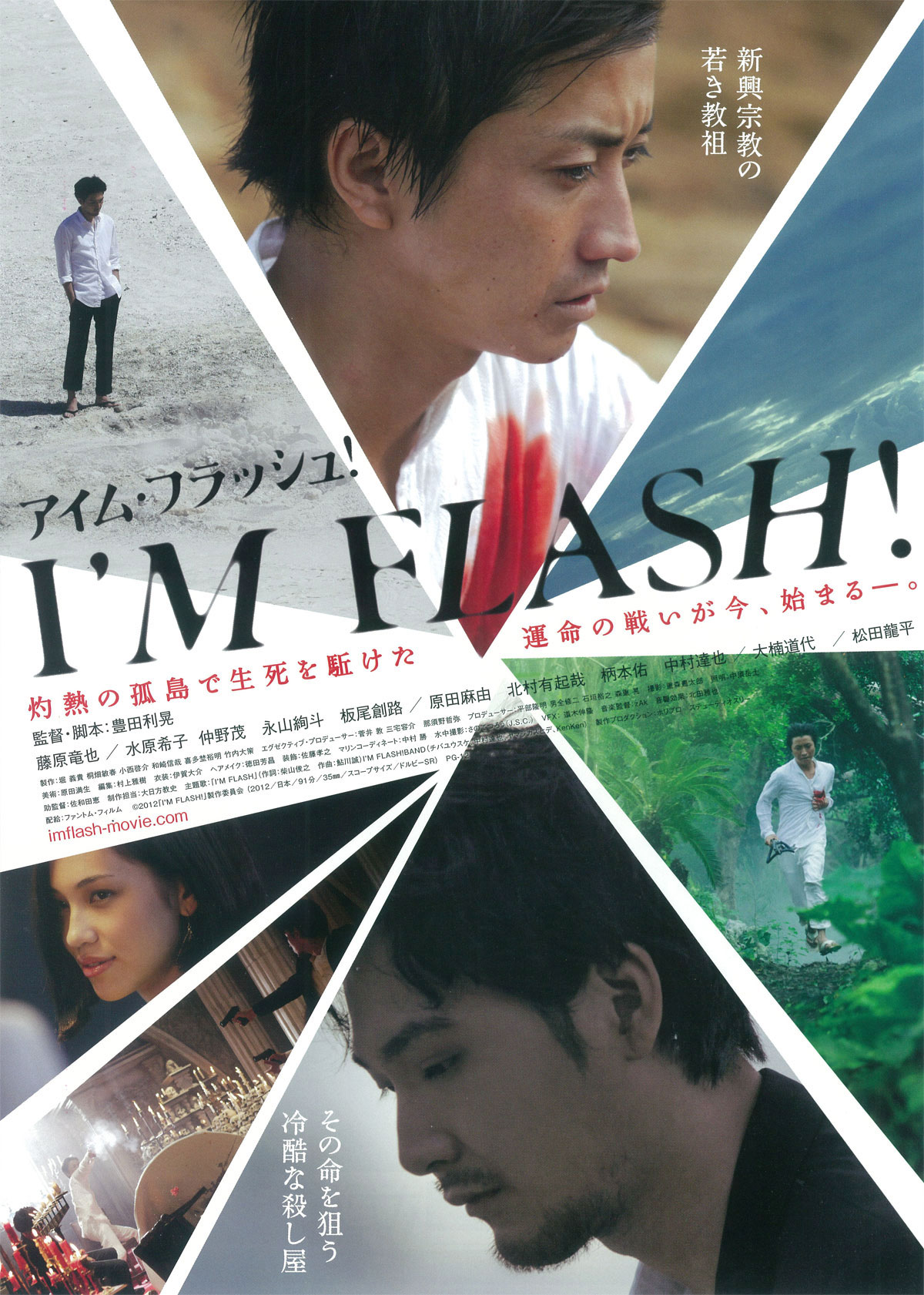
A conflicted cult leader’s existential crisis plays havoc with the “family business” he’s unwillingly inherited in Toshiaki Toyoda’s ironic contemplation of life, death, and everything in-between, I’m Flash!. Taken from a Sheena & The Rokkets song, the slightly awkward title refers not to the hero’s taste for visible wealth, but to the briefness of life. Shot in the wake of the 2011 earthquake, Toyoda apparently intended the film to “shake off death” but ultimately casts off only its shadow while suggesting once again that “death is the ultimate salvation” and the only true path to freedom. 

As the film opens, “guru” Rui (Tatsuya Fujiwara) literally collides with destiny as the bright red sports car he’s driving meets a motorcyclist coming in the other direction. The unnamed cyclist (Tasuku Emoto) is killed instantly and thereafter callously forgotten while the girl in the passenger seat next to him (Kiko Mizuhara) who’d he’d only met that evening in a bar is now in a coma with no indication of when or if she may wake up. Rui is shaken, however, most in being confronted with the real world cost of his phoney religion something which he has perhaps been ignoring in order to continue living his life. “If you want to make serious money there’s nothing better than religion” he’d cynically joked, playing the playboy enjoying the attention his gurudom grants him, particularly with the opposite sex, while living a life of undeserved luxury built on exploiting the vulnerability of others. 

Yet as we come to realise his troubles are not only moral or spiritual but personal in realising that he is but a puppet of his own organisation which is in reality run by his pragmatic mother (Michiyo Okusu) and hard-nosed sister (Mayu Harada) to whose marketing genius he attributes the cult’s recent success. One of three bodyguards hired to protect him quips that Rui is “kind of like a mob boss”, and he’s not far off except that Rui is only the face of the organisation with no real power to affect change. The cult, which runs under the slogan “Life is Beautiful”, was apparently founded by his grandfather and can only be inherited through the male line but Rui later discovers that both his grandfather and father whose skulls sit in his ossuary may have died unnatural deaths suggesting perhaps that they too came to experience this same sense of existential impotence or fell victim to the machinations of others. Feeling emasculated, Rui was forced to become the guru when his middle sister decided to transition, joining older sister Sakura and his mother as part of the matriarchal governing body while refusing the burden Rui must now carry. 

“Everyone needs something to cling to” Rui’s mother rationalises, justifying herself that the members of the cult would merely have joined another organisation if not theirs. Veteran hitman Kamimura (Shigeru Nakano) says something similar when the bodyguards are asked to switch sides and take Rui out of the picture, insisting that if they don’t do it someone else will. Rui’s decision to dissolve the church sparked by his meeting with the girl in the bar creates a serious business problem for his mother and sisters, yet reflecting he realises that he had plenty of opportunities to change his life and let each of them pass him by. “Is life supposed to be enjoyable?” zen hitman/bodyguard Fujiwara (Ryuhei Matsuda) answers when Rui asks him if he’s happy living on the sidelines, but it’s he alone who seems to see the value of living in the present ironically embodying the cult’s central messages that it’s only the fear of death that prevents one living a happy life while also correcting Rui’s minder that the contemplation of mortality shouldn’t be as “effortless” as the solutions they offer profess.  

Rui’s only escape lies in the ocean, in a sense diving into life while swimming towards the sun in search of rebirth while Fujiwara asks himself if he’s completely free if the world is but a fleeting dream and after death everything disappears as if it never existed. The guru may have fallen victim to his own philosophy, looking for salvation in death while perhaps selfishly prioritising his own liberation rather than destroying the corrupt system of which he was a part and in which he will simply be replaced. “Not at any time will the illusion of hope be destroyed” according to an ethereal voiceover casting doubt over its own message of positivity even while its hero swims toward the light. 


I’m Flash! is released on blu-ray in the UK on 18th October as part of the Toshiaki Toyoda: 2005 to 2021 box set courtesy of Third Window Films accompanied by a typically insightful commentary from Tom Mes.

Original trailer (English subtitles)

Monsters Club (モンスターズクラブ, Toshiaki Toyoda, 2011)

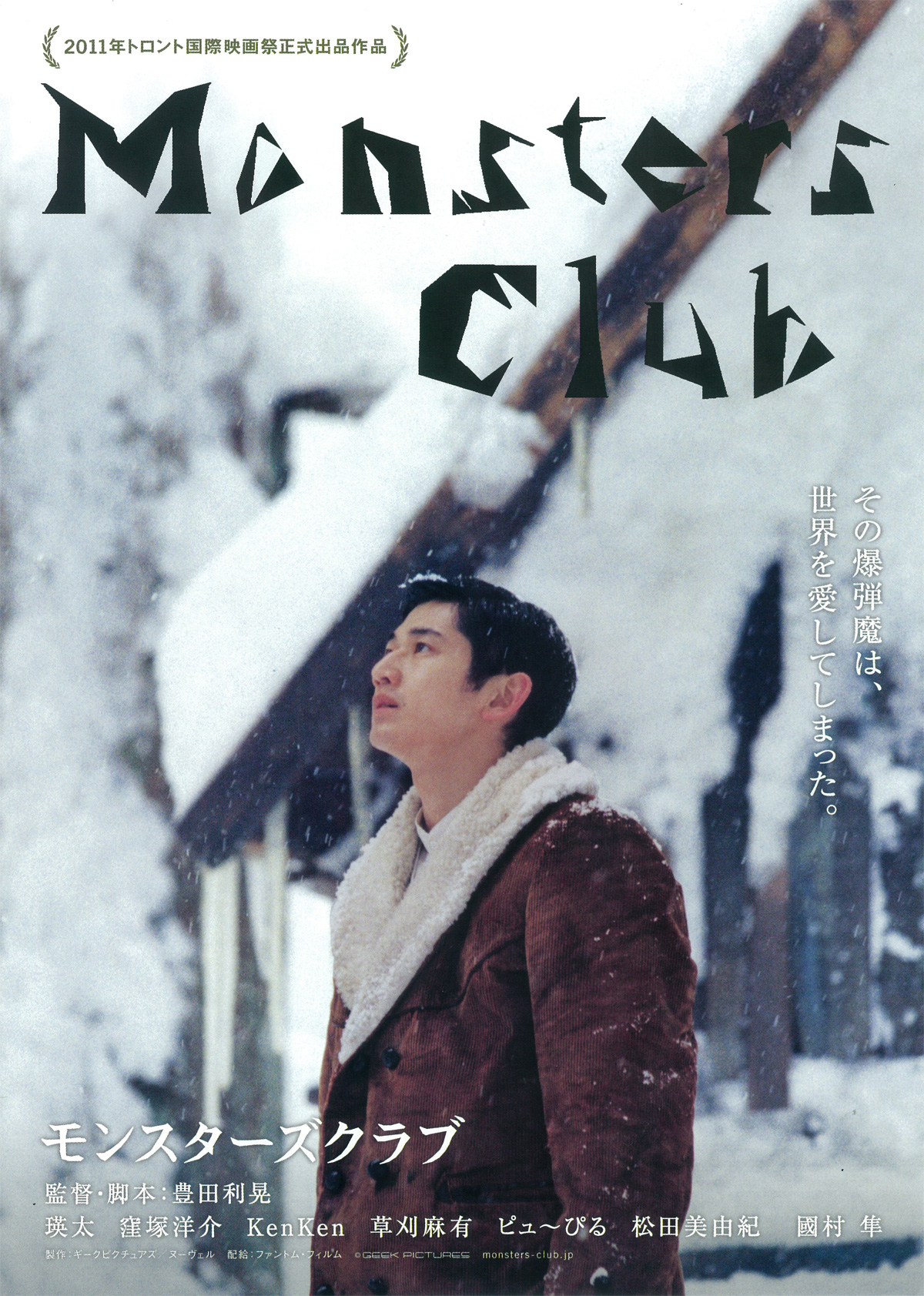
“I’m disappointed in you. Very disappointed. You’re still in love with the world” a young man is told in a dream or perhaps delusion by a man he respected but by whom he may also in a sense have been betrayed. Partly inspired by the life and writings of the Unabomber, Toshiaki Toyoda’s Monsters Club (モンスターズクラブ) is less a treatise on post-millennial Japan than it is a profoundly moving character study in trauma and isolation in which an orphaned young man struggles to find meaning in world in which he feels he has no control over his existence. 

The second son of a noble family, Ryoichi Kakiuchi (Eita Nagayama) has retreated from “this stench-filled society” to live alone in a small cabin in the woods. In an opening voiceover he reads from a manifesto railing against the “industrial society” which he believes railroads those born into it towards a life of wage slavery from the day they are born. Yet his existence is more 19th century than it is a primitive return to the land, his appearance meticulously well maintained in an incongruous clash with his rejection of social conformity, and he must necessarily in some sense still be connected with the outside world given that he will need to obtain batteries and gunpowder used for constructing the bombs he’s been mailing to CEOs of advertising and entertainment companies, not to mention the cigars he is often seen smoking after repurposing their packaging. 

Though he is aware people have died because of his bombs, Ryoichi regards them not as murder but as a “message”, later penning a letter to the prime minister which he ultimately discards in favour of sending him the poems of Kenji Miyazawa instead. Ryoichi’s dilemma is that, as one of the ghosts who visits him suggests, he still wants to save a world he believes is beyond salvation. The bombs are therefore a wake up call, but an awkward one which fails to deliver the message he intended in urging a corrective course away from empty capitalism towards a less regimented social order in which he is master of his own destiny. “Freedom is power” he later writes, resentful of a society he feels infantilises him by removing his “right to self-determination” while his life “depends on the decisions of others” whom he doesn’t even know. 

It might be easy to sympathise with his philosophy in the Japan of 2011 entering another decade of a stagnant economy in a rigid and conformist social culture in which the rewards of playing by the rules have all but disappeared. But Ryoichi’s nihilism is born as much of his successive traumas as it is by dissatisfaction with a world devoid of meaningful opportunity. Formerly the son of a wealthy man with no need to worry about the future, uncertainty enters his consciousness with the death of his father, followed soon after by his mother’s from illness, his younger brother’s in an accident, and his older’s by suicide leaving only he and his younger sister (whom he has also abandoned) as the last of his line. Literally orphaned he finds himself unanchored, forced into retreat and choosing self-isolation. Yet if retreat was all he wanted he could have achieved it, living quietly alone in the woods with no need for bombs or indeed any kind of communication at all. Taunted by the ghost of his brother Yuki (Yosuke Kubozuka), he at once takes aim at the “system” which drives those who cannot accommodate themselves with it to suicide, while flirting with the nihilism that suggests suicide is the only true expression of freedom in an oppressive society. 

Nevertheless, Ryoichi eventually loses faith in his brother’s philosophy rationalising that if he had managed to find the pathway to the ideal world he spoke of he would not have needed to take his own life and could have lived in “relative happiness” even if in “a forest of monsters”. He claims to have found this happiness himself and urges his sister to do the same, ignoring the ghosts of their brothers should they visit. Haunted both by familial trauma and a maddening demon, Ryoichi makes a monster of himself but is ironically later chased out of the forest and back towards civilisation, gradually removing his mask as he goes. In an ending he would later repeat in the similarly themed anti-Olympic treatise Day of Destruction, Toyoda leaves his hero screaming in the centre of the city left with no other outlet for his rage and grief, but uncertain if this represents defeat or victory, defiance or surrender. Elegiac and in its own way profoundly sad, Monster’s Club is the story of a man haunted by himself, unable to break free from the legacy of trauma and embracing his loneliness all alone surrounded by snow but ultimately still in love with an imperfect world and finally learning to play “that pipe organ made of light that fills the sky”. 


Monsters Club is released on bluray in the UK on 18th October as part of the Toshiaki Toyoda: 2005 to 2021 box set courtesy of Third Window Films and is accompanied by a richly detailed audio commentary by film scholar Jasper Sharp.

Original trailer (English subtitles)
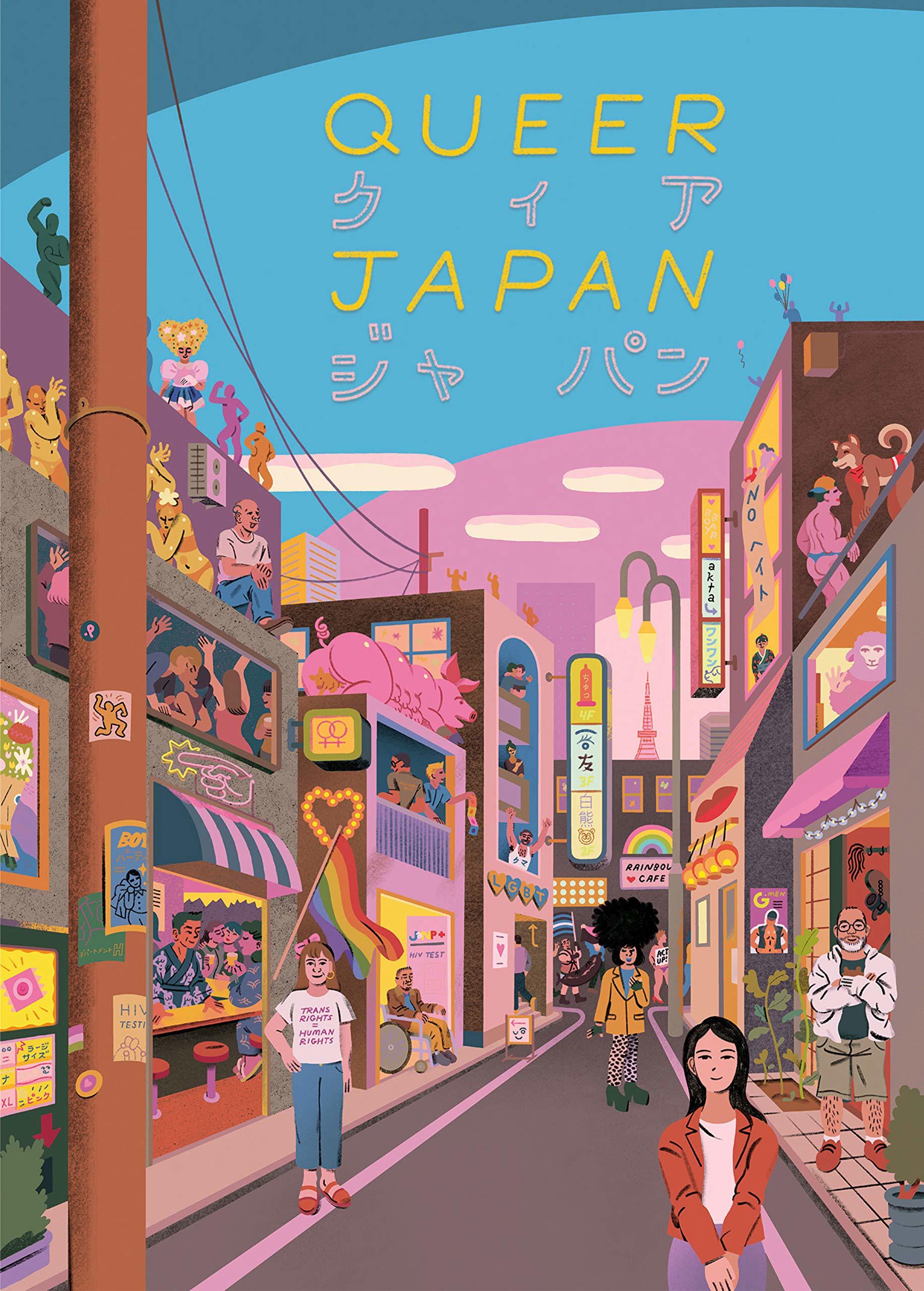
Queer Japan (クィア・ジャパン, Graham Kolbeins, 2019)

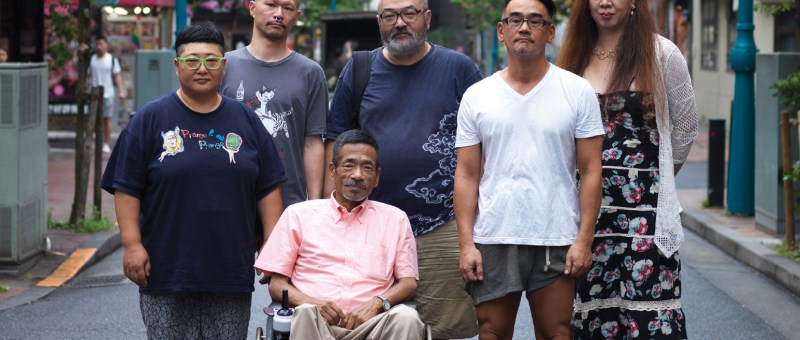
Japan has in recent years become a much more progressive place in which LGBTQ+ rights continue to advance though hopes that hosting the Olympics would finally provoke a shift in the political reality ultimately came to nothing with anti-discrimination and national equal marriage legislation still pending. Released in 2019, Graham Kolbeins’ comprehensive documentary Queer Japan (クィア・ジャパン) as its name suggests explores the lives of ordinary people across the spectrum of the LGBTQ+ community yet cannot perhaps avoid falling victim to, as one interviewee points out, a certain degree of exoticisation even while demonstrating the diversity present with the community itself.

Nevertheless, Kolbeins is keen to stress the warmth and solidarity found with the various subcultures he explores such as that surrounding Department H, a costume fetish ball at which all are welcome from gay furries and puppy play enthusiasts to avantgarde artists such as a young woman whose multi-person rubber pig giving birth is notable inclusion. As the club’s hostess, drag queen Margarette, points out the fetish scene often transcends ideas of gender, the club providing a totally safe, inclusive, and relaxed place where anyone can come to be themselves and find acceptance. 

That has not always been true when it comes to other aspects of the community as evidenced by the controversy surrounding lesbian bar Gold Finger which came under fire some years ago for refusing admittance to transwomen under its longstanding women only policy. Interviewed here Chika Ogawa outlines her original reluctance to admit transmen who had previously been frequent customers prior to transition but eventually reconsidered to team up with another group to host an evening geared towards transmen and masculine women as a place where the community can come together. 

As explained by activist Fumino Sugiyama, it is legally possible to change one’s gender in Japan though the conditions are somewhat draconian and require the surgical removal of reproductive organs which some have viewed as a breach of fundamental human rights. The change in the law was largely due to Japan’s first transgender lawmaker Aya Kamikawa who outlines how difficult her life had been unable to change her gender on her family register creating problems when trying to rent an apartment, access healthcare, or gain employment. She admits that the law passed was very strict, but laments the limits of what is possible under the current LDP administration and its ultraconservative outlook as evidenced by gaffe-prone politician Mio Sugita’s characterisation of the LGBTQ+ community as “unproductive” and therefore not deserving of social benefits. 

Pioneer of gay manga and G-Men co-creator Hiroshi Hasegawa remarks that the oppression faced by the community in Japan is often less direct than it might be elsewhere operating largely through societal shaming and a conformist social culture. Kolbeins discovers this to be true on visiting other cities such as Naha, Okinawa, where a cheerful dentist reveals that he only embraced his love of dancing at the age of 33 and spoke to no one for two years after receiving a bad reaction to coming out during university. Nevertheless, in the face of this indirect oppression the community has developed a sense of comprehensive, intersectional solidarity often coming out to counterprotest racist prejudice against ethnically Korean citizens and discovering that the anti-racist straight community often comes to Pride to support them in return. Bearing out this spirit of intersectionality, Queer Japan is fully subtitled in Japanese throughout while a deaf LGBTQ+ activist highlights the importance of proper sign language interpretation which is familiar with the community.

Even so, Japan’s LGBTQ+ community is subject to the same concerns as many others from around the world one Pride goer criticising the increasing commercialisation of the event, sympathetic that some degree of sponsorship is necessary to hold a celebration on this scale but also that you need to be accountable. Meanwhile a young trans person objects to the celebratory atmosphere insisting that all they want is to feel safe using the bathroom, love can wait. There is clearly work to do, but also much already accomplished one vox popper enthusiastically listing all of his various fetishes with thinly concealed glee while making a serious point about normalising condom usage. Featuring internationally well-known figures such as gay erotic manga pioneer Gengoroh Tagame alongside activists and ordinary members of the LGBTQ+ community, Kolbeins’ handsomely lensed doc showcases the diversity of queer life in Japan while never losing sight of the battles still to be won. 


Queer Japan screened as part of this year’s Queer East.

Original trailer (English subtitles)
No Smoking (Taketoshi Sado, 2019)

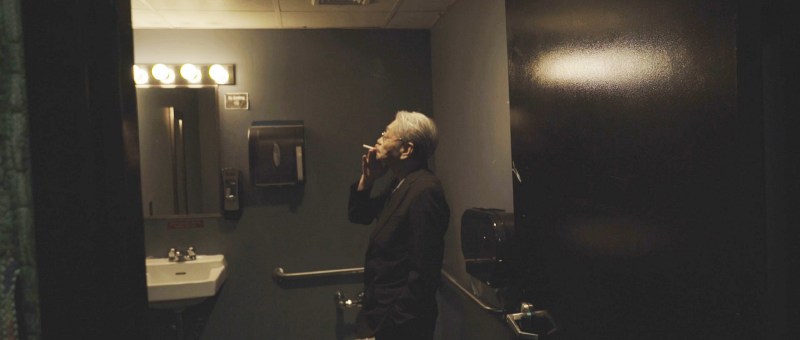
Celebrating the 50th anniversary of his musical debut in 2019, Haruomi Hosono has undoubtedly had a long and varied career shifting from countercultural folk rock to avant-garde electronica and bubble-era pop music. In later years, he’s become known internationally primarily for his film scores and particularly that of Hirokazu Koreeda’s Palme d’Or winning Shoplifters. Capturing footage from Hosono’s 2019 anniversary world tour, Taketoshi Sado’s documentary is equally meandering struggling perhaps to find a clear through line in regards to Hosono’s works. 

As such, it rockets through his early days with interesting family trivia such as his grandfather having been the sole Japanese Titanic survivor, his father’s secret dancing dreams, and his mother’s love of music. Picking up with his time at university, Sado more or less charts Hosono’s musical evolutions in chronological order though with little cultural context outside of a brief evocation of post-war devastation at the time of the musician’s birth. Accordingly he begins with Hosono’s uni folk rock band Apryl Fool which broke up after one album onto the hugely influential Happy End, various side projects, the avant-garde Yellow Magic Orchestra days, writing bubble era pop songs for idol stars such as Seiko Matsuda’s Tengoku no Kiss, and finally music for film composing the title track “Kaze no Tani no Naushika” for Hayao Miyazaki’s Nausicaä. 

Meanwhile, Sado shuttles between direct to camera monologues from Hosoda himself intercut with concert footage from the 2019 tour, legendary gigs, and rather a lot of Hosoda doing his famous silly walks. Sado does not include direct interviews with Hosoda’s collaborators or fellow artists, mainly allowing him to speak for himself, but does include footage of him with some who have been influenced by his music such as singer-song writer and actor Gen Hoshino who is apparently such a fan that he first met the artist while cosplaying his Harry Hosoda outfit from his famous Yokohama China gig, and LA musician Mac DeMarco who also appears onstage singing in Japanese at Hosoda’s LA concert. Actress Kiko Mizuhara and sister Yuka meanwhile also spend some time travelling with Hosoda in the UK appearing on stage in Brighton, while London’s Barbican Hall concert was also notable for the unexpected onstage appearance of Ryuichi Sakamoto briefly reuniting the Yellow Music Orchestra. 

The brief backstage footage from the event is among the more interesting in the slightly awkward interactions of the three band members despite Hosono’s claim that musicians can pick up where they left off with each other even after many years through the universal language of music. The 2019 tour however leaned heavily into Hosono’s boogie boogie covers rather than original tracks, while Sado seems content to mix and match between various concerts and adding vox pop comments from excited fans waiting to get in long after the first footage of the evening appears. Despite building towards the brief YMO reunion, he offers little commentary on relations between the former band members or why such an event is so viewed as so momentous. Rather he suggests that Hosono’s various musical projects existed more or less concurrently serving particular purposes in reflecting his specific creative desires. 

“The keyword is free, when when I touch what’s free my heart dances” Hosoda explains in one of his monologues, hinting at this process of continual meandering between musical genres that culminates perhaps paradoxically with revisiting the music of his childhood in American boogiewoogie. The film’s ironic title is apparently inspired by Hosono’s love of smoking, as he explains he needs cigarettes to create and there is music in a puff of smoke. Hosoda does indeed nip off for a puff rather a lot, often seen with a tobacco or electronic cigarette in his hand or else doing some of his silly walks. Footage from Hosoda’s diaries and early illustrations fill in the blanks of Sado’s rough chronology, though he does begin to rely on footage from other interviews particularly towards the documentary’s end. Despite offering a comprehensive if whistle-stop tour of Hosono’s varied discography, there’s no denying that No Smoking remains somewhat superficial offering, only an unannotated overview, but does undoubtedly offer insight in following the man himself as he celebrates such a significant career milestone. 


No Smoking streamed as part of this year’s Japan Cuts.

International trailer (English subtitles)

Seiko Matsuda – Tengoku no Kiss

My Dear Friend (好友, Yang Pingdao, 2018)

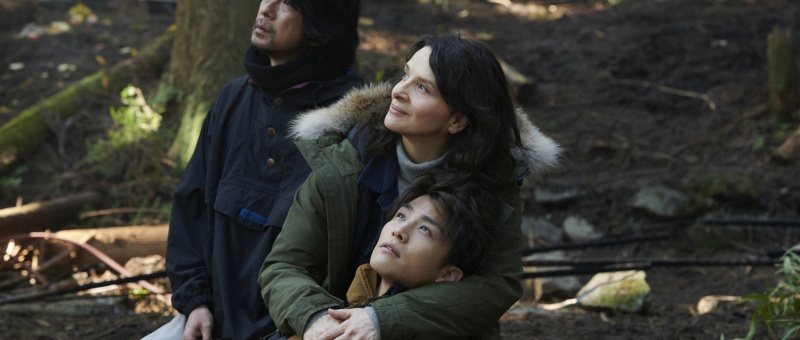
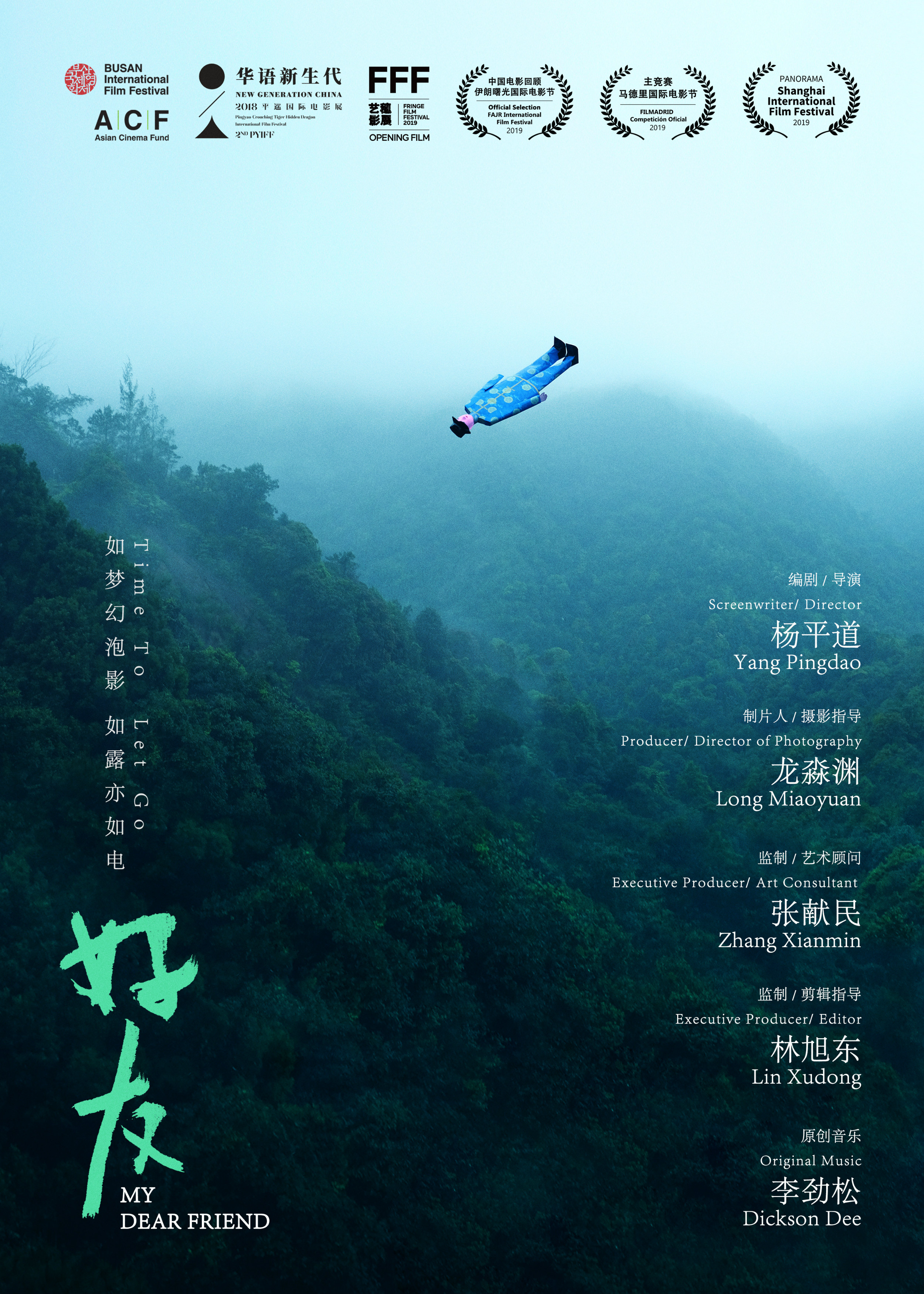
“What’s right or wrong doesn’t matter anymore. Being at peace is what matters.” an old man insists, attempting to help his troubled companion regain a sense of himself at the end of his life. A magical realist fable, Yang Pingdao’s My Dear Friend (好友, Hǎoyǒu) quite literally sends its elderly heroes back into the past as if they had become unstuck in time but also bears witness to the inexorability of fate as events seem only to repeat themselves from one generation to the next. 

The film begins, however, with a literal intrusion of the present into the past as city girl Jingjing (Gabby So) drives her red saloon car, more suited to a morning commute than a trek through the mountains, into a rural village, rudely barging into the home of elderly couple A-Fang (Jiang Hong) and Shuimu (Luk Suk-Yuen AKA Robert Loh) in search of their grandson Yiming. Jingjing claims that she is pregnant and Yiming is the father, but now he’s ghosted her so she’s come to make him assume his responsibilities. Unfortunately Yiming isn’t there, but rather than scandalised or ashamed as one might have assumed them to be, A-Fang in particular and her husband seem to be both relieved and excited to the extent they don’t really want Jingjing to leave which might explain why her car won’t start the next morning. 

While staying with the elderly couple, Jingjing hears that absent fathers run in the family. Shuiming’s father disappeared suddenly without warning or explanation leaving his mother to raise him alone, while his son also abandoned Yiming to run off with an impoverished bar hostess who had four children of her own. Yiming’s mother remarried, leaving the boy with his grandparents. Jingjing asks why Shuimu didn’t leave and he doesn’t answer her, but following him around she may have stumbled on the answer in his 60-year, apparently secret friendship with a man of the same age who appears to be mute and intelligible to Shuimu alone. Zhongsheng (Lu Haoquan), as the man is called, is a man without a past apparently having no memory before the age of ten. Once her car is fixed, Shuimu asks Jingjing to drive them to another village 300km away where Zhongshen thinks he may be from, obsessed with a rumour about a child who survived a massacre by “four psychos” after falling into the river. 

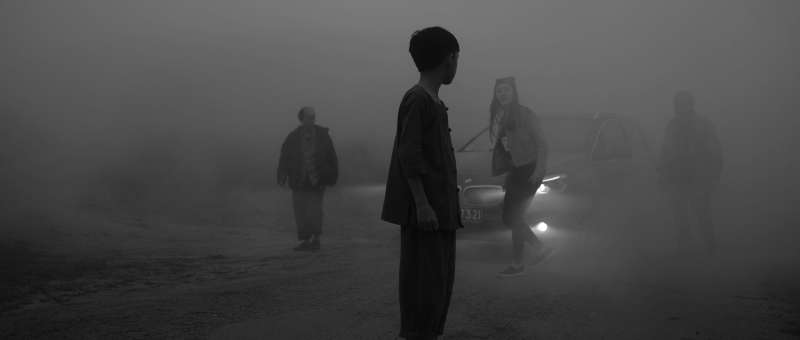
Things that drift loom large. Shuimu muses on a giant fish head apparently washed down by the voiding of the dam the head then linking back to a strange pipeline that reminds them of a giant whale only without its mouth as if something had been uncapped or opened to the elements. Travelling through mist and fog, the trio stop their car in what seems to be the meeting of a wedding and a funeral as a procession passes by them made of men and women from another time, wearing donkey jackets and silently carrying umbrellas, seemingly filled with solemnity. Shuimu and Zhongsheng encounter younger versions of themselves, a version of their story replaying itself as the boys become men who might equally be Yiming and his friend in this strange place where past and present co-exist. 

Yet Shuimu is perhaps looking for the truth of himself as much as his friend, Zhongsheng’s name apparently originally his only his mother changed it on the advice of a fengshui master worried he lacked water (水 shui) and wood (木 mu) though Shuimu liked the other name better. He also gives Zhongsheng his own birthday, making of him another self, in a sense a secret shadow self unable to speak though Shuimu is always able to interpret his thoughts perfectly. He sees a similarity in Jingjing and A-Fang, one which she also sees, a little jealous of the younger woman’s freedom lamenting the simplicity of her wedding and harshness of her life since. Both sharp tongued they’ve become prickly in the unreliability of men, each searching A-Fang like Zhongsheng’s mother calling out at night for her wandering husband only hers always comes back. Don’t become like me, she tells Jingjing, pledging to drag Yiming back and give her the proper wedding she never had. 

Zhongsheng complains A-Fang haunts him like a phantom, yet everyone here is already a ghost literally haunted by historical trauma and parental failure. Shuimu and Zhongsheng search for truth and identity, but find themselves in a place they no longer recognise which in turns claims not to know them. Perhaps truth isn’t so important, Shuimu claims, as peace, deciding the entire earth is a grave, make your offerings where you will. Aided by the rolling mists, Long Miaoyuan’s ethereal photography adds to the sense of mythic grandeur in this long sad story of enduring male friendship and perpetual orphanhood carried away in the grand ever flowing river of life and death.


My Dear Friend screens at Curzon Hoxton on 18th September as part of this year’s Queer East.

Original trailer (Simplified Chinese / English subtitles)

The Two Lives of Li Ermao (他她:李二毛的双重人生, Jia Yuchuan, 2019)

“The only thing I’ve ever wanted is someone with whom to live a normal life” Li Ermao explains thinking she’s found it only to have it slip through her fingers once again. Photographer Jia Yuchuan first met Ermao while working on a project with the LGBT community becoming as she describes it something like a big brother. Following her over 17 years, Jia’s documentary The Two Lives of Li Ermao (他她:李二毛的双重人生, Tā Tā: Lǐ Èrmáo de Shuāngchóng Rénshēng) witnesses her constant search for acceptance in a rigid and conservative society the pressures of which also contribute to her sometimes self-destructive behaviour. 

As Ermao explains in an opening onstage monologue, she is not a man dressing as a woman though once thought of herself as crossdressing before living as a “ladyboy” and now identifying as a transgender woman. Jia begins in a sense with her high point at which she has achieved a degree of success as a cabaret performer despite having no formal training in singing and is in what seems to be a positive and loving relationship with a young man, Jiang. Things start to go wrong when Ermao fails to capitalise on the possibility of recording an album while her self-destructive gambling habit begins to eat away at her relationship with Jiang who eventually leaves her. 

As Jia explains, Ermao would often drop out of contact with him for unexplained periods of time despite describing him as an indispensable big brother. After another self-destructive episode renting out her spare room to randomers from the internet to escape her loneliness, Ermao next calls Jia to introduce him to her new boyfriend, Long, over whom she has apparently just attempted to take her own life prompting him to call the police which ends both with her being evicted by her fed up landlady and arrested for the possession of illegal drugs. 

Worried about her elderly mother, Ermao takes Long with back to her hometown but quickly finds herself conflicted in this even more conservative environment where she’s “Li Guomin’s son”, the villagers by turns bemused and scandalised by her feminine appearance. Ermao ran away to live on the city streets following the death of her father who, we learn, was a notorious people trafficker who kidnapped and sold women and children including Ermao’s younger brother who he sent away to Hainan while rumoured to have eaten the corpse of the stillborn baby who would have been Ermao’s elder. This might go someway to explaining the animosity with which she is held in the village, along with the fact that as she’s been away so long and was not expected to return other farmers have long since colonised her land and are not minded to return it. Stubborn, Ermao pitches a tent and tries to make a living chicken farming on the tiny patch that remains in the hope of funding the completion of her confirmation surgery but is finally forced out by the local mayor who describes her as an “unwelcome stranger” in their community and asks her leave. 

Falling still further, Ermao finds it impossible to gain steady employment as a transgender woman eventually when getting back touch with Jia having made the decision to essentially detransition, preparing to have her implants removed while presenting as male in order to continue working at a factory producing components for iPhones. She fears her coworkers finding out that she is transgender and for good reason as she’s later brutally beaten by a male middle-aged colleague. Despite this she seems in a sense happier to have been reaccepted by her hometown, but soon finds herself rejected once again on learning that she is HIV+ and coming to the conclusion that she is “harmful to others” and should choose self-isolation. 

Despite their long years of friendship, Jia is not always sympathetic to Ermao’s plight nor does he condone her sometimes self-destructive behaviour or tendency to overdramatise while uncomfortably asking where a woman like Ermao belongs in the contemporary society before finding that it may have no real place for her. Rejected in the city and finding no refuge in her hometown, Ermao’s reversion to a male persona cannot help but feel like a defeat, her gradual decline from brassy cabaret star to melancholy recluse a result of her battering at the hands of an unwelcoming society unprepared to accept those who do not conform to its rigid ideas of gender and sexuality.


The Two Lives of Li Ermao screens at Genesis Cinema on 19th July as part of this year’s Chinese Visual Festival in partnership with Queer East.

Love Poem (情詩, Wang Xiaozhen, 2019)

“Dedicated to my dear wife” runs the ironic closing statement of Wang Xiaozhen’s meta marital drama, the equally ironically named Love Poem (情詩, Qíngshī). A love poem does indeed appear if in slightly different contexts, full of adolescent ardour and unrealistic promises of eternal devotion, while the marriage at the film’s centre begins to fracture under the weight of its focus. “I went too far to make this film” director Xiaozhen sighs, breaking the fourth wall in a moment of self-reflection that asks what’s left behind if you mine your personal life for art. 

Wang plays, at least, a version of himself, a film director harangued by his extremely fraught real life wife Zhou Qing who, in the handheld claustrophobic opening sequence which consists entirely of a long take focussed solely on her as she holds their snack-obsessed daughter in the back of the car, repeatedly accuses Xiaozhen of having an affair before asking for a divorce when they reach the house of her grandfather who lies dying and bedridden. The pair argue about the usual things, money mainly, but also the application of it. Xiaozhen is irritated by what he sees as his wife’s disrespect of his family having left their daughter with his parents over the summer but given them a token payment which might be the most insulting of all, no real use in failing to cover the child’s expenses while commodifying a family service which ought to be given if not exactly freely then with the expectation of reciprocity. She meanwhile later accuses him of exploiting her father who died shortly afterwards in order to make to his previous film while also failing to care for the family economically. He alternates between angrily implying that he indeed has been having an affair and pleading with his wife not to divorce him, claiming that he’s done nothing wrong while admitting that there might be someone else he fancies but it’s never gone further than that. When Xiaozhen gets into the back of the car with his wife, the fourth wall seems to dissolve entirely. He tries to comfort her, reminding Qing that it’s “only acting” even as their personal lives seem to have bled into the screen unbidden. 

Appearing an hour in only after this emotionally intense conclusion to the opening episode, the title card divides one “scene” from another as we find the couple again only changed. Xiaohzen picks up Qing, the camera now static and mounted on the bonnet, but this time she’s wearing glasses and has a calmer, softer demeanour. We can gather that in this scene she’s roleplaying the part of the “other woman” her first half counterpart was so incensed by, though the setting has changed to some years previously as Xiaozhen crassly elaborates on his romantic dilemma revealing that his girlfriend may be pregnant in which case he’ll be getting married and becoming a father, before confessing his feelings to another woman. She rightly takes him to task for his inappropriate declaration of love, taking the other woman’s side, while he expounds on his now or never emotional logic insisting that he had to say something now before the window forever closes but indifferent to the consequences for either of his two women. Once again the lines start to blur, the conversation diverges from its scripted direction while Xiaozhen the director reasserts himself. Qing becomes upset, reminding him that she’s not a professional actress and that his insistence in forcing her into the role of his lover is nothing if not cruel. “You don’t even see me as human” she complains, wondering if Xiaozhen views her as anything more than a prop for his movie making, while he admits in a shockingly honest moment that “seeing you cry makes me feel happy”.  

What are we to make of these scenes from a marriage, scenes and a marriage which are clearly in some senses and others “staged”? Xiaozhen is both director and husband, terrorising his wife and exploiting his relatives in order to create his art, but perhaps discovering that when you mine your personal life for inspiration all that’s left is a burrowed out husk of a former love. Then again, is this film actually a love poem in itself, an apologia of an imperfect husband to a long-suffering wife forced into a role she might not have elected to play? Truth and fiction and seem to blur uncomfortably in Wang’s meta meditation on the relationship between art and life, the performative qualities of “husband” and “wife”, and the potential costs of acting out your personal dramas onscreen but even in his self-lacerating cruelty Wang leaves himself the escape valve of irony as the emotional intensity dissipates in the Hong Sang-soo-esque cutesiness of the closing titles. 


Love Poem screens at the BFI Southbank on 17th July as part of this year’s Chinese Visual Festival.