Herstory (허스토리, Min Kyu-dong, 2018)

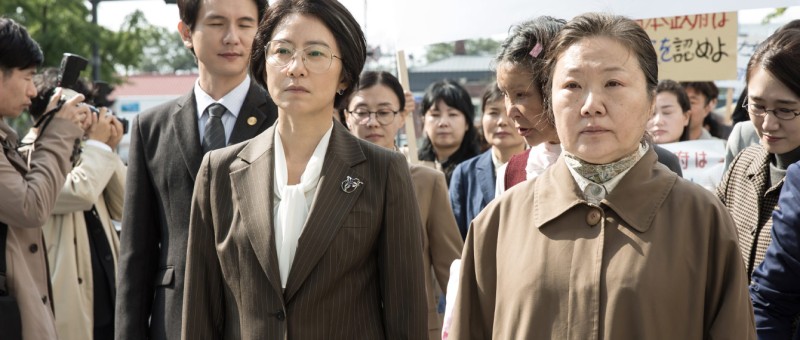
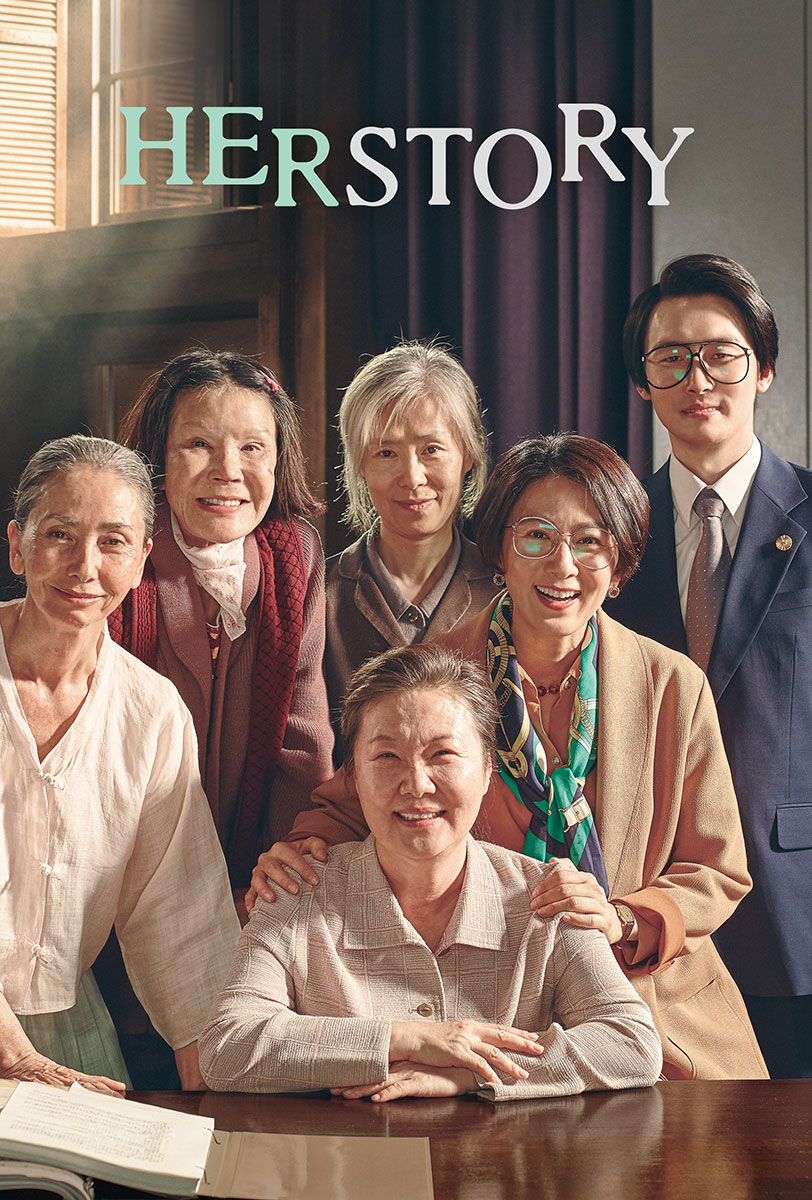
When Kim Hak-sun held a press conference and offered her testimony as a former comfort woman following a statement in the Japanese Diet in which the government rejected any responsibility for wartime sexual slavery, it brought an issue into the public consciousness that many had been unwilling to reckon with. One of many films focussing on the same subject released in the last few years, Min Kyu-dong’s Herstory (허스토리) dramatises the events of the Shimonoseki Trials which took place between 1992 and 1998 and resulted in the first admission from the Japanese authorities that the basic human rights of women had been breached but nevertheless found it not incumbent on the government to offer a direct apology. 

That the trial takes place in Shimonoseki is itself somewhat symbolic, given that this was the harbour from which boats to Korea and China departed and at which the women who were trafficked to Japan would have arrived. The film begins, however, in Busan where successful travel agent Moon Jung-sook (Kim Hee-ae) has ironically been accused of breaking the prevention of prostitution laws when a Japanese man is found dead after visiting a sex worker and it is revealed one of her employees had been running tours specifically geared towards sex tourism. Struck by Kim Hak-sun’s testimony, the association she leads of female business owners wants to do something to help and seeing as her company has been suspended, Jung-sook sets up a call centre on her premises for other victims of wartime sexual slavery and forced labour to come forward. 

Unlike some of the recent dramas dealing with the same issue, Min focusses on the resistance towards the former comfort women coming from within Korea itself. A taxi driver Jun-sook gets a lift from goes off on a rant describing the women as former sex workers out for a paycheque who should be ashamed of their sordid pasts while in any case all of this happened decades ago so why bring it up now? He is far from alone, even the Mayor describes them as “filthy women” when Jung-sook approaches him for help, and it’s obvious that many find the subject so embarrassing that they simply do not want to discuss it and blame the women for breaking the peace by speaking out. 

It’s also true that in the peculiarities of the political landscape of Korea, conservative elements tend to hold a more favourable view of Japan and the colonial era than might be expected. Economically, there are strong ties and Jung-sook, a fluent Japanese speaker, has close business relationships with Japanese clients which are endangered by her involvement with the comfort women cause. Her friend in the women’s association who runs a traditional-style hotel can be seen warmly greeting Japanese guests, at one point as she expresses her admiration for Kim Hak-sun in Korean to the television as they pass behind her. It’s clear that some would rather not rock the boat because this kind of politicking is often incompatible with running a successful business. 

Jung-sook is minded to buck the trend because she sympathises with the women’s suffering and with their rejection by mainstream society. She has the confidence to do this in part because the wealth she has accrued through business success gives her an unusual amount of power in a male-dominated, capitalistic society. Still she too struggles with contemporary notions of proper womanhood in being accused of neglecting her daughter through her workaholic lifestyle especially as she is considering leaving education claiming that studying isn’t for her. Even so, the women’s association seems to have female solidarity at its heart, collecting money to support single mothers even before taking up the cause and trying to help elderly women who have no remaining family members or means to support themselves. 

As she later comes to realise, the trial has meaning outside of winning and losing in allowing the women to express their trauma and regain some of their dignity. Even so, they are subject to further rejection in Japan, not least from a hotel which asks them to leave because other guests are unwilling to share the space with former sex workers. The Korean-Japanese lawyer also relates having faced racism in his life in Japan because of his Korean ethnicity while his mother’s restaurant is later graffitied because of their support of the case. Right-wing nationalists also hold protests outside the court and in Seoul accusing the women of lying, insisting that they are just “sex workers” as if sex workers weren’t worthy of human consideration anyway. In interpreting the testimony, Jung-sook becomes a kind of everywoman speaking for all women in her emotionally charged translation while inwardly conflicted in realising the toll the process is taking on some of the witnesses who are all in advanced age and often poor health. Min depicts their struggle with as much empathy as possible, avoiding the temptation to demonise while instead presenting a more nuanced perspective focussing on the women themselves and the rejection they continue face even within their own society.


Herstory is available digitally in the USA courtesy of Well Go USA.

Stateless Things (줄탁동시, Kim Kyung-Mook, 2011)

“We looked everywhere for a place for us to stay, but we could not find it anywhere” one of the twin heroes of Kim Kyung-mook’s indie drama Stateless Things (줄탁동시, Jooltak Dongshi) confesses. As the title suggests, Kim’s eventually surrealist drama follows those who no longer have a home and are instead condemned to wander the margins of an unforgiving city. Finding only loneliness and exploitation they long for an escape and perhaps find one if only in a moment of eclipse. 

Shooting in a more naturalistic, documentary style, Kim first focusses on the figure of Jun (Paul Lee), a young North Korean refugee who lost his mother in the crossing and his father to another woman in Busan. He works in a petrol station but is treated with disdain by his boss who has his eye on his female colleague, Soon-hee (Kim Sae-Byuk), who is a member of the Korean minority in China where most of her family reside. Though originally hostile towards each other, each wary of their mutual isolation and concurrent vulnerability, the pair later bond in a shared resentment of their boss who exploits Jun physically for his labour and seeks to exploit Soon-hee sexually. After each saving the other from the nefarious boss, the pair have no choice but to go on the run taking in a series of tourist spots while looking for another place to settle. 

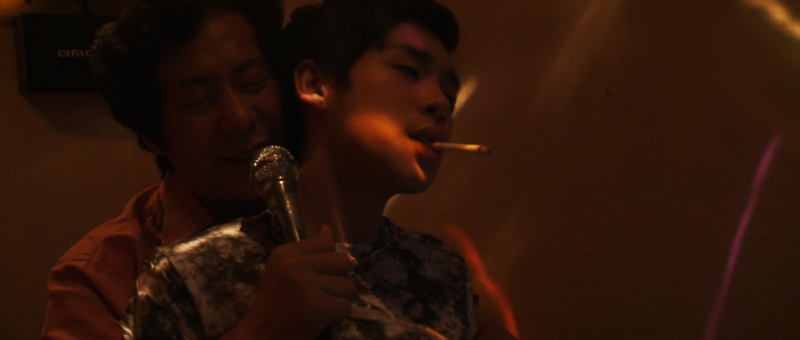
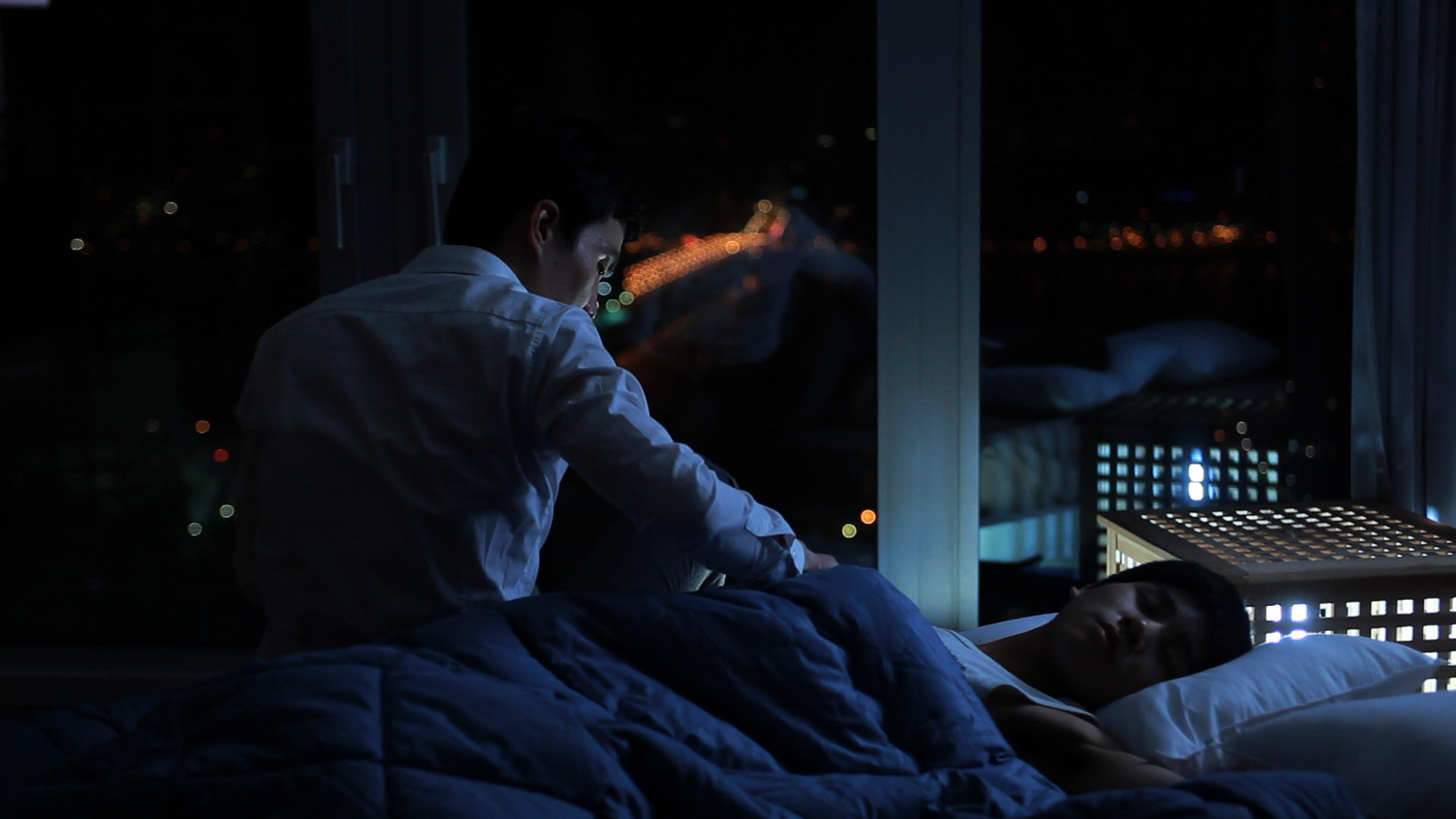
Meanwhile, across town, a young gay man, Hyun (Yeom Hyun-Joon), is a virtual prisoner in the home of his wealthy, married and closeted lover. He looks out across the midnight city and dances sadly alone in a luxury apartment in the sky while occasionally venturing out to meet other men, mostly older, who similarly only intend to exploit his body. “You have nowhere to go.” the exasperated Sung-woo/Sung-hoon (Lim Hyung-Guk) insists, thrown into jealous anxiety on visiting the flat and finding Hyun absent, yet he cannot really offer him a “home” and is all too aware of the transactional nature of their relationship. Though Hyun is also in a sense “stateless”, he has a power over Sung-woo and is able to wield his youth and beauty like a weapon if one he may not fully be able to control. In any case, he too is excluded from the mainstream society by virtue of his sexuality and socio-economic background. 

When Soon-hee and Jun visit a temple, he remarks on the incongruity of seeing a painting that features both a sun and a moon. She explains a folktale to him in which sun and moon are embodiments of siblings who climbed a rope into the sky to escape a hungry tiger. In his diary, Hyun also envisages a pair of twins one opening a door with his right hand as the other closes it with his left. In the surrealist sequence which closes the film, after a title card that appears 90 minutes in, the two men blur into one another as if they shared the same soul in an almost literal eclipse of the self. Kim nevertheless characterises them as sun and moon who cannot ordinarily share the same space. Jun occupies a world of street level sunniness until the light finally begins to dim leaving him alone in a dusky, rain-soaked city. Hyun meanwhile lives by night in his high rise apartment, a prisoner of luxury who flirts with danger for a sense of escape. 

Then again we might ask if Jun and Hyun are two sides of one whole, a sun and moon protecting the king who finds himself an exile. Kim shifts to scenes of emptiness, rooms without presence and streets without life as if the two men were ghosts of themselves hovering above a rootless Seoul, the sense of eeriness only deepened by Kim’s lengthy takes as he follows Jun walking a lonely path towards nowhere in particular because in the end he too has nowhere to go. Departing from the realism with which the film opened, the final sequence gives way to a kind of rebirth if only one of wandering that leaves its heroes at the mercy of a society continually unwilling to recognise their personhood. 


Stateless Things screened as part of this year’s Queer East .

Trailer (English subtitles)

Flowing Stories (河上變村, Jessey Tsang Tsui-shan, 2014)

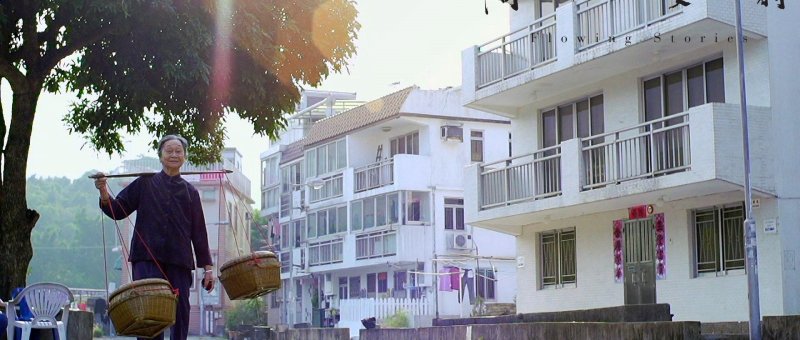
Shooting in her own home village, documentarian Jessey Tsang Tsui-shan spins a meandering tale of diaspora and dislocation in her 2014 documentary Flowing Stories (河上變村). Beginning in the small village of Ho Chung in which almost all of the residents have gone abroad to find work, the film charts the paths of migration along with the hardships discovered both at home and away while centring the village festival held every 10 years as a point of reunion as sons and daughters return in celebration of an idealised village life the modern world has denied them. 

Tsang begins her tale with Granny Lau, an elderly lady who lived next-door to her when she was a child whose relatives often brought her souvenirs from Europe. As Granny Lau explains, her life was always hard. She married Grandpa Lau at 19 in an arranged marriage but he left to find work abroad soon after, returning only a handful of times in 20 years during which they had several children Granny Lau had to raise alone. She describes her familial relationships as without affection, her husband a virtual stranger to her while she also had to work in the fields leaving her disconnected from her sons and daughters. Later, many of them traveled to Calais to work in the restaurant Grandpa Lau had set up with the intention of reuniting his family in France. 

The children who went also talk of hardship, being unable to speak the language and mixing only with other migrants from Hong Kong many from the same the village. Fourth daughter Mei Yong remarks that only the thought of the village festival kept her going when she came to Calais at 17 leaving all her friends behind and having nothing much to do other than work in the restaurant. Her sister-in-law says something similar, that when she arrived she was immediately put to washing dishes and only reprieved when the children were born but that wasn’t much better because the only source of entertainment available to them was to have dinner together. The second of the sisters Mei Lan moved to London with her husband and still doesn’t know the language, having regular mahjong parties with with her neighbours who are also from Hong Kong and many of them nearby villages. 

Most of the others say they don’t think they’ll ever move back, as Grandpa Lau eventually did, because they’ve spent more than half their lives abroad and have had sons and daughters who have grown up and made lives in other countries. But for Mei Lan it’s different because she has no children. She and her husband regret the decision to go abroad, suggesting they did so because their parents encouraged it thinking it would be easier for them to find work but really there were opportunities to be had in Hong Kong and they might have been happier living in a place where they spoke the language. 

But life is hard in every place, and equally for those who leave and those who are left behind. Some reflect on the changing nature of Ho Chung with its new settlement across the river dominated by detached houses which has, a daughter who moved to Edinburgh suggests, disrupted the sense of community. Where people once rarely closed their doors and neighbours wandered through each others homes helping each other out where needed, now everyone is scattered in disparate settlements. Then again, Granny Lau seems to think that sense of community is largely a myth explaining that in her day you had to do everything yourself, no one was going to feed your cow or plough your field if you couldn’t do yourself.

In her own way strangely cheerful in her stoicism, Granny Lau is a tough woman who asks why she would cry for a husband who was over 80 years old when he died, insisting that she had “nothing to be nostalgic about” and counting herself lucky as long as she has two meals a day. Now only around 900 people remain in the village, while it is said that the Shaolin Temple may be looking to build a new complex in the area as the natural vistas are disrupted once again by diggers further eroding the traditional qualities the village festival celebrates. The stories of migration flow in and out of Ho Chung taking pieces of the of the village with them as they go but equally leaving behind a melancholy sense of loss for a disappearing way of life.


Flowing Stories screened as part of this year’s Hong Kong Film Festival UK.

Original trailer (Traditional Chinese / English subtitles)

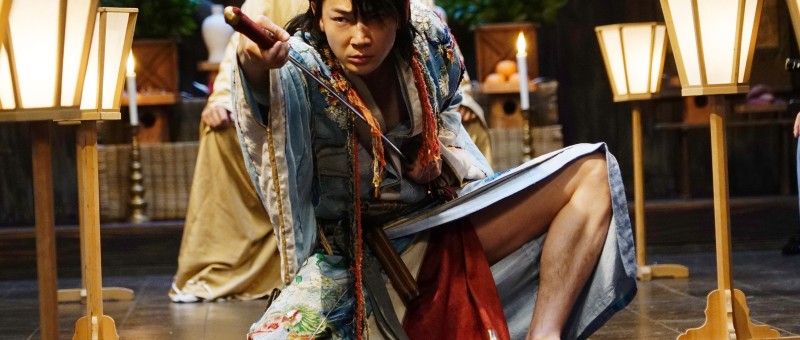
Punk Samurai (パンク侍、斬られて候, Gakuryu Ishii, 2018)

Gakuryu Ishii began his career under the name Sogo as a representative of the youth voice, in fact still a college student when invited by Nikkatsu to film a feature-length version of his Panic High School short though they paradoxically saddled him with the more experienced Yukihiro Sawada as a co-director in case his voice turned out to be more youthful than anticipated. In any case, he went on to make his name with a series of anarchic punk films such as Burst City and The Crazy Family before retreating from filmmaking in the early 2000s. When he returned in 2012 with Isn’t Anyone Alive?, he did so under a new name, Gakuryu, as if signalling a new phase in his artistic career that seemed to have left punk behind.

Like 2015’s That’s it, Punk Samurai is billed as a kind of return to Ishii’s anarchic roots while also harking back to surreal samurai movie Gojoe. Even so, Punk Samurai isn’t really a punk samurai film even in its irreverence towards the genre so much as an ironic jidaigeki comedy which eventually positions its hero’s nihilistic outsider status as his saving grace in a “fake” world where nothing has true meaning. “This world might be fake, but I’m alive” he insists, claiming not to ask anything of it, simply stating that he is “different” because he belongs to no group and has been a lonely a wanderer.

Nevertheless, Kake (Go Ayano) had wanted to join a clan so desperately that he spun a tale of dangerous cult rebellion to a naive retainer of a useless lord whose inability to rule has ruined his fiefdom. After killing a pilgrim he believed to be a member of the Bellyshaker Party, Kake is taken in by the Kuroae where he is enlisted by duplicitous councillor Naito (Etsushi Toyokawa) who seizes on the idea of the Bellyshaker threat as a means of undermining his rival, Ohura (Jun Kunimura), to seize the reins from overly serious lord Kuroae (Masahiro Higashide). 

The Bellyshaker cult believes that this “fake” world exists within a giant tapeworm and seeks escape though being excreted by it into the “real” world as a means of achieving some kind of spiritual enlightenment. Their furious belly shaking is deliberately meaningless in an effort to antagonise he tapeworm to such a degree that it gives it spasms to “spew” the believer into a more authentic existence. Not even the cult leader believed this to be true, and as Kake later suggests the appeal lies in a kind of Manichaeanism that allows the believer to believe nothing is their fault it’s just that this “fake” world is wrong. In the end, the conflict comes down to a battle between “monkeys and idiots”, while even an enlightened ape (Masatoshi Nagase) finds his revolution failing and is left with no option other than to retreat to the Heavens. 

The world is indeed in disarray, Kuroae is constantly plagued by his own poor decision making, or failure to make decisions at all, while there are constant allusions to the decline of his clan from persistent famine to military weakness after having made most of his foot soldiers redundant as part of an austerity programme. Many of the recruits to the “fake” Bellyshaker cult resurrected by Naito with the assistance of former devotee Chayama (Tadanobu Asano), who has two telepathic servants who speak for him, are in fact refugees from Kuroae who fled its disorder. Kake prides himself on being an outsider but in reality had wanted to join the clan, and there is perhaps something in the sudden collapse of the world around him along with a return to blue skies the moment his rebellion is ended. 

Yet for all its weirdness and incomprehensibility, for much of is running time Punk Samurai is a typical jidaigeki comedy about a useless lord, his clever underlings, and a chaotic ronin if one that also hints at the absurdist meaninglessness of the hierarchical samurai society. Only in its closing moments does the film truly embrace its punk spirit with psychedelic kaleidoscope backgrounds, electric swords, and the true slash down of the social order as Kake’s life comes full circle proving that even in this “fake” and meaningless world there are some things from which there is no escape.


Punk Samurai is released on blu-ray in the UK on 13th March courtesy of Third Window Films.

Original trailer (English subtitles)
It Comes (来る, Tetsuya Nakashima, 2018)

According to a duplicitous folklorist in Tetsuya Nakashima’s anarchic horror film It Comes (来る, Kuru), monsters aren’t real. People made them up so they wouldn’t have to face an unpleasant reality. Farmers who had more children than they could feed invented a monster who came to claim their infants rather than have to live with the reality that they left them in the in the forest to die. As it turns out this monster may actually be “real”, but undoubtedly fuelled by the loneliness of a neglected child whose parents are burdened by their own particular legacy of parental toxicity. 

The mother of soon-to-be-married Hideki (Satoshi Tsumabuki) more or less says as much when he brings his fiancée to meet the family at a memorial service for his late grandfather. “Maybe it’s her upbringing” she snidely suggests, remarking that Kana (Haru Kuroki) is “a little gloomy” (which seems like an odd criticism to make of a guest at what is effectively a reenactment of a funeral). A strangely beaming Hideki keeps reassuring his fiancée that she’s “perfect” while she continues to worry about whether she’s a good fit seeing as she never knew a “real” family having been raised by a mother she regards as neglectful. But even at the couple’s wedding it’s clear that Hideki mostly ignores her, so obsessed is he with being the centre of attention. “Is it ever not about you?” one of the fed up guests eventually heckles, but it evidently never is. After setting up his “perfect” life in a “perfect” luxury flat and having a “perfect” baby, Hideki sets up a blog about being the perfect dad and barely helps with their small daughter Chisa driving Kana slowly out of her mind with his narcissistic self-obsession and thinly veiled emotional abuse. 

When the ghosts start coming, we might wonder if they reveal the truth or effect a distorted reality that leans in to otherwise unspoken dark thoughts, but Hideki really is as someone puts it all lies. When he’s persuaded to visit an “exorcist” she simply tells him to treat his wife and daughter properly to make the monster go away sending Hideki into a small moment of rage implying that he really does know what he is rather than having “forgotten” a cruel alter ego. In his charmed life, we might even wonder if he made some kind of deal with the devil which would explain his rather vacant smile though as it turns out it’s more like he’s cursed by a forgotten childhood encounter with an ancient forest spirit which hints at a deeper, older evil going all the way back to those farmers and the children they abandoned. 

Then again, it seems as if Hideki was rather spoiled as a child leaving him craving both attention and approval, while Kana is still struggling with resentment towards the mother she mainly had to parent herself and is afraid of becoming. Hideki snaps at her that she shouldn’t lose her temper with the baby because children remember, though as it turns out neither of them can really give their full attention to Chisa because of the realities of parenthood which among other things include constant anxiety and feelings of inadequacy. The parents are effectively haunted while cursed by their own toxic parental legacies that they will inevitably pass on to their daughter whether they mean to or not. 

It’s much the same for occult writer Nozaki (Junichi Okada) brought in to help solve the case with the help of his girlfriend, Makoto (Nana Komatsu), a bar hostess with psychic abilities. He once persuaded an old girlfriend to have an abortion because he was afraid of becoming attached to something he might eventually lose, and may be in a relationship with Makoto partly because she is unable to bear children for reasons connected to her frustrated love for her icy exorcist sister Kotoko (Takako Matsu) who like Nozaki wilfully distances herself from others to protect herself from the pain of loss. But as another shaman tells him, in a land of darkness where you no longer know right from wrong pain is the only truth. 

Nakashima shoots with a thinly veiled irony, vacillating between the ridiculousness of demonic spirits wreaking havoc in a well-appointed Tokyo apartment and the concession that there are indeed monsters in the world and as another infected suggests, they are we. Once again set at Christmas much like World of Kanako, Nakashima’s familial horror juxtaposes the season of goodwill with supernatural violence even as Kotoko marshals every power at her disposal from her roots in Okinawa shamanism to Buddhism and Christianity to hold back the latent evil born of a little girl’s loneliness. Meanwhile, he draws inspiration from classic J-horror and particularly the work of Nobuo Nakagawa in his green mists and swamp-based set piece in which Nozaki finds himself mired in a lake of life and death. Kotoko’s wounded eye and fear of mirrors hark back to Yotsuya Kaidan and the betrayed ghost of Oiwa, herself a victim of a man whose self-involved quest for approval cost her her life. At heart an interrogation of the parental bond the film eventually comes down on the side of family as Nozaki reclaims his frustrated paternity while a little girl dreams of nothing more sinister than a land of omurice. 


It Comes screened as part of this year’s Japan Foundation Touring Film Programme.

International Trailer (English subtitles)

Halmoni (Daniel Kim, 2017)

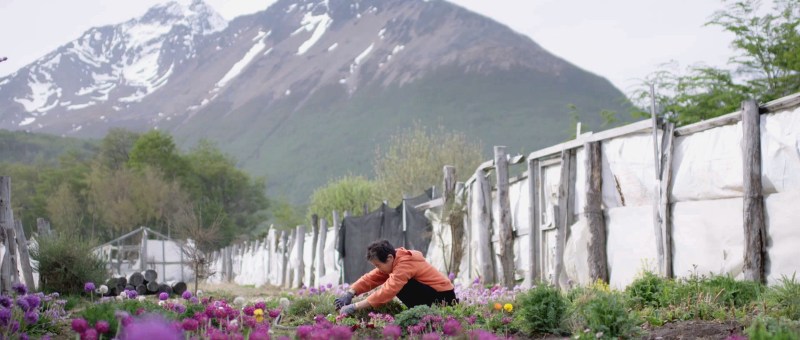
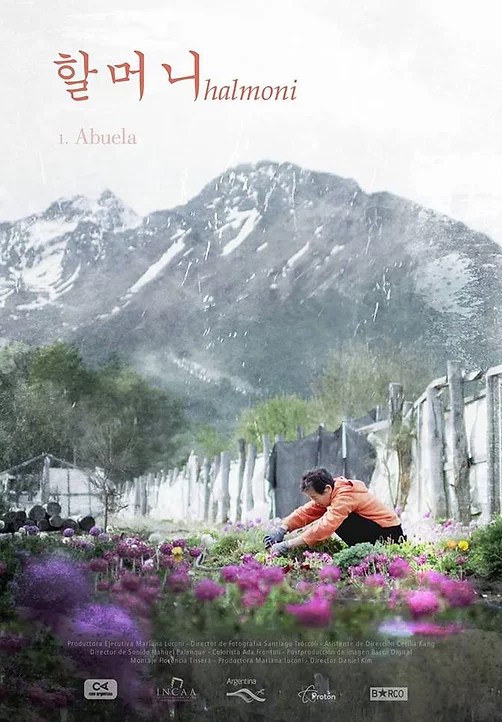
A Korean grandmother creates a paradise amid the arid lands of Argentina in Daniel Kim’s personal documentary, Halmoni. Underneath the film’s title, the Spanish translation, Abuela, appears hinting at the duality of cultures which the director contemplates while examining the longterm effects of the migration on his family who seem to console themselves with the notion that home is a place where you “live with a fully belly” while his grandmother finds a reason to live in the cultivation of land, planting flowers that will bloom long after she is gone. 

Kim’s grandparents married during the chaos of the Korean War and migrated to Argentina after a fire claimed the school where his grandfather had been working as a teacher. Travelling firstly to Brazil, the family then came to Argentina and received land from the government with a plan of growing lettuce which was otherwise thought unsuited to the terrain though grandfather was confident he could make it work after seeing fields of chicory growing in the same area. Though there have apparently been some problems with money and ownership, the farm now appears large and successful with the family still working it, the grandmother explaining that work keeps her alive and gives her life both rhythm and meaning. 

Yet it’s obvious that life there has not been easy. The land and farmhouse are very remote and when the family first arrived, there was not even a road that led to it. The grandfather and his son made one themselves while the son was later forced to give up on his education in Buenos Aires to help his family run the farm. As we later discover both men later took to drink in disappointment with their lives and eventually died of it. The women of the family who have largely kept the farm going also complain about the extreme cold and heavy snow which further isolate it and trap them in a liminal place that is both Korea and Argentina and simultaneously neither. 

The daughter suggests she’d rather be in Buenos Aires, but when she’s in Buenos Aires all she thinks about is the farm. Later in the film, the grandmother travels to Korea for the first time in 23 years and is moved on realising that she no longer recognises her now middle-aged nephew. Many of her friends and remaining family members encourage her to return to Korea, but she points out that her children and grandchildren are all settled in Argentina while the cultures have become so blurred for her that she lives moment to moment not always sure of what is Korea and what is Argentina. Another woman later says something similar but in Spanish, that if she were to go to Korea she doesn’t think she would feel Korean but neither does she feel Argentinian in Argentina and does not know where she is from. 

Yet the grandmother’s friends also worry for her when she tells them that despite her long years of hard work she has no savings while those who migrated to America or stayed in Korea were often able to find financial stability that will accompany them into old age. Kim briefly includes a scene from home video in which one of the children angrily challenges the grandfather and accuses him of misusing money while also raising some kind of religious dispute which receives no further explanation but hints at a buried resentment and discord within the family which is otherwise absent from the cheerful footage of them celebrating a wedding and coming together with other members of the Korean community. Meanwhile the government is said to have taken back half of their land when the farm experienced financial difficulty and that it was the inability to finish what his father had started that later drove the son to drink. Even so another of the women hurriedly finishes her tea worried that people watching the film will assume they are lazy while a man behind her counters that they should show them that they rest too. The grandmother tells her granddaughter about planting seeds and that some flowers must disappear so that new ones can grow as she patiently tends to her orchards, a hard-won paradise forged in arid land by little more than love and perseverance. 


Halmoni screens at the Korean Cultural Centre, London on 4th August as part of Korean Film Nights 2022: Living Memories.

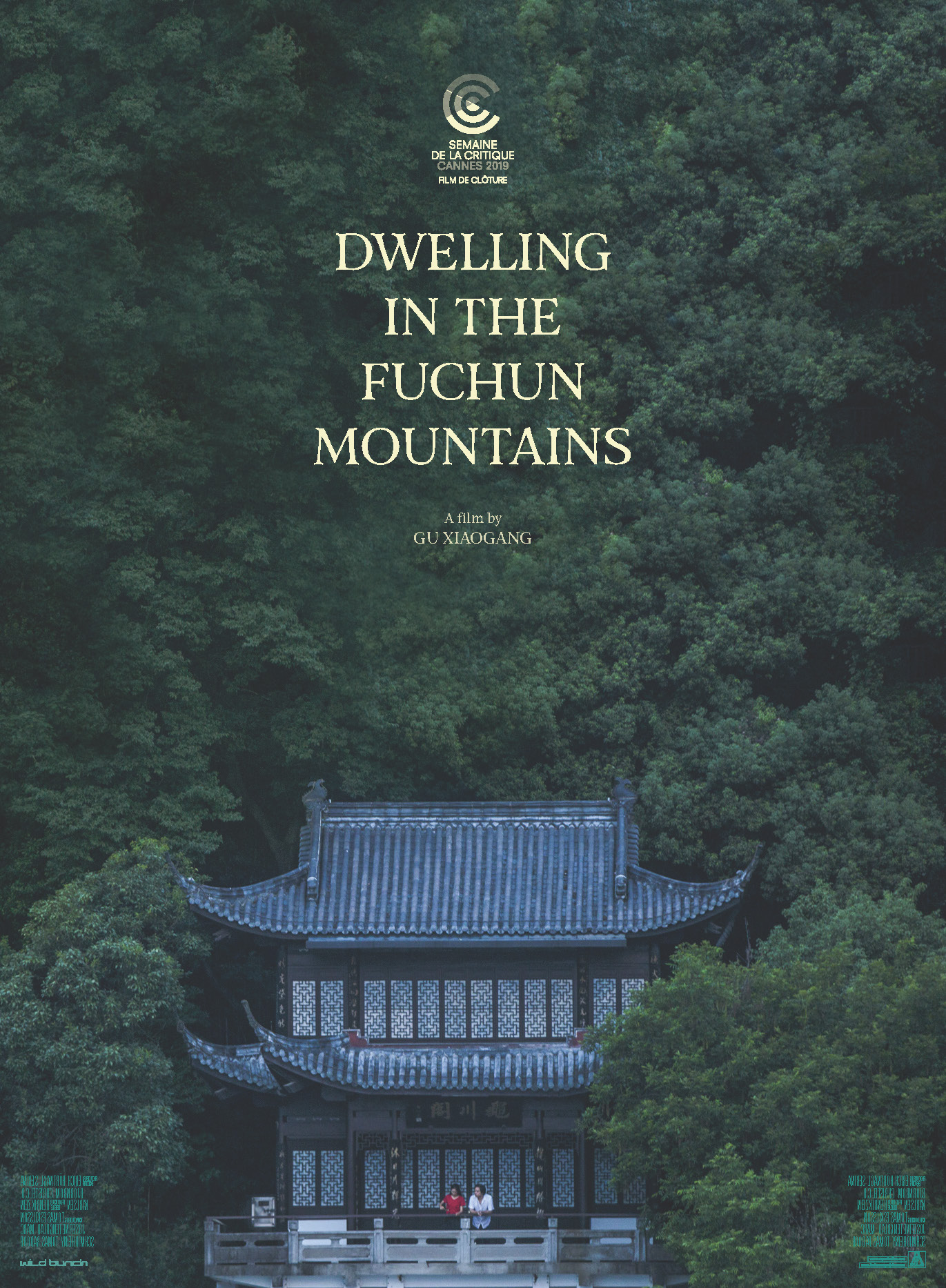
Dwelling in the Fuchun Mountains (春江水暖, Gu Xiaogang, 2019)

“The family should be peaceful and united” according to an exasperated aunt but then again “family is a pain”. Gu Xiaogang’s stunning debut feature Dwelling in the Fuchun Mountains (春江水暖, chūn jiāngshuǐ nuǎn) takes it name from a famous classical painting and unfurls a tale of familial strife born of intergenerational tension which is also a tension in the earth between new and old as this “traditional Chinese landscape” as someone describes it pointing at another painting is gradually eroded by a destructive modernity. 

This ambivalence is clear in the opening scene which takes place in the family restaurant where they are currently celebrating the 70th birthday of the family’s matriarch. What first seems atmospheric, even romantic as someone describes it, in the candlelit space is revealed to be simply a power cut and a symptom of the imperfect modernity visiting itself on the town. In any case, grandma later collapses in the process of handing a red envelope to her grandson and is taken to hospital where it is revealed that she has suffered a stroke which has accelerated the course of her dementia. The question then becomes who will accept the responsibility of caring for her with each of her four sons secretly hoping that someone else will volunteer. 

Grandma is in many ways the film’s moral authority, at one point quite literally adrift in the modern society. She no longer recognises her daughter-in-law Fengjuan (Wang Fengjuan) and avoids taking her medication believing that she’s being poisoned but pines for her youngest son whom she says spends the most time with her and is the most obedient but in fact appears the least interested of all the brothers. When he finally visits her to show off the fiancée everyone told him he had to get to put her mind at ease before it’s too late all she can do is stare at the moon. On the other hand, she is the one firmly on the side of the young, telling her granddaughter Guxi (Peng Luqi) to marry a man she chooses for herself rather than be swayed by the wishes of her parents and wind up miserable as she herself seems to have been. 

Guxi is in a relationship with local teacher Jiang (Zhuang Yi) who might otherwise be thought a catch in that he has a good job and stable income as well as access to a preferential mortgage programme for those in his profession, but Fengjuan envisions more insisting Guxi marry the son of an influential businessman in part to ease her own financial worries. As Guxi suggests, her mother’s idea of happiness is different from her own. Having suffered privation in their youth the older generation prioritise material comfort but in their old age may become lonely or resentful in the emptiness of their familial relationships. Yet to defy her parents’ wishes is emotionally difficult, her eventual decision to choose Jiang over them a minor revolution.

Meanwhile the lives of each of the brothers is overshadowed by debt both financial and moral in the continual horse trading of family life. Third brother Youjin (Sun Zhangjian) is a petty gambler in trouble with loansharks who eventually trash oldest brother Youfu’s (Qian Youfa) restaurant trying to get him to pay up, while second brother Youhong (Sun Zhangwei) and his wife are owed money from various parties but eventually come into some by making themselves homeless agreeing to sell their home to developers intending to cash buy a fancy apartment for their factory worker son and the bride which has been picked out for him. “We lived here for 30 years. It was demolished in three days” Youhong’s wife laments as the city is demolished and rebuilt all around them in preparation for the 2022 Asian Games. The promised new transport connections ironically emphasise how much they will add to the town by making it quicker and easier to go somewhere else but there is a genuine sense of poignancy in Gu’s slow panning motion through a derelict apartment across to the shiny new one about to be completed behind it. 

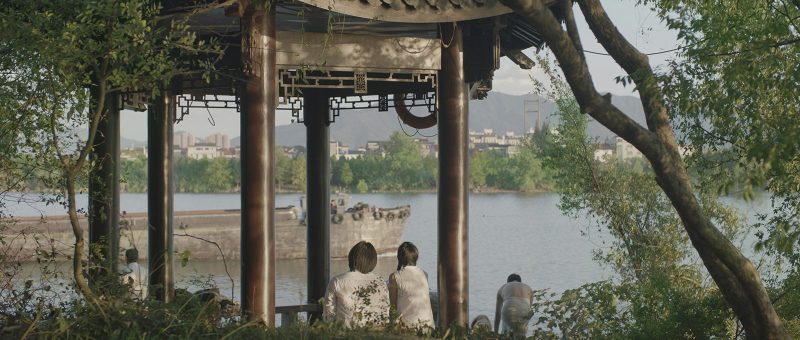
In one of the soon-to-be dismantled buildings, the youngest brother recovers a suitcase with a love letter inside it dated April 1989, a relic from another China though telling the same old story of young love thwarted by parental authority. Closest to her grandmother and third uncle Youjin who eventually reclaims her from the old person’s home where the other brothers had decided to send her while caring for his 19-year-old son with Down’s Syndrome, Guxi brands her family selfish and laments that they can’t get past all of these arcane rules and petty power games to love and support each other as a family should ironically taking grandma’s advice in refusing to perpetuate the cycle of resentment by marrying a man she doesn’t love just to please them. Gu films this unfolding tale with a series of breathtaking tracking shots along the river as if running one’s eyes over a scroll painting while giving in to the oneiric quality of the rolling mists that hang over this changing landscape. Apparently the first volume of a trilogy of films set along the Fuchun river, Gu’s minimalist epic is a poignant evocation of a hometown memory both transient and eternal.


Dwelling in the Fuchun Mountains streamed as part of Odyssey: a Chinese Cinema Season.

Original trailer (English subtitles)
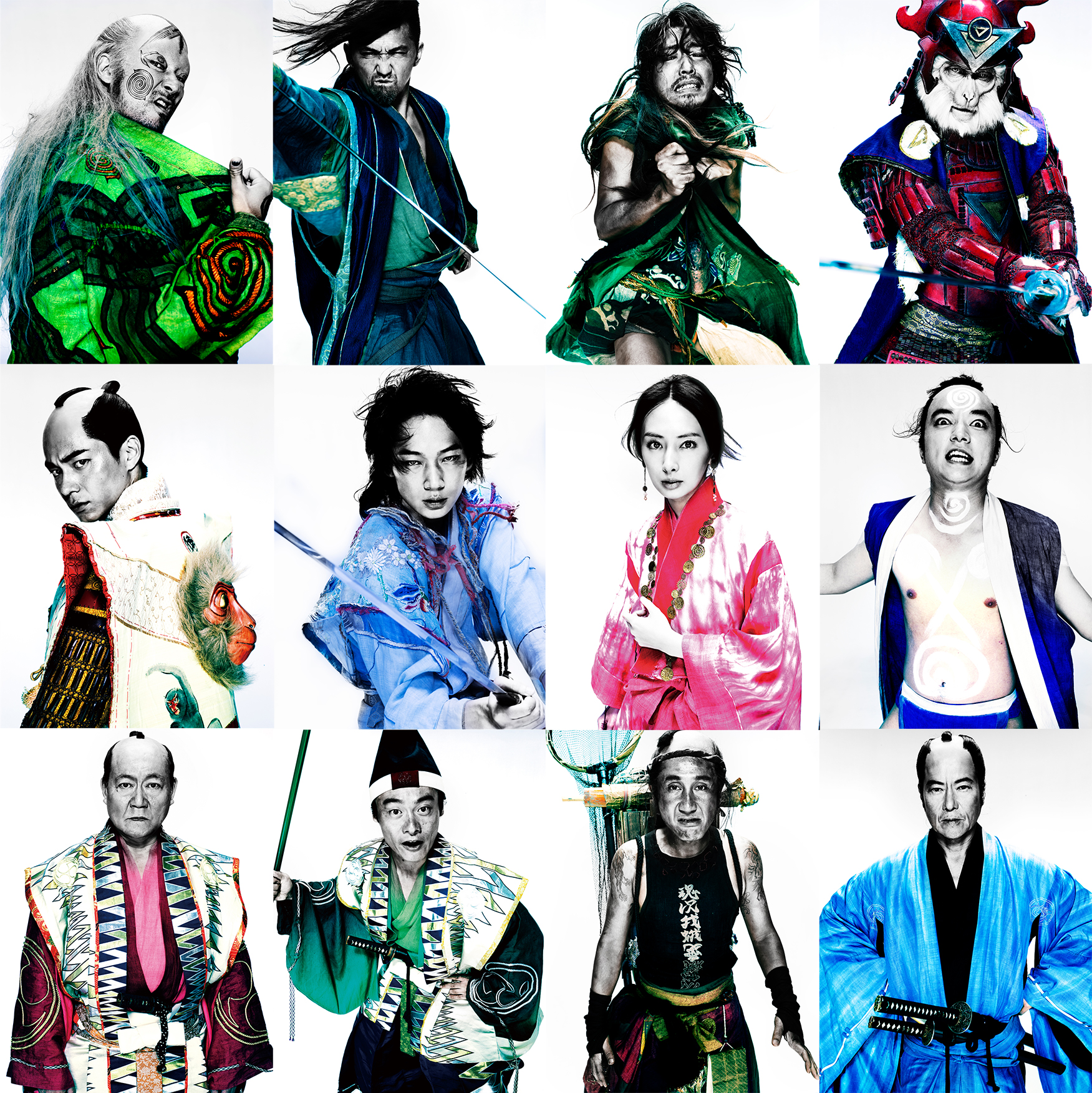
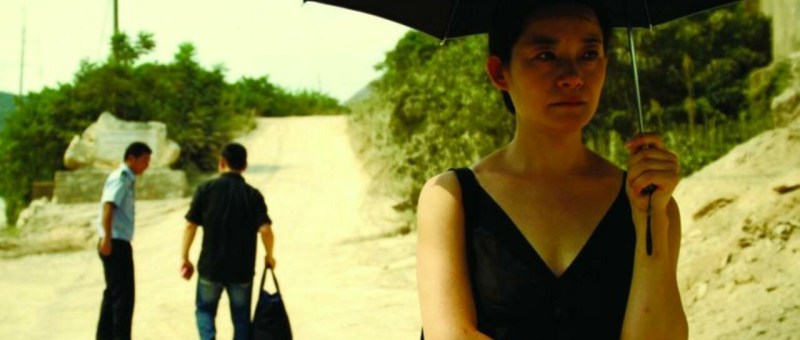
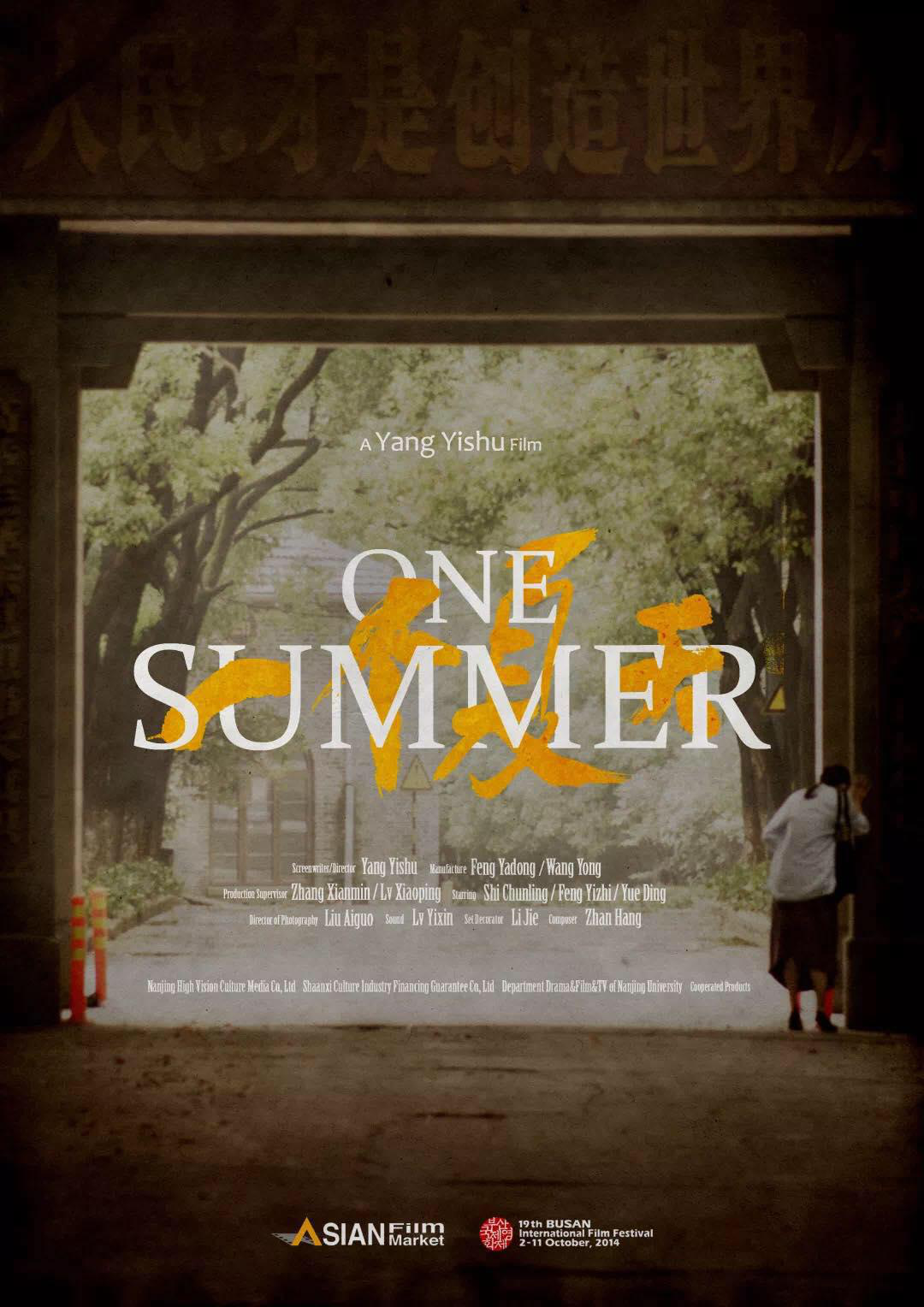
One Summer (一个夏天, Yang Yishu, 2015)

“It makes no difference having a husband or not” a friend of the heroine in Yang Yishu’s One Summer (一个夏天, yī gè xiàtiān) laments, yet Zhen is determined to retreive hers or at least find out why he seems to have been swallowed whole by the contemporary society. Trying her best to live a “normal” life or at least give the semblance of one to her daughter she searches for answers but becomes increasingly disillusioned with every step closer to her husband’s salvation. 

Zhen’s otherwise ordinary and comfortable life is disrupted by a doorbell in the middle of the night. Insistent, the bell rings continuously forcing Zhen’s husband Xiaoping to investigate. The ringers turn out to be policemen who make a less than polite request for Xiaoping to accompany them to the station not even allowing him time to say goodbye to his wife or explain what’s going on. The knock at the door is a hallmark of authoritarianism and it’s this cold and austere regime which Zhen finds herself battling. She has no idea why her husband has been taken or to where or for how long. No one can tell her anything either, she’s left entirely alone and in the midst of her confusion must try to balance caring for her young daughter with the increased financial demands of becoming a single mother temporarily or otherwise. 

The neighbourhood woman she asks to watch her little girl explains that she can’t help because the house she paid for in the country for her in-laws to live in is going to be knocked down and she needs to go back there to make a fuss and pay some bribes to make the best of a bad situation. Meanwhile, a third party at the lawyer’s office where Zhen goes for help mutters about bribing the judge and she’s later tricked into giving a large sum of money to gangsters on the advice of someone who said they knew how to help Xiaoping. 

Chasing the police, she’s denied any sort of information before someone more senior tells her that she’s got the wrong station so they can’t help her anyway and in any case suspects are apparently prevented from seeing their families so there’d be no point in finding him. Later she’s told that she might not be able to see Xiaoping until either the case is dropped or he’s been sentenced which might take “several years”. After exhausting the legal routes she tries asking around their old friends to see if anyone knows anything she doesn’t and discovers that some of them have moved abroad or died in mysterious circumstances. Uni friend Lu now a lawyer and continuing to carry a torch for her agrees to help but also remarks on how she’s changed from the bright and cheerful actress he once knew now a wife and mother assigned to an archive where she subversively helps a young woman research a documentary on a persecuted scholar. 

Eventually she discovers that Xiaoping has been hauled in on possibly spurious charges relating to some potentially dodgy dealings at his NGO, accused of illegal fund-raising, tax evasion, and for some reason bigamy which you think would alarm Zhen but it doesn’t seem to suggesting that she either has so much faith in Xiaoping that she refuses to accept it could be true or has decided that it isn’t relevant. On the other hand, the neighbourhood woman offers a few pointed words on experiencing domestic violence from her overbearing husband while her friend laments that hers is always away working so it’s almost as if she weren’t married at all almost implying that Zhen may as well give up her quest because men are unreliable and in some sense always absent even if not literally imprisoned by the state. 

And then just as abruptly as it began everything seems to have been “settled” as if it never happened in the first place. The police harassment, necessity of becoming acquainted with her husband’s business affairs, the stress and worry of trying to take care of her daughter and provide her with a stable home, along with the need to run round her old friends begging for help most of them can’t offer all seemingly forgotten in the interests of a return to genial domesticity. Even so a sense of tension remains, the constant anxiety of living under an authoritarian regime in which a knock at the door may come at any time and you may never see your home again. 


One Summer streamed as part of Odyssey: a Chinese Cinema Season.

Original trailer (no subtitles)

The Blue Hour (อนธการ, Anucha Boonyawatana, 2015)

Reality and fantasy begin to blur for a young man rejected by his family and persecuted by a society he feels has no place for him in the ethereal debut from Anucha Boonyawatana, The Blue Hour (อนธการ). Imbued with a strong sense of spiritual dread, the film casts its duplicitous hero adrift in an increasingly confusing reality in which his relationship with a mysterious boy encountered online may be his only anchor while drawn towards darkness and a lonely obsolescence. 

As we first meet high schooler Tam (Atthaphan Phunsawat) he is bloodied and bruised, a scene later repeated finding him beaten by bullies after money he’d supposedly borrowed from them but is unable to to return. He seems to be carrying an intense amount of resentment and self-loathing, not least towards his mother and brother who he says do not trust him accusing him of being responsible for anything untoward that occurs in their home. Then again, as Tam explains to new friend Phum (Oabnithi Wiwattanawarang), sometimes he actually did do what he’s accused of yet still resents the assumption while undermining our faith in him as a reliable narrator of his own history. In any case, Tam’s mother has figured out he’s gay and is very unhappy about it directly asking him why he can’t “change” while taking his sexuality as a personal slight against her parenting, asking him if he hasn’t considered her feelings and reminding him that his father “hates it”. In Tam’s mind his family’s negative view of him is directly tied to his sexuality and concurrent sense of otherness, fearing that they see him as inherently wicked simply because he is different. “My family don’t hit me in the face” he reassures Phum when questioned about the collection of scars and bruises across his body hinting that they hurt him in other ways that the world can’t see. 

Yet his meeting with Phum is also in its way dark and ominous as if Phum himself is one of the spirits of which he later speaks hiding people away until they can claim them for the spiritworld. Their first meeting takes place at a dilapidated, disused swimming pool Phum claims is haunted which has eerie stains in the shape of people covering its walls one of which looks just like the figure of Tam sitting on the pool’s edge. If that weren’t odd enough, Phum later takes him on a date to garbage dump he says is on land that his family once owned but were unfairly cheated out of. This literal dumping ground nevertheless has its own sense of spiritual oddness, Tam finding the body of a man which seems to have regained some kind of life as does the body of a dog he later leaves there. Meanwhile, he’s shot at by a random man with a gun, presumably one of the gangsters Phum says are squatting on his land, and eventually clubs him over the head in act of violence later to recur whether in fantasy or reality outside of Tam’s direct memory. 

When Phum tells him that “if we can get rid of them then this land will be ours. Then we can live here together” he’s perhaps talking more widely or at least to Tam’s fracturing psyche suggesting that if he could rid himself of the oppressive forces in his society then he’d be able to live freely having reclaimed his emotional landscape and cleared it of the trash left behind. His visions become darker, haunted by a sense of dread as he tries to scrub the silhouette of himself from the pool’s wall and encounters bloody scenes of his own violence whether real or imagined. What he seems to seek is the promised oblivion of Phum’s stress beating ritual immersed beneath the murky waters of his escapist dreamscape. Oneiric and elliptical, Anucha Boonyawatana’s beautifully photographed non-linear tale of repression and release paints a darkening picture of the contemporary society for boys like Tam fracturing under the weight of rejection and resentment, their mounting rage and loneliness turned inward yet threatening to explode into self-destructive violence. Hidden away he might well be and bound for another world hand in hand with his mysterious saviour. 


The Blue Hour screens at the Barbican on 23rd May as part of this year’s Queer East.

Original trailer (English subtitles)
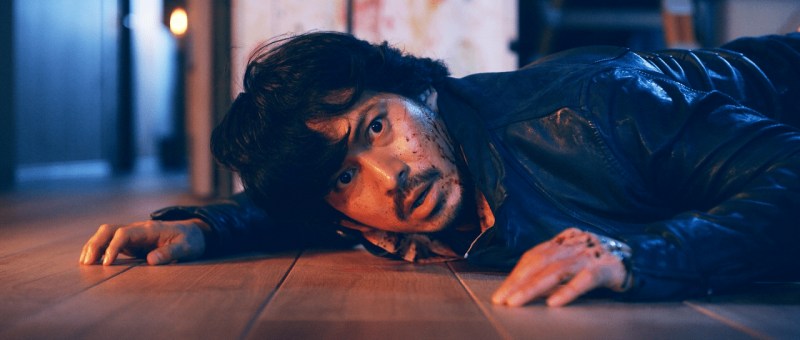
Bamboo Theatre (戲棚, Cheuk Cheung, 2019)

Cheuk Cheung’s otherwise observational documentary Bamboo Theatre often interrupts the action with a series of title cards beginning “this is a space”, a space for ritual, for culture, for the traditional and for its evolution both manmade and somehow spiritual. Bamboo Theatre (戲棚) is in fact Cheuk’s third documentary on the subject of Chinese opera having apparently developed an interest through a chance encounter that left him surprisingly moved, but the focus this time is as much on the building as it is on the art emphasising the ironic endurance of these transient structures forever dismantled and rebuilt in a constant process of change and renewal. 

As the closing titles reveal, the number of bamboo theatres operating across Hong Kong has dropped by 30% though the traditional practice continues to endure with communities across the islands conducting ritual to honour the birth of Tin Hau, goddess of the sea. Built entirely from bamboo without the use of a single nail, the structures are a marvel of engineering yet intended to stand for less than two months, performances taking place for only three to seven days before the entire theatre is dismantled and transported to its next location to be resurrected anew. Cheuk elegises the disappearing art form through long sequences of painstaking construction scored with classical music as if to lament the dying nature of the craft while bearing testament to its survival as the company crafts its own space with its own hands not only a stage and makeshift covering but a warren of backstage corridors where costumes are steamed and pressed while actors rehearse or put on their makeup. A scenic boat is even is whipped up mid-performance seconds before being tracked on stage. 

Meanwhile, the theatre creates its own kind of spectacle outside its doors a mini festival taking place in the open air with stalls selling nicknacks and street food. The audience appears diverse, a mixture of small children accompanied by parents or grandparents along with elderly spectators attending alone, the kids well behaved and engaged with this very traditional art form. As another of the title cards reminds us, this is a space for entertaining both people and the gods, ritual and enjoyment presented with equal importance which explains perhaps how this incredibly laborious practice has managed to endure in an age which largely values convenience. 

Then again as one performer complains in one of the few scenes featuring dialogue, why don’t they put up a mobile toilet for the performers along with the rest of the structure, their personal convenience it seems valued comparatively little. A mess of hanging cloths, the backstage areas appear more spacious than one might expect, but are also subject to their own arcane rules a sign reminding women not to sit on crates for the gods though it seems unlikely anyone is doing very much sitting at all given the general business of backstage of life. Even once the audience has gone home, an old man commandeers the darkened stage to practice his art singing to an empty auditorium in an otherwise silent night. 

Having begun the film with a theatre’s construction Cheuk closes with its dismantling, foil sheeting from the roof clashing to the floor with apocalyptic intent yet also suggesting that this is how something survives, taken down in one place to be rebuilt in another the same but different, transient and eternal. In this way, xiqu opera survives its ritualised nature taking on an almost mystical dimension in its constant acts of appearance and disappearance though perhaps it’s ironic to think of something so obviously built by human hands as “intangible” culture. Even so, the enduring power of the bamboo theatre captured with an ethereal distance through Cheuk’s sensitive lensing is perhaps a sign of hope for the future in the face of persistent anxiety that such iconic local traditions are always at the risk of erasure. 


Bamboo Theatre screens in Chicago on April 2 as part of the 14th season of Asian Pop-Up Cinema.