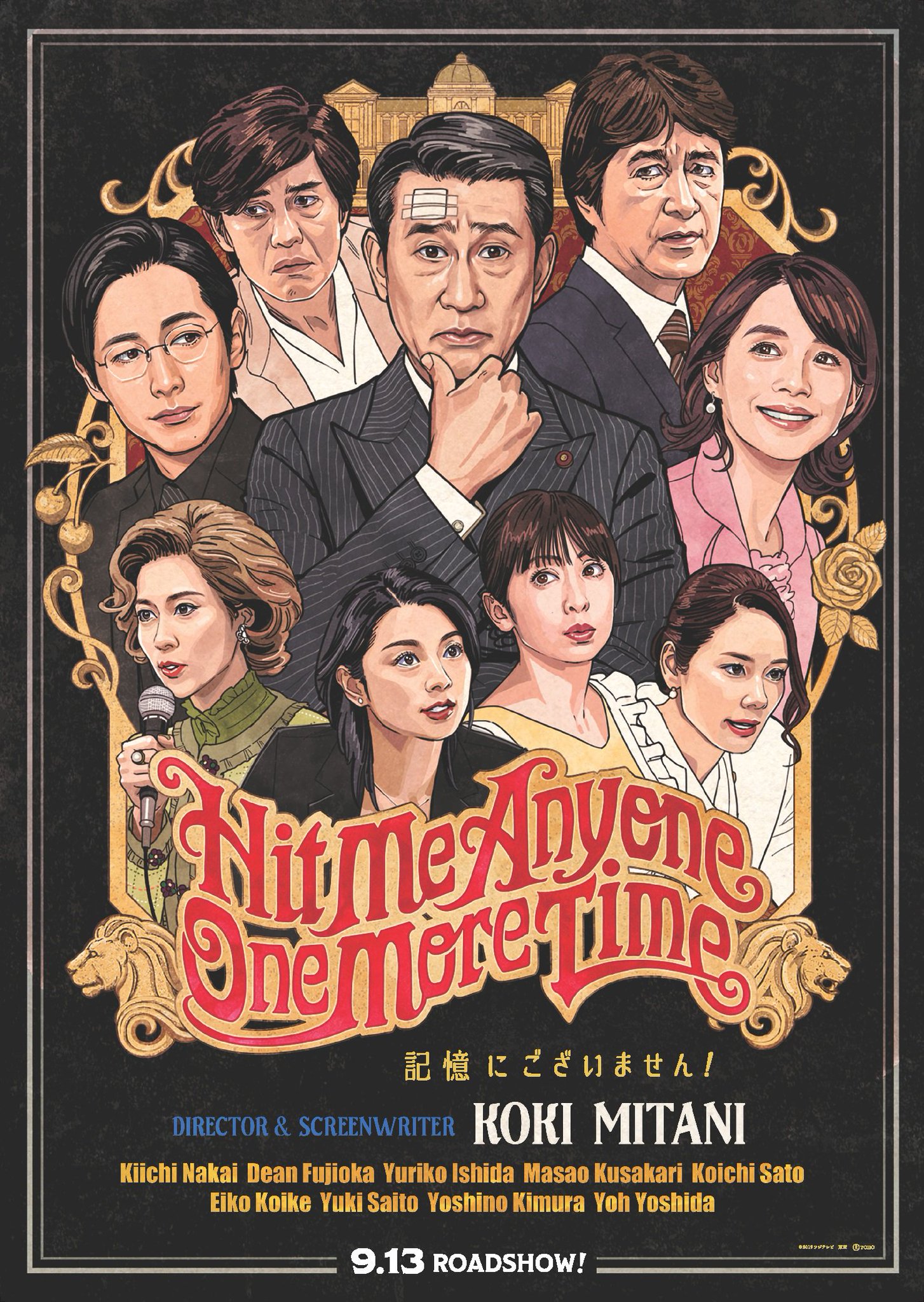
Hit Me Anyone One More Time (記憶にございません!, Koki Mitani, 2019)

Imagine if you woke up one day and found out you’re actually the national leader of your country and not only that absolutely everyone, including your wife and son, hates you with furious intensity. The hapless protagonist of Koki Mitani’s lowkey political satire Hit Me Anyone One More Time (記憶にございません!, Kioku ni Gozaimasen!) finds himself in just this stressful situation having lost all of his memories since he made the fateful decision to enter politics, rendered infinitely naive as he tries to keep up appearances while internally conflicted by the direction both his life and his country under his stewardship seem to have taken. 

Regarded as the “all-time worst prime minister” in Japanese history, Keisuke Kuroda (Kiichi Nakai) is known as a venal bore, a ghastly misogynist and all-round arsehole. To put it bluntly the very fact that a man like Kuroda could ever have become prime minster in the first place hints at a deep-seated rot in the political order. Aside from his gaffe-prone personality, the chief complaints against his administration are a sales tax hike and welfare cuts both of which target those with the least means, not that Kuroda cares very much about them. His big legacy idea is to build a second Diet building right next to the first Diet building only with spa facilities, illicitly teaming up with a childhood friend turned construction magnate who has been supplying him with hefty “donations”. 

After insulting the electorate during an outdoor balcony speech, Kuroda is hit on the head by a rock thrown by a disgruntled voter. Having lost his memory he regresses to a state of innocence from before he was corrupted by the cutthroat world of Japanese politics, now a nice, polite, slightly mild-mannered man who stuns his staff with his newfound consideration for others including a widely televised moment in which he stops to help up a female reporter who trips while chasing him in the lobby. Few believe he’s really changed, assuming this is some sort of bit intended to help rehabilitate his reputation. His new attitude, however, eventually fosters a new sense of hope for political change among his previously jaded, cynical staff who had long since given up hope of building a better Japan. 

Unsurprisingly, Mitani mostly avoids direct allusions to real world politics but adopts a mildly progressive stance as he sends a virtual innocent into the lion’s den of contemporary politics. It’s not long before Kuroda’s asking sensible questions about policy that wouldn’t go down so well with his (presumably) centre-right party including lowering the sales tax and raising the corporate, taking the time to greet constituents including a contingent of cherry farmers which contributes to his later decision to turn down a tariff-free trade deal for American cherries endangering diplomatic relations with the Japanese-American US President. No longer a ruthless political animal but a rueful middle-aged man who actually cares about ordinary people, Kuroda attempts to change the course Japanese politics largely by taking on the king maker, Tsurumaru (Masao Kusakari), his Chief Cabinet Secretary and the true holder of power in this infinitely corrupt political system. 

All sorts of sordid politics is on display from Kuroda’s womanising and a potential blackmail plot involving his wife’s affair to Tsurumaru’s yakuza ties and an even worse secret he would find personally ruinous should it get out. The ironic Japanese title of the film takes its name from that most universal of political get out of jail free cards, “I do not recall”, Kuroda’s standard response when questioned in the Diet about any of his extremely dodgy dealings. Instructing Kuroda that he should drop this “shallow humanism”, Tsurumaru can offer only the motivation that he wants to “remain in politics for as long as possible” while discovering that his old-school methods of political manipulation may no longer work when those around him find the courage to shed their cynicism and embrace a cleaner, kinder politics. 

Throwing in random gags such as a foreign minister who can’t speak English and has large ears with a pot belly that give him the appearance of Buddha while taking minor potshots as the usually toothless TV media through his series of acerbic anchors only too keen to criticise the PM live on air, Mitani’s comedy is characteristically inoffensive with its mix of slapstick and goodnatured farce but nevertheless makes a subtle plea for decent, compassionate politics which puts the interests of the people first rather than those of the governing elite. 


Hit Me Anyone One More Time streamed as part of this year’s Nippon Connection.

Original trailer (English subtitles)
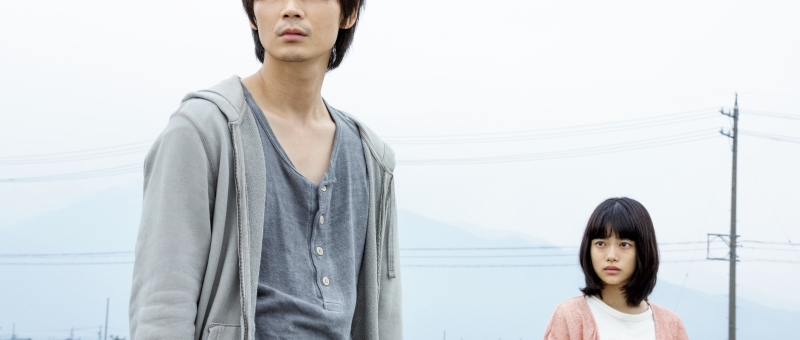
The Promised Land (楽園, Takahisa Zeze, 2019)

Small-town Japan is no Promised Land in Takahisa Zeze’s adaptation of a pair of short stories by mystery writer Shuichi Yoshida. Japanese cinema has often had an ambivalent relationship with the rapidly depopulating countryside, split between a sickly furusato idealisation of rural life as somehow purer than its urban counterpart and lampooning city slickers tired of that same sense of urban ennui but discovering that the traditional way of life is often hard especially when you don’t know how to do it and have no friends in communities which can often seem hostile to newcomers. 

What newcomers to the small town at the centre of The Promised Land (楽園, Rakuen) discover is latent racism, mutual suspicion, and toxic local politics which bends towards the feudal as those now old go to great lengths to cling on to their power. Hardly a rural idyll but a space of atavistic decay. The rot begins 12 years prior to the main action when a little girl, Aika, doesn’t come home for tea after playing with a friend. A search of the local area is organised, but only her little red school bag is found. 12 years later the other girl, Tsugumi (Hana Sugisaki), is consumed by a sense of survivor’s guilt feeling as if she is underserving of happiness in the knowledge that if she had only taken a different path that day Aika might not have disappeared. When another girl goes missing, suspicion falls on a wounded young man, Takeshi (Go Ayano), who speaks little and is intensely traumatised by his childhood experiences of xenophobic bullying having come to Japan with his non-Japanese mother (Asuka Kurosawa) at seven years old. 

Bystanders in the crowd preparing a search for the second missing girl are quick to blame the other, one loudly casting suspicion on “Africans” living nearby while another brings up a man who sells second-hand cars she feels is a little odd. Takeshi gets the blame because he exists to the side of the community but also because he is meek and vulnerable, unable to defend himself until pushed into a corner and provoked into an explosive act of self-destructive violence. “Suicide brings redemption” Aika’s grief crazed grandfather (Akira Emoto) shrieks as if urging a young man on towards his death based on nothing other than prejudice and bloodlust. Later he admits that he just wanted someone to blame as if that would bring an end to the matter but of course it didn’t, it only added to the burden. 

Meanwhile, middle-aged beekeeper Zenjiro (Koichi Sato) who returned to the village to look after his parents following the death of his wife (Shizuka Ishibashi) from leukaemia also finds himself under suspicion but mostly as part of a concerted harassment campaign conducted by two local elderly men who have appointed themselves village elders and resent his attempt to go directly to city hall in order to fund a new business venture without going through them. Zenjiro is originally from the village, this is his hometown, but he was also away a long time and is in a sense other as a new returnee at first courted as a potential suitor for the similarly returned widowed daughter of the local bigwig, Hisako (Reiko Kataoka), and then aggressively shunned to the point he begins to lose his mind leading to another shocking act of irrepressible violence. 

“No one trusts anyone” Tsugumi laments, angrily tearing away an annoying sign asking residents to report any “suspicious behaviour”. She insists they need to face the past in order to move on, something Zenjiro was ultimately in capable of doing, but later claims that she doesn’t need to know what happened to Aika, she’s going to live her own life. The path leads towards an acceptance that she wasn’t responsible for what happened to her friend and has no need to live her life in the shadow of guilt, yet she still falls victim to small-town attitudes more or less bullied into a romantic friendship with a distinctly creepy young man (Nijiro Murakami) who admits to slashing her bike tires so she’d be more likely to accept a lift from him. 

According to Takeshi, there’s no such thing as the “promised land”, a sentiment also expressed by Hisako who agrees that all places are the same save your hometown something which Takeshi seemingly never had. Tsugumi’s problematic suitor tells her she ought to create the promised land for all of them, which might be as close as the film comes to a mission statement in suggesting that the individual has agency to craft the world in which they live while subtly undercutting it in the melancholy stories of Takeshi and Zenjiro each hounded towards acts of self-inflicted violence by an intransigent community mired in a primitive us and them mentality. Far from paradise, small-town Japan is a land of fear and suspicion where outsiders are unwelcome and the old hold sway, complaining that their kids all end up in the city while secretly perhaps satisfied in the knowledge their authority will not be challenged. If there is a promised land, you won’t find it here. 


The Promised Land streams in Germany until 6th June as part of this year’s Nippon Connection.

Original trailer (no subtitles)

Images: © 2019 “The Promised Land” Film Partners

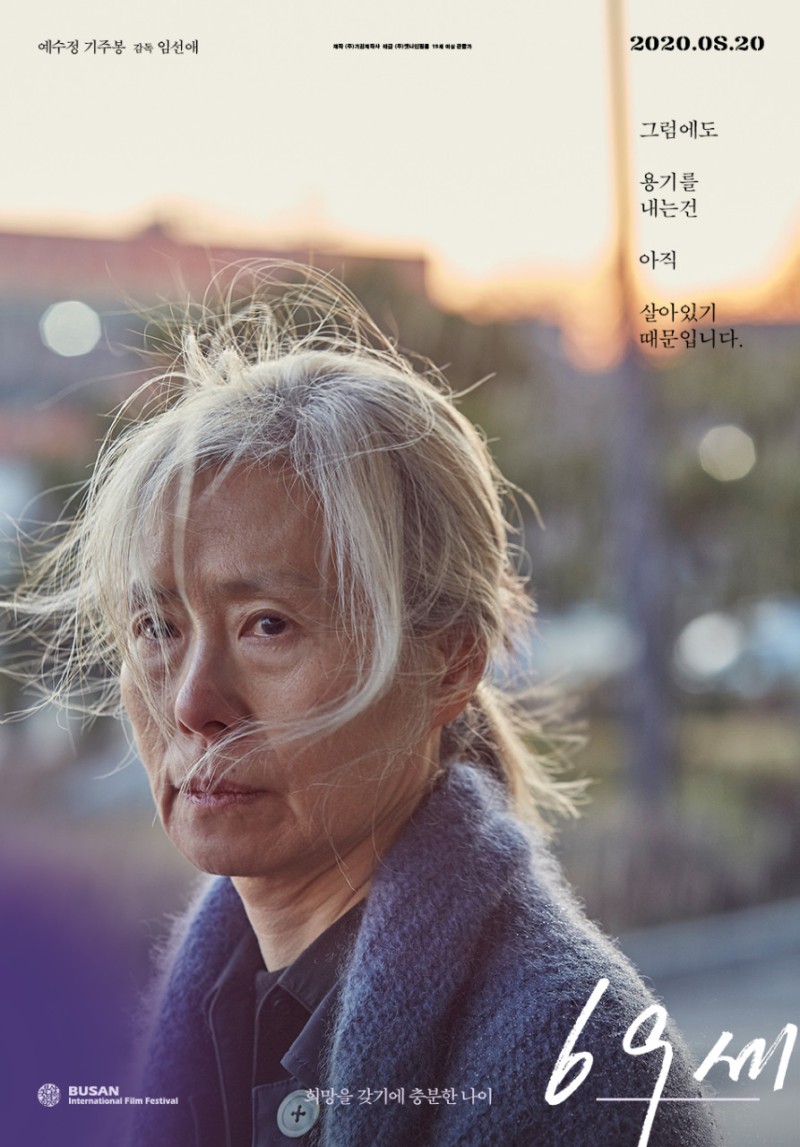
An Old Lady (69세, Lim Sun-ae, 2019)

“Would you say I’m safe in these clothes?” the 69-year-old heroine of Lim Sun-ae’s An Old Lady (69세, 69-Se) asks of a now sympathetic police officer who has just, perhaps slightly inappropriately, complemented her on her always elegant dress sense little knowing it’s little more than ineffectual armour designed to help her feel not just less vulnerable but less culpable in the eyes of those who tell her that she is to blame for her sexual assault at the hands of a healthcare professional. 

Lim opens with a lengthy period of darkness in which we only hear the dialogue between Hyo-jeong (Ye Soo-Jung), an elderly woman receiving her final physiotherapy treatment following a knee operation, and 29-year-old nurse Joong-ho (Kim Joon-Kyung). We can hear Hyo-jeong’s discomfort in her muted replies to Joong-ho’s increasingly inappropriate comments on the beauty of her legs and youthful appearance and though we don’t see what happened next, we’ve heard enough to believe that what she says is true and that she has been assaulted by someone who was supposed to be a position of utmost trust. Though she doesn’t quite explain why, Hyo-jeong asks her live-in partner, Dong-in (Ki Joo-bong) to accompany her to the police station certain that she should report the crime but fearful and needlessly ashamed. The police, however, are not originally sympathetic, giggling slightly when they realise Joong-ho is a handsome 29-year-old man, stunned into disbelief that anyone would rape a 69-year-old let alone someone 40 years their junior. “We won’t make a scene, it’s not a murder” the lead investigator insensitively adds as a means of assuring them he’ll be discreet in his investigations. 

As a counsellor later points out, rape victims are forced to prove the accusation even when there is clear video evidence. The problems Hyo-jeong faces are the same as any other woman, but they are compounded by her age and most particularly by the spectre of dementia which is both wielded as a weapon by Joong-ho who admits to the sex but claims it was consensual, and by the police who must proceed as if her testimony may not be reliable. Hyo-jeong didn’t known Joong-ho’s name to report it and claims not to have known him previously, but he tells investigators he met her at a Christmas market and in fact recommended his hospital to her. In many senses, this is irrelevant. Meeting someone once and taking them up on a recommendation does not amount to consenting to a sexual relationship and there’s no evidence of their meeting on any subsequent occasion, but the inability to remember it clouds Hyo-jeong’s mind leaving her wondering if she really could have known him and begun some kind of romance and then simply forgotten about it. 

Dementia is a key tool in the gaslighting of the elderly who, when they ask legitimate questions about their healthcare or financial circumstances are simply told that their memory is faulty and everyone believes it because they’re old. Ageism is something both Hyo-jeong and Dong-in are repeatedly forced to face, berated by the young for being slow or in the way and watching as others seem to step in and assume authority over them as if they were children who can’t look after themselves. Hyo-jeong bears her troubles with quiet grace, but Joong-ho’s abuse of his position is all the more egregious because it leaves her afraid to seek medical treatment despite being in great pain. The police struggle to believe a young man would rape an old woman, but fail to spot that a predator has most likely installed himself in a line of work in which he is likely to meet vulnerable people who cannot fight back because of the physical impairments they are receiving treatment for, knowing that should they complain he can easily dismiss their claims as a figment of an elderly imagination. Hyo-jeong is only able to force him to admit inappropriate sexual contact because she preserved material evidence in not wanting to deal with her soiled hospital gown. 

“It drowns you little by little, life is really stubborn” she later tells an unrepentant Joong-ho complaining about having his life “ruined” by her desire for justice, and we can see that she has also had tragedy in her life that perhaps prevents her from asserting herself. Though living with Dong-in and working in his shop, she stubbornly continues to call him “Mr. Nam”, and the situation is indeed complicated by the irony that the pair met when she was his care nurse while he was recuperating in a hospital. The police didn’t quite like it that these two elderly people live together but aren’t married, and there are obviously problems with Dong-in’s resentful lawyer son (Kim Tae-hoon) who declares that it’s fine for his widowed father to live with a woman but he doesn’t see why he should take an interest in her private life. Nevertheless he later comes up with a legal tip that they should be prosecuting Joong-ho on a charge of assaulting someone with an age-related disability which might make it easier to get through the courts. Hyo-jeong doubts herself and backs off, Dong-in uncomfortably shifting into a mild chauvinism as he tries his best to protect her while outraged that someone like Joong-ho can just carry on living his life after what it is he’s done, continuing to provide medical care to other vulnerable women. 

Yet through her ordeal Hyo-jeong perhaps finds the strength to step into her self. “Telling my story isn’t easy. But this is me taking a step into the sun”, she says now more grounded and less minded to run away, ready to face the past as well as the future in having accepted herself for all that she is. A fierce condemnation of an ageist, patriarchal society, An Old Lady eventually allows its oppressed heroine to free herself not through revenge but through the simple act of refusing to be silent in the face of injustice. 


International trailer (English subtitles)

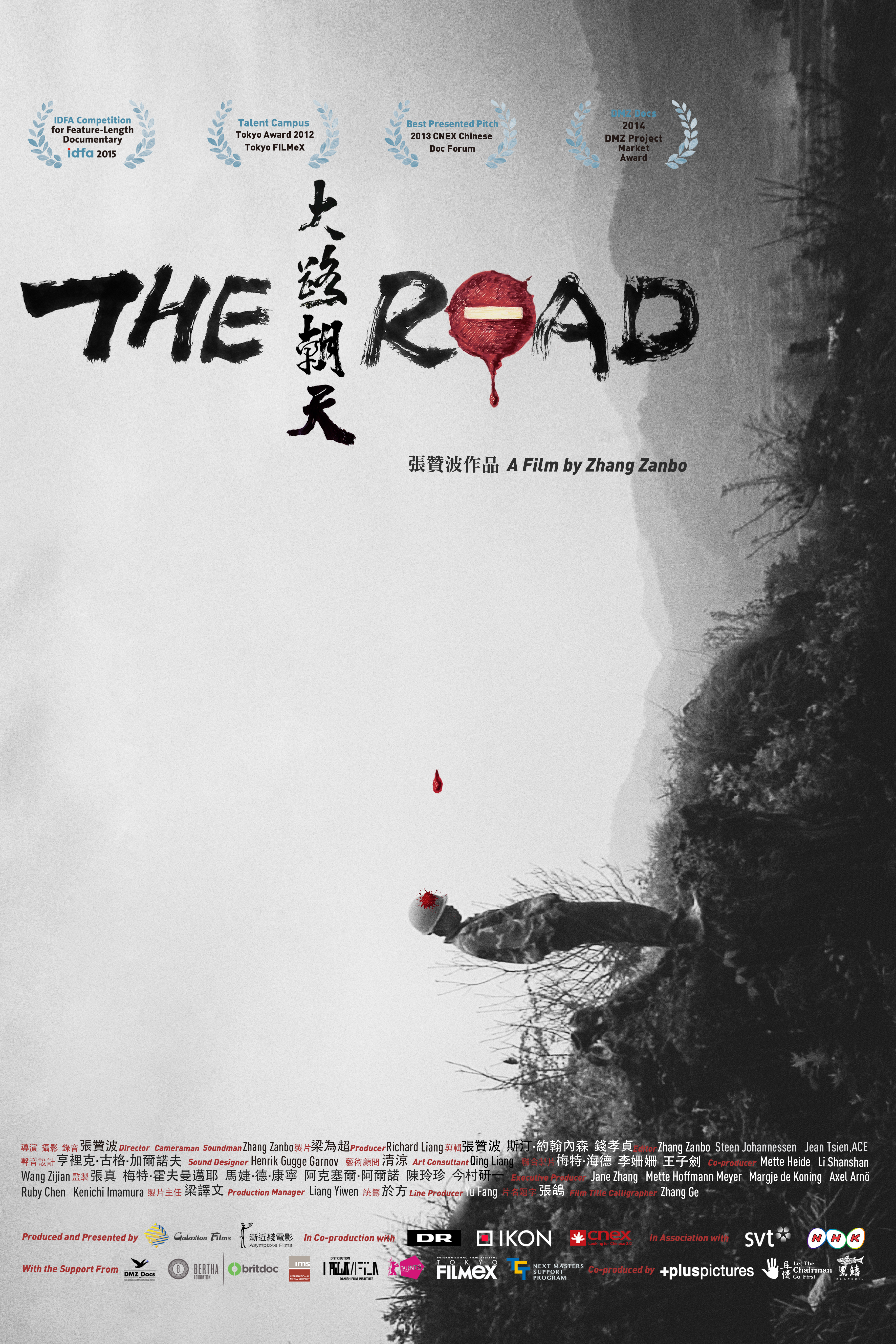
The Road (大路朝天, Zhang Zanbo, 2015)

“Build a good highway and honour local people” runs a banner at a construction site in Zhang Zanbo’s observational doc The Road (大路朝天, Dàlù Cháotiān), though as we’ll discover in the end they’ll do neither. An allegory for the progress of the modern China, Zhang’s chronicle of a Hunan highway lays bare the various states of decay at the centre of a contradictory society in which money rules all and there is no longer any such thing as wrongdoing only acts which must be compensated for. 

Divided into four sections, Zhang’s documentary first asks us, indirectly, who the highway is for. The State began this project in 2009 as part of an economic drive fuelled by a good old-fashioned public works programme improving infrastructure across the country. Yet the highway will have little direct benefit for those who live beside it, something to which the construction teams seem to pay little mind. An elderly woman living alone in a traditional home pleads with a team blasting away at the mountain behind her to stop because they still haven’t compensated her for damage to her house, but they routinely ignore her and later the son who returns to advocate on her behalf. Because of their explosions, the old woman has a hole in her roof and being elderly would not be able to repair it herself but the construction team continue to refuse to help, irritatedly blaming her for not understanding them because they speak different dialects while fobbing her son off explaining that he needs to contact a different department because compensation and repairs are not in their remit. 

A secondary problem is that though the highway is a government project it’s been outsourced to a private engineering firm who view their responsibility solely to fulfil the contract and build the road while the Party officials who hired them utter vaguely menacing phrases about quashing any and all opposition. The locals often don’t seem to have been aware that any construction would be taking place or that their land and homes may be zoned for demolition. They complain that they’ve not received compensation they were promised for previous infractions and largely remain uncooperative while the construction teams assume that they’re simply angling for more money while insensitively digging up old graves and destroying ancient shrines still in use by the local community. Saving a giant Buddha statue one of the construction leaders seems to feel some remorse, chastened by another bystander that Buddha is unlikely to look fondly on him now he’s put him out in the rain. The team then erect a makeshift canopy hoping at least to keep his head dry. 

Another farmer meanwhile complains that his tree is holy and has an earth deity underneath it, advising the team to get a priest to bless it first only to be reminded that there’s no way on Earth the Communist Party could be involved in something so superstitious. The farmer lets rip, openly calling the Party greedy and corrupt while others in the village agree that the State continues to confiscate their property without warning or fair compensation. “The government owns you and your tree!” the representative claps back, denying the locals any sense of personal agency as he continues to encroach on their daily lives, merely reminding them they’ll be adequately compensated for relocating which many of them, including the old lady and her son, eventually do.

Compensation is always being promised but is rarely delivered as the labourers find to their cost, offered danger money and bonuses for working in obviously unsafe conditions but refused even time off or expenses when injured on the job. Ironically enough, workers’ rights are at the forefront of no one’s minds even as a bust of Chairman Mao (born in this very area) rests on the boss’ dashboard. When they ask for fair pay or treatment, the workers, like the locals, are accused of being selfish and money grubbing actively standing in the way of their nation’s progress. Instead of looking after their employees, company bosses schmooze local authorities, often handing out little red packets to smooth the path ahead but the construction firm too eventually finds itself on the receiving end of governmental extortion when the local road bureau try to shut them down over missing permits and later send in armed thugs when they refuse to pay leaving some employees in the hospital with multiple stab wounds awaiting further compensation either from their company who put them in a dangerous position or from the state authorities. 

If all that weren’t worrying enough, inspectors at the site find multiple issues with build quality that could endanger public safety. They seem frustrated that corners have been cut and insist that certain sections be entirely rebuilt before the project can be passed. 37 bridges had apparently collapsed in China since 2007 presumably because of the same lax safety culture while it seems the company was never penalised for breaching regulations in part because of all that schmoozing. The workers and the locals, we later learn, eventually got a degree of compensation, but Zhang’s unflinching doc nevertheless lays bare the degree to which the modern China continues to consume itself in its all encompassing obsession with “modernisation”. 


The Road is currently available to stream in the UK as part of the Chinese Cinema Season.

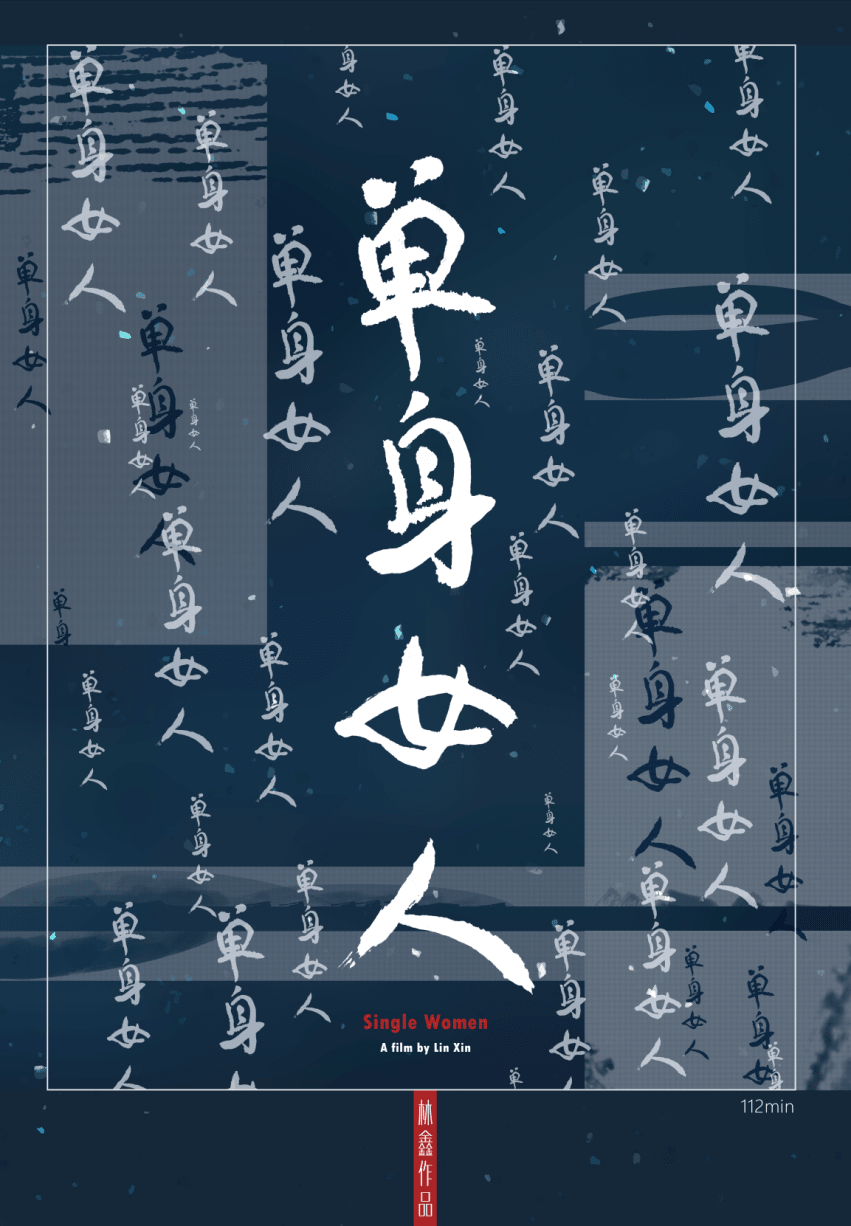
Single Woman (单身女人, Lin Xin, 2018)

What does it mean to be a single woman in contemporary China? Lin Xin’s talking heads doc Single Woman (单身女人, Dānshēn Nǚrén) is less concerned with the “Christmas cake” phenomenon than with ordinary middle-aged women who are living their lives without men. Many have been married before but are now divorced (Lin does not speak to any widows) while some are not strictly “single” having found someone new, but all have contradictory views on the nature of marriage, relationships, and independence even if united in their sense of disillusionment with modern men raised in a relentlessly patriarchal society. 

The project appears to have originated with local novelist Dong Li who as we discover is known for the erotic quality of her writing and is certainly among the frankest of the women when it comes to speaking of sexual desire. Having divorced her husband in 1997, Li explains that she went on looking for true love but found herself feeling exploited by men who were often overconfident in their sexual prowess and largely viewed relationships as a transactional activity, offering to cure the sexual frustration they stereotypically believed must be plaguing her in return for material favours. Li raises this point consistently while talking with some of the other interviewees who in the main seem to be her friends, even recounting an outlandish story of a married lover who lied about having a wife but bizarrely insisted on eating the genitals of various animals in order to increase his virility. 

Xiao Hua, a teacher, also mentions potential exploitation as an explanation for why she’s cooled on the idea of romance, explaining that after divorcing her adulterous husband even at the risk of losing contact with her son she found herself in a series of unsatisfying relationships with duplicitous men who milked her for money. Her rationale for turning someone down because “he was not qualified to love me” may sound cold and cynical, but has a degree of sense to it given her experiences with men who misused her or attempted to exploit what they saw as vulnerability in her perceived loneliness. 

Like many of the women, Xiao Hua had also been a victim of violence, another factor subtly raised by Dong Li as she talks to her friends about their lives as single women. Ya Lan dated her husband for eight years and married him only after overcoming his family’s objections yet later became a victim of domestic violence and eventually divorced. Unlike Dong Li and Xiao Hua, she found herself entering a relationship with a younger man which was genuine in intent though she later found him lazy and immature, treating her perhaps more like a mother in need of someone looking after him while she longed for someone to look after her. After that relationship ended she declared herself happy with the single life but has since found a more satisfying match in a devoted retiree and now that her son has married is planning to remarry herself. 

On the other hand, Chen Yuan is the only one of the women who has never been married and seems to have accepted the idea that she’ll remain single for the rest of her life though this does not appear to be her desire or intention. In fact none of the women except perhaps Dong Li entirely embraces the legitimacy of a woman’s right not to marry at all. Nevertheless, she firmly believes that a woman should be independent and that it is perfectly possible to be happy without a man even if she looks back with regret on the romantic choices of her youth wondering if she was perhaps too picky turning down a man who sincerely loved her solely because she was not sure he was really the one. Lili meanwhile married the man she loved and forged a conventional family but the relationship later suffered under the demands of everyday life raising children and her husband left her feeling that in the end they were simply incompatible. Despite the way it ended, Lili declares herself happy with married life but has no real desire to try again grateful in a sense to have experienced two different ways of living. 

Her experience could then not be more different than that of Mei Xiang who is actually the first of the women we meet as she tells a disturbing story about being attacked by the husband of her husband’s mistress. The man in question was actually her second husband whom she’d been persuaded to marry on the grounds of his “honesty” despite her misgivings, her first marriage had ended due to animosity from her husband’s parents who tried to convince her to give their daughter up for adoption in order to try again for a son under the demands of the One Child Policy. Her husband was never able to stand up to his family who refused to see the baby and the marriage broke down though now she wonders if they were over hasty and couldn’t perhaps have worked things out if they hadn’t been so young and impulsive. She hasn’t quite sworn off the idea of marrying again, sure that there are good men out there it’s just that she hasn’t yet met one, but seems to have filled her life with her charity work and prioritised self-fulfilment over social expectation. 

Ending on a rather ironic note, Lin takes us back to the school where Xiao Hua works as a group of children engage in a boys vs girls tug of war. Despite Mei Xiang’s declaration that there must be good men out there, Lin’s women haven’t had much luck locating them, each victims of deeply embedded patriarchal attitudes, but most haven’t given up hope of finding love and it seems deciding to be a single woman leading an independent life is still an unthinkable taboo. Nevertheless each of the women, Dong Li included, has found a degree of peace with their life choices and has at least the solidarity of her female friends to help her cope with a still unforgiving patriarchal society. 


Single Woman is currently available to stream in the UK as part of the Chinese Cinema Season.

China’s Van Goghs (中国梵高, Yu Haibo & Kiki Yu Tianqi, 2016)

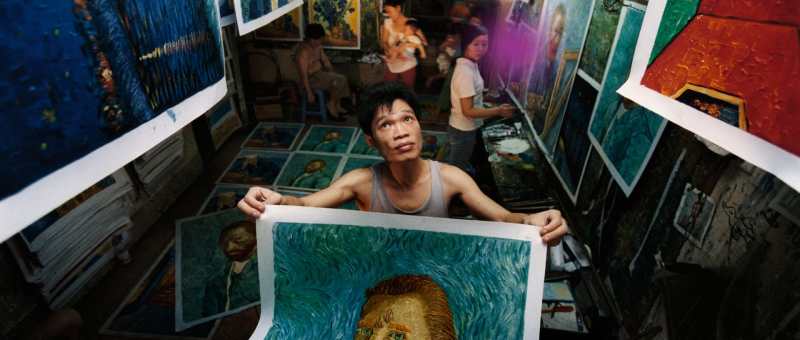
“You can just take a picture!” a frustrated driver calls out to “painter worker” Zhao Xiaoyong as he makes a long delayed attempt to express himself artistically by painting the streets of his rural hometown in the style of European artist Vincent Van Gogh. Xiaoyong is one of several men attempting to survive in a declining industry, a painter of knock off replicas of famous works of art produced for the foreign market in the small town of Dafen, Shenzhen known as one of China’s largest “oil painting villages” since an enterprising Hong Kong businessman kickstarted the movement back in the tumultuous year of 1989. 

Though the title may at first seem ironic, referring to the “fake” paintings at its centre, Yu Haibo and Kiki Yu Tianqi’s strangely moving documentary China’s Van Goghs (中国梵高, Zhōngguó Fán Gāo) explores the conflicts which continue to define the lives of the artists who as they put it paint to live but take their art extremely seriously and possess tremendous technical skill but are forced to stifle their own creative instincts while producing meticulous copies for a mere pittance. As Xiaoyong laments, they find it difficult to attract and keep apprentices because you can earn more at the factory, while one of his colleagues ironically admits that they had to set up a production line in order to complete an unusually large order though following the financial crisis those are largely thin on the ground. 

Xiaoyong is a Van Gogh obsessive, as are many of the artists of Dafen, and longs to visit Amsterdam in order to see the originals up close. Ironically enough, their biggest market is indeed the Netherlands, and his most important client has invited him to visit several times previously though Xiaoyong and his wife continue to argue over the expense. His eventual visit is however heartbreaking, his eyes a deep well of pain and confusion as he finds himself overcome with disappointment and disillusionment. He thought his client owned a fancy gallery, but his paintings are being sold in a pokey knock off souvenir shop for three times what he was paid to paint them which was only around €8 to begin with though they took many hours to complete. Later talking to another artist about his trip he remarks on how overcome he was seeing Van Gogh’s originals, but the experience also destroys the sense he had of himself as an artist, reminding him that he is “just” a craftsman making diligent copies while leaving him with the desire to create something meaningful of his own. 

Earlier in the film, Xiaoyong had travelled back to his rural hometown for the anniversary of his father’s death breaking down in tears while reflecting on the various ways his poverty has defined his life, denied an education and orphaned at young age. Back in Dafen, meanwhile, his teenage daughter who lives with grandparents in order to attend high school visits home and declares herself fed up with education, as if she’s wasting her time unable to keep with the curriculum silently crying in the corner while her parents continue working. Xiaoyong sympathetically laments he didn’t have the opportunity to learn very much but has taught himself to open his mind and has obviously become a skilled craftsman with canny business skills only to find himself falling for his own mystique serious about his craft but unaware of the various ways he is being exploited by the Western art economy.

What he’s doing may in a sense be dubious though no one seriously thinks they’re buying a Van Gogh original for €30, but who is to say what really is “authentic” art or suggest that Xiaoyong’s artistry is worth any less solely because someone painted what he painted before? Can a meticulous copy be in itself a separate work of art resplendent in its technical prowess? Xiaoyong says he fell in love with Van Gogh’s paintings because of his discovery of beauty in poverty, he and his friends tearfully watching the 1956 Hollywood biopic Lust for Life fiercely identifying with the artist’s struggles as they too try to accommodate painting to live with their desire for creative expression. In a strange moment, Xiaoyong recalls a dream he had in which he met Van Gogh and told the artist that he had almost become him, but Xiaoyong’s salvation eventually comes in a meeting of the two worlds, painting a portrait of his ageing grandmother her face a labyrinth of lines born of a long life of rural hardship. Sure, you can just take a picture, but it isn’t quite the same.


China’s Van Goghs is currently available to stream in the UK as part of the Chinese Cinema Season.

Original trailer (English subtitles)
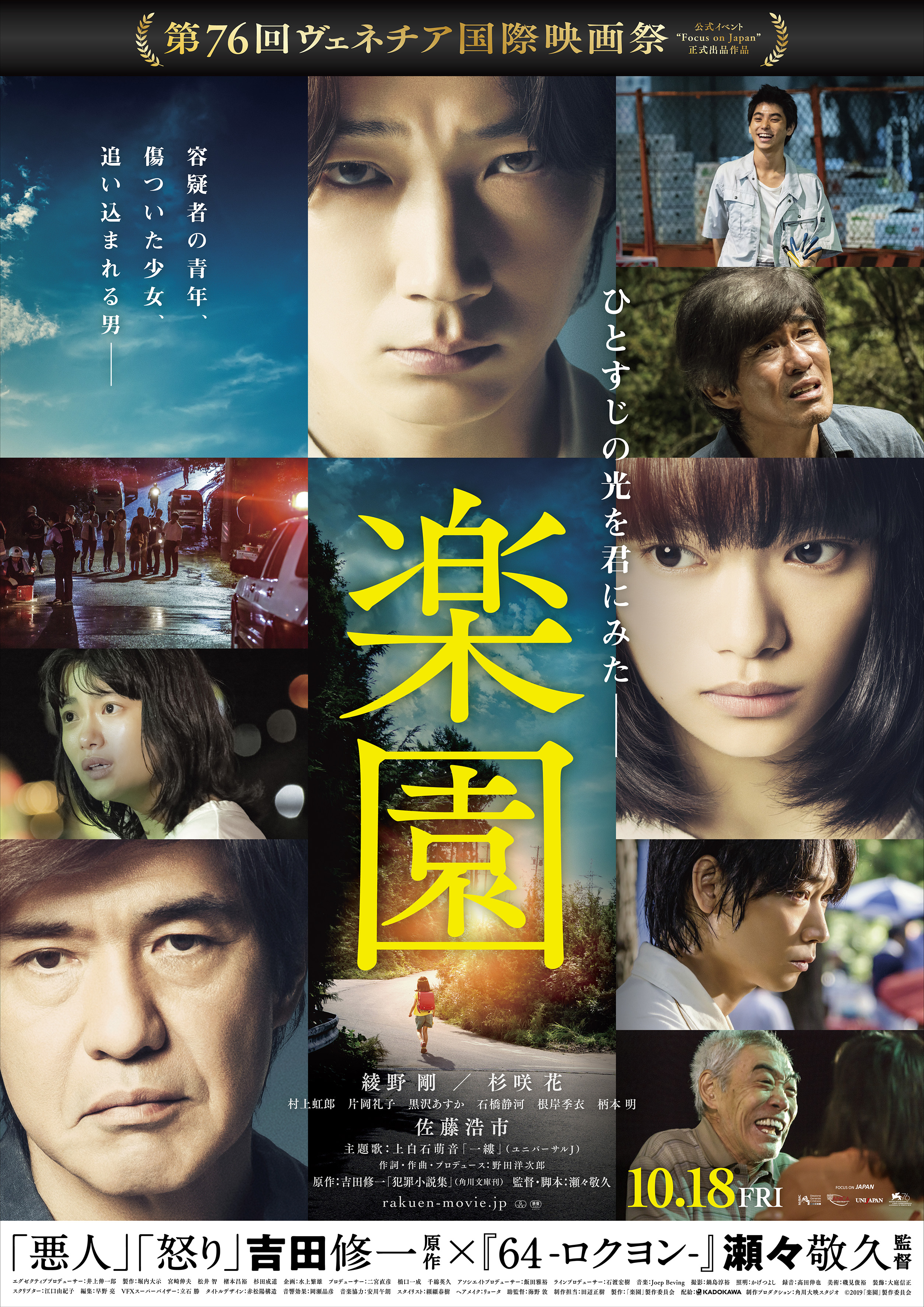
Fanfare (팡파레, Lee Don-ku, 2019)

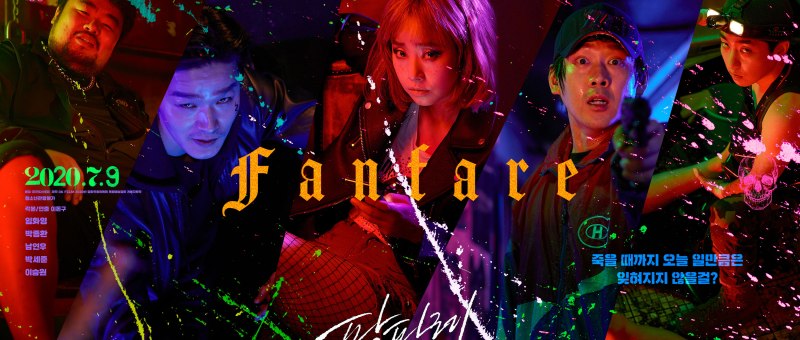
“I’m the only one who gets out alive!” insists an accidental antagonist in Lee Don-ku’s tense theatrical chamber piece, Fanfare (팡파레). The ironic title perhaps hints at the surreal pettiness of four criminals as they find themselves engaged in a pointless battle to the death trapped in a record shop / cafe bar one very bloody Halloween, but Lee’s drama is less concerned with their darkly comic fecklessness than with the rapidly changing power dynamics of an uncertain situation largely determined as they are by initial impressions and societal prejudices. 

That’s one reason no one pays too much attention to the mysterious J (Lim Hwa-young), a young woman we first meet putting on her makeup before getting a call from a man using a voice disguiser who is supposed to send her information on her upcoming “appointment”. We can’t really be sure what it is J’s job entails, but the three men who later take her hostage seem to have drawn the conclusion that she’s some kind of sex worker and largely regard her life as unimportant while believing that she poses no kind of threat to them. She, meanwhile, strangely calm bides her time watching largely passively while sometimes playing into their stereotypical view of her as a weak and defenceless woman, crying and pleading for her life. 

J later explains to her boss that she missed her appointment because she “ran into some fun guys” which may be a strange way of describing the evening’s events but perhaps makes sense given what we can gather of her. In fact she only snuck into the cafe a little before closing because she was early and needed somewhere to hang out, ordering a tequila from the sleazy barman, dressed as Dracula, while he continues to make somewhat inappropriate and flirtatious comments that she ignores. While he goes to tidy up after the Halloween party on the upper floor, a man comes to the door pleading to be let in explaining that his brother has been taken ill. J waves them through but of course it’s a ruse, they intended to rob the place but can’t figure out the till. Younger brother Hee-tae (Park Jong-hwan) goes looking for the barman but accidentally kills him, leaving the guys with a series of problems. To solve them, older brother Kang-tae (Nam Yeon-woo) calls an underworld friend, Sen (Lee Seung-won), promising him a share of his non-existent (?) drug stash in return for help. Sen calls “cleaner” Mr. Baek (Park Se-Jun), but after a series of arguments and altercations the situation continues to deteriorate. 

The problem is, perhaps, that everyone thinks of themselves as the good guy. Hee-tae is apparently in this out of desperation trying to pay off his student loans while painting his older half-brother Kang-tae as a deadbeat drop out whose involvement with drugs brings shame on their family, both boys keen to go home and see their mum anxious that they don’t cause her any more worry. Kang-tae meanwhile evidently thinks he’s some kind of gangster mastermind, entirely unaware he’s in way over his head but reacting to the news that his brother’s just killed someone with bemusement more than horror. Hee-tae didn’t think it was a good idea to involve anyone else in their situation but is persuaded by Kang-tae’s supposed underworld experience while later resenting him, wondering if he really has a valuable drug stash he never mentioned while forcing him to help in his criminal schemes knowing he needed the money. Meanwhile, the more experienced Sen thinks he’s in control but quickly finds himself outmanoeuvred in part because of the boys’ panicky naivety. Baek is there as a contractor but finds himself without protection, a continual outsider with only the necessity of his skills to leverage for his survival along with a possible professional alliance with Sen.  

Set almost entirely within the bar, Fanfare is testament to snowballing chaos of cumulative bad decisions along with the dangers of misreading others based on impressions formed through the prism of societal prejudice. Ironic music cues lend a sense of surreal irony, though Lee’s humour is pitch black as the gang of bumbling criminals eventually consumes itself while those assumed to have the least power simply wait for events to run their course.  


Fanfare screens at Chicago’s Lincoln Yards Drive-in on April 30 as part of the 12th season of Asian Pop-Up Cinema.

Original trailer (no subtitles)

All About Ing (小伟, Huang Zi, 2019)

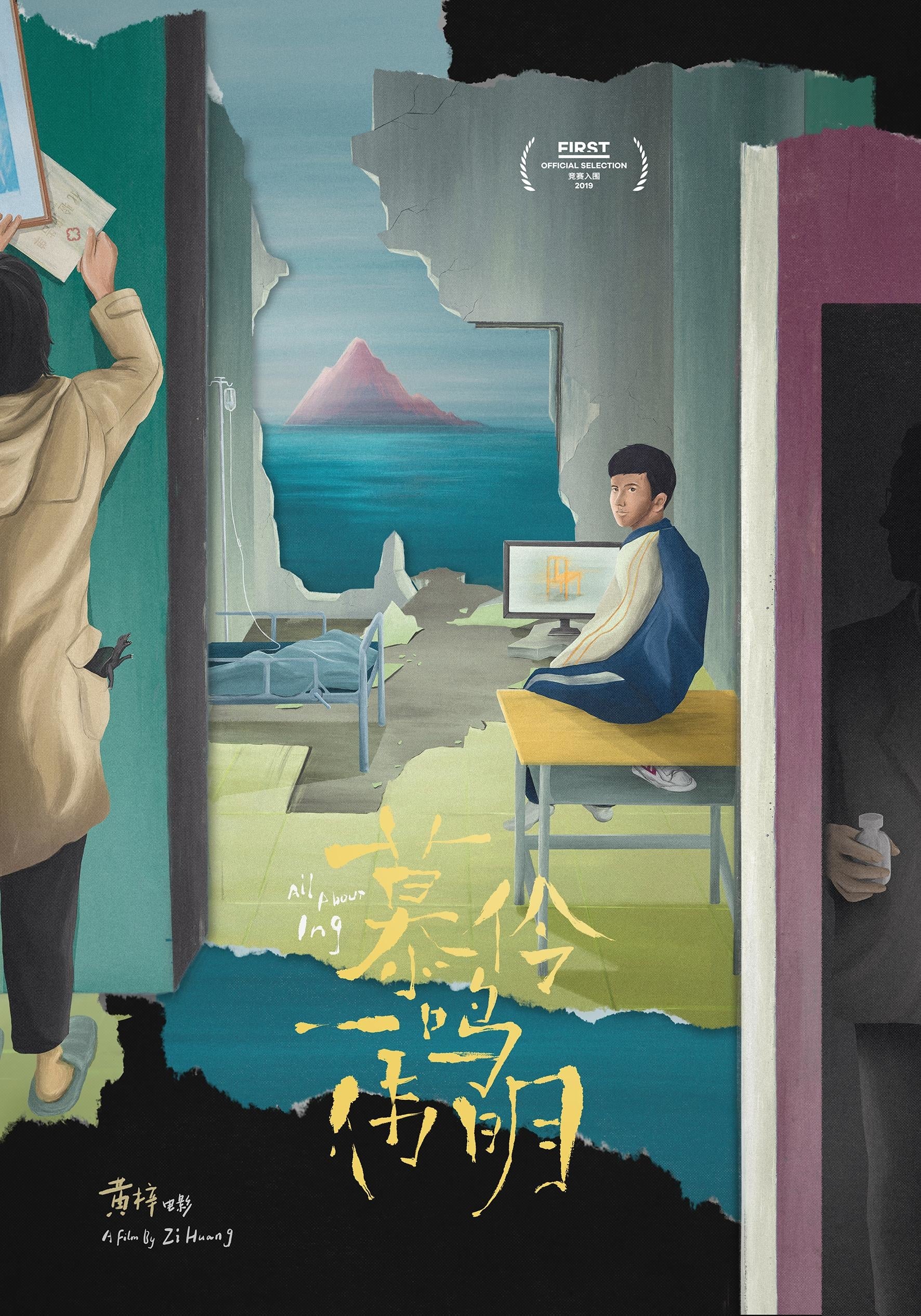
A small family finds itself pulled in different directions in the wake of a medical emergency in Huang Zi’s poetic family drama All About Ing (小伟, Xiǎo Wěi). The three are perhaps in slightly different places, each longing for freedom from one thing or another but finding themselves bound by a sense of legacy while haunted by both past and future as they attempt to reorient themselves around their shared loss, searching for new ways forward while always looking back. 

Opening with the poignant image of an empty chair, Huang slowly walks us into the “Ing” home (not their name though each of their names contain it) as patriarch Weiming (Ko Hon-man) gets a haircut from his wife while his son Yiming (Howard Sit Lap-Yin) lazes on the sofa behind. The sense of familial harmony is however soon broken as mother Muling (Janis Pang Hang-ying) chases down her indifferent son while her husband has recently entered hospital with a condition that appears to be much more serious than he thought it to be. Firstly criticising the hospital unsure if he’s getting the best care because the place seems “too new”, Weiming is convinced there’s nothing seriously wrong with him because the doctor says he can go home in a few days. Muling, however, is aware the reality is a little different and has decided not to tell her husband that he has advanced liver cancer letting him believe he merely has “cirrhosis”. 

Divided into three arcs following each of the family members as they attempt to come to terms with the ways their lives will change, the first part of the film follows Muling as she finds herself carrying the burden of family all alone trying to keep them together while her son dreams of escaping abroad and her husband is in continual denial about the state of his health. Perhaps she wants to escape too, her friends at a factory cafeteria gossiping about a mutual acquaintance who was so set on going abroad that she apparently left her husband to marry a wealthy old man living in Cyprus. “What freedom? Is abandoning her son and husband freedom now?” her friend asks while Muling pensively stirs her soup thinking something much the same, later identifying with the lonely old granny who keeps wandering off from the flat next-door while her family it seems don’t even really bother to look for her. Will that be her future too, wandering all alone like a living ghost forgotten by those closest to her? 

A teenage boy Yiming is not particularly primed to see things from his mother’s perspective, longing for escape through studying abroad keeping the news of his acceptance at university in the US a secret from Muling just as she keeps the extent of Weiming’s illness a secret from him. He resents her for her thinking “something bad” will happen to his father while slacking off in class, rejecting her offer of an introduction to a cram school run by a friend but cheating on his homework by copying another girl’s answers. Like Muling’s friend, Yiming’s classmates are convinced there’s no future for them in China joking about jobs as security guards or successful shop merchants while determined to seek their fortunes abroad perhaps partly out of a sense of teenage rebellion against constraining family mores. Yet Yiming is also struggling to process the idea of death experiencing strange dreams of a ruined village he eventually visits with his father on a last trip back to his hometown. 

Weiming’s elderly mother looks not unlike the escaped granny framed vaguely from behind, while his brother too appears somewhat ghostlike as if frozen in time dressed in an old-fashioned donkey jacket and carrying a mysterious photo tube. The two boys he meets on a misty beach who do not acknowledge his presence appear like ghosts of their younger selves while Weiming himself has begun to haunt the landscape ominously looking in through a window at his wife and son on the other side. The family went back to visit Weiming’s family grave but they can’t find it, the town now in ruins while a holiday resort is currently under construction slowly taking over the mountain featured in a picture the family retrieve of Weiming’s father they will later hang on their living room wall. “I want to change the world” Yiming idly mutters on the train home though Weiming doesn’t hear him, the son poignantly turning round to share something with his father after they return home only to find his chair empty. Another his elliptical long shots, Huang closes by returning to his opening POV once again a ghost exiting the space as if returning to a familiar chair while the family attempts to repair itself, moving forward in memory of the past not trapped by it but carrying it with them as they go. 


All About Ing is currently available to stream in the UK as part of the Chinese Cinema Season.

Original trailer (English / Simplified Chinese subtitles)

Journey to the West (Voyage en Occident, Jill Coulon, 2016)

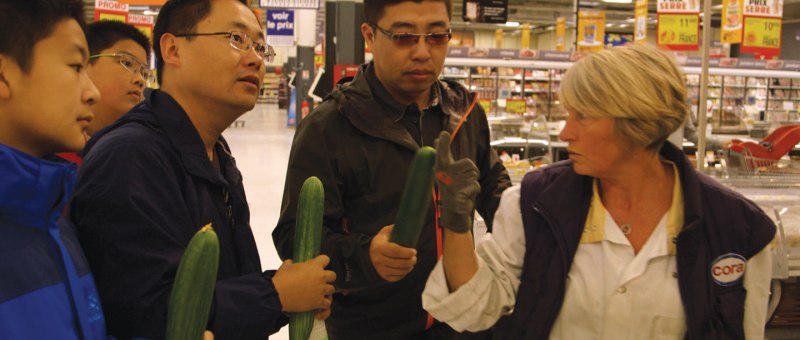
Ironically taking its title from the classic Chinese legend of the monk Xuanzang who travelled in order to bring Buddhism back to China, Jill Coulon’s Journey to the West (Voyage en Occident) follows a group of Chinese tourists on a 12-day coach tour through Europe which will apparently take them through six countries though they will be disembarking only infrequently. As the tour guide Huo explains during his opening speech, Chinese tourists were once greeted by vaguely offensive signs in their native language instructing them to avoid being noisy or spitting but these have now been replaced by those advising that their Chinese credit cards are readily acceptable. 

According to Huo only 8% of Chinese people currently hold a passport but more and more are venturing abroad. Nevertheless, they are still ambassadors for China and so he reminds them to be careful of the impression that they make. In any case, they will spend relatively little time on the ground, arriving in Rome at 9am they leave at 1.15 and though they appear to have a lot of free roaming time much of the trip is micromanaged with meals already booked in Chinese restaurants. Embedded with the travellers, Coulon does not spend much time getting to know them or discovering their various backgrounds and reasons for choosing this method of travel but some do speculate on the tendency of Chinese people to do everything at speed wondering if Europeans are more laidback because their societies are already “developed” and so they can afford to spend time in the present without feeling the need to forge the future. 

Bringing the 12-day trip down to an hour of viewing time adds a satirical bent to the breakneck speed, though it does seem that some travellers at least are mainly interested in ticking off the most famous attractions as quickly as possible. Offering commentary as they pass through the picturesque town of Lucerne, Huo points out the Rolex store before ironically juxtaposing the beauty of the Alps with the Hermès boutique directly opposite. Most of the tourists are indeed in it for the shopping, several picking up a luxury watch while one enviously observes that this seems to be a very wealthy town filled with exorbitantly priced sports cars as if the expense meant nothing to them at all. Passing through Paris we see the tourists laden with bags from top designer stores, one ironically wearing an Armani T-shirt with a little Chairman Mao pin directly underneath the logo. Some meanwhile tire of the ceaseless consumerism and defiantly decide to go somewhere different with no shopping opportunities if only to avoid other Chinese tourists. 

Despite his long years working in the tourist trade, Huo himself does not seem to be free of stereotypical impressions of Europeans, explaining that “true” French women are blonde with green eyes and that the French go on strike in the spring, holiday in the summer, and go skiing in winter leaving only the autumn for work all of which he describes as “bad capitalism”, implying one assumes that China’s excessive work culture is “good capitalism”. Another tourist however reflects enviously on the fact that the French apparently only work 150 days a year while her partner points out that if you count non-weekdays China also offers around 130 days off which doesn’t seem so bad to him even if he’s incredulous about four day weekends and getting a day in lieu if a public holiday falls on a Saturday or Sunday. This perhaps contributes to another tourist’s conclusion that the French are “lazy” because of the disinterested way a guard at a museum swiped his ticket, sitting with his legs crossed.

A pair of old ladies, meanwhile reflect on the way that European cities have preserved traces of their history with ancient ruins visible in local parks something she feels would have been regarded as a nuisance in China and destroyed either by the authorities or malicious persons. While Huo relates the various stereotypes he’s encountered from foreign tourists, that the Chinese people have no freedom and might not know what a washing machine is, another young woman enquires if they have internet up in the mountains only to be told that the internet and online shopping are not as developed in Europe because the prohibitive costs prevent an effective delivery infrastructure, she ironically adding that in China workers cost nothing. In his closing speech, however, Huo remarks on the awkwardness of responding to the accusation of wealth unable to answer either that he is very rich or very poor opting only for the disingenuous statement that “China is a developing country”. The tourists might not be looking for spiritual enlightenment like Xuanzang, but still as one puts it they have their goals and they have perhaps been achieved as they circle back around to Milan and the plane that will take them home.  


Journey to the West streams in the US until March 31 as part of the 12th season of Asian Pop-Up Cinema.

Original trailer (English subtitles)

Watch List (Ben Rekhi, 2019)

“I just want peace” sighs a world-weary mother after becoming another secondary victim of President Duterte’s war on drugs, finding herself falling ever deeper into the amoral abyss a metaphor for the gradual dehumanisation of her society. Another in the recent series of films candidly addressing the extrajudicial killings, Ben Rekhi’s Watch List is among the more nihilistic as its conflicted heroine contemplates the costs of becoming an oppressor in order to avoid oppression while her children struggle to see a future for themselves in a society which seems actively hostile to their existence. 

Arturo (Jess Mendoza) and Maria (Alessandra de Rossi) were once drug users but have since moved on and are attempting to live ordinary lives raising their three children in a small home hidden in the back ways of a Manila slum. Their hopes are derailed one day when a bunch of policemen knock on their door and ask for Arturo who is apparently on their “Watch List” having been denounced as a suspected drug dealer. Attempting to defend him, Maria finds her own name appended by the gleefully officious police officer who reminds Arturo that he’s been inside before so he better do as they say. The pair eventually “surrender”, agreeing to participate in the “rehabilitation” programme even though they are no longer using and have no connection with drugs. In any case, surrender appears to be worthless. Arturo’s body is soon discovered in the street next to a cardboard sign reading “I’m a pusher, don’t be like me”. 

Widowed with three children, Maria finds herself in a difficult position unable to support the family financially and eventually forced out of her home more it seems because of the social stigma of being associated with drugs than her inability to pay the rent. While many of her friends rally round including those who’ve also lost husbands, sons, or brothers to the killings, others reject her outright as do potential employers on realising she’s that woman from the news whose husband was a drug dealer while her son Mark (Micko Laurente) is also ostracised by his friends. Certain that Arturo was not a drug dealer, Maria looks for justice but finds herself misused by a corrupt police chief who recruits her as an informant but ultimately has a darker purpose in mind. 

Drawn into the dark web of extra judicial killings, Maria uncovers the sinister conspiracies at their centre from police collusion with vigilante task forces to the enormous amount of money flowing through the infinitely corrupt system. On their enrolment onto the rehabilitation programme, Maria and her husband are forced to recite a mantra that they are surrendering “voluntarily” out of love for their families and country because they want to change their lives even though they had been more or less coerced to comply solely because someone had given their names and they were on a list. Learning that the Watch List is basically a kill list of potential targets, Maria wants off it but discovers there is no off and attempts to keep herself and children safe by making herself useful to the police. 

Forced into complicity she begins to lose her sense of humanity, left with no way out while terrified for the safety of her children. Mark finds himself drawing closer to his cousin Joel (Timothy Mabalot) who has already become involved with drugs following the murder of his father by vigilantes. “No point studying for jobs that don’t exist anyway” he explains justifying his decision to skip school and hang out with a pair of similarly disadvantaged children, firmly ruling out the notion of education as a possible route out of poverty. Like others in the slums who openly remark that the killings reflect the government’s lack of responsibility in that if they addressed the economic problems in the country no one would be forced into crime (not that the victims were even necessarily involved with crime in the first place), Joel has identified the war on drugs as a war on the poor and means to defend himself by any means possible. Shooting mainly handheld Rekhi attempts to capture the realities of life on the margins of Filipino society trapped in a constant sense of anxiety in which death hides round every corner and is often arbitrary. A chilling condemnation of Duterte’s Philippines, Watch List’s near nihilistic conclusion offers only a small ray of hope in an unexpected act of compassion but somehow seems all the crueller for its unending sense of impossibility. 


Watch List streams in the US until March 31 as part of the 12th season of Asian Pop-Up Cinema.

Original trailer (English subtitles)