
Gamer Girls (電競女孩, Sophie Yang & Veronica Bassetto, 2025)

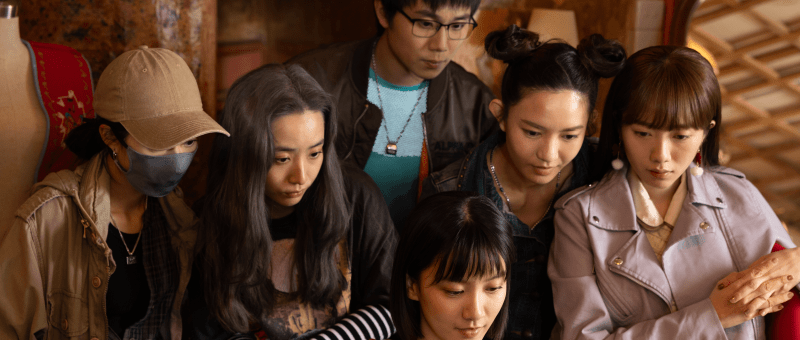
Losers never win again, according to some in Sophie Yang & Veronica Bassetto’s e-sports dramedy Gamer Girls (電競女孩). Now in her mid-20s, Summer (Angela Yuen Lai-Lam) gave up her e-sports career after a defeat, disbanding her team, and going back to school to get a regular corporate job instead. But somehow she can’t quite settle into the conventional life her boyfriend and family want for her. Still seeing the world like a video game, she dreams of winning e-sports glory once again but faces several barriers from ingrained societal misogyny to ageism and workplace exploitation.

Indeed, it seems that part of the reason the team broke up was the unreasonable expectations of their manager, Ms. Chiu (Cheuk Wan-chi), who now works for the Hong Kong e-Sports Chamber of Commerce. Another reason seems to have been conflict between team captain Summer and fellow player Lilith (Alma Kwok) who became frustrated with what she saw as Summer’s unilateral decision making and inability to take her teammates’ thoughts and feelings into account. Raven (Sabrina Cheung), meanwhile, still resents Summer for abruptly selling out by abandoning them to take a more conventional path despite having promised to carry on playing games together forever.

To that extent, the film seems to be another in a recent line exploring young people’s sense of dissatisfaction with the working environments their parents have railroaded them towards all their lives. Given the economic pressures of the contemporary society in which things like buying a flat and starting a family are out of reach for most, many feel that it’s no longer worth the sacrifice of long hours spent in an office doing a job that probably doesn’t interest them for so little reward. Instead they favour less conventional lifestyles that offer more freedom even if it comes at the cost of economic stability. Summer feels embarrassed around her family having insisted that e-sports could be “a real job” only to end up working in an office anyway, but still isn’t really ready to commit fully to the conventionality being imposed on her not least by her handsome and kind boyfriend who nevertheless can’t understand any other way of living and thinks her decision to quit her job is an act of madness.

But at the same time, it’s clear that she’s fighting an uphill battle in the e-sports world where male players refuse to accept that girls could be real gamers, instead branding them “gamer whores” who are are only there as eye candy to trick men into buying things they don’t need. Ms. Chiu makes it clear that Summer blew her chance and she doesn’t want to work with her as a gamer because losers never win again, but would be willing to collaborate with her in business terms which aren’t so much different from her own job. Summer’s escape from the corporate life is in that way also being swallowed by it as big business seeks to control the world e-sports through things like licensing and sponsorships.

The fact that the Gamer Girls rebel by setting up their own local community tournament in Lilith’s family-run cha chaan teng could also be seen as their desire to defend traditional Hong Kong culture against oppressive external forces. Whatever else happens, the cha chaan teng will still be here, one says as they root themselves more firmly in a local community filled with people who just want to play and not have to deal with any of the corporate rubbish that stands in the way. There is a kind of naivety involved in Summer’s certainty that it’ll be alright despite being warned several times that they don’t have licences to use the games in this way and the only reason they haven’t been shut down yet is because the companies are turning a blind eye. When Ms. Chiu feels threatened and decides to act, the swift deletion of everyone’s accounts, along with years of gaming history, reminds them that their world could be taken away from them just like that.

But their response is one of mutual solidarity, committing to rebuilding and defending the community they have created in the cha chaan teng and competing on their own terms. Even Summer’s online friend Login (Chase Chan Chung Chak) who was “banned for life” after protesting exploitative employment practices in professional e-sports begins to realise that nothing actually prevents him from just playing the game aside from his own sense of disappointment. Which is to say, they took their world back, if only to an extent in that they are still at the mercy of those who own the games and their in-game successes are only ever fantasy projections of battles unwon in their offline lives. Nevertheless, have at least decided to play on their own terms valuing sportsmanship and community over corporate success.


Gamer Girls screened as part of this year’s New York Asian Film Festival.

Trailer (Traditional Chinese / English subtitles)

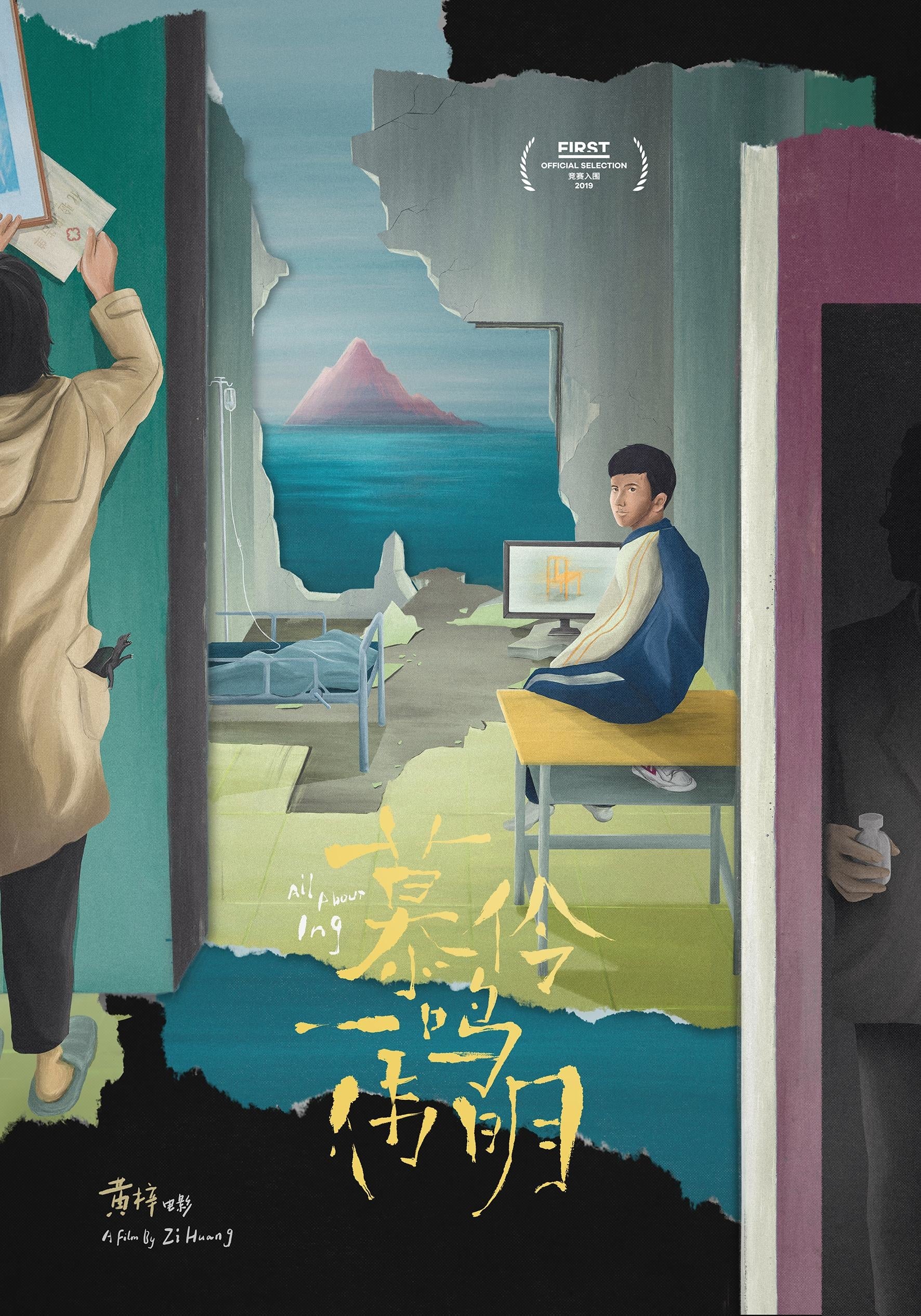
All About Ing (小伟, Huang Zi, 2019)

A small family finds itself pulled in different directions in the wake of a medical emergency in Huang Zi’s poetic family drama All About Ing (小伟, Xiǎo Wěi). The three are perhaps in slightly different places, each longing for freedom from one thing or another but finding themselves bound by a sense of legacy while haunted by both past and future as they attempt to reorient themselves around their shared loss, searching for new ways forward while always looking back. 

Opening with the poignant image of an empty chair, Huang slowly walks us into the “Ing” home (not their name though each of their names contain it) as patriarch Weiming (Ko Hon-man) gets a haircut from his wife while his son Yiming (Howard Sit Lap-Yin) lazes on the sofa behind. The sense of familial harmony is however soon broken as mother Muling (Janis Pang Hang-ying) chases down her indifferent son while her husband has recently entered hospital with a condition that appears to be much more serious than he thought it to be. Firstly criticising the hospital unsure if he’s getting the best care because the place seems “too new”, Weiming is convinced there’s nothing seriously wrong with him because the doctor says he can go home in a few days. Muling, however, is aware the reality is a little different and has decided not to tell her husband that he has advanced liver cancer letting him believe he merely has “cirrhosis”. 

Divided into three arcs following each of the family members as they attempt to come to terms with the ways their lives will change, the first part of the film follows Muling as she finds herself carrying the burden of family all alone trying to keep them together while her son dreams of escaping abroad and her husband is in continual denial about the state of his health. Perhaps she wants to escape too, her friends at a factory cafeteria gossiping about a mutual acquaintance who was so set on going abroad that she apparently left her husband to marry a wealthy old man living in Cyprus. “What freedom? Is abandoning her son and husband freedom now?” her friend asks while Muling pensively stirs her soup thinking something much the same, later identifying with the lonely old granny who keeps wandering off from the flat next-door while her family it seems don’t even really bother to look for her. Will that be her future too, wandering all alone like a living ghost forgotten by those closest to her? 

A teenage boy Yiming is not particularly primed to see things from his mother’s perspective, longing for escape through studying abroad keeping the news of his acceptance at university in the US a secret from Muling just as she keeps the extent of Weiming’s illness a secret from him. He resents her for her thinking “something bad” will happen to his father while slacking off in class, rejecting her offer of an introduction to a cram school run by a friend but cheating on his homework by copying another girl’s answers. Like Muling’s friend, Yiming’s classmates are convinced there’s no future for them in China joking about jobs as security guards or successful shop merchants while determined to seek their fortunes abroad perhaps partly out of a sense of teenage rebellion against constraining family mores. Yet Yiming is also struggling to process the idea of death experiencing strange dreams of a ruined village he eventually visits with his father on a last trip back to his hometown. 

Weiming’s elderly mother looks not unlike the escaped granny framed vaguely from behind, while his brother too appears somewhat ghostlike as if frozen in time dressed in an old-fashioned donkey jacket and carrying a mysterious photo tube. The two boys he meets on a misty beach who do not acknowledge his presence appear like ghosts of their younger selves while Weiming himself has begun to haunt the landscape ominously looking in through a window at his wife and son on the other side. The family went back to visit Weiming’s family grave but they can’t find it, the town now in ruins while a holiday resort is currently under construction slowly taking over the mountain featured in a picture the family retrieve of Weiming’s father they will later hang on their living room wall. “I want to change the world” Yiming idly mutters on the train home though Weiming doesn’t hear him, the son poignantly turning round to share something with his father after they return home only to find his chair empty. Another his elliptical long shots, Huang closes by returning to his opening POV once again a ghost exiting the space as if returning to a familiar chair while the family attempts to repair itself, moving forward in memory of the past not trapped by it but carrying it with them as they go. 


All About Ing is currently available to stream in the UK as part of the Chinese Cinema Season.

Original trailer (English / Simplified Chinese subtitles)