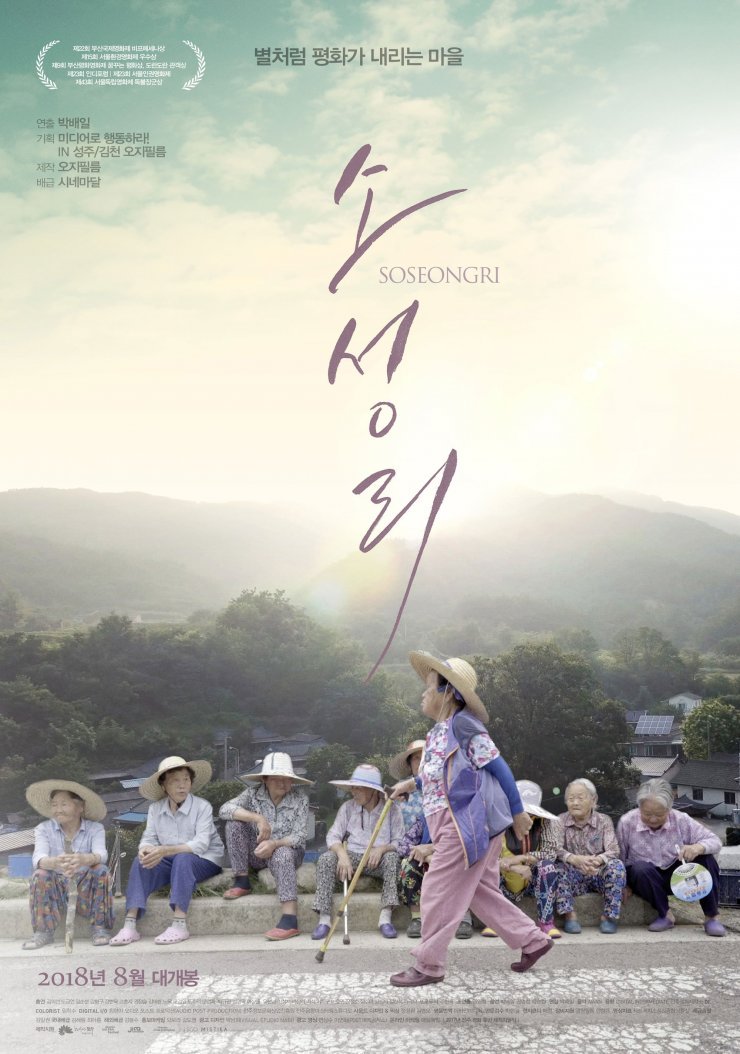
Soseongri (소성리, Park Bae-il, 2017)

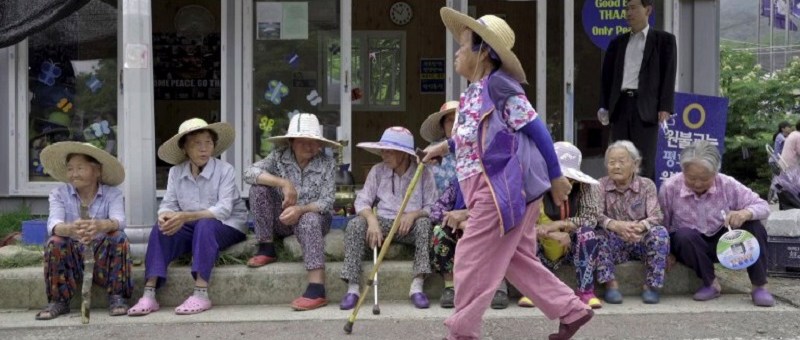
Soseongri posterElderly people are often assumed to be of a conservative disposition, steadfastly clinging to the values of a world rapidly slipping away, but many have also experienced things they sincerely hope no further generations will be forced to experience. The grannies of Soseongri lived through the Korean War and so they remember just how terrible life in wartime can be. Even so, despite living close to the North Korean border, they’d put those days of fear and anxiety long behind them – that is until it was announced that the peaceful village of Soseongri would be the site for a bank of US military THAAD missile systems intended to act as a deterrent/defensive measure against aggression from the North.

Director Park Bae-il opens with lengthy shot of an old woman’s hands carefully placing seedlings into the earth. The first part of the film immerses us in village life, and in the lives of the old ladies who make up the bulk of the population now that most of the youngsters have moved into the cities. In fact, other than the police officers and right wingers who turn up later, there are only two men ever captured on screen – one very elderly, and the other a cheerful toddler ironically dressed in a T-shirt which reads “let’s go red”. Most of the women arrived in Soseongri to marry and their lives have been defined by farming and family. One particularly feisty old woman proudly tells us how she and her friends have managed to strike a small blow against their restrictive society in reclaiming their own names. When they came to Soseongri, they came as “the new bride” or “so-and-so’s wife”, later becoming “so-and-so’s mother” but now that they’re old they’ve all started to call each other by their given names and insisted everyone else, even the local post service, do the same. Even so, the same woman laments that she feels she was not a good wife to her husband because of her defiant attitude and worries that she made her family unhappy in being unwilling to just go along with the way of things.

Meanwhile, life on the border holds its own share of anxieties. The memories of the war are still vivid for these older women who remember the threat and violence, the horrifying deaths of friends and the constant ideological conflicts. Anti-communist sentiments are still prevalent among the older generation – one woman describes certain villagers as having been “contaminated” by communist ideas, but admits that when the communists came to Soseongri they came in peace. Everyone got a free cow, the villagers ate meat, and the communist cadre treated them well while building infrastructure and protecting village life. When the communists were forced back North, however, it was the South Korean army which marched “collaborators” off to the cliffs never to seen again.

Nevertheless, one of the things that bothers the women the most in their protests is being accused of being “communists” by the right wing counter protestors. In a shocking display of extreme political rhetoric, the arrival of the THAAD missile system is greeted by loud patriotic songs from the authoritarian era which are explicit in their violence, wishing for the bloody deaths of all communists. The defenders of THAAD claim that it will maintain peace through deterrence, but the old ladies fear it will only antagonise an old enemy and prolong the already protracted peace process. They don’t want “peace” through mutually assured destruction, they want an end to the conflict once and for all. In truth they don’t want the THAAD anywhere, but they particularly don’t want it in their village which will after all become a major target, ensuring they will be the first to feel the fire if the missiles fly.

As it stands the old women are already worried about the planes flying constantly overhead, bringing back bad memories of a past they hoped was already far behind them. Now they find themselves facing violence once again as the police act to protect the right wing protest groups and think nothing of using their superior strength against little old ladies who are just trying to make their voices heard. THAAD or not, the peace in this tiny village has already been ruptured and serious questions raised about the rights of local people vs the national government, a difference in attitudes between young and old when it comes to the North, and possible government hypocrisy in the face of rising tensions coupled with geopolitical concerns. Park, immersing himself in village life, allows the ladies to speak for themselves as they offer both their histories and their wisdom, but most of all their fortitude as they refuse to stop fighting for a peaceful existence.


Screened as part of London Korean Film Festival 2018: Documentary Fortnight.

Original trailer (no subtitles)

https://www.youtube.com/watch?v=pnU2qUWEi00

Interview with director Park Bae-il from the 2017 Busan Film Festival
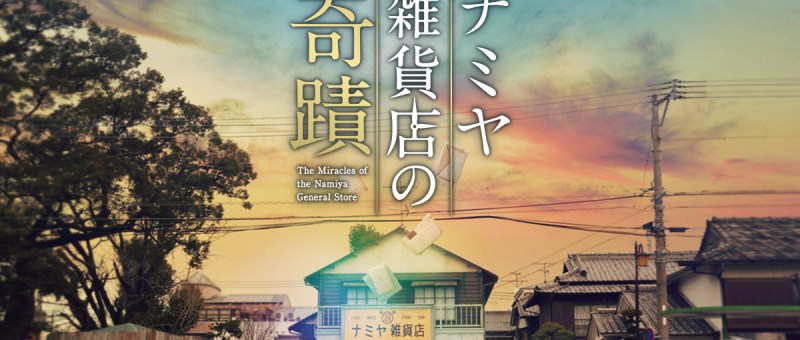
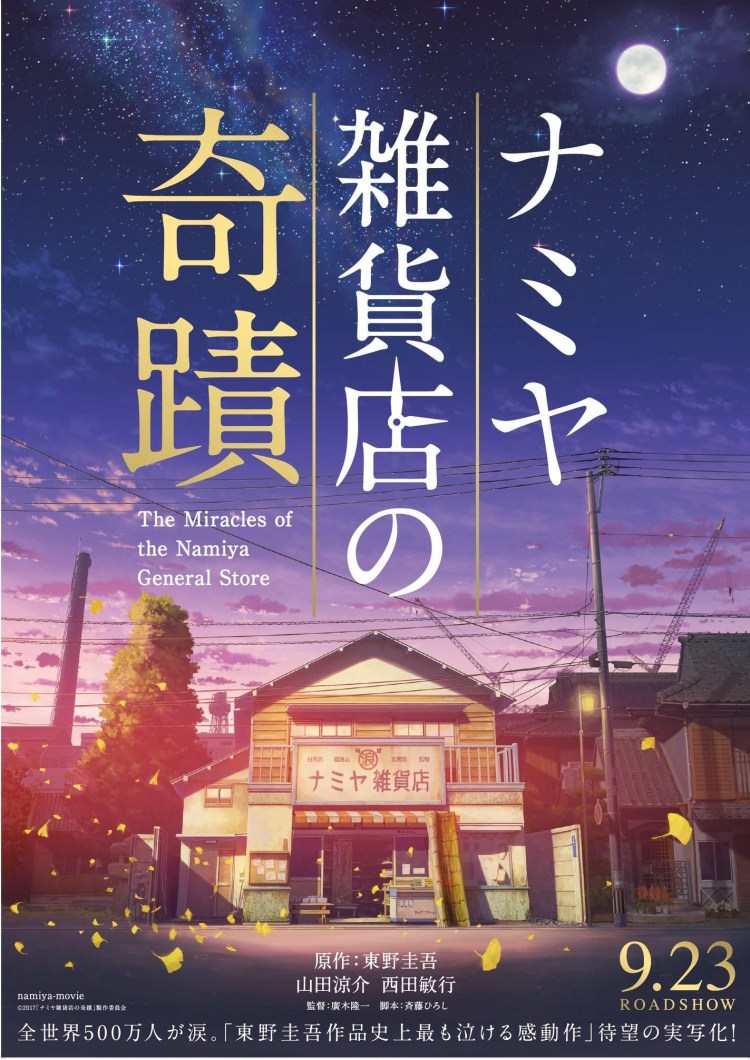
Miracles of the Namiya General Store (ナミヤ雑貨店の奇蹟, Ryuichi Hiroki, 2017)

Miracles of the Namiya General Store posterKeigo Higashino is probably best known for his murder mysteries, most particularly the international best seller The Devotion of Suspect X. His literary output is however a little broader than one might assume and fantastical hypotheticals are very much a part of his work as in the bizarre The Secret in which a mother wakes up in her daughter’s body after a fatal accident. Miracles of the Namiya General Store (ナミヤ雑貨店の奇蹟, Namiya Zakkaten no Kiseki) is indeed one of his warmer stories even if it occasionally veers towards the author’s usual taste for moral conservatism in its yearning for a more innocent, pre-bubble Japan that is rapidly being forgotten.

Back in 1980, Mr. Namiya (Toshiyuki Nishida) runs the local store and is a much loved member of the community. As an older man with plenty of life experience, he also offers an agony uncle service. People with problems can simply write him a letter and drop it through his box. He’ll have a bit of a think about it and then either paste up a response on the village noticeboard outside or, if the question is a little more delicate, place his reply in an envelope in the milk box.

32 years later, a trio of delinquent boys end up taking refuge in the disused store after committing some kind of crime. While they’re poking around, what should pop through the letter box but a letter, direct from 1980. Freaked out the boys try to leave but find themselves trapped in some kind of timeslip town. Eventually they decide to answer the letter just to pass the time and then quickly find themselves conversing with an earlier generation by means of some strange magic.

At the end of his life, what Mr. Namiya is keen to know is if his advice really mattered, and if it did, did it help or hinder? His introspection is caused in part by a news report that someone he advised on a particularly tricky issue may have committed suicide. Mr. Namiya isn’t now so sure he gave them the right advice and worries what he told them may have contributed to the way they died. This itself is a difficult question and if it sounds like a moral justification to point out that no one was forced to follow Mr. Namiya’s “advice” and everyone is ultimately responsible for their own decisions, that’s because it is but then it doesn’t make it any less true. Then again, Mr. Namiya’s advice, by his own admission, was not really about telling people what to do – most have already made a decision, they just want someone to help them feel better about it. What he tries to do is read between the lines and then tell them what they want to hear – the decision was always theirs he just helped them find a way to accommodate it.

The boys have quite different attitudes. Kohei (Kanichiro), who takes the initial decision to write back, is compassionate but pragmatic. As we later find out, the three boys are all orphans and Kohei counsels a melancholy musician who wants to know if he should give up on his Tokyo music career and come home to run the family fish shop that he should count himself lucky to have a place to come back to and that if he was going to get anywhere in music he’d have got there already. Mr. Namiya’s philosophy proves apt – the musician writes back and argues his case, he wants to carry on with music but feels guilty and hopes Mr. Namiya will tell him it’s OK to follow his dreams. For the boys however, “dreams” are an unaffordable luxury and like a trio of cynical old men they tell the musician to grow up and get a real job. That is, until he decides to play them a tune and they realise it’s all too familiar.

Similarly, a conflicted young woman drops them a letter wanting advice on whether to become the mistress of a wealthy man who claims he will help her set up in business. The boys say no, do not debase yourself, work hard and be honest – that’s the best way to repay a debt to the people that raised you. Again she writes back, she wants her shot but it is a high price. That’s where hindsight comes in, as does advance knowledge about Japan’s impending economic boom and subsequent bust.

As expected, everything is connected. Higashino maybe romanticising an earlier time in which community still mattered and the wisest man you knew ran the corner store, but then there’s a mild inconsistency between the idealised picture of small town life and the orphanage which links it all together – these kids are after all removed, even perhaps exiled, from that same idea of “community” even if they are able to create their own familial bonds thanks to the place that has raised them. The most cynical of the boys once wanted to be a doctor, but as another boy points out it takes more than just brains to get there. While it’s a nice message to say that there are no limits and nothing is impossible, it is rather optimistic and perhaps glosses over many of the issues the kids face after “graduating” from the group home and having nowhere else to go. Nevertheless, seeing everything come together in the end through the power of human goodness and the resurgence of personal agency is an inspirational sight indeed. The world could use a few more miracles, but as long as there are kind hearted people with a desire for understanding, there will perhaps be hope.


Original trailer (English/simplified Chinese subtitles)

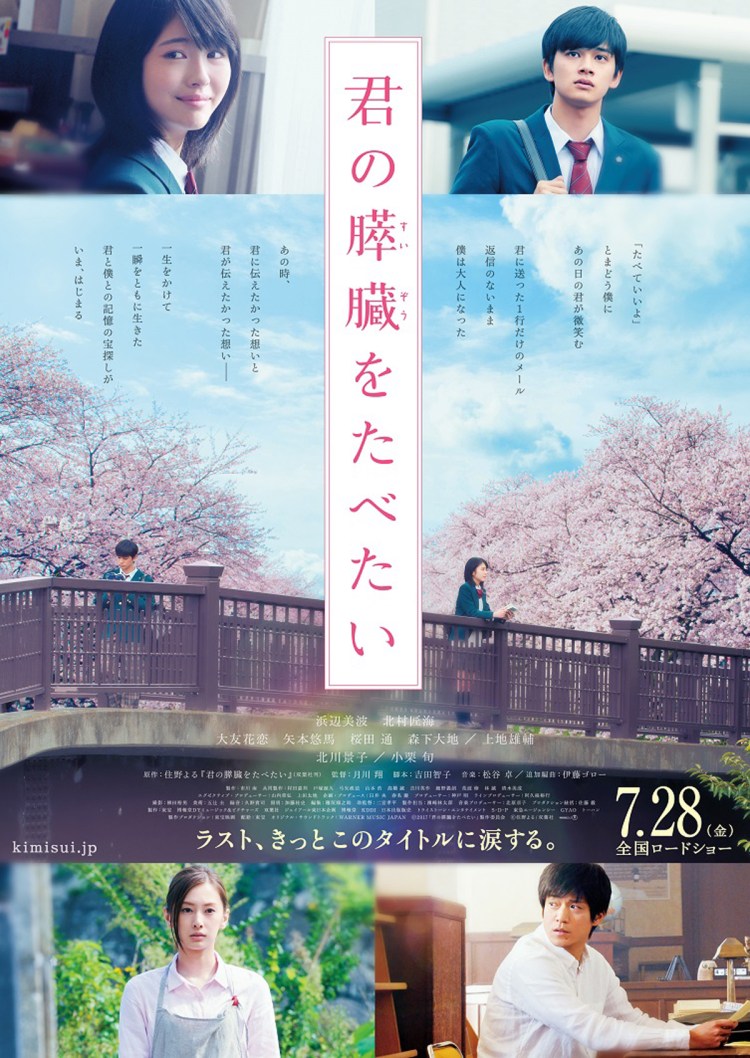
Let Me Eat Your Pancreas (君の膵臓をたべたい, Sho Tsukikawa, 2017)

Let me eat your pancreas posterBack around the turn of the century, a new kind of melodrama was taking the Japanese box office by storm. “junai” or “pure love” was not exactly new in terms of genre but began to grow in popularity in the early 2000s thanks to growing interest in Korean television drama, finally hitting its zenith in 2004 with Crying Out Love in the Centre of the World. The junai boom lasted only a couple of years, but Japanese cinema has never been able to get enough of tragic stories of first love destroyed by cruel fate and, ironically enough, returns with the improbably titled Let Me Eat Your Pancreas (君の膵臓をたべたい, Kimi no Suizo wo Tabetai) which sets its fictional past in 2003 – exactly the same time as the contemporary presents of the junai classics.

In 2012, Haruki Shiga (Shun Oguri) is a melancholy high school teacher who can’t decide if teaching is really his vocation and has a resignation letter sitting in his desk. Meanwhile, he is handed a slightly upsetting task by his boss – the school library has become too rundown to consider renovating and so it’s going to have to close. When Shiga was a high school student at this very school, he also ran the library club (he now has a qualification in librarianship) and so he seems to be the perfect person to ensure everything gets packed up and dealt with in the proper fashion. The library, however, holds some painful memories for him – of a girl he grew close to for only a few months while she battled a terminal illness and changed his life forever.

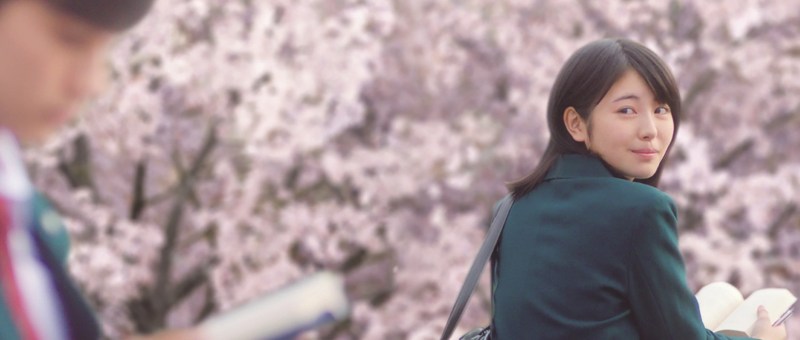
12 years previously, Sakura (Minami Hamabe), a popular young woman, drops her sickness diary on leaving the hospital, whereupon Shiga picks it up and unwittingly becomes the only person outside of Sakura’s family to know that she is suffering from a degenerative pancreatic illness and has only a couple of years at most to live. She knows her case her is hopeless and the treatment she receives will only prolong her life temporarily while easing her symptoms, but is determined to live out the rest of her days to the fullest.

Unlike Sakura, Shiga (Takumi Kitamura) describes himself as a loner who isn’t good with people. He spends his days with a book in his hand and is thought of by most of his classmates (if they think of him at all) as the creepy silent boy. Thus his unexpected friendship with Sakura raises more than a few eyebrows with the other kids, especially Sakura’s best friend Kyoko (Karen Otomo) who is both jealous and confused as to why her friend has suddenly started hanging out with the loser boy. Then again it’s precisely because of this aloofness that Sakura first believes she can entrust her final days to Shiga – as virtual strangers it’s much easier to process the idea of an ending, if Sakura had tried to confide in Kyoko about her illness it would only have marred the end of their friendship. Shiga is detached, he doesn’t get emotionally involved, but despite himself still cares which makes him the ideal point of support for a girl longing to escape a carefully ordered life to get a taste of everything she knows she will miss.

Let Me Eat Your Pancreas may situate itself in the junai era of the early 2000s, but owes an undeniable debt to Shunji Iwai’s seminal 1995 romantic melodrama Love Letter and even borrows its central library conceit with a hidden message which eventually reaches its destination much later than intended. Like Love Letter, in which one of the heroines is perpetually worried about the possible repercussions of minor illnesses, Pancreas is keen to remind us that the truth is we are all dying and illness or not today might be our last day – it’s best to make the most of it without sitting around worrying about what the future might hold.

Sakura, dying yet so full of life and energy, is keen to impart her life philosophy to the introverted Shiga. For Sakura life is about connection, sharing experiences with others be they joy or pain. Shiga, though loathed to admit it, is in his own way desperately lonely but has resolved himself to surviving alone, believing that he lacks the ability connect meaningfully with other people. His nascent connection with Sakura is destined to end in tragedy but does at least begin to release something in him which had long been suppressed. Even so, as an adult he’s just as withdrawn and isolated as he’d been as a teen and it’s not until he’s forced to revisit this traumatic incident in his early life that he learns the full value of its lessons. Let Me Eat Your Pancreas, though wilfully embracing some of the genre’s more problematic elements, is a beautifully affecting return to the world of junai which manages to turn a story of death and tragedy into a celebration of life and love as its isolationist hero begins to find the strength to embrace the art of being alive no matter how painful it may turn out to be.


Original trailer (no subtitles)

Tokyo Vampire Hotel (東京ヴァンパイアホテル, Sion Sono, 2017) [Fantasia 2018]

Tokyo Vampire Hotel PosterAbridging a work of fiction can be a taxing task. The job of a judicious abridger is the use their own judgement to reduce a larger work to its most essential elements either for those who, for one reason or another, need a more immediate digest or for those looking for greater accessibility. When it comes to a work of art, abridgement can be a dubious task and, unfortunately, the temptation is simply to excise the “best bits” shorn of all the “heavy stuff” and supporting material. Sion Sono who had been in a particularly prolific phase was given something of an unusual opportunity in creating Tokyo Vampire Hotel (東京ヴァンパイアホテル) – a chance to do as he pleased with a sizeable budget to create a television series for Amazon Prime, which is to say marrying mainstream commercial concerns with idiosyncratic artistry. The 6.5hr, eight episode, series was released via the streaming platform in June 2017 (initially in Japan only with international streaming available a few months later) but Sono also took the step of creating a 2hr22min feature length cut for film festival distribution.

The titular Tokyo hotel is the lair of a sect of modern day vampires. As a long prophesied war between rival clans – the Corvins in Japan and the ancient Draculas of Romania, brews, the Corvins have engineered a plan to lure lonely unsuspecting Tokyoites to an exclusive singles mixer where they will not only be given a sizeable fee for attending but also tempted with the possibility of meeting the love of their life, never suspecting that all this is too good to be true and they are really being recruited for a kind of blood farm to feed the various appetites of their bonkers captors.

Meanwhile, “the chosen one”, Manami (Ami Tomite), is about to come of age. Born during an “auspicious” alignment of the stars, Manami is one of three children given special vampire blood and thought to be all powerful, species saving hybrids. As such she is wanted by every side and is eventually “rescued” from a massacre at a restaurant by ice cool vampire K. (Kaho) – a Japanese vamp currently working for Dracula.

It has to be said that Sono’s original TV cut is extremely convoluted and initially confusing. The hotel, a Japanese vampire hub, is connected to the vampire capital in Romania by a magical tunnel with the narrative flowing freely between both spaces. What we lose in condensing to feature length is the entirety of the extensive back story with the consequence of shifting the focus from the protagonist of the TV series, Manami, to the more exciting figure of second lead K. whose gradual disillusionment with becoming a puppet in someone else’s revolution coupled with romantic heartbreak eventually reawakens her sense of “humanity” as she becomes committed to “saving” Manami from becoming yet another slave to the Dracula cause.

Meanwhile, Sono satirises modern Japan’s ambivalence towards romance as a collection of youngsters are forced into an extreme situation in order to successfully couple off and form a “traditional” family solely to satisfy the demands of a bunch of vampire overlords standing in for a bloodsucking state. Yamada (Shinnosuke Mitsushima), the conflicted hero of the Corvins who longs for escape from his unwanted immortality and an egotistical, individualist world harbours intense resentment towards his own “hypocritical” father who “sold” him to the vampires as a baby in return for various favours by which he has now become the “Romantic Party” Prime Minster of Japan preaching traditional family values and a “wholesome” future for the little children who otherwise face a difficult existence in a country which has “lost its way”.

Sono doubles down on his usual sense of romanticism as his flamboyant vampires adopt an oddly foppish, Regency era aesthetic whilst speaking in a deliberately theatrical manner filled with bold philosophical statements and a florid sense of repressed melodrama. Harking back to Bad Film – another attempt to reorder extensive footage into a narratively cohesive whole, the conflicts are often about love more than death with suffering and sorrow marking the lives of our gloomy immortals, oppressed by their own inability to transcend their natures and find the escape they so desperately crave.

Sono seems to reemphasise their unhappy fates by engineering an altogether different, infinitely abrupt ending which, in contrast to the TV drama, hands the victory back to the people but does so in historically uncomfortable fashion as the victorious hotel guests revel in acts of atrocity against their captors which are framed as a kind of genocide and accompanied by stills from violent classical paintings featuring scenes of unbridled carnage. A contrarian to the last, Sono mutilates his own endeavour and then frankensteins it into something else, twisting his own words and tying himself in knots in the process. Viewers seeking clarification would be well advised to invest their time in the 6.5hr experience rather than opting for the convenient shortcut of an edited version, but there is certainly plenty to ponder in Sono’s truncated tale of love and death in post-Olympic Tokyo.


This review refers to the theatrical cut of Tokyo Vampire Hotel which was screened as part of the Fantasia International Film Festival 2018. You can also stream the original TV drama in most territories via Amazon Prime.

Trailer for the TV drama (no subtitles)

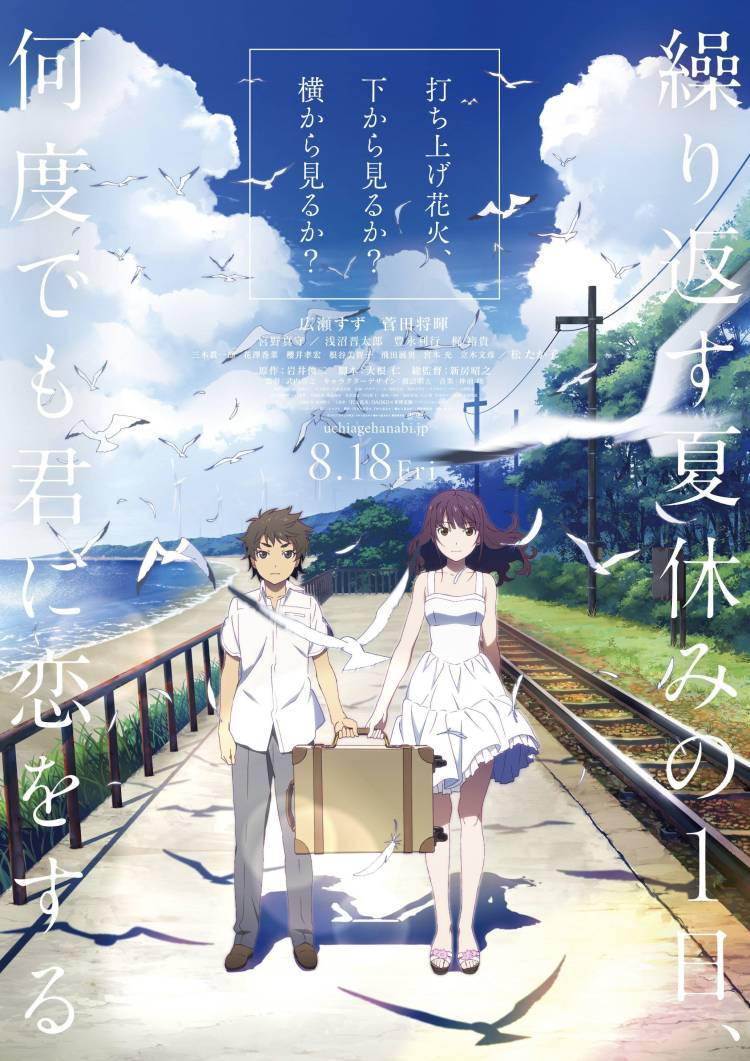
Fireworks (打ち上げ花火、下から見るか? 横から見るか?, Akiyuki Shinbo & Nobuyuki Takeuchi, 2017) [Fantasia 2018]

Fireworks posterBack in 1993, Fireworks, Should We See it From the Side or From the Bottom? (打ち上げ花火、下から見るか? 横から見るか?, Uchiage Hanabi, Shita kara Miru ka? Yoko kara Miru ka?), became something of a sliding doors moment for the young Shunji Iwai who received an award from the Directors Guild of Japan for what was in essence a single episode in an anthology TV series dedicated to the idea of “what if”. “What if” is, it has to be said, a constant theme in nostalgic Japanese cinema as slightly older protagonists look back on the hazy days of youth and wonder what might have been if they’d only known then what they know now. Scripted by Hitoshi One (Scoop!) and produced by Shaft, the anime adaption attempts to do something similar, floating in with a gentle summer breeze that could easily be from 30 years ago or yesterday while its conflicted hero ponders where it is he ought to stand to get the most beautiful view of life passing him by.

The central dilemma that seems to obsess the boys this particular summer is whether fireworks are flat or three dimensional and whether your perception of them changes depending on where you stand. Norimichi (Masaki Suda) risks falling out with his best friend Yusuke (Mamoru Miyano) and so has avoided revealing the fact that they both have a crush on the same girl – Nazuna (Suzu Hirose), who (neither of them have noticed) has a dilemma of her own. A chance meeting at the swimming pool seems primed to dictate the romantic fate of all concerned. Norimichi and Yusuke race for the affections of Nazuna who, in the original timeline, ends up asking Yusuke to see the summer fireworks with her even though it’s Norimichi she went there to meet.

Unfortunately Yusuke is a flake and nothing goes to plan. He stands Nazuna up to hang with his buddies and figure out the answer to their inane riddle leaving her to run into Norimichi who gets an unexpected glimpse at her inner turmoil. A mysterious orb salvaged by Nazuna from the nearby sea gives Norimichi a chance to start over, be braver, do things differently thanks to the benefit of hindsight, and so he begins a path to idealised romance by manipulating the events around him to finally “save” Nazuna from making a rash decision (or at least from making it alone).

In 1993, Nazuna’s dilemma was perhaps a little more unusual than it might seem now. Her twice married single-mother (Takako Matsu) is planning to marry again which requires the teenage Nazuna to leave her home behind to live with a strange man in a strange town. Though her new step-dad seems nice and is obviously trying his best, Nazuna is not of a mind to give in. She consents to accepting one of the ice-creams he’s bought to curry favour (after all, there’s no need to be “rude”), but is not about to go so far as to say thank you or to enjoy eating it together with the rest of the family when she could guzzle it sulkily in the comfort of her bedroom. Nazuna wants to escape, but her ideas of doing so are childishly naive even if she puts on a sophisticated front by joking about going to Tokyo to work on the fringes of the sex trade by lying about her age. Hence, she asks a boy she likes but barely knows to take her away from this place, but the boy is just a boy and not quite equipped for rescuing damsels in distress from suffering he doesn’t understand.

Like many Japanese teen dramas, Norimichi’s interior monologue takes on a rueful quality, as if he’s eulogising his youth while still inside it. He doesn’t know whether there’s a difference if you look at things from one angle or another because he’s not particularly used to thinking about things and his first few experiments with the orb are pure reactions to events rather than thought through decisions about effects and consequences. Nevertheless, use of the orb shifts him into a philosophical contemplation of what it is to live a life. Finally realising he should probably ask Nazuna what it is she really wants, the process the pair undergo is one of learning to live in the now rather than obsessing about the end of something that might never begin if you never find the courage to start.

In the end their beautiful dream world is ruptured by a drunken old man, shattering into a thousand shards of memory of things that never were. Fireworks wants to ask if you can have a more fulfilling life by simply changing your perspective, but its central messages never quite coalesce. There is something about Iwai’s original concept which inescapably of its time, sliding neatly into the melancholy world of early ‘90s teen drama drenched in nostalgia for an era not yet past. Reaching for poignant philosophising, Fireworks falls short through, ironically enough, focussing too heavily on a single point of view. An oddly “flat” exercise, Shinbo’s adaptation misses the mark in its climactic moments but perhaps manages to offer something to the lovelorn teens of today if only by yanking them back to a more innocent time.


Fireworks was screened as part of Fantasia International Film Festival 2018.

International trailer (English subtitles)

The original 1986 Seiko Matsuda song reprised by Nazuna at a climactic moment.

https://www.youtube.com/watch?v=87fAJ4jSxPM

Claire’s Camera (La caméra de Claire / 클레어의 카메라, Hong Sang-soo, 2017)

Claire's Camera poster“I want talk about someone. About a man of 25, at the most. He is a beautiful man who wants to die before being marked by death. You loved him. More than that.” Hong Sang-soo channels Éric Rohmer through the aptly named Claire’s Camera (La caméra de Claire / 클레어의 카메라), but does so through the unexpected prism of Marguerite Duras whose poem is recited in French at the request of a sleazy Korean film director (Jung Jin-young) making a clumsy attempt to pick up the titular Claire (Isabelle Huppert) through an otherwise beautiful act of cross cultural interaction. The poem, like Claire’s polaroids, exists in an uncanny space – someone wants to tell us about a man we once loved as if we never knew him who wants to die before he is changed by death. Like Duras’ landmark exploration of the shock waves of imploding romance, Hong offers us life in fragments as Claire’s polaroids attempt to rewrite a half remembered history in order to make sense of a disordered present.

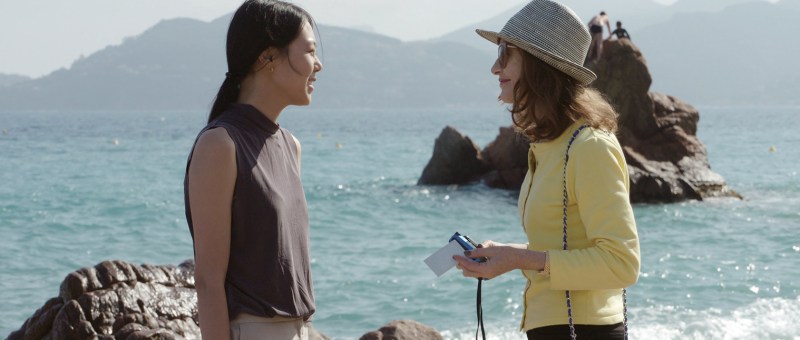
Film sales assist Man-hee (Kim Min-hee) is abruptly fired by her boss, Yang-hye (Chang Mi-hee), right in the middle of the Cannes film festival. Yang-hye offers no real reason why Man-hee has to go save that her perception of her has changed. She no longer feels that Man-hee is an “honest” person and as a person who values “honesty” she no longer feels comfortable working with her. Rather than lick her wounds back in Seoul, Man-hee decides to enjoy the rest of her time in Cannes as a kind of holiday which is how she ends up meeting Claire – an older French woman who is visiting the city for the very first time and has brought along her Polaroid camera to properly record the event.

Claire seems to pop-up here, there, and everywhere, dressed in an old-fashioned detective’s outfit of a stylish trench coat and trilby, snapping away like she’s gathering evidence about an international conspiracy. Striking up an awkward conversation with melancholy womanising film director So eventually brings her into the orbit of the three Koreans who are, we later realise, involved in an embarrassing workplace love triangle. Yet each time Claire appears, her photos don’t make sense – she has a photo of Man-hee wearing her trench coat that we never see her take while her other pictures seem generally out-of-order with the timeline as it has been presented to us.

The only way to change things, Claire intones, is to look at everything again very slowly. Ironically enough she offers the opportunity to do just that by means of instant photography, snapping a still frame of a painful memory in order to ruminate and reconsider. She claims she takes photographs as a means of being in the moment – after all, once you take the photo the subject is no longer the same. The act of being photographed has perhaps changed them, but more than that time has passed and we’re all seconds older now than we were before if perhaps no wiser. Yet looking at the photograph, literally looking at yourself from an external perspective, prompts a reevaluation of the past and perhaps changes the course of the present.

There is also, of course, a meta dimension to all this – as he had in The Day After and On the Beach at Night Alone, Hong muses on his own romantic difficulties in casting his real life love Kim Min-hee as a character with a near identical name while also ensuring that So is even more of a Hong stand-in than his usual leads. Man-hee has been unfairly dismissed because of an indiscretion with the drunken director who has had her fired, by his current girlfriend, out of a sense of embarrassment. Both Yang-hye and So are “shocked” by Claire’s photograph which frames her in a sultry pose wearing (they claim) much more makeup than usual, while So, spotting her at a party, goes into a semi-paternal rage about Man-hee’s (not really all that short) denim hot pants and generally “immodest” appearance. Berating her for a supposed lack of self-confidence, accusing her of “selling herself” and trying to catch the attention of men, So “directs” her to be more authentic. Which is quite something seeing as he is currently dressed in a borrowed tux in order to conform to social expectations.

Authenticity, or more directly “honesty”, becomes a running theme from Yang-hye’s instance that Man-hee is “dishonest” to a young filmmaker’s insistence that it’s hard to make an “honest” film. Claire, at least, seems to be embarking on a process of “honest” art even if nothing she says or does quite adds up. Light and bright and breezy, Claire’s Camera is Hong in Rohmer mode, wistful yet resigned and perhaps even hopeful. There’s a reason everyone seems to be so “reasonable” even in the most unreasonable of situations, other people’s feelings are not something that can be debated and are best accepted even if understood only retrospectively. Claire and her camera seem perfectly aware of that, silently observing in preparation for presenting evidence in a self inquisition, but doing so with kindness even in the knowledge that sometimes it’s easier not to look.


Claire’s Camera was screened as part of a teaser series for the upcoming London Korean Film Festival. The next screening in the series will be Gonjiam: Haunted Asylum at Picturehouse Central on 30th August.

International trailer (English subtitles)

Amiko (あみこ, Yoko Yamanaka, 2017) [Fantasia 2018]

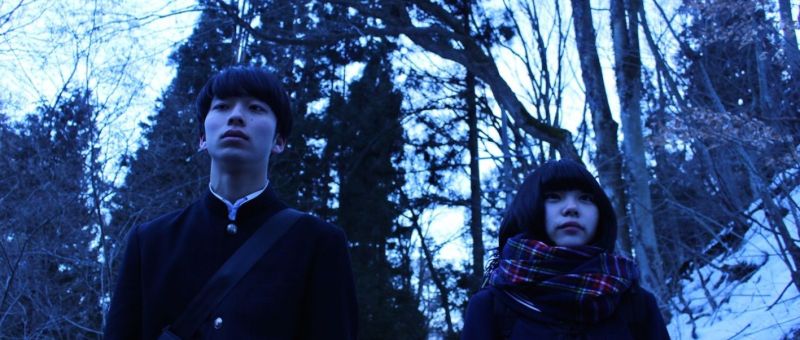
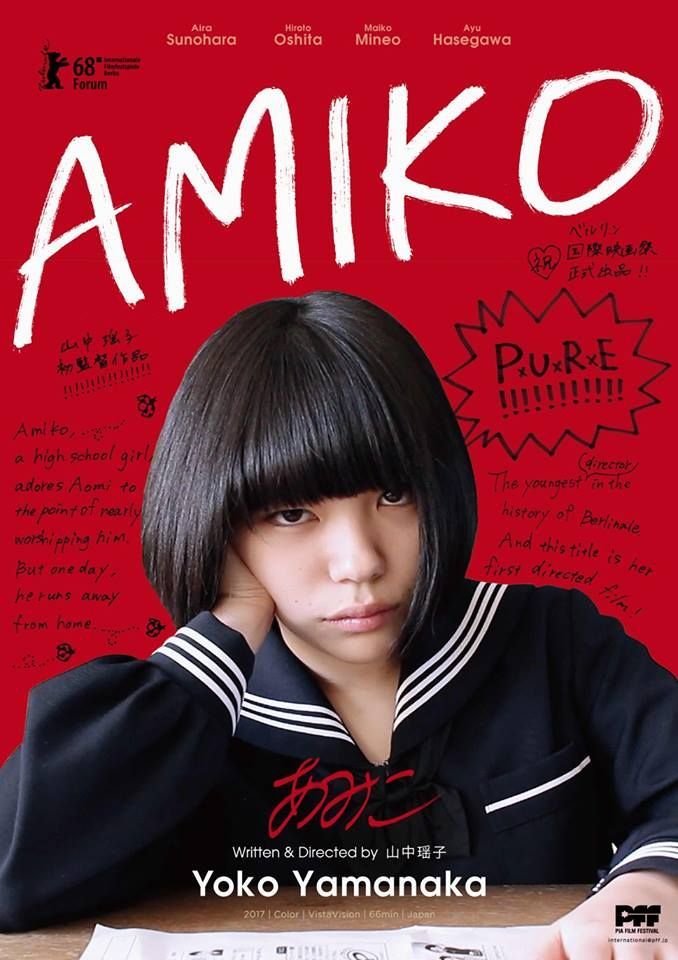
Amiko PosterSome meetings are pivotal, others merely seem so. To melancholy high school girl Amiko (Aira Sunohara), consumed by youthful ennui and a sense of the long dull years stretching out before her, Aomi (Hiroto Oshita) seemed like some kind of heaven sent emissary – a good looking guy who seems to share her existential despair, her taste in music, and her lack of motivation for the business of living. Yet the meeting comes to nothing. After a single night of walking and talking, baring their souls and confessing their anxieties, the pair never talk again. Amiko continues to pine for Aomi, turning him into some kind of absent god, though months have passed with no real contact save her semi-stalking of him online. Eventually, almost a year later, Amiko learns that her one true love has deserted her and run off to Tokyo with another girl. Stunned, she resolves to follow him in the hope of finding out why he chose to renounce all it was she thought they meant to each other to embrace the mediocrity he once claimed to hate.

Amiko is not completely alone, she has a best friend – Kanako (Maiko Mineo), though she confesses that deep down they don’t really understand each other. Aomi too seems to think that Kanako is closed off, not really trusting anyone and living a superficial life. Nevertheless, Kanako does at least provide Amiko with the opportunity to experience the regular high school girl world of gossiping about boys on the telephone and silently resenting other, more popular girls. Claiming that “ordinary poor souls” could never understand the innate connection between herself an Aomi, Amiko decides to keep her long night walk of the soul a secret from her best friend in order to secure its purity.

Amiko, based on their intimate conversation, is convinced that Aomi feels the same way she does, understands her intense sense of existential despair, and is just as bored and disconnected as she feels herself to be. Confessing that he doesn’t actually like sports, in fact he hates being outside, Aomi offers the excuse that it’s easier being told what to do than trying to figure things out on your own. Carried along by the fact he’s good at football and can’t quite find the energy to protest, Aomi drifts on a cloud of his own apathy – one of the cool set of handsome and aloof high school boys popular with those who like unattainable guys. Like Amiko he likes “deep” music, instantly recognising the Radiohead track on her phone, but eventually runs off with the kind of girl Amiko (not so) secretly despises – an airhead popular girl and the “embodiment of mass culture”.

Aomi’s betrayal isn’t just romantic heartbreak, but the severing of a spiritual connection which never really existed in the first place. Rather than deepen the engagement, Amiko opts to leave her night of connection as a mythic encounter, sanctified by its unique quality. Aomi therefore becomes a mythic figure, a composite of Amiko’s various projections of her ideal soulmate, mirroring her own sense of ideological purity. Her new god, however has feet of clay and after tracking him down in the city she’s forced to confront the distance between the image and the reality. Was their connection as real as she thought it was, or only superficial musing on a cool crisp night when there was nothing much else to do?

Deep into her teenage apathy, Amiko talks about those manic, one off days where you just might find yourself doing something crazy out of a sense of cosmic despair. Aomi puts this idea back on the table as a possible motive for his abrupt flight to the city, and Amiko’s random pursuit of him is perhaps its aftershock. Wandering around having mad adventures – joining in with a madman’s (Hisato Takahashi) condemnation of a world of lies and the non-existence of real love, testing the ability of Japanese people to dance spontaneously, and stalking Aomi’s girlfriend, Amiko begins to accept that she may have been mistaken in placing such cosmic importance on what may just have been an inconsequential night filled with accidental profundity. Preferring to maintain the “purity” of her ideal, Amiko remains trapped within her own sense of despair but with a new sense of clarity and a determination not to let the phoniness of the world destroy her essential self.


Amiko was screened as part of Fantasia International Film Festival 2018.

Original trailer (no subtitles)

After My Death (죄 많은 소녀, Kim Ui-seok, 2017)

After my death posterKorea has one of the highest suicide rates in the world as the pressure cooker society conspires to railroad those who find themselves in someway excluded from its rigourously conformist demands toward inescapable despair. With the phenomenon so common, has it become true that society itself has become inured to its effects, seeking not to ease suffering but to control damage? For the clutch of schoolgirls at the centre of Kim Ui-seok’s After My Death (죄 많은 소녀, Choe Manheun Sonyeo), suicide has taken on its own allure as an escape from the demands they feel themselves unable to meet but there are few looking to guide them away from the abyss rather than to negate their own responsibility for failing to do so.

A high school student, Kyung-min, is missing. Her backpack and shoes have been found near a local bridge and it is feared that she may have committed suicide though there is no note or additional evidence to suggest that she has taken her own life nor have they found a body. With speculation rife, all eyes are on another student, Young-hee (Jeon Yeo-Bin), apparently one of the last people to have seen Kyung-min alive. Though Young-hee and Kyung-min had been good friends in the past, they were no longer close and had apparently run into each other by chance along with another friend of Young-hee’s, Han-sol. Han-sol’s testimony differs from Young-hee’s in that she says Kyung-min seemed “gloomy” and that the evening had taken an intense turn after she suddenly declared her love for Young-hee only for Young-hee to tell her to prove her devotion by dying.

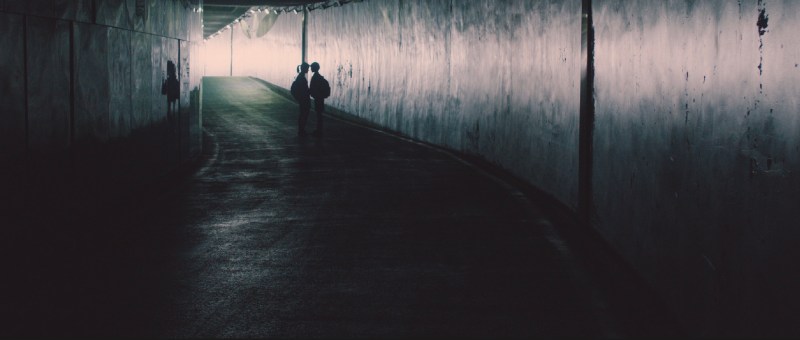
Things get worse for Young-hee when the police track Kyung-min’s movements via CCTV and find footage from a nearby tunnel which appears to show a gentle kiss between the two girls. Hounded, Young-hee finds herself a target of persistent harassment by her school mates who insist that she is in someway cursed and “infects” people with “bad thoughts” while Kyung-min’s mother (Seo Young-hwa) has also started semi-stalking her hoping to find out “the truth” about what happened to Kyung-min.

The other girls, testifying to Kyung-min’s character, reinforce the view that she was “gloomy”, a loner who didn’t fit in. She didn’t like K-pop, didn’t socialise much, and was into depressing things. When suspicions rise regarding her possible suicide, the school is quick to leap to conclusions – that like many in South Korea she had become over anxious about college applications, but as her grades were good and Kyung-min was a diligent student this explanation seems unlikely which works out well for the school. Kyung-min’s teacher quickly goes into damage limitation mode, confirming that she had been withdrawn, struggled to communicate with her classmates, and was probably very lonely though he lays most of the blame on melancholy ‘90s shoegaze which he assumes must have somehow tipped her over the edge. What all of this means is that it’s not his fault, and he feels he has justification for “failing” in his duties of pastoral care towards a student whom by his own admission he suspected of being in distress.

During Young-hee’s questioning, she repeatedly tells the police officer in charge that she too is suicidal and that she told Kyung-min about her own plan to jump off a bridge because she thought it might help. Young-hee is quite clearly depressed even before all of these very difficult events but finds no one willing to listen to her distress, only making herself a magnet for further hostility from just about everyone with even her teacher berating her for stealing Kyung-min’s thunder in insisting that she stole her idea of jumping off the bridge rather than trying to commit suicide through an overdose of sleeping pills which, Young-hee claims, was her intention before she discouraged her lest she end up still alive but brain damaged.

The lingering doubt is to which “me” is the owner of “death” in the title, or to whom the Korean title of “unrighteous girl” might apply. The motives for Kyung-min’s (presumed) death may be beside the point as a policeman investigating the case suggests – perhaps she didn’t want “understanding” so much as oblivion. What we’re left with is a rather poignant love triangle and the suggestion that Young-hee’s intense depression is a result of repressed same sex attraction which opens another series of questions about which acts are “unrighteous” – suicide or love, with the unfortunate implication that perhaps one cannot but lead to the other. In any case, the problem is that all these kids want to die and the adults no longer want to stop them, only to avoid any potential responsibility for what the children in their care may or may not try to do. Melancholy and drenched in despair, After My Death has nothing but sympathy for its lonely teens but finds no possible escape from the crushing vice of a blame fuelled conformist society.


After My Death was screened as part of the New York Asian Film Festival 2018.

Original trailer (English subtitles)

Interview with director Kim Ui-seok from the 2017 Busan International Film Festival (English subtitles)

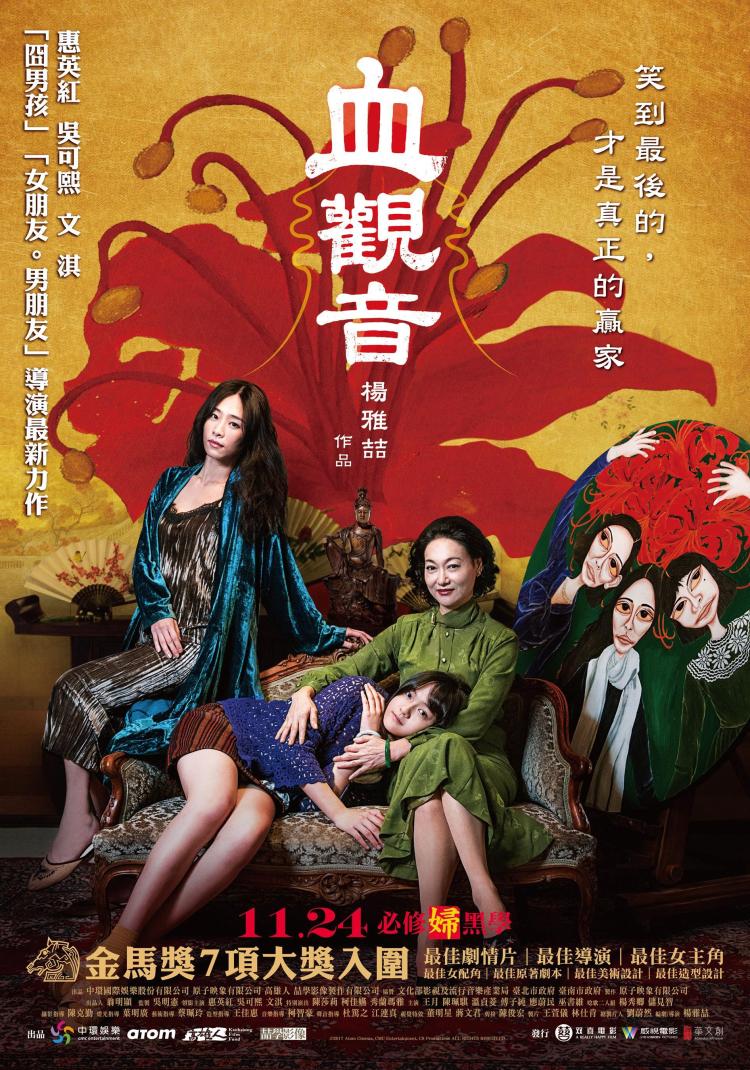
The Bold, the Corrupt, and the Beautiful (血觀音, Yang Ya-che, 2017)

The Bold the corrupt and the beautiful posterAre you playing the game or is the game playing you? The Bold, the Corrupt, and the Beautiful (血觀音, Xuè Guānyīn) is, as its name suggests, somewhere between trashy soap opera and spaghetti western as its entirely amoral matriarch prepares to sacrifice everything in order to get ahead. The family becomes a metaphor for the state – corrupt, prejudicial, hypocritical, and often heartless in its ruthlessness but like a family a state perhaps reaps what it sows and the lessons Madame Tang has taught her daughters may come back to haunt her.

In the Taiwan of the 1980s – the dying days of the old regime but firmly within the pre-democratic past, Madame Tang (Kara Hui) is the widow of a general and, on the surface of things, an antiques dealer. Her real worth however lies in making herself the society face of genial corruption as the conveyor of the ancient treasures that often stand in for monetary bribes in the complex system of reciprocal politics. Designed to manoeuvre herself and her family into a position of power and perhaps safety, Madame Tang’s machinations amount to a mess of intrigue, manipulating the social interactions of her “friends” in order to convince them to destroy each other and clear a path for her ascendance. Part of her grand plan has involved extensive use of her daughter, Ning Ning (Wu Ke-xi) – now approaching middle-age and thoroughly sick of being her mother’s prize pony, while Chen-Chen (Vicky Chen), still a teenager, has usurped her place as the latest cute little thing to be trotted out and fussed over.

Everything starts to go wrong when a powerful neighbouring family, the Lins, is murdered in a suspicious looking home invasion leaving the daughter, Pien-Pien (Wen Chen-ling), who was the closest thing Chen-Chen had to a real human friend, in a coma. Pien-Pien had been carrying on with Marco (Wu Shuwei) the stable boy which obviously had not gone down well with her parents though she had backed out of a plan to elope with him. The police’s theory is that Marco had come back to the family home and taken his revenge, but there is an awful lot more going here than just a jealous proletarian boyfriend hitting back at the bourgeoisie.

Piling layer upon layer Yang’s script is dense and sometimes impenetrable to those not well versed in Taiwanese history and culture. Madame Tang seems to have something of an interesting hidden backstory, swapping easily between standard Taiwanese Mandarin, Cantonese, and Japanese which she, and Chen-Chen, use to get close to Mrs. Lin whose grasp of Taiwanese remains poor despite having lived on the island for many years and being heavily involved in politics. The house the family inhabits is also distinctly Japanese in layout, a colonial era home now inhabited by post-war migrants from other areas of China. The Lins look down on their stable boy not only because of the obvious class difference, or because of their daughter’s relative youth and tarnished reputation, but because he is from a persecuted minority of native peoples.

Marco does however become a kind of key. Chen-Chen, curious and privy to more knowledge than a child of her age ought to have thanks to her mother’s scheming, has developed a fondness for the strapping stable boy and mildly resents being made fun of by the oddly amused Pien-Pien. The rot sets in as Chen-Chen is sent to fetch Ning-Ning only to find her engaging in some kind of orgy in a forest, over which Chen-Chen lingers a little to long only to catch Ning-Ning’s eye and find herself suddenly caught out while her “sister” apparently finds extra spice in her discomfort. Ning-Ning, after years of emotional abuse at the hands of her mother, has begun to rebel by embarrassing her, losing herself in drink, drugs, and promiscuous sex with unsuitable men while Madame Tang still harps on about possible dynastic marriages if now to a distinctly third class tier of potential husbands.

Yang adds a post-modern dimension to the story by framing it as a cautionary tale recounted by a pair of traditional musicians in the manner of Gezi Opera which begins closer to the now before flashing back to show us how we got here. Even if the political metaphors do not hit home without some kind of primer in Taiwanese history, the familial allegory is obvious enough – corruption breeds corruption and the hollow family will eventually swallow its young. The closing coda, presented via intertitles, reminds us that the scariest prospect is not imminent punishment, but a loveless future. The Tangs’ tragedy is not that there was no love between them, but that in their cynicism and insecurity they destroy themselves through a selfish need for control and possession. Madame Tang’s lessons have indeed been learned too well, and in this she damns herself as well as her daughters, condemning all to a loveless future fuelled by greed and fear from which it is impossible to escape.


The Bold, the Corrupt, and the Beautiful was screened as part of the New York Asian Film Festival 2018.

Original trailer (traditional Chinese subtitles only)

Interview with director Yang Ya-che from the 2017 Busan Film Festival (English subtitles)

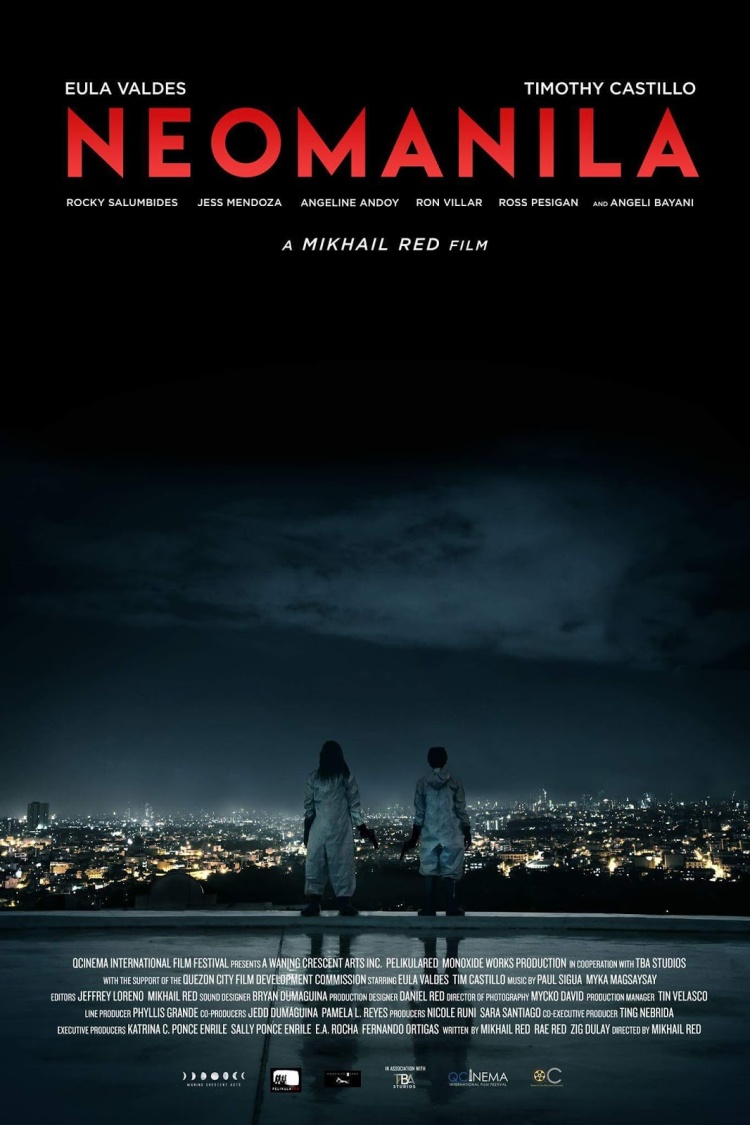
Neomanila (Mikhail Red, 2017)

Neomanila posterWhat kind of future can there be on the streets of Duterte’s Philippines? For one orphaned son of Manila’s slums, the only answer he can see is none at all. “I’m going to die no matter what I do”, he tells a surrogate maternal figure whose conflicted maternity will eventually bring about ruin for them both. Mikhail Red’s Neomanila is the latest in a string of films to examine the social costs of Duterte’s “Extra Judicial Killings” of “Drug Dealers” often conducted by vigilante bounty hunters working with the tacit complicity of legitimate law enforcement. Inheriting a world of corruption where life is cheap and sensitivity breeds despair, boys like Toto (Timothy Castillo) find themselves caught in the crossfire of an increasingly heartless regime.

When we first meet Toto, he’s trying to visit his older brother, Kiko (Ross Pesigan), who has been rounded up by the police in a drug dealer trawl. Kiko is small fry – a petty gangster only peripherally connected with the drug trade, but the police are holding him in the hope of tracking down another suspect, Ringgo (Edwin Nombre). The problem is, unbeknownst to Kiko or to Toto, Ringgo is already dead – he was the dealer we just saw gunned down in the street by a hired assassin. Trying to figure out how to get the bail money together for his brother, Toto pays a visit to a local gang boss and then hangs out with his girlfriend Gina (Angeline Andoy) in between running petty errands for the gang. One particular job brings him into the orbit of Irma (Eula Valdez) – a woman running a “pest control” business who used to know his mother before she was killed in a fire in the slums some years ago. Irma offers him a job in her store, but Toto quickly becomes aware that Irma runs a lucrative sideline as a hitwoman for hire. Together with her partner (both romantic and crime) Raul (Rocky Salumbides), Irma works for mysterious police handler Sarge who gives the pair frequent assignments to take care of “suspects” and bring home the drugs as well as other kinds of “valuable” “evidence” including phones and weaponry.

Orphaned at a young age, Toto is left entirely alone on the streets of Manila. He’s not a really part of the gang and cannot rely them for familial support and with his brother out of the picture he has no one to stand for him. The quasi-maternal connection he builds with Irma is he closest thing to family he has experienced in quite some time. Irma too, apparently mother to an absent son, quickly takes on the role of Toto’s protector – she gives him her own son’s clothes, feeds him, and later takes him out on trips to the karaoke bar or shopping to buy trainers all while “training” him to become a part of her outfit even whilst believing that Toto is somehow “better” and not “like the other” kids from the slums who get mixed up in drugs and crime through having no other options to survive. Wanting to “contribute” as part of the family, Toto goes along with Irma’s morally dubious education but he is also still a child with a deeply felt sense of humanity and justice and is therefore increasingly conflicted about the duo’s heartlessness and refusal to question their various assignments.

Trapped by the world he has inherited, Toto has few options other than to conform to the harshness of its rules or risk becoming a victim of them. The vision Red paints of modern Manila is one lit by gloomy neon half-light in which gangsters go to mass and priests preach about the seventh commandment while the state itself sanctions bloody murder in the streets conducted by those with vested interests in perpetuating a world of inescapable poverty in which death has become an industry. Drenched in despair and unbelievably bleak, Neomanila is a story of a city eating itself alive in which there is no future, no possibility of salvation, and innocence is just another weakness to be burned on an altar to (im)moral austerities so that the world might feel “safer” to those who live in fear of its self-created evils.


Neomanila was screened as part of the New York Asian Film Festival 2018.

Original trailer (English subtitles)