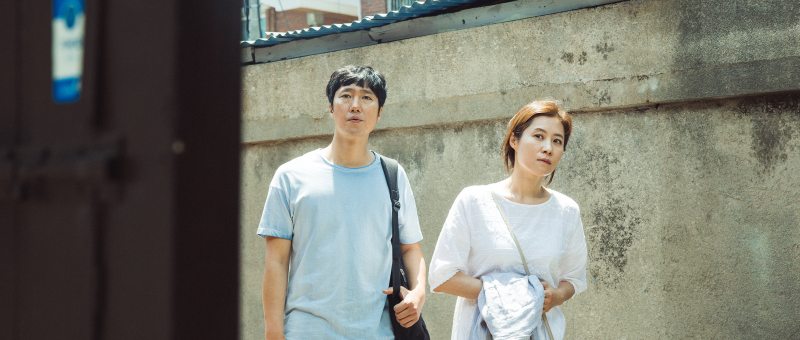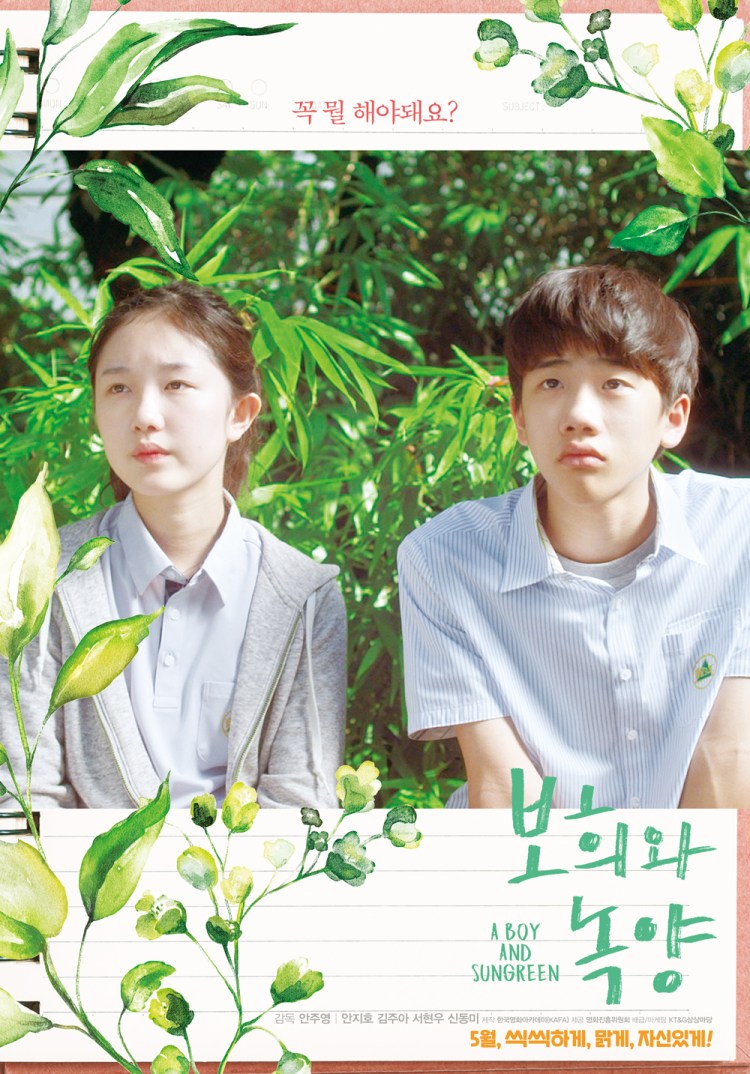
Youngju (영주, Cha Sung-duk, 2018)

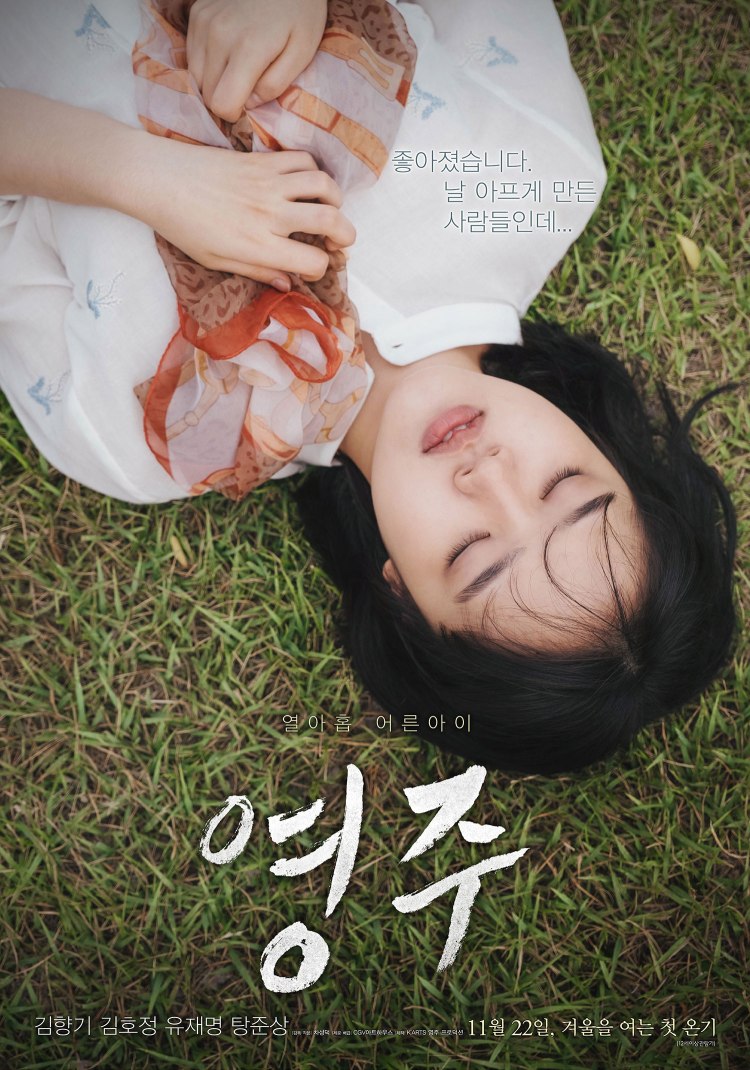
Youngju poster 1In the midst of a changing society, the Korean family has come increasingly under the microscope. Where festival favourite Last Child took a pair of grieving parents and saw them unwittingly bond with the boy involved with their own son’s death, Cha Sung-duk’s sensitive indie debut Youngju (영주) finds an orphaned young woman turning to the man who caused the accident which killed her parents in search of some kind of reparation but unexpectedly discovering him to be good and kind if carrying his own burden. Yearning for the warmth of family, she wonders if it would be alright to leave the past behind and embrace this new chance of togetherness, but the truth will out and once known may make her bright new future an impossibility.

19-year-old Youngju (Kim Hyang-gi) lost her parents five years ago and, despite being a minor under Korean law, is the legal guardian for her 15-year-old brother Youngin (Tang Joon-sang). She’s given up her schooling to do a host of part-time jobs in order to support the pair of them while hoping to save for Youngin’s college education, but she’s also being hounded by a domineering aunt who keeps trying to sell the family home out from under her more it seems out of a sense of greed and entitlement than concern for the kids’ wellbeing. Alternating between telling Youngju she needs to take more responsibility and shutting her down by instructing her to “leave these things up to the adults” the aunt is a problematic presence in the kids’ lives leaving them technically not without family but deprived of the support that Korean society expects a family to provide. On a car ride home, Youngju’s aunt tells her to give up and think of her as a mother, only for Youngju to snap back that she’s no longer a child and has no need of a one. The aunt’s “have it your own way” attitude implies she’s made the right decision, but young as she is Youngju can’t know that it doesn’t matter how old you are, everyone still needs a mother at one time or another.

She begins to find one in an unexpected place after hitting rock bottom when Youngin falls in with a bad crowd and gets himself into trouble. As he’s underage, the matter can be settled with a fine, but the kids don’t have that kind of money and Youngju’s attempts to get it lead only to humiliation and betrayal. Resentful of her circumstances, she decides to track down the truck driver who fell asleep at the wheel and caused the traffic accident that killed her parents, hoping to take some kind of revenge by somehow making him pay. Once there she ends up getting a job in their family-run tofu shop where the man’s wife, Hyang-sook (Kim Ho-jung), takes to her immediately with maternal warmth even jokingly referring to her as her younger daughter with a regular customer while delighting in cooking up extra meals for to take home and share with her “family”.

Of course, what Hyang-sook doesn’t know is that Youngju has no family other than Youngin who is trapped in youth detention until she can get the money to get him out. Though the relationship between the siblings is understandably close because they have no one else, it’s also fraught with difficulty and confusion, Youngin feeling guilty and resentful of his older sister’s sacrifices on his behalf, wondering if she’s ashamed of him for not being more help and for constantly getting into trouble. Youngju, meanwhile, keeps her new work family a secret, merely telling her brother that she got the money she needed from her boss rather than their horrible aunt, replying to his question about why anyone would lend them money out of the goodness of their hearts with only “they’re good people”.

The Kims are indeed “good people”, despite whatever preconceptions Youngju might have had about them. Hyang-sook is good and kind, practicing true Christian values of love and forgiveness. Realising that Youngju meant to steal from them, she simply gives her the money because she can see that she’s a “good kid” and seems to be in some kind of desperate difficulty with which she’d like to help her. Hyang-sook takes the melancholy young woman to her heart like a daughter, but Youngju remains uncertain that her forgiveness could extend to the extent of her lies if she knew the real reason she arrived in their lives. Increasingly guilty, she finds herself feeling that she needs to tell the truth but knowing that if she does the fragile sense of family she’s found with the Kims may be irreparably broken. 

Under the Kims’ influence, Youngju encourages her brother that he too needs to try to be better, that they should try “live a better life”, but he understandably feels betrayed by her desire to look for family somewhere else, rejecting their parents’ memory and siding with the architect of all their misfortune. Having made peace with her own tragedy, Hyang-sook may say there’s no point blaming anyone but obviously feels a deep-seated sense of vicarious guilt that for all her pity may make it impossible for Youngju to return to that same level of intimacy as daughter unconditionally loved and supported by kind and forgiving people. In the opening scene, Youngju jokingly asked her brother which of their parents he’d most like to bring back and picked her dad because he was going to take them to a theme park, but it’s grief for her mother(s) that finally overwhelms her, convincing her perhaps that now she really is alone. Even so, the sun rises again and we get the impression that Youngju will be alright in the end, walking sorrowfully off towards a “better life” but perhaps resolved to doing so with no one by her side.


Youngju was screened as part of the 2019 London Korean Film Festival.

Original trailer (English subtitles)

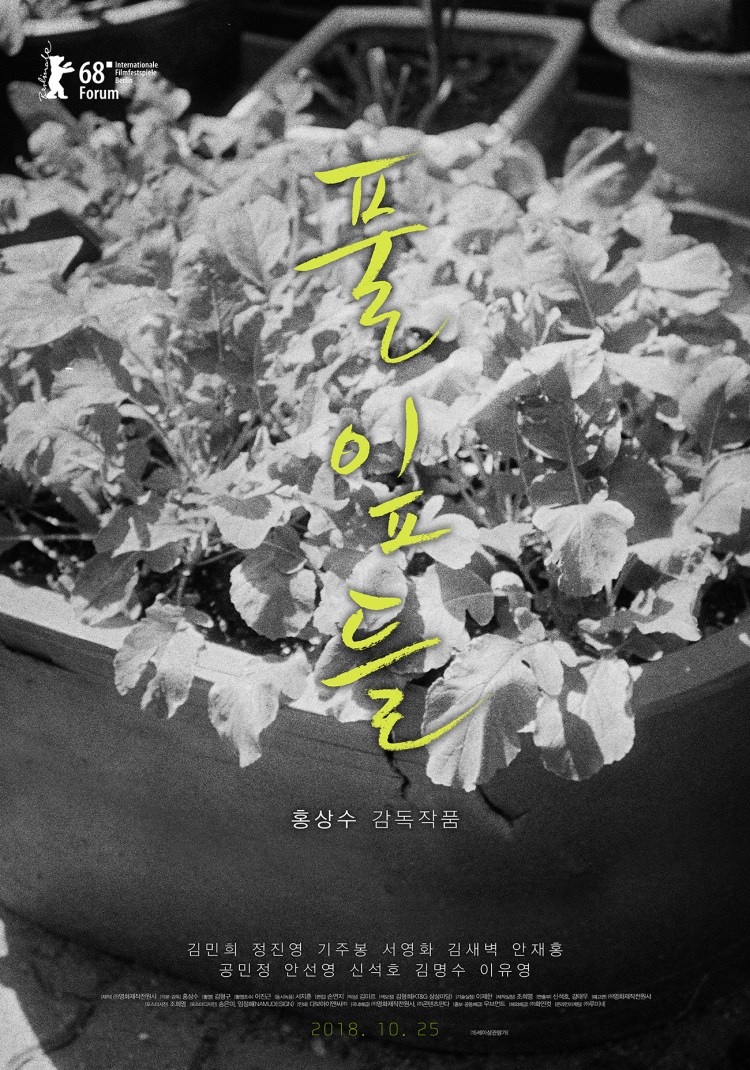
Grass (풀잎들, Hong Sang-soo, 2018)

Grass poster 1You don’t meet nice girls in coffee shops, at least according to the melancholy narrator of a Tom Waits song recalling the flighty lover too free spirited for his wholesome hometown. Like one of the rundown dive bars in Waits’ conceptual universe, the cafe at the centre of Hong Sang-soo’s Grass (풀잎들, Pul-ip-deul) attracts its fair share of lonely drinkers looking for somewhere quiet to pour out their sorrows. Ostensibly a tale of simple eavesdropping abetted by the presence of a laptop, Hong’s narrative is at his most defiantly reflexive as it forces us to question the order of its reality and, in passing, our own.

Unnamed until the closing credits, Areum (Kim Min-hee) sits in a quiet cafe, tucked away in a corner tapping on her laptop and convincing herself she is an invisible observer of the world around her. Listening in on the various conversations of the other customers, she waxes philosophical on life, love, death, and distance by means of a beautifully poetic interior monologue but tells a fellow patron that she is not a writer, only writing, sort of a diary, but not a diary, something unusual for now. The irony is that though Areum feels herself to be far removed from those she is observing, they often complain that they feel “watched” or at any rate anxious under her intense yet abstracted gaze, sometimes challenging her but backing down when faced with her almost total lack of interest in interaction.

The patrons, almost echoes of themselves, are comprised of three couples – one in youth, one middle-age, and one approaching their twilight years. The men drink something cold in a tall glass with a straw, and the women something warm from a pleasantly round cup and saucer. Each of the men is an actor, while at least one of the women is a writer, though all of their conversations have their particular quality of awkwardness with the men largely trying to extract something from the women be it love, or forgiveness, or relief.

Finding herself in an awkward situation familiar to any woman who’s ever tried to work in a coffee shop on her own, Areum is approached by the middle-aged actor (Jung Jin-young) apparently trying to write a screenplay, and propositioned for advice. Having tried and failed to lure his wily writer friend (Kim Sae-byuk) on a 10 day retreat to “collaborate”, he asks Areum if he can come and “observe” her. She turns him down by saying she has a boyfriend, only for the actor to ask to talk to him for his permission, to prove he’s “not some kind of strange guy”.

The older actor (Gi Ju-bong), meanwhile, casually tells his companion (Seo Young-hwa) that he’s recently come out of hospital following a suicide attempt after trying to kill himself for love. Trying to move the conversation on, she tells him that she’s recently moved to a small house near the mountains, but realises her mistake when he fixates on the incidental detail that she’s got a spare room. Brushing off her reticence about a roommate, he repeatedly states that he’s got nowhere else to go in the hope that, as Areum says in her caustic voiceover, she will take pity on him and allow him to live the life of Riley on her dime. The friend is clearly distressed, she doesn’t want this man in her house (her equally strained looks when someone else tries to offer him a room suggest she’s reason to believe he’s trouble) but feels obliged to keep apologising for her refusal to acquiesce to his quite unreasonable request.

According to the maybe fiancée of Areum’s brother, men are cowards when it comes to pain or the need to end things. Areum seems to agree, but has a fairly cynical view on the entirety of human relationships, berating the pair for irresponsibly intending to marry on “love” alone. “We only loved each other” another sad young woman insists while harangued by a drunk middle-aged man intent on blaming her for the suicide of her late lover, neatly reversing the dynamics of the young couple from the cafe arguing about their shared sense of guilt over the death of a friend.

Areum wonders if it’s possible to fall in love with an innocent heart if you’re carrying the weight of someone else’s death. “You insignificant things” she warns the youngsters newly in love “you’ll die someday”, neatly ignoring the fact that so will she. Or perhaps this world will die with her. We begin to wonder if any of this is real or merely a series of manifestations of Areum’s cafe musings, reconstructions of the lives of others imagined from snippets overheard from adjacent tables. Adjacent tables is where Areum’s preferred to be, observing not partaking, a lonely ghost in this haunted cafe where lost souls come to ease their burdens. Yet, finally her resistance crumbles. She accepts an offer of soju and joins the gathering, abandoning her lofty pretensions of distance for a taste of togetherness. “In the end people are emotions…And I long for them now” she realises. “Is it real? It would be nice if it were”.


Grass was screened as part of the 2019 London Korean Film Festival.

Original trailer (English subtitles)

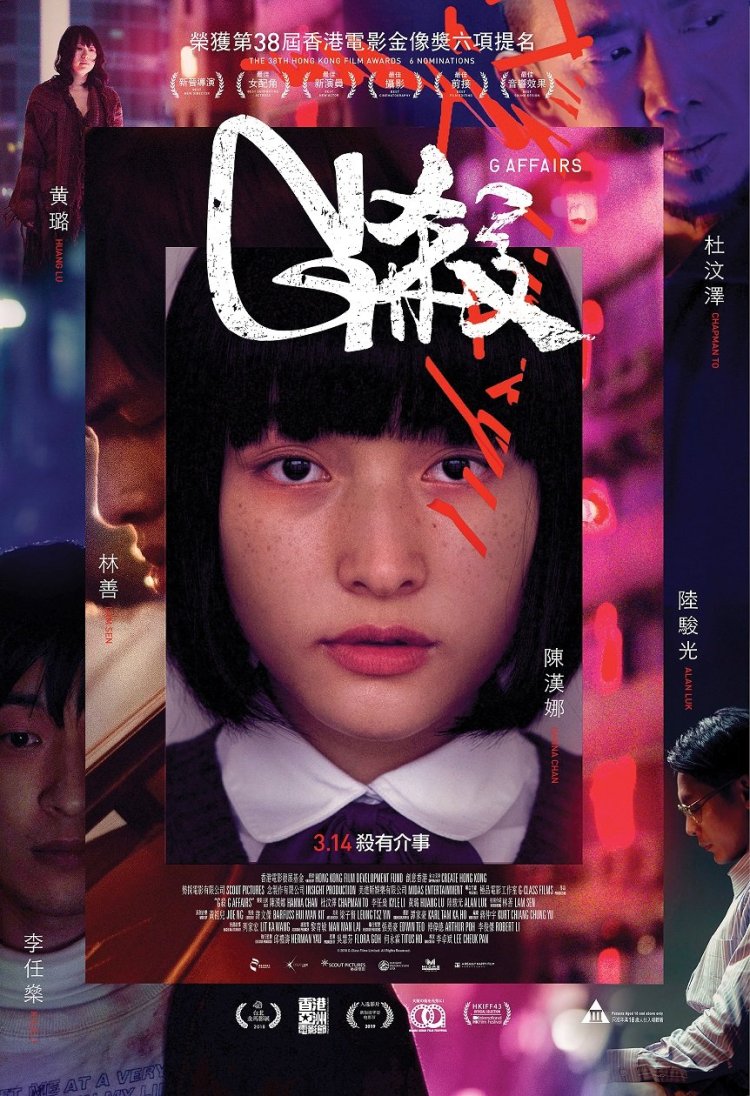
G Affairs (G殺, Lee Cheuk-pan, 2018)

G Affairs poster 1“Many think Hong Kong is getting better, but I can tell you for sure Hong Kong is getting worse” says the dejected hero of Lee Cheuk-pan’s striking debut, G Affairs (G殺). Reminiscent of Fruit Chan’s landmark chronicle of handover malaise Made in Hong, G Affairs finds itself in a city once again in crisis where the young struggle to see a future, abandoned or misused by the older generation who think only of themselves in an increasingly nihilistic world of violence and transaction.

Lee opens with an arresting scene shot in 4:3 in which a teenage boy practices his cello while a scantily clad woman opens the door only to be dragged back to the couch by a burly policeman who proceeds to have his way with her until a severed head suddenly bounces in through the French doors. The story of how the head came to land there brings together a disparate collection of people from all walks of life – teenage cello player Tai (Lam Sen), his classmate Yuting (Hanna Chan), her autistic friend Don (Kyle Li), her corrupt cop dad “Master Lung” (Chapman To Man-chak), former sex worker stepmother Mei (Huang Lu), and high school teacher Markus (Alan Luk Chun-kwong) with whom Yuting has been experimenting with oral sex.

Today’s lesson is brought to us by the letter G – chosen by Don as his favourite letter in the Western alphabet connected as it is to many of his beloved computer words, but reminiscent to Yuting of a human skull with its jaw hanging open. Above it all, Yuting resents her fellow students at the elite high school, especially the immature boys who nickname her “G” behind her back for a number of reasons ranging from an unflattering comparison to a busty classmate and the fact that her stepmother was a sex worker the slang word for which sounds like G in Chinese. Tai, meanwhile, is not well liked either and also considers himself superior to his surroundings, proclaiming that only losers need friends and frequently dobbing in his classmates for their bullying behaviour. Don, a few years older, is associated with another G word – “gay” which people seem to assume him to be for unclear reasons, and is an outcast because of his autism.

The three seem to be more or less abandoned by their parents. Tai lives alone, a melancholy musician who believes that “things of value cannot be found in the world” only in music, literature and art, while his parents have long since departed in search of riches. “A family that’s never home is not a family” he explains to mainlander Mei who hoped to find a new life for herself in Hong Kong but even with her present “family” feels even more alone than she ever had before. Her stepdaughter Yuting intensely resents her, regarding her father’s affair with Mei as the primary cause of her mother’s gastric cancer and subsequent death. Yuting also resents her father, ashamed of his embarrassing gangster antics and tendency to spout high minded quotes to mask his essential superficiality. Neglecting his daughter, Lung positions himself as a kind of father figure to Don to whose parents own an internet cafe which facilitates some of Lung’s dirty work.

Dirty work is something of a Lung speciality but as Tai says, he’s not even that bad a man merely someone trying to make a fast buck in the burgeoning Hong Kong underworld. Calling himself “Master Lung”, he thinks of himself as maintaining his own kind of order – “one country, two systems” as Yuting later ironically describes her complicated home life, but may actually be on the “better” side of law enforcement as we witness the legitimate police waterboard a terrified Don who is largely unable to answer their questions in the way they insist on asking them, and physically abuse a guilty Markus while threatening to expose his illicit relationship with Yuting and, it turns out, her stepmother Mei. Another middle-aged hypocrite, Markus confesses only to introducing Mei and her sex worker sister to his church group in the belief that they “deserved salvation”.

That may not be a view commonly held by most as Mei finds out during an impassioned conversation with Yuting’s headmistress who berates her for her “shameless” past. Speaking as a mainlander, a trafficked woman, and a sex worker, Mei hits back by asking what right Hong Kong people have to look down on her and why it is her background in sex work is so problematic that everyone seems to be telling her it would be inappropriate for her to be a mother which is only what she’s trying to be to Yuting despite her animosity. Lung might have married Mei, but he wastes no time denigrating other mainland women trafficked to the Hong Kong underworld and cooly brushes off complaints after shooting a man with the justification that no one cares about another dead mainlander. Mei does her best to be “happy”, but learning that her own mother has been executed by the Chinese state for opposing its oppression leaves her adrift, longing to go “home” but knowing there is no home to go to and no safe land even in Hong Kong.

Children are the adults of tomorrow, Yuting explains, but the adults of today have robbed them of any possible future. Lee’s depiction of contemporary Hong Kong is one of increasing chaos, a hopeless place that has lost its way. The older generation think only of money while the young want something more but struggle to find anything of meaning in the soulless modern world which seems to be imploding all around them. Strangely hopeful, yet infinitely nihilistic, Lee ends on the single word “Go” as his troubled protagonists find their own kind of peace in the abyss of the modern city.


G Affairs was screened as part of the 2019 London East Asia Film Festival.

International trailer (English subtitles)
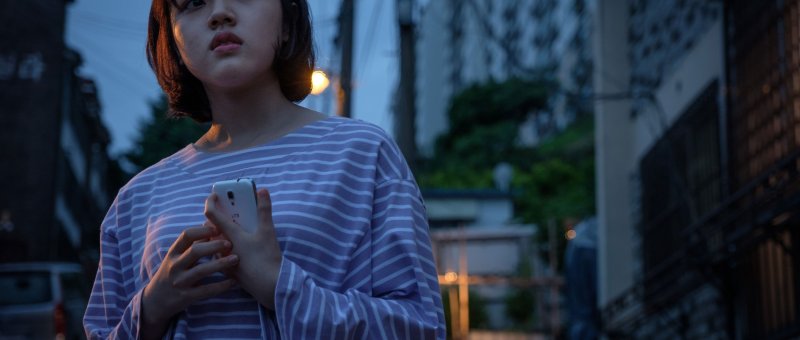
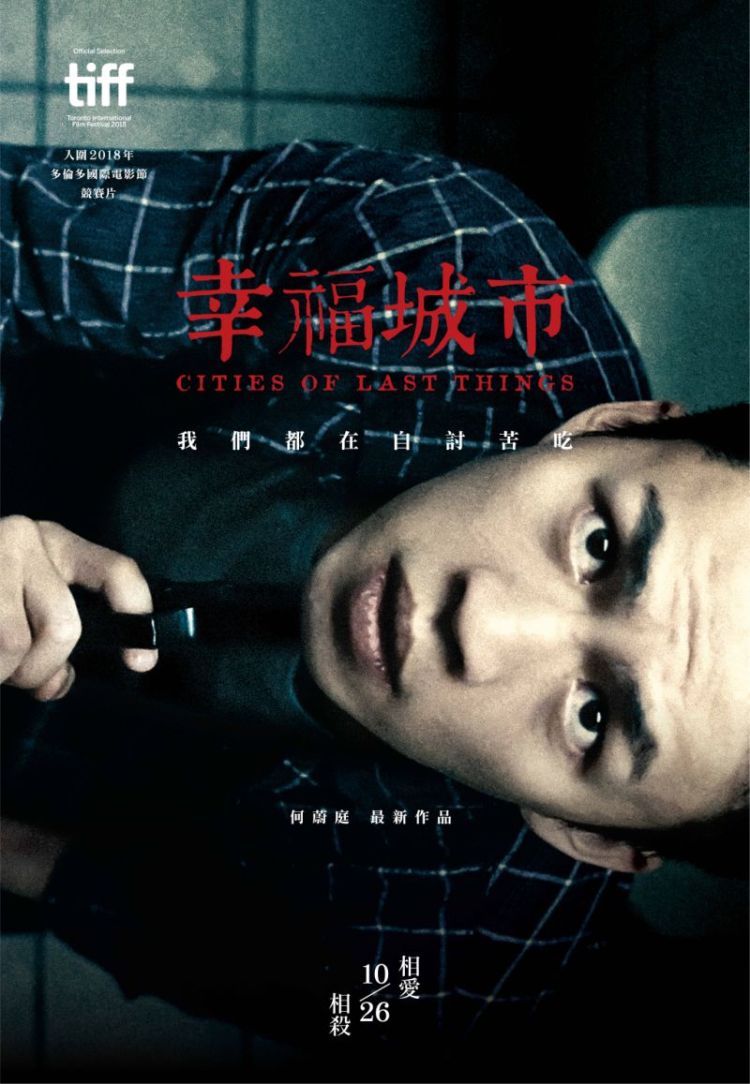
Cities of Last Things (幸福城市, Ho Wi Ding, 2018)

Cities of last things poster 1A sense of finality defines the appropriately titled Cities of Last Things (幸福城市, Xìngfú Chéngshì), even as it works itself backwards from the darkness towards the light. Still more ironic, the Chinese title hints at “Happiness City” (neatly subverting Hou Hsiao-hsien’s “City of Sadness”) but that, it seems, is somewhere its hero has never quite felt himself to be. Embittered by a series of abandonments, betrayals, and impossibilities, he grows resentful of the brave new world in which old age has marooned him. 

Ho opens with a bouncy, retro track advising that one should never be too generous with love only for a body to suddenly rain down from above. As we later discover, the body belongs to 60-something former policeman Dong-ling (Jack Kao) who has grown disillusioned with his futuristic, digital world, stubbornly smoking cigarettes and growing old gracefully while surrounded by vapers and ads for rejuvenating drugs. For reasons we don’t yet understand, he ventures into the red light district to buy a gun, punches his wife’s dance partner, and visits a hard-nosed sex worker who reminds him of a woman he loved and lost thirty years previously.

Love, guns, death and revenge become persistent themes for the older Dong-ling whose only bright spot seems to be a grownup daughter preparing to move abroad with her foreign boyfriend. Thirty years previously Dong-ling (Lee Hong-chi) too dreamed of running overseas. Consumed with rage on discovering his wife’s infidelity, he imagines himself killing her, her lover, and himself but settles only for a petty revenge against a colleague which exposes the entrenched police corruption he had refused to participate in, alienating his fellow officers. Bonding with a French kleptomaniac (Louise Grinberg) on the run from some kind of unresolved conflict with her father, he sees a way out only to have the door cruelly closed on him just as it was so many years before when he was just a teenager picked up for trying to steal a scooter.

In true film noir style, all women are perhaps one woman. Abruptly shifting tone in venturing into the recent past, we are introduced to Big Sister Wang (Ding Ning) – an embittered, disappointed femme fatale running out of road, hemmed in by the choices she has already made. She may already know there’s no way out for her, little needing the policeman’s warning that after her arrest everyone in gangland will assume she talked when they let her go, but she refuses to give in, repeatedly insisting on cigarettes and asserting her dominance while the unsympathetic policemen get on with their grim business.

Cornered, Ara, the shoplifting free spirit, decides to interrogate her interrogator, calling back to the later version of herself in asking why it is that prostitution is illegal. The policeman has no answer for her, save that he does not make the rules only follow them. Dong-ling too wanted to be a force of order, perhaps taking Big Sister Wang’s impassioned pleas to be a good person and not end up like her a little too much to heart. He follows the rules too closely for the comfort of his colleagues but finds himself dangerously exposed by an inability to regulate his feelings, a victim of toxic masculinity humiliated by his wife’s betrayal but unable to stand up to the corrupt superior who so casually closes down the only escape route he has been able to find.

The older Dong-ling is horrified by his daughter’s revelation that she lasered away a birthmark. How else can you recognise someone you lost long ago in the great wide world other than by a mark placed on them when they were born? His daughter rolls her eyes and reminds him that these days everyone is chipped, but there may be something in his rationale that everyone is marked at birth. Dong-ling is surrounded by handcuffs, self-driving vehicles, and locked doors. His fate is sealed, as we know, because we saw him fall, yet like Big Sister Wang he fought back only his resistance was violent and vengeful, abhorrent in its enraged pettiness. His is a tale of fatalistic resentment and of an existence consumed by a sense of hopeless abandonment, coloured only by a longing for lost love. Ho’s decision to end the film with its happiest moment, bright sunshine in place of rain soaked night, is ironic in the extreme but returns us to the grim serenity of the opening as the cheerful retro strains re-echo and Dong-ling catapults himself into a life of misery in the cities of last things where all hope is futile and all love loss. 


Screened as part of the 2019 London East Asia Film Festival, Cities of Last Things is also available to stream online via Netflix.

TIFF trailer (English subtitles)

Liu Wen-cheng – Don’t Be Too Generous About Love

Signal Rock (Chito S. Roño, 2018)

kinopoisk.ru“Family is family, I can’t just say no” a young woman tells her boyfriend in response to his angry outburst on discovering that, like all the young women round these parts, she’s being dispatched to another part of the country to work in a bar. Inspired by true events in the ‘90s, Chito S. Roño’s Signal Rock situates itself in an idyllic fishing community left behind by the modern world like a lonely rock pool after the tide has pulled out. A microcosm of the nation itself, the island has become used to its transitory status as a conduit between two worlds, dependent on those who leave for its survival while the young men rendered incongruously obsolete have little more to do than battle their feelings of resentment and powerlessness.

Our hero, Intoy (Christian Bables), is the youngest son of the Abakan family, charged like so many young men with responsibility over technical things – in this case, maintaining the mobile phone which is the only point of contact that they have with oldest daughter Vicky who is supporting them all while working overseas in Finland. Remote as it is, the only place you can get a signal on the island is by climbing to the top of a rocky outcrop so communication has to be carefully planned in advance. This becomes a particular problem when Intoy discovers that the reason the money from Vicky hasn’t been coming through is that her relationship with a Finnish man with whom she has a small daughter is falling apart because he is both abusive and adulterous. As her daughter Sofia was born in Finland, Vicky fears that her boyfriend will try to seize custody and prevent her returning home to her family. Intoy, a fiercely protective brother, is not about to let that happen and sets about mobilising the community to hatch a plan to ensure Vicky and Sofia come home safely.

Despite Intoy’s protective instincts, the rest of the family’s relationship with Vicky is ambivalent. Oldest son Joaquin (Arnold Reyes), one of many resentful middle-aged men left on the island with not much to do, endlessly complains about the lack of ready money from his sister which he claims he needs to buy a motorbike in order to work. Joaquin also resents the shame of Vicky’s out of wedlock pregnancy, while the parents are still a little put out about the financial sacrifices they had to make in order for Vicky to achieve her “dream” of going abroad.

In order to sell the fantasy that Vicky comes from a wealthy family in the Philippines which is perfectly well equipped to support herself and her daughter, the Abakans are forced to confront their longstanding family issues. Intoy’s parents have been estranged for some time with his father technically living in a shed outside the main house, apparently loathed by his wife who claims the youngest two children are a result of marital rape. Another product of the patriarchal society, Intoy’s parents apparently eloped at a young age so that his mother could escape a marriage arranged by her father, only for the relationship to sour when Intoy’s dad lost his job at an American-run factory causing his wife to become disillusioned with his ordinariness.

Little seems to have changed in the last 30 years in that the lives of women are still largely dictated by the whims of their fathers. Vicky may have made a free choice to go abroad, but seeing as work is easier to come by for women, it is the norm for girls of the island to be sent away while the boys remain home alone. While dealing with his sister’s plight, Intoy is also facing the inevitable heartbreak of losing his girlfriend Rachel whose father has arranged for her to work in a bar in the city. As Intoy points out, from the parents’ point of view bar work is a pathway to finding a rich foreign husband – like Gina, another young woman from the village, who is returning home to celebrate her marriage to an elderly German (official now that his divorce has come through). Hardly pausing at the dockside, Gina introduces her former lover as a “cousin” before whispering in his ear that her feelings haven’t changed and she hopes to bring him to Germany for a better life after the old man snuffs it.

Intoy makes a kind of living on the island running errands for older people and acting as an MC during village celebrations, but as there is no real work round here and all the girls are gone, the young men largely spend their time playing basketball and getting into fights. They resent being forced to live off their sisters and seeing the women they love promised to other men, but have no other option than to make uneasy peace with their lack of possibilities. Intoy battles against his baser emotions, remaining kind and cheerful as he convinces his friends and neighbours to help him forge documents that imply his sister owns property while cosying up to the local mayor who hopes to hang on to power at the next election by convincing his wife to stand as a candidate.

Intoy alone is desperate to preserve the integrity of his family, even when spread across continents, standing out on Signal Rock as a kind of beacon left behind solely to convey information from one point to another. Having helped his sister, however, he discovers the depths of her resentment in her embarrassment at the idea of returning home after receiving the help of so many people. He loses his temper, unable to understand his sister’s rejection of everything he has worked so to protect at great cost to himself. Even so, Intoy manages to maintain his cheerfulness and desire to help others, sinking back into island life with his customary stoicism even if mildly troubled by a bargain he may have committed to without fully comprehending its implications. An ambivalent depiction of idyllic island life built on the back of female exploitation and entrenched patriarchy, Signal Rock nevertheless finds finds hope in community spirit and in its hero’s essential goodness.


Signal Rock screens in Chicago on Oct. 3 as part of the ninth season of Asian Pop-Up Cinema where actor Christian Bables will be present for an introduction and Q&A.

Original trailer (English subtitles)

A Dobugawa Dream (ドブ川番外地, Asato Watanabe, 2018)

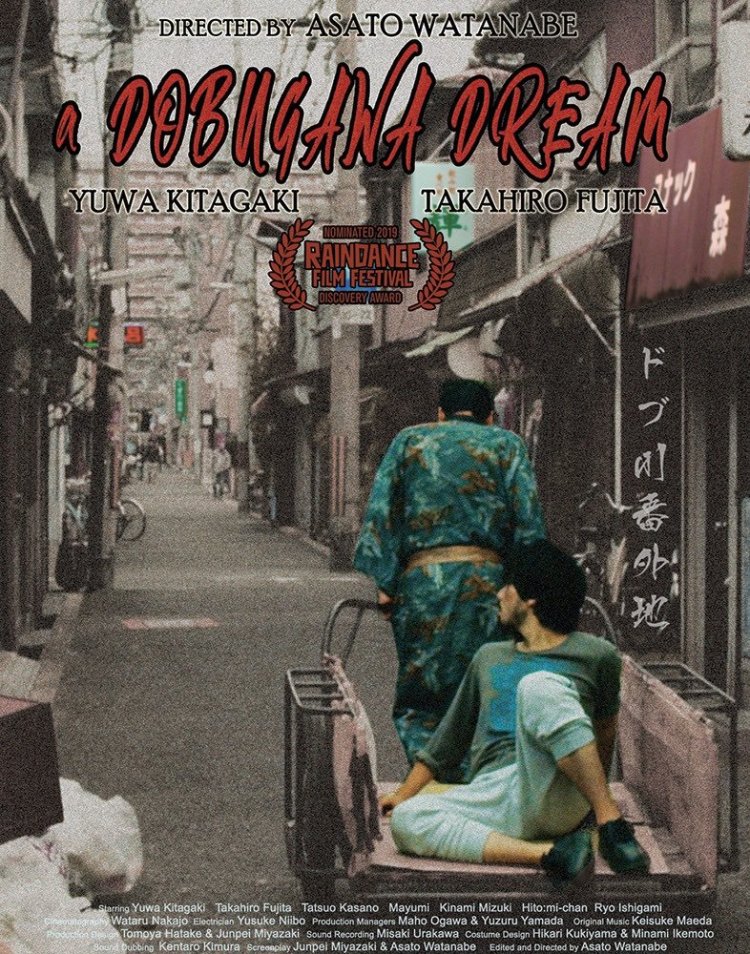
Dobugawa Dream Raindance posterCan you outrun sorrow or should you just accept defeat and remain within a bubble of despair? Forced out of his self-isolation, the hero of Asato Watanabe’s debut feature A Dobugawa Dream (ドブ川番外地, Dobugawa Bangaichi) tries to find out, looking for a home among those who’ve fallen through the cracks. This down and out ditch town maybe where you end up when you don’t know where else to go, but there’s comfort in knowing others got there before you, if not so much in realising that they have all failed to leave, either accepting the imperfect present in rejection of a possible future, or wilfully residing in the past.

Highschooler Tatsumi (Yuwa Kitagaki) is a lost young man filled with pent-up rage and frustration. He hasn’t filled in his career survey because he has no idea what to put in it and no amount of irritated cajoling from a less than well-meaning teacher is likely to change that. His only outlet is the dream of sailing away with his best friend on the makeshift raft they’ve crafted from refuse at a disused boatyard, but that dream dies when he discovers him hanging, barefoot his body swaying in the breeze. Unable to process his loss and the guilt that accompanies it, Tatsumi imprisons himself in his room watching VHS tapes of old TV shows until a series of angry voices from the other side of the door eventually forces him out of his place of safety and into a strange new world.

Running blindly, Tatsumi wanders through a dream until he is eventually engulfed by a cheerful street funeral which turns out to be in honour of a man still alive – Tsuchiro, a middle-aged former shogi champ now a drunken rogue and what passes around here for a guardian spirit. Questioned by the local bobby, Tsuchiro passes Tatsumi off as his own son, a ruse no one believes but one with a grain of truth. In Tsuchiro, an infinitely cool presence all sunshades, yukata, and shit-eating grin, Tatsumi finds both a father figure and a double. Just as he is chasing the ghost of a friend he couldn’t save, Tsuchiro is in flight from himself, uncertain of his own identity now he no longer sees it reflected in the eyes of an opponent.

Trapped in this strange netherland, Tsuchiro has chosen oblivion. He drowns his sorrows but secretly plays shogi alone by nights while Tatsumi listens in silent consternation from the next room as his tiles click down on the bloodied board. Originally reluctant, Tatsumi finds himself becoming the older man, dressing in the cast-off clothes of the street and drinking himself out his sorrow but quickly becomes disillusioned with what he sees as Tsuchiro’s hypocrisy. The older man offers him a home among those who have nowhere else to go, but the wily bar hostess, though trapped herself, cautions him that he might not want to stay here, among the perpetually lost, for evermore.

A climactic argument sees Tsuchiro offer some tough love, telling Tatsumi that if he wants to stay he needs to leave his darkness at the door, but Tatsumi doesn’t want the superficial solution the older man has found. He’s angry, and he’s powerless, and not yet ready to face his pain but there are other people he will fail to save precisely because of his solipsistic rage – a lesson age tried to teach him but he was too impatient to see. Further loss and an altruistic act of sacrifice push him towards a reckoning in a deeper dream which allows him to interrogate the ghosts of the traumatic past and, perhaps, make his peace with them.

Alternating between bleak despair and absurd humour, A Dobugawa Dream takes its broken hero on an oneiric odyssey through grief, despair, and eventual rebirth as he learns to reconnect with the world around him and prepares to sail away from the traumatic past into the dreamed of future. Escaping the Dobugawa dreamscape, he takes its wisdom with him, no longer running but moving forward all the same. A beautifully composed and remarkably assured debut from Asato Watanabe, A Dobugawa Dream is both a tale of marginalised lives and the corrosive effects of unresolved trauma, and a gentle hymn to the sadness of letting go.


A Dobugawa Dream made its international premiere at Raindance 2019 courtesy of Third Window Films.

Teaser trailer

The Enigma of Arrival (抵达之谜, Song Wen, 2018)

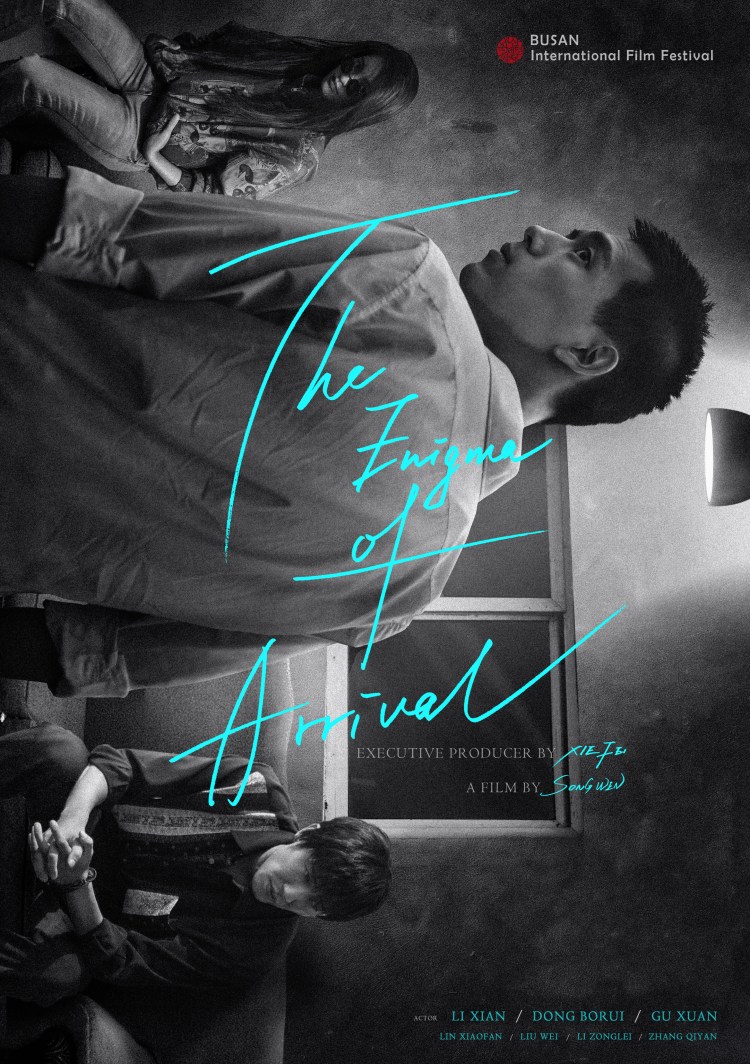
The Enigma of the Arrival posterChinese cinema has always had a fondness for melancholy nostalgia. Perhaps its natural enough to romanticise one’s youth and long for a simpler time of possibility, though that same desire for “innocence” has often been read as a rebuke on the “soulless” modern economy and critique of Westernising individualism of a China some feel has lost its way since the economic reforms of the ‘80s and beyond. Song Wen’s The Enigma of Arrival (抵达之谜, Dǐ Zhī Mí), seemingly borrowing a title from the novel by VS Naipaul, seems more straightforwardly personal in its universality as it locates a single fracturing point in the lives of a collection of young people forced apart yet eternally connected by tragedy and disappointment.

Song begins in the present day with his 40-ish narrator, San Pi (Liu Wei), who tells us that he is looking forward to reuniting with his old friends with whom he has largely lost touch. Falling into a reverie, he takes us back to their harbourside hometown some 15 years or so previously when he used to hang out with three friends from school – Feng Yuan (Dong Borui), Xiaolong (Li Xian), and Da Si (Lin Xiaofan). Young men, they spent their time watching “cool” Hong Kong movies like Days of Being Wild and A Better Tomorrow, which were always followed by a blue movie watched incongruously in public. The trouble starts when the guys meet local beauty Dongdong (Gu Xuan) and are all instantly smitten. Hoping to get themselves a more impressive motorbike, they make a fateful decision to steal some diesel and sell it on, only the fuel they steal belongs to gangsters which lands them in a world of trouble they are ill-equipped to deal with despite their adolescent male posturing. Dongdong disappears without trace leaving the guys wounded and confused.

As San Pi tells us in his opening monologue, things are not always as they seem, “Life is floating between fiction and reality”. It’s a particularly apt comment from him because, as we later find out, he was present only for the single climactic events not for the ones which preceded and followed them. He didn’t go with the guys when they, mistakenly, tagged along with Dongdong to an athletics tournament to which she only intended to invite Xiaolong, and as he left soon after Dongdong disappeared his memories of those times are not first hand. He invites us to assume that each of the men has their own narrative which necessarily places themselves at the centre and offers a flattering portrait of their actions which attempts to absolve them of guilt for whatever they did or did not do to lose Dongdong.

A case in point, though it seems that Dongdong favoured Xiaolong who has spent the remainder of his life pining for her, Fang Yuan always thought she fancied him while Da Si was technically dating her friend Xiaomei (Zhang Qiyuan) but seems to have developed some kind of protective sympathy towards her which may have an edge of puritanical resentment. San Pi is the only one who does not seem to have engaged in sad romance, a perpetual outsider looking on from the edges. That might be why he seems to be the one eulogising their friendship, less hung up on what happened to Dongdong than on the effect it had on the later course of his life and that of his friends. Reuniting in a Japanese-style onsen, an ironic reminder of their youthful dreams to see Japan, he wonders if they might return to their teenage intimacy but discovers that youthful innocence cannot be reclaimed once lost, some secrets must stay secret, and some betrayals are too much to bear. They will never go to Japan together, or even catch a movie in a rundown theatre. It would be embarrassing; the moment has passed.

Song frames his tale in a mix of hazy images and black and white, neatly symbolising the patchwork quality of narrative assembled from memory and wishful thinking, coloured by a single perspective that lacks the composite whole of accepting the reality of others’ perceptions. In contrast to the longing for the old China that marks many a youth drama, Song’s young guys yearn for the world – they worship Hong Kong tough guys, listen to Western music, and dream of seeing Japan, but their present life is one of settled middle-aged disappointment marked by the unresolved tragedy of their pasts which both binds them together and forces them apart. “No one is flawless” Xiaolong is reminded, but somehow that only makes it worse. A melancholy ode to ruined friendship and the nostalgia of bygone adolescent possibility, Enigma of Arrival is a suitably abstract effort from the founder of the XINING FIRST International Film Festival and signals a bold new voice on the Chinese indie scene.


The Enigma of Arrival screens in Chicago on Sept. 19 as part of the ninth season of Asian Pop-Up Cinema where director Song Wen will be present for an intro and Q&A.

Original trailer (English subtitles)

The Crimes That Bind (祈りの幕が下りる時, Katsuo Fukuzawa, 2018)

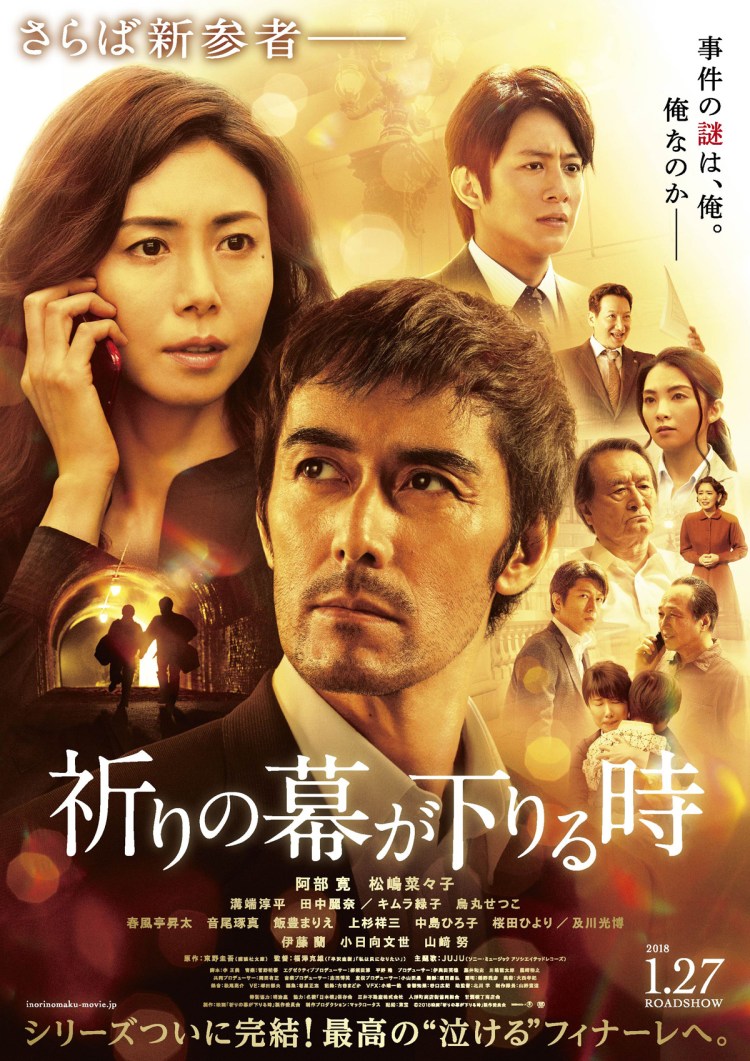
Crimes that bind posterDetective Kyoichiro Kaga has become a familiar screen presence over the last decade or so in a series of films and TV dramas starring popular actor Hiroshi Abe which might make it something of a surprise that The Crimes That Bind (祈りの幕が下りる時, Inori no Maku ga Oriru toki) is, after a fashion, a kind of origin story and touted as the culmination of the long running franchise. Another of prolific author Keigo Higashino’s key detectives, Kaga’s stalking ground has always been Nihonbashi where he has managed to make himself a friendly neighbourhood cop but, as it turns out, dedication is not the only reason he’s refused promotions and transfers to stay in what is, professionally at least, something of a backwater.

In fact, the film begins way back in 1983 when a young woman, Yuriko (Ran Ito), ran away from her husband and son to become a bar hostess in Sendai offering only the explanation that she felt herself unworthy of being a wife and mother. Some years later in 1997, she met a nice man – Watabe, but died of natural causes in 2001 at which point we discover that she is none other than the long lost mother of our master detective whom she abandoned when he was only eight years old. Being a compassionate man, Kyoichiro Kaga is not angry with his mother only sorry he did not get to see her before she passed and eager to meet the man who made her last years a little happier. Only, it appears, Watabe has also disappeared without trace. The only thing the Mama-san at the bar where Yuriko worked can remember about him is that he once said he often went to Nihonbashi. Kaga searches for the next 16 years with no leads, which is when the main case kicks into gear with the discovery of a badly decomposed body of a woman in a rundown Tokyo flat.

Of course, the two cases will turn out to be connected, giving Kaga an opportunity to investigate himself and come to terms with his difficult family circumstances including his strained relationship with his late father whose coldness he blames for driving his mother away. Parents and children will indeed develop into a theme as Kaga digs into why his mother might have done the things she did while also trying to reverse engineer his clues to figure out why he seems to be at the centre of an otherwise completely unrelated case.

Meanwhile, pieces of the puzzle seem to drop into place at random such as the fortuitous discovery of an old woman claiming to have lost her memory so that she can stay in hospital who may or may not be linked to one of the prime suspects – a top theatre director also known to Kaga thanks to a chance encounter some years earlier. In a neat twist, the theatre production she is currently trying to put on is Love Suicides at Sonezaki – a sad tale of young lovers, an adopted son of a merchant and a courtesan, who realise that they have no freedom to pursue their desires and so decide that their only solution is double suicide. The truth that Kaga uncovers leads him in much the same direction only the love at stake is familial rather than romantic and built on the strange filial interplay of the connection between a parent and a child.

It is quite literally “crimes that bind”, but Kaga’s repeated mantra that lies are the shadow of truth, illuminating as much as they conceal, does not quite fit with the incident he has been investigating which largely hinges on coincidences which place him, improbably, at the centre and tip him off to the hidden connections which will crack the case. Which is to say, the solution lies in the killer overplaying their hand (though for reasons unrelated to crime) and thereby undermining their carefully won subterfuge. Torn between solving the murder and exploring Kaga’s melancholy backstory, The Crimes That Bind finds itself falling between two stools even as its twin plot strands begin to dovetail as neatly as one assumes they eventually will, laying bare the central themes of parental sacrifice and belated filial gratitude. Playing best to those already invested in the Kaga franchise, Katsuo Fukuzawa’s adaptation may serve as a fitting conclusion (to this arc at least) but cannot quite overcome its over-reliance on confessional flashback as method of investigation or the improbable qualities of its admittedly twist filled central mystery.


International trailer (English subtitles)
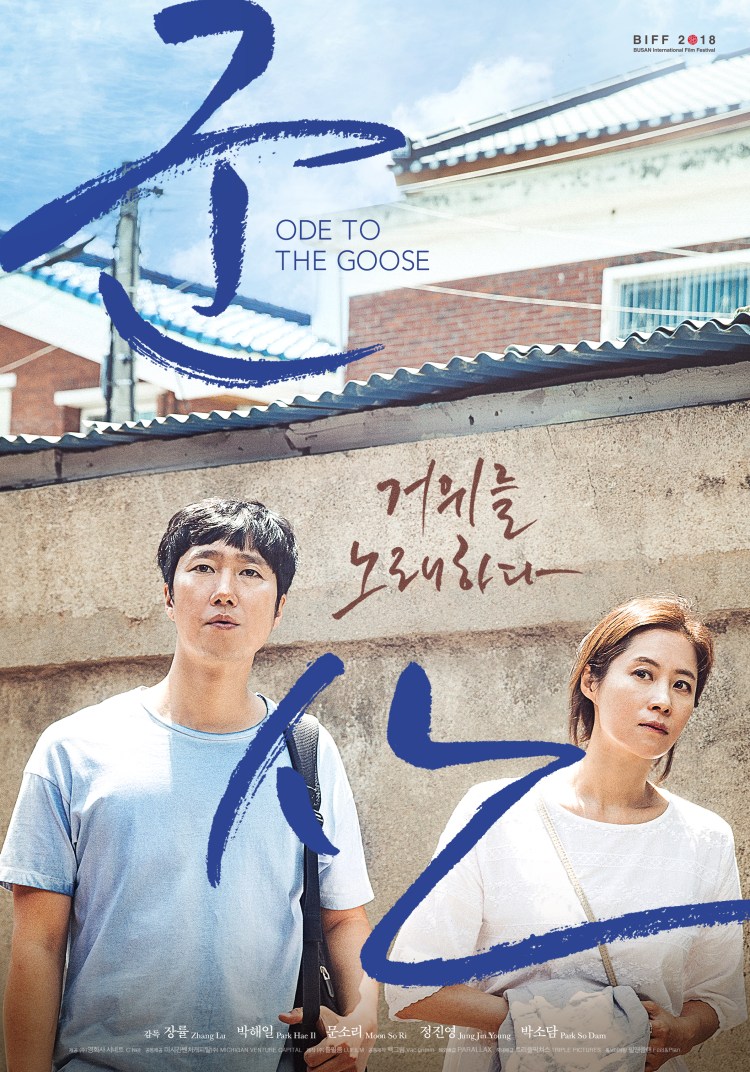
Ode to the Goose (군산: 거위를 노래하다, Zhang Lü, 2018)

15eeddc21a2c46f3992b2b459ee3ceb3Past and present flow as one in Zhang Lü’s elliptical Ode to the Goose (군산: 거위를 노래하다, Gunsan: Geowileul Nolaehada). Making a perhaps controversial point, Zhang sets the majority of his tale in the harbour town of Gunsan which echoes ‘30s Korea when the nation was still brutally oppressed by the Japanese to which the many graphic photographs and monuments on display stand testament. Yet Zhang seems to ask, returning to his favourite theme, if they’re all Koreans no matter where they were born, why are some more oppressed than others?

The film opens with the hero, struggling poet Yoon-young (Park Hae-il), standing in front of a street map, lost in his mother’s home town. He is then joined by a slightly older woman, Song-hyun (Moon So-ri), whom he has apparently asked to accompany him to Gunsan on a whim without really explaining why. Still hung over from the night before, they stop off at an odd little noodle joint run by an elegant older woman (Moon Sook) who seems oddly fascinated by their strange chemistry. Yoon-young, innocently enough, makes conversation by asking about her home town only for her to shut him down. “What home town?” she fires back, “home is where you settle”.

Later we discover she speaks fluent Japanese, cheerfully conversing with the autistic daughter of the inn owner (Park So-dam) where the couple eventually stay after being judged “lucky” enough to be allowed in. The daughter of Japanese-Korean parents apparently “returned” from Fukuoka, the girl rarely speaks to strangers and only ever in Japanese, though she seems to take a liking to Yoon-young and is keen to try and connect with him, making sure he is always well taken care of while Song-hyun has turned her attentions to the girl’s father, melancholy widower Mr. Lee (Jung Jin-young) who likes to take photographs but only ever of landscapes and not of people.

The Lees are Korean too, even if one of them only speaks Japanese and they run a Japanese-style inn in the middle of a moribund museum to colonial horror (the local shrine even has a comfort woman statue standing in the back). Meanwhile, a passerby mistakes Song-hyun for a Chinese-Korean woman she once knew and insists on speaking to her in Yanbian dialect which Song-hyun, as we later learn, is unable to understand even if there is a Chinese-Korean connection in her family history. Song-hyun muses that had her grandfather, like his brother, chosen to stay in Manchuria after the war then she’d be Chinese-Korean too, as would famed poet of the colonial era Yun Dong-ju if he hadn’t died a political prisoner in a Japanese jail in Fukuoka which is, coincidentally, where the Lees were “from”. It is all “coincidental”.

So why does Yoon-young’s “right wing nut job” (as Song-hyun calls him) father hate Chinese-Koreans so much, blaming them for all the faults of the modern nation and decrying those who left for Shanghai with the Independence Movement as traitorous communist collaborators? A whimsical prequel (or a kind of re-imagining) of the Gunsan incident sees Yoon-young walking through his own “hometown” while a man who probably is not actually Chinese-Korean himself and may just be out to claim a buck or two, holds a rally for the rights of “foreign” Koreans in order to avoid exploitative employment practices and affirm that Koreans from other parts are the same as Koreans from Korea. Are “native” Koreans perhaps oppressing “non-native” ones in the same way that they were oppressed by the Japanese? In practical terms no, obviously not – there are no essential horrors here, but there is deeply ingrained prejudice and wilful exploitation. Interestingly enough, despite his conservatism, Yoon-young’s dad had him attend Chinese language classes, if ones that were run by the Taiwanese who are obviously not “communist” but were also formerly a Japanese colony.

Meanwhile, Yoon-young’s life takes him on a curious symmetry in which everything reminds him of something else. He repeatedly asks the women he meets if they’ve met before, experiences eerily similar moments in Gunsan and at home, and continues to look for connections between himself and a world of universal poetry stretching from the classical Chinese of the film’s title to the melancholy odes of Yun Dong-ju, writing in his “native” language in defiance of colonial authority. Dualities predominate – beauty/horror, attraction/indifference, silence/language, here/there, then/now, but through it all there is commonality. Yoon-young’s failure to communicate leaves him feeling defeated and depressed, trapped in a self-imposed exile while the gregarious Song-hyun gleefully moves forward little caring of the costs. Whimsical and “ambiguous”, Zhang’s playful poetry is difficult to parse but nevertheless carries an essential warmth in its reassuring familiarities and openhearted commitment to the universality of human connections.


Ode to the Goose was screened as the latest teaser for the upcoming London Korean Film Festival. Tickets are already on sale for the next and final teaser screening, Kokdu, which will take place at Regent Street Cinema on 16th September.

Original trailer (no subtitles)

https://www.youtube.com/watch?v=z8vZ0RIJ0GU

The Moon in the Hidden Woods (숲에 숨은 달, Takahiro Umehara, 2018) [Fantasia 2019]

The Moon in the Hidden Woods posterNight is dark, but when you have the moon to light the way there is always the hope of a better tomorrow. When all hope is gone, how are you supposed go on? For a small group of villagers, the answer is to do the best they can, staving off the darkness with determination and guile. Directed by Japan’s Takahiro Umehara making his directorial debut, The Moon in the Hidden Woods (숲에 숨은 달, sup-e sum-eun dal) is a story about learning how to survive the darkness but also an oblique allegory about authoritarian corruption and the power that comes with embracing your essential identity. 

As the wise old granny tells us at the beginning, long ago the Moon watched over the villagers, protecting them from the terror of night, but then it suddenly disappeared. A terrifying monster, Muju, wrapped the night sky in red, devouring misfortunes and sending fearsome minions to plague mankind. Warriors set out to look for the Moon, but none returned. Meanwhile others learned how to profit from the new world and saw no need for a return to the past until gradually people forgot there had ever been a Moon to begin with.

One such profiteer was the evil Count Tar, who is determined to marry the Princess Navillera very much against her will. Escaping to the city, Navillera finds herself coming to the rescue of a musical trio caught up in an unfair competition to win some mystic water to use in their harvest festival, and making use of her telepathic super powers and natural musical ability at the same time. The Nova Folk Band are a small group of illegal meteor hunters from the village who are more interested in survival than they are in intrigue, but are nevertheless some of the only people still looking for the Moon. In any case, they end up taking Navillera with them as they flee, not quite believing that she is a princess and the intended bride of their tyrannical ruler.

While in the village, Navillera gets a crash course in class conflict, never having left the palace before and spent her entire life in a lavish comfort she assumed was available to all. This quickly puts her into conflict with musician Janggu who deeply resents the “spoiled” entitlement that sees her asking for extravagant luxuries like meat, fruit, and honey, while being entirely unused to farm work. She does, however, try her best even mucking in with the other villagers where she can but is obviously unable to contribute to the same degree given that she has never had to do a day’s work in all her life. Meanwhile, as Janggu points out, the gang have gone out hunting meteors full in the knowledge that it’s illegal because they need them to survive. The princess objects to their reckless lawbreaking, affirming that the kingdom will protect them with ore only for Janggu to point out an ore is worth half the year’s harvest and the only reason you’re not allowed to hunt meteors is so that the unscrupulous powers that be can sell you an alternative and thereby keep a grip on their power by keeping the poor in their place. Suddenly, Muju isn’t looking so much like a scary red monster but an eerie metaphor for late stage capitalism.

Meanwhile, the Navillera is also busy trying to escape an oppression she wasn’t even quite aware of in her attempt to reject the intentions of Tar. Through her time in the village, Navillera begins to lose heart, fearing that her cosseted life has left her powerless without skills or talents. What she discovers, however, is that she has a natural ability for dance that finds a perfect home in the cheerful village where such things are praised and becomes the key both to restoring her essential identity and defeating Muju to rediscover the Moon.

In opposition to the “nothingness” that Muju represents, Navillera draws strength from the camaraderie of the villagers as they adopt her as one of their own, urging her not to give in and marry the evil Tar but to join them in their rebellion, choosing the “path of life” as the joyous music of the villagers finally breaks the stronghold of Muju’s austerity. Finally seeing the light of a better tomorrow, the villagers look back on the past with stoical eyes, recognising that mankind’s greed gave rise to Muju and resolving to forgive those who were merely weak rather than actively evil in order to live on in the light of a new world. A perfect blend of Korean fantasy and Nausicaa-esque steampunk, The Moon in the Hidden Woods is a cheerful ode to the importance of hope and the pure joy of musical expression in a sometimes harsh existence.


The Moon in the Hidden Woods was screened as part of the 2019 Fantasia International Film Festival.

International trailer (English/korean/Japanese captions)