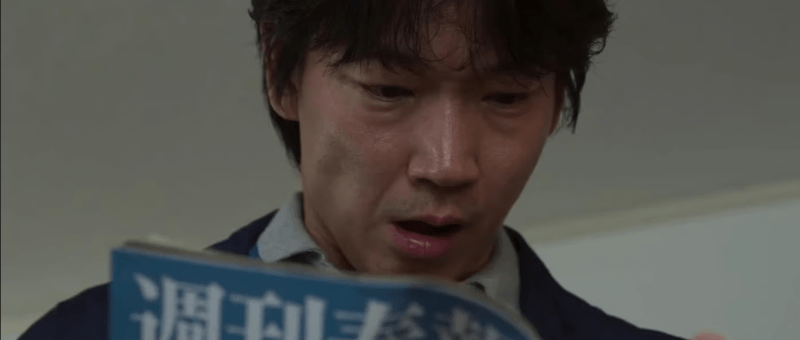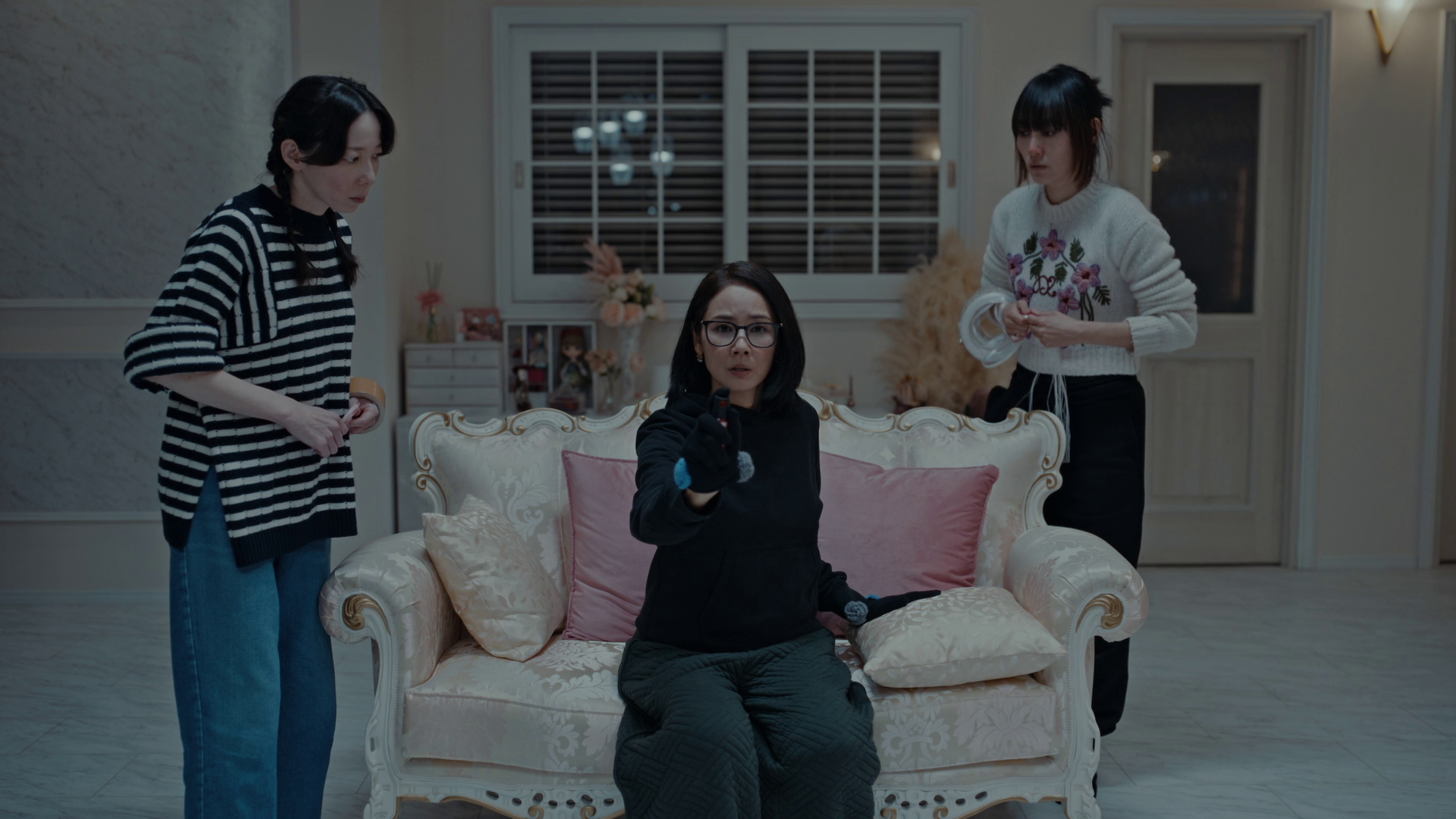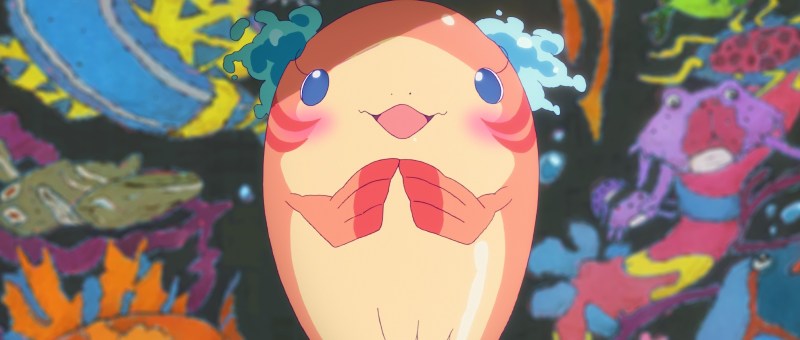

Aimitagai (アイミタガイ, Shogo Kusano, 2024)

When we say, “what goes around comes around”, we usually mean it in a bad way that someone is only getting what they deserve after behaving badly themselves. But the reverse is also true. The smallest acts of kindness people do without thinking can have quite profound effects on the world around them because, in the end, we are all connected. A bereaved father remarks that he thought novels that only had kind-hearted characters were unrealistic, but now he wants to believe that kind of world could exist after realising the impact his late daughter’s kindness had on those around her.

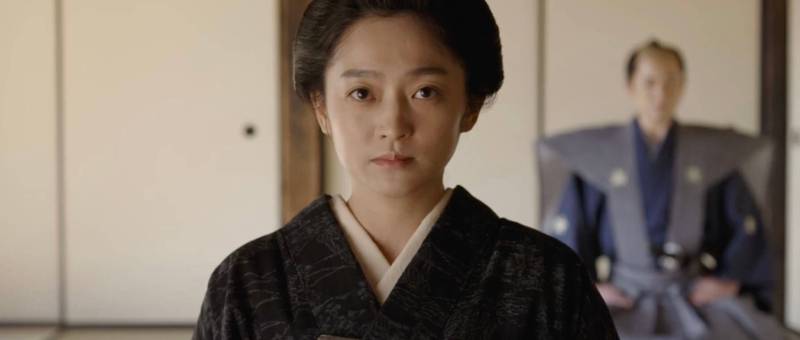
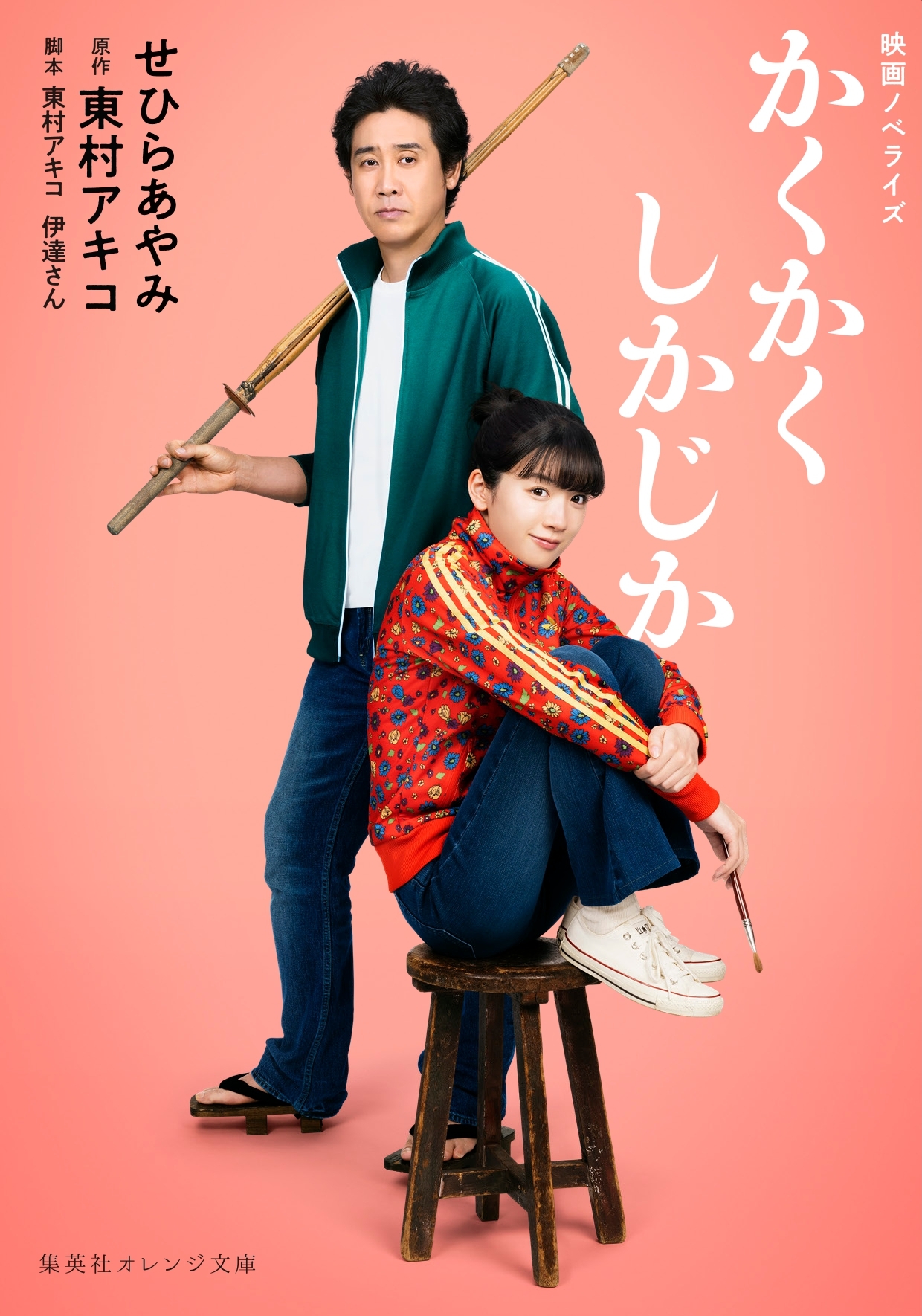
It was Kanami (Sawako Fujima) who saved Azusa (Haru Kuroki) in middle school when she was being bullied for coming from a single-parent family and the pair remained firm friends ever after until Kanami was suddenly killed in an accident while working overseas. Kanami’s loss leaves Azusa struggling to move forward with her life while mired in grief and uncertainty. Having lost her mother some years previously, she has never really dealt with the trauma of her parent’s acrimonious divorce and has a rather cynical view of marriage despite working as a wedding planner where her unmarried status sometimes causes her clients anxiety though it obviously has very little do with her ability to do her job. She’s always been clear with her long-time boyfriend Sumito (Aoi Nakamura) that marriage isn’t something she sees in her future, though he seems to want more commitment, while she repeatedly describes him as “unreliable” and is hesitant to take the next step with their relationship whether it involves getting married or not.

In that sense it’s really Azusa’s inability to surrender herself to the concept of what her grandmother (Jun Fubuki) calls “amai-tagai”, or mutual solidarity, which they experience first-hand while visiting her as another old lady nearby comes rushing in saying her house is on fire. It’s not so much reciprocity as a generalised idea of having each other’s backs, that people help each other as needed without keeping score in much the same way as Azusa was saved by Kanami and as she later realises by Komichi (Mitsuko Kusabue) whose piano-playing soothed her spirit though Komichi intended to play in secret, allowing her music to blend in with the six o’clock chimes as a daily act of atonement for having played the piano for boys who were going off to war many of whom never returned. It is then Azusa who saves Komichi in turn by telling her that she felt comforted by her music and that she does not believe that she has no right to play it simply because of the ways it was misused in the past. 

What Azusa fears is that by getting married she would essentially be cutting herself off from her paternal grandmother who, aside from her aunt (Tamae Ando) who is also Komichi’s housekeeper, is the only other family member she seems to have a meaningful connection with. Unable to let go Kanami, she keeps sending her messages little knowing that her mother is actually reading them and feeling both sorry and grateful that her daughter had such a good friend who like her is also struggling to continue on without her. She and Kanami’s father (Tomorowo Taguchi) find solace in the letters they receive from children at an orphanage where Kanami used to donate cakes and sweets after visiting there on a job. The photos she took are on display at their bathrooms, Azusa said because Kanami wanted them to be in a place where the children felt free to embrace their feelings privately without fear of embarrassment. 

The photographs, letters, and belated gifts are all examples of the ways in which what Kanami sent around is still going around and will continue to do so long after she herself is gone. Through realising the reality of “aimi-tagai”, Azusa learns that the world can also be a kind place, Sumito might be more “reliable” than she thought, and it might not be such a bad idea to trust people after all. Based on the novel by Tei Chujo, the film’s interwoven threads of serendipitous connections and the unexpected results of momentary acts of kindness prove oddly life-affirming if only in the ways in which each realise that Kanami is always with them even if physically absent.


Aimitagai screened as part of this year’s Toronto Japanese Film Festival.

Trailer (no subtitles)
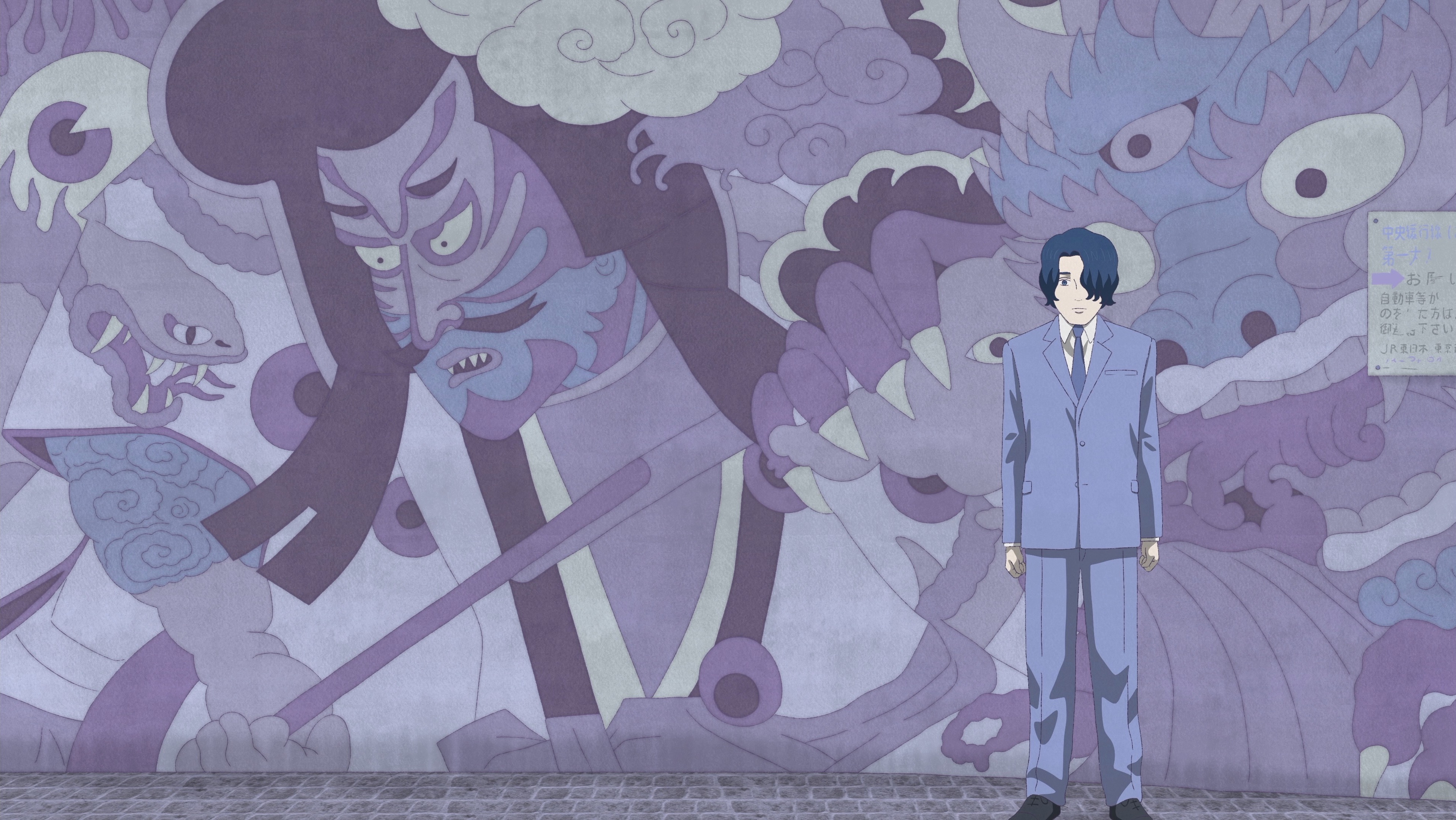
Nine-Ring Golden Dagger (挡马夺刀, Feng Xiaojun, 2024)

The daughters of General Yang venture into Liao territory in search of their father’s famed “nine-ring nation stabilising sword” in Feng Xiaojun’s wuxia adventure, Nine-Ring Golden Dagger (挡马夺刀, dǎng. mǎ Set in the middle of the Song Dynasty, the film draws inspiration from the western in its dusty frontier town setting if also clearly from King Hu’s Dragon Inn in the design of its central staging post where a series of action set pieces take place.

Emperor Taizong has expelled the Khitan in the north and is intent on reclaiming the sixteen prefectures of Yan and Yun for the Han people. General Yang (Wu Yue) leads his men against the invading Liao while the Middle Army do nothing and wields his nine-ring nation stabilising golden sword but is cut down by Liao general Liu and his sword is captured as loot. Yangying, (Liu Shinlei) Yang’s ninth daughter, cannot stand the injustice and is determined to march into Liao and get it back. Her sister, Yanqi (Zhang Xintong), tries to stop her but then relents and decides to go with her instead. 

The sword is in the home of the South Prime Minister of Liao, Zhang Hua (Tan Kai), who is Han and resented by some of the Liao warriors for being a token hire designed to appeal to the Han population who they fear are taking over now they’ve joined the Liao. Though Dowager Empress Xiao is minded to make peace, General Liu and Zhang would rather the war continue because it facilities their advancement amid an otherwise rigidly hierarchical social system.

One expression of this is in hilarious comic relief character Xiao Pusage (You Xianchao) who has a long and pointless intro he’s fond of reciting that explains he’s the Dowager Empress’ nephew. Jiao Guangpu (Song Tianshuo), owner of the staging post, was thinking about killing him but decides to let him go instead because they only kill evildoers and Pusage actually seems quite nice and enjoys doing good things like helping the poor. Jiao is also a former Song soldier trapped behind enemy lines without the resources to go home but dreaming of reclaiming Yang’s sword and taking it back with him. Nevertheless, he originally distrusts the Yang daughters believing them to be Liao soldiers and therefore his enemies. He too has a witty intro song in which he gives away his origins only no one seems to be paying attention. 

But in some ways, Jiao’s desire to reclaim the sword is more sentimental than that of the daughters even though part of the reason why they want it is to avenge the deaths of their father and brothers. Even so, their main mission is taking it back to stabilise the nation and symbolically end the war with Liao. Jiao, by contrast, wants it to fulfil an obligation he feels to General Yang who fought bravely in the film’s opening sequence but was executed by a cowardly arrow from Liu. After a botched attempt at assassination and an intense fight through the inn, the trio form an uneasy alliance and agree to travel back to Song together only to be continually frustrated by Liao forces who eventually have them surrounded at the staging post.

While the design may echo Dragon Inn, Feng uses the techniques of Peking Opera to stage the battle between Yangqi and Jiao while otherwise echoing the western through the newspaper-like onscreen text and dusty frontier sensibility as the Yang sisters make their way back to the border with their father’s sword in hand. Through somewhat epic in scope despite its compact runtime, the film is essentially structured around a series of action sequences from the daring raid to retrieve the sword with its various booby traps to a chase through a cornfield and the final confrontation at the inn. Each is impressively choreographed and expertly performed to make full use of the well-designed sets and meagre budget. The lean, mean feel and linear progression also add to the retro sensibility while there’s something undeniably satisfying about seeing these two rather slight women run rings around the Liao forces thanks to the training they received from their father as they become the inheritors of his legacy and saviours of Song by retrieving the sword and ushering in a new era of peace and coexistence.


Nine-Ring Golden Dagger is released Digitally in the US on July 1st courtesy of Well Go USA.

Trailer (English subtitles)

Tape (錄影歹, Bizhan M. Tong, 2024)

Up-and-coming filmmaker Jon (Kenny Kwan) says he wants to make real films that address social issues within Hong Kong, but his old high school buddy, Wing (Adam Pak), calls him pretentious, while the two continue to lay into each other about their respective life choices, But as it turns out, that isn’t why they’re here. Wing has laid a trap for Jon and is hoping he can force him into telling him once and for all what really happened on the night of their high school graduation 15 years previously so he can capture it on the various cameras he has hidden around the apartment.

Of course, what we have here is an ironic comment on the notion of consent as Jon has no idea he is being filmed and would not have said what he said if he did. Still, the question remains what the impact of the tape, Jon’s own words condemning him, has on his later actions. Would he ever really have reckoned with himself if his confession remained private, or would he have gone on forgetting it, justifying himself, claiming that it wasn’t “rape” just “a bit rough” and everyone does things they’re not proud when they’re young and drunk?

On the other hand, what are Wing’s intentions? Does he really have the right to force the issue or is he merely poking his finger into someone else’s wound and potentially hurting them in the process. Admittedly an unreliable narrator, Wing tells us that his girlfriend Winky broke up with him because of his “violent tendencies,” yet it’s Jon, the respectable filmmaker in expensive shoes, who starts throwing punches and tries to strangle Wing while demanding that he give him the video in which he admits that what he did to Wing’s girlfriend Amy (Selena Lee) amounts to rape. Wing suggests that he’s sick of the hypocrisy and outraged on Amy’s behalf, but his actions are motivated more by jealousy and resentment that Jon slept with his former girlfriend than concern for her. He convinces himself that it must have been rape because otherwise he can’t understand why Amy would have slept with Jon when she refused to sleep with him the entire time they were dating. 

To that extent, Amy becomes a kind of wager between the men. Wing invites her over to engineer a confrontation that is intended more as a provocation of Jon than it is a defence of his former girlfriend. Amy, however, immediately tries to turn the tables by rejecting the characterisation of events put forward by each of the men. Now a prosecutor who unlike Jon and Wing has remained in Hong Kong, Amy forensically questions Jon’s testimony and forces him to admit that he believes what happened between them was rape only for her to refuse his apology because she doesn’t agree. She refuses to be his victim, while he continues to dominate her by disregarding what she says and insisting that she’s in denial and “not in the right place” to hear his apology. 

Later Amy says that back then Jon had his hand over her mouth, and it’s true enough that the men each attempt to prevent her speaking and are unwilling to accept what she has to say. As she tells them, an apology is about the person who issues it’s desire for permission to let themselves off the hook. To her it’s meaningless, while it’s almost certain that Jon would never have even given it if it weren’t for the tape which could ruin his career and his marriage. “You want the last word, but it’s not yours to have,” she pointedly tells him while he struggles to accept the lack of control he has over this situation and indeed over Amy. She tells him that she was in love with him at the time which gave him power over her which he misused when he had no real feelings for her and may have just been trying to get back at Wing, just as Wing’s weaponising of whatever happened that day is about his relationship with Jon rather than her pain or trauma. Though he tries to weasel his way out of it and is confused by the realisation, Wing is also bent on asserting patriarchal control over Amy in feeling entitled to her virginity and annoyed that Jon “took” it, even as Amy points out that in any case they were no longer dating at the time and it’s really none of his business who she sleeps with because it’s entirely her own decision. 

But then again, she asks him if he’d marry a “rape victim”, and he doesn’t have an answer for her hinting at the societal stigmas in play along with her own desire not to see herself as one. Jon doesn’t want to see himself as a rapist either, continuing to insist that he’s a good person and, in any case, not the same as he was 15 years ago but now much more aware of women’s rights and position in society. Wing may just not want to see himself as a loser, aware that he’s living a life that looks unsuccessful as a lifeguard in Thailand making ends meet by peddling drugs to teenagers and trying to reclaim his masculinity by proving that Jon cheated him by assaulting Amy. Yet in updating Richard Linklater’s 2001 original, Tong really makes this about two tapes, the one from 15 years previously and the one Wing shoots in the present day which is immediately synced to the cloud. In revisiting the past, we gain a new perspective as the young Amy is given the opportunity to speak and unwittingly remarks on how she thinks of the past as something that can never really be destroyed but must dragged along in a box behind you that you occasionally peek into. Nevertheless, she may have succeeded in blowing it wide open in reclaiming her agency from the continually self-involved Jon and Wing.


Tape screened as part of this year’s Raindance Film Festival.

Trailer

Possession Street (邪Mall, Jack Lai, 2024)

Possession Street is a real street in Hong Kong, but its name doesn’t hint at the supernatural. Rather, it’s located on the former site of Possession Point where the British took possession of Hong Kong in 1841. Nevertheless, there is definitely some body snatching going on in Jack Lai’s claustrophobic zombie-esque horror set in the decidedly purgatorial space of a shopping centre on the brink of demolition. 

Indeed, it’s the vendors themselves that are in someways zombies. Representatives of a generation that is tired of fighting and barely clinging on to what they’ve got, they run their moribund stores stubbornly refusing to move with the times almost as if they were haunting the place. A former stuntman, Sam (Philip Keung Hiu-Man) runs an unprofitable video shop that plays classic Hong Kong wuxia movies of the kind he used to be in. Sam’s wife left him taking their daughter Yan with her when the shop first ran into financial difficulty and Sam refused to do much about it other than swear it would figure itself out in the end.

Which is one way to say young Yan (Candy Wong Ka-Ching) escaped the mall, though she continues to idolise her father and has developed a love of film precisely because of what he taught her. She tells him that she’s dropping out of uni to become a filmmaker because she wants to keep Hong Kong cinema alive in what seems to be a meta comment on the state of the industry in which Hong Kong cinema itself has become a kind of zombie, like the vendors simply treading water while trapped in a constant state of decline in its conflicted necessity to please the Mainland censors. 

In this way, the claustrophobic space of the post-war shopping centre stands in for Hong Kong itself. A place that’s lost its lustre and fallen behind the times, the mall has fallen into a state of disrepair. Many of the stores have already closed and there’s not much footfall. The mall has a serious rat problem, though really that’s about to be the least of its worries. Even so, it’s the rodents who are partially responsible for chewing on the power cables and requiring a trip to the super secret meter room where one of the vendors accidentally damages the seal keeping a not all that ancient evil from bubbling to the surface. 

As the ghost later explains, like the vendors they are those who have been left behind by the new Hong Kong and cannot progress into its future. The mall was built on top of an air raid shelter which was sealed shut by an American bomb leaving all those inside to turn to depraved acts of survival such as cannibalism along with violent outrages like rape before dying horribly inside. Their resentment has awakened another ancient evil that wants to kill everyone in the world, beginning with everyone in the mall which is locked shut until the following morning. Clearly influenced by the the Last of Us with its fungal zombies who spread the curse by coughing up a visible miasma and are covered in pustular growths, the infected echo a particular face of evil such as the fat cat capitalist constant running down his daughter who is the only one who tries to help him. He remarks that he’s glad her brother never showed up, because now the family name will continue. 

Meanwhile, Yan has been a part of this community since she was a child and fond attachments to many of the vendors including the Taoist priest whom she once-called Uncle Con-Man. Master Mak (Alan Yeung Wai-Leun) was entrusted with a mission by his former master who knew about the air raid shelter and was the guardian standing it over it, making the sure the evil didn’t leak out, but Mak has lost the faith and with the imminent demise of the shopping centre come to the conclusion that it’s time to call it quits. There is then something in the fact that this Taoist philosophy actually works and proves the only real way of overcoming the supernatural threat as if calling forth the spirit of Hong Kong. On the other hand, it’s really Yan who is trapped in this place and seeking escape in permission to move on but also to continue fighting for the Hong Kong that’s disappearing in keeping its cinema alive. When Sam tells her “ga you,” he echoes the words of the protestors while ironically telling her not to give up even though life rarely turns out the way you hoped. In effect, she liberates them all including herself from a self-imposed limbo of resigned stagnation while walking into the light of a new day determined to fight for the kind of future she wants for herself rather than what anyone else might have wanted for her.


Possession Street screened as part of this year’s Focus Hong Kong.

Trailer

The Invisible Half (インビジブルハーフ, Masaki Nishiyama, 2025)

Most people don’t mean to, but in thinking they’re being nice all they do is make someone feel bad. Like they don’t belong, or there’s something wrong with them. Since returning to Japan from the UK after her parents’ divorce, Elena (Lisa Siera) can’t help thinking everyone’s staring at her. They call her the “gaijin” girl, a derogatory term for someone who is not considered to be Japanese, but Elena isn’t a “foreigner”, not that it matters. On her first day at her new school after leaving the last one due to relentless bullying, the teacher asks her what kind of mixed-ethnicity she is and then asks her to tell her all about England, though she’s been living in Japan for over 10 years and can’t really remember it. Nor can she remember much English, or perhaps simply doesn’t want to talk about it, though there’s no reason why she should anyway. 

Maybe not bringing it up would be worse, but the teacher’s ham-fisted attempts at inclusion only leave Elena feeling othered. These are just a few of the microaggressions she experiences in her daily life and even another girl who tries to make friends with her, Akari (Miyu Okuno), makes a few insensitive remarks like how she’d like to have “a gaijin’s face,” and that it’s not fair because she is Japanese. She also goes straight to using Elena’s first name, which could just be friendliness or possibility circumventing the usual rules of Japanese politeness because they don’t really apply to non-Japanese people implying Akari may not think of her as one. Elena says she just wants “a normal Japanese name”, so her new friend starts calling her “Rena” which Elena seems to like because it feels like acceptance, but is it, really?

In many ways, it’s the Elena/Rena dichotomy that’s at the heart of Masaki Nishiyama’s incredibly accomplished debut as she struggles to accept the “invisible” half of herself that is nevertheless what she thinks everyone is always staring at to the extent that they don’t even really see her. There’s another girl in her class, Ito (Runa Hirasawa), who appears to be a figure of fun who everyone, including Elena, avoids and considers “weird”. It’s after the class bullies take Ito’s phone and put it in Elena’s bag to kill two birds with one stone that Elena begins to feel especially haunted. A monster with a bandaged face she can only see when she’s holding her phone begins stalking her, leaving her in a permanent state of agitation.

The phone is otherwise a source of anxiety as it’s many through group chats, text messages, and social media that bullying takes place. Elena firmly believes that the monster is real, though in other ways it reflects her own sense of internal discomfort in being unable to accept what she perceives as two sides of herself as an integrated whole. Her not altogether sympathetic mother can’t begin to imagine what she’s going through, and there’s another part of her that wonders if she should have stayed with her father, though the situation may not have been much different in the UK. Her well-meaning teacher tells her she should learn to trust adults more, and asks why Elena is keeping things from her in a way that makes it sound like a personal slight or in someway a malicious act on Elena’s part. Elena replies it’s because she also Japanese, which is to say not someone Elena currently feels she can trust while also implying that Elena also does not quite consider herself to be “Japanese”.

The lumbering, bandaged monster reflects the way in which she is pursued by her own uncertain identity while craving acceptance from others but at the same time afraid to accept it. She doubts Akari’s sincerity and worries that her overtures of friendship are a prelude to a long-form pattern of bullying, but it’s finally Akari who is prepared to help her face her monster in accepting that it actually exists. Faced with another bandaged face, Elena comes to accept it as a friend along with embracing her whole self including her full name. Filled with a genuine sense of unease, Nishiyama’s eerie debut is both an exploration of societal prejudice and a coming-of-age ghost story in which a young woman learns to make her own place to belong regardless of the gaze of others.


The Invisible Half screened as part of this year’s Raindance Film Festival.

Trailer (English subtitles)

Love Song from Hiroshima (惑星ラブソング, Hideyuki Tokigawa, 2024)

Just because we are far apart, it doesn’t mean we aren’t important to each other, according to an interplanetary messenger hoping to avoid the Earth’s apparently imminent destruction in Hideyuki Tokigawa’s gentle ode for world peace, Love Song From Hiroshima (惑星ラブソング, Wakusei Love Song). Twenty-something Mocchi (Ryosuke Sota) says he’s sick of hearing about the legacy of the atomic bomb, but is himself stuck in the past just as the city is frozen in time.

According to his friend Ayaka (Shiori Akita) who is thinking about studying abroad in the US, Mocchi gives up on things too easily and can’t decide on his path in life. Of course, he doesn’t really want her to go to America because he’s in love with her and too shy to say, but agrees to help her with a social media campaign to get over 100,000 likes and impress her boss so he’ll fund her travel. That’s how they end up meeting “John” (Chase Ziegler), a very weird “American” tourist whom they decide to escort around Hiroshima showing him typically touristic things like getting okonomiyaki which they then post on her social media channels. 

Meanwhile, a shady American agency is on a UFO alert in Japan which links back to a little boy’s fascination with aliens even though his friends keep making fun of him because of it despite spreading their own kinds of urban legends. Yuya is obsessed with the idea of extraterrestrial life while also uncomfortable with the scarred city around him. At his school there are a pair of burnt but surviving trees that have become symbols of resilience and survival, though Yuya hates going to the Peace Park and talking about the bomb because it’s scary. According to his mother, his great-grandmother never liked to talk about the war, though it seems she has told the man looking after her at the care home about her carefree childhood of roller skating in the car-free streets. In a brief moment of lucidity, she turns to Yuya and asks him if his aliens can travel in time, why can’t they go back and stop the bomb from falling. 

The irony is that Mocchi’s sick of everyone talking about the bomb all the time, but it’s still a painful subject for many including the taxi driver who drives Yuya and his mother home. As soon as she starts talking about what she does know about her grandmother in the war, she can feel him looking back at her in the rearview mirror and changes the subject, promising to tell Yuya the rest later when they’re on their own. In his dreams, Yuya ends up chasing after his great-grandmother as a school girl as she tells him that there used to be sweet shops, a barber’s, and a cinema where the Peace Park is now. 

The aliens say that the bomb twisted the fabric of time and space, creating a barrier which they cannot move beyond, while there is another fixed point in the future with seemingly nothing beyond it. We cannot change the past, the aliens admit, but we can change the future. The film’s Japanese title is more like “interplanetary love song”, and it turns out that a universe without the Earth in it is like the world without George Bailey. All the planets that the Earth would have helped will also be lost along with countless other possibilities throughout the universe. 

Mocchi still thinks it’s pointless to “pray” for peace, and that as all anyone in Hiroshima ever seems to talk about is the bomb, he doesn’t see how raising awareness could make much difference. Nevertheless, even he can’t help being moved by the aliens’ opening manoeuvre which cures his cynicism by fulfilling the childhood dream he’d more or less forgotten. Mocchi and Ayaka argue about the realities of nuclear deterrents and geopolitical manoeuvring even if they each agree on the horror of war. Ayaka says she loves her city because it represents peace,  and it is indeed a kind of love song from Hiroshima that they send around the world as a plea for a world without war. Telling Mochi to come up with ways to enact world peace on his own might seem a little unfair, but then it’s true enough it’s something we all have to think about to save the future from the mistakes of the past.


Love Song from Hiroshima screens 24th June as part of this year’s Raindance Film Festival.

Original trailer (English subtitles)

90 Years Old – So What? (九十歳。何がめでたい, Tetsu Maeda, 2024)

Everyone keeps congratulating Aiko Sato (Mitsuko Kusabue) on reaching 90, but she can’t see what’s so special about it. Having retired from writing after publishing her last novel at 88, she’s really feeling her age and has little desire to anything but sit around waiting to die. That is, until she’s badgered into picking up her pen by a down on his luck, “dinosaur” editor certain that her words of wisdom will strike a chord with the young people of today.

Marking the 90th birthday of its leading lady Mitsuko Kusabue and directed by comedy master Tetsu Maeda, the film takes its name from a collection of essays published under the title “90 Years Old, So What?” which largely deal with what it’s like to be old in the contemporary society along with the way things have changed or not in Japan over the last 90 years. It does not, however, shy away from the physical toll of ageing despite Kusabue’s sprightliness or the undimmed acuity of Aiko whose only barrier to writing is that she fears she’s run out of things to say and the energy to write them. During her retirement, she remarks on the fact that her legs and back hurt while she also has a heart condition and everything just feels like too much bother. Her daughter Kyoko (Miki Maya), who lives with her along with her twenty-something daughter Momoko (Sawako Fujima), asks her why she doesn’t go out to meet a friend, but as Aiko says, most of her friends have already passed on or like her don’t really have the energy to leave the house. 

In many ways, her age isolates her as she finds herself slightly at odds with the contemporary society. She turns the television up louder because she finds it difficult to understand what younger people are saying and doesn’t get why they stare at their phones all the time. Though she manages most things for herself, she has to call repair people, which costs money, if something breaks down while her daughter’s not around to fix it, even if it’s something as simple as a paper jam in a fax machine or pushing the off button on the TV too hard so it won’t turn back on again. Nevertheless, so intent is she on “enjoying” her retirement that she repeatedly turns down the entreaties of a young man from her publisher’s who wants her to write a column and always turns up with fancy sweets which are, as she says, well-considered gifts, but also a little soulless and superficial being driven by fashionable trends of which Aiko knows nothing and by which she is not really impressed.

There is something quite interesting about the contrast between herself and fifty-something Yoshikawa (Toshiaki Karasawa) who is also a man behind the times and a relic of the patriarchal culture she railed against in her writing and rejected in her personal life, divorcing two husbands and going on to raise her daughter alone. In the opening scenes, she reads an entry from an advice column about a woman who’s sick of her husband of 20 years because he’s a chauvinist who dumps all of the domestic responsibilities onto her while looking down on her because of it. Aiko tuts and contradicts the advice of the columnist, remarking that the answer is simple. She should just tell him to his face that she hates him and then leave. Nevertheless, the fact remains that not all that much has changed since she was young. The husband’s behaviour is considered “normal”, while the woman’s desire to be treated with respect or leave her marriage is not. Yoshikawa is effectively demoted because he has no idea that his treatment of a female employee amounts to workplace bullying and sexual harassment even if he didn’t intend that way because he’s trapped within this old-fashioned patriarchal ideal and is unable to see that his behaviour is not acceptable nor that he’s been taking his family for granted while considering only his own needs and positioning himself as the provider. 

Yet it’s 90-year-old Aiko rather than his humiliating demotion or the failure of his marriage who begins to show him the error of his ways by accepting him into her own family like a lonely stray. Aiko’s essays don’t really say that everything was better in the past, even if she’s confused by modern people who are annoyed by the cheerful sounds of children playing and a city alive with life because she remembers how everything went quiet during the war and how depressing that could be. But she does sometimes think that progress has gone far enough and things were better when people had more time for patience with each other. That said, patience is one of the things Aiko has no time for, advising Yoshikawa to charge forward like a wild boar because one of the benefits of age is that you just don’t care anymore what anyone thinks so get ready to annoy people or exasperate them but carry on living life to the full. Ironically, that might be a gift that he gave her by convincing her to write again which returned purpose to her life and gave her a reason to engage again with the world around her lifting her depression and making her feel as if she still mattered. The real Aiko turned 100 in 2023 and carried on writing, while 90-year-old Kusakabe is herself undergoing something of a career resurgence in recent years proving that even if you’re 90 years old, so what? There’s still a lot of life left to be lived and you might as well carry on living it doing what you love for as long as you can.


90 Years Old – So What? screens 21st June as part of this year’s Toronto Japanese Film Festival.

Trailer (English subtitles)

Soul Reaper (Malam Pencabut Nyawa, AKA Respati, Sidharta Tata, 2024)

A young man finds himself haunted by the spectres of his trauma, but also, as it turns out, by a not so ancient evil in Sidharta Tata’s eerie horror film Soul Reaper (Malam Pencabut Nyawa AKA Respati). Plagued alternately by nightmares and insomnia, he discovers an ability to enter a hidden world of dreams while simultaneously noticing a connection with an ongoing spate of mysterious deaths along with that to a traditional village and its ancient beliefs. 

Suffering with a kind of survivor’s guilt, Respati (Devano Danendra) blames himself for the death of his parents and is haunted by visions of their vengeful ghosts. A new girl at his school, Wulan (Keisya Levronka), is ostracised by the others who hear that the reason she left her last school was that she has a tendency to get possessed by ghosts which upset the other students. Like Respati, she is also haunted by bad dreams and desperately misses an absent parent, in her case her mother. The fact that so many seem to be connected by violent robbery hints at a generalised anxiety within the wider community that is only exacerbated by the series of mysterious deaths hitting the news. 

What Respati eventually realises is that he’s witnessing real deaths in his dreams though taking place in the dream realm. Others who’ve suffered loss and trauma such as a man who recently lost his young daughter are led away towards a bright light where they think they see their loved ones but are actually consumed by a dark force. In the midst of his own grief, Respati is forced to face a secondary trauma that relates to his grandfather’s hometown where the villagers believe in the power of an ancient god. A powerful witch, Sikma, convinced herself that she was the inheritor of the witch’s power and in her zeal to learn more about the dream world began sacrificing her patients. The other villagers shunned her until she too ended up dying a mysterious death after which her body disappeared.

Sikma maybe feeding on grief, but she also had a child who viewed her as a mother and is now bereft in the same way as Respati and Wulan are having lost their parents. Respati refuses to talk about his trauma with the doctor his grandfather takes him to about his insomnia but discovers a new way to face it through the dream realm as if by overcoming his nightmares he could learn to sleep peacefully again while simultaneously ending the series of mysterious deaths by taking care of Sikma. In the dream realm, he is able to manifest his own desires by virtue of his lineage that makes him a descendent of the mountain goddess and imbued with her power which means that he is able to make peace with the past by envisioning a different outcome for a painful event which, though it cannot change what really happened, allows him to let go of his guilt while realising what’s really important. As a young man his grandfather brought from the country advises him, you never really know how much time you have left, so it’s important to cherish your loved ones while there’s still time.

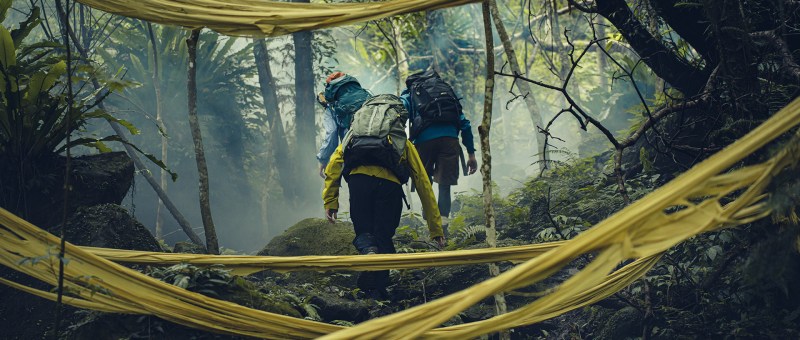
The irony is that everyone wants the same thing and has been hurt in the same way, though they have different ways of dealing with their grief in their inability to let go of the past. The dream world appears as an eerie forest in which it is the grieving who are called towards the light as if like Respati they blame themselves for not going with those they loved, though it also echoes an ancient horror in the natural world. The grieving are pinned in the mortal realm by tree roots which seem to encircle and constrain them until they break free, called towards the light by a comforting lullaby which offers them one way to escape their grief, whereas Respati can only leave by violent means. Ejecting oneself from the dream realm involves physical pain rather than simply the emotional, but allows him to literally “wake up” from the inertia of his grief to find a new purpose in life and overcome his trauma. Bringing traditional folk horror with its witches and ancient gods together with a more overtly modern tale of psychological haunting lends an additional edge to Respati’s quest to solve the mysterious deaths but even if his own trauma has been exorcised it seems this particular strand of evil may not quite be done with him yet.


Soul Reaper is released Digitally in the US 17th June courtesy of Well Go USA

Trailer (English subtitles)

Ravens (レイブンズ, Mark Gill, 2024)

“All I see are self portraits”, the hero’s by then former wife cuttingly remarks on visiting his comeback exhibition in the company of her new husband, seemingly a much more conventional businessman. Japanese films about photographers are similar to those other countries make about writers in that their protagonists are often very flawed people, tortured artists consumed by their own trauma and often turning to drink at the expense of their personal relationships. Tadanobo Asano has in fact played similar roles a few times before. In Yoichi Higashi’s Wandering Home, he played real life war correspondent Yasuyuki Tsukahara who passed away from kidney cancer at the age of 42 after years of alcohol dependency, while in 1999’s One Step on a Mine, It’s All Over he played Taizo Ichinose whose obsession with getting a photograph of Angkor Wat eventually results in his death.

Masahisa Fukase was one of the key photographers of the post-war era and also an incredibly troubled soul. The conceit of Mark Gill’s Ravens (レイブンズ) is that Fukase is accompanied by a giant, anthropomorphised, English-speaking raven (José Luis Ferrer) who gives voice to his darkest thoughts and impulses. A magazine profile describes Fuksase’s work as having dark and occult influences, which the film attributes to the fact that his incredibly conservative father (Kanji Furutachi) used to lock him inside a more literal dark room as a punishment when he was a child. 

Like many of his contemporaries, Fukase’s photographs often express the widening gap between the traditional and the modern in the changing post-war society and the film also uses many of his motifs such as his family photographs to express the changing dynamics between them. Fukase himself is caught in the nexus of this continuing battle in inheriting the legacy of his father’s war trauma. A heavy drinking, violent man, Sukezo insists that as the oldest son Fukase must take over their family photography studio and that taking photogaps is a commercial activity not an artististic one. Fukase’s wife and muse Yoko (Kumi Takiuchi) often says the same thing, undercutting Fukase’s sense of purpose in his work even while he also denies Yoko’s role as a collaborator rather than simply as a subject. “Any woman will do,” the Raven tells him though that turns out not quite to be the case. 

Yoko complains that that Fukase never really looks at her but sees the world abstractedly through the lens of his camera which is really just another way of avoiding reality. She thinks she begins to understand him after belatedly meeting Fukase’s family years after their marriage and witnessing one of his father’s drunken rages first-hand, but it only seems to push them further apart. Despite his claims of artistry, Fukase quickly becomes jealous of the attention Yoko attracts as the star of his photographs as if she has eclipsed him, the artist, and can no longer be controlled by his camera. He clearly wanted the fame and acclaim through his success only seems to deepen his self-loathing and desire for death. His father had told that a man who failed to achieve success by 40 should kill himself, though when Fukase does eventually attempt to take his own life he does so by hanging, hoping that his assistant will photograph it, rather than by using the sword his father shoved at him.

Though Fukase describes Yoko as a very modern woman she too is caught by this cycle in that her mother tells her it’s a wife’s duty to forgive her husband even after he wounds with a knife during a drug-fuelled psychotic episode. Despite separating from him, Yoko continues to visit Fukase in the hospital where he remains after suffering a traumatic brain injury until his eventual death in 2012. In its way, it’s a frustrated love story in which the relationship between them is disrupted by the intrusion of outdated social codes, generational trauma, and Fukase’s own demons which appear to have been with him since childhood. The conviction that Yoko comes to is that all his pictures are actually reflections of himself and that he is incapable of seeing the world through any other lens even as he tells her that the sky is just the sky and ravens are just ravens, nothing means anything. He tells his assistant that he thought he was in search of death the whole time, but maybe it was death that was looking for him. Dreamlike and ethereal, Gill weaves back and fore throughout Fukase’s life from his conservative upbringing to the heady 1970s and gradual comedown of his later years before finally discovering a melancholy sense of serenity as Fukase, finally, dares to gaze back into the lens.


Ravens screens 20th June as part of this year’s Toronto Japanese Film Festival.

International trailer (dialogue free)

Last Mile (ラストマイル, Ayuko Tsukahara, 2024)

“Customer-centric”, what does that actually mean? The Amazon-like US-based conglomerate at the centre of Ayako Tsukahara’s Last Mile (ラストマイル) prides itself on its customer-centric philosophy, but at the end of the day, what that really means is that they give us what we tell them we want through our purchasing patterns and browsing history. That would be that we want everything as cheap and fast as it’s possible to be and don’t really think about the wider implications or what a world of infinite convenience might be doing to the society around us.

At least from the perspective of corporate lackey Elena (Hikari Mitsushima), recently returned from the US, the reason Daily Fast pressures its delivery staff to lower costs isn’t to maximise their profits, it’s so they can go on providing lower prices to customers which to her is all part of their customer-centric approach. This doesn’t really gel with her off-the-cuff remark about the warehouse not having a safety net to protect the workers from accidental falls or, she ominously adds, prevent people from jumping. That she brought it up at all might signal that she knows something’s not quite with the way this company treats its employees, though as it turns out she may have something else on her mind. In any case, when she arrives on her very first day the entrance to the complex is little better than a cattle market with a man on loud speaker barking instructions about were to go to the 800 members of staff some of whom have only been brought in to bulk up for the upcoming Black Friday sale. 

Which is all to say, it wouldn’t be all that surprising if the fact that some of their parcels have been exploding on delivery were a concerted attack against their ultra-capitalist philosophy, though actively delivering bombs to people who didn’t order them is not very “customer-centric” in any case. Obviously, Elena isn’t keen on this either but is also convinced that it can’t really be their fault because they have strict and dehumanising security measures in place preventing the workers from bringing in anything inessential. Even after she works out that the bomber has actually warned them that there are 12 bombs out there, she wilfully withholds the evidence from law enforcement to avoid damaging their share prices while trying to minimise business interruption rather than do anything sensible like stop delivering people parcels until they’ve figured out what’s going on with the bombs, though the real mystery is why the police don’t really seem to have the power to do that and, in fact, end up working with the warehouse to check each parcel individually to keep the conveyor belts going.

From the aerial view, the city itself resembles the warehouse with the roads taking the place of the belts as delivery vans shuttle along them. Seventy-something delivery driver subcontractor Sano (Shohei Hino) once had a friend who used to say that they were the ones who kept the country running. Yacchan became the number one driver largely because he took 10 minutes to eat his lunch and worked every hour god sent for dwindling pay with the implication that his gruelling schedule contributed to his early death. Sano’s son Wataru (Shôhei Uno) has just started working with him on the van after being laid off from an electronics job. They made quality washing machines that were designed to be efficient and to last, but of course they couldn’t compete with cheaper brands so they went bust.

Elena berates herself for being “too Japanese” for the American company which is to say that she takes pride in her work. That’s not to say that everything about the American business culture is bad as she encourages her assistant, Ko (Hikari Mitsushima), to call her Elena and to feel free to speak his mind rather than equivocate to avoid causing offence. But despite their “customer-centric” approach, it’s clear that the company puts profits above all else and treats its workers, who are not actually employees, poorly, without concern for their wellbeing. Yagi (Sadao Abe), the boss of logistics first Sheep Express which is the prime courier for Daily Fast, laments that he’d love to hire more drivers to help them through this crisis but he can’t because they’re always squeezing his budget and no one will work for their terrible rates except for those who, like Sheep Express itself, have no other options and will have put up with it because they’re dependent on Daily Fast. And because they’re dependent on Daily Fast, it means we all have to keep buying stuff we don’t really want or need just keep the belts going because we’re terrified about what will happen if they stop.

There is a direct comparison between Wataru’s well-made washing machines and the cheap and fast consumerist model that’s gradually taken over that suggests things like craftsmanship and integrity have gone out the window in a world where no one really bothers to go the last mile anymore, though it’s his steadfast engineering that eventually saves the day while even Elena comes to rethink her career trajectory and advises the drivers to strike and end this culture of exploitation because it turns out Daily Fast needs them more than they need Daily Fast. But maybe we don’t really need Daily Fast either, and we’re as much to blame for letting them give us what we think we want without really considering what that actually means. Perhaps a “customer-centric” society’s not all it’s cracked up to be, especially when workers and consumers are often the same people stuck on conveyor belts knowing there’s only one way to stop them.


Last Mile screens 19th June as part of this year’s Toronto Japanese Film Festival.

Trailer (no subtitles)