Ride On (龙马精神, Larry Yang, 2023)

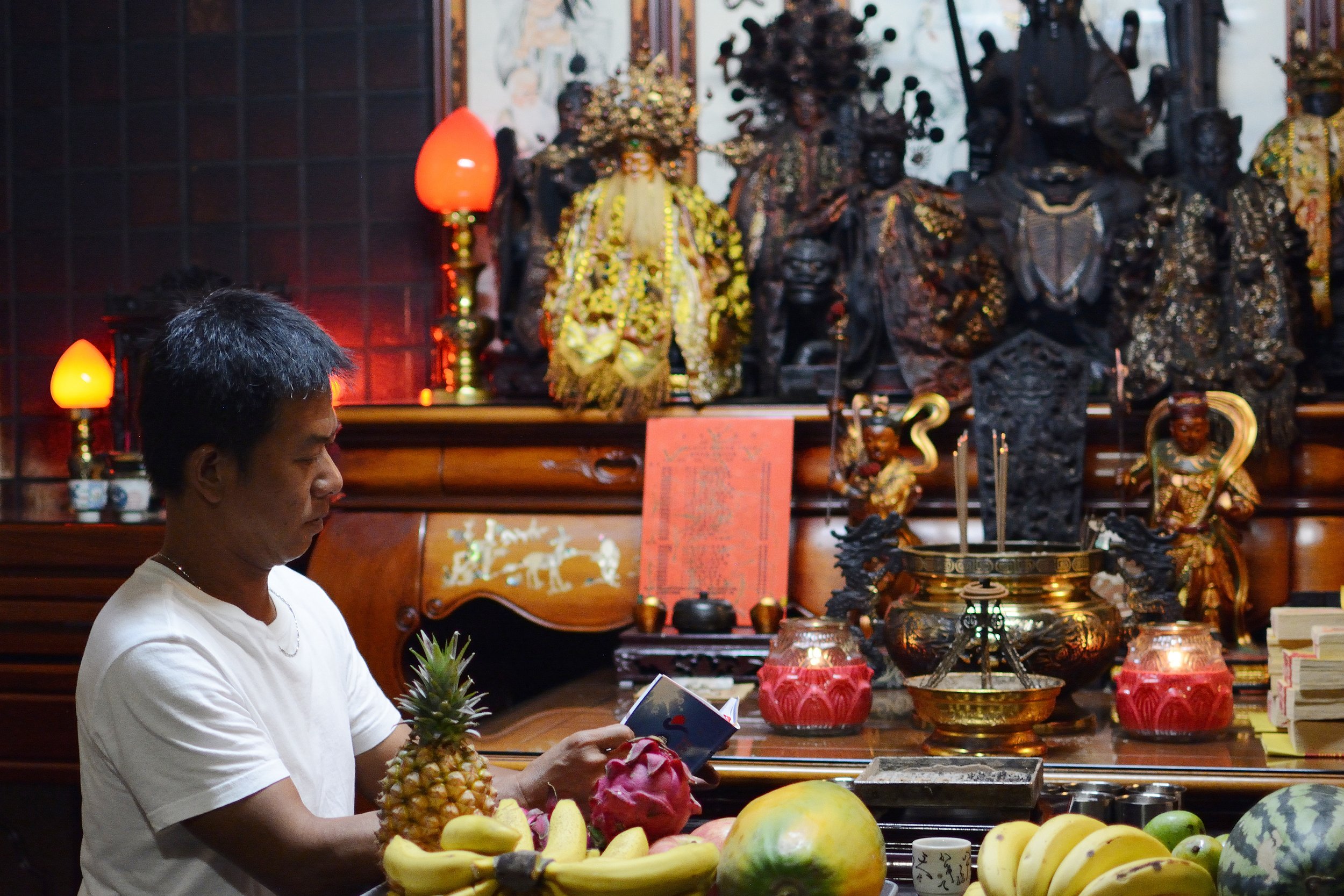
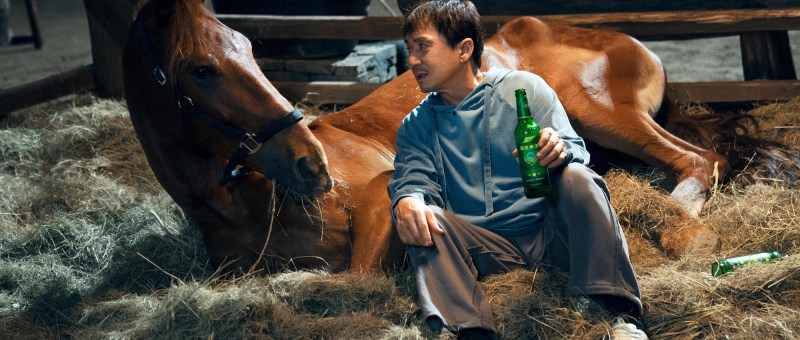
“Jumping down is easy, stepping down is hard” an ageing stuntman reflects in Larry Yang’s meta Jackie Chan vehicle Ride On (龙马精神, lóngmǎjīngshén). The Chinese title, like the English, may hint at late career resurgence but the film at times feels more like a swan song for Chan himself as it lovingly looks back at some of his greatest action hits while gently suggesting that his era may have passed in this new age of CGI and greater awareness of health and safety regulations. 

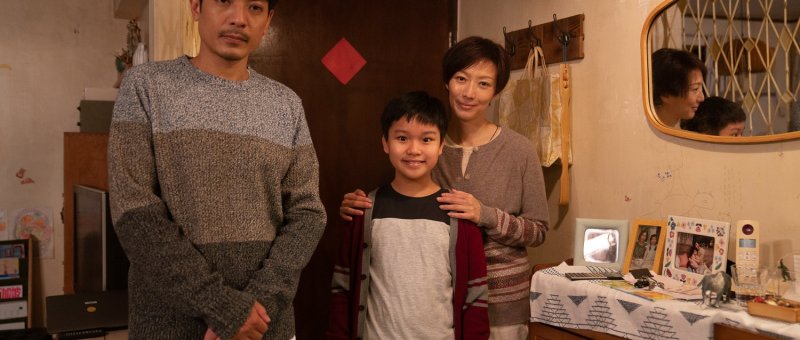
That does certainly seem to be the case for his stand-in, Luo, who has fallen on hard times following serious injury and financial ruin. These days he mainly works as an extra and supplements his income posing for photographs with his beloved horse Red Hare whom he saved from being euthanised at birth and has raised since he was a foal. When the twin forces of vicious loansharks and a weird, wealthy businessman who collects horses come calling for Red Hare it’s like they want to take the last dregs of Luo’s legacy away from him all of which forces Luo to reconnect with his estranged daughter Bao (Liu Haocun), a law student engaged to a rookie lawyer. 

The familial themes play into those of celebrating the brotherhood of stuntmen (and one woman) as one large family who must necessarily take care of each other given that their line of work is incredibly high risk. Yet it’s also true that Luo’s reconciliation with Bao seems to come too easily given her original animosity towards him for being unable to play the role of father to her seeing as her parents separated when she was an infant and she’s met him only a handful of times in her life. Nevertheless, she’s quickly won over by Red Hare even if perhaps identifying a little with him as Luo refers to the horse as his “son” only to belatedly realise that he may have been mistreating him by forcing him to perform dangerous stunts pretty much against his will despite his obvious affection for him. 

Likewise, Bao comes to a new appreciation of her father after watching videos of his old stunts many of which show him incurring serious injuries. The clips are all famous scenes from Chan’s movies such as the shopping mall jump from Police Story or the bus and umbrella stunt which are posited as the glory days of action cinema, yet from a modern perspective we might ask ourselves if all this risk is worth it for simple entertainment even if as Luo later suggests it’s the risk that makes the action entertaining. After getting back on the horse, literally, Luo is offered a series of new stunt jobs one of which requires him to perform a dangerous jump on a badly designed set, while on another he’s told he doesn’t need to perform the dangerous part because they’ll fill in the rest with CGI. Luo is outraged and insists on performing the stunt in camera only to think better of it when considering that he’s making a decision on Red Hare’s behalf that he might not have the right to make. 

The film laments the passing of the age of daredevil stuntmen, but there is a minor irony in the fact that Ride On makes fair use of CGI itself as it fully admits in the closing outtakes which feature several stagehands dressed in green to be erased later. It’s also less a celebration of stunt people than it is of Chan himself and his legendary career as an action star which may be nearing its end which would be fair enough seeing as Chan is now 69 years and clearly making (occasional) use of stunt doubles. Nevertheless, there’s an undeniable sweetness in the relationship between Bao and her fiancé Mickey (Guo Qilin) as they commit themselves to saving Red Hare and forge new familial bonds with the rough and ready Luo that echo the themes of familial reconciliation even if letting Luo off the hook a little too easily for his absence from his daughter’s life. “Stepping down” might be hard, but it doesn’t necessarily mean walking away completely only entering a new phase of compassion and solidarity and not least for a wily horse in search of a loving home.


Ride On is in UK cinemas now courtesy of CineAsia.

UK trailer (English subtitles)
December (赦し, Anshul Chauhan, 2022)

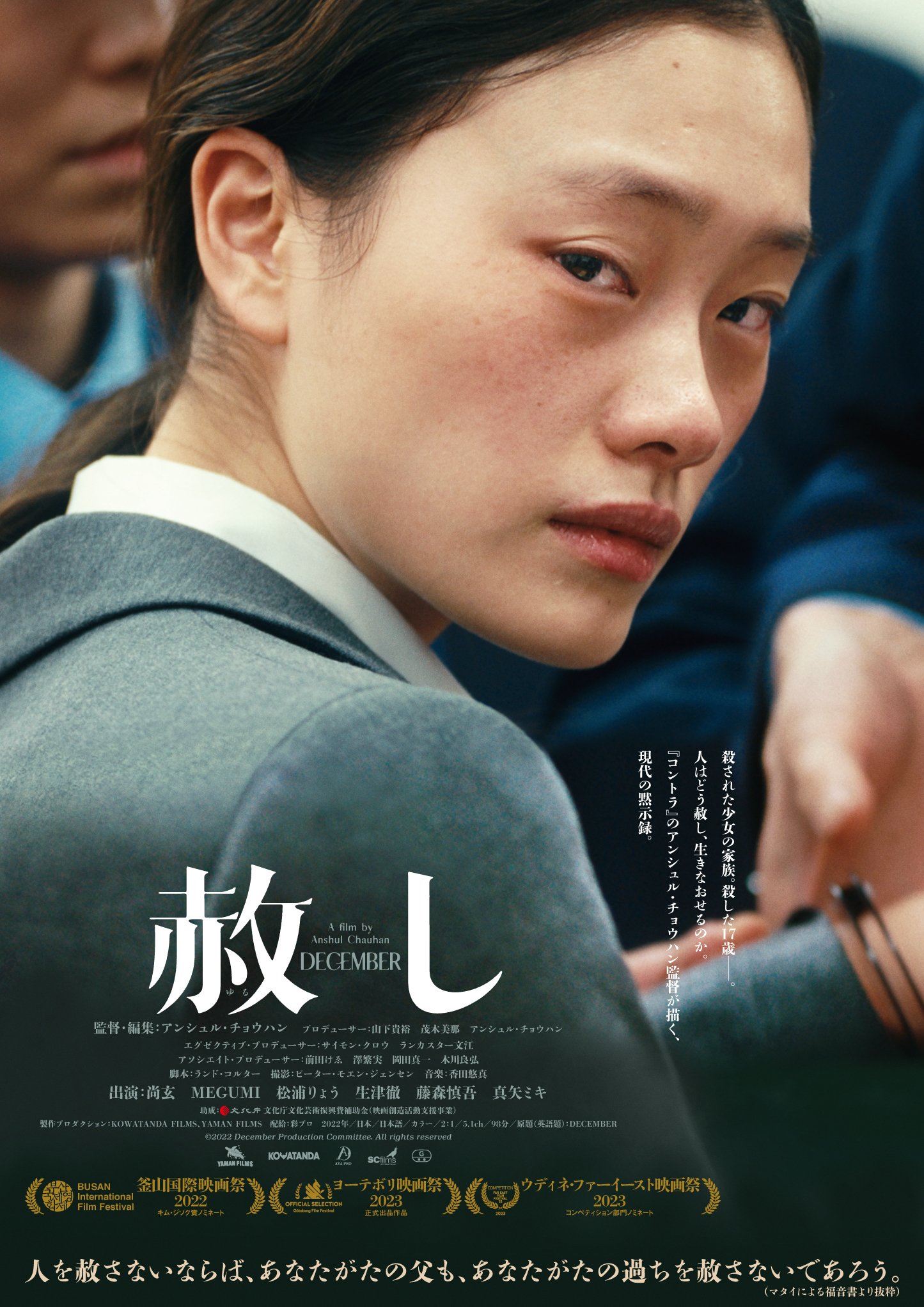
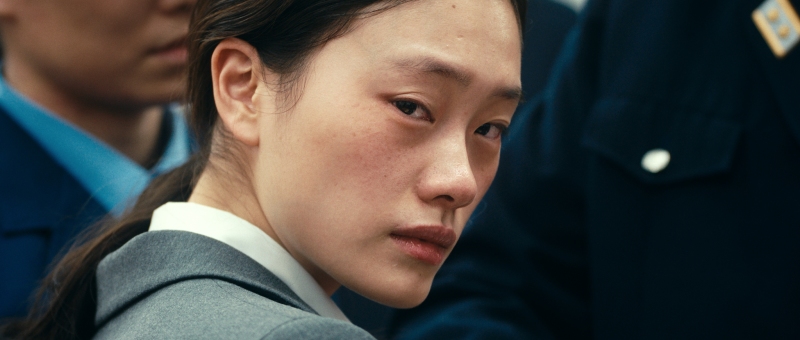
Where is the line between justice and vengeance? The grieving father at the centre of Anshul Chauhan’s December (赦し, Yurushi) is determined that the teenage girl who stabbed his daughter to death should never leave prison, but what he wants is a kind of equivalent exchange in that the person who stole his future along with his child’s should have no right to one herself. A more mainstream effort than either of his previous films Bad Poetry Tokyo and Kontora each of which dealt with similarly thorny themes, Chauhan’s unusually tense courtroom drama is the latest to put the legal system on trial while asking difficult questions about grief, guilt, and what exactly it is we mean when we talk about “justice”.

Seven years previously, 17-year-old Kana (Ryo Matsuura) stabbed her classmate Emi (Kanon Narumi) multiple times in a frenzied attack that resulted in her death. She was sentenced to 20 years in prison and has never attempted to deny her crime. It isn’t she who has asked for her sentence to be reviewed but an independent lawyer, Sato (Toru Kizu), who claims he’s doing it for “justice” though as Kana points out might have half an eye on compensation money she’d be able to claim for wrongful imprisonment if the case were successful. Sato seems to think it will be on the grounds that Kana was unfairly tried as an adult, mitigating circumstances were never brought to the defence’s attention, and the judge’s sentencing was swayed by personal feeling placing it outside of conventional guidelines that should be applied in cases like these.

For Emi’s parents, Katsu (Shogen) and Sumiko (Megumi), the appeal is a slap in the face. The couple have separated and while Sumiko has attempted to move on with her life, marrying a man she met in a support group for bereaved parents, Katsu has become a bitter alcoholic living a purgatorial existence of almost total inertia. Outraged, he is determined to make sure that Kana never leaves prison and is only sorry that she could not receive the death sentence because of her age, while Sumiko would rather not be involved at all, uncertain that she would be able to endure the emotionally draining process of another court case. They settle on presenting a united front, but discover that to do so is also to put themselves on trial while being confronted by a past neither has ever really faced.

The strain on Sumiko is evident as she walks along along a bridge at night and peers over the edge as if about to jump. She later learns that Kana had a mother too who did in fact take her own life after selling everything she owned to pay the compensation money that is used against them in court to imply that they’ve already been served “justice” in the form of monetary recompense from the defendant’s family which ought to declare the matter closed. Unlike Katsu, Sumiko had said her goal wasn’t vengeance but only to make sure that no other mother suffers as she has done, yet another mother already has for she lost a daughter too. Kana meanwhile has no one left to turn to even if she were released, she will have to make a new life for herself alone. Kana is herself victimised by an unforgiving society, the subtext suggesting that she was bullied for being the daughter of a single mother who was unable to fully care for her or provide the kind of material comfort children like Emi receive. The “happy family home” Katsu accuses her of destroying is also a symbol of everything Kana was denied but she did not kill out of jealousy or resentment only, ironically, to escape a kind of imprisonment and free herself of an oppressive bully.

Katsu says he’d kill her himself if he had the chance, but as Sumiko points out then he’d just end up in prison for the rest of his life with only his “righteousness” to comfort him. How could he claim to be any better? As Sato says, emotion has no place in a court of law. That’s why the law the exists and we mediate “justice” through a dispassionate third party to ensure the sentence is fair and not merely “vengeance”. Katsu certainly sees himself as a righteous man. In a repeated motif, Chauhan shows him taking the long way round by walking on the pathways of the grid-like forecourt leading to the courthouse while others hurriedly take the direct route crossing the squares at a diagonal angle. For him the answer is only ever black and white and he is very certain of his truths, but also blinded by his pain and unable to see that his desire for vengeance is more for himself than it is for Emi.

Only by accepting a painful truth can he begin to move past his grief, despite himself moved by Kana’s quiet dignity in which she admits her responsibility and suggests that she will never really be “free” even if she is released. What she offers, in her way, is peace allowing the bereaved parents to bring an end to their ordeal or least enter a new phase in their grief which allows them to move forward in memory rather than remaining trapped within the unresolved past. Perhaps in the end that’s what we mean by “justice”, a just peace with no more recrimination only sorrow and regret with renewed possibility for the future.


December screened as part of this year’s Osaka Asian Film Festival.

Original trailer (no subtitles)

The Burden of the Past (過去負う者, Atsushi Funahashi, 2023)

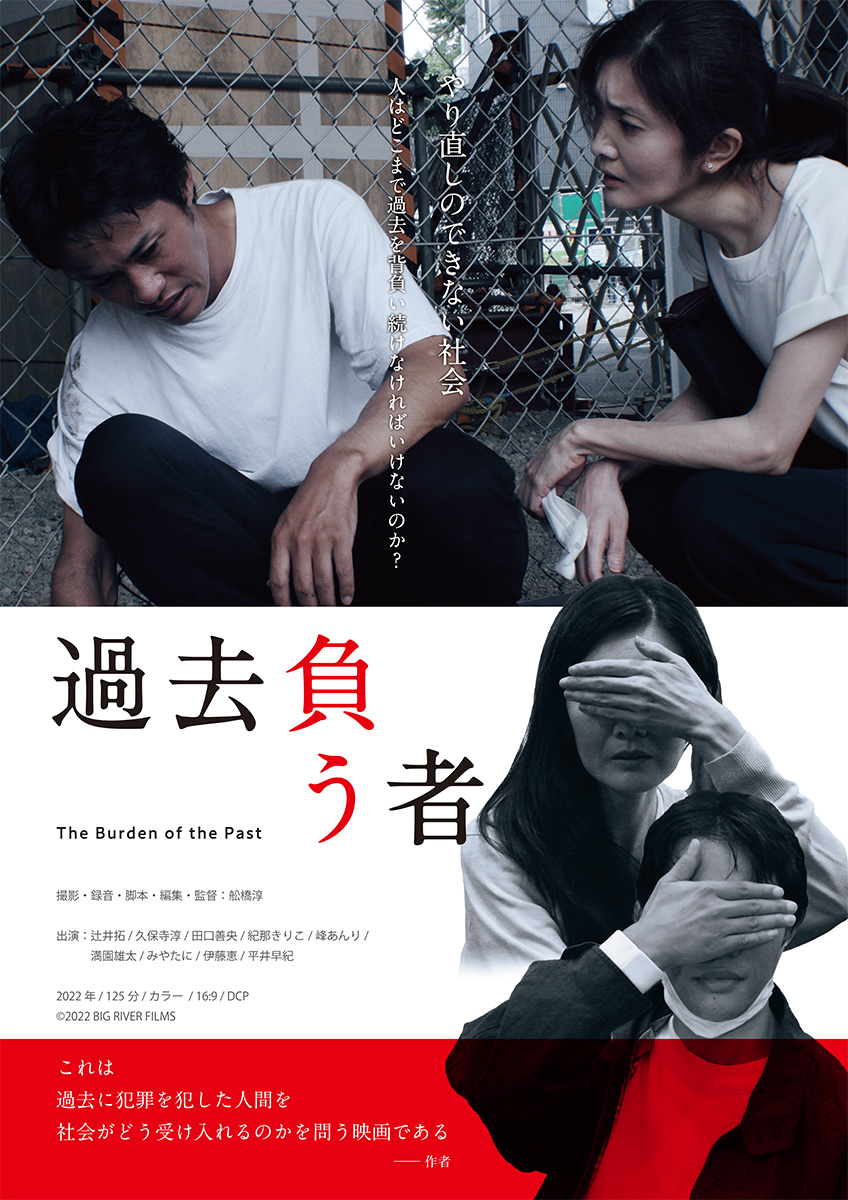
Japan has a relatively high recidivism rate with 50% of those released from prison convicted of reoffending within five years. To some this figure simply proves that “criminals“ are, as one woman puts it, “an entirely different race” who have no place in mainstream society and can never be rehabilitated. In many ways it’s a vicious circle, those who’ve spent time in prison are rejected on their release and unable to find steady employment have no other option than to return to criminality in order to support themselves. Atsushi Funahashi’s socially-minded docudrama The Burden of the Past (過去負う者, Kako Ou Mono) explores this contradiction through the stories of a series of former prisoners and the organisation that attempts to help them reintegrate into mainstream society, Change. 

“Change” might in some ways be an ironic name, placing a demand on the people they’re trying to help that implies they are necessarily at fault for their involvement with criminality. The well-meaning staff members are committed to helping the former prisoners reform, but are otherwise powerless to address the systemic social circumstances that led them into crime while prioritising the individual and advocating for conventionality as the only path towards a settled life. That said, each of the people the film spotlights are involved in quite specific kinds of crimes which lean towards the individualistic with only the backstories of Taku, who killed a teenage boy in a hit and run but is also revealed to be dealing with unresolved trauma from childhood physical abuse, and Ai who turned to drug use to overcome her problems with interpersonal communication, loosely explored. 

It is however Ai who suffers most from the hypocritical attitudes of mainstream society. After being taken on as a cleaner she encounters a man smoking who ironically reveals to her that he used to smoke pot but was never caught which is perhaps the only difference between them but on explaining that she spent time in prison for possession of crystal meth he calls her “a real mess” and a “junkie”, telling her that she has no right to hope for a future and should have stayed in jail. His rant results in Ai going temporarily missing with a fear that she may being using drugs again to overcome her sense of hopelessness. Her circumstances are dictated by her existing sense of alienation in her inability to communicate, something which could have been better addressed either by finding ways for her to communicate more effectively or for encouraging others to accommodate her way of communicating rather than insist she conform to theirs. 

Yet it’s clear that the issue is more to do with the stigmatisation of criminality than it is about any fear of potential reoffending as the team from Change discover on talking to a man hoping to recruit a large number of people quickly for pandemic-related cleaning services. The first issue is that he specifically mentions hiring women seeing as it’s a job in cleaning, but also that he says he’ll have to discuss with his boss about hiring people who’ve been involved with sexual or drug-related crimes rather than those which might present a more practical anxiety such as theft, violence, or fraud. 

Close to the end of the film, Change stages a play featuring some of the former prisoners which ends in a confrontational Q&A session in which members of the audience direct their anger towards not only the cast but Change itself for helping them rather than focussing on the welfare of victims of crime. Change also receives a fair amount of harassment, as do a couple who live close by and complain that they feel personally uncomfortable knowing that people with criminal pasts are wandering around where they live while also bringing up that it’s bringing down the price of their property. One of the case workers tries to explain that they’re trying to stop the cycle of recidivism, which would result in lower crime all round and less chance of becoming a victim, but the audience members cannot see her point. They simply feel that these people are not quite human by virtue of their transgression and are in some way weak or defective for being unable to control their impulses or emotions. It may be a comforting thought, to believe these people are so different from oneself is to deny that anyone at anytime could become involved with a crime for a variety of different reasons. After all, laws are socially constructed device for defining conventional morality and what’s considered “criminal” today may not be tomorrow or vice vera. 

But then how do we deal with those whose crimes are so deeply offensive to a conventionally held morality that they cannot really be forgiven? Misumi is a former teacher convicted of an indecent act with a child and fears that he may end up reoffending. He obviously cannot return to his previous employment, and given the nature of his crime can find no other but also must find a way to live. Many at the Q&A session seem to feel that those who’ve been convicted of crimes should be segregated into an alternate prison society so that they do not corrupt the mainstream, but this is in its own way a social death sentence that effectively says they no longer deserve to live even if unlike the extreme case of Misumi their “crimes” were relatively minor and of the sort many others may have committed and faced no penalty for. 

Still, Funahashi doesn’t exactly let Change off the hook suggesting that they are overly idealistic and fundamentally ill-equipped to deal with some of the more serious problems the former prisoners face especially those that would benefit from more comprehensive psychological care. He does though criticise the justice system in which the prison sentence is essentially a fine that’s paid in time and is geared towards punishment rather than rehabilitation leaving the prisoners no different on their release than they were when incarcerated some like Taku still not having fully addressed or accepted their crime and therefore unable to move on with their lives. In any case, the conclusion seems to imply that simple acts of human trust and compassion can go a long way helping to restore a former prisoner’s self-esteem and allowing them to process the realities of their crimes so that they can avoid committing them again even if it is also society which must change. 


The Burden of the Past had its World Premiere as part of this year’s Osaka Asian Film Festival.

Original trailer (English subtitles)
XX+XY (Lee Soh-Yoon, 2022)

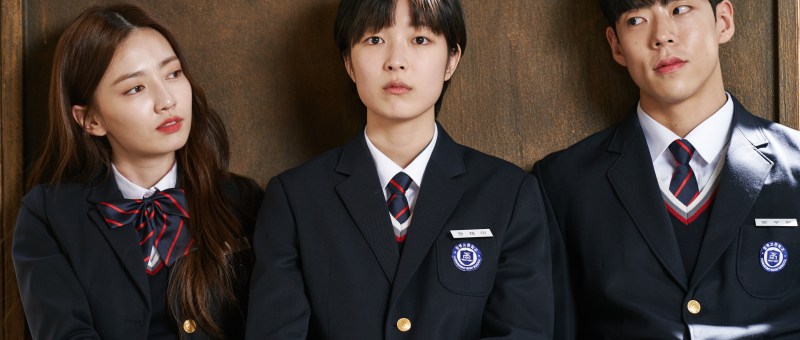
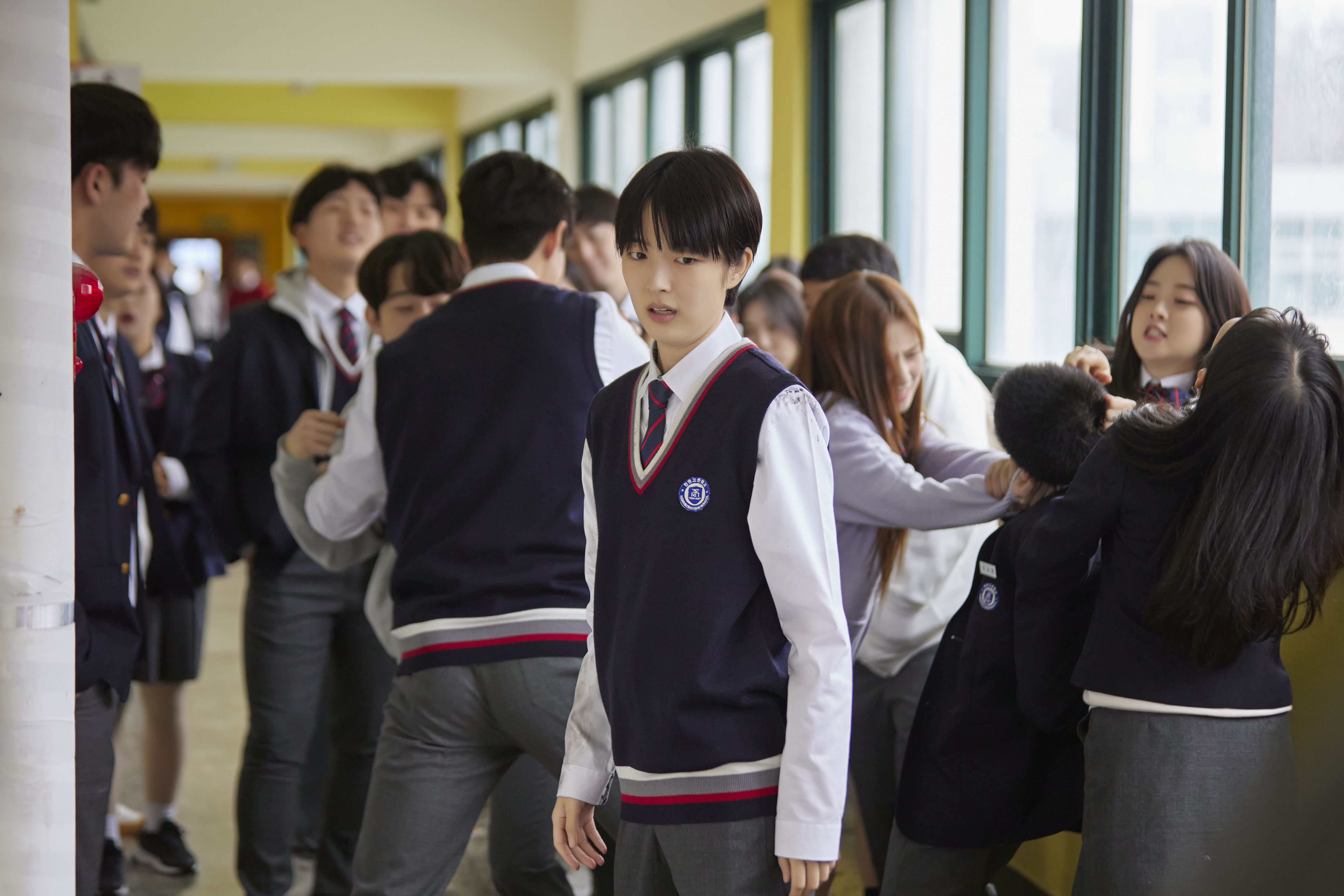
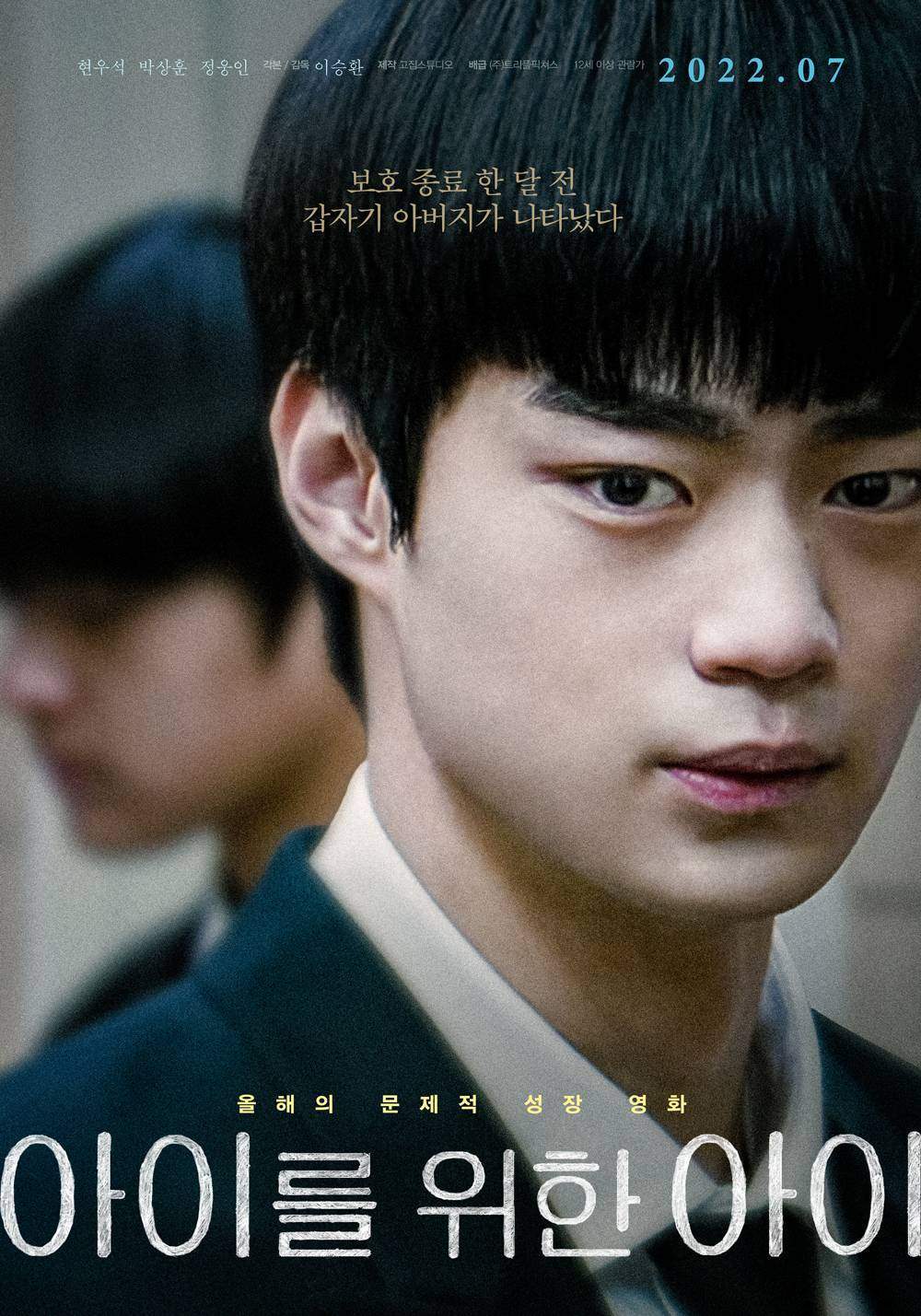
According to the voiceover narration that opens Lee Soh-yoon’s lighthearted teen drama XX+XY, we live in an age of choices yet sometimes choice can itself be a burden. At least that’s how Jay comes to see it having been born intersex but encouraged to think that at some point they’re going to have to choose whether to live as a man or a woman as if those are the only options or the choice to continuing living just as they are is not available to them. 

In essence many of their problems could be solved by reducing social dependence on the gender binary. Having been mainly home schooled, Jay has decided to attend a regular high school in part to help them figure out who they are through interacting with other teenagers who, they discover, are also struggling with many of the same questions in trying to decide who they’ll be. Yet for Jay, there’s also the issue of social stigma surrounding the reality of their life as an intersex person which is little understood by the world around them. When their identity is exposed by a malicious person, Jay’s teacher sighs and asks “Why didn’t you hide it better?”, prompting their response that their identity is not something shameful that needs to be concealed while suggesting that the school is on one level at least failing in their duty of care in refusing to protect them from the fallout of being outed which is in part their fault in stemming from the indiscretion of a teacher. 

The idea that they have something to hide is also particularly hurtful to Jay because of their unusual family circumstances given that they were adopted by a couple in a happy marriage of convenience between a closeted gay man and a woman otherwise uninterested in marriage. Their father’s partner now also lives with them and is very much a part of the family as can be seen in cheerful family photo they have hanging on their living room wall. Jay’s father tells them that he wants them to live in a world where they can love freely without fear of judgement or of feeling forced into the kind of arrangement he and their mother have made, their happy partnership not withstanding. On the other hand, it’s also he who first raises the potentially problematic idea that Jay should decide their binary gender based on their sexual orientation only to be firmly slapped down by their mother. 

This is partly the thesis of the film, that Jay is figuring themselves out based on their feelings towards two potential suitors in childhood best friend Sera who’s always known that Jay is intersex and the smitten Wooram who fell for Jay thinking they were a girl and then confused by their more masculine presentation on arrival at school. As Sera later points out, Jay never directly states they are a boy but everyone assumes them to be one because they are wearing a boy’s school uniform and have short hair. It is the school that force Jay to make a concrete choice because of its persistent gender segregation which extends from uniforms, single sex bathrooms, and classroom cliques to different activities for boys and girls in PE. Jay has to make a choice because they have to pick a bathroom, only using the men’s means there’s no bins to dispose of sanitary pads forcing Jay to carry them around until they can find a place to discreetly dispose of them. The boys in Jay’s class are jealous of their popularity with girls, while immaturely gossiping about another boy they regard as effeminate and possibly gay because he is “small” and hangs out with the girls a lot. 

Meanwhile, the conservative attitudes towards sex and romance held by the school and society at large are also in themselves counterproductive. Teens try to buy condoms to be responsible but are turned away because they don’t have ID or a note from their parents and are even shouted at by a nosy old lady at the checkout all of which has them wondering if they should just go ahead without protection rather than giving up on the idea. When Jay’s intersex identity is revealed online, the teachers are more concerned about the concurrent rumour that they and Sera have slept together rather than the breaching of Jay’s privacy, only interested in what the other parents might say or that Jay’s identity on its own may negatively affect their reputation aside from the developing sex scandal. 

In any case supported by their new friends, Jay gains the confidence to believe that they, and everyone else, are good enough as they are and that there isn’t any point in worrying about the people who won’t accept them as they are now. The film may still imply that there’s a binary choice to be made and that whoever Jay decides to pursue romantically has a large impact on it, but nevertheless affirms Jay’s identity as it is and makes clear that it’s they who have a free right to define themselves independently of any social mores or commonly held beliefs. Warmhearted and generous of spirit, Lee’s teen drama finds that largely the kids alright treating each other with kindness and respect when given the opportunity to do so and only waiting for the adult world to catch up. 


XX+XY screened as part of this year’s BFI Flare.

International trailer (English subtitles)

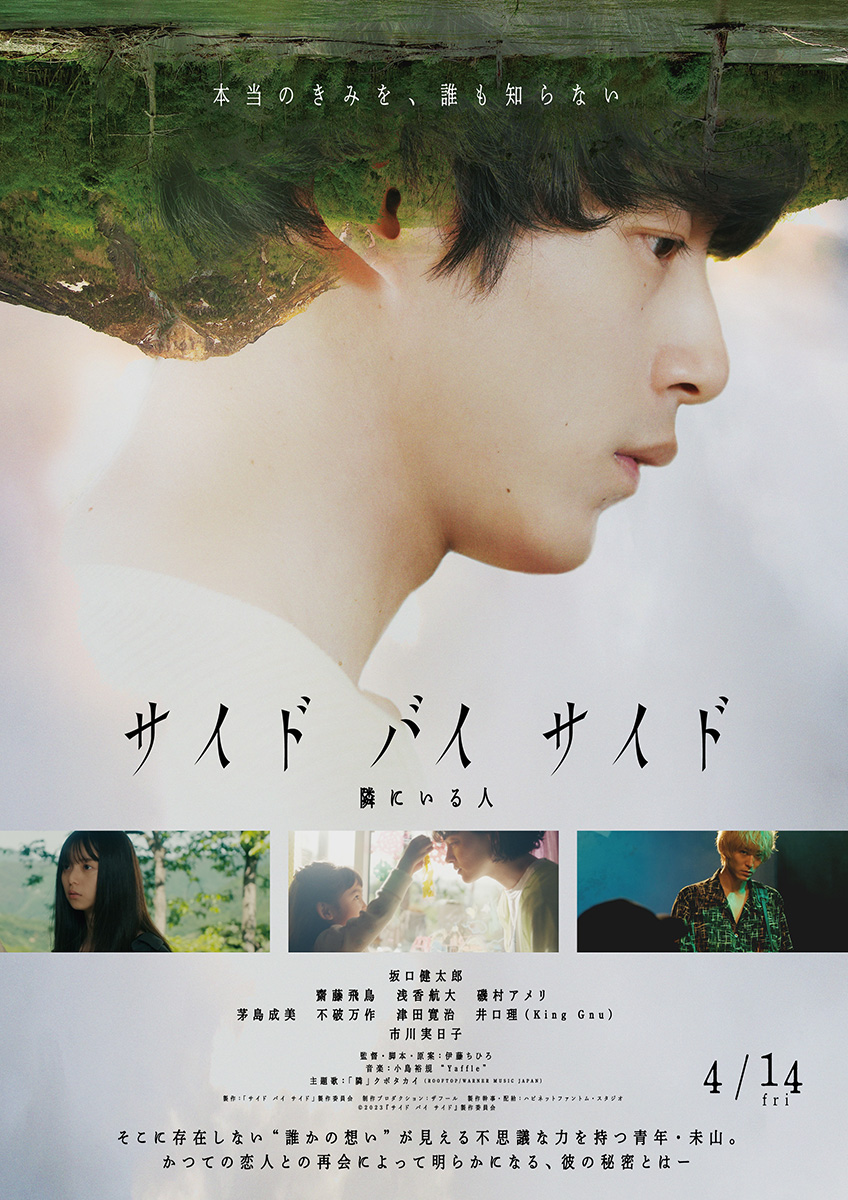
Side by Side (サイド バイ サイド 隣にいる人, Chihiro Ito, 2023)

The unresolved past conspires against present happiness in the supernaturally-tinged second feature from Chihiro Ito, Side By Side (サイド バイ サイド 隣にいる人, Side by Side: Tonari ni Iru Hito). Ito began her career as a screenwriter often working with director Isao Yukisada penning the screenplay for his 2004 junai mega hit Crying Out Love in the Center of the World before making directorial debut just last year with In Her Room, produced by Yukisada and selected for the Tokyo International Film Festival. Like many of the films Ito scripted, Side by Side bears an unusual sensitivity and gentleness of spirit in the way it sees the world which may in its way be filled with pain and longing but also warmth and light even if some may ultimately feel that they can never become a part of it. 

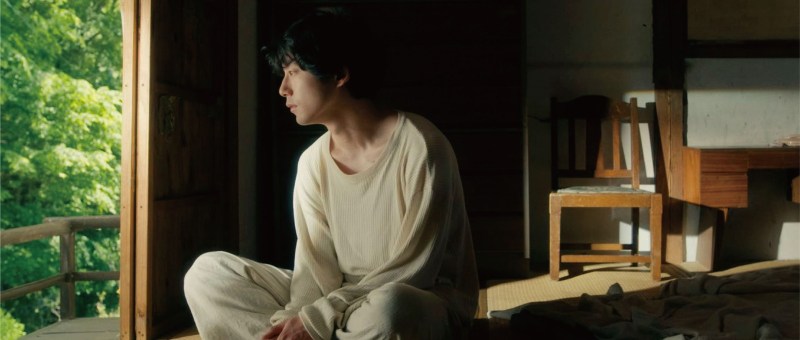
Miyama (Kentaro Sakaguchi) is indeed a haunted man in more ways that one, though the most obvious is that he’s continually followed around by a blond man dressed in black (Kodai Asaka) who says nothing but just stares blankly much like Miyama himself. Working as a physiotherapist, Miyama travels the country and often discovers that the physical pain his patients experience is linked to an emotional trauma as manifested in the various ghosts he sees around them which don’t seem to speak to him. Having left the city of Tokyo where he was raised, he wandered around before eventually finding a home with the welcoming nurse Shiori (Mikako Ichikawa) and her young daughter Mimi (Ameri Isomura) in a tranquil rural village in picturesque Nagano. Yet there are ways in which Miyama doesn’t seem to fit inside the familial environment, almost like a ghost himself somehow there and also not. 

The ghosts are in their way a visual representation of the unresolved past that endangers the new family Miyama has begun to build with Shiori and Mimi but fears he can never really be a part of. Shiori recalls seeing a light fitting in a film that she wants to hang over their dinner table to bathe it in the warm light of family, but is unable to find it even with Miyama’s help. It’s she that makes the rather unusual decision to invite a another ghost of Miyama’s past into their home in the gothic vision that is Riko (Asuka Saito), a woman Miyama “abandoned” who has since experienced some kind of breakdown and is then “abandoned” once again by another man who may or may not be the father of the child she is carrying. The unconditional love and support of Shiori and her daughter begin to bring Riko back to life, no longer dressing all in black and eating only white-coloured foods as colour and warmth are slowly returned to her. 

Even so, there are times it becomes difficult to tell the living from the “dead” when even Miyama seems like a ghost dressed all in white haunting his own life with his eerie stillness and not quite vacant eyes but those which express, as someone later puts it, a deep regret in his past. Like everyone else he struggles to emerge from past trauma in parental abandonment and physical abuse while acknowledging that his father suffered as a child and passed that suffering on to him because he did not know how to be a father. Miyama doesn’t know how to be a father either which is perhaps why he fears the depths of his new relationships and his role as a paternal figure while filled with shame and regret for those he failed in the past. 

But then there are others so undeniably alive such as Shiori and her daughter, often dressed in a vibrant yellow and basking in the warm sunshine which streams through the large windows of Shiori’s beautifully designed home. The family take solace in the beauty and comfort of the natural world, protected by its rhythms and the serenity it often offers them. Miyama may feel that he can never recover from his past and has no right to be drawn to this one solitary source of light, as Shiori describes it, like the bugs he is forever trying to keep out of the house but in the end gives them something else in the unconventional family that arises founded on human compassion and unconditional love that asks few questions and simply accepts those who are willing to accept it.


Side by Side had its World Premiere as part of this year’s Osaka Asian Film Festival.

Original trailer (no subtitles)

Images: (C) 2023 “Side by Side” Film Partners

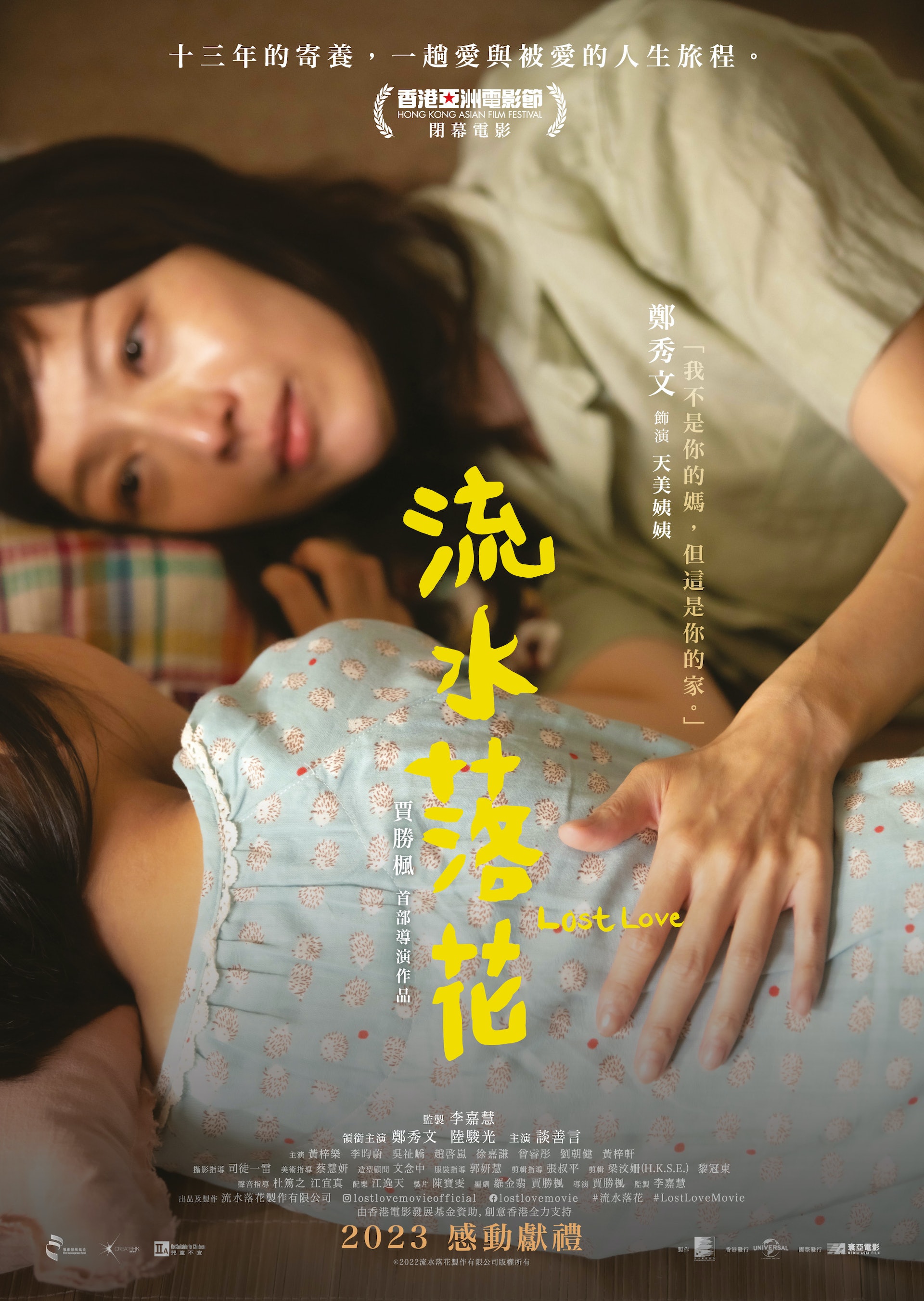
Lost Love (流水落花, Ka Sing Fung, 2022)

A grieving mother attempts to redefine her life by caring for the children of others in Ka Sing Fung’s poignant maternal drama, Lost Love (流水落花). Filled with boundless compassion, the film in part explores the sense of otherness felt by lonely children often rejected by the society around them, while allowing the wounded heroine to find a way to love again in the midst of her heartbreak, even if what she’s signed up for amounts to a cycle of perpetual loss. 

Mei (Sammi Cheng Sau-Man) lives an ordinary life working a series of unsatisfying and poorly paid jobs while her husband Bun works as a driver. Gazing at an empty room that might once have belonged to a child, we can feel a sense of loss and absence in the couple’s apartment while another young woman, Miss Mok (Hedwig Tam Sin-Yin), takes a cursory look around and seems to find everything in order pausing only to advise they give up smoking, at least in front of the children. Mei has decided that she wants to become a foster mother, but Bun does not seem entirely onboard complaining that he’s only really been “advised” of her decision rather than actively asked for his opinion. 

As is later revealed, Bun and Mei lost their three year-old son to illness and though Bun would have preferred to continue trying to have another child of their own, Mei is afraid to in case the same thing happens again. Yet the irony is that in becoming a foster mother she has signed herself up for repeated loss. The children who come to her do so temporarily and only until such time as they can be returned to their guardians or adopted by other families. After bonding with one little girl, Mei considers adoption but is told that it is not really permitted within the fostering system and she will have to resign herself to letting the child the go. 

Meanwhile, many of the children have specific needs and are often struggling to deal with the circumstances which led to them needing foster care. The first little boy Mei takes in, Sam, barely says a word and wets himself in stressful situations. When he stands up to a bully in school, he’s the one who gets into trouble with the teacher who makes prejudicial statements about “these kinds of kids” as if he’s already written him off. Sam poignantly reveals that the other kids were making fun of him for not having any parents leaving him additionally isolated and further damaging his already disrupted education. Another little girl, Hana, says something similar unwilling to go to school as the other children reject her because she has cleft palate. Ching, by contrast, is rejected by her own mother who seems to have remarried and had other children, palming her off on a grandmother who is unable to care for her while hospitalised. Two other children stay with Mei while their father is in prison, later describing Bun as the kindest man they’ve ever met while explaining that they were previously pushed from pillar to post bounced around between relatives who grew tired of caring for them. 

Even so, the foster care arrangement places a further strain on the couple’s marriage. Bun is at times resentful of the attention Mei gives to the children while still on the fence about fostering even at one point suggesting they simply get a dog instead. Yet despite everything Mei remains committed to caring for the children who come her way some of whom have no one else to care for them, helping them to gain the strength to keep living in the world and to feel less alone even in the face of unfair social prejudice. Ka tells her tale in elliptical fashion, pushing forward over a number of summers as different children occupy Mei’s spare room while she herself grows old but still determined to continue looking after kids in need. A repeated motif of falling petals hints at the temporality of all things, but also as they fall into the river a poignant sense of generational flow as Mei gently supports the children until they can support themselves and she can give no more leaving love behind her even in her absence.


Lost Love screens in Chicago April 1 as part of the 16th season of Asian Pop-Up Cinema.

Original trailer (Traditional Chinese / English subtitles)

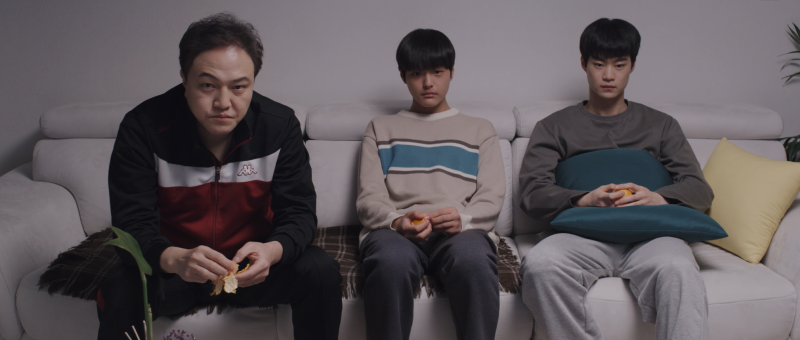
A Home from Home (아이를 위한 아이, Lee Seung-hwan, 2022)

Unexpectedly reunited with his estranged father, a young man is confronted with a series of choices on leaving the care system in Lee Seung-hwan’s darkly comic coming-of-age drama A Home from Home (아이를 위한 아이, Ayireul Wihan Ayi). The Korean title may mean something more like a child looking after a child, but the English also neatly encapsulates the hero’s dilemma on being ejected from the orphanage where he has lived for most of his life into a new “family” home with two strangers he hardly knows at all. 

Do-yun (Hyeon Woo-Seok) is about to come of age. In less than a month he will have to leave the orphanage where he lives and has nowhere else to go. Working as a takeaway delivery driver, he is acutely aware of the prejudice directed towards those who have no families with both his boss and unreasonable customers making jibes about how they expect no better from someone who “wasn’t raised properly”. Prejudice is one reason he longs to leave Korea for the promise of Australia, explaining that there he’ll simply be “Korean” rather than an “orphan” and will be able to build an independent life for himself. All his plans are scuppered, however, when a man turns up at the orphanage claiming to be his estranged father and offering to take him in. 

Understandably resentful, Do-yun is persuaded to accept the offer and discovers that he has a younger half-brother, Jae-min (Park Sang-Hoon). Seung-won (Jung Woong-In), his father, claims that he gave up Do-yun for Jae-min wanting to remarry after his first wife died but apparently unable to take his first son with him. That might be reason enough to resent Jae-min, but Do-yun doesn’t particularly only wanting to save enough money to get to Australia and leave the family behind. The problem is that Seung-won soon passes away leaving Do-yun with a still deeper sense of loss and resentment while wondering if Seung-won only returned to claim him because he needed someone to look after Jae-min in his absence. Only 20 years old, he ends up becoming Jae-min’s guardian and despite himself decides to put his Australian dreams on hold to look him. 

Becoming an accidental “father” so young does indeed force Do-yun to grow up quickly, learning to cook (well, divide a microwave dinner onto plates) and keep the apartment Seung-won left them tidy. Perhaps he’d have had to figure all that out for himself alone on leaving the orphanage and having to manage on his wages from the delivery job, but there is also a lingering resentment that he’s putting his life on hold for a “brother” he didn’t know until a few weeks previously wondering what sort of responsibility he really bears for him even as he begins to ease into a sense of familial comfort he had never known before. Even so, an unexpected revelation sees him questioning himself further and trying to figure out whether he really belongs with Jae-min at all or should cut his losses and go to Australia anyway. 

In an odd way, he comes to view his new familial relationship as “just another prison” while jealous of Jae-min’s opportunities and yearning for independent freedom. Meanwhile, he finds himself targeted once again by exploitative adults in the form of a gold-digging aunt and her obnoxious husband intent on getting their hands on Jae-min’s inheritance, and scammed out of money he’d saved for his new life abroad by another “brother” he’d grown up with in the orphanage. What he wants is to make a decision that’s his own rather than being railroaded by the circumstances of his life or manipulated by forces beyond his control but also begins to develop a genuine familial connection with Jae-min even while remaining mildly distrustful and trying to figure out where it is that he truly belongs. Exploring the effects of a societal prejudice against orphanhood as well as the practical and emotional difficulties faced by those who are abruptly ejected from the care system into an uncaring world, Lee’s strangely cheerful drama finds two young men searching for support but finally discovering they may have only themselves to rely on. 


A Home from Home streams in the US until March 31st as part of Asian Pop-Up Cinema Season 16.

International trailer (English subtitles)

Peafowl (공작새, Byun Sung-bin, 2022)

A trans woman begins to step into herself after reclaiming her traditional culture to make peace with the past in Byun Sung-bin’s poignant indie drama, Peafowl (공작새, Gongjaksae). At once situating itself in the heartland of a society struggling to adapt to the pace of change, the film suggests that only by reintegrating her Koreanness can the heroine become fully herself even as the spirit of the father who rejected her softly tells her to dance her dance.

Myung (Choi Hae-jun), whose name as she later says means “not too light not too dark”, is a trans woman living in Seoul hoping to earn a large amount of money to pay for her surgery through winning a waacking dance competition. Shortly before she performs, she receives an unsettling telephone call and narrowly loses the dance off against a Taiwanese competitor while a judge explains that she lacks a colour of her own. It’s then that a childhood friend, Woo-gi (Kim Woo-kyum), contacts her to let her know that her estranged father Duk-gil (Ki Joo-bong) has passed away and asks her to come to the funeral. Myung first says she won’t go, but later does only to be berated by her overbearing, conservative uncle who ironically causes a scene by loudly exclaiming that a man shouldn’t be going around with long hair or wearing makeup. He even introduces her as Duk-gil’s son to an older relative who is otherwise much more sympathetic and even asks her with surprise why she’s wearing a male mourning outfit rather than the more appropriate one for women. 

It’s the uncle, a symbol of oppressive middle-aged patriarchal power, that is the real problem. Most other people are either broadly supportive or too polite to say anything of Myung’s changed appearance while her teenage nephew Bo-suk (Go Jae-hyun) simply accepts her and quickly refers to Myung as “sis” despite his mother’s obvious discomfort. It is however the uncle who is in charge, continuing to misgender and insult Myung especially once Woo-gi reveals that it was Duk-gil’s dying wish for Myung to lead the funerary rites at his 49th day memorial service. Myung doesn’t really want to participate but is tempted after Woo-gi suggests there’s a sizeable inheritance to be had if she agrees. 

It’s clear that Myung had good reason to resent her father, holding up her hand and revealing a large burn scar she’s since had tattooed with with a beautiful peacock feather. The feather motif is repeated throughout as a kind of symbol of Myung’s hidden beauty which she will eventually learn to reveal through the fusion of the traditional art of shamanistic ritual and her contemporary waacker dance moves, yet it’s also linked to the image of her father as a man she never understood and may never have really known whose relationship with her was shaped by the legacy of homophobic prejudice in ways she could never have imagined. The truth that she discovers reminds her that there have always been people like her even within this very “traditional” society, while the twin revelation that her cousin is gay and struggling in many of the same ways she has proves there always will be. As Woo-gi reminds her, her grandfather’s tree looks like it’s dead but is kept alive by its connections with others much like people are, pointing out that rituals accept everyone without prejudice or exception. 

Only after making peace with her conflicted aunt and showing her overbearing uncle the error of his ways can Myung begin to reclaim herself in reintegrating her traditional culture to gain the colour she was lacking and become fully herself as she performs the ritual along with a waacker dance that quite literally sets fire to the oppressive quality of tradition as mediated by men like her uncle who weaponise it to preserve their own privilege. Shot in classic 4:3, Byun neatly contrasts the vibrancy of Seoul nightlife with the oppressive dullness of life in the village, but also highlights the various similarities in the colour and noise of a shamanistic ceremony which as Myung discovers moves to a beat not dissimilar to waacker as she watches her friends dance in a club with the movements of traditional shamanism. In a way, Myung does indeed burn it all down but does so positively, finally coming to an understanding of her father and her history while reclaiming her traditional culture along with the right to do with it whatever she wishes.


Peafowl screened as part of BFI Flare 2023. It will also be screening at Genesis Cinema, London on April 20 as part of this year’s Queer East.

Trailer (English subtitles)
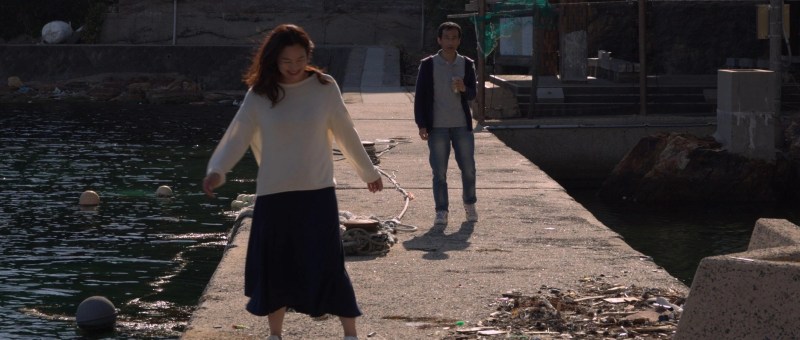
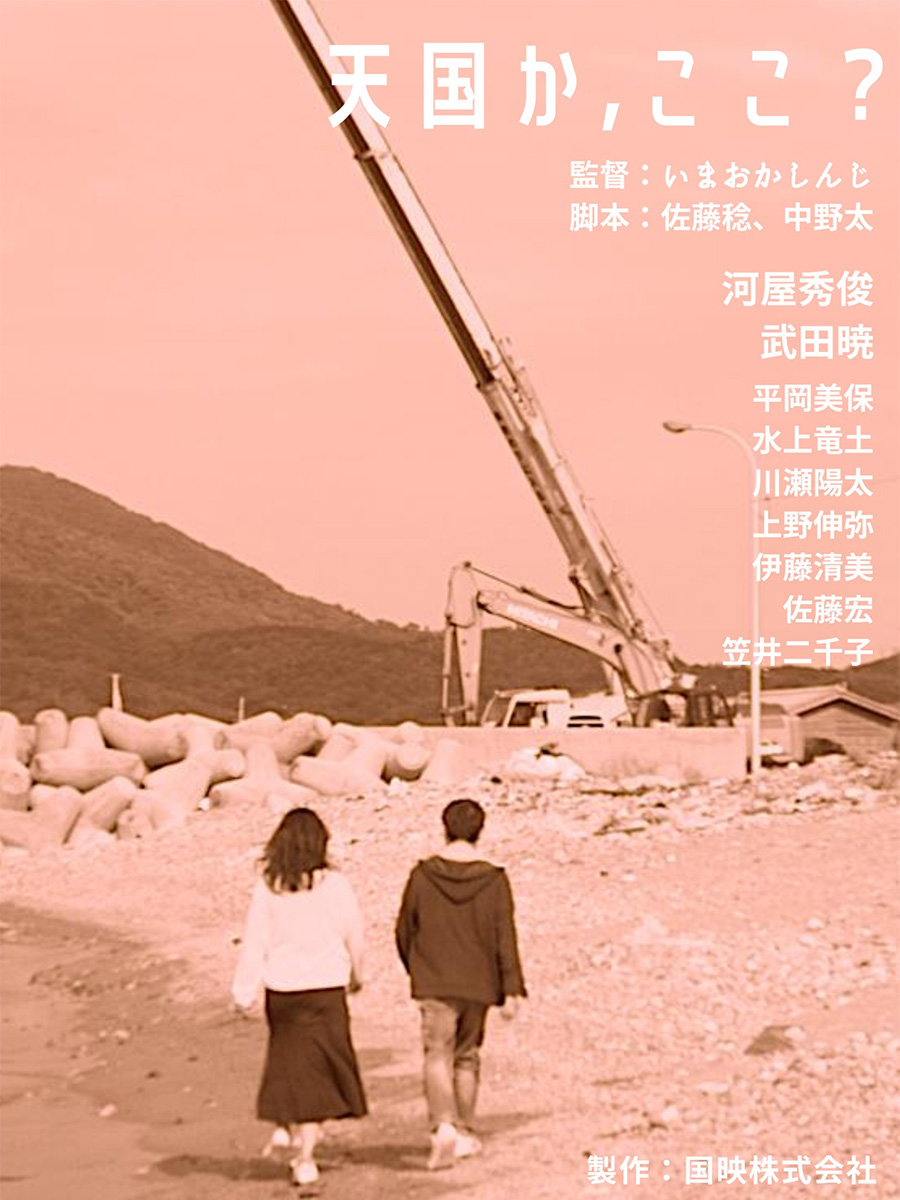
Is This Heaven? (天国か、ここ?, Shinji Imaoka, 2023)

A middle-aged couple ponder loss and regret on a surreal odyssey into the afterlife , or something like it at least, in Shinji Imaoka’s cheerfully absurdist dramedy Is This Heaven? (天国か、ここ?, Tenkokuka, Koko?). Reuniting with several actors who starred in Imaoka’s previous film Reiko and the Dolphin, the film addresses several of the same themes in its exploration of grief and the inability of moving on but perhaps paradoxically sees its central couple arrive at a happier destination having begun to repair a marital rift. 

How they end up in “Heaven” isn’t exactly clear. Nobuo (Hidetoshi Kawaya), a middle-aged man who likes a drink, dances along a highway with half a can of chuhai in his hand and suddenly finds a flier with the word “Heaven” written on it. Everyone he meets seems to be doing an odd dance, even his wife Mayuko (Aki Takeda) who soon snaps out of her trance to tell him off for drinking in public again. While wandering around wondering where they are and how to get back because stationery stores don’t run themselves, the couple run into an old friend, Ueno, which is nice but also weird because Ueno died a week ago having hanged himself in shame over the failure of his business. 

Like everyone else in this strange place, Ueno is irrepressibly cheerful and seems to know nothing of his suicide. “When we die, we go to Earth, right?” he asks perplexed while Nobuo begins to wonder what it might mean if he’s really in Heaven, if he’s alive or dead or something in-between. Gradually we come to understand that there is tension in the marriage, much of it born of Nobuo’s insecurity. He fears that Mayuko only married him out of lonely desperation following the death of her first husband Takeshi (Yohta Kawase) whom she may never have got over, and that absolutely anyone would have done it just happened to be him. He resents Mayuko pointing out they’ll be in trouble if they close the stationery store because he’s never had a proper a job and his drinking problem won’t allow him to get one. 

It may be drinking that’s brought him on this strange odyssey. The film is divided into four chapters each bearing the title of a progressively harder drink as things get ever stranger while Nobuo wanders around meeting various other strange people including one who may have appeared in one of Imaoka’s previous films along a with a young woman obsessed with shogi and sex. Nobuo later describes them as people he’ll never meet again, standing this time on the other shore of life and death shouting back at the void in a defiant memorial of all he’s lost. Yet his weird journey to the other side has perhaps helped both he and Mayuko deal with the unresolved past and with it the cracks in their marriage.

In a strange way it may be that “Heaven” really is “here” as the couple rediscover an appreciation for all that they have now in the shadow of past and future loss. Indeed, one of the things that convinces Nobuo that he’s not really “dead” is the fact that he can still get drunk and is at least able to feel something while experiencing the sensations of life in taste and touch that the dead can no longer enjoy. “It’s such a miraculous thing” Mayuko sadly tells the younger woman of meeting and falling in love, reminding her not to waste the gift she’s been given. 

Then again, Nobuo’s conception of Heaven is very much that of a middle-aged man with its drinking and hostess clubs even if Mayuko opts for the more wholesome option of a trip to the onsen while the young woman rebels against her unwholesome life by embracing the comparatively respectable game of shogi. The strangely dreamlike, elliptical quality of the other world Nobuo and Mayuko find themselves in has its qualities of whimsy in the weird dancing, the death god wine, random cake, and underwater voice effects but also a deep melancholy and a kind yearning for something, well, more Earthy that the pair may eventually rediscover at the end of their journey.


Is This Heaven? had its World Premiere as part of this year’s Osaka Asian Film Festival.

Original trailer (no subtitles)

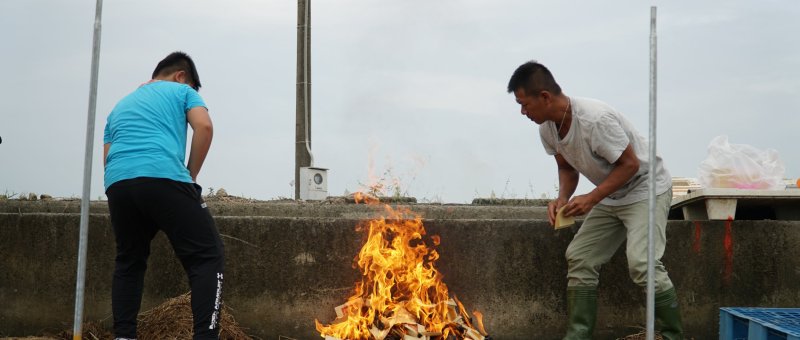
A Holy Family (神人之家, Elvis Lu, 2022)

“Do you think the gods ever helped our family? Or, should I say, do the gods exist?” asks documentary filmmaker Elvis Lu of his brother, a spiritual medium who stayed behind with their devoutly Taoist parents while Lu left for the city 20 years previously and never returned. Lu admits that he likely never would have come back had his mother not contacted him with an ominous message about sorting out her funeral plans, but while filming seems to come to a new accommodation with his familial relationships guilty that he stayed away so long no longer a resentful young man but one beginning to consider the encroachment of mortality.

Lu’s mother confesses that she had pretended to herself that he didn’t exist, hurt that he rarely answered her calls and never visited home even as he points out that she never came to visit him him Taipei either. She feels she “achieved nothing as a parent” and is most regretful that she could not nurture Lu’s talent because she was forced to work long hours to support the family while also taking care of the household. In the opening conversation Lu had coldly answered the phone assuming his mother had called to ask for money, and the hollowness at the centre of the family is largely caused by Lu’s father’s longterm gambling problem which saw him fritter away most of the family’s property and savings leaving the couple financially dependent on their sons for support. Lu’s brother also feels a degree of resentment towards their near silent father, revealing that he does not want to do to his son what his father’s done to them in leaving them nothing but debt and disappointment. That’s one reason he’s always looking for new ways to support the family and has recently begun farming.

The obvious question when his tomato crop is destroyed by floods is why didn’t he ask the gods for guidance first, only it turns out that he did. As Lu points out, the family has endured long years of suffering despite their piety, if his brother is really so close to them why didn’t they help? It’s a question he obviously doesn’t have an answer for, nor does he have one when his son pleads with him to ask the gods for advice as to what to next with the ruined tomato field. His brother’s pained expression hints that he might have doubts despite being able to talk to the gods in his job as a spirit medium handing out advice on investments and other more Earthly worries for a small donation. The family’s upper floor is home to a large altar with several statues of the gods his mother describes as her only friends during the time that both her sons and husband were absent from the family home. Lu’s mother is tiny and now somewhat advanced in age. The stairs appear difficult for her, yet she climbs them every day to pay obsevance to the gods. 

After 20 years in the city all of this religiosity seems even more bizarre to the now adult Lu, but he also also captures ceremonies in the community in which people pray to the gods for health and prosperity suggesting that it’s not so odd after all and that the sense of community may be more important that the rituals themselves. Even so, it’s also true that this almost transactional view of spirituality feeds directly back in to his father’s gambling addiction in which he constantly looks for signs of lucky numbers to place bets or buy lottery tickets. After being diagnosed with glandular cancer and too ill to do much else, Lu’s father still picks up the phone to lay a sizeable bet even while his exasperated wife tries to control her resentment that if only he hadn’t lost his job he’d have had a pension, they’d have kept more of their property, and would all have happier, more comfortable lives. 

In any case, through adopting a more neutral position as a filmmaker Lu is able to better interrogate the realities of his family and his own relationship with it. As the documentary progresses, he sometimes appears on screen holding a large camera on a tripod while someone else films him from another angle. What began with frosty resentment slowly gives way to warmth and reconciliation even while underpinned by a melancholy practicality as Lu helps his parents choose pictures to use at their funeral underlining a sense of oncoming loss as Lu finally takes his mother to see the sea and gently tracks her as she walks along the shore, slowly moving away from him.


A Holy Family screens in London 24th March and in Edinburgh 25th March as part of this year’s Hong Kong Film Festival UK.

Original trailer (English subtitles)