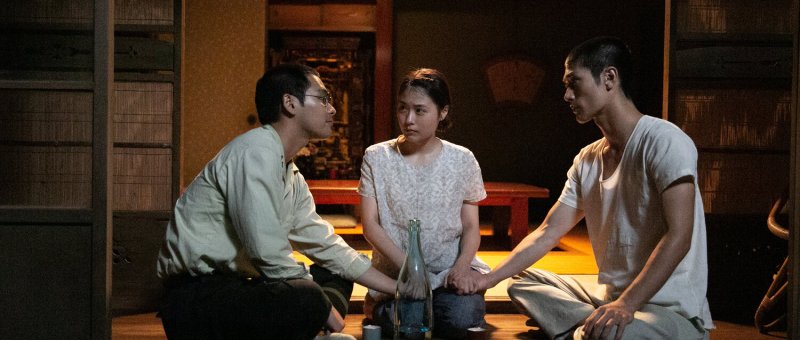
Gift of Fire (太陽の子, Hiroshi Kurosaki, 2020)

“What can we do? It’s for the victory of our country” one woman stoically laments as her family home is demolished in an attempt to mitigate the damage from potential aerial bombing in Hiroshi Kurosaki’s wartime drama, Gift of Fire (太陽の子, Taiyo no Ko). A co-production between Japanese broadcaster NHK and American distributor Eleven Arts, Kurosaki’s ambivalent interrogation of the price of progress asks some difficult questions about scientific ethics while simultaneously suggesting we may have been stoking a fire we cannot fully control in a bid for a technological evolution which has become unavoidably politicised. 

The hero, Shu (Yuya Yagira), is an idealistic young man who excels at running experiments. He has been spared the draft because his work has been deemed essential for the war effort as he is part of the research team at Kyoto University working on the development of an atomic bomb. A theoretical thinker, Shu has not fully considered the implications of the project and largely views it as a problem they are trying to solve in the name of science rather than a concerted attempt to create a super weapon with the potential to bring death and destruction to the entire world. 

Others meanwhile are beginning to question the ethical dimensions of their work. The team is equipped with a shortwave radio receiving the American broadcasts and is fully aware that Japan is losing the war. There are frequent power outages which interfere with their research, while food shortages are also becoming a problem. The potter Shu has been visiting in order to acquire Uranium usually used for a yellow glaze tells him that he rarely needs to use colour anymore because the vast majority of his output is plain white funerary urns for boys who come back as bones. Some of the scientists feel guilty that they are living in relative safety while other young men their age are fighting and dying on the front line, while others wonder if working on the bomb, which will almost certainly not be finished in time, is the best way to help them. They also wonder if scientists should be involved in the creation of weapons at all, but their mentor Arakatsu (Jun Kunimura) justifies the project under the rationale that they aren’t just trying to make a bomb but to unlock the power of the atom and harness its intrinsic energy to take humanity into a brave new world. 

As it turns out, Arakatsu may not have expected the project to succeed but was in a sense using it in order to protect his students by ensuring they would be exempt from the draft. Another senior researcher meanwhile points out the Americans are also working on a bomb, and if they don’t finish it first the Russians will. Arakatsu claims this war, like most, is about energy but nuclear energy may be infinite and therefore its discovery has the potential to end human conflict forevermore. Still, it’s difficult for Shu reconcile himself to the reality of what he was working on seeing the devastation inflicted on Hiroshima. The scientists are plunged into a deep sense of guilt and despair that they failed to prevent this tragedy, but also perhaps relief in knowing they were not responsible for inflicting it on the city of San Francisco as had been the plan. 

Arakatsu claims he wants to change the world through science, a sense of purpose that appeals to Shu even while he remains firmly in the present moment. His childhood friend, Setsu (Kasumi Arimura), however is looking far ahead already thinking about what to do when the war is over. Seeing through the wartime propaganda disturbed by the answers the high school girls co-opted to fill-in at her factory give when asked about their dreams that all they want is to marry as soon as possible and raise children to serve the nation, she aims to educate. Shu’s brother Hiroyuki (Haruma Miura), meanwhile, is a conflicted soldier filled with guilt for having survived so long crying out that he can’t be the only one not to die. The theory that nothing is ever created or destroyed becomes an odd kind of justification, yet Shu is also forced to admit that destruction can be “beautiful” while claiming that scientific progress is a body already in motion which cannot be stopped. “The nature of science transcends humanity” Shu is told by an accented voice speaking in English, insisting that the bomb is merely another stop on the inevitable march of progress in the great chain reaction of history. Kurosaki’s melancholy drama preserves both the beauty and wonder of scientific discovery as well as its terrible ferocity but offers few answers as to the extent of its responsibilities. 


Gift of Fire screens in Chicago on Sept. 16 as part of the 13th season of Asian Pop-Up Cinema before opening at cinemas across the US on Nov. 12 courtesy of Eleven Arts.

US trailer (English subtitles)

Ascension (登楼叹, Jessica Kingdon, 2021)

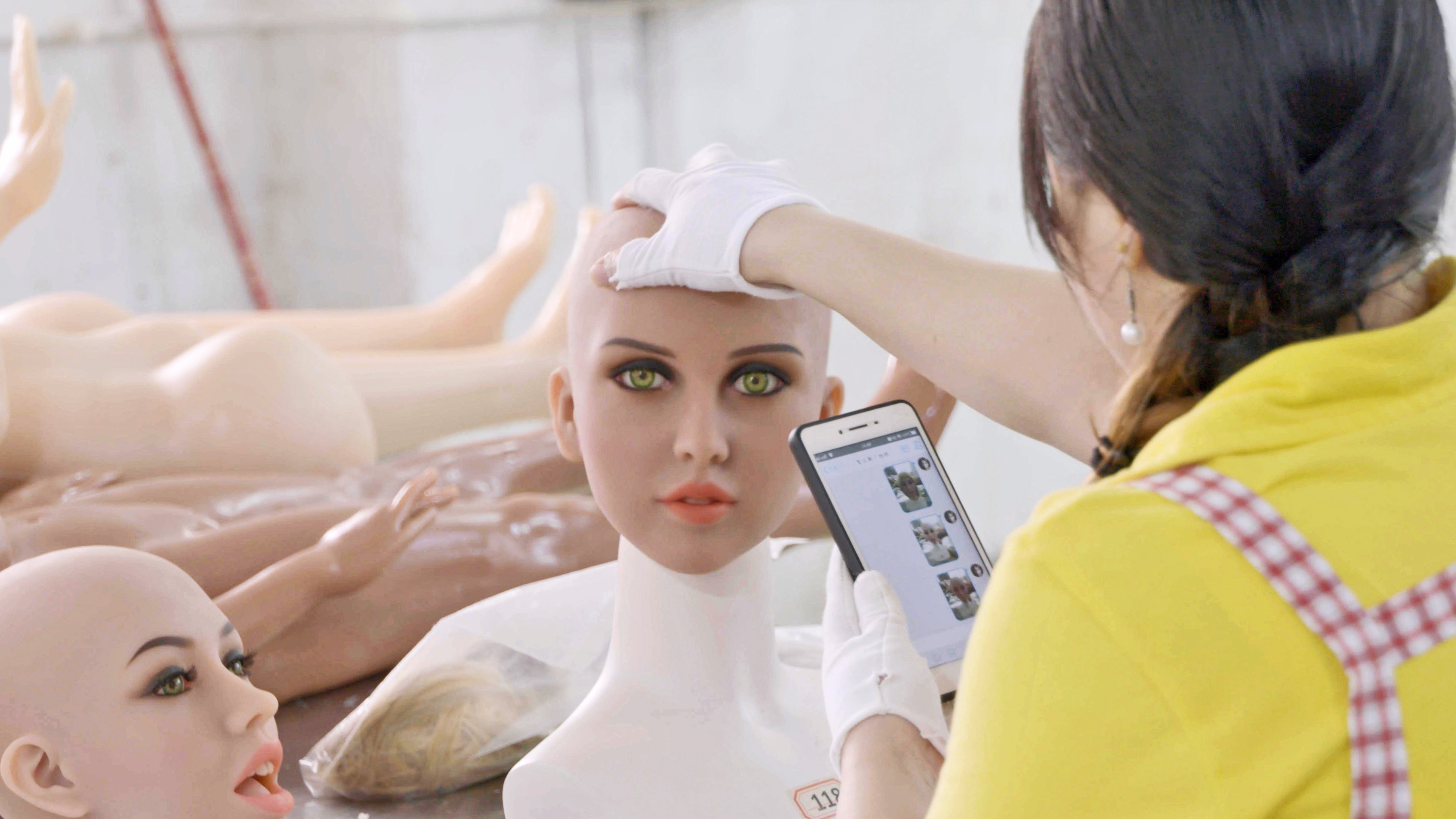
Factory worker inspecting the head of a sex doll during assembly in Zhonghan City, Guangdong Province, China, as seen in Ascension, directed by Jessica Kingdon. Image courtesy of MTV Documentary Films.

“Work hard and all wishes come true” according to a propaganda slogan pasted on a wall in Jessica Kingdon’s interrogation of the Chinese Dream, Ascension (登楼叹, dēng lóu tàn). Working her way through its various layers, Kingdon’s observational doc addresses the ironies of the contemporary society defined by its intense and ever growing wealth inequalities. According to a speech made by a dubious CEO approaching the film’s conclusion, China is a “fair society” his logic being that only the morally responsible are entitled to profit and society will find ways to rob those who’ve acquired their riches though illicit means of their ill-gotten gains while the trickle down economy otherwise ensures “wealth redistribution”. 

His justifications are, it has to be said, hard to accept. Kingdon opens the film with an aerial shot of a rooftop swimming pool in which the trio of women cleaning it appear tiny next to its comparativeness vastness as they care for a facility they may not be entitled to use. Descending to street level, we’re assaulted by PA speakers advertising for labour with promises of comfortable work, some which can be done sitting down, with accommodation in spacious dorms with aircon thrown in. Anyone would think there must be some kind of tremendous labour shortage, but the wages are lower than low, and employers apparently still picky over what kind of people they employ, stating an age cap of only 38 while banning those with criminal records or tattoos along with dyed hair and piercings. The excessively tall are also not welcome hinting at conditions more cramped than the announcements imply. 

Taking her camera inside the factories, Kingdon discovers people reduced to the level of automata, machines among machines mechanically sorting cooked poultry or stamping packaging while watching TV drama on smartphones. Workers complain that their bosses cheat of them of their pay and feel the need to bribe them by buying lunch to curry favour. Yet Kingdon also uncovers the absurdity of the everyday, shifting from a production line producing plastic bottles to an artisan workshop staffed almost entirely by women in cheerful yellow outfits with red gingham aprons crafting uncannily realistic sex dolls presumably for extremely wealthy, sometimes demanding clients. A worker stops to snap a picture of the doll’s nipples with a tape measure next to them to send for approval, while others obsess over the proper colouring for the areola or complain that the chemicals irritate their skin.

Shifting up a gear, she visits a school for bodyguards where the instructor randomly plays with a little goat for some reason hanging around outside and is then stung by a bee. The need for bodyguards is perhaps another symptom of increasing inequality as the super rich discover their “success” has only made them anxious for their safety. On the flip side, another school is busy training butlers for those enamoured of the trappings of feudalism. The instructor explains that one of her clients got a job as a PA right away and his sole responsibility was squeezing his boss’ toothpaste for him, preparing it in a little cup. Meanwhile across town, others teach proper business etiquette most particularly to female employees. A pretty woman is China’s business card, one enthusiastically points out selling the importance of cosmetics, while another even more dubious course in entrepreneurship has its participants “deciding” to earn millions within the year and then triple the amount in the next five. 

While a woman plumps pillows in a fancy hotel suite, painstakingly stripping a rose of its petals to place on a pair of towels folded into the shape of a swan, the wealthy enjoy leisure time at a huge water park which boasts a tunnel ride through the aquarium where “mermaids” swim alongside sharks and stingrays. Others ride a literal “lazy river” sitting in rubber rings styled like frosted donuts. Guests at a fancy French dinner praise American freedom, while others complain that Westerners criticise China’s human rights record but how can you think about human rights when you’re so poor your entire existence is occupied with survival? Billboards at street crossings bear footage of other people crossing, while a picture of Xi Jinping sits in the corner of a garment factory where they sew clothes embroidered with the logo “Keep America Great” and another worker rolls her eyes at claims the place is haunted. China’s greatest export, it seems, is irony. Kingdon’s beautifully composed shots add to the sense of absurdity as does the score veering from eerie synths to jaunty theme park music implying that the entire nation has in a sense become a playground for the rich and powerful built on wilful exploitation and the thoughtless cruelties of intense consumerism. 


Ascension opens the 13th Season of Chicago’s Asian Pop-Up Cinema on Sept. 15 before opening at New York’s IFC Center on Oct. 8 courtesy of MTV Documentary Films.

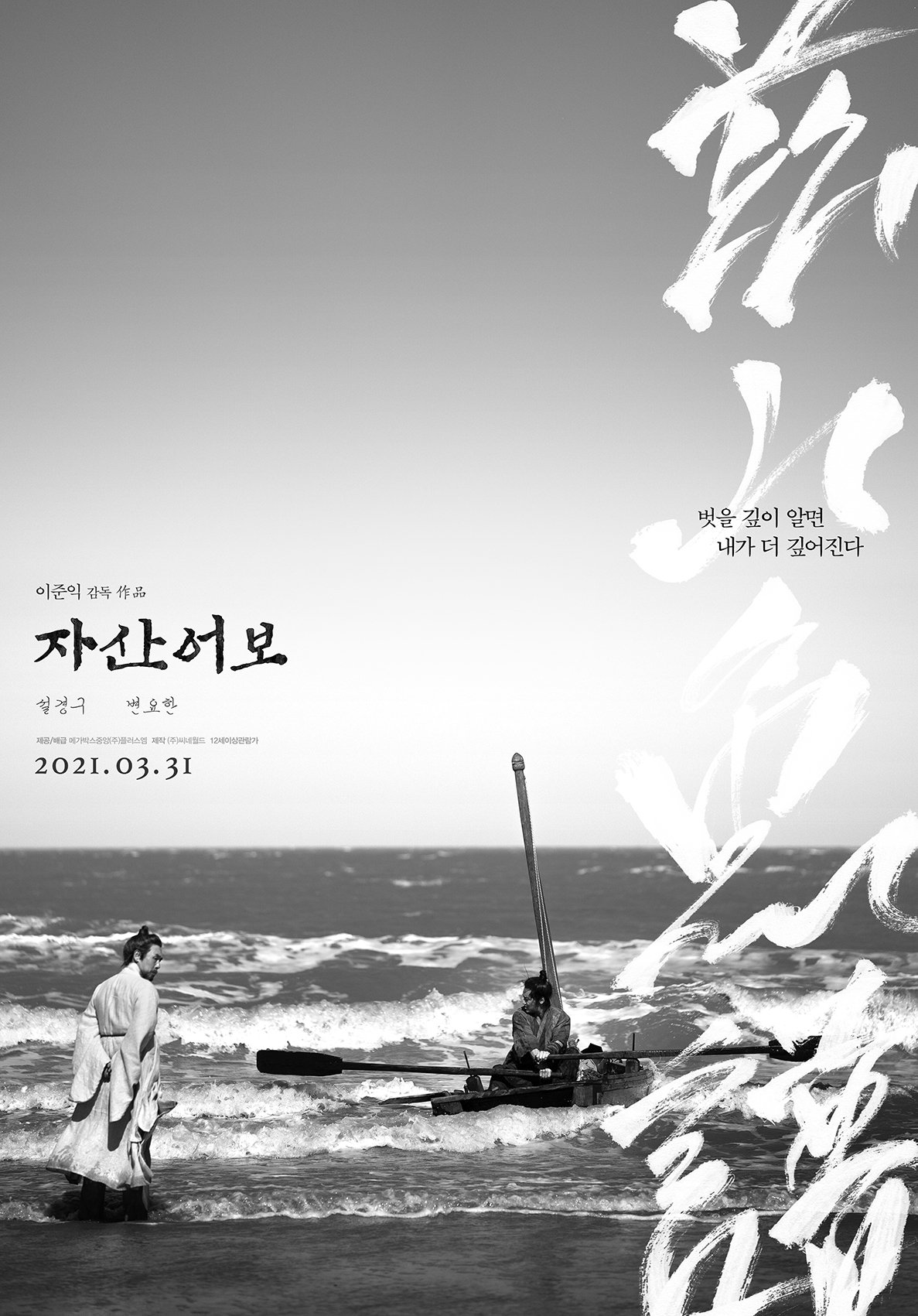
The Book of Fish (자산어보, Lee Joon-ik, 2021)

An “evil learning sinner” and a young man fixated on Neo-Buddhist thought develop an unlikely friendship while compiling an encyclopaedia about sea life in Lee Joon-ik’s contemplative period drama, The Book of Fish (자산어보, Jasaneobo). Like those of Hur Jin-ho’s Forbidden Dream, the hero of Lee’s historical tale of competing ideologies dreams of a classless future but is exiled from mainstream society not for his revolutionary rejection of a Confucianist hierarchal society but for his embrace of Western learning and religion. 

Like his two brothers, Chung Yak-jeon (Sol Kyung-gu) reluctantly joins the imperial court but later falls foul of intrigue when the progressive king falls only to be replaced by his underage son controlled by the more conservative dowager empress. Having converted to Christianity, Yak-jeon and his brothers are faced with execution but unexpectedly reprieved when the oldest agrees to renounce Catholicism and root out other secret Christians. Yak-jeon is then exiled to a remote island while his better known brother, the poet Yak-yong (Ryu Seung-ryong), is sent to the mountains. On his arrival, the local governor introduces Yak-jeon as a “traitor” and instructs the islanders not to be too friendly with him but island people do not have it in them to be unjustly unkind and so Yak-jeon is, if warily, welcomed into their community. “He maybe be a traitor, but he’s still a guest” his new landlady (Lee Jung-eun) explains as she prepares him some of the local seafood. 

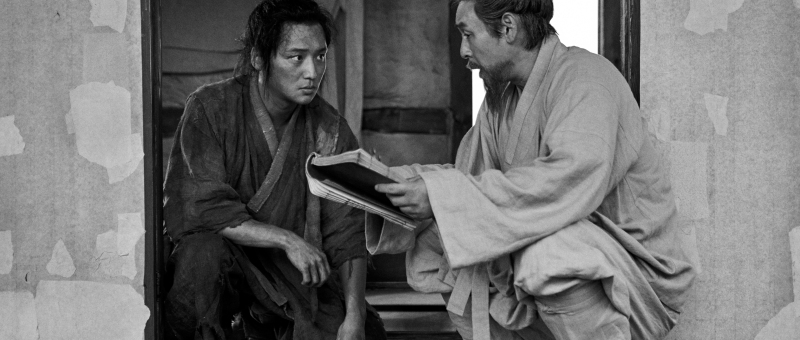
Yet Yak-jeon encounters resistance from an unexpected source, intellectual fisherman Chang-dae (Byun Yo-han) who goes to great lengths to acquire scholarly books despite his otherwise low level of education. Somewhat patronisingly, Yak-jeong offers to tutor him, but Chang-dae is a rigid thinker who believes the world is going to hell because people have forgotten their Confucian ideals so he’s no desire to be taught by a treacherous “evil learner” or be sucked in to his dangerous Catholicism. Surprisingly, however, for a man who risked death rather than renounce his religion, Yak-jeong is no fanatic and in fact does not appear to practice Christianity at any point while living on the island. What he professes is that Eastern and Western thought need not be enemies but can go hand in hand while a rigid adherence to any particular doctrine is what constitutes danger. 

Chang-dae had insisted that he studied “to become a better human” but he also has a large class chip on his shoulder as the illegitimate son of a nobleman who refuses to acknowledge him, fully aware that as a “lowborn” man he is not allowed to take the civil service exam and in any case would not have the money to buy his way in to the court. Despite later professing egalitarianism, Yak-jeong treats the islanders, and particular Chang-dae, with a degree of superiority extremely irritated by Chang-dae’s refusal to become his pupil in the slight of his elite status often making reference to his “low birth”. Confessing his desire for a classless society with no emperor, however, Yak-jeong encounters unexpected resistance as the young man finds it impossible to envisage a world free of social hierarchy based on rights of birth and swings back towards desiring the approval of his elite father in the determination to climb the ladder rather than pull it down. 

Chang-dae finds himself caught between two fathers who embody two differing ways of being, Yak-jeong advising him to think for himself rather than blindly follow Confucianist thought, while his father encourages him to towards the court and the infinite corruptions of the feudal order. Chang-dae does begin to interrogate some of the more persistently problematic elements of Confucian teaching including its views on women and entrenched social hierarchy but also feels insecure and desperately desires conventional success and entrance into a world he thinks unfairly denied to him. Once there, however, he discovers he cannot submit himself to duplicities of feudalism. The islanders are being taxed to into oblivion, not only is there a random counter-intuitive tax on pine trees but the government is also extracting taxes from the family members of the deceased as well as newborn babies while cutting sand into the rice rations it promises in return. His father and superiors laugh at him for his squeamishness, seeing nothing at all wrong in the right of the elite to exploit the poor. Trying to blow a whistle, Chang-dae is reminded that the courtly system is an extension of the monarchy, and so criticising a lord is the same as criticising the king which is to say an act of treason. 

Having been accused of treason himself, Yak-jeong declines to enact his revolutionary ideas penning only a couple of books during his time in exile in contrast to his brother who published many treatises on effective government. Yak-jeong explains he dare not risk writing his real views which is why he’s immersed himself in the beauty of the natural world, exercising his curiosity writing about fish while making use of Chang-dae’s vast knowledge of the sea. The two men develop a loose paternal bond but are later separated by conflicting desires, Chang-dae eventually choosing conventional success over personal integrity only to regret his decision on being confronted with the duplicities of the feudal order. Shot in a crisp black and white save for two brief flashes of colour and inspired by traditional ink painting, Lee’s contemplative drama finds itself at a fracture point of enlightenment as two men debate the relative limits of knowledge along with the most effective way to resist a cruel and oppressive social order but eventually discover only wilful self exile as Chang-dae learns to re-embrace his roots as an islander along with the openminded simplicity of Yak-jeong’s doctrine of catholicity in learning. 


The Book of Fish screened as part of this year’s New York Asian Film Festival.

Original trailer (Korean subtitles only)

Spaghetti Code Love (スパゲティコード・ラブ, Takeshi Maruyama, 2021)

“Tokyo is where everyone comes to make their dreams come true, right?” a naive young woman exclaims having just abandoned her life in the country to chase freedom and independence in the capital. “You’re wrong” her reluctant, infinitely jaded host tries to correct her, “Tokyo is where everyone gets killed by their dreams”.  Tokyo is indeed the place dreams come to die in the debut feature from music video director Takeshi Maruyama, Spaghetti Code Love (スパゲティコード・ラブ). As one dejected Tokyoite puts it in her slightly pretentious opening monologue, what they’re chasing isn’t love, or money, or success but “approval” wanting desperately to find acceptance but more often than not encountering only defeat and despair. 

At least, that’s according to intense artist Kurosu (Rikako Yagi) who has become moderately successful but remains somewhat insecure knowing that her success is partially built on that of her famous parents. She insists that there are two kinds of people in the world, those who meekly put up with a disappointing reality and those who defiantly “create their own world”. She of course claims to be the latter, a highly individualist artist who takes no shit from anyone but that doesn’t excuse her tendency to behave like a total diva in an effort to assert he superiority over others, humiliating aspiring photographer Tsubasa (Nino Furuhata) by likening his set up to an ad placed by a rural supermarket. 

Tsubasa meanwhile is himself conflicted having come to Tokyo to further his career as a photographer but desperate for work and afraid of selling out. He came because he thought it was better to regret the things you’ve done rather than those you haven’t and that he’d always wonder if he stayed at home, but now he’s wondering if it’s better not to try, that the possibility of what might have been is easier to bear than knowing you tried and didn’t work out. Painting a slightly rosier version of his Tokyo life on social media he offers a Twitter friend the opportunity to visit him in the capital out of politeness only for her turn up, insist on staying with him in his tiny apartment, and make him feel even worse with her childish idealism which has a kind of poignancy in its unrealistic hopefulness.  

Like Tsubasa, aspiring singer-songwriter Cocoro (Toko Miura) is beginning to wonder if her dreams are worth pursuing as she meditates on the success of prettier rivals in both her work and romantic lives, spotting ex Shingo (Hiroya Shimizu) with his new squeeze and irritated when he smirks at her from across the courtyard. A cold and aloof young man fond of giving overly scientific explanations for philosophical questions, Shingo has decided that unhappiness is the result of broken attachment and so he’s decided to have no attachments at all even going so far as to have no fixed address living by apartment hopping every 10 days. As he discovers to his cost, living life with no connections may be fine on the day to day but you’ll be in a fix if you wind up in trouble and have no one to ask for help. His new girlfriend Natsu (Saya Kagawa), by contrast, has the opposite problem working as a sex worker in part as a means of protecting herself from romantic heartbreak by avoiding emotional intimacy. While Cocoro wonders what her life would be if she were as pretty as Natsu, Natsu meditates on the pretty girl paradox admitting that some things come easy but others slip through her fingers. She claims to love lonely people because lonely people don’t up and leave without warning. 

But loneliness manifests in many forms such as that exhibited by Shizuku (Kaho Tsuchimura), a part-time waitress with extreme low self-esteem who’s staked her existence being on the perfect partner for her boyfriend while terrified he’ll leave her an anxiety later borne out by the fact he’s married to someone else and apparently only using her as a “fun” break from his presumably less patriarchal domestic life. And then there’s Uber Eats driver Amane (Kura Yuki) and his unwise attachment to a low level idol star who’s since retired. Obsessing over her rather banal favourite aphorism about whether a falling tree in the forest makes a sound if no one’s around to hear it he vows to forget her once he’s made 1000 deliveries but realises that a romantic attachment is hard to break even if it’s entirely one sided. 

On the flip side, broken hearts eventually bring two next-door neighbours together as they mutually abandon their unhealthy coping mechanisms of online psychics and compulsive peanut butter eating while bonding in a shared sense of romantic disappointment realising the terrible men who dumped them aren’t worth all this aggro. A pair of emo high school students suddenly realise growing old isn’t so bad after all, and a kid struggling with his life plan survey suddenly realises that “no plan” is also a plan before careering off on a borrowed skateboard. Tokyo can be cruel and unforgiving, but so can everywhere else. Shot with true visual flair, Maruyama’s ethereal, floating camera follows this interconnected yet isolated band of young people all over the city as they search for love, chase their dreams, and yearn for connection allowing them each at least if not fulfilment then possibility as they learn to accentuate the positive in a sometimes hostile environment.


Spaghetti Code Love streamed as part of this year’s Japan Cuts.

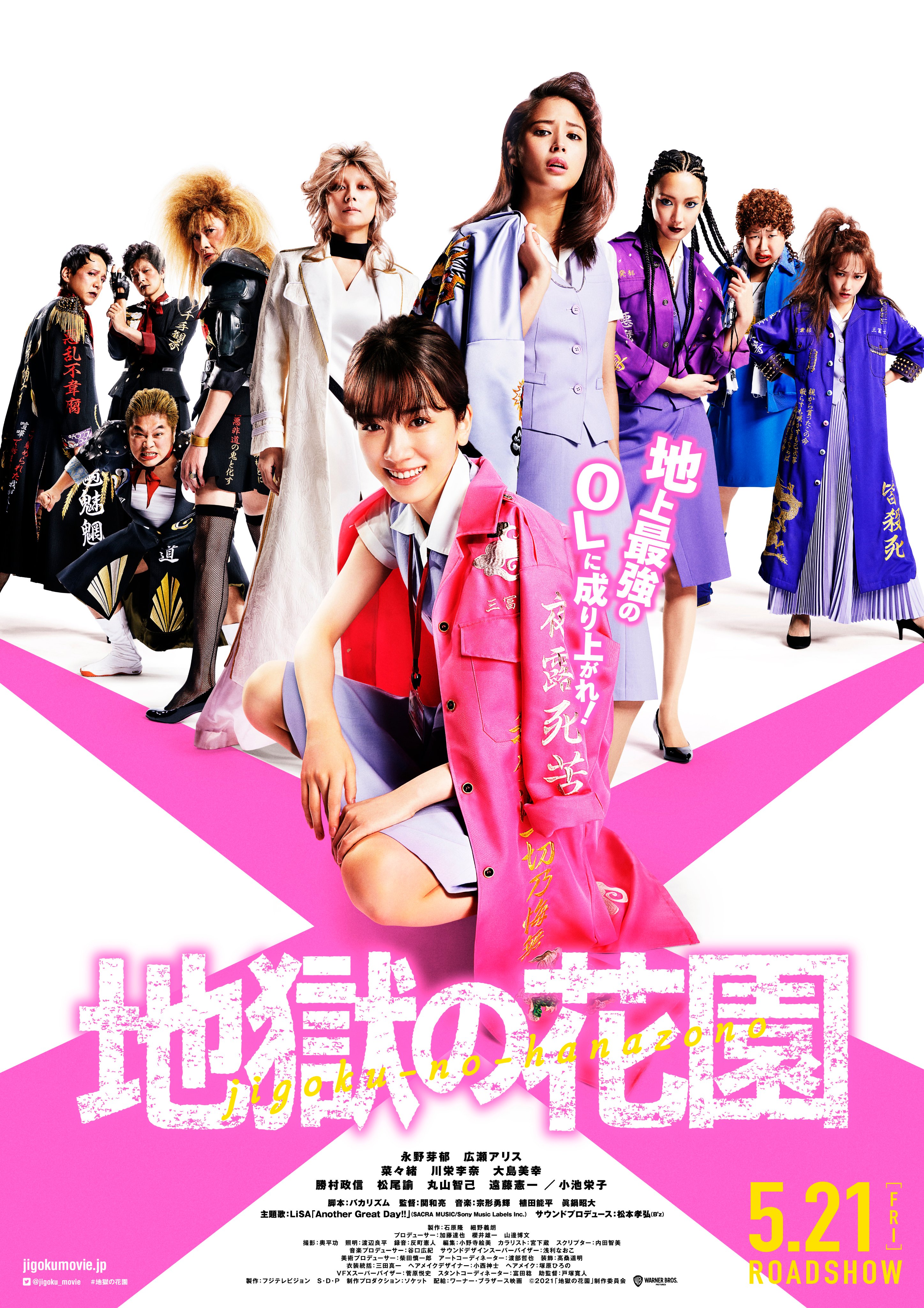
Jigoku-no-Hanazono: Office Royale (地獄の花園, Kazuaki Seki, 2021) [Fantasia 2021]

The OL, or “office lady” occupies a peculiar place in Japanese pop culture if not the society itself. The evolution of the typing pool, the OL exists to one side of office life, treated as domestic staff in the corporate environment and in many ways expected to be invisible. As such, an OL performs stereotypically feminine tasks in the office such as keeping the place clean and their male bosses looked after in addition to handling often dull and pointless admin work. It goes without saying that in general being an OL is a young woman’s job with the expectation that most will either find a way to transition onto a more viable career track or simply leave the world of work behind to marry and become a regular housewife. 

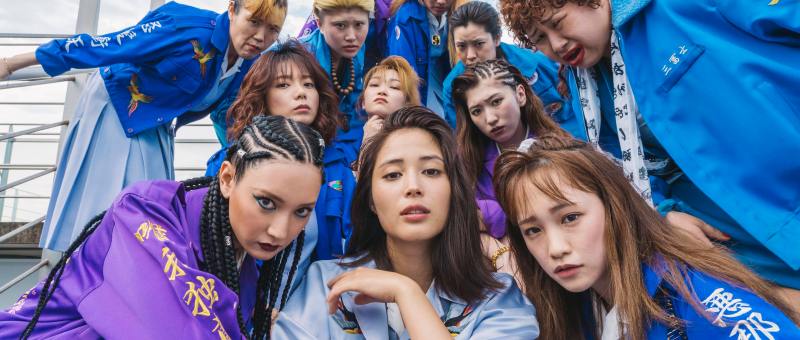
It’s this image of the OL as the embodiment of bland geniality that is at the centre of Kazuaki Seki’s zany comedy Jigoku-no-Hanazono: Office Royale (地獄の花園, Jigoku no Hanazono), a repurposing of “yankee” high school delinquent manga for the world of the office lady scripted by comedian Bakarhythm. A devotee of yankee manga, 26-year-old OL Naoko (Mei Nagano) explains that even office ladies have their warring factions outlining the tripartite fault lines at play in even her small company where the head OLs from Sales, R&D, and Manufacturing constantly vie for hegemony through physical dominance. She however merely observes from the sidelines defiantly living her “ordinary” office lady life. That is until new hire Ran Hojo (Alice Hirose) arrives to upset the precarious workplace power balance. 

Naoko first catches sight of Ran after she challenges some of the OLs from her company as they harass a timid male employee in the street though they don’t become best friends until after Ran spots a salaryman trying to upskirt her at a bus stop and decides to teach him a lesson. Despite being a yankee, it seems that Ran is also trying to live a normal OL life, bonding with Naoko over their shared love of a TV drama, but is not exactly good at the job and regards fighting as her one and only skill. Perhaps speaking to an inner insecurity born of being a woman in a conformist and patriarchal society, each of the women struggle to see themselves as protagonists in their own lives rather than mere supporting players unwittingly both playing the role of the ditzy best friend to the competent hero. 

In one of her many meta quips commenting on the action and how it would play out if she were a character in a yankee manga, Naoko laments her status as the “comic book hero’s boring friend” which is extremely ironic seeing as she is certainly the heroine of this movie given that it’s her voiceover we’re hearing and her POV we generally adopt. Yet Seki sometimes undercuts her by shifting to a rival voiceover offered by Ran herself doubtful of her proper place in the narrative and eventually descending into an existential crisis after an unexpected setback shatters her sense of self. 

Nevertheless, even if as the de facto leader of her company’s OLs Ran advocates for equality insisting there are no bosses and no underlings only women standing together, Office Royale generally embraces rather than attacks societal sexism particularly in its somewhat unexpected conclusion which ends in ironic romance rather than female solidarity. Even so, it’s interesting that the OLs lose interest in delinquency once the hierarchy of fists has been fairly decided, acknowledging the superior skills of a better fighter and thereafter living peacefully rather than continuing the internecine determination to sit at the top of the pyramid which is the hallmark of the high school yankee manga. 

While the final arc strays into some potentially problematic territory with the uncomfortable humour of four male actors playing the top fighters of a rival gang of OLs from another company, Office Royale offers a series of surprisingly well choreographed fight scenes even if eventually descending into manga-esque cartoonish violence while much of the humour stems from Naoko’s adorably nerdy voiceover musing on what would happen next if this were a yankee manga. In the end, however, it’s less a tale of office lady infighting than of a pair of young women coming to a better understanding of themselves even if they do so through the potentially destructive medium of pugilism. 


Jigoku-no-Hanazono: Office Royale streamed as part of this year’s Fantasia International Film Festival

Original trailer (English subtitles)

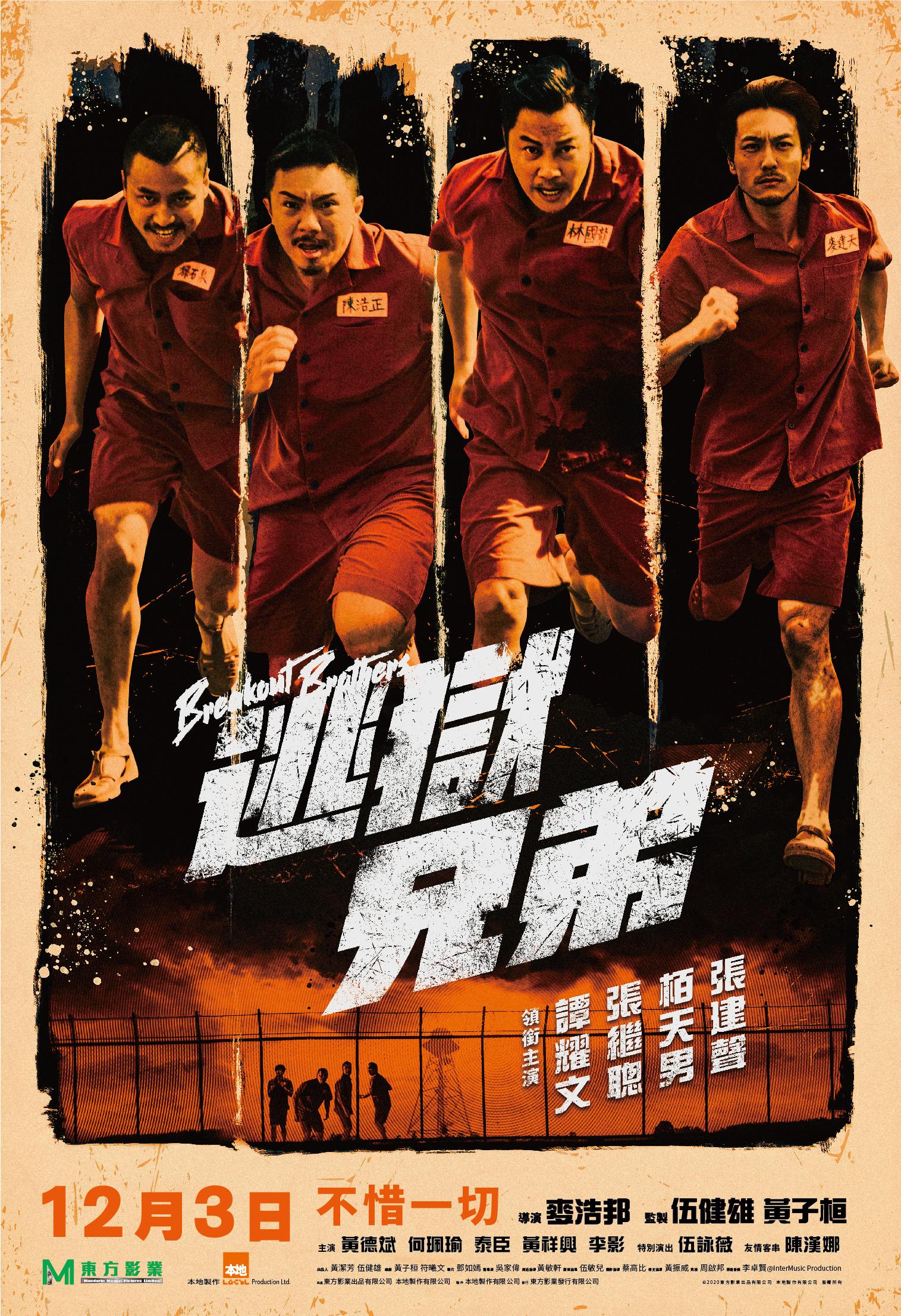
Breakout Brothers (逃獄兄弟, Mak Ho-Pong, 2020)

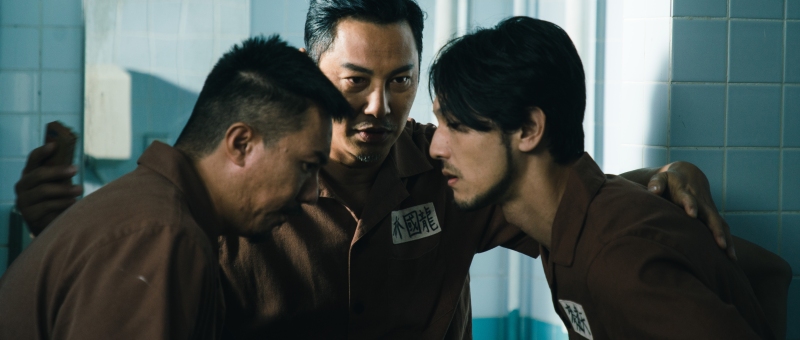
“I’m treating this as a vacation” says affable triad Chan (Louis Cheung Kai-Chung) of his three month prison term, after all it’s rent free and three meals a day who could say no to that in the difficult economic environment of pre-handover Hong Kong? Nevertheless, it’s hardly a vacation if you can’t cut it short and Chan, along with two buddies, will eventually find reasons to want to leave. Mak Ho-pong’s genial prison break comedy Breakout Brothers (逃獄兄弟) takes occasional subversive potshots against an increasingly corrupt social order but eventually discovers that you can’t escape social responsibility while the real reward is indeed the friends you make along the way. 

That is at least the conclusion that newbie prisoner Mak (Adam Pak Tin-Nam) comes to after being pulled into an escape plan formulated by petty gangster Chan who decides to make a break for it after learning that his dear mother has been taken ill and needs a kidney transplant which only he can give her. Thinking of his prison time as a vacation from the pressures of everyday life, Chan has been a low maintenance prisoner and therefore assumed the warden would agree to a temporary release to let him help his mum, but Warden Tang (Kenny Wong Tak-Ban) who has already served a “life sentence” of 30 years in post has recently been promised a promotion and doesn’t want anything to mess it up like a prisoner turning fugitive while on hospital leave. Spotting a workman disappearing from a storeroom and emerging Mario-style from a manhole on the other side of the fence Chan gets an idea and enlists Mak, an architect inside after being framed for taking bribes, to help him figure out the logistics, and Big Roller (Patrick Tam Yiu-Man), leader of the prison’s second biggest gang, for access and protection. 

The guys’ predicaments are perhaps embodiments of the age, Chan wanting out for reasons of filial piety while for Big Roller it’s in a sense the reverse in learning the daughter he was told had died is in fact alive and about to be married. Mak meanwhile wants out because he’s a sitting duck inside, the shady construction CEO who framed him for signing off on lax safety procedures which led to a fire in a prominent building having enlisted the services of rival gangster Scar (Justin Cheung Kin-Seng) to intimidate him into dropping his appeal. Hints of institutional corruption extend to the colonial prison system with guards quite clearly intimidated by prisoners and often turning a blind eye to cellblock violence while it’s also implied that Warden Tang has in a sense facilitated the rise of Scar at the expense of Big Roller as a means of maintaining order. He, like the colonial authorities, will soon be on his way but anticipating his own freedom is keen there be no trouble which is why he refuses Chan’s compassionate leave and extends little sympathy to new boy Mak. 

In any case, the real draw is the bumbling crime caper of the guys planning a heist-style escape which is, in the history of prison escapes, not an especially elaborate one. The prison is not exactly max security, and as they plan to escape during the celebrations for the Mid-August festival none of them are anticipating much difficulty in making it to the outside though as expected not quite everything goes to plan. Mak, meanwhile, eventually takes Big Roller’s advice and decides to stay inside to clear his name properly while the gang ensure his safety rather than try to live as a guilty fugitive and possibly be caught only to end up with more time. The other two have more pressing temporary goals and have not perhaps considered what to do after they’ve completed them, believing only that their lives are untenable if they cannot fulfil their duties as father and son respectively. 

Perhaps for this reason, the Mainland-friendly conclusion has each of the men recommitting themselves to paying their debts to society, Chan even insisting that he’s going to use his time wisely to improve his education in order to be a better husband and son while Big Roller promises to become a carpenter for real. Mak gets a partial vindication in that the shady CEO is finally forced to face justice while also realising that his slightly elitist, individualist stance has been mistaken thanks to the warm and genuine relationships he’s discovered inside. More comedy crime caper than tense prison break thriller, Breakout Brothers remains true to its name in prioritising the unconventional friendship that develops between the trio as they bond in a shared sense of existential rather than literal imprisonment. 


Breakout Brothers screened as part of this year’s New York Asian Film Festival.

Original trailer (English / Traditional Chinese subtitles)

The Blue Danube (きまじめ楽隊のぼんやり戦争, Akira Ikeda, 2021)

“Just shoot where you’re told and you’ll be fine” a veteran advises an unusually curious newbie when asked who exactly it is they’re shooting at, beginning to question for the first time everything he’s been told. Continuing in the same vein as his 2017 surrealist drama Ambiguous Places, Akira Ikeda’s Blue Danube (きまじめ楽隊のぼんやり戦争, Kimajime Gakutai no Bonyari Senso) follows a more linear though meandering path in its timely anti-war message as the brainwashed hero comes to contemplate the tenets of his society thanks to a naive young man and the healing power of music. 

The small town of Tsuhiramachi has been at war with Tawaramachi across the river for so long no one can remember why it is that they’re fighting, least of all perpetually absent-minded mayor Natsume (Renji Ishibashi) who can’t even remember his own son’s name. Soldier Tsuyuki (Kou Maehara) is woken every day by a marching band, meeting friend and colleague Fujima (Hiroki Konno) in the street and walking over to the barracks where he changes into his uniform and then spends all day firing a rifle across the river. His identical days are disrupted when former thief Mito (Hiroki Nakajima) is conscripted into their group and Fujima is injured in seemingly the only instance of returned fire. Tsuyuki is then transferred to the marching band and begins practicing his trumpet by the water only to be surprised when he begins hearing someone joining him from the other side. 

Everyone in Tsuhiramachi walks with automaton rigidity and talks with an almost ritualistic austerity in which dialogue is repeated endlessly and conversation loops are common. The townspeople dress as if they were stuck in the 1940s though the uniforms are more European than Japanese while Tsuyuki and Fujima wear identical blue suits when travelling to and from their homes. The thief, Mito, meanwhile dresses in a less formal brown shirt and trousers, apparently engaging in stealing from the local simmered food stand for reasons of poverty while his friend, mayor’s son Heiichi (Naoya Shimizu), does so because he can. When the stall owner’s wife catches them, Heiichi allows his father to think he valiantly chased a thief and is made a police officer for his pains continuing to extort food and generally abuse his authority largely conferred through feudal dynastic privilege. 

There is certainly something in Mito’s tendency to frame each of his statements as a questions, asking “Am I a soldier now?” Or “My name is Mito?” when questioned. The lady who runs the diner where Tsuyuki frequently lunches is extremely proud of her son away fighting up river and resents being questioned by Mito, shovelling extra rice into the men’s bowls when impressed by something they’ve said and then taking it back when disappointed. Mito wants to know why it is they’re fighting and who the people across the river really are. Shiroko (Hairi Katagiri) doesn’t approve of asking such taboo questions and affirms that she doesn’t need to meet the residents of Tawaramachi to know that they’re “barbaric”, “horrible” people. Even the owner of the simmered food stall who insists he knows “everything” insists he’s no interest in knowing about Tawaramachi. 

Yet they’re always being told that the “threat” from across the river is increasing even if the mayor has forgotten what the threat exactly is. Meanwhile, an elite troop will soon be arriving to take part in the trials for a brand new super weapon. A disapproving Shirako asks Tsuyuki how music is useful for the war, but he doesn’t know, he’s merely following orders. Music however, along with Mito’s awkward questions, begins to open his eyes as he contemplates whether the trumpeter from across the water can really be so different from himself. He disapproves of Heiichi’s abuse of his authority, of civil servant Kawajiri’s apparent replacing of his wife with another woman because he believes she cannot bear children, and of the army’s treatment of a friend now struggling to find employment having lost his arm for the good of the town. Shiroko insists that dying in war is better than being injured, but the young universally agree that no, it isn’t. In this strangely Kafka-esque world of crypto-militarism and the feudal mentality, Tsuyuki finds freedom and escape in his trumpet but not even these it seems are enough to call the “meaningless” and internecine violence to a halt. Filled with a strangely poignant poetry, Ikeda’s absurdist drama takes aim at lingering authoritarianism but suggests that music may be panacea for human conflict if only we’d stop a little and listen. 


The Blue Danube streamed as part of this year’s Japan Cuts.

Original trailer (English subtitles)
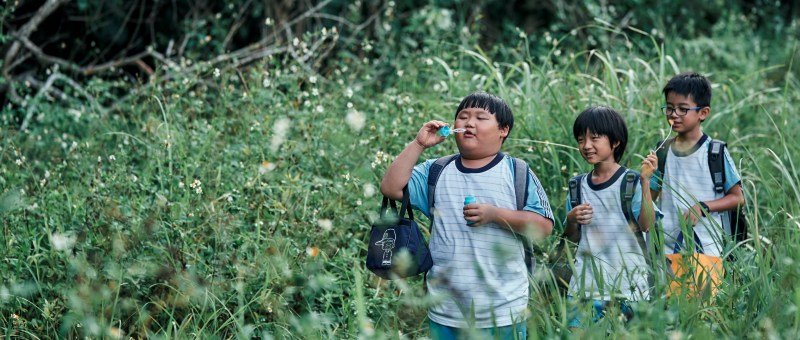
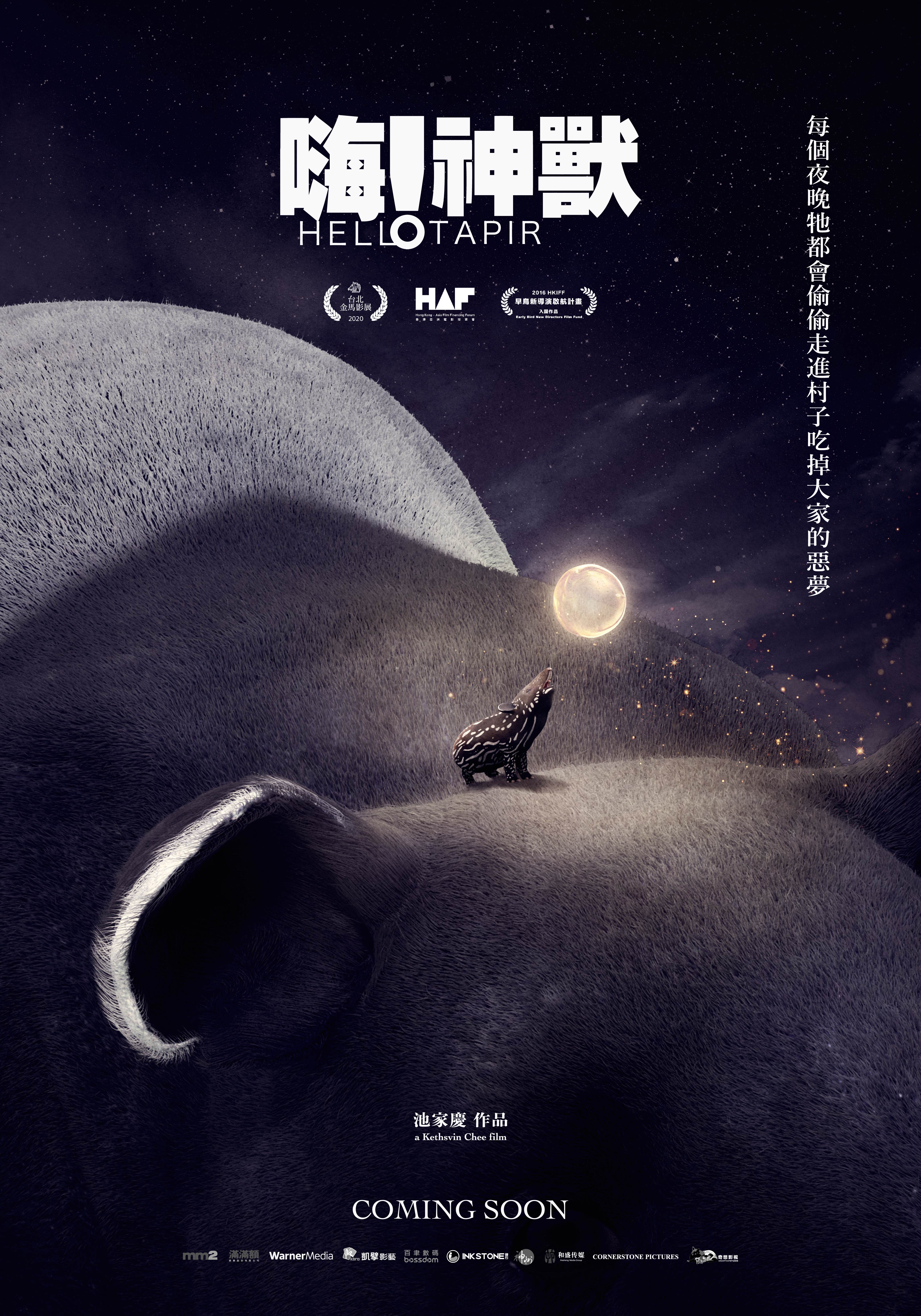
Hello! Tapir (嗨!神獸, Kethsvin Chee, 2020) [Fantasia 2021]

“In this world, everything disappears eventually” according to the prophetic words of the absent father of young Keat in Kethsvin Chee’s charmingly retro children’s fantasy adventure Hello! Tapir (嗨!神獸, Hāi Shénshòu). At heart a tale of grief and a small child’s acceptance of death, Hello! Tapir is also one of gentle adventure as the hero and his two friends search for tapirs in the undergrowth but eventually discover an accommodation with loss in the knowledge that nothing’s ever really gone even if you can’t see it. 

Keat (Bai Run-yin) lives in a small fishing village with his fisherman father (Lee Lee-zen) and grandma (Lü Hsueh-feng) who sells seafood at the market. Captivated by his father’s improbabe tale of having encountered a tapir who eats people’s nightmares in the forest, Keat implores his dad to take him to see it too but Keat’s father Sheng is always too busy and often reneges on his promises. Ominous winds start to blow when news of a typhoon is broadcast over the radio while Keat is angry that no one woke him before his father left on the boat as he had asked them to do. Sure enough, not long after Keat discovers a commotion at the harbour and gathers there has been some kind of accident at sea. His father hasn’t come home and his grandma is frantic but he’s just a little boy and no one is telling him anything. 

Told from a child’s point of view, Chee’s melancholy tale perfectly captures the confusion and resentment of a small boy in the midst of crisis. Keat cannot conceive of the idea his father may never come home again, replying to his friend’s questions that he’ll be back maybe tomorrow or the day after that. After all, he was supposed to take him to see the tapir. Because he’s sure his dad’s coming back, he grows resentful towards his recently returned mother (Charlie Yeung Choi-Nei) who left the family some time previously and had been living in Taipei and his grandmother for taking his father’s place away by boxing up his clothes and preparing to sell the fishing boat which came back empty on its own for scrap. 

Meanwhile he attempts to secure his father’s legacy by searching for the tapir on his own, encountering a baby which later leads him into the forest and towards its giant parent sucking on golden nightmare orbs all the way. Tapirs are obviously not native to Taiwan and so their presence is as decidedly unexpected as their unusual appearance. You would’t expect to see one wandering through town unless it had recently escaped from a zoo, but they are perhaps Keat’s way of processing the loss of his father the adult tapir gently showing him what it was he most wanted but feared to know while comforting him with its reassuringly warm presence. 

On the cusp of adolescence, Keat finds himself squarely between two sets of overlapping worlds caught between the fantasy of nightmare-eating tapirs and the reality of his grief while also remaining firmly in the realms of childhood having innocent adventures with his two friends as they try all sorts of tricks to draw out the mystical creatures just as his mother deals with the difficulties of planning a funeral and making plans for the future without overburdening her son with impending change. Nobody tells Keat anything because he’s just a child and they think he won’t understand, but he understands that they’re not telling him and the knowledge further increases his sense of loneliness and alienation left entirely alone with his grief and anxiety. 

A beautifully drawn magical realist fable, Chee’s charmingly old fashioned kids fantasy adventure makes the most of its idyllic seaside setting replete with a warm and friendly atmosphere despite its concurrent tragedy. Keat is forced to face the reality of his loss, but does so while maintaining a sense of wonder for the natural world secure in the knowledge that all things disappear in the end, but it isn’t the end of the story and death is merely another part of life. Warm and empathetic, Hello! Tapir paints its coastal setting with an uncanny sense of magic coupled with a cosmological sense of security as its young hero begins to come to terms with his loss thanks to the gentleness of sleeping creatures. 


Hello! Tapir streamed as part of this year’s Fantasia International Film Festival

Original trailer (English subtitles)
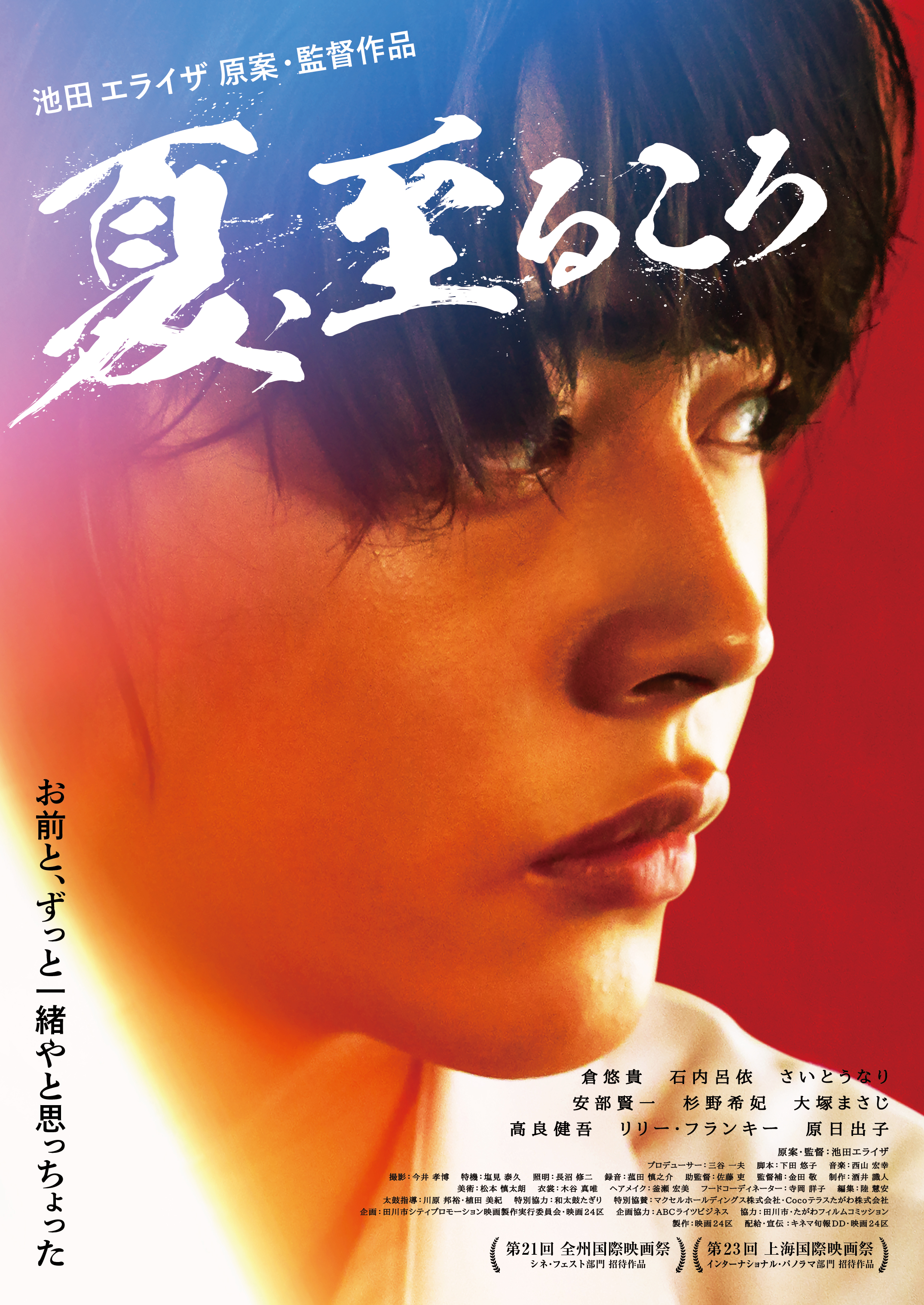
Town Without Sea (夏、至るころ, Elaiza Ikeda, 2020)

“Happiness is something you don’t notice even if it’s right next to you” the hero of actress Elaiza Ikeda’s directorial debut Town Without Sea (夏、至るころ, Natsu, Itaru Koro) is told by a strangely perceptive small child. The nature of happiness is something that seems to be bothering him while he contends with adolescent anxiety little knowing what to do with the further course of his life while fearful in the knowledge that his relationship with his childhood best friend must necessarily change. 

Approaching the final year of high school, taiko-enthusiast Sho (Yuki Kura) has no dreams or aspirations and has been avoiding thinking about what to do after graduation. Pressed by his teacher, all he can offer is that he’d like to become “air”, which is in its own way slightly alarming though it hints at his sense of emptiness and despair. His childhood best friend, Taiga (Roi Ishiuchi), meanwhile has a clearly defined, extremely sensible life plan which is why he’s abruptly giving up taiko so he can attend cram school and get into uni with the aim of becoming a civil servant. As we discover, Sho has been something of a follower making most of his existing decisions based on whatever Taiga was going to do, but he can’t merely follow him this time and will have to come to some sort of decision about his individual future. 

“I can’t walk alone. I don’t know what to do” he confesses to a surprisingly sympathetic teacher (Kengo Kora), while as it transpires Taiga is having similar thoughts. The two boys are much more co-dependent that they assumed, but that very co-dependency begins to drive them apart when coupled with their adolescent anxiety. Taiga fears that he is simply too “boring”, giving up taiko because his carefully honed technique cannot measure up to Sho’s anarchic power. According to him he took up taiko after spotting Sho playing at a festival thinking he looked so “free and cool”, yet Sho equally thinks he’s not as a good a drummer and cannot match Taiga’s meticulous training. Taiga is shifting away from their friendship because he secretly feels inferior and wants to leave before being around Sho makes him feels miserable, a logic Sho is not fully equipped to understand. 

“Why does everybody quit?” he asks in exasperation, meeting a strange young woman who like them wants to pull away from something before she ends up hating both it and herself. Likened by Taiga to the kind of manic pixie dream girl who frequently turns up during the last summer of high school in manga, Miyako (Nari Saito) does not quite come between the two boys in the expected way but does bring out their contradictory qualities before abruptly disappearing from the narrative, ahead of the pair in suddenly deciding that she’ll figure something out on her own. Having decided all he wants is a future of ordinary happiness, Taiga can’t help resenting his friend feeling that whatever decision he makes, getting a job or going to uni, he’ll wind up happy whereas he presumably will not with his unexciting yet sensible life as a civil servant. 

There is an undeniably homoerotic quality to the boys’ friendship, their brief falling out almost like a lovers’ tiff in its melancholy intensity. Sho necessarily fears the loss of his friend, perhaps instinctively knowing he’s chosen a path he likely cannot follow and feeling rejected because of it. He obsessively meditates on the meaning of “happiness” unable to settle on a means of achieving it while unsure of what exactly it means. He asks his friends and family but discovers that happiness means different things to different people, may change over time or not quite be what you first thought it was, or be as simple as a sunny day in your hometown. He does however begin to accept that even if separated, his relationship with Taiga will not necessarily change they will still be “together” if more in spirit than body. Recalling something Taiga had said about the sea which he has never seen, he makes his choice defiant in its independence. Hailing from Fukuoka herself, Elaiza Ikeda’s remarkably assured directorial debut crafts a warm, empathetic coming-of-age tale centring on the intense friendship between two men but discovering a sense of wonder and contentment in the everyday as its conflicted hero finds a sense of rootedness in the strength of his relationships that grants him the freedom to roam. 


Town Without Sea streamed as part of this year’s Japan Cuts.

Original trailer (English subtitles)
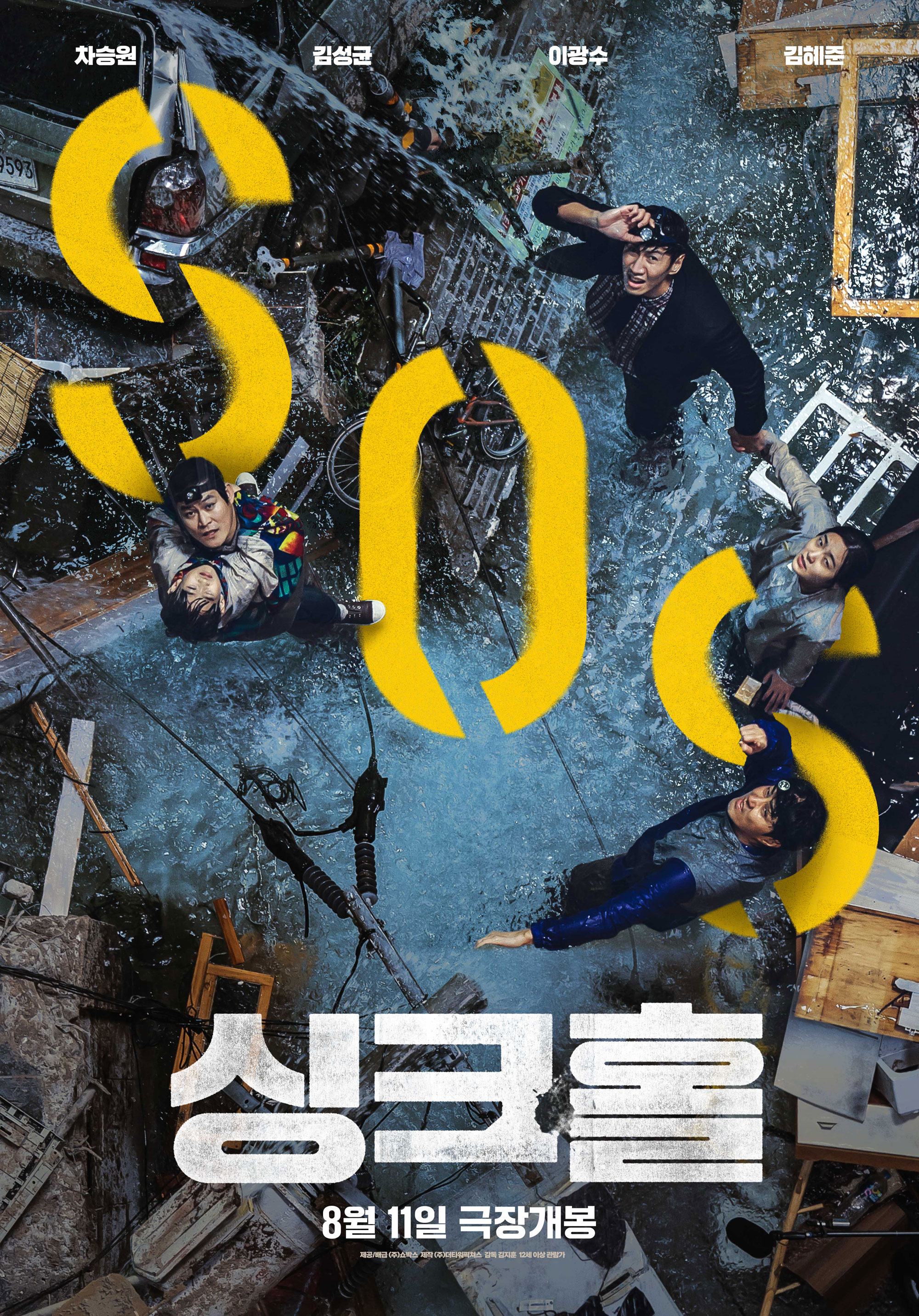
Sinkhole (싱크홀, Kim Ji-hoon, 2021)

Financial security is built on shaky ground in Kim Ji-hoon’s harrowing disaster dramedy Sinkhole (싱크홀) in which one man’s home-owning triumph quite literally crumbles beneath his feet. The latest in a recent series of movies lamenting the sometimes lax safety culture of the Korean construction industry, Sinkhole is also a crushing indictment of a society ruled by house prices in which social status is largely defined by the owning of property while the young in particular struggle to climb out of a deep well of societal despair. 

As the film opens, the Park family is about to move in to their new flat, the first they’ve ever owned albeit with a frighteningly large mortgage, in the middle of a seasonal downpour. Only when they arrive, they discover the movers haven’t even started unloading because their apparently irresponsible neighbour Man-su (Cha Seung-won) has inconsiderately parked his car in front of the entrance and isn’t answering his phone. Patriarch Dong-won (Kim Sung-kyun) ends up in an awkward confrontation with the abrasive apartment dweller which is inconvenient because Man-su apparently works in just about every business in the area which means he continues to run into him just about everywhere he goes. 

Anyway, that’s the the least of his problems because, having made this giant investment, Dong-won can’t help thinking there’s something wrong with his new dream home especially when his adorably polite young son Su-chan points out that his marbles roll across the floor of their own accord. Worried they may have a subsidence problem, Dong-won checks his windows open properly and records evidence of ominous cracks in the pavement outside but struggles to get the other residents to agree to maintenance checks in fear that not getting the answer they want will bring down the value of their property. 

Property prices are apparently everything. Homeownership is an unobtainable dream for many, yet Dong-won already feels insecure in his purchase especially as his colleagues seem relatively unimpressed by the fact his flat is in a recently gentrified area and comparatively modest. Bamboozled into hosting a housewarming, he’s mildly embarrassed to realise the view from his balcony is of nicer, much more expensive luxury flats just across the river which are likely to remain far out of his reach. Nevertheless, his colleague, Seung-hyun (Lee Kwang-soo) declares himself jealous in part because he’s still renting a studio flat and feels that dating let alone marriage is impossible without being in a position to get a multi-room apartment. His colleague Eun-ju (Kim Hye-jun) is in the same predicament but prefers to see it as simply being at a certain stage on the ladder.  

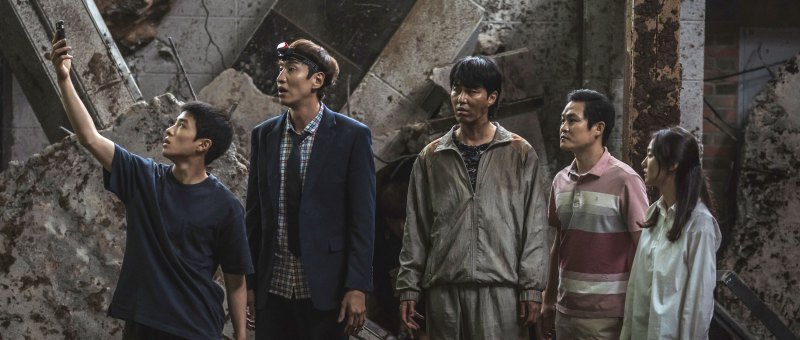
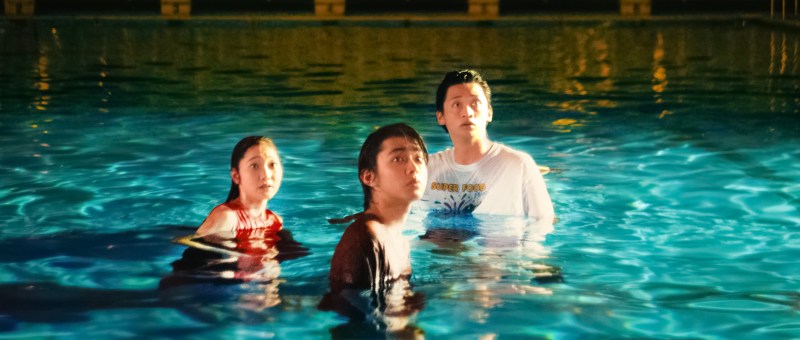
This dream of future security is however quite literally built on shaky ground. There are definitely problems with Dong-won’s new apartment which become increasingly severe from the tilting floors to cracked glass and interruptions with the water supply presumably caused by cost-cutting and shoddy construction practices. When the building collapses into a sinkhole, Dong-won is trapped inside with work colleagues Seung-hyun and Eun-ju along with Man-su and his teenage son Seung-tae (Nam Da-reum). Despite the inherent horror of the situation, Kim keeps the atmosphere light as the small band of survivors attempts to manage as best they can, finding an awkward solidarity while trying to attract the attention of the emergency services and eventually making a daring escape using whatever tools are available to them. 

Even so, as much as the small band of almost strangers bond thanks to their desperate circumstances, there is an uncomfortable conservatism at play especially in the film’s treatment of a working class single mother and her son living in an apartment on the floor below Dong-won’s. That aside, Sinkhole offers a fierce criticism of an increasingly consumerist society in which house prices are all anyone talks about and homeownership is the only badge of social success. 11 years of patient sacrifice is swallowed in an instant, sucked into an abyss of corporate malfeasance, while Dong-won is left to climb out of the hole he’s in on his own. It’s small wonder that some of the survivors decide to drop out of the system altogether, ditching the idea of rooted homeownership for nomadic freedom in buying a small caravan rather than participate in the property market or climb the corporate ladder. “Don’t be happy in 10 years, be happy today!” they enthusiastically chant. The entire society is, it seems, sitting on a sinkhole which might give any minute, what’s the point in investing in a future which could disappear from beneath your feet without reason or warning? 


Sinkhole screened as part of this year’s New York Asian Film Festival.

International trailer (English subtitles)