Promised Land (プロミスト・ランド, Masashi Iijima, 2024)

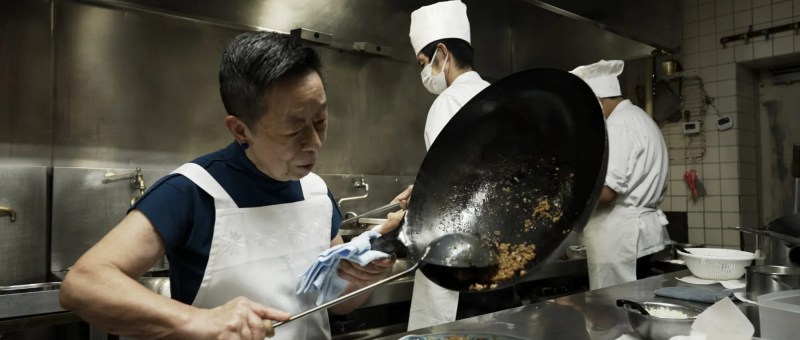
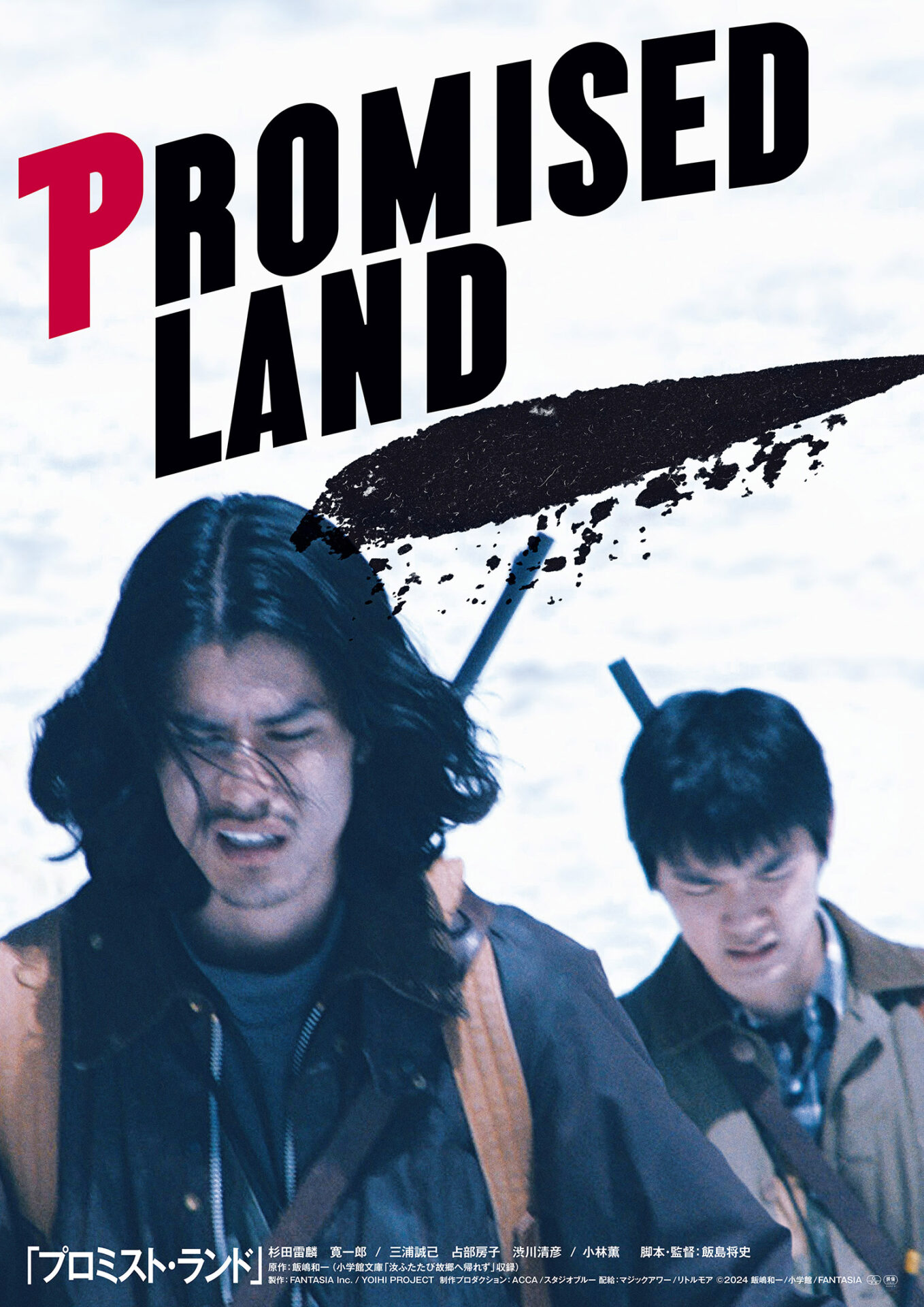
An avalanche approaches a small town in Japan, a harbinger of change in which the centuries old practice of bear hunting has finally been put to rest by government directive. The buried question at the centre of Masashi Iijima’s Promised Land (プロミスト・ランド) is who exactly that land has been promised to and what the rights and responsibilities surrounding it are in the midst of a changing society in which there may longer be a place for the hunter.

Some might argue that there shouldn’t be, and it has to be said this is one ancient tradition that’s increasingly hard to defend. Set in 1983, the film finds the “Matagi”, or traditional hunter, already all but extinct even before the head of the local association (which appears to only have five members) calls them all together and tells them the hunt is off for that year due to a preservation order by local government. One of the younger members, Rei (Kanichiro), immediately objects sensing that if the hunt is canceled this year it will never be held again. He says he thinks it’s unfair as it’s industry encroaching on the forests that has led to a decrease in the bear population rather than overhunting while another of the men takes constant pops at rich men from the city who come in and treat hunting like a hobby failing to abide by any of their rules such as not shooting mothers with their cubs.

The hunters seem to think of themselves as keeping nature in check, “culling” the bears to keep the mountain safe though there’s no sign that they are any real danger to humans and anyway their numbers are now depleted. There doesn’t seem to be any other way to defend this practice outside of tradition, but it’s evidently something very important to Rei, important enough to constitute a large part of his identity. Thus he alone is determined to defy the order and kill a bear anyway even though he knows there’s a good chance of going to prison for illegal hunting and being branded a poacher. 

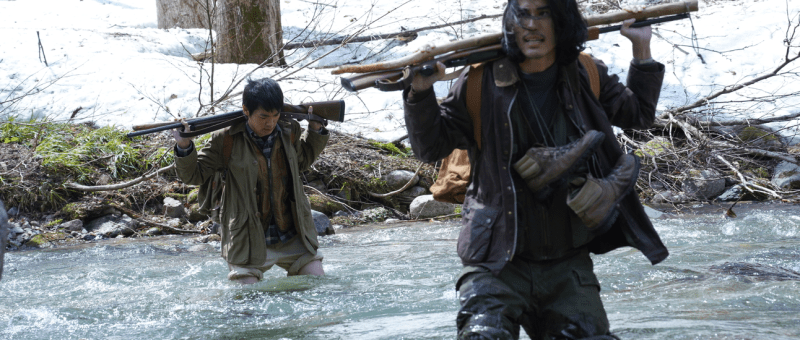
Rei ropes in Nobu (Rairu Sugita), a childhood friend who apparently owes a debt to him having received a blood transfusion from him when he was four and now deeply resents having that fact wielded against him all these years later. Unlike Rei, Nobu is a much more modern young man whose father makes fun of him for wearing fashionable clothes and perfume. He hates working on his father’s farm and longs to escape the moribund small town and its brutal traditions such as the bear hunt he’s been roped into since birth just because like many things his ancestors always did it. While hunting for a bear, the pair have an opportunity to talk, Rei admitting that hunting and the gun represent for him the essence of the man he once was while reeling from the breakdown of his marriage to a woman he failed to support when she failed to fit in to village life. He recounts the story of a banker he did some work for who says that he envies the freedom of his life as a landscape gardener while he sits in a prison all day counting other people’s money but when he asks him why he does’t give it a try the man just backtracks and starts making excuses.

Rei seems to be wondering what true freedom means and perhaps feels he doesn’t really have it, asserting dominance over the mountain by killing the bear to regain control over his life. He calls the bears a gift from the mountain god as if they existed only for him to kill, though it’s difficult to see why his tradition or need for raw masculinity is worth more than a living creature’s life. When he eventually kills a bear, the film hovers on the ritualistic quality of the act as Nobu and Rei bend over the body, wafting it with leaves, and skinning its pelt before drinking its blood. This is an act of cruelty more of necessity. They have no need of the pelt or meat, do not make a major part of their income from selling them, and the bear did not threaten them. This is in short a tradition that can safely be left by the wayside, but by the film’s conclusion the two men seem to have switched positions Rei now pondering leaving the village while Nobu seemingly has a renewed desire to stay and preserve these old traditions. Perhaps it is his promised land after all, or else was intended to exist for the bears as creatures of nature free from the destructive forces of humanity.


Promised Land screened as part of this year’s Camera Japan.

Original trailer (no subtitles)
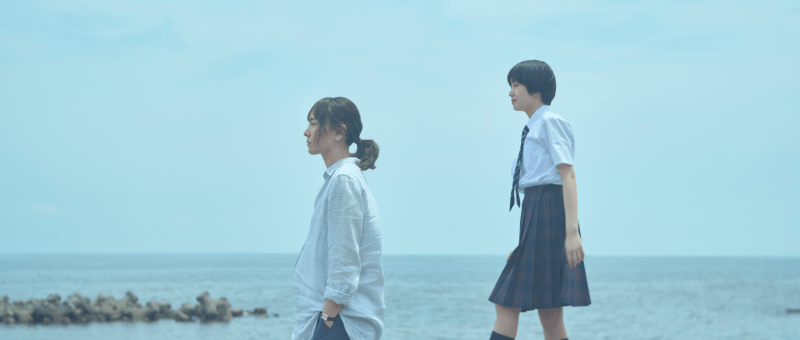
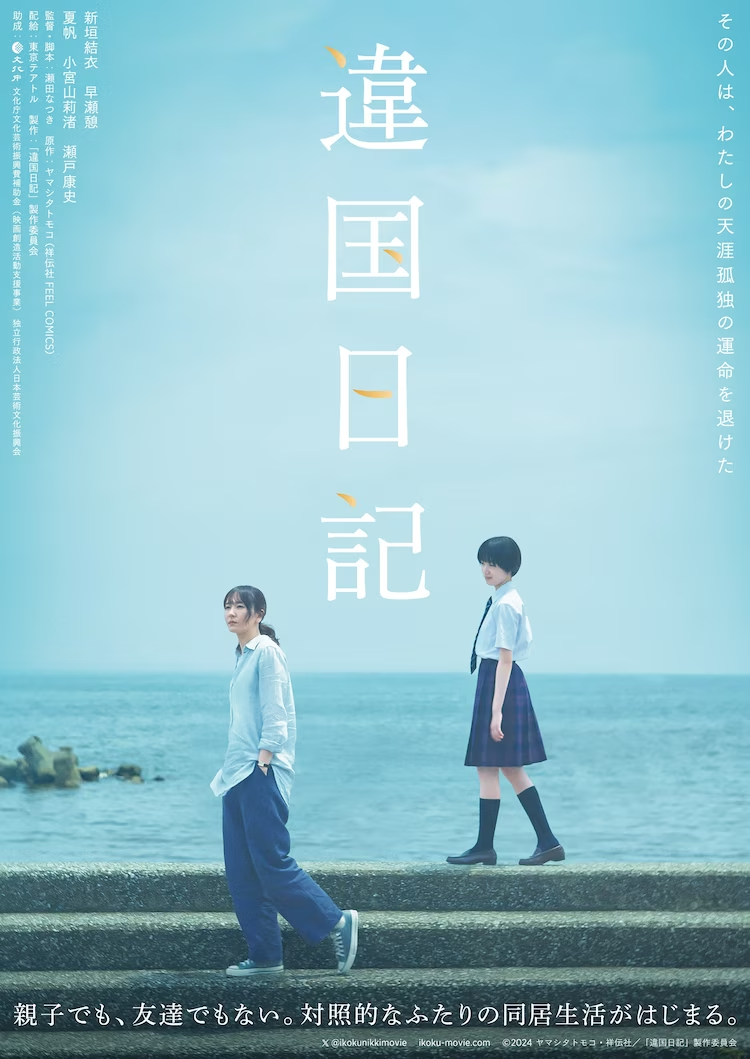
Worlds Apart (違国日記, Natsuki Seta, 2024)

Adapted from the manga by Tomoko Yamashita, Natsuki Seta’s quietly empathetic drama Worlds Apart (違国日記, Ikoku Nikki) eventually reveals the private lonelinesses and hidden sorrows that everyone has which isolate them from others. The film’s Japanese title plays on a homonym for the word for “foreign country” instead using the character for “different” which in itself suggests each person is an entire world often unable to make contact or be fully understood by those who cannot after all ever travel there. 

Perhaps that’s something most people feel every once in a while but becomes acutely obvious to 15-year-old Asa (Ikoi Hayase) when her parents are killed in a surreal traffic accident in the film’s opening scenes. She sits struck dumb and vacant at the funeral, having no idea what’s going to happen to her now while other relatives crassly describe her as having been cast adrift like an “unwanted barrel”. It’s this insensitive phrase that seems to drive her aunt Makio (Yui Aragaki), a novelist, into an impromptu decision to offer to take her in though they had only met briefly long in the past and had no real relationship with each other. Makio had been estranged from her sister for many years and never makes any attempt to disguise her utter loathing and resentment towards her for having been so cruel and judgemental when they were children. 

It’s refreshing, in a way, that the film doesn’t encourage her to change her feelings after her sister’s death. She doesn’t discover another side to her through bonding with Asa nor are her feelings invalidated much as Asa originally tries to make her like her mother as a means of reclaiming her. In fact, what Makio does is normalise whatever way Asa is feeling telling her at the hospital when forced to identify her parents bodies that it’s alright not to know how she feels. The two sisters were it seems very different, though the grandmother eventually offers an explanation that Makio’s sister had once been seriously ill and therefore unable to live a “normal life” which might explain why she was so enraged by Makio’s decision to chart her own course and wilfully spurn conventionality. 

These are also hints to the hidden world contained with the diaries Asa’s mother left behind to opened when she graduated high school. Makio wrestles with whether or not to pass the notebooks on and when, unsure if Asa is ready to receive the knowledge that might be inside them. Though she settles in to Makio’s home quite comfortably, Asa keeps her grief and occasional bouts of resentment to herself. Seta often frames her as standing alone in vast empty spaces or total darkness, isolated and lonely, now displaced by her liminal status no longer anybody’s daughter but not quite independent. 

Yet this isolation also blinds her to that of others. She doesn’t quite pick up on it when she clumsily attempts to talk about boys with her best friend Emily (Rina Komiyama) who directly tells her she has no interest in them and deflects the question when she asks if she likes girls instead. Emily is also lonely and isolated in feeling anxious to reveal her sexuality to Asa who in any case reacts clumsily when she eventually does. A similar thing happens with a girl in their class who studied hard to apply for a special programme only to be told the organisers are looking for a male student because it requires “physical strength,” while Asa also seems to develop a fascination with a bass player in the school music club who declines an offer to collaborate because she doesn’t want to get her hopes up only to be disappointed in the end. 

Makio hadn’t previously wanted to share her life, separating from an old boyfriend she still seems attached to out of an apparent fear of intimacy but nevertheless opens herself to Asa in deciding to respect her as an adult giving her agency over her own choices along with good, empathetic advice while simultaneously being clear that she doesn’t know if she can come to love her given the depth of hatred and resentment she bore towards her sister. But what the pair of them realise is that good or bad they can each share their memories rather than being forced into a frosty silence even if as Makio points out Asa will never understand her hurt and she will never understand Asa’s loneliness. Gentle and wholesome, the film ironically lays bare how opening up to others can in fact expand the world inside you instead filling the space rather than leaving you isolated inside it and returning light to a world that might otherwise have seemed dark and lonely.


Worlds Apart screened as part of this year’s Camera Japan.

Original trailer (no subtitles)
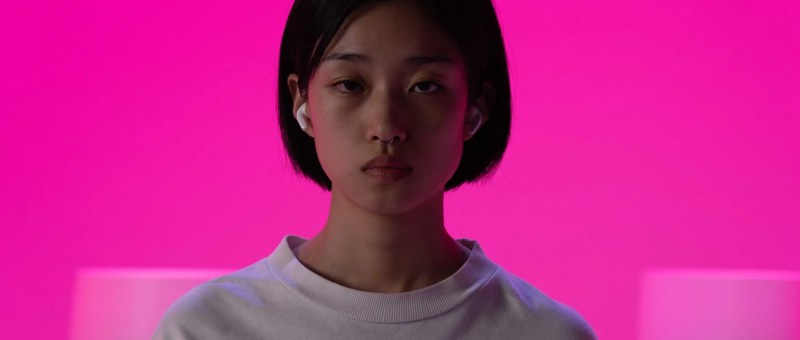
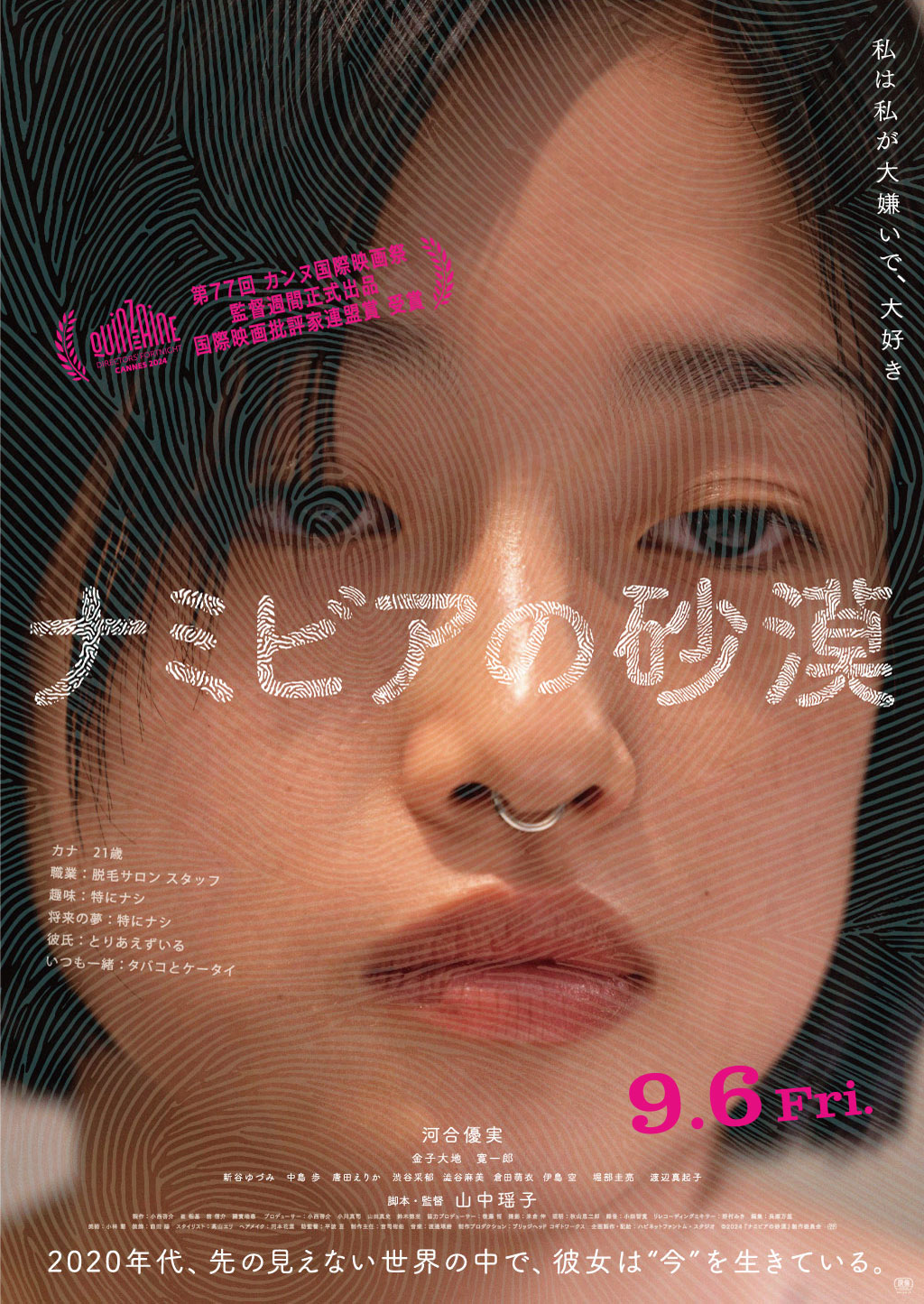
Desert of Namibia (ナミビアの砂漠, Yoko Yamanaka, 2024)

There’s a moment in Yoko Yamanaka’s quietly enraged character study Desert of Namibia (ナミビアの砂漠, Namibia no Sabaku) in which the heroine, Kana (Yuumi Kawai), finds herself stood at a crossroads. It might be tempting to read it as a symbol of her indecision, knowing she has to nix one of her two boyfriends but vacillating over which, but it’s more that she exists permanently between two states and as she later says may not really understand herself or the world around her.

We can see this in the opening sequence in which Kana fails to respond to her friend’s emotional distress when she tells her that a mutual acquaintance has taken their own life. She seems bored, indifferent, not really listening until suggesting that the pair hit a host club together in an attempt to cheer her friend up. But Kana soon leaves her friend behind, making excuses about an early start to meet a man we first think is her boyfriend but is actually the bit on the side. She cuddles up to him in a taxi and tells him that she wants to go visit his parents (right now, in the middle of the night) to see photo albums of his childhood but later returns home to the man she lives with who patiently holds her hair as she throws up into the toilet while asking politely how her friend is.

Perhaps the problem is that Honda (Kanichiro) is too nice, too respectable for the flighty Kana. He’s an estate agent with a cosy and well kept flat where he likes to make hamburgers from scratch and is otherwise very considerate of Kana’s needs little suspecting she’s seeing another man on the side. In Hayashi (Daichi Kaneko) she may see someone a little more exciting but is equally terrified when he asks her to break up with Honda and date him exclusively. She cheerfully bickers with Honda about his upcoming business trip, urging him to stand up to his boss if he tries to make him go to a sex club. Honda says he’ll just refuse, but of course doesn’t making a heartfelt confession on his return. The problem isn’t really that he slept with a sex worker or was unfaithful, but that he couldn’t stand up to his boss and allowed himself to be controlled by Japan’s overarching, hierarchal social structure, did something he thought was wrong and did not want to do to keep his boss happy and maintain his career prospects. 

Kana doesn’t actually care about the sex, but it gives her an excuse to jump ship to Hayashi taking Honda’s fridge, and its frozen hamburgers, with her as she disappears completely from his life. But it’s at this point that her mental state begins to decline. She meets Hayashi’s well to do, upper middle class family who are actually very nice to her (even if randomly bringing up the fact her mother’s Chinese hints at latent prejudice) but feels out of place and inadequate especially on discovering that Hayashi had a previous girlfriend by the same name who may have aborted his child. Abortion seems to be a red button issue for Kana, possibly bringing up some long buried trauma of her own. She seems disconnected from her family and wanders restlessly around suburban areas while later hinting at resentment towards her father who may have in some way abused her. Her rage seems to escalate, culminating in physical abuse of Hayashi who resists but doesn’t really fight back. She craves his attention, but he wants to be left alone. 

In her spare time, she watches videos of animals in the Namibian desert, suggesting that what she might actually crave is an unstimulating environment or a more peaceful solitude but at the same time yearns for male attention. Only 21, she seems somehow older but is also unbalanced by a new colleague at work who is like her spiky and rebellious and two years younger. An unsympathetic online psychiatrist tells her she may be bipolar or have borderline personality or something else completely but is dismissive assuming she can’t afford his fees so tells her her problems are too big to solve. She sees a more sympathetic female psychiatrist in person who helps her begin to understand something of herself, but exposes her loneliness when she tries to invite her out to dinner as if she were a friend. Abstracted from herself, she disassociates and has an out of body vision of watching herself and Hayashi wrestling as if she were watching animals in the Namibian desert, staring blankly as she often does unable to comprehend herself or the world around her. 

Filming in a boxy 4:3, Yamanaka lends an air of constant tension and constraint to Kana’s world. The psychiatrist tells her that she imprisons herself in believing there’s a way she ought to feel but doesn’t when everyone is free within their minds redefining her Namibian dreamscape as the only place she is really free to be herself yet can only watch rather than directly access. “I don’t understand” she tells Hayashi when he asks her what “ting bu dong” means in a conversation with her family where her mother is apparently still somehow absent as if illuminating the entirety of her life and with it an ironic new understanding of herself. 


Desert of Namibia screened as part of this year’s Camera Japan.

Trailer

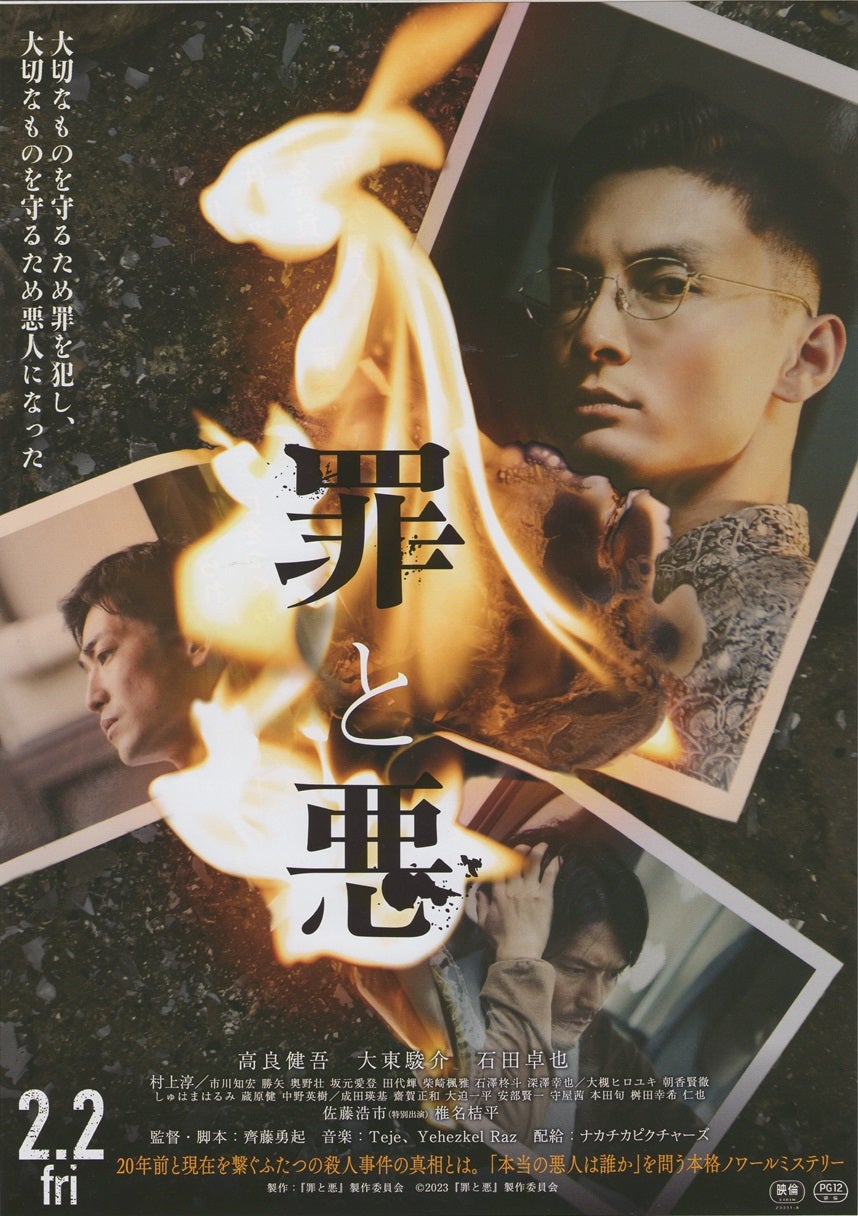
Sin and Evil (罪と悪, Yuki Saito, 2024)

A man not quite a yakuza and perhaps even what might be termed an ethical gangster tells one of his underlings that it isn’t a sin unless you believe it it is, which might in a sense be true in same way as Socrates says that no one does wrong willingly. Yet the heroes of Sin and Evil (罪と悪, Tsumi to Aku), Yuki Saito’s small-town crime drama, are marked by their guilt while trying to come to terms with traumatic events of 20 years earlier and their mutual decision to cover them up.

Echoing similarly themed films such as Stand By Me, Saito opens with idyllic scenes of the boys riding their bikes with the only hint of darkness offered by a disturbing conversation about an elderly man who is rumoured to be abusing children. However, it seems that Haru is living in a difficult domestic situation following the death of his sister with an abusive father and apparently neglectful mother. His best friend, Akira, is the son of a local policeman while the boys are also friends with a pair of twins, Saku and Naoya, whose family operate a tomato farm. Rounding up the group is Masaki who also seems to be living in difficult circumstances though his backstory is never fully fleshed out as he’s eventually found dead in a local river. Saku jumps to the conclusion that the old man must have abused Masaki, who was known to be friendly with him, and then killed him to keep him quiet. He drags Haru and Akira to the old man’s shack where he attacks and eventually kills him with a shovel. Haru decides to take the blame and torches the place, telling the other two boys to flee the scene.

20 years later, it’s clear that each of them are still marked by what happened that day though Haru (Kengo Kora) appears to have built a good life for himself after serving time in juvenile detention even if the construction company he runs is friendly with local yakuza and gets its contracts through small-town corruption. He also operates a cafe where he employs delinquent boys while secretly using them as thieves but also in a more genuine sense looking after them and concerned for their welfare. His machinations are seen to be key in keeping order, working in tandem with police Inspector Sato (Kippei Shiina) who explains to a more idealistic Akira (Shunsuke Daito) how things are done around here which is essentially keeping ordinary people safe by managing crime rather than punishing or preventing it. The balance is only disrupted by some of Haru’s boys who stupidly steal far too much money from the local yakuza. Haru attempts to protect the young man concerned, but his body soon ends up in the river in exactly the same place as Masaki raising a series of questions about the nature of the earlier crime. 

What the film is trying to do is paint the world in shades of grey while looking for the parts where it’s darkest. It seems it’s not in doubt that the old man abused local children, though Haru and Akira now doubt he killed Masaki raising further questions about their killing of him. As the yakuza underling had said, it’s not a sin unless you think it is and Haru feels that he deserved to die for what he did to other kids so doesn’t feel any remorse for his actions even if he didn’t kill Masaki. But for Akira, the trauma lingers in other ways and he’s disturbed on learning his father may have been involved in covering up their crime and at least complicit in police corruption essentially teaching Sato how things are done in small-town policing. The conclusion Haru comes to is that they are all victims of the town itself, unable to break free of its provincial mores and petty prejudices.

Those would largely be a lingering homophobia and deep shame stemming from suffering sexual abuse as a child. As usual with these kinds of mysteries, the solution lies in the desire to prevent the truth being exposed though in this case the resolution is not entirely convincing when using one killing to cover up another couldn’t help but expose the truth anyway even when attempting to pin it on someone else who can no longer defend themselves. It also sidesteps the themes of small-town corruption and the dark heart of suburbia even as Haru points out that someone should have stepped in to support both himself and Masaki when they could see their families were struggling rather than just closing their curtains and pretending not to notice. The disruption of the friendship, which ought to be the heart of the drama, therefore lacks poignancy muddied by the various overlapping plot lines from the present day yakuza drama to the lost paradise that Haru longs to reclaim despite the otherwise apparently happy life he seems to be living now. Sin, the film seems to say, is in the eye of the beholder along with justice and retribution, and evil maybe just the same or merely invisible to those who choose not to see it.


Sin and Evil screened as part of this year’s Camera Japan.


International trailer (English subtitles)

Detective Conan: The Million-Dollar Pentagram (名探偵コナン 100万ドルの五稜星, Chika Nagaoka, 2024)

Now a sprawling multi-media franchise, Detective Conan began with Gosho Aoyama’s manga which published its first instalment in 1994 and is still going strong 30 years later. The series was released in the US in the 2000s under the name Case Closed and in a decision which was perhaps more common then than today anglicised all of the character’s names and settings (the Japanese publisher then began releasing its own English language translation of the manga maintaining all the original Japanese names and plot details). Meanwhile Detective Conan remains hugely popular across Asia and regularly tops the Japanese box office with the annual release of a feature film revolving around a major case for Conan in addition to the ongoing anime and manga.

Which is all to say it has a very well developed universe and vast cast of characters which weave in and out of Conan’s various adventures. The main thing to note about Conan himself, which is explained very briefly in a short introductory sequence to the movie, is that he’s actually a 17-year-old high school detective but his body was shrunk to the size of a small child when he was drugged by the mysterious Black Organisation after witnessing to of their agents getting up to something shady in a park. Only a handful of people know his true identity while he often works with the police solving crimes, and is common with Japanese crime fiction more often than not locked room mysteries.

The Million-Dollar Pentagram (名探偵コナン 100万ドルの五稜星, Meitantei Conan 100-man Dollar Michishirube), the 27th Conan movie, is somewhat different in this regard as it’s more of a treasure hunt in which Conan (voiced by Minami Takayama) and his associate Heiji (Ryo Horikawa) must attempt to figure out the mystery of some missing treasure which might have something to do with a pair of swords stolen by one of Conan’s arch nemeses, Kid the Phantom Thief (Kappei Yamaguchi). Like many of these kinds of stories, the mystery turns on historical detail in this case stemming back to the Meiji Restoration and legendary Shinsengumi boss Hijikata Toshizo, if by way of a long-dead industrialist who got rich quick during the pre-war goldrush in Hokkaido. Some of his estate apparently went missing after his death and now his grandson, who’s messed up the family business, wants to find it and so does Conan but for slightly different reasons. In any case, no one even knows what the treasure is and they may be disappointed when they find out especially as it might not show grandpa Onoe in a particularly good light. 

There is undoubtedly quite a lot going on with a prominent subplot focusing on Heiji’s crush on love interest Kazuha (Yuko Miyamura) and his rivalry with Kid the Phantom Thief with his big plan to finally confess his feelings aligning with the climax of the mystery taking place on Mount Hakodate. A port town in Hokkaido, Hakodate has not often been well served by cinema often appearing in indie films such as And Your Bird Can Sing, Sketches of Kaitan City, and Over the Fence as a moribund post-industrial centre the protagonists can’t escape, but here seems pleasant and relaxed as a kind of Northern Kyoto rich in period history. The film’s success has apparently spiked a mini tourist boom in the area.  

The filmmakers apparently did not want to destroy any of the town’s architecture even in animation, hoping to make the most of the city’s famous night scenes and beautiful scenery. Nevertheless, there are the usual series of impressive action sequences including one of Conan riding a jet-powered skateboard not to mention taking out a suspect with a football while Heiji fights another on the wings of a biplane. As for the mystery itself, it’s not the kind where the audience will be able to work it out seeing as it depends on very specific cultural knowledge that even Conan needs a hint to key into but eventually broadens into something more international involving arms dealers and corrupt businessmen. Long-standing fans of the franchise will want to stay put for a very interesting post-credits sequence and even newcomers will get a kick out of an unexpected punchline to the film’s closing moments. All in all another classic case for the Conan team peppering its key mystery with the humour and warmth the franchise is known for.


Detective Conan: The Million-Dollar Pentagram opens in UK cinemas 27th September courtesy of CineAsia.

Original trailer (Traditional Chinese & English subtitles)

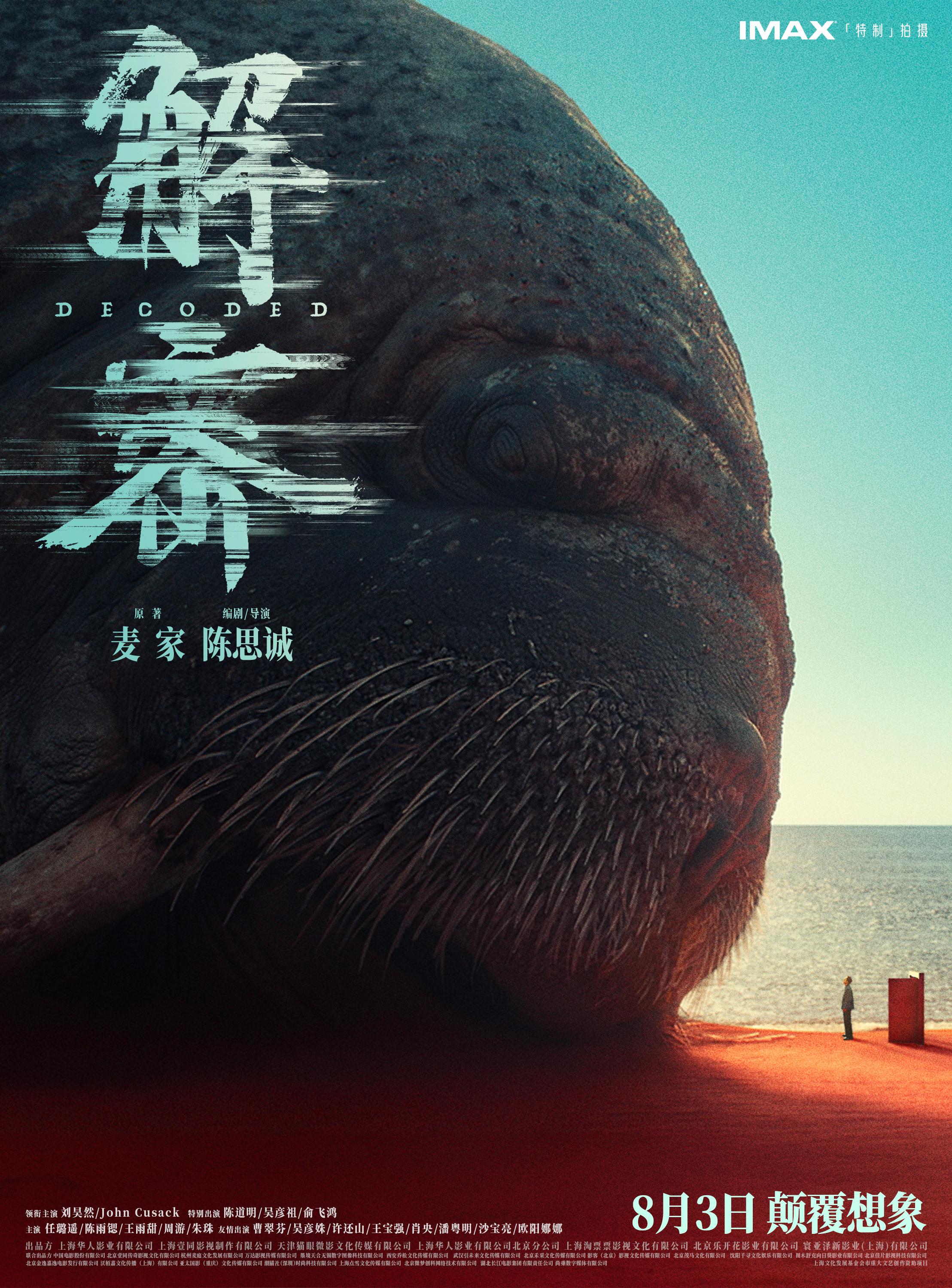
Decoded (解密, Chen Sicheng, 2024)

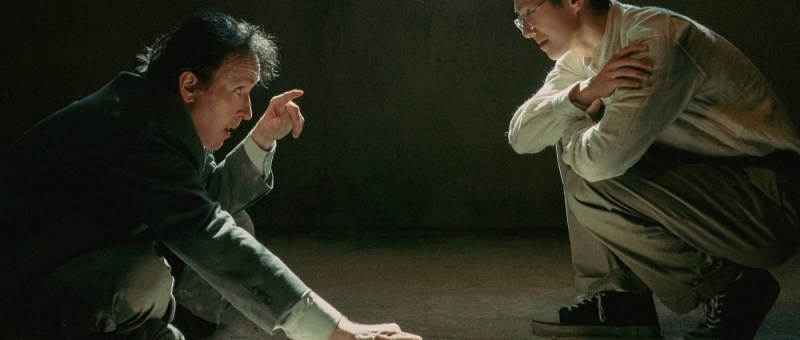
International geopolitics is reduced to a battle wits between two men, each in their way lonely exiles and perpetual outsiders in Chen Sicheng’s adaptation of the novel by Mai Jia, Decoded (解密, jiěmì). Originally an actor (and here making a meta self-cameo), Chen is best known as a director for the smash hit Detective Chinatown franchise which boasts both well-plotted mysteries and zany, lowbrow comedy. Decoded is a slightly different kettle of fish, displaying its own kind of whimsicality but also darker and stranger in its concentric enigmas.

The narrative’s timeline seems to be slightly hazy, but loosely follows an prodigious orphan born to a prominent family though his father, the black sheep, had already died before his mother too died in childbirth. A rather complicated set of circumstances led to Rong Jinzhen (Liu Haoran) being raised by an Austrian dream interpreter who for unexplained reasons kept him locked up in a small hut isolated from the world while teaching him all about dreams with the consequence that by the time the old man dies, 12-year-old Jinzhen is a strange boy with few social skills but a once-in-a-generation grasp of mathematics.

It’s this genius that sees him saved by distant relative Xiaolili (Daniel Wu) who was originally going to send him to an orphanage but decides adopt him instead. Jinzhen then gains early entry to university where he’s tutored by Liseiwicz, an exiled Polish professor who fled his homeland to escape persecution by the Nazis as a Jew. The film seemingly doesn’t mean to, but undermines this backstory through the casting of John Cusack who plays the part as all American and is not convincing as Polish man who ended up in China because he had nowhere else to go and is unable to return to his homeland thereby lessening the intended impact of his speeches about nationhood and patriotism which counter those Jinzheng has already been given by Xiaolili in addition to making him seem suspicious possibly long before she should. 

Nevertheless, this may also add to his sense of untrustworthiness and perhaps duplicitous treatment of Jinzheng which edges towards the exploitative in hoping to make use of his genius for his research into the evolution of computing. In the early days of the Chinese civil war, Liseiwicz is approached by agents from the PLA who want him to decode a telegram that may save thousands of lives. Liseiwicz claims he doesn’t want to get into politics though superficially supportive of the Communist cause only to later be exposed as a collaborator with the KMT on his return to the US where he designs encryption codes to be used between Chiang Kai-shek’s nationalists in Taiwan and the US troops backing him in the hope he’ll retake China and end Communism in Asia. 

Of course, Jinzheng gets picked up by the CCP to work in their secret spy division in which he becomes a virtual prisoner forbidden from leaving the compound while expected to spend all of his time breaking codes such as those designed by Liseiwicz. In truth, it becomes a kind of game between the two but one that the guileless Jinzheng little understands. It takes it him an unreasonably long time to understand that Liseiwicz is just messing with his mind, sending him misinformation as a distraction intended to drive him mad culminating in dispatching a copy of the The Beatles’ I Am the Walrus in order both to disrupt his political consciousness with decadent Western pop music and drive him out of his mind as he struggles to understand how this nonsense verse about egg men and marine animals is supposed to relate to the code.

Then again, there is something a little subversive in the celebration of Jinzheng’s ability to think about the box, instantly understanding that the correct answer to the entrance test is not to waste his time taking it because it’s obvious they’ve already cracked the code concerned. The use of dream interpretation taught to him by his adoptive Austrian father maybe simply be an ability to work things out on a deeper level of consciousness, but it’s also left him with a fragile mental state already unable to discern dream from reality. The strain of constant codebreaking further pushes him towards madness while he perhaps loses sight of his original mission, only later coming to realise that Xiaolili’s vision of nationhood was the correct one after all.

Though Chen appears to have been influenced by Christopher Nolan in his use of oneiric imagery, he crafts a number of beautifully designed, whimsical dream sequences some which later become hellish or strange but reflect an innate innocence in Jinzheng while disclosing to him something of the real world which he had not understood. It’s ironic in a sense that he’s forever trying to decode the world around him, such as in taking instructions from his adopted sister/cousin Biyu (Chen Yusi) on how to know if girls are interested which he nevertheless slightly misunderstands. The film goes to some surprisingly dark places such as in a brief sequence which Biyu and her mother seemingly if potentially anachronistically fall victim to the Cultural Revolution while Jinzheng is the victim of several assassination attempts by KMT agents well into the ‘60s. Even so his story emerges as tragedy more than triumph, a fine mind broken by the society around him and used as an unwitting tool in the nation’s path to perfecting an atomic bomb having seemingly decoded everything but his place within the world.


International trailer (English subtitles)

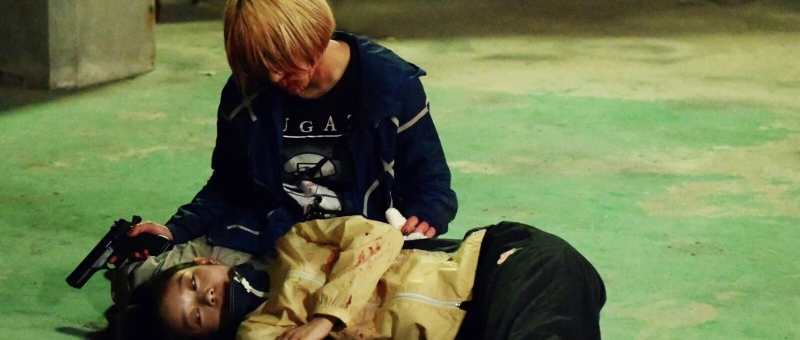
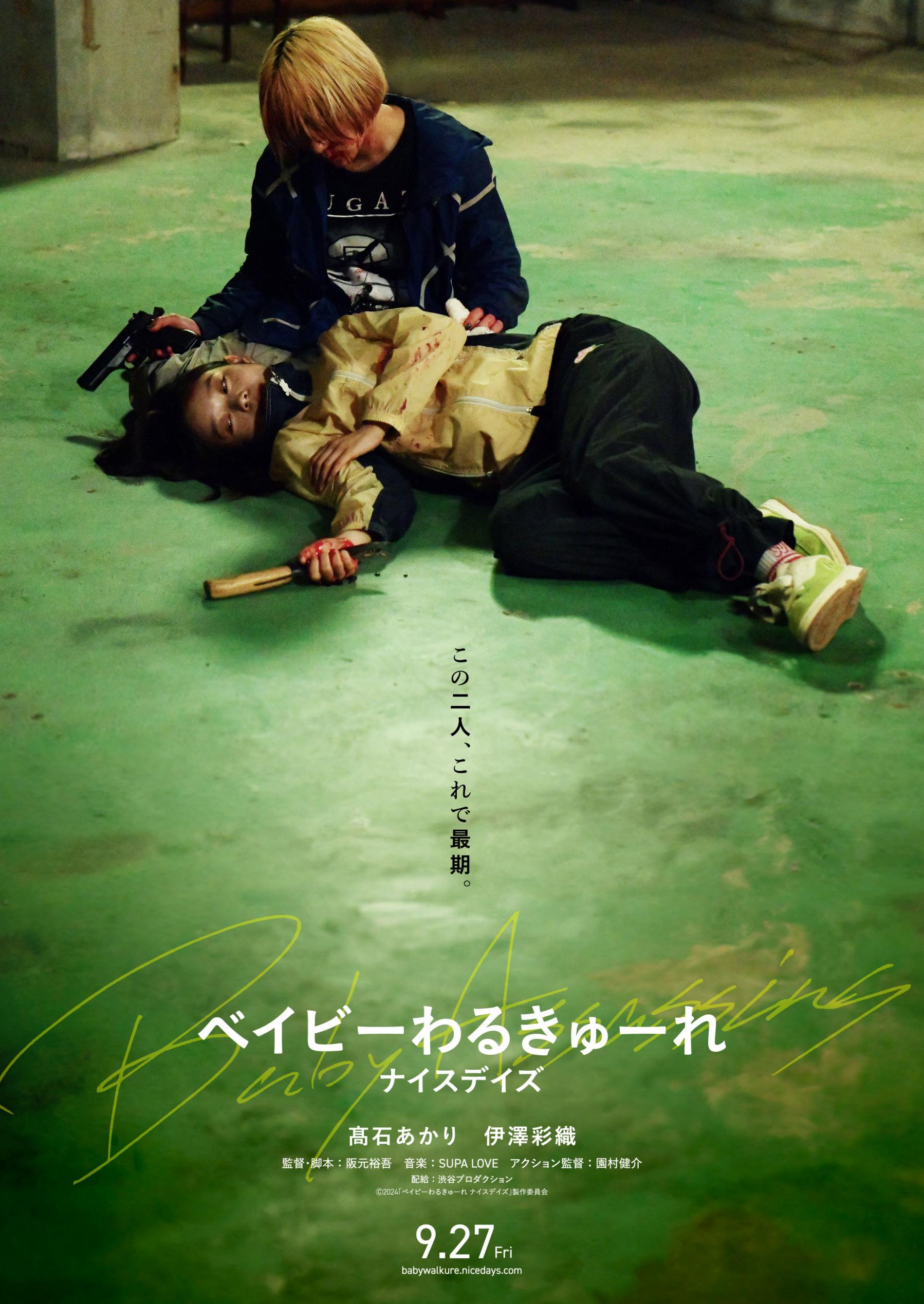
Baby Assassins: Nice Days (ベイビーわるきゅーれ ナイスデイズ, Yugo Sakamoto, 2024) [Fantasia 2024]

After beginning to conquer the demands of adulthood, Mahiro (Saori Izawa) and Chisato (Akari Takaishi) are taking a well-deserved break, or more like a working holiday to be precise, but soon find themselves with another unexpected mission to clean up a messy situation on behalf of the Guild. Baby Assassins: Nice Days (ベイビーわるきゅーれ ナイスデイズ, Baby Valkyrie​: Nice Days), the third in series of deadpan slacker action movies from Yugo Sakamoto, adjusts the balance of the previous two films shifting more towards action than the girls’ aimless lives while setting them against an opponent who is anything but aimless.

In fact with the girls find their way to the home of Kaede Fuyumura (Sosuke Ikematsu), is plastered in ironic motivational slogans that seem to be a kind of parody of salaryman’s kaizen obsession. Fuyumura likes to rank things and wants to make sure he’s at the top, but also wants out of the game because he’s bored with it and also fed up with difficult clients frustrated when one takes ages to decide whether or not he should kill the target resulting unnecessary stress for them and an unsatisfying kill for Fuyumura. That’s largely why he’s agreed to this one last job of killing 150 people who took part in cancelling a university student online. The problem is that Fuyumura is a freelancer which presents a problem for the Guild which has decided he must die for violating their rules and bringing the profession into disrepute. Thus Mahiro and Chisato find themselves in an awkward position when they turn up to kill their latest target and realise they’ve been double booked to take out Fuyumura ’s kill.

The admin mixup, though it isn’t one really, rams home the series’ persistent absurdity that this weird world of assassins isn’t so different from contemporary corporate culture while the girls are still subject to the same problems as any other 20-something. This time around, we’re introduced to another prominent agency which is run out of a farmer’s agricultural co-op and hides weapons inside boxes of vegetables, while Mahiro and Chisato get a pair of supervisors with the de facto team leader Iruka (Atsuko Maeda) going off on lengthy rants about why it’s impossible to work with Gen Z while the girls struggle with her uptight dismissiveness. Yet even when there’s tension or discord, the fact remains that the Chisato and Mahiro are also part of a team and have a vast network of support to rely on including their cleanup squad while Fuyumura is a lone wolf who’s driven himself half out of his mind with his quest to be the best, a message is brought home to him when he approaches the farmer’s union to ask for “a replacement” after getting one of their guys killed only to be told off and reminded the farmers work as one big family rather than a series of disposable minions. 

There is something a little poignant about Fuyumura’s wondering when his birthday is as if this small forgotten detail represented his missing humanity. The only time he feels like a human being is doing something mundane like cleaning his microwave and brushing his teeth. As she had the brothers in the previous film, Mahiro finds a kind connection with Fuyumura as they each discover a worthy match but knowing only one of them can survive. In an introspective movement, Mahiro asks Chisato if they can still hang out together on the other side if the worst happens, but she shuts the question down perhaps more in an attempt to shift Mahiro’s mindset but also berating herself for forgetting her birthday and making hurried plans to coverup her crime against friendship.

For all the absurdity about hitman union rules and rights of employment in an illegal profession, the films has a genuine affection for the relationship between the two girls as well as that between the wider team who are always around to have their back while they also take care to protect each other. Perhaps having to field a work crisis during their “holiday” is their final test of adulthood, and one they largely pass in enforcing their boundaries and defiantly having a good time anyway even if they did have to cancel their reservation at local barbecue restaurant to stakeout the home of a crazed killer. Once again featuring a series of well choreographed and innovative action sequences, the series’ third instalment seems to come into its own expanding the world of the Baby Assassins but setting them free inside it evidently a lot more at home with the concept of adulting.


Original trailer (no subtitles)
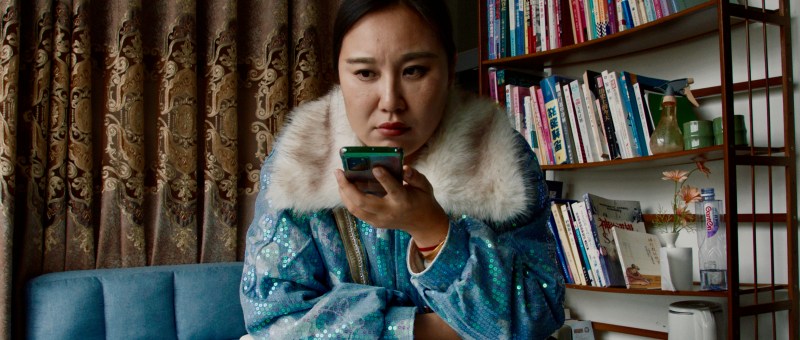
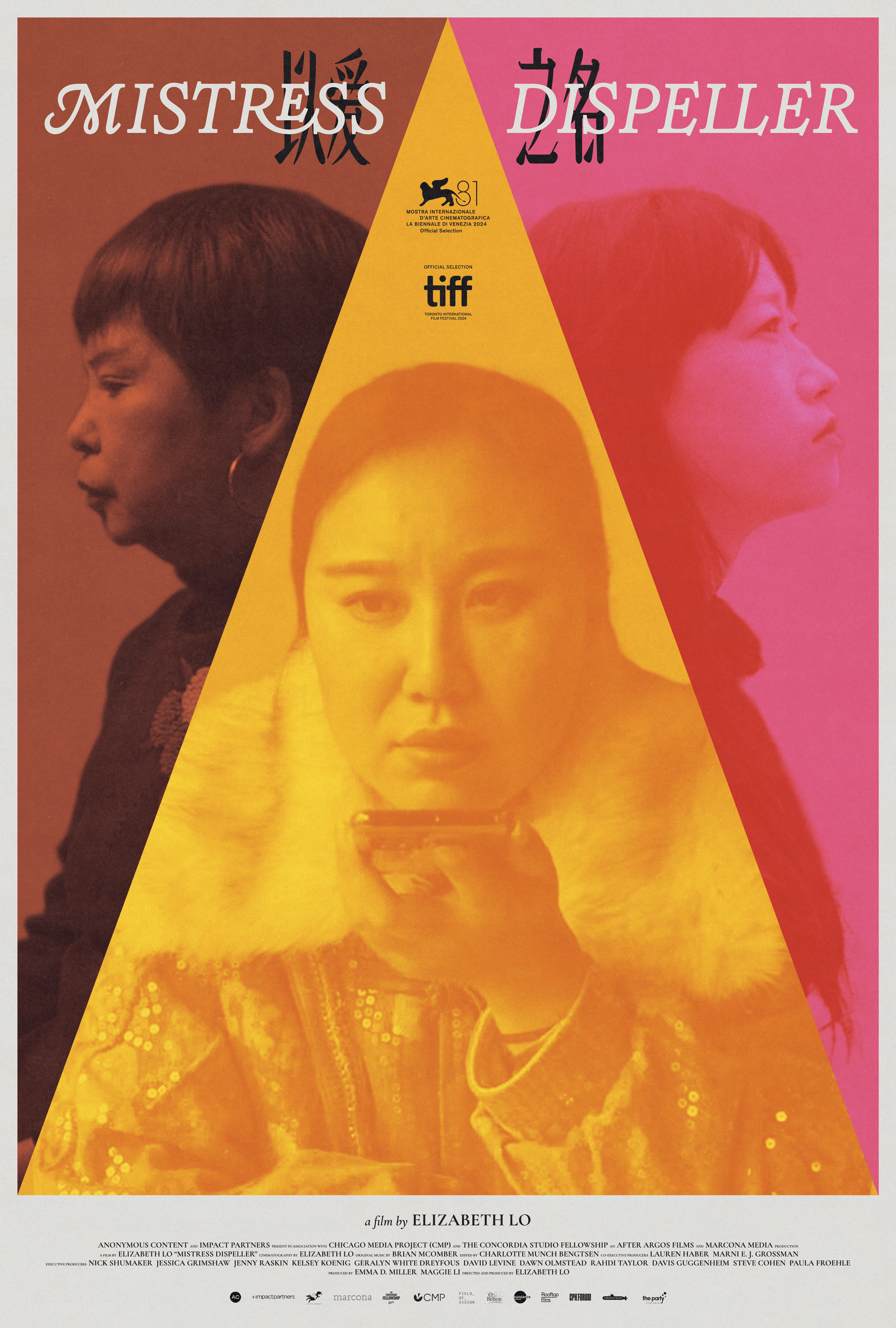
Mistress Dispeller (以爱之名, Elizabeth Lo, 2024)

Can a relationship ever recover from infidelity? Elizabeth Lo’s mainly observational documentary follows one of China’s many “mistress dispellers”, which is to say an intermediary who attempts to halt affairs and repair families. While it’s tempting to view their existence as morally censorious, Teacher Wang’s approach at least leans towards empathy and as she says is geared towards encouraging the unfaithful partners to want to return to their spouse of their own volition rather than punishing them for what others may consider immoral behaviour or forcing them to do the “right” thing by staying in a marriage that may not be working.

In fact, she has a lot of empathy for the mistress at one point suggesting that she is most likely the person suffering the most in this situation because she is trapped in an incomplete, unfulfilling relationship which has no real possibility of coming to fruition. The conclusion she comes to about Mr Li’s mistress Feifei is that she is most likely just lonely while she herself later reflects that she gravitates towards relationships with unavailable men because of low self-esteem, feeling as if she does not really deserve a full relationship or all of someone’s love. 

The documentary in part links this sense of inadequacy to China’s contemporary marriage mores in which it is very much a buyer’s market and women are considered to have passed marriageable age in their mid-20s. 30-something Feifei feels she has little chance of striking a striking a connection with an eligible bachelor and is relegated to the realms of mistresses while brief flashes to dating agencies and parks where people place ads for potential matches suggest that divorcees and widowers with children maybe the only realistic options for a woman in her position. A lady answering the phone in a matchmaking agency remarks that she’s glad her client is based in Beijing because she’s simply too tall to find a willing match in the local area.

That aside, it might be difficult to see what Feifei sees in Mr Li, a typical middle-aged gentleman she describes as kind and affable. It doesn’t seem that money is a factor in their relationship, nor is she a kind of status symbol for Li who says that being with her is like being in the sun while it’s clear he’s become bored with the mundanity of domestic life. Though materially comfortable, the long married couple appear to have grown apart despite Mrs Li’s conviction that their relationship had previously been close and harmonious to the extent that they were the envy of their friends.

Of course, from her position there is a sense of humiliation and betrayal along with anxiety surrounding her living circumstances and husband’s future plans. She enlists Wang on her younger brother’s recommendation and submits herself to her process which involves introducing her as a “friend” and engineering a series of scenes which allow Teacher Wang to probe Mr Li to figure out his feelings surrounding his affair. In some ways, the process of the documentary is similar. Lo states that Mr Li and Feifei were brought on board believing they were taking part in a documentary about modern love but repeatedly reconfirmed their consent as the film evolved. 

Feifei herself begins to wonder if something’s afoot, feeling as if Teacher Wang, whom she believes to be Mr Li’s cousin, is somehow guiding them but also grateful that she seems to be helping her. We can sense the potential influence of the documentary in Teacher Wang’s anxiety on bringing the wife and the mistress together, explaining that people don’t generally agree to this and it’s not part of her usual process. Nevertheless, it rejects the potential sensationalism of the situation for a more rational discussion from each of the women’s perspectives bringing a sense of closure to both. This is the only real time we become aware of the film crew behind the camera which otherwise sits statically with incredible access to the discussions between all parties lending their honesty an uncanny quality. Even so, with the situation resolved in the best possible way, it seems that no one is really happy even as the Lis attempt to rebuild their relationship and Feifei attempts to move on. Lo hints at the pressures of the contemporary society from outdated patriarchal social codes, a lack of respect for women in general, lingering legacies of the One Child Policy, and the looming authoritarianism of the state, but finally comes down to three lonely people desperately seeking fulfilment but united only in their aloneness.


Mistress Dispeller had its world premiere at this year’s Venice Film Festival.

Original trailer (English subtitles)

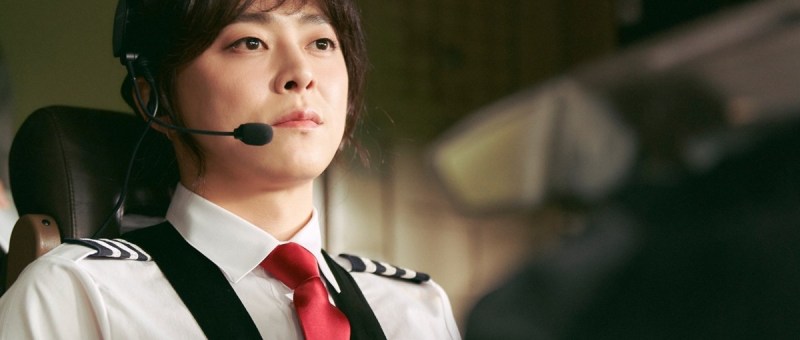
Pilot (파일럿, Kim Han-gyul, 2024)

“You can’t say things like that anymore,” the men of Pilot (파일럿) are fond of chuckling but still they think them and on a baseline level are unable to understand what’s wrong with what they see as merely offering a compliment. Adapted from the 2012 Swedish film Cockpit, Kim Han-gyul’s non-romcom takes its cues from films like Tootsie and Mrs Doubtfire to explore the inherent sexism and misogyny at the heart of contemporary Korean society if perhaps problematically doing so through the means of a male redemption story.

In any case, Han Jung-woo (Jo Jung-suk) is mindless more than anything else later claiming that sometimes it’s better “to say yes and go with the flow” than risk creating unpleasantness. Seemingly excelling at everything, he graduated top his class at the Korean Air Force Academy and was fought over by several large airlines becoming a minor celebrity and apparent pilot influencer. But behind the scenes, he’s somewhat false and self-involved as evidenced by his attempt to show off a video of himself tearfully paying tribute to his mother for raising him and his sister alone but refusing to answer a telephone call from her at the same time. His celebrity fame comes back to bite him when a video of team dinner in which he rejected his boss’ comment about the new intake of stewardesses not being pretty enough by referring to them as a beautiful bouquet is leaked online. The clip goes viral with his boss getting the brunt of the abuse and while he is not visible many are able to identify him by his voice. The airline soon goes bust and unsurprisingly no one else is willing to hire him. 

The issue is that neither his boss nor Jung-woo understand what was wrong with what they said. They just parrot back that what they said was nice so they can’t see the problem with it but fail to understand that their comments are demeaning because they belittle women’s talents and reduce them to objects for male appreciation. Hyun-seok (Shin Seung-ho), who attended the Air Force Academy with Jung-woo, gets him an interview at his airline but it’s run by a female CEO (Seo Jae-hee) who happens to be the sister of his old boss and is apparently on a mission to make her company more egalitarian by having at least 50% female pilots so she’s only hiring women. Nevertheless, she also asks sexist questions at the interview looking closely at a female candidate’s age and asking her if she is married or in a relationship, whether she intends to have children and when. The female candidate fires back a pre-prepared speech that she’s uninterested in marriage and is not planning to have her eggs frozen or anything like that so she can devote herself fully to the job. 

Hyun-seok expresses sympathy, echoing Jung-woo’s earlier comment that all that matters in flying is skill and people should be hired for their merits not their gender. But it’s impossible not to read into his words that he thinks women are inherently not as capable as men and wouldn’t be getting the job at all if it weren’t for this affirmative action, which is to say it’s all about gender after all and only men are suited to the job. He says as much later on when the plane he’s piloting runs into trouble while he’s unwittingly co-piloted by Jung-woo in his female persona Jung-mi, having posed as a woman in order to pass the interview. “Men should step up during times of emergency, not women,” he screams while losing the plot as the plane plunges and refusing to hand over the controls to his female co-pilot until Jung-woo takes them by force. 

Despite being slightly younger and believing himself to be a modern man, Hyun-seok is still incredibly sexist and openly flirts with Jung-mi to the point of sexual harassment even while she bluntly tells him that she isn’t interested. Jung-woo had been flattered and overjoyed the first time someone called him “miss” on the street and alluded to his unconventional, broad-shouldered beauty but quickly discovers that that gets old and becomes aware of how “annoying” or even scary some men can be in their entitled treatment of women, and by extension the various ways in which his own treatment of women may not have been appropriate. Becoming Jung-mi allows him to become himself, rediscovering his love of flying no longer so hung up on the external validation of internet fame and more interested in and considerate of those around him in the absence of the kind of toxic masculinity that infects men like Hyun-seok.

Though his wife divorces him when he loses his job if more because of his persistent emotional neglect than disappointment or financial worry, he becomes more aware of and sympathetic towards his son who, just as he had says yes and goes with the flow by saying a toy aeroplane was fine despite having been engrossed in the Barbie aisle seconds before but presumably afraid of disappointing his father if he told him he’d rather have a doll instead. Nevertheless, the film strangely refuses to engage with ideas of gender and sexuality and becoming Jung-mi does not really unlock Jung-woo’s femininity even if it evidently makes him a better and more considerate person, while his sometime love interest Seul-gi (Lee Ju-myoung) is more or less queer coded and her attempts to stand up for herself as a woman and an equal are not always well respected by the film. Even so the betrayal of CEO Noh who is revealed to be a ruthless businesswomen perfectly willing to exploit other women and throw them under the bus if necessary highlights the ways in which entrenched patriarchy pits women against each other. 

Thus the underlying misogyny of the present society is fully exposed, if ironically by a man experiencing what it is really like to live as a woman which is to be ignored and disrespected, judged by appealingness to men and obedient temperament while skills go undervalued or worse are viewed as a threat to often fragile masculinity. Though the film largely avoids making Jung-woo’s cross-dressing a joke in itself, it does find humour in the absurdity of the demands of performative femininity in a rigid and conformist society in which a woman is rarely permitted to sit in the cockpit of her own life.


International trailer (Simplified Chinese & English subtitles)

Successor (抓娃娃, Yan Fei & Peng Damo, 2024)

Embodying the contradictions of the modern China, Successor (抓娃娃, zhuā wáwa), the latest from the FunAge team sees a billionaire father recreate a utopian vision of crushing poverty amid the socialist values of China pre the 90s reforms but only so that his son can develop a desire to become a capitalist fat cat. For all that, however, it’s also a reaction against micromanaging parents, life under oppressive state control, and a high pressure, conformist society obsessed with very narrowly defined visions of success that are increasingly at odds with what a younger generation might want.

The surprising thing is how easily the young boy, Jiye, is able to straddle these two worlds while only gradually beginning to realise that it’s odd his neighbours keep asking him complex maths questions and he’s always running into foreigners who conveniently want to know the way to the local post office. Ostensibly, the Ma family live in an old-fashioned courtyard that according to the sign over the front entrance was constructed in 1958. As the film opens, Jiye’s teacher has brought a wealthy man to their home, in fact the father of one of Jiye’s classmates, who offers to sponsor his education while each of them look mystified around the flat which seems to exist in a kind of time warp. Jiye’s father, Chenggang (Shen Teng), sends them the packing explaining that they live exactly as they want to and don’t need anyone’s help. 

Yet Jiye is fascinated by his friend’s iPad and aware of the world outside works even as his parents try live like it’s the 1960s, sitting round reading good socialist literature which is also recommend to Jiye by the man who owns the bookshop downstairs and is actually one of Changgang’s many hidden “teachers”. But unbeknownst to him, there’s a lift behind his parents’ closet door that leads to a huge control centre where his every move is being monitored. Chenggang is actually a fantastically wealthy businessman who wants Jiye to develop good character so that he can take over his business after getting into a prestigious university.

In a very high tech and invasive way, it’s a reflection of the confused ideology being forced on Jiye by unseen external forces. Once he’s a little older and able to see that his world is definitely not normal, he begins to feel as if some mysterious force is indeed controlling his life but attributes it to vague notions of fate or cosmos rather than wider authoritarianism or parental manipulation. Chenggang is convinced this is the proper way to educate his son, to give him both old-fashioned socialist values and a heathy desire to overcome his poverty and live in a fancy mansion. He feels this way in part due to his dissatisfaction with a grown-up son from a previous relationship who failed his exams and was sent to America in disgrace. Somewhat uncomfortably, one of the reasons Chenggang is so disappointed in Dajun (Zhang Zidong) who continues to crave his approval is that he’s gay and in a committed relationship with an American man who probably should have given more thought to his Chinese name. 

In order to keep up the pretence, Chenggang never tells Jiye that he has a half-brother though he does allow him to see his maternal grandparents on occasion though they, evidently very wealthy themselves, do not approve of Chenngang’s parenting and resent being unable to spoil their grandson in the way they’d like. Chenngang may have a point here, though his chief objection being that the little Jiye was already quite chubby from being relentlessly pampered lands in the realms of fat shaming rather than a serious questioning of indulgent parenting in the wake of the One Child Policy.. He didn’t want him to grow up to be selfish and entitled or to have a distorted sense of the value of money but also seems to have a conviction that the boy will just laugh and say thank you when he finds out his entire life has been a lie and his parents made him suffer needlessly when they were in reality vastly wealthy. 

But what Jiye emerges with is, perhaps surprisingly, a more wholesome sense of rebellion, stepping out from the cosseted false reality his parents had given him and prepared to chart his own course. In an undercutting of the apparent homophobia which surrounds Dajun, the film also refreshingly, and perhaps subversively given the usual treatment of LGBTQ+ themes in mainstream Chinese cinema, suggests that he has done the same and was right to do so validating his relationship with Peter while a kind of solidarity emerges between the brothers in the shared defiance of the path their parents had set down for them. Often hilarious in its surreal humour and penetrating in its satire, the film echoes a sense of dissatisfaction amid contemporary youth no longer so hung up on outdated ideology and craving more individual freedom in a society in which lives can ultimately feel oppressively micromanaged by shady, unseen forces.


International trailer (Simplified Chinese / English subtitles)