Daughter’s Daughter (女兒的女兒, Huang Xi, 2024)

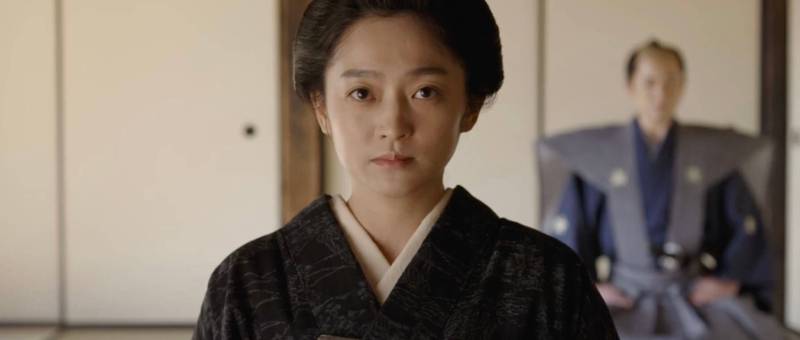
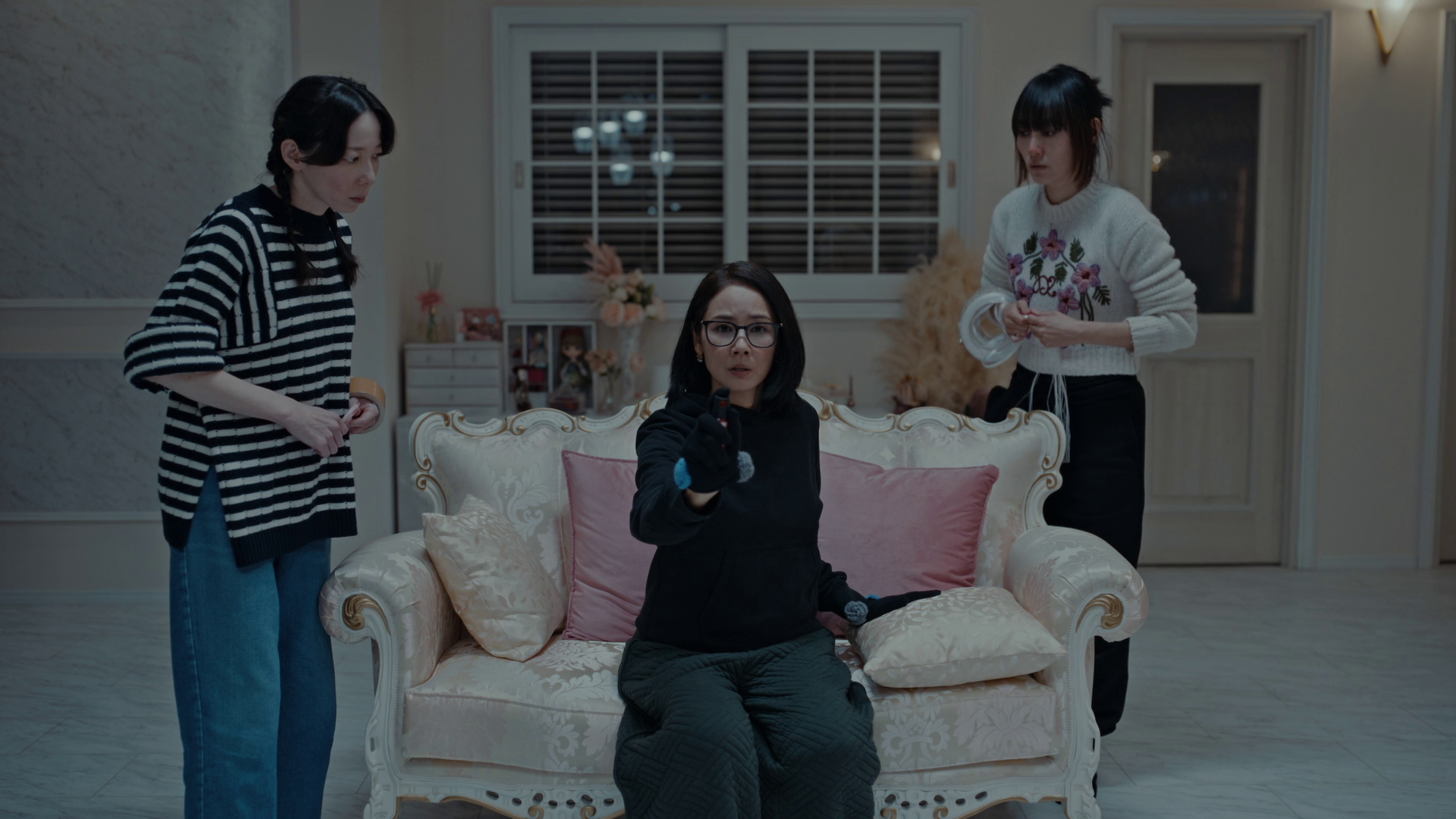
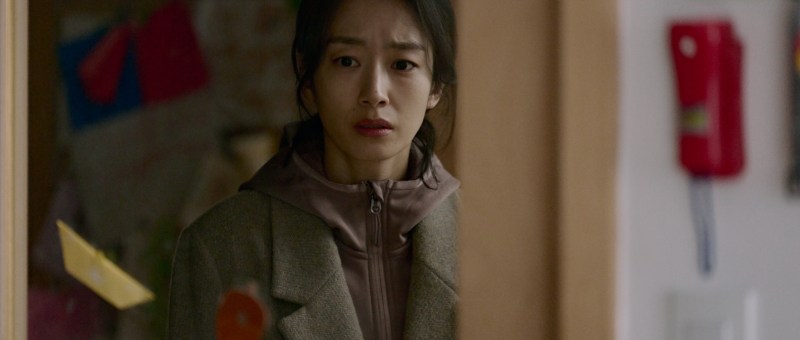
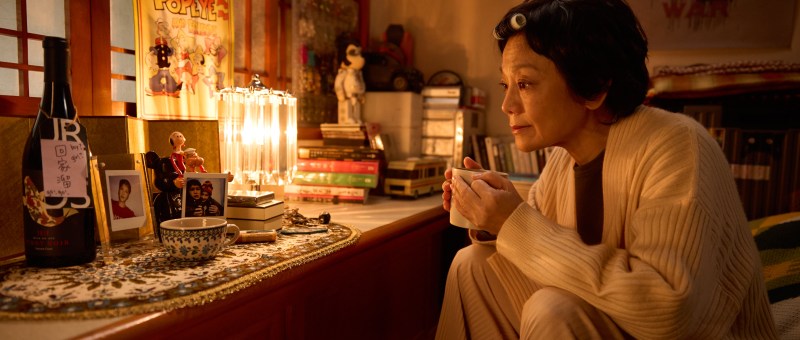
Never having fully dealt with the trauma of her teenage pregnancy and decision to give her child up to be raised by a family friend, 64-year-old divorcee Jin Ai-xia (Sylvia Chang Ai-chia) finds herself in an eerily similar position on on learning that the daughter she raised in Taiwan has been killed in a car accident in New York where she was receiving fertility treatment. The process resulted in a healthy embryo of which Ai-xia now finds herself the “guardian”. She is given four options, keep the embryo in storage and pay to renew the contract when it runs out, find a surrogate to carry to it term, donate it to another couple, or have it destroyed.

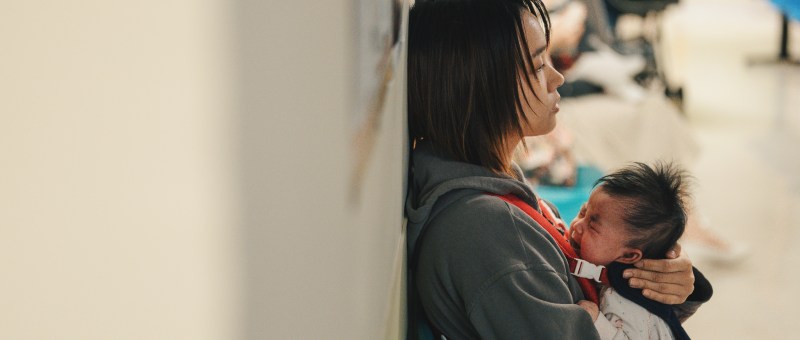
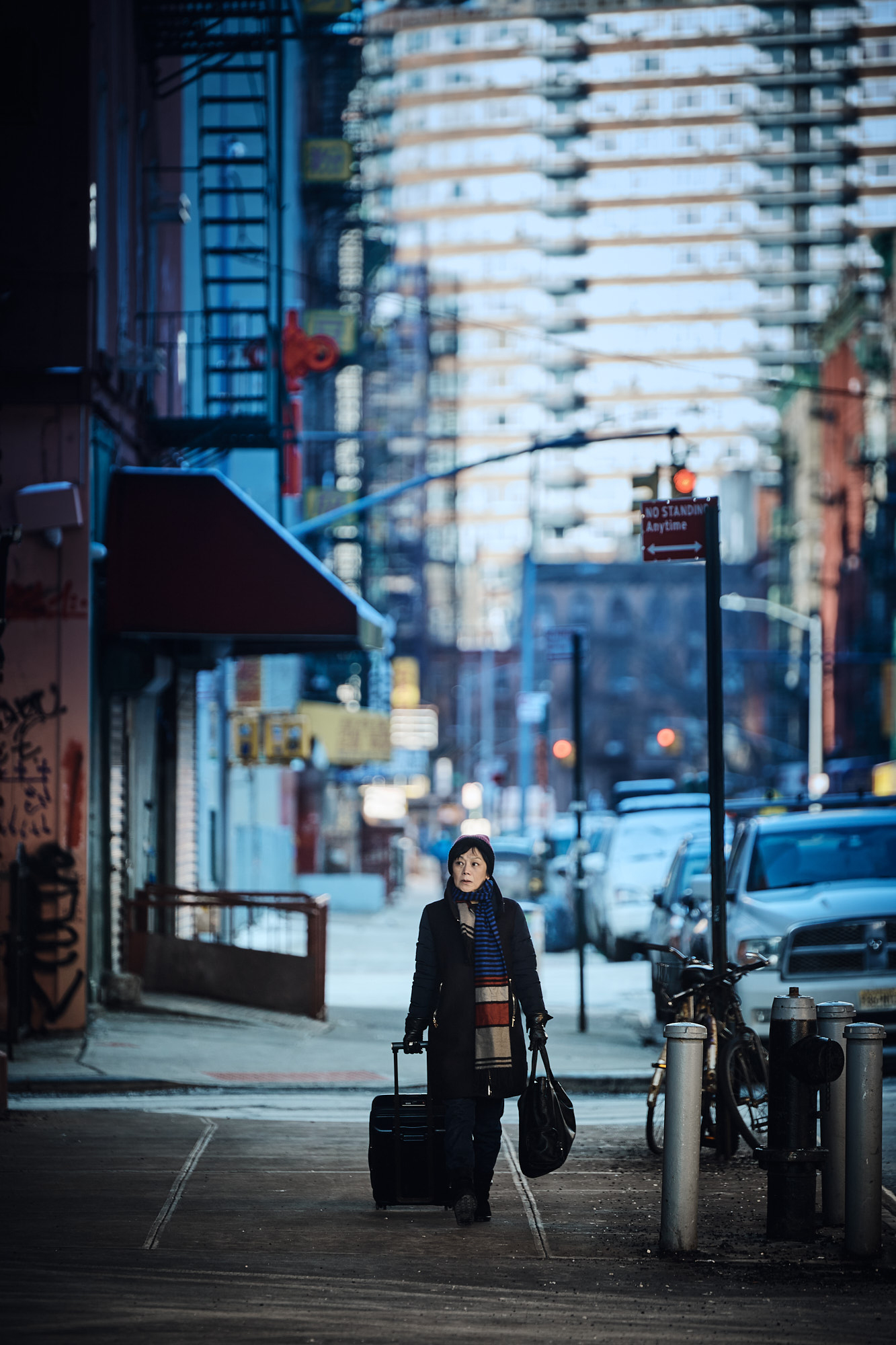
The fact that there are eight months left on the contract that her daughter Zuer (Eugenie Liu Yi-er) signed makes this almost another pregnancy which Ai-xia must decide whether or not to continue. Keeping the embryo in storage only defers the decision and traps it in the same mental space in which Ai-xia thinks of Emma (Karena Lam), the daughter she did not raise and tried to put out of her mind. In its consideration of motherhood, the film does shy away from suggesting that it is a kind of burden and requires sacrifice whether willing or not. Later confronted, if gently, by Emma who has unbeknownst to her become a single mother who chose to keep her child, Ai-xia justifies herself that she was 16 and afraid. Most of all, she was afraid the baby would trap her in New York’s Chinatown and that her life would never change after that. She wanted more, so she went along with her mother’s proposed solution of giving her daughter to a childless couple to raise while she returned to Taiwan and never looked back.

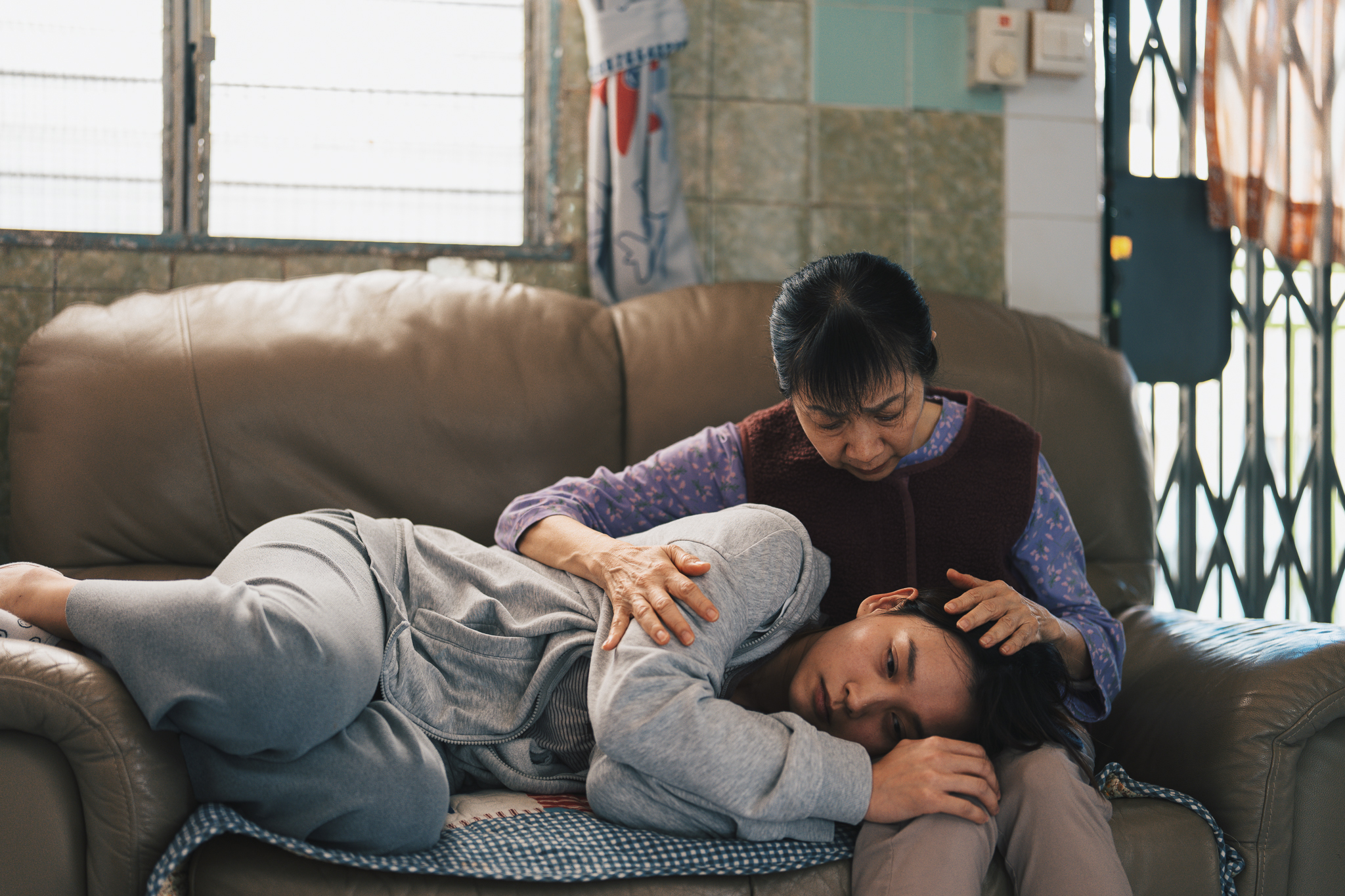
Yet it’s Emma who seems to haunt her while she’s in New York trying to sort out Zuer’s affairs while mired in her grief. It’s clear that she feels that she failed both her daughters as her unresolved trauma over separating from Emma left her unable to fully bond with Zuer whom she raised at arms’ length. When Zuer and her same-sex partner Jia-yi (Tracy Chou Tsai-shih) decide to have a child, Ai-xia is against it. It seems there may be some lingering prejudice in her about their relationship as she tells Zuer that the baby won’t be able to explain their family situation, but it’s also partly that she doesn’t want her to be trapped by motherhood as she felt herself to be. She asks her why she and Jia-yi don’t just enjoy their life together rather than complicate with a child. Ai-xia tells Emma that she wanted to live her own life, while expressing the same desire now that she has become a second mother to her own mother, Yan-hua (Ma Ting-Ni), who is living with dementia. Once her mother passes away, she’s looking forward to enjoying her freedom for once. 

Ai-xia rails that no one ever really considered her feelings and that she’s been given this burden without ever really being given an opportunity to ask herself if she wanted it. There’s a minor irony in Yun-hua’s segueing back into the past to tell the 64-year-old Ai-xia that she can’t raise a child at this age as if she were still a pregnant 16-year-old. As an older woman, she reflects that Yun-hua probably didn’t make that decision solely because she was embarrassed by the stigma of teenage pregnancy but genuinely thought it was best for both her daughter and her granddaughter. But now Ai-xia is facing the same choice at the other end of her life knowing that if she chooses to raise Zuer’s baby she may not live long enough to see it to adulthood, nor may she have the energy to look after a small child even if she has the time. 

But Ai-xia carries Zuer’s ashes around with her holding them in front of her belly as if they were the embryo and she were already carrying it. Placing the square black container on the airport scanner and watching it travel through the tunnel is oddly like an act of rebirth. Attempting to come to terms with her own complicated maternity, she thrashes out the past with Emma but also really with herself in trying to decide whether or not to continue this maternal legacy despite the sacrifices and compromises it entails. For her, motherhood becomes an act of self-forgiveness in which she learns to understand both her own mother and her daughters along with their shared connection in this ever-increasing line.


Daughter’s Daughter screens 18th July as part of this year’s New York Asian Film Festival.

Trailer (English subtitles)

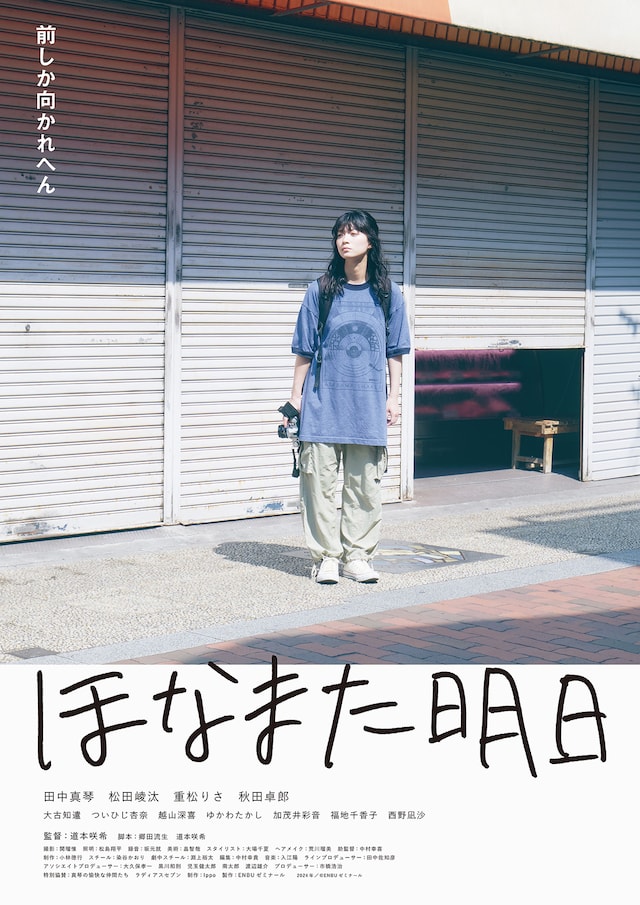
See You Tomorrow (ほなまた明日, Saki Michimoto, 2024)

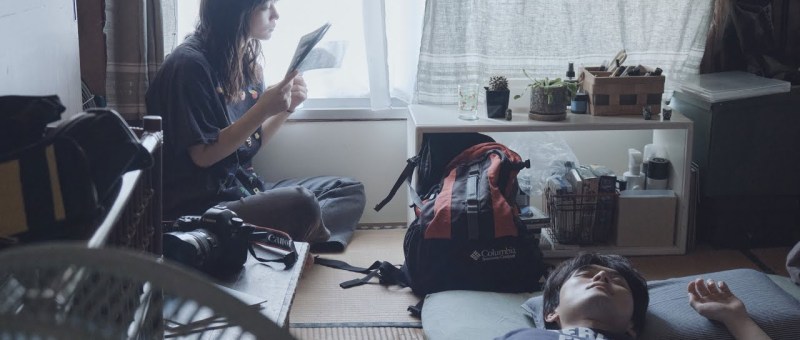
On witnessing her take photos in the street, a shopkeeper remarks that Nao (Makoto Tanaka) must be happy, but Nao doesn’t seem so sure and suddenly there’s a kind of gloom that descends over her. Something similar happens later when she asks a pair of women in town on holiday to pose for her photos, but looks on sadly while the women begin to feel uncomfortable. Eventually they leave, complaining that Nao was too weird it was it was creeping them out.

Saki Michimoto’ Saki’s See You Tomorrow (ほなまた明日, Hona Mata Ashita) is in part about Nao’s isolation, but it’s an isolation born of being different by virtue of her talent and the bright future that exists ahead her. Her small group of friends have no such certainty and in Nao’s shadow are only increasingly sure that they don’t really have what it takes to become star photographers. On some level, they may resent her, but not seriously and are mostly supportive of her success. Nao, meanwhile, is a displaced soul. She seems to have become estranged from her mother who does not answer the door when she visits leading her to get a friend to ring the bell instead, and has been continually couch surfing among her friends before settling on Yamada (Ryota Matsuda) as a more permanent point of refuge. Nao asks him out, but when he asks if she loves him only replies that she has some affection for him.

In some ways, this speaks to Nao’s headstrong nature. She speaks the truth and forges ahead chasing what she wants without really giving that much thought to those around her.  The others have all lined up positions working with professional photographers for when they graduate, but Nao honestly tells them that she’s not cut out to be someone’s assistant and has no choice but to become a pro photographer right away. One of the other girls says that she finds Nao “scary,” while even Yamada describers her as “merciless” if in a more positive way that it sounds. For her, photographs are a martial art and in setting her sights on art school in Berlin she plans to use her camera to take down the opposition,

Yet there’s a part of her that wants to stay part of the group and remain close to her friends even while knowing that her talent sets her apart from them. Sayo (Risa Shigematsu), whose apartment Nao had described as to tidy to feel comfortable in, seems to be the most conflicted even if as others remark she rarely expresses anger and keeps her feelings to herself. She is painfully aware that her talent isn’t on the same level, while frustrated by the cryptic comments of their teacher, Kitano, and additionally irritated by Nao’s treatment of Yamada whom she may also have a secret crush on herself. Cowed by Nao’s abilities, Yamada ulmitaly decides to give up taking photos altogether and look for work in a more supportive role such as an assistant or an editor. 

When the others reunite in Tokyo four years later, Yamada has dropped out of touch and perhaps out of life while mired in feelings of loneliness and inadequacy. One of the cryptic notes Nao had got on her work had been that she should walk more, which confused her because all she ever does is walk and take photos though mostly alone and often wandering off losing sight of everyone else while carried along by the rhythms of the city. But on reuniting, the gang resolve to keep walking and see where it leads them, much as Nao always has but this time together as they move towards the city. They’ve all changed, grown, drifted apart to an extent and come back together with a little nostalgia and melancholy disappointment, but in other ways settled and more at home with themselves save perhaps for Yamada who seems to be in hiding from the world while Nao still seems to have nebulous feelings for him along with unfinished business. Delicate and gentle, Saki’s etherial camera captures the fragile bonds between them and the steeliness that underlines Nao’s independence but also sets her adrift, a perpetual outsider living life through a lens snatching momentary connections with strangers in the street while continually on her own, solitary, path.


See You Tomorrow screens in New York 15th July as part of this year’s JAPAN CUTS.

Trailer (no subtitles)

Give It All (がんばっていきまっしょい, Yuhei Sakuragi, 2024)

The last year of high school is a little premature to be defeated by life, but this seems to be what has happened to Etsuko. It’s fitting in a way, because her problem is that she simply gives up too early and is incapable of seeing anything through because she’s already convinced herself that there’s no point in trying. Yuhei Sakuragi’s anime adaptation of the book by Yoshiko Shikimura, Give It All (がんばっていきまっしょい, Ganbatte Ikimasshoi) is indeed all about how there’s no point giving up before the end and no matter the result there’s satisfaction to be gained just knowing that you gave it all you could.

But Etsuko can’t see that to begin with because she peaked too early. Back in primary school, she won all the races because she was tall for her age. But the other children eventually started catching up with her, and she started to fall behind. It didn’t really occur to her train or to try to compete with them because she was used to just winning and the realisation that she wasn’t “special” after all made her feel like a failure at life. To save herself similar pain, she started giving up before she even started believing that there wasn’t any point in trying. Even so, she’s sullen and miserable, not to mention resentful of those who do put in the effort and start to see results. 

That’s one reason she’s reluctant to get involved with the rowing club again despite the encouragement of her best friend Hime. Badgered into it by transfer student Riina, she does the bare minimum and lets the others down, at one point just letting her oars drop while asking herself what it is she’s even doing here. But it’s also being part of a team that gives her a new sense of purpose as she realises that she’s the one who’s the weak link because she doesn’t have the stamina to keep up with the other girls. 

Meanwhile, they all have their problems too. Riina is struggling to make new friends after moving to the town following her mother’s marriage and is also nervous around boys because she’s always attended single-sex schools. Taeko and Mayumi only joined the club to get back at each other because their families are supposedly feuding, though there’s a little bit more to their relationship drama than a buinsseness dispute between their parents. Hime is really just trying to keep the peace and get Etsuko back to being the confident and outgoing person she used be rather a sullen figure of defeat who is aloof to the point of rudeness and refuses to try at anything. 

Ironically, it’s an encounter with the awkward team captain of a rival high school’s team that begins to open her eyes. Based on her earlier experiences, Etsuko assumes that the other team must just be innately talented and will win the upcoming race easily, but the other girl tells her that she’s mistaken. They didn’t win easily and they don’t have room for complacency. Though she seems jealous of the fun Etsuko and the others seem to be having and the genuine friendships that have arisen between them in contrast to the frosty determination and rigorous training that defines her relationship with her teammates, she reminds Etsuko that they work hard and that Etsuko’s team has potential if only they gave it their all.

While the 3D animation sometimes appears uncanny and distracts from the overall aesthetic, the beautifully designed backdrops add to the sense of peace and serenity in the town and echo Etsuko’s own unfolding sense of joy as the world around her brightens thanks to her new friends. What she learns is that it’s foolish to give up too soon without even trying, while not doing anything will leave her stuck in the middle of the water like a boat with no one rowing for the rest of her life. The thing about rowing is that it requires unity and the team to think as one, which means that she has to engage and bond with her teammates while finding fulfilment in her individual contribution through resolving to give it her all no matter what and knowing that’s worth it no matter the result.


Give It All screened as part of this year’s Toronto Japanese Film Festival.

Trailer (no subtitles)

The Real You (本心, Yuya Ishii, 2024)

“Putting it into words makes it sound like a lie,” according to a young woman struggling to “be real” and express a truth without any of the awkwardness that interferes with emotional intimacy, but there are ways in which lies can be true and truth can be lies. Based on a novel by Keiichiro Hirano, author of A Man which also deals with similar themes, Yuya Ishii’s The Real You (本心, Honshin) probes at the nature of the human soul and asks if there really is such a thing as the “real” you or if authenticity is really possible in human interaction. 

Both Ayaka (Ayaka Miyoshi) and the avatar of his mother Akiko (Yuko Tanaka) describe Sakuya (Sosuke Ikematsu) as being too pure for this world and to an extent they’re right even if many of his present problems are directly linked to having committed a “crime” in his youth. As the film opens in the summer of 2025, Sakuya is a factory worker watching helplessly as robots take over his work. After all, they don’t care about the heat, or being able to breathe under a heavy welding mask, nor do they get tired and they can get this job done much faster than he can. In any case, he ignores an ominous phone call from his mother, who appears to be showing signs of dementia, despite her telling him that she has something thing important to say and stays out with a friend after work only to spot her by the river in a storm on his way home. When she abruptly disappears, he assumes she entered the water and jumps in to save her but is injured himself and wakes up in hospital about a year later.

Of course, we don’t really know that he wakes up at all and it’s possible that all of this is really just a dream or an attempt to make contact with his authentic self through his relationships with two women, his mother and a young woman who also disappeared abruptly back in high school. Even though it’s only been a year, the AI revolution has marched on a pace and the entire world is now run by robots and avatars. Sakuya’s factory is no more, and the only job he can get is that of “Real Avatar” in which he rents out his physical body on behalf of clients who for whatever reason are unable to complete an action in person. Many of his early customers are elderly people who have opted for “elective death” and are trying to relive a precious memory vicariously through the VR headset before they go.

“Elective death” is one of the things that most bothers Sakuya in that he’s told it’s what his mother had chosen and that he’s getting a tax break and sizeable condolence payment so he can continue living in the family home. This eerie proposition that elderly people are being encouraged to decide that “this is enough” frightens Sakuya and hints at the eugenicist aims of an AI society in which those who are judged to be “weak” or cannot “contribute” in the way expected of them are forced to end their lives as if they didn’t deserve to live. He can’t understand why his mother would have chosen to die, but moreover, why she would have done it without even telling him. He can’t decide if the important thing she wanted to say was just about the elective death or if there was some greater truth he’ll now never know because he ignored her when she tried to tell him.

That’s one reason that he decides to use all his savings plus the condolence money to have an AI Avatar of his mother made in hope discovering what she wanted to say. Later he says that he wanted to know “Akiko Ishikawa,” rather just his mother, but is put off at first when confronted by the gap between the image of the mother he remembered and the objective reality. The creator, Nozaki, suggests incorporating memories from a young woman who was apparently his mother’s only real friend to get a fuller picture, but Sakuya resists insisting that he and his mother had no secrets from each other so she had no “hidden side”. Nozaki (Satoshi Tsumabuki) merely smirks and tells him that everyone has different sides to themselves that they don’t share with others, which Sakuya ought to know because there are things he’s not exactly hiding but doesn’t really want to talk about either.

His friend, Kishitani (Koshi Mizukami), wonders if there isn’t something a little incestuous about Sakuya’s desire to build a VF of his mother rather than his first love as he’d assumed he would, and he might be right in a way. Ayaka Miyoshi, played by the actress of the same name, shares a striking resemblance with the high school girl who exited the young Sakuya’s life, Yuki, and has a similar life story, though it’s not clear if they are actually the same person or not even if the AI version of his mother tells Sakuya that they are. Yet Ayaka is his only way of verifying that what the VF Akiko says is actually “true’ rather than some random hallucination cooked up by the machine based on the incomplete information it’s been fed. Through the VF he finds out things about his mother’s past that shock him, not that he necessarily disapproves, just that they conflict so strongly with the image of his mother he’d always had. Additionally, there’s a degree of hurt that though he believed he and his mother shared everything, she kept this actually quite significant part of herself secret from him in much the same way he admits he didn’t tell Ayaka about his “crime” because he feared she might pull away from him if she did.

Ayaka also avoids talking about her past as a sex worker which has left her with PTSD and fear of being touched for much the same reason even if she suspects that Sakuya already knows and that his mother may have told him before she died. There’s an obvious parallel being drawn between them when Ayako insists that she made a clear choice to do sex work out of economic necessity and refuses to apologise for it, while Sakuya has also been selling his body as a Real Avatar. While some of his clients merely need help accomplishing things physically, others hire him for amusement. They send him on pointless errands running all over the city and then give him a bad review for smelling of sweat, or deliberately make him do degrading tasks. They also ask for things that are clearly illegal, such as another RA’s client requesting to see a man die. But Sakuya continues to wilfully degrade himself carrying out each of the tasks faithfully despite the pitying looks of those around him. When he’s unexpectedly employed by a wealthy avatar designer (Taiga Nakano) who uses a wheelchair, Sakuya again sheds his own identity and finds himself playing reverse Cyrano forced to make Ifi’s declaration of love on his behalf only to the consternation of Ayaka who isn’t sure who it’s coming from and is disappointed in both men for the obvious cruelty of the situation.

Thus this new technology becomes just another means of class-based oppression in which the wealthy use their riches to abuse those without economic means who have no choice but to submit themselves or rebel through criminality while the rich look on with amusement. Sakuya says he isn’t in love with Ayaka, but it’s unclear if he says it because he thinks she’s better off living in material comfort with Ifi, if he really means it, or he’s realised that he was more in love with the image of the girl who disappeared and the missing side of his mother than he really was with her. It seems that Sakuya is really looking for the hidden half of himself through refracted images of the way others see him, while essentially engaging in an internalised dialogue with his own thoughts and memories. He can’t really be sure of the truth behind anything the VF says, a fact brought home by the implication that the great truth he was seeking is a banal platitude and what he undoubtedly wanted to hear yet knew all along. Nevertheless, it’s not until hearing it that he can regain his real self, let go of the past, and be in a position to connect with Ayaka which is also a kind of waking up. Disquieting in its implications for a new AI-based society in which the line between the real and virtual has all but disappeared, there is nevertheless something quite poignant in Sakuya’s gradual path towards saying goodbye but also hello to a new life of greater self-awareness and independence.


The Real You screens in New York July 11 as part of this year’s Japan Cuts.

International trailer (English subtitles)

She Taught Me Serendipity (今日の空が一番好きとまだ言えない僕は, Akiko Ohku, 2024)

Akiko Ohku’s quirky dramedies have so far mostly focused on an introverted woman’s quest for love, but with She Taught Me Serendipity (今日の空が一番好きとまだ言えない僕は, Kyo no Sora ga Ichiban Suki to Mada Ienai Boku ha) she moves into new territory in adapting the novel by Shusuke Fukutoku in which an alienated college student is unwittingly caught between two women. Set in the picturesque city of Kyoto, the film echoes the work of Tomihiko Morimi and revels in the power of serendipitous connection but equally the melancholy loneliness that underpins it in the legacy of grief and regret.

Returning after a six-month absence following the death of his grandmother, Konishi (Riku Hagiwara) is indeed at odds with his environment. He walks as if in a fog and is slightly out of tune with the world around him while often carrying an umbrella, or parasol depending on the weather, as a bulwark to protect him from prying eyes. Unlike his classmates, he speaks in the standard dialect rather than with an Eastern-inflection which his only friend Yamane (Kodai Kurosaki) has taken to extremes, describing his manner of speech as “Yamane Dialect”. It’s on campus that he begins catching sight of a young woman Yamane has dubbed the “solo soba” diner who seems to be just as solitary as he is, though the pair later strike up a connection precisely because of their shared sense of alienation.

To that extent, it’s not unreasonable that Konishi might doubt his new friendship with his young woman, Hana (Yuumi Kawai), who seems to be tailor-made for him and appeared seemingly from nowhere during his absence. Meanwhile, he’s resumed his old job at a local bathhouse where he cleans after hours with a girl-named Sacchan (Aoi Ito) who, judging by the looks she exchanges with the owner’s daughter Kaho, is secretly in love with him though he hasn’t noticed. While Hana is like him quiet and mysterious, Sacchan is a live wire, a young woman full of life who can’t stop talking and makes each of their cleaning sessions a riot of fun and silliness. 

But in keeping with these kinds of stories, Konishi suffers from extreme main character syndrome and never really sees either woman as a whole person rather than as an extension of himself. As Sacchan says in a poignant monologue movingly delivered by Aoi Ito, he never even bothered to ask her full name. He promised to buy her dinner to make up for missing shifts and needing extra help, but most likely never planned to follow through, nor did he ever listen to the song she recommended to him, though he went and read the short story Hana referenced right away. On the one level, there was nothing he could do to avoid hurting her feelings when he couldn’t return them, but at the very least he’s been self-involved and insensitive, just as he is when Hana suddenly drops out of contact and he convinces himself she was only hanging out with him as a joke. Rather than process his pain, he lashes out at Yamane instead and almost loses his only remaining friend before finally growing up a bit and making the effort to say sorry. 

The Japanese title translates as something like “I, who still can’t say, ‘Today’s sky is my favourite’,” echoing a common phrase repeated by Hana’s late father and Konishi’s grandmother, and hinting at Konishi’s inability to embrace whatever life gives him and find joy within it. Nevertheless, he does perhaps learn the importance of saying how he feels before it’s too late while taking into account the feelings of others even if his final confession comes at an awkward and insensitive moment, though it’s true enough that he’s really talking to himself. On one of their surreal adventures, he and Hana visit an unusual restaurant where all the dishes have quirky codenames except for one. It turns out the proprietor used to have someone to help him, but for whatever reason they’re not around anymore. Playing with aspect ratios and split screen, Ohku often fills the frame with a sense of absence in which characters simply disappear quite abruptly, echoing the fragility of these connections and, in fact, of everything, but makes plain that the main thing is to embrace them when they come rather than live in the shadow of loss or let the chance for love pass you by in fear of its failure.


She Taught Me Serendipity screened as part of this year’s Toronto Japanese Film Festival.

Trailer (English subtitles)

Aimitagai (アイミタガイ, Shogo Kusano, 2024)

When we say, “what goes around comes around”, we usually mean it in a bad way that someone is only getting what they deserve after behaving badly themselves. But the reverse is also true. The smallest acts of kindness people do without thinking can have quite profound effects on the world around them because, in the end, we are all connected. A bereaved father remarks that he thought novels that only had kind-hearted characters were unrealistic, but now he wants to believe that kind of world could exist after realising the impact his late daughter’s kindness had on those around her.

It was Kanami (Sawako Fujima) who saved Azusa (Haru Kuroki) in middle school when she was being bullied for coming from a single-parent family and the pair remained firm friends ever after until Kanami was suddenly killed in an accident while working overseas. Kanami’s loss leaves Azusa struggling to move forward with her life while mired in grief and uncertainty. Having lost her mother some years previously, she has never really dealt with the trauma of her parent’s acrimonious divorce and has a rather cynical view of marriage despite working as a wedding planner where her unmarried status sometimes causes her clients anxiety though it obviously has very little do with her ability to do her job. She’s always been clear with her long-time boyfriend Sumito (Aoi Nakamura) that marriage isn’t something she sees in her future, though he seems to want more commitment, while she repeatedly describes him as “unreliable” and is hesitant to take the next step with their relationship whether it involves getting married or not.

In that sense it’s really Azusa’s inability to surrender herself to the concept of what her grandmother (Jun Fubuki) calls “amai-tagai”, or mutual solidarity, which they experience first-hand while visiting her as another old lady nearby comes rushing in saying her house is on fire. It’s not so much reciprocity as a generalised idea of having each other’s backs, that people help each other as needed without keeping score in much the same way as Azusa was saved by Kanami and as she later realises by Komichi (Mitsuko Kusabue) whose piano-playing soothed her spirit though Komichi intended to play in secret, allowing her music to blend in with the six o’clock chimes as a daily act of atonement for having played the piano for boys who were going off to war many of whom never returned. It is then Azusa who saves Komichi in turn by telling her that she felt comforted by her music and that she does not believe that she has no right to play it simply because of the ways it was misused in the past. 

What Azusa fears is that by getting married she would essentially be cutting herself off from her paternal grandmother who, aside from her aunt (Tamae Ando) who is also Komichi’s housekeeper, is the only other family member she seems to have a meaningful connection with. Unable to let go Kanami, she keeps sending her messages little knowing that her mother is actually reading them and feeling both sorry and grateful that her daughter had such a good friend who like her is also struggling to continue on without her. She and Kanami’s father (Tomorowo Taguchi) find solace in the letters they receive from children at an orphanage where Kanami used to donate cakes and sweets after visiting there on a job. The photos she took are on display at their bathrooms, Azusa said because Kanami wanted them to be in a place where the children felt free to embrace their feelings privately without fear of embarrassment. 

The photographs, letters, and belated gifts are all examples of the ways in which what Kanami sent around is still going around and will continue to do so long after she herself is gone. Through realising the reality of “aimi-tagai”, Azusa learns that the world can also be a kind place, Sumito might be more “reliable” than she thought, and it might not be such a bad idea to trust people after all. Based on the novel by Tei Chujo, the film’s interwoven threads of serendipitous connections and the unexpected results of momentary acts of kindness prove oddly life-affirming if only in the ways in which each realise that Kanami is always with them even if physically absent.


Aimitagai screened as part of this year’s Toronto Japanese Film Festival.

Trailer (no subtitles)

Nine-Ring Golden Dagger (挡马夺刀, Feng Xiaojun, 2024)

The daughters of General Yang venture into Liao territory in search of their father’s famed “nine-ring nation stabilising sword” in Feng Xiaojun’s wuxia adventure, Nine-Ring Golden Dagger (挡马夺刀, dǎng. mǎ Set in the middle of the Song Dynasty, the film draws inspiration from the western in its dusty frontier town setting if also clearly from King Hu’s Dragon Inn in the design of its central staging post where a series of action set pieces take place.

Emperor Taizong has expelled the Khitan in the north and is intent on reclaiming the sixteen prefectures of Yan and Yun for the Han people. General Yang (Wu Yue) leads his men against the invading Liao while the Middle Army do nothing and wields his nine-ring nation stabilising golden sword but is cut down by Liao general Liu and his sword is captured as loot. Yangying, (Liu Shinlei) Yang’s ninth daughter, cannot stand the injustice and is determined to march into Liao and get it back. Her sister, Yanqi (Zhang Xintong), tries to stop her but then relents and decides to go with her instead. 

The sword is in the home of the South Prime Minister of Liao, Zhang Hua (Tan Kai), who is Han and resented by some of the Liao warriors for being a token hire designed to appeal to the Han population who they fear are taking over now they’ve joined the Liao. Though Dowager Empress Xiao is minded to make peace, General Liu and Zhang would rather the war continue because it facilities their advancement amid an otherwise rigidly hierarchical social system.

One expression of this is in hilarious comic relief character Xiao Pusage (You Xianchao) who has a long and pointless intro he’s fond of reciting that explains he’s the Dowager Empress’ nephew. Jiao Guangpu (Song Tianshuo), owner of the staging post, was thinking about killing him but decides to let him go instead because they only kill evildoers and Pusage actually seems quite nice and enjoys doing good things like helping the poor. Jiao is also a former Song soldier trapped behind enemy lines without the resources to go home but dreaming of reclaiming Yang’s sword and taking it back with him. Nevertheless, he originally distrusts the Yang daughters believing them to be Liao soldiers and therefore his enemies. He too has a witty intro song in which he gives away his origins only no one seems to be paying attention. 

But in some ways, Jiao’s desire to reclaim the sword is more sentimental than that of the daughters even though part of the reason why they want it is to avenge the deaths of their father and brothers. Even so, their main mission is taking it back to stabilise the nation and symbolically end the war with Liao. Jiao, by contrast, wants it to fulfil an obligation he feels to General Yang who fought bravely in the film’s opening sequence but was executed by a cowardly arrow from Liu. After a botched attempt at assassination and an intense fight through the inn, the trio form an uneasy alliance and agree to travel back to Song together only to be continually frustrated by Liao forces who eventually have them surrounded at the staging post.

While the design may echo Dragon Inn, Feng uses the techniques of Peking Opera to stage the battle between Yangqi and Jiao while otherwise echoing the western through the newspaper-like onscreen text and dusty frontier sensibility as the Yang sisters make their way back to the border with their father’s sword in hand. Through somewhat epic in scope despite its compact runtime, the film is essentially structured around a series of action sequences from the daring raid to retrieve the sword with its various booby traps to a chase through a cornfield and the final confrontation at the inn. Each is impressively choreographed and expertly performed to make full use of the well-designed sets and meagre budget. The lean, mean feel and linear progression also add to the retro sensibility while there’s something undeniably satisfying about seeing these two rather slight women run rings around the Liao forces thanks to the training they received from their father as they become the inheritors of his legacy and saviours of Song by retrieving the sword and ushering in a new era of peace and coexistence.


Nine-Ring Golden Dagger is released Digitally in the US on July 1st courtesy of Well Go USA.

Trailer (English subtitles)

Tape (錄影歹, Bizhan M. Tong, 2024)

Up-and-coming filmmaker Jon (Kenny Kwan) says he wants to make real films that address social issues within Hong Kong, but his old high school buddy, Wing (Adam Pak), calls him pretentious, while the two continue to lay into each other about their respective life choices, But as it turns out, that isn’t why they’re here. Wing has laid a trap for Jon and is hoping he can force him into telling him once and for all what really happened on the night of their high school graduation 15 years previously so he can capture it on the various cameras he has hidden around the apartment.

Of course, what we have here is an ironic comment on the notion of consent as Jon has no idea he is being filmed and would not have said what he said if he did. Still, the question remains what the impact of the tape, Jon’s own words condemning him, has on his later actions. Would he ever really have reckoned with himself if his confession remained private, or would he have gone on forgetting it, justifying himself, claiming that it wasn’t “rape” just “a bit rough” and everyone does things they’re not proud when they’re young and drunk?

On the other hand, what are Wing’s intentions? Does he really have the right to force the issue or is he merely poking his finger into someone else’s wound and potentially hurting them in the process. Admittedly an unreliable narrator, Wing tells us that his girlfriend Winky broke up with him because of his “violent tendencies,” yet it’s Jon, the respectable filmmaker in expensive shoes, who starts throwing punches and tries to strangle Wing while demanding that he give him the video in which he admits that what he did to Wing’s girlfriend Amy (Selena Lee) amounts to rape. Wing suggests that he’s sick of the hypocrisy and outraged on Amy’s behalf, but his actions are motivated more by jealousy and resentment that Jon slept with his former girlfriend than concern for her. He convinces himself that it must have been rape because otherwise he can’t understand why Amy would have slept with Jon when she refused to sleep with him the entire time they were dating. 

To that extent, Amy becomes a kind of wager between the men. Wing invites her over to engineer a confrontation that is intended more as a provocation of Jon than it is a defence of his former girlfriend. Amy, however, immediately tries to turn the tables by rejecting the characterisation of events put forward by each of the men. Now a prosecutor who unlike Jon and Wing has remained in Hong Kong, Amy forensically questions Jon’s testimony and forces him to admit that he believes what happened between them was rape only for her to refuse his apology because she doesn’t agree. She refuses to be his victim, while he continues to dominate her by disregarding what she says and insisting that she’s in denial and “not in the right place” to hear his apology. 

Later Amy says that back then Jon had his hand over her mouth, and it’s true enough that the men each attempt to prevent her speaking and are unwilling to accept what she has to say. As she tells them, an apology is about the person who issues it’s desire for permission to let themselves off the hook. To her it’s meaningless, while it’s almost certain that Jon would never have even given it if it weren’t for the tape which could ruin his career and his marriage. “You want the last word, but it’s not yours to have,” she pointedly tells him while he struggles to accept the lack of control he has over this situation and indeed over Amy. She tells him that she was in love with him at the time which gave him power over her which he misused when he had no real feelings for her and may have just been trying to get back at Wing, just as Wing’s weaponising of whatever happened that day is about his relationship with Jon rather than her pain or trauma. Though he tries to weasel his way out of it and is confused by the realisation, Wing is also bent on asserting patriarchal control over Amy in feeling entitled to her virginity and annoyed that Jon “took” it, even as Amy points out that in any case they were no longer dating at the time and it’s really none of his business who she sleeps with because it’s entirely her own decision. 

But then again, she asks him if he’d marry a “rape victim”, and he doesn’t have an answer for her hinting at the societal stigmas in play along with her own desire not to see herself as one. Jon doesn’t want to see himself as a rapist either, continuing to insist that he’s a good person and, in any case, not the same as he was 15 years ago but now much more aware of women’s rights and position in society. Wing may just not want to see himself as a loser, aware that he’s living a life that looks unsuccessful as a lifeguard in Thailand making ends meet by peddling drugs to teenagers and trying to reclaim his masculinity by proving that Jon cheated him by assaulting Amy. Yet in updating Richard Linklater’s 2001 original, Tong really makes this about two tapes, the one from 15 years previously and the one Wing shoots in the present day which is immediately synced to the cloud. In revisiting the past, we gain a new perspective as the young Amy is given the opportunity to speak and unwittingly remarks on how she thinks of the past as something that can never really be destroyed but must dragged along in a box behind you that you occasionally peek into. Nevertheless, she may have succeeded in blowing it wide open in reclaiming her agency from the continually self-involved Jon and Wing.


Tape screened as part of this year’s Raindance Film Festival.

Trailer

Possession Street (邪Mall, Jack Lai, 2024)

Possession Street is a real street in Hong Kong, but its name doesn’t hint at the supernatural. Rather, it’s located on the former site of Possession Point where the British took possession of Hong Kong in 1841. Nevertheless, there is definitely some body snatching going on in Jack Lai’s claustrophobic zombie-esque horror set in the decidedly purgatorial space of a shopping centre on the brink of demolition. 

Indeed, it’s the vendors themselves that are in someways zombies. Representatives of a generation that is tired of fighting and barely clinging on to what they’ve got, they run their moribund stores stubbornly refusing to move with the times almost as if they were haunting the place. A former stuntman, Sam (Philip Keung Hiu-Man) runs an unprofitable video shop that plays classic Hong Kong wuxia movies of the kind he used to be in. Sam’s wife left him taking their daughter Yan with her when the shop first ran into financial difficulty and Sam refused to do much about it other than swear it would figure itself out in the end.

Which is one way to say young Yan (Candy Wong Ka-Ching) escaped the mall, though she continues to idolise her father and has developed a love of film precisely because of what he taught her. She tells him that she’s dropping out of uni to become a filmmaker because she wants to keep Hong Kong cinema alive in what seems to be a meta comment on the state of the industry in which Hong Kong cinema itself has become a kind of zombie, like the vendors simply treading water while trapped in a constant state of decline in its conflicted necessity to please the Mainland censors. 

In this way, the claustrophobic space of the post-war shopping centre stands in for Hong Kong itself. A place that’s lost its lustre and fallen behind the times, the mall has fallen into a state of disrepair. Many of the stores have already closed and there’s not much footfall. The mall has a serious rat problem, though really that’s about to be the least of its worries. Even so, it’s the rodents who are partially responsible for chewing on the power cables and requiring a trip to the super secret meter room where one of the vendors accidentally damages the seal keeping a not all that ancient evil from bubbling to the surface. 

As the ghost later explains, like the vendors they are those who have been left behind by the new Hong Kong and cannot progress into its future. The mall was built on top of an air raid shelter which was sealed shut by an American bomb leaving all those inside to turn to depraved acts of survival such as cannibalism along with violent outrages like rape before dying horribly inside. Their resentment has awakened another ancient evil that wants to kill everyone in the world, beginning with everyone in the mall which is locked shut until the following morning. Clearly influenced by the the Last of Us with its fungal zombies who spread the curse by coughing up a visible miasma and are covered in pustular growths, the infected echo a particular face of evil such as the fat cat capitalist constant running down his daughter who is the only one who tries to help him. He remarks that he’s glad her brother never showed up, because now the family name will continue. 

Meanwhile, Yan has been a part of this community since she was a child and fond attachments to many of the vendors including the Taoist priest whom she once-called Uncle Con-Man. Master Mak (Alan Yeung Wai-Leun) was entrusted with a mission by his former master who knew about the air raid shelter and was the guardian standing it over it, making the sure the evil didn’t leak out, but Mak has lost the faith and with the imminent demise of the shopping centre come to the conclusion that it’s time to call it quits. There is then something in the fact that this Taoist philosophy actually works and proves the only real way of overcoming the supernatural threat as if calling forth the spirit of Hong Kong. On the other hand, it’s really Yan who is trapped in this place and seeking escape in permission to move on but also to continue fighting for the Hong Kong that’s disappearing in keeping its cinema alive. When Sam tells her “ga you,” he echoes the words of the protestors while ironically telling her not to give up even though life rarely turns out the way you hoped. In effect, she liberates them all including herself from a self-imposed limbo of resigned stagnation while walking into the light of a new day determined to fight for the kind of future she wants for herself rather than what anyone else might have wanted for her.


Possession Street screened as part of this year’s Focus Hong Kong.

Trailer

Love Song from Hiroshima (惑星ラブソング, Hideyuki Tokigawa, 2024)

Just because we are far apart, it doesn’t mean we aren’t important to each other, according to an interplanetary messenger hoping to avoid the Earth’s apparently imminent destruction in Hideyuki Tokigawa’s gentle ode for world peace, Love Song From Hiroshima (惑星ラブソング, Wakusei Love Song). Twenty-something Mocchi (Ryosuke Sota) says he’s sick of hearing about the legacy of the atomic bomb, but is himself stuck in the past just as the city is frozen in time.

According to his friend Ayaka (Shiori Akita) who is thinking about studying abroad in the US, Mocchi gives up on things too easily and can’t decide on his path in life. Of course, he doesn’t really want her to go to America because he’s in love with her and too shy to say, but agrees to help her with a social media campaign to get over 100,000 likes and impress her boss so he’ll fund her travel. That’s how they end up meeting “John” (Chase Ziegler), a very weird “American” tourist whom they decide to escort around Hiroshima showing him typically touristic things like getting okonomiyaki which they then post on her social media channels. 

Meanwhile, a shady American agency is on a UFO alert in Japan which links back to a little boy’s fascination with aliens even though his friends keep making fun of him because of it despite spreading their own kinds of urban legends. Yuya is obsessed with the idea of extraterrestrial life while also uncomfortable with the scarred city around him. At his school there are a pair of burnt but surviving trees that have become symbols of resilience and survival, though Yuya hates going to the Peace Park and talking about the bomb because it’s scary. According to his mother, his great-grandmother never liked to talk about the war, though it seems she has told the man looking after her at the care home about her carefree childhood of roller skating in the car-free streets. In a brief moment of lucidity, she turns to Yuya and asks him if his aliens can travel in time, why can’t they go back and stop the bomb from falling. 

The irony is that Mocchi’s sick of everyone talking about the bomb all the time, but it’s still a painful subject for many including the taxi driver who drives Yuya and his mother home. As soon as she starts talking about what she does know about her grandmother in the war, she can feel him looking back at her in the rearview mirror and changes the subject, promising to tell Yuya the rest later when they’re on their own. In his dreams, Yuya ends up chasing after his great-grandmother as a school girl as she tells him that there used to be sweet shops, a barber’s, and a cinema where the Peace Park is now. 

The aliens say that the bomb twisted the fabric of time and space, creating a barrier which they cannot move beyond, while there is another fixed point in the future with seemingly nothing beyond it. We cannot change the past, the aliens admit, but we can change the future. The film’s Japanese title is more like “interplanetary love song”, and it turns out that a universe without the Earth in it is like the world without George Bailey. All the planets that the Earth would have helped will also be lost along with countless other possibilities throughout the universe. 

Mocchi still thinks it’s pointless to “pray” for peace, and that as all anyone in Hiroshima ever seems to talk about is the bomb, he doesn’t see how raising awareness could make much difference. Nevertheless, even he can’t help being moved by the aliens’ opening manoeuvre which cures his cynicism by fulfilling the childhood dream he’d more or less forgotten. Mocchi and Ayaka argue about the realities of nuclear deterrents and geopolitical manoeuvring even if they each agree on the horror of war. Ayaka says she loves her city because it represents peace,  and it is indeed a kind of love song from Hiroshima that they send around the world as a plea for a world without war. Telling Mochi to come up with ways to enact world peace on his own might seem a little unfair, but then it’s true enough it’s something we all have to think about to save the future from the mistakes of the past.


Love Song from Hiroshima screens 24th June as part of this year’s Raindance Film Festival.

Original trailer (English subtitles)