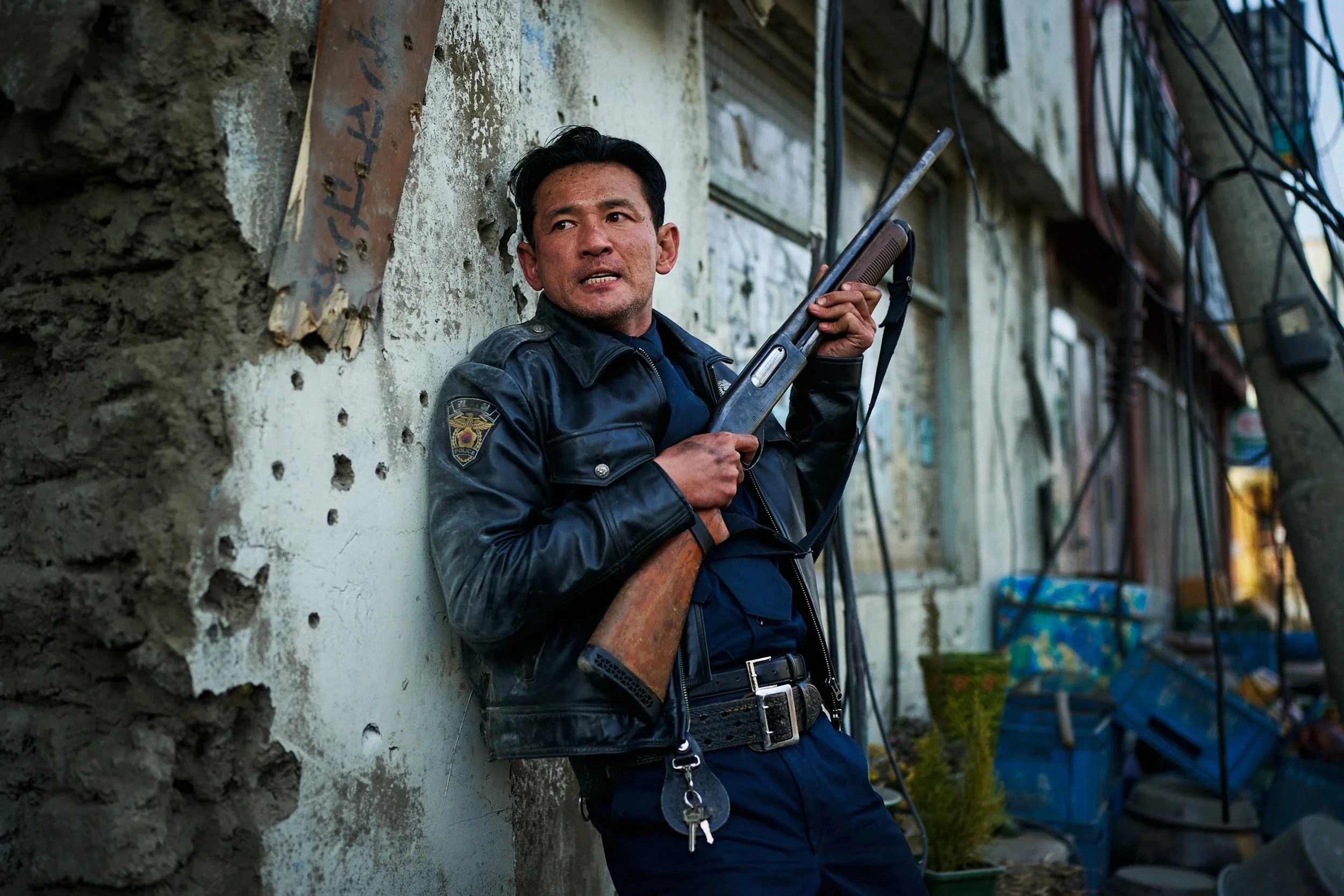
Scare Out (惊蛰无声, Zhang Yimou, 2026)

When a suspected spy gets away with some top secret information, the security services begin to suspect they may have a mole on their hands in Zhang Yimou’s slick espionage thriller, Scare Out (惊蛰无声, Jīngzhé Wúshēng). Possibly inspired by a real-life case in which information regarding a new fighter jet was leaked, the film is supervised by the security services themselves and in part a defence of China’s all powerful surveillance network and technological supremacy that allows them to neutralise threats to national security in record time.

Nevertheless, like some of Zhang’s recent work, it’s surprising that he was able to get away with the depiction of a rogue intelligence officer and potentially not quite on level actions from the security services even if they’re eventually vindicated by a final twist. When we’re first introduced to Huang (Zhu Yilong), he’s hot on the trail of foreign spy Nathan whom they assume to be receiving confidential information regarding a new stealth system for fighter jets leaked by a scientist who is desperate to leave the country (Lei Jiayin). Huang is shot in the back by an arrow, while his colleague takes one to the neck and is killed. Though they manage to arrest Nathan, he’s almost killed when the box he’s carrying spontaneously combusts burning the contents.

It’s at this point that things start to go wrong for Huang as his former colleague Zhao Hong (Song Jia) returns to lead the team and he’s one of three suspects for a possible mole alongside his second in command Yan Di (Jackson Yee), and their drone operator Chan Yi who killed the sniper either accidentally or on purpose by ramming him so that he fell from the upper levels while trying to escape. Until now, Huang had been depicted as an upright and dedicated officer who absolutely could not be the mole, but we soon discover that he in fact is, or at least that he was in the process of being turned by foreign asset Bai Fan (Yang Mi). With his marriage falling apart, he fell right into her honey trap and is now being blackmailed but theoretically still has the opportunity to turn this around if only he can hold out and find a way to do the right thing.

Then again, the film deliberately wrong-foots us by occasionally suggesting that maybe Huang isn’t the mole after all or that there may be more than one or something larger going on all together. It’s not really revealed why Bai Fan has betrayed her country to work for a foreign intelligence agency led by a Westerner living in China and with incredibly good Mandarin. The foreign agency evidently thinks this region’s important enough to be worth creating a long-term network of sleeper agents, while the way the security services discuss the stolen stealth data makes it sound as if they’re already in a war and very much don’t want “the enemy” to get hold of this information. 

The real action, however, is the interplay between accused Huang and Yan Di whose relationship takes on intensely homoerotic quality. Just as Huang is torn between his duty as an intelligence officer and the predicament he finds himself in, Yan Di is torn by the desire to protect his friend while simultaneously avoiding implicating himself. They must either betray each other, themselves, China, or all three, which isn’t an ideal set of choices. Meanwhile, the spy craft on show has a very traditional quality with smartphones secured in rubbish bins in public lavatories, dead drops, and mysterious potions that can destroy evidence, all of which suggests that there are ways in which this vast surveillance network is in fact fallible and can’t protect against every eventuality even if it’s just someone leaving a bathroom in a different outfit than they were wearing when they went in.

Though Zhang does his best to lend the city a near future gloss as a techno paradise in which there are no secrets, he opts for an unusual fast editing style which makes the narrative much more difficult to follow while encouraging an atmosphere of intense paranoia where everything moves at breakneck speed and nothing is ever certain. Like his recent films Under the Light and Article 20, however, it’s a curiously anonymous affair and bears few of the hallmarks of Zhang’s filmmaking as a fifth generation director opting instead for a fairly generic, mainstream blockbuster aesthetic. Nevertheless, in its twists and turns along with the interplay between the two leads the film nods back towards the intrigue of Infernal Affairs and a history of Heroic Bloodshed less commonly found in Mainland crime dramas.


Trailer (English subtitles)
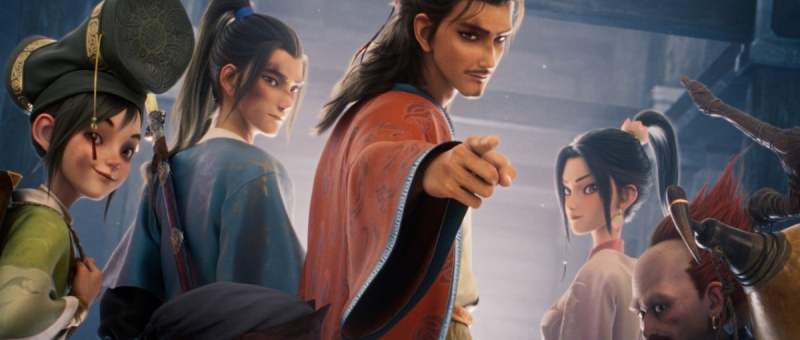
Night King (夜王, Jack Ng Wai-Lun, 2026)

Times are changing in the Hong Kong of Jack Ng Wai-Lun’s Lunar New Year comedy, Night King (夜王). Reuniting the team behind the megahit A Guilty Conscience, Ng paints the tiny enclave of old-fashioned hostess bars at its centre as the last bastion of a disappearing culture where a good-hearted manager holds out against the encroaching forces of capitalism in the form of his ex-wife, Madam V (Sammi Cheng), who is determined to buy the club and rule all of East Tsim Sha Tsui. 

Back in the economic boom of the 80s and 90s, Foon (Dayo Wong) ruled the roost as the famed “Night King” of the entertainment district, but these days clubs are closing reft, left, and centre, while his EJ is one of the only holdouts left alongside Madam V’s Muses. Madam V has poached several of Foon’s best girls which is why his bar is understaffed, but there’s no real denying that the place is on its way out because customer behaviour has changed. Madam V bristles when her boss’ nerdy son Prince Fung (Siuyea Lo) suggests young people don’t go to places like these any more and they’re better off turning it into a modern nightclub instead, but he does have a point. Most of the clientele are elderly men who might be rich but won’t be very coming for very much longer while there’s no one really there to take their place. The younger men who do come, like Fung, on occasion, are there because, as Foon says, hostess bars are naturally places where information circulates freely.

To that extent, Madam V represents an incursion of modern capitalism as she ruthlessly takes her red pen to the books and insists on getting rid of unpopular girls. Rather than the current system, she suggests switching to a pageant style in which the girls are brought in en masse with the customer taking his pick, which somehow seems even more sexist and sleazy than before. Madam V’s ambition seems to have been one reason for the marriage’s failure and it’s clear that she resents Foon for being a soft touch. As she says, he lends money to every girl that asks him and is actually quite supportive of them in a way that makes this business seem less exploitative than it might otherwise be. In any case, he’s determined to hang on to his long timers even if some of them have aged out of active hostessing while Madam V wants to bring in her army of soulless and identical ringers.

So the question is really, is it better to go down with the ship clinging to the past or join the capitalist revolution alongside men like Fung who no longer value Hong Kong and do most of their business abroad. Of course, there might be another way if Madam V and Foon can find their way back to working together, but the first problem is the petty princeling with a sexist chip on his shoulder because he can’t accept it that his sister is a better businesswoman and the likely heir to his father’s empire. His family seem to have written him off already, and sadly they may have been right. Giving himself a glam up, Fung shows up at the club like a playboy throwing his money around, but has secretly teamed up the widow of Foon’s late Triad godfather to screw over Madam V for the purposes revenge, while Mrs Wong simply wants rid of the club because she couldn’t stand her husband’s involvement in the seedier side of his business as a violent gangster. 

As in so many recent Hong Kong films, the idea seems to be that it’s better to let go of the past and take with you only what you can carry. Foon and Madam V eventually open a new club that’s fully their own rather than inherited or run on behalf of a backer. In essence, it’s still a hostess bar, but in a different part of town and more modern in sensibility, skewing young professional rather than elderly billionaire. Foon too is dressing in a more contemporary fashion, abandoning his colourful open-neck shirts with visible medallion and jeans for a smart suit jacket and turtle neck. Nevertheless, Ng seems to be looking back rather than forwards in his directorial style including typical elements of 80s and 90s cinema such as slow motion, freeze frames, and fade to black transitions perhaps to echo the ways in which Foon is stuck in the past. The eventual message though is one of solidarity and creating your own space outside of whatever external forces may be constraining it.


Trailer (Traditional Chinese / English subtitles)

Blades of the Guardians (镖人:风起大漠, Yuen Woo-Ping, 2026)

“I haven’t seen moves like that in the martial world in forty years,” quips a bystander in a post-credits sequence, and this adaptation of the manhua by the legendary Yuen Woo-Ping certainly does its best to bring back some of the charm of classic wuxia. Produced by star Wu Jing, Blades of the Guardians (镖人:风起大漠, biāo rén fēng qǐ dàmò) also features a cameo appearance by Jet Li as well Nicholas Tse, Tony Leung Ka-fai, and Kara Wai, as a cynical bounty hunter rediscovers his duty towards the common people while escorting a would be revolutionary to the ancient capital of Chang’an.

A former soldier, Dao Ma (Wu Jing) now wanders the land with a child in tow in search of wanted criminals, but when he finds them, makes an offer instead. Pay him triple the bounty, and he’ll forget he ever saw them. As we’re told, this is a world of constant corruption under the oppressive rule of the Sui dynasty. Zhi Shilang (Sun Yizhou) is the famed leader of the Flower Rebellion that hopes to clear the air, which makes him the number one fugitive of the current moment. This is slightly annoying to Dao Ma in that it necessarily means he’s number two when forced on the run after killing a corrupt local governor (Jet Li) in defence of an innkeeper with a hidden martial arts background whose family the official was going to seize for the non-payment of taxes. Taking refuge in the small township of Mojia, Dao Ma is given a mission by the sympathetic Chief Mo (Tony Leung Ka-fai) who agrees to cancel all his debts if he escorts Zhi Shilang to Chang’an safely before they’re both killed by hoards of marauding bounty hunters, regular bandits, government troops including two of Dao Ma’s old friends, or the former fiancée of ally Ayuya (Chen Lijun), the self-proclaimed Khan, He Yixuan (Ci Sha).

When given the mission, Dao Ma asked why he should care about the common people or Zhi Shilang’s revolution only to be swept along as they make their way towards the capital and witness both the esteem with which Zhi Shilang seems to be held by those who believe in his cause and the venality of the bounty hunters along with the mindless cruelty of He Yexian’s minions. As is usual in these kinds of stories, Mojia is a idyllic haven of cherry trees in bloom where the people dance and sing and are kind to each other, which is to say, the seat of the real China. Though Ayuya longs to see Chang’an and harbours mild resentment towards her father for his “control” over her, Chief Mo is the moral centre of the film and not least because he cares for nothing more than his daughter’s happiness. When she decides not to marry He Yixian on account of his bloodthirsty lust for power, Mo walks barefoot through the scorched land of the desert to free her from the obligation and, after all, has trained her to become a fearsome archer rather than just someone’s wife or a pawn to be played as he sees fit. 

But as someone else says, who is not a pawn in this world? There are other shadow forces lurking behind the scenes playing a game of their own while taking advantage of the corrupt chaos of the Sui Dynasty court. Dao Ma, however, revels in his outsider status. “Not even the gods control me now,” he jokes in advocating for his freelance lifestyle loafing around as a cynical bounty hunter who can choose when to work and where to go, in contrast to his life as a soldier of the Sui forced to carry out their inhuman demands. When the innkeeper’s son tells him he wants to be a swordsman too, Dao Ma gives him a sword as a symbol of freedom and instructs him to take a horse and go wherever he wants when he’s old enough. His fate is his own, whatever his father might have said. 

If that might sound like a surprising and somewhat subversive advocation for individualism, the final message is one of solidarity, as Dao Ma rediscovers his duty to the people and various others also fall in behind Zhi Shilang, who is hilariously inept at things like riding a horse and remaining calm under fire, to take the revolution all the way to Chang’an. With stunning action sequences including an epic sandstorm battle, the film successfully marries old-school wuxia charm with a contemporary sensibility and an unexpectedly revolutionary spirit as Dao Ma and friends ride off to tackle corruption at the heart of government.


Blades of the Guardians is in US cinemas now courtesy of Well Go USA.

Trailer (English subtitles)