 Written by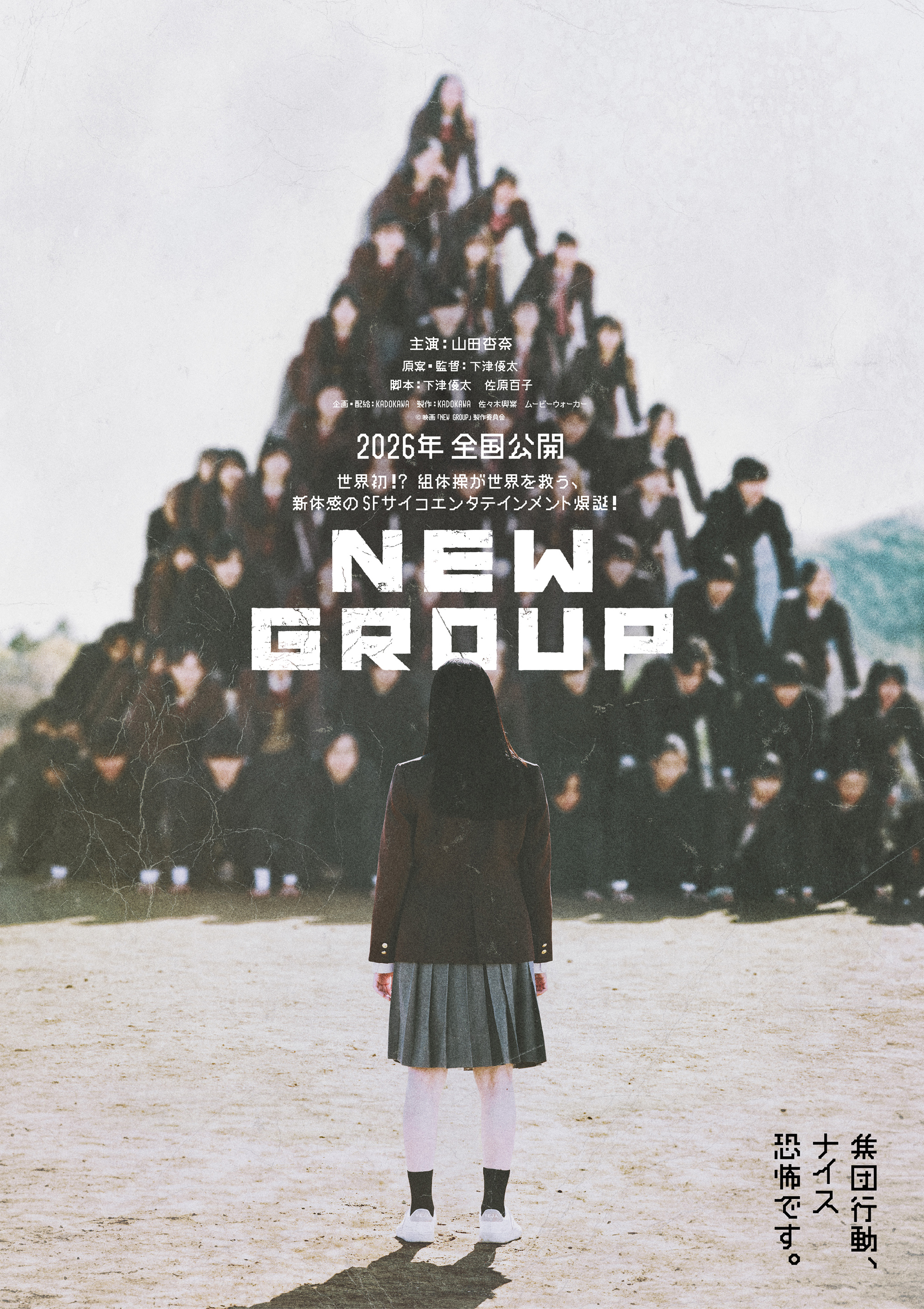
If all your friends went and formed a giant human pyramid, would you go and form a giant human pyramid too? Parents used to caution against such dangerous group think, but it has to be said that perhaps they only complained when the group activity didn’t suit them or required some additional expense they didn’t really want to pay. If the group activity was studying hard at school to get into a good university and become a successful member of society rather than buying the later must have fashion item to fit in at school, then they’d hardly complain about that.
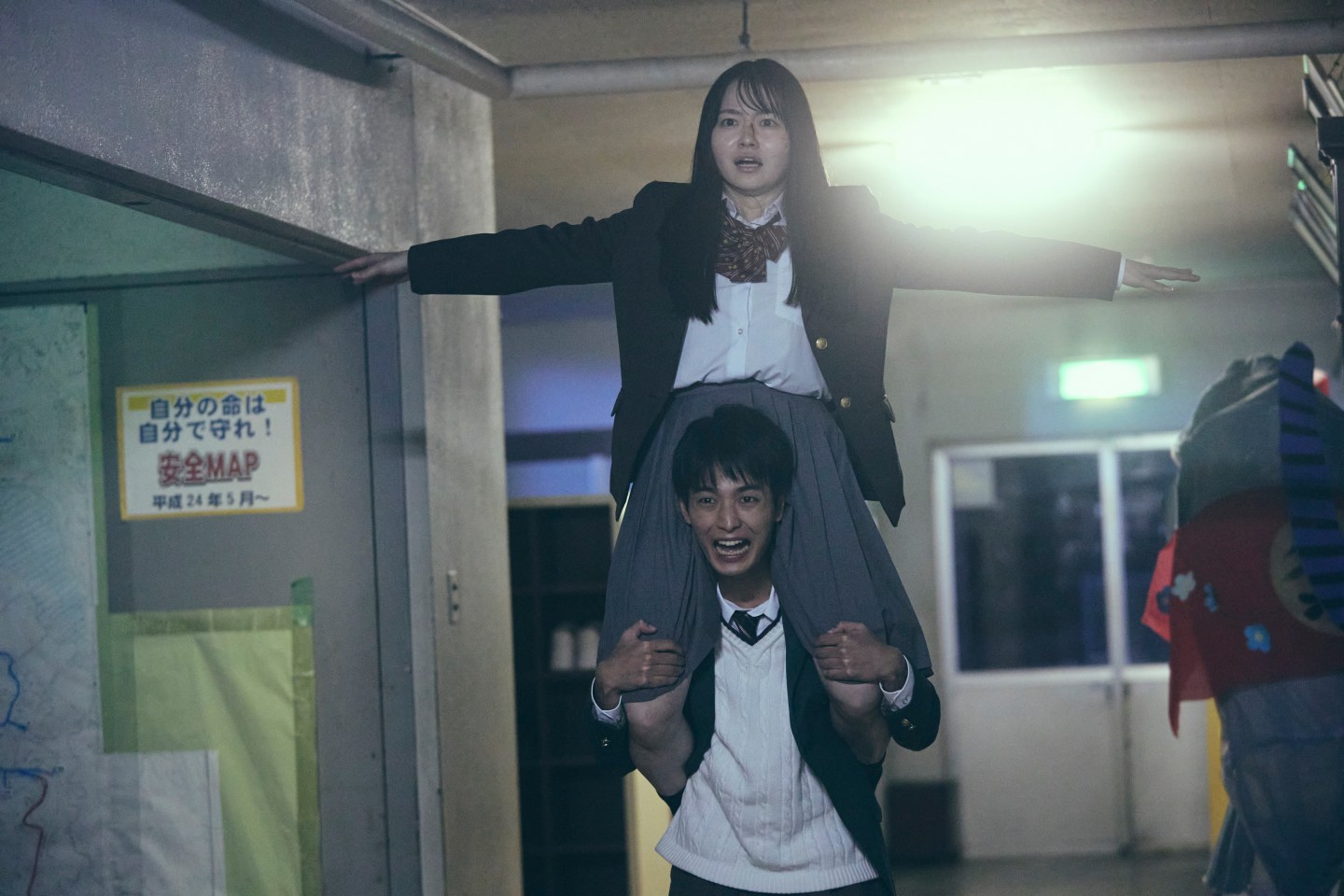
Yuta Shimotsu’s absurdist satire New Group is in many ways about the deeply ingrained patterns of thought that exist within a society to the extent that they are rarely ever questioned. Ai (Anna Yamada) is coming to an age in which she is beginning to feel hemmed in by a conformist society but at the same time does not have the courage or confidence to challenge it. When she sees another girl being bullied, she wants to step in to defend her but all she manages to do is give the bullies a hard stare. Her friend Haru asks her what university she’s thinking of applying to to, but Ai only says she’ll apply to the same one as her and study the same thing. She can’t even answer when she’s put on the spot about what she wants to do for the school festival for fear of picking the wrong one and being ostracised from a particular faction, so she just goes along with the first person who asked for her vote.
As her teacher says, though there is a strong groupthink in play, everything comes to a binary. It’s always “uchi-soto”, us and them. But what does it mean to be a member of the main group? Ai isn’t convinced she wants to give up her autonomy just to fit in and increasingly feels herself to be an outsider. Her name is of course reminiscent of the English pronoun “I”, though it’s true meaning is “love”. She’s pulled out of inertia by a boy named “Yu” who nevertheless is later pulled into the pyramid and tells her that “ai” is here, meaning both that the group is love and Ai, the individual, belongs with in it. She replies that he’s wrong, that isn’t love, and it isn’t her. There is no room for the individual within the pyramidic structure of the group.
Yu has recently returned from abroad and is living alone free of parental authority which is why he doesn’t fit into the carefully controlled harmony of the school. He is out of step at marching practice and less afraid to voice his true opinions. He intervenes to save the other girl from the bullies and chastises Ai that just watching makes you complicit. Yu might as well be one of the space aliens they keep talking about on TV, a subversive force out to destabilise the harmonious society. Yet Ai’s doubts seem to have arisen because of a personal trauma. As a child, she chose the group over her younger sister who was then killed in an accident. She feared being excluded and essentially sacrificed her sister for approval while also denying her affiliation to the group that is her family.
The quest of Ai and Yu is then to maintain their selfhoods while operating in a society that demands conformity. Controlled by the maniacal headmaster, their schoolmates all immediately start marching to the beat of the PE teacher’s whistle and dutifully take their place in the pyramid in which all they do is uphold the structure of the group. As the pair are chased by the zombie-like figures, Ai has to confront the fact that it might just be easier to go with the flow, even if that too comes at a price. Even so, in her efforts to resist, is Ai not just creating another group of her own that can only exist because of its opposition to the first? If there is “I” there must also be “you” and never the twain shall meet. A TV commentator played by the director Takashi Shimizu tries to speak out about the nonsense groupthink being conveyed through the innocuous medium of daytime television but is dragged off air while shouting at everyone to wake up and think for themselves. It seems that few are brave enough to switch off and think for themselves while the only path to freedom lies in loneliness and exile even if in the end it is “love” that saves us after all.
New Group screens as part of this year’s Nippon Connection.
Trailer (English subtitles)
Images: ©2025 “NEW GROUP” Film Partners

