Hi-Five (하이파이브, Kang Hyoung-chul, 2025)

If you suddenly developed super powers, what would you do with them? Would you start using them for good to save the people around you, or would you become obsessed with the power itself and try to amass more of it while your using abilities only for your own ends? Those at the centre of Kang Hyoung-chul’s superhero comedy Hi-Five (하이파이브) are firmly in the helping others camp, but they’ve seen enough movies to know that every hero needs a villain and there’s someone else out there who wants their power for themselves.

That would be ageing cult leader Eternal Young-chun (Shin Goo), New God Resurrected. Young-chun is just ripping his followers off and doesn’t believe in anything he preaches but has, on the other hand, started to believe in his own divinity. He’s been keeping himself in good health through frequent organ donations from less fortunate people to the extent that his body’s a kind of Ship of Theseus. His daughter’s fed up with his longevity and hoping he’ll finally snuff it so she can take over, which is why she’s after the five in the hope of taking them out before Young-chun can steal all of their transplanted organs too. It turns out that the pancreas he was given was taken from a superhero who took his own life and has not only rejuvenated his body but given him the ability to suck the life force out of other people to empower himself in a more literal way than he’s already feeding off his followers by exploiting their devotion to convince them to give up all their money and assets or else work themselves to death for free.

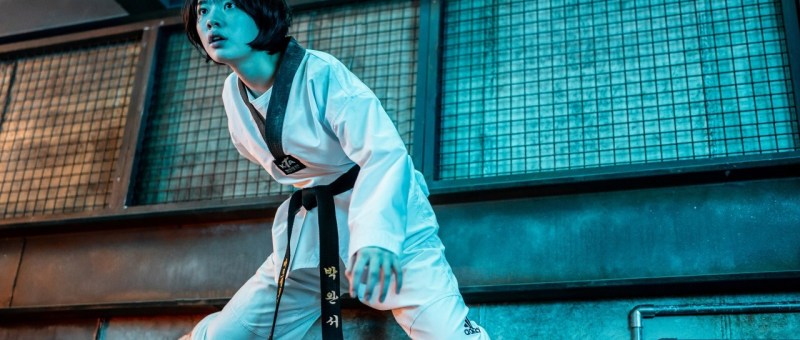
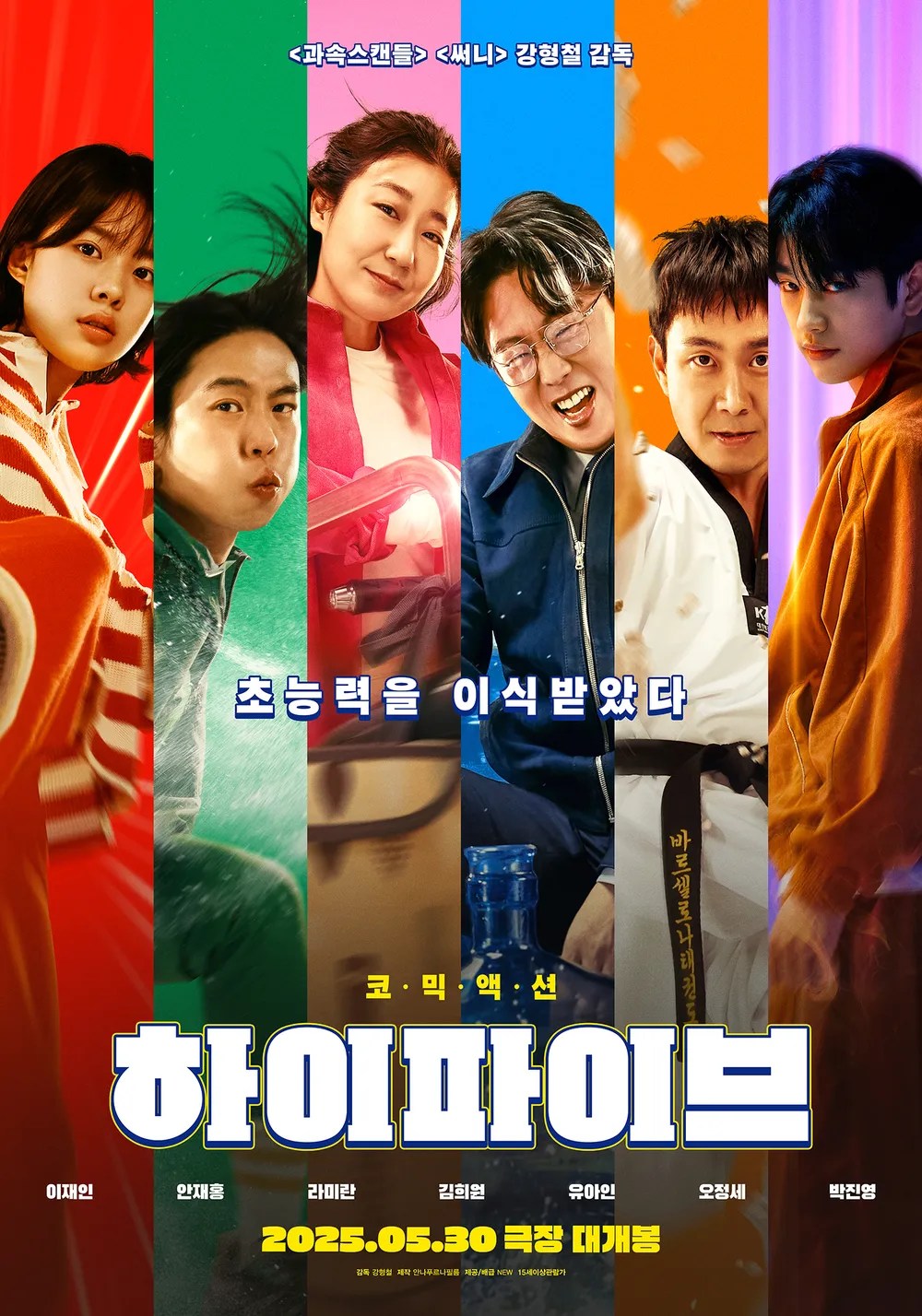
The other five commonly transplanted organs were given other people who are all marked with a tattoo and have been given powers of their own, though one of them hasn’t figured out what hers is yet. In contrast to Young-chun’s soullessness, each of the five seems to have had their own problems that are only impacted by their transplants rather than directly caused by them. Teenager Wan-seo (Lee Jae-in) received the heart and is frustrated by her overprotective father who constantly asks about her friends though she keeps saying she doesn’t have any because she was ill for so long and had to skip school for treatment which is why struggling to make any new ones. He won’t let her do taekwondo either, though that’s what she most wants to do and possibly why she ended up with the all powerful, super speedy fighter skills. Ji-sung (Ahn Jae-hong), meanwhile, is a struggling screenwriter with an interest in the superhero genre. He doesn’t have any friends either, which may be to do with a poor career decision that alienated him from his community. Though he’s the first one to want to get the group together, he’s soon consumed by cynicism. Ji-sung got the lungs and can blow things away, but struggles to convey his emotions with words and gets into an alpha male hissy fit with Ki-dong (Yoo Ah-in), a super-sharp guy who got the corneas and can manipulate electricity but is actually a bit of a loser with gambling issues and similar interpersonal issues to Ji-sung.

Middle-aged yogurt lady Seon-nyeo (Ra Mi-ran) got the kidneys and can’t figure out what her superpower is but becomes the force who holds the group together. Even so, she’s battling mental health issues and some guilt about something that happened in her past and caused unintended harm to another person. Factory foreman Heel-han (Kim Hee-won) is a devotee of the cult, but frustrated and conflicted by the obvious disregard for workers’ safety and wellbeing. He got the liver, and can heal minor wounds caused by recent accidents. The reason he has no friends is that he cut off all of his relationships when he joined the cult, which is one other reason he doesn’t want to make a fuss about the abuse of workers and is originally flattered by Young-chun’s attention.

Nevertheless, it’s becoming part of the group that allows them to save each other and themselves figuratively and literally in combining their strengths to battle Young-chun, who is after all also sort of a part of them and a member of their family as another recipient of organs from the same person. Kang imbues their somewhat clumsy heroism with a quirky humour, even giving the occasional use of CGI a comedic, comic book aesthetic to lean into what might otherwise be a minor liability though production design and values are top-notch. It’s a shame the film was held up for four years by Yoo Ah-in’s drug arrest which has severely hampered his career and led to most of his unreleased work being shelved at the time, otherwise this might have gone on to become a fun movie franchise with deepening lore led by a likeable cast of everypeople using their powers for good in small but important ways. Still, just this episode alone is plenty of warmhearted fun as the gang come together to expose Young-chun’s vain and selfish cult leader for the conman he is, saving themselves and freeing those like them who fell victim to his lies.


Hi-Five screened as part of this year’s London Korean Film Festival.

International trailer (English subtitles)
Rebound (리바운드, Jang Hang-jun, 2023)

A collection of underdog teens learn a few valuable lessons in perseverance and determination while taking their moribund high school basketball team all the way to the national championships in Jang Hang-jun’s sporting drama, Rebound (리바운드). Inspired by the real life tale of Busan Jungang High School’s meteoric rise from obscurity to top rated team, the film quietly touches on inter-city rivalry and social inequality while otherwise spinning an inspirational tale of the power of solidarity and a never say die spirit. 

They are all in their way rebounding from something, and not least the team itself which is threatened with closure after being judged a bad investment by the penny pinching headmaster given its “embarrassing” series of total losses across a series of years. The team is given a brief reprieve but only as a token of its former reputation, the plan being to have one just for show but not actually enter any competitions while the school let it gradually fall into obscurity. Accordingly, they begins looking for “cheap” coaches who might be prepared to manage a phantom team and eventually land on 25-year-old social worker Kang Yang-hyun (Ahn Jae-hong) who is a former minor leaguer and alumnus of the school looking to reclaim his own failed hoop dreams vicariously through a new generation of new players. 

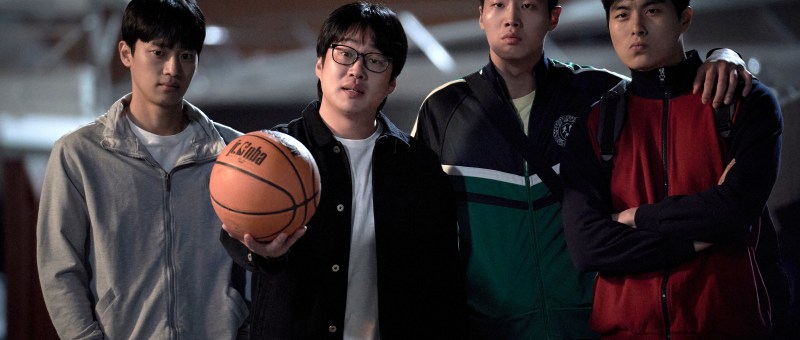
There are however only four left on the team, two of whom immediately quit leaving Kang scrambling around the city looking for tall boys who might be good with a ball and can be convinced to switch schools. The problem they have is that talented players are quickly snapped up by more prestigious institutions in Seoul which can after all offer more opportunities to ambitious youngsters aware that they probably won’t be playing basketball for the rest of their lives. No one really envisages a future for themselves in Busan which remains a kind of underdog in itself as it struggles against the the allure of Seoul as place of greater sophistication and possibility. Keen basketballer Ki-bum (Ahn Jae-hong) turns down Kang’s offer for just this reason insisting that his career is dead if he stays in Busban even while his parents seems to be turning down good offers on his behalf. He only agrees to join the team on learning that ace player Jun-yung (Lee Dae-hee) will be playing for them. 

Jun-yung is valued mainly for his height which sort of runs against the messages of the game in that it’s not something the players can control and no matter how hard they train they will always be at a disadvantage to those who are simply bigger. Kang’s first mistake is that he builds everything around the pillar of Jun-yung, barely letting the other players play while instructing them to pass every ball to him so he can shoot. In any case, Jun-yung too is eventually poached by a better team apparently forced to betray his teammates by his ambitious parents who are after all merely making what they see as a smart decision on his behalf. A disastrous fight between two players with unfinished business from middle school also results in a lengthy suspension ending the team’s hopes of competition success for the current season. 

But as Kang later says, it’s only really a “fake failure” in that it gave him a rebound he could use to realise his mistakes and start over prioritising their shared love of the game over his own insecurity now more willing to take a risk while concentrating on making the team as good as it can be rather than the external validation of championship wins. As he later tells them in an inspirational locker room speech, not all of your shots go in but that’s OK because they come back to you on the rebound and what matters is what you do with them then. Whatever happens, life goes on and fear of failure is not a reason to give up on something you love.

Jang does his best to avoid underdog sports movie cliches while subtly hinting at the pressures of social inequality as moody player Gang-ho (Jung Gun-joo) struggles with an old injury he couldn’t afford to have treated properly while trying to make extra cash betting on basketball games with other wayward neighbourhood kids. Capturing a real sense of energy in the various basketball games along with a wholesome sense of possibility as the team begin to bond and “improve” each other, Jang is careful not to be blinded by a false narrative of inspirational success but rather doubles down on the rebound mentality of seizing opportunities as they come and continuing to chase your dreams in your own way no matter how hopeless they may seem. 


Rebound screened as part of this year’s New York Asian Film Festival.

International trailer (English subtitles)
Images: ⓒ 2023 NEXON Korea Corporation, B.A. ENTERTAINMENT, WALKHOUSECOMPANY ALL RIGHTS RESERVED

Miss & Mrs. Cops (걸캅스, Jung Da-won, 2019)

When the Burning Sun scandal exploded in early 2019 it promised but perhaps did not deliver a reckoning with the generalised misogyny at the heart of a fiercely patriarchal society. Almost a year previously, 12,000 women had assembled at Hyehwa Station to protest the prevalence of “molka” or spy cam pornography in which footage captured of ordinary women through the use of hidden cameras in ladies’ bathrooms, changing areas, and fitting rooms had been uploaded to the internet without their knowledge or consent. Despite all of this, there has been relatively little progress. Miss & Mrs. Cops (걸캅스, Girl Cops), a lighthearted comedy dealing with the weighty issues of molka, date rape, and the indifference with which they are treated by an overwhelmingly male police force obsessed with targets and performance, was filmed before the Burning Sun story broke but drops neatly into the post-scandal society as two women discover that they’re on their own when it comes to taking down a vicious drug gang. 

Mi-young (Ra Mi-ran) was once an ace detective well known for her ice cool arrests, but after marrying a feckless man who repeatedly failed to pass the bar exam she was forced to leave active policing and take an admin job in the complaints department for higher pay. Her sister-in-law, Ji-hye (Lee Sung-kyung), has since joined the force as a rookie officer but has little support amongst her colleagues and is often in trouble for her worryingly aggressive policing which eventually gets her “demoted” to complaints where she ends up working with Mi-young. While they’re busy bickering, a young woman arrives looking lost and confused but is frightened off by a rowdy group of men before she can say anything. As she’s left her phone behind, Mi-young chases after her, but the woman immediately steps out into traffic and is hit by a car. Obviously extremely concerned, Mi-young and Ji-hye get their tech expert colleague to Jang-mi (Choi Soo-young) to help them crack the phone and discover a compromising photo of the young woman posted on an illicit web channel promising to release the full video when it reaches 30,000 likes. 

Talking to her friend, Mi-young and Ji-hye realise that the young woman has tried to take her own life out of shame because of what these men did to her. Yet their attempts to report the matter to the legitimate authorities fall on deaf ears. Ji-hye’s colleagues joke and complain about having to investigate “perverts” instead of doing “real” policing, as if it’s all just meaningless silliness. Back when Mi-young was on the force she was placed into a special woman’s squad dedicated to dealing with crimes against women. Ji-hye quite rightly points out that times have moved on and the woman’s squads were in their own way essentially sexist in that they were created because the male police force did not regard crimes against women as “serious”, nor did they regard female officers as “real” police, so they killed two birds with one stone to allow them to get on with more “important” matters. 

The women realise that they’ll have to deal with this on their own, but even once they do discover that the male officers are only too keen to take the credit for exposing a drug ring while leaving the “peeping toms” to the ladies as not worth their time. Ji-hye’s boss even lets his mask slip in irritatedly suggesting she’s being over emotional because she is a woman and should let the boys get on with their jobs, but it’s only when she has a moment of impassioned rage explaining to them that they’re consistently failing in their duty to protect the women of Korea that they are finally shamed into realising the consequences of their lack of concern. 

Meanwhile, each of the women has been in some way been deliberately obstructed in their career solely for being a woman. Mi-young was forced off the force and is now in danger of losing her complaints job because of budget cuts. An older woman doesn’t tick any boxes on the employment quotas and so they have no reason to keep her. Ji-hye, meanwhile, is ignored by most of her team and left without support, and even Jang-mi, we discover, had NIS training but quit in resentment after they put her on a pointless Twitter monitoring programme. Their much maligned boss was also a part of the woman’s squad and wanted to continue in the police after having children, but they put her in charge of complaints instead. 

Yet Mi-young says she isn’t on the case because of female solidarity but because it makes her so angry that most of the women this happens to, like the woman who stepped in front of a moving car, blame themselves. The woman’s friend blames herself too for getting her friend into a dangerous situation because she convinced her to come to a private party with guys in a club thinking “they seemed OK”. In that sense it’s a shame that the villain concerned turns out to be a drug-addled sociopath who apparently only does the date rape stuff “for fun” because the real reason for all those clicks is data collection, rather than a perfectly ordinary guy who is probably someone’s son, brother, or even husband, not to mention chaebol kid or Kpop star. Still even if a little flippant in presentation (including some extremely unfortunate racist “humour”), Miss & Mrs Cops maybe no Midnight Runners but has its moments as its determined heroines strike back against patriarchal indifference by refusing to give up on justice.


International trailer (English subtitles)
Secret Zoo (해치지않아, Son Jae-gon, 2020)

A corporate stooge begins to reassess his life choices in Son Jae-gon’s capitalist satire, Secret Zoo (해치지않아, Haechijianha). As someone belatedly points out, no matter how nice you make the enclosure, you can’t get away from the fact you’re in jail and aspiring lawyer Tae-soo (Ahn Jae-hong) might have to admit that he’s no more free than the animals he’s sent to oversee (or not, as we’ll find out) when he’s randomly sent to take over a failed wildlife park at the behest of his shady boss. 

Currently a temp working out his probation at top three legal firm JH Law, Tae-soo is desperate to be taken on as a full-time employee but as he explains to his sister who wants to sue some thugs bullying her son, that largely means he’s basically just an errand boy taking care of the unreasonable demands of their incarcerated clients who are in the main chaebol sons accused of fraud and embezzlement. JH Law is under siege from protestors angry at their role in perpetuating chaebol influence and siding with large conglomerates to frustrate workers’ rights and enable exploitative working practices. Yet it’s not squeamishness that he’s wound up working for such an awful company that has Tae-soo too embarrassed to attend the reunion for the “third rate” uni he graduated from, but shame that he is only a temp not a full-time employee. That’s part of the reason he instantly accepts a strange offer from his boss to head up Dongsan Park with the promise that he’ll be taken on as a regular employee in Mergers and Acquisitions if he can turn it around in three months. 

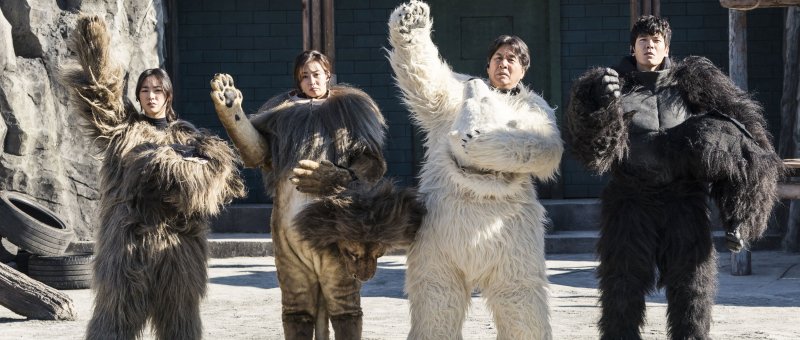
When he arrives, however, Tae-soo gets something of a shock. Most of the park’s most valuable animals have already been seized by its creditors, and international safeguards regarding the trafficking of live animals ensure that he cannot simply buy more within the three month time limit. After being surprised by a stuffed tiger while drunk after the welcome party and catching sight of some photos from a mascot day Tae-soo has a bright idea. They’ll simply have hyperrealistic costumes made and sit in the enclosures themselves keeping far enough away that the customers hopefully won’t know the difference. After all, when someone tells you’re visiting a zoo it probably doesn’t occur to you to question whether the animals are “real”.

Secret Zoo, or more accurately a zoo with a secret, is on one level a mild satire on public perception and fake news. You hear the word zoo and have a set of expectations. Unless something happens to convince you otherwise, your brain naturally smoothes over any minor issues you might have because it would be ridiculous for someone to “fake” a zoo. Despite the evidence of his eyes, the only thing the corporate stooge sent to inspect finds suspicious is the animals’ “funny” names which all end in the same syllable. The zoo becomes an unexpected viral phenomenon when Tae-soo, wearing the polar bear suit, is snapped drinking Coca-Cola just like the advert but even then no one questions the idea that he’s not a real polar bear, or that it’s perhaps not ethical for a polar bear to be drinking Coca-Cola in the first place or for guests to be throwing objects into the enclosures and especially not with the intention of harming the animals. 

Only conflicted doctor So-won (Kang So-ra) questions the zoo ideology, pointing out that however nice they make the enclosures it’s still a prison for animals that they are in essence exploiting. Secret Zoo is at pains to make a direct comparison between Tae-soo caught in the corporate cage of modern-day capitalism and the animals he’s impersonating as prisoners of the world in which they live. Tae-soo’s shady boss is, as might be expected, essentially corrupt. As Tae-soo begins to figure out, if this job were important he wouldn’t be doing it, he’s been sent because he’s desperate and expendable while his boss snidely remarks that it’s not a job to be done by someone “brought up soft” hinting at the class snobbery that further oppresses him as a “weed” coming up from a “third class” university. 

So desperate to achieve conventional success by becoming a member of the elitist club, Tae-soo doesn’t really question what it takes to get there until bonding with the employees and becoming invested in the idea of saving the zoo only to discover that his shady boss never really meant to “save” it anyway. Yet the only solution on offer is it seems merely a nicer cage which in power rests firmly with the same corrupt chaebols only now persuaded that it’s in their interest to be more socially responsible as a means of improving their personal brand which of course merely enables them to continue their exploitative business practices even if implying that Tae-soo too has a modicum of power in the ability to manipulate them. Black Nose, the polar bear driven mad by confinement, cannot be returned to the wild but regains his “freedom” in a polar bear sanctuary in frosty Canada, Dr. So-won too freeing herself of her problematic need to protect him by keeping him close. Tae-soo getting a dose of his own medicine in being observed by a young couple who press him for a selfie as the director of that “fake zoo” seems to have gained a little more awareness of what it’s like to live in the enclosure of an inherently corrupt social system akin to corporate feudalism but like Black Nose has perhaps at least improved the quality of his captivity. 


International trailer (English subtitles)
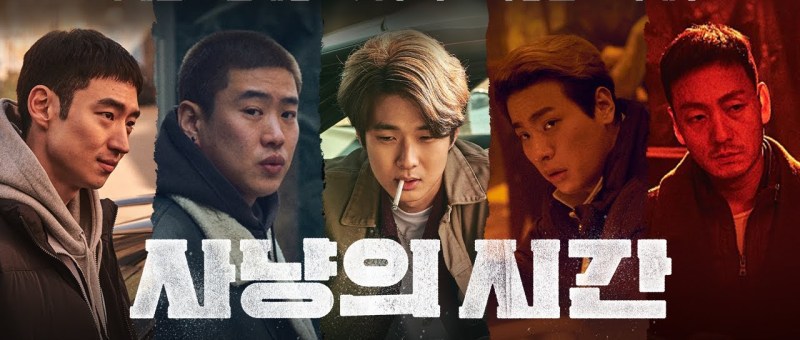
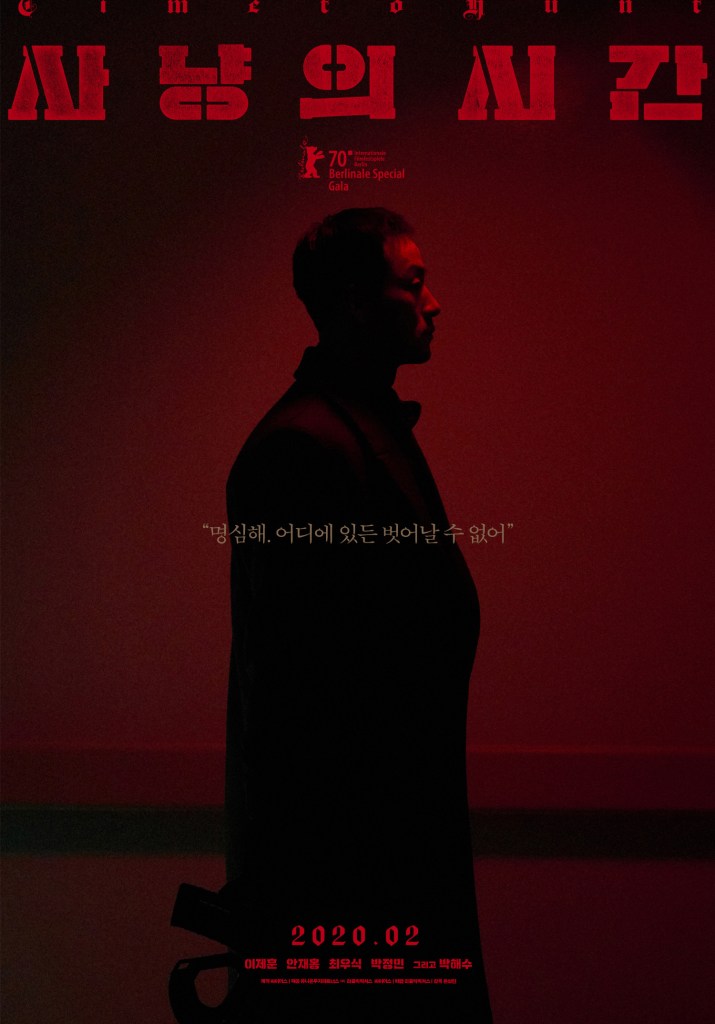
Time to Hunt (사냥의 시간, Yoon Sung-hyun, 2020)

A little over 20 years ago, the Korean economy faced an existential threat in the face of the Asian Financial Crisis during which it defaulted on its loans, ran out of ready cash, and was forced to accept concessions some regarded as humiliating not to mention politically regressive as part of the bailout package it negotiated with the IMF. Returning nine years after his indie debut Bleak Night, Yoon Sung-hyun brings these events very much to the fore with Time to Hunt (사냥의 시간, Sanyangui Sigan) while blending them with a painfully contemporary take on “Hell Joseon” pushed into a literal dystopia in which Korea has somehow become a lawless police state in which the Won is now worthless as the government once again defaults and is forced to negotiate with the IMF while workers protest in the streets against mass layoffs and forced “restructuring”. 

It’s into this world that Jun-seok (Lee Je-hoon) emerges after spending three years in prison for a robbery which was supposed to be his first and last job. Unfortunately, the loot he got sent away for stealing turns out to be worthless, the Won being so unreliable that most shops no longer accept it and insist on trading with the American Dollar though currency exchange is also illegal. Jun-seok finds this out from his two sheepish friends who’ve come to pick him up but didn’t quite have the heart to explain just how much has changed. Previously civilised Korea is now awash with drugs and guns, and crime, it seems, is the only viable economy. While inside, Jun-seok received an invitation to a better place, a paradise waiting for him in Taiwan where it’s always warm and the water is a beautifully clear shade of emerald. The only problem is he has to buy in, and without the loot he’s stuck. Which is why he talks his friends, plus a guy who owes him money, into helping him rob an underground casino operated by gangsters. 

The force which binds the men together is futility. On their way to collect Jun-seok, Ki-hoon (Choi Woo-shik) and Jang-ho (Ahn Jae-hong) joke about trying to sell vintage clothes abroad. “This isn’t the time for pride”, they remark, “we’re penniless”. Ki-hoon isn’t keen on Jun-seok’s scheme, reminding Jang-ho that after the last time they swore they’d never do anything like that again. Jang-ho, however,  has decided to go for it, partly out of loyalty to Jun-seok who took the fall for them and went to prison alone, and partly because, well, what else is there? While Jun-seok was inside, they lived quiet, honest lives but it’s got them nowhere and all that’s waiting for them is more of the same. “We’ll just be bottom dwellers,” he sighs, “when we pull this off we can live like human beings”. 

Yet even between bottom dwellers there are further class divisions. Jang-ho is an orphan with no family to fall back on, while Jun-seok’s mother has passed away leaving him only with a vague dream of an island paradise, a 1950s-style postcard from Hawaii sitting next to her photo on a makeshift altar. Jang-ho also has asthma which means he was exempted from military service, something that leaves him at a disadvantage in the world in which he now lives as the only member of the group without weapons training. Ki-hoon meanwhile has two loving parents, but that also means additional responsibilities in exchange for a permanent safety net. 

Ki-hoon’s family is also evidence of rapid social change. His parents own a modest Korean-style home complete with a well which is a source of amusement to city-raised Jang-ho, while the boys are about to be kicked out of their tiny flat for failing to pay the rent. Ki-hoon’s dad is also one of the protestors outside the factory, loudly calling for the government to “secure laborers’ right to live”. Perhaps to his generation, protest has possibility, to Ki-hoon it seems not only “pointless” but potentially dangerous even as his dad grins ear to ear while shouting out slogans in the hope of social change. 

The boys take a desperate chance because they know nothing other than desperation. “We don’t have anything to lose now” Jun-seok points out, but immediately contradicts himself in claiming that he never wants to lose the “dream” of his Taiwanese paradise. Dreams are however also something which plague him, visions of accidentally causing the deaths of those close to him or scenes of blood and ghosts followed by the melancholy image of a friend finally returning. The tragedy is that the heist comes off without a hitch, they do everything right, but they’ve made a fatally naive mistake. In trying to cover their tracks, they swipe the CCTV footage, little knowing that the hard drives also host extremely valuable information regarding the casino’s police-backed VIP money laundering operation which is why they find themselves “hunted” by a cruel and relentless gunman. In over their heads, the guys think this is about the money and maybe they can just give it back, never knowing that they’re sitting on something much more valuable or why it is they’re really being chased. 

“This isn’t the world you used to live,” Jun-seok is warned once again, “no matter where you are, you cannot escape”. Han (Park Hae-soo), the relentless hunter, becomes an omnipresent threat fused with the shadows as a representative of the societal corruption which cannot it seems be overcome. Shiny LCD screens pepper the landscape as a grim reminder of a possible future, the tech giant of the world now a lawless wasteland filled with derelict buildings and shuttered businesses, a corrupt police state in which the police is the biggest gang and the man owns the streets. Jun-seok dreams of an island paradise where everything is calm and airy, he owns a small shop repairing bicycles, and goes fishing on the beach. Such a wholesome future is more than he could ever expect to gain, but eventually he realises that you can’t escape the spectre of control by refusing to face it and the only way to be free in your own personal paradise is to exorcise your demons so you need not fear the darkness.  


Time to Hunt is currently available to stream worldwide via Netflix.

International trailer (English subtitles)

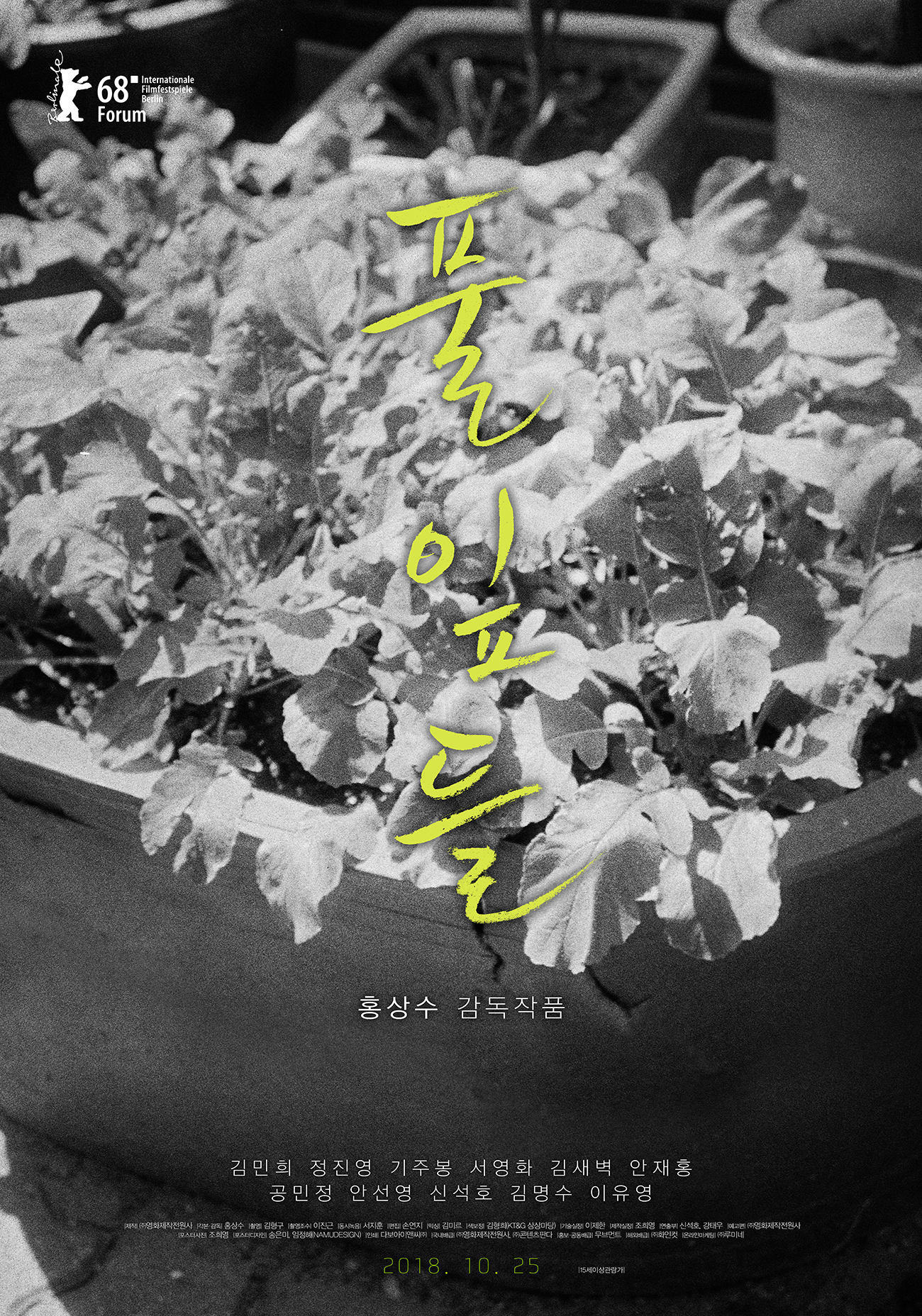
Grass (풀잎들, Hong Sang-soo, 2018)

Grass poster 1You don’t meet nice girls in coffee shops, at least according to the melancholy narrator of a Tom Waits song recalling the flighty lover too free spirited for his wholesome hometown. Like one of the rundown dive bars in Waits’ conceptual universe, the cafe at the centre of Hong Sang-soo’s Grass (풀잎들, Pul-ip-deul) attracts its fair share of lonely drinkers looking for somewhere quiet to pour out their sorrows. Ostensibly a tale of simple eavesdropping abetted by the presence of a laptop, Hong’s narrative is at his most defiantly reflexive as it forces us to question the order of its reality and, in passing, our own.

Unnamed until the closing credits, Areum (Kim Min-hee) sits in a quiet cafe, tucked away in a corner tapping on her laptop and convincing herself she is an invisible observer of the world around her. Listening in on the various conversations of the other customers, she waxes philosophical on life, love, death, and distance by means of a beautifully poetic interior monologue but tells a fellow patron that she is not a writer, only writing, sort of a diary, but not a diary, something unusual for now. The irony is that though Areum feels herself to be far removed from those she is observing, they often complain that they feel “watched” or at any rate anxious under her intense yet abstracted gaze, sometimes challenging her but backing down when faced with her almost total lack of interest in interaction.

The patrons, almost echoes of themselves, are comprised of three couples – one in youth, one middle-age, and one approaching their twilight years. The men drink something cold in a tall glass with a straw, and the women something warm from a pleasantly round cup and saucer. Each of the men is an actor, while at least one of the women is a writer, though all of their conversations have their particular quality of awkwardness with the men largely trying to extract something from the women be it love, or forgiveness, or relief.

Finding herself in an awkward situation familiar to any woman who’s ever tried to work in a coffee shop on her own, Areum is approached by the middle-aged actor (Jung Jin-young) apparently trying to write a screenplay, and propositioned for advice. Having tried and failed to lure his wily writer friend (Kim Sae-byuk) on a 10 day retreat to “collaborate”, he asks Areum if he can come and “observe” her. She turns him down by saying she has a boyfriend, only for the actor to ask to talk to him for his permission, to prove he’s “not some kind of strange guy”.

The older actor (Gi Ju-bong), meanwhile, casually tells his companion (Seo Young-hwa) that he’s recently come out of hospital following a suicide attempt after trying to kill himself for love. Trying to move the conversation on, she tells him that she’s recently moved to a small house near the mountains, but realises her mistake when he fixates on the incidental detail that she’s got a spare room. Brushing off her reticence about a roommate, he repeatedly states that he’s got nowhere else to go in the hope that, as Areum says in her caustic voiceover, she will take pity on him and allow him to live the life of Riley on her dime. The friend is clearly distressed, she doesn’t want this man in her house (her equally strained looks when someone else tries to offer him a room suggest she’s reason to believe he’s trouble) but feels obliged to keep apologising for her refusal to acquiesce to his quite unreasonable request.

According to the maybe fiancée of Areum’s brother, men are cowards when it comes to pain or the need to end things. Areum seems to agree, but has a fairly cynical view on the entirety of human relationships, berating the pair for irresponsibly intending to marry on “love” alone. “We only loved each other” another sad young woman insists while harangued by a drunk middle-aged man intent on blaming her for the suicide of her late lover, neatly reversing the dynamics of the young couple from the cafe arguing about their shared sense of guilt over the death of a friend.

Areum wonders if it’s possible to fall in love with an innocent heart if you’re carrying the weight of someone else’s death. “You insignificant things” she warns the youngsters newly in love “you’ll die someday”, neatly ignoring the fact that so will she. Or perhaps this world will die with her. We begin to wonder if any of this is real or merely a series of manifestations of Areum’s cafe musings, reconstructions of the lives of others imagined from snippets overheard from adjacent tables. Adjacent tables is where Areum’s preferred to be, observing not partaking, a lonely ghost in this haunted cafe where lost souls come to ease their burdens. Yet, finally her resistance crumbles. She accepts an offer of soju and joins the gathering, abandoning her lofty pretensions of distance for a taste of togetherness. “In the end people are emotions…And I long for them now” she realises. “Is it real? It would be nice if it were”.


Grass was screened as part of the 2019 London Korean Film Festival.

Original trailer (English subtitles)
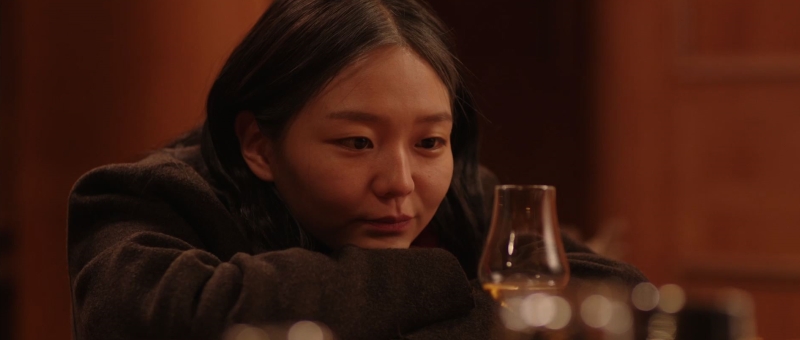
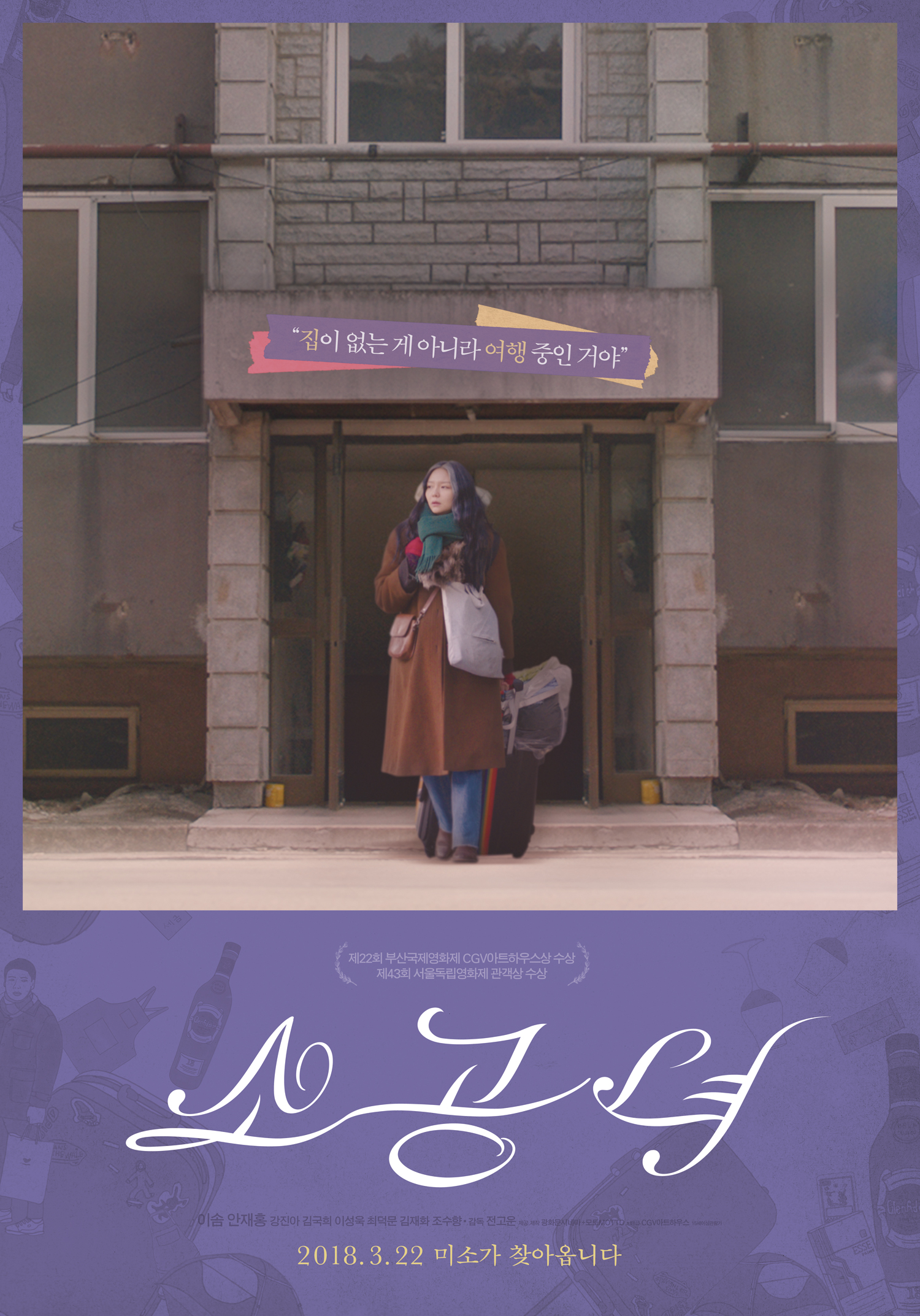
Microhabitat (소공녀, Jeon Go-woon, 2017)

Microhabitat posterIs there a “right” or, by implication, “wrong” way to live your life? The heroine of Jeon Go-woon’s debut feature Microhabitat (소공녀, Sogongnyeo) is determined to live by her own rules, but her unconventional approach to life in competitive Korean society is not treated with the same kind of universal acceptance with which she treats each and every person she meets on her meandering path towards fulfilment. Life is conspiring to take away even the smallest pleasures which make existence bearable, but small pleasures are sometimes all life is about and perhaps the only thing really worth fighting for.

At 31 years old, Miso (Esom) lives what might outwardly be thought of as a miserable existence. Working as a cleaner she exists hand to mouth and is able to afford only a tiny, unheated, one room apartment in a run down part of the city. Her life is tightly budgeted and whatever else anyone might say about the way she lives, Miso is not irresponsible and refuses to get into debt. It is therefore a huge problem when a New Year price hike threatens to push her beloved cigarettes out of her reach. If that weren’t worrying enough, her landlord is also jacking up the rent. Staring intently at her accounts book, Miso contemplates a life without cigarettes and whiskey and then takes a look around her before deciding to strike through the line marked “rent”. Packing her most essential belongings into a couple of suitcases, she decides to make herself temporarily homeless and reliant on the kindness of former friends now virtual strangers whom she hopes will be minded to repay past kindnesses by putting her up for a while.

Miso’s plight is symptomatic of many in her generation who feel they’ve lost out in Korea’s relentlessly competitive, conformist, and conservative society, but her fate also bears out something of a persistent social stigma directed at those without means or family. Unlike the friends she decides to track down, Miso never graduated university – she lost her parents young and then ran out of money, but then she isn’t particularly bitter about something she was powerless to control. Miso’s small pleasures are also ones generally marked off limits to “nice” young women who generally do not smoke or drink and the old fashioned austerity mentality sees nothing good in a “self indulgent” need to enjoy life by “wasting” money on “frivolous” things if you claim not to be able to find the money to pay your rent. Some would say Miso has her priorities all wrong and has messed up her life by getting trapped in the world of casual labour and still being single at such an advanced age, conveniently ignoring the fact that much of the social order functions solely to keep women like her in their place so the higher ups can prosper.

Miso, however, would probably listen patiently to their concerns before calmly brushing them off. She is happy – to an extent, at least, with her minimalist life. She doesn’t need a fancy apartment or a swanky car, she only wants her cigarettes, her whisky, and her boyfriend Hansol (Ahn Jae-Hong) – an aspiring manhwa artist who feels broadly the same but is starting to get frustrated with his own precarious economic circumstances and present inability to offer the degree of economic support which would mean the pair could move in together. The first friend she tracks down, Mun-young (Kang Jin-a), has become a workaholic salary woman who self administers saline drips at work to increase her productivity and declines to put Miso up on the grounds having someone around when she’s not there makes her uncomfortable. Each of her old bandmates has opted for the conventional life but it has not served them well – keyboardist Hyun-jung (Kim Gook-hee) is unhappily married and trapped in a home of oppressive silence, Dae-yong (Lee Sung-wook) is a brokenhearted wreck whose wife has left him after less than eight months of marriage, vocalist Roki (Choi Deok-moon) has a strange relationship with his parents, and former guitarist Jung-mi (Kim Jae-hwa) has thrown herself headlong into stepford wife territory going quietly mad through boredom and insecurity in the palatial apartment that belongs to her husband’s family.

For various reasons, Miso understands that she can’t stay with her friends very long though she tries to help each of them as best she can while she’s around. She cleans their apartments, cooks them nutritious meals, keeps them company and listens to their problems though few of them take the trouble to really ask her why it is she is in the position she is in or how they might be able to help beyond providing temporary shelter. Surprised by one of her wealthy clients who is unexpectedly at home during cleaning time and seems to be distressed, Miso does her best to comfort her, making it clear that she does not disapprove of her client’s lifestyle and thinks she has nothing in particular to be ashamed of. The client, vowing to leave her present occupation behind, feels quietly terrible that her decision inevitably means Miso will lose her job but Miso genuinely means it when she says she’s happy for her client and hopes she will be able to attain her dreams.

Forced to leave the memory of each of her friends behind, Miso’s world seems to shrink until even her beloved whisky now seems like it will be out of her reach. Jeon Go-woon is unafraid to lay bare Miso’s bleak prospects, though she depicts them in an often humorous light as Miso goes apartment hunting in the darkest and dingiest part of Seoul, striding up endless flights of stairs to rooms with increasingly tiny windows before landing at the only realistic possibility in a filthy attic space with no electricity. Still, Miso remains undaunted. She is free, beholden to no one, and retains her kind heart even as she becomes a cypher to us, lost under the grey skies of an indifferent city until she alone becomes the tiny light on its ever expanding horizons.


Microhabitat screens as part of New York Asian Film Festival 2018 on 10th July, 6.30pm.

Original trailer (no subtitles)

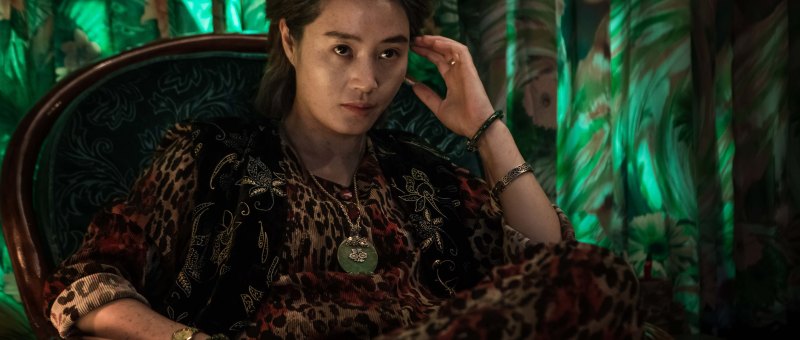
Coin Locker Girl (차이나타운, Han Jun-hee, 2015)

coin locker girl posterFamily in Korean films, unlike those say of Japan, has always been something of a double edged sword. Coin Locker Girl (차이나타운, AKA Chinatown) takes the idea of “family” and twists it around, bites into it to test its veracity, and offers a wry smirk as the metal begins to bend. Set in Incheon’s Chinatown, Han Jun-hee’s noirish thriller sends its heroine down a series of dark alleyways as she both fights and fights to retain her humanity whilst inhabiting an extremely inhuman world.

Il-young (Kim Go-eun) was found, covered in blood, hidden away in a coin locker, an abandoned child with no clue as to her identity or that of the woman who gave birth to her. Named and taken in by a collection of beggars at the station, she began her life as a street rat though not, perhaps, entirely unloved or friendless. As a young child she was then taken by gangsters working for a fearless female gang boss known as “Mom” (Kim Hye-soo). Mom is not one to suffer fools and feels no compunction in getting rid of those no longer useful to her. She soon puts Il-young to work, pamphleteering, begging, and eventually debt collecting as she grows older under Mom’s watchful eyes. By the time Il-young is almost come of age, she has an older brother and a sister as well as a younger brother with learning difficulties whom Mom still looks after despite her otherwise unsentimental approach to life.

The trouble starts when Mom sends Il-young to collect a debt from the young son of a man who’s skipped the country. Seok-hyeon (Park Bo-gum) is not like the typical clients she’s met before. He opens his door, invites her in, even offers to feed her before she leaves. Il-young finds all of this very strange. She’s never met anyone “nice” before and wonders what his angle is. Seok-hyeon, however, does not appear to have much of an angle aside from perhaps the usual one. Spending a bit of time with him, Il-young begins to develop certain feelings which see her swapping her Mom-style slacks and jackets for pretty summer dresses. Despite his son’s faith in him, Seok-hyeon’s father has not kept his end of the bargain and so Mom decides it’s time to call in the debt by offing Seok-hyeon and harvesting his organs. Il-young has a choice – between the woman she calls “Mom”, and a naive young man she has come to like though he has no place in her kill or be killed world.

One of the most attractive qualities about the young Il-young was that she didn’t exist. No birth certificate and no identity meant that she could be Mom’s to do with as she pleased. Consequently, adolescent Il-young has a more complicated relationship with her “Mom” than most young women but is also acutely aware of the debt of gratitude which is owed, the precariousness of her position, and the reality that she has nowhere else to go should she decide to try and break away from the world in which she has been raised. Never quite sure what her relationship to Mom is, Il-young has come to think of the other children in the same situations as siblings, but again cannot be sure that they feel the same.

Like many a good film noir, the tragedy lies in not completely closing off one’s heart as the harshness of the world dictates. Mom rejects those who are not useful and terminates those who have betrayed her with extreme prejudice, but despite herself she cannot destroy Il-young. Stepping back from her code, her orders are to let Il-young live, condemning her to a fate perhaps worse than death but alive all the same. Mom is betrayed by another child figure enacting a petty act of revenge, but her decision to let Il-young live is the one which threatens to condemn her. Having believed herself an unloved, unwanted child, Il-young is left with two terrible legacies of abandonment and the feeling that she will never leave that coin locker in which she has been trapped since birth. The cycle of maternal sacrifice continues, though Il-young has the opportunity to change her fate by taking charge of it, picking up where Mom left off but with greater compassion even within the confines of her still cruel world.


Screened at London Korean Film Festival 2017. Also screening at Manchester (11 Nov) and Glasgow (16 Nov).

Original trailer (English subtitles)

On the Beach at Night Alone (밤의 해변에서 혼자, Hong Sang-soo, 2017)

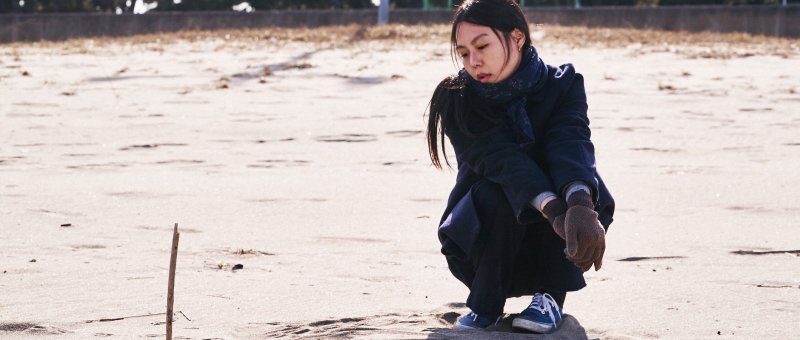
on the beach at night alone posterIt might be unkind to suggest that Hong Sang-soo has essentially been remaking the same film for much of his career, but then again his most characteristic approach is one of re-examination, taking one event and turning it around to see how things might have played out differently if fate had only been kinder. On the Beach at Night Alone (밤의 해변에서 혼자, Bamui Haebyunaeseo Honja) eschews Hong’s usual repetitions, but zooms in deeper on its protagonist’s agonising emotional crisis as she attempts to deal with the fallout from a passionate yet inadvisable affair with a married director which threatens to destroy not only her personal life but also the professional in conservative Korean society. The elephant in the room is, of course, that lead actress Kim Min-hee and the film’s director Hong Sang-soo were themselves involved in a messy affair which scandalised their home nation, forcing the lovers abroad and away from media speculation but perhaps not from the uncomfortable questions surrounding their relationship.

Divided into two parts shot by different cinematographers, the film begins in Hamburg where well known actress Young-hee (Kim Min-hee) has travelled to visit a friend, Jee-young (Seo Young-hwa), to clear her head and get away from all the fuss at home. Jee-young has been living in the city for a few years since her own marriage ended – like Young-hee she came to visit a friend and subsequently decided to stay. Young-hee thinks perhaps she could do the same but is surprised when her friend reacts negatively to the idea of her moving in. The two women chat and try to talk out Young-hee’s ongoing indecision and emotional turmoil while she waits to see if her married film director lover will really come to Hamburg to meet her as he says he will or lose his nerve at the last moment.

The second half picks up some time later with Young-hee (presumably the same Young-hee or at least a woman with a very similar backstory) in a cinema watching a film. She’s gone home to Korea and to her tiny seaside hometown rather than the harsh streets of Seoul. Whilst there she runs into a series of old friends, many of whom have also boomeranged back from the big city, finding it relentless and unforgiving in its unrealistic expectations of their desire for success. Young-hee is just as mixed-up as she was in Hamburg, but her collection of friends prove less reliable sounding boards than the world weary yet perceptive Jee-young.

Hong’s films have often revolved around self-centred, neurotic men who treat women badly while the women remain exasperated yet resigned and only occasionally hurt. Digging deep, Hong makes an effort to look at something from the other side in painting a picture of the real emotional damage done by the kinds of affairs his usual protagonist may engage in (though to be fair most of protagonists are eventually rebuffed by their objects of affection). Kim’s nuanced performance is raw and painful. Hurt and brokenhearted, Young-hee is angry with her former lover but still, she misses him, wonders how he is, hopes he’ll be alright but also, in a way, that he won’t.

Young-hee is a mess of contradictions – she says she won’t wait and then she waits, she says she won’t drink and then she does (to excess), she says she’s overly direct yet she consistently avoids speaking directly, she says harasses people and messes everything up but all she seems to do is isolate herself and avoid connection, she goes to Hamburg to escape and then feels trapped. Jee-young, a little older, seems to have pinned herself down but says she feels somewhat jealous of Young-hee’s youth, her confidence and capacity for desire. There is a melancholy quality to Jee-young’s conviction that she is “the kind of person who lives alone”, but she harbours no resentment towards her former husband, only a mild sense of regret in having wasted his time. Young-hee may be filled with desire, but has no idea what for.

On the Beach at Night Alone shares its title with a poem by Walt Whitman which, like many of Whitman’s poems, is essentially about the interconnectedness of all things and overwhelming sensation of suddenly feeling a part of a great confluence of existence. It is in that sense ironic as Young-hee and many of her friends continue to feel isolated and alone, playing it safe and avoiding the risk of true connection only to find settling for the sure thing more painful than the emotional implosion of Young-hee’s daringly bold affair of the heart. A night on a beach alone affords her the opportunity of sorting things out, if only in her head, finally learning to stand up and walk away towards an uncertain, but hopefully self-determined, future.


Screened at the BFI London Film Festival 2017.

Trailer (English subtitles)

Red Carpet (레드카펫, Park Bum-soo, 2014)

red carpet posterExpectation is a heavy burden for a film. Not just the hopes built by excessive hype, but the way it chooses to define itself in advance. Of course, particularly with big budget studio movies it’s marketing men who decide all that rather than filmmakers but still, it’s hard to escape the feeling of confusion when the way a film was marketed works against its true nature. For a film like Red Carpet (레드카펫), an indie rom-com with a strangely innocent heart, it cuts both ways. The salacious hook is that this is a story of porno hell – tortured artists, egotistical men, and abused women. This is couldn’t be further from the truth. In fact, Red Carpet is deeper than it seems, asking real questions about the place of the porn industry in a modern society and attacking our own unfair and hypocritical judgements on its existence.

Park Jun-woo (Yoon Kye-Sang) is a lifelong cinephile who dreams of making award winning films he can watch on a Sunday afternoon with his parents, but life has been unkind to him and so he’s been working in the adult video industry for the last ten years. His life changes when he arrives home one day to find a strange young woman waiting there who accuses him of being a prowler and repeatedly hits him over the head with a frying pan. When the police get involved and take Jun-woo’s side seeing as he has the proper documentation it’s revealed that the woman, who has just returned for an extended period living in Spain, has been duped by a housing scam. Jung-woo, being the kindly soul he is, lets the woman, Eun-soo (Koh Joon-hee), live with him until she figures things out. Eun-soo is also a former child actress keen to get back into the profession and takes a keen interest in some of Jung-woo’s scripts never knowing exactly what kind of films it is that he really makes…

Though the setting is the porn industry, director Park makes sure to keep things light and humorous, showing the reality of adult video making but avoiding directly displaying it on the screen. Jung-woo’s work is almost entirely themed around porn parodies of famous movies as in the first shoot we witness where we gradually realise that the whole thing is Oldboy remade as a sex film (apparently including the corridor hammer fight, though no one’s figured out what to do with that yet). More amazing titles follow including the amusing “Inspect Her Gadget”.

Jung-woo may be conflicted about his career as a porn director, longing for the chance to make more “serious” films, but the rest of the crew is fairly happy with their choice of profession. This is, after all, just a job the same as any other. No one here is forced to work in the porn industry. There are no gangsters, no women trapped, abused, or forcibly hooked on drugs to keep them compliant. Everyone here seems to have made a free choice to engage in this type of work and is free to stop anytime they choose.

The problem, in this sense, is ours. Jung-woo and the crew face constant social stigma for what they do. At several points someone (well, always a man) is asked if they watch porn – to which they sheepishly admit, giving the impression that it is something they rarely do and are ashamed of doing. This central fallacy is the entire problem, everyone is watching the films Jung-woo makes – probably thousands more people have watched his adult movies online than have seen the legit movie which was plagiarised from a script that he wrote but was not allowed to direct because he didn’t have the “experience”. Yet everyone disapproves of pornography, tries to deny they watch it, and has the impression that people who make these films are in some way damaged or perverted. Enjoying a meal together in a restaurant, the gang are accosted by a “fan” who asks for a photo with a “famous actress” only to suddenly grab her breast. Just because she’s an actress in adult movies, the man thinks it’s OK to grab her  – “she sells her body”, so what’s the problem? The man, who obviously watches porn, does not think of the people who make it as other human beings but as commercial products existing only for his pleasure.

Jung-woo, in a sense, thinks this too but doesn’t quite realise until he’s made to read out a statement at a press conference in which he’s supposed to apologise for his “unethical” behaviour but refuses, avowing that neither himself or his crew has ever felt ashamed of the work they do. Jung-woo’s dreams are directly contrasted with Eun-soo’s as she works hard to become a legitimate actress all the while loosing her individual freedom to the marketing concerns of her agency and facing the prospect of being forced to abandon Jung-woo, whom she has come to care for, in order to keep her new career and avoid the “scandal” of being in any way associated with the porn industry.

Even if it seems like people such as Jung-woo are not allowed their dreams, it can still all work out in the end as long you’re true to yourself and accepting of everything you are and were. Jung-woo’s early career was harmed by an unscrupulous competitor who stole Jung-woo’s shot and took the credit himself but his “success” may only be temporary because he’s living a lie of artistic integrity while Jung-woo and Eun-soo have maintained their authenticity even when it looked like it may cost them everything they wanted. Improbably sweet and charming, Red Carpet is an innocent love story in which dreams come true through hard work, perseverance, and compromise but finally through truthfulness in the refusal to be shamed for simply being what you are.


Original trailer (English subtitles)