The Killing Machine (少林寺拳法, Norifumi Suzuki, 1975)

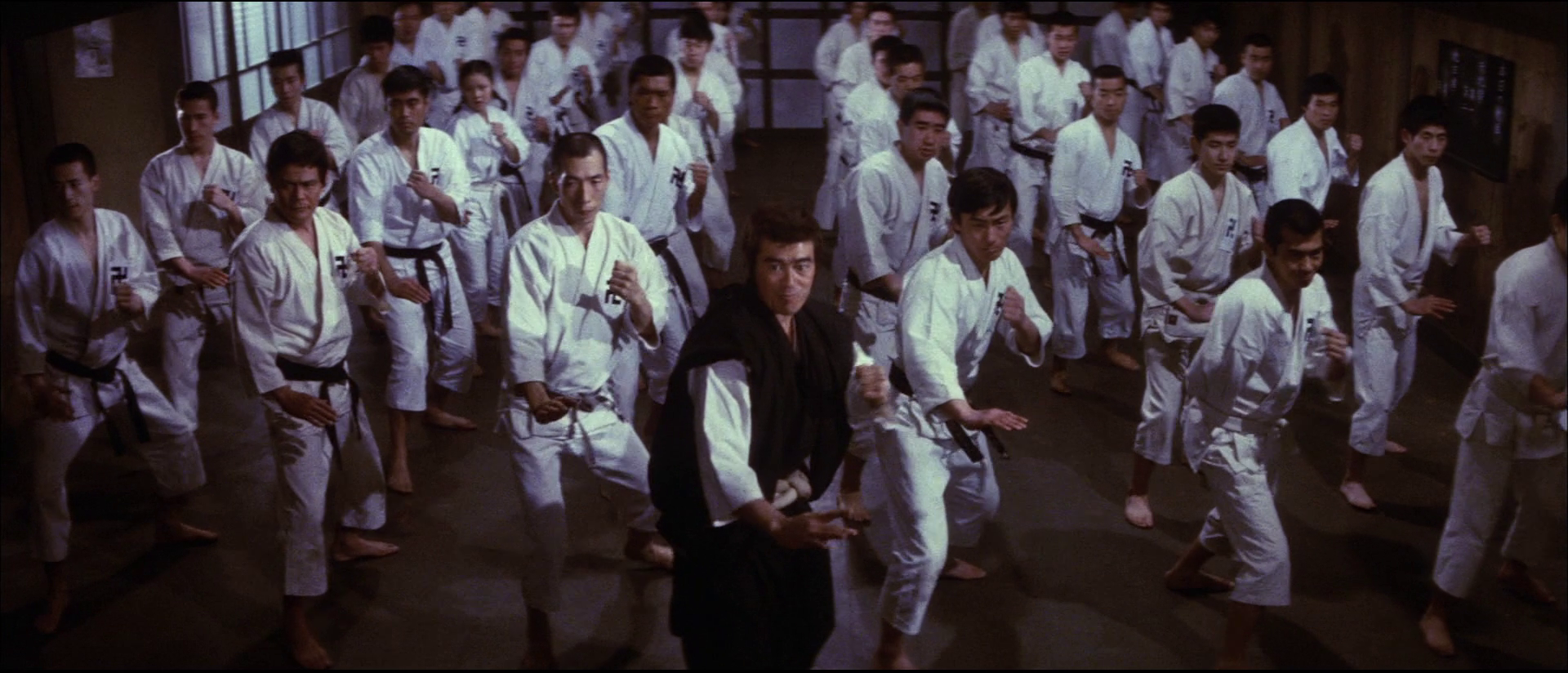
“As long as somebody like you is around, there’s hope for Japan,” an oddly sympathetic prison warden says to the last patriot standing in post-war Osaka. The title of Norifumi Suzuki’s Sonny Chiba vehicle The Killing Machine (少林寺拳法, Shorinji Kempo) maybe somewhat inappropriate or at least potentially misleading as the film is deliberately constructed as a martial arts parable emphasising the spiritual philosophy of self-improvement and compassion that is inextricable from its practice.

To that extent, the hero, Soh Doushin (Shinichi Chiba), is trying to fight his way out of the miasmas of the immediate post-war era. As may be apparent, Soh has taken a Chinese name, though Soh was apparently his along and belonged to a former samurai family whose nobility has been crushed by militarism. As the film opens, however, he’s a Japanese secret service operative in Manchuria blindsided by the news of Japan’s surrender. Soh is it seems a nationalist and a patriot, but a fairly revisionist one who stands up to the abuses of the Japanese army. He later says that he protested the way that the local Chinese population were often treated and he does indeed raise a fist toward an officer who wants to sell a young Japanese woman to a Chinese soldier in return for a guarantee of their safe passage to a boat heading out of the country. The young woman’s mother protests that she is an innocent virgin, a fact that has some later relevance. Soh refuses to let the officers take her, though evidently separated from her later.

When he meets the young woman again in the bomb-damaged backstreets of Occupation Osaka, she is dressed in Western clothing as opposed to the smart kimono she wore in Manchuria and is about to become a “pan pan” or streetwalking sex worker catering to American servicemen. Of course, Soh can’t let this happen either, but as she later tells him, she was raped by Russian soldiers during the retreat and now feels herself to be despoiled. She never wears kimono again and becomes a kind of symbol for a despoiled nation that Soh is reluctantly forced to accept he cannot save in part because his philosophy, which is still uncomfortably rooted in the philosophy of militarism, only valued strength when it should have valued love. The kind of love that Kiku (Yutaka Nakajima) had for her brother that made her willing to sacrifice herself for his wellbeing. 

Even so, Soh is doing his best to issue a course correction by caring for a small group of war orphans and helping them support themselves by running a rice soup stall so they won’t end up becoming dependent on the yakuza or the black market. It’s the yakuza and their increasingly corporatising nature that become Soh’s chief enemies, though standing right behind them are the Occupation Forces. They are, of course, just the biggest gang, as we can see when one of the kids steals a few tins from the gangster’s crate which is marked with text making it clear it came from the mess hall at the American base. The backstreets are full of sleazy soldiers and pan pans or otherwise the starving and dejected, sometimes violent demobbed soldiers filled with despair. It’s these men that Soh wants to buck up, telling them to rediscover their fighting spirit and giving them the opportunity to do so through learning Shaolin martial arts.

Of course there are those who don’t want to learn Chinese kung fu in the midst of their defeat, but what Soh is advocating is something that has a greater spiritual application even than karate can also have. It’s a kind of humanitarian riposte to the futility of the post-war society that might sometimes fail to recognise the depths of the impossibility faced by many in insisting they can be faced by discipline and moral fortitude but at the same time is not really judgemental except toward those who have deliberately abandoned their humanity, such as the trio of goons who rape a school for amusement (the girl is later seen among the students at Soh’s school along with the children from Osaka). The girl’s father reports it to the police, but the police and the gangsters are in cahoots, so nothing gets done. Soh cuts the guy’s bits off so he won’t be doing that again. Strength without justice is violence, he realises. But justice without strength is inability. Strength and love like body and mind should never be separated. The closing shots show an entire mountain covered in white-clad figures practising Shaolin kung fu and joining the humanitarian revolution rather than the cruel and selfish one represented by the gangsters with their red-light districts and black markets. It may be a simplistic solution, but it is in its way satisfying and at least a rejection both of the militarist past and the capitalistic future.


*Norifumi Suzuki’s name is actually “Noribumi” but he has become known as “Norifumi” to English-speaking audiences.
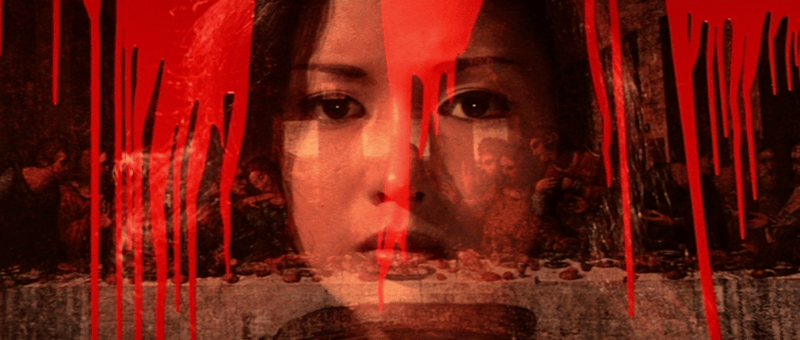
School of the Holy Beast (聖獣学園, Norifumi Suzuki, 1974)

“Why is sex wrong?” a rebel nun enquires, hinting at the hypocritical atmosphere of the convent which comes to stand in for the patriarchal superstructure of the contemporary society. That it does so might in a way be surprising given that Christianity has relatively little cultural relevance in Japan save its stance as a persecuted religion during the feudal era. Director Norifumi Suzuki jumps on the nunsploitation bandwagon but does so with a baroque romanticism mixed with punkish youthfulness as two young women find themselves rebels in the house of God.

They are both there for reasons largely unconnected to religion. 18-year-old Maya (Yumi Takigawa) is searching for the truth behind her birth and her mother’s death, while Sister Ishida (Emiko Yamauchi) claims she’s been sent there by a wicked stepmother. Ishida also kicks up a stink during a class by questioning the truth of immaculate conception which is quite odd for someone who wanted to become a nun, while otherwise punished for drinking whisky in the middle of the night. Punishment does seem to be the main thrust of their religious practice with the transgressions of “adultery”, which includes all impure thoughts, murder (!), and theft taken the most seriously. On her first night at the convent Maya is woken by the sound of another nun furiously whipping herself though in fairness there just isn’t much else to do. 

Suzuki rams home the erotisicm of ritual in the baptism Maya undergoes during her initiation as a nun in which she is totally nude and instructed to stand with her arms out as if on the cross in front of the altar. She must then bend to kiss the crucifix before receiving her veil as a bride of Christ. The nuns talk of lives of eternal virginity while burying themselves in asceticism in an effort to deny their natural desires but have to a degree sublimated their lust in violence. The most common form of punishment is whipping, while Maya is later tortured with thorns and artfully battered by roses. When one nun steals money in guilt for having abandoned her impoverished family to begin her spiritual journey to Christ, she confesses herself to a priest who offers her the same amount so that she can help her family and ease her conscience by returning it. But in reality the priest has tricked her. He resents that she feels as if her sin has been forgiven and she may forget her guilt, cruelly telling her that she will never hear the voice of God before going on to violate her. 

The act of betrayal, of himself breaking the code to which he should subscribe, is only a echo of an societal corruption which allows men to abuse their power often with the complicity of the women around them such as the abess who has long been in love with him. Kakinuma (Fumio Watanabe) is a man whose faith has been shaken. He bears the scars from exposure to the atomic bomb in Nagasaki which is centre of Christianity in Japan. After telling Hisako (Yayoi Watanabe) that God will not see her, he asks if anyone has actually seen him and why he does nothing when his people suffer. 

Both he and the abbess are trapped in a hell of their own making, though as the girls both say the convent is akin to a prison. When Hisako’s sister visits her they talk to each other through glass as if she were a prisoner, though in many ways she is oppressed by her own repressed desires while those of the other nuns have begun to drive them quietly out of their minds and into sadomasochistic fury. This peculiar madness is only deepened by the arrival of a new Mother Superior who returns from Europe insistent on rooting out “witches” in league with the devil. Suzuki signals the absurdity by playing a chorus of elation when a tortured nun wets herself over a tablet featuring a crucifix in the inversion of a bizarre Edo-era ritual designed to identify secret Christians who were at that point illegal. 

To break free of the covent and return to her liberated life in contemporary Japan as seen in the cheerful opening sequences of her date with Kenta (Hayato Tani), Maya must also free her mother’s ghost and the souls of her sisters by forcing Kakinuma to reckon with his crimes if in the most ironic of ways. Suzuki shoots with febrile romanticism, the pastel colours of the church lending it a hellish glow even before the resurrection of a ghost enacts karmic revenge in a feverish atmosphere of romantic jealously and masochistic repression.


Original trailer (no subtitles)

*Norifumi Suzuki’s name is actually “Noribumi” but he has become known as “Norifumi” to English-speaking audiences.
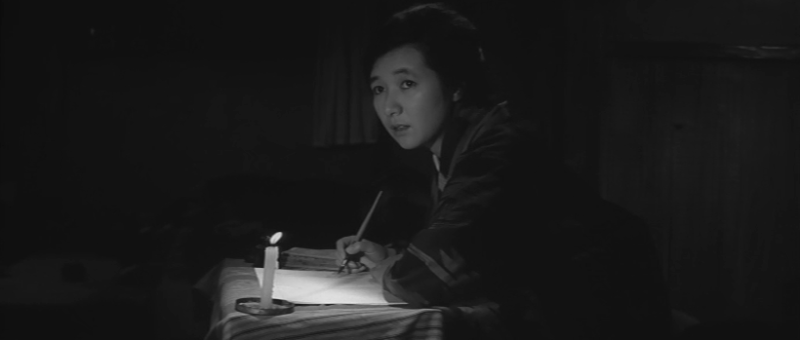
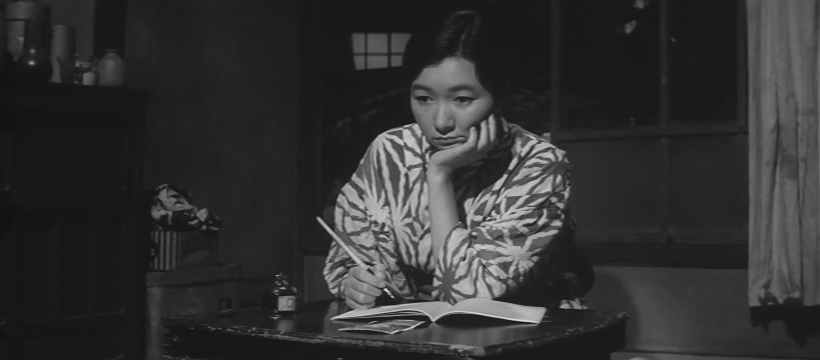
A Wanderer’s Notebook (放浪記, Mikio Naruse, 1962)

Many of Mikio Naruse’s most famous films are adapted from the work of Fumiko Hayashi, a pioneering female author who chronicled the life of a working class woman with startling frankness. Yet his dramatisation of her life, A Wanderer’s Notebook (放浪記, Horo-ki), is both a little more reactionary than one might have expected and surprisingly unflattering even in the heroine’s eventual triumph in escaping her poverty through artistry. Even so if perhaps sentimentalising the economically difficult society of the 1920s in emphasising the suffering which gave rise to Hayashi’s art, the film does lay bare the divisions of class and gender that she did to some extent transgress in pursuit of her literary destiny. 

Naruse and his screenwriters Toshiro Ide and Sumie Tanaka bookend the the film with a literal “lonely lane” which the young Fumiko walks with her itinerant salespeople parents. As a small child, she sees her father arrested for a snake oil scam peddling some kind of wondrous lotion, setting up both her disdain for men in general and her determination not to be deceived by them at least unwittingly. She has no formal education but is a voracious reader well versed in the literary culture of the time and intensely resentful of if resigned to her poverty. In the frequent sections of text which litter the screen taken directly from her novels, she details her purchases, wages, and longing for the small luxuries she can in no way afford. 

As an uneducated woman in the 1920s her working opportunities are few. She exasperatedly relates standing in a queue with hundreds of other women waiting for an interview for a company job only to be told they’ll let her know, while her other opportunity involves meeting a theatre director at a station who later takes her to his hotel/office and makes it plain he’s not really interested in her CV. She gets a job at the office of a stockbroker, but lies about being able to do accounts and is flummoxed by double entry bookkeeping getting herself fired on day one. After a brief stint in factory painting toys, she leaves with a friend to become a hostess but is also fired on her first day for getting drunk and being unwilling to ingratiate herself with the boorish men who frequent such establishments. 

Despite her animosity, she is drawn towards men who are callous and self-involved, firstly taking up with a poet and actor who praises her work but turns out to have several “wives” on the go, and then begins living with a broody writer, Fukuchi, who is insecure and violent, resentful at her success in wake of his failure. Perhaps because of her experiences, she seems to resent any hint of kindness though sometimes kind herself, lending money to her friend whose mother is in need and often ready to stand up for others whom she feels are being mistreated. A kindly widower in the boarding house where she lives with her mother, Yasuoka, falls in love with her but she repeatedly rejects him partly as someone suggests because he is not handsome, but mainly because of his goodness and kindness towards her. Nevertheless, he continues to support always ready in her time of need though having accepted that she will never return his feelings or accept his proposal. 

Perhaps her might have liked to have been kinder, but was too wounded by her experiences to permit herself. In any case at the film’s conclusion in which she has achieved success and in fact become wealthy it appears to have made her cold and judgemental. She instructs her maid to send a man away believing he is from a charity set up to help the poor, insisting that the poor must work for industry is the only path out of poverty implying that as she managed it herself those who cannot are simply not applying themselves when she of all people should know how fallacious the sentiment is. As if to bear out the chip on her shoulder, she forces her mother to wear a ridiculous kimono from a bygone era that is heavy for an old woman and makes her feel foolish because of her own mental image of the finery she dreamed of providing her on escaping the persistent hardship of their lives. 

As she says, she’s no interest in the socialist politics espoused by the literary circles in which she later comes to move, pointing out that the poor have no time for waving flags. One of her greatest supporters is himself from a noble family despite his progressive politics and in truth can never really understand the lives of women like Fumiko. He describes her work as like upending a rubbish bin and poking through it with a stick, at once fascinated and repulsed by a frankness he may see as vulgar. At one point he accuses her of writing poverty porn, playing on her humble origins for copy and becoming something of a one note writer. 

In truth, the film is not really based on the novel from which it takes its title but on the play that was adapted from it, while the novel itself was apparently reworked and republished several times in response to reader taste giving rise to a series of questions both about its essential authenticity and what it was that it was attempting to convey. In the film at least, moments after her literary success, Fumiko is challenged by a fellow female writer, Kyoko, who was once her love rival, that she cheated in a contest by failing to submit Kyoko’s entry until after the deadline had passed, though as it seems she would have won anyway. She is occasionally underhanded, perhaps because she feels she has no other choice, but then as we can see there is no particular solidarity between women save the kindly landladies who often let her delay her rent payments. Fumiko feels herself to be alone and her quest is not really for literary success but simply for her next meal, though she feels the slights of the bitchy women and arrogant men who mock her commonness while simultaneously exploiting it as entertainment. 

On the one hand, her success seems to signal a triumph of independence having freed herself from the need to depend on terrible men though she also she seems to have met and married a warmhearted painter who cares for her and supports her work while she has also been able to give her mother the level of comfort they both once dreamed of. Even so, the unavoidable fact that she dies at such a young age implies she’s worked herself into an early grave in a sense punishing her for her rejection of contemporary social norms undercutting her achievements with some regressive moralising while the one thing she still desires, rest, is given to her only in death. In Takamine’s highly stylised performance, as some have implied perhaps intended to mimic the silent screen, Fumiko is at once a carefree young woman who dances and sings and a melancholy fatalist with a self-destructive talent for choosing insecure and self-involved men, but above all else a woman walking a lonely road towards her own fulfilment while searching for a way out of poverty that need not transgress her particular sense of righteousness. 


Original trailer (no subtitles)

A True Story of the Private Ginza Police (実録・私設銀座警察, Junya Sato, 1973)

By the early 1970s the ninkyo eiga (pre-war tales of noble yakuza) had begun to fall from favour. Modern audiences were perhaps unconvinced by the romanticism of the honourable gangster caught between personal loyalty and his inner humanity, real life thugs are rarely so high minded after all. The cinema industry may have been in decline, but the consumerist revolution was well underway, the economic miracle was nearing completion, and there was perhaps a readiness to reckon with the recent past from a position of relative safety. The jitsuroku eiga did just that, providing a more “realistic” depiction of the yakuza life based on the recollections of real life gangsters and incorporating the aesthetics of reportage with the use of stock footage, newspaper montage, narratorial voiceover, and high impact text recording the names of characters along with the times of their deaths. 

Released in the same year as Kinji Fukasaku’s Battles Without Honour and Humanity which has perhaps become the jitsuroku archetype, Junya Sato’s A True Story of The Private Ginza Police (実録・私設銀座警察, Jitsuroku: Shisetsu Ginza Keisatsu) paints an even bleaker picture of the immediate post-war era as one in which chaos and inhumanity rule. The pre-credits sequence follows demobbed soldier Watarai (Tsunehiko Watase) who finds himself in a bombed out warehouse where a woman is drinking around an open fire with a US serviceman. Standing motionless he stares at an upper balcony where another woman is having sex with a black GI. It seems this woman is known to him, perhaps his wife or in any case a woman he thought he was coming back to. She is not overjoyed to see him, breaking down in tears while he spots a baby girl crying in the corner who also happens to be black. Unthinkably he takes the child and throws her into a flooded area of the floor below, chasing the mother when she goes after the baby, strangling and then bludgeoning her to death with a rock. 

All of this has happened in the first five minutes. There will be no heroism here, no noble act of resistance only shame and desperation. These are men brutalised by war who’ve come home to a land in ruins where the enemy is now in charge, ruling their streets and sleeping with their women. They are humiliated and resentful, many of them still in uniform likely because they simply have no other clothes. Sato introduces us to the later gang members in turn beginning with a scene which echoes those of the Battles Without Honour series as Iketani (Noboru Ando) is chased and beaten by an angry mob in the chaos of the marketplace after being accused of stealing. Masaru (Tatsuo Umemiya) meanwhile is beaten by GIs who come to the rescue of a sex worker he tries to rape, offended when she tells him she doesn’t go with Japanese customers dismissing him as “just another defeated soldier”. Iwashita (Hideo Murota) uses his service revolver to commit an armed robbery to get money to gamble. Only the gang’s later leader, Usami (Ryoji Hayama), is introduced without a wartime record, named only as a pre-war gangster. The gang is forged when they meet by chance in a gambling den and bond over a grenade, mounting a military operation against the Korean street gang who hassled Iketani by bombing their HQ. 

A few months later they’ve become the “Private Ginza Police Force” of the title, now all in smart suits, loud shirts, and sunshades. They have their eyes set on ruling the area, taking down rival gangsters the Nakane brothers through cunning and trickery, turning an underling by threatening his family. But there is no honour among thieves and the gang is only a temporary arrangement intended to last only as long it’s useful. Iketani goes his own way, starting a small business running black market goods from China, bribing the police to turn a blind eye while Usami runs a conventional protection scam targeting the Chinese owner of a cabaret bar, Fukuyama (Asao Uchida), run as a front for black market smuggling. The problems start when Iketani learns that Fukuyama has been colluding with a government accountant to misappropriate money intended to be used for subsidies. 

This world is infinitely corrupt, from the easily bribed policemen to the civil servants out for all they can get and those who merely make use of them like Fukuyama and Iketani. While the guys get rich opening gambling clubs in Ginza, a wide scale famine creates a shantytown of starving poor at Ueno station where six die per day from hunger. Iketani is in someways the “noble” thug, he looks after his guys and pays attention to their lives, perhaps even claiming that his black market activities are a public service but it’s still every man for himself and if he’s assuming post-war chaos is on its way out he is sadly mistaken. Having got him hopped up on heroine and used him as a ghostly assassin, the gang jokingly refer to Watarai as a zombie, somehow surviving every bizarre death experience that comes his way including being buried alive, but they are walking dead too, soulless men who left their humanity on the battlefield. Fearing the game may be up, Masaru suggests one last hurrah blowing their ill-gotten gains on sake and women. “I’ll show you how rape is done,” Usami deliriously exclaims”, “how we used to do it on the continental front.” Meanwhile, Masaru throws notes all around the room screaming “Rejoice! There will be no tomorrow” sending all into a Bacchanalian frenzy as they cram as much cash as they can grab inside what little clothing they still have on.

All moody, anarchic jazz score and canted angles, Sato’s post-war Tokyo is a world of constant anxiety, a maddening no man’s land of fire and rubble inhabited by ghosts of men who died long ago for whom the war never ended. In true jitsuroku fashion, the picture ends on a note of fatalistic nihilism, the screen filled with red as the narrator cooly informs us what became of our heroes as they find themselves consumed by the futility of their lives of violence.


Original trailer (no subtitles)

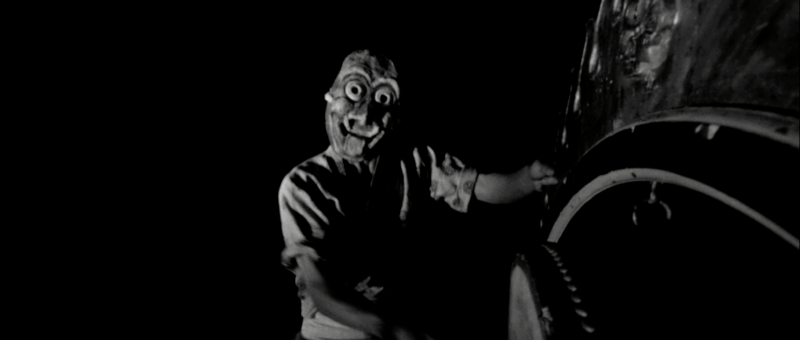
Mandala (曼陀羅, Akio Jissoji, 1971)

Mandala jissoji poster 2Politically speaking, the Japan of 1971 was trapped in a kind of limbo. The student movement had been dealt a serious blow with widespread supressionary measures in the run-up to the renewal of the ANPO treaty in 1970, which was finally signed despite opposition. It was not, however, yet dead and would stumble on, losing its way, until the climactic events of Asama-Sanso in 1972. Following hot on the heels of his radical This Transient Life, Akio Jissoji’s second film for ATG Mandala (曼陀羅) finds him exploring just this conflict as two young men look for “utopia” in an escape from the tyranny of time.

Kyoto uni students Shinichi (Koji Shimizu) and Hiroshi (Ryo Tamura) have taken their girlfriends to a strange little beachside inn for a spot of wife swapping. Where Shinichi’s girlfriend Yukiko (Akiko Mori) is only too happy to oblige her boyfriend’s whims, Hiroshi’s squeeze Yasuko (Ryo Tamura) goes along with it but instantly regrets her decision. Meanwhile, unbeknownst to them, the couples are being spied on by weird ultra-Buddhist cult leader Maki (Shin Kishida) who comes to the conclusion that Shinichi and Yukiko are good candidates to add to their commune which is built around the concepts of agriculture and eroticism. Maki’s violent recruitment method is knocking out the guys and then subduing the women so they can be raped by cult members and thereby inducted.

Maki’s strange philosophy which posits a new “utopian” future born of a return to a more primitive way of life in which love does not exist and sex is a free and natural act whose only purpose is reproduction, wins an acolyte of Shinichi because of its key offering – the ability to stall time. Always looking for a way to be dead yet alive, Shinichi is obsessed with the idea of stillness. Movement is the image of time passing. Coming to and finding the comatose, naked body of Yukiko lying on the beach after being raped by Maki’s minions, Shinichi cannot resist the urge to have sex with her “lifeless” body (which she apparently consents to, playing dead even after regaining consciousness part way through). Yukiko too confesses her own fantasy of being ravished as a corpse, a body outside of conscious time.

Shinichi, proclaiming he no longer believes in the future or in that a classless anti-State will ever arise, leaves the struggle and joins Maki’s atavistic utopia to which only those who “deny time and history” are permitted. Hiroshi, meanwhile, berates him for betraying the “continuous revolution” while he himself is on the run having left university after a disagreement with his Trotskyist protest group. The two men are each fleeing the centre and heading in different directions if perhaps ultimately bound for a similar destination. A hyper individualist, Hiroshi declares that there is no such thing as mankind, only a confluence of individuals, with the exception perhaps of those who have dedicated themselves to religion. He doesn’t want the child that Yasuko is carrying, not because he fears it may be Shinichi’s, but because he does not see the point in contributing to “the multiplication of mankind”, which is a key tenet of of Maki’s primitivist manifesto.

Unlike Hiroshi, Yasuko is not seeking revolution but conventionality. She wants the baby, and perhaps a marriage. At the end of her tether, having suffered horribly at the hands of Maki’s minions, she draws a small cottage with a friendly bird flying above as if to symbolise the simple dream that has been destroyed by the cruelty of men. Too late, Hiroshi realises that his irritation with Yasuko was simply a reaction against the shadow of himself he saw reflected in her, and he cannot forgive those who have caused her harm.

Harm there is plenty. Maki’s vile philosophy, overseen by his shaman wife (Yoshihiro Wakabayashi), supposedly the embodiment of many gods, strips women of their right to autonomy, insisting that “love” is an unwelcome modern sophistication which should be replaced by “benevolence” in an egalitarian affection for all mankind. In “ancient times”, he says, a woman would willingly submit to a man and, therefore, there was no such thing as “rape”. “A woman’s silence and resistance make a man a rapist” he tells his minions while Shinichi is busy raping the latest kidnap victim in a room equipped with CCTV for Maki to watch from behind a screen. His tenet of fecundity, both in terms of agriculture and human reproduction, comes at the cost of basic human decency and reduces the role of women to mere vessels for men’s desires.

Throughout the history of Japanese cinema, “love” has indeed been the destabilising, individualising force which threatens the social fabric, but for Maki it serves as a palpable evil. Like Hiroshi, he too believes that men exist as individuals, but also that “benevolence” could raise them to become a “community”. Hiroshi wants to live in a world of revolution, free of charisma and religion, but Shinichi seems to have found peace in atavistic simplicity. Faced with the choice, Hiroshi again chooses individualism, declaring that he would rather die alone than go mad along with everyone else. Yet his frustration may perhaps take him to a dark and unexpected place that sees him pick up a sword and a copy of the Manyoshu as if on some sort of nationalistic mission of revenge against an intransigent government and society. Revolutions fail, and then they start again. Hiroshi has perhaps picked a side, even if that side is merely opposition, but what he’s chosen is movement, action, maybe even life however fleeting, over the cold meaninglessness of Maki’s grand plan for a primitivist utopia.


Mandala is the second of four films included in Arrow’s Akio Jissoji: The Buddhist Trilogy box set which also features an introduction and selected scene commentaries by scholar of the Japanese New Wave David Desser plus a 60-page booklet with new writing by Tom Mes and Anton Bitel.

Original trailer (English subtitles, NSFW)

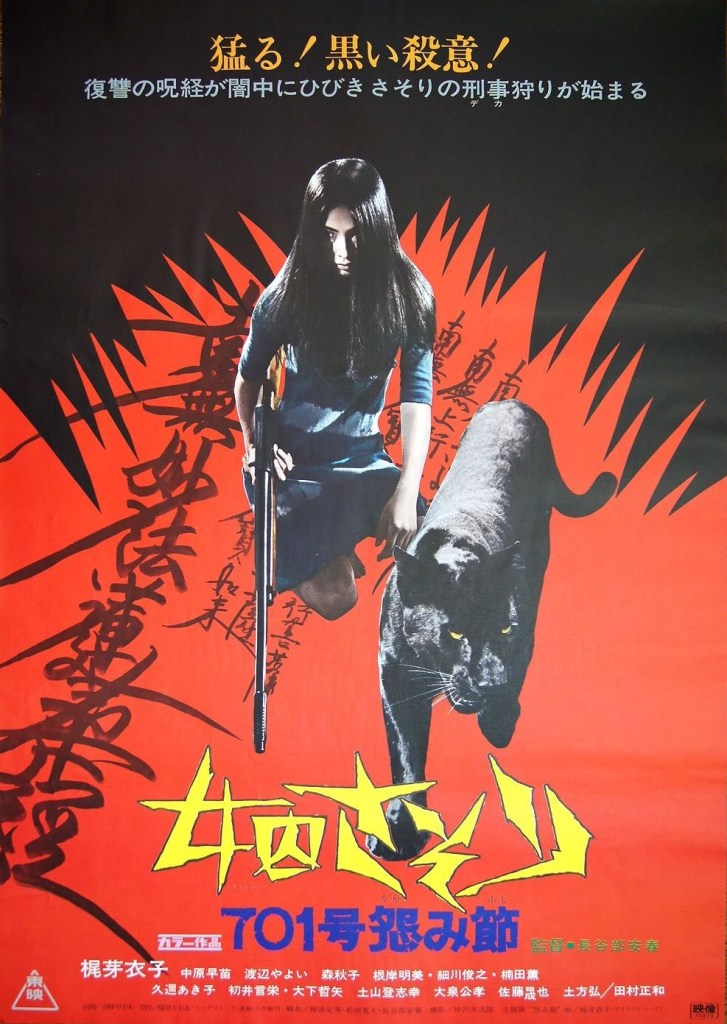
Female Prisoner Scorpion: #701’s Grudge Song (女囚さそり 701号怨み節, Yasuharu Hasebe, 1973)

The saga seemed complete with the end of Beast Stable but inevitably Matsu returns in the bonus instalment, Female Prisoner Scorpion: #701’s Grudge Song (女囚さそり 701号怨み節, Joshu Sasori – 701 Go Urami Bushi). Original director of the series Shunya Ito agreed that the ballad of Matsu was sung through, and so Yasuharu Hasebe reteams with star Meiko Kaji after their previous collaborations on Retaliation and the Stray Cat Rock series during their time at Nikkatsu. Hasebe’s style is the polar opposite of Ito’s arthouse inspired painterly majesty and heavily favours the groovy, ‘70s youth inspired aesthetic he employed in the Stray Cat Rock series. Coming as it does after Ito’s genre rocking visual tour-de-force, Grudge Song can’t help feeling a little regressive and a reminder of what a considered cash grab this fourth instalment really is but that isn’t to deny the fact that it can prove an enjoyable, genre skewing, effort when considered in isolation.
The end of Beast Song told us that Female Prisoner Scorpion served her sentence, was released and disappeared into the ether like the legendary creature she was. However, Grudge Song provides another episode to her history and begins with Matsu (Meiko Kaji) being re-arrested by police during someone else’s wedding (you have to feel sorry for the happy couple – could the police not have done this outside at least?). She fights them off in grand fashion and manages to escape though is gravely injured and not able to run very far. Luckily she is found by a damaged former protester working at a cabaret club who helps her hide out from the police. Soon the pair enter into a kind of romance but it’s not long before Matsu has some names to add to that ever increasing grudge list.

Along with the change of director comes a slight refocusing. Both the original trilogy and this fourth instalment have definite political undercurrents but Grudge Song allows these to be more overt with its constant references to the student protests of the late ‘60s and ’70s as well as to police corruption and brutality. Matsu’s ally and sometime lover, Kudo (Masakazu Tamura), had been a prominent protester picked up and repeatedly tortured by police leaving him with both physical and mental scarring. Obviously distrustful of authority but also made fearful, Kudo has been keeping his head down until he finds a kindred spirit in Matsu and decides to fight back.

The enemy here is the police – as it was to a degree in some of the other films, but Matsu’s concerns are playing second fiddle to her male saviour’s psychological traumas. This is the first film where Matsu has any kind of male help, and she’s essentially in an assisting role as Kudo attempts to defend her from the police (her injuries meaning she can’t exert the same kind of preternatural power as in the other instalments). There may be a kind of spiritual connection between Matsu and Kudo but the fact that she trusts him so quickly is strange given her behaviour throughout the series, though perhaps she has little choice given her physical condition. This is also the first time where Matsu allows an innocent woman to be killed in front of her – ironically another victim of male violence whose life is lost through no fault of her own. The other Matsu would at least find this upsetting, but this new Matsu who’s now more of an accomplice to a borderline terrorist protest cell consisting of one male member, is entirely indifferent.

Though Hasebe mimics some of Ito’s cinematography notably in the opening and his iconography of “Scorpion”, he abandons his stylistic concerns in favour of something very much more directly contemporary. In keeping with his work on the very groovy, youth orientated Stray Cat Rock movies, Hasebe turns Female Prisoner Scorpion into a standard ‘70s exploitation pic complete with gratuitous lesbianism, nudity, and random violence. Zooms, whip pans, and anarchic camera action are accompanied by jazzy electric guitar and a stoner vibe that is designed to appeal to the youth of the day but appears hopelessly dated now unlike Ito’s approach which is still of its era but manages to take on a timeless quality. As an example of ‘70s exploration cinema, Grudge Song pays its dues but as a Female Prisoner Scorpion movie, it falls far short of its predecessors.

Grudge Song marked the last outing for Kaji as the titular Scorpion, though this Matsu is not the Matsu of the rest of the series. Hasebe doesn’t seem so attached to the cult of Scorpion and more or less reboots her for a fairly straightforward genre affair which lacks the subtle intelligence of Ito’s vision. Still, taken alone Grudge Song is not without its charms though it loses the feminist edge of the rest of the series and recasts its heroine as a bit player in a game of revenge against the authorities in the name of vengeance for the death of the student movement.


Original trailer (English subtitles, NSFW)

The Music (音楽, Yasuzo Masumura, 1972)

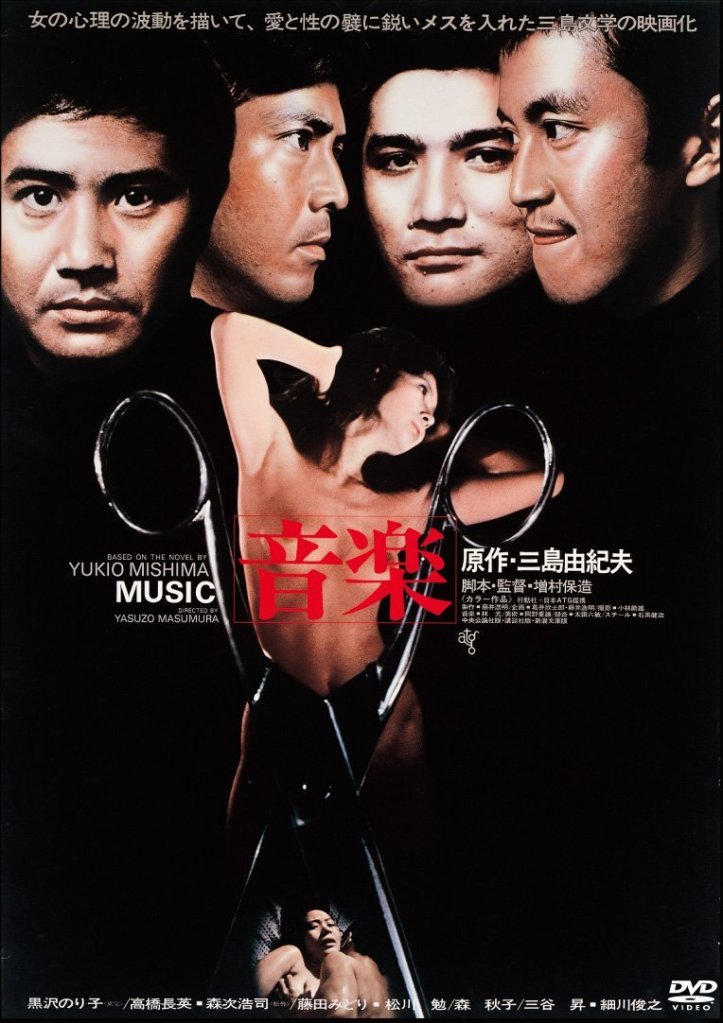
The MusicIf the under seen yet massively influential director Yasuzo Masumura had one recurrent concern throughout his career, passion, and particularly female passion, is the axis around which much of his later work turns. Masumura might have begun with the refreshingly innocent love story Kisses, but later he dived deep into the depths of depravity in Blind Beast and of manipulation in Manji before cycling back around the intense freudian character study which is The Music (音楽, Ongaku) in 1972. Based on a novel by Yukio Mishima (Mishima and Masumura – a match made in heaven), The Music is the story of one woman’s corrupted sexuality caused by a series of inappropriate sexual encounters during her childhood.

The film begins with a symbolic title sequence in which a large pair of scissors opens and closes rhythmically before being superimposed over the body of a woman – Reiko, our protagonist. She has made an appointment with a psychiatrist because, she claims, she has strange symptoms including constant nausea which led her to believe she was pregnant though medical doctors can’t find the cause of her sickness. The other thing is she can’t hear music, she can hear voices and sound effects but if music starts playing it’s like she goes deaf. Her psychiatrist isn’t quite convinced by Reiko and can tell she’s misleading him.

Sure enough he asks her to come back and she admits not hearing music was a symbolic way of explaining that she derives no pleasure from sex. Her boyfriend is a good man and she loves him, she doesn’t think the problem is with him, but she simply feels nothing when he touches her and it’s causing a rift in the relationship. This is the “music” she was talking about and which will become a recurrent motif throughout the film. Later, Reiko finds that she is able to derive a kind of satisfaction from sexual acts with men who are either dying or impotent, but should they simply get better she again loses all interest in them.

As might be expected, the reasons for Reiko’s strange behaviour lie in her childhood. Her fascination with scissors derives from a game of rock paper scissors she once played with the boy to whom she was betrothed to marry when they came of age. Reiko is the only girl in the group and when she loses the boys suddenly declare she’ll have to have her “thing” cut off – only she’s a girl and never had one in the first place. This leaves her feeling disturbed, humiliated, and in some way inherently deficient. From this point on she develops a masculine sensibility symbolised by one side of the closing scissors which becomes her own “thing”, leaving her with a desire for both cutting and being cut.

We also discover that Reiko was assaulted at a young age and that she also experienced early sexual contact with a family member as well as witnessing her aunt engage in an inappropriate relationship which greatly disturbed her. In all, it’s not surprising that Reiko is experiencing such a degree of confusion given all of the traumatic events that have followed her since her youth. Involved in an obsessive, incestuous sexual relationship Reiko is unable to move on with a “normal” life until she addresses the true cause of all her problems.

The psychiatrist is wiley guy, he can spot a lie a mile off and he has Reiko’s number pretty quickly. Amusingly, she does our job for us of trying to diagnose herself with the obvious solutions that seems to emerge from the latest story she’s told, only for the doctor to remind her it’s not so simple and untrained people shouldn’t try to analyse themselves. This is a little ironic in some respects as a trained psychologist would probably give much of Mishima’s cod Freudianism short shrift, but it works well enough in the context of the film. Reiko is about as unreliable a narrator as it’s possible to find but it does seem at last that the truth has been uncovered and Reiko set free from her improper sexual desires.

There’s a degree of campness involved in The Music with its heavy atmosphere and overtly theatrical melodrama. Masumura films with a perverse eye, animating Reiko’s recollections like dreams complete with bizarre perspectives and symbolic imagery to complete his Freudian approach to filmmaking. The Music may not be his most accomplished work, but it is nevertheless interesting and a late career return to his most pressing concerns.


Unsubtitled trailer (NSFW):