Peg O’ My Heart (贖夢, Nick Cheung Ka-Fai, 2024)

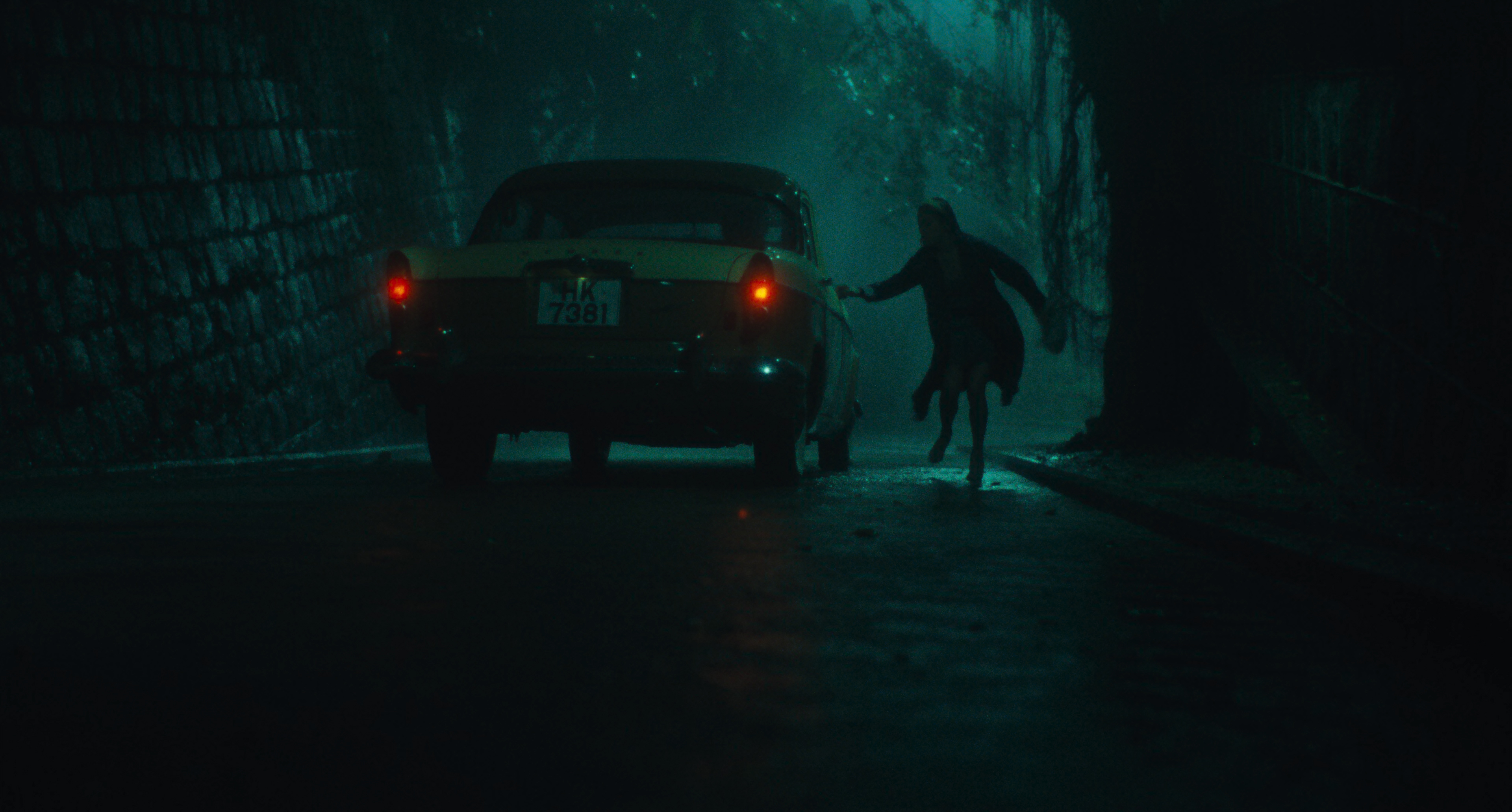
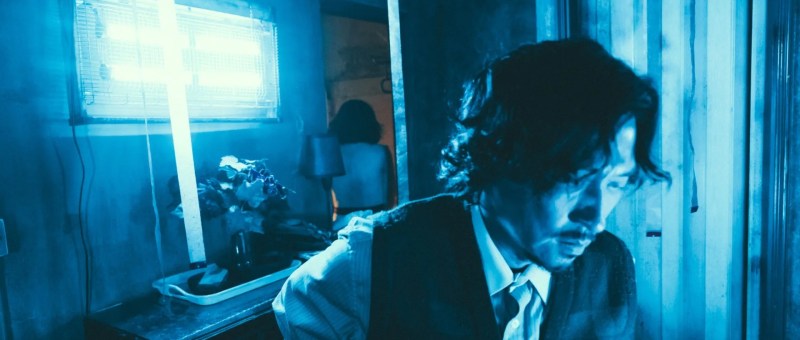
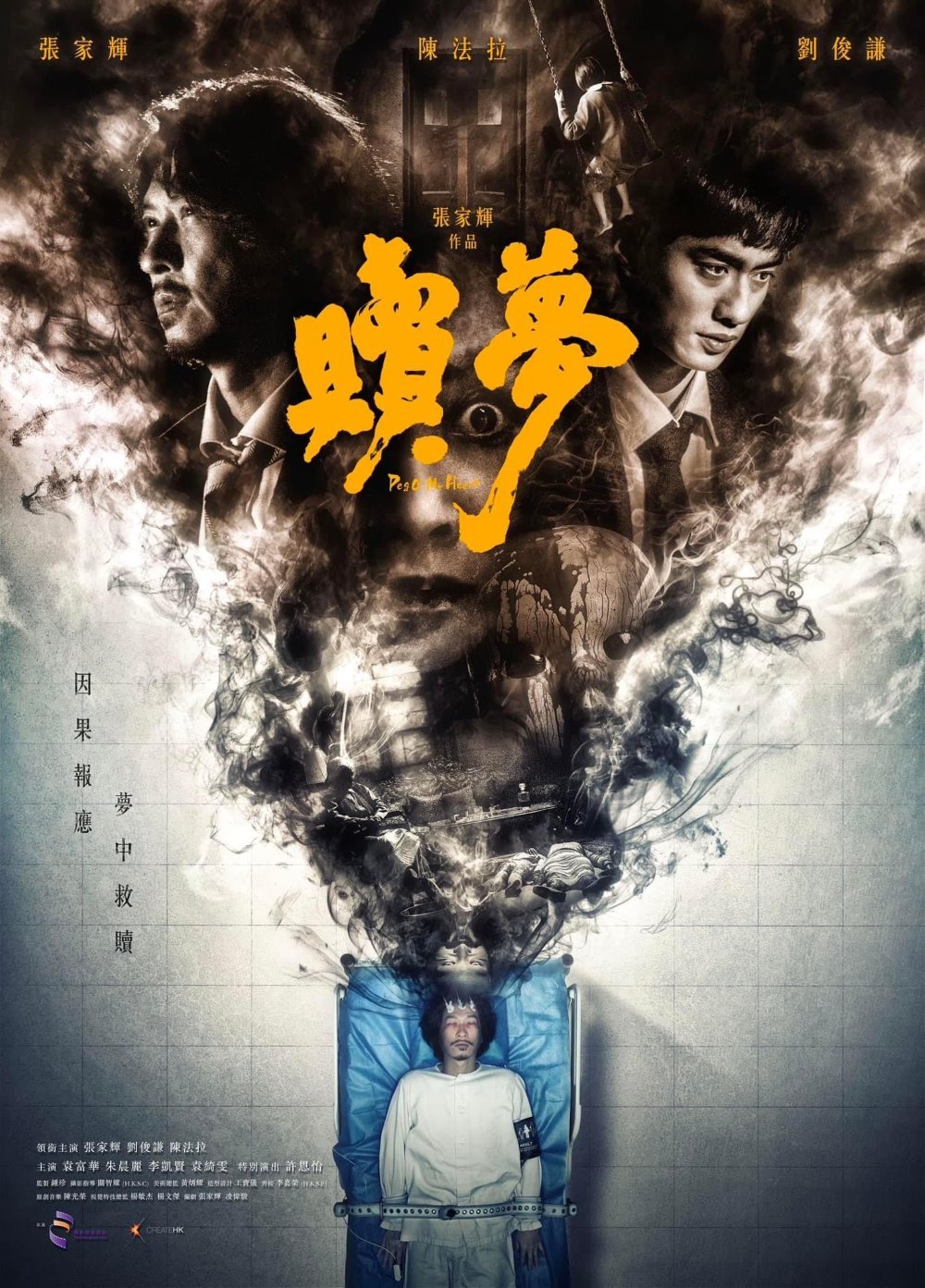
An insomniac taxi driver says he can’t sleep but he can’t wake up either. He finds himself plagued by bad dreams in an increasingly surreal Hong Kong that seems to exist more within the mind than the physical reality and populated by the orphaned ghosts of another era. Clearly inspired by the films of David Lynch with overt visual references to Lost Highway and Twin Peaks, Nick Cheung’s Peg O My Heart (贖夢) follows a maverick psychiatrist intent on actually treating his patients as he chases the taxi driver while in flight from his own trauma.

Dr. Man (Nicholas Cheung Ka-fai) is already in trouble for prying into the lives of his patients when his superiors, men in slick suits bickering in English, would rather he just get on with his job of prescribing pills. The first patient we see him treat is a teenage girl whose surreal dream sequence finds her on a swing in a room of blood while a giant baby doll looks on. Man notices an upturned doll’s head being used as a cup by one of her friends and begins to get a picture of what’s been going on. The apartment the girl lives in with her grandmother is cramped and grimy in the extreme despite the happiness banner on the door. The girl and her friends have taken to drugs to escape their own dissatisfying reality, but it led them to a dark place in which the boy abused the girl and left her with lasting trauma that blossomed into psychosis in much the same way’s Man’s own has. Nevertheless, in contrast to his bosses, he’s careful to remind her that she still has choices and it might not be the right time for her to have a child though he’ll help her whatever she decides.

In a strange way, it might be the taxi driver who’s responsible for her plight. In another life, Choi (Nicholas Cheung Ka-fai) was a high-flying financial analyst who could afford to give his wife a Mayfair flat on a whim, though you’d never guess it now. In those days, his hair was slicked back rather than long and wavy and his suit was finely buttoned rather than hanging loose. He wore glasses too, which he alarmingly no longer seems to do while driving. His eyes are red and puffy, his face pale like a ghost. On his return home, he and his wife have a number of strange rituals which make no kind of sense but hint at the extent that they have descended into a dream world, locked in by their guilt and the feeling that they are being tormented by a vengeful ghost. 

Then again, Choi’s heartless former colleagues describe him as being too sensitive for this line of work. They joke, a little misogynistically, that his wife was always the go-getter. Fiona (Fala Chen) was into stocks too, the pair of them playing a game of untold riches without any awareness of what it meant to gamble with other people’s money. His colleagues may have told him that’s exactly why it didn’t matter and it was silly to worry about it, but it seems Choi did worry, though the money distracted him from his moral quandary until the lack of it convinced him to betray an old friend with tragic and unforeseen consequences. 

Choi and Fiona are plagued by echoes of a single afternoon, one of sunlight and happiness that they unwittingly ruined with their insatiable greed. Dr. Man, meanwhile, says he has the same dream every night but can’t remember anything about it in the morning. That’s a contradictory statement in itself, though his loyal nurse Donna (Rebecca Zhu) doesn’t seem to have picked up on the holes in his story. In any case she introduces him to his previous boss, Vincent (Andy Lau Tak-wah), a former psychiatrist with an unexplained prosthetic arm, who has the power to enter other people’s dreams and seems to exist in more than one place at once, like the Mystery Man in Lost Highway. Exploring his dreamscape allows Man to reckon with his own trauma and subsequently learn to forgive and accept his father, though he may not, in fact, have faced himself fully or released his guilt even as he and Choi eventually share a similar fate. Are either of them awake, or still asleep? Did Man go through the mirror, or merely deeper inside it? The melancholy streets of contemporary Hong Kong take on a deathly hue trapping its traumatised denizens in an inescapable hell of guilt and regret from which they can never awake.


Trailer (English subtitles)
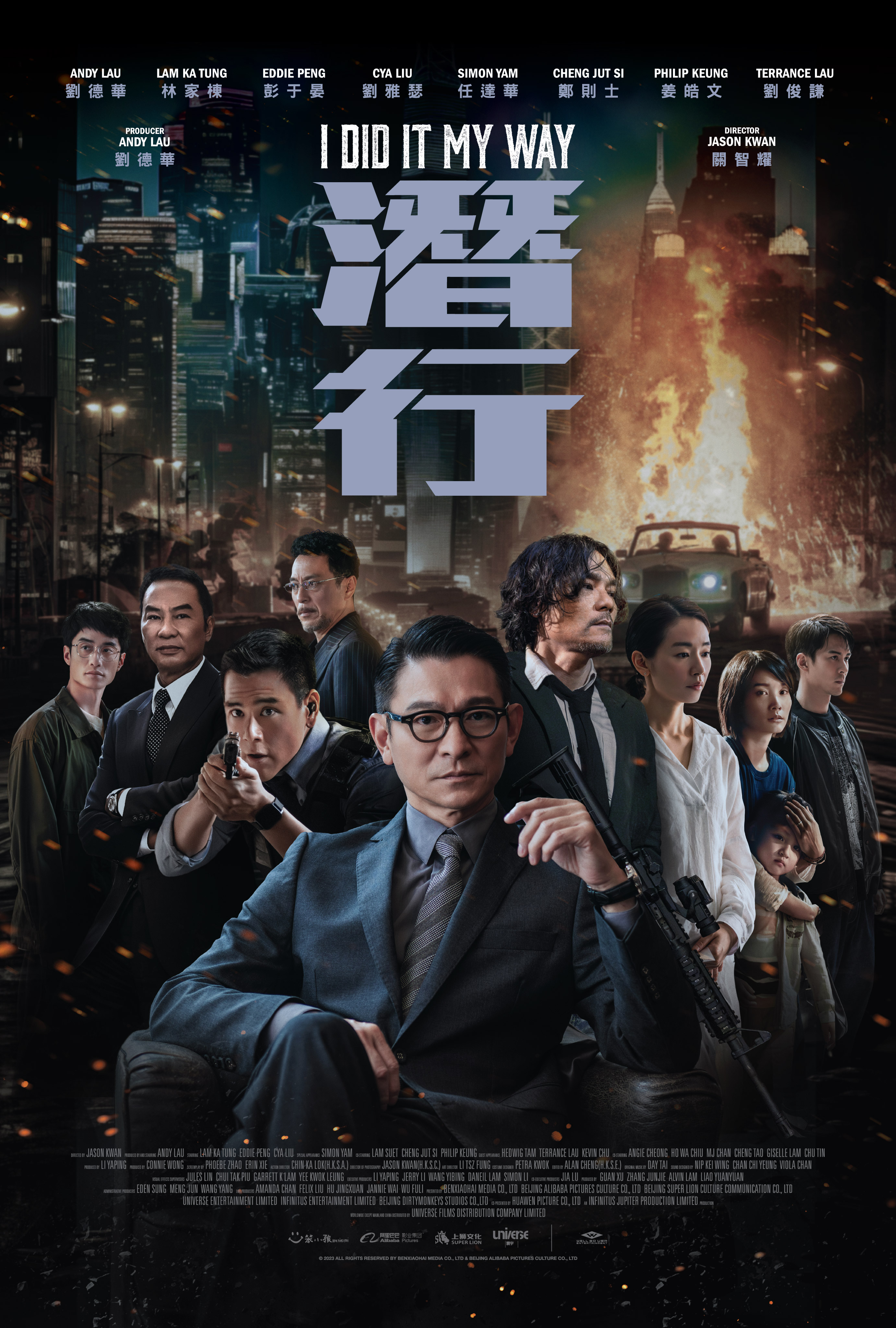
I Did It My Way (潛行, Jason Kwan, 2023)

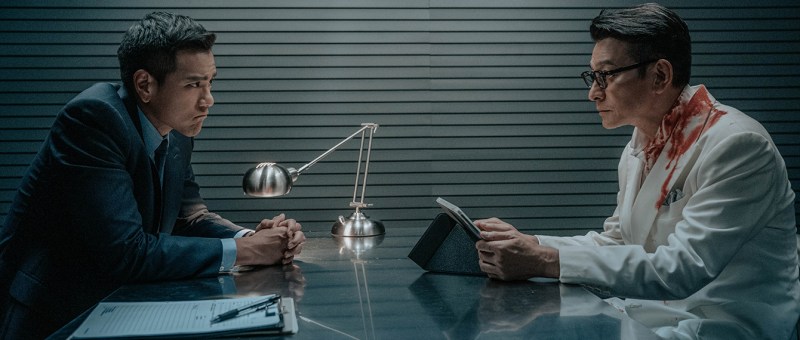
“Oldies are still the best,” one bad guy tells another while listening to a retro pop song about the inability to distinguish good from evil, “life was simpler back then.” Jason Kwon’s I Did it My Way (潛行) is in many ways an attempt to recapture the action classics of the 90s starring many of the same A-listers though they are all 30 years older and in some cases really ageing out of the kinds of roles they’re accustomed to playing in these kinds of films. Nevertheless, the action is updated for the contemporary era in its unsubtle messaging that drugs and cyber crime are bad, while the police are definitely good and will always win.

Indeed, barrister George Lam (Andy Lau Tak-wah) is not a particularly sympathetic villain and is given little justification for his crimes save doing things his way. Cybercrime specialist Eddie Fong (Edward Peng Yu-Yan) isn’t terribly sympathetic either, but mostly because of his bullheaded earnestness. Chung Kam-ming (Simon Yam Tat-wah) asks him to work with regular narcotics cop Yuen (Lam Suet), but Eddie originally refuses, insisting that they formed their new cybercrimes squad because the “old ways” weren’t working, so it’s better that they keep their investigations separate, which is of course quite rude to Yuen especially as he goes on to add that Chung’s only asked him out of politeness and professional deference. Chung, however, reminds them that they’re all part of one big family and should learn to work together. 

One might think that a criminal enterprise is also a kind of family, but it’s shown to be illegitimate in comparison to that of the police. Yuen’s undercover agent, Sau Ho (Gordon Lam Ka-tung), has a family he’s trying to protect, as does Lam who is about to marry his much younger pregnant girlfriend. For them, family is also a weakness because it gives them a reason to be afraid not to mention something to lose. Beginning to suspect him, Lam uses Sau Ho’s wife and son as leverage, symbolically taking them hostage along with Sau Ho’s promised future that would allow him to emigrate for a life of freedom under a new identity. 

Like the song says, Sau Ho is also struggling to define his identity as an undercover cop caught between his original desire to fight crime and the criminal lifestyle he’s been forced to live which leaves him never quite sure what side he’s actually on. Lam claims he only started dealing drugs after his girlfriend was raped and subsequently developed depression but that’s too late for him to turn back and so he’s gone all in. There is a kind of brotherhood that arises between them that’s permanently strained by their positioning on either side of this line and the inevitability of confrontation. Fong promises to save Sau Ho, but he failed to save most of their other undercover officers, while Sau Ho and Lam pledge to save each other, though the act of salvation could mean different things to each of them while both torn between their respective codes and the natural connection that’s been fostered by their long years working together as part of the gang. 

The severing of this connection is again part of the price for their involvement with crime, with Lam led to believe that his choices have ironically robbed him of the pleasant familial future he dreamed of, while Sau Ho is returned to the familial embrace of the police force. Chung is repositioned as a benevolent father who can save his men, while Eddie too is forced to reintegrate by working with the other officers to fight cybercrimes which often intersect with those of other divisions. While the film includes several action sequences, it also insists that the major battle takes place online between hackers and police computer specialists, dramatising these online fights with CGI to slightly better effect than 2023’s Cyber Heist but still struggling to move on from an outdated iconography of the web. Even so, it’s clear that crime never pays even if a policewoman asks herself if it’s really worth it on a trip to the police cemetery. The sun has come out once again, making the dividing line between good and evil clear if also reinforcing the paternalistic authority of law enforcement under which living life “my way” will never be tolerated.


I Did It My Way is available digitally in the US courtesy of Well Go USA.

Trailer (English subtitles)

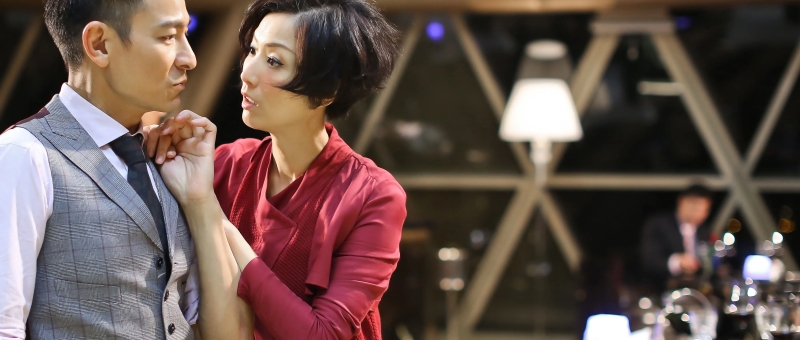
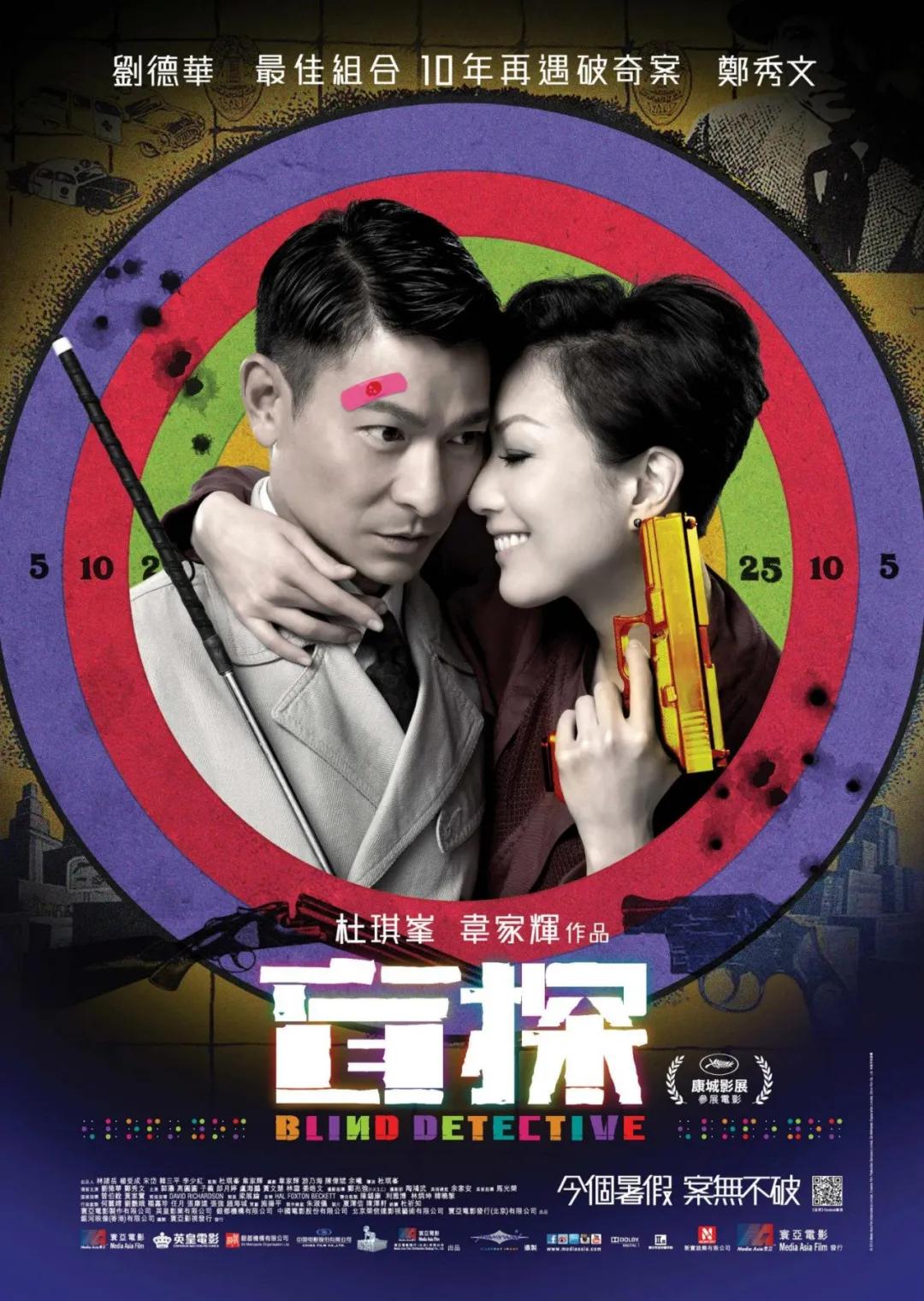
Blind Detective (盲探, Johnnie To, 2013)

Ever get that feeling someone is looking at you, but actually they were looking at someone else? The mismatched cops at the centre of Jonnie To’s black comedy love farce Blind Detective (盲探) seem to encounter this phenomenon more often than most as To and screenwriter Wong Ka-Fai delight in waltzing the audience towards an unexpected conclusion filled with ironic symmetries and persistent doubling as the detectives role-play their way towards truths literal and emotional. 

Former policeman Johnston (Andrew Lau Tak-wah) lost his sight after ignoring an eye problem in order to solve his case and has been working as a kind of private detective ever since, looking into cold cases with reward money attached. His old buddies, however, have a habit of exploiting him as they do while trying to stop a series of sulphuric acid attacks unfairly denying him his payout by following him and then technically arresting the criminal “first” so his work doesn’t count. That is however how he first meets agile yet clueless heiress/struggling investigator Ho (Sammi Cheng Sau-man) who lives in a palatial flat left to her by her parents. Regarding him as the god of solving crime, Ho asks Johnston to help her solve a mystery which has plagued her since childhood in the disappearance of Minnie (Lang Yueting), an “unsociable” young girl with no friends who confessed to her that she was worried about becoming the kind of person who could kill for love as her mother and grandmother had done. Little Ho was frightened and stopped hanging out with Minnie even though she stood outside her apartment block just staring up at her in loneliness. Adult Ho feels guilty and ashamed, hoping she can make amends by finding out what happened to her friend. 

Like the earlier Mad Detective, Johnston has a special gift and unconventional investigational style which involves a lot of method acting and physical role-play even going to far as to force Ho into getting the same tattoo as one of the victims in a case he’s pursuing. His sightlessness at times allows him to see what others do not, but even his gaze is occasionally misdirected. Ironically enough he’d put off asking out his crush until after he finished his case only to then go blind, while she in turn had put off seeking out hers until after her competition only to lose sight of him, Johnston never realising that when he thought she was looking at him she was actually looking at someone else. The same thing happens with Ho and Minnie, Ho unaware of all the facts never realising there might have been another reason for Minnie’s behaviour. Frequently they look for one thing and find something else, accidentally uncovering a prolific cross-dressing cannibal caveman serial killer living alone in the woods surrounded by skeletons which turns out to have little relationship to their original case save for its tangential link in the killer’s preference for brokenhearted women. 

Everything is disguised as something else, the killer of the first case setting up the crime scene to look like his victims killed each other with no one else present while two brokenhearted souls stowaway in wardrobes hoping to reunite with lovers who have rejected them, the second later changing their appearance in order to get a second chance. Love does indeed make you do strange things, the sulphuric acid thrower apparently taking some kind of indirect revenge for his wife’s infidelity as he reveals through a manic phone call first berating and then forgiving her while randomly buying a big bottle helpfully marked “sulphuric acid” from a local supermarket. Yet in this screwball comedy throwback it takes a little while for the oblivious Johnston to realise that he’s fallen for his infatuated new partner who can’t quite be sure he hasn’t fallen for her bank balance instead. 

Despite the persistent darkness of serial killings and crimes of passions, Blind Detective is at heart a romantic comedy filled with absurdist, slapstick humour in which the heroes literally tango their way to emotional authenticity, a dance which in part at least requires each partner to look away from the other. To’s delightfully arch comical mystery romance is a tale of misdirected glances and buried truths but eventually allows its equally burdened detectives to step away from their personal baggage and embrace a happier future. 


Original trailer (English subtitles)
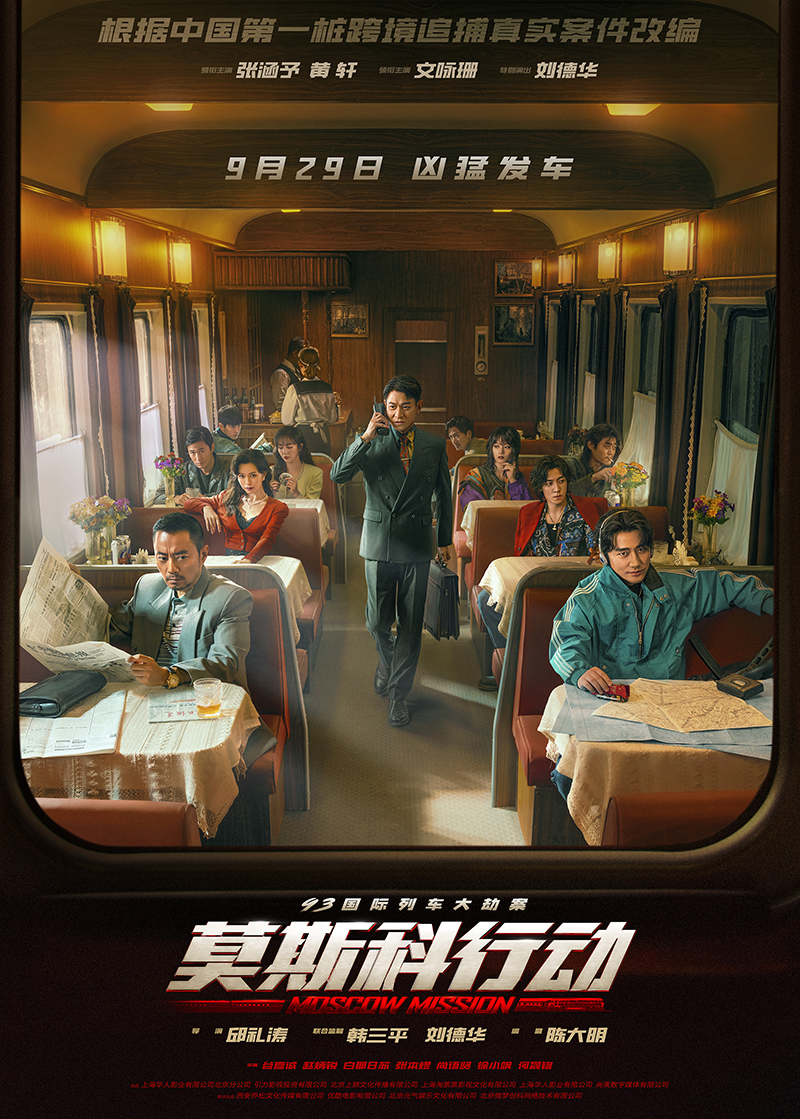
Moscow Mission (93国际列车大劫案:莫斯科行动, Herman Yau, 2023)

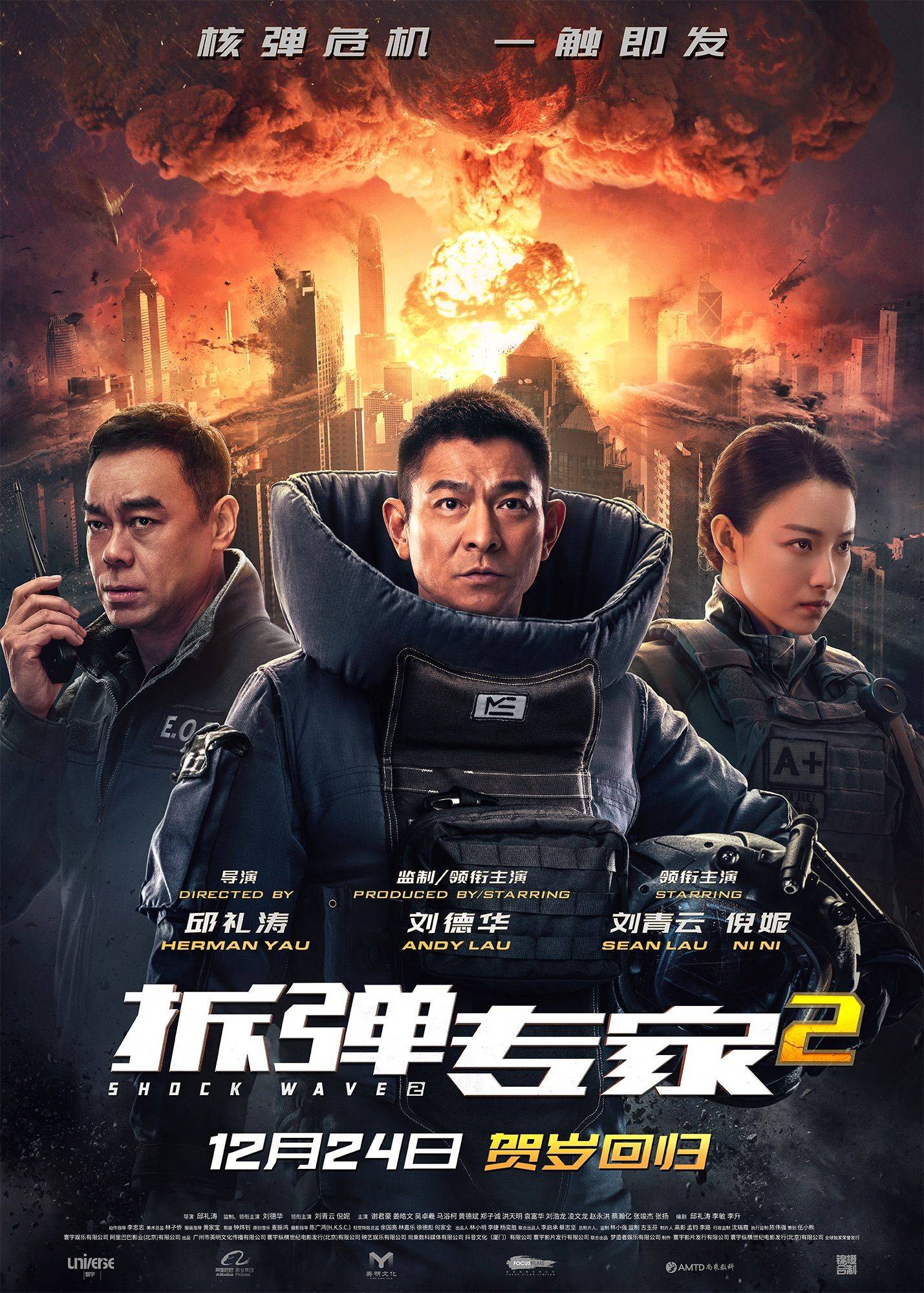
In the early 1990s, China and Russia were each struggling to accommodate new political and economic realities. This is at least one reason offered in explanation for the nexus of crime that overtook the long distance train connecting the two capitals in Herman Yau’s action drama Moscow Mission (93国际列车大劫案:莫斯科行动, guójì lièchē dà jié àn Mòsīkē xíngdòng). Inspired by a real life train heist in 1993, the film suggests that China was pulling ahead free of the labour protests which appear frequently in Moscow amid the collapsing Russian economy but equally insists that the bandits must be stopped because they not only endanger China’s international reputation but its trading relations with the former Soviet Union.

In truth there’s no real reason given for the mysterious D’s (Huang Xuan) heinous crime spree save a later allusion to a troubled childhood and the sudden death of his sensitive musician father when he was only 13 (which would put it shortly before the end of the Cultural Revolution). In any case, those around him have more complex motivations such as those of Zhenzhen (Janice Man Wing-San), a former sex worker employed by the gang to identify wealthy passengers and inform the rest of the crew by note, who needs the money for a sick relative. In any case, nearly everyone on this train is concealing vast amounts of hard cash, mostly in their underwear. Not content with the money, D also stops to rape a woman who had resisted but was found with a large amount of money stuffed in her bra. 

In short, there’s nothing noble about D’s gang or any implication they’re rebellious outlaws just thuggish crooks taking advantage of a geopolitical vulnerability. Local fixer Vasily (Andy Lau Tak-Wah), however, is otherwise depicted as a victim of circumstance cruelly separated from a then newborn daughter for whom he is continually searching. He made his money digging a tunnel from Shenzhen to Hong Kong and using it to smuggle luxury goods in much the same way many now use the train as is evident by the scenes at Russian station when passengers suddenly start leaning out windows flogging pairs of jeans. Vasily’s in on that trade too, as well attempting to broker a deal for a wealthy man to buy a former Soviet fighter jet, but seems unhappy with his life of petty crime selling fake passports to dodgy people and also has an ongoing non-romance with Zhenzhen who is trapped in an abusive relationship with D’s brother-in-arms Zhiwen (Jason Gu Jiacheng). 

Intense police captain Cui (Zhang Hanyu) is dispatched to catch the train robbers and avenge China’s international reputation by bringing order to the train but also stumbles on another crime in progress in the Russian capital. He has an opposite number in Sergey (Andrey Lazarev), a former KGB now FSB officer who hints at a new world order if also at a society very much in flux. In some ways the film suggests Cui’s inevitable victory is aided D’s hubristic overreach and the cooperation of the Russians rather than his own powers as a Chinese policeman, but also that China will clean up after itself taking down a Chinese gang while technically on foreign soil and making sure they return to China for justice. 

Yau opens strong with the high impact sequence of the original heist as the camera first pans along the inside of the train before finding Zhenzhen and then rest of the gang, while otherwise continuing to escalate the action with a climax at an abandoned rocket base and then a final shootout at the train depot where the carriages must quite literally change the gauge to shift from the old Soviet railways to the modern China. The gang members may implicitly be among those who’ve lost out in the face of new economic realities, though aside from D’s possibly duplicitous musing on the life he might have led if his father had not died leaves them little justification for the cruelty of their crimes. Meanwhile, Cui’s justice is not implacable, taking pity on both Zhenzhen and Vasily and promising to treat them fairly in acknowledgement of their cooperation as opposed to D who had problematic gang members bumped off by the possibly the worst hitman in Moscow and has been using Vasily’s daughter to manipulate him for last few years with no certainly that he actually knows where she is. Making a minor point about empty consumerism in the constant references to stolen watches, Yau goes big on spectacle but also homes in on the smaller stories of trauma and displacement that eventually provoke it.


International trailer (Simplified Chinese / English subtitles)

The Goldfinger (金手指, Felix Chong Man-keung, 2023)

Following Wong Jing’s Chasing the Dragon and Philip Yung’s Where the Wind Blows, Felix Chong’s financial thriller The Goldfinger (金手指) is the latest in a series of Hong Kong films revolving around colonial-era corruption in which the apparent lawlessness of the pre-Handover society allowed crime to flourish along with a nascent greed nurtured by the island’s rising prosperity as an increasingly important financial centre. In an ironic touch, the film even opens with mass protests against the introduction of ICAC with protestors calling for more respect for law enforcement officers while implying some dark authoritarian force is in play even as angry policemen demand the right to immunity from their own misconduct.

In any case, what arises is a cat and mouse game between wily conman/entrepreneur Henry Ching (Tony Leung Chiu-Wai) and ICAC investigator Lau (Andy Lau Tak-Wah) who chases him for 15 years trying to expose his web of financial fraud. A failed businessman on the run from debt having supposedly abandoned an idealistic desire to build homes for people, Ching arrives in Hong Kong seeking a land of opportunity and largely finds it though through dubious means. Teaming up with similarly embittered businessman KK (Simon Yam Tat-Wah), who is resentful towards his family who treat him with disdain for being a mistress’ son and force him to do their dirty work, to build a giant real-estate based empire that is in reality rooted in complex financial fraud.

Working on the rationale that stocks can be spent like money, Ching makes contacts and manipulates markets which is all very well as long as no one asks for the cash because it doesn’t exist. Chong hints at the realities of the housing market in Hong Kong today in which land is at a premium and apartments largely unattainable as Ching alternately allies with and subverts British rule to build a property empire, setting his sights on acquiring prestigious Golden Hill building as symbol of a new Hong Kong and his own hubristic desire for personal success. With shades of Wolf of Wall Street and The Great Beauty, Ching attends soirees organised by the British and puts on a show for his targets. In his attempts to woo a British bank, his office is suddenly invaded by salsa dancers and gold glitter falls from the ceiling much to the chagrin of a bemused and increasingly mistrustful KK.

Even so the title of the film is echoed in a comment Ching makes to Lau that though he may thinks he’s some genius with the Midas touch he’s really just a patsy, pushing him to investigate possible international conspiracy that is bigger than either of them. Ching has already become a legend with a series of stories about how he made his stake money which range from running into Imelda Marcos in a shoe shop and getting backing from the oppressive regime in the Philippines, to narrowly escaping a war zone and catching a CIA spy in Moscow. He even has the hutzpah to attempt to bribe Lau by offering him a vast fortune and a scholarship for his daughter to study abroad if only he’d find a way to nix the case.

The corruption is indeed embedded, as is obvious when a judge with a posh British accent actively welcomes Ching to the court in a friendly manner and suggests they conduct their business swiftly to avoid any unnecessary turmoil to the Hong Kong economy. Friends in high places largely assist him, whether through personal greed or blackmail though as another of his associates admits, in the end there is no real loyalty among thieves only increasing fear and desperation along with resentment that Ching seems to be taking more than his fair share of the loot. Loosely based on the Carrian Group scandal, the film never loses sight of the damage one man’s greed and duplicity can do as millions of Hong Kong citizens find themselves out of pocket and uncompensated when the shares they bought become worthless, but equally suggests that in the end justice will always be denied to ordinary people while men like Ching will never fully pay for their crimes. With gorgeous production design, Chong beautifully the woozy world of Hong Kong in the ’70s and ’80s amid an intense cat and mouse game of financial fraudsters and a compromised authority.


The Goldfinger previews from 30th December ahead of opening in UK cinemas 5th January courtesy of CineAsia.

UK trailer (Traditional Chinese / English subtitles)

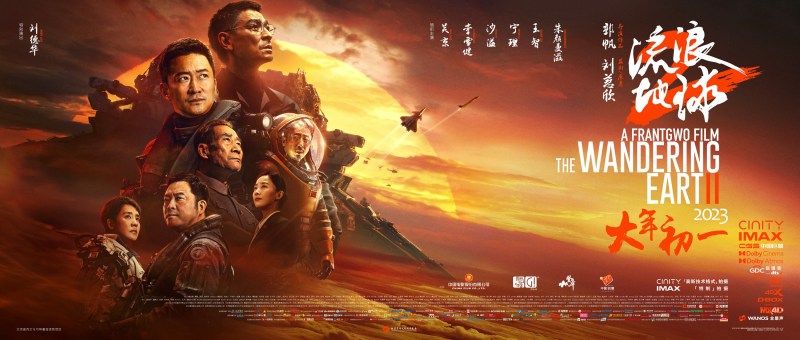
The Wandering Earth II (流浪地球2, Frant Gwo, 2023)

Back in what now seems like another world, Frant Gwo’s The Wandering Earth became a Lunar New Year box office smash and was described by some as China’s first foray into big budget sci-fi. Adapted from a novel by Liu Cixin, the film was much about fathers and sons as it was about sacrifice and solidarity in the face of oncoming apocalypse all of which are quite traditional New Year themes. Arriving four years later, The Wandering Earth II (流浪地球2, liúlàng dìqiú 2) largely drops overt references to the Spring festival bar the repeated motif of journeying home, but does once again stress the importance of international cooperation in safeguarding the future of the planet.

Then again, it seems that many feel it’s not a good use of time or resources to address a problem that will occur in a hundred years when they are long dead. A prequel to the first film, Wandering Earth II begins in the early days of the Moving Mountain Project which is the plan to push the Earth onto a different orbit to escape the sun’s eventual implosion. Given its enormous expense and the reality that much of the population will simply be left to die, the majority of the public back the rival Digital Life program in which humanity would be saved by relocating to a new virtual reality. Where this virtual reality is supposed to be stored is not exactly clear if there is no Earth for it to exist on, but it’s clear that some consider the possibilities of the digital existence preferable to allowing millions to die in the tsunamis which will engulf the Earth as it uncouples from the moon’s gravitational pull. 

Chief among them is software engineer Tu (Andy Lau Tak-wah) who is griefstricken by the loss of his wife and child in a traffic accident and has been secretly working on creating a fully fledged AI simulacrum of his daughter Yaya. He tells his more practically minded colleague Ma (Ning Li) that he doesn’t have the right to define what is “real” while eventually jeopardising the Moving Mountain Project by prioritising his desire to save Yaya over saving the Earth and eventually creating the AI system that will become Moss, a possibly dangerous entity which decides the best way to save humanity is to destroy mankind. 

The first film’s hero, Liu Peiqiang (Wu Jing), meanwhile is a rookie astronaut caught up in a terrorist incident carried out by militant opponents of the Moving Mountain project while enjoying an incongruously goofy courtship with fellow astronaut and future wife, Duoduo (Wang Zhi). This time around, he’s a dutiful son rather than conflicted father serving alongside his own dad who eventually becomes an example of intergenerational sacrifice as the old begin to make way for the young whose responsibility it now is to preserve the Earth. A nervous young aid serving the current premier later takes over the reigns and finds herself giving the same advice to a similarly nervous young man as they prepare to carry on the Wandering Earth project despite knowing that it will take thousands of years to complete. 

The ultimate message is therefore to choose hope, as Peiqiang later does striving to save the world even if it all turns out to be hopeless, rather than giving up and resigning oneself to one’s fate as many suggest doing when faced with the potential failure of their mission. As in the first film, the plan requires cooperation between nations and this time even more so as world powers must surrender their nuclear weapons to help blow up the moon. The Chinese premier looks forward to a day when governments can work on solving future problems rather than preparing for war, but then in an echo of the ongoing climate crisis some just don’t seem to see the point in dealing with something that won’t happen for a hundred years despite likely being among the first to complain no one did anything sooner when it finally affects them. Gwo adds a little whimsy in the technically pre-apocalypse setting with charming details such as Tu’s warm relationship with his dog-like robot helper and the general goofiness of Peiqiang’s attempt to court Duoduo while improving on the already polished visuals of the first film through several high impact set pieces but finally returns to its messages of hope and solidarity perhaps intended for a weary world attempting to find its own way out of a period of protracted strife.


The Wandering Earth II is in UK cinemas now courtesy of CineAsia.

International trailer (English voice over, Simplified Chinese / English subtitles)

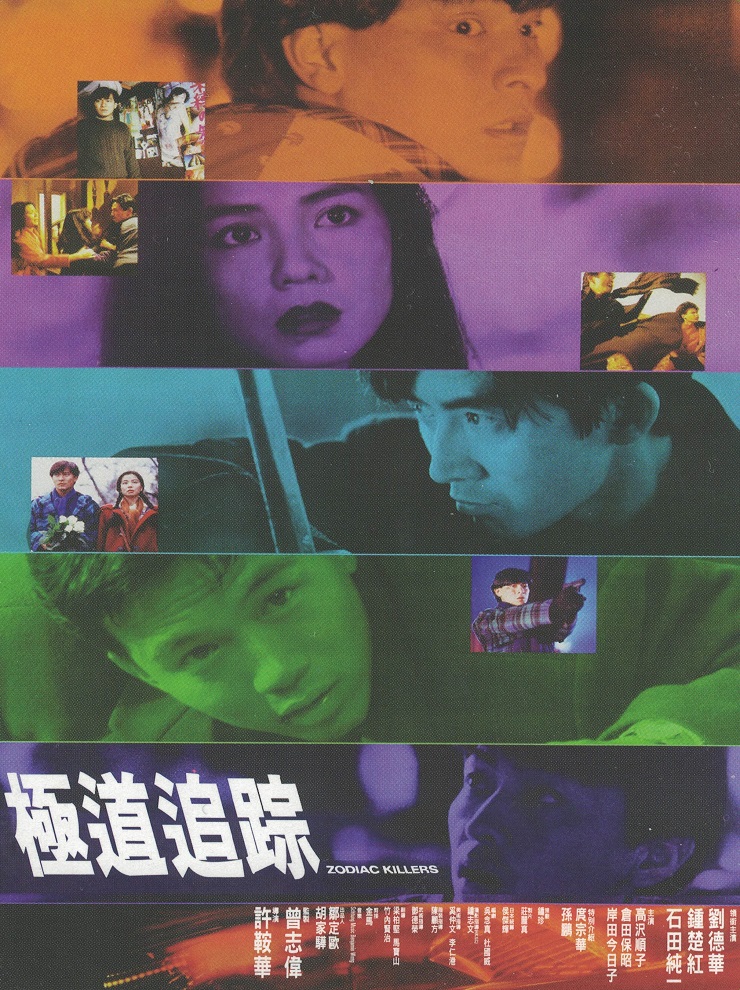
Zodiac Killers (極道追踪, Ann Hui, 1991)

Melancholy exiles seeking a better future find only futility in the dying days of the bubble economy in Ann Hui’s 1991 gangster drama, Zodiac Killers (極道追踪). The English title is admittedly misleading, there’s seemingly no connection to any kind of “zodiac” and no hint of conspiracy murder except those forced by the world’s enduring cruelty, though the Chinese is perhaps equally so meaning something like “yakuza pursuit” which is accurate but only to a point.

The hero, Ben (Andy Lau Tak-wah), has come to Tokyo from Hong Kong to study film but rarely goes to classes, preferring to learn how to make money instead. Making the most of the then affluent city, he works as a tour guide for Chinese tourists, dutifully delivering the men to the strip clubs of Shinjuku in the evenings for kickbacks and giving his boss a kicking when he tries to stiff him out of the agreed amount, heading to his second job in a kitchen immediately afterwards. “Man does not live to make money only, you must learn to spend it too”, he explains to his friend, Chang (Tou Chung-hua), persuading him to come hang out in a swanky bar they’ve been invited to by Ben’s shady relative Ming (Suen Pang) who is currently trying to make it as a yakuza by marrying the boss’ mama-san sister Yuriko (Junko Takazawa). It’s at the bar that Ben first sets eyes on Tieh-lan (Cherie Chung Chor-hung), a young woman from the Mainland in Tokyo studying at a Japanese language school and working as a hostess to make ends meet though as she points out “not every Chinese girl likes to work here”, instantly offending Ming but interestingly not Yuriko who seems sympathetic if embarrassed. 

All of them are in Tokyo because at that moment in time Japan looked like the future, though the window was rapidly closing. Tieh-lan is beginning to wonder why she came. Her friend Mei-mei (Tsang Wai-fai) has ended up in an unwanted sexual relationship with the man who sponsored their visas, Harada (Law Fei-yu), who nevertheless continually sexually harasses Tieh-lan. “Why did we come here?”, Tieh-lan asks Mei-mei, “for our future or for men? You can debase yourself at home, why have you come to Japan to do it?”. Ben later asks something similar of Ming who freely admits that he is prepared to sell his body for influence, “satisfying” Yuriko in order to buy influence with her brother and be admitted into his yakuza clan. The Tokyo they inhabit is one steeped in exile. They surround themselves with other Chinese migrants, be they from the Mainland, Hong Kong, or Taiwan, and congregate in the seedier parts of Shinjuku living on the fringes of society, working as bar hostesses, or gangsters, or in kitchens. For Ben whose bachelor pad student dorm is adorned with posters of Bruce Lee and Rocky, his purpose is more adventure and youthful longing for freedom than escape which is why he makes a point of ignoring his loving mother’s phone calls, but even he struggles to find what he needs on the unforgiving streets of a hostile city. 

That hostility is first brought home to him by a gang of ultranationalist bikers flying the imperial flag one of whom threatens him with a samurai sword (a moment which is tragically echoed in the film’s nihilistic conclusion). They are not, however, the only ones feeling displaced, as a heartbreaking cameo from golden age star Kyoko Kishida as an ageing geisha makes plain. Asano (Junichi Ishida), the melancholy yakuza with whom Tieh-lan has fallen in love much to Ben’s disappointment, declares himself “always a loner”, returning to Tokyo after years of exile in South America. An orphan, Asano laments that the beach he visited as child no longer exists and the city he’s come home to is changed beyond all recognition. Perhaps for that reason he falls for melancholy exile Tieh-lan as they bond in a shared sense of hopeless rootlessness. 

With the surprise introduction of Asano, Hui transitions into the moody noir with which the film opened, shots of Andy Lau plaintively looking back at the shore from a boat on the open sea intercut with Cherie Chung walking sadly through an empty, neon-lit city. Asano hoped for reconciliation but found only betrayal, there can be no home for exiles even if they return. The trio’s broken dreams find their final expression in the nihilistic violence of a non-existent yakuza war. Asano’s final gesture was one only of futility, no one wants to hear his inconvenient truth because the clans in question have already made “peace” and are intent on working together for future prosperity. “Your heart is too soft for this wicked world” Ming says of Ben but it’s a statement that rings true for them all, living life by movie logic in which good will eventually triumph. Ming sees no point in returning to Hong Kong because he’d be a nobody, tragically believing that being a gang boss’ brother-in-law is close enough to somebody in Shinjuku. Only Chang, who came to Japan to look for his missing sweetheart, manages to keep himself safe but largely, as we later find out during a rather bizarre sequence featuring a surprise outdoor porno shoot, because he does not yet know that his dream is futile too. A chronicle of a world in collapse, Zodiac Killers leaves its marginalised heroes with no place left to run, permanent exiles denied safe harbour sailing towards a promised horizon with no land in sight.


Original trailer (no subtitles)

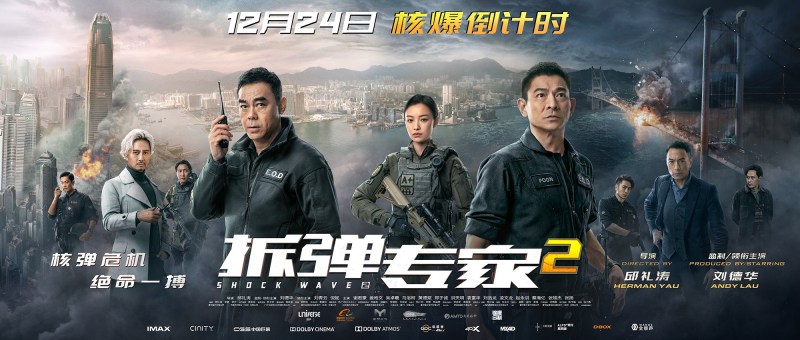
Shock Wave 2 (拆彈專家2, Herman Yau, 2020)

“Anger can destroy everything” according to the voiceover opening Herman Yau’s Shock Wave 2 (拆彈專家2), a thematic sequel to the original Shock Wave once again starring Andy Lau as a Hong Kong police bomb disposal officer battling serious threat to the island’s transport infrastructure but also picking up themes from the pair’s subsequent collaboration White Storm 2 in which the veteran actor had starred against type as a Batman-esque billionaire vigilante fighting a one man war on drugs. The villains here claim they want “change”, but in reality want little more than to burn the world, enraged by its refusal to recognise or remember them consumed as they are by wounded male pride. 

The hero, Fung (Andy Lau Tak-wah), finds himself suffering from amnesia after encountering the second serious accident of his professional life. When we first meet him, he’s essentially playing the same role as the first film, a cheerful, slightly cocky bomb disposal expert with a potentially reckless streak born of his willingness to risk his own life to save those of others. When he’s injured on a job, tricked by a random booby trap while trying to free a trapped cat, and loses his leg he reacts with characteristically upbeat stoicism quickly adjusting to his new prosthesis and determined to get back to work, training intensely with the help of his friend Tung (Sean Lau Ching-wan) who was also injured in the same blast only not so seriously. Despite passing all the fitness criteria Fung is fobbed off with an offer of a desk job in police PR, refused a return to the bomb squad as the panel quite openly admit not so much because they feel his disability impairs his ability to do the job as they fear public blowback should something go wrong and they be blamed for having hired a disabled person in the first place. 

It’s less a sense of discrimination than unfairness that fuels Fung’s growing sense of anger and resentment not only towards the police force but towards society in general which he now feels regards human beings as little more than disposable tools. He rejects the sense of himself as “disabled”, internalising a sense of societal shame keen to remind everyone that he is not impaired proving himself capable above and beyond the force’s criteria but is still rejected while Tung, who suffered only minor burns, is permitted to return to duty and even gets a promotion. His friends later recount that he became a different person after the accident, angry and embittered as if at war with the world. 

Yet after encountering a second accident, Fung loses his declarative memory which is to say he still has his everyday skills such as walking around (including using a prosthesis), getting dressed, brushing his teeth, using a computer and presumably the mechanics of bomb disposal but no longer remembers his own name or how he ended up in hospital now at least implicated in an act of major terrorism. Without his memories, Fung is a blank slate, freed from all the trauma and resentment that may have pushed him towards the dark side and returned to the innate goodness of a soul untouched by the world’s cruelty. The question is, which way will he turn, back towards the darkness or further into the light as the Fung they once new who willingly risked his life for others? In any case, he finds himself potentially misused by his well meaning ex Pong Ling (Ni Ni) who engages in some dubious psychology involving false memory implantation to convince him that he’s been working for the Hong Kong police undercover, hoping to engineer a softer landing for him than the realisation that he may be responsible for the deaths of at least 18 people as a member of an anarchist sect going under the apt name of “Vendetta”. 

Like Fung, the leader of Vendetta is an angry man resentful of having been forgotten by someone he cared about who had simply grown away from him. He rages against the world partly as a consequence of his aimless privilege having discovered his wealthy family made their money peddling opium with the assistance of the colonial authorities, but also as a direct result of childhood bullying and frustrated male friendship. Vendetta claims it wants to stop the world from getting “worse”, but all it really has is anger and the intense hurt of wounded pride. These men refuse to be “KO’d by this sick society” but in the end all they want is to be seen, to be recognised and remembered. To ease their sense of belittlement and impotence, they plan to burn the world by literally severing connections with it. 

Yau takes aim at the various systems which generate this kind of anger, hinting at the shockwaves of ingrained societal discrimination even if Fung internalises a sense of stigmatisation in his intense need to prove himself free of “disability”. Robbed of his memories, Fung’s anger dissipates allowing his natural capacity for selfless heroism to resurface along with a healthy desire to reflect on his own behaviour, at least as much as can he rely on the sometimes duplicitous vagaries of memory both his own and that of others as he searches for the truth of himself and his “vendetta” with the world. Torn between risking his life to save others and blowing it all to hell, Fung ends up doing both, sending shockwaves throughout his society in a deeply ambivalent act of personal and societal redemption. 


Shock Wave 2 is available to stream in the UK until 12th May as part of the Chinese Cinema Season. It will also be released on DVD/blu-ray on 7th June and digitally on 14th June courtesy of Cine Asia.

UK release trailer (English subtitles)
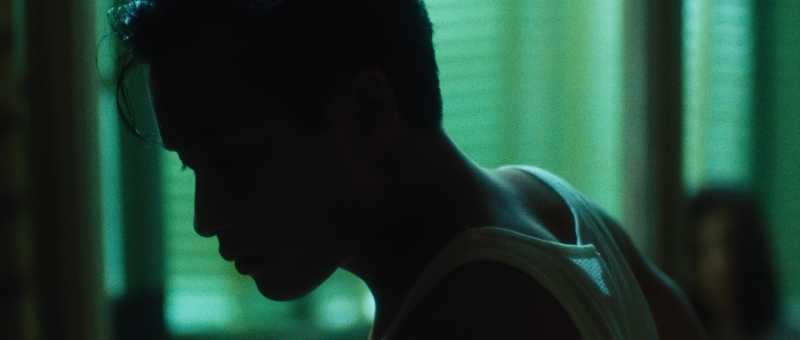
Days of Being Wild (阿飛正傳, Wong Kar Wai, 1990)

“I used to think a minute could pass so quickly, but actually it can take forever” laments a lovelorn heroine in Wong Kar Wai’s melancholy ‘60s romance Days of Being Wild (阿飛正傳), somehow neatly encapsulating the director’s entire philosophy. The heroes of Days are obsessed with minutes, seconds, hours, years, the barely perceptible passing of time. Clocks pervade the frame, their violent ticking the most prominent element of Wong’s strangely barren soundscape, a constant reminder of a life slowly etched away ceaselessly beaten towards an inevitable conclusion. 

The hero, Yuddy (Leslie Cheung Kwok-wing), describes himself rather poetically as a bird without legs cursed to fly and fly meeting the ground only once at the moment of his death, an overly sentimental metaphor for which he is later taken to task by the equally rootless Tide (Andy Lau Tak-wah), a former policeman turned sailor who wonders if it’s just a line he uses to seduce lonely women with boyish sadness. We might wonder the same thing as he picks up the lonely Li-zhen (Maggie Cheung Man-yuk), a Macao émigré apparently unable to sleep, by telling her she’ll see him in her dreams before forcing her to look at his watch for a whole minute as if that after 3pm on April 16, 1960 were now a sacred date forever etched in time. She thought that sounded “so sweet”, but as he later tells her Yuddy is not the marrying kind and she too is trapped inside that moment, often framed behind bars or the tiny window of her box office booth before the door is cruelly slammed on her romantic delusion seemingly by automatic operation of the clock. 

In a twist of fate, Li-zhen meets Tide during his previous life as a policeman when she makes a fairly embarrassing attempt to get back together with Yuddy after he reacts coolly to her suggestion of marriage only to discover him with his new love, cabaret dancer Mimi (Carina Lau Kar-ling). “I’m not gonna be as stupid as her” Mimi insists flouncing out of his apartment only to find herself just that, making a desperate visit to Li-zhen at the stadium after the affair has ended to tell her to her back off only for the rather unsympathetic Li-zhen to point out they’ve both been deceived, “he treats all women the same”. 

A perpetual lothario Yuddy moves from woman to woman without touching the ground, but his rootlessness is seemingly born of maternal disconnection in his ambivalent relationship with the Hong Kong sex worker who raised him but refuses to disclose the identity of his Filipina birth mother supposedly a noble woman who for unknown reasons paid a foreigner US$50 a month to raise her son. Like the other women in Yuddy’s life, Rebecca (Rebecca Pan Di-hua) does her best to tie him down, apparently unwilling to reveal his origins in fear he’d leave her, but also mirrors him in her constant quest for affection bought from a series of younger men and apparently one older who threatens their relationship in inviting her to a new life overseas. Ironically enough, she soon tells her son to “fly, fly as far as you can” all the way to the Philippines, though Yuddy already suspects he’s been a flightless bird all along, dead from the very beginning.

Yuddy’s search for closure and identity ends disappointment and a painful lack of resolution, as does the nascent romance between the policeman and the box office girl, her mistimed phone calls amounting to a literal missed connection while Tide ponders lost love from foreign seas, and Mimi tragically chases the ghost of Yuddy all the way to Manila pined for by Yuddy’s self-conscious friend Zeb (Jacky Cheung Hok-yau) left behind alone. Trapped in the timeless present, they are each denied either past or future, lost in a lovelorn dream of perpetual longing. As if to ram his point home, Wong shows us another clock and then another man we’ve never seen before (Tony Leung Chiu-wai) as he gets ready for an evening out, crouching slightly in what appears to be a shallow, sub-divided garret making it clear that these stories have no endings, flying and flying until they hit ground and seemingly born in the air. A woozy, zeitgeisty journey through mid-century loneliness, Wong’s second feature leaves its melancholy heroes consumed by nostalgia for an ill-imagined future unable to escape the cruel tyranny of an interminable present. 


Transfer: Among the more faithful of the recent 4K restorations, Days of Being Wild nevertheless shifts to a slightly greener hue in keeping with the house style adopted for the series, adding to Wong’s sense of melancholy nostalgia and perhaps in keeping with Doyle’s original artistic vision.


Days of Being Wild is currently available to stream in the UK via BFI Player in its newly restored edition as part of the World Of Wong Kar Wai season.

Original trailer (unrestored, English subtitles)

Moon Warriors (戰神傳說, Sammo Hung, 1992)

“In fact, some stories are true. Especially the heartbreaking ones” according to a melancholy fisherman in Sammo Hung’s tragic wuxia romance, Moon Warriors (戰神傳說). Arriving in the middle of a fantasy martial arts boom, Moon Warriors boasts some of the biggest stars of the day in a beautifully composed tale of intrigue and derring-do as well as featuring an A-list creative team with such high profile talent as Mabel Cheung, Alex Law, Ching Siu-Tung, and Corey Yuen also involved in the production. 

Somewhere in feudal China, 13th Prince Shih-san (Kenny Bee) is on the run after being usurped by his evil brother, the predictably named 14th Prince (Kelvin Wong Siu) who burnt down his castle and has been following him throughout the land razing villages wherever he goes. Accompanied by trusty bodyguard Merlin (Maggie Cheung Man-Yuk) who is silently in love with him, Shih-san is desperate to get in touch with the Lord of Langling (Chang Yu), also the father of his betrothed princess Moony (Anita Mui Yim-Fong), in the hope of uniting their forces to retake the country together. Meanwhile, goodhearted yet eccentric fisherman Philip (Andy Lau Tak-Wah) is doing a spot of hunting in a bamboo grove during which he notices Shih-san and the others wading into a trap and leaps to the rescue, helping to despatch the black-clad assassins. As Shih-san is badly injured, he takes them back to his cheerfully idyllic village, serves them the local delicacy of spicy shark fin soup, and generally befriends them before 14th Prince’s goons track them all down again at which point he takes them to his secret hideout which turns out to be an ancient temple dedicated to Shih-san’s emperor ancestors. 

We find out just how evil 14th Prince is when he gets his minions to kill all of Moony’s ladies-in-waiting and dress up in their clothes to mount a sneak attack on the Langling estate while holding on to the pretty kites Moony was flying before the gang arrived. Though petulantly flying kites seems like quite a childish activity for a princess about to be married off, Moony more than holds her own in the fight even if finding it difficult to deal with having killed someone for the first time. Sent to protect her, Philip is less than sympathetic, but after a few arguments, a near death experience, and some magic glitter, the pair begin to fall in love, which is a problem because Moony is betrothed to Shih-san. 

What develops is a complicated love square in which Merlin pines for Shih-san who seems more interested in Philip, while Philip repeatedly tries to leave the group because of his conflicted loyalties and a feeling of inferiority as a peasant suddenly mixed up in imperial intrigue and forbidden romance. Moony tries to give him her half of a precious jade talisman which plays beautiful music, but her melancholy suggestion that it will sound better with his flute than with the other half which is held by Shih-san flies right over his head. Shih-san, meanwhile, who was spying on them talking, suddenly decides to give him his half too, leaving Philip holding the whole thing. Merlin, as it turns out, has a series of interior conflicts of her own that leave her resentful of just about everyone except Shih-san. 

Eventually, however, nowhere is safe from the destructive effects of political instability and Philip’s fishing village is soon a target for the vicious 14th Prince, ensuring he enters the fight with the help of his improbable best friend, a killer whale named “Sea-Wayne”. Before the romantic dilemmas can be resolved, the courtly intrigue collapses in on itself, fostering an accidental revolution in the literal implosion of an old order, suddenly becoming dust as in some long forgotten prophecy. In a strange moment of flirtatious smalltalk, Philip had remarked that legend has it the flowers in these fields are only so beautiful because they grow on top of bodies buried far below, something he later discovers to be more than just a fanciful story. 

There might be something in the tragic tale of two branches of elites destroying each other in order to take control of a disputed territory while the ordinary man is left behind alone to reflect on the fall of empires, but perhaps that’s a reading too far in a melancholy wuxia of 1992 and its unexpectedly gloomy ending in which true feelings are spoken only when all hope is lost. Nevertheless, with all of its high octane fight scenes, painful stories of romance frustrated by the oppressions of feudalism, and surreal killer whale action, Moon Warriors is a strangely poetic affair as doomed love meets its end in political strife.


Trailer (no subtitles)