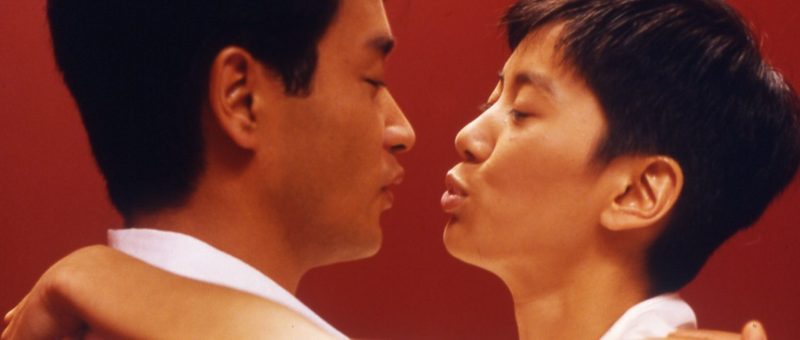
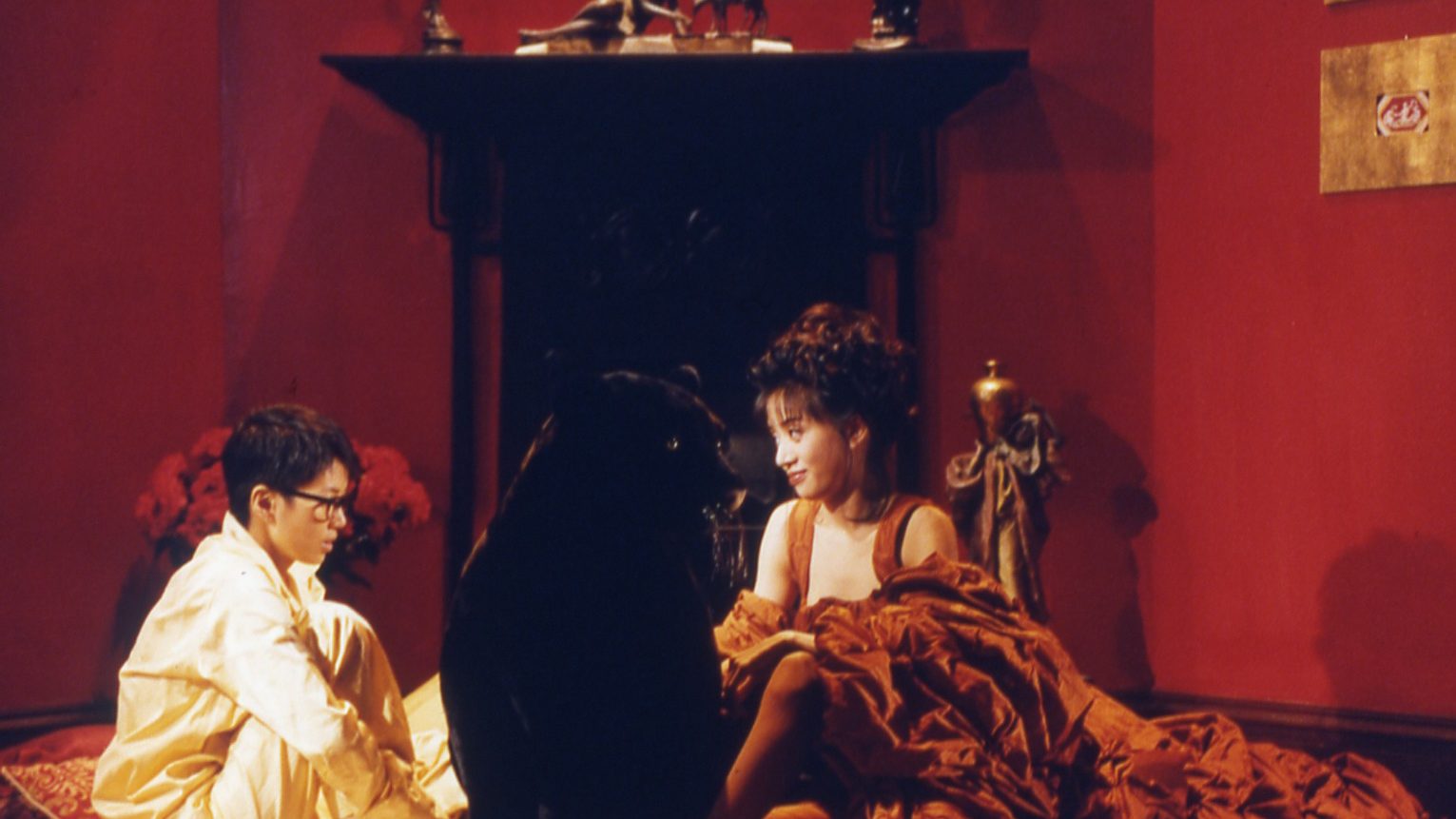
Who’s the Woman, Who’s the Man? (金枝玉葉 2, Peter Chan, 1996)

“I don’t care if you’re a man or a woman, all I know is that I love you,” the hero had finally accepted after the heroine’s madcap dash across town in the closing scenes of Peter Chan’s 1994 rom-com, He’s a Woman, She’s a Man. But as it turns out, it isn’t quite that simple. Inverting the structure of the first film, sequel Who’s the Man, Who’s the Woman? finds the heroine romantically confused as her “masculine” persona increasingly interferes in her relationship with the still conflicted Sam (Leslie Cheung).

It certainly hasn’t been plain sailing for anyone as Wing (Anita Yuen) agrees to move in to Sam’s luxury flat but refuses to live downstairs as Rose (Carina Lau) had done, instead insisting on sharing his life and his bed in their entirety. For his part, Sam’s reluctance to share his space is reflective of his fears of intimacy while he resents Wing’s immediate attempts to install herself by remodelling the apartment to her own taste. Meanwhile, the old problem has resurfaced in that now he’s got Wing he’s not all that interested in her and hasn’t written any songs in months. In an attempt to manage her interference in his life, Sam suggests resurrecting Wing’s pop career as a male idol but proves a victim of his own success as she quickly begins earning much more money than him and gains the upper hand in the relationship. 

Wing’s increasing masculinity leaves Sam feeling somewhat emasculated while forced into the “feminine” role previously occupied by Rose. Suddenly successful, Wing is offering to pay large sums of money to help Sam fulfil his dreams which only deepens his sense of shame in his inability to earn money for himself. Wing had insisted on living together in the main apartment, but now that she’s so busy suggests moving into Rose’s old flat downstairs so that they can, after all, have their own space. Sam had wanted it that way before, but now that it’s Wing who suggests it, he’s romantically anxious while simultaneously conflicted because he cannot acknowledge their relationship publicly as he is still uncomfortable with people assuming he is “gay”.

All of which is doubly confusing for Wing who is under increasing strain trying to straddle a gender binary. Not only is she trying to deal with Sam’s contradictory behaviour and resentment of his emasculation, but in growing into her masculine role finds herself questioning her sexuality in experiencing unexpected attraction towards other women and in particular the captivating Fan Fan (Anita Mui), a mysterious former pop star who has moved into the downstairs flat after spending many years abroad. Just as Sam had in the previous film, Wing struggles to accept her desires unable to reconcile falling in love with Fan Fan with her love for Sam while Fan Fan in turn falls for her mainly in her femininity in claiming that she has been looking for something kind and innocent that she no longer believed existed in the world. 

“Love can’t be explained,” Sam admits when talking to his decorators, a gay couple who ironically tell him how much it means to them to see a same-sex couple in the public eye, though Sam still refuses to acknowledge the relationship because he doesn’t want to be seen as “gay” and Wing is in any case a woman. Mirroring Sam’s relationship with the openly gay Auntie (Eric Tsang), Fan Fan’s assistant O (Theresa Lee) is a lesbian who is relentlessly courted by Fish (Jordan Chan) despite her constant rejections of him. He tries to present himself as female by shaving his legs and later crossdressing in order to win her heart, only to end up reaffirming O’s avowed homosexuality. For Wing, however, she has only a dilemma in being faced with a choice between her love for Fan Fan and that for Sam which seems as if it may have run its course just Sam’s love for Rose once did. 

Sam only really begins to understand his himself after a more mature discussion with Rose regarding the realities of their relationship, while Fan Fan effectively plays a similar role in sacrificing her own desire believing that Wing belongs with Sam but taking the new hope their love has given her back out into the world. Neatly inverting the first film’s conclusion, it’s Sam who has to make an active choice about what it is he wants though the ironic ending may suggest he doesn’t have much control over his destination either even if discovering he already has what he was looking for.
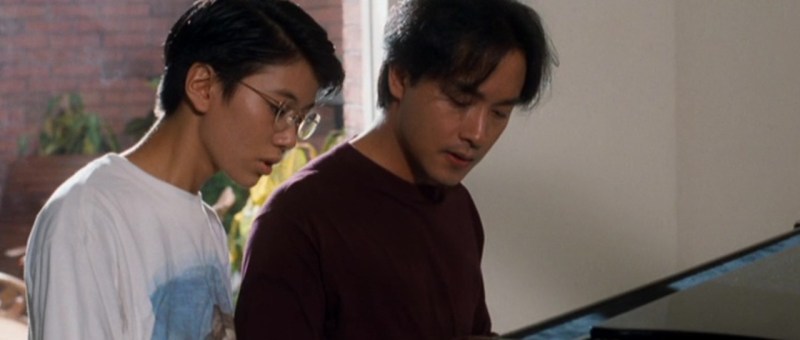
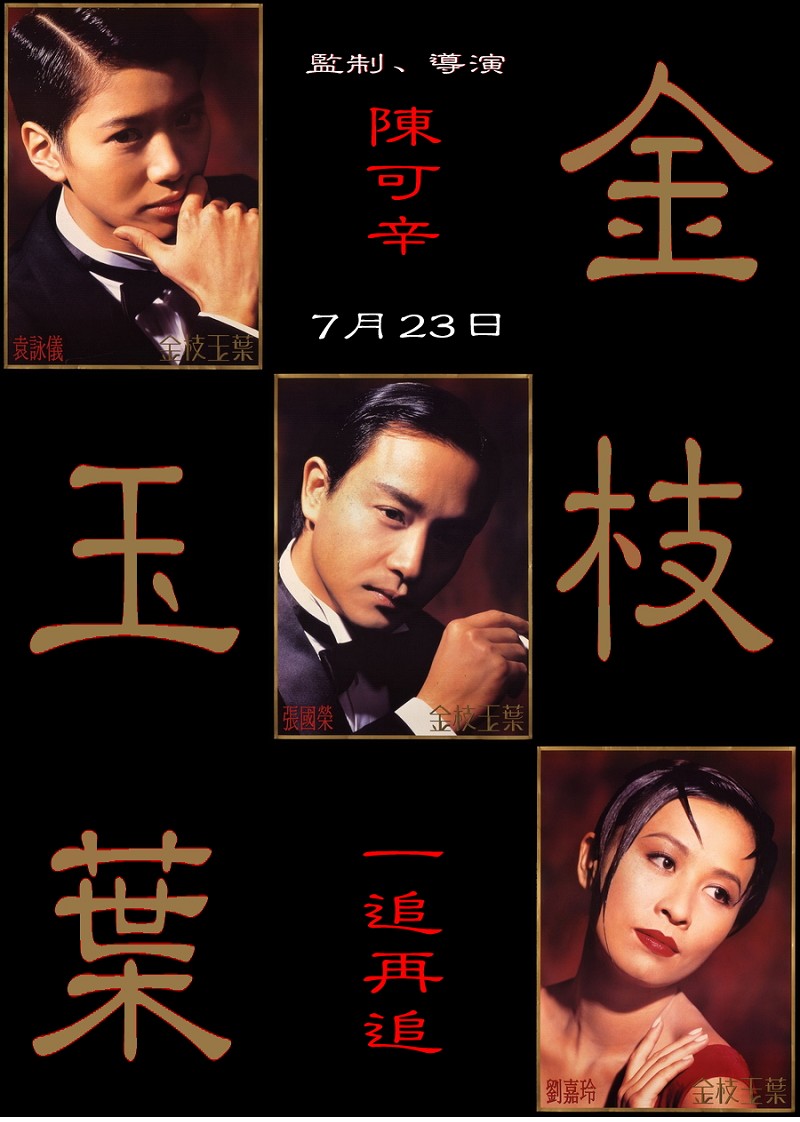

He’s a Woman, She’s a Man (金枝玉葉, Peter Chan, 1994)

A frustrated composer in a moribund relationship with his former muse experiences a moment of existential confusion on feeling an unexpected attraction to his latest prospect whom he assumes to be male in Peter Chan’s hilarious meta comedy, He’s a Woman She’s a Man (金枝玉葉). Broadly progressive in its views of gender and sexuality, the film also takes aim at a growing obsession with celebrity in an increasingly consumerist culture. 

The heroine, Wing (Anita Yuen), is a case in point. She’s completely obsessed with the singer May Rose (Carina Lau) to the point that she almost lives her life vicariously through her. Rose’s successes are her successes, while she earns a few extra pennies peddling celebrity tat like Aaron Kwok’s used tissues. Rose meanwhile is riding high professionally by winning yet another reward, but her relationship with songwriter/manager Sam (Leslie Cheung) has clearly run its course. He’s become bored with the “celebrity” lifestyle and hasn’t written anything new in some time while unwilling to admit that he’s fallen out of love with Rose, refusing to take on new proteges because of his habit of falling in love with them.

That’s one reason he finally agrees to take on a male star, assuming there will be no danger of romantic conflict and intending to kick back against celebrity culture if ironically by creating an “everyman” sensation. But unbeknownst to him, Wing has had a male makeover and decided to enter the auditions in the hope of meeting her idols. Unexpectedly picked up for a recording contract during a spat between Rose and Sam, Wing finds herself having to keep up the act but is conflicted on fearing her presence is only deepening the rift between the “perfect couple” whose wedding it is her life goal to witness. 

Even before her makeover, Wing makes repeated references to her atypical gender presentation in lamenting her flat chest, especially in contrast with a rival celebrity hunter she nicknames “big boobs”. She takes lessons in performative masculinity from her roommate and best friend since primary school Yuri (Jordan Chan), who appears to have no romantic interest in her, and stuffs glow sticks down her trousers to make herself feel more “complete”. Yet despite all that, she is always forced to deny her seeming femininity with several people directly asking her if she is “gay” which is a more complicated question than it seems given that she’s a straight woman but currently living as a man. To find out for sure, Rose tries to seduce her in an attempt which is admittedly predatory and ends in a chase around the bed with Wing desperately trying to avoid being accidentally “outed” in an amorous moment. 

Nevertheless, there is a degree of romantic attraction in Wing’s obsession with Rose which is also a reflection of her internalised sense of shame in her atypical femininity as seen in her wide-eyed observation of Rose’s shadow dance as she slips into something more comfortable along with her admission that she always wanted to know what it felt like to touch a breast (because she feels she has none of her own). Even so, she begins to fall for Sam who is slowly being driven out of his mind with romantic confusion in being unable to reconcile his attraction to Wing with his heterosexuality. One of Wing’s closest associates whom he refers to as “Auntie” (Eric Tsang) is an openly gay man who asks him the all important question of whether of what’s really bothering him isn’t Wing’s ambiguous sexuality but his own. The question takes on a meta dimension in the knowledge that Cheung was himself bisexual but at that point not openly. Much as Sam explains, he might personally not have a problem with it but some people in the industry are very “sensitive about this kind of thing”.

Sam doesn’t know that Wing is “really” a woman, which might neatly explain his inexplicable attraction to her, but cannot begin to reconcile himself until he accepts that it “doesn’t matter what you are” because the fact remains that he loves her. Wing might make her final dash in more stereotypically female attire, but she does so in a voluminous white dress which, aside from its matrimonial connotations, further emphasises her lack of conventional femininity in her literal inability to manage it as she attempts to run while trying not to trip over herself. “Too much reality can really get up your nose,” Rose had complained in trying to keep her fantasy of a fairytale romance alive while internally accepting she can no longer be the “ordinary” girl Sam is looking for in a world of celebrity miasma and consumerist aspiration, finally reaching her own moment of self-acceptance just as Wing decides to shoot her shot right into Sam’s tender heart.

Trailer

Love After Love (第一炉香, Ann Hui, 2020)

A naive young woman’s path from besotted teen to tortured yet masterful courtesan amid the colonial realities of pre-war Hong Kong is elegantly charted in Ann Hui’s stately adaptation of the novel by Eileen Chang, Love After Love (第一炉香, Dì yī lú xiāng). A slow-burn romantic tragedy, Hui’s floating drama at once reflects a sense of hopeless rootlessness and the ruinous intensity of a one-sided love but also the transgressive possibilities for freedom and independence in the rejection of traditional patriarchal social codes. 

Displaced from her native Shanghai by ongoing political tension, Weilong (Ma Sichun), the daughter of a once noble house, finds herself impoverished and left with the choice either of accompanying her family in returning to the Mainland where she will be set back a year in completing her studies or remaining behind alone in Hong Kong to graduate high school. Unable to support herself, she decides to turn to an estranged aunt she barely knows, throwing herself on her mercy and asking to be taken in even while knowing of the animosity which exists between her father and his sister. That would be because her aunt, Madame Liang (Faye Yu), turned down all the suitors her family found for her and chose instead to become the mistress of a wealthy man. He now having died, Madame Liang has inherited a sizeable fortune including a European-style mansion where she hosts society parties and enjoys a hedonistic lifestyle which has earned her a reputation as a seducer of young men. 

On her introduction to this world, one of the maids uncharitably describes Weilong’s entrance as like that of a new girl in a brothel and there is indeed something of that in her new role in the household, dangled like a bauble in front of Madame Liang’s collection of wealthy male associates, though Madame Liang apparently intends her only as decoration rather than gift. Tensions come to the fore as Weilong develops a fondness for a dashing young man, George (Edward Peng Yu-Yan), the mixed ethnicity son of coterie member Sir Cheng (Paul Chun), previously eyed by Madame Liang who understands much better than her naive niece that men like George are dangerous in their destabilising faithlessness. For Madame Liang, so perfectly in control, George may be manageable but as she later tells Weilong, unwisely goading her that her life of comfort is a failure because she will never find love, the only danger that exists to her is in unequal affection a prophecy that will in a sense come to pass in Weilong’s single-minded obsession to possess the heart of George. 

Weilong may describe Madame Liang’s lifestyle as ridiculous, yet as she points out her transgressive sexuality is also currency that permits the opulence and luxury in which she lives. Seduced by this world as much as by George, Weilong disapproves but admits that she is no longer the naive girl who arrived even if she also dislikes this new version of herself, considering a return to Shanghai and a possible reset to become someone else again presumably more in line with contemporary notions of social proprietary. She can’t deny that Madame Liang’s rejection of the patriarchal institution of marriage has granted her an unusual degree of independence otherwise unavailable in the contemporary society. She herself faces a choice in approaching the end of her high school days, either progressing to higher education, seeking work, or getting married naively insisting to Madame Liang that she will earn money in order to support George and his lavish lifestyle even as she advises her to enact a plot of romance as revenge. 

While Weilong’s discarded suitor benefits financially in becoming Madame Liang’s lover, she sponsoring his study abroad, Weilong again attempts to reverse traditional gender roles by trapping George as a kind of trophy husband. He had repeatedly told her he wasn’t the marrying kind, in part because of his insatiable sexual desire and perpetual loneliness in having lost his mother young, yet also because of his father’s perfectly acceptable yet socially destructive romantic history which includes several concubines and illegitimate children meaning there will be little in the way of inheritance. If he married, he’d need to marry well but Weilong’s family is impoverished and she has only her connection with Madame Liang to leverage. As she’d warned her it would be, the relationship between them will always be unhappy, Weilong winning a symbolic victory in coercing George towards marriage but unable to accept the limits of her control while he, paradoxically, is emotionally honest only with her but she can only see this as a slight as if he is so indifferent towards her that she is not worth lying to. 

As Weilong gradually morphs into her aunt, George’s sexually liberated sister Kitty lands on a different path later becoming a nun. The three women attempt to muster all of the advantages afforded to them under an oppressive patriarchal system but none perhaps find true happiness. It might be tempting to read a subversive comment on the nature of colonialism in the various frustrated love affairs and persistent sense of rootlessness, Hui’s drama is at heart a romantic tragedy in which two people become locked in a torturous relationship because they cannot understand each other. Their very idea of love is different. Doyle’s floating camera perfectly captures the fleeting opulence of this unreal society itself lingering on an abyss as the lovers continue to dance around each other looking perhaps for the love after love in immaterial comfort. 


Trailer (English subtitles)

Elegies (詩, Ann Hui, 2023)

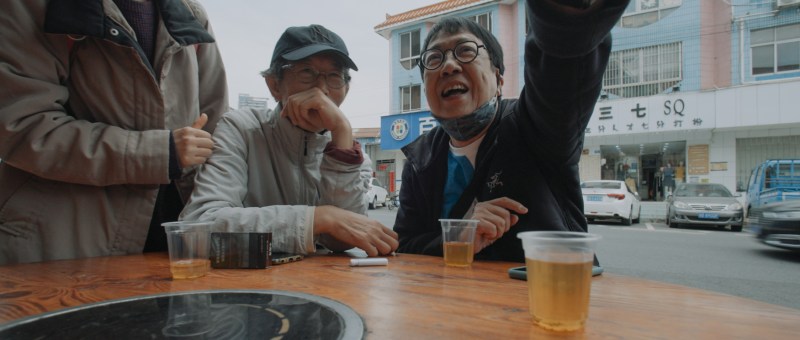
Many of the poets featured in Ann Hui’s documentary Elegies (詩) are keen to emphasise that poetry is rarely about what it says it’s about and often as much about what doesn’t say. The documentary is much the same, making a point about the power of poetry in an age resistance, an elegy for the disappearing Hong Kong the poets lament two of them no longer living in the city but somehow still defined by it. 

The tables reversed by one of her subjects, Hui explains that the documentary is a labour of love. She admits that it’s not a mainstream movie and that no one would fund it, but she decided to do it anyway despite or perhaps because of the ongoing coronavirus pandemic which is itself makes frequent appearances in the film. In any case, Hui splits her time mainly between veteran poet Huang Canran who now lives in Mainland China and his younger disciple Liu Wai Tong who lives in Taiwan. 

As Canran says, the poems prove his love for Hong Kong but he also feels as if it was Hong Kong that forced him to leave. Joking that he’s an economic exile, he explains that he mainly moved after being forced out by the rapid cost of living in the city. He cheerfully explains that being a poet means embracing destitution and is embarrassed about the other kinds of writing such as penning a newspaper column that he did solely for the money. Canran’s main source of income comes from translation though his personal motto is to work hard to not earn money while practicing his art. His daughter doesn’t really get it and is confused about why Ann Hui wants to make a documentary about her father, though as Canran admits prophets are rarely appreciated in their hometowns. The Hong Kong he writes about is another place, perhaps somewhere that never really existed or any rate exists no longer. 

A photographer and lecturer in poetry, Liu Wai Tong heads in a more philosophical direction while also living as an exile in Taipei, never quite explaining the reasons he left Hong Kong though perhaps because it would awkward to do so directly. He quotes Brecht and asks what the point of poetry is in an age of protest, how their voices can resonate among a thousand other horrors crying out for speech. Yet as other poets had said, poems about nature are not always about nature just as political poems are not always about politics. By saying one thing and not another they can make a message felt but then there’s nothing really wrong with talking about beauty amid myriad horrors. 

Another poet writes about the everyday, causing others to ask if you can really call it a poem if it’s just about the unexpected appearance of a cockroach. The words should be simple, they insist, their meaning at least clear even if the message is ambiguous. Obscurity for obscurity’s sake is always doomed to failure. Many of the poets write from their direct experience detailing their ordinary lives in the city while others rejoice in wordplay or metaphor, but Hong Kong colours all of their work. Echoing the other poets, Hui too admits that it’s poetry that sustained her in her darkest hours. The poems that she learned as a child gave her strength when she needed it. A woman who has been writing to a friend in prison is moved to tears on recalling his reaction to a poem she had sent him, feeling that poem if can touch someone years after it was written than it must have intrinsic meaning.

Thus poetry in itself becomes an act of resistance if solely in defiance and the determination to endure even the most difficult circumstances from the anxiety of a global pandemic to the spectre of political unrest and lingering oppression. At once an elegy for the Hong Kong the poets speak of and its many rueful exiles, the film makes a passionate defence of poetry as a lifeline thrown by one lonely soul to another across often turbulent seas and carrying with it a message most powerful in its silence. 


Elegies screened as part of this year’s San Diego Asian Film Festival.

Original trailer (English subtitles)

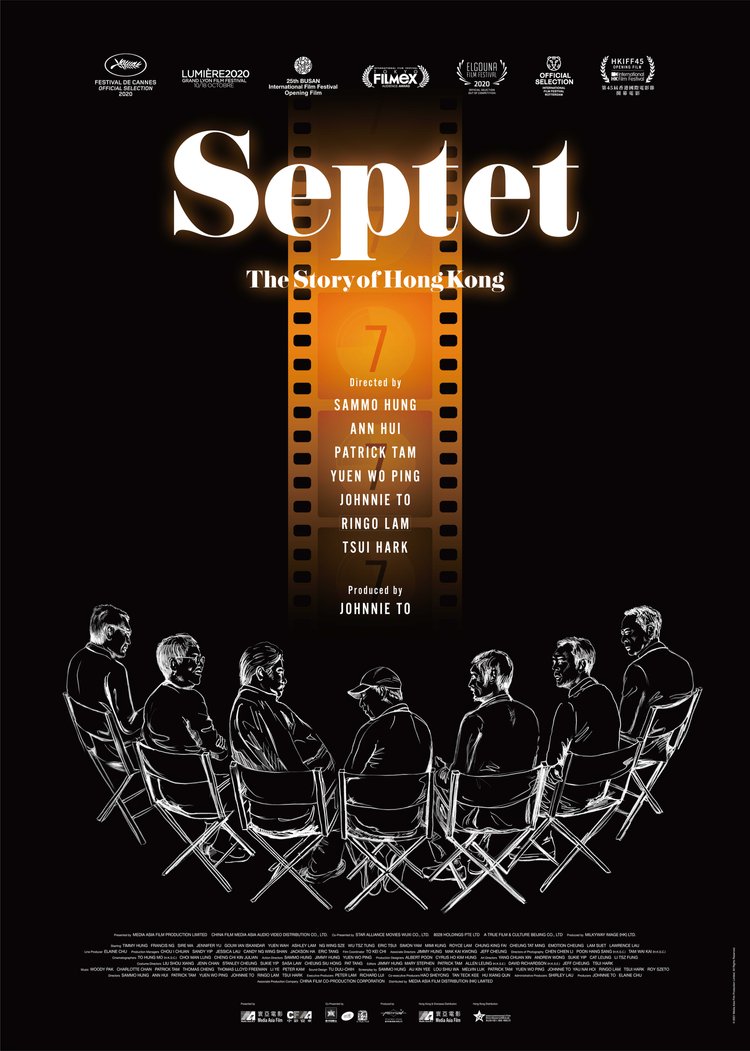
Septet: The Story of Hong Kong (七人樂隊, Sammo Hung, Ann Hui, Patrick Tam, Yuen Wo Ping, Johnnie To, the late Ringo Lam, Tsui Hark, 2022)

Seven of Hong Kong’s most prominent directors come together for a collection of personal tales of Hong Kong past and present in the seven-part anthology film, Septet: The Story of Hong Kong (七人樂隊). Produced by Johnnie To’s Milky Way, the film was first announced several years ago and originally titled Eight & a Half though director John Woo sadly had to leave the project due to his wife’s ill health which explains why there is no short set in the 1970s.

Each of the segments reflects the director’s personal nostalgia for a particular moment in time and there is certainly a divide between the 1950s and 60s sequences directed by Sammo Hung and Ann Hui respectively and those of the 80s and 90s which are imbued with a sense of Handover anxiety along with the closing meditation on the various ways the city has or has not changed. In any case, Sammo Hung’s opener Exercise is a slice of personal nostalgia which looks back to the heyday of Hong Kong kung fu as the young Sammo learns to buckle down and train with discipline under the guidance of his authoritarian teacher played by his own son, Timmy Hung. Similarly education-themed, Hui’s Headmaster echoes the documentary aesthetic seen in the later stages of Our Time Will Come in her naturalistic capture of a primary school reunion taking place in 2001 before flashing back to the early ‘60s as the headmaster and the children reminisce about a kind and idealistic young teacher who sadly passed away at 39 from a longterm illness exacerbated by misapplied traditional medicine. Essentially a tale of old-fashioned reserve in the unrealised desires of the headmaster and the teacher who elected not to marry because of her illness in the knowledge she would die young, Hui’s gentle melodrama harks back to a subtler age. 

Patrick Tam’s 80s segment, Tender is the Night, perhaps does the opposite in its incredibly theatrical tale of love thwarted by political realities as a lovelorn middle-aged man looks back on the failure of his first, and last, love for the teenage girlfriend who like so many of that time emigrated with her parents to escape Handover anxiety. Rich in period detail and imbued with the overwhelming quality of adolescent emotion, Tam’s maximalist romance is a tale of love in the age of excess but also of middle-aged nostalgia and personal myth making which nevertheless positions the looming Handover as a point of youthful transition. 

The 1997 sequence itself, Homecoming directed by Yuen Wo-ping, is in someways subversive in again presenting a young woman who firmly believes her future lies abroad rather than in post-Handover Hong Kong and placing her at playful odds with her traditionalist grandfather, a former martial arts champion who spends his days watching old Wong Fei-Hung movies. The eventual resolution that the girl, who insists on going by her Western name Samantha, returns to Hong Kong a few years later to care for the grandfather who has aged quite rapidly undercuts the sense of anxiety, yet there is something in the cultural and generational conflict that exists between them eased by mutual exchange as she teaches him basic English and he teaches her kungfu that hints less that the traditional is better than the modern than that there’s room for both hamburgers and rice rolls. 

Moving into the 2000s, Johnnie To’s Bonanza then takes aim at the increasingly consumerist mindset of the contemporary society in picking up a theme from Life Without Principle as three young Hong Konger’s become obsessed with getting rich quick through financial investment beginning with the dot-com bubble and shifting into property profiteering during the SARS epidemic. The trio fail every time before hitting the jackpot with some shares they bought by mistake during the 2008 financial crisis suggesting that it all just luck after all. One of the guys comically switches business opportunities in line with each of the crises/opportunities, firstly getting into mobile phones, then peddling healthcare products, and finally investing in self-storage in an echo of his society’s scrappy entrepreneurial spirit. 

The final film from Ringo Lam who completed his segment Astray shortly before passing away 2018 continues the theme in meditating on the modern city as its hero is literally killed by a sense of cultural dislocation after getting lost in a very changed Hong Kong having emigrated to the UK and returned with his family for a New Year holiday. While ironically remembering his own father complaining that times had changed, he finds himself bewildered by the absence of familiar landmarks and adrift in his home city. He dreams another life for himself in the countryside in which his son decides to emigrate to America while his wife would prefer he find a job in Hong Kong but his final message to him that it’s not difficult to live happily perhaps frees him of the sense of nostalgia which has led to his father’s death.

The best and final episode, however, Tsui Hark’s Conversation is set at no particular time and my in fact take place in the future as a mental patient, who might actually be a doctor pretending to be a mental patient, suddenly gives his name as Ann Hui followed by Maggie Cheung and a string of Hong Kong directors from Ringo Lan to Jonnie To and John Woo and challenges the doctor, who might be a mental patient, as he struggles to keep up with him. Tsui and Hui make reflective cameo’s at the segment’s conclusion perhaps hinting that this has been a deep conversation with the history not only of Hong Kong but its cinema through the eyes of those who helped to make it what it is.


Septet: The Story of Hong Kong screens in Chicago on Nov.6 as part of the 15th season of Asian Pop-Up Cinema.

Original trailer (English subtitles)

July Rhapsody (男人四十, Ann Hui, 2002)

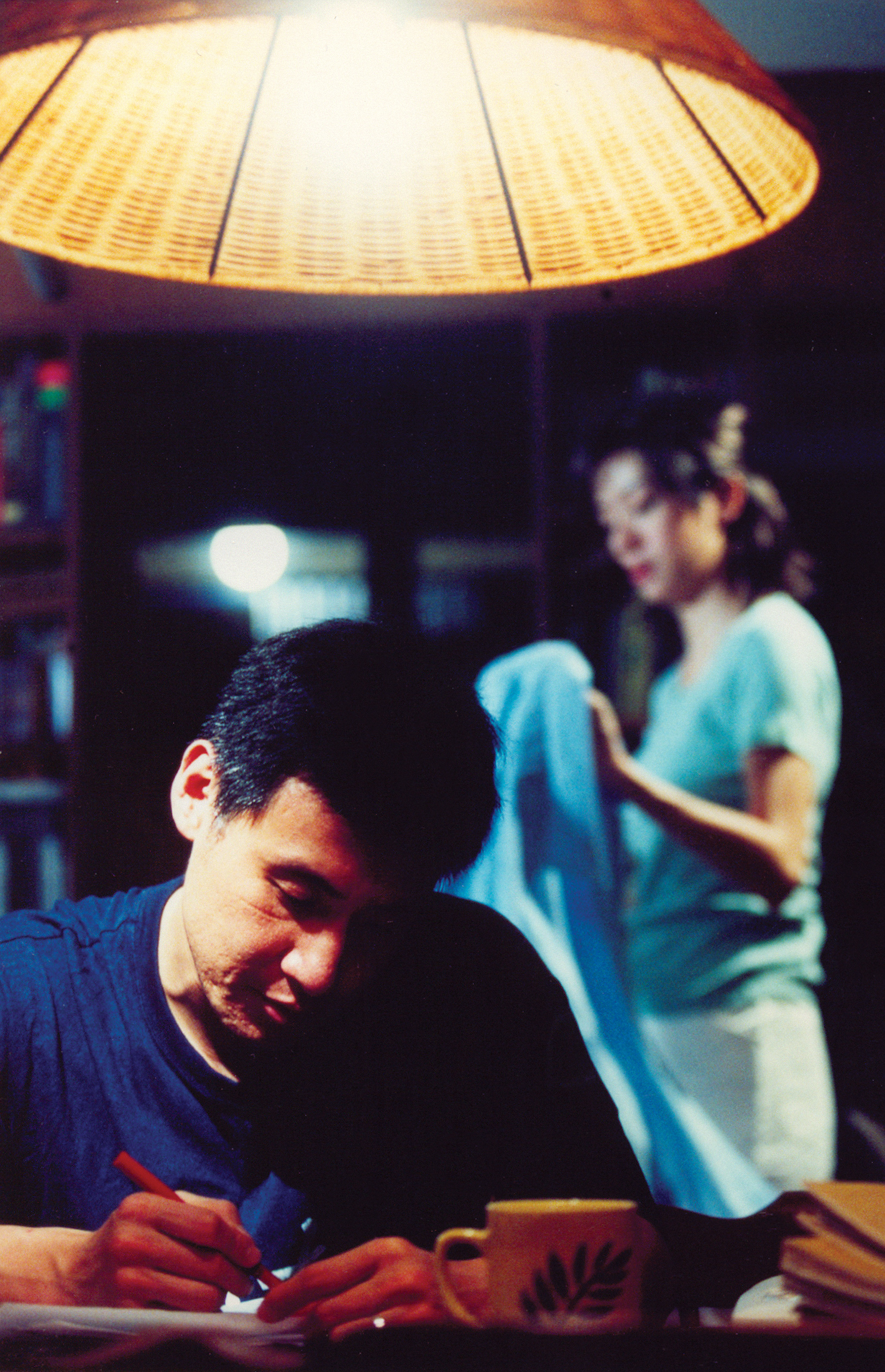
“Not every ending fulfils your expectations” a weary mother advises her son sharing long buried family secrets which will at least set them free if not perhaps happily. Scripted by Ivy Ho, Ann Hui’s July Rhapsody (男人四十) is as the Chinese title “a man at 40” implies a film about mid-life crises and quiet desperation as a middle-aged school teacher begins to resent the loss of his youth while transgressively drawn to a free-spirited student. 

Lam (Jacky Cheung Hok-Yau) describes himself as “stiff”, a “boring” man who teaches Chinese literature to disinterested students while privately consumed by a sense of inferiority observing with envy the yachts that litter the horizon on a trip to the beach with his son. At a reunion dinner he gets up with irritation when one of his former classmates now a wealthy financier tries to pay the bill for everyone insisting on paying his own way while perhaps exposing the sense of belittlement he feels around his more successful friends. His wife Ching (Anita Mui Yim-Fong) questions his decision pointing out that even if he could afford to pay his bit perhaps his friend Yue (Eric Kot Man-Fai) couldn’t and would feel equally insulted should Lam simply agree to pay his share too. To add insult to injury, one of his friends also wants to hire him to tutor his young son in classical Chinese poetry which leaves him feeling somewhat humiliated but on the other hand not wanting to turn the money down. 

These feelings of dissatisfaction with the way his life has turned out only intensify as he reaches the age of 40 and begins to feel his options narrowing wondering if this is really all there is. He and Ching recall a melancholy poem they learnt at school in which a scholar on a boat laments “the limitations of life” only for the poem to be ironically cut short when the couple’s younger son, Stone, comes to fetch his mum because the soup is boiling dry. Even without knowledge of the final revelations told in a two part story divided between a mother and a father to a son, we can gather that Lam married extremely young and became a father soon after. He studied at night school and became a teacher as a steady job to provide for his family and perhaps to a degree resents them for limiting his choices. His classmates, aside from Yue, all went on to find more lucrative careers while he lives in a small two bed flat snapping at his wife that he’s unlikely to find the money to buy a bigger one. 

When he irritably tells her a tube of glue they bought is “all dried up” it sounds like an insult and a way of describing their moribund relationship. Beginning to bond with free-spirited high school girl Wu (Karena Lam Ka-Yan), Lam initiates intimacy with Ching but then turns away leaving her lonely and disappointed. She meanwhile explains to him that a figure from their past whom he seems to resent has become ill and is all alone. She would like to care for him but only with Lam’s consent which he gives but grudgingly. Talking to her son, Ching admits that she isn’t sure if she’s helping this man out of pity or because she simply wants to see him suffer given the effect he has had on her life. Similarly Lam later confesses to Wu that he may have befriended Yue because he was a poor student and unpopular. At his side, Lam was always going to look good bearing out his sense of insecurity in wanting to be seen as the best, idolising his Chinese literature teacher and desperate for his praise only to find himself ironically echoing his transgressions in allowing himself to be seduced by a student. 

Ironically enough, Lam tells his son that he became a teacher because he sat behind Ching in class and wanted to stand out front so that he could see her face. Wu represents for him that same innocent teenage romance, but also a sense of the path not taken in her free-spiritedness and confidence. Lam followed the conventional path, did everything right, and now he’s unhappy. Wu rejects education and goes straight into business, supported by a wealthy father, planning to go travelling in India to look for new stock for her shop. His sons too perhaps echo his conflicting desires, Ang the older studious and responsible, and the younger Stone (changing his name to the cooler “Rocky”) uninterested in his studies. The melancholy poem which frequently recurs hints at a parting while husband and wife each attempt to resolve something but are left only with uncertainty and perhaps tragically in opposing positions in considering the further course of their lives. 

This very literary drama is related in a series of stories, Lam’s told to his son first in person and then in a letter, followed by Ching’s and the constant stream of classical Chinese poetry that floods the screen guiding the couple towards the expanse of the Yangtze River. As Ching had said, not every ending fulfils your expectations because in the end life is not so neatly packaged. There may be no real accommodation with middle-aged disappointment but there may be new ways forward to be found in resolving the traumatic past.


July Rhapsody screens at Garden Cinema, London on 10th July as part of Focus Hong Kong’s Making Waves – Navigators of Hong Kong Cinema.

Original trailer (Traditional Chinese / English subtitles)

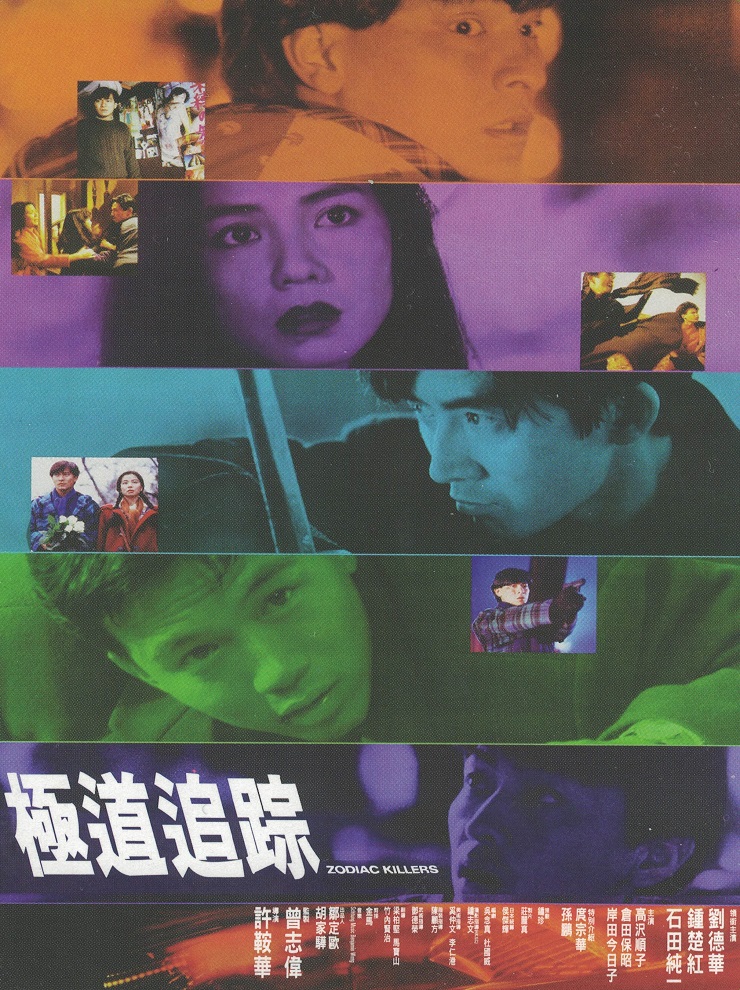
Zodiac Killers (極道追踪, Ann Hui, 1991)

Melancholy exiles seeking a better future find only futility in the dying days of the bubble economy in Ann Hui’s 1991 gangster drama, Zodiac Killers (極道追踪). The English title is admittedly misleading, there’s seemingly no connection to any kind of “zodiac” and no hint of conspiracy murder except those forced by the world’s enduring cruelty, though the Chinese is perhaps equally so meaning something like “yakuza pursuit” which is accurate but only to a point.

The hero, Ben (Andy Lau Tak-wah), has come to Tokyo from Hong Kong to study film but rarely goes to classes, preferring to learn how to make money instead. Making the most of the then affluent city, he works as a tour guide for Chinese tourists, dutifully delivering the men to the strip clubs of Shinjuku in the evenings for kickbacks and giving his boss a kicking when he tries to stiff him out of the agreed amount, heading to his second job in a kitchen immediately afterwards. “Man does not live to make money only, you must learn to spend it too”, he explains to his friend, Chang (Tou Chung-hua), persuading him to come hang out in a swanky bar they’ve been invited to by Ben’s shady relative Ming (Suen Pang) who is currently trying to make it as a yakuza by marrying the boss’ mama-san sister Yuriko (Junko Takazawa). It’s at the bar that Ben first sets eyes on Tieh-lan (Cherie Chung Chor-hung), a young woman from the Mainland in Tokyo studying at a Japanese language school and working as a hostess to make ends meet though as she points out “not every Chinese girl likes to work here”, instantly offending Ming but interestingly not Yuriko who seems sympathetic if embarrassed. 

All of them are in Tokyo because at that moment in time Japan looked like the future, though the window was rapidly closing. Tieh-lan is beginning to wonder why she came. Her friend Mei-mei (Tsang Wai-fai) has ended up in an unwanted sexual relationship with the man who sponsored their visas, Harada (Law Fei-yu), who nevertheless continually sexually harasses Tieh-lan. “Why did we come here?”, Tieh-lan asks Mei-mei, “for our future or for men? You can debase yourself at home, why have you come to Japan to do it?”. Ben later asks something similar of Ming who freely admits that he is prepared to sell his body for influence, “satisfying” Yuriko in order to buy influence with her brother and be admitted into his yakuza clan. The Tokyo they inhabit is one steeped in exile. They surround themselves with other Chinese migrants, be they from the Mainland, Hong Kong, or Taiwan, and congregate in the seedier parts of Shinjuku living on the fringes of society, working as bar hostesses, or gangsters, or in kitchens. For Ben whose bachelor pad student dorm is adorned with posters of Bruce Lee and Rocky, his purpose is more adventure and youthful longing for freedom than escape which is why he makes a point of ignoring his loving mother’s phone calls, but even he struggles to find what he needs on the unforgiving streets of a hostile city. 

That hostility is first brought home to him by a gang of ultranationalist bikers flying the imperial flag one of whom threatens him with a samurai sword (a moment which is tragically echoed in the film’s nihilistic conclusion). They are not, however, the only ones feeling displaced, as a heartbreaking cameo from golden age star Kyoko Kishida as an ageing geisha makes plain. Asano (Junichi Ishida), the melancholy yakuza with whom Tieh-lan has fallen in love much to Ben’s disappointment, declares himself “always a loner”, returning to Tokyo after years of exile in South America. An orphan, Asano laments that the beach he visited as child no longer exists and the city he’s come home to is changed beyond all recognition. Perhaps for that reason he falls for melancholy exile Tieh-lan as they bond in a shared sense of hopeless rootlessness. 

With the surprise introduction of Asano, Hui transitions into the moody noir with which the film opened, shots of Andy Lau plaintively looking back at the shore from a boat on the open sea intercut with Cherie Chung walking sadly through an empty, neon-lit city. Asano hoped for reconciliation but found only betrayal, there can be no home for exiles even if they return. The trio’s broken dreams find their final expression in the nihilistic violence of a non-existent yakuza war. Asano’s final gesture was one only of futility, no one wants to hear his inconvenient truth because the clans in question have already made “peace” and are intent on working together for future prosperity. “Your heart is too soft for this wicked world” Ming says of Ben but it’s a statement that rings true for them all, living life by movie logic in which good will eventually triumph. Ming sees no point in returning to Hong Kong because he’d be a nobody, tragically believing that being a gang boss’ brother-in-law is close enough to somebody in Shinjuku. Only Chang, who came to Japan to look for his missing sweetheart, manages to keep himself safe but largely, as we later find out during a rather bizarre sequence featuring a surprise outdoor porno shoot, because he does not yet know that his dream is futile too. A chronicle of a world in collapse, Zodiac Killers leaves its marginalised heroes with no place left to run, permanent exiles denied safe harbour sailing towards a promised horizon with no land in sight.


Original trailer (no subtitles)

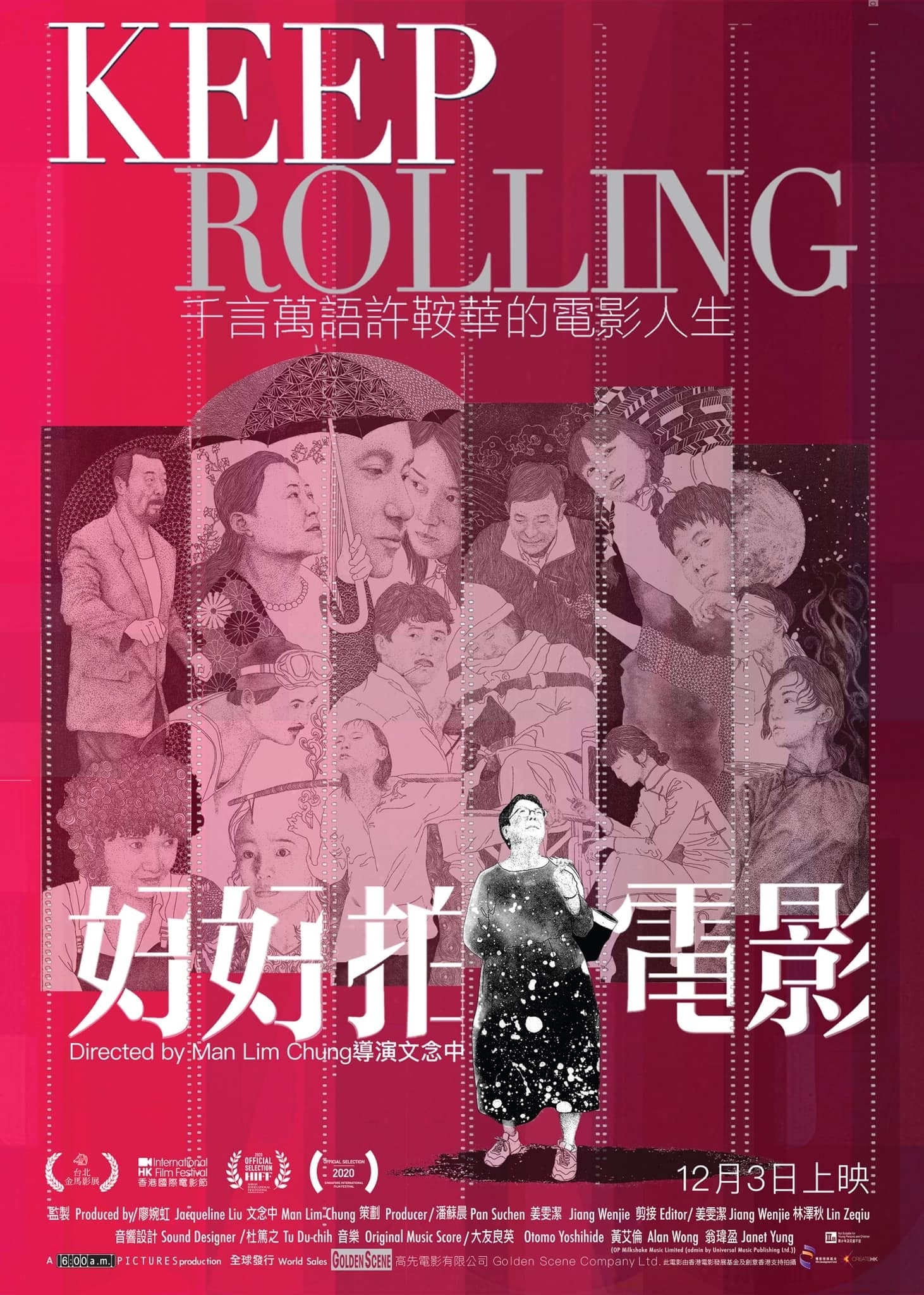
Keep Rolling (好好拍電影, Man Lim-Chung, 2020)

In recent years a festival darling, Ann Hui picked up the Golden Lion lifetime achievement award at the 77th Venice Film Festival yet there have been plenty of ups and downs in her 40-year career as Man Lim-Chung’s candid documentary Keep Rolling (好好拍電影) makes plain. Making his feature directorial debut, Man has been a frequent Hui collaborator as production designer and art director since July Rhapsody in 2002 and follows Hui from the production of 2017’s Our Time Will Come right up to her Golden Lion acceptance speech featuring both behind the scenes footage of Hui directing and direct to camera interviews from herself and other Sinophone directors including Stanley Kwan, Tian Zhuangzhuang, Jia Zhangke, Fruit Chan, Tsui Hark, and Hou Hsiao-Hsien. 

What quickly becomes clear is Hui’s ready willingness to face herself. She makes no secret of her on-set frustrations, Man cutting to footage of her irritated with an assistant director while another director recalls an incident from earlier in her career in which she lost her temper with her creative team only to turn up the next morning with tea and pineapple buns by way of an apology. By contrast, she is also described as unusually flexible in her working practices, willing to listen to the opinions of others and change her mind if convinced rather than stubbornly insisting on perfection or getting the image first in her head. Though she is often direct and forthright, making it plain to a PR that she won’t go on stage just to say a few meaningless words while reminding another that she’s not as young as she was and the schedule of in-person appearances is becoming unmanageable, she is also cheerful and energetic always laughing and joking unconcerned with her image and willing to expose an unvarnished vision of herself such as her agonising over a dress to wear to an awards ceremony only to turn up in her regular clothes because she didn’t have time to change after spending all day deliberating with the jury, much to the annoyance of old friend Sylvia Chang who had dressed up for the occasion. 

This is perhaps why she’s been able to weather the storm, philosophically laughing off the low points of her career in which she struggled to make ends meet as having accorded her additional life experience and added to her understanding of the lives of others. “You should treat each film as if it’s your last”, Stanley Kwan remembers her advising him, not for any morbid reason that tomorrow you may be gone but because you may never get the opportunity again should funding dry up which is a definite possibility in ever pragmatic Hong Kong. After recovering from a slump with Summer Snow, she found herself in another after the consecutive box office failures of The Stunt Woman and Eighteen Springs, funding Ordinary Heroes with investments from friends but seeing that too flop leaving her with no offers at all.

Yet as Jia Zhangke points out, an artist cannot care too much about box office and Hui herself comments on her determination to take on stories that matter to her and more recently to contemporary Hong Kong though she also admits that the growing importance of the Mainland market may be disrupting that of the local industry. Her protagonists are loners and outsiders often standing at a crossroads of history, a position pregnant with symbolism reflecting according to some the spirit of Hong Kong always anxious in search of settlement and security. Yet, they also perhaps reflect a sense of herself as a perpetual exile, born in Northern China to a Chinese father and a mother she discovered only at 16 to have been Japanese, thereby gaining new understanding which helped repair their sometimes fractious relationship as dramatised in 1990’s Song of the Exile. Now in her 70s and still working, Hui also cares for her now elderly mother reluctant to pursue the idea of placing her in residential care unwilling to admit the idea of “abandoning” someone while perhaps also reflecting on her experiences filming A Simple Life, inspired by the life of her friend and producer Roger Lee. A vibrant yet uncompromising look at the life and career of a legendary artist who helped to kick start the Hong Kong New Wave and went on to conquer European festivals, Man’s elegantly put together doc ends with the words “Long live cinema” a fitting tribute to woman who has dedicated her life to its continuing evolution.


Keep Rolling opened the 2021 Osaka Asian Film Festival. Viewers in the US will also have the opportunity to stream the film March 17 – 21 as part of Asian Pop-Up Cinema Season 12.

Original trailer (English / Traditional Chinese subtitles)

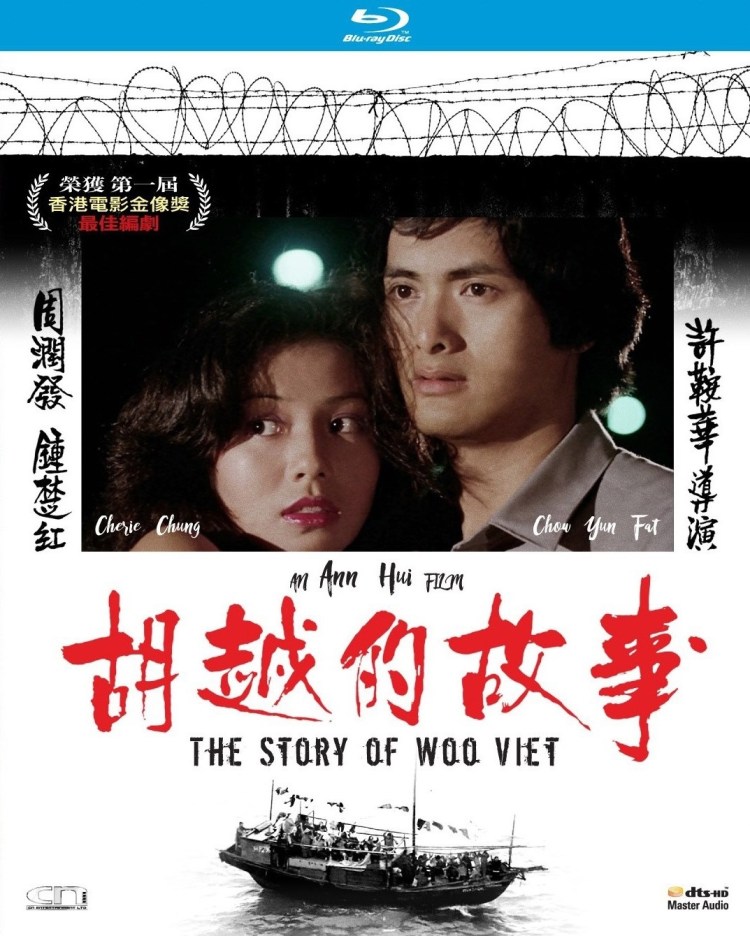
The Story of Woo Viet (胡越的故事, Ann Hui, 1981)

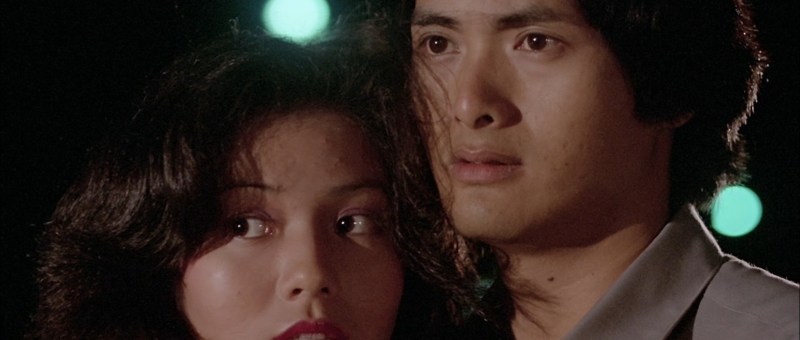
Displacement and a legacy of violence conspire against a young man attempting to escape the trauma of war in the second in Ann Hui’s “Vietnam trilogy”, The Story of Woo Viet (胡越的故事, AKA God of Killers). Starring a young Chow Yun-fat as Chinese-Vietnamese refugee headed to Hong Kong with a hope of making it to the US, Woo Viet’s story suggests that violence may be impossible to escape in a world increasingly corrupted by human indifference while only crushing disappointment awaits for those who live on dreams alone. 

After years fighting for the South Vietnamese army, Woo Viet (Chow Yun-fat) is one of many young Chinese-Vietnamese men attempting to escape through claiming asylum in Hong Kong so that he can eventually apply for a visa to the US. The reasons he needed to leave are readily apparent. Even on the overcrowded, primitive boat on which he arrives in Hong Kong, Woo Viet has already witnessed several atrocities in which fellow passengers were dumped overboard, killed, or marooned on isolated islands. He has become the surrogate father to a little boy who is now alone on the boat because his dad was killed by the guards, and subsequently becomes a target for Viet Cong “special agents” after they strangle his friend in his sleep for having seen something he shouldn’t have.  

Luckily, Woo Viet has a friend in Hong Kong, a female “penpal” Lap Quan (Cora Miao Chien-Jen) who sent him letters he rarely answered all through the war. After Woo Viet is forced to kill a special agent in the refugee camp in order to ensure his own survival, he finds himself relying on Lap Quan to help him organise a fake passport. He no longer has the luxury of waiting to do things properly, he needs to leave the country as soon as possible. The fake passports available are, for some reason, Japanese meaning he has to learn to at least sound plausible by picking up a few handy phrases to fool the border guards. It’s in the language classes that he meets fellow refugee Shum Ching (Cherie Chung Chor-hung) who is travelling to the US because a former customer who has already emigrated told her that he wanted her to come no matter what the cost. The problem is the HK trafficker has not been honest with either of them. Woo Viet may have a decent shot at actually making it to the US, but the girls are to be sold on at the first available Chinatown, which in this case is Manila where they’re waiting for a connecting flight. Having bonded with Shum Ching, Woo Viet surprises the traffickers by giving up his chance to go to America to stay in the Philippines to try and rescue her. 

“Whichever Chinatown it is, I think my situation will be the same” Woo Viet writes back to Lap Quan, keeping up a correspondence which becomes increasingly dishonest as he struggles come to terms the shattering of all his dreams. Trapped in a Philippine Chinatown, he discovers the only way he can save Shum Ching is by serving the gangsters that “bought” her from the HK trafficker. Yet, also in his letter to Lap Quan he claims that “it is much simpler to kill people here compared to Vietnam”, while suggesting that the reason his situation is “the same” in Chinatowns the world over is that he has no real identity and can therefore “solve people’s problems with no problem” which is why he’s ended up working as a hired gun for HK gangster Chung. 

Even so, he still harbours hopes of making it to the US when he’s made enough money to “redeem” Shum Ching who is already dreaming of finding a tiny house for them both where she can cook him proper Vietnamese food. While in Manila, he’s partnered with a slightly older man, Sarm (Lo Lieh), who came from Hong Kong a decade earlier. Woo Viet thinks he should have earned plenty of money after a decade making kills for Chung, so he doesn’t understand why he’s still here rather than off somewhere else enjoying a better life. He still doesn’t quite see that Sarm is a vision of his possible future, a man so beaten down by life that his only goal is to drink himself into an early grave. Sarm no longer believes in a future for himself, but he wants to believe in one for Woo Viet, and so he tries to help him but brotherhood, like love, is no match for the casual cruelty of the world in which they live. 

Woo Viet’s floating rootlessness is perhaps an echo of a potential anxiety in a Hong Kong facing its own sense of displacement with the handover less than 20 years away, as perhaps are his feelings of hopelessness as he attempts to write himself into a better future in his now constant letters to Lap Quan in which he somewhat insensitively talks of his love for Shum Ching born precisely out of that same sense of rootless desperation. Soon after they meet, the pair attempt to visit a flower market at night but their romantic moment is disrupted by another refugee couple being caught and dragged away by police, instantly throwing a fatalistic shadow over their innocent connection. All Woo Viet wanted was an ordinary settled life, perhaps adopting that orphaned little boy from the refugee camp and bringing him with them as he and Shum Ching claim a better life in the US, but even small dreams are seemingly impossible in a world in which the predominating force is not love or compassion but violence.  


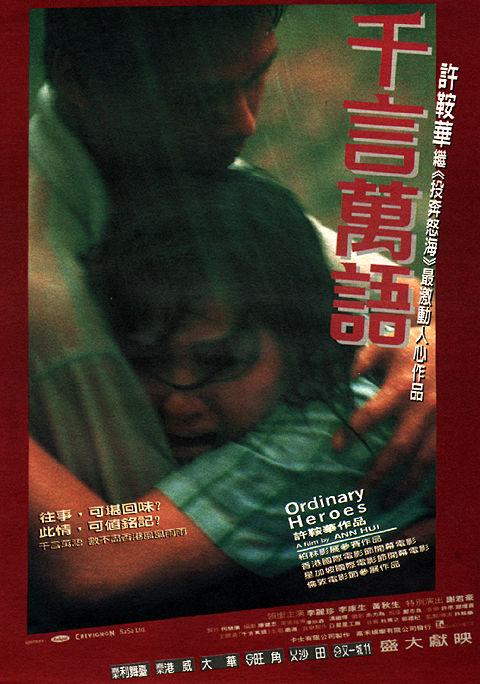
Ordinary Heroes (千言萬語, Ann Hui, 1999)

ordinary heroes posterThroughout her long career, Ann Hui has become adept at making subtle political points through addressing the struggles of the recent past. Ordinary Heroes (千言萬語) was released in 1999, just two years after the handover which signalled the end of British colonial rule. The Chinese title of the film is taken from a Teresa Teng song heard on a car radio and means “thousands of words, tens of thousands of languages” – a sentiment which could apply to the work of the activists as they work tirelessly to little effect, but the English title perhaps hints more closely at the film’s essential purpose as a tribute and pean to these ordinary people who dared to stand up to authority to fight for what they thought was right.

After a brief prologue from the street performer (Mok Chiu-yu) – inspired by the real life figure Ng Chun Yin, who will become the Brechtian narrator of the ongoing drama, Hui cuts to a title card reading “to forget”, only to open with the words “I remember”. The heroine has, however, forgotten her former life for reasons of which we aren’t yet sure. Sow (Loletta Lee) is a young woman and former activist being cared for by her friend, Tung (Lee Kang-sheng) who has been nursing a longterm crush on her ever since she pickpocketed him when he was in high school. Sow, however, had been involved with an activist, Yau (Tse Kwan-ho), who later married someone else, but remains committed to the cause, as hopeless as it might seem.

The cause is that of the Yau Ma Tei boat people. A historic community of former fisherman, the Yau Ma Tei boat people live off the shore of Hong Kong in what was constructed as a typhoon shelter after a fierce storm destroyed almost an entire fleet in 1915. During the 1950s, the community moved away from fishing and became a a kind of tourist spot and centre for petty crime. With their own distinctive accents, clothing, and isolated way of life the boat people were not always welcome on land but also faced an additional problem in that many of their wives were refugees from the mainland and technically illegal migrants forbidden from setting foot on Hong Kong proper. Though the government instituted an amnesty for the children of boat people, it took advantage of the women who came forward to get official birth certificates, deporting them back to mainland China and separating them from their families.

The boat people find few friends, but an Italian Catholic priest and, incongruously enough, committed Maoist, Father Kam (Anthony Wong) becomes a staunch defender, living with the boat people and providing education for the children as well as ministering to his flock. Yau and Kam work together to advance the cause of the boat people while Sow assists Yau and Tung follows Sow whilst also becoming close to Kam and influenced by his peculiar ideology. Kam, often to be found strumming his guitar and singing the Internationale, becomes a figurehead for the movement, even committing to a hunger strike in an attempt to get the authorities’ attention.

Structuring her tale in a non-linear fashion, Hui weaves the complex narrative of political descent in ‘70s Hong Kong, splitting her focus between the single issue activism of Yau and Kam and the wider leftist movement as recounted in the street theatre of Ng Chun Yin. Ng, a longterm leftist activist, was the founder of the Trotskyist Revolutionary Marxist League who later went to China to deliver a true Marxist, democratic revolution but ended up betraying his cause and being kicked out of his own movement. Such obviously left-wing agitation was, perhaps, difficult in the early 70s when news of the cultural revolution had discredited Chinese communism, especially as many residents of Hong Kong had arrived as refugees from the oppressive regime, but there are those who continue to believe in and fight for the values that they believe should be present North of the border.

Sadly these hopes are crushed by the Tiananmen Square incident in 1989 after which it was impossible to argue for the moral superiority of the Chinese state over the colonial government. The bursting of a political bubble runs in parallel with the sad love story of Sow and Tung who find themselves at odds with each other, never quite in the same temporal space. Hui signals the closing coda with another title card, this time reading “to not forget”, as Sow and Tung are forced to acknowledge their painful pasts as they look forward to an uncertain future. Forgetting and not forgetting become the central themes as the boat people plead for recognition, while there seems to be an active choice in play to decide to forget these “ordinary heroes” and the various sacrifices they made in the name of social justice as Hong Kong begins to look forward to its own uncertain future as one master is swapped for another and the silent majority sit idly by, opting for the consumerist revolution over the human one. Ng, in his opening statement, talks about heroes with unfulfilled missions. Tung and Sow find themselves at a new dawn with their illusions shattered, filled with thousands of words and nothing at all to say. 


Screened at Creative Visions: Hong Kong Cinema 1997 – 2017

Original trailer (Cantonese, no subtitles)

Teresa Teng’s Thousands of Words