Teki Cometh (敵, Daihachi Yoshida, 2024)

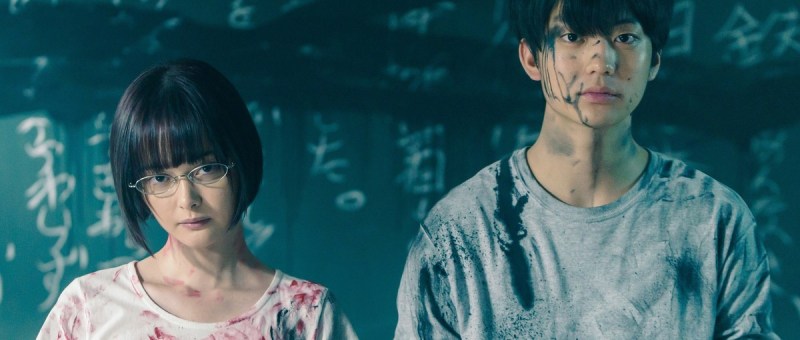
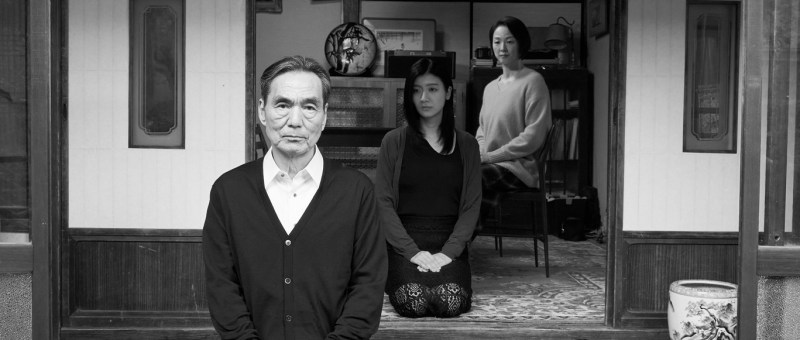
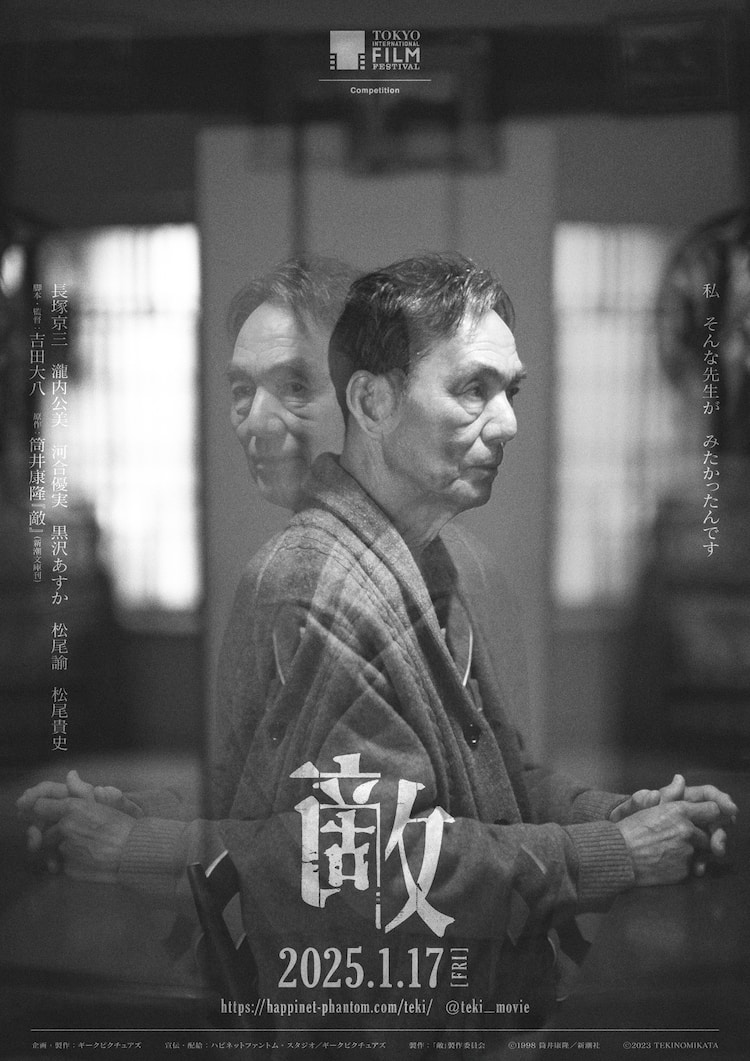
“So, reality or literature, which is more important?” an unexpected guest asks a retired professor in Daihachi Yoshida’s Teki Cometh (敵, Teki). Adapted from the novel by Yasutaka Tsutsui, the film is not exactly about encroaching dementia but rather the gradual embrace of fantasy as the hero finds himself inhabiting the shifting realities of age in which his carefully curated persona of the refined professor begins to crack under the weight of its impending end.

Then again, objective “reality” is clearly a strain for Gisuke Watanabe (Kyozo Nagatsuka). It’s probably not a coincidence that Gisuke shares his surname with the hero of Kurosawa’s Ikiru as he too begins to ponder the meaning of his life along with the apparently meaninglessness of his twilight years. He reveals to his friend that he’s well aware his pension won’t cover his expenses for the rest of his projected lifespan and that he’s already calculated what he calls “X-Day” which will be the day the money (and implicitly his life) will simply run out. This day is continually postponed as Gisuke acquires extra money through giving lectures on French literature or writing articles for magazines, but the early part of the film at least is all about money and its relative values. Gisuke says that he does not really contemplate the price of the newspaper because the newspaper is something he wants so he simply buys it while taking out half the amount he’d usually charge for a lecture from an ATM machine. His friend advises him to drop his fees and get more work, but Gisuke explains that his 100,000 yen boundary is carefully maintained as a kind of bulwark against a sense of obsolescence as in he thinks they’ll keep haggling him down until he’s grateful just to get anything at all.

But obsolescence is clearly something he already feels given that interest in his chosen field has already declined and perhaps there no longer is much of an audience for his views on Racine and the development of the French language. Like the professor at the centre of Kurosawa’s Madadayo, Gisuke is surrounded by former students most of whom do not work in fields related to their studies but continue to hold him up as great scholar and influential figure in their lives. Yet as the film goes on and realities begin to blur, we might begin to wonder if any of these visitors are actually real or merely spectres leaking out from Gisuke’s fracturing memory to express his own anxieties about past and present. Former student Yasuko (Kumi Takiuchi) appears to be flirting with him, but on the other perhaps she’s merely reflecting the buried desires for which he continues to feel guilt and shame. He recalls times in which they attended the theatre together and then went for meals and drinks as if they were quasi-paternal or at least platonic, but Yasuko asks him if it wasn’t sexual harassment while at the same time directly stating that the desire is mutual (and there’s 15 minutes left before her train leaves). 

From this point on, Gisuke begins having strange dreams perhaps inspired by weird messages he’s receiving about an “enemy” that’s “coming from the north”. The “north” in a Japanese context would most likely be Russia and the messages reflecting a fear of invasion but also perhaps implying that in Gisuke’s case, the enemy lies within and it’s his own brain that is attacking itself. The illicit desires that he hints at to another former student while discussing his brief foray into and eventual boredom with voyeurism begin to come to the fore in his surreal dreams including one where he is subjected to a colonoscopy that is heavily influenced by BDSM imagery. His surprise visitor asks him if he remembers the war and Gisuke says that he’s told he experienced it in the womb, implying that he carries a degree of trauma from a time before he was even born. The ghost of the grandfather he never met haunts his well-appointed Japanese-style home that speaks of his traditionalism, while Gisuke himself tenderly takes out his late wife’s old coat and deeply breathes in her scent before hanging the coat up in his office so that it too floats like a ghost.

Yoshida structures the film through a series of vignettes ordered by season, yet there’s nothing necessarily to say that the seasons are consecutive or occur within the same year. Time is becoming abstract to Gisuke, even as he’s pursued by his invisible “enemy” that attacks his respectable facade and the very image of himself as he too embraces fantasy as a means of liberation from an otherwise monotonous if also serene life of awaiting the inevitable. The monochrome photography and static composition add to the air of deadpan humour in Gisuke’s increasingly surreal world. Teki cometh for us all, but in the end teki is us and we are teki. Our own fears, regrets, and insecurities will indeed return to torment us and show us who we are. Likely as not will not like what we see.


Teki Cometh screens in Chicago 11th April as part of the 19th edition of Asian Pop-Up Cinema.

Original trailer (English subtitles)

Performing Kaoru’s Funeral (カオルの葬式, Noriko Yuasa, 2024)

According to an undertaker in Noriko Yuasa’s darkly comic drama Performing Kaoru’s Funeral (カオルの葬式, Kaoru no Ososhiki) death is a kind of natural disaster. Despite the sometimes farcical going ons at this particular funeral, he does indeed have point in the sense of inevitable tragedy that the colours events as a dejected middle-aged man attempts to clarify his memories while overseeing the funeral of a woman he was once married to but evidently had not seen in many years.

To this extent, as the title says, Jun is “performing” Kaoru’s funeral though perhaps it’s true enough that there’s always an degree of performance in involved. As Kaoru’s young daughter, also named Kaoru, says, no one here believes in god or Buddha and this ritualised mourning process doesn’t seem to be helping her process her grief. From time to time, Yuasa cuts back to a Bruegel-esque image of a painting of hell complete with demons staring pots with people in boiling water suggesting that this too is a kind of purgatorial hellscape.

Suddenly tasked with MCing his former wife’s funeral Jun takes it with good grace if also a little confusion. Guests mainly seem to be using it as an opportunity to vent their dissatisfaction or settle old grievances. The atmosphere is strange, somehow fraught and otherworldly while the other guests seem to treat Jun as an interloper never really considering that he may be grieving too. The ritualised act of performing the funeral causes him to remember his married life along with the woman who seems to have remained an enigma to him and may have done so to everyone. 

Once an aspiring actor, Jun is now a defeated figure employed as a driver for girls working at a Soapland. Before receiving the call about the funeral he’s beaten up by a pair of gangsters after intervening when one of them tried to assault the girl he was driving. Presented in a boxy square, Jun’s flashback memories have an unreal quality as if his marriage was a kind of fairytale or a dream he was woken from too soon. Kaoru’s decision to make him the chief mourner at her funeral may in a sense have been ironic, a final acknowledgement of the role he played in her life but also grants him a valuable opportunity to set the past to rest and perhaps begin to move on. 

For some of the other guests, however, that doesn’t quite seem to be the case. Some lie about their relationship with Kaoru or else cause unexpected trouble in venting a petty grievance. A rival screenwriter turns up to get drunk and make catty remarks, while a middle-aged man also uses the occasion to lay into his daughter-in-law with a lengthy misogynistic rant about his unmanly son’s inability to manage his wife. Little Kaoru seems largely left on her own, expected to carry out these rituals while grieving for her mother with no real support. A small subplot revolves around the potential candidates for her father, but none of them, bar perhaps Indonesian restaurant owner Wayan and Jun himself who claims she cannot be his pays much attention to her.

After opening with a grim scene of Kaoru on the slab, much the action is accompained by the urgent sound of something ticking as if marking out the passage of time while lending a sense of urgency to something that is no longer really urgent. Brought together by her deaths, the guests each have their own relationship with the deceased and like Jun and little Kaoru perhaps begin to process their grief and move step forward though in other ways also the opposite in one’s near literal inability to let go. The girl Jun had been escorting found an abandoned urn on the train and took it home with a kind of perverse delight musing on the reasons someone might leave their urn behind. In a way, that’s what Jun is trying to do, let his past drift away, Kaoru somehow setting him free to start living his life again after he sees her off. As the screenwriter said every script has to have a moment of catharsis and Yuasa’s tragicomic tale does indeed have its share of melancholy poignancy but ends on a bittersweet note of thank you and farewell as Jun and little Kaoru sail off into a new future having laid the past to rest.


Performing Kaoru’s Funeral screened as part of this year’s Osaka Asian Film Festival.

Original trailer (English subtitles)

Yoko (658km、陽子の旅, Kazuyoshi Kumakiri, 2023)

Sometimes home is the hardest place to go. At least that’s how it is for the eponymous Yoko (658km、陽子の旅, 658km, Yoko no Tabi) in Kazuyoshi Kumakiri’s emotional road movie in which a defeated middle-aged woman is jolted out of her self-imposed inertia on hearing of the sudden death of the father she had not seen in over 20 years. As much about a moment of mid-life reevaluation as one woman’s gradual return to the world through a process of self-acceptance, the film displays a boundless empathy not to mention a sense of warmth out of keeping with a snowbound winter in northern Japan. 

At 42, Yoko (Rinko Kikuchi) lives alone in a one room apartment that she seemingly never leaves. Ironically enough, she works as a customer service assistant operating a remote chat box in which she encourages the customer to try turning it off and on again but otherwise offers little real support. When she accidentally breaks her phone, he first thought is to try contacting the online consumer helpline only to realise the irony of her situation and think better of it. In a moment of cosmic coincidence she receives a visit from her cousin, Shigeru (Pistol Takehara), who explains that her sister Rie has been trying to call but obviously couldn’t get through because of the broken phone. Yoko’s father has passed away suddenly. Shigeru and his family are making the long drive from Tokyo to Aomori and they’ve been instructed to bring Yoko with them for the funeral the day after next. 

We can tell that Yoko is no longer used to interacting with other people. Her voice is almost inaudible and her words tumble out in a half-confused jumble. Shigeru seems sympathetic and we can interpret that she’s been this way a long time, if not all of her life. He asks her if she has clothes for the funeral and is unsurprised when she gives no answer, assuring her they can sort it out when they get there while trying to cajole her downstairs and into the car where his wife and kids are waiting. The kids are, predictably, incredibly noisy and a little insensitive while the mother tries to get some sleep and Shigeru sings a folksong that was a favourite of her father’s. His spectre (Joe Odagiri), not so much a ghost as a manifestation of her memory silently, haunts her throughout the journey reminding of her of her unresolved shame and the reasons she had avoided contact with him for the last 20 years. 

These moments are full of painful melancholy but also an underlying sense of dread as if Yoko were being stalked by her own self-loathing projected onto the figure of father. After becoming separated from Shigeru at a service station and assuming she’s been abandoned with no phone and only loose change, she decides to hitchhike to Aomori and in effect travels backward meeting echoes of herself as she goes. Her first driver is a woman of about her own age (Asuka Kurosawa) in Tokyo for a job interview who reflects her buried cynicism, remarking that she resents the people she sees at service stations who to her at least seem far too happy. On learning that Yoko has no children and never married, she chuckles that she couldn’t imagine a life without out them hinting at another life Yoko might have led and perhaps quietly yearns for in her solitude. 

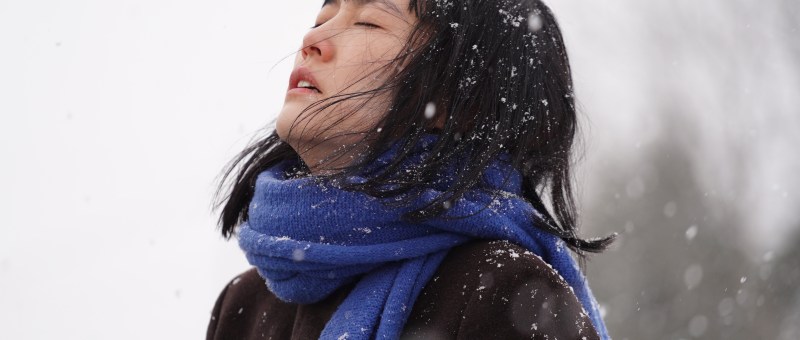
Yoko answers the woman with only grunts and a shake of the head, unable to communicate and in effect too shy to ask for help from passing strangers. Through her journey she gradually recovers the ability to speak, her words eventually pouring out of her in a voluntary monologue to a stranger on whose kindness she has become dependent. But in a girl she meets at the next rest stop she sees only her teenage self, the girl answering that it’s too hard to explain when questioned about why she’s hitchhiking alone in the middle of the night. When she gives her her scarf, it’s like a gift from her younger self, a small moment of embrace and support. Something similar happens as she approaches the area affected by the 2011 tsunami and meets a kindly older couple who represent her parents as she might have wished them to be rather than as they were. While the man gives her some fatherly advice, not unkindly, the woman (Jun Fubuki) gives her a pair of sheepskin boots in another gift of warmth that further proves to her that the world is full of kindness even if not all of the people who gave her rides were nice.

There maybe something in the fact that Yoko has to travel through the disaster zone in order to emerge from it, journeying towards the site of her trauma and beginning to overcome it as she comes to accept her father’s death and that is simply too late for many things though crucially not for all. What she comes to realise is, as her first driver told her, everyone has their reasons and she wasn’t the only one carrying a heavy burden. She only made it as far as she did because of the kindness of strangers and those, like Shigeru, who are willing to wait for her to come in from the cold. Rinko Kikuchi’s extraordinarily nuanced performance along with the snowbound vistas and melancholy score conjure a poignant atmosphere but one oddly buoyed with warmth in which the world can be a kind place or least as long as we can be kind to ourselves. 


Yoko screens Feb. 22 as part of Family Portrait: Japanese Family in Flux

Original trailer (no subtitles)

Saga Saga (緑のざわめき-Saga Saga-, Aimi Natsuto, 2023)

Three women contending with a legacy of patriarchal failure and male violence circle around each other in the picturesque hot springs resort of Ureshino in Aimi Natsuto’s etherial drama, Saga Saga (緑のざわめき, Midori no Zawameki – Saga Saga –). Less playful than Natsuto’s previous film Jeux de plage, the oscillating action takes on a poetic, mystical direction as the forces which bind the three women together eventually become clear while each in their own way tries to overcome a lingering sense of displacement and loneliness. 

The first of them, Kyoko (Rena Matsui), left Ureshino to become an actress in Tokyo but has given up performing and resettled in nearby Fukuoka where she runs into an old hometown boyfriend, Sotaro, who is currently sort of dating Eri, a woman he met on a dating app. Despite telling Kyoko he can’t stay long after reconnecting because he has a date with someone who is “not quite” his girlfriend, Sotaro ends up going to a love hotel with another woman, Naoko (Sae Okazaki), who frequents the bookstore where he works. Though it originally appears that Naoko is jealous of Kyoko and fears she’s missed her chance with Sotaro, we soon realise that she is in fact semi-stalking her for unclear reasons but actually wants to get in touch with someone else and eventually forms a telephone connection with Anna (Sara Kurashima), a high school girl currently living in Ureshino with her aunt, Fumiko (Asuka Kurosawa). 

In a way, they are all looking for something that seems to be missing in their lives. For Kyoko it seems to be something like the concept of home as she struggles with a series of sudden changes from the death of her mother two years previously to a brush with cancer in the form of an ovarian tumour she has recently had removed. Fumiko, who was a friend of her mother’s, tells her that she’s on a journey of self-reconciliation and there is indeed something in that as she works over the mysteries of her past while looking for new directions in her future. 

Meanwhile, she is plagued by strange dreams of being lost in a forest later telling a friend that she was once sexually assaulted in the woods when she was in high school and has the feeling the person who is chasing in her in her dream may be her father who left the family when she was a child. When she was receiving treatment for the tumour on her ovary, she began to ask herself why she had been born a woman forever subject to threat and patriarchal oppression. On her return to Fukuoka, she undergoes a very strange job interview in which she’s repeatedly assured that “being a woman” she won’t be asked to do anything “difficult” while it seems that being “attractive” is enough to get by in the beginning. Also they warn her that they don’t offer “great maternity leave or anything like that”. 

The lives of each of the women have been in one way or another overshadowed by male violence, but it’s Anna’s would-be-boyfriend Toru who is eventually victimised when he’s assaulted by a woman who wanted to bring back a problematic local festival cancelled because of a sexual assault. Toru had been in the forest to consult with some kind of mystic man trying to get him to conduct a ritual to get Anna to like him only to be told it doesn’t really work like that and you wouldn’t want it to anyway. After the assault it’s Toru’s life which spirals out of control when he’s blackmailed into acts of petty crime by the witch-like woman who forced herself on him, while Fumiko too is later forced to pay the price for having kept her secrets and for compassionate reasons attempted to hide the truth from those who most wanted to know.

Finally brought together on solving their individual mysteries, the three women settle on creating a home they can each return to, anchoring themselves as a family as a means of finding stability in a world which is so often in flux in defiance of the destructive forces which connect them. Even Eri admits that in reality she may have been looking for self-affirmation in her desire to find a dating app soulmate as her friends reflect on their terrible romantic experiences which, ironically, include being stalked. In the depths of its mysticism and eeriness, the film nevertheless ends on a note of serenity and the promise of moving forward if paradoxically by making a return. 


Saga Saga screened as part of this year’s JAPAN CUTS.

Original trailer (no subtitles)

The Cold-Blooded Trap (冷血の罠, Takahisa Zeze, 1998)

“This place is full of people like me” a violent criminal jeers, admitting that he’s killed “plenty” of women but not necessarily the one he’s being questioned about. There is indeed something eerie that seems to have taken over this small corner of Shibuya in Takahisa Zeze’s dark millennial thriller The Cold-Blooded Trap (冷血の罠, Reiketsu no Wana). “Strange things are happening here” another investigator notes, “someone’s malice has infected this whole place.” Yet the sense of haunting may be closer to home than it first seems as two men attempt to come to terms with a traumatic past by solving present mystery. 

Even the police seem to concede that the strange goings on are a “continuation” of something else. As we first meet him private detective Fujiwara (Sho Aikawa) appears to be following a young woman home from the station only as we later discover she hired him herself to watch over her because she had the feeling she was being watched. Fujiwara watches her enter her apartment building and then calls her to say everything looks clear on the ground, but a short time later a body wrapped in sheets is dropped from the roof onto the street below. The weird thing is that it’s the same building Fujiwara’s sister Noriko used to live in, only she took her own life and that of her child by jumping off the roof five years previously. 

Not only does Fujiwara feel as if he failed in his duty to protect his client, but he’s forced into a similar contemplation in his latent guilt surrounding his sister’s death. The most obvious reason for Noriko to have considered suicide was that her salaryman husband Hanazono (Hidetoshi Nishijima) had been having an affair with a work colleague, Yoko (Asuka Kurosawa), yet Hanazono refuses to accept responsibility and is convinced that Noriko was murdered by a mysterious serial killer stalking the streets of Shibuya. 

The irony is that we first think Hanazono is the faceless killer after watching him enter the woman’s apartment building, only to learn that he may have been investigating Noriko’s death. Later these assumptions are overturned again, but even he concedes that he seems suspicious. Wandering around the city at night, he runs into women alone who immediately see him as a threat and assume he may be a dangerous criminal who means them harm. The realisation first shocks him, but then gives way to a physical high in the adrenaline rush of fleeing the scene. He comes to the conclusion that he must get into the killer’s mindset in order to catch him and begins actively stalking people around the city, following them home and checking mailboxes to find out names. 

Fujiwara doesn’t trust Hanazono for obvious and understandable reasons, but even so he begins following him as Hanazono continues to follow the killer. Zeze opens the film with fuzzy 90s camcorder footage trained on the forecourt of a station from a balcony opposite. The camera follows a woman as she leaves, and Fujiwara behind her with eerie intent evoking the mild paranoia of millennial surveillance. Later Hanazono films his own POV walking through the midnight city, once again lending the streets a sense of lurking malevolence and dread-fuelled fatalism even before he arrives at his shocking destination. 

Yet we wonder if Hanazono is just a paranoid obsessive with his giant map of crime insisting that seemingly isolated incidents of violence are somehow linked. Before Fujiwara hears about the woman’s death on the news they were reporting on insolvent banks hinting at a financial anxiety in the contemporary society, and as the suspect Fujiwara later tracks down suggests there are lot of distressed or perhaps disturbed people around. The crimes may really be random, but they are also connected by virtue of being provoked by an anxious society even if as Hanazono admits there are several criminals behind them. Whether or not he gets the answer he seeks, Fujiwara will have to accept that he too bears some responsibility as Hanazono has perhaps already done even if desperate to deny it. “I’ve always been responsible” he admits while taking control over his life, only the elliptical structure of the film may imply otherwise. Dark and eerie, Zeze captures a sense of millennial dread in the streets of the capital filled as they are with “random” crimes and lurking killers in the haunting anxiety of constant threat.


Clip (English subtitles)

Intimate Stranger (親密な他人, Mayu Nakamura, 2022)

“This society pampers men too much, no matter their age” according to a middle-aged woman searching for her missing son, yet in many ways it’s the primacy of the mother and maternal neglect that drive Mayu Nakamura’s eerie psychological chiller, Intimate Stranger (親密な他人, Shinmitsuna Tanin). Perhaps in some ways, that’s what a mother and a son should become, of course close and loving yet each with their own lives unknown to one another but for Mrs Ishikawa those boundaries have perhaps become corrupt in her overwhelming need to embody the maternal ideal. 

Mrs Ishikawa (Asuka Kurosawa) lives alone and is searching for her grown-up son, Shinpei, who went missing a year ago. She has a job in shop selling baby clothes and accessories but is described by other staff members as a bit strange though they continue to invite her to afterwork gatherings knowing she won’t come. One day she gets a call from a young man, Yuji (Fuju Kamio), who says he has information about Shinpei but in reality is part of a gang running “ore ore” scams who are also looking for him because he previously worked with them. Yuji’s purpose in approaching Mrs Ishikawa is to get info out of her, but she’s a little bit ahead of him and manages to plant the seeds of a dark seduction. 

Seduced is what Yuji eventually is in a discomforting mix of the erotic and the maternal. Casting shades of Vertigo, Mrs Ishikawa persuades him to move into her apartment, sleep in Shinpei’s room, and wear his clothes keeping him a virtual prisoner while forcing him into the role of her surrogate son. As we later discover, Yuji was a teenage runaway seemingly abandoned by his mother and craves maternal affection but is ashamed of admitting and fearful of accepting it all of which would make him ideal prey for a woman like Mrs Ishikawa who at all rates seems to need a son to feel herself complete. 

At the shop where she works, Mrs Ishikawa transgressively sniffs and fondles clothes for newborn infants while at one point driven to distraction by a crying child temporarily separated from its mother to the point that she inappropriately picks it up. She appears to be totally consumed by the maternal image and to that extent or else because of some previous trauma becomes extremely hostile when confronted with her sexuality. Her horror on being picked up by a gigalo when expecting to meet a man with info about Shinpei might be understandable, but the glee on her face after slashing a man with a straight razor when he attempted to attack her is less so while Yuji’s eventual confusion about the nature of their connection highlights the discomforting intersection of the maternal and the erotic. 

We have to wonder if Shinpei simply decided to escape the grasp of an overbearing mother who could not bear to accept that her son was now a man, or if Yuji’s suspicions that he may have met a darker fate are more than mere reflections of his own fear of maternal connection. Yet like story of the bluebird of happiness that Shinpei was apparently fond of telling, perhaps each of them for a time found what they needed in the other only to lose it again on identifying the darkness that underlines their relationship. 

Listening to a report on the news, Mrs Ishikawa explains that “ore ore” scams only happen in Japan because nowhere else would a parent drop everything and run cash in hand when told a grownup son is in financial trouble which might in a sense be unfair save for the urgency, similar scams circulate via text and messaging apps in many countries. Yet the scam hints at this same level of disconnection, that the often elderly targets cannot tell that it is not their son or grandson’s voice on the phone nor realise that the information they’re being given does not make sense so estranged have families become. The coronavirus pandemic meanwhile only makes the scammers’ job easier given the loneliness of enforced isolation coupled with generalised masking which decreases the level of intimacy on both sides dehumanising the target while allowing the scammer to further conceal their identity. 

Mrs Ishikawa is in a sense wearing a permanent mask, consumed by the maternal ideal and unable to conceive of herself as anything outside of a mother. There is something unsettling and vampiric in her need as she at one point sucks blood from her finger and wields her razor with dangerous affection when offering Yuji the closest shave he’ll ever have but also a deep sadness that like the bluebird of happiness that which she most wants is always going to fly away from her one way or another. The uncanniness of the desaturated colour palate adds a further note of dread to the noirish tale of a young man seduced by Oedipal desire and drawn as much towards death as love.


Intimate Stranger screened as part of this year’s New York Asian Film Festival.

Original trailer (no subtitles)

Images: © Siglo/Omphalos Pictures

The Promised Land (楽園, Takahisa Zeze, 2019)

Small-town Japan is no Promised Land in Takahisa Zeze’s adaptation of a pair of short stories by mystery writer Shuichi Yoshida. Japanese cinema has often had an ambivalent relationship with the rapidly depopulating countryside, split between a sickly furusato idealisation of rural life as somehow purer than its urban counterpart and lampooning city slickers tired of that same sense of urban ennui but discovering that the traditional way of life is often hard especially when you don’t know how to do it and have no friends in communities which can often seem hostile to newcomers. 

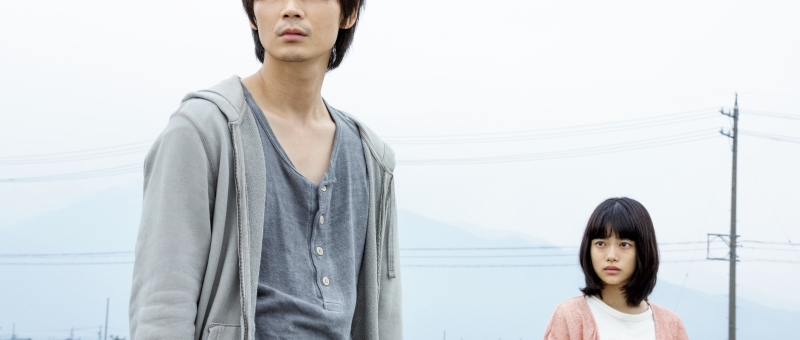
What newcomers to the small town at the centre of The Promised Land (楽園, Rakuen) discover is latent racism, mutual suspicion, and toxic local politics which bends towards the feudal as those now old go to great lengths to cling on to their power. Hardly a rural idyll but a space of atavistic decay. The rot begins 12 years prior to the main action when a little girl, Aika, doesn’t come home for tea after playing with a friend. A search of the local area is organised, but only her little red school bag is found. 12 years later the other girl, Tsugumi (Hana Sugisaki), is consumed by a sense of survivor’s guilt feeling as if she is underserving of happiness in the knowledge that if she had only taken a different path that day Aika might not have disappeared. When another girl goes missing, suspicion falls on a wounded young man, Takeshi (Go Ayano), who speaks little and is intensely traumatised by his childhood experiences of xenophobic bullying having come to Japan with his non-Japanese mother (Asuka Kurosawa) at seven years old. 

Bystanders in the crowd preparing a search for the second missing girl are quick to blame the other, one loudly casting suspicion on “Africans” living nearby while another brings up a man who sells second-hand cars she feels is a little odd. Takeshi gets the blame because he exists to the side of the community but also because he is meek and vulnerable, unable to defend himself until pushed into a corner and provoked into an explosive act of self-destructive violence. “Suicide brings redemption” Aika’s grief crazed grandfather (Akira Emoto) shrieks as if urging a young man on towards his death based on nothing other than prejudice and bloodlust. Later he admits that he just wanted someone to blame as if that would bring an end to the matter but of course it didn’t, it only added to the burden. 

Meanwhile, middle-aged beekeeper Zenjiro (Koichi Sato) who returned to the village to look after his parents following the death of his wife (Shizuka Ishibashi) from leukaemia also finds himself under suspicion but mostly as part of a concerted harassment campaign conducted by two local elderly men who have appointed themselves village elders and resent his attempt to go directly to city hall in order to fund a new business venture without going through them. Zenjiro is originally from the village, this is his hometown, but he was also away a long time and is in a sense other as a new returnee at first courted as a potential suitor for the similarly returned widowed daughter of the local bigwig, Hisako (Reiko Kataoka), and then aggressively shunned to the point he begins to lose his mind leading to another shocking act of irrepressible violence. 

“No one trusts anyone” Tsugumi laments, angrily tearing away an annoying sign asking residents to report any “suspicious behaviour”. She insists they need to face the past in order to move on, something Zenjiro was ultimately in capable of doing, but later claims that she doesn’t need to know what happened to Aika, she’s going to live her own life. The path leads towards an acceptance that she wasn’t responsible for what happened to her friend and has no need to live her life in the shadow of guilt, yet she still falls victim to small-town attitudes more or less bullied into a romantic friendship with a distinctly creepy young man (Nijiro Murakami) who admits to slashing her bike tires so she’d be more likely to accept a lift from him. 

According to Takeshi, there’s no such thing as the “promised land”, a sentiment also expressed by Hisako who agrees that all places are the same save your hometown something which Takeshi seemingly never had. Tsugumi’s problematic suitor tells her she ought to create the promised land for all of them, which might be as close as the film comes to a mission statement in suggesting that the individual has agency to craft the world in which they live while subtly undercutting it in the melancholy stories of Takeshi and Zenjiro each hounded towards acts of self-inflicted violence by an intransigent community mired in a primitive us and them mentality. Far from paradise, small-town Japan is a land of fear and suspicion where outsiders are unwelcome and the old hold sway, complaining that their kids all end up in the city while secretly perhaps satisfied in the knowledge their authority will not be challenged. If there is a promised land, you won’t find it here. 


The Promised Land streams in Germany until 6th June as part of this year’s Nippon Connection.

Original trailer (no subtitles)

Images: © 2019 “The Promised Land” Film Partners

Kakame – Vampire Clay Derivation (血を吸う粘土~派生, Soichi Umezawa, 2019)

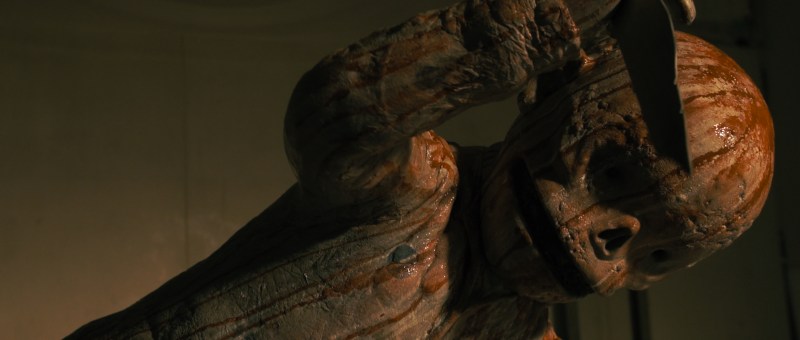
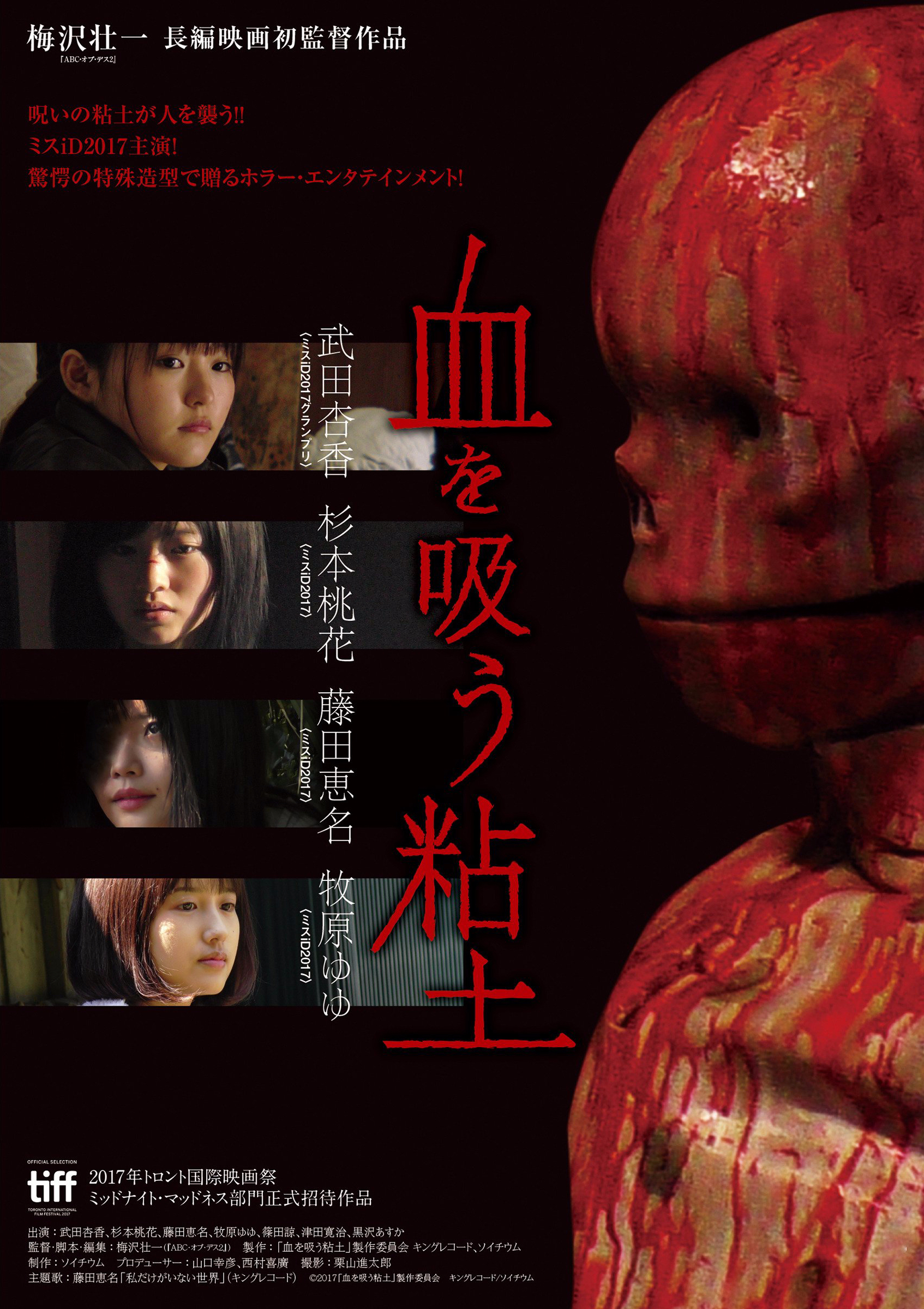
Kakame returns! Having been encased in concrete at the end of the previous film, it was perhaps inevitable that he would eventually break free to feed on the frustrated dreams of insecure artists everywhere. Kakame – Vampire Clay Derivation (血を吸う粘土~派生, Chi wo Su Nendo: Hasei) picks up shortly after the first film left off, but this time around the insecurities are less artistic than they are familial and social as those affected by the curse of Kakame find themselves wrestling with a sense of responsibility they must face alone to ensure that his bloody vengeance is contained lest he wreak more havoc on the wider world. 

After a short flashback, Aina (Asuka Kurosawa) sends the surviving student home and insists on going to the police alone but is involved in a car accident. Meanwhile, we’re introduced to the new heroine, Karin (Itsuki Fujii), the daughter of Fushimi (Kanji Tsuda) who fell victim to Kakame at the end of the previous film. His body has now been found in the art school and so the police contact Karin, who is his only living relative seeing as Karin’s mother committed suicide shortly after the marriage broke down, to identity him despite the fact they had been estranged for the last 12 years. The problem is that Karin didn’t want anything to do with her dad and so she is a bit lax dealing with his bones which still contain traces of Kakame. Meanwhile, as an aspiring artist herself, she enrols in a dodgy art project run by sleazy artist Kida (Shinji Kasahara) who makes a point of recruiting six young women in their 20s because he apparently wants to know what the women of Japan today are thinking, instructing them to unbalance the unbalanceable by disrupting the harmony of the hexagonal form. 

The strange apianism of the hexagonal theme is never developed further save a rerun of the events from the first film with the minor difference that is already “unbalanced” in the additional presence of Kida’s troubled assistant and the fact that he is the only male. Nevertheless, difficulties quickly arise among the girls and not least between Karin and her adoptive sister, also an artist though insecure in her abilities. Once again these tiny cracks between people are enough to let the murderous clay in, targeting first the melancholy assistant demeaned by her dismissive boss who refuses to let her participate in the project because the other girls are all students where as she is an aspiring ceramicist. Meanwhile, another suspect is provided in a young woman strangely fascinated with the bones of dead animals while Karin realises she is still in possession of one of her father’s lost in a tussle with her sister. It’s bone then, rather than blood, which condemns her but still she finds herself paying for her father’s sin in receiving a visit from Kakame as he makes swift work of the innocent artists. 

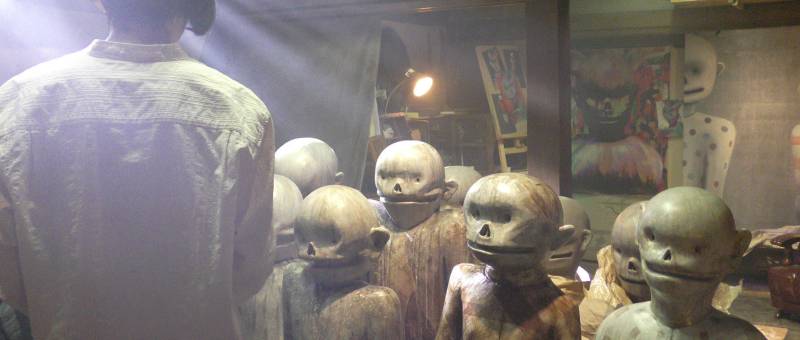
The sculptor’s curse refuses to die, the other Kakame apparently fusing with a worm and creating ructions underground which threaten to destabilise the world at large. As Aina had in the first film, venal artist Kida ponders using the clay for his own ends, ironically desiring to turn it into art, perhaps making good on the sculptor’s unfulfilled desires but also exposing his own less worthy goals of becoming rich and famous which is perhaps one reason why he’s busily exploiting six pretty young women rather than getting on with his work. Aina eventually reconsidered, but then finds herself facing a similar dilemma, targeted by the police who obviously don’t buy her story about demonically possessed clay turning murderous, while wondering if it might not be better to just dump the remaining powder in the river and be done with it. Maintaining his focus on practical effects, Umezawa shifts focus slightly heading into a different register of body horror as the strange clay worms work their way into the bones of our heroes before Kakame makes himself whole, but otherwise pulls back from large scale effects often switching to blackout and soundscape as in the opening car crash. Nevertheless, what we’re left with is a tale of shared responsibility as two women of different generations refuse to let the other carry the burden alone though neither of them is in any way responsible for the curse of Kakame save for the darker emotions which helped to birth him of which we all are guilty. 


Kakame – Vampire Clay Derivation screened as part of Camera Japan 2020.

Original trailer (no subtitles)

Vampire Clay (血を吸う粘土, Soichi Umezawa, 2017)

The artist consumed by their art is a potent motif, creation and destruction two sides of the same coin, but there’s rarely been a painter attacked by the canvas quite as literally as the sculptors of Vampire Clay (血を吸う粘土, Chi wo Su Nendo) are depleted by their material. The first feature from practical effects specialist Soichi Umezawa is refreshingly unpretentious, unabashed schlock designed to showcase Umezawa’s obvious skill in stop motion and prosthetics but it does perhaps have a point to make in the legacy of embittered artistry and frustrated dreams of those whose art is never recognised. 

Middle-aged sculptress Aina (Asuka Kurosawa) flees the duplicitous Tokyo art scene after being betrayed in love by her no good husband who also runs a studio specialising in training students to gain admission into one of Japan’s many exclusive art schools. In fact, Umezawa somewhat strangely opens with a title card revealing the comparatively small percentage of pupils each school accepts in contrast to the large number of applications, neatly setting up the desperation and sense of inadequacy that plagues most of our heroes, Aina included. Retreating to the country she sets up shop in a small shed which is later ravaged by an earthquake, leading to her discovery of a buried tin filled with mysterious clay and other artistic accoutrements left behind, she assumes, by the previous occupant. The trouble starts when errant student Kaori (Kyoka Takeda), who had been studying at a workshop in Tokyo, returns earlier than expected much to the chagrin of rival Reina (Ena Fujita) and discovers a new pupil has borrowed her clay. Predictably, she decides to use some from the mysterious bag, reviving the evil with water and discovering that somehow this magic substance seems to have upped her game. 

Umezama continues to flag the urban rural divide, the students beginning turn against Aina believing that it’s her time in Tokyo which has given Kaori a leg up, something that further wounds Aina in her sense of professional pride as she channels her rage and frustration into moulding her pupils into top candidates as a means of besting her ex. The sculptors knead their frustrated desires into the clay, it feeds on their misery and disappointment. This particular clay, however, is more cursed than most in that it is apparently infected by some kind of toxic disease which plagued the previous owner, symptomatic of the degree to which his art, or more pointedly the refusal of others to recognise it, destroys him. 

Aside from that there are a host of interpersonal problems between the students and their teacher. As the only male sculptor points out, they are both classmates and enemies as they are forced to compete against each other for the prize of recognition in the form of admission to an art school. Meanwhile, he is also the subject of a love triangle, refusing a homemade bento from an admirer in favour of one from another, this essential act of emotional betrayal later providing an in route for the murderous clay. 

Nevertheless, Umezawa is not so interested in the implications of the interpersonal drama as its potential for bloody action. The clay works its way into the bones of the sculptor, consuming and possessing them in a series of pleasingly retro, Cronenbergian practical effects. “I don’t want to lose my individuality to convention” Reina had snapped back in insisting that this small rural school suits her fine despite having just been given a dressing down for the “conventionality” of her final assignment. The clay, perhaps, attempts to rob them of their individuality, turning them into a mindless plastic mass fuelled only by negative emotions, thirsty for blood and hellbent on destruction. Somewhat incomprehensibly, a failed sculptor turned restaurateur convinces the original owner of the clay that his creepy creations will sell like hot cakes to hospitality establishments in the city, allowing his final humanoid legacy to become a kind of Frankenstein’s child carrying all his rage and resentment into the future but attacking, it seems, other marginalised artists rather than the hated Tokyo arts scene which is the real target of his ire. Aina, having for the moment neutralised the clay, considers unleashing it against her ex, bringing the grudge full circle in its own, ironic, way but also consumed by resentment and jealousy. The “toxic waste” of artistic disappointment refuses to die, burrowing its way underground even as the responsible attempt to bury it, lying in wait for the next tortured artist willing to sell their soul for illusory success.


US release trailer (English subtitles)
Flowers of Evil (惡の華, Noboru Iguchi, 2019)

Small-town ennui is something familiar to many who’ve found themselves feeling somewhat out of place in the place they’ve always been, but rebellions usually take less obvious forms than the nihilistic rejection of bourgeois respectability enacted by the conflicted hero at the centre of Noboru Iguchi’s Flowers of Evil (惡の華, Aku no Hana). Iguchi is best known as a director of made for export splatter exploitation, so it might come as a surprise to his fans to see him take on the admittedly dark but largely gore-fee adaptation of Shuzo Oshimi’s coming-of-age manga.

Takao (Kentaro Ito), a “regular” high school boy, likes to read “difficult” books such as the poetry collection by Charles Baudelaire from which the film takes its title. He feels himself somewhat above his surroundings, but superficially conforms to the ordinary world around him. Like many of his classmates, he’s developed an adolescent crush on the school’s prettiest girl, Nanako (Shiori Akita), but unlike his friends views her as his “muse”, a pure and untouchable figure of unspeakable desire. Nipping back to the classroom alone to retrieve a forgotten book, he spots Nanako’s gym bag lying on the floor and cannot resist opening it, burying his face in her clothes. Panicked after hearing someone nearby, he takes the bag home with him.

Everyone immediately knows that a “pervert” is responsible for the theft, they just don’t know who it is. Except for the class’ resident strange girl, Sawa (Tina Tamashiro), who apparently witnessed Takao’s descent into perversion in real time. She makes him a deal – write an essay all about what a big pervert he is and she’ll kept his secret in friendly complicity seeing as she is a kind of “pervert” too. Sawa, who is much more obviously “different” than Takao and completely unafraid of embracing it, is convinced that their town is entirely inhabited by “Shit Bugs”, and they are the only elevated beings. Uncomfortable with her own desire, Sawa’s behaviour becomes increasingly intense when Nanako unexpectedly expresses an interest in Takao, apparently impressed that he was so “upfront with his feelings” and willing to stand up for Sawa when she was accused of being a (but not the) thief.

Takao tells Sawa that he just wants to be “normal”, to be the kind of man Nanako could desire. Just another confused teenage boy, he doesn’t yet know who he is or what he feels and is, in a sense, consumed by the sense of emptiness that comes of lacking self-knowledge. He masks his sense of intellectual inferiority by feigning sophistication, spending his free time in second hand bookshops reading the accepted canon with a typically teenage obsession with death and despair. But as he is later forced to admit, he did so largely in order to feel superior. He doesn’t truly understand much of what he read and lacks the maturity to accept his confusion. Nanako challenges him in more ways than one – by calling him on his wilful repression of his desires, and by confronting him about his obsession with Flowers of Evil, a “difficult” book which try as she might she can’t understand. She doesn’t “get” Baudelaire, and she doesn’t “get” Takao because of it, but Takao doesn’t “get” Takao either because he thinks he’s a book filled with blank pages, that if you open the cover there’s really nothing interesting there, just a giant void of emptiness.

Three years after stealing the gym bag, Takao describes his new environment as infinitely grey as if devoid of any sense of life, whereas the climactic summer is coloured by a vibrant greenery he claims to be equally oppressive. Fed up with small-town life, both Takao and Sawa long for a mythical “beyond” on the other side of the mountains which trap them within the claustrophobic environment of their provincial existence. They kick back against small-town conservatism with childish shows of resistance which culminate in a very public act of self-harm dressed as societal attack, but remain unable and unwilling to address the real cause of their frustration in their adolescent inability to accept that desire itself is not “perverse” or somehow sullying some grand romantic notion of pure and innocent love.

Unable to process his desires, Takao remains unable to progress into adulthood and become, as Sawa later chides him, a “regular human”. Normality is, however, what he eventually chooses, reverting to the anxious bookworm he always was only having moved forward in learning to let something go, whereas Sawa perhaps feels that she has no other option that to accept her own “perversion” and be exiled by it. Takao discovers an internal “beyond” and tries to share it with Sawa, but she is looking for something else and cannot join him in the “regular” world to which he is always going to return. Iguchi dedicates the film to all those who are or were tormented by youth, allowing his tortured hero to find his path towards an integrated selfhood, but resists the temptation to belittle his suffering as he strips himself bare to exorcise the emptiness inside.


Flowers of Evil was screened as part of the 2019 Five Flavours Film Festival.

Original trailer (no subtitles)

https://youtu.be/2sXTkrHo2Ls