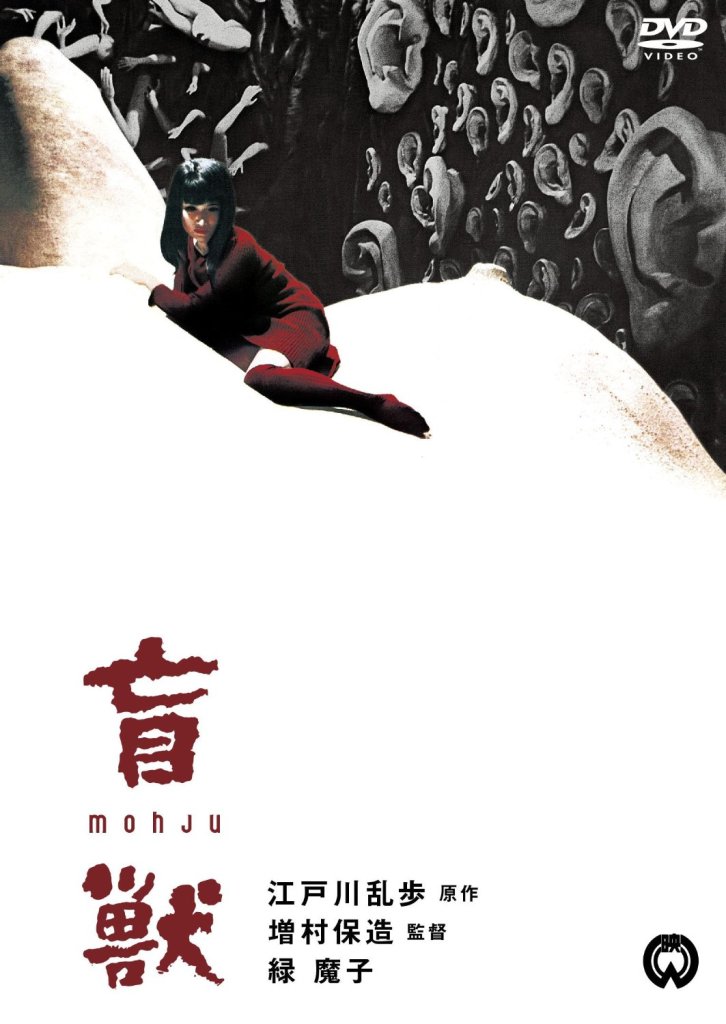
Blind Beast (盲獣, Yasuzo Masumura, 1969)

81dGenRMu-L._SL1500_Never one to take his foot off the accelerator, Yazuso Masumura hurtles headlong into the realms of surreal horror with 1969’s Blind Beast (盲獣, Moju). Based on a 1930s serialised novel by Japan’s master of eerie horror, Edogawa Rampo, the film has much more in common with the wilfully overwrought, post gothic European arthouse “horror” movies of period than with the Japanese. Dark, surreal and disturbing, Blind Beast is ultimately much more than the sum of its parts.

This dark tale is narrated by its “victim” Aki, a photographer’s model and the subject of a currently running exhibition. On paying a visit to the show herself, she finds a strange man caressing a statue of her built by one of the photographer’s students. Somewhat uncomfortable, she leaves the gallery in hurry and once home calls up a massage company help her relax. Once her masseuse arrives, he proceeds to caress her in a strange manner despite Aki’s protestations that she needs it “harder”. Eventually the ruse is uncovered and Aki realises he’s the blind man from the gallery at which point he chloroforms her and drags her back to his evil lair and mysterious studio in the middle of nowhere where he lives with his accommodating mother. The pair keep Aki prisoner until she consents to modelling for blind artist Michio’s latest sculpture project. After trying and failing to escape, Aki gradually falls into a kind of Stockholm syndrome where she finds herself in thrall to Michio and the pair’s sexual adventure enters a path towards the ultimate debasement and depravity…

The opening sequence of Blind Beast is the most surreal in this eerie, bizarre film. As Aki awakens in Michio’s lair she explores her darkened environment only to find the walls are each covered in sculptured motifs of various women’s body parts. First an entire wall of noses followed by mouths, arms, legs and breasts each apparently created from memory by the aspiring sculptor who, in his blindness, has decided that touch is the ultimate, neglected sensation. If that weren’t strange enough, the floor of the studio is taken up by a colossal statue of a woman lying on her back, as Aki finds out trying to escape the room by crawling over its perfectly sculpted breasts.

Micho himself is an unsettling though somewhat weakened figure, supported still by his caring mother who is prepared to do “anything” to indulge his “one pleasure in life”. Neither of the pair seems to appreciate the perfectly natural reaction of Aki to being held prisoner or her desire to escape and both are entirely focussed on making use of her in Michio’s new artistic movement which will place touch at the forefront of expression. Aki attempts to manipulate the situation in order to escape, firstly pretending to go along with their plans and then by attempting to place a wedge between Michio and his mother by emphasising Michio’s lack of autonomy and particularly his lack of sexual experience. Eventually she seduces him as a way of building his trust so he’ll let his guard down. However, after an event most would regard as traumatic, she comes to build a grudging affection for the blind sculptor and no longer wishes to leave.

Losing her sight herself, Aki grows ever more obsessed with the sculptor’s touch. As the pair’s relationship becomes increasingly intense they seek out even more vibrant sensations, new paths to ecstasy. Turning to sado masochism firstly through animalistic biting, clawing, and tearing they eventually resort to whips and knives before coming to a conclusion about where their new life of dissipation is leading them. Aki wonders if she had masochistic tendencies all along which the sculptor has “unlocked” with his magic touch.

Literally blinded, the two have entered a realm of sensations which are purely physical. Sexually naive, Michio has mentally dismembered the concept “woman” into a series of neatly separated components which can be assembled to form the physical shape without needing to think about anything which lies beyond the skin. Blind Beast is a romance, in some sense, even if an extremely disturbing one. Michio and Aki don’t fall in love in the conventional sense so much as become obsessed with the physical sensation of mutual touch. Pain and pleasure become interchangeable as the pair’s desire for physical satisfaction exceeds all limits.

Strange and surreal, Blind Beast carries one of the most disturbing final sequences ever committed to celluloid. With its European chamber music soundtrack it feels much more like an arty ‘60s giallo than anything else though in terms of what is actually visible on the screen is actually fairly light on gore or violence. This level of restraint only makes the film more disturbing as does its claustrophobic atmosphere and deadpan voice over. Another characteristically probing effort from Masumura, Blind Beast is among his strangest and most original efforts and is likely to linger in the memory long after its traumatic finale fades from the screen.


Blind Beast is available with English subtitles on R2 DVD from Yume Pictures.
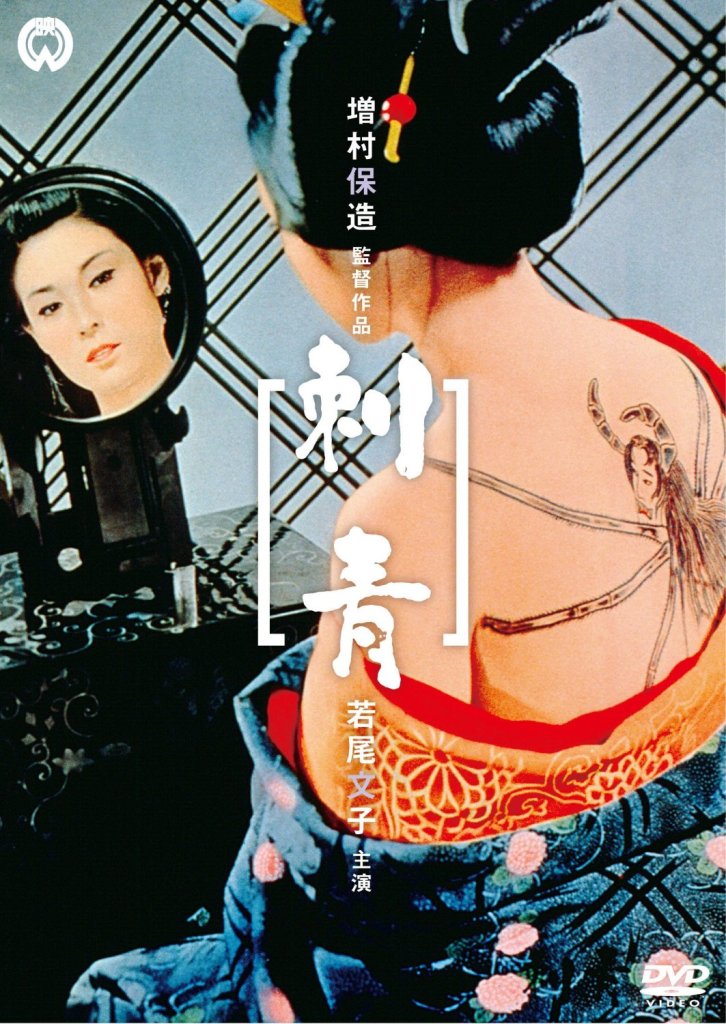
 

Irezumi (刺青, Yasuzo Masumura, 1966)

91HAEic7eNL._SL1500_Irezumi (刺青) is one of three films completed by the always prolific Yasuzo Masumura in 1966 alone and, though it stars frequent collaborator Ayako Wakao, couldn’t be more different than the actresses’ other performance for the director that year, the wartime drama Red Angel. Based on a novel by Tanizaki and scripted by Kaneto Shindo (Onibaba, Kuroneko), Irezumi is a supernaturally tinged tale of vengeance and betrayal.
The film begins in the middle as Otsuya, having been abducted and sold to a geisha house, is tied, bound and chloroformed so that a tattooist can mark her skin with the eery portrait of a spider with a human face. Skipping back awhile, it seems this came about as a consequence of Otsuya convincing the mild mannered assistant of her father, Shinsuke, to run away with her. The pair take refuge at the home of a family friend, Gonji, but after his advances towards Otsuya are rebuffed he arranges to have Shinsuke killed and Otsuya sold as a geisha. Shinsuke manages to get away after a bloody fight but he’s a gentle man and the violence of the encounter marks him. Otsuya, by contrast, finds she quite enjoys her new life and gets along OK with her pimp, Tokubei, who urges her to “feed on men”. Otsuya’s lusts become ever more violent with the spectre of the tattoo artist hovering in the background. Is the tattoo itself enacting these scenes of terrifying vitality or merely an excuse for releasing Otsuya’s true nature?

Shot in vibrant colour in contrast to Red Angel and many of Masumura’s other efforts from around the same time, Irezumi makes fantastic use of its lurid atmosphere. Sex and death and violence – hardly unusual themes for Japanese cinema though Irezumi feels like an early precursor to the exploitative pinky violence cycle of the following decade. In keeping with those films, Otsuya is another conflicted avenger, wreaking havoc on venial men who think they can buy and sell a woman’s soul as well as her body. As the violence mounts, Otsuya falls into a kind of mania and at one point exclaims that this isn’t really her at all, it’s all the fault of the spider on her back – trapping men in its silky web only to suck them dry and throw away the husk.

Whether Otsuya is herself an avenging warrior for the female sex or merely a demonic vision of the ultimate male fear is somewhat up for debate. Her transgressions are intentionally destabilising – she breaks with convention by “betraying” her father when she runs of with Shinsuke and not only that, she does so at her own insistence. Shinsuke himself is far too meek and mild mannered to have ever done such a thing entirely of his own will and is largely swept along by Otsuya for the entire course of the film. Only when he fears she may betray him does he decide to take action. Otsuya’s sexuality in itself is also transgressive, actively pursuing Shinsuke before a formal marriage and then even expressing her enjoyment of her new life in the pleasure quarters – neither attitude is one that is expected of the demure daughter of a noble house. Is she an emancipated woman, or fallen one? The film offers no clear judgement here but presents her both in terms of vengeful heroine and of terrifying villainess.

Along with its rather complicated structure beginning in a media res opening followed by a lengthy flashback sequence, Irezumi is never quite as successful as Masumura’s other mid ‘60s offerings. Though boasting a script by maestro Kaneto Shindo, a noted director in his own right and frequent visitor to the realms of horror, something about Irezumi fails to coalesce. That said, it does offer a visually arresting, generally interesting supernaturally tinged tale and yet another fantastic performance from its talented leading lady.


Irezumi is available with English subtitles on UK R2 DVD from Yume Pictures

Tattoo sequence from the film:


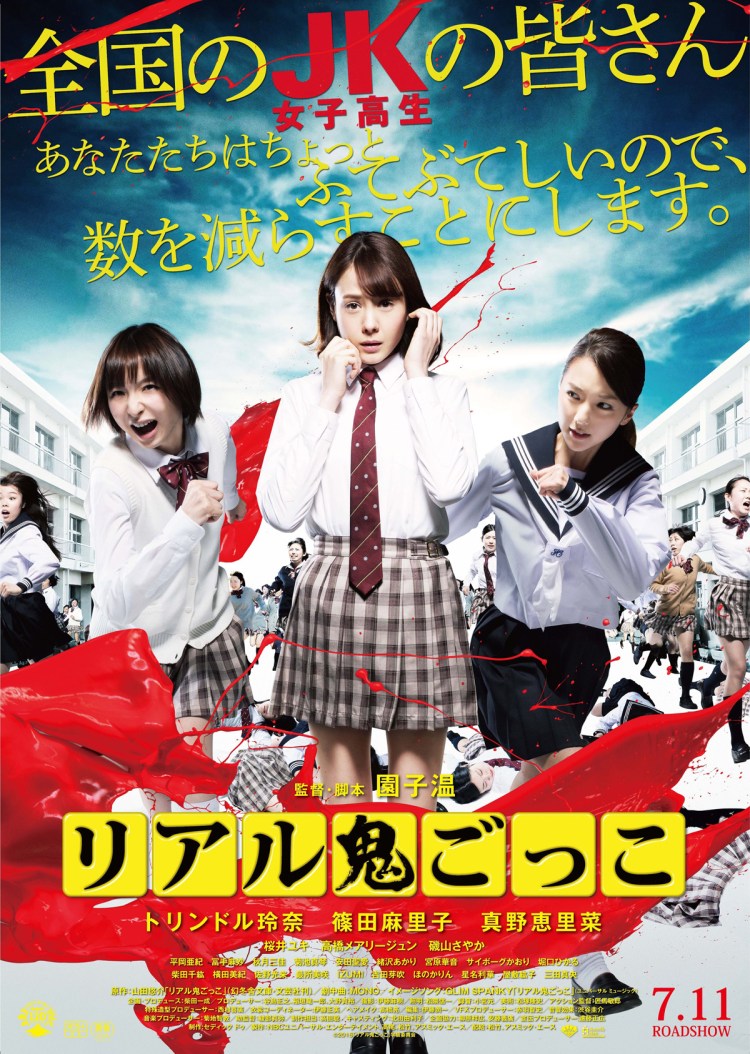
Tag (リアル鬼ごっこ, Sion Sono, 2015)

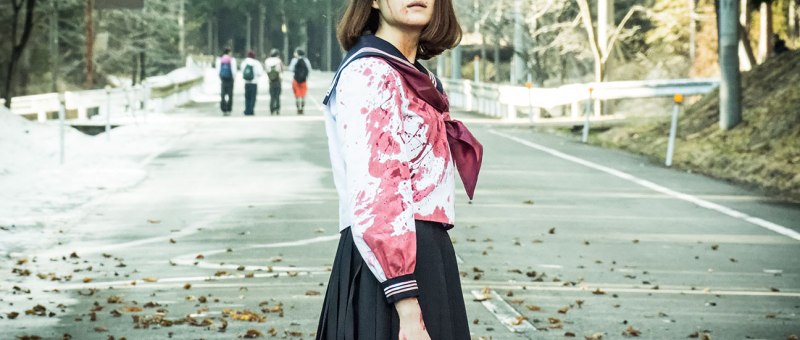
tag posterYou could say Sion Sono is back, though with six films released within a year it’s almost as if he just nipped out to make a cup of tea. At first look Tag (リアル鬼ごっこ, Riaru Onigokko) seems as if it might be towards the bottom of the pile – school girls running away from things for 90 minutes whilst contending with awkward gusts of wind, but this is Sion Sono after all and so there’s a whole world of craziness going on below the surface.

The action begins with a gaggle of school girls on a bus. Two of them start ribbing the girl on the opposite bank of seats, Mitsuko (Reina Triendl), because she’s always writing poetry. The pen gets knocked out of her hand and as she bends down to pick it up she notices a white feather stuck to the clip. Gazing at the improbable symbol, Mitsuko becomes the only survivor when a sudden gust of wind blows the top off the bus taking all of the other passengers’ heads with it. Mitsuko starts running, re-encountering the dreaded wind monster over and over again before stopping at a stream to wash the blood off her face and change into the cleaner set of clothes she finds abandoned there.

After this she finds herself ending up at an entirely different school where everyone seems to know her. Has she gone mad, had a psychotic break? If not then then she’s about to as an attempt to ditch class with some of the other girls results in yet another freak school girl apocalypse.

Running again, Mitsuko ends up at a police box where another woman seems to know her but insists her name’s Keiko (Mariko Shinoda). Oh, and it’s her wedding day today! That’s not even the last time that’s going to happen and it’s far from the weirdest thing that’s going to happen to Mitsuko today. As a friend of Mitsuko 2’s reminds us, “Life is surreal, don’t let it get to you”.

Answers come, after a fashion. Though Tag is nominally based on a novel by Yusuke Yamada (previously adapted into a long running film series), Sono apparently did not even read the book and has only taken its theme – everyone with the same surname being hunted down and exterminated, and repurposed it for his own ends. This time rather than a common surname, it’s an entire gender that is forced to live under constant threat as the plaything of a far off entity that is as invisible and ever present as the wind. It’s no accident that everyone we meet up until the half way point is female, and that the first (presumed) male we meet is wearing a giant pig’s head. Mitsuko and her cohorts have in fact been used as a literal toy by the men on the other side of the curtain. Their very DNA has been co-opted for the “entertainment” of the male world without their consent or even knowledge, and even if she had known, Mitsuko is powerless to resist.

The solution that is found is both very old and very profound. It’s far from an original ending to this kind of story though in these hands, and used in this way, it can, and has, caused offence. Tag wants to ask you about life, about death, about agency and misogyny – but it wants to ask you all those things whilst watching school girls get ripped apart by the same wind that keeps blowing their skirts up. Sono has his cake and eats it too. There will undoubtedly be those that feel that far from satirising mainstream attitudes to women, Sono has, in fact, indulged in the worst parts of them.

If all of that was sounding a little heavy, Tag runs (literally) at breakneck speed with barely any time for conscious thought between the first bizarre case of gore filled mass murder and the next. It’s also strangely beautiful with a hazy, dreamlike veneer full of repeated images and scenes of idyllic serenity. Is any of this real? Who could really say. The ultramodern, indie score also strikes a slightly hypnotic note lending to the feeling of freewheeling weightlessness.

In many ways, Tag has much more in common with early Sono hit Suicide Club thanks to a general thematic sensibility than to any of his more straightforward work since. That said, Tag never quite resolves itself in a wholly satisfying way and though its final moments are filled with a poetic sensitivity, there’s a certain barrier created by its ambiguity that feels unfinished rather than deliberate. Another predictably “not what it looks like” effort from Sono, Tag may just come to be remembered as his most considered effort of 2015.


First Published on UK Anime Network in November 2015.

Playing at the Leeds International Film Festival on 18th November 2015.

Other movies playing at Leeds include Assassination Classroom, Happy Hour, Our Little Sister and Love & Peace.

Can’t find a subtitled trailer for some reason but to be honest you’ll get the gist of it:

Asleep (白河夜船, Shingo Wakagi, 2015)

asleep posterBased on the third of three short stories in Banana Yoshimoto’s novel of the same name, Asleep (白河夜船, Shirakawayofune) is an apt name for this tale of grief and listlessness. Starring actress of the moment Sakura Ando, the film proves that little has changed since the release of the book in 1989 when it comes to young lives disrupted by a traumatic event. Slow and meandering, Asleep’s gentle pace may frustrate some but its melancholic poetry is sure to leave its mark.
Terako (Sakura Ando) is a young woman who sleeps a lot. Almost all the time, in fact. The kept woman of a married man whose wife, oddly enough, is in a coma following a traffic accident, Terako has been in a kind of limbo since her former roommate and good friend committed suicide by taking an overdose of sleeping pills. Prior to her death, Shiori had taken up an unusual occupation – she lies next to lonely strangers who just want to know that someone is watching over them while they sleep and will be there when they awake. This also meant that she rarely had the opportunity to sleep herself as her occupation demanded keeping a watchful eye over her charges and falling asleep on the job seemed like a lapse of professionalism.

Mr. Iwanaga, Terako’s boyfriend, is an enabler of the first order. He prefers that Terako not work so that she’s available for him whenever he feels the need to call meaning that she’s always at home, sleeping. She sleeps and sleeps but finds no relief from her exhaustion. Even her dates with Iwanaga feel “like the shadow of a dream”. The constant flashbacks and meandering timelines perfectly reflect someone trying to think through the distorted reality of fractured sleep where the boundaries between dream and reality have become impossibly blurred.

There’s an odd sort of triumvirate of sleeping women here – Terako herself who does little but sleep but is still constantly exhausted, Shiori who denied herself sleep until ultimately deciding to take enough sleeping pills to go to sleep forever and Iwanaga’s wife who’s trapped in coma. At one point, in a conversation which either happened some time ago or not at all, Shiori remarks that Iwanaga has Terako “on pause” because he’s afraid to move on from his wife (the fact of his having an affair while his wife is lying in a hospital bed even has Terako labelling him a cold, unfeeling man but then she says she likes that kind of thing anyway). It’s as if she’s waiting for someone to hit the spacebar to wake her up again, though Iwanaga is “on pause” too – torn between the choice of abandoning his wife who will likely never wake up and being labeled heartless, or sacrificing the rest of his life in devotion to a memory.

Help does come, in a way, through the intervention of a either a dream or a kind of cosmic transference – an impossible conversation between two women equally in need of it. Shingo Wakagi’s adaptation is more interested in psychology and existential questioning than it is in hard realities or concrete solutions. A vignette of a moment in a young woman’s life, Asleep gives us little in the way of backstory or explanatory epiphanies, and finally ends in the characteristically ambiguous way many Japanese novellas often do though there is a hint at a possible shift in Terako’s life offered by the final images. A poetic meditation on dream, memory, grief and loneliness, Asleep is beautifully framed, if appropriately distant, look at modern life in limbo.


Reviewed at Raindance 2015

First Published on UK Anime Network in 2015.

Fires on the Plain (野火, Shinya Tsukamoto, 2015)

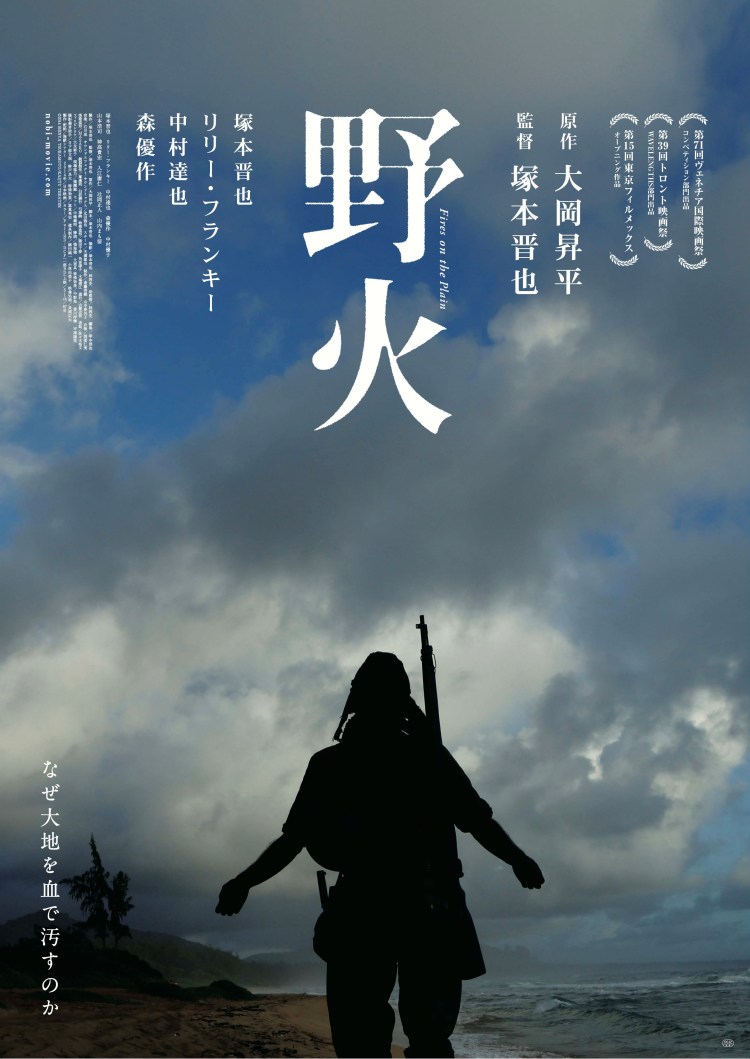
fires on the plain 2015 posterShinya Tsukamoto is back with another characteristically visceral look at the dark sides of human nature in his latest feature length effort, Fires on the Plain (野火, Nobi). Another take on the classic, autobiographically inspired novel of the same name by Shohei Ooka (previously adapted by Kon Ichikawa in 1959), Fires on the Plain is a disturbing, surreal examination of the effects of war both on and off the battlefield.
Late in the war when it’s almost lost though no one wants to admit it, Corporal Tamura (Shinya Tsukamoto) finds himself suffering with TB on the Philippine island of Leyte where supplies, and tethers, are running short. Shortly after being punched in the face by his commanding officer, he’s given five days’ worth of supplies and ordered to march to the field hospital for treatment as no one wants a sick man weighing down the unit. Only, when he finally arrives at the field hospital, they have their hands full (literally) with the battlefield wounded. Marching back to his unit again, Tamura is ordered back to the field hospital and told to use his grenade to ease the burden on his fellow soldiers if refused. So begins Tamura’s fevered, mostly solitary odyssey across the beautiful landscape of the Philippine jungle suddenly scarred with corpses, the starving and the mad.

Tsukamoto’s adaptation sticks closer to the original novel than Ichikawa’s 1959 version, though both eschew Ooka’s Christianity. Tamura is a man at odds with his fellow soldiers. Formerly a writer he’s “an intellectual” as one puts it, and a little on the old side for a corporal. Coughing and wheezing, he shuffles his way through just trying to survive. Unlike Ooka’s original novel in which the protagonist’s Catholicism makes suicide an unavailable option, it’s the memory of Tamura’s wife which stays his hand on the pin of his grenade. Tamura wants to go home, to escape this hellish island full of the walking dead, hostile locals and hidden clusters of enemy troops.

To get home, to survive, what will it cost? There was barely any food left to start with. The original five days’ worth of rations Tamura was given amounted to a handful of yams. On his second trip to the military hospital he was given nothing at all. There’s no wildlife, even if you manage to find some plant roots they’ll need cooking. Of course, there is one abundant source of food, except that it doesn’t bear thinking about. Tsukamoto’s version takes a less ambiguous approach to the idea of cannibalism than Ichikawa’s which removed Tamura’s moral dilemma by having his teeth fall out through malnutrition and rendering him unable to indulge in “monkey meat” even if he might have succumbed. Death feeds on death and there’s no humanity to be found here anymore where men prey on men like animals.

There’s no glory in dying like this. Half starved, half mad and baking to death in the heat of a foreign jungle abandoned by your country which cared so little for its men that it never thought to conserve them. When you make it home, if you make it home, you aren’t the same you that left. The things you had to do to get there stay with you for the rest of your life, and not just with you – with all of those around you too. Wars don’t end when treaties are signed, they survive in the eyes of the men who fought them.

A timely and a visceral look at the literal horror of war, Tsukamoto’s Fires on the Plain is a refreshingly frank, if stylised, examination of the battlefield. Limbs fly, heads explode, organs are exposed and brain fragments leak out of ruined corpses. At any other time, Leyte would be a paradise of lush vegetation, colourful flowers and beautiful blue skies but it’s corrupted now by the fruits of human cruelty. This is what it means to go to war. There’s nothing noble in this – just death, decay and eternal grief. Though the film often suffers from its low budget and some may be put off by the stark, hyperreal cinematography, Fires on the Plain is another typically troubling effort from the master of discomfort and comes as a warning bell to those who still think it is sweet and fitting to die for one’s country.


Reviewed at Raindance 2015.

Original trailer (English subtitles)

First published by UK Anime Network.

0.5mm (Momoko Ando, 2014)

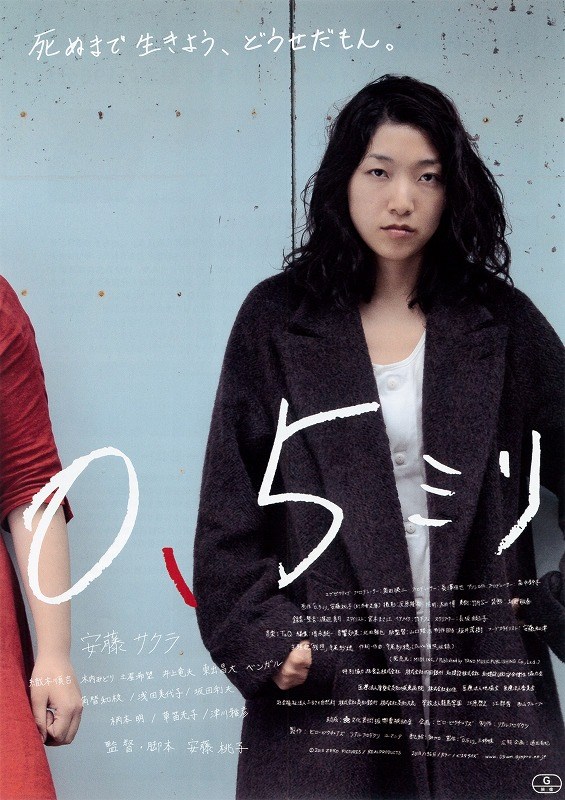
0.5mm-poster-20.5mm is only Momoko Ando’s second film following on from her lesbian love story manga adaptation, Kakera: A Piece of Our Life. Starring her real life sister Sakura Ando in the lead role, 0.5mm is undeniably more complex and epic in scope than her previous film but retains some of its whimsical atmosphere and benign objectivity. Encompassing such disparate themes as Japan’s rapidly ageing population, entrenched sexism, archaic ideas about gender, and what it’s like to find yourself at the bottom of the heap thanks to a series of unfortunate incidents, 0.5mm is a hugely impressive sophomore effort from Ando and one of the best Japanese indie movies for quite some time.

Sawa is a home care nurse and her current assignment is caring for an elderly, bedridden gentleman who lives with his daughter and grandson. One day, the old man’s daughter makes an extremely odd and inappropriate request of Sawa which she eventually agrees to. However, things go just about as wrong as they could possibly go and Sawa finds herself out of a job and, as she lived in nurse’s accommodation, out of a home too. That’s not the end of her troubles as she manages to leave her coat, in the pocket of which is an envelope containing her life savings, on a train. At this point she’s pretty much down and out when she notices an elderly gentlemen confusedly trying to find out if it’s OK to sleep all night at a 24 hour karaoke box. Pretending to be the old man’s date she hires a room for two and bamboozles him into it for a night of singing and snoozing. In the morning it turns out the old man quite enjoyed the mad adventure as he’s temporarily run away from home because all his son seemed to care about was the inheritance so he thought he might as well spend it all himself. This strange encounter begins Sawa’s odyssey into a series of similar episodes where she blackmails an elderly gentleman into letting her stay with him for a while until one final meeting brings things full circle.

Sawa is definitely a very unusual woman. Good at her job, she’s a caring person in more ways than one. Her new found method of survival is certainly a novel one, and not entirely ethical, but then all she’s doing is exploiting circumstances in the same way circumstances have had a way of exploiting her. Though she weaselled her way into these men’s lives, she did, at least, care for them. Yes, she did the cooking and the cleaning and assisted with healthcare too but she also helped them to realise a few things about themselves and move on with their lives. Whether it’s saving them from yakuza backed pyramid scams or listening to their traumatic memories of the war, Sawa has a knack for seeing people’s hidden pain and another for knowing how to make it better.

Yet, her various encounters with the older generation speak of a number of different social problems that cannot be repaired by one person alone. The first man she meets feels unwanted by his family and is looking for escape, a reassertion of his independence and perhaps a little revenge. The second is really quite mad – obsessively counting the trees in the park, stealing bicycles and letting people’s tires down but he too is alone with no one looking after him. The third man has a bedridden wife and, apparently, a taste for erotic school girl magazines but no children of his own to take care of him. The fourth man discovered a teenage child he’d never met though is incapable of forming a relationship with him. Society is full of lonely, elderly people who either have no close family or have become estranged from them. Some of them have become vulnerable and half mad through extreme isolation and others have become embittered, violent or trapped in the past.

In the way that these men react to Sawa there’s also a complex system of ideas at play as each of Sawa’s employers seem incapable of defining exactly what sort of “services” they expect of her. Nurse, housekeeper, mother, courtesan? From the original, perhaps innocent though far from appropriate, request each of the men Sawa encounters can’t help but view her as a some kind of sex object and react with various degrees of embarrassment about it. To them she is many things though never quite a “person” until, perhaps, their relationship begins to near its end and each reaches some kind of epiphany brought about by her presence. However, Sawa herself is perfectly aware of each of these complexities and perfectly willing to exploit them with a sort of amused ruefulness.

The 0.5mm of the title refers to a metaphor offered on a farewell cassette tape from the second of Sawa’s old gentlemen that one person may be only be able to move a mountain by 0.5mm but if everyone got together the mountain would move and you could start a revolution. At once he bemoans Japan’s military past but also laments that something of the community spirit from those days has been lost. That if we all just stopped living in wilful isolation and embraced the fact that we’re all here together at the same time we could make things better for everyone. Much of the film is about the distance between people – young/old, male/female it isn’t the distinction that matters but the series of invisible walls that exist to keep people apart.

Warm, enigmatic and surprisingly funny (if in a kind of dark way) 0.5mm is is a complex and thought provoking film that is also often very beautiful and immensely enjoyable. At 196 minutes, it’s undeniably a long film with an episodic structure though it largely manages to sustain its lengthy running time without outstaying its welcome. Rich and strange, 0.5mm is all the better for its unresolved mysteries and offers an impressively nuanced cross section of modern society made all the more detailed thanks to its epic scope.

Kagero-za 陽炎座 (Heat Haze Theatre – Seijun Suzuki 1981)

SuzukiKageroza1Zigeunerweisen was an unexpected commercial and critical hit in Japan netting both an improbably good box office return and more than a few awards. The next instalment in what would become Suzuki’s Taisho Roman Trilogy (though it would be another ten years before the final part, Yumeji, would arrive) therefore benefitted from a slighter bigger budget, bigger stars and even greater ambition. Like the others in the trilogy and as implied by its title, Kagero-za is once again based on a book set in the Taisho era though this time by Kyoka Izumi. Izumi was a novelist and kabuki playwright most closely associated with supernatural tales influenced by Edo era traditions and Kagero-za even features a playwright as its protagonist. With even less clarity than Zigeunerweisen, Kagero-za is not altogether as successful but nevertheless boasts Suzuki’s bizarre imagery and surreal world view.

Like Zigeunerweisen Kagero-za also throws dreams and reality into a giant melting pot with a non-linear narrative that floats and wefts like a strange nightmare. It begins with the central character, Matsuzaki (played by Yusaku Matsuda), meeting a lone woman near a shrine who asks him to accompany her to visit a friend in the hospital. She doesn’t want to go alone because she’s afraid of the old woman who sells charms and medicines there including bladder cherries which are said to contain the souls of women. Originally reluctant Matsuzaki agrees only to have her change her mind shortly after. Matsuzaki is pre-occupied over having dropped a love letter and worrying it’s been found by an ‘evil’ person – something which upsets his new friend as she’s convinced the letter was from a married woman.

This mysterious woman, it turns out, may be (or have been?) the wife of Matsuzaki’s wealthy patron Tamawaki. To make matters even more confusing, Tamawaki may have had two wives – the first a German woman he married while abroad and brought back with him to Japan who died her hair black and wore contact lenses to look more Japanese but regained her original blonde & blue eyed foreignness in the bright moonlight. The second is, apparently, dying in hospital – not that Tamawaki is terribly upset about it. Matsuzaki becomes increasingly obsessed with the mysterious woman, following her across the country only to discover Tamawaki waiting for him – apparently intent on witnessing a double suicide.

The film takes an even more surrealist dive towards the end as Matsuzaki finds himself the only adult audience member at a kabuki show entirely performed and witnessed by children. Not only that, this bizarre kabuki play appears to re-enact the exact same events from the first half of the film. A fitting trap for a playwright, this last, nightmarish section echoes the film’s ghost story origins complete with the creepy bladder cherry seller from the beginning as some kind of villainous demoness and Tamawaki as a tempting devil. Who talks of realism here? Says Tamawaki making an exit through an alleyway with a rifle on his shoulder. Who indeed? Not us, that’s for sure.

Even less coherent than Zigeunerweisen, Kagero-za is a veritable fever dream of a film. There’s barely any linear plot, Matsuzaki’s perceptions are recounted in fractured dream narrative where the true nature of events is always unclear. We can’t trust Matsuzaki to guide us here, nor can we trust Suzuki who employs fewer absurdist tricks than with the previous film but injects a heavy dose of kabuki inspired theatrics. Everything feels inevitable, like the action in a play it’s all been scripted and performed many times before. Yet for all that we don’t ever come to feel very much for Matsuzaki and his presumably tragic fate even though we realise fairly early on what sort of story this is. It’s hellish, and gruelling and honestly tries the patience at times but never achieves that sense of over arching dread that characterised Zigeunerweisen.

That said, if Kagero-za’s largest weakness is playing second fiddle to Zigeunerweisen that’s not so much of a problem. Once again filled with bizarre and trippy imagery, Kagero-za has many startling moments but fails to marry its visual virtuosity with the more individualistic focus of its script. Undeniably without the power of Zigeunerweisen, Kagero-za ultimately feels a little too clever (and perhaps too cold) for its own good but nevertheless does offer Suzuki’s visual flair and an entertaining (if baffling) narrative.

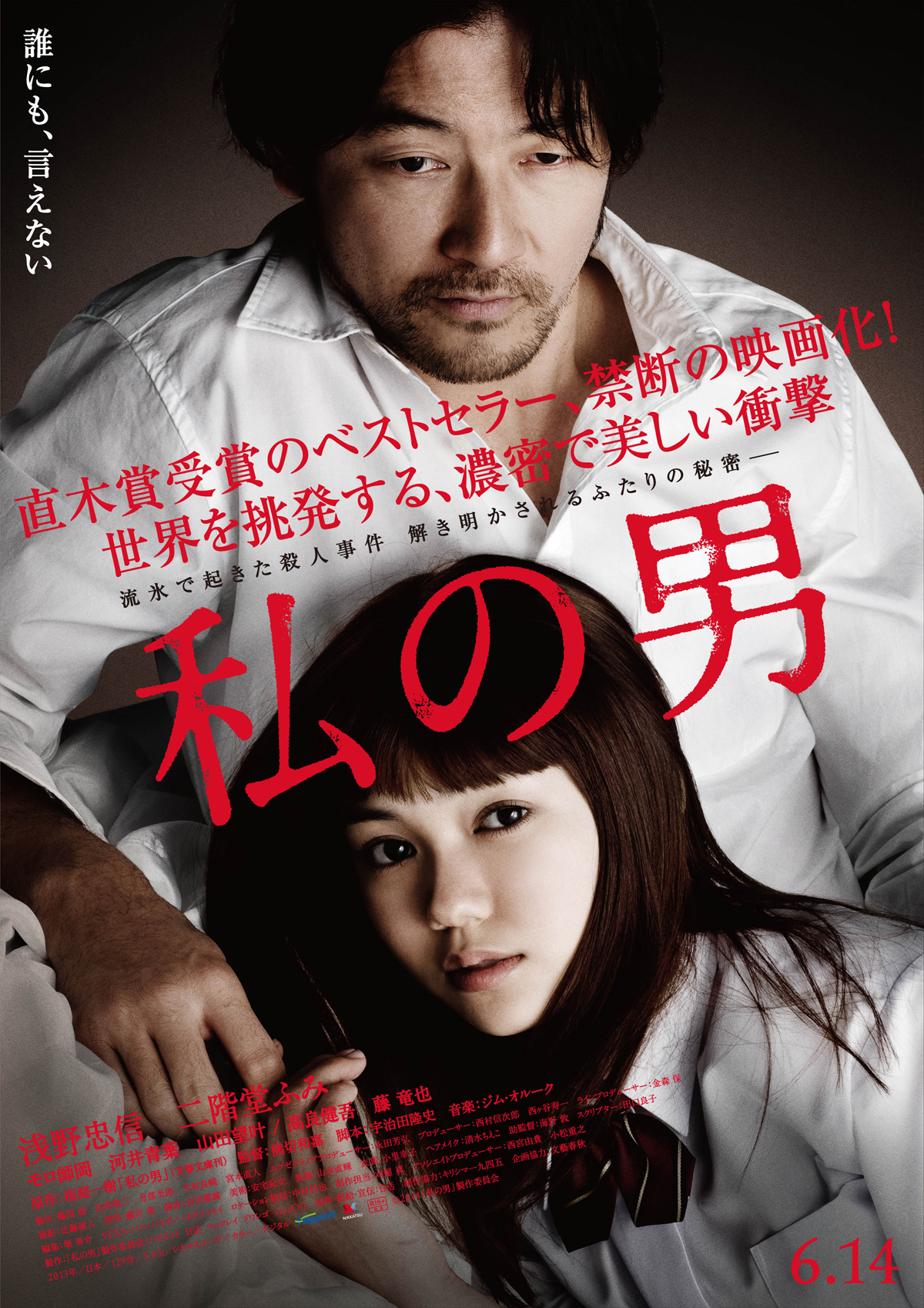
My Man 私の男 (Kazuyoshi Kumakiri, 2014)

162276_02Based on the Naoki Prize winning novel by Kazuki Sakuraba, My Man tackles the difficult subject of a quasi-incestual “love” affair between a young orphaned girl and the “distant” relative who adopts her as his “daughter”. Though this taboo subject has never been far from Japanese screens (find me an art film from the ’60s which doesn’t involve incest in some way), My Man dares to examine in it in all its realistic muddiness and is marked by nothing so much as its raw intensity. Brought to the screen by Kazuyoshi Kumakiri whose last picture Summer’s End chronicled the romantic and existential dilemmas of a woman approaching middle age, My Man is a disturbing and unsettling film which poses a fair few unpleasant questions about the nature of familial and romantic relationships.

The film begins with a young girl, Hana, crawling away from a scene of intense devastation. Finally ending up at a refugee centre, it seems that Hana’s entire family have been killed in a natural disaster. Creeping back to her house, Hana is discovered by a rescue worker, Jungo, who by coincidence happens to be a distant relative of hers. Asked who the little girl is, Jungo immediately asserts that she is his daughter and there after claims her as his own. The pair continue to live together in a small, seaside Hokkaido town until Hana reaches middle school age at which point their relationship changes and the lines between father/daughter and husband/wife become exceedingly blurred. Only growing in intensity, the two will eventually even go so far as to kill to protect their illicit relationship which eventually takes them to the comparatively more anonymous Tokyo but what the outcome of their unconventional bond will ultimately be, only time will tell.

Hana and Jungo are both people in search of “family” and unbreakable bonds. Hana, having just lost her entire world in a tsunami is haunted by nightmares of being carried by her desperate father running from the coming storm but comes to see her new guardian Jungo as something more than a paternal figure. Jungo, as the kindly uncle Oshio remarks, is the sort of man who shouldn’t have a family. At this point, we don’t know why Oshio feels this way, merely that people seem uneasy in Jungo’s company and there’s something a little strange in his bearing and in his willingness to adopt an orphaned little girl with very little consideration. Though they are described as “distant” relatives, Jungo spent sometime in Hana’s familial home just before she was born and claims to have had a fondness for her mother – perhaps not such a “distant” relative after all.

In fact, Hana comes to feel an indestructible bond with Jungo precisely because of their blood ties. She believes he may be her true father and makes him also her carnal lover. Hana’s possessiveness begins almost at the beginning of their relationship with a repeated motif where she sucks on his fingers which takes on an increasingly erotic context as the film goes on. Seeing off Jungo’s more age appropriate girlfriend, Komachi, Hana delights in her triumphant ownership of Jungo decrying that he needs a blood relative and nothing else will do. Horrified, Komachi eventually leaves the area altogether and Hana and Jungo to their strangely intense “family” life. When Oshio accidentally discovers what exactly goes on in their household and comes to the conclusion Hana may once again need rescuing, talking may not quite be enough. Though their relationship has crossed social taboos the pair see nothing wrong in it yet are afraid of the possibility of being discovered and will go to great lengths to protect their illicit secret.

The tale starts to lose momentum a little after the move to Tokyo but it’s here that the central problem makes itself most plain. Jungo, having left the sea behind him, works as a cab driver in the city but eventually drifts into a life of aimless alcoholism as Hana grows up and away from him. “I just want to be a father” he cries after having just had a bizarre and humiliating encounter with a would be suitor of Hana’s. “You’re not good enough” he tells him, a repeated phrase offered to another of Hana’s men at the end of the film – fatherly words, but tinged with the jealousy of a rival. In the end, it seems as if Hana may have abandoned their “family” for a more conventional life, however, in a telling sequence set in a restaurant everything else appears to disappear leaving just the two of them isolated in their own world. Flirtatious and possessive, theirs is a bond which will truly never be broken, for better or worse.

Kumakiri shoots this bleak tale in a mostly naturalistic style occasionally giving way to expressionism and snaps of non-linear editing. In a pivotal scene as Jungo and Hana indulge their carnal passions one morning before school, the entire room rains blood – first falling as droplets on Hana’s back before becoming a torrent which leaves them both stained crimson. A blood wedding or presaging their further transgressions, this startling moment is only one of Kumakiri’s impressively nuanced symbolic touches. Though the film has its B-movie, melodramatic elements, Kumakiri has been able to integrate these into his slightly elevated tone with little difficulty to create a modern, melancholic mood piece which is rich with mystery and only hinted at implications.

Another interesting film from Kumakiri, My Man is an impressively directed dissection of its difficult subject matter. Anchored by extraordinary performances from Tadanobu Asano and particularly from Fumi Nikaido as the complicated and conflicted Hana, Kumakiri thankfully keeps the sleaze factor low though simmering enough for its necessary impact. It may not be a pleasant watch, but for those who can bear its unrelenting melancholy My Man offers a fascinating portrait of the modern family in crisis.

When Marnie Was There 思い出のマーニー (Hiromasa Yonebayashi 2014)

When-Marnie-Was-There-GhibliPerhaps the final effort from Studio Ghibli, When Marnie was There is directed by Hiromasa Yonebayashi whom some had seen as a potential successor to the company though it seems he too has now left Ghibli’s employ! Like Yonebayashi’s previous film The Secret World of Arriety, Marnie is also based on a vintage British children’s book – this time by Joan G. Robinson, though When Marnie Was There hasn’t enjoyed the same level on ongoing popularity as The Borrowers (maybe because it hasn’t received the same kind of televisual treatment as Mary Norton’s novels). Nevertheless, Marnie has been successfully shifted to modern day Japan whilst still managing to feel quite like ’60s England.

Anna is a solitary 12 year old orphaned girl living with her adoptive parents in Sapporo. A constant worry to her fretting mother, Anna suffers from severe asthma and has received complaints at school regarding her aloofness and seeming inability to make friends. Part blaming herself and her often absent husband, Anna’s mother decides to send her to the country for a while over the summer, hoping both that the clean air will be good for her lungs and a change of scene might help bring her out of herself. After arriving at a small seaside town to stay with some relatives of her mother’s, Anna hears tell of a mysterious grain silo which the local children think is haunted and also becomes strangely drawn to an apparently empty Western style mansion. Anna starts to dream about the house and eventually ends up meeting a mysterious and cheerful blonde girl there dressed in a distinctly old fashioned style. Though opposites in many ways the two have more than you might expect in common and quickly become firm friends. However, why can’t Marnie go very far from the mansion and why doesn’t anyone else seem to know about her? Only through solving the mystery of Marnie can Anna unlock the secrets that have been causing her pain in her own life.

Perhaps oddly, there are a lot of similarly themed children’s books from this period – enough to form a small genre all of their own though there are certainly much more well known examples than When Marnie was There. They are in fact so well known that to name any one of them might accidentally spoil the story but any British adult over 30 who grew up reading this kind of material or watching the numerous television adaptations has probably already figured out where this is going. Having said that, the film at least deviates from the norm in that the country relatives are actually nice if content to let Anna figure herself out while she’s there rather than the stern guardians you often see which necessitate the children getting out of the house to go on their adventures. Likewise, generally the stories focus on the accidental friendships developed by (oftentimes originally mismatched) children as they investigate whatever mystery has arisen – though Marnie has this, it leaves it as a nice, subtle detail that actually pays off in the end. Thankfully, though the resulting story is sad, there’s nothing really malevolent lurking and the resolution is such that it allows the central characters to close the loop on a traumatic event with their memories returned to them so they can move on with their lives.

By and large, the animation is just as impressive as any other Ghibli movie (though perhaps unremarkable by their very high standards). The pacing is, at times, strange – particularly the last segment in which the revelation is played as one long narrated tale, but Yonebayashi has been able to imbue this little seaside village with plenty of character full of tiny details and a fully realised life of its own. Though it’s a little more obviously sentimental than many of Ghibli’s other works and eschews some their more usual concerns, When Marnie was There stays true to the emphasis on the importance of friendship, loyalty and decency that has long been a mainstay in Ghibli movies. Unlike The Wind Rises or Princess Kaguya, this one is firmly aimed at girls of around the protagonist’s age and may have a little less to offer to those outside of it but its tale of adolescent connection still rings true.

Some might claim it’s second tier Ghibli, and they might be right, but even second tier Ghibli is still a ways ahead of most other animation. An old fashioned children’s mystery melodrama with friendship at its heart, When Marnie was There doesn’t exactly break any new ground but it does offer an intriguing tale told with characteristic warmth and intelligence by the promising young director Yonebayashi.

Pale Moon (紙の月, Daihachi Yoshida, 2014)

Pale-Moon_MainDaihachi Yoshida’s last venture into human dynamics, The Kirishima Thing, took the high school environment as a microcosm for society as a whole. In some senses painting on a large canvas by illuminating the inner lives of these teenagers acting as both individuals and as members of a group, The Kirishima Thing was equal parts ensemble character drama and probing social commentary. Pale Moon (紙の月, Kami no Tsuki) is no different in this regard although it focuses more tightly on one individual and shifts age groups from turbulent adolescence to middle aged desperation. Set in 1994 just after the bubble burst, this gleefully cheeky (im)morality tale takes another sideways glance at the social norms of contemporary Japan.

Rika (Rie Miyazawa) is a demure woman in her early forties. A childless former housewife, she’s recently moved from a part time position at a bank to a full time job where she works as a kind of personal banking assistant visiting wealthy clients at home to discuss their financial needs and physically depositing their money in the bank for them. Efficient, reserved, reliable – Rika is the perfect employee, that is until one day she spends some of a client’s money because there isn’t quite enough in her purse. She takes the money straight out of an ATM and replaces it right away, of course, but a line has been crossed. It’s a quick step from a gentle misappropriation of funds to a series of interestingly decorated hotel rooms with a boy half your age, embezzlement on a grand scale, blackmail, bank fraud – the list goes on. How did it ever come to this? Yet, it’s the strangest thing – Rika has never felt more alive.

Money – it’s the life blood of capitalism. It makes the world go round and drives people crazy as they try to amass even more little bits of paper with numbers written on them. It’s fake, an illusion that we’ve all bought into – no more real than a paper moon (to go by the film’s original Japanese title), though we continue to set all of our hopes afloat on its surface. When Rika finally convinces her financially challenged young lover to accept her (stolen) money, she tries to convince him that nothing will change but, of course, it does. The dynamics fluctuate and money gets in the way, the toxicity of debt starts to eat away at any genuine connection that may have existed. The irony is, Rika is one of those people who steals in order to give away. It sounds selfless, even altruistic, but is in fact the most intensely selfish action that can be taken. “It’s better to give than to receive” goes the mantra of the nuns of the Catholic school where young Rika was educated, but they also council that charity should never have anything to do with your own gratification. This is the lesson that Rika finds so hard to learn, it feels so good to give – how can it be wrong to take?

It’s easy to say that the world has changed a lot in the intervening twenty years between now and the time the bulk of the action takes place, but maybe it hasn’t. The first thing that strikes you is how extraordinarily sexist Rika’s world is. It’s not long before she’s being asked questions about her marital status whilst being made to feel uncomfortable, alone in the home of her elderly male client. Then at the office her boss praises her efforts whilst sadly lamenting that women have more “tools” at their disposal than men do, which is both insultingly crude and a put down of her skills and hard work. Rika only gets her permanent position because another woman, an employee of nineteen years standing, has been forced out through a campaign of constructive dismissal because the big wigs don’t like paying higher salaries to older female workers but they won’t promote them past a certain level either. Her younger colleagues make fun of their “spinster” supervisor, Sumi (Satomi Kobayashi), who, only a generation older, had to make a clear cut choice between work and family and having chosen a career now sees the rug being pulled out from under her with the standard “transfer to head office” game plan in place to force her into retirement.

Rika’s home life offers a similar level of hope for the future. Her husband is probably well meaning, but totally insensitive and the marriage is at best unfulfilling. He pooh-poohs his wife’s thriftiness and her new “hobby” at the bank, totally failing to understand her motivation. At one point he announces he’s being transferred abroad so she’ll have to give her notice – it never occurs to him she may not wish to go, let alone that she’d refuse over something so trivial as her own job. It’s little surprise then that she’d so quickly fall for a handsome and attentive stranger. An “amour fou”, an old story but no less potent than it ever was.

Rika knows none of it’s real – that her temporary crime fuelled reprieve can’t go on forever, but that only makes her feel more free. In one telling episode, Rika is talking to a granny she’s in the process of swindling and remarks on her beautiful new necklace. What a shame it’s fake, Rika says, but the old lady replies that she knows it’s only imitation but she doesn’t care – it’s pretty, she likes it and she’s happy. That perhaps is the answer. Rika saw her chance and she took it. That takes some courage and whatever the moral outrage one might feel, there’s something undeniably admirable, even exciting, about Rika’s dramatic escape from the constraints of conventional social behaviour.


Pale Moon is receiving its UK Premier at the Glasgow Film Festival on 19th February so if you’re in the Glasgow area be sure to check it out!