Seven Years Itch (七年之癢, Johnnie To, 1987)

The shifting social codes of late ‘80s Hong Kong come under the microscope in Cinema City sex farce, Seven Years Itch (七年之癢). Loosely inspired by the 1955 Billy Wilder film, Johnnie To’s third directorial feature may in some senses suggest contemporary Hong Kong is little different from mid-50s America in its overly patriarchal gender politics but does in some senses at least attempt to redress the balance by turning the tables on the feckless husband if only to defiantly restore the status quo in the uncomfortable positioning of domestic violence as a means of social control. 

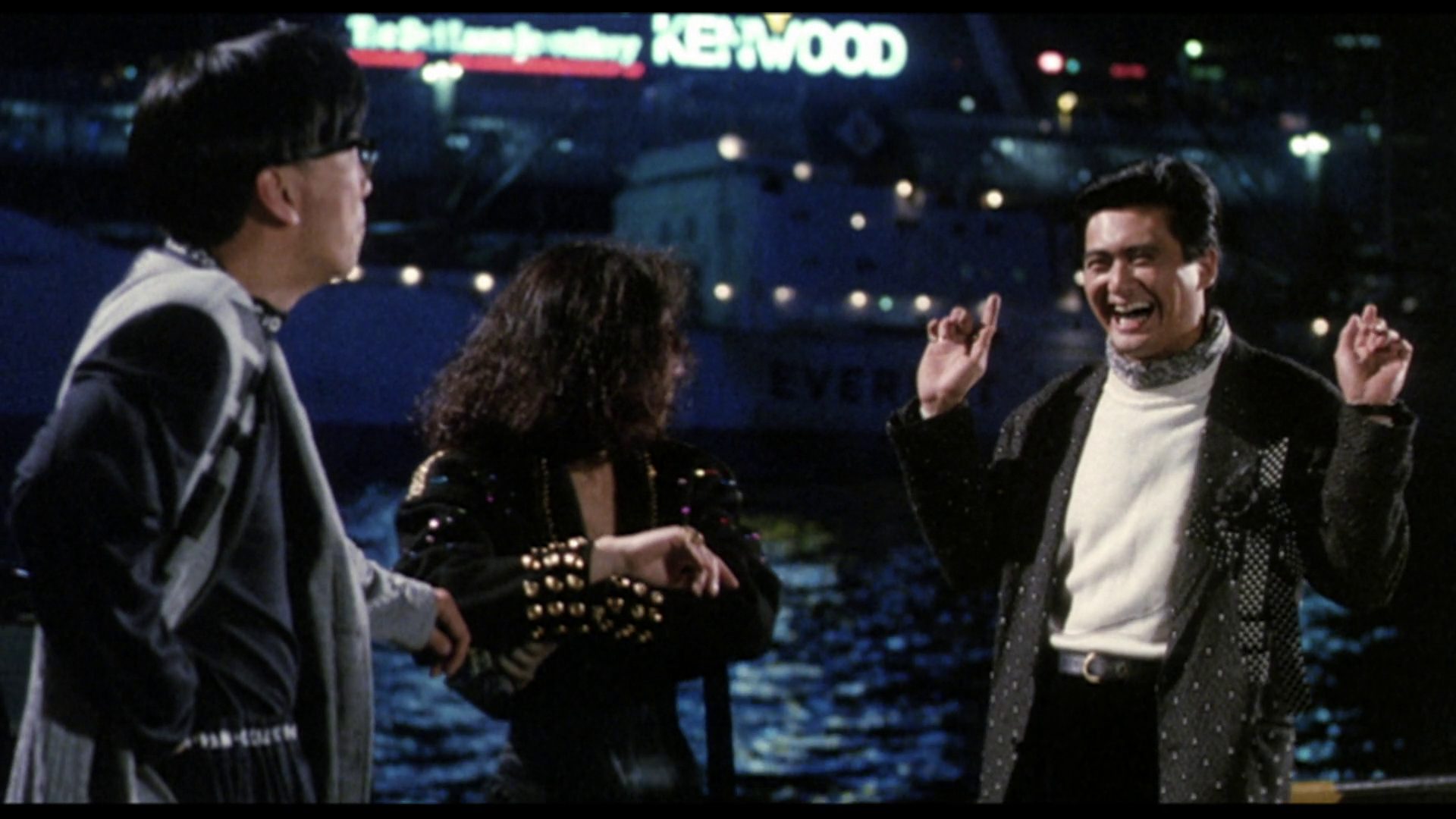
The ironically named Willie (Raymond Wong Pak-Ming) is a rising executive in a quasi marriage with Sylvia Chang (Sylvia Chang Ai-Chia) which is to say they live together as man and wife but Wille has never bothered to put in the paperwork (something which continues to annoy his harridan of a not quite mother-in-law). The couple have been together for seven years and Willie is beginning to tire of the monotony of (not actually) married life, irritated by Sylvia’s early morning Chinese Opera practice sessions and the fact he’s had nothing but sausage and egg for breakfast every day since moving in. Consequently, he fantasises about having an affair but is too mild-mannered despite the gentle ribbing of his colleagues and constant attempts of his brother-in-law John (Eric Tsang Chi-Wai) to introduce him to the red light district. 

In an early meeting with his colleagues after work, the men all discuss affairs suggesting that if a man isn’t chasing a woman it’s because he’s “sexually disabled” or gay quite clearly tying sexual prowess to masculinity. It’s also quite clear that the men view themselves as a group entirely separate from women, brother-in-law John evidently not thinking anything of it that he’s tempting his brother-in-law to cheat on his own sister implying that to him at least Willie’s masculinity is far more important than his sister’s feelings which in the end don’t seem to matter very much to him at all. John is also, however, a henpecked husband and moral coward. Challenged by his wife, sister, or mother, he immediately changes tack, dobbing Willie in when he’d tried to use him to placate Sylvia’s suspicions of an affair and quickly backtracking after having defended his decision not to file the papers by insisting “marriage is nonsense, old fashioned” only to counter with “I’m just saying for those silly men who try to overthrow the marriage tradition, I’m not one of them,”, “I absolutely agree with marriage. For women’s respect, I oppose living together”. 

Both John, whose constant badgering for loans also places a financial strain on the (non) marriage, and Wille feel themselves emasculated by the constraints of a monogamous relationship as the constant references to wild meat imply. Meanwhile the women are also depicted as vain and parasitical, the collection of trophy wives at Sylvia’s cookery class forever showing off the expensive gifts their husbands have bought them while alternately complaining they feel ignored. The implication is that the men can’t win, if they seem indifferent the wife worries they’re playing around, but too much affection is also regarded as a sign of infidelity. 

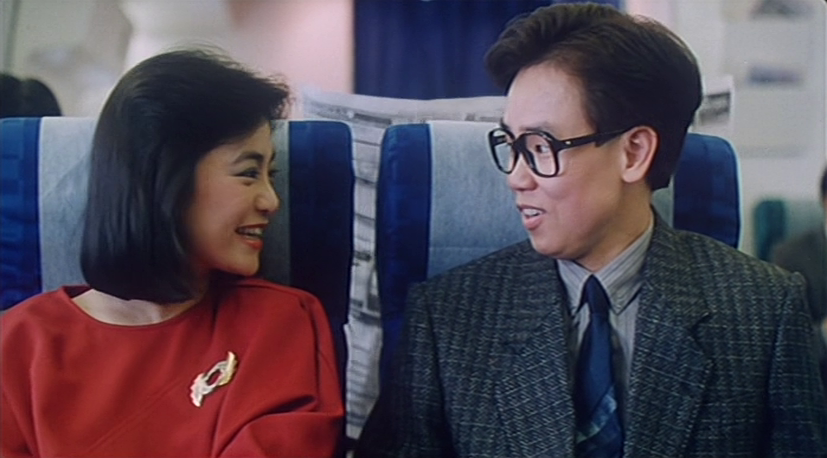
Even so it’s Sylvia who eventually gains the upper hand in refusing to play along with Willie’s games after he convinces her join him for a little Vertigo-esque role-play on a second honeymoon in Singapore, re-enacting his brief encounter with a foxy woman he met on a plane who was in fact conning him in order to facilitate a drug smuggling mission. Fed up with his ill-treatment, she falls asleep before the couple end up in an argument about her relationship with her “gay cousin” Chinese Opera partner with an inexplicably jealous Willie descending into an unpleasant homophobic rant. When he goes back to his own seat she has a meet cute of her own with a Chinese-American businessman literally named “Mr. Money” (Wu Fung) who took a liking to her in the departure hall and quite clearly needles Willie in the soft spots of his masculinity being both wealthy and cultured, able to take Sylvia off to a much more comfortable life in America with someone who is almost certainly going to treat her better than he ever intended to. 

As in many subsequent To comedies, it’s then the man who is put on the back foot blindly flailing while trying to win back a woman he took for granted. But if it seemed as if Sylvia might actually have more power in this relationship that either of them had assumed, the notion is quickly knocked back, literally, when her henpecked father raises a hand to her mother at the airport in order to support Willie’s attempt to prevent her leaving not because he thinks his daughter will be happier but in support of Willie’s compromised masculinity while reaffirming his own. An uncomfortable suggestion to a policeman that if “you slap her everything will be OK” reinforces the idea that actually the harridan mother-in-law now respects him more because of his show of manly violence, rebalancing the relationship back towards patriarchal norms while the father-in-law then turns full on sleaze cavorting with young women in public parks. 

It all adds to the impression that Willie is a sad sack, ineffectual man but largely because he turns back towards his wife while continuing to fantasise about other women seven years later claiming no longer to find her attractive and anticipating another itch this time presumably to escape his responsibilities as a father, his eyes following a pretty park jogger played by a then rising now iconic Hong Star who had appeared in the previous film Wong and To had made together. While To’s dancing camera shows glimpses of its future romanticism, it can’t quite escape the contradictions of the material even as it does its best to hand the balance of power back to Sylvia who could, it has to be said, do better. 


The Eighth Happiness (八星報喜, Johnnie To, 1988)

A literal series of crossed wires provoke romantic intrigue for three eccentric brothers in Johnnie To’s smash hit Cinema City Lunar New Year comedy, The Eighth Happiness (八星報喜). As so often in To’s subsequent films, a random instance of fatalistic chance changes each of brothers’ lives though not perhaps permanently as the surprisingly ironic coda makes plain. Even so, their parallel quests for love of one kind or another perhaps tell us something about the changing Hong Kong society in the midst of rising economic prosperity and looming Handover anxiety. 

Seemingly without parents, the three Fong brothers live together in a well-appointed multi-level home owned by oldest sibling Fai (Raymond Wong Pak-ming) who hosts a daytime television program titled Mainly Housewives which includes a cookery/agony aunt segment in which he attempts to solve someone’s relationship problems through food. As in many of Raymond Wong’s other roles in Cinema City comedies, Fai is feminised throughout not only in acting as the “mother” of the family preparing all the meals at home but also in his single status and the focus of his television show which nevertheless intros him with the James Bond theme. 

Second brother Long (Chow Yun-fat), meanwhile, actively camps it up claiming that he pretends to be gay in order to get girls after lulling them into a false sense of security. Despite being engaged to air hostess Piu Hung (Carol Cheng Yu Ling), he has a side mission going to sleep with a woman from each of Hong Kong’s 19 districts and is a relentless Casanova striking up an affair with unexpectedly chaotic department store assistant “Beautiful” (Cherie Chung Chor-hung). Youngest brother Sang (Jacky Cheung Hok-yau), meanwhile, is a painfully shy aspiring cartoonist who becomes an accidental white knight to a young woman caught up in a bizarre flashing incident in the local park only to be mistaken for the culprit himself. 

Each of the brothers is offered a new romantic possibility because of a telephone malfunction caused by an elderly lady driver forgetting her glasses and ploughing through local works mangling the lines. Sang is reunited with Ying Ying (and her martial arts champion swordsman mother) after overhearing a suicide attempt but ending up at her apartment by mistake, thereafter finding himself facing a challenge of masculinity on discovering that she already has a very buff and macho boyfriend who in his own way also seems jealous and insecure. Meanwhile, Long overhears a conversation between Beautiful and a colleague at the store about their ideal men, entering into passive aggressive courtship while discovering that her boyfriend is fabulously wealthy (or, at least, his father is) leading to a standoff in which he ends up proving his masculinity by burning money he doesn’t really have, smashing his own cheapo watch to intimidate the other guy into destroying his diamond Rolex, and then trashing the car he borrowed from Fai to expose the fact the other guy isn’t really wealthy or man enough to do the same because at the end of the day it’s his father’s money and he’s not so rich that these very expensive status symbols mean little to him. 

Fai meanwhile has a much more normal romance which is disrupted, mostly, by his brothers’ chaos and then near destroyed rather than forged through a misdirected phone call. After Long trashes his car, he asks Sang for the number for a repair guy but instead gets through to Fong (Fung Bo Bo) whose musician husband has just walked out on her seconds before which is why she’s quite rude to him on the phone, slamming the receiver down the second time he rings. Annoyed on a personal level Fai asks Long to troll her by ringing up at 3am every night causing her to injure her ankle and later fall on stage during a Cantonese opera performance. Then he ends up meeting her by chance in real life when she ends up buying the last of his favourite biscuits at a local cafe, only to discover she’s his interview for that day’s show where she’s supposed to talk about her art but finds his face so funny she can’t stop laughing. Had it not been for business with the telephone harassment they might have had a conventional romance, but the further machinations of the chaotic brothers soon convince her that Fai is not a reliable life partner. 

To convince her he’s really a good guy, Fai undertakes a grand gesture making himself the focus of his culinary/agony item by cooking up the spiciest soup imaginable and drinking it on live TV to atone but such a meaningless feat does nothing for Fong who doubtless is over romantic stunts and looking for something more concrete. Long’s grand gesture, by contrast, fares much better as he chases Piu Hung to a fancy hotel and makes a scene from the other side of the glass before falling in the pool while trying desperately to save an engagement ring while suddenly on the back foot after she learns about his philandering. Fai is only able to redeem himself through artifice, he and Fong signing through their romantic drama while performing Cantonese opera surrounded by the brothers and their girls trying at least to support him in his own romantic endeavour which their chaos has largely undermined. 

It’s another cosmic irony therefore that whereas the chaos of the misdirected telephone calls earns both Sang and Long everything they wanted in both career and romantic success, Fai who generally does the right thing ultimately loses out through another chaotic development while even Beautiful apparently achieves her dreams. Despite his earlier protestations during get phone call that Hong Kong was beautiful and there was no need to leave, Song and Ying Ying decide to travel the world perhaps expressing a degree of anxiety in pre-Handover Hong Kong, while Long is left with internalised anxiety over his new role as husband and father, and Fai is back pretty much where he started. A typical Lunar New Year nonsense comedy, there’s no disputing that much of the humour in The Eighth Happiness is of its time, but there is something of To’s later obsessions with comic fate and romantic farce that transcends Raymond Wong & Philip Cheng’s Cinema City silliness. 


Trailer (no subtitles)

Nomad (烈火青春, Patrick Tam, 1982)

In his 1982 New Wave classic Nomad (烈火青春), director Patrick Tam had intended to reflect on Nietzsche’s Joyful Wisdom along with the concept of the wanderer, a heroic ideal of the emancipated mind which necessitates permanent exile in which it is no longer possible to call any place “home”. It was also he claims a critique of the “mindless embrace of foreign culture” by Hong Kong youth then obsessed with David Bowie and Japan. 

The film’s English title refers to the boat owned by the hero’s father which becomes a symbol of the yearning for escape and for the foreign among the young, but is also imbued with an essential irony thanks to its design which recalls the “black ships” that sailed into the bay of Edo and forced Japan to reopen its doors to the world after 200 years of isolation. The original Chinese title, meanwhile, translates as something like “Burning Youth” and strongly recalls Japan’s Sun Tribe movies of the late 1950s which similarly critiqued aimless post-war youth and the corruptions of pervasive American pop culture as embodied by Coca-Cola and jazz music. Tam makes frequent visual reference to Japanese New Wave youth movies such as Nagisa Oshima’s Cruel Story of Youth while the shocking ending (which was not shot by Tam who had envisioned a bloodier showdown aboard the Nomad) also has shades of Ko Nakahira’s seminal chronicle of post-war ennui, Crazed Fruit. 

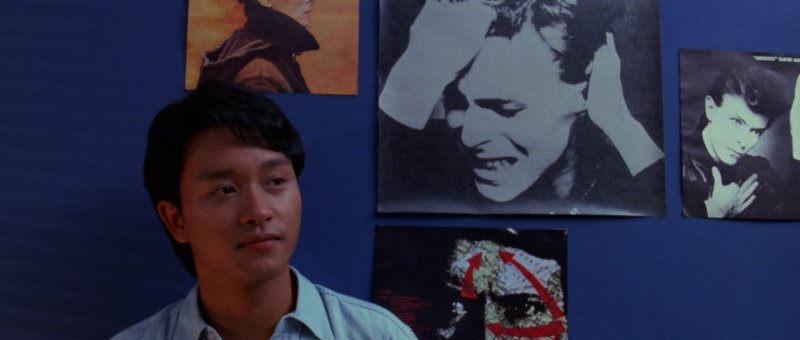
Nomad similarly focusses on a collection of aimless youngsters struggling to find direction in pre-Handover Hong Kong. Louis (Leslie Cheung Kwok-Wing) continues to long for his absent mother and often listens to recordings she once made introducing classical music on the radio while a model of the Nomad sits prominently on a shelf in his room. He has posters of David Bowie on the wall, while his cousin Kathy (Pat Ha Man-Jik) puts on the robes of a Japanese Miko and performs a traditional fan dance. Louis is one of the few young people who does not speak the language, but is later fascinated by the work of a Japanese fashion designer featuring swords and samurai armour that he says, in a moment of foreshadowing, only make him think of ritual suicide. 

His life is directly contrasted with that of Pong (Kent Tong Chun-Yip), a young man from a poor family who works as a lifeguard at the local pool which is how he ends up meeting Kathy who in turn fascinates him with her rich girl sense of confidence and invincibility. The desire to find a place of their own is emphasised by the constant frustration their repeated attempts to make love in Pong’s family apartment which everyone has generously agreed to vacate so he can bring a girl home only for his younger brother to prank him and his dad to come home early inviting half the neighbourhood over for mahjong. The couple eventually have sex on the empty top deck of a tram, another symbol of transience, and then repeatedly in several other public locations until the relationship is disrupted by the return of Kathy’s former boyfriend, Shinsuke (Yung Sai-Kit), who has deserted the Japanese Red Army and is now a fugitive ironically looking for safe harbour while on the run.

The Japanese Red Army was a far-left terrorist organisation most active in the Middle East though Shinsuke’s decision to leave it seems to be less to do with a disillusionment with communism than a reawakening of his humanity in which he has decided he can no longer be a part of its bloodiness and violence. Nevertheless, while holed up aboard the Nomad, he explains that he cannot join the other youngsters in their romantic dream of sailing to Arabia because he has rejected exile and is determined to return home and meet his certain death in Japan. The destructive forces have however followed him in the form of an assassin posing as an assistant to a fashion designer, which seems to be allusion a little too on the nose even if it quickly descends into a strange pastiche of samurai ideology otherwise at odds with that of the JRA in which they track Shinsuke down and then instruct him to commit seppuku with the sword he has been carrying all along. 

In an earlier fight that led Pong and Louis becoming friends, some young women had needled him that he should try to protect Kathy though she needed no protection in this situation and he was unable to provide it anyway. Something similar happens on the beach though he turns out to be surprisingly adept with a samurai sword when he’s unexpectedly rescued by Tomato (Cecilia Yip Tung), a young woman he met in a cafe after he overheard her desperately trying to dump one boyfriend and not be be dumped by another over two different telephones, who suddenly reemerges with a harpoon gun. It’s Tomato, who had kept a copy of Nietzsche’s The Antichrist given to her by a boyfriend but apparently not read it, that finally remarks on their aimlessness, “we do nothing for society”, only to be countered by Louis who answers, “what society? We are society.”

Briefly at the beach they may find the kind of utopia they’re looking for, lighting the cottage with lanterns and sleeping piled one on top of another under a communal mosquito net in the open air, but just as quickly find that dream shattered by the intrusion of a political reality. This nomadic youth finds itself exiled from its home, dreaming of an impossible escape, caught between the colonial present and a colonial future with half an eye on an old coloniser and fast losing sight of its own identity. Abandoned on a blood-soaked shore, all youth can do is look out in shock and confusion bereft even of hope in a liminal space at once transient and permanent. 


Nomad screens at the BFI Southbank on 15th July in its new 4K Director’s Cut as part of Focus Hong Kong.

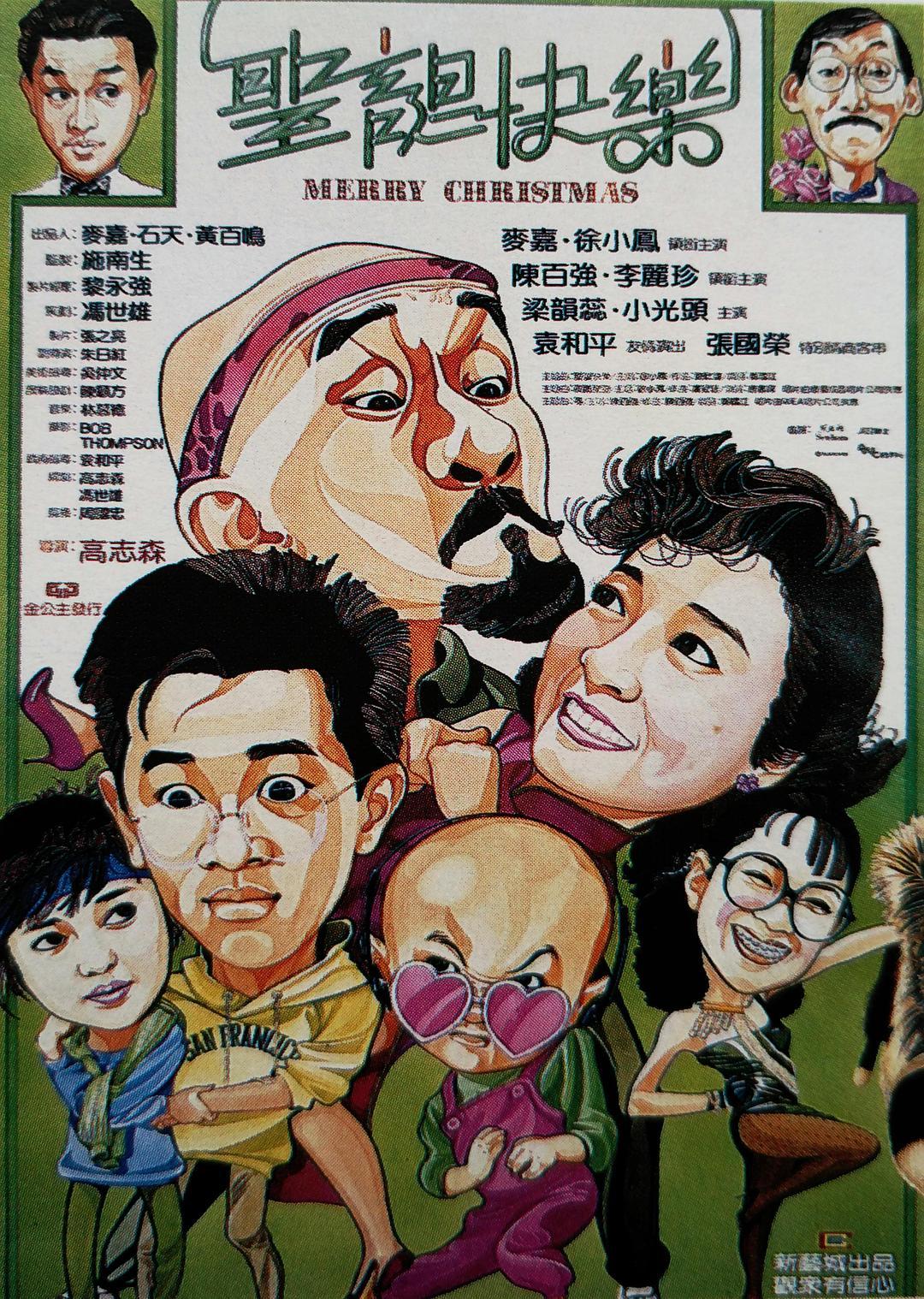
Merry Christmas (聖誕快樂, Clifton Ko Chi-Sum, 1984)

Merry Christmas poster 2The Lunar New Year movie solidified itself as a concept in the early ‘80s and is often an occasion for heartwarming silliness celebrating food and family. Arriving in 1984, Merry Christmas (聖誕快樂) shifts the zany action up to the Western festive season as a widowed Hong Kong dad struggles to express his feelings for the woman next-door who’s been looking after his young son while his two grown up kids contend with romantic troubles of their own in the rapidly developing city.

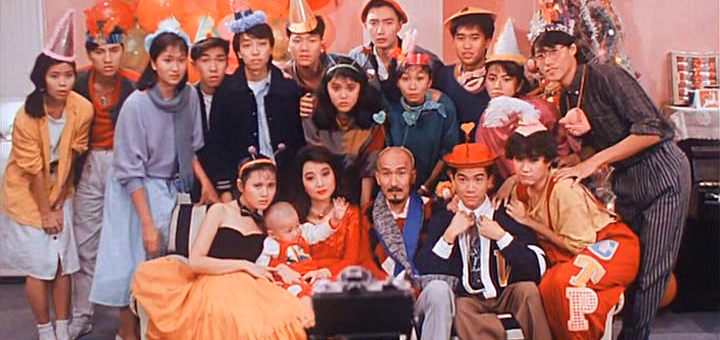
“Baldy” Mak (Karl Maka) is a newspaper editor who lost his wife some time ago. Though everyone else is getting into the holiday spirit, Baldy is celebrating his birthday which gives his goodnatured colleagues an excellent excuse to prank him and though it ends in him getting joke fired, it does eventually bring him a bonus and a new car. Meanwhile, he and the kids – earnest teenage son Danny (Danny Chan Bak-Keung) and aspiring model Jane (Rachel Lee Lai-Chun), are largely dependent on their neighbour, Aunty Paula (Paula Tsui Siu-Fung), for domestic assistance including looking after Baldy’s toddler son, Baldy Junior, while he’s out at work. Danny and Jane are hoping their dad will eventually ask Paula to marry him, but he remains diffident. Until, that is, she drops the bombshell that she might not be able to look after Junior anymore because she’s had a letter from her cousin in America (Yuen Wo-Ping) who wants to marry her and she’s thinking of emigrating to be with him.

Baldy, not a bad man but unafraid to resort to underhanded tactics, spends the rest of the picture avoiding telling Paula how he really feels in favour to trying to break up her possible romance with her cousin. An early joke sees him fighting for parking spaces in his beaten up car, something which eventually gets him into an argument with the good-looking yet similarly underhanded John (Leslie Cheung Kwok-Wing) who fakes a limp to get nearby bystanders to push Baldy’s car out of the way, causing Baldly to try and get his own back only for it to hilariously backfire. John, meanwhile, takes an instant liking to Baldy’s daughter Jane, which instantly gets Baldy on edge. A typically strict dad, he takes Danny aside to instruct him about how to get the best bang for his buck taking girls to the pictures, but is quick to warn Jane that no man can be trusted and she’s to be home by 10pm at the latest. Needless to say, it’s a moment of minor embarrassment for him when the guys at work are looking at tasteful glamour shots to include in the paper only to discover that Jane’s been earning a few extra pennies as a model.

The double standards only increase as Baldy and Danny hatch a plan to put Paula’s cousin off by convincing him she’s actually a sex worker and in debt to a sleazy pimp. Meanwhile, Baldy takes him out on the town to show him a few sights while setting up amusing tableaux that make him out to be a violent pervert, groping women, kissing men, and kicking little kids in the face. Paula, meanwhile, remains thoroughly fed up with Baldy’s antics, keeping her composure when he tries to make her jealous by dressing like a teenager and cosying up to Danny’s love interest “Jaws” (beautified by getting her braces taken off and wearing contacts), but asking her cousin to secretly record everything Baldy says to him on their weird “date” around Hong Kong.

Charming period details abound, like the “3D” adult movies Baldy rents (and inappropriately watches with Baldy Junior) which have to be watched with “sunglasses”, and Baldy’s constant inability to hail a cab coupled with his atrocious parking techniques and delightful pre-photoshop efforts to frame the cousin and then expose him with a slideshow lecture delivered solely for Paula’s benefit. Meanwhile, the festive spirit is ever present with the ubiquitous Christmas trees, Poinsettia forest outside Baldy’s door, and seasonal set piece at Paula’s nightclub. Delightfully silly, Merry Christmas is a zany holiday treat, a middle-aged rom-com in which a slightly ridiculous widower and a lonely nightclub singer discover the courage to fight for love thanks to a little Christmas magic and the fierce support of meddling family members.


Original trailer (no subtitles)