Who’s the Woman, Who’s the Man? (金枝玉葉 2, Peter Chan, 1996)

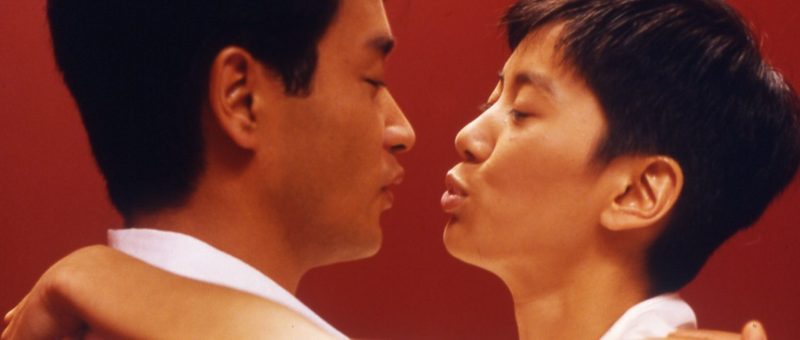
“I don’t care if you’re a man or a woman, all I know is that I love you,” the hero had finally accepted after the heroine’s madcap dash across town in the closing scenes of Peter Chan’s 1994 rom-com, He’s a Woman, She’s a Man. But as it turns out, it isn’t quite that simple. Inverting the structure of the first film, sequel Who’s the Man, Who’s the Woman? finds the heroine romantically confused as her “masculine” persona increasingly interferes in her relationship with the still conflicted Sam (Leslie Cheung).

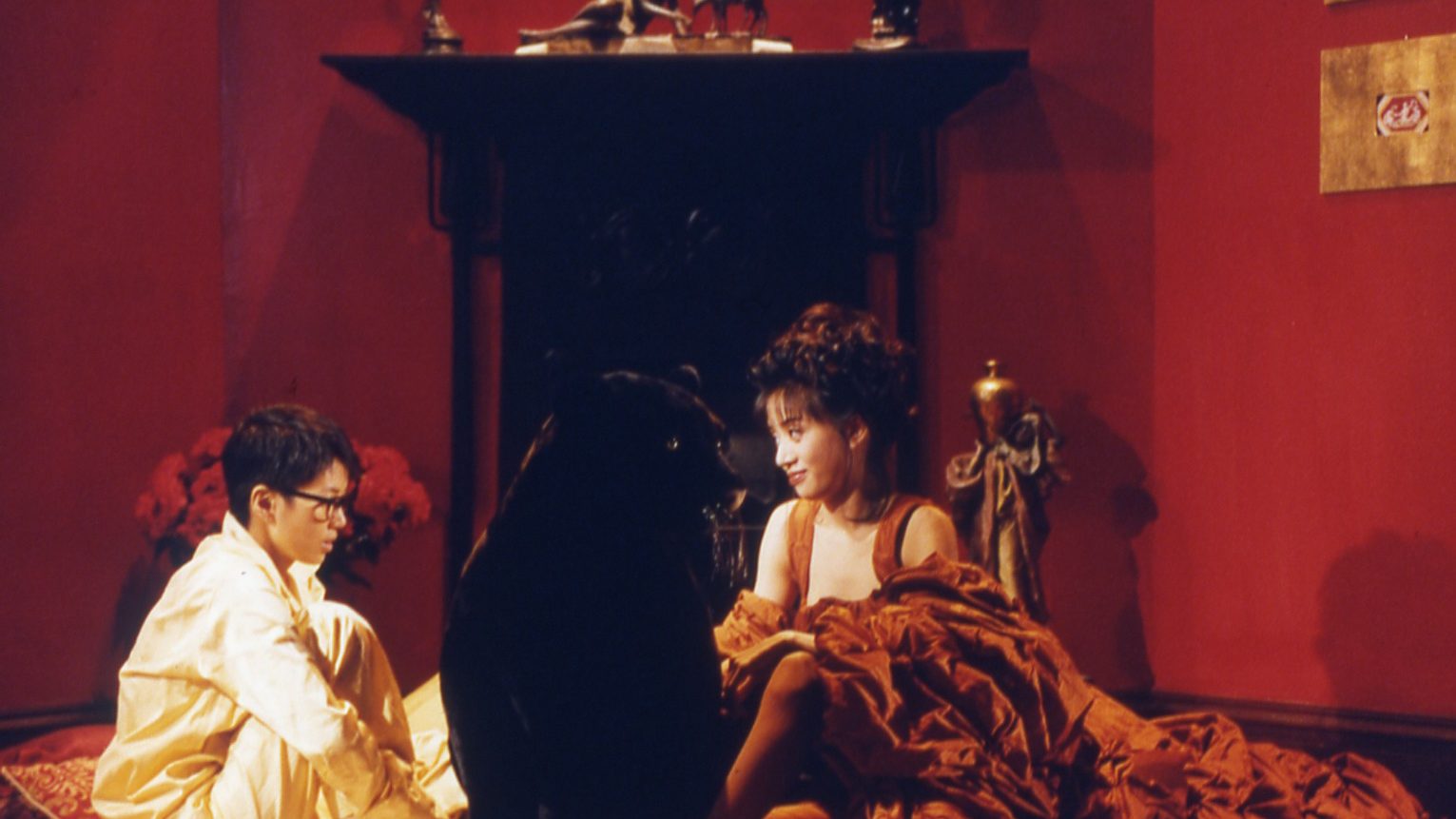
It certainly hasn’t been plain sailing for anyone as Wing (Anita Yuen) agrees to move in to Sam’s luxury flat but refuses to live downstairs as Rose (Carina Lau) had done, instead insisting on sharing his life and his bed in their entirety. For his part, Sam’s reluctance to share his space is reflective of his fears of intimacy while he resents Wing’s immediate attempts to install herself by remodelling the apartment to her own taste. Meanwhile, the old problem has resurfaced in that now he’s got Wing he’s not all that interested in her and hasn’t written any songs in months. In an attempt to manage her interference in his life, Sam suggests resurrecting Wing’s pop career as a male idol but proves a victim of his own success as she quickly begins earning much more money than him and gains the upper hand in the relationship. 

Wing’s increasing masculinity leaves Sam feeling somewhat emasculated while forced into the “feminine” role previously occupied by Rose. Suddenly successful, Wing is offering to pay large sums of money to help Sam fulfil his dreams which only deepens his sense of shame in his inability to earn money for himself. Wing had insisted on living together in the main apartment, but now that she’s so busy suggests moving into Rose’s old flat downstairs so that they can, after all, have their own space. Sam had wanted it that way before, but now that it’s Wing who suggests it, he’s romantically anxious while simultaneously conflicted because he cannot acknowledge their relationship publicly as he is still uncomfortable with people assuming he is “gay”.

All of which is doubly confusing for Wing who is under increasing strain trying to straddle a gender binary. Not only is she trying to deal with Sam’s contradictory behaviour and resentment of his emasculation, but in growing into her masculine role finds herself questioning her sexuality in experiencing unexpected attraction towards other women and in particular the captivating Fan Fan (Anita Mui), a mysterious former pop star who has moved into the downstairs flat after spending many years abroad. Just as Sam had in the previous film, Wing struggles to accept her desires unable to reconcile falling in love with Fan Fan with her love for Sam while Fan Fan in turn falls for her mainly in her femininity in claiming that she has been looking for something kind and innocent that she no longer believed existed in the world. 

“Love can’t be explained,” Sam admits when talking to his decorators, a gay couple who ironically tell him how much it means to them to see a same-sex couple in the public eye, though Sam still refuses to acknowledge the relationship because he doesn’t want to be seen as “gay” and Wing is in any case a woman. Mirroring Sam’s relationship with the openly gay Auntie (Eric Tsang), Fan Fan’s assistant O (Theresa Lee) is a lesbian who is relentlessly courted by Fish (Jordan Chan) despite her constant rejections of him. He tries to present himself as female by shaving his legs and later crossdressing in order to win her heart, only to end up reaffirming O’s avowed homosexuality. For Wing, however, she has only a dilemma in being faced with a choice between her love for Fan Fan and that for Sam which seems as if it may have run its course just Sam’s love for Rose once did. 

Sam only really begins to understand his himself after a more mature discussion with Rose regarding the realities of their relationship, while Fan Fan effectively plays a similar role in sacrificing her own desire believing that Wing belongs with Sam but taking the new hope their love has given her back out into the world. Neatly inverting the first film’s conclusion, it’s Sam who has to make an active choice about what it is he wants though the ironic ending may suggest he doesn’t have much control over his destination either even if discovering he already has what he was looking for.

The Dumpling Queen (水饺皇后, Andrew Lau, 2025)

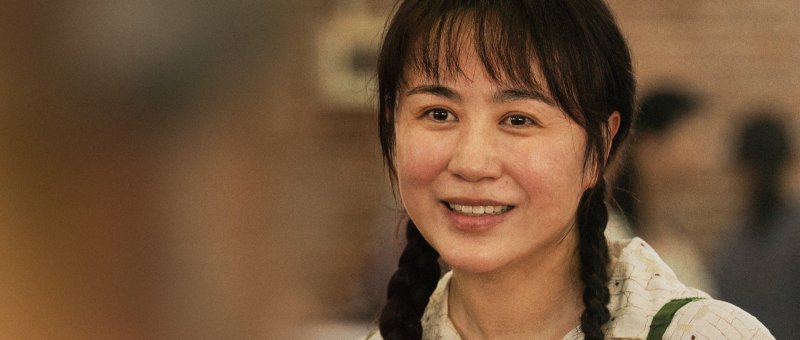
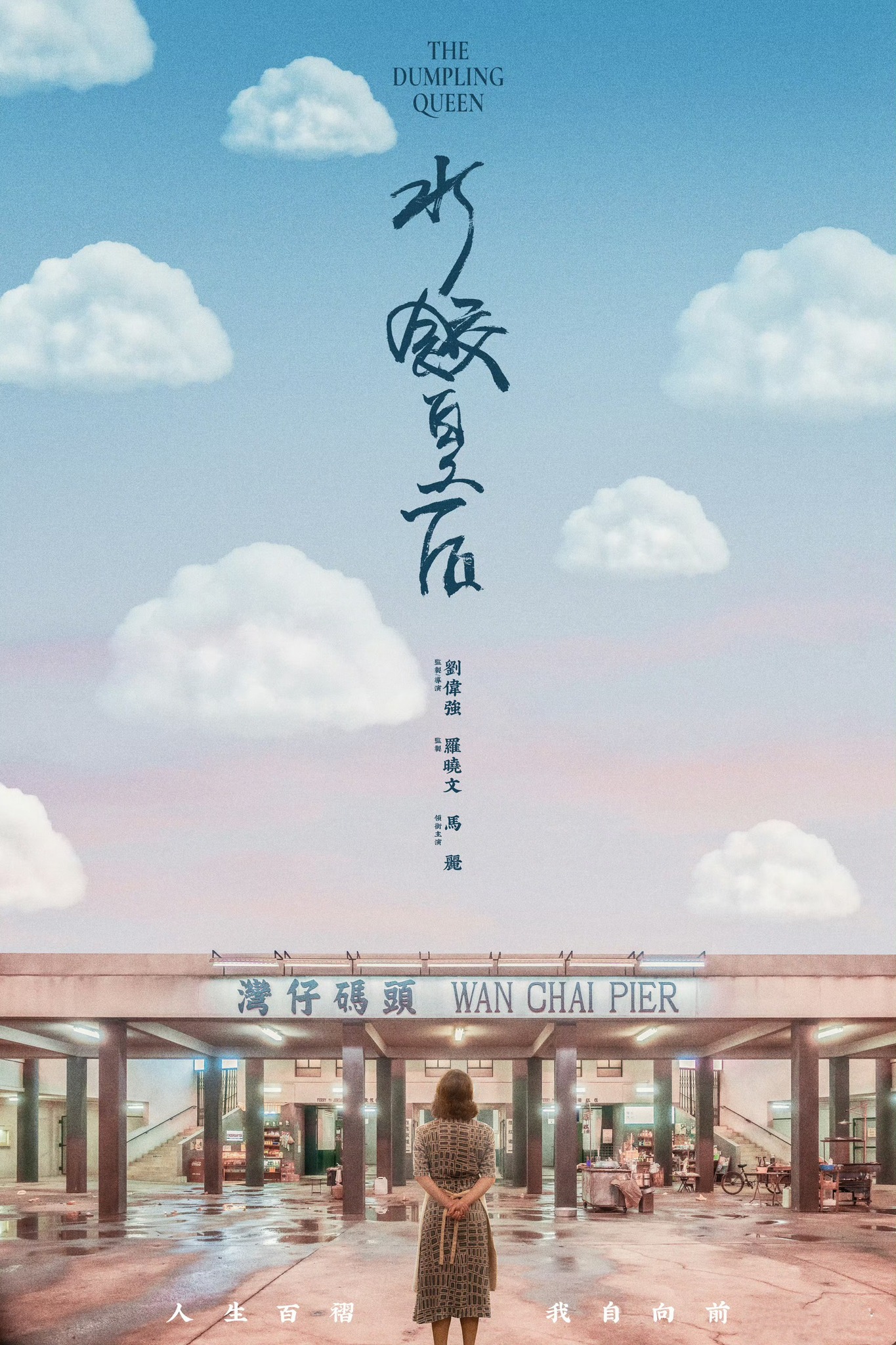
There are a lot of ironies and contradictions at the heart of Andrew Lau’s Dumpling Queen (水饺皇后, shuǐjiǎo huánghòu) inspired by the life of Zang Jianhe who founded the international dumpling empire Wanchai Ferry, but there’s no getting away from the celebratory joy it finds in the heroine’s hard-won transition from jilted spouse to successful entrepreneur. Then again, there might be something uncomfortable in the film’s framing and the repeated claim that Jianhe’s dumplings are about the warmth of familial bonds and reunion. Zong’s desire to kick back at American imperialism as manifested in the ubiquity of hamburgers and US-style delivery pizza by making Chinese dumplings accessible across the world is also an advocation for the One China philosophy in which the greater Chinese diaspora is connected as a family through “the taste of home.”

Beginning in 1977, the film is noticeably quiet about why anyone would be risking their lives to escape from Mainland China to Hong Kong, though this is what Jianhe is doing in her quest to be reunited with her husband, Hanzhou, who has been away for four years. Unfortunately, when she reaches the station at the border, Hanzhou’s mother (Nina Paw Hee-ching) rudely explains that she had him marry another woman in Thailand who has since borne him a son. Branding Jianhe a failure for giving birth to only daughters, she tells her that she can come with them but that she will be the second wife subservient to the mother of the family heir. She repeatedly claims this does not make Hanzhou a bigamist because Thai law supposedly gives him the right to marry more than one woman, though it seems the mother-in-law may not be aware that the pair were legally married in Mainland China as Jianhe’s traditional wedding photos would otherwise suggest. 

The fact that Jianhe is discarded for giving birth to daughters contributes to the film’s feminist undertones and sense of female solidarity as Jianhe strives to pass on the dumpling recipe she learnt from her own mother to the next generation of women and beyond. Jianhe must now find a way to fend for herself, which she eventually does through a combination of hard work, excellent business sense, and the supportive community around her. Though Jianhe and her children face some instances of prejudice against Mainlanders when they first arrive, they are helped by various people including enigmatic landlady Hong Jie (Kara Wai Ying-hung) who makes her a part of her boarding house community and tries not to pressure her about the rent out of consideration for the children,

But times are sometimes hard and Jianhe is directly contrasted with the woman across the way whose husband has a gambling problem and beats her. Having been injured in a workplace accident that leaves her unable to work as she had been before, Jianhe begins to feel hopeless and considers taking her own life only to be saved by her children and a neighbour who sells dessert soups, but the other woman is not as lucky and eventually makes a fateful decision, blaming herself for the man her husband has become. Jianhe is also given another shot at romance with a sympathetic policeman (Zhu Yawen) who comes from the same area of Mainland China and is taken by her dumplings, but he also wants to move abroad and Jianhe has already followed one husband to another country and it didn’t work out so well. It’s not so much that she sacrifices love for career success, the policeman could after all simply chose not to go, but that she no longer needs to compromise herself for marriage because she’s fulfilling herself through her business enterprise.

Just as the film doesn’t mention why Mainlanders came to Hong Kong, it doesn’t really go into why some Hong Kongers choose to leave save for a brief onscreen text mention about the beginning of the negotiations for the Handover though Jianhe is repeatedly keen to emphasise the universal Chineseness of her dumplings. She makes a deal with a Japanese department store, but threatens to walk when they try to make her change her packaging to bring it into line with their house style and thereby erase its cultural identity. She also refuses to allow them a monopoly after they demonstrate their lack of trust in her as a businesswoman, quickly realising she’s better off making deals with every supermarket on the island as well international flour companies. Jianhe is pretty quick to cotton to new technologies such as household refrigerators and the possibilities for frozen foods. But at the end of the day, she’s earnest and hardworking, sharing her success with her many friends who helped her along the way and always repaying kindness when she can. It’s an oddly utopian vision at times in which everyone seems to recognise Jianhe’s greatness and get out of her way, including a triad boss who helps her because she reminded him of his mother when she threatened one of his men with a meat cleaver,) but it also reinforces a sense of the One China family with the dumplings, now refined to suit local tastes, as the glue binding it together in the face of an onslaught of hamburgers and pizzas as harbingers of a cultural apocalypse.


International trailer (Simplified Chinese / English subtitles)

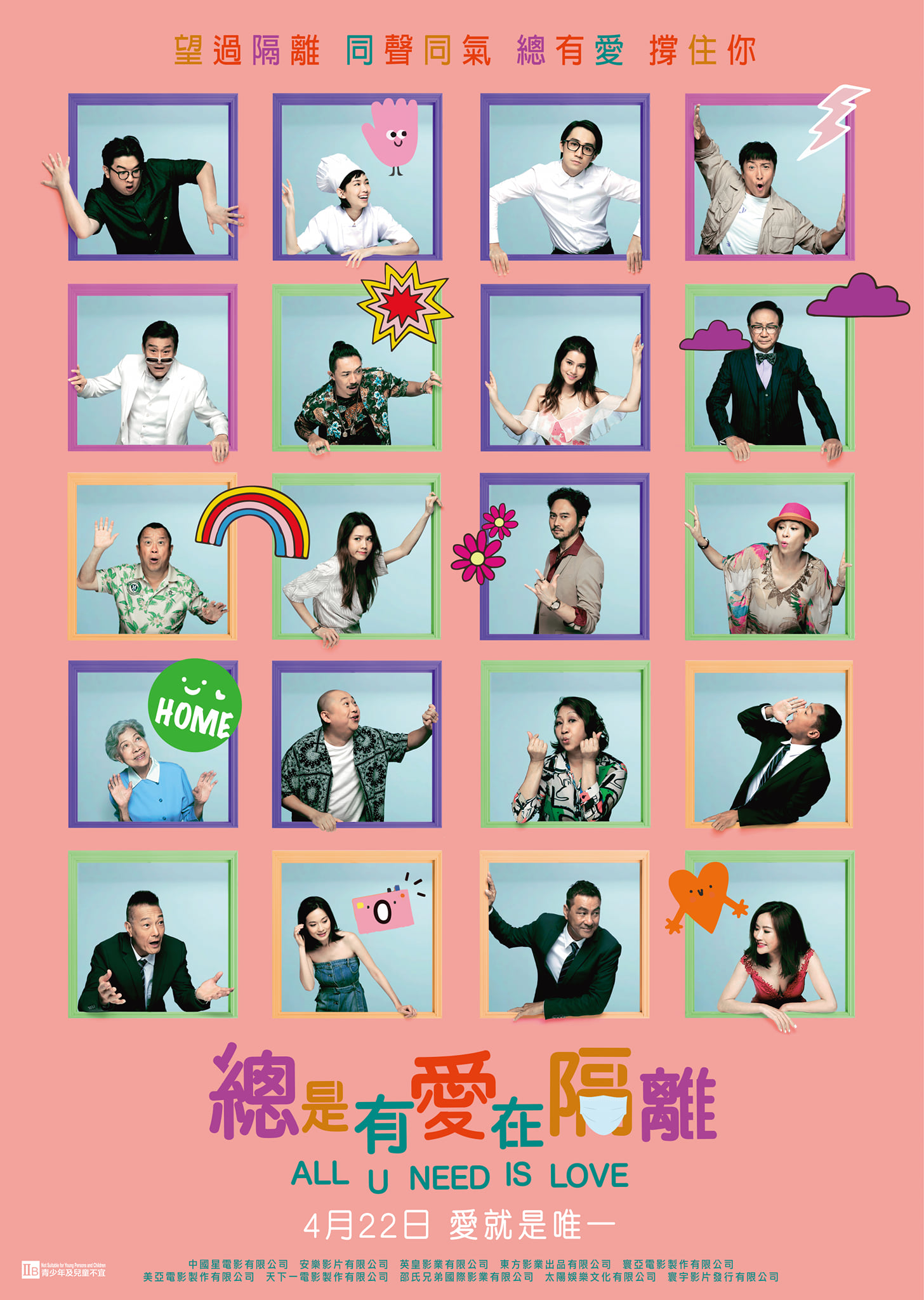
All U Need Is Love (總是有愛在隔離, Vincent Kok Tak-chiu, 2021)

All things considered, there are worse places to quarantine than a five star hotel especially if it’s free but then again forced proximity with those you love, or those you don’t, can prove emotionally difficult. An old school ensemble comedy, Vincent Kok’s All U Need Is Love (總是有愛在隔離) features a host of A-list stars each providing their talent for free in order to support the struggling Hong Kong film industry in the wake of the COVID-19 pandemic but as its name suggests eventually offers a small ray of hope that the enforced period of reflection may have fostered a spirit of mutual solidarity and personal growth. 

Kok opens, however, with a tense chase sequence as a shifty looking man runs from the authorities at the airport only to be picked up by the PPE-clad Epidemic Task Force who whisk him away to a secret location where he’s placed inside a weird bubble and interrogated by Louis Koo. Several more top HK stars including Gordon Lam fetch up in the bubble each implicating the Grande Hotel as the centre of of a coronavirus cluster at which point an order is given to place it under total lockdown requiring everyone inside to remain for a 14-day quarantine. 

Essentially a series of intersecting skits, Kok’s ramshackle drama nevertheless has its moments of satire as the hotel chief takes to the stairs for an inspirational speech in which he frequently slips into English and bizarrely likens himself to the captain of the Titanic because we all know how well that went. He spends the rest of the picture trying to escape without anyone noticing while his dejected security guard/brother tries to bump him off. Meanwhile, two gangsters develop a homoerotic bromance while plotting how best to profiteer off the pandemic through smuggling anti-COVID paraphernalia just as panic buying takes hold on the outside. 

Nevertheless, it can’t be denied that All U Need Is Love is also guilty of some rather old fashioned, sexist humour particularly in the antics of a pair of old men (Tony Leung Ka-Fai and Eric Tsang reprising their roles from Men Suddenly in Black) and their minions who misled their wives in order to embark on a sexual odyssey only to have their plans both improved and then ruined by the quarantine order. Meanwhile, a young couple who were in the hotel preparing for their wedding banquet ironically scheduled for the last day of the quarantine find themselves at loggerheads as the man gets cold feet over his fiancée’s bridezilla micromanaging, and her father undergoes a total makeover while continuously watching Japanese pornography in his room. 

Watching it all, a little girl, Cici, becomes the moral voice of the pandemic innocently hoping that nature will continue to heal itself even after the sickness ends. It’s she who shows the gangsters the error of their ways in pointing out that if they steal all the anti-COVID equipment then they will end up being more at risk because no one else is protected, while she also softens the heart of the hotel’s cynical manager to the point that he too makes a lengthy speech about becoming a better person thanks to his experiences during in the pandemic. 

During their enforced proximity friends and strangers have indeed needed to rediscover their love for their fellow man as they band together in mutual solidarity waiting for their freedom. Culminating in an oddly uplifting wedding decked out with balloons and messages from friends and family played via iPad, Kok’s anarchic ensemble farce does its best to discover a silver lining among the fear and anxiety of the pandemic as it ironically brings people together through driving them apart. Along with his A-list cast, Kok throws in a series of movie parodies and pop culture references from an impromptu rendition of Baby Shark to a surprise appearance from the Landlady from Kung Fu Hustle as well as a suitably random cameo from Jackie Chan. Repurposing the traditional Lunar New Year movie, All U Need is Love is a classic nonsense comedy designed to lighten the mood in these trying times while celebrating the essence of Hong Kong cinema through, arguably, its most idiosyncratic of genres. 


All U Need Is Love streamed as part of this year’s New York Asian Film Festival.

Original trailer (Traditional Chinese/English subtitles)