People’s Republic of Desire (欲望共和国, Wu Hao, 2018) [Fantasia 2018]

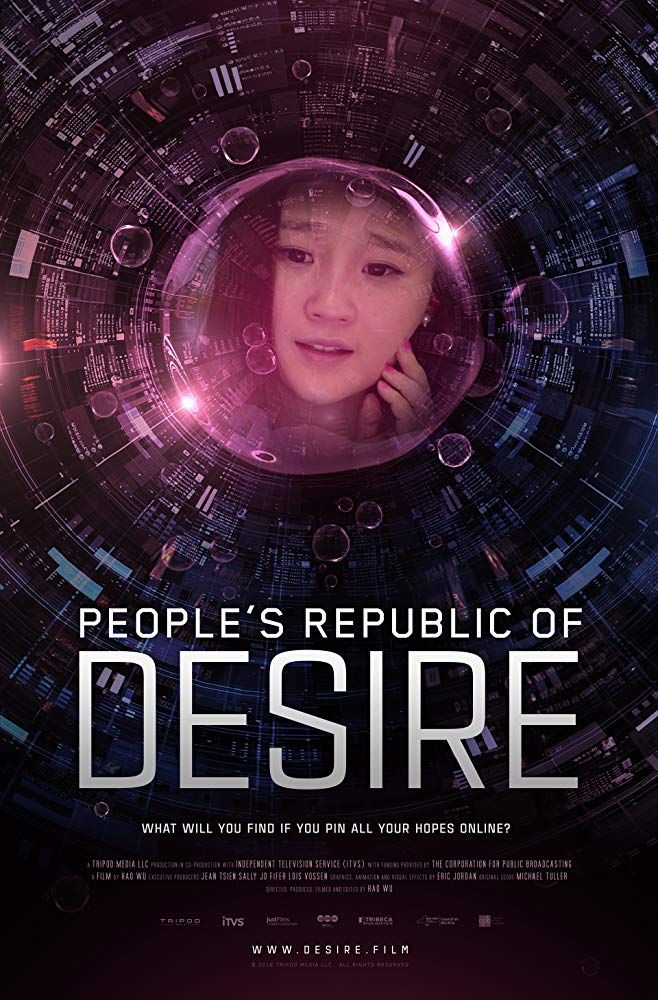
People's Republic of Desire PosterCan you outsource a dream? According to Wu Hao’s People’s Republic of Desire (欲望共和国, Yùwàng gòngguó), many in modern China have resigned themselves to doing just that. Feeling lonely, disconnected, hopeless, they turn to people just like them who’ve been luckier and have not yet decided to give up the fight. Video streaming service YY acts like the future’s version of pirate radio, lining up a selection “personalities” male and female offering pretty much anything from stand up comedy and political diatribes to off key singing and a window into someone else’s every day life from breakfast to dinner. Of course, it all comes at a price – one which YY gleefully takes a 60% cut of, but there are hidden costs too – to a society, to the deluded fans, and even to the aspiring stars themselves forced into various debasing acts in the knowledge that their time in the spotlight will soon come to an end.

Wu follows two very different YY stars – 21-year-old former nurse Shen Man, and Big Li – a former migrant worker whose rough voice and man’s man attitudes have endeared him to a host of other “diaosi” fans. “Diaosi”, once an unpleasant slur meaning “loser” and most often applied to those stuck in the lower orders of China’s rapidly increasing social equality gap, has been reclaimed by those who self identify with its sense of ironic hopelessness. As Shen Man explains, YY works as a kind of pyramid system in which millions of dreaming diaosi throw money they don’t really have at online stars in the hope of connection while Tuhao – the nouveau riche looking for new ways to splash the cash, act as patrons deciding the direction of the service.

What many diaosi forget to factor in is that in reality the entire service is run by agents and promoters who push their various stars to steal “votes” from their online fans. YY is not a public service platform, but a vast money making machine which sucks in cash from every conceivable angle. As cynical patron Songge points out, those seeking fame on YY cannot expect to make any money. In order to win the site’s popularity contest, they need to get an agent and their agent will need to spend a vast amount of money to promote them which the star will then need to make back.

Shen Man, on one level naive, is perfectly aware of the way the system works. She knows she needs to keep her fans happy or they’ll leave. Like Big Li she’s a poor girl made good, a figure her female fans can look up to as someone just like them that’s been able to escape the world of diaosi drudgery. Her male fans, by contrast, are probably looking for something different. Some of them like the idea of her ordinariness, that she comes from the same place they do and is therefore attainable while also being unattainable thanks to her quickly acquired wealth which allows her to live the life of a modern princess. There is however a cost. In order to hook more fans the youthful 21-year-old has already spent a lot of money on extensive plastic surgery (perhaps veering dangerously close to destroying her “natural charm” selling point), and is expected to play nice with her sometimes insulting clientele. One patron, chatting idly on the phone, tries to throw money at her in return for sex whilst simultaneously insisting that she’s not like the other YY girls who will do anything for money. Shen Man points out that she has money already and is not that sort of girl while her patron continues along the same line of argument insisting that all you need to do get a girl is flash the cash.

Big Li, by contrast, is much less cynical. He recognises that he’s become a kind of leader for his diaosi brothers and is eager not to let his fans down. Married to YY talent manager Dabao and with a young son to take care of, Big Li is originally grateful for his rock star life, but the pressure begins to get to him and he longs for the simple days of the village filled with the warmth of family and friends rather than the lonely false connection of YY’s race to fame mentality. Big Li genuinely cares, but this is his downfall. He wants the freedom that YY promises and refuses to play the game, but the game continues to play him.

Adoration quickly to hate. Shen Man finds herself out in the cold when she is publicly slut shamed, accused of taking money from fans in return for sexual favours, earning the nickname of “300 Man” as a woman who can be brought so cheaply she has no value at all. The constant double standard – that she must be beautiful and desirable, yet pure and chaste, has something to say about the nature of China’s conservative social values even in a modernising age. Once your reputation has gone it cannot be rebuilt and even the loyalist fans will find themselves moving on. Big Li might not have to put up with the same kind of pressures as Shen Man, but is personally hurt when fans call him “scammer” because of his constant failures to take home the big prize.

So what of the fans themselves? There are those who’ve made vast amounts money thanks to China’s rapidly modernising economy and don’t know what to do with it other than show off by giving it away. They too are trying to buy connection through becoming patrons, “owning” someone less fortunate and taking pleasure in dictating their lives. Meanwhile, on the opposite end of the scale, the diaosi have all but given up on their own dreams and so “enjoy” investing money to “support” the dreams of those just like them out of a sense of frustrated solidarity.

The picture Wu paints of modern China is one of a world spiralling out of control in which intense loneliness and alienation have corrupted the nature of social connection. Money rules all. Wealth is all that matters and in the crowded online world, if you want to be noticed you’ll have to pay. Interactions are bought and paid for with petty, entirely virtual trinkets, while in the offline world all there is is work and sleep and cheap fast food. Only the platform is the winner, as one unlucky hopeful puts it. The sad truth is that everyone knows it’s a losing game and has resigned themselves to conceding defeat in a society already leaving them behind.


People’s Republic of Desire was screened as part of Fantasia International Film Festival 2018.

Original trailer (English subtitles)
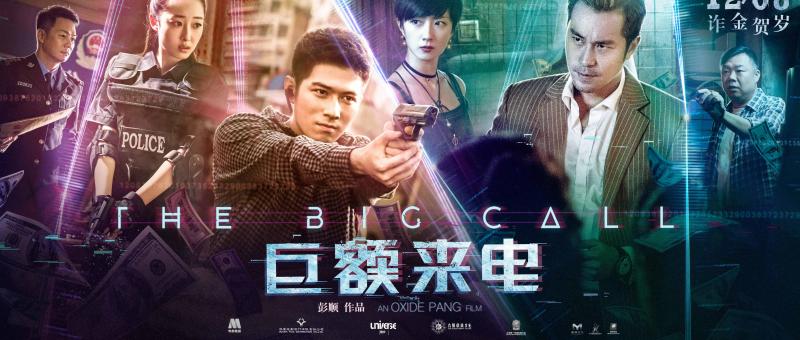
The Big Call (巨额来电, Oxide Pang, 2017)

The Big Call posterOnce upon a time people sneered at telephone scams, unable to believe anyone would fall for something so obviously dubious, yet technological innovation has turned them into an underground industry as our data is bought and sold across a spectrum of nefarious forces whose use for it runs from relentless spamming to the intention to defraud. Oxide Pang’s The Big Call (巨额来电, Jùé Láidiàn) pits an earnest Mainland cop against an entrepreneurial kingpin running a multinational operation which he half-brands as a Robin Hood exercise intended to rob the super rich of their excess wealth, but then he never quite intends to redistribute it, only to put it straight back to work so that it might reproduce.

Our hero, straight as an arrow rookie policeman Ding (Cheney Chen), fails to save his old high school teacher from committing suicide after being defrauded of a vast amount of money through a telephone scam. Fraud isn’t really his division – he’s just a regular street cop, but he’s determined to protect the people in his precinct and seeing as he’s already found numerous similar cases is convinced he has a shot at unmasking the criminal. Ding’s investigation, however, unwittingly throws a spanner into an Anti-Telecommunication Fraud Centre operation. Despite their irritation, the guys in the fraud squad decide to let Ding in on the action whereupon he quickly realises that his old academy girlfriend is in fact undercover in the Thai sweatshop where his prime suspect, Lin Ahai (Joseph Chang), and his partner/girlfriend Liu Lifang (Gwei Lun-mei) run a call centre staffed by trafficked women. Teaming up with Taiwanese gangsters, Ahai and Lifang make use of extremely detailed personal information to create convincing telephone scams so that their marks will never suspect they aren’t who they say they are until it’s too late.

Ahai is perhaps a symptom of modern Chinese inequality. A poor young man who sought to better himself, Ahai is ignored by the business world and revels in getting his own back by making millions defrauding millionaires. Yet it’s not only “evil” millionaires that the pair target but ordinary men and women who don’t have the kind of money they can afford to lose. Ahai’s own sister (Peng Xinchen) left the village and refused to take his ill-gotten gains but later falls victim to a cruel scam herself – she’s just a college student with hardly any money but the scammers use exactly that against her, pretending to be from the education authorities so they can persuade her to part with her tuition money or else threaten her with problems in her enrolment. Meanwhile, he and and Lifang dream of the life that was far out of their reach – a swanky flat on Hong Kong’s fashionable Hennessy Road where they could live together with all the comforts of the elite and raise a family free of economic anxiety.

Some might think telephone fraud is a victimless crime, that the banks will cover the loss for their investors and so the only casualty is capitalism. This is however not true. Not only will many people be deprived of their life savings – money they needed in the short term for medical bills, tuition, mortgages etc, but will suffer intense humiliation at having been so cruelly caught out. The scammers attention to detail is intense. Having acquired vast amounts of confidential information, they have enough to convince most rational people that they are who they say they are but aren’t afraid to take things to the next level if they need to. Unable to get over the shame of having been taken in, suicide is a very real possibility for those who feel they’ve lost everything including their good name and future possibilities. Ahai, of course, refuses responsibility for the secondary effects of his crimes, thinking only about money while Lifang silently pines for him and the life he promised her while dutifully doing his dirty work in the hope that they can finally be together. 

Pang stages the cat and mouse game between the earnest Ding and the amoral Ahai as an ironic battle of wits though the odd bursts of absurd humour often feel out of place alongside the sometimes grim story of underworld life. Yet it’s the spiky psychological drama between undercover cop Xiaotu (Jiang Mengjie) and gangster’s moll Lifang which really sets things alight as Lifang at once suspects Xiaotu is not all she seems but can’t help respecting her tough as nails survivor attitude. Meanwhile, Ding is given two additional reasons to chase Ahai besides his shining love of justice – the first being that Ahai loves pretending to be a law enforcement official and thereby tarnishing the reputation of the police, and the other being that Xiaotu is an old flame. Slick if superficial, The Big Call is a return to the HK cop dramas of old only robbed of its edgy street punk energy by the upscale and emotionless world of faceless cybercrime.


The Big Call was screened as part of the New York Asian Film Festival 2018.

HK trailer (English subtitles)

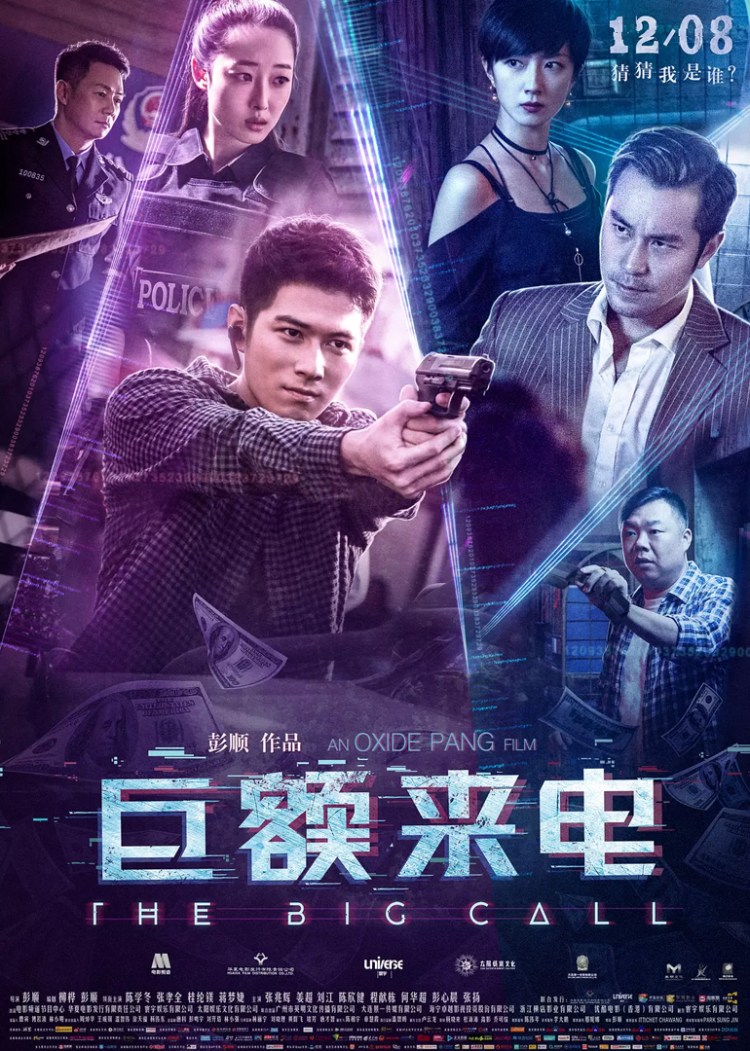
Dude’s Manual (脫單告急, Kevin Ko, 2018)

Dude's Manual posterPersonas – university can be all about figuring them out but more often than not the key comes from an unexpected direction. An unexpected direction is where Dude’s Manual (脫單告急, Tdān Gào) eventually takes us after kicking off with a scary crime thriller opening in which our hero gets himself temporally mixed up with a serial killer investigation only to earn himself the embarrassing nickname “Air Pump” when his “victim” is revealed to be a blow up doll. An unlikely meet cute brings him into the orbit of the most popular girl at school and subsequently into her plan to win back her reputation after getting it tarnished with his naffness at the expense of another shy and lonely student, but then again, isn’t everyone going to get what they wanted? Perhaps yes, perhaps, no.

He Xiaoyang (Dong Zijian) is in the last year of uni and is still single, never having had a girlfriend. An embarrassing incident with a blowup doll has earned him the nickname “Air Pump” around campus, while his roommates – “sexpert” Boshi (Yuan Fufu), and rich kid Ren Yi (Jin Jin), are doing a little better when it comes to the ladies, but neither of them is much help to the nerdy Xiaoyang whose main passion is the homemade flying machine he’s crafting in preparation for a competition. At an exclusive party Ren Yi gets the boys into, Xiaoyang’s life takes a dramatic shift when popular pretty girl Guan Xin (Elaine Zhong) throws up on his T-shirt and then becomes trapped with him in a bathroom from which they fail to escape before a budding paparazzo snaps them together in a compromising position. Guan Xin, mortified that anyone might think she hooked up with “Air Pump”, hatches a plan to get Xiaoyang a “real” girlfriend to clear her name and retrieve her top girl status.

As rom-com plots go it’s a fairly old fashioned one. Guan Xin decides to set Xiaoyang up with a shy concert pianist, Li Shushu (Jessie Li), who hardly ever comes to parties because of her intense social anxiety. She is therefore, Guan Xin rationalises, perhaps grateful for the interest and Guan Xin is really “helping” two people by manipulating them both into a possible relationship which might just have legs. Of course, while she’s doing that she and Xiaoyang can’t help but grow closer even if Guan Xin can’t quite bring herself to admit it.

The spanner in the works is that Xiaoyang, despite himself, is a pretty nice guy. He plays along with Guan Xin’s scheme but quickly goes off book, demonstrating genuine understanding and connection with the shy Shushu as he gently helps to bring her out of her shell. He is, however, also falling for Guan Xin but doubting that she will ever set aside her haughty attitude and accept her growing feelings for him.

The central irony is that Guan Xin can’t see all the ways in which she and Xiaoyang have already progressed through the standard rom-com gateways to love. Meanwhile, Xiaoyang’s friends are also enjoying a lesson in romance with both of their respective girlfriends as sex obsessed Boshi has to learn to be less superficial, and Ren Yi that money really doesn’t buy everything. It is hard to get past the unethical using of poor Shushu who becomes a sacrificial pawn in Guan Xin’s grand plan, but then again perhaps she learns a thing or two herself even if it’s just how to subvert someone else’s nefarious plan in order to engineer a happier out come for all.

Ko has a few laughs at the expense of the young men and women of modern China. Lives lived online have contributed to an already shame hungry culture and given birth to a fair few unscrupulous paparazzo gossip hounds who might be better sticking their cameras in more useful places, while also reinforcing traditional ideas about social hierarchy. Guan Xin, in many ways taking on the masculine Svengali role as she “fixes” the feminised ugly duckling of Xiaoyang, has some pretty cynical ideas about modern dating – using jealously as a weapon, trying to turn the “nice” Xiaoyang into a hot bad boy player that all the women will go crazy for, but then her plans do seem to work and Xiaoyang sees himself rising through the loser ranks to become an eligible campus catch. Like all good rom-coms, however, he doesn’t let himself be changed on the inside so much as rediscover what it is that makes him him, flying off into the sky on the wings of a romantic dream crafted with his own hands.


Dude’s Manual screens as part of New York Asian Film Festival on 14th July at 2.45pm.

Original trailer (English subtitles)
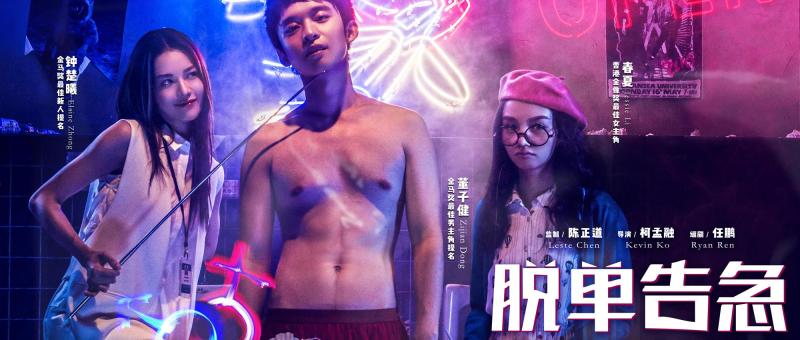
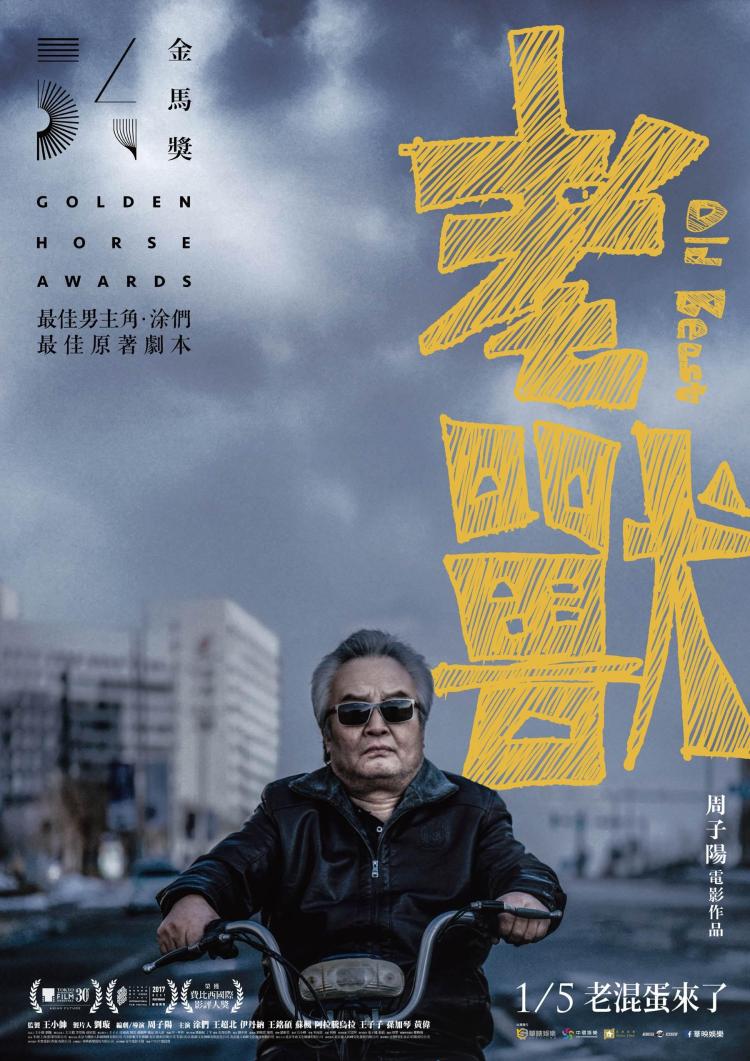
Old Beast (老獸, Zhou Ziyang, 2017)

Old Beast posterFilial piety is a favourite theme in Chinese cinema, but with an ageing population, increasing distance between parents and children, turbulent economic circumstances, and a rapidly modernising world, questions are being asked about the responsibility owed to one’s family when that responsibility is not always reciprocal. The small-scale tragedy at the centre of Old Beast (老獸, Lǎo Shòu) is that of a man who felt that his various statuses allowed him to ride roughshod over the social order, neglecting other people’s feelings in order to prove his own superiority but only ever reminding himself that he is trapped and empty.

In the arid cities of Inner Mongolia, “Old Beast” Lao Yang (Tu Men) likes to play the big man around town. His business went bust years ago, and now he’s chiefly known as the holder of many debts stolen from men at gaming tables who will likely never be able to make good on their ambitious wagers. With his ill-gotten gains, Yang turns off his mobile to avoid “annoying” calls from his bedridden wife to take a friend out on the town to cheer him up after he explains he’s having a lot of trouble trying to swap his camel for a cow. Yang and his friend spend the night in a “spa”, during which time his wife collapses and ends up in hospital while his grown up children rally round trying to make up for Yang’s constant failings. Still not ready to answer his phone, Yang heads to his mistress’ before he ever thinks of going “home” to make sure his wife is OK.

Yang’s rather depressing life is however about to implode, not least because of his constant neglect of his wife. Yang’s long suffering children have just about had enough – not only are they on the hock for their mother’s medical bills which ought to be their father’s responsibility, but they’re all also suffering because of his bad reputation. Yang’s son-in-law is promised a promotion at work, but warned that Yang’s various disgraces won’t go in his favour while his son’s marriage faces extreme pressure thanks to the increased strain on his daughter-in-law as she attempts to look after her own home and that of her in-laws. Yang thinks that as he raised them, lent them money when times were good, and has been supportive in other ways, he is “owed” all the respect that filial piety demands even though it is clear that any help he gives to anyone else is largely for his own benefit. He thinks only of himself, even stooping so low as to steal the money the children have raised between them to pay for their mother’s operation only to use it to buy a cow to pay back his friend whose camel he sold to a dodgy butcher and then passed off as “beef”.

The children, taking matters into their own hands, eventually stage an intervention, forcing Yang to sign a contract that he will finally change his ways. Affronted, Yang reports his own kids to the police and then takes them all the way to a court hearing which he eventually storms out of when forced to confront his own lack of moral character. The world holds no love for old men like Yang who care little for conventional morality or the feelings of others, seeking only to be “respected” in an attempt to paper over their own feelings of insecurity and self loathing. Yang’s youngest daughter, married and living in the city, has the most filial piety owing to not having been so directly confronted with her father’s misdeeds and so she feels she ought to help him, against the advice of her husband, only to find herself betrayed when a conversation with her sister reveals Yang’s gentle long con. The question remains, considering Yang’s treatment of them, do Yang’s family really owe him anything as a “father” or are they entitled to walk away and leave him to wreak his self-destructive magic on himself alone?

It is difficult to sympathise with Yang whose overwhelming self obsession knows no bounds, but then he is perhaps a product of his times. A chancer and a grifter, one who’s always trying to make deals and come out on top, he’s lost big in the fluctuating economy of the modern Chinese state. Yang feels trapped, dreaming of horses, plains, and escapes as he casts off the “burden” of his family for the easy pleasures of a younger mistress, spas, and gaming tables but he cannot escape himself. The half-built city all around him is a reflection of his own ruined hopes, suspended in a kind of melancholy defiance as a reminder of the hubris of a more hopeful era. Yang cries silently as he watches his family collectively decide he’s not worth it anymore, unable to repair the connections he has failed to forge in a misguided faith that he is owed something for nothing. The world, however, has changed. Even the old will have to pull their emotional weight, or the whole system will come crashing down.


Old Beast screens at New York Asian Film Festival 2018 on 3rd July, 9pm.

Original trailer (English subtitles)
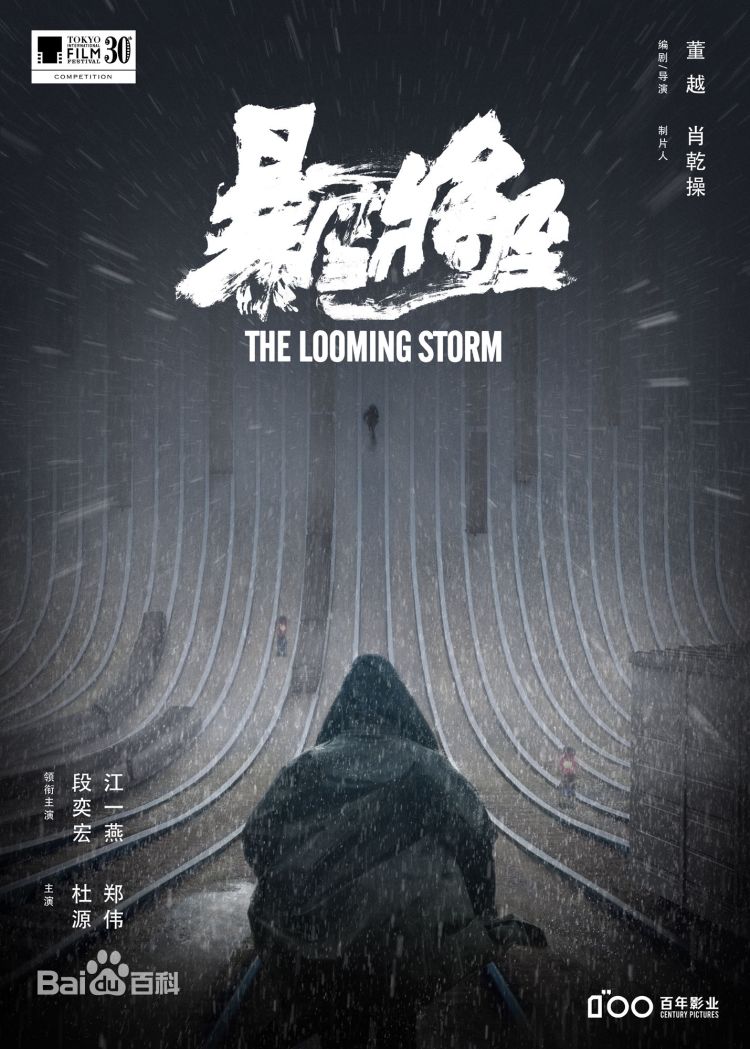
The Looming Storm (暴雪将至, Dong Yue, 2017)

The Looming Storm posterGreat changes were afoot in China in 1997. While the rest of the continent contended with the Asian Financial Crisis, China saw the death of reformer Deng Xiaoping who had begun the business of putting the nation’s economy on a modern footing – something which was still very much in progress under the then premier, Jiang Zemin. The old unprofitable factory cities and the work unit system were on their way out, but with little in the way to replace them save the hope for a new and glorious future. The hero of Dong Yue’s debut, The Looming Storm (暴雪将至, Bào Xuě Jiāngzhì) has an unhappy destiny in that his name uses characters which could be translated as “unnecessary remnant of a glorious nation”. He, like many of his generation, is one caught out by his country’s sudden shifts and finds himself living out a fantasy, chasing at shadows and eventually destroying himself in a misdirected attempt to attack a society which has all but forgotten him.

We begin at the end – in 2008, Yu Guowei (Duan Yihong) is released from prison as a parolee, awaiting the return of his ID card and along with it his official existence as a member of society. Flashing back to 1997, Guowei is the security officer at the local factory. Having proved himself efficient in catching petty criminals thieving from the communal resources, Guowei gets himself a “model worker” commendation and the nickname “Detective Yu”. Fancying himself as a top investigator and there being very little to do in this no horse town, Guowei is, in a sense, excited when another body of a young woman turns up near the factory closely matching the pattern of other recent murders and hinting at a serial killer. Seeing as the police are short staffed in any case, the local sheriff decides to humour Guowei by allowing him to go on trying to solve the case on his own.

Guowei investigates the crime with methods he’s learned from hardboiled movies – staking out the crime scene and asking awkward questions in an illicit local disco where, it is suggested, some of the victims may have been earning money through casual sex work. He becomes obsessed with shadowy figures, faces hidden by raincoats, who lurk on the periphery anonymous and almost unseen but yet unsettling. Guowei finds and chases his quarry, only to abandon a friend in need while the suspect gets away leaving Guowei with only his shoe as a possible clue.

During his model worker speech, Guowei somewhat milks the occasion but proudly states that he intends to live a “meaningful live”. Given the depressing drudgery of his existence it’s unclear how he intends to do that, but then his “investigation” becomes his great and glorious destiny – something which will bring both meaning and acclaim to his otherwise meaningless existence. Like many of his age, Guowei has learned to be proud of his contributions to society through his work but remains unaware that the security bureau is not well respected. Everyone knows Guowei is a pure hearted sort who cannot be corrupted and pretends to respect him for it, but in reality they find him priggish and ridiculous. Unbeknownst to him to there have been many more mysterious thefts he’s never discovered because the entire factory and even his own assistant are engaged in a complex system of bribery to cover them all up.

When the factory is unceremoniously shut down, all Guowei is left with is his need to find the killer. Striking up a relationship with a pretty sex worker, Yanzi (Jiang Yiyan), who dreams of opening her own hair salon in Hong Kong – another new horizon in 1997 though one she fears she may never see, Guowei perhaps has another shot at building a “meaningful life” but rejects it, suppressing his natural desires for his obsessive pursuit in deciding to use his new muse as bait. Time and again, Guowei backs away from the reality, unwittingly sacrifices friends and lovers in service to his self created narrative in which he is a hero seeking justice whose victory is all but assured. Having discovered the truth, Yanzi’s eyes are opened – she has woken up from the beautiful dream of a possible future while Guowei is still boyishly dreaming of becoming a hero in an unheroic world.

Dong paints the industrial factory town in tones of washed out browns and greys as the rain falls without end, muddying the streets and thickening the air. Having made a life changing transgression, Guowei is asked what the point in any of this really was and seemingly has no answer, his fantasy perhaps shattered by his single act of horrifying violence intended for the world in which he lived which had already robbed him of so much, but vented on a possibly innocent party all because of a personal conviction more akin to prejudice. A victim of changing times denied his future, the “meaningful life” that would allow him to greet the new century with head held high, Guowei creates a new narrative for himself in which he can be the hero but there is a storm always looming and Guowei has been swiping at ghosts flickering on the peripheries of his fracturing mind. Eventually Guowei too decides it’s time to leave this place only to find no way out from the blizzard conditions which continue frustrate the path towards his future.


The Looming Storm screens at New York Asian Film Festival 2018 plus Q&A with director Dong Yue on 9th July at 9.30pm.

Original trailer (English subtitles)

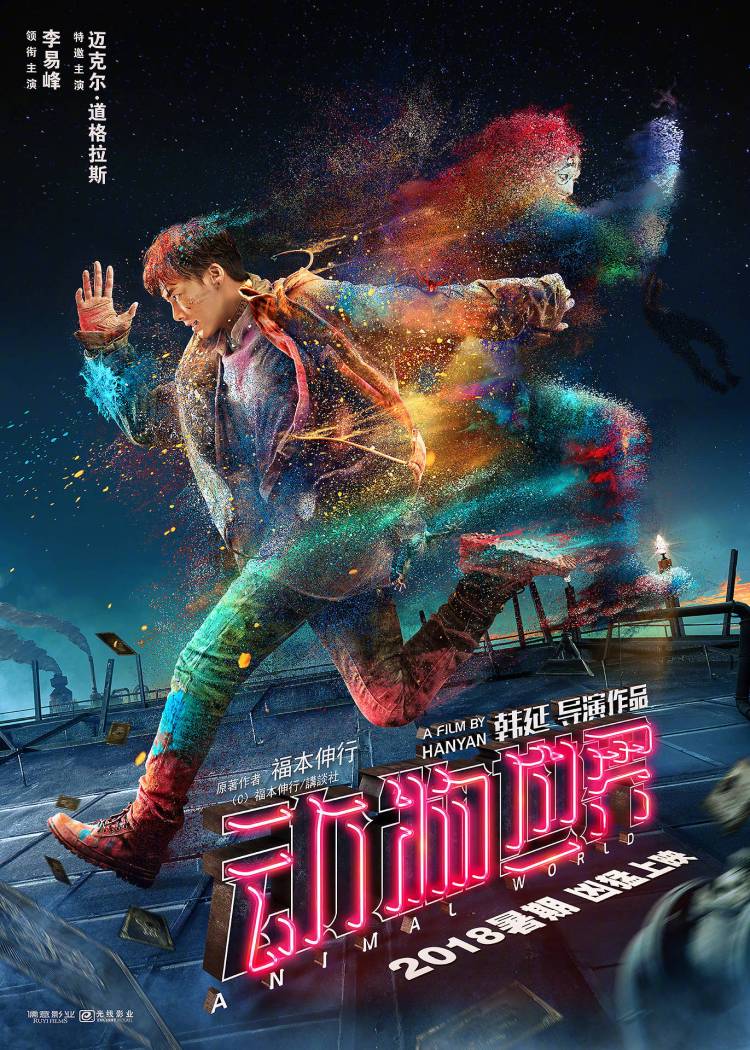
Animal World (动物世界, Han Yan, 2018)

Animal World Poster 1Greed is good. So Michael Douglas once told us many years ago and if Animal World (动物世界, Dòngwù Shìjiè) is anything to go by, the Gordon Gekkos of the world have not changed their tune. Inspired by Nobuyuki Fukumoto’s manga Kaiji: The Ultimate Survivor, Han Yan’s anarchic gambling drama is the latest in a long line of films to ask serious questions about a perceived moral decline accompanying the rapid economic development of the Chinese state occurring largely during the lifetime of the pure hearted hero Zheng Kaisi (Li Yi Feng) who has been dealt a bum deal and is doing very little to resist it. Describing himself as “crazy” (not unfairly, as it turns out), Kaisi is perhaps the last good man but his resolve is severely tested when he finds himself trapped aboard the good ship Destiny and forced to bet his life on a game of rock, paper, scissors.

Kaisi was one of the smartest kids in town but his father’s early death when Kaisi was eight and his mother’s long term illness have left him all alone in the world. Defeated and without hope, Kaisi’s only job is playing a sad clown at a local arcade and, in a failing he continues to find humiliating, he has to rely on childhood friend and putative sweetheart Qin (Zhong Dongyu), who is also his mother’s nurse, for the money to pay the medical fees that keep his mum in an actual room and not out in the corridor with all the other paupers. Another childhood friend of Kaisi’s, Li Jun (Cao Bingkun), claims to be in a similarly sticky situation and offers Kaisi a sweet deal if only he’ll consent to mortgaging the family apartment. Reluctant but backed into a corner, Kaisi agrees only to realise that not for the first or last time Li Jun has thrown him under the bus and he’s now on the hock for all his friend’s debts which seem to belong to a shady underworld kingpin by the name of Anderson (Michael Douglas). Anderson offers him a way out – he can win it all back and more if he agrees to submit himself to a high stakes game of chance way out in international waters aboard a disused warship called “Destiny”.

Describing himself as “crazy”, Kaisi has a strange fascination with clowns which extends past his occupation and directly into his psyche. Imprinted with a violent kids’ cartoon in which a vigilante clown metes out justice with a smile during a traumatic childhood incident, Kaisi feels as if there is a clown trapped inside him which wants to come out at moments of intense emotionality. Floating away in flights of fancy, he reimagines his enemies as weird space creatures and sees himself cut them down with twin samurai swords in the cramped environment of an otherwise empty subway car. Reality and imagination become blurred as we watch Kaisi run through a scenario in his head only to cut back to the “real” world where he more often than not decides to let things go. Despite his internal crazy clown, Kaisi is a defeated and passive figure who has been drifting aimlessly without hope or purpose, too afraid even accept the affection of his childhood sweetheart Qin due to his internalised insecurity regarding his lack of financial stability.

Dealt a bum deal by life, Kaisi has been relegated to an oppressed underclass with little chance of escape. He is, however, honest and pure hearted unlike his dodgy real estate broker friend, Li Jun. “Destiny” becomes a microcosm for exploring the evils of capitalism as the players quickly realise that they are only involved in a sub game – while they risk their lives at the gaming tables, the fabulously wealthy are busy betting on them from behind two way mirrors. Shady impresario Anderson gives a rousing introduction to proceedings, but pointedly omits to add anything about cheating. Cheating is not just allowed, it is encouraged, to a point at least, and playing the angles strongly advised. Games of chance are never quite just that and Kaisi’s finely tuned mathematical brain finally gets an excuse to kick back into action after a long period of wilful indolence.

Repeatedly, Kaisi is told that “loyalty” means nothing in this “animal world” where the only thing that counts is “profit”. While he is good hearted and originally taken in by the schemes of others, he is not naive and is able to see the “animal world” for what it is even if he refuses to become a full part of it. Maintaining his faith in the power of friendship proves to be a mistake, but still Kaisi realises that he’d much rather be a “clown” ridiculed for his principles than a soulless mercenary who’d sell out a friend for money. His attitude perhaps stands in stark contrast to those around him who’ve each found themselves at the Destiny for different reasons, some more eager than others to give in to their desperation. A mild critique of the heartlessness of a fiercely competitive society and its inbuilt societal inequalities, Animal World is a beautifully designed, surreal and anarchic tribute to fighting the good fight even if everyone else thinks you’re a “crazy clown”.


Animal World is released in UK cinemas from 29th June courtesy of Cine Asia. Check out the official website to find out where it’s playing near you including screenings across Europe and the rest of the world!

Original trailer (Mandarin, no subtitles)

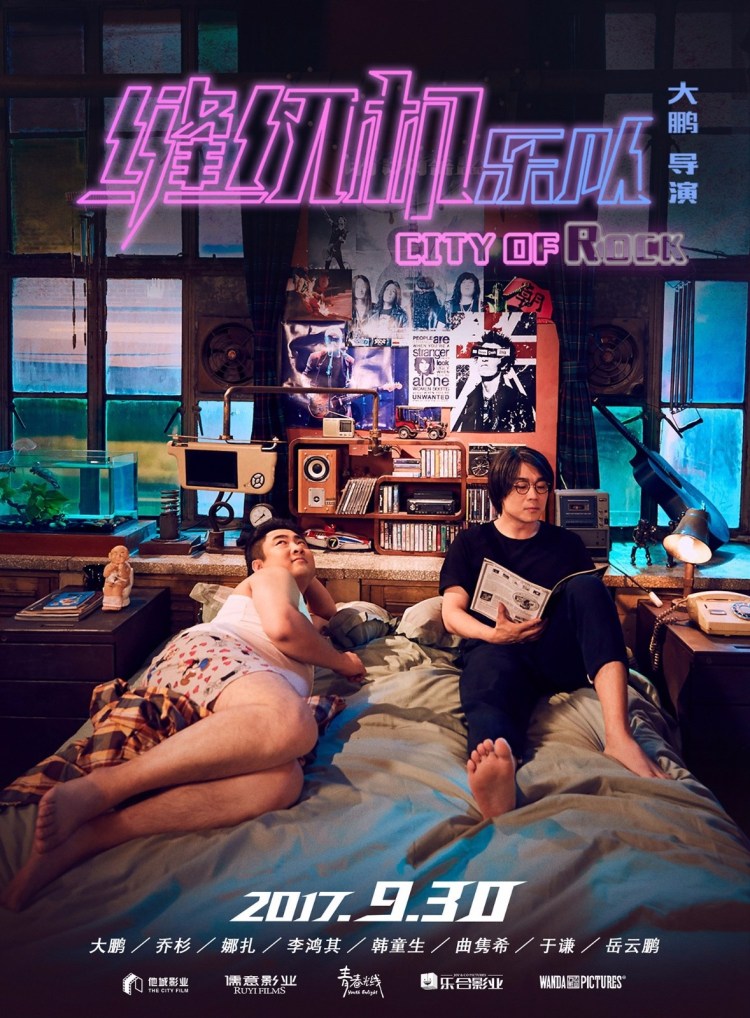
City of Rock (缝纫机乐队, Da Peng, 2017)

201708162324218235They built this city on rock and roll! Right in the middle of Ji’An, there’s a giant statue of an electric guitar with a plaque underneath it reading “The Heart of Rock” that was erected in memory of a legendary concert given by a super famous band, Broken Guitar, who happen to hail from the region. This being a particularly musical town, Broken Guitar continues to inspire young and old alike to pursue their musical dreams, but there is trouble on the horizon. Shady mobbed up developers want to tear down the Great Guitar and put flats there instead, which is not very rock and roll when all is said and done.

Meanwhile, in Beijing, shady musical agent Chen Gong (Da Peng), who was actually the agent for Broken Guitar at the time they broke up, is working on his latest venture – trying to turn three middle-aged, pudgy rockers into a Chinese K-pop act. Needless to say it’s not going well and Gong is perpetually cash strapped. When he receives an unsolicited call from Hu Liang (Qiao Shan), a Ji’An resident who wants him to help promote a local concert as a kind of benefit to help save the Great Guitar, Gong isn’t interested and quotes him a ridiculous sum of money only to see it instantly pop-up in his account. Jumping straight on a train, Gong is met at the station by a rapturous welcome parade which includes a marching band and kids throwing garlands but quickly figures out that Hu Liang is every bit as much of a schemer as he is. Hu Liang doesn’t even have a band and needs Gong to help him find one.

Once again, the conflict is between cynicism and artistic integrity as a group of misfits comes together to help stop a monument to true rock being torn down by soulless suits. Gong, as we later find out, had musical dreams himself but, after having gone against his father’s wishes to pursue a musical career, was forced out of the conservatoire after an accident robbed him of the feeling in two of his fingers and he became too depressed to sing. Having lost his faith in music, Gong has sold out and become a cynical money man, cutting deals anywhere and everywhere he can. Rather than work on the “unique” sound of the guys he was mentoring, he’s obsessed with the idea of sending them to Korea to get plastic surgery, and turning them into some kind of K-pop inspired Chinese song and dance group.

Hu Liang, meanwhile, is just as much of a con man but his heart is in a better place. Only two people show up for his auditions to join the band – jaded alcoholic with a broken leg, Ding Jianguo (Gulnazar), and a drummer from Taiwan who calls himself “Explosive” (Li Hongqi) and sits with his back to the audience. The other bandmates include a former member of Broken Guitar now a gynaecologist (Han Tongsheng) whose daughter has forbidden him from playing rock and roll, and a little girl (Qu Junxi) who’s a whizz on the keyboards despite the disapproval of her Taekwondo loving mother who thinks things like music are a frivolous waste of time. Together they face various obstacles in their quest to save the great guitar and the spirit of rock and roll itself but finally discover that the true spirit of rock lies in getting the band back together for one last hurrah and channeling all into music.

Gong, tempted by the shady developer, is reminded that money can save lives but dreams cannot. Faced with a dilemma, Gong falls back into cynicism and rejects the new sense of fun and togetherness he’d found as a peripheral member of the band. Yet reuniting with his hopeless wannabes and easing back into his soulless Beijing life, he begins to realise what he’s been missing and rediscovers the the true nature of rock and roll which isn’t trapped inside a giant concrete guitar but inside the hearts of musicians who need their instruments to help bring it out. Dreams, it seems, save lives after all. An often hilarious, sometimes silly comedy, City of Rock (缝纫机乐队, Féngrènjī Yduìis as full of heart as it encourages its protagonists to be, arguing for the importance of the right to express oneself in a society which often actively suppresses it.


Screened at the 20th Udine Far East Film Festival.

Original trailer (simplified Chinese subtitles only)

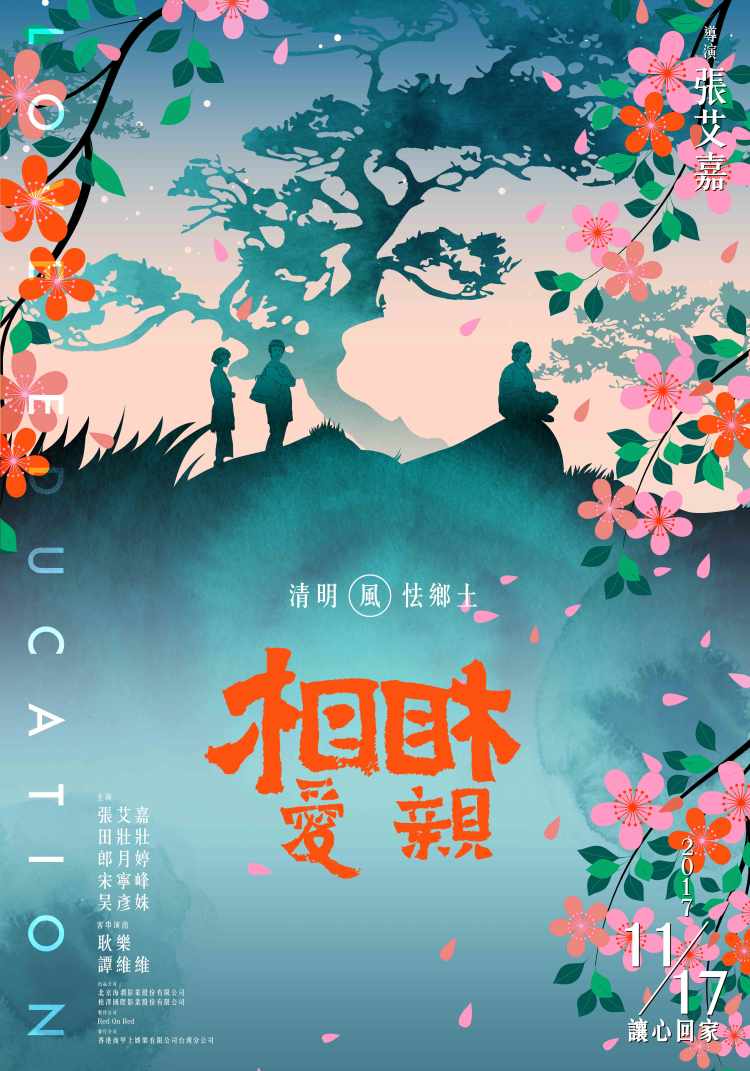
Love Education (相愛相親, Sylvia Chang, 2017)

Love Education posterWhat is love? Who gets to define it, and should it be a force of liberation or constraint? Sylvia Chang attempts to find out in looking at the complicated, unexpectedly interconnected romantic lives of three generations of women who discover that nothing and everything has changed in the decades that divide them. While a bereaved daughter channels her own anxieties of impending mortality into a petty and hopeless quest to validate the true love history of her parents, a daughter battles an oddly familiar problem with her musician boyfriend, and an elderly village woman is forced to realise she wasted her life waiting for the return of a man who had so carelessly abandoned her. Mediated by a culturally specific argument over burial rites, Love Education (相愛相親, Xiāng ài xiāng qīn) is a meditation on the demands and obligations of love, both familial and romantic, as they inevitably change and mature across the arc of lifetimes.

As Huiying’s (Sylvia Chang) elderly mother lies dying, she sinks into a vision of a bright summer’s day spent with her one true love who is already waiting for her in a better place. Huiying, a middle-aged school teacher facing semi-enforced retirement, is thrown into a tail spin of grief and anxiety in losing her mother, realising that it won’t belong before her daughter will in turn lose her. Weiwei (Lang Yueting), an aspiring TV journalist, remains unmarried and still lives at home though, unbeknownst to Huiying, is planning to move out and live with her aspiring rockstar boyfriend, Da (Song Ning). The plan is, however, thrown into confusion by the resurfacing of his ex, in the city with her son to compete in a cheesy TV singing contest. Meanwhile, Huiying has become obsessed with the idea of burying her mother alongside her father, only his body was sent back to his rural hometown, as is the custom, and so will need to exhumed and brought to the city. Unfortunately, Huiying’s father was technically a bigamist – he left an arranged marriage in the country to look for work in the city, “married” Huiying’s mother and never looked back. Huiying, determined to prove the “legitimacy” of her parents’ love seeks to reunite them in death, but Nana (Wu Yanshu) – the abandoned country wife, is hellbent on retaining the body, at least, of the man she married and thereby legitimising herself as a “true” wife.

Huiying’s grief-stricken descent into desperate obsession is a thinly veiled attempt to work through her own feelings of middle-aged dissatisfaction and anxiety on being violently confronted by her transition from a position of authority into a potentially powerless old-age. Her decades long marriage to Xiaoping (Tian Zhuangzhuang), a mild-mannered former teacher turned driving instructor, is comfortable enough but perhaps floundering as the couple contemplate their retirement and impending dotage. Huiying, mildly jealous of a elegant pupil who seems to have taken a liking to her husband, is also entertaining a mild crush on the father of one her own pupils while quietly feeling the distance that has inevitably grown between herself and her husband throughout the years. And so, she sets about “proving” that her parents’ romance was good and true, not only morally recognised but blessed by the state and legally approved.

This, however, proves more difficult than expected due to China’s rapid modernisation, series of political changes, high levels of bureaucracy and idiosyncratic way of issuing documentation. As her parents were “married” in the ‘50s, their union was approved by the local Communist authorities whose approach to record keeping was not perhaps as serious as might be assumed. The receipt for their license should be at the local block office, but they knocked that down. The papers were supposed to be moved to the town hall, but lacking resources they simply threw away all the documents from 1978 and before. Huiying’s parents belong to a past which has literally been thrown away, erased from history and regarded as an irrelevance by the current generation who think only of the future.

Meanwhile, Nana has been patiently waiting in her home town – a “good wife” by the standards of her rural society. Marrying Huiying’s father in an arranged marriage she has done all expected of her – looked after his family and then lovingly tended his grave despite the fact that he abandoned her after only a few months of marriage, not even bothering to tell her that he met someone else and wasn’t coming back. Nana, like Huiying, is desperate to legitimise her position to avoid the inevitable realisation that she has sacrificed her life for a set of outdated ideals.

Weiwei feels this most of all. Unlike her mother, she can’t forgive her grandfather’s moral cowardice in treating his first wife so cruelly. Building up an unexpected bond with the ironically named “Nana”, Weiwei is also forced to think about her own stalling relationship with Da who put his rockstar dreams on hold to stay with her rather than proceeding on to Beijing to try his luck there. Da, like her grandfather, has a past – in this case a childhood sweetheart with a young son and possibly territorial ambitions over a kind young man she has wounded through abandoning. Should Weiwei wait for Da, and risk ending up all alone like Nana, or should she end things now and give up on youthful romanticism for grown up practicality?

So bound up with the “legitimisation” of love, there’s an inevitable degree of possessiveness which creeps into each of the relationships – even that of Huiying and her daughter as she attempts to clip her wings to keep her close, but there’s also a kind of generosity in Chang’s direction which eventually allows them all to break away (to an extent) from an insecure need for validation to something bigger, warmer, and with more capacity for empathy and understanding. Quite literally a Love Education, Chang’s exploration of the romantic lives of three generations of women finds that though the times may have become more permissive nothing has become any easier. Nevertheless, there is comfort to be found in learning to appreciate the feelings of others, offering support where needed, and making the most of what you have while you have it in the acceptance that nothing is forever.


Screened at the 20th Udine Far East Film Festival.

Original trailer (English subtitles)
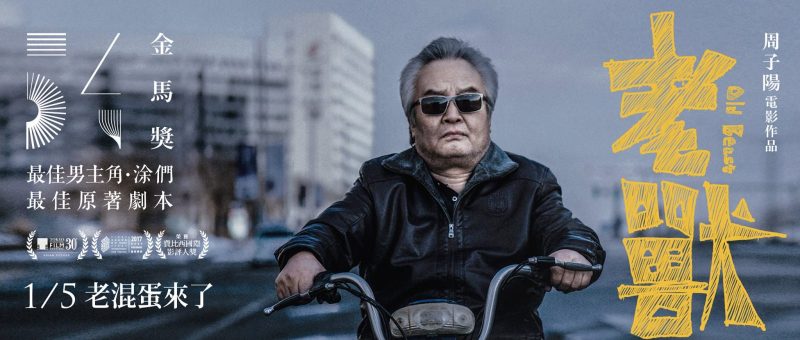
A Better Tomorrow 2018 (英雄本色2018, Ding Sheng, 2018)

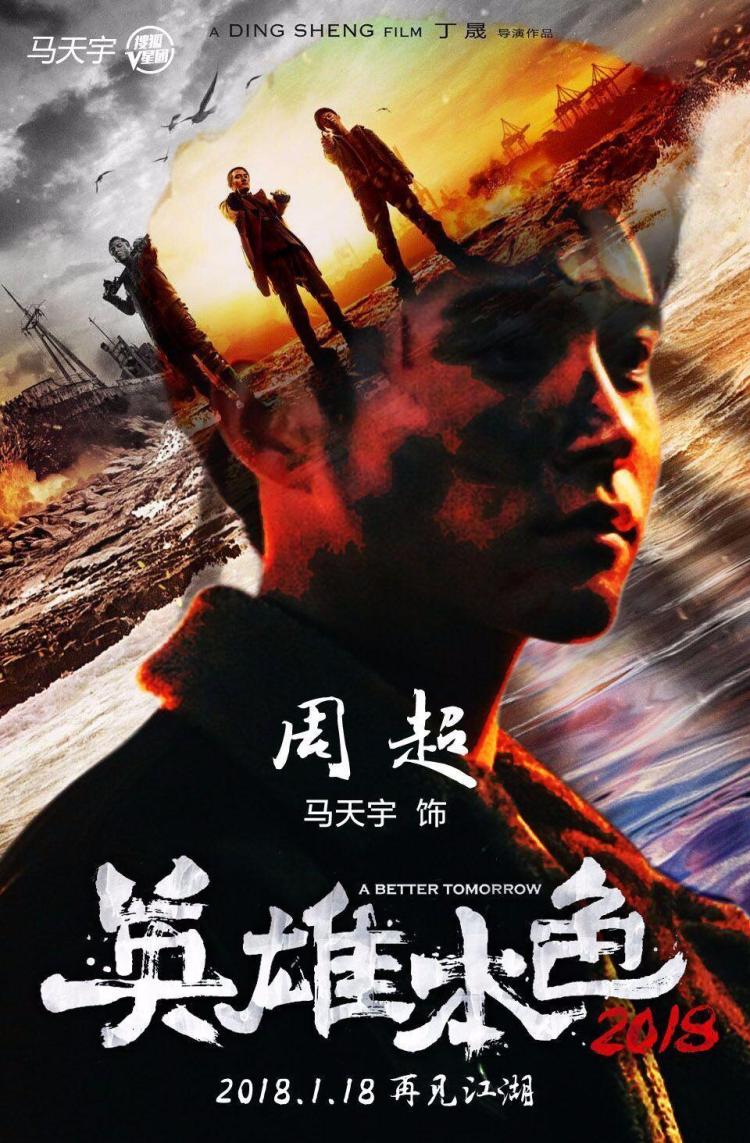
better tomorrow 2018 posterIn the history of Hong Kong cinema, there are few films which could realistically claim the same worldwide influence as John Woo’s 1986 landmark A Better Tomorrow. Commissioned by Tsui Hark, the then jobbing director Woo was tasked with creating a vehicle for a veteran Shaw Brothers star. Casting Cantopop idol Leslie Cheung and TV sensation Chow Yun-fat, Woo mixed traditional melodrama with hyper masculine emotionality to give birth to what would become the “heroic bloodshed” genre which was to dominate the island’s cinematic output well into the ‘90s. A Better Tomorrow, as its title implies, is the perfect evocation of its era and among the first to express an oncoming anxiety for Hong Kong’s “return” to China then only a decade away. Slick and oozing with ‘80s, macho cool, Woo’s film captured the imaginations of young men everywhere who suddenly took to wearing sunglasses and trench coats while chewing on match sticks, dreaming dreams of heroism in a sometimes gloomy world.

Which is all to say, attempting to “remake” Woo’s masterpiece may well be a fool’s errand. It is however one which has been frequently attempted, not least by Wong Jing in 1994 and Song Hae-sung in Korea in 2010. Korean cinema has perhaps become the heir of heroic bloodshed with its inherent love of melodrama which often finds its way into the nation’s bloody gangster epics whose generally high level of homosocial bonding is perfectly primed for male honour drama. Ding Sheng, apparently a huge fan of the original Hong Kong hit, brings the tale north to the Mainland, relocating to Qingdao which serves as a trading post for the drug running route from Japan.

As in the original we have two biological brothers – Kai (Wang Kai), a “sailor” who has fallen into smuggling to support his family who are unaware of his criminal occupation, and Chao (Ma Tianyu) – a rookie policeman. Meanwhile, Kai also has a criminal “brother” in his younger partner Mark (Wang Talu), an orphaned hothead from Taiwan. Kai is a “noble” smuggler who refuses to traffic drugs but a Hong Kong triad boss is hellbent on fishing out his Japanese contacts and after a job goes wrong, Kai ends up getting shot and arrested by his own brother who is heartbroken to discover the truth. Spending three years in prison during which time Kai’s father is killed in a raid on their home by gangsters looking for info on the Japanese, Kai tries to go straight but finds himself pulled back into the underworld after coming into conflict with villainous gangster Cang (Yu Ailei) who has taken over the Japan route (and forced Kai’s old girlfriend into prostitution after getting her hooked on drugs).

Ding’s film, while replicating the plot of Woo’s original, attempts to bring it into the “modern” era in which the stylised, manly melodrama of the ‘80s action movie has long since been replaced by a finer desire for “uncool” realism. Ding does not seem to be making a particular point about modern China, other than in persistent economic inequality which has forced an “honest” man like Kai into a life of crime for the otherwise honourable reason of taking care of his family. Though this itself maybe a subtle reference to the post-90s world, the major anxiety seems to be more with cross cultural interactions and possible pollution of “good” Chinese men like Kai who have been led astray by the false promises of, for example, gangsters from Hong Kong, and the old enemies in Japan. Interestingly enough, the relationships themselves are formalised and superficial. In Japan Kai and Mark are entertained in a “super Japanese” bar of the kind which only tourists frequent, decked to the ceilings with cherry blossoms and staffed with “geisha” girls, while in China they take their guests to a bar which has Peking Opera going on in the background as entertainment.

Kai is fond of telling his sworn brother that everything in the world may change, but brotherhood remains the same. This turns turn out to be an ironic comment in that his natural brother, Chao, disowns him in shame and loathing after his release from prison. Nevertheless, Kai never gives up striving for Chao’s approval even whilst reuniting with Mark who has been crippled and reduced to cleaning boats at the harbour after trying to exact revenge for Kai’s betrayal. The trio’s manly honour code is thrown into stark relief by the amoral Cang who, claiming that “the world has changed” and loyalty no longer means anything, thinks nothing of shooting anyone and everyone who stands between himself and financial gain. If Ding has a comment to make, it’s that the traditional ideas of brotherhood, loyalty, justice and goodness are being eroded by the lure of foreign gold promised by corruption, exploitation, and an absence of morality.

Ding isn’t trying to match Woo’s grand sweep of tragic inevitability so much as aiming for straightforward crime drama but his occasional concessions to melodrama never quite gel with his otherwise gritty approach, nor do his unsubtle his homages to the original film which find Leslie Cheung’s iconic theme song becoming a frequent musical motif as well as prominently featuring at an ultra cool hipster bar located in a disused boat which plays his record on a turntable with a large picture of a grinning Chow Yun-fat behind it. A Better Tomorrow 2018 succeeds as a passible action drama, but one without the heart and soul that made Woo’s original so special. 


Screened at the 20th Udine Far East Film Festival.

Original trailer (English subtitles)
Soundless Wind Chime (無聲風鈴, Kit Hung, 2009)

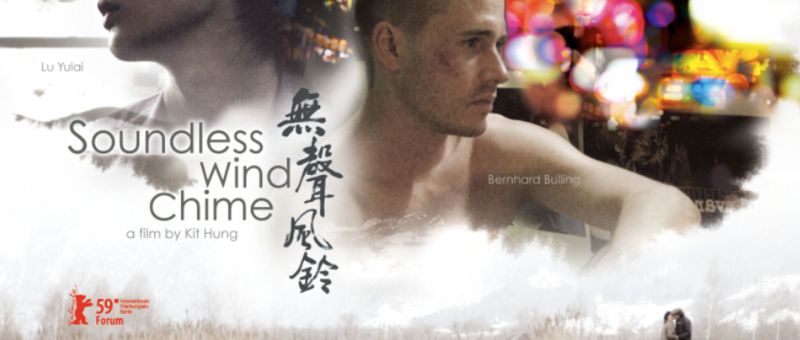
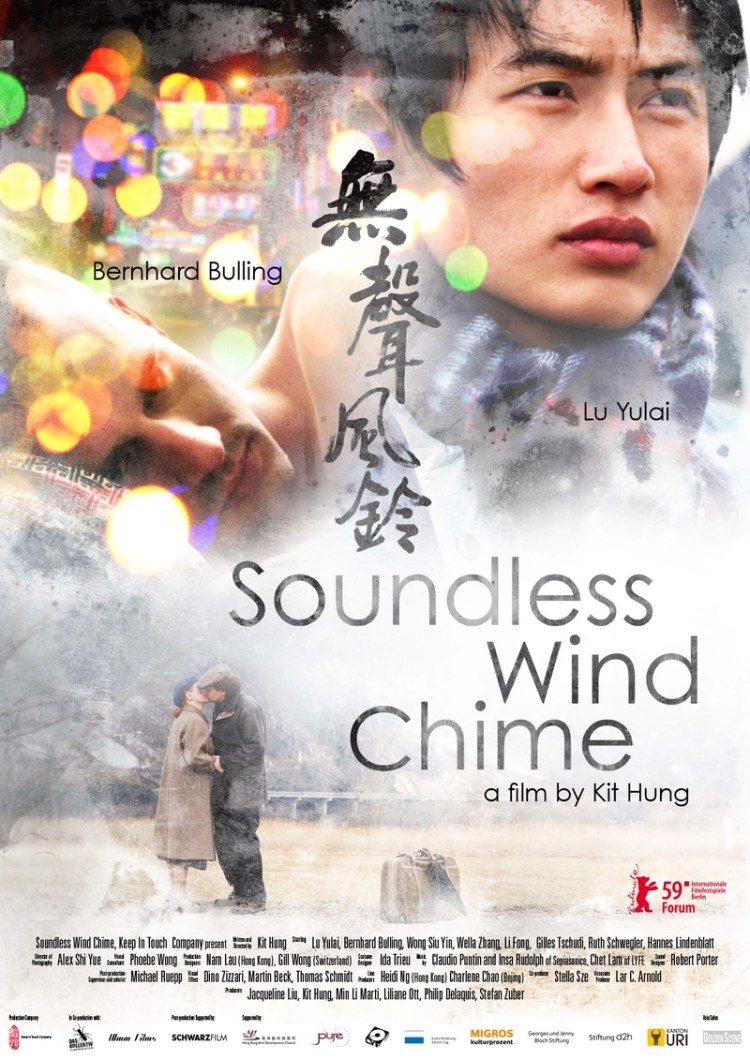
Soundless Wind Chime posterTwo transients find love in the crowded streets of Hong Kong, only to lose it again and long for its return. Deliberately obscure, Kit Hung’s debut Soundless Wind Chime (無聲風鈴, Wúshēng Fēng Líng) is an elegy for lost love, a poetic meditation on the power of memory and a treatise on the art of letting go. Though the lovers manage to construct a world for themselves shielded from the external chaos, its shell gradually fractures under the pressure of real world concerns until tragedy finally intervenes and shatters it forever.

Ricky (Lu Yulai), a mainlander recently arrived in Hong Kong, lives with an aunt (Wella Zhang) who makes a living through prostitution, while he makes ends meet as a delivery boy at neighbourhood eatery. One day, he pauses on the job to watch a foreign juggler (Hannes Lindenblatt) at which point his wallet is stolen by a foreign pickpocket who we later learn to be a German speaking Swiss man named Pascal (Bernhard Bulling). Pascal is currently in an abusive relationship with the juggler whose act is a set up to attract a crowd so that Pascal can rob the captivated spectators. After being beaten up and then brutally raped by his boyfriend, Pascal ups and leaves, eking out a living through juggling on the streets. Arriving at Ricky’s restaurant, he gives him his wallet (and ID card) back and the two strike up a friendship that soon becomes more, living together first at Ricky’s aunt’s and then getting their own place where they can truly be themselves.

To begin with the relationship is a rather happy and open one. Though Ricky decides to leave his aunt’s place immediately after she figures out that he is gay and in a relationship with Pascal, she does not disapprove of his sexuality and only stops to warn him not to invite his ailing mother to Hong Kong because she doesn’t know what the fallout will be from realising her sister is a prostitute and her son is gay all at the same time. Likewise, the lively ladies at the restaurant all seem fairly accepting (or perhaps just oblivious) of Ricky’s relationship with Pascal, impressed by his juggling skill and including him in their after hours mahjong games. The young couple do however have their differences, notably in Pascal’s self destructive streak which sends him back into Hong Kong’s gay nightlife scene while Ricky would rather just spend time home alone together.

The disjointed, non-linear narrative opens in the middle with Ricky making his way to Switzerland in search of Pascal, in a spiritual more than literal sense. Whilst there he runs into another man, Ueli, who looks exactly like Pascal even if he is nothing like him in spirit. The film’s title is inspired by the Chinese belief that a soul lingers after it leaves the body, attaching itself to an animal in order to stay longer and make its last goodbyes. Traditionally, a wind chime is though to reveal the presence of spirits, and it is this Ricky has come looking for as the wind chime outside Ueli’s antique shop gleefully trembles as if it were pleased to see him.

Ricky’s memories spiral away from him as snow covered Switzerland echoes sunny Hong Kong, each thought and action recalling some part of his life with Pascal while he grows closer to the wounded, grieving Ueli whom he believes, on some level, to be Pascal returned to him in another form. Later, Hung shifts the action to the Mainland where Ricky has returned to look after his dying mother, working as a taxi driver to make ends meet. Unable to find Pascal, uncertain whether his soul has flown to Hong Kong where they made their home or the place where he was born, Ricky has himself returned to source and prompted Ueli to make his journey in reverse, bringing him news of Pascal but also perhaps promising an end rather than a beginning.

Hung wears his influences on his sleeves – his style owes much to Wong Kai-Wai but more particularly to Tsai Ming-Liang as his frequent forays into surrealistic musical interludes make plain. Yet his narrative is confused and overly impressionistic, withholding essential pieces of information which would make sense of the more obscure elements such as the lost luggage receipt Ricky takes with him to Switzerland and the contents of the bag he ultimately obtains. Deeply melancholic and filled with a wistful sense of longing – the soundless wind chime of the title lying silent yet attentive, Hung’s dreamlike debut is a strangely affecting exploration of grief and transience as his hero learns how to live after love, abandoning his pain to realms of nostalgia and rediscovering the peaceful emptiness of ordinary silence.


Screened as part of the Chinese Visual Festival 2018.

Original trailer (English subtitles)