Love Education (相愛相親, Sylvia Chang, 2017)

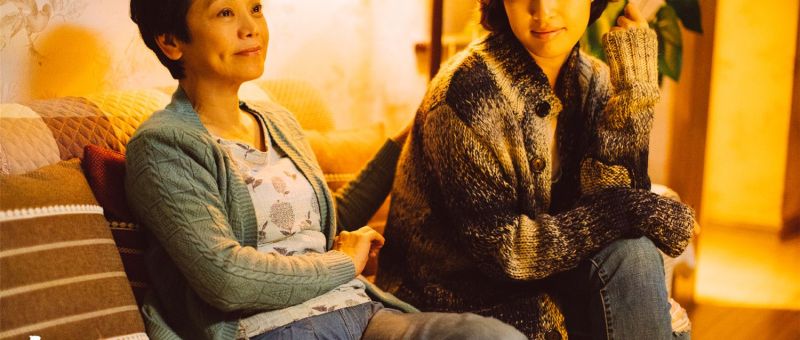
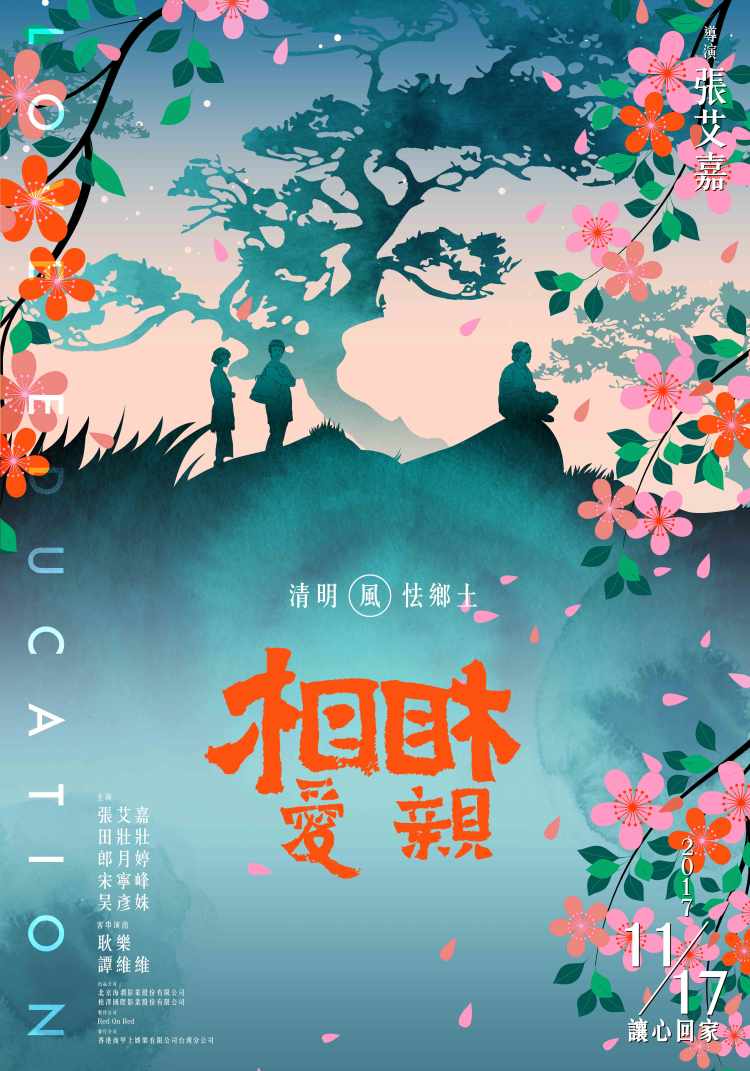
Love Education posterWhat is love? Who gets to define it, and should it be a force of liberation or constraint? Sylvia Chang attempts to find out in looking at the complicated, unexpectedly interconnected romantic lives of three generations of women who discover that nothing and everything has changed in the decades that divide them. While a bereaved daughter channels her own anxieties of impending mortality into a petty and hopeless quest to validate the true love history of her parents, a daughter battles an oddly familiar problem with her musician boyfriend, and an elderly village woman is forced to realise she wasted her life waiting for the return of a man who had so carelessly abandoned her. Mediated by a culturally specific argument over burial rites, Love Education (相愛相親, Xiāng ài xiāng qīn) is a meditation on the demands and obligations of love, both familial and romantic, as they inevitably change and mature across the arc of lifetimes.

As Huiying’s (Sylvia Chang) elderly mother lies dying, she sinks into a vision of a bright summer’s day spent with her one true love who is already waiting for her in a better place. Huiying, a middle-aged school teacher facing semi-enforced retirement, is thrown into a tail spin of grief and anxiety in losing her mother, realising that it won’t belong before her daughter will in turn lose her. Weiwei (Lang Yueting), an aspiring TV journalist, remains unmarried and still lives at home though, unbeknownst to Huiying, is planning to move out and live with her aspiring rockstar boyfriend, Da (Song Ning). The plan is, however, thrown into confusion by the resurfacing of his ex, in the city with her son to compete in a cheesy TV singing contest. Meanwhile, Huiying has become obsessed with the idea of burying her mother alongside her father, only his body was sent back to his rural hometown, as is the custom, and so will need to exhumed and brought to the city. Unfortunately, Huiying’s father was technically a bigamist – he left an arranged marriage in the country to look for work in the city, “married” Huiying’s mother and never looked back. Huiying, determined to prove the “legitimacy” of her parents’ love seeks to reunite them in death, but Nana (Wu Yanshu) – the abandoned country wife, is hellbent on retaining the body, at least, of the man she married and thereby legitimising herself as a “true” wife.

Huiying’s grief-stricken descent into desperate obsession is a thinly veiled attempt to work through her own feelings of middle-aged dissatisfaction and anxiety on being violently confronted by her transition from a position of authority into a potentially powerless old-age. Her decades long marriage to Xiaoping (Tian Zhuangzhuang), a mild-mannered former teacher turned driving instructor, is comfortable enough but perhaps floundering as the couple contemplate their retirement and impending dotage. Huiying, mildly jealous of a elegant pupil who seems to have taken a liking to her husband, is also entertaining a mild crush on the father of one her own pupils while quietly feeling the distance that has inevitably grown between herself and her husband throughout the years. And so, she sets about “proving” that her parents’ romance was good and true, not only morally recognised but blessed by the state and legally approved.

This, however, proves more difficult than expected due to China’s rapid modernisation, series of political changes, high levels of bureaucracy and idiosyncratic way of issuing documentation. As her parents were “married” in the ‘50s, their union was approved by the local Communist authorities whose approach to record keeping was not perhaps as serious as might be assumed. The receipt for their license should be at the local block office, but they knocked that down. The papers were supposed to be moved to the town hall, but lacking resources they simply threw away all the documents from 1978 and before. Huiying’s parents belong to a past which has literally been thrown away, erased from history and regarded as an irrelevance by the current generation who think only of the future.

Meanwhile, Nana has been patiently waiting in her home town – a “good wife” by the standards of her rural society. Marrying Huiying’s father in an arranged marriage she has done all expected of her – looked after his family and then lovingly tended his grave despite the fact that he abandoned her after only a few months of marriage, not even bothering to tell her that he met someone else and wasn’t coming back. Nana, like Huiying, is desperate to legitimise her position to avoid the inevitable realisation that she has sacrificed her life for a set of outdated ideals.

Weiwei feels this most of all. Unlike her mother, she can’t forgive her grandfather’s moral cowardice in treating his first wife so cruelly. Building up an unexpected bond with the ironically named “Nana”, Weiwei is also forced to think about her own stalling relationship with Da who put his rockstar dreams on hold to stay with her rather than proceeding on to Beijing to try his luck there. Da, like her grandfather, has a past – in this case a childhood sweetheart with a young son and possibly territorial ambitions over a kind young man she has wounded through abandoning. Should Weiwei wait for Da, and risk ending up all alone like Nana, or should she end things now and give up on youthful romanticism for grown up practicality?

So bound up with the “legitimisation” of love, there’s an inevitable degree of possessiveness which creeps into each of the relationships – even that of Huiying and her daughter as she attempts to clip her wings to keep her close, but there’s also a kind of generosity in Chang’s direction which eventually allows them all to break away (to an extent) from an insecure need for validation to something bigger, warmer, and with more capacity for empathy and understanding. Quite literally a Love Education, Chang’s exploration of the romantic lives of three generations of women finds that though the times may have become more permissive nothing has become any easier. Nevertheless, there is comfort to be found in learning to appreciate the feelings of others, offering support where needed, and making the most of what you have while you have it in the acceptance that nothing is forever.


Screened at the 20th Udine Far East Film Festival.

Original trailer (English subtitles)

A Better Tomorrow 2018 (英雄本色2018, Ding Sheng, 2018)

better tomorrow 2018 posterIn the history of Hong Kong cinema, there are few films which could realistically claim the same worldwide influence as John Woo’s 1986 landmark A Better Tomorrow. Commissioned by Tsui Hark, the then jobbing director Woo was tasked with creating a vehicle for a veteran Shaw Brothers star. Casting Cantopop idol Leslie Cheung and TV sensation Chow Yun-fat, Woo mixed traditional melodrama with hyper masculine emotionality to give birth to what would become the “heroic bloodshed” genre which was to dominate the island’s cinematic output well into the ‘90s. A Better Tomorrow, as its title implies, is the perfect evocation of its era and among the first to express an oncoming anxiety for Hong Kong’s “return” to China then only a decade away. Slick and oozing with ‘80s, macho cool, Woo’s film captured the imaginations of young men everywhere who suddenly took to wearing sunglasses and trench coats while chewing on match sticks, dreaming dreams of heroism in a sometimes gloomy world.

Which is all to say, attempting to “remake” Woo’s masterpiece may well be a fool’s errand. It is however one which has been frequently attempted, not least by Wong Jing in 1994 and Song Hae-sung in Korea in 2010. Korean cinema has perhaps become the heir of heroic bloodshed with its inherent love of melodrama which often finds its way into the nation’s bloody gangster epics whose generally high level of homosocial bonding is perfectly primed for male honour drama. Ding Sheng, apparently a huge fan of the original Hong Kong hit, brings the tale north to the Mainland, relocating to Qingdao which serves as a trading post for the drug running route from Japan.

As in the original we have two biological brothers – Kai (Wang Kai), a “sailor” who has fallen into smuggling to support his family who are unaware of his criminal occupation, and Chao (Ma Tianyu) – a rookie policeman. Meanwhile, Kai also has a criminal “brother” in his younger partner Mark (Wang Talu), an orphaned hothead from Taiwan. Kai is a “noble” smuggler who refuses to traffic drugs but a Hong Kong triad boss is hellbent on fishing out his Japanese contacts and after a job goes wrong, Kai ends up getting shot and arrested by his own brother who is heartbroken to discover the truth. Spending three years in prison during which time Kai’s father is killed in a raid on their home by gangsters looking for info on the Japanese, Kai tries to go straight but finds himself pulled back into the underworld after coming into conflict with villainous gangster Cang (Yu Ailei) who has taken over the Japan route (and forced Kai’s old girlfriend into prostitution after getting her hooked on drugs).

Ding’s film, while replicating the plot of Woo’s original, attempts to bring it into the “modern” era in which the stylised, manly melodrama of the ‘80s action movie has long since been replaced by a finer desire for “uncool” realism. Ding does not seem to be making a particular point about modern China, other than in persistent economic inequality which has forced an “honest” man like Kai into a life of crime for the otherwise honourable reason of taking care of his family. Though this itself maybe a subtle reference to the post-90s world, the major anxiety seems to be more with cross cultural interactions and possible pollution of “good” Chinese men like Kai who have been led astray by the false promises of, for example, gangsters from Hong Kong, and the old enemies in Japan. Interestingly enough, the relationships themselves are formalised and superficial. In Japan Kai and Mark are entertained in a “super Japanese” bar of the kind which only tourists frequent, decked to the ceilings with cherry blossoms and staffed with “geisha” girls, while in China they take their guests to a bar which has Peking Opera going on in the background as entertainment.

Kai is fond of telling his sworn brother that everything in the world may change, but brotherhood remains the same. This turns turn out to be an ironic comment in that his natural brother, Chao, disowns him in shame and loathing after his release from prison. Nevertheless, Kai never gives up striving for Chao’s approval even whilst reuniting with Mark who has been crippled and reduced to cleaning boats at the harbour after trying to exact revenge for Kai’s betrayal. The trio’s manly honour code is thrown into stark relief by the amoral Cang who, claiming that “the world has changed” and loyalty no longer means anything, thinks nothing of shooting anyone and everyone who stands between himself and financial gain. If Ding has a comment to make, it’s that the traditional ideas of brotherhood, loyalty, justice and goodness are being eroded by the lure of foreign gold promised by corruption, exploitation, and an absence of morality.

Ding isn’t trying to match Woo’s grand sweep of tragic inevitability so much as aiming for straightforward crime drama but his occasional concessions to melodrama never quite gel with his otherwise gritty approach, nor do his unsubtle his homages to the original film which find Leslie Cheung’s iconic theme song becoming a frequent musical motif as well as prominently featuring at an ultra cool hipster bar located in a disused boat which plays his record on a turntable with a large picture of a grinning Chow Yun-fat behind it. A Better Tomorrow 2018 succeeds as a passible action drama, but one without the heart and soul that made Woo’s original so special. 


Screened at the 20th Udine Far East Film Festival.

Original trailer (English subtitles)

Soundless Wind Chime (無聲風鈴, Kit Hung, 2009)

Soundless Wind Chime posterTwo transients find love in the crowded streets of Hong Kong, only to lose it again and long for its return. Deliberately obscure, Kit Hung’s debut Soundless Wind Chime (無聲風鈴, Wúshēng Fēng Líng) is an elegy for lost love, a poetic meditation on the power of memory and a treatise on the art of letting go. Though the lovers manage to construct a world for themselves shielded from the external chaos, its shell gradually fractures under the pressure of real world concerns until tragedy finally intervenes and shatters it forever.

Ricky (Lu Yulai), a mainlander recently arrived in Hong Kong, lives with an aunt (Wella Zhang) who makes a living through prostitution, while he makes ends meet as a delivery boy at neighbourhood eatery. One day, he pauses on the job to watch a foreign juggler (Hannes Lindenblatt) at which point his wallet is stolen by a foreign pickpocket who we later learn to be a German speaking Swiss man named Pascal (Bernhard Bulling). Pascal is currently in an abusive relationship with the juggler whose act is a set up to attract a crowd so that Pascal can rob the captivated spectators. After being beaten up and then brutally raped by his boyfriend, Pascal ups and leaves, eking out a living through juggling on the streets. Arriving at Ricky’s restaurant, he gives him his wallet (and ID card) back and the two strike up a friendship that soon becomes more, living together first at Ricky’s aunt’s and then getting their own place where they can truly be themselves.

To begin with the relationship is a rather happy and open one. Though Ricky decides to leave his aunt’s place immediately after she figures out that he is gay and in a relationship with Pascal, she does not disapprove of his sexuality and only stops to warn him not to invite his ailing mother to Hong Kong because she doesn’t know what the fallout will be from realising her sister is a prostitute and her son is gay all at the same time. Likewise, the lively ladies at the restaurant all seem fairly accepting (or perhaps just oblivious) of Ricky’s relationship with Pascal, impressed by his juggling skill and including him in their after hours mahjong games. The young couple do however have their differences, notably in Pascal’s self destructive streak which sends him back into Hong Kong’s gay nightlife scene while Ricky would rather just spend time home alone together.

The disjointed, non-linear narrative opens in the middle with Ricky making his way to Switzerland in search of Pascal, in a spiritual more than literal sense. Whilst there he runs into another man, Ueli, who looks exactly like Pascal even if he is nothing like him in spirit. The film’s title is inspired by the Chinese belief that a soul lingers after it leaves the body, attaching itself to an animal in order to stay longer and make its last goodbyes. Traditionally, a wind chime is though to reveal the presence of spirits, and it is this Ricky has come looking for as the wind chime outside Ueli’s antique shop gleefully trembles as if it were pleased to see him.

Ricky’s memories spiral away from him as snow covered Switzerland echoes sunny Hong Kong, each thought and action recalling some part of his life with Pascal while he grows closer to the wounded, grieving Ueli whom he believes, on some level, to be Pascal returned to him in another form. Later, Hung shifts the action to the Mainland where Ricky has returned to look after his dying mother, working as a taxi driver to make ends meet. Unable to find Pascal, uncertain whether his soul has flown to Hong Kong where they made their home or the place where he was born, Ricky has himself returned to source and prompted Ueli to make his journey in reverse, bringing him news of Pascal but also perhaps promising an end rather than a beginning.

Hung wears his influences on his sleeves – his style owes much to Wong Kai-Wai but more particularly to Tsai Ming-Liang as his frequent forays into surrealistic musical interludes make plain. Yet his narrative is confused and overly impressionistic, withholding essential pieces of information which would make sense of the more obscure elements such as the lost luggage receipt Ricky takes with him to Switzerland and the contents of the bag he ultimately obtains. Deeply melancholic and filled with a wistful sense of longing – the soundless wind chime of the title lying silent yet attentive, Hung’s dreamlike debut is a strangely affecting exploration of grief and transience as his hero learns how to live after love, abandoning his pain to realms of nostalgia and rediscovering the peaceful emptiness of ordinary silence.


Screened as part of the Chinese Visual Festival 2018.

Original trailer (English subtitles)

A or B (幕后玩家, Ren Pengyuan, 2018)

A or B poster 2It’s difficult not to read every film that comes out of the Mainland as a comment on modern China but there does seem to be a persistent need to address the rapid changes engulfing the increasingly prosperous society through the medium of cinema. A or B (幕后玩家, Mùhòu Wánjiā) is the latest in a long line of thrillers to ask if the pursuit of economic success has resulted in the decline of traditional morality. Life is, according to a mysterious voice on the other end of a walkie talkie, a series of choices – A or B, you or me. When someone says they have no choice, what they usually mean is that they have chosen me over you and expect the decision to be understood because if the situation were reversed, you would have done the same.

Corrupt financial billionaire Zhong Xiaonian (Xu Zheng) has been content to justify himself with this excuse. Having ousted his predecessor through blackmail and manipulation, he rose to be the head of a vast corporate empire while Zeng (Simon Yam), his former boss, committed suicide, a ruined and humiliated figure reduced to abject despair by Zhong’s campaign of malicious finagling. Despite his vast wealth, Zhong’s appetite for success remains unsatisfied while his wife Simeng (Wang Likun), disgusted by his ongoing descent into avaricious amorality, threatens to leave rather than watch him destroy himself.

With a number of schemes in operation, Zhong returns home drunk one evening to find his wife gone, collapsing into a restless drunken stupor. When he wakes up he discovers that he is now trapped inside his mansion – the windows have been boarded up and all the doors locked. Finding a walkie talkie in a box, Zhong is messaged by a mysterious voice who tells him that every morning at 9.30 (just as the financial news begins) he will be given a binary choice. Zhong must choose A or B or his kidnapper will set both in motion.

A or B is a complex kidnap thriller, but it’s also the story of a marriage and a metaphor for the compromises of modernity. Zhong, once an ambitious youngster from a humble background, claims he set himself on the road to ruin in pursuit of a “good life” on behalf of his wife. His wife, however, has a wildly different view of a “good life” to that of her husband. Simeng sacrificed her journalistic ambitious of becoming a war photographer to shift into technology in order to better understand Zhong only to be forced to give that up too when her discoveries of his duplicities began to alarm her. What Simeng wanted was less the huge mansion and expensive jewellery than a stable life of ordinary comfort with a loving and attentive husband who strived to understand her in the way she tried to understand him – something Zhong has completely failed to realise in his male drive to get ahead. Simeng threatens to leave, not because Zhong’s increasing moral depravity has killed her love for him, but that through leaving (and taking a number of his shares with her) she may be able to wake him up and put a stop to his headlong descent into amoral criminality.

Zhong has indeed fallen quite far as his first few A or B choices make clear. It doesn’t take him long to decide to throw a lifelong friend under the bus rather than further damage his business enterprise, only latterly making a frantic appeal to his captor to find out what happened to him. Confronted by the very real and often tragic consequences of his “choices” Zhong is forced into a reconsideration of the last decade of his life. Rather than ruminate, his first instinct is for action and so he sets about trying to escape his makeshift cage little knowing that his captor may have factored his ingenuity in to their original plan. He cannot however escape his final responsibility for becoming the man he is and faces the ultimate binary choice – to continue as he is and slide further down the road to ruin, or turn himself in to the police admitting his wrongdoing and pledging to start again on a more comfortable moral footing.

The identity of the kidnapper and their motives may be fairly easy to guess, but director Ren Pengyuan keeps the tension high as Zhong – played by comedy star Xu Zheng flexing his dramatic muscles, battles himself while trying to bridge the gap between the man he’d like to be and the one he has become. Fiercely critical of the empty materialism that has begun to define modern success, A or B insists that there is a choice to be made when it comes to deciding what gets sacrificed in the quest for prosperity. Zhong at least seems to have rediscovered what is important, reaffirming his commitment to an honest, if simpler, life warmed by the humble pleasure of wanton soup delivered by loving hands.


A or B opens in selected UK cinemas on 4th May courtesy of Cine Asia – check out the official website to find out where it’s playing near you.

Original trailer (English subtitles)

Fish and Elephant (今年夏天, Li Yu, 2001)

513cslBr5wL

The first narrative feature from former documentarian and TV presenter Li Yu, Fish and Elephant (今年夏天, Jīn Nián Xià Tiān) is touted as the first film from mainland China to explicitly deal with lesbian life in modern Beijing. Necessarily shot under the radar to get around China’s strict censorship requirements, the film almost disappeared after “getting lost” on return from the Venice Film Festival (where a mishap with missing reels apparently led to a less than stellar reception though Li did eventually pick up an award) but went on to feature in a number of international festivals even if not quite welcomed at home. Imperfect and somewhat clumsy in execution, Fish and Elephant is nevertheless as whimsical as its title might suggest if only in its ironically abstracted need for detachment.

Xiaoqun is approaching 30 and unmarried. Despite her mother’s pleas and the needling of relatives Xiaoqun has no desire to marry. She supports herself well enough as an elephant keeper at the zoo and lives alone in a small apartment. A desire for independence is not the only reason Xiaoqun chooses to remain single – she is gay. Unable to state this fact openly, Xiaoqun is often forced to attend various blind dates set up by her mother who emotionally blackmails her by bursting into tears on the phone. Nevertheless, she eventually develops a flirtation with a young woman, Xiaoling, who owns her own clothing store at the market. Before long the women have moved in together and established an easy domesticity only for Xiaoqun’s mother to turn up unannounced determined to see her daughter wed. As if that weren’t enough, Xiaoqun’s long lost ex, Junjun, also arrives without warning apparently on the run from the police for “bank robbing”.

Perhaps because of the need to shoot covertly, Li’s script is structurally threadbare involving several large narrative jumps but the quality of unseen incompleteness plays into the film’s central theme in that the lives of women like Xiaoqun and Xiaoling are often invisible and hidden from view. We observe the two women’s courtship obliquely and in stages as they flirt (tentatively), wait for each other, are frustrated by exes, and finally come to a kind of agreement framed against the turquoise of of Xiaoqun’s bedroom wall which makes the pair look uncomfortably like the goldfish trapped inside her aquarium. Even this is unspoken and uncertain, hands tentatively grasped in trying to confirm that the situation has been read correctly until it is quite literally sealed with a kiss.

Xiaoqun, at least, is not so afraid to tell people what she is, only they never seem to believe her. Her uncle, berating her for turning down all the suitors he finds and reminding her that it’s the “proper thing” for women to marry and bear children, asks her what the problem is, to which Xiaoqun replies that she’s told him plenty of times before – she’s “no interest in men”. The uncle cannot process this information and offers to find a therapist to help with Xiaoqun’s supposed “issues”. Similarly, she decides to tell it straight to one of her dates – “I don’t like men, I like women”, but he refuses to listen. It seems he’s familiar with the concept, but doesn’t really believe in it and assumes Xiaoqun is trying to skip out on the date without giving him a proper chance by saying something outrageous.

Each time Xiaoqun calmly explains her life choices, everyone just ignores her. Either they simply don’t understand or refuse to accept that her sexuality is a good enough “excuse” for refusing to conform to the social order. Not until she finally attempts to come out to her mother does Xiaoqun actually say “I am gay” and then only very quickly followed directly by an explicit explanation of what she means. Unfortunately her mother still can’t quite get it, the language and cultural gap too vast to bridge. Like the young person’s pop song she’s always listening to, it’s not that she doesn’t understand, it’s just that the world is moving so fast.   

Eventually Xiaoqun’s mother starts to come round and considers going against the social order by marrying again herself despite her supposedly inappropriate age. Marriage, however, seems an unhappy business all round and none of the men we are introduced to are particularly appealing. The men in Xiaoling’s shop bark at their girlfriends and criticise the slutty clothes, or try to harass Xiaoling into dropping the price while her boyfriend hovers in the background and places a territorial hand on her shoulder almost as if he knew why she just gave a quite massive discount on an expensive shirt to the woman currently trying it on for size. Xiaoqun’s mother is divorced, her father having left the family (and an apparently unhappy marriage) for another woman. Yet everyone seems intent on railroading the two women into this culturally demanded alleyway of misery.

For the most part, Xiaoqun and Xiaoling are content to simply ignore the world around them and live peacefully together like two fish in a bowl. Conspiratorially linking hands under the table as Xiaoqun’s mum reels off her marriage spiel and leaning in close to light one cigarette from another, they perhaps take pleasure in mocking the social order directly under her nose while worrying what the fall out might be should the truth be discovered. The relationship is threatened not particularly by the marriage plots, but by the presence of Junjun who places a wedge between the verbally uncommunicative lovers and another burden of secrecy on the already burdened Xiaoqun.

Li concludes by splitting the narrative into its three component strands, opting for a perhaps unwise slide into absurdity as Junjun embarks on a last stand though it does provide an opportunity for another (accidentally?) misogynistic/homophobic remark from a police officer. The film ends on a wedding, at which Xiaoqun and Xiaoling are conspicuously absent despite being expected and as a couple. Perhaps they are just “busy” having recently recovered from their momentary romantic drama, but their failure to appear also reinforces their committed isolation in which they are content (for good or ill) to hide themselves away, existing only for each other.


US release trailer (English subtitles, NSFW)

Have a Nice Day (大世界 / 好极了, Liu Jian, 2017)

Have a Nice Day poster 1Even when everything is pointless, still you have to try to live. “Spring is spring”, as the opening quote by Leo Tolstoy proclaims and so there is life even among the ruins which, in this case, exist in the mysterious “development zone” somewhere in the modern China. This backstreet noir takes place in a world of near apocalyptic dilapidation though the effect is more one of incompleteness than destruction, as if an over excited city planner had randomly started projects one after another but suddenly tired of each of them. Jack Ma may have affirmed that everyone has a dream in his heart, but the dreams here are small and mostly unattainable, locked into a claustrophobic atmosphere of inescapable despair.

Xiao Zhang (Zhu Changlong), a lowly construction driver, decides to seize his chance of happiness with both hands in lifting a vast sum of cash which belongs to mob boss Uncle Liu (Yang Siming). Uncle Liu, however, is busy torturing his childhood friend for supposedly sleeping with his wife. He sends his best guy, enigmatic hitman Skinny (Ma Xiaofeng), after Zhang but before Skinny can get to him, Xiao Zhang is is picked up by “inventor” Yellow Eyes (Cao Kou) whose X-ray specs have spotted the money and decided it’s too good an opportunity to miss. He takes off with his kind-of-girlfriend (Zheng Yi) who is also the sister-in-law of a guy who works with petty gangster Lao Zhao (Cao Kai) who is the guy Xiao Zhang took the money from in the first place. Meanwhile, the mother of Xiao Zhang’s girlfriend has asked her niece, Ann Ann (Zhu Hong), to have a look into what’s going on with Xiao Zhang because he’s been sending some very suspicious messages.

Everything here is in transit. Hitman Skinny is fond of telling people that he’s “just passing through” but so is everyone else, there is nothing here to stop for, except that it’s impossible to escape. All the significant places are also points of transit or hope for connection – the “Integrity” internet cafe, a “business” hotel, a road which leads nowhere through a landscape permanently “under construction”. Everything is half formed or falling down, the world is indistinct as if it hasn’t discovered its own identity and has tried to cobble something together from the back streets of other cities glanced in violent movies from somewhere far away.

Xiao Zhang, (almost) our hero, is almost the same – he tells Skinny that his dream was to be a man like him rather than the spineless coward he feels himself to be because guys like him always seem so cool in the movies. Doubtless Skinny doesn’t seem so “cool” with his foot on Xiao Zhang’s chest, but Xiao Zhang’s need is as much about escape as it is a matter of practicality. Though the practicality is ironic enough – he wants the money to pay for more plastic surgery for his fiancée whose face has apparently been ruined by a botched operation. Xiao Zhang hopes they can escape to South Korea, world capital of cosmetic procedures, where they can repair what the modern China has destroyed.

It isn’t difficult to see why Have a Nice Day (大世界, Dàshìjiè, previously titled 好极了, Hǎojíle) rubbed the censors the wrong way. Liu’s vision of the China of today is a lawless wasteland in which despair and inertia reign while those of the post ‘80s generation flail wildly in the wind, drinking in overseas culture from Hong Kong and the West and wanting more than their society can give them. In a running joke everyone has a startup idea they’re sure will be the next big thing but when it comes right down to it, even with the money they’ve no idea what they’re doing. Two boys chatting idly about the future find only futility with one lamenting that if he wanted to make it he’d have gone to England to study, only for the other to ask what the point would be now the UK has left Europe. He has a radical startup idea of his own – a restaurant! After all, people will always need to eat. You have to admire his practicality, even if bemoaning his lack of imagination.

Meanwhile, the cousin of Xiao Zhang’s fiancée and her boyfriend, having figured out that Xiao Zhang really does have the money and intending to take it from him, fantasise about finding their own “Shangri-La”. Breaking into a lengthy karaoke-style video sequence, Liu paints a jagged picture of Ann Ann’s visual ideology which quickly descends into a mish-mash of Mao-era socialist propaganda posters and their collections of cheerful country women enthusiastically driving tractors and juggling sheep while posing in traditional Chinese dress with children in neckerchiefs reading improving literature. Everything is for sale, even apparently the innocence of the past. A friend of Lao Zhao’s expounding on the nature of freedom describes it as a three tiered system – the farmer’s market, supermarket, and online, your degree of personal autonomy and happiness reduced to a question of how the place you buy your groceries informs your sense of self worth.

Rampant capitalism has led to moral as well as physical decay as the half-finished buildings collapse under the weight of national hubris, a weathered statue standing in for a real life policeman as the hollow representation of the authority of an absent regime. Animated with an oddly naturalistic minimalism and filled with whimsical absurdity, Have a Nice Day serves as a condemnation of the last 30 years of Chinese history but it does so with a wistful irony. After all, it’s not as if things are much better anywhere else.


Have a Nice Day is released in UK Cinemas on 23rd March courtesy of Mubi. Check the official website to find out where it’s screening near you.

International trailer (English subtitles)

The Road Home (我的父亲母亲, Zhang Yimou, 1999)

The Road Home PosterChinese cinema, it could be said, has been looking for the road home for quite some time. Not only is the past a relatively safe arena for present allegory, but even among the previously hard edged fifth generation directors, there’s long been a tendency to wonder if things weren’t better long ago in the village. Zhang Yimou certainly seems to think they might have been, at least in the beautifully melancholic The Road Home (我的父亲母亲, Wǒde Fùqin Mǔqin) in which a son returns home after many years away and reflects on the deeply felt and quietly passionate love story that defined the life of his parents.

In the late ‘90s, a successful businessman, Luo Yusheng (Sun Honglei), drives back to his rural mountain village on hearing of the sudden death of his father, Changyu (Zheng Hao ) – a school teacher. The village’s mayor explains to him that for some years his father had been desperate to improve the local school and, despite his advanced age, had been travelling village to village raising money until he was caught in a snow storm and taken to hospital where they discovered he had heart trouble. The mayor wanted to pay for a car to fetch Changyu, but Yusheng’s mother Zhao Di (Zhang Ziyi) wants him to be carried back along the road to the village in keeping with the ancient tradition so he won’t forget his way home.

The problem, as the mayor points out, is that like Yusheng, most of the other youngsters have left the village and there just aren’t enough able-bodied people available to make Zhao Di’s request a realistic prospect. Zhang’s film is not just a warm hearted love story, but a lament for a lost way of life and a part of China which is rapidly disappearing.

This fact is poignantly brought home by Yusheng’s realisation that his parents’ love, set against one kind of political turbulence, was a kind of revolution in itself. In the Chinese countryside of the 1950s, marriages happened through arrangements made by (generally male) family members, no-one fell in love and then decided to spend their lives together. Yet Zhao Di, a dreamy village girl whose own mother was so heartbroken by the death of her husband that she was blinded by the strength of her tears, dared to believe a in romantic destiny and then refused to accept that it could not be.

Zhang begins the tale in a washed out black and white narrated by the melancholy voice over of the bereaved Yusheng whose first visit home in what seems likes years is tinged with guilt and regret. His father wanted him to be a teacher in a village school, but Yusheng left the village and like most of his generation took advantage of changing times to embark on a life of wealth and status in the city. As remembered by their son, the love story of Zhang Di and Luo Changyu is one of vivid colour from the freshness of the early spring to the icy snows of winter.

An innocent love, the courtship is one of sweet looks and snatched conversations. Zhao Di, captivated by the new arrival, listens secretly outside the school and waits for Changyu on the “road home” as he escorts the children back to the village. Yet these are turbulent times and even such idyllic villages as this are not safe from political strife. The burgeoning romance between a lonely village girl and earnest young boy from the city is almost destroyed when he is ordered back “to answer some questions” for reasons which are never explained but perhaps not hard to guess. Zhao Di chases him, the totality of her defeat crushing in its sense of finality but again she refuses to give up and remains steadfast, waiting for her love to reappear along the road home.

Though “the road home” carries its own sense of poignancy, the Chinese title which means something as ordinary as “my mother and father” emphasises the universality of Yusheng’s tale. This is the story of his parents, a story of true and enduring love, but it could be the story of anybody’s parents in a small rural village in difficult 1950s China. The world, Zhang seems to say, has moved on and consigned true love to an age of myth and legend while the young, like Yusheng, waste their lives in misery in the economic powerhouses of the city never knowing such poetical purity. China has been away too long and lost its way, but there will always be a road home for those with a mind to find it.


International trailer (English voiceover)

Not One Less (一个都不能少, Zhang Yimou, 1999)

not one less posterIt’s tough being a kid in rural China. Childhood is perhaps the rarest of commodities, all too often cut short by the concerns of the adult world, but then again sometimes childish innocence can bring forth the real change in which grownups have long stopped believing. Zhang Yimou is no stranger to the struggles of life in China’s remote villages, but in Not One Less (一个都不能少, Yīgè Dōu Bùnéng Shǎo) he crouches a little closer to the ground as one tenacious little girl finds herself thrust into an unexpected position of authority and then cast away on an odyssey to rescue a lost sheep.

The girl, 13-year old Wei Minzhi has been brought over from an adjacent village to substitute for the local teacher whose mother is ill, meaning he needs to take a month off to go back to his own remote village and look after her. The problem is that no-one would agree to spend a month teaching little kids in a rural backwater for almost no money. Wei Minzhi graduated primary school which makes her one of the most educated people around and at least means that she’s a little way ahead of some of the other kids and, to be fair, teaching methods here generally end at copying the lessons from the master book up onto the blackboard so the kids can copy them down and study in their own time. Given the relative poverty of the village, children often drop out of school altogether because their parents need them at home. Teacher Gao has promised Wei 10 extra yuan if the same number of kids are still coming to school when he comes back as there were when he left.

Documenting daily life in the village, the early part of the film strikes a warm and comedic tone to undercut the hardship the villagers face. The Mayor, apparently a slightly dishonest but well meaning sort, is doing his best but the village is so poor that the children turn desks into beds and huddle together to sleep in the school. Chalk is strictly rationed and resources are scarce. Wei takes to her new found authority with schoolmarmish tenacity but struggles to exert her authority over her charges, and especially over one cheeky little boy, Zhang Huike.

When Zhang Huike disappears one day and Wei finds out he’s been sent to the city, she becomes fixated on the idea of going after him to drag him back and make sure she gets her 10 yuan bonus. The quest is a fallacious one – it will coast Wei far more than the 10 yuan bonus to get to the city and back so it’s hardly cost effective, but Wei is a literal sort and doesn’t tend to think things through. Nevertheless, the need to figure out how to get Zhang back does finally get her teaching as she gets the kids to help her do the calculations of how much money she’s going to need and to figure out how to get it.

If life in the village was tough, the city is tougher. When Wei arrives and tries to find Zhang, she winds up at the dorm of a construction site which is peopled exclusively by children who are (presumably) all working here to help their families out of poverty. Zhang, however, got lost on the way to his new job and is currently wandering the city alone, staring enviously at meat buns until someone takes pity on him and hands him one. Luckily he later meets a kind restaurant owner who takes him in off the street and gives him food in return for dishwashing. Wei, meanwhile, is completely at a loss as to how to look for Zhang. She hits on the idea of fliers but doesn’t think to leave contact details beyond the name of her school – after all, everyone in the village knows where the school is so why wouldn’t they in the city. Later someone recommends she try TV only for her to become semi-exploited for a human interest story on rural education in which the rabbit-in-the-headlights Wei can do little more than burst into tears and plead for Zhang’s return.

Wei’s single-mindedness may eventually reap rewards, but it’s impossible to escape the fact that it was motivated out of pure self interest. She wanted her 10 yuan bonus, and she never stopped to think about anyone’s else situation so long as she got it. Thus when scouts arrive from a nearby sports school with an amazing opportunity for one of her pupils, she tries to mess it up just so she’ll get the money. Similarly she’s determined to bring Zhang back even after visiting his home and meeting his bedridden mother who explains the family situation that necessitates sending her 11-year-old son away to work on a construction site. Despite having been warned about the chalk shortage, she allows half of it to get ground into the floor because she’s too busy trying to assert her authority to realise the (accidentally) destructive effects of her own actions. Nevertheless, her bullheadedness does eventually pay off. Asked about his experiences in the city, Zhang Huike remarks that the city is “beautiful and prosperous” before looking sad and admitting that he’ll never forget that he had to beg for food. Cities, it seems, are teeming hubs of wealth and success but they’re also cold, lonely, and so anonymous that small boys like Zhang get lost amid the hustle and bustle of the individualist life.


International trailer (English voice over)

Operation Red Sea (红海行动, Dante Lam, 2018)

Operation Red Sea posterDante Lam, a Hong Kong action icon, is one of many to have begun looking North, tempted by the bigger budgets and audience potential of the Mainland. Following 2016’s Operation Mekong, Lam is back on manoeuvres with a second in what may develop into a series, Operation Red Sea (红海行动, Hónghǎi Xíngdòng). Red Sea is not connected to Mekong in terms of narrative and only features a cameo by the earlier film’s star, Zhang Hanyu, who remains firmly ensconced on the bridge of the all powerful Chinese warship while an elite troop of special forces handles the rapidly deteriorating situation on the ground, but it is once again “inspired” by a true story and perfectly positioned to show the Chinese security services in a more than favourable light.

The action begins in 2015 when the Chinese navy wades in to defend a merchant ship attacked by Somali pirates, managing to apprehend the “bad guys” with a minimum of bloodshed before they escape Chinese waters. Having suffered a casualty, the squad are then dispatched to rescue Chinese citizens caught up in an Middle Eastern coup. Their mission is helped and hindered by intrepid Chinese-French journalist, Xia Nan (Hai Qing), who has discovered evidence that a dodgy “businessman” caught up in the attack is in possession of a consignment of “yellowcake” along with a deadly dirty bomb formula which he plans to sell on to the terrorists currently waging war on the city.

Though Operation Red Sea is, perhaps, no more jingoistic than any British or American war film, its focus is more definitively centred on home concerns than an attempt to police the world. The Chinese military exists to defend Chinese citizens, even if those citizens are increasingly scattered throughout an unstable world. This presents a point of conflict between idealistic, and occasionally reckless, journalist Xia Nan whose mission is to stop the terrorists and rescue her friends, and the soldiers whose primary mission is to evacuate Chinese citizens though they hope to be able to provide assistance to citizens of other nations too if their mission parameters allow.

The Jiaolong, elite Chinese special forces, are indeed an impressive fighting force who proceed with military precision but are not without compassion. Informed by a local soldier that the terrorists often force civilians to become suicide bombers, the team’s bomb disposal officer puts himself at great risk to defuse a device and free a man destined to become a car bomb, rather than simply neutralising the threat. Protecting Chinese in peril is the official goal, but on a human level the soldiers are overcome with sorrow and anger for the local population, lamenting that they may have saved some lives but many have lost their homes and they will simply leave them behind to deal with the situation alone when they succeed in their mission of evacuating stranded Chinese diplomatic personnel.

Despite the overtly propagandistic elements which paint the Chinese military as a force for good, fighting bravely for their countrymen overseas, the landscape of war Lam paints is a hellish one full of blood, guts, and scattered body parts. Much of the film plays as a two hour recruiting video for the Chinese navy – it’s almost a surprise there aren’t people waiting with clipboards outside the theatre, but it’s difficult to believe anyone would be in a big hurry to sign up after witnessing the pure human carnage of a foreign battlefield and the very real threats the soldiers subject themselves to all while stoically pursuing their mission, committed to the protection of their nation and people.

Nevertheless Lam’s spectacle is impressive and action choreography unsurpassed. Working on a huge scale with everything from snipers to tank battles, Lam keeps the tension high as the team attempt to adapt to a situation which is rapidly deteriorating leaving them all but stranded behind enemy lines where each and every one of them faces a very real threat of death or serious injury. Despite an overuse of CGI slow motion bullet vision, Operation Red Sea largely earns its bombast with relentless fury, leaving its propaganda aims to dangle the background until the final coda which seeks to remind us that China rules the waves and will protect its citizens and territory wherever they may be.


Currently on limited release in UK cinemas courtesy of China Lion.

Original trailer (English subtitles)

Monster Hunt 2 (捉妖記2, Raman Hui, 2018)

Monster Hunt Poster 2Despite numerous production difficulties, Monster Hunt went on to become a bona fide box office smash and international pop culture phenomenon on its release in 2015. Children and adults alike fell in love with the adorable little radish monster Wuba who, in grand fairytale tradition, is the secret heir to all of Monsterdom and the subject of a prophecy which posits him as the long awaited unifying force set to restore equality between humans and their Monster brethren. By the time this sequel, Monster Hunt 2 (捉妖記2, Zhuō Yāo Jì 2), rolls around, things are looking up for Wuba seeing as no one’s actively trying to eat him, but like so many kids in modern China he misses his human mum and dad who made a difficult decision at the end of the last film that Wuba should live with Monsters in Monsterland because it just wasn’t safe for him in the human realm.

Consequently Wuba has been living happily in the forest where the Monsters have made a little village for themselves. The Monster village is a place of laughter and song where everyone is welcome and they dance cheerfully all night long. That is, until evil monsters turn up looking for Wuba again, destroying the village and leaving him on the run all alone back in the human world. Meanwhile, Tianyin (Jing Boran) and Xiaolan (Bai Baihe) are on a quest to look for Tianyin’s long lost dad – a famous monster hunter who left Tianyin behind as a child to keep him safe, just like Tianyin had to leave Wuba. Nevertheless, though Tianyin and Xiaolan have developed a sparky domesticity, they’re both unwilling to admit how much they miss little Wuba and wish they could go get him back from Monsterland even if they know he’s probably safer hidden away from those who might want to do him harm. While looking for Tianyu and Xiaolan, Wuba gets himself semi-adopted by a very odd couple of chancers in the form of shady gambler Tu (Tony Leung) and his monster partner Ben-Ben.

Once again the theme is family. Monster Hunt spoke, perhaps, to all those separated families in modern China or more particularly to the children in revealing that parents sometimes have to make difficult choices and end up living apart from their kids so that they can give them a better life. Monster Hunt 2 accepts the premise but then provides an emotional correction in making plain the pain Tianyu and Xiaolan feel on being separated (perhaps forever) from Wuba, until they eventually settle on tracking him down and facing whatever dangers come their way together. They come to this realisation after saving a mother and son who’ve been (unfairly) arrested by the Monster Hunt Bureau and witnessing their happiness just in being together despite the sticky situation they may be in.

Meanwhile Wuba, sad and alone, is happy to have found himself a surrogate family in the form of kindly Ben-Ben and the spiky Tu – a virtual mirror of Tianyu and Xiaolan when they first met. As in the first film, Tu originally takes Wuba in because he wants to sell him to Madame Zhu (Li Yuchun) – a woman he has cheated in both love and money, whose patience apparently knows no end. This brief episode of Wuba and his two new uncles is a subversive one in terms of mainstream Chinese cinema, and unlike the early union of Tianyu and Xiaolan there is little comedy in the easy coupledom of Ben-Ben and Tu who become two men raising a child together in relative happiness. This is perhaps the reason for the strange coda in which Tu and Ben-Ben have a brief chat about girls, relegating Tu’s earlier awkward admission of affection one more of brotherhood than love and affirming their total heterosexuality (both the female love interests are also from the same species, just to make things crystal clear).

Yet the message is strong – families want to stay together, parents want to be with their kids and kids want to be with their parents so maybe the world should just let them, even if those families aren’t quite like everyone else’s. With much better production values than the first film and a much more consistent tone, Monster Hunt 2 is a vast improvement on its predecessor though it treads more or less the same ground and is content to meander between several set pieces with more than a few seemingly extraneous sequences of Tu getting up to mischief or Xiaolan using her feminine wiles on a nerdy inventor (though these at least add to the more complex arc of the feminised Tianyu and masculine Xiaolan each moving towards a gender neutral centre). Monster Hunt 2 maybe more of the same and little more than the next instalment in a series, but nevertheless its winning charm and gentle warmth are enough to ensure there will still be devotees of Wuba ready to reserve their seats for the inevitable part three.


Currently on limited release in UK cinemas. Screening locations for the UK, Ireland, US and Canada available via the official website.

International trailer (English subtitles)