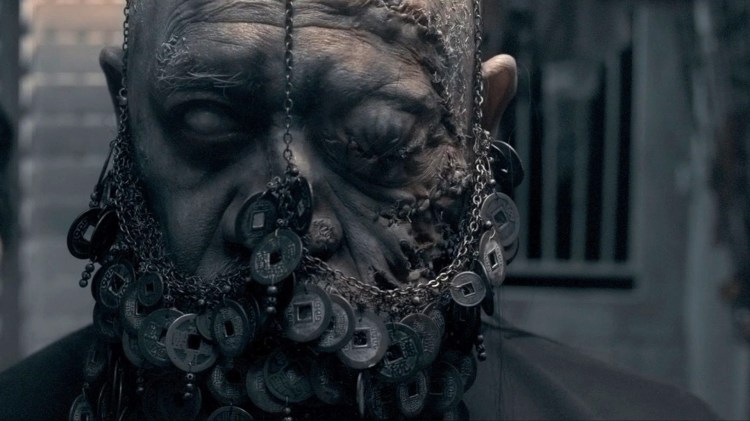
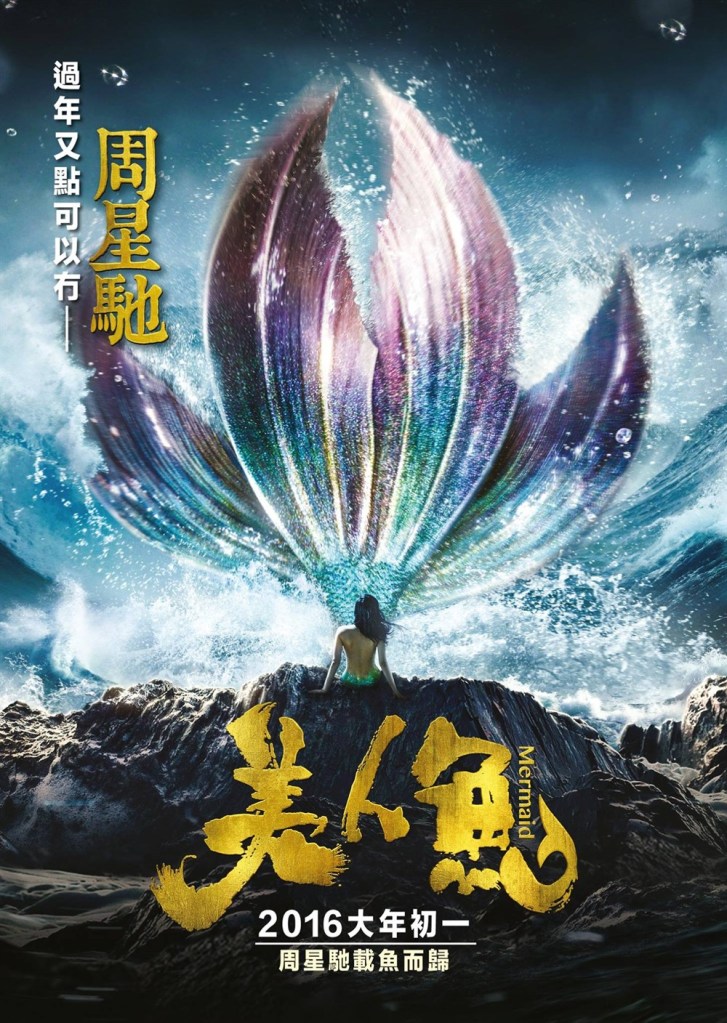
Stephen Chow unexpectedly became a mini phenomenon with that rarest of beasts – a foreign language comedy that proved a mainstream crossover hit, in the form of the double punch that was Kung Fu Hustle and Shaolin Soccer. However, his once ascendant star has been in retrograde ever since when it comes to screens outside of Asia. The surprise worldwide theatrical release of this latest film, The Mermaid (美人鱼, Mei Ren Yu), might be about to change all that.
Loosely inspired by The Little Mermaid, Chow paints a world of consumerism in overdrive as heartless capitalists fall over themselves to destroy the beauty of the natural world to buy even more flashy status symbols even though they only make them even more miserable. After opening with some newsreel footage of mass deforestation and a bloody dolphin massacre, Chow shows us the natural world exploited in a different way as a group of visitors visit an “exotic animal show” which includes such wonders as a live tiger (actually a pet dog with stripes painted on its fur), a “Batman” (with fried chicken for ears), and, crucially a “Mermaid” (a fried fish with a doll’s head on the top).
We’re then introduced to rich playboy businessman Liu Xuan (Deng Chao) who lives life large in a giant western style estate surrounded by gold digging dollybirds. He’s bought some “surprisingly well priced land” to use in a reclamation project, only the problem is it’s technically a nature reserve. His underlings have come up with a scheme to frighten away the wildlife with sonar devices so they can destroy the area of outstanding natural beauty in peace. However, they didn’t know about the colony of Merpeople hiding out there who have a serious problem with Liu and have dispatched one of their number, Shan (Jelly Lin), to assassinate him!
Predictably, the assassination plot does not all go to plan with often hilarious results. Like Chow’s other movies, the main spine of the narrative is a romantic comedy in which a foolish and arrogant man is made to realise his own weaknesses through finally noticing a woman he previously had no interest in. This time Shan turns up looking like a crazy lady with her bizarre makeup and fake mermaid outfit which gets her instantly thrown out of Liu’s place though she does succeed in giving him her phone number. Usually, Liu isn’t the type to call back but he gets goaded into it by mistake and then his henchman actually brings Shan to his office where she fails at assassinating him first with poison and then with sea urchins. By this time the course is set as the pair bond during their macabre meet-cute with Liu becoming attracted to Shan’s otherworldliness and she to the goodness that might be buried inside him.
Liu, it seems, experienced extreme poverty in his childhood and so now cares only about making money. Or says he does, his depressing solo karaoke dances to a hit pop song with the chorus “no one understands my loneliness” might tell a different story. Being super rich is actually kind of boring and everyone he meets only cares about his money so meeting Shan (who is predominantly interested in killing him) proves refreshing. Nevertheless, money also becomes an anchor dragging you down, even if Liu starts to come over to the Merpeople’s point of view (particularly after testing out those sonar devices on his own ears) his associates aren’t likely to agree.
It all goes a bit dark towards the end – wildlife massacres and kidnappings for “scientific research” which seems to include things like vivisection and live experimentation not to mention the intentional eradication of the entire living environment of these hitherto hidden creatures all the while preaching about scientific progress and a desire for understanding. Chow is many things but subtle has never been one of them so he lays his environmental message on with a trowel but the rest of the movie is so big anyway that he gets away with it (and in style).
Light and bright and colourful, The Mermaid is another characteristically madcap effort from Chow who packs in all the absurdist humour one could wish for plus a decent dose of sight gags and good old fashioned slapstick. It has to be said that the quality of the CGI (of which there is an awful lot in the film) is, on the whole, woeful, though somehow this just ends up adding to its charms as another facet of its self-effacing wackiness. A hilarious return to form from Chow who has been away for far too long, The Mermaid looks set to continue its enormous box office success by becoming one of the director’s most fondly remembered efforts.
The Mermaid is currently in UK cinemas but the distributors have gone down the Bollywood route of chasing the diaspora audience only (as RogerEbert.com discovered during the US release) and not engaging with the regular film press in any way, shape, or form. Therefore there has been almost no coverage of the cinema screenings in the non-Chinese media. Here’s a list of the surprisingly high number of UK cinemas screening the film courtesy of my friends at Eastern Kicks so check it out because it very likely could be playing at a cinema near you!
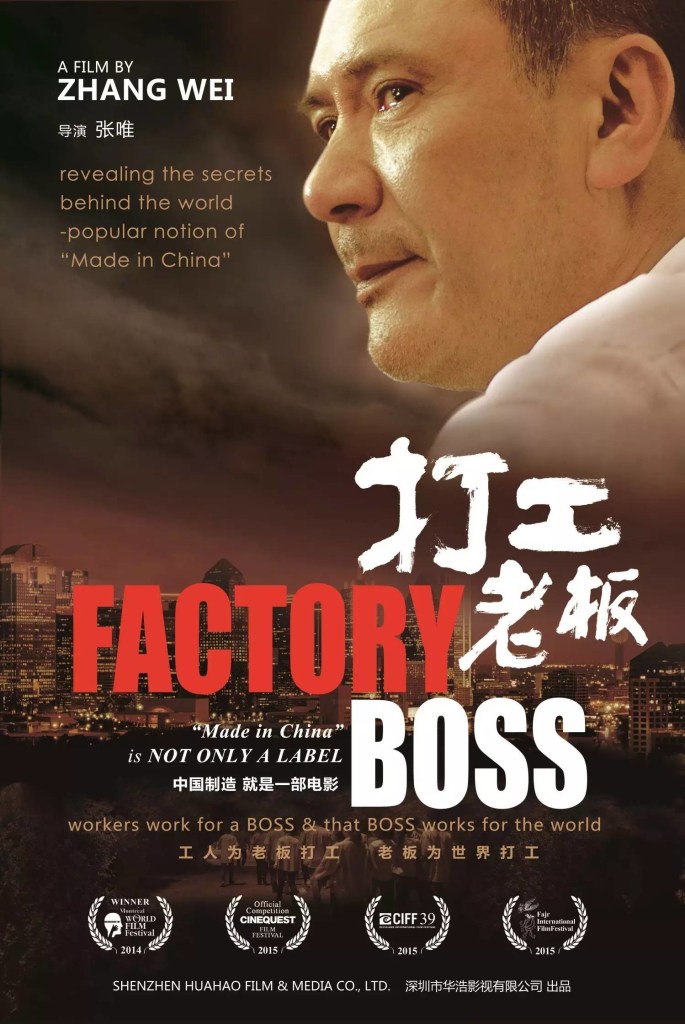 Generally speaking, capitalists get short shrift in Western cinema. Other than in that slight anomaly that was the ‘80s when “greed was good” and it became semi-acceptable to do despicable things so long as you made despicable amounts of money, movies side with the dispossessed and downtrodden. Like the mill owners of nineteenth century novels, fat cat factory owners are stereotypically evil to the point where they might as well be ripping their employees heads off and sucking their blood out like lobster meat. Zhang Wei’s Factory Boss (打工老板, Dagong Laoban) however, attempts to redeem this much maligned figure by pointing out that it’s pretty tough at the top too.
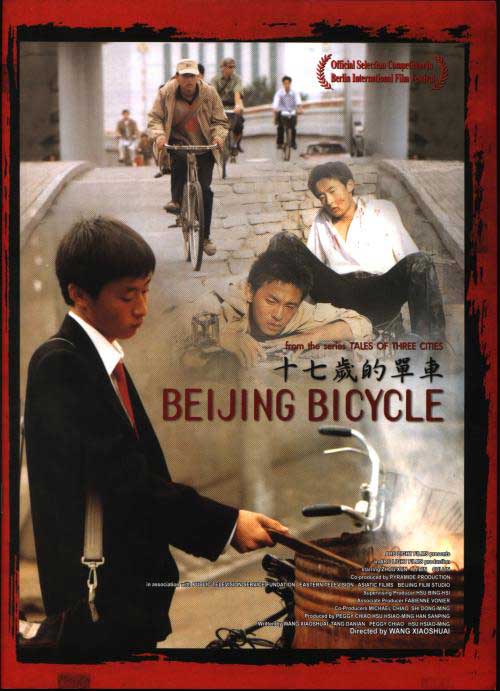 There are nine million bicycles in Beijing (going by the obviously very accurate source of a chart topping song) but there are 11.5 million inhabitants so that’s at least two million people who do not own a bike. Still, if you’re in the unlucky position of having your bike stolen by one of the aforementioned two million, your chances of finding it again are slim. Luckily for the protagonist of Wang Xiaoshuai’s Beijing Bicycle (十七岁的单车, Shí Qī Suì de Dānchē), he manages to track his down through sheer perseverance though even once he gets hold of it again his troubles are far from over.
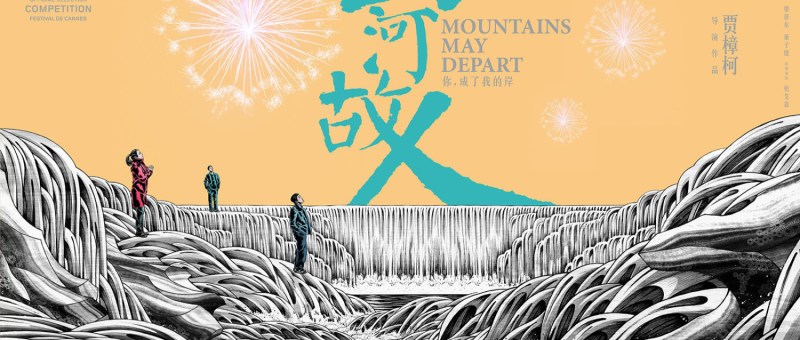
 Jia Zhangke has made something of a career out of charting his nation’s history through the lives of ordinary people caught up in the business of living when everything about them is changing. Mountains May Depart (山河故人, Shānhé gùrén) isn’t the first of his films to span a comparatively wide period of time, though it is the first to venture into the “future” if only by a decade or so. Through a story of dislocation and isolation both cultural and personal, Jia has traversed the melancholy odyssey of those who grow up to discover that all the wrong choices have already been made.