Full Strike (全力扣殺, Derek Kwok & Henri Wong, 2015)

A former badminton champ begins to rediscover herself after being permanently banned for bullying behaviour when charged with coaching a bunch of former bank robbers in Derek Kwok & Henri Wong’s zany sports comedy Full Strike (全力扣殺). Dedicated to “all the beautiful losers”, the film is less about literal winning as it is about learning to turn one’s life around in moments of profound despair and draw strength from even non-literal victories in simply refusing to be looked down or belittled.

It’s ironic in a sense that Dan (Ekin Cheng Yee-Kin), Kun (Wilfred Lau Ho-Lung), and Chiu (Edmond Leung Hon-Man) became bank robbers because they didn’t want to be bullied having grown up as friendless orphans. Former badminton champ Kau Sau (Josie Ho Chiu-Yee), meanwhile, was such as tyrannical diva that she gained the nickname “The Beast” before being banned because of her unsportsmanlike behaviour and treatment of her long-suffering assistant. But cast out of the sports world, she’s become a dejected layabout not quite working in her brother’s restaurant and otherwise hiding out from the world. Her life changes when she’s publicly mocked after running into her former assistant who has since gone to take her position as a reigning champion. Running out into the night, she spots a shuttle-cock-shaped meteor and is chased to a badminton club by what she assumes is an “alien” but might have just been a frightened homeless man.

In any case, she takes it as a sign she should pick up a racket once again which as Dan later points out she probably wanted to do anyway and was just waiting for an excuse. He can’t explain why he chose the unlikely path of becoming a badminton player to help him turn over a new leaf after leaving prison but reflects that perhaps you don’t really need a reason only the desire to change. Dan, Kun, and Chiu all developed disabilities as a result of their life of crime but slowly discover that they can actually help them on the court in a literal process of making the most of their life experiences no matter how negative they might have assumed them to be while Kau Sau similarly regains her self esteem while acknowledging the destructive patterns of her previous behaviour careful never to bully her new teammates as they all square off against her bullying cousin “nipple sucking Cheung” (Ronald Cheng Chung-Kei) who tries to use his newfound wealth to cover up a lack of skill by hiring Kau Sau’s old teammate. 

Cheung is also trying to overcome low self-esteem and is later forced to realise that becoming a champion won’t really change that much about how he sees himself, though apparently still relying on an ever capable middle-aged woman to fight (literally) his battles for him. Meanwhile, the gang are coopted by a media mogul hoping to make an inspirational documentary about them but also manipulating their lives and hyper fixating on their criminal pasts to the point of staging a fake arrest as they enter the stadium for a competition. Doubting the chances of success in setting up new lives for themselves as badminton players, Chiu is drawn back towards a life of crime while feeling somewhat distanced from the team as a tentative romance between Kau Sau and Dan seems to fall otherwise flat.

A throwback to classic mou lei tau nonsense comedy, the zany gags come thick and fast but are at times over reliant on low humour while the central premise of staking everything on an “unexciting” game like badminton perhaps wears a little thin by the time it gets to the high stakes finale with the heroes fighting twin battles squaring off against their traumatic pasts rather than the literal opponents in front of them. Winning becomes a kind of irrelevance when the contest was within the self. Each rediscovering the spark of life, the players rediscover the will to live while bonding as a team and sticking to their training in pursuit of their goal. Kwok and Wong lay it on a little thick with the martial arts parody in the uphill battle to master badminton but otherwise lend a poignant sense of warmth and genuine goodwill in sympathy with the underdogs’ quest if not quite to win then to own their loserdom on their on terms in reclaiming their self-respect and dignity. 


Full Strike is available to stream in the UK until 30th June as part of this year’s Odyssey: A Chinese Cinema Season.

Original trailer (Traditional Chinese / English subtitles)

Aberdeen (香港仔, Pang Ho-cheung, 2014)

Aberdeen posterFamilies, eh? Too much history, not enough past. In Aberdeen (香港仔), Pang Ho-cheung applies his cheeky magic to the family drama, taking a long hard look at an ordinary collection of “close” relatives each with individual secrets, lies, and hidden insecurities which could destroy the whole at any given second. Fishermen driven ashore by the tyranny of “progress”, these troubled souls will need to decide in which direction to swim – “home” towards sometimes uncertain comforts, or away towards who knows what.

Grandpa Dong (Ng Man-tat), a Taoist priest, lost grandma a long time ago and is now in a relationship with Ta (Carrie Ng), a night club hostess. Dong’s son Tao (Louis Koo Tin-lok), a celebrity motivational speaker, does not entirely approve, feeling that the slightly taboo nature of Ta’s profession tarnishes his own veneer of glamour and may eventually cause him a public image crisis. Meanwhile, Tao’s wife Ceci’s (Gigi Leung Wing-kei) showbiz career is floundering now that she’s no longer as young as she was and she finds herself slipping into the seedier aspects of the business as her manager encourages her to “entertain” wealthy men to secure roles while her friend keeps inviting her to paid “parties”. Dong’s daughter, Wai-ching (Miriam Yeung), is married to a doctor, Yau (Eric Tsang Chi-wai), who unbeknownst to her is involved (unlikely as it seems) in a passionate affair with his nurse (Dada Chan) which she seems to think is more serious than it is.

Dong laments that his family can’t seem to stand being in the same room for more than a few seconds before someone ruins the whole thing with a stupid argument which might be a fairly common phenomenon in many families, but he worries that it’s all down to the fact that his ancestors were fishermen and now they’re paying for the bad karma of having killed all those fish. In fact, bad karma was one of the reasons his dad got him apprenticed to a relative who trained him up to be a Taoist priest so he could atone for generations of sin but it seems like the well ran far too deep.

Each of our protagonists is individually insecure, lacking the confidence that their family members truly accept them. Tao, vain and deeply cynical, doubts his daughter Chloe (Lee Man-kwai), whom he insists on calling “Piggy”, is really his because he thinks she isn’t very pretty and doesn’t fit with his slick, celebrity image. Nevertheless, he does love her deeply and worries that she will suffer in the long term through her lack of looks though this too is partly a self-centred projection stemming from long buried guilt over having bullied another “plain” girl while they were at school. He is also blind to the effect his constant references to Chloe’s supposed plainness are having on his wife, Ceci, who is carrying the scars of longterm insecurity regarding her appearance on top of the difficulties she is facing in her career.

Wai-ching’s problems run a little deeper in that she is convinced her mother stopped loving her after a slightly embarrassing childhood incident. The past literally returns to haunt her in the form of some paper offerings she made to her mother’s spirit which have been mysteriously sent back “return to sender” by the Hong Kong Post Office. Wai-ching’s mental instability seems to be a worry to her husband, but not so much so that he can’t just forget about it when his nurse comes calling with one of her cute little notes announcing that she’s in the mood.

Dong and Yau are in similar positions, each identifying with the figure of a beached whale – all washed up with nowhere else to go. As Dong puts it, as soon as you’re beached a part of you at least has died. Each of the older men has to accept that a choice has already been made and the energy needed to change it is no longer available. Pang allows each of the family members to find some kind of individual resolution, the family seemingly repaired as they chow down on generic fast food without making too much of a fuss, but then their solutions to their issues are paper thin and perhaps the family itself is merely the ribbon that flimsily binds an imperfectly wrapped gift that everyone has to pretend to like to avoid creating a scene. Still, sometimes the wrapping is the best part and it doesn’t do to go peeking inside lest you get a disappointing surprise.


Original trailer (English subtitles)

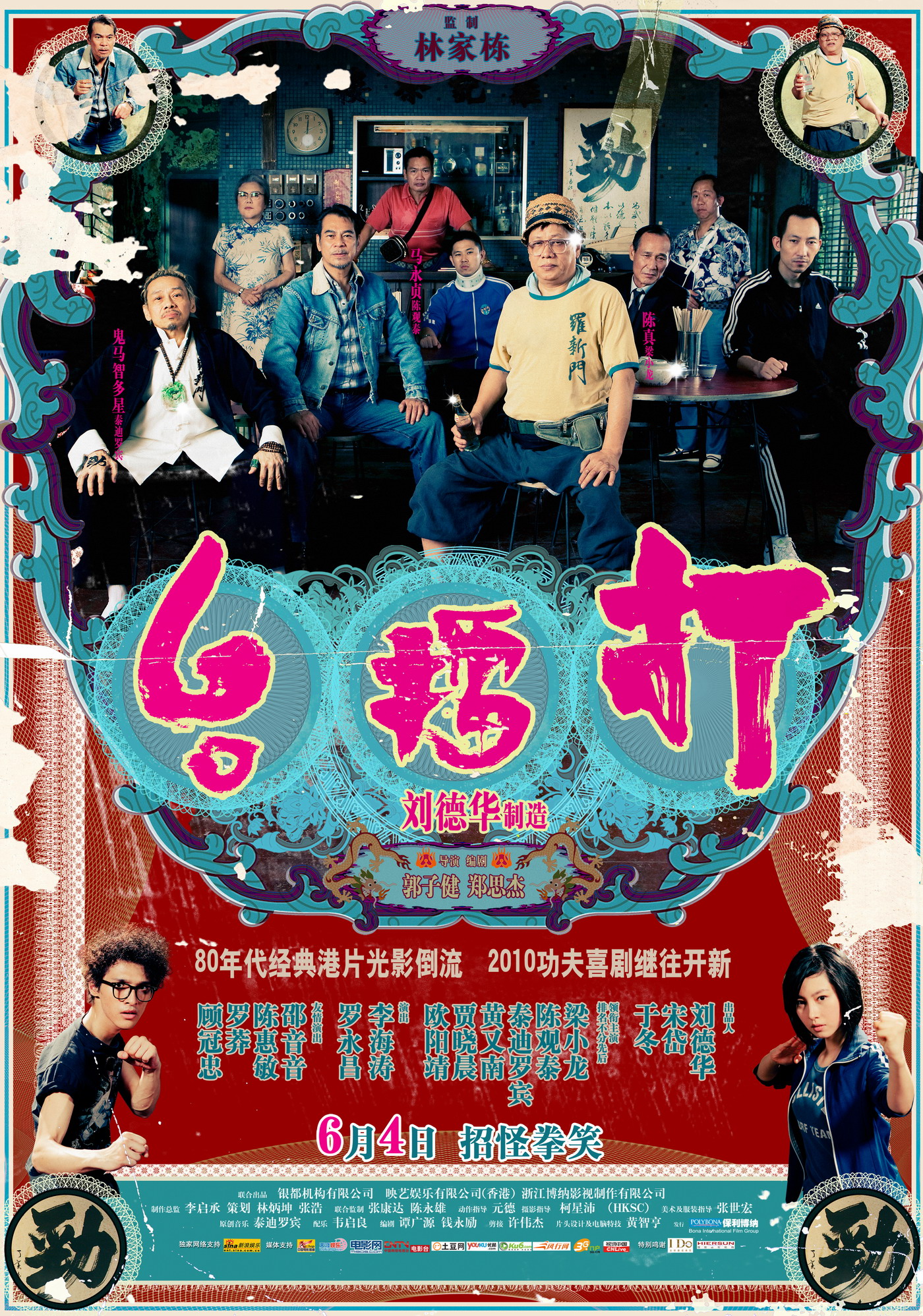
Gallants (打擂台, Derek Kwok & Clement Cheng, 2010)

Gallants PosterLike the master at the centre of Derek Kwok and Clement Cheng’s Gallants (打擂台), old school martial arts movies have been in a deep sleep since their Shaw Brothers heyday. Drawing inspiration from the kung fu films of old, Gallants is a tale of buried heroism suddenly reawakening and the risks of writing off veteran challengers just because of their age. It’s also a tribute to those perhaps more innocent times and, in contrast to a prevailing trend, a true Hong Kong film filled with typically Cantonese (sometimes untranslatable humour) and meta references to the area’s long cinematic history.

For a brief moment in his childhood, Cheung (Wong You-nam) was the unbeatable superhero who never lost a fight. These days, he’s a nerdy loser who sometimes hides under his desk to escape his angry boss. Despatched by the shady real estate company he works for, Cheung is sent back to his rural hometown entrusted with the mission of convincing the local population to surrender their homes so the developers can build a large scale complex. Whilst there he gets attacked by local punks only to be saved by an old guy who has immense kung fu skills.

The old guy turns out to be one of two living in a ramshackle tea house that used to be a martial arts studio. Tiger (Leung Siu-lung) and Dragon (Chen Kuan-tai) turned the Gate of Law into a teahouse to make ends meet while their legendary sifu, Master Law (Teddy Robin), has been in a coma for the last 30 years. When a fight breaks out and the old guys get to strut their stuff against a local kingpin, Cheung decides to petition them to take him on as a pupil. In a classic case of bad timing, Cheung is around when the teahouse is raided again and someone attacks Master Law causing him to wake up and act as if the last 30 years never happened. He thinks Cheung is both of his young pupils, Tiger and Dragon, in one and that the real 30 years older versions of Tiger and Dragon are some random old guys Cheung has agreed to train out of pity.

If you don’t fight, you won’t lose quips Law, but if you fight you have to win. Like any good martial movie, Gallants is more about the journey than the destination. Rather than focussing solely on Cheung who experiences several conflicts of the heart when he realises that his adversary is the childhood friend he used to bully and that he was technically on the wrong side to begin with, Kwok and Cheng broaden the canvas to allow Tiger, Dragon, and Law to take centre stage. Still skilled martial artists, the guys give it their all in the knowledge that they’ll have to work far harder now that they aren’t as agile as they once were. Still, they have the true spirit of kung fu and resolve to keep getting back up each time they’re knocked down.

This oddly defeatist attitude which presupposes humiliation but insists on perseverance gives the film much of its warmhearted, ironic tone as the hapless martial arts heroes repeatedly fail yet refuse to back down. The other source of comedy lies in the hilarious performance of the tiny Teddy Robin as the supposedly all powerful Law. Law, as it turns out, is a wisecracking lecher who sets about flirting with just about every young girl he lays eyes on before decamping to a hostess bar and asking for the ladies from 30 years ago. Former starlet Susan Shaw makes an amusing cameo as the long suffering, lovelorn doctor apparently in love with Law since their youth who has continued to care for him throughout his illness but is entirely forgotten when Law wakes up in full on sleaze mode.

Bizarre gags including one about a missing preserved duck, jostle with impressive action sequences performed by two veterans proving they’ve still got what it takes all these years later. The aesthetic is pure ‘70s Shaw Brothers complete with speedy zooms and whip pans accompanied by an overly dramatic score, lovingly echoing the classic kung fu era rather than trying to attack it through parody. As funny as it all is, and it is, Gallants is also surprisingly warmhearted as it finds space to value the skills of its elderly protagonists as well as the enduring bonds of friendship which connect them.


Screened at Creative Visions: Hong Kong Cinema 1997 – 2017

Original trailer (English subtitles)

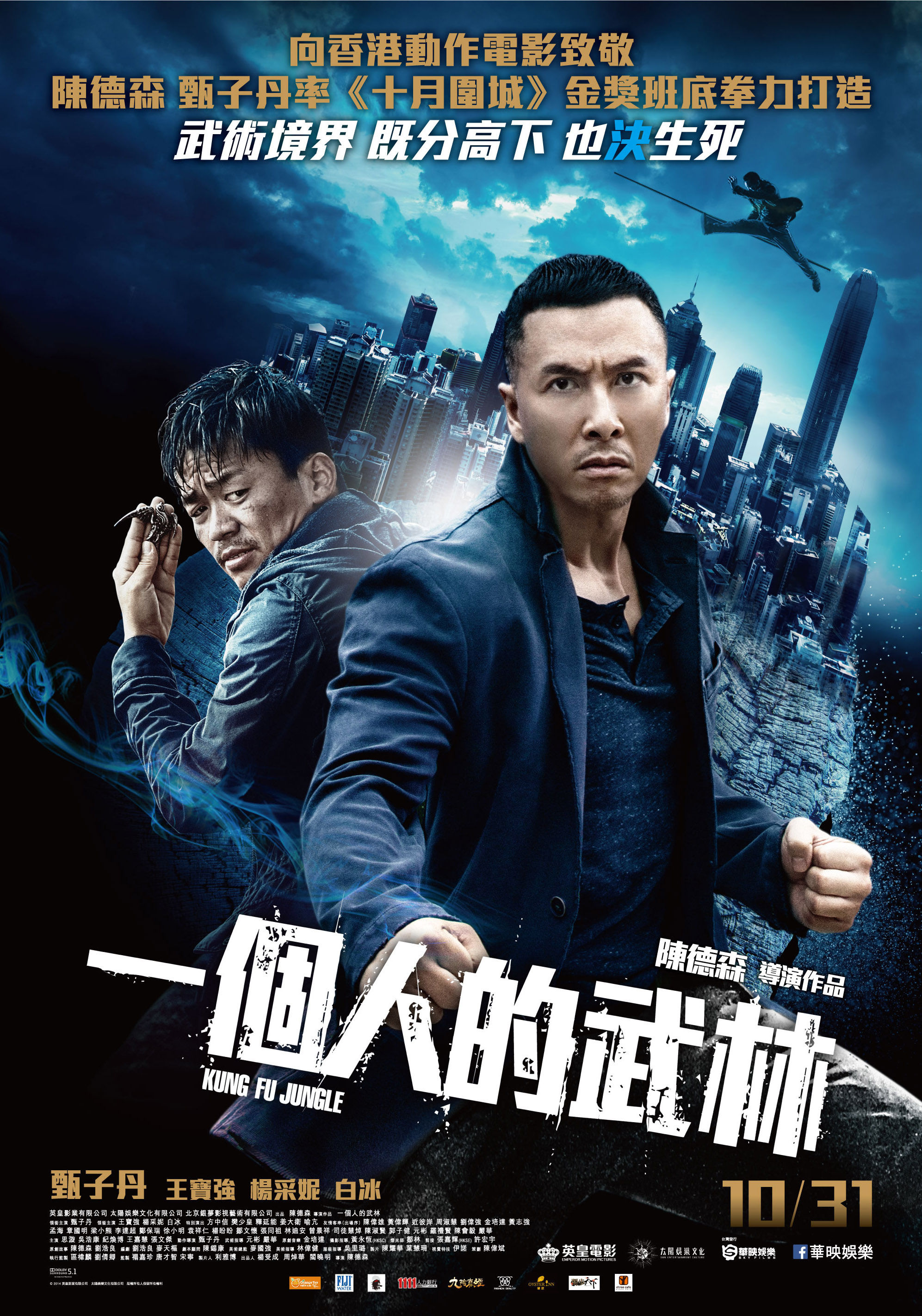
Kung Fu Killer (一個人的武林, AKA Kung Fu Jungle, Teddy Chan, 2014)

kung fu killerKung fu movies –  they don’t make ‘em like they used to, except when they do. Kung Fu Killer (一個人的武林, AKA Kung Fu Jungle) is equal parts homage and farewell as its ageing star, Donnie Yen, prepares to graduate to the role of master rather than rebellious pupil. What it also is, is a battle for the soul of kung fu. Just how “martial” should a martial art be? Is it, as our antagonist tells us, worthless with no death involved or will our hero prove the spiritual and mental benefits which come with its rigorous training and inner centring transcend its original purpose? Of course most of this is just posturing in the background of a lovingly old fashioned fight fest complete with a non-sensical plot structure motivated by increasingly elaborate set pieces.

Yen plays Hahou Mo, a martial arts master and instructor to the HK police who hands himself in one day covered in blood and confesses to having killed someone. Three years later Hahou is a man of peace, paying for the accidental death of an opponent by patiently waiting out his prison time. However, when he sees a news report about a serial killer with martial arts ability targeting fellow martial artists he goes on a violent rampage trying to get the attention of the police. If they’re going to solve this crime, they’re going to need someone who knows the martial arts world intimately and Hahou spies an opportunity to earn his freedom through helping someone not so unlike himself realise the error of their ways.

In keeping with the genre, its not so much of a whodunnit as a whydunnit and so the crazed murderer is unmasked fairly quickly. Fung Yusau (Wang Baoqiang) is determined to be number one in each and every discipline, taking on the accepted masters and besting them every time, even going to far as to leave a sarcastic trophy on every body. Hahou once shared his ambition, his reckless need to prove his skill is the reason his life has gone the way it has after all, but the two men share fundamentally different beliefs about the nature of their art. Fung Yusau believes martial arts exist for the reason of killing people – fights in which both challengers live are, to him, pointless and incomplete.

Even if Hahou once harboured the same desire to prove his skills superior to all others, his was a more internal quest. For him, at least now, kung fu is a sacred art of self improvement which can be used for self defence but is essentially about learning to live a harmonious life. Having learned from his own misfortune, he knows the folly of being no. 1 – in that it’s an essentially lonely and insecure place to be. Martial arts should be used to kick down walls and build bridges, his desire is to move forward in togetherness teaching people how to be happy rather than working against each other in an unnecessary and artificial kind of competition.

The police need Hahou’s help because the martial arts world is so essentially alien to them. Despite a shared culture, this insular universe is something which they know nothing about and is so dependent on interpersonal knowledge that no degree of wikipediaing is likely to help them understand it. Only by learning from those with direct knowledge and able to guide them through the particular thought processes of the killer will they stand any chance of being able to catch him. However, the strangely alternative nature of the martial arts universe also makes trusting Hahou and the veracity of his information a big ask for hardheaded cops.

Yen wisely cedes most of the action to Wang Baoqiang other than in the early prison riot sequence and final showdown. The fight scenes are innovatively choreographed and always exciting, except perhaps for going overboard with CGI especially during the motorway set finale during which the additional speeding cars become an unwelcome reminder of just how much less is at stake than during the heady Hong Kong heyday of death defying stunts. Still, the relative quality of the action goes a long way to covering for the otherwise under developed story elements.

A nice fusion of the classic and the modern, Kung Fu Killer wears its love on its sleeve with a final credits sequence celebrating the various Hong Kong greats who’ve all contributed to the film in some way even if in more of a spiritual capacity. Necessarily an exercise in genre, Kung Fu Killer makes no claims to breaking new ground or doing anything particularly interesting, but does provide ample scope for a celebration of Hong Kong action cinema as well as the handing of the baton from Yen to Wang as each showcases their respective martial arts prowess.


Original trailer (English Subtitles)