Duel to the Death (生死決, Tony Ching Siu-Tung, 1983)

What is the essence of martial arts, self-improvement and defending the weak, or victory at all costs? The debut directorial feature from action choreographer Tony Ching Siu-Tung, Duel to the Death (生死決) may have a familiar theme but is unusual in its even-handedness focussing instead on the bond between its martial artist heroes who are each as it turns out pawns of greater powers and the mercy of a world in nothing is fair or righteous.

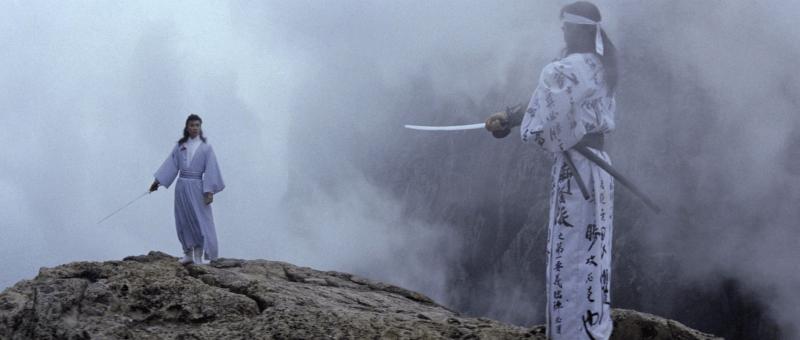
This is obvious right from the high impact opening sequence in which Japanese ninjas raid a Chinese temple to steal “The Lost Manual to Breaking the Swordplay Stances of All Clans.” Obviously, the scroll wasn’t very lost, in fact quite easy to find along with the names of all the martial artists in China which will come in handy later, but right away sets up the Japanese as essentially duplicitous and underhanded. The central drama revolves around a contest held every 10 years between a representative from Japan and China to decide whose martial arts is best, but it’s obvious that the Japanese plan to win by cheating which they attempt at every opportunity. 

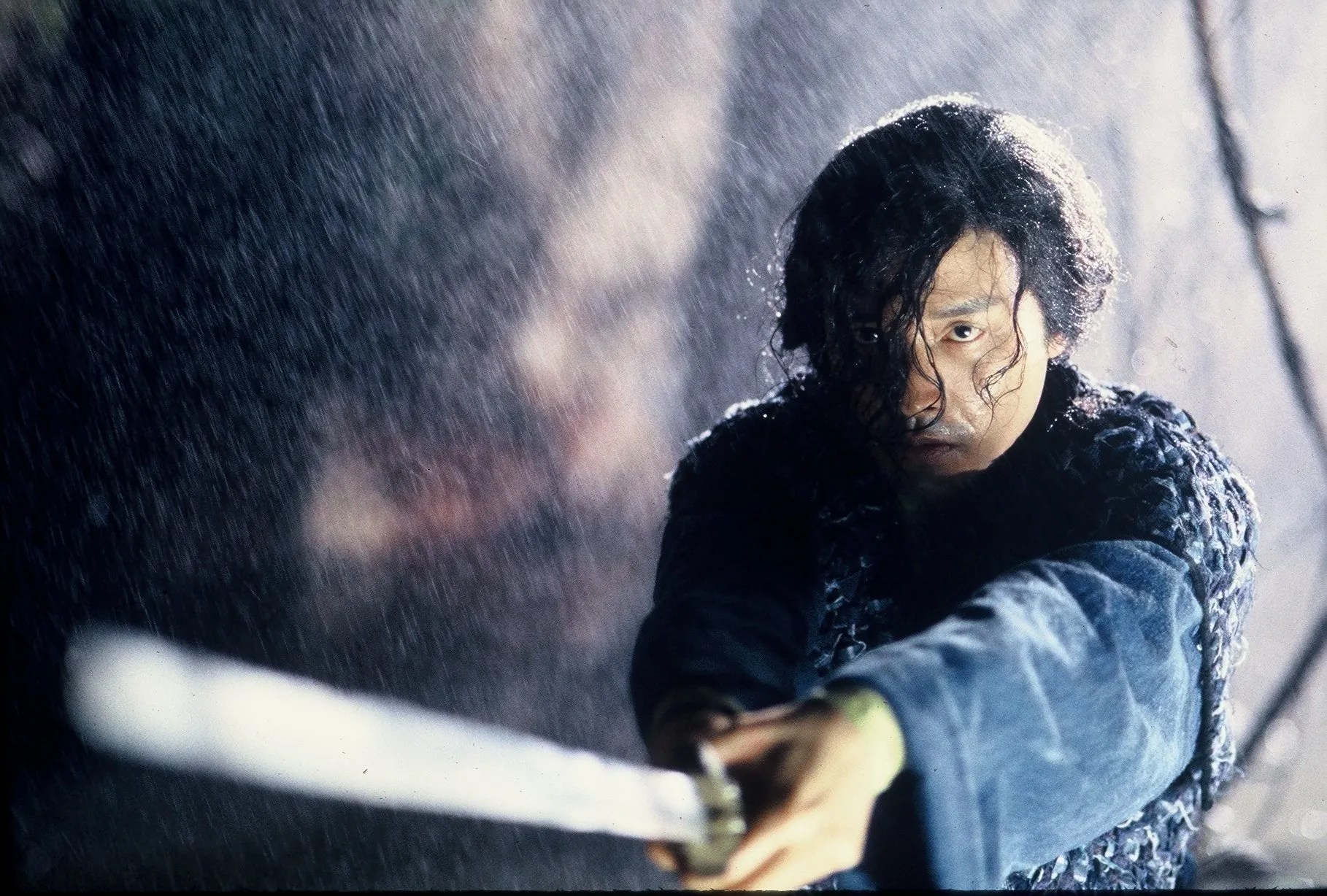
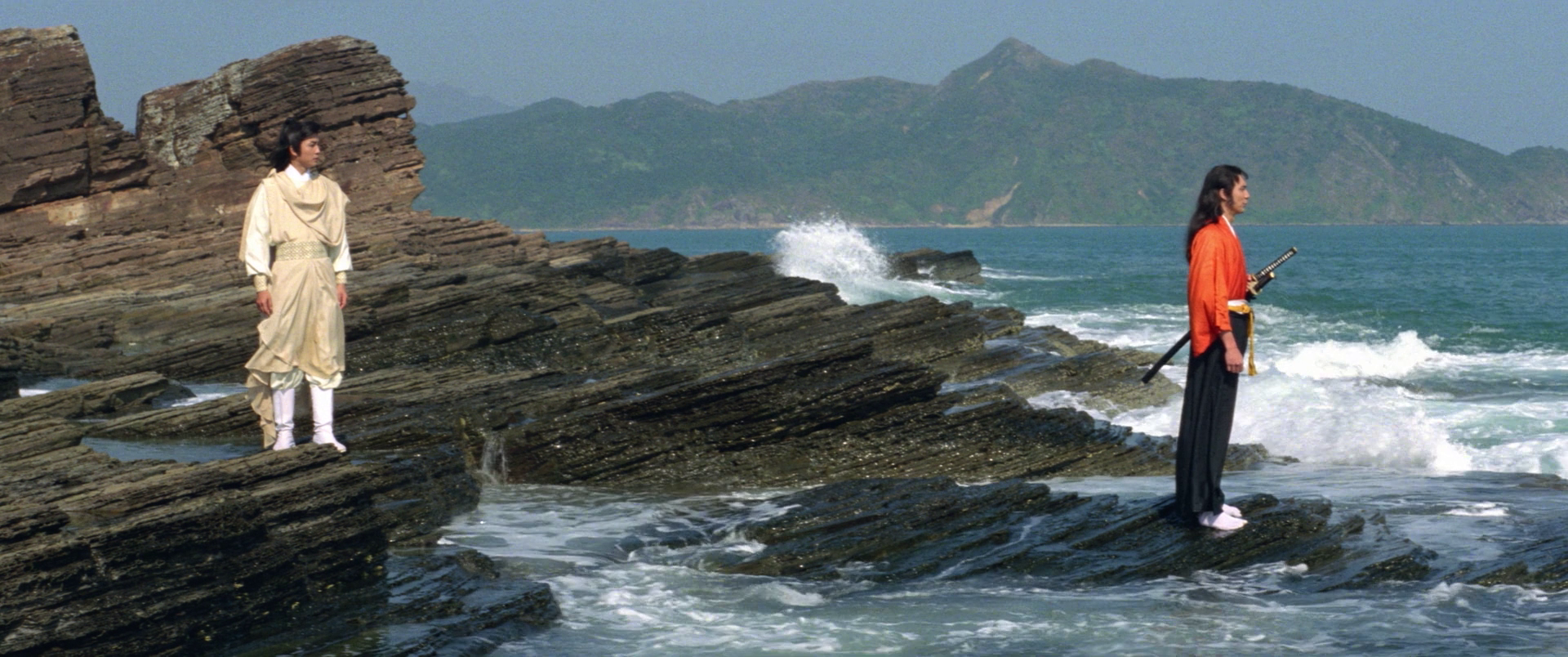
This remains largely unknown to earnest swordsman Miyamoto (Norman Chui Siu-keung) who genuinely believes he’s engaging in a test of skills with a worthy opponent. In contrast to that advocated by the Shaolin monks, the philosophy fed to Miyamoto is that he must win at all costs even if it meant turning a sword on Buddha. His own master challenges him in disguise and is pleased when he is killed because it means his pupil has eclipsed him and there is no greater honour than dying at the hands of a superior samurai. Destructive as he maybe, Miyamoto is no villain for he has a pure-hearted attachment to his code only to have his illusions shattered when he realises he’s just a patsy set up for an easy victory by the shogun who has already cut a deal with the contest’s organisers to have his opponent kidnapped so he’ll have to fight the organiser’s daughter instead.

The authorities in China are shown to be duplicitous too, and despite the prevailing Shaolin philosophy it becomes apparent that Hsia-hau, the current guardian of the House of the Holy Sword, cares quite a lot about fame and fortune. Desperate to restore the name of his clan and perhaps irritated not to have had a son, he’s raised his daughter Sing Lam (Flora Cheong-Leen) as a boy but does not seem to fully trust her ability to improve their fortunes despite the supposed gender equality of the jianghu society. Notably, Miyamoto refuses to fight her after realising she is a woman signalling once again the destructive qualities of his code in its rigid misogyny where Ching Wan (Damian Lau), the Chinese challenger, fully accepts her but seems unwilling to let their potential romance disrupt his own commitment to pursuit of his skill.

Like Miyamoto, Ching Wan sees the contest as a means of testing himself yet places no importance on winning or losing. Ching Wan often often comes to Miyamoto’s defence, stating that the Japanese were only acting in accordance with the their national character and they could learn a lot from their perseverance, while Miyamoto too refuses to rise to the bait when Sing Lam remarks that Japan must be a very poor place if the simple dinner they’ve been offered seems like an extravagant feast so it’s understandable that they always seem to be trying to plunder China. Trying to plunder China the shogun most definitely is, or least hoping to dominate it, but all the two martial artists want is the impossibility of a fair fight in a world in which double dealing is the norm and nothing’s quite as it seems. 

The full-on weirdness of Ching’s action sequences underline just how absurd this world is. Ninjas lurk everywhere including in the sand, while during one fight one giant ninja suddenly explodes into lots of tiny little ones. In the opening raid, they use dynamite for suicide attacks and are later seen flying in massive kites. The shogun keeps all the kidnapped martial artists he was planning to take back to Japan to steal their knowledge in a giant spider web-like network of ropes underground, hanging around until the ninjas load them into palanquins. Nevertheless, despite the obviousness of his use of Korean sets standing in for Japan, Ching injects a degree of realism in a painstaking attempt to maintain authenticity in depicting Japanese sword style. Cutting fast and furious with delirious wire work, the most impressive action sequence may well be that of Sing Lam effortlessly setting up a pair of obnoxious Japanese swordsmen. “Why dwell on determining whose martial arts is better?” a monk idly asks, and indeed there is no real answer save a vicious cycle of violence of retribution that remains unfinished even at the nihilistic conclusion. 


Original trailer (English subtitles)
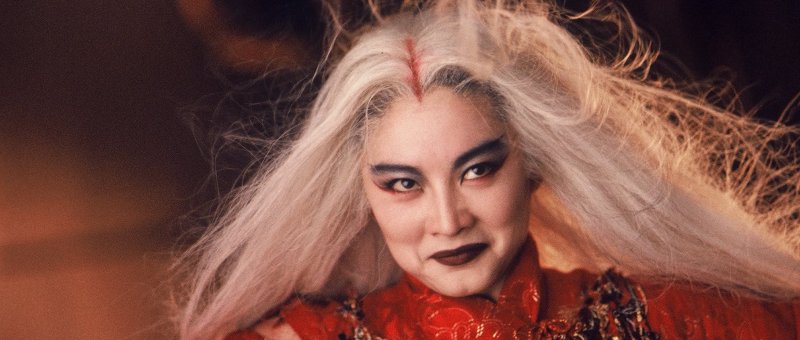
The Bride with White Hair (白髮魔女傳, Ronny Yu, 1993)

“This is the so-called underworld rule. You have no choice.” the hero of Ronny Yu’s gothic fairytale The Bride White Hair (白髮魔女傳) is told, only to reflect “Yes, I do.” though the world will eventually prove him wrong. Tinged with handover anxiety, the film finds its star-crossed lovers longing to exercise their choice of exile, to be allowed to live quietly outside of the political turbulence that surrounds them. But in the end their love is not strong enough to overcome their difference and doubt becomes the ultimate act of emotional betrayal. 

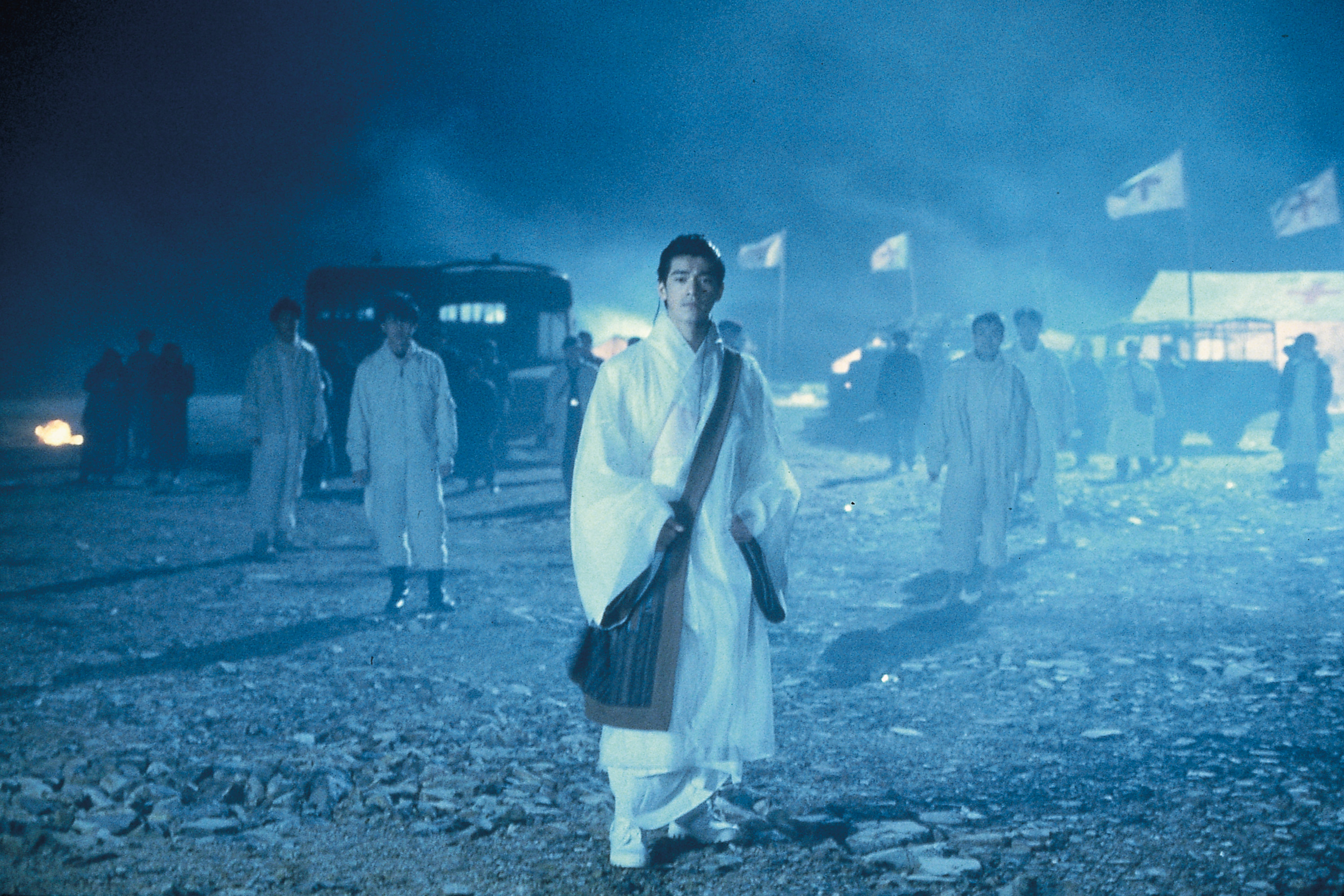
This is a tale that signals its tragedy from its inception. The Ching emperor is deathly ill and only a flower growing on a distant mountain that blossoms only once every 20 years can save him. “This flower is not for you” the emissaries are told by man who appears to be frozen in more ways than one, relating that he has waited 10 years for a woman who may have forgotten him. As a young man, Yi-hang (Leslie Cheung) was the roguish heir to the Wu Tang clan whose recklessness sometimes caused him to behave in unorthodox ways in the name of justice. The eight clans of Chung Yuan are beset on both sides, caught between the conflict of Ching and Ming while fearful of an “Evil Cult” that otherwise destabilises their icy grip over the local area. 

It’s becoming clear to Yi-hang that he may not be on the right side. The people are oppressed and starving but their attempt to procure a little sustenance for themselves leads to a bloody raid with clan soldiers cutting down peasants until a mysterious woman in white (Brigitte Lin) arrives wielding a whip that can cut people in half. Interrupted by a tragic scene while napping in the forest, Yi-hang is immediately smitten with the female assassin whom he later realises is the same girl he saw as a child who saved him from wolves with the song of her flute. 

The woman is an orphan taken in by the cult and trained up as an assassin. She has only a surname, Lien, and is then symbolically “reborn” when Yi-hang gives her her name, Ni-chang. Having fallen in love, the pair vow to leave the underworld together and live in the pastoral paradise of the watering hole where they first made love. “This underworld doesn’t belong to us, let them fight for it” Yi-hang insists, attempting to exercise his choice to escape a system he sees as corrupt before it strains his integrity but as he’ll discover he’s not as much choice as he thought. 

In the shadow of the Handover, it might be tempting to read Lien and Yi-hang as ordinary people who just want to live quietly and resent the intrusion of politics into their lives, though they remain caught between two opposing powers with no neutral space for them to occupy. The same could be said of the cult’s leaders, a pair of crazed conjoined twins, one male one female, who are fused at the back in a potent symbol of duality. The twins were once members of the Wu Tang clan but were betrayed and exiled, driven mad by their banishment. At the film’s conclusion, Yi-hang symbolically frees the twins by splitting them apart but their separation leads only to their deaths. In the end, Yi-hang betrays his love because the underworld does not permit it to exist. He doubts Lien’s word and his rejection of her sparks her metamorphosis into the title’s Bride with White Hair, a vengeful spirit of hurt and rage now condemned to eternal wandering just as Yi-hang is condemned to life a waiting only to watch a flower wither and die knowing that he has damned himself. 

Yu’s world of melancholy romanticism is typical of that of early ‘90s wuxia though carries a touch of the gothic not least in the Bride’s cobweb-like hair which eventually becomes her finest weapon. The pervading sense of longing seems to hint at a future act of imperfect union, tinged with volatile ambivalence but perhaps finally suggesting that this romance is doomed to failure because the corruption of the world into which Yi-hang, the authority, was born is simply too great to be conquered by the innocence of his love. 


The Bride with White Hair screens screens at UltraStar Cinemas Mission Valley April 23 as part of this year’s San Diego Asian Film Festival Spring Showcase.

Trailer (English subtitles)

Executioners (現代豪俠傳, Johnnie To & Tony Ching Siu-Tung, 1993)

At the end of The Heroic Trio, the shadowy rise of authoritarianism seemed to have been beaten back. The three superwomen at the film’s centre had discovered joy and liberation in female solidarity and were committed to fighting injustice in a flawed but improving world. If Heroic Trio had been a defiant reaction to Handover anxiety, then sequel Executioners (現代豪俠傳) is its flip side shifting from the retro 40s Hong Kong as Gotham aesthetic to a post-apocalyptic nightmare world where nuclear disaster has normalised corporate fascist rule. 

As Ching (Michelle Yeoh) explains in her opening voiceover, a nuclear attack has ruined the city contaminating its water and leaving ordinary citizens dependent on the Clear Water Corporation for safe drinking supplies and basic sanitation. The trio have been scattered, pushed back into the roles from which they escaped at the first film’s conclusion save perhaps for Ching who continues to serve a duplicitous authority but does so with clearer eyes and a humanitarian spirit driving a medicine truck to ensure those in need have access to healthcare. Chat (Maggie Cheung Man-Yuk) meanwhile has reverted to her cynical bandit lifestyle, hijacking water trucks mostly for her own gain but also ensuring the water gets to the needy. Tung (Anita Mui Yim-Fong) has abandoned her Wonder Woman persona on the insistence of her husband who is now a high ranking policeman with the military authority devoting herself to the role of the traditional housewife and mother to her daughter Cindy. 

Though the women seem to have maintained their bond, Ching and Chat turning up for a Christmas celebration with Cindy, the political realities soon disrupt their friendship as they find themselves at odds with each other given their shifting allegiances. As in the first film, Chat has continued to accept work from dubious authority in the form of the Colonel including tracking down a man who embarrassed the police by firing a gun at a rally for a cult-like protest leader, Chung Hon (Takeshi Kaneshiro), only the gunman later turns out to be a patsy and Chat has unwittingly helped them bump off the voice of the people as an overture for a military coup. Ching is secretly working for responsible government trying to safeguard the President to prevent his assassination by the Colonel, but obviously cannot say very much about her mission arousing Tung’s suspicions that she may have been part of a plot to have her husband killed. 

In any case, the true villain turns out to be a kind of Wonder Woman mirror image in that the mysterious Mr. Kim (Anthony Wong Chau-Sang), CEO of Clear Water Corporation, is a man who wears a mask to hide his scarred face and dresses like an 18th century aristocrat as if engaged in some kind of Man in the Iron Mask cosplay. Kim and the Colonel have been collaborating to engineer a military coup by deliberately restricting water supplies. The oblivious Chung Hon had unwittingly been Kim’s stooge, stoking up public resentment about the water situation to give the government an excuse for a crackdown and the Colonel to move. Chat’s path to redemption amounts to vindicating the faint hope that the water contamination was a hoax, which she eventually does by taking Cindy with her to smash the corporate dam and return the water to its rightful flow and the people of the city. But like the Evil Master, Kim does not die so easily turning up for a surprisingly hands on fight squaring off against the barely unified trio who are only just beginning to repair their friendships on coming to a fuller understanding of the reality of their circumstances. 

They are all in a sense liberated, though less joyfully than in the first film and largely through violent loss. The good guys don’t always win and a fair few die while all the women can do is keep moving, fighting off one threat after another with few guarantees of success and not even each other to rely on. Where the first film had embraced a hopeful sense of comic camp, Executioners skews towards the nihilistic in its dystopian world of corporate overreach and increasing militarism in which the trio no longer trust each other and are each re-imprisoned inside their original cages from patriarchal social norms to capitalistic inhumanity and questionable loyalties with the only hopeful resolution resting on “the sincerity of our friendship” in a world which may be healing but is far from happy. 


Executioners screened as part of this year’s San Diego Asian Film Festival.