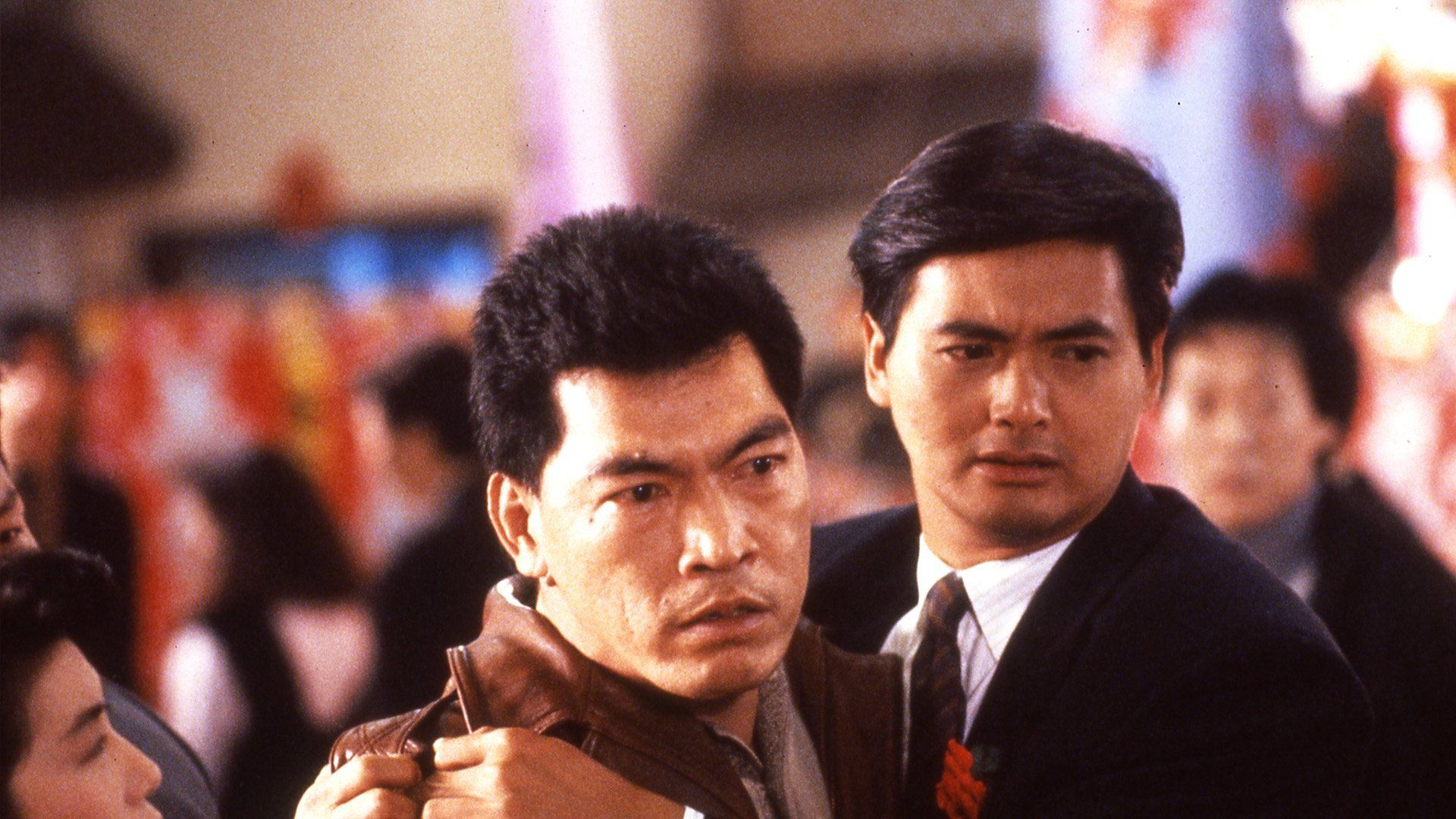
Triads: The Inside Story (我在黑社會的日子, Taylor Wong Tai-Loi, 1989)

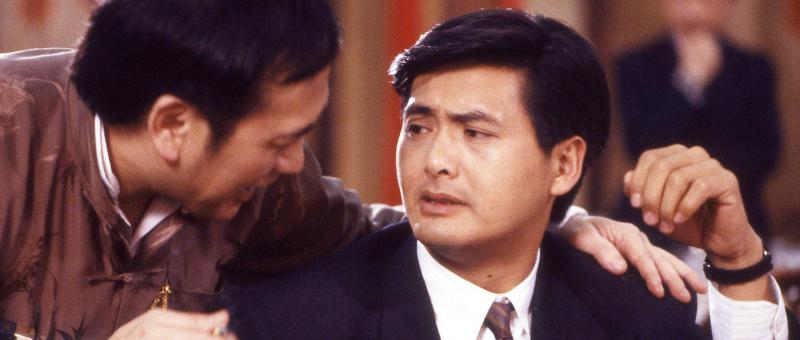
“Brother Ho, you’re a kind leader, but not a good triad member,” a underling remarks of his rival, the biological son exiled from the world of crime now returned but struggling to accept his triad inheritance. Though Taylor Wong Tai-Loi’s Triads: The Inside Story (我在黑社會的日子) is said to have been intended to depict the life inside the triads in a more realistic way, the Chinese title, which translates as something more like “my time in organised crime,” more closely implies that this is a personal story of one man’s attempt to reconcile the two sides of himself.

Aging boss Uncle Kwan (Tien Feng) is challenged by a young upstart and killed during an ambush. With his dying breath, he instructs his right-hand men Shing (Michael Chan Wai-man) and Keung (Shing Fui-On) to tell his son, Ho (Chow Yun-fat), not to join their gang or seek revenge but to continue living his life in America. Kwan evidently sent Ho there with the intention of keeping him out of the world of organised crime, making sure he got an education and can live a nice, middle-class life. Ho indeed seems to have done quite well in the US. He has a large suburban house he lives in with his wife and young son, and has recently got into the real estate business. Nevertheless, he has a close relationship with his father even if he never approved of his triad activities.

Despite Kwan’s request, when Ho and his family return to hold the funeral, Shing and Keung press him to take over as head of the gang. Ho is understandably reluctant and insists he’ll be returning to America when all the formalities have been completed. Nevertheless, he ends up becoming somewhat involved in the gang’s business, using his corporate knowledge from America to suggest they simply sublet some of their territory to other gangs to stave off conflict and turf war, little realising that will lead to just that. Not knowing how the triad world works, he makes some catastrophic mistakes that lead to some of his father’s men being killed or injured.

In many ways Kong (Roy Cheung Yiu-Yeung), one of Kwan’s protégés, is his mirror image. Taken in by Uncle Ping (Lam Kau) and raised in triad society, he is in some ways Kwan’s natural heir but resents both still being treated as a petty foot soldier and that Ho has had all the opportunities not afforded to someone like him. Ho tells him that he’s still young, and could get a “proper job,” but Kong is illiterate and has been in triad society for most of his life. There are no other jobs he could go to, while Ho was sent abroad to study. Ho does not really belong in this society, but is respected as the biological son, while Kong, who cannot live anywhere else, is shunned and ignored.

Ho takes him to task for recruiting other young men to act as foot soldiers and scapegoats, but as Kong points out, this is how his father recruited him and triad society does at least provide a family for those who have no other. In going to America, Ho has lost touch with his culture and become somewhat exiled from his family, but also feels responsible for the empire his father built and the men who followed him. In some ways, his internal conflict may reflect a sense of anxiety that those who go abroad with the Handover looming will lose both their cultural identity and any possibility of influencing the future of the place they’ve left behind.

Yet, on the other hand, there is perhaps the idea that Ho survives abroad, while Kong sacrifices himself to save him in recognition of the fact that Ho has tried to do the same. In torching the Taoist altar along with his father’s photo, Ho sets fire to triad society itself along with the world his father left behind, asking for his father’s forgiveness while leaving to return to his new life in America without looking back. One of the first films to be awarded a Cat III certificate for its depiction of triad ritual which upset the colonial authorities, the film plays out more like a yakuza drama of fragmented paternal legacy and compromised brotherhood while exposing the inherent corruption of a gangster society before reaching a sense of catharsis as Ho prepares to burn it all down.


Trailer (Traditional Chinese / English subtitles)

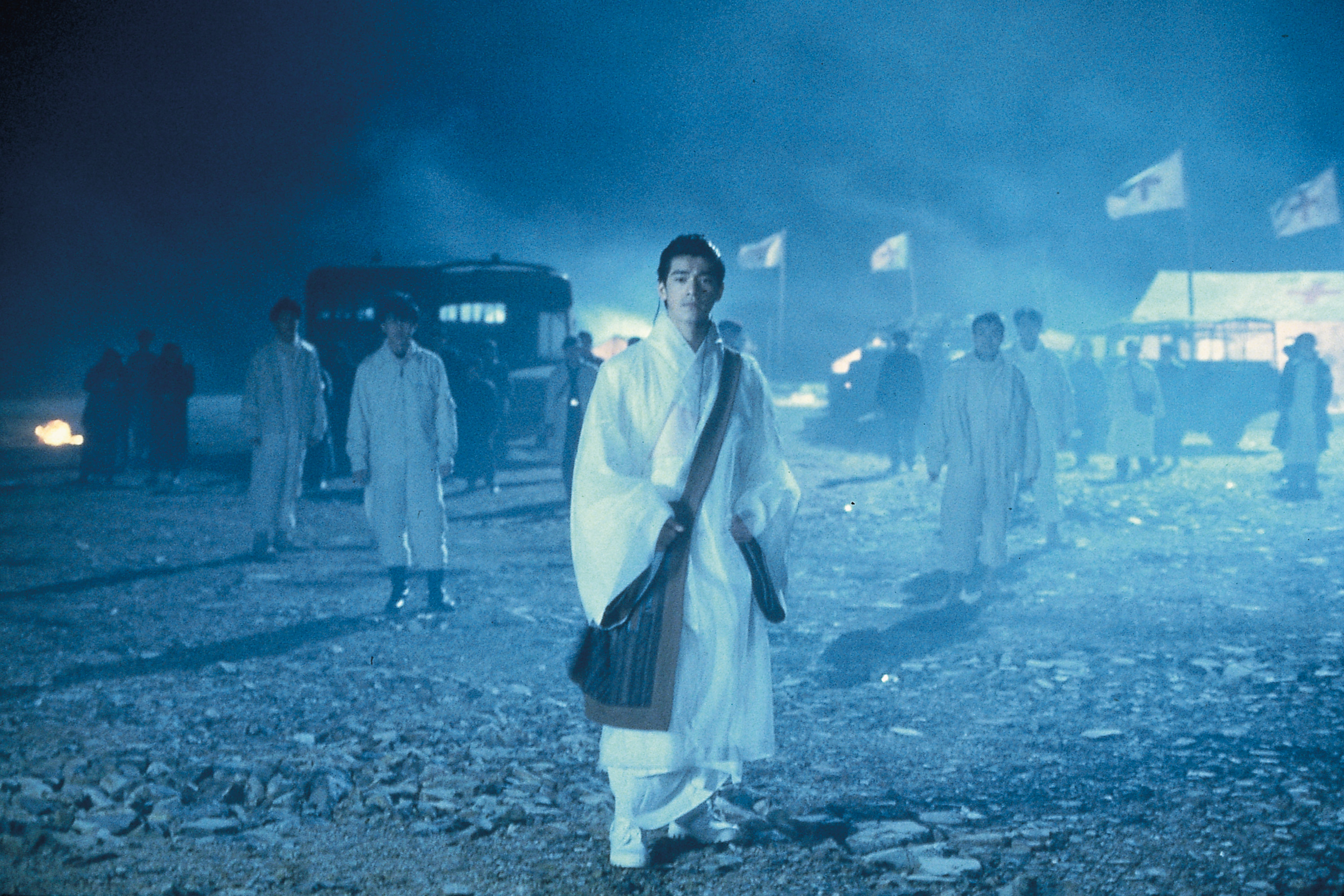
Executioners (現代豪俠傳, Johnnie To & Tony Ching Siu-Tung, 1993)

At the end of The Heroic Trio, the shadowy rise of authoritarianism seemed to have been beaten back. The three superwomen at the film’s centre had discovered joy and liberation in female solidarity and were committed to fighting injustice in a flawed but improving world. If Heroic Trio had been a defiant reaction to Handover anxiety, then sequel Executioners (現代豪俠傳) is its flip side shifting from the retro 40s Hong Kong as Gotham aesthetic to a post-apocalyptic nightmare world where nuclear disaster has normalised corporate fascist rule. 

As Ching (Michelle Yeoh) explains in her opening voiceover, a nuclear attack has ruined the city contaminating its water and leaving ordinary citizens dependent on the Clear Water Corporation for safe drinking supplies and basic sanitation. The trio have been scattered, pushed back into the roles from which they escaped at the first film’s conclusion save perhaps for Ching who continues to serve a duplicitous authority but does so with clearer eyes and a humanitarian spirit driving a medicine truck to ensure those in need have access to healthcare. Chat (Maggie Cheung Man-Yuk) meanwhile has reverted to her cynical bandit lifestyle, hijacking water trucks mostly for her own gain but also ensuring the water gets to the needy. Tung (Anita Mui Yim-Fong) has abandoned her Wonder Woman persona on the insistence of her husband who is now a high ranking policeman with the military authority devoting herself to the role of the traditional housewife and mother to her daughter Cindy. 

Though the women seem to have maintained their bond, Ching and Chat turning up for a Christmas celebration with Cindy, the political realities soon disrupt their friendship as they find themselves at odds with each other given their shifting allegiances. As in the first film, Chat has continued to accept work from dubious authority in the form of the Colonel including tracking down a man who embarrassed the police by firing a gun at a rally for a cult-like protest leader, Chung Hon (Takeshi Kaneshiro), only the gunman later turns out to be a patsy and Chat has unwittingly helped them bump off the voice of the people as an overture for a military coup. Ching is secretly working for responsible government trying to safeguard the President to prevent his assassination by the Colonel, but obviously cannot say very much about her mission arousing Tung’s suspicions that she may have been part of a plot to have her husband killed. 

In any case, the true villain turns out to be a kind of Wonder Woman mirror image in that the mysterious Mr. Kim (Anthony Wong Chau-Sang), CEO of Clear Water Corporation, is a man who wears a mask to hide his scarred face and dresses like an 18th century aristocrat as if engaged in some kind of Man in the Iron Mask cosplay. Kim and the Colonel have been collaborating to engineer a military coup by deliberately restricting water supplies. The oblivious Chung Hon had unwittingly been Kim’s stooge, stoking up public resentment about the water situation to give the government an excuse for a crackdown and the Colonel to move. Chat’s path to redemption amounts to vindicating the faint hope that the water contamination was a hoax, which she eventually does by taking Cindy with her to smash the corporate dam and return the water to its rightful flow and the people of the city. But like the Evil Master, Kim does not die so easily turning up for a surprisingly hands on fight squaring off against the barely unified trio who are only just beginning to repair their friendships on coming to a fuller understanding of the reality of their circumstances. 

They are all in a sense liberated, though less joyfully than in the first film and largely through violent loss. The good guys don’t always win and a fair few die while all the women can do is keep moving, fighting off one threat after another with few guarantees of success and not even each other to rely on. Where the first film had embraced a hopeful sense of comic camp, Executioners skews towards the nihilistic in its dystopian world of corporate overreach and increasing militarism in which the trio no longer trust each other and are each re-imprisoned inside their original cages from patriarchal social norms to capitalistic inhumanity and questionable loyalties with the only hopeful resolution resting on “the sincerity of our friendship” in a world which may be healing but is far from happy. 


Executioners screened as part of this year’s San Diego Asian Film Festival.

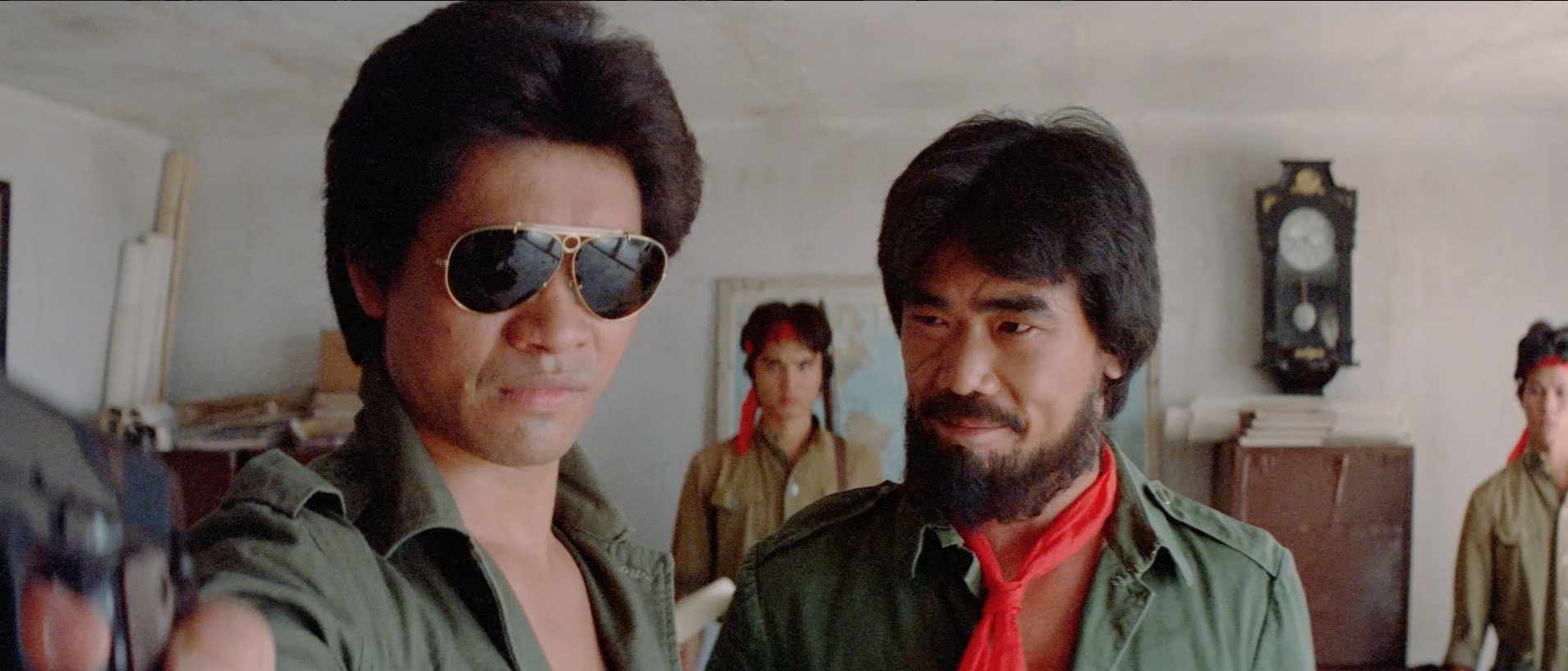
Mercenaries from Hong Kong (獵魔者, Wong Jing, 1982) [Fantasia 2022]

A former mercenary’s bid for revenge having failed in his responsibilities soon goes awry in Wong Jing’s third directorial feature Mercenaries from Hong Kong (獵魔者). As is constantly pointed out to the hero, perhaps he’s not so different from his target with his very selective brand of justice and morality. After all maybe the difference between medicine smuggler and drug trafficker is largely semantic and taking revenge after the fact hardly makes up for the failure to protect the innocent from a world you’ve helped create. 

Li Lok (Ti Lung) is a pretty big figure on the underworld scene and as the ultra macho title sequence reveals a former mercenary who served in Vietnam. In the daring opening scene he sneaks into a gang hideout disguised as a telephone repairman and takes out a gangster in the middle of drugging a young woman whom he and his friend intend to rape and then murder. But Li Lok isn’t here to save the girl and in fact he doesn’t. He’s there because the gangster has done this kind of thing before and the previous victim was his 15-year-old niece whose care he had been entrusted with by his late brother before he passed away. Later one of his comrades will make a similar request of him and he will fail again apparently taking little stock of his responsibilities. 

Nevertheless, having knocked off the gangster annoys local big boss Shen who intends to have Li Lok eliminated but Hong Kong’s richest woman Ho Ying (Candice Yu On-On) convinces him not to because she has a job for Lok assassinating a top Thai assassin who killed her father and is now apparently blackmailing her with a cassette tape full of corporate secrets. All Lok needs to do is round up a posse and head to Cambodia where “the devil” Naiman (Ching Miao) is hiding out, kidnap him, and retrieve the tape to receive a massive life-changing payout while permanently getting Shen off his back. It all sounds like a pretty good deal to Lok along with the former buddies he recruits to join him who are all trapped in desperate poverty one with a sick little girl who desperately needs a kidney transplant. 

This is a Wong Jing film and perhaps there’s no need to dig too deeply into it, but there is something in the power Ying wields over Lok and his team by virtue of her wealth and privilege that speaks to the city’s growing inequality though it’s also true that perhaps the guys have all fallen low through their mercenary choices and are now unable to get a foothold in the contemporary society without resorting to crime. Yet perversely, Ying leverages Lok’s chivalrous sense of honour as part of her plan playing damsel in distress rather than dangerous femme fatale while he assumes he’s on a righteous mission planning to turn Naiman over to the authorities rather than just killing him while little caring that his actions threaten to destabilise an already chaotic situation in Cambodia. 

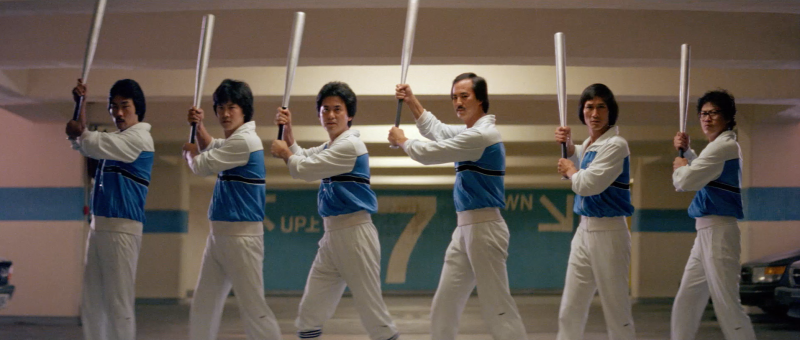
When one of the sworn brothers of the gangster that Lok killed in revenge is killed coming after him even after the truce, Lok is irritated that he died unnecessarily as if it offends his sense of justice that this man was not protected better by Shen. Yet as Naiman keeps pointing out to him, he’s no saint and perhaps no different. He could have saved the girl in the gang hideout but chose not to, escaping by jumping out of a window onto a van waiting below and riding off on a motorcycle (which is admittedly impressive). He claims to hate drug dealers but profited off war and misery in smuggling medicines across the border from Thailand into Cambodia even if he could tell himself he was running a kind of humanitarian service. Meanwhile Ying who is obviously involved in something shady if she’s dealing with people like Lok and his team, paying for their weapons and equipment which presumably includes the series of identical outfits the guys sport like some violent middle-aged boy band, wins an Outstanding Woman award and ironically pledges to use some of her wealth to fund community-based anti-drug programs. 

Li Lok may in a sense emerge victorious but also exactly where he started in failing to protect an innocent girl from a mercenary world. The Cantonese title might more literally be something like Devil Hunters, but Lok and his guys are certainly a mercenary bunch desperate to escape their poverty and hopelessness even if they may stand for a kind of justice and honour in brotherhood. This being a Wong Jing film there is plenty of crass humour including some that is very of its time along with gratuitous sex and female nudity but also a series of incredibly impressive action scenes and a bleaker than bleak conclusion which may suggest that the Loks of the world will be unable to protect the next generation from the violence they themselves have unleashed. 


Mercenaries from Hong Kong screened as part of this year’s Fantasia International Film Festival.

Original trailer (English subtitles)