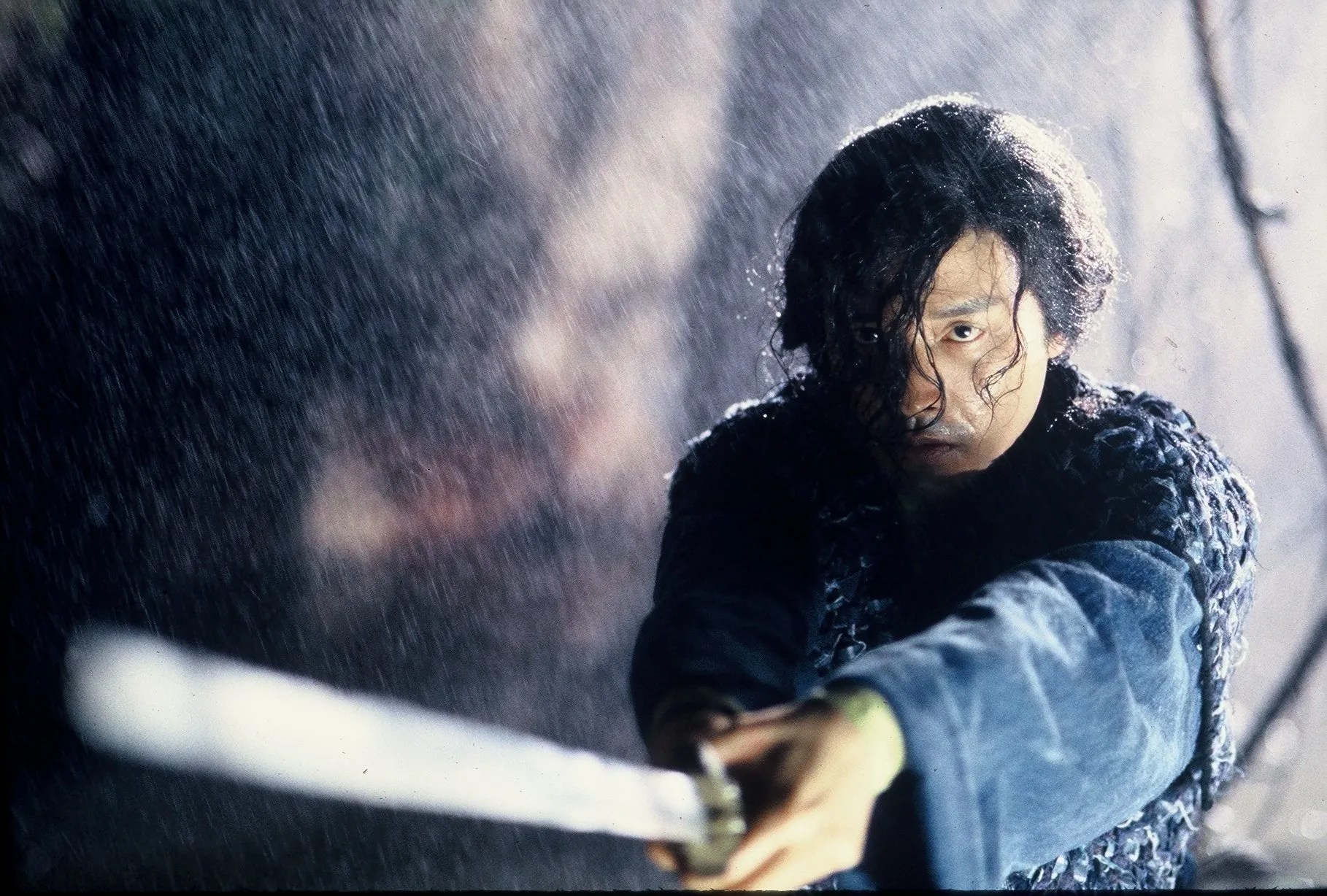
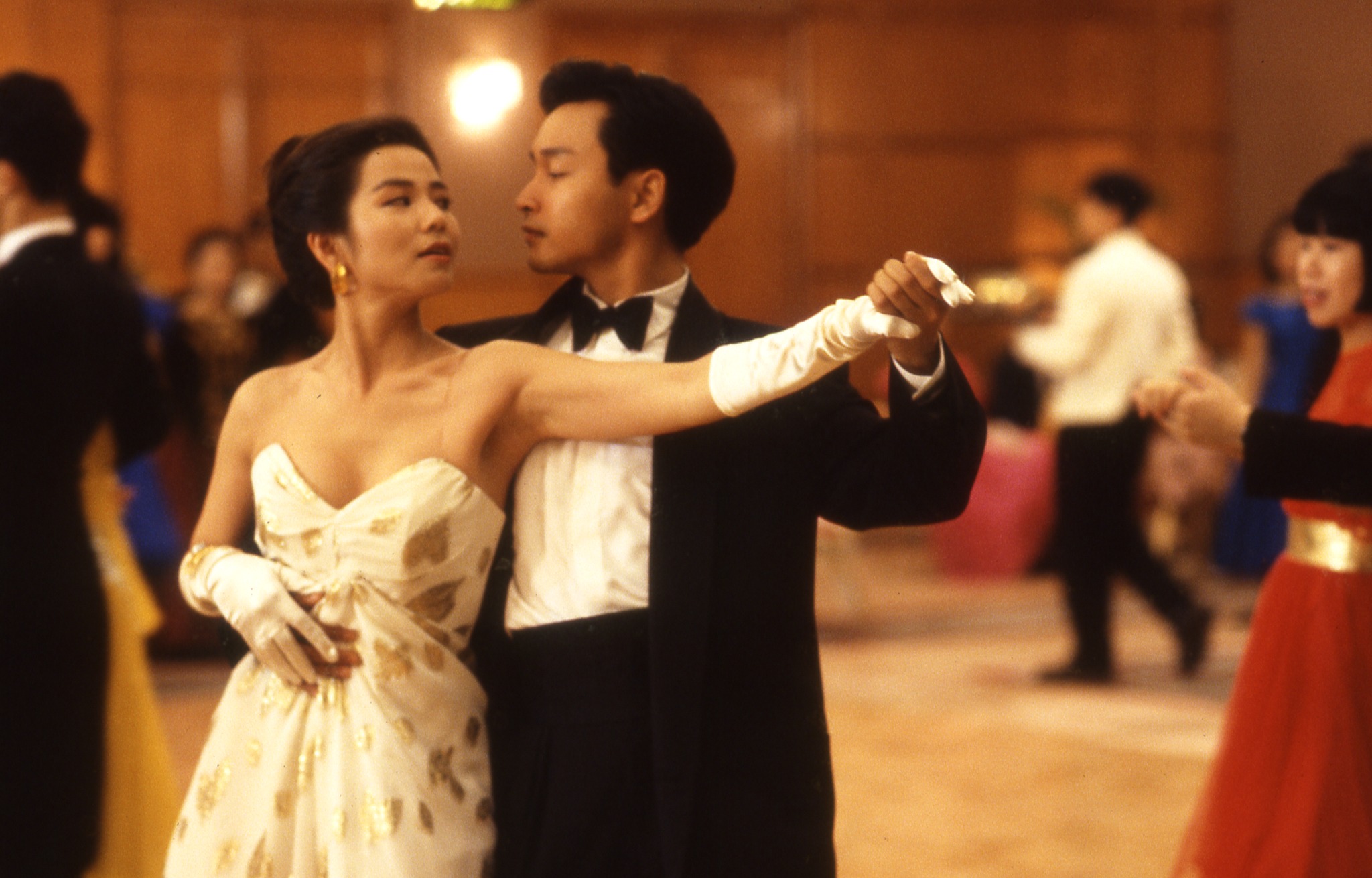
A trio of orphans raised to be international art thieves rebel against their mentor when a job goes wrong in John Woo’s throwback to his early comedies, Once a Thief (縱橫四海). A breezy, Lupin III-esque adventure, the film on one level seems to be satirising the vacuity of extreme wealth as the rich spend huge amounts of money to buy stolen paintings they can’t show to anyone while painting our heroes as anti-capitalist rebels for whom the money is but a secondary concern.
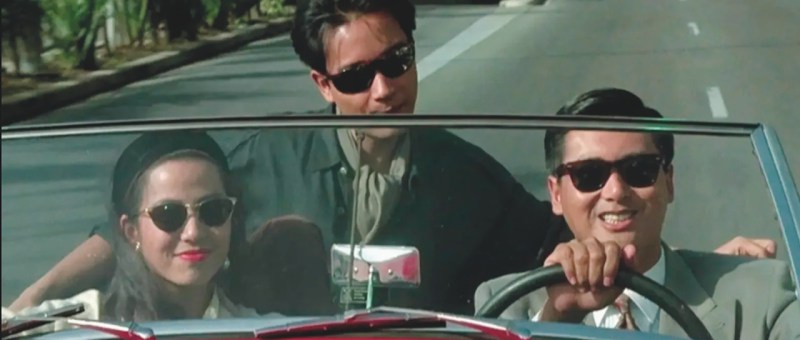
They are, after all, having quite a lot of fun with their complicated heists. Though the robberies are finely tuned affairs, we also see that the team are not infallible and often riding on bravado such as Rice Pudding (Chow Yun-fat) failing to land smoothly in the getaway car and being left trailing behind alone. The trio take it in good humour and have a real sense of camaraderie in which they’re forever playing tricks on each other. Not even the intrusion of romantic rivalry can disrupt their friendship as it becomes clear that both Jim (Leslie Cheung) and Rice Pudding are in love with Red Bean (Cherie Chung), with Rice Pudding originally having the upper hand.
There is something quite funny about the fact that the other two are called “Rice Pudding” and “Red Bean” but “Jim” is just “Jim”. Despite the romantic rivalry, there’s also a sense of homoerotic tension that exists between the two men, with Jim cheekily flirting with a portrait artist while boasting of the gang’s success. The European setting adds a sense of sophistication and international glamour that recalls classic Hollywood cinema, while hinting a new globalised society. The gang are wanted by “Interpol”, and the Zenigata-like figure of a Hong Kong policeman (Paul Chu) who acts as a kind of alternate father figure watching over the trio since they were children and trying to get them to give up their life crime.
The man who raised them, Boss Chow (Kenneth Tsang), meanwhile, was cruel and mainly sees them as tools to be used to enrich himself. When Rice Pudding loses the use of his legs and uses a wheelchair to get around, he is more or less disowned as no longer useful, only to be rescued by their Godfather. Rice Pudding, however, is surprisingly adept and able to perform some killer dance moves in his chair not to mention fighting bad guys in much the same way he did before. But despite the cartoonish fun, there is an unexpectedly violent aspect to the gang’s final heist as Jim strangles guards and Rice Pudding throws plastic explosives at their heads which he then detonates remotely.
Read Bean, meanwhile, is largely relegated to making travel arrangements and hanging around at airports to waiting to find out if her friends have survived or not. She also acts as a kind of interpreter, speaking French to facilitate their deals which suggests Chow trained them in specific ways, though she does not always translate accurately, trying to put the guys off accepting a risky job from a wealthy Frenchman because she wants to get out of their life of crime and settle down even while Rice Pudding and Jim still seem to be addicted to the thrill of the chase. Their mission sees them sneak into a chateau and steal a painting from a hidden cellar they can only access through a secret door while avoiding booby traps like electrified floors and laser fields they cheekily dance the limbo through.
For them, it was never really about the artwork nor the money, but the sense of achievement in stealing without being caught while running rings around law enforcement. This sense of rebellion which extends in a way towards the capitalist system in which the super wealthy squabble over trinkets while elderly women starve, is eventually turned back on Chow whom they end up defying in order to break free of his control. Chow got greedy, double-crossing just about everyone in order to make his stolen painting more valuable when he sells it and then steals it back again. Filled with zany humour and expertly crafted action sequences, the film never takes itself all that seriously while revealing in the roguish antics of the three gentlemen thieves living their best lives rebelling against a world ruled by wealth and privilege through ingenious crime.
Screened as part of Hong Kong Golden Age 1985-1997 at the Garden Cinema.
Trailer (English subtitles)