It’s My Time (魔方小姐, Bai Xue, 2026)

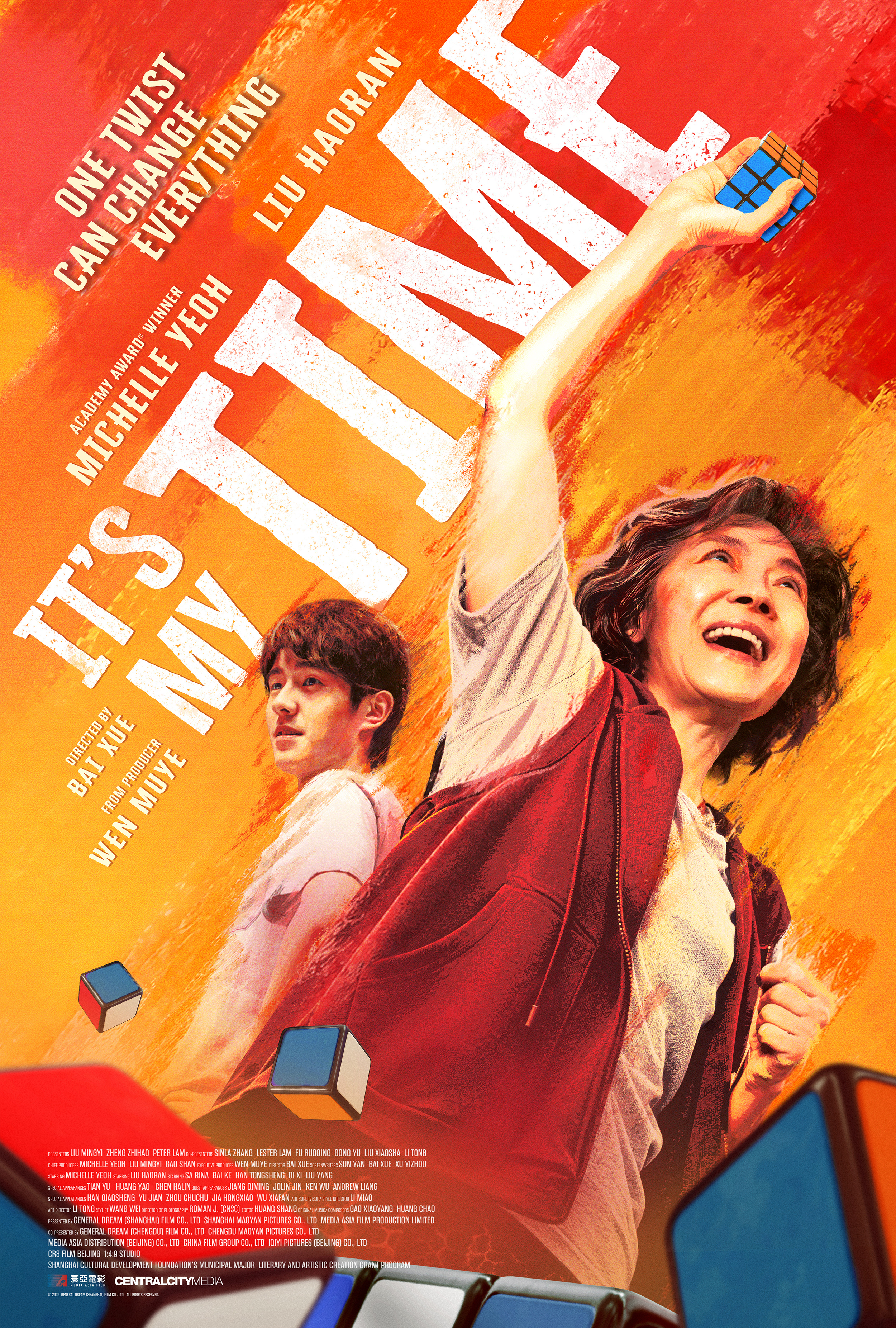
A no-nonsense grandma gets a new lease on life after discovering the joys of cubing in Bai Xue’s warmhearted dramedy, It’s My Time (魔方小姐, mófāng xiǎojie). Inspired by a true story and much less gritty than Bai’s debut The Crossing, the film is partly a rebuke against those who try to write off the older generation and a reminder that it’s never too late to try new things or make a change in your life.

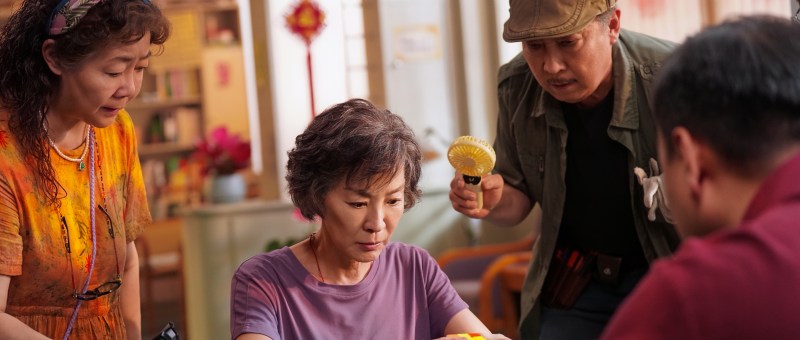
For Yanzhong (Michelle Yeoh), however, cubing is also a kind of grudge match in which she tries to overcome her sense of humiliation in having become the victim of a scam which cost her her home. The stress caused her to have a stroke, so she’s currently living in a nursing home with her childhood best friend Shuzhen (Sa Rina). She does not, however, take very well to the kind of infantilisation that the well-meaning staff subject her to. Ironically, the roles have been reversed and every time she causes trouble, the manager calls her mild-mannered son, Dawei (Bai Ke). For unexplained reasons, Yanzhong seems to speak Cantonese with her son when they’re alone while they speak Mandarin with everyone else, perhaps bearing out their close bond and Yanzhong’s isolation from most of the residents who disapprove of her rabble-rousing antics, encouraging her to remember her age and suggesting that she’s just making things hard for her son whose boss is forever yelling at him on the phone. 

When down on his luck former “magic cube” champion Youwei (Liu Haoran) arrives to teach a class on “cubing” which he claims helps prevent dementia, Yanzhong discovers a hidden talent that gives her something new to live for. For Youwei, meanwhile, it seems as if his reduced circumstances are partly down to the death of his mother for which he blames himself. His father had a gambling problem and then abandoned the family, leaving Youwei to pay off all his debts which is one reason why he’s constantly hassled by a loan shark who seems to consider himself family. All of which perhaps leads him to look to Yanzhong as a kind of mother figure, especially as she tries to take care of him by getting him a place to stay at the nursing home after noticing that he’s technically homeless while promising to pay off the money he owes and buy him a house if they succeed in becoming cubing superstars. 

Even so, Youwei is the teacher here if one trying to convince her that slow and steady wins the race while others such an unscrupulous media boss push her to make the most of her viral success as the cubing grandma by aiming too high too fast. He writes off people like her as members of the “slowest and most useless group”, while Yanzhong is constantly trying to be seen as a human being who still has a life to live rather than just waiting around to die. She does, however, have a sharp tongue which as her friend points out hurts herself as well as others as she often lashes out defensively and ends up pushing people away. After achieving cubing stardom, she starts trying to “help out” her son’s family by telling him to quit his job and work at the cube factory, while his wife should close her nail salon and open a magic cube training school, and she’ll send her granddaughter to a private school. Of course, they’re pretty happy with the life they have and irritated by Yanzhong’s attempts to railroad them into her vision of familial bliss. They support her cubing career, but only because they want her to be healthy and happy.

The irony being that Yanzhong stuck it out at the home because she thought she’d be a burden to her son and his family if she went to live with them, just as her best friend Shuzhen really wants to live with her daughter in the US but is too afraid to ask her. The film’s English-language title is then a reference to Yanzhong rediscovering that it’s her time to shine, and also the hyper focus that cubing requires that presents Yanzhong with a stream of images from her past all of which remind her what’s really important in life. Even when facing setbacks and hardships, she never gives up, and her friends and family never give up on her despite the odd harsh word or misunderstanding. A gentle tale of intergenerational friendship and the energising power of sports, Bai’s warmhearted comedy insists that it’s never too late start something new and just like a magic cube, there are infinite possibilities in life’s twists and turns.


It’s My Time is in UK cinemas from 16th October courtesy of Central City Media.

Trailer (English subtitles)

Executioners (現代豪俠傳, Johnnie To & Tony Ching Siu-Tung, 1993)

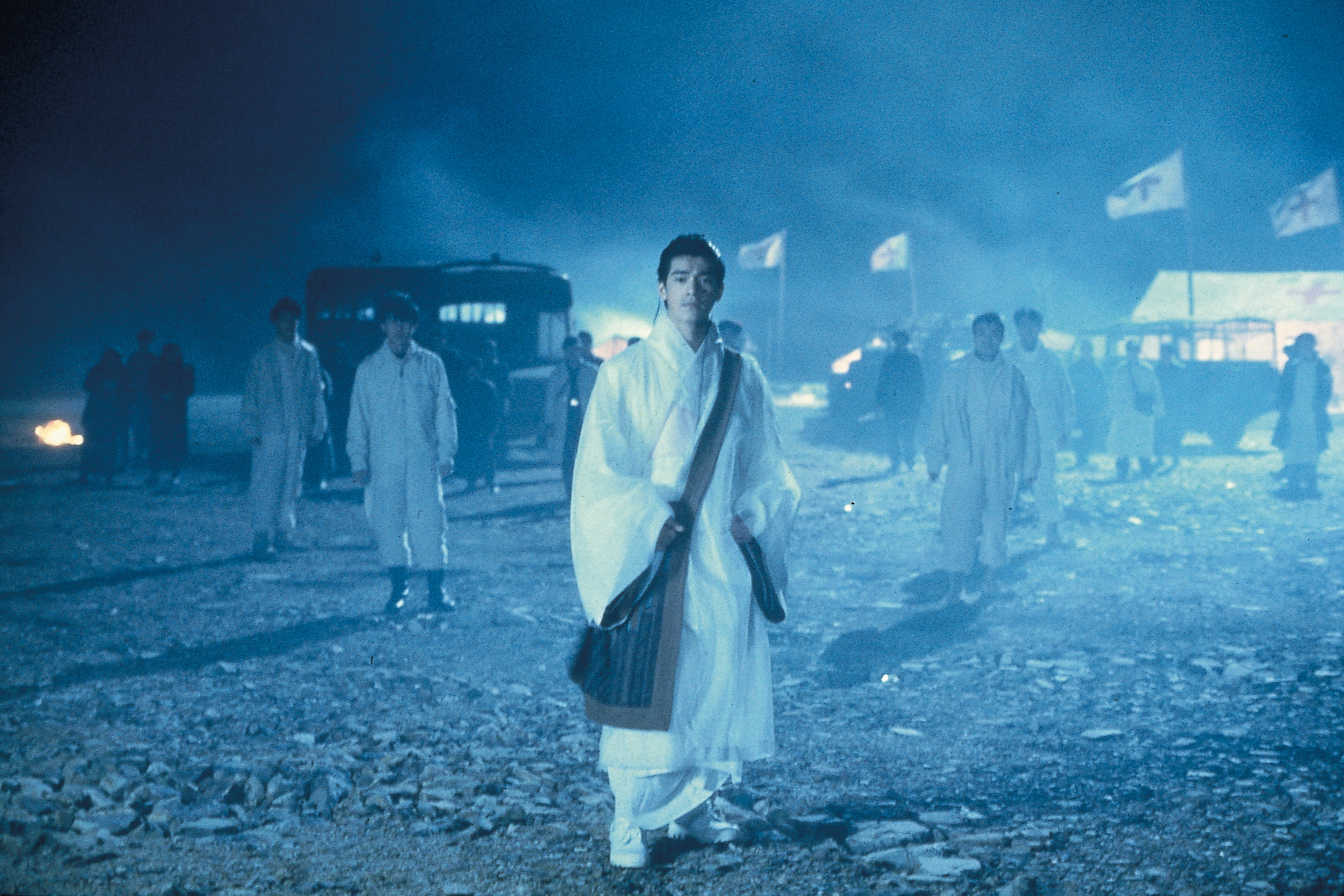
At the end of The Heroic Trio, the shadowy rise of authoritarianism seemed to have been beaten back. The three superwomen at the film’s centre had discovered joy and liberation in female solidarity and were committed to fighting injustice in a flawed but improving world. If Heroic Trio had been a defiant reaction to Handover anxiety, then sequel Executioners (現代豪俠傳) is its flip side shifting from the retro 40s Hong Kong as Gotham aesthetic to a post-apocalyptic nightmare world where nuclear disaster has normalised corporate fascist rule. 

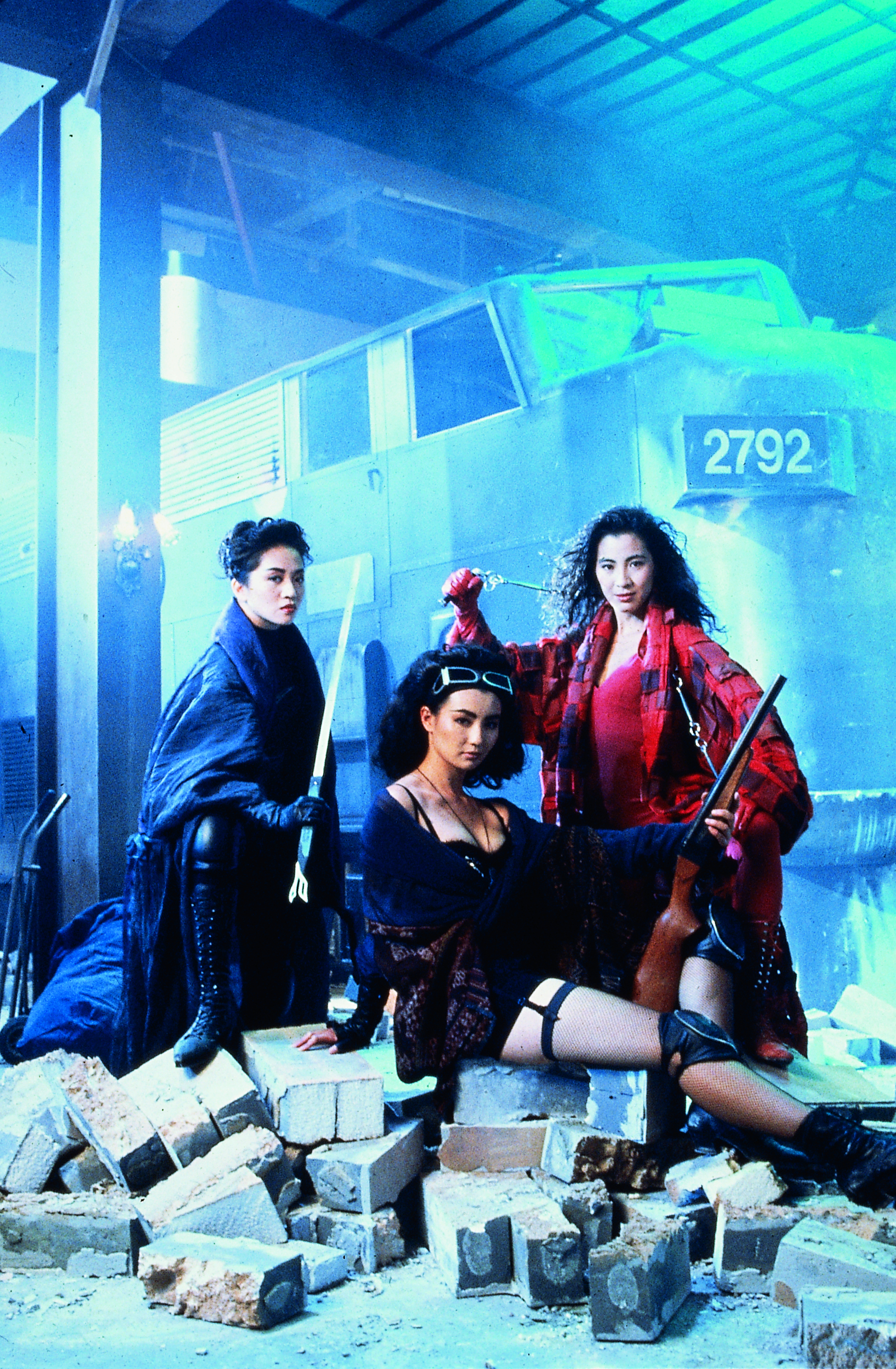
As Ching (Michelle Yeoh) explains in her opening voiceover, a nuclear attack has ruined the city contaminating its water and leaving ordinary citizens dependent on the Clear Water Corporation for safe drinking supplies and basic sanitation. The trio have been scattered, pushed back into the roles from which they escaped at the first film’s conclusion save perhaps for Ching who continues to serve a duplicitous authority but does so with clearer eyes and a humanitarian spirit driving a medicine truck to ensure those in need have access to healthcare. Chat (Maggie Cheung Man-Yuk) meanwhile has reverted to her cynical bandit lifestyle, hijacking water trucks mostly for her own gain but also ensuring the water gets to the needy. Tung (Anita Mui Yim-Fong) has abandoned her Wonder Woman persona on the insistence of her husband who is now a high ranking policeman with the military authority devoting herself to the role of the traditional housewife and mother to her daughter Cindy. 

Though the women seem to have maintained their bond, Ching and Chat turning up for a Christmas celebration with Cindy, the political realities soon disrupt their friendship as they find themselves at odds with each other given their shifting allegiances. As in the first film, Chat has continued to accept work from dubious authority in the form of the Colonel including tracking down a man who embarrassed the police by firing a gun at a rally for a cult-like protest leader, Chung Hon (Takeshi Kaneshiro), only the gunman later turns out to be a patsy and Chat has unwittingly helped them bump off the voice of the people as an overture for a military coup. Ching is secretly working for responsible government trying to safeguard the President to prevent his assassination by the Colonel, but obviously cannot say very much about her mission arousing Tung’s suspicions that she may have been part of a plot to have her husband killed. 

In any case, the true villain turns out to be a kind of Wonder Woman mirror image in that the mysterious Mr. Kim (Anthony Wong Chau-Sang), CEO of Clear Water Corporation, is a man who wears a mask to hide his scarred face and dresses like an 18th century aristocrat as if engaged in some kind of Man in the Iron Mask cosplay. Kim and the Colonel have been collaborating to engineer a military coup by deliberately restricting water supplies. The oblivious Chung Hon had unwittingly been Kim’s stooge, stoking up public resentment about the water situation to give the government an excuse for a crackdown and the Colonel to move. Chat’s path to redemption amounts to vindicating the faint hope that the water contamination was a hoax, which she eventually does by taking Cindy with her to smash the corporate dam and return the water to its rightful flow and the people of the city. But like the Evil Master, Kim does not die so easily turning up for a surprisingly hands on fight squaring off against the barely unified trio who are only just beginning to repair their friendships on coming to a fuller understanding of the reality of their circumstances. 

They are all in a sense liberated, though less joyfully than in the first film and largely through violent loss. The good guys don’t always win and a fair few die while all the women can do is keep moving, fighting off one threat after another with few guarantees of success and not even each other to rely on. Where the first film had embraced a hopeful sense of comic camp, Executioners skews towards the nihilistic in its dystopian world of corporate overreach and increasing militarism in which the trio no longer trust each other and are each re-imprisoned inside their original cages from patriarchal social norms to capitalistic inhumanity and questionable loyalties with the only hopeful resolution resting on “the sincerity of our friendship” in a world which may be healing but is far from happy. 


Executioners screened as part of this year’s San Diego Asian Film Festival.

The Heroic Trio (東方三俠, Johnnie To, 1993)

Female solidarity becomes an unexpected weapon against stealthy authoritarian take over in Johnnie To’s gloriously camp superhero action fest, The Heroic Trio (東方三俠). Uniting three of the top stars of the age in Anita Mui, Maggie Cheung, and Michelle Yeoh the film flirts with Handover anxiety in the “Evil Religion” that threatens to steal the children of Hong Kong, but eventually locates the source of salvation in the heroine’s shared humanity brokered by a tripartite solidarity of justice and equality that defies both the patriarchal world around them and the cruel authoritarianism in which they have been raised. 

In an almost biblical allegory, large numbers of male infants have been going missing over the last 18 months and the police are, predictably, mystified relying on the reappearance of the mysterious superhero Wonder Woman to solve the mystery herself. Truth be told, top Inspector Lau (Damian Lau Chung-Yan) hasn’t yet realised that Wonder Woman is his own wife, Tung (Anita Mui Yim-Fong), so perhaps his investigative skills aren’t all that despite the dynamism of the opening scenes which see him demonstrate his masculinity by leaping out of a window stop a thief from driving off in his classic car which is parked outside a creepy mansion in the middle of nowhere. Nothing really gets done until the chief of police gets a note that his own infant son is next on the list, though he briefly considers simply swapping his kid for another couple’s child while hiring “Thief Catcher” Chat (Maggie Cheung Man-Yuk) to get him back when he’s kidnapped by an “Invisible Woman”, Ching (Michelle Yeoh), whom Tung manages to wound while saving the decoy baby. 

As it turns out, Ching has been taking the babies on behalf of “Evil Master” (Yen Shi-Kwan) who lives in an underground lair in the sewers and is the head of a mysterious cult hellbent on finding a new king for China. There may be a degree of Handover anxiety in Evil Master’s mission, seeking to possess and control Hong Kong by brainwashing its children eventually possessing Ching by removing her bodily autonomy while her sisters must quite literally free her from his icy grasp. Each of the kidnapped boys is said to have a divine destiny, though Evil Master doesn’t know which one is the new king and has a habit of simply killing the ones who disappoint him while the others are raised as mindless automatons consuming those like them and destined to become thoughtless killing machines like the bloodthirsty Kau (Anthony Wong Chau-Sang). 

Chat, who was raised as one of Evil Master’s minions but managed to escape thanks to the largess of Ching and his since become an ultra-capitalist bounty hunter if one less cynical than she originally seems, thinks it’s better to simply end the cannibal kids’ misery before they end up like Kau while Tung prioritises saving the infants so they can be returned to their parents before being subject to one of Evil Master’s weird rituals. Ching, meanwhile, is only participating in Evil Master’s plan to protect the man she loves, a mad scientist slowly succumbing to poisoning caused by his invention in true genre fashion. It is then in a sense love that causes Ching to reject her programming, but it’s the solidarity of Tung and Chat, along with a desire for vengeance, that finally gives her the courage to rebel. 

In a brief flashback, Tung had failed to save Ching during a tough training session with their mentor who had cruelly told her that she’d have to fight for justice alone while Ching, cast out, sought support by turning to the dark side. The scene repeats itself twice in the film’s closing scenes in which Tung is this time able to save Ching but only because of the support from their friend and equal Chat making up the third point of the triangle and anchoring them both firmly to ensure they will not fall. “Life is meaningful if you can face yourself” Tung tells Ching, shedding her mask having presumably dealt with her own dark past and pulling her sister up with her as an equal leaving the past behind to fight for a future of justice and freedom. 

To and action director Ching Siu-tung recast Hong Kong as Gotham with a production design quite clearly inspired by Western comic books in which the three heroines end by getting fancy capes that flicker in the wind. Chat, a motorcycle-riding delinquent force of nature, even at one point launches herself into battle on an oil drum propelled by dynamite which she later uses to take out the cannibal kids not to mention Evil Master himself. But it turns out the spectre of creepy, ritualistic authoritarianism doesn’t die so easily, Evil Master’s charred skeleton gets back up for one last hurrah until his brain finally explodes when confronted by Ching’s rejection having returned to the fold and now ready to sacrifice herself for a freer future for all. Essentially a comic book wuxia, To’s ironic action drama allows its heroic trio to find salvation in female solidarity anchoring each other in a world beset by fear and villainy.


The Heroic Trio screened as part of this year’s San Diego Asian Film Festival.