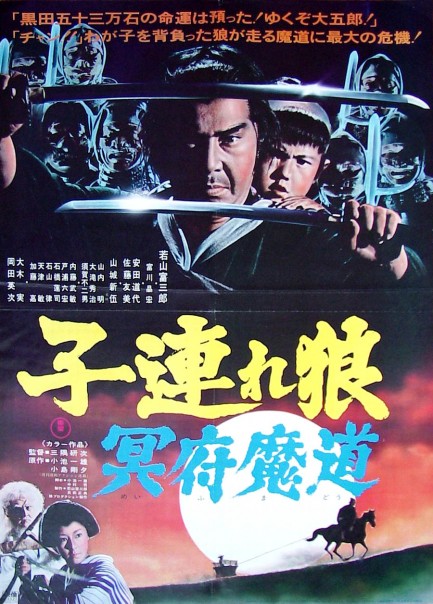
Lone Wolf and Cub: Baby Cart in the Land of Demons (子連れ狼 冥府魔道, Kenji Misumi, 1973)

baby-cart-land-demonsOgami (Tomisaburo Wakayama), former Shogun executioner now a fugitive in search of justice after being framed for treason by the villainous Yagyu clan who are also responsible for the death of his wife, is still on the Demon’s Way with his young son Daigoro (Akihiro Tomikawa). Five films into this six film cycle, the pair are edging closer to their goal as the evil Lord Retsudo continues to make shadowy appearances at the corners of their world. However, the Demon’s Way carries a heavy toll, littered with corpses of unlucky challengers, the road has, of late, begun to claim the lives of the virtuous along with the venal. Conflicted as he was in his execution of a contract to assassinate the tragic Oyuki in the previous instalment, Baby Cart in Peril, whose story was perhaps even sadder than his own, Ogami is about to descend further still as a commission to kill a living Buddha proves even more sordid than expected.

Baby Cart in the Land of Demons (子連れ狼 冥府魔道,  Kozure Okami: Meifumado) starts as it means to go on as Ogami finds yet another coded way of touting for business when he notices the strange demonic drawing on the face mask of a resting man and correctly reads it as a message for the Lone Wolf and Cub. The Kuroda clan have despatched five of their best men wearing just such masks in order to test his skills and find out if he’s worthy of their job. Each time he defeats one, he’ll receive 100 ryou (a fifth of his fee) and part of the reasons and explanations he requires in deciding whether to take the job.

This time the assignment is to do with a mislaid yet incriminating letter from the Kuroda lord, Naritaka (Shingo Yamashiro), who has unwisely been deceiving the Shogun as to the identity of his children. Very much in love with his mistress, Naritaka has been passing off their daughter, Hamachiyo (Sumida Kazuyo), as his son Matsumaru. Meanwhile the real Matsumaru, his legitimate heir through his legal wife, has been imprisoned in the compound and kept away from prying eyes. A particularly stupid and pointless ruse, yet the lord has created even more problems for himself by allowing a letter outlining all of this to fall into the hands of a treacherous priest, Jikei (Hideji Otaki), who turns out to be the head of a ninja spy network. Ogami’s job is to kill Jikei and get the letter back but it comes with some additional spice – Jikei plans to hand the letter to Lord Retsudo, Ogami’s arch nemesis.

Ogami’s world is a feudal one where allegiance to one’s lord trumps almost everything. The lords are, however, often dishonest, selfish, and cruel. The hypocrisy of the samurai world is a phenomenon well known to all, and most particularly to Ogami who has found himself at the mercy of the ambitious Yagyu clan. Whatever else he may have become, Ogami is a man of honour to whom the way of samurai maintains a deep spiritual importance. Jikei’s attempt to unsettle Ogami by asking him what he thinks he’s going to achieve on the Demon’s Way and if killing a living Buddha is a fitting use of his talents, further pushes Ogami into a spiritual crisis regarding his quest for vengeance and ongoing career as a sword for hire.

Naritaka has, indeed, broken his code in lying to the Shogun but also in rejecting his position and creating an alternative family of his choosing by favouring the female child of his mistress over his legitimate male heir. In addition to his contract to kill Jikei and retake the letter, Ogami also receives a request to assassinate the lord himself alongside his concubine and even their daughter. This illegitimate line cannot be allowed to continue, the illicit family born of personal choice must be cut off before it begins to corrupt the future of the Kuroda clan. Actively plotting the death of one’s lord is an unthinkable concept, yet a retainer also has a responsibility to guard the honour of their house and so the lord must go, even if the retainer is bound to follow him.

The decision to execute the entire family recalls the series’ origins in which Ogami was seen to act as a second in the “harakiri” of a toddler shortly before seeing his own family fall under the sword of a Yagyu plot. Daigoro is growing older at an unnatural rate but shows a little more willingness to engage in acts of altruistic heroism than his father, such as in an episode where he decides to refuse to identify a local pickpocket even if it means he himself will be flogged in her place. Ogami looks on in inaction, yet there is the faintest flicker of pride in his otherwise impassive face as his fearless son opts to undergo a harsh punishment rather than allow someone else to suffer even as she tries to save him in turn. Daigoro also has an awkward moment of connection with the similarly aged unlucky princess but remains apparently unmoved by her fate at the end of their mission. The legitimate prince may have been liberated and the official line restored, but there has been a heavy price for all concerned and the Kuroda clan is far from saved.

Baby Cart in the Land of Demons marks the return, albeit for the last time, of the series’ original director Kenji Misumi who gets rid of the heavily exploitation leaning approach brought by Buichi Saito in the previous film, Baby Cart in Peril. No voiceovers, no musical sequences, and an overall return to quiet contemplation mixed with impressively balletic fight sequences rather than the frenetic action and sudden trickery which defined Baby Cart in Peril send the series back to its spiritual roots after a brief foray into the contemporary jidaigeki. Baby Cart in the Land of Demons is also the first in the series which contains no female nudity though it does make room for another skilled female warrior and also repeats the motif of Ogami leaving a melancholy woman behind him as he sets off into the sunset, yet this time it’s a woman who has chosen her own path in keeping with her own code and earned Ogami’s respect, and perhaps sorrow, in the process. Ogami is drawing closer to Retsudo, though his path leads him through a land of demons each more villainous than the last and justice seems like an unrealistic ideal where only men like Ogami stand at the gates of man and beast.


Original trailer (subtitles in German for captions only)
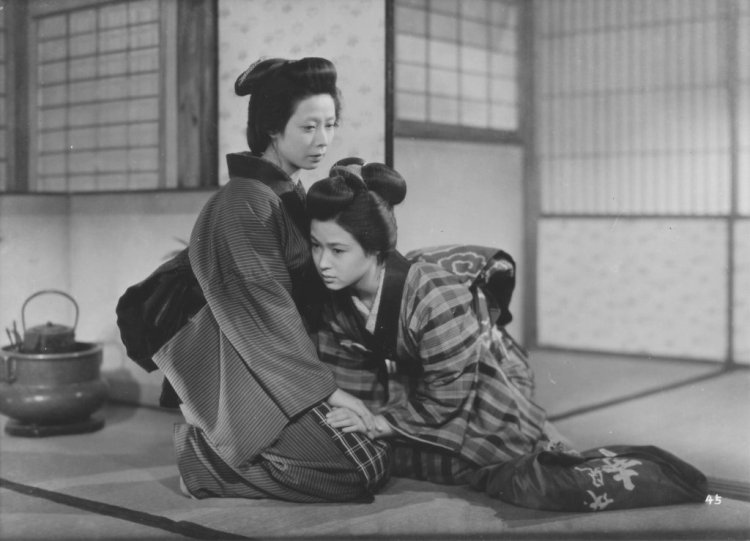
The Fireflies (螢火, 1958, Heinosuke Gosho)

bxbnzqmccaa5-cg-jpg-largeHistory marches on, and humanity keeps pace with it. Life on the periphery is no less important than at the centre, but those on the edges are often eclipsed when “great” men and women come along. So it is for the long suffering Tose (Chikage Awashima), the put upon heroine of Heinosuke Gosho’s jidaigeki The Fireflies (螢火, Hotarubi). An inn keeper in the turbulent period marking the end of the Tokugawa shogunate and with it centuries of self imposed isolation, Tose is just one of the ordinary people living through extraordinary times but unlike most her independent spirit sparks brightly even through her continuing strife.
Beginning in the “present” – the late 1860s, Tose is the de facto manager of Teradaya, a successful inn in Kyoto. Japanese history buffs will instantly recognise the name of the establishment, as well as that of Tose’s 18 year old adopted daughter, Oryo (Ayako Wakao). Nevertheless, that story can wait as we flashback with Tose as she gazes blankly at a stretch of water, remembering the time she first came to Teradaya as a young bride. The daughter of peasant farmers, Tose was not welcomed by her mother-in-law, Sada, both because of the class differences, and because the man she’s married is not Sada’s son but that of a concubine and she would prefer her biological daughter, Sugi, to inherit. Tose’s husband Isuke, though by no means unpleasant towards her, is a feckless man obsessed with cleaning and singing folk songs, leaving the bulk of the work to his wife.

Tose bears all, taking on the running of Teradaya and making it the most popular inn in town thanks to her friendliness, efficiency, and discretion. However, her position is threatened when she is almost ruined by a bizarre scam involving dummies and ventriloquism. Vindicated, Tose’s position is strengthened but there is more trouble in store when Sugi runs off with the conman leaving her infant illegitimate daughter in Tose’s care. Becoming a mother as she’s always wanted, Tose begins to find a little more fulfilment in her life only to have her dreams cruelly dashed once again. In an act of kindness she later adopts another orphaned girl, Oryo, who arrives at the inn starving and in the care of an older man who’d been looking after her since her doctor father was murdered for supposedly collaborating with the rebel ronin trying to over throw the shogunate.

This is the first mention of the ongoing political instability present in the country at large but largely unseen in the peaceful world of a small inn in Kyoto. Of course, you can’t say Teradaya and Oryo without eventually saying Sakamoto Ryoma (Miki Mori). Ryoma does eventually arrive in all his revolutionary glory albeit in an appropriately humanised form and proceeds to turn Tose’s life upside down in more ways than one. Locked into her loveless, but far from cruel, marriage Tose’s spirited nature is reignited by Ryoma’s fervour. Falling in love with him for his commitment to creating a better world for all, Tose’s dreams drift a little but are dashed again when she realises he and Oryo are the more natural pair.

Though Tose reacts badly to the discovery that Oryo is also in love with Ryoma, she is later able to patch things up, entrusting the man she loves to her daughter in an act of maternal sacrifice. Tose talks about her admiration for those who sacrifice all of themselves for other people but this is exactly what she has done with her own life, only in a much quieter way. Where Ryoma was a father to a movement, Tose is a mother to the world. Denied a child of her own through her husband’s indifference, Tose first adopts her niece and then an orphaned girl but consistently acts in the best interests of others rather than herself. Hearing the cries of betrayed revolutionaries, she describes them as sounding like howling babies – an idea she repeats several times including when describing Oryo’s famous naked dash from the bath to warn Ryoma of the impending arrival of the Shinsengumi. Tose’s only instinct is to silence those cries through maternal warmth, even if it ultimately causes her pain.

Tose, for Gosho at least, is no less a heroic figure than Ryoma as her everyday acts of kindness and strength contribute to an ongoing social change. Where other inn owners turn in the rebels either for material gain, active opposition, or desire to avoid the hassle, Tose stands firm and allows Teradaya to become known as a safe haven for the revolutionary movement. Ryoma shone brighter but for a short time, whereas Tose’s life goes on and Teradaya continues to be the favourite stop for beleaguered travellers passing through the old capital in these difficult times. Reconciling with her husband who finally offers the possibility of having a child of their own to inherit the inn, there is a glimmer of hope for Tose once again even if it’s clear that Isuke hasn’t really changed. It may seem that Tose’s firefly has blinked out as she takes her dull and self centred husband back, vowing to spend less time on the inn as she does so, but there is a glint of light in her few final words which are followed by putting her apron straight back on to meet the first boat, shouting the virtues of her beloved Teradaya all the way.


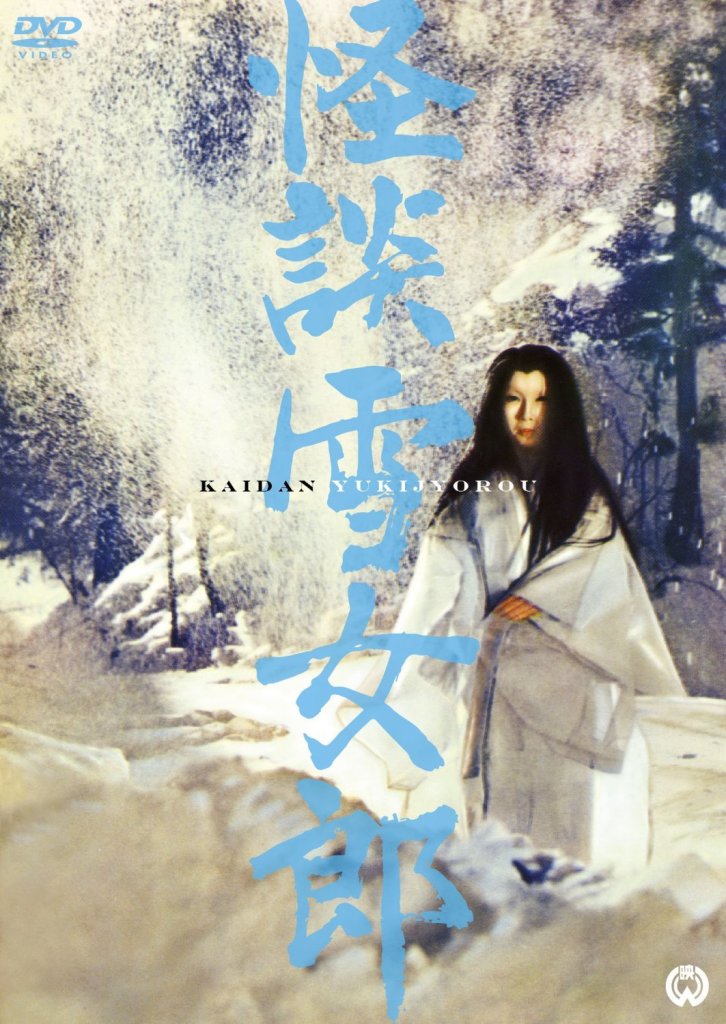
The Snow Woman (怪談雪女郎, Tokuzo Tanaka, 1968)

snow womanThe Snow Woman is one of the most popular figures of Japanese folklore. Though the legend begins as a terrifying tale of an evil spirit casting dominion over the snow lands and freezing to death any men she happens to find intruding on her territory, the tale suddenly changes track and far from celebrating human victory over supernatural malevolence, ultimately forces us to reconsider everything we know and see the Snow Woman as the final victim in her own story. Previously brought the screen by Masaki Kobayashi as part of his Kwaidan omnibus movie, Tokuzo Tanaka’s expanded look at the classic tale (怪談雪女郎, Kaidan Yukijoro) is one of extreme beauty contrasting human cruelty with supernatural inevitability and the endless quest for compassion.
As in the original folktale, the film begins with two sculptors venturing into snow filled forests looking for the perfect tree to carve a statue of the Buddhist goddess of mercy, Kanon, for the local temple. Having finally located the longed for tree, the pair spend the night in a cabin only to receive a visit from the Snow Woman herself who freezes the older man but is taken by the younger one’s beauty and spares his life, instructing him never to speak of these events.

Yosaku is taken back to the village followed not long after by the tree trunk. In tribute to his master, the head of the temple asks him to complete the statue himself despite his relative lack of experience. Later, a beautiful yet mysterious woman takes shelter from the intense rain under Yosaku’s roof and is taken in by his adoptive mother and wife of his former master. Eventually, Yosaku and “Yuki” fall in love and marry but the two quickly come to the notice of the higher samurai orders who seem determined to ruin their happy union.

Inspired by Lafcadio Hearn’s version of the story, this retelling adds a layer of social commentary with the constant interference of the higher echelons who exist solely to plague those below them with their petty games of subjugation. We first meet the local bailiff Jito when he rides into town trailing a massive entourage and immediately stars beating some of the local children who were playing with piles of wood. When Yosaku’s adoptive mother pleads with them to stop, he beats her too for having the temerity to speak to a samurai. Unfortunately, he has it in for Yosaku because he has another master sculptor he wants to use for the statue, and now he’s also taken a liking to the beautiful Yuki and will stop at nothing to have his wicked way with her. He is in for quite a nasty shock but even so, the higher orders remain the higher orders and those below them are left with no recourse but simply to follow suit.

The real villain of the film is this enforced class system which allows or even encourages those at its summit to run rampant over those below. The samurai will have their way and the people have nothing to oppose them with save their sense of personal integrity. The Snow Woman then becomes the film’s unlikely heroine. By the time we reach the film’s emotionally devastating finale, Yuki claims that she learned human compassion in her life with Yosaku and their child and ultimately sacrifices her own happiness to preserve that of her husband and son. Yosaku finds himself in competition with the other sculptor who manages to complete a beautiful statue but the temple priest finds it wanting, its expression is soulless and devoid of the sense of compassion he was looking for in the face of a goddess of mercy. Yosaku finds the very look he needs in his wife’s face, exhausted from lending her supernatural strength to save the life of a small child and her husband’s freedom, and in her eyes as she prepares to bid goodbye to him.

The Snow Woman is only obeying her own nature and cannot be blamed for merely being what she is, but the human cruelty and selfishness inherent in the feudal world is a matter of choice. Jito is an evil man, doubtless his world has also made him cruel and selfish but the choice always remains for him not to be – a choice which he is incapable of making. Men like Yosaku toil away endlessly and honestly but their rewards are fragile, personal things rarely recognised by the world at large. Only the Snow Woman, a cold creature, possesses the necessary warmth to breath life into a monument to mercy built solely by a pair of sincere hands.

Tanaka creates a stunning visual world using mostly simple effects and optical trickery to bring the Snow Woman’s icy domain into the ordinary feudal environment. The Snow Woman glides eerily through impressively layered snow scenes, dissolving from one world only to reappear in another. Beautifully filmed and filled with warmth and compassion despite its frozen aesthetic, The Snow Woman is deeply moving plea for empathy in a cruel world which successfully makes a tragic heroine out of its supernatural protagonist.


Original trailer (no subtitles)


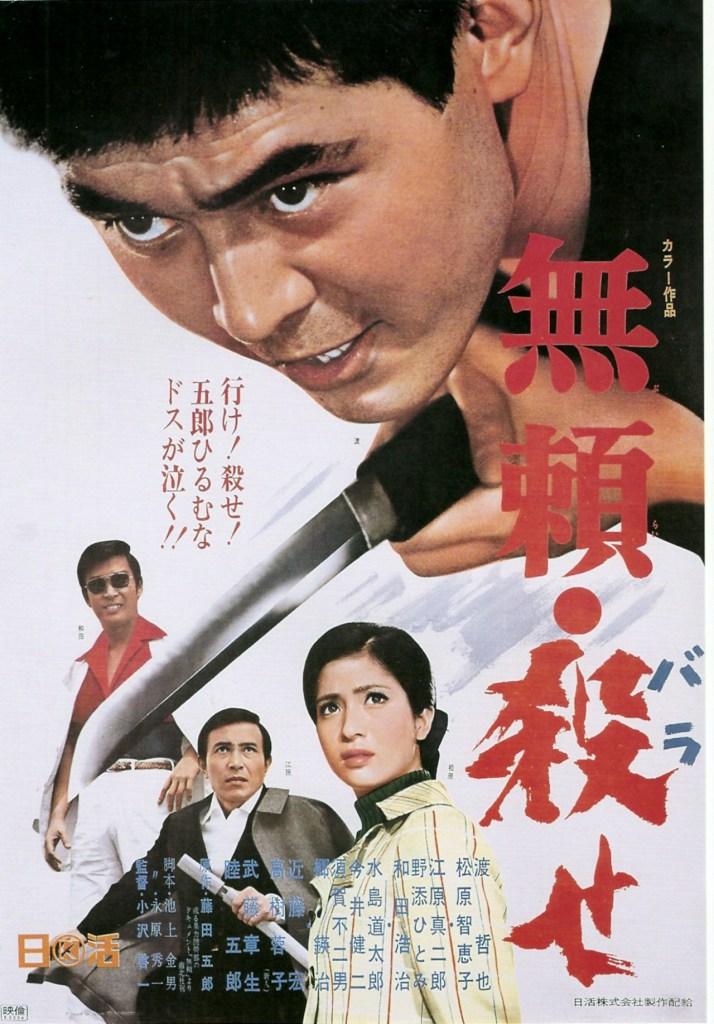
Outlaw: Kill! (無頼 殺せ, Keiichi Ozawa, 1969)

outlaw killGoro, Goro, Goro – will you never learn? Maybe he will because this is the last film in the series! Appropriately titled Outlaw: Kill! (無頼 殺せ, Burai Barase), this sixth and final film in the Outlaw series sees Goro once again moving to a new town and trying to lead a more honest life but unfortunately he’s wandered in at just the wrong time because a local gang boss has just been sent to prison after defeating a group of assassins leaving a dangerous vacuum and leading, therefore, to the outbreak of a turf war.
Goro’s first fight is with a gang of thugs who were hassling an elevator girl in a department store – the girl being Yumiko, played by Chieko Matsubara, becoming Goro’s love interest once again. Luckily or unluckily, Goro runs into an old friend from his prison days who is also one of the gang bosses involved in the turf war. After his friend promises him that he will incur no debt from him and he won’t get in the way of Goro finding a proper job, Goro agrees to move in with him and his wife – who only turns out to be the sister of elevator girl Yumiko which is not even the most predictable coincidence in this whole saga.

Despite his protestations about not getting involved in local gang politics, Goro’s attachment to his friend and his growing family means he can’t altogether avoid getting pulled back into the messy gangster world of violence and betrayal. Things end up going just about as well as they ever do and Goro is only able to clean up some of the chaos in this disputed area by creating even more counter chaos.

The format is becoming tired by the time we reach Outlaw: Kill! and it’s true that the film revisits exactly the same narrative beats as all of the other films, though it does so in a fairly exciting fashion. That said, there’s much less nuance here – we get that Goro sees himself as a lonely drifter who doesn’t deserve happiness, a self hating yakuza who is engaged on a long and hopeless walk to the grave. Perhaps it’s just because everyone’s getting older, but now it’s less about never having had a home or a proper place to belong than it is about the (im)possibility of building your own family. Goro’s friend, Moriyama, is married and going to be a father which Goro thinks is a nice thing, broadly, but also worries about what is means for a yakuza who may be killed at any second to have a wife and a child dependent upon him. Goro, being the noble sort of fellow he is, has decided that romance is irresponsible if you’ve already pledged your heart to the outlaw’s creed.

Once again directed by Keiichi Ozawa, Kill! sticks to the formula of his other offerings in the Outlaw series but opens with stylish series of colour filter stills rather than the action filled title sequences of the previous films. The fight scenes are exciting and actually quite bloody but perhaps not as innovative as some of those seen earlier in the series. In an interesting mix of old and new, Ozawa stages his final fight in a club but this time it’s a very contemporary night spot filled with guys and girls dressed in stylish, colourful outfits whilst a hippyish rock band play a cover of a famous pre-war ballad. Swooping around, notably shooting one sequence through a transparent floor/ceiling, Ozawa seems to be pushing forward more, breaking with the traditional ‘50s aesthetic for a new and crazy, youth counter-culture inspired moment which looks forward to the Stray Cat Rock series much more than back to the now ancient ninkyo eiga or sun tribe films.

Maybe Goro’s had his day too as Kill! ends in pretty much the same way as all but one of the previous films with Goro staggering away from the destruction he has wrought into a barren and snow filled landscape. Doomed to be a wanderer forevermore, Goro is a relic of the cruel post-war world which never gave him a break but his story’s now old hat. A man without a home is left forever alone, marching onward to the next confrontation or the final relief of a lonely grave.


Outlaw: Kill! is the six and final ( 😦 ) film included in Arrow Films’ Outlaw: Gangster VIP The Complete Collection box set (which is region free on DVD and blu-ray and available from both US and UK).

English subtitled original theatrical trailer:

Irezumi (刺青, Yasuzo Masumura, 1966)

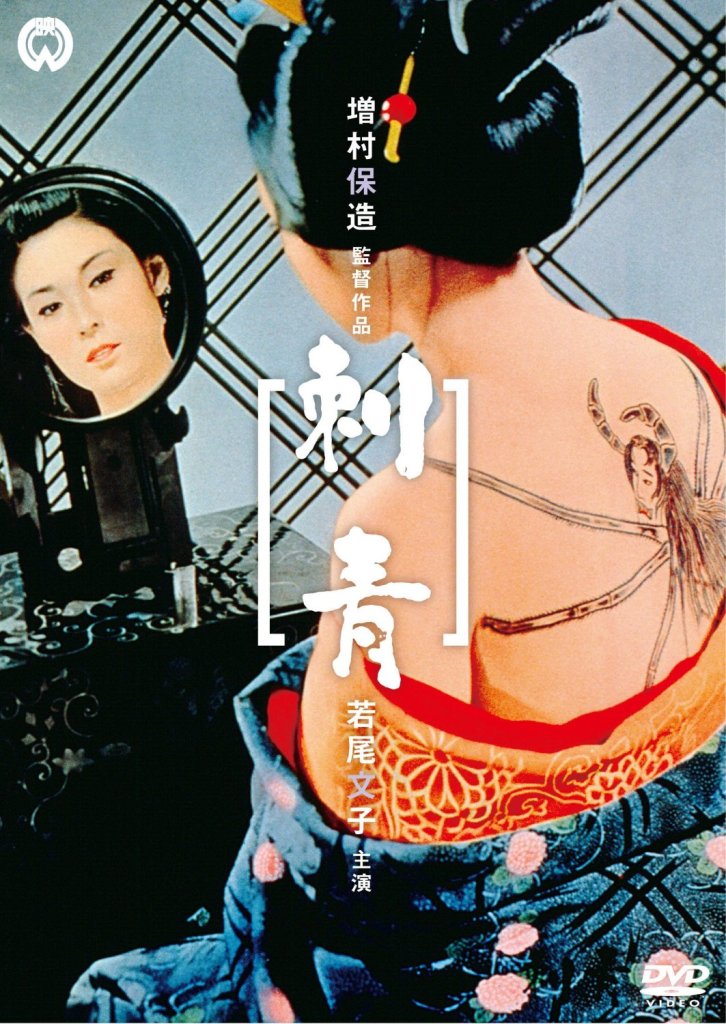
91HAEic7eNL._SL1500_Irezumi (刺青) is one of three films completed by the always prolific Yasuzo Masumura in 1966 alone and, though it stars frequent collaborator Ayako Wakao, couldn’t be more different than the actresses’ other performance for the director that year, the wartime drama Red Angel. Based on a novel by Tanizaki and scripted by Kaneto Shindo (Onibaba, Kuroneko), Irezumi is a supernaturally tinged tale of vengeance and betrayal.

The film begins in the middle as Otsuya, having been abducted and sold to a geisha house, is tied, bound and chloroformed so that a tattooist can mark her skin with the eery portrait of a spider with a human face. Skipping back awhile, it seems this came about as a consequence of Otsuya convincing the mild mannered assistant of her father, Shinsuke, to run away with her. The pair take refuge at the home of a family friend, Gonji, but after his advances towards Otsuya are rebuffed he arranges to have Shinsuke killed and Otsuya sold as a geisha. Shinsuke manages to get away after a bloody fight but he’s a gentle man and the violence of the encounter marks him. Otsuya, by contrast, finds she quite enjoys her new life and gets along OK with her pimp, Tokubei, who urges her to “feed on men”. Otsuya’s lusts become ever more violent with the spectre of the tattoo artist hovering in the background. Is the tattoo itself enacting these scenes of terrifying vitality or merely an excuse for releasing Otsuya’s true nature?

Shot in vibrant colour in contrast to Red Angel and many of Masumura’s other efforts from around the same time, Irezumi makes fantastic use of its lurid atmosphere. Sex and death and violence – hardly unusual themes for Japanese cinema though Irezumi feels like an early precursor to the exploitative pinky violence cycle of the following decade. In keeping with those films, Otsuya is another conflicted avenger, wreaking havoc on venial men who think they can buy and sell a woman’s soul as well as her body. As the violence mounts, Otsuya falls into a kind of mania and at one point exclaims that this isn’t really her at all, it’s all the fault of the spider on her back – trapping men in its silky web only to suck them dry and throw away the husk.

Whether Otsuya is herself an avenging warrior for the female sex or merely a demonic vision of the ultimate male fear is somewhat up for debate. Her transgressions are intentionally destabilising – she breaks with convention by “betraying” her father when she runs of with Shinsuke and not only that, she does so at her own insistence. Shinsuke himself is far too meek and mild mannered to have ever done such a thing entirely of his own will and is largely swept along by Otsuya for the entire course of the film. Only when he fears she may betray him does he decide to take action. Otsuya’s sexuality in itself is also transgressive, actively pursuing Shinsuke before a formal marriage and then even expressing her enjoyment of her new life in the pleasure quarters – neither attitude is one that is expected of the demure daughter of a noble house. Is she an emancipated woman, or fallen one? The film offers no clear judgement here but presents her both in terms of vengeful heroine and of terrifying villainess.

Along with its rather complicated structure beginning in a media res opening followed by a lengthy flashback sequence, Irezumi is never quite as successful as Masumura’s other mid ‘60s offerings. Though boasting a script by maestro Kaneto Shindo, a noted director in his own right and frequent visitor to the realms of horror, something about Irezumi fails to coalesce. That said, it does offer a visually arresting, generally interesting supernaturally tinged tale and yet another fantastic performance from its talented leading lady.


Irezumi is available with English subtitles on UK R2 DVD from Yume Pictures

Tattoo sequence from the film: