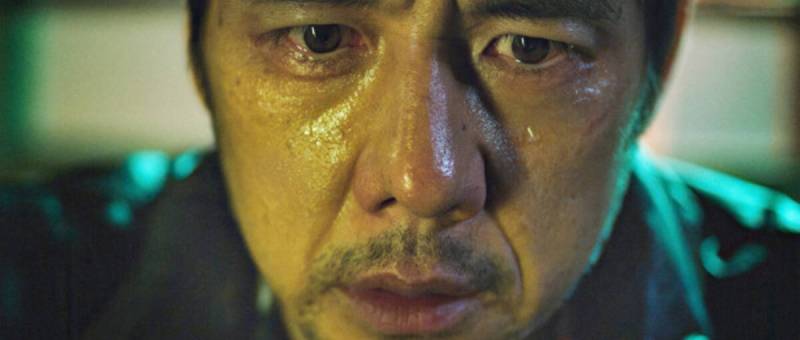
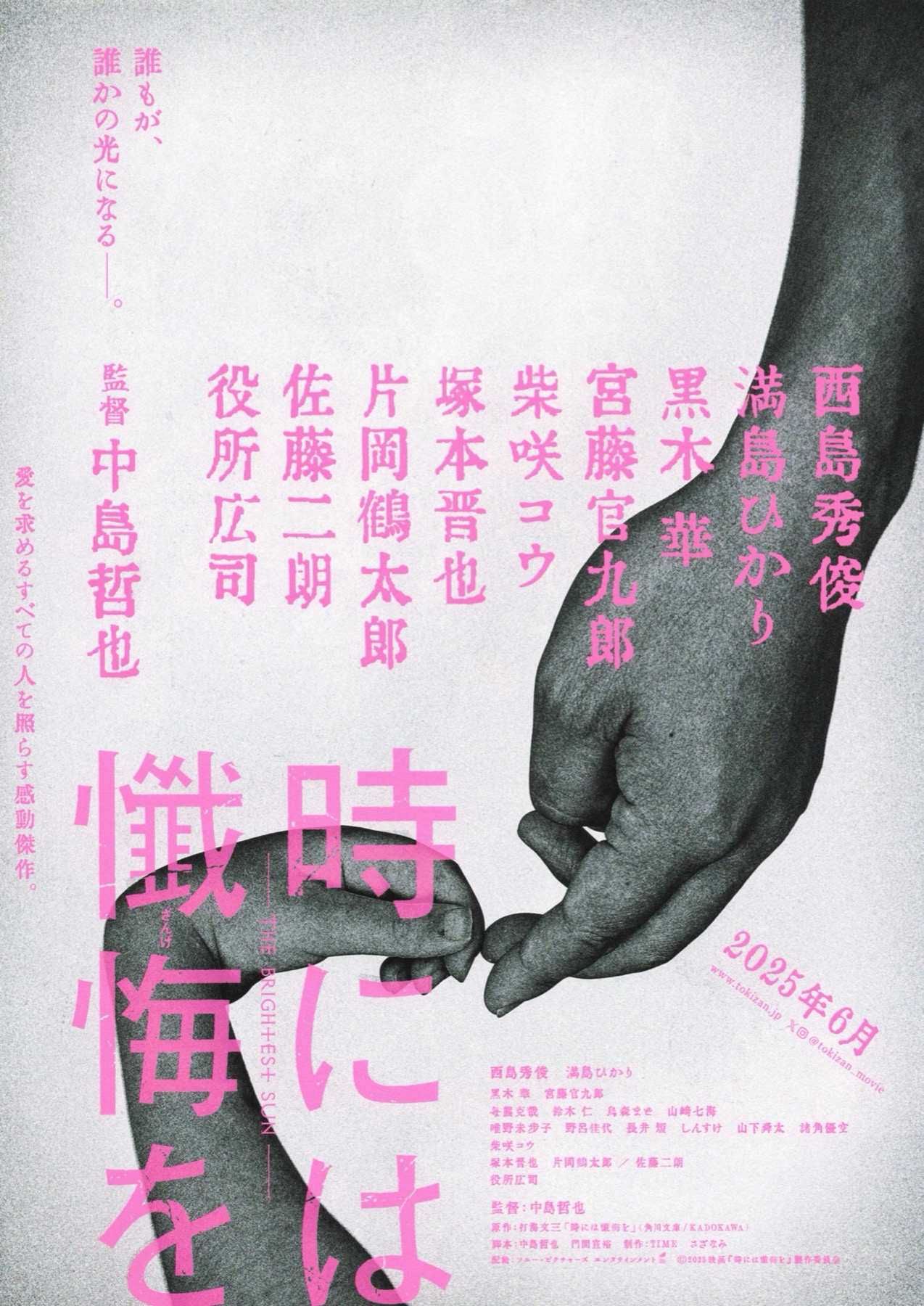
Tetsuya Nakashima’s more recent films have often dealt with more controversial subjects. His latest, Brightest Sun 時には懺悔を, Toki ni wa Zange wo), adapted from the novel by Bunzo Uchiumi and delayed from last year due to allegations made by an actress on World of Kanako that nude footage was used without her consent, is not so much a film about disability as the taboo of parental selfishness or a sense of disconnection from one’s biological children.
Nevertheless, the way the film approaches it subject matter may seem insensitive to some in that it often reduces the existence of disabled children to a burden that must be born by someone and preferably by a biological parent. Though rookie detective Satoko (Hikari Mitsushima) raises the issue of the child’s subjectivity and quality of life, others struggle to see him as anything more than an object for which someone must accept responsibility. This is doubly true for her reluctant partner, Satake (Hidetoshi Nishijima), who has taken to drink and is riddled with guilt over his ambivalent feelings regarding his own disabled son who has since passed away. His wife (Ko Shibasaki) has fallen into depression and is living in a psychiatric facility while he is seemingly incapable of caring for their teenage daughter who has become resentful of both parents, feeling as if they were unable to care for her because all their attention went to her brother while she too now feels guilty that she did so little for him and left his care entirely to her mother.
At times, the film is critical of this tendency to force women to accept full responsibility for childcare while men remain otherwise absent from the domestic space, but seems to walk this back in the closing moments. In any case, Satake’s rejection of his son is mirrored in that of Tamie’s (Haru Kuroki) husband who openly declares that it would have been better if Taku had not been born, blaming Tamie for giving birth to a disabled child. His embarrassment makes plain a lingering stigma towards disability or difference in the wider society, as if having a child he sees as imperfect reflects badly on him personally. Tamie, meanwhile, seems as if she may have been suffering from a kind of post-natal depression and is clearly affected by her husband’s resentment along with her own inability to bond with the baby. Though she witnesses her child being kidnapped, she does nothing to stop it with implication being that perhaps she is glad to be relieved of the burden.
Satoko too has become estranged from her young daughter who struggles with the trauma of witnessing her stab her abusive husband. The implication is that this resentment is born of having seen through her mother and realised that she did not do this out of a desire to protect her, but merely out of selfish rage. The fact is that her desire to protect Shin/Taku is a displacement activity. Everyone’s actions are to one extent or another a vicarious attempt to atone for something they are otherwise unable to address in their own lives.
This appears to have been true for the man whose murder they are supposed to be investigating, Yonemoto (Jiro Sato), who is said to have been the worst of the worst. Someone who really was “better of dead” as Satoko puts it, though we never really find out why exactly everyone had such a low opinion of him and the detective company itself does not actually seem as sleazy as one might expect. Satake suspects he may have planned to blackmail Tamie, who has since remarried and has two step-children, over the discovery of her son, but in fact he was apparently quite moved by the tender care the kidnapper provided to Shin/Taku all these years and though knowing that he should turn him in, wanted to ensure the child would continue to be well cared for.
This is apparently where Yonemoto found the redemption centred in the Japanese title and explained in an opening title card. Satake similarly is forced to face his complicated emotions towards his son and family, trying to do the best for Shin/Taku as means of assuaging his guilt much as Satoko shifts her maternal anxiety onto Tamie. The film’s conclusion seems to undercut the idea presented by the policeman that blood ties may not be that important, having witnessed the care and devotion the kidnapper showed to a child that was not his by blood and had complex needs, in its concerted efforts to force Tamie to accept her maternity. Nevertheless, the film does its best to extend sympathy and understanding to all, suggesting that the best thing to do in this situation might have been to leave well alone, but for various reasons that won’t be possible. Opting for a noirish aesthetic, Nakashima abandons his pop aesthetics for something a little more subdued but maintains his fast-paced editing style, drip-feeding us the mystery while pondering the nature of the bonds between parents and their children.
The Brightest Sun screens as part of this year’s New York Asian Film Festival.
Trailer (no subtitles)

