Burn (炎上, Makoto Nagahisa, 2026)

“You may not be okay, but neither is anyone else,” a well-meaning young woman advises neatly encapsulating the world of the Toyoko kids in Makoto Nagahisa’s second feature, Burn (炎上, Enjo). A little less anarchic than his debut We Are Little Zombies, the film is one of several exploring the fate of these displaced teens the media has often liked to demonise as means of deflecting the fact that society has largely failed them and the adults who should be helping often only make things worse.

This contrast is clear in the opening scenes in which Jurie’s (Nana Mori) Christian parents sing a hymn about the world being full of light, but Jurie’s father (Kanji Furutachi) is a crazed authoritarian who beats her and her sister with a belt while insisting that Jurie’s persistent stammer is a reflection of her “tainted soul”. Ironically, asking her sister if she believes in God, Jurie starts to pray for her father’s death. “If God exists, He took his fucking time,” she quips when her father finally drops dead a few years later. But the abuse doesn’t end. Her mother takes her father’s place and begins to beat them just as she was beaten. 

Shinjuku, is one sense, a place full of light given its brightness and shining signs, but in the real world you can’t have light without shadow. After running away, Jurie is taken in by a community of similarly displaced teens led by an adult Fagin-like character known as Kami (Wataru Ichinose), which is ironically the same as the word for “God”. He describes himself as a guardian angel who whose job it is to make everyone feel safe, yet there’s something disingenuous about his warm-hearted claims that this is a place that accepts everyone and that no matter what society may choose to reject, he is glad that they were born. His golden fangs seem to hint at something cruel and greedy echoed in his reluctance to left Jurie leave, insisting that she won’t make it in the real world despite having told her she needs to become independent.

Mitsuba (Aoi Yamada), who has a disability stemming from a traumatic childhood incident, similarly finds her attempt to find escape through a relationship with a host foundering. Ironically named “Hikari” which means light, he justifies himself to her in insisting that he’s a victim too having been abused by his mother as a child, though in the end Mitsuba’s need to be loved can only be satisfied transactionally as she deludes herself into thinking her relationship with Hikari is “real” even as he continues to exploit her. To earn the money pay him, she ironically takes to sex work and encourages Jurie to join her in an effort to earn a million yen and then go back to save her sister. One of their clients presents them with a strange-looking dildo that sort of resembles a wand used by magical girls in anime which they wave as though transforming, but later describe themselves as performing an exorcism after meeting clients.

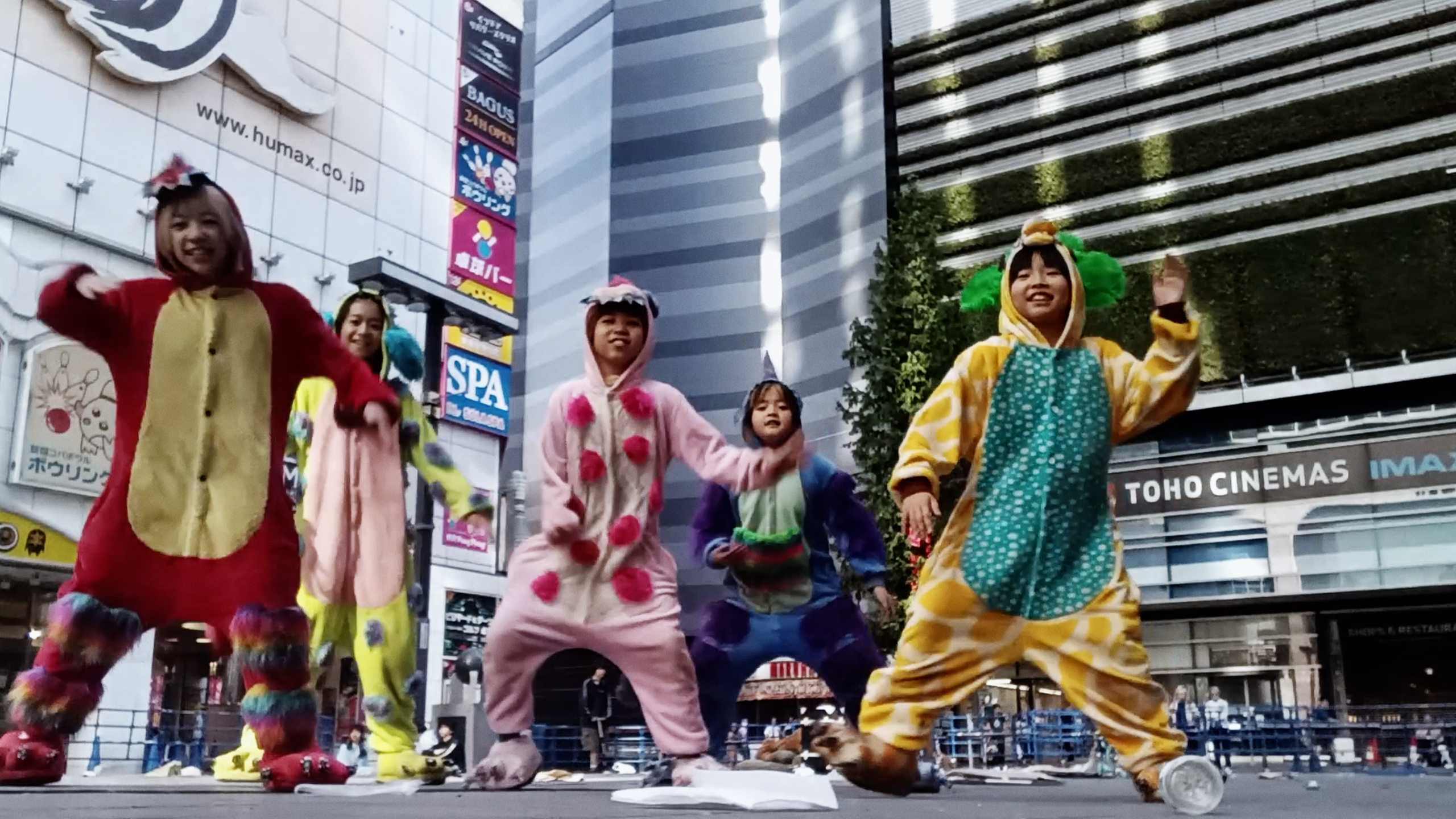
The men that buy their services are just another symptom of an exploitative society. When Jurie almost overdoses and is taken to hospital, the police don’t send her back to her family but do place her in a childcare facility where she feels imprisoned. The implication is that society would rather hide these children away rather than attempt to help them. Jurie longs for the freedom of the city and escapes to return, but in the end discovers only darkness. The film shares its Japanese title with Kon Ichikawa’s adaptation of Mishima’s The Temple of the Golden Pavilion, Conflagration, which is also about a young man who decided to burn it all down in protest against a profane world, though Jurie seeks escape from the collective punishment of the contemporary society along with the traumatic legacy of her father’s abuse. Nagahisa mixes iPhone social media footage capturing the kids’ world from their perspective with dreamlike imagery and a video game aesthetic as Jurie looks for a way out of the labyrinth of her trauma while setting the world ablaze in her mind. What she discovers in the ashes, however, maybe a renewed hope for the future and the possibility of a different kind of salvation.


Burn screens as part of this year’s JAPAN CUTS.

Trailer (Engliish subtitles)
We Are Little Zombies (ウィーアーリトルゾンビーズ, Makoto Nagahisa, 2019)

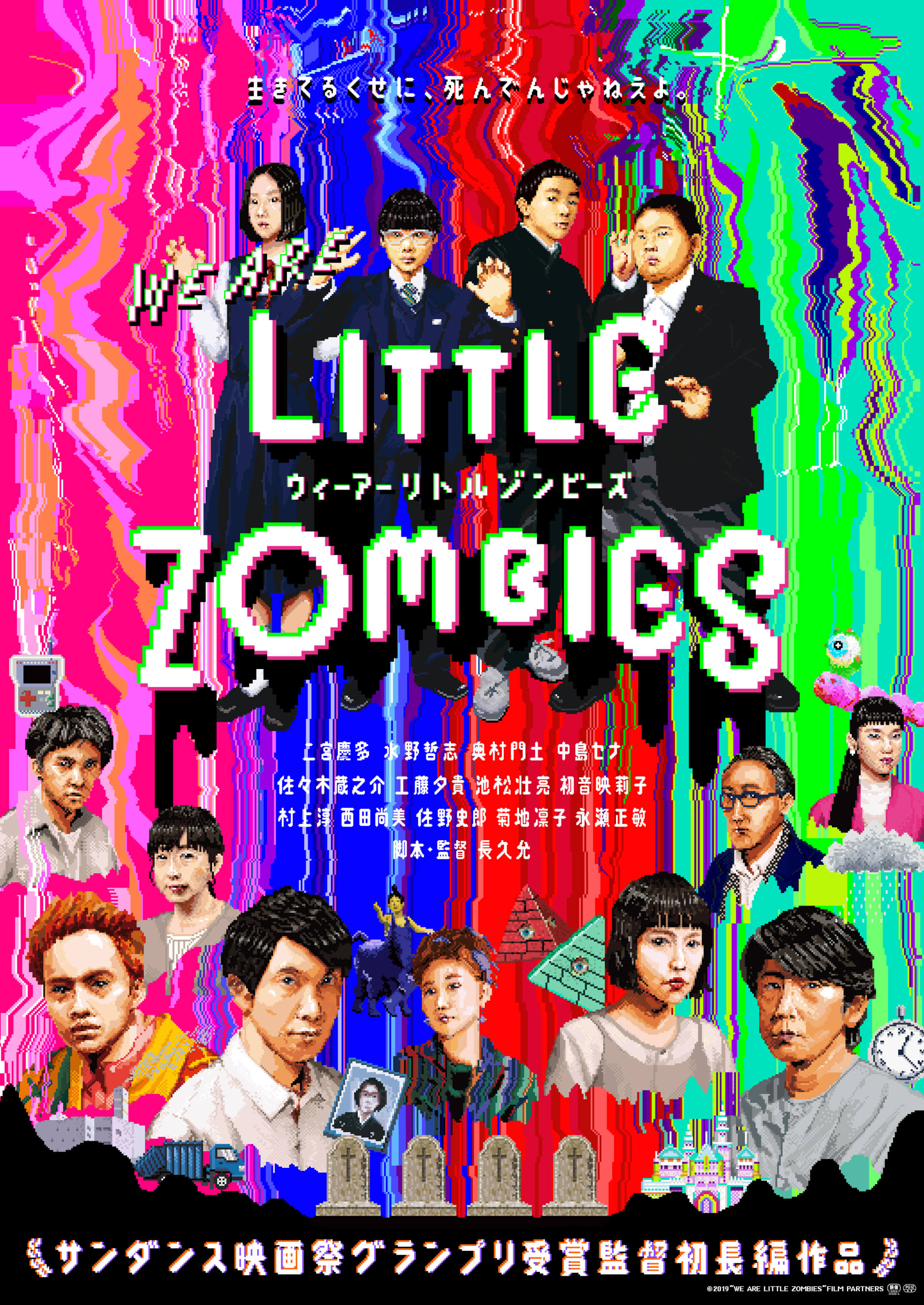
Little Zombies poster“Reality’s too stupid to cry over” affirms the deadpan narrator of Makoto Nagahisa’s We Are Little Zombies (ウィーアーリトルゾンビーズ), so why does he feel so strange about feeling nothing much at all? Taking its cues from the French New Wave by way of ‘60s Japanese avant-garde, the first feature from the award winning And So We Put Goldfish in the Pool director is a riotous affair of retro video game nostalgia and deepening ennui, but it’s also a gentle meditation on finding the strength to keep moving forward despite all the pain, emptiness, and disappointment of being alive.

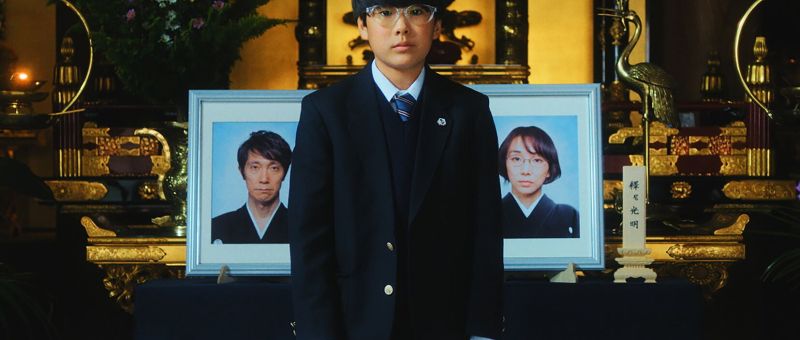
The “Little Zombies”, as we will later discover, are the latest tween viral pop sensation led by bespectacled 13-year-old Hikari (Keita Ninomiya). Recounting his own sorry tale of how his emotionally distant parents died in a freak bus accident, Hikari then teams up with three other similarly bereaved teens after meeting at the local crematorium where each of their parents is also making their final journey. Inspired by a retro RPG with the same title, the gang set off on an adventure to claim their independence by revisiting the sites of all their grief before making themselves intentionally homeless and forming an emo (no one says that anymore, apparently) grunge band to sing about their emotional numbness and general inability to feel.

Very much of the moment, but rooted in nostalgia for ages past, Little Zombies is another in a long line of Japanese movies asking serious questions about the traditional family. The reason Hikari can’t cry is, he says, because crying would be pointless. Babies cry for help, but no one is going to help him. Emotionally neglected by his parents who, when not working, were too wrapped up in their own drama to pay much attention to him, Hikari’s only connection to familial love is buried in the collection of video games they gave him in lieu of physical connection, his spectacles a kind of badge of that love earned through constant eyestrain.

The other kids, meanwhile, have similarly detached backgrounds – Takemura (Mondo Okumura) hated his useless and violent father but can’t forgive his parents for abandoning him in double suicide, Ishii (Satoshi) Mizuno) resented his careless dad but misses the stir-fries his mum cooked for him every day, and Ikuko (Sena Nakaijma) may have actually encouraged the murder of her parents by a creepy stalker while secretly pained over their rejection of her in embarrassment over her tendency to attract unwanted male attention even as child. The kids aren’t upset in the “normal” way because none of their relationships were “normal” and so their homes were never quite the points of comfort and safety one might have assumed them to be.

Orphaned and adrift, they fare little better. The adult world is as untrustworthy as ever and it’s not long before they begin to feel exploited by the powers intent on making them “stars”. Nevertheless, they continue with their deadpan routines as the “soulless” Little Zombies until their emotions, such as they are, begin inconveniently breaking through. “Despair is uncool”, but passion is impossible in a world where nothing really matters and all relationships are built on mutual transaction.

Mimicking Hikari’s retro video game, the Zombies pursue their quest towards the end level boss, passing through several stages and levelling up as they go, but face the continuing question of whether to continue with the game or not. Save and quit seems like a tempting option when there is no hope in sight, but giving in to despair would to be to let the world win. The only prize on offer is life going on “undramatically”, but in many ways that is the best reward one can hope for and who’s to say zombies don’t have feelings too? Dead but alive, the teens continue their adventure with heavy hearts but resolved in the knowledge that it’s probably OK to be numb to the world but also OK not to be. “Life is like a shit game”, but you keep playing anyway because sometimes it’s kind of fun. A visual tour de force and riot of ironic avant-garde post-modernism, We Are Little Zombies is a charmingly nostalgic throwback to the anything goes spirit of the bubble era and a strangely joyous celebration of finding small signs of hope amid the soulless chaos of modern life.


We Are Little Zombies was screened as part of the 2019 Nippon Connection Film Festival.

Original trailer (English subtitles)

Makoto Nagahisa’s short And So We Put Goldfish in the Pool

Music videos for We Are Little Zombies and Zombies But Alive