My Wonderful Yellow Car (吹けよ春風, Senkichi Taniguchi, 1953)

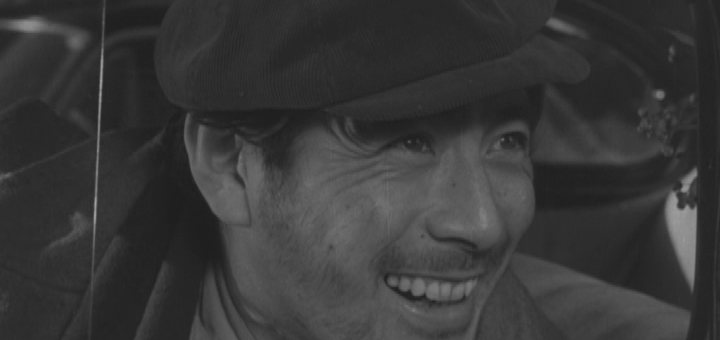
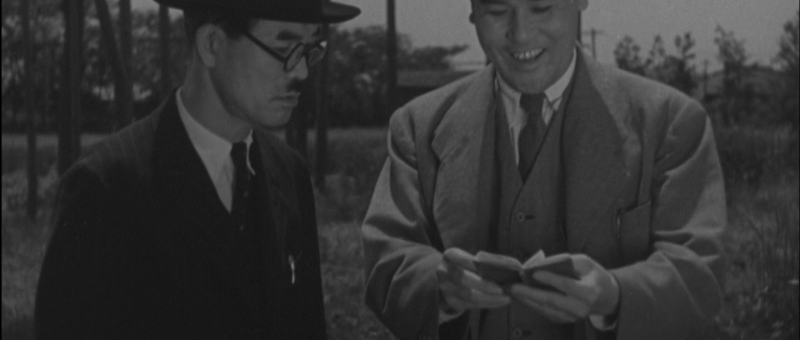
A kind-hearted taxi driver becomes our guide to the post-war society in a cheerful omnibus movie co-scripted by Akira Kurosawa and directed by Senkichi Taniguchi, My Wonderful Yellow Car (吹けよ春風, Fukeyo, Haru Kaze). Inspired by a Reader’s Digest column titled “human nature as seen in the rearview mirror”, the film follows cheerful cabbie Matsumura (Toshiro Mifune) as he drives around Tokyo in 1953 picking up various fares and sometimes adding commentary or trying to help with whatever kind of problem seems to be bothering them.

Then again, he stays well out of the first fare’s business as a young couple have obviously had some kind of falling out. Bursting into tears, the girl (Mariko Okada) announces that she wants to postpone the wedding and maybe even rethink this whole thing, while the boy reiterates with slight irritation that he’s said he’s sorry with the implication that that should be the end of it though we have no idea what (if anything) he’s actually done. In any case, they eventually patch things up over some canoodling in the back seat and ask to be dropped off so they can get something to eat. In some ways, the young couple represent a more hopeful vision of post-war youth who have no apparent worries besides their tiff and are financially comfortably enough not only to be getting married but can afford to travel by taxi and pay for a meal on the same occasion. 

Their situation is later contrasted with that of an older couple who’ve moved from Osaka to Tokyo in their old age and have bought a box of live lobsters to celebrate their silver wedding anniversary but as Matsumura notes though they appear to be quite well off they also seem somehow sad. That turns out to be because they lost their only son the previous summer and have moved into his old apartment. The old lady also cries in the back seat, but for a completely different reason. As they’ve only just moved here, they don’t have friends or anything to do and are completely lost in the wake of their son’s death. Matsumura’s kindness is demonstrated when he borrows three flowers from a bouquet delivered to a girl at the petrol station and presents them as an anniversary gift. The couple are so touched they invite him to enjoy their anniversary dinner with them and by the end of it have made the decision that they should go back to Osaka and restart their lives by re-opening their old business.

Throughout all this, Matsumura is very conscious of the meter. Every second he spent in the old couple’s apartment cost him money, but as he’s fond of saying you can’t always think of things like that. Even so, he reminds himself he has a wife and child so should be mindful of the clock but still turns down a fare to go back to the station and check on a young girl he’s pretty sure is trying to run away from home. A weird guy was sniffing around her and was in fact just about to lead her off when Matsumura gets back and announces he’s come to pick her up. Matsumura spends the rest of the ride trying to convince her to go home, repeatedly reminding her that most of the “panpans”, or streetwalking sex workers catering to US servicemen, were also once runaway girls. To more modern eyes we might wonder if sending her home is what’s best without knowing the reasons she wanted to leave. He goes so far as to buy her ramen which costs him more money on top of the lost fare which doesn’t collect from her either when he, a little less responsibly, abandons her when she refuses to tell him where she lives. Thankfully, it all seems to work out. The girl made a sensible decision to go home after all and is later seen happily doing her Christmas shopping with her mother who also thanks him for looking out for her.

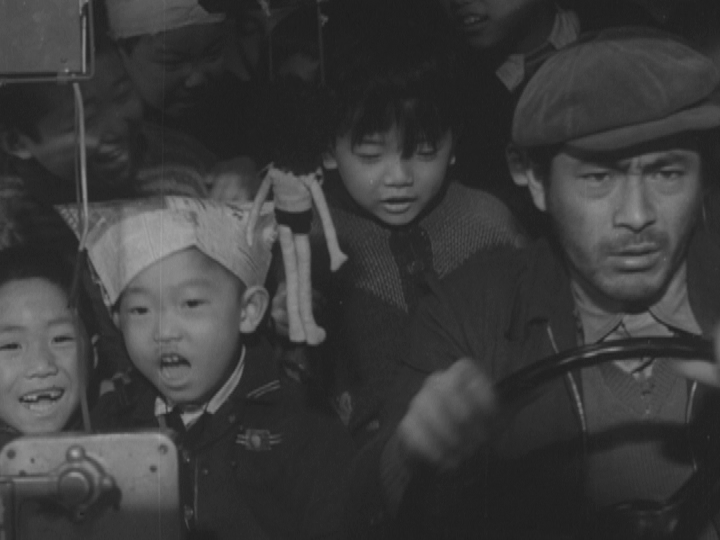
Perhaps these kinds of altruistic acts of kindness explain why Matsumura’s own clothes are quite ragged with a hole in his jumper and a tear to the shoulder of his jacket. He’s driving the cab in straw sandals which apart from anything else is probably quite cold in the winter. He spends another afternoon giving a free ride to some children, about 15 of them, who’ve crowdfunded 100 yen because they’ve never been in a car before and want to go as far it’ll take them having no idea that 100 yen is actually the initial charge so you can’t go anywhere on it all. Of course, Matsumura ends up taking them a bit further, and then realises he’ll have to take them back to where they were because they won’t have any other way of getting there or of knowing where they are now.

On the other hand, sometimes he ends up with nuisance fares such as two drunk guys who keep singing their university song. One of them even climbs out of the window and up onto the roof, causing Matsumura to assume he’s fallen off somewhere and he’ll have to go back and look for him to make sure he’s not hurt only to find him burbling in the footwell. He also ends up getting hijacked by a crook with a gun on his way back from Yokohama but getting a telling off from the police rather than a thank you for catching him after unwisely taking hold of the gun himself and messing up all the fingerprints. 

One might think the time he had a famous actress in the back of his cab who even sang along with the jingle he’d written for the cheerful yellow vehicle might make up for all that, but he says the story that best exemplifies why he loves driving a taxi is that of a middle-aged couple he picked up at the harbour shortly after a boat had docked repatriating people from China. Even in 1953, some had not yet returned after becoming trapped by the Chinese Civil War and eventual Communist victory. The man is dressed in military uniform and says he’s just been demobbed when Matsumura asks him, trying to lighten the mood while there’s obviously some degree of tension between the man and his wife. But as we gradually come to understand, it’s all just a ruse and he has in fact been in prison in Japan for the last seven years for an unspecified crime.

His wife asks Matsumura to drive around the city and attempts to show him how much things have recovered, suggesting that they can now put the past behind them and start over. But the man remains sullen and grumpy. He’s afraid to go home, afraid to face the neighbours worrying if they know what he did and that he’s been in prison. But most of all he’s afraid to face his children, the youngest of which he’s never met. The kids have been teaching themselves to say “Welcome home, Daddy,” in Mandarin believing he’s been in China all this time which the wife has to explain before they get there. The man tells his wife he understands if she doesn’t want him back, but she assures him that the children are excited as is she to start their new life together. Nevertheless, though they’ve been eagerly practicing, the older two children simply freeze when confronted by this anxious stranger who turns around to leave again feeling as if he doesn’t have the right to come back here after all only for the youngest one to suddenly pipe up with the phrase note perfect. It’s this kind of scene, getting people to where they need to be physically and emotionally, that seems to make Matsumura’s job worthwhile. In essence, he’s ferrying people towards the cheerful post-war future his cute yellow cab represents while driving round the rapidly changing city wondering who it is that’s going to end up in the rearview mirror today.


Title song (no subtitles)

365 Nights (三百六十五夜, Kon Ichikawa, 1948)

For his second film at Shintoho, Kon Ichikawa had wanted to adapt a story by Ryunosuke Akutagawa that later inspired Rashomon, but was handed a standard melodrama to direct first. Ichikawa apparently did not think much of the novel the film was to be based on nor the script by Kennosuke Tateoka which he subsequently brushed up with the help of his new wife Natto Wada, and it’s not difficult to see why he might have felt he had an uphill battle. Melodrama is after all a genre that is founded on coincidence, though 365 Nights (三百六十五夜, Sambyaku-rokujugo ya) quickly strains credulity with the sheer number of unlikely events and surprise reappearances along with its rather strange take on the contemporary post-war society which is undoubtedly influenced by the demands of the Occupation censorship regime. 

Indeed, the setting itself seems reminiscent of 1930s cinema following the dashing hero Koroku, played by the equally dashing Ken Uehara, an architect who has walked away from his privileged upbringing as the son of a successful construction magnate. His problem is that he’s being aggressively courted by the haughty Ranko (Hideko Takamine), also the daughter of a successful but shady businessman, who to modern eyes is basically stalking him. Grinning with an evil glint in her eye, she tells her minion Tsugawa (Yuji Hori) that she’ll have seduced Koroku within 365 days which by melodrama standards seems to give her quite a lot of leeway.

Clueing us up to her villainy, Ranko is always seen wearing incredibly stylish Western outfits but otherwise behaves in a transgressively masculine fashion ordering her male employees about while set on the sexual conquest of Koroku who despises her for everything she is. It’s difficult not to see an inherent criticism of the new post-war woman and an anxiety regarding the power that comes with wealth being wielded by someone who is not a man. The contrast between Ranko and traditional femininity is rammed home by the fact that Teruko (Hisako Yamane), the daughter of the landlady in the house where Koroku finds new lodging after moving home to escape Ranko, is always dressed in kimono and otherwise naive and innocent. 

This positions Ranko, and her minion Tsugawa who is also in love with her, as the villains who are rebelling against the kind of earnestness expressed by Koroku and Teruko. From more humble origins, Tsugawa is deeply resentful of Kokoku’s class privilege and feels that he looks down on him which is one reason he seeks revenge by destroying his life along with his sexual jealously that Ranko pays him no attention yet is fixated on Kokoku perhaps precisely because he is entirely uninterested in her though it remains mystery why you’d want to be married to someone who strongly dislikes you. 

Yet for all his own earnestness, Koroku is almost betrayed by the capitalist father of whom he also seems to disapprove when he asks him to consent to an arranged marriage with Ranko to save his business. Meanwhile, it also transpires that Teruko’s father has been absent from her life because he two has a criminal past further tainting the legacy each of them bear. Ichikawa stages each evolution of their relationship at the same, noirish street corner that seems to exist as a kind of border between the illicit underworld that seeps out from Tsugawa’s bar into the post-war society, and the geniality represented by Teruko’s otherwise nice, middle-class home. 

It’s the this transgressive quality, of being caught between these two worlds, that starts to eat away at Koroku leaving him a broken and shabby man little better than a tramp. In a break with melodrama norms, though he is aware that he has led Teruko into Tsugawa’s trap he comes to believe that she has betrayed him while she clings fiercely to her love and in the end attempts to sacrifice it basically giving Koroku to Ranko whom she believes can better care for him in his now corrupted state. Though events become grim with a wedding that is staged like a funeral and takes place at a death bed, there is also the sense that something must come right that seems a little incongruous and perhaps a concession to the censors board as may be the coda implying that Ranko, despite having undergone a kind of redemption, will also have to pay for all her dodgy dealings. Though clearly hampered by the material, Ichikawa crafts some stunning images such as the final scene at Tsugawa’s bar along with a surprisingly energetic action sequence during which Koroku fights off burglars at Teruko’s home and wins her heart with his manliness. In any case despite the hints at redemption the implication remains that this is a world dark at its core in which not even the earnest can escape its creeping corruption. 


Three Women of the North (北の三人, Kiyoshi Saeki, 1945)

Film was the primary medium for propaganda and Japan had been pumping out increasingly patriotic fare under the National Policy programme since the late 1930s but what’s interesting about those which appeared towards the war’s end is that they do not try to sugarcoat the situation or pretend that the conflict is going well, rather they use the encroaching sense of desperation as an additional motivator to get all hands on deck. Released on Aug. 5, 1945, Three Women of the North (北の三人, Kita no Sannin) was the last propaganda film to be produced and the only film currently screening when the war ended on Aug. 15. Of course, after that it was swiftly withdrawn by the Occupation forces never to be seen again except perhaps as a historical document. 

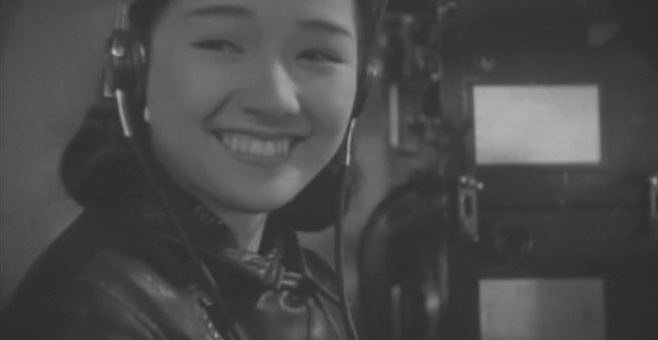
Like The Most Beautiful, the film skews accidentally feminist in its focus on three female radio operators who seem to be regarded as something of pioneers in the field. After encountering technical issues, a plane with a top secret mission is guided into an airfield in Aomori by nothing more than the voice of radio operator Sumiko (Setsuko Hara) yet on landing the pilot expresses surprise apparently stunned that a young woman would be able to perform such a stellar job. The sexist attitudes seem almost set up so they can be shot down, the pilot is quickly corrected by the ground control chief (Takashi Shimura) who explains “nowadays women can become excellent radio operators.”

Of course, this is born of necessity seeing as at this late stage there is a huge untapped resource of young and widowed middle-aged women previously discouraged from getting directly involved with the war effort. In earlier propaganda films, the most important thing a woman could do was get married and particularly to a young man who was going to the war, but this time a conflict develops between two of the women, Yoshie (Hideko Takamine) and Sumiko, because Sumiko declined to marry Yoshie’s brother Kazuo before he left because she too wanted to do her bit for the war effort and would not have been able to do so as a married woman. On learning from Yoshie that Kazuo has been killed after volunteering to lead a suicide mission, she breaks down in tears and cries that she should have married him but Yoshie, who has forgiven her on learning of her patriotic reasoning, tells her that she has done the right thing and her brother would be proud of her for serving her country. 

Meanwhile, at another airfield even deeper into the frozen north their friend Akiko (Hisako Yamane) has a developed a fondness for a research scientist but their romance is of course frustrated by the war. In a moment of fraught emotion, he tells her that he will be returning after delivering his findings and she should wait for him there which is almost to say that they will be granted their romantic resolution once the war is over. The curious thing is that Hara (Shin Saburi) is a weather scientist whose cloud forecasts have apparently been very useful to the pilots. A slightly strange diversion sees the film try to argue that at this point the greatest threat to the Japanese war effort is the weather, which aside from sounding like a very British excuse makes very little sense even if it is obviously a factor in mission success. 

The radio operators obviously can’t do much about the weather, but they can pull together with plucky spirit dedicating themselves to the national good and giving all to the war effort. While Sumiko and Yoshie are having their emotional confrontation they’re interrupted by a trio of young women who were supposed to be getting a radio demonstration from Sumiko but they’ve come to say they can’t make it because one of the other girl’s mothers has been taken ill so they’re walking up the snowy mountain to the observatory in the middle of the night to send her back and take over her shift. When the radio operator on the special flight is taken down by pneumonia (the weather, again), Yoshie volunteers insisting that she’s prepared if the worst should happen but on landing remarks that she couldn’t have got through it without Sumiko and Akiko on the other end of the line resting their success on female solidarity. Though it’s clear the film was made on a shoe string it does feature special effects by none other than Eiji Tsuburaya along with some well conceived action sequences that lend an uncomfortably thrilling note to this extremely late entry into the realms of propaganda filmmaking. 


Travelling Actors (旅役者, Mikio Naruse, 1940)

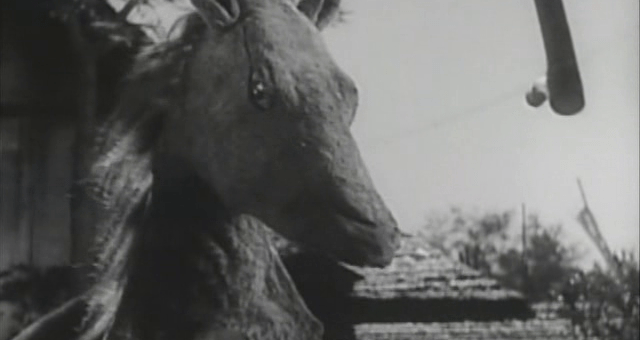
“You can’t have a horse without the ass” admits a travelling actor, inwardly preparing to meet his obsolescence. Anything’s an art if you care to practice it, but there is such a thing as taking yourself too seriously. A masterclass in tragicomedy, Naruse’s 1940 character study Travelling Actors (旅役者, Tabi Yakusha) finds two ends of a pantomime horse about to be torn apart when their act is unwittingly destroyed by a resentful punter whose drunken attempt to escape his sense of humiliation in being tricked by unscrupulous promoters leaves their horse without a head. 

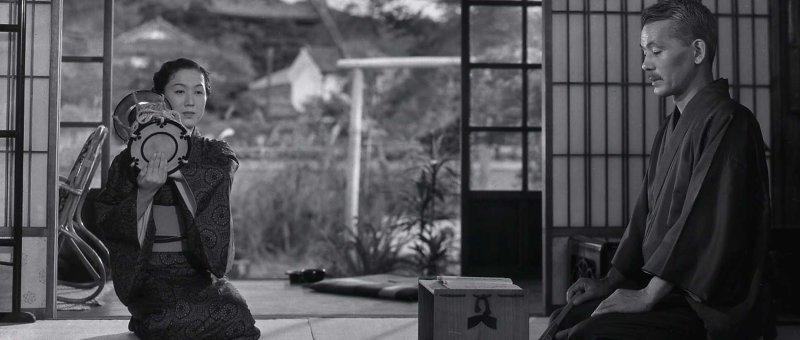
Hyoroku (Kamatari Fujiwara) prides himself on being the “Danjuro of pantomime horses”, performing with the younger Senpei (Kan Yanagiya) who looks up to him as if he really were a great master of the arts. The guys are part of a group of travelling players touring rural Japan performing traditional skits for an audience starved of entertainment. The troupe is not, however, above exploitative business practices, proudly advertising the appearance of “Kikugoro” but neglecting to mention that it’s not the famous one, just another guy with the same name. Meanwhile, someone has to foot the bill for “producing” the show wherever the actors land, leading the exploitative producers to convince a local barber (Ko Mihashi) to invest, hoping to get a little free publicity because he’s known to be the town gossip and can spread the word through his shop. The plan backfires, however, when he travels to the station to see them arrive and immediately realises they are not a fancy acting company from Tokyo but a bunch of ragged bumpkins. Feeling thoroughly fed up, he demands to be allowed to perform in the show as the price of his silence before getting black out drunk and passing out backstage, crushing the papier-mâché horse’s head in his desperation to find somewhere soft to land. 

As “Kikugoro” points out, the “guy who plays the pantomime horse is really picky” so they know they’re in for some trouble as soon as he finds out what’s happened to his head. In fact, Hyoroku was just in the middle of some remodelling, trying to make the head look even more realistic to improve his art. While the barber is destroying his life’s work, Hyoroku and Senpei are drinking with a pair of geishas who are pretending to be interested in Hyoroku’s mini lecture about his process in which he tells them all about how he’s really captured the true essence of the horse through patiently honing his craft all these long years. 

There might be something in that, that Hyoroku is a workhorse of the theatre now more beast than man. Just occasionally, his horsey mannerisms come out in his offstage life, scratching the floor with his feet or pacing the room like a penned in pony. Though there are other sides of him which are painfully human. He makes a point of belittling Senpei in front of the geishas, insulting his art to assert his place as the teacher, always keen to keep his pupil in his place. But as Senpei points out, you can’t have a horse without the ass, and his “art” is no less important than Hyoroku’s. Continuing to take himself way too seriously, Hyoroku refuses to perform with the broken head, flatly objecting to the suggestion of substituting one from the fox costumes because he can’t get into character when his head’s in the wrong place. 

Faced with the prospect of cancelling the show, the producers come up with a radical idea – hiring a real horse. In a still more ironic touch, they even sell this horse who is making his stage debut as a star in his own right, only realising the dangers of their situation when it urinates right in the middle of the act. Weirdly, that only makes the horse a hit and convinces the troupe they’re on to a winner, which is bad news for the boys because who wants to see two guys in an ugly costume when they could be gazing at the real thing. The days of the pantomime horse are ending, but where does that leave a “great master” like Hyoroku who has spent his life becoming more horsey than a horse? Kicked out of the inn and forced to sleep backstage as non-performers, the guys eventually suffer the indignity of being offered jobs as stable boys, mere servants to the star who has replaced them. 

In an unguarded moment, Hyoroku and Senpei reflect on where they are as a young man in a soldier’s uniform leads a patient horse off to war. “That could be us” they sigh, though it’s not clear if they mean the man or the horse, before going back to horsing around eating shaved ice and flirting with the store owner. “I’m just the horse’s ass”, Senpei laments, secretly hoping to become a “real” actor at last, only for Hyoroku to uncharacteristically start encouraging him before dragging him off on another crazy adventure. Putting the fox’s head on to make a point, Hyoroku disappears into the role, chasing his rival right out of town, dragging his back legs behind him as he goes. 


A Slope in the Sun (陽のあたる坂道, Tomotaka Tasaka, 1958)

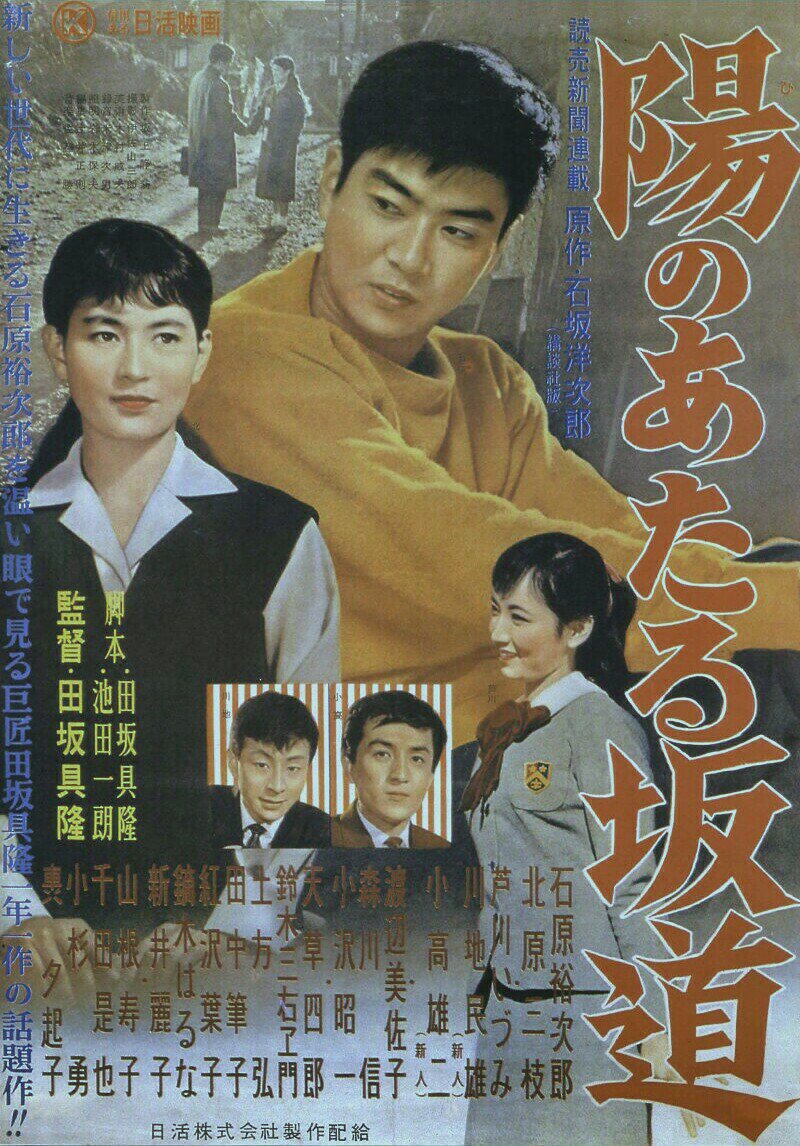
Slope in the sun posterYujiro Ishihara had become the face of the “Sun Tribe” movement thanks to roles inspired by his brother Shintaro’s novels including the seminal Crazed Fruit in which he starred opposite his later wife, Mie Kitahara. Tomotaka Tasaka’s A Slope in the Sun (陽のあたる坂道, Hi no Ataru Sakamichi), adapted from the novel by Yojiro Ishizaka, is a much less frenetic affair than Nakahira’s famously intense youth drama, but retains the Sun Tribe’s world of purposeless youth whose inherited wealth has driven them to a life of listless ennui. Like Crazed Fruit, Slope in the Sun is the story of two brothers chasing the same girl, only this time one looks bad and is really good, while the other looks good but is really no good at all.

Beginning on the titular sun beaten slope, the film opens with a young woman, Takako (Mie Kitahara), entering the frame as she searches for an address on a piece of paper she is carrying. She finds the house – a large Western-style mansion, but is prevented from entering by a young man who mistakes her for a saleswoman and instructs her to use the tradesman’s entrance. The young man, Shinji (Yujiro Ishihara), continues to taunt her with lewd language before poking at her breast. Takako tries to leave but is persuaded to come inside to meet the lady of the house and the young woman, Kumiko (Izumi Ashikawa), whom she has come to tutor.

The Tashiro household is a strange one. There are three almost grown up children – oldest brother Yukichi (Yuji Odaka) who is a medical student, middle brother Shinji who is a painter, and the youngest daughter Kumiko who is approaching the end of high school and is a little over sensitive about a mild limp which is the consequence of a childhood accident. Takako nearly turns the job down when she realises that the family want less a teacher to help with Kumiko’s studies, than a kind of big sister to help her navigate her way into the adult world, but eventually warms to the Tashiros and decides to give it a go. A college student in need of money, Takako is currently living in a boarding house where she is friends with the older lady next door, Tomiko Takagi (Hisako Yamane), and her 18 year old musician son Tamio (Tamio Kawachi).

In contrast to the earlier Sun Tribe films, A Slope in the Sun is much more subdued though it does maintain an upperclass atmosphere filled with bored young people who struggle to find purpose in their lives through having no particular economic or social worries thanks to the protective cushioning of their wealth. The central issue is a common one to the familial melodrama – middle child Shinji has always felt disconnected from his family and has discovered that the woman who raised him is not his birth mother. He wants to know the truth of his family history but is also a kinder soul than his outward behaviour may suggest and does not want to hurt anyone or risk destroying the otherwise pleasant enough family life he enjoys as a Tashiro.

As expected coincidences abound though the truth is obvious seconds after Takako tells someone the name of her new employer causing them to gasp and draw pale with shock. It seems that everyone in the family already knew that Shinji is only a half brother except Shinji himself – their overcompensation in treating him kindly was the initial tipoff for his suspicions, but this question of blood relation turns out to have a surprising dimension. Oldest brother Yukichi is, outwardly, the model son – handsome, clever, gentlemanly, but on closer inspection his veneer of respectability turns out to be just that. The boys’ mother, Midori (Yukiko Todoroki), knows this well and partly blames herself for allowing Shinji to take the blame for a childhood accident rather than forcing her own son to confess. For all his seeming goodness, Yukichi is an amoral coward, womaniser, and habitual liar whereas there’s a kind of honesty in Shinji’s lewd speech and even in his own lies which he indulges partly out of a sense of smug superiority, as Midori puts it, but also because of the inferiority complex which has marred his life as he feels himself somehow lesser than either of his siblings.

Takako vacillates between the two brothers, taken in by the manipulative Yukichi but strangely drawn to the provocative Shinji. Unlike Nikkatsu’s other youth films, Slope in the Sun ends on a note of happy resolution rather than nihilistic suffering as each member of the family is encouraged to embrace their true natures, putting secrets to one side, and becoming closer in the process. Tanaka’s approach is a more classical one than Nikkatu’s usual fare, making use of silent cinema-style closeups and dissolves but veers towards the avant-garde in a brief flashback sequence offered in dreamlike widescreen. Despite the jazz clubs and subplots about misused geishas, this is a more innocent world than the post-war melodrama would usually allow, finding space for happiness and forgiveness in each of the conflicted protagonists once they each agree to submit themselves to the truth and meet the world with openness and positivity.


The Moon Has Risen (月は上りぬ, Kinuyo Tanaka, 1955)

the moon has risen bookletOne of the most celebrated actresses of the 1930s, Kinuyo Tanaka’s post-war career took a couple of unexpected turns. In 1949, she was one of a small number of performers sent to tour America as a cultural ambassador but the reception upon her return was anything but welcoming as her old fans openly criticised her “Americanised” ways. In the same year, she ended her long standing contract with Shochiku to go freelance which meant she could pick and choose her projects from across a wider field of directors and actors she wanted to work with. What she wanted, however, was somewhat unheard of – she wanted to direct. The second woman to ever helm a feature film in Japan, Kinuyo Tanaka made her behind the camera debut in 1953 with the extremely impressive melodrama Love Letter which was penned by the ever supportive Keisuke Kinoshita. Tanaka’s directing career was almost derailed by her good friend and long time collaborator Kenji Mizoguchi who, for reasons which remain unclear, attempted to block her acceptance into the directors guild of Japan (ending their working relationship in the process), but after eventually joining Nikkatsu as a director she was able to begin work on her second film – The Moon Has Risen (月は上りぬ, Tsuki wa Noborinu), ironically enough scripted buy Shochiku stalwart Yasujiro Ozu.

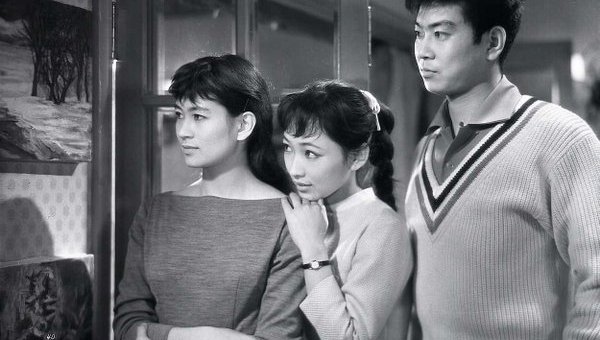
In the classic Ozu mould, The Moon Has Risen is a family drama but Tanaka pulls the focus a little to home in on the central three sisters. Cared for by widowed patriarch Mokichi (Chishu Ryu), the Asai family consists of widowed oldest sister Chizuru (Hisako Yamane), reserved middle sister Ayako (Yoko Sugi), and the exuberant youngest sister Setsuko (Mie Kitahara) who is in a kind of relationship with the currently out of work intellectual, Shoji (Shoji Yasui). When an old school friend of Shoji’s, Amamiya (Ko Mishima), pays a surprise visit whilst he’s in the area to take a look at a broadcast tower, Setsuko sees it as an opportunity to set him up with her shy sister Ayako once Amamiya makes a few wistful remarks about remembering her from their school days.

The first part of the film stays firmly in the realms of comedy as Setsuko sets her plan in motion. She and Shoji do everything they can to find out whether there is any romantic possibility between the pair – baiting Amamiya to come to a non-existent clandestine meeting and then timing him to see how long he’ll wait before giving up, and convincing each of them that the other has something very important to say which can only be said under the romantic light of a full moon. Youthful as she is Setsuko’s plans largely backfire but then the moonlight gets inside them and something shifts.

The courtship of Ayako and Amamiya is quiet and restrained. They keep their romance a secret, communicating with each other through secret codes leading to poignant passages from the Manyoshu – the oldest existing collection of Japanese poetry, which everyone in the family is desperate to figure out but can’t quite get to grips with. Chizuru can’t decide if this painfully innocent path to romantic connection is very old fashioned or very modern but it certainly captures something of the cultural shift of post-war society – the marriage is “arranged” in a sense with Setsuko as a matchmaker but it’s also self determined as Ayako and Amamiya come to recognise their mutual feelings for each other, embrace their love match, and make their own independent decisions to marry.

Modern girl Setsuko has also made a proactive decision in her attachment to Shoji but their shared matchmaking quest eventually drives a wedge between them. As she later puts it, they spent so long worrying about Ayako that they forgot all about worrying about themselves. Shoji’s problem is a common one in being both out of work and soft hearted as he proves when he finds a job but decides to recommend a needier friend for it instead. A blazing row nearly threatens to end things but, again, the pair rely on gentle, well meaning advice from their elders and eventually realise they’re about to make themselves miserable in a fit of pigheadedness.

Though Tanaka mimics the veteran director with iconic Ozu-inspired compositions and frequent use of pillow shots, her emotional canvas is more direct than her mentor’s stoical resignation. Steering clear of Ozu’s trademark tatami mat view and preference for direct to camera speech, Tanaka’s lensing is shier and avoids faces altogether to focus on the physical. She lingers on clasped hands, or on uncertain feet, as they hug the ground unwilling to stay or go. Having ignored her for most of the film, Tanaka turns back to Chizuru whose lonely widowhood seems like a forgone conclusion, as her eyes brim with tears on hearing her perceptive father’s acknowledgement of a possible new suitor.

Mokichi’s inevitable loneliness is background rather than foreground as his daughters take centerstage, leaving him to wonder why young people prefer the “dusty, dirty Tokyo”, to his peaceful Nara but in any case he remains perfectly content for each of them to find their own path to wherever it is they’re supposed to be. In her attempt to film Ozu’s script with Ozu’s camera, The Moon has Risen may seem like a step backwards for Tanaka following the more inventive Love Letter but even while working within such constraints she manages outdo the master in her essential emotional immediacy and well observed depiction of lives and loves post-war women.