Procurer of Hell (地獄の饗宴, Kihachi Okamoto, 1961)

By 1961, the Japanese economy had largely recovered and the nation was emerging into an era of rising prosperity, but there were also those who were left behind or could progress into the new Japan. Shot with Okamaoto’s trademark irony, Procurer of Hell (地獄の饗宴, Jigoku no Kyoen) is a darkly comic tale of one such man who could have quit while he was ahead and started a new life if only he hadn’t been so greedy or perhaps so hung up on revenge. 

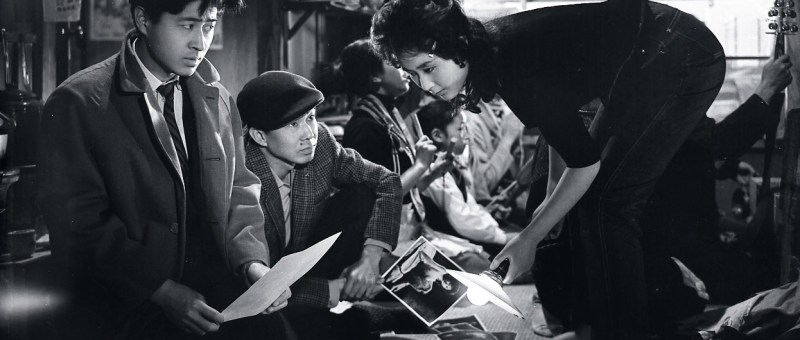
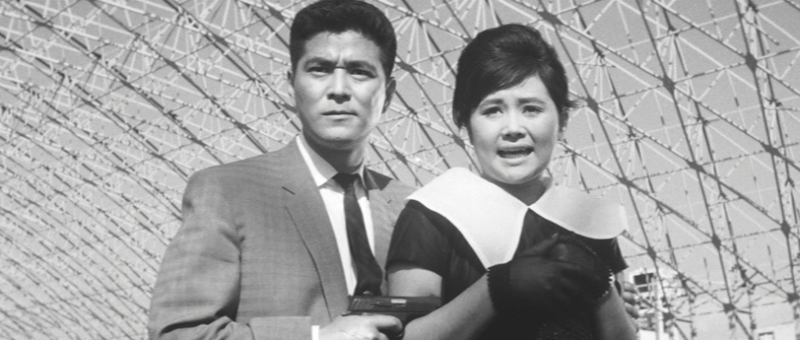
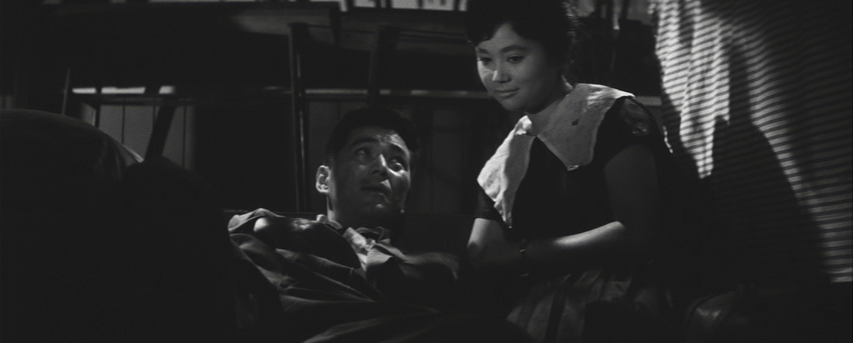
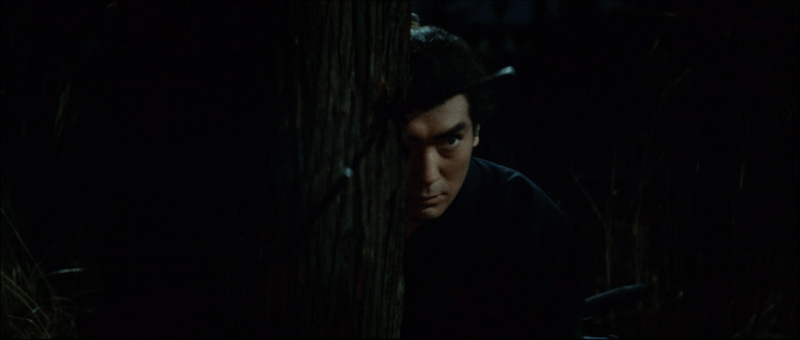
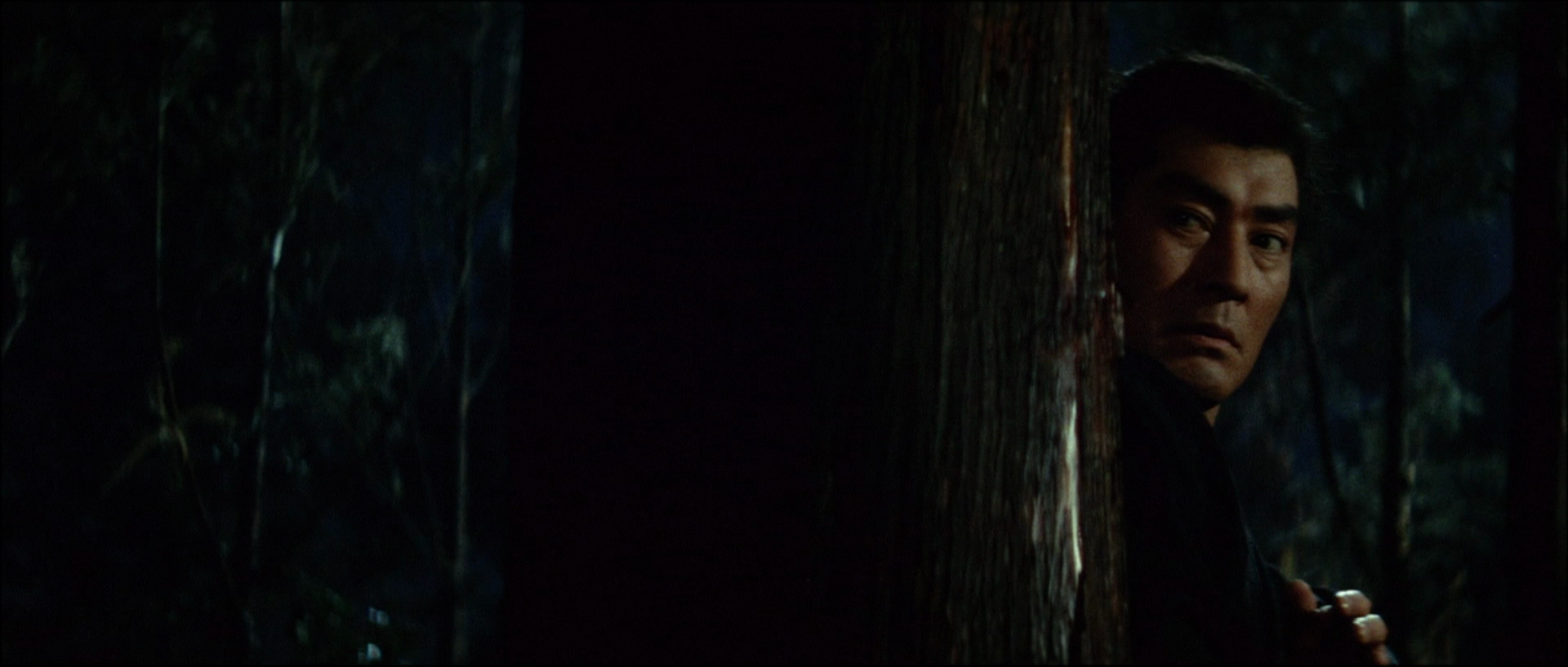
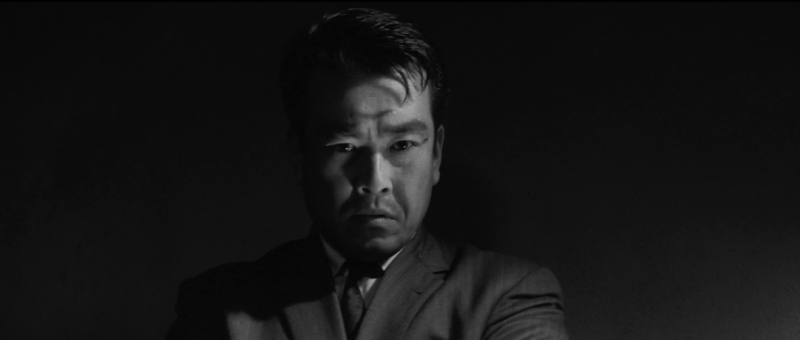
In a sign of the newly international society, Tobe (Tatsuya Mihashi) runs a shady business that claims to provide “English lessons” with blonde women are that are in reality appointments with sex workers. He also peddles pornographic images and dabbles in blackmail. When he finds a roll of film at the station, he gets it developed and discovers it contains photographs of his sergeant during the war, Itami (Jun Tazaki), who raped the Chinese woman he wanted to marry back in Manchuria. Tobe was unable to help her after getting his hand impaled on a tree branch from which he could not free himself. The scar he still bears on his hand is a mark of his corruption and a reminder of the moment which seems to have soured him on humanity and turned him into a cynical and amoral man. He decides to use the photographs to torment and blackmail Itami to get the money to help a widowed single mother he’s interested in secure a better future for herself by taking over a coffee shop from the owner who plans to retire.

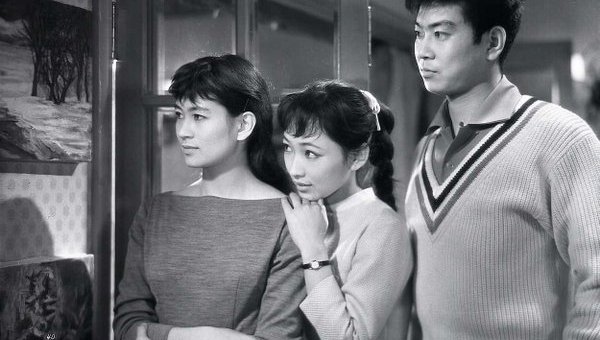
As such, he does it for “good” reasons and Kazuko (Junko Ikeuchi) and her son Saburo represent for him a better future in the new Japan in which he would own a photo studio and live a law-abiding life. Saeko (Reiko Dan), Itami’s secretary with whom he was also having an extra-marital affair, is in other ways his opposite number and the representative of the dark side to which Tobe is drawn. Like him, she tries to play the situation to her advantage by playing the innocent before finally throwing her lot in with Tobe and suggesting he help her double-cross Itami so they can run off with the money he embezzled from his company before faking his own death in a convenient train crash. That Tobe extracts sexual favours from Saeko in return for giving her the photos and negatives interferes with the supposed nobility of his quest and apparently pure-hearted love for Kazuko and her little boy, while Saeko gradually shifts from exploited victim to calculating conspirator manipulating Tobe just as he believes himself to be manipulating her.

In any case, it remains true that he could have just settled for the money he needed for the cafe and walked away from this overly complicated situation involving Itami’s legal wife and associates who have actually embezzled the money and want the pictures back because they need Itami to be dead for their plan to work, but he doesn’t. He becomes fixated on getting his fair share of the ill-gotten gains much more than helping Kazuko or getting his revenge against Itami, which wasn’t really much of a revenge anyway considering what Itami had actually done during the war. But on the other hand, Itami seems to have become a rather powerless figure having married into his wife’s family to work in their business while she plots to have him confined to a psychiatric hospital to keep him out of her way. Saeko too is manipulating him. She has no real feelings for Itami and only wants the money, masterminding this whole scheme to get her hands on it with no intention of fleeing abroad with him. Similarly, she plays the victim with Tobe, telling him that Itami paid for her brother’s school fees and that she wants the photos back to avoid her brother or Mrs Itami finding out it about it and feeling hurt.

But while they’re fixating on the 150 million yen embezzled from the business, there are crowds of angry people turning up at the building society Itami runs complaining that their savings have disappeared and wanting to know if they’re going to get the houses they’ve been promised. Tobe walks through the May Day protests calling for better working conditions and higher wages, pointing to the ways this society is still veering off course in deliberately leaving some-people behind by rooting the new economic prosperity in exploitation. Tobe’s assistant wants to join the protest, but Tobe tells him they don’t really belong with the workers because of their nature of their business. The blackmail scam is his revenge not only on Itami but on everything that’s happened to him since the war and this ridiculous post-war society that he nevertheless hopes to join through these immoral means. The song of the canary he buys for Saburo begins to haunt him as a symbol of the wholesome life he might lead, but that life cannot really be won that way. He and Saeko are really two of a kind, she apparently brought low by her unexpectedly genuine feelings for him as even the police, picking him up for something else, leave them bleeding in the street surrounded only by emptiness and futility mere feet from the hospital in their own relentless pursuit of the “real” criminals.
Castle of Owls (忍者秘帖 梟の城, Eiichi Kudo, 1963)

A surviving member of the Iga clan swears vengeance on Toyotomi Hideyoshi only to slowly come to the realisation that the best revenge is living well in Eiichi Kudo’s ninja drama, Castle of Owls (忍者秘帖 梟の城, Ninja Hicho: Fukuro no Shiro). Adapted from the novel by Ryotaro Shiba, the film is somewhat unusual in its positivity in allowing its hero to first reject the codes by which he was raised and then those of the prevailing times in eventually choosing love and happiness over the internecine obligation to gain vengeance against a corrupt social order.

Hoping to solidify his grip on power, Oda Nobunaga has his right-hand man Toyotomi Hideyoshi massacre the Iga clan of ninjas who are then almost entirely wiped out. Juzo (Ryutaro Otomo) and his friend Gohei (Minoru Oki) both survive, but Juzo’s entire family is brutally murdered while his sister takes her own life after being gang raped by Hideyoshi’s soldiers, using her final breath to tell her brother to avenge her. Overwhelmed by grief, Juzo is chastised by veteran ninja Jiroza (Kensaku Hara) for his show of emotion. He reminds him that a ninja should be as unbreakable as stone and that he should abandon all human sentiment. Juzo, however, insists that he may be a ninja but is also human and refuses to apologise for his feelings. 

This is it seems the major conflict. Jiroza has already signalled his own heartlessness and practicality when he advised the surviving ninja to flee, for escape is less dishonourable than death. Those who refuse are welcome to surrender, and those who cannot run must be left behind to their fate. For Jiroza, all that matters is survival for both himself and his small daughter Kizaru (Chiyoko Honma) who is currently tied to his back (no mention is made of her mother, perhaps she had already passed away). Now that his family are dead, Juzo has a new mission and reason for survival insisting that what the living can do for the dead is vengeance, though in his case it is personal rather than principled for he mostly wanted revenge for his sister rather than the Iga clan as a whole or anything it represents which he otherwise seems to be at odds with. 

10 years later, Oda Nobunaga has already been bumped off in an act of betrayal by one of his own men leaving Toyotomi Hideyoshi in charge and now the target for Juzo’s revenge. Around this time, Hideyoshi is planning an invasion of Korea against the advice of most of his courtiers in order to legitimise his rule through imperial ambition and military dominance. Juzo has been trying to assassinate him, and has apparently failed five times already. A surprise visit from Jiroza and his now teenage daughter involves a job opportunity promising a monetary reward should he succeed, but Juzo is wary. The merchant who hires him says he wants Hideyoshi out of the way because a war in Korea will damage his business prospects, but as Juzo points out Hideyoshi’s death will leave a power vacuum resulting in another civil war. The merchant, however, giggles childishly and remarks that domestic wars are good for business, leading Juzo to suspect he’s here on behalf of Tokugawa Ieyasu, the most likely to assume power in the event of Hideyoshi’s death.

The irony is though Juzo very definitely wants Hideyoshi dead, when someone else suggests it he becomes conflicted because he knows it will lead to another period of chaos in which even more people will die. Meanwhile, a ninja’s allegiance should belong to his client, who is always the highest bidder, so this is both a win-win situation and a mild conflict of interest. Conversely, Gohei (Minoru Oki), who was betrothed to Kizaru, has apparently betrayed the clan and taken a position as a retainer for one of Hideyoshi’s lords. He agrees to betray the Iga, inform on the plan to assassinate Hideyoshi, and even bring in Juzo in return for a 300-koku stipend and a shot of advancement under the new regime.

Now, on one level this might be understandable. Japan has emerged from a couple of hundred years of constant warfare, there’s no place for ninja in a world of peace as former Iga man Mimi (Tokue Hanasawa) remarks revealing that he’s survived the last 10 years through begging. It’s also understandable given that a ninja is expected to be duplicitous and act in self-interest. Even Juzo applaud’s Jiroza’s ninjutsu on realising that he’s teamed up with Gohei to betray him in order to take out the leader of the Koga ninjas. In essence, he’s only really done what Juzo later does but also the opposite in choosing his individual happiness through betraying those around him to throw his lot in with the person who murdered his entire clan. 

Juzo meanwhile is shaken by his unexpected attraction to female ninja Kohagi (Hizuru Takachiho), a daughter of the Koga,  who like him finds herself conflicted in her mission because of her growing affection for Juzo. Kohagi asks him if they really have to live on hate when they could live happily together instead, but even while conflicted Juzo can’t bring himself to let go of the idea of vengeance and is haunted by images of his friends and family dying. Even so, having decided to give up on a happy future and risk his life to kill Hideyoshi he finds that it ceases to matter. Confronting him, his hatred melts away. He begins to recognise the futility of revenge and that it would be silly to cause a war and make a merchant rich to prove a point. Gohei, meanwhile, pays a heavy price for his choices when his lord disowns him. Even when Juzo comes to rescue him from jail, he laughs that he’s caught him at last. Having escaped from the Iga life to live in the sun, he finds himself in darkness once again. Juzo, however, rides off into the sunshine with Kohagi to live in peace that’s divorced from the wider world. They choose to exile themselves from this world of darkness and duplicity, to live freely in the sunlight rather than be consumed by the internecine codes by which they were raised. Kudo films his ninja battles in near total silence with an almost balletic intensity and paints this world as one of infinite mistrust and uncertainty but equally affirms that it is possible to simply walk away and choose happiness over duty or hate.


The Desperate (どろ犬, Takaharu Saeki, 1964)

A bruiser cop railing against the system is pulled towards the dark side in Takaharu Saeki’s icy noir, The Desperate (どろ犬, Doro Inu). Adapted from a novel by Shoji Yuki, the film is one of only two Saeki directed in an otherwise lengthy career mainly spent in television and captures an eerie sense of existential dread as its detective hero sinks to even greater depths in a quest for self preservation while kicking back against the hypocrisies of the post-war society. 

As one officer puts it, Sugai (Minoru Oki) is one of many veteran officers who can’t adjust to new codes of justice in the democratic era. In the film’s opening sequence, he’s pulled aside and warned about using excessive force on a suspect only to counter that he knows the guy’s guilty so he doesn’t see what the problem is. Sugai had been particularly motivated about this case as the victim was an 18-year-old girl raped after accepting a lift from a stranger. She was so traumatised that she could hardly speak but did remember the registration plate of the car. She’d only been working because her father lost his factory job though he appears to have begun drinking and is abusive towards his daughter for her silence, later coming to the station to drop the charges after being paid off by the suspect’s lawyer. The legal definition of rape in this era is founded not on an idea of consent but whether violence was involved and the victim can be proved to have resisted physically. The guilty party, Tomita (Hideo Murota) claims that nothing illegal transpired in his car and then walks away with a smirk when his lawyer gets him off the hook. It’s all too much for Sugai to bear, resentful that the rich and powerful are now effectively above the law thanks to legislation he feels ties his hands as a police officer. 

It’s at this point he runs into petty yakuza Yamaguchi (Ko Nishimura) whom he’s been trying to turn as an informant, unwisely mouthing off about his dissatisfaction with contemporary law enforcement only for Yamaguchi to turn the tables and effectively blackmail him having discovered that Sugai has begun a relationship with the estranged wife of an imprisoned gangster. In an act of petty revenge and desperation, Sugai leaks info on “guilty” suspects who weren’t charged to Yamaguchi who exacts financial justice by extorting them for money while threatening to expose their immorality. 

Disappointed in him, the gangster’s wife, Chiyo (Chisako Hara), exclaims that Sugai’s no different from her husband and in truth he isn’t. Part of Sugai’s resentment lies in the fact his wife left him for another man while he was on a stakeout, frightened by his violence and insisting that she hated detectives. His old-fashioned police tactics include taking suspects to the dojo where beats the living daylights out of them. Later he tells another, more earnest officer, he reminds him of himself when he was younger implying that he has become corrupted by the times and the impossibility of justice, particularly for young women whom he feels an urge to protect, in a world ruled by money and status. He may feel some pangs of guilt for a rookie who is unfairly fingered as the mole on the grounds that he and Yamaguchi were originally from the same area and had a past acquaintance, but in the end is happy enough to scapegoat him for his wrongdoing while he continues trying to dig himself out a hole but falling still further into the abyss. 

Sugai is merely trying to save his own skin, but those around him are desperate too. His opposite number, Toku (Hisashi Igawa) is desperate to clear his name, while Chiyo is desperate for what she describes as a proper marriage to a proper man while seemingly kept captive in the apartment Sugai rents for her on his meagre police salary but does not live in himself. She wants to work and has an innocent desire to buy him some better shoes that he otherwise resents in its implied challenge to his masculinity that he evidently cannot afford all this additional expense coupled with the strain of keeping his problematic relationship with a gangster’s wife secret from his employers. In the end he claims that the problem was he couldn’t escape from being a detective, pushed into desperate acts of destruction as a man now exiled from his times unable to move on from post-war chaos into a newly democratic, consumerist Japan. Saeki ends his fatalistic vision with an image of a train reeling backwards, echoing the degree to which Sugai has lost control of his life and himself no longer a detective but only a man without a moral compass whose path can only lead in one direction. 


Here Because of You (君たちがいて僕がいた, Ryuichi Takamori, 1964)

“The strength of our modern generation is that we never let anything get us down, and we’ll go after what we want without a moment’s hesitation.” The heroine of Ryuichi Takamori’s cheerful teen comedy Here Because of You (君たちがいて僕がいた, Kimitachi ga Ite Boku ga Ita) encapsulates a sense of post-war youth while trying to convince a sullen friend to join her in standing up to injustice when their teacher is smeared in the press, but he for his own reasons remains indignant and defeatist certain that nothing they do will make any difference. 

Essentially a vehicle for Toei teen stars Chiyoko Honma and Kazuo Funaki, the film is like many similarly themed youth movies of the time a progressive appeal to a new generation intent on rebelling against the social conservatism of their parents along with the injustice and inequality that accompanied it. The villain of the piece is the father of one of the students, Akira (Masaaki Sakai), who has become wealthy and is intent on throwing his weight around. Tanaka (Ken Sudo) wants his son to go to the best university in Japan and does not take kindly to the advice of his teacher, Mr. Yamabuki (Sonny Chiba), that Akira is just not up to it academically and putting so much pressure on him to achieve something which is almost certainly beyond him will only make the boy suffer. 

Akira is one of those kids with his head in the clouds who isn’t particularly good at anything. School is in general a torture for him and he himself knows that Tokyo University is not a possibility though he’s prepared to do his best if only his father would lower his expectations and let him apply to a college that is more within his capabilities. Both Tanaka and Mr. Yamabuki are however partially at fault when Akira is injured during a PE lesson that he was supposed to be excused from, Tanaka having told him not to participate in sports but to spend the lesson doing extra study instead. Mr. Yamabuki had thought that Akira had just not been applying himself, but a combination of a lack of physical agility due to being kept off PE and being encouraged to push himself further than he should lead to him falling from some climbing bars and spraining his ankle.

As might be expected, Tanaka is not happy and even asks for a second opinion on his son’s minor leg injury while deepening his grudge against Yamabuki. Tanaka also has a minor grudge against fellow student Hiroshi (Kazuo Funaki) who threw a bucket of frogs at him (to which he is allergic) for reasons Hiroshi doesn’t fully understand after hearing him kick off about Akira’s college prospects. It’s Hiroshi who fulfils the role of rebellious youth in the angry impulsivity that he often cannot explain. He’s been saying he doesn’t want to go to college but it’s because his older sister was forced to leave education during in middle school because of the family’s poverty and has become a geisha in order to pay for his tuition. Yamabuki and Hiroshi’s sister Yukiko (Junko Miyazono) develop a fondness for each other while discussing Hiroshi’s education, and it’s this suggestion of there being some impropriety in a schoolteacher dating a geisha that Tanaka takes to papers in effort to get Yamabuki fired. 

Meanwhile, Hiroshi’s cheerful classmate Chieko (Chiyoko Honma) has also developed a crush of Yamabuki. Claiming that she intends to marry him, she goes so far as to turn up at his house and insist on doing his laundry but he quite reasonably tells her that as an adult man his wife would have to be an adult woman. Surprisingly, she gets over it quite quickly and realises that Hiroshi is a much better match for her instead, but nevertheless springs into action when Yamabuki is unfairly smeared in the press. Even she is originally scandalised by the suggestion that her long widowed mother (Mieko Takamine) may have feelings for a local doctor (Shuji Sano), but soon comes round to the idea that there’s nothing wrong with it if she has just as there’s no problem with a teacher dating a geisha. She claims she would be more offended if each of them were forced to deny their feelings for each other because of social propriety and is intensely annoyed by the network of local corruption she uncovers in investigating the origins of the false news report which also suggests Yamabuki may have been inappropriately carrying on with a student, presumably herself. 

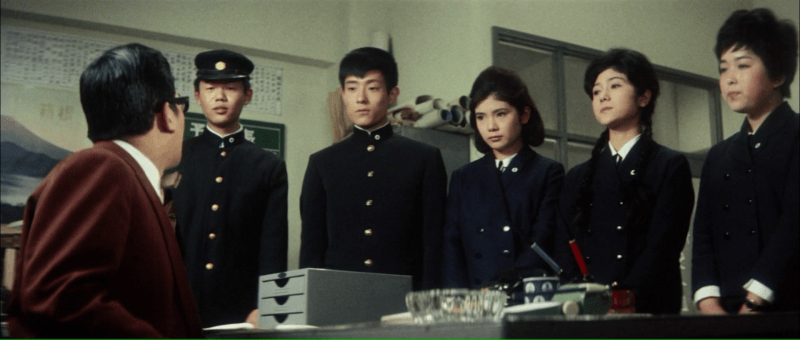
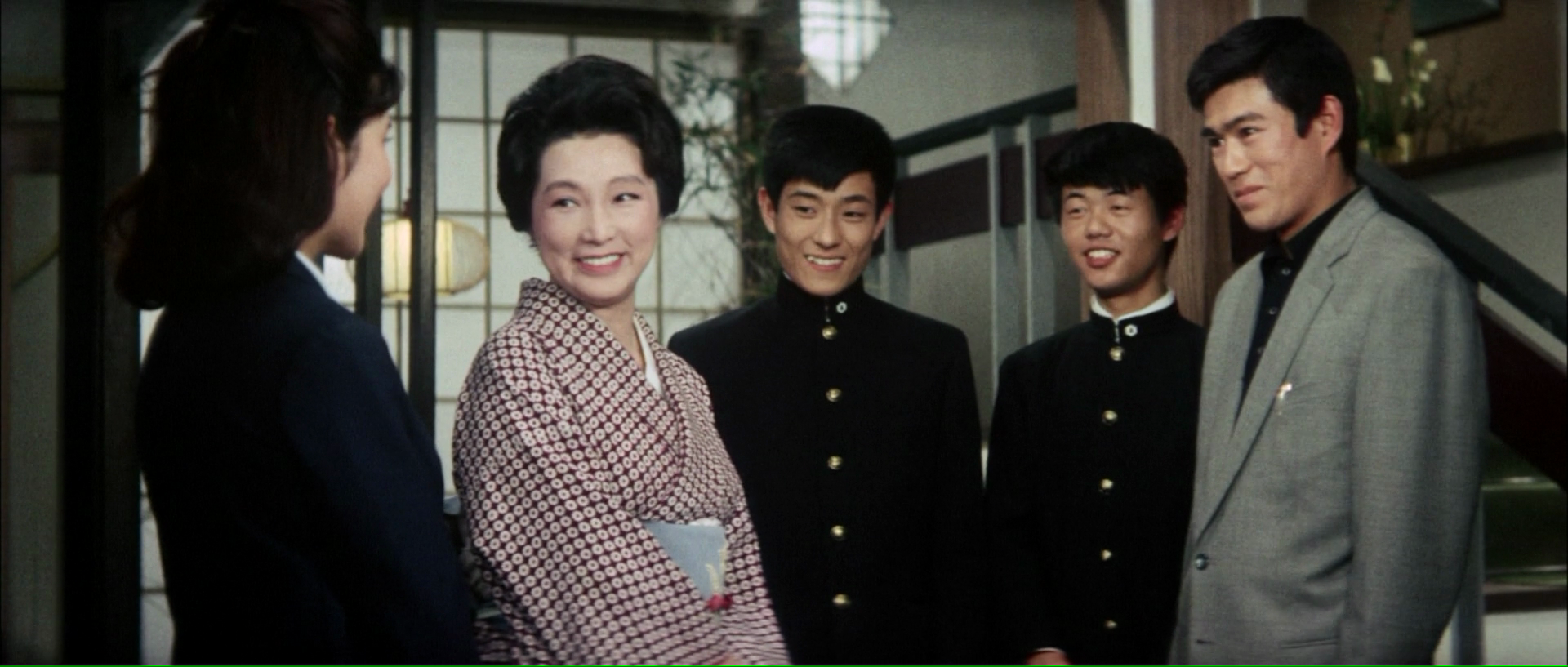
As chairman of the parent teacher association, Tanaka tries to railroad the headmaster into firing Yamabuki by holding a kangaroo court at which Yamabuki is prevented from speaking in his own defence all while his character is assassinated. But the kids, who previously witnessed a drunken Tanaka harassing Yukiko, aren’t having any of it and abandon their lessons to surround the meeting vowing that they’ll go on hunger strike if they aren’t listened to which won’t look very good in the national papers. What they bring about is a kind of democratic revolution in which the corrupt authority of Tanaka is deposed in favour of the more evenhanded chairpersonship of Chieko’s grandmother who turns out to be the oldest person in the room at 63. The children will not be ordered around or told what to think and will stand up to injustice where they find it, which is very bad news for those like Tanaka who are used to getting their way because of their privilege and social status. It’s all very wholesome and innocent, perfectly in keeping with the zeitgeist while remaining cheerful and upbeat even with Hiroshi’s continued brooding until Chieko finally manages to win him over. A charming teen musical adventure with a handful of songs performed by its idol stars, the film’s infectious energy is difficult to beat.


The Sleeping Beast Within (けものの眠り, Seijun Suzuki, 1960)

Sleeping Beast Within posterTo those of a “traditional” mindset, a woman’s career is her home and she never gets to retire. Men, by this same logic, are killed off at 60 and reborn into a second childhood where they get to indulge their love of fly fishing or suddenly discover an untapped talent for haiku. Seeing as a man often lives at the office, being excommunicated from his corporate family can seem like a heavy penalty for those who’ve devoted their entire existence to the salaryman ideal. So it is for the old timer at the centre of Seijun Suzuki’s 1960 mystery thriller, The Sleeping Beast Within (けものの眠り, Kemono no Nemuri) in which the sudden disappearance of a model employee sparks his daughter and her dogged reporter boyfriend to investigate, unwittingly discovering a vast drug smuggling conspiracy headed by a dodgy cult leader.

Veteran salaryman Junpei Ueki (Shinsuke Ashida) has been working in Hong Kong for two years and is finally coming home, to retire. His family have come to meet him but, as his daughter’s reporter boyfriend Kasai (Hiroyuki Nagato) points out, no one much else has turned up – so it is for those who don’t play office politics, claims one of the few colleagues who has arrived to greet the recently returned businessman. Ueki isn’t very happy about his retirement and believes he’ll be getting a part-time job at the same company only to be informed position has been “withdrawn”. When he doesn’t come home after his retirement party, something surely out of character for such a straight shooting family man, his wife and daughter become worried. Keiko (Kazuko Yoshiyuki) enlists Kasai to help figure out what’s happened to her dad only for him to suddenly turn up with a bad excuse and an almost total personality transplant. Kasai keeps digging, and the reporter in him loves what he finds even if the nice boyfriend wishes he didn’t.

Suzuki sets up what a good guy Ueki is when he brings back a modest ring for Keiko only for her to mockingly ask if her dad couldn’t have brought something a bit flashier. Ueki points out that the customs people might not have liked that so she jokes that he should have just smuggled it in like everyone else. Kasai reminds her that her dad’s not that kind of man, but two years in Hong Kong have apparently changed him. Having spent two years away from his family and 30 years slaving away at a boring desk job, Ueki feels he’s owed something more than an unceremonious kiss off and a little more time for gardening. The reason he ended up entering the world of crime wasn’t the money, or that he was blackmailed – it started because of his sense of integrity. He felt he owed someone and he did them a favour. It went wrong and he ended up here. His decision to join the gang came after he tried to “pay back” the money for some missing drugs only to realise that his entire retirement plan was worth only a tiny fraction of his new debt. Ueki felt small and stupid, like a man who’d wasted his life playing the mugs game. He wanted some payback, but his life as criminal mastermind turned out not to be much of a success either.

Trying to explain her father’s actions to the wounded Keiko, Kasai explains that everyone has a sleeping beast in their heart which is capable doing terrible things when it awakens. Ueki’s sleeping beast was woken by his resentment and sense of betrayal in being so cruelly cast aside by the system to which he’d devoted his life while the guys who broke all the rules – drug dealers, gangsters, and corrupt businessmen, lived the high life. One could almost argue that a sleeping beast is stirring in Kasai’s heart as he pushes his investigation to the limit, occasionally forgetting about the harm it will do to Keiko even whilst acknowledging the greater good of breaking the smuggling ring once and for all. Keiko too finds herself torn, confused and heartbroken by the change in her father’s personality though her mother feels quite differently.  Claiming that “a woman has no say in her husband’s work”, Keiko’s mum tells her daughter that a wife’s duty is to do as her husband says and avoid asking questions. Keiko has asked a lot of questions already and shows no signs of stopping now, even once she realises she won’t like the answers.

Despite the grimness of the underlying tenet that it doesn’t take much for honest men to abandon their sense of morality, Suzuki maintains his trademark wryness as Kasai and Keiko go about their investigation like a pair of pesky kids chasing a cartoon villain. Though the tale is straightforward enough, he does throw in a decent amount of experimentation with two innovative flashback sequences in which the flashback itself is presented as a superimposition with the person narrating it hovering at edges as if referring to a slide. The beast is quelled with a shot to the heart, but not before it wreaks havoc on the lives of ordinary people – not least Ueki himself who is forced to confront what it is he’s become and who he was prepared to sacrifice to feed the hungry demon inside him.


Available as part of Arrow’s Seijun Suzuki: The Early Years Vol. 2 Border Crossings box set.

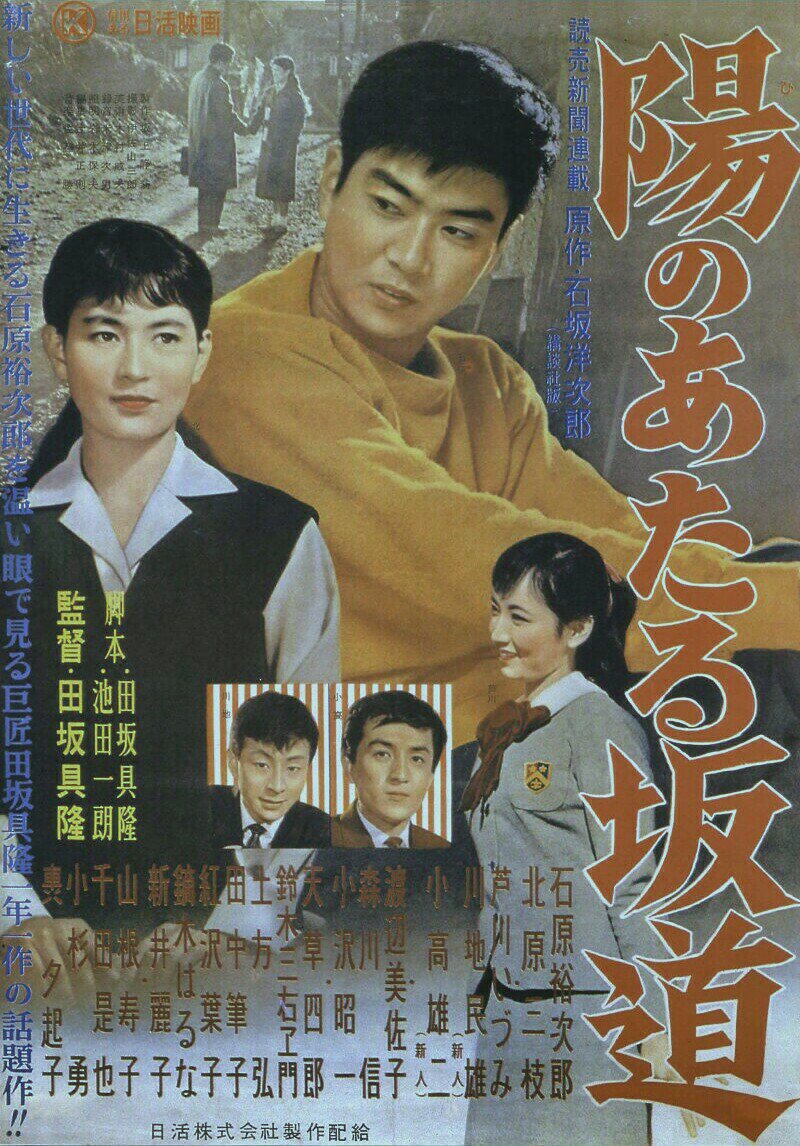
A Slope in the Sun (陽のあたる坂道, Tomotaka Tasaka, 1958)

Slope in the sun posterYujiro Ishihara had become the face of the “Sun Tribe” movement thanks to roles inspired by his brother Shintaro’s novels including the seminal Crazed Fruit in which he starred opposite his later wife, Mie Kitahara. Tomotaka Tasaka’s A Slope in the Sun (陽のあたる坂道, Hi no Ataru Sakamichi), adapted from the novel by Yojiro Ishizaka, is a much less frenetic affair than Nakahira’s famously intense youth drama, but retains the Sun Tribe’s world of purposeless youth whose inherited wealth has driven them to a life of listless ennui. Like Crazed Fruit, Slope in the Sun is the story of two brothers chasing the same girl, only this time one looks bad and is really good, while the other looks good but is really no good at all.

Beginning on the titular sun beaten slope, the film opens with a young woman, Takako (Mie Kitahara), entering the frame as she searches for an address on a piece of paper she is carrying. She finds the house – a large Western-style mansion, but is prevented from entering by a young man who mistakes her for a saleswoman and instructs her to use the tradesman’s entrance. The young man, Shinji (Yujiro Ishihara), continues to taunt her with lewd language before poking at her breast. Takako tries to leave but is persuaded to come inside to meet the lady of the house and the young woman, Kumiko (Izumi Ashikawa), whom she has come to tutor.

The Tashiro household is a strange one. There are three almost grown up children – oldest brother Yukichi (Yuji Odaka) who is a medical student, middle brother Shinji who is a painter, and the youngest daughter Kumiko who is approaching the end of high school and is a little over sensitive about a mild limp which is the consequence of a childhood accident. Takako nearly turns the job down when she realises that the family want less a teacher to help with Kumiko’s studies, than a kind of big sister to help her navigate her way into the adult world, but eventually warms to the Tashiros and decides to give it a go. A college student in need of money, Takako is currently living in a boarding house where she is friends with the older lady next door, Tomiko Takagi (Hisako Yamane), and her 18 year old musician son Tamio (Tamio Kawachi).

In contrast to the earlier Sun Tribe films, A Slope in the Sun is much more subdued though it does maintain an upperclass atmosphere filled with bored young people who struggle to find purpose in their lives through having no particular economic or social worries thanks to the protective cushioning of their wealth. The central issue is a common one to the familial melodrama – middle child Shinji has always felt disconnected from his family and has discovered that the woman who raised him is not his birth mother. He wants to know the truth of his family history but is also a kinder soul than his outward behaviour may suggest and does not want to hurt anyone or risk destroying the otherwise pleasant enough family life he enjoys as a Tashiro.

As expected coincidences abound though the truth is obvious seconds after Takako tells someone the name of her new employer causing them to gasp and draw pale with shock. It seems that everyone in the family already knew that Shinji is only a half brother except Shinji himself – their overcompensation in treating him kindly was the initial tipoff for his suspicions, but this question of blood relation turns out to have a surprising dimension. Oldest brother Yukichi is, outwardly, the model son – handsome, clever, gentlemanly, but on closer inspection his veneer of respectability turns out to be just that. The boys’ mother, Midori (Yukiko Todoroki), knows this well and partly blames herself for allowing Shinji to take the blame for a childhood accident rather than forcing her own son to confess. For all his seeming goodness, Yukichi is an amoral coward, womaniser, and habitual liar whereas there’s a kind of honesty in Shinji’s lewd speech and even in his own lies which he indulges partly out of a sense of smug superiority, as Midori puts it, but also because of the inferiority complex which has marred his life as he feels himself somehow lesser than either of his siblings.

Takako vacillates between the two brothers, taken in by the manipulative Yukichi but strangely drawn to the provocative Shinji. Unlike Nikkatsu’s other youth films, Slope in the Sun ends on a note of happy resolution rather than nihilistic suffering as each member of the family is encouraged to embrace their true natures, putting secrets to one side, and becoming closer in the process. Tanaka’s approach is a more classical one than Nikkatu’s usual fare, making use of silent cinema-style closeups and dissolves but veers towards the avant-garde in a brief flashback sequence offered in dreamlike widescreen. Despite the jazz clubs and subplots about misused geishas, this is a more innocent world than the post-war melodrama would usually allow, finding space for happiness and forgiveness in each of the conflicted protagonists once they each agree to submit themselves to the truth and meet the world with openness and positivity.


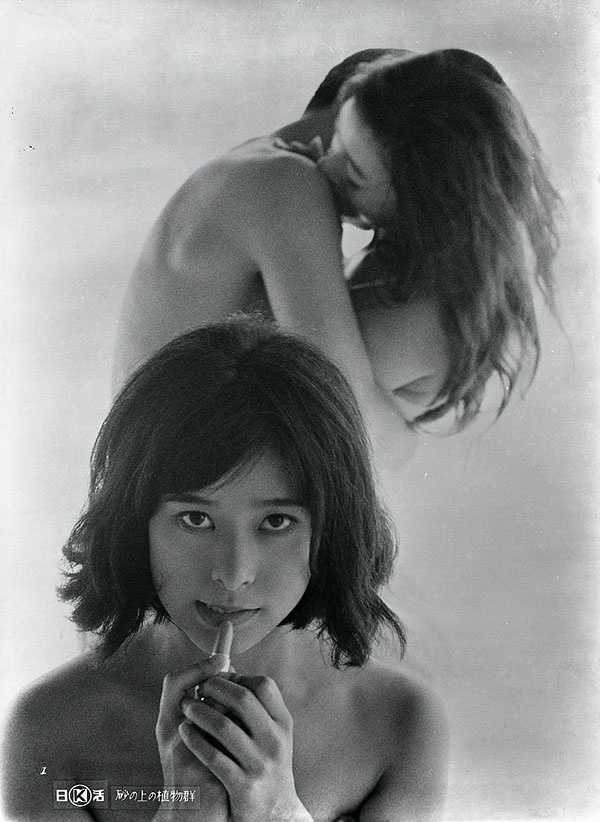
Flora on the Sand (砂の上の植物群, Ko Nakahira, 1964)

© 1964 Nikkatsu CorporationDespite being among the directors who helped to usher in what would later be called the Japanese New Wave, Ko Nakahira remains in relative obscurity with only his landmark movie of the Sun Tribe era, Crazed Fruit, widely seen abroad. Like the other directors of his generation Nakahira served his time in the studio system working on impersonal commercial projects but by 1964 which saw the release of another of his most well regarded films Only on Mondays, Nakahira had begun to give free reign to experimentation much to the studio boss’ chagrin. Flora on the Sand (砂の上の植物群, Suna no Ue no Shokubutsu-gun), adapted from the novel by Junnosuke Yoshiyuki, puts an absurd, surreal twist on the oft revisited salaryman midlife crisis as its conflicted hero muses on the legacy of his womanising father while indulging in a strange ménage à trois with two sisters, one of whom to he comes to believe he may also be related to.
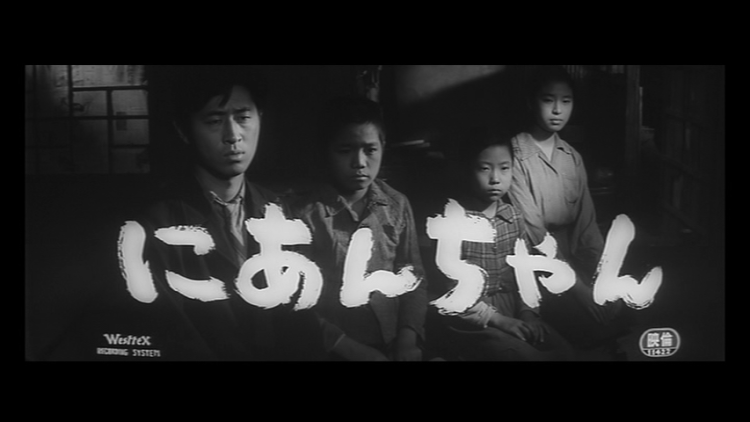
After a brief prologue in which our hero, cosmetics salesman Ichiro Igi (Noboru Nakaya), imagines a scenario for a novel in which a dying husband becomes so jealous of the man that may succeed him in his wife’s life that he sets about plotting to make her the weapon of that very man’s destruction, Igi heads to his regular barber and longtime family friend where he takes the time to probe him about his late father’s womanising habits. Igi’s father died young at only 34 for years of age, three years younger than the age Igi is now. His father’s spitting image, Igi cannot help seeing him everywhere he goes and feels unable to evade his ongoing influence, almost as if he were possessed by his father’s (un)departed spirit.

The major preoccupation Igi has is that his wife (Yukiko Shimazaki) may have slept with his father before they were married while she was just a teenager. The barber tells him he’s pretty sure not, but Igi cannot let the idea go and repeatedly brings it up with his wife, creating discord in the family home. Meeting a precocious schoolgirl at the Marine Tower one evening, Igi finds himself taking her to a hotel and deflowering her even though she begins to resist him at the last minute. The girl, Akiko (Mieko Nishio), then makes a strange request of him – she wants Igi to seduce and “hurt” her older sister Kyoko (Kazuko Inano) whose sanctimonious attitude she can no longer stand. Igi does indeed visit the bar where Kyoko works as a hostess and embarks on an intense affair with her but Akiko’s pleas to “hurt” her sister are complicated by Kyoko’s masochistic tendencies and Igi’s descent into a kind of madness.

Beginning with the painting by Paul Klee which gives the film its name, Nakahira asks us to imagine what would happen if a large dash of red were suddenly to appear, disrupting the comforting harmony of Klee’s perfectly matched colours. The discomforting redness does dutifully appear as strangely shaped squares on the canvas but the symbolic value of the colour is felt throughout the black and white narrative from the dark stain of Akiko’s broken maidenhead to the affectation of her lipstick and constant references to red seas and suns.

Though Igi’s world may have seemed just as perfectly ordered as Klee’s painting from the outside, his constant preoccupations with his father become the disruptive influence which leads to all of the redness later leaking in. Haunted by his father as he is, seeing his face everywhere from train windows to the barber shop mirror, Igi’s attempt at a plot for a murder mystery takes on a strangely Oedipal quality as we begin to wonder if it’s his father rather than Igi himself who has assumed the role of the “protagonist”, leaving a time bomb for his wayward son, the inheritor of his woman, just as Igi laid out in his prologue. Bizarre reality or another symptom of Igi’s increasingly fractured mind, the plot seems likely to succeed at least in a sense as Igi declines into a dishevelled mess, prone to hallucinations and uncertain visions.

Nakahira gives us several of these as Igi panics and struggles with a key only to open a door into bright white light and nothingness or another in which he and Kyoko dine in an empty restaurant which is suddenly filled with the noisy chatter of other diners. Strange touches such as the German beerhall with a Spanish guitarist, or the odd peepshow in which Igi and his two friends take on the appearance of demons or impassive Buddhist statues thanks to the light reflected into their eyes, add to the unbalanced atmosphere as do the frequent closeups of lips and hands, and the symbolic value of seeds never meant to be planted which nevertheless flower at an unintended moment. Shooting in black and white, Nakahira begins with a colour sequence featuring the abstract artwork with occasional flashes of colour as well as voice over and occasional intertitle-style captions adding to the absurdist atmosphere.

A surreal and complex psychological exploration of sex, power, obsession, identity, and legacy Flora on the Sand finds Nakahira flexing his experimental mussels for a drama rife with ambiguity and strangeness. Sadly this brand of innovation was not entirely welcome at Nikkatsu head offices and so he found himself left out in the cold eventually ending up in Hong Kong making action movies for Shaw Brothers. Despite some later success at international festivals, Nakahira’s work remains sadly neglected but the unusual degree of sophistication and almost playful atmosphere seen in Flora on the Sand make him worthy of attention as more than just an almost was of the rising New Wave.


Screened as part of the Japan Foundation Touring Film Programme 2017.

My Second Brother (にあんちゃん, Shohei Imamura, 1959)

vlcsnap-2017-01-07-22h53m01s073Like most directors of his era, Shohei Imamura began his career in the studio system as a trainee with Shochiku where he also worked as an AD to Yasujiro Ozu on some of his most well known pictures. Ozu’s approach, however, could not be further from Imamura’s in its insistence on order and precision. Finding much more in common with another Shochiku director, Yuzo Kawashima, well known for working class satires, Imamura jumped ship to the newly reformed Nikkatsu where he continued his training until helming his first three pictures in 1958 (Stolen Desire, Nishiginza Station, and Endless Desire). My Second Brother (にあんちゃん, Nianchan), which he directed in 1959, was, like the previous three films, a studio assignment rather than a personal project but is nevertheless an interesting one as it united many of Imamura’s subsequent ongoing concerns.

Set in the early 1950s, the film focuses on four children who find themselves adrift when their father dies leaving them with no means of support. The father had worked at the local mine but the mining industry is itself in crisis. Many of the local mines have already closed, and even this one finds itself in financial straits. Despite the foreman’s promise that he will find a job for the oldest son, Kiichi (Hiroyuki Nagato), there is no work to be had as workers are being paid in food vouchers rather than money and strike action frustrates what little production there is. After receiving the unwelcome suggestion of work in a “restaurant” in another town, Yoshiko (Kayo Matsuo) manages to find a less degrading job caring for another family’s children (though she receives only room and board, no pay for doing so). With younger brother Koichi (Takeshi Okimura) and little sister Sueko (Akiko Maeda) still in school, it seems as if the four siblings’ days of being able to live together as a family may be over for good.

Based on a bestselling autobiographical novel by a ten year old girl, My Second Brother is one of the first films to broach the Zainichi (ethnic Koreans living in Japan) issue, even if it does so in a fairly subtle way. The four children have been raised in Japan, speak only Japanese and do not seem particularly engaged with their Korean culture but we are constantly reminded of their non-native status by the comments of other locals, mostly older women and housewives, who are apt to exclaim things along the lines of “Koreans are so shiftless” or other derogatory aphorisms. Though there are other Koreans in the area, including one friend who reassures Kiichi that “We’re Korean – lose one job, we find another”, the biggest effect of the children’s ethnicity is in their status as second generation migrants which leaves them without the traditional safety net of the extended family. Though they do have contact with an uncle, the children are unable to bond with him – his Japanese is bad, and the children are unused to spicy Korean food. They have to rely first on each other and then on the kindness of strangers, of which there is some, but precious little in these admittedly difficult times.

In this, which is Imamura’s primary concern, the children’s poverty is no different from that of the general population during this second depression at the beginning of the post-war period. The film does not seek to engage with the reasons why the Zainichi population may find itself disproportionately affected by the downturn but prefers to focus on the generalised economic desperation and the resilience of working people. The environment is, indeed, dire with the ancient problem of a single water source being used by everyone for everything at the same time with all the resultant health risks that poses. A young middle class woman is trying to get something done in terms of sanitation, but her presence is not altogether welcome in the town as the residents have become weary of city based do-gooders who rarely stay long enough to carry through their promises. The more pressing problem is the lack of real wages as salaries are increasingly substituted for vouchers. The labour movement is ever present in the background with the Red Flag drifting from the mass protests in which the workers voice their dissatisfaction with the company though the spectre of mine closure and large scale layoffs has others running scared.

One of the most moving sequences occurs as Koichi and another young boy ride a mine cart up the mountain and talk about their hopes for the future. They both want to get out of this one horse town – Koichi as a doctor and his friend as an engineer, but their hopes seem so far off and untouchable that it’s almost heartbreaking. Sueko skipped school for four days claiming she had a headache because her brother didn’t have the money for her school books – how could a boy like Koichi, no matter how bright he is, possibly come from here and get to medical school? Nevertheless, he is determined. His father couldn’t save the family from poverty, and neither could his brother but Koichi vows he will and as he leads his sister by the hand climbing the high mountain together, it almost seems like he might.