
Blue Boy Trial (ブルーボーイ事件, Kashou Iizuka, 2025)

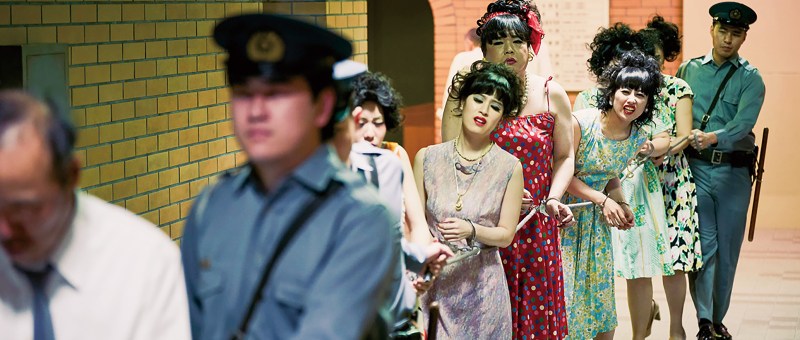
The police of mid-1960s Japan have a problem. They’re desperately trying to clean up the streets. But they keep running into transgender sex workers whom they can’t arrest because the working of the anti-prostitution laws explicitly targets women only, and in legal terms the people they’re picking up are regarded as male, so they have to release them. Knowing they can’t touch the women, a resentful police officer decides to go after the doctor who treated them instead.

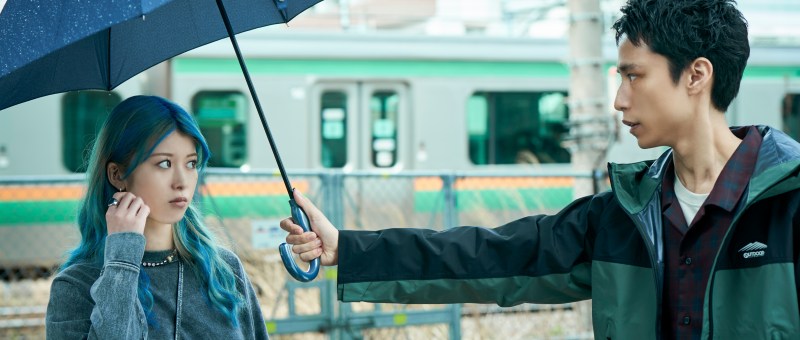
Inspired by a real-life incident, Blue Boy Trial (ブルーボーイ事件, Blue Boy Trial) examines the social and legal repercussions of the actions taken against Dr Akagi (Takashi Yamanaka) after he was charged with supplying drugs illegally and breaking the anti-eugenics legislation by performing sterilisations while treating transgender people. Though Akagi agrees to plead guilty to the drugs charge, he refuses to move on eugenics, insisting that the surgery he performs is a legitimate medical practice that has nothing to do with any eugenicist ideology. The lawyer appointed for him, Kano (Ryo Nishikido), has an uphill battle ahead but hopes he can convince the judges by putting some of the women Akagi helped on the witness stand, to show that the treatment he gave them was medically necessary.

But part of the problem is necessarily that many of these women work in the sex industry. They aren’t respected, and their testimony won’t be either. That’s why Kano is keen to get Sachi on board seeing as she lives what the court will consider a conventional, “respectable” life like any other woman’s. Nevertheless, his request is insensitive and he appears not realise what exactly what he’s asking. If Sachi (Miyu Nakagawa) takes the stand she will be outing herself and putting the life she’s managed to build on the line. One of the other women Kano asks to testify takes her own life after being described as “mentally ill” in court and accosted by a drunk man outside it. When a picture of Sachi and her partner Akihiko (Ko Maehara) is featured in a newspaper report, she’s fired from her job in a cafe with her manager (Kiyohiko Shibukawa) accusing her of “fraud” for having responded to a job ad that clearly stated it was for “women only”.

Even Kano, to begin with, repeatedly refers to the women as “he” and uses slur words to describe them. Focussed more on winning the case, he pursues avenues that are offensive such as characterising the surgery as treatment for a mental health condition, asking why they “decided” to become women, and probing them on intimate details such as their sexual experiences as “men”.  Aside from prejudice towards the LGBTQ+ community, these attitudes also hint at the latent misogyny in the wider society which is still defined by traditional gender roles. Tokita (Junpei Yasui), the conservative prosecutor, makes a fairly nonsensical point about all the men who died in the war, accusing the women of being “selfish” and unpatriotic in giving up their manhood while panicked that transgender people threaten the very fabric of society as if he were worried that every man secretly wants to be a woman. In her emotional testimony, Sachi rejects his insistence on a socially defined gender binary and states that conforming to what he defines as a woman would also be inauthentic. What Akagi’s surgery helped her become was only her true self.

To that extent, Sachi’s partner Akihiko (Ko Maehara) is also unmanned by virtue of his disability. He too experienced prejudice and could not beat “small-town life”, much like Sachi in having been excluded by his otherness. He knows all about Sachi and has accepted her, presenting her with a ring though they cannot be legally married, but even in the big city they cannot find the freedom to live happy quiet lives. Sachi’s friend Ahko (Sexy Izumi) agreed to testify to claim the right to live well for the younger generation, so they could be free to live their lives without having to hide. The fact that Akagi is found guilty may not be surprising given the nature of the law as it was, though it did in a round about way legitimise the idea of confirmatory surgery as a legitimate medical procedure by suggesting guildelines to be followed in order for it to take place legally. Nevertheless, the first fully legal surgery did not take place until 30 years later, while those like Sachi continued to face prejudice and were forced to live their lives without the ability to be fully themselves. Even so, Sachi at least seems to have found her own happiness and fulfilment despite the social hostility that haunts her existence.


Blue Boy Trial screens as part of this year’s Japan Foundation Touring Film Programme.

Trailer (English subtitles)

Images: © 2025 “Blue Boy Trial” Film Partners
A Bad Summer (悪い夏, Hideo Jojo, 2025)

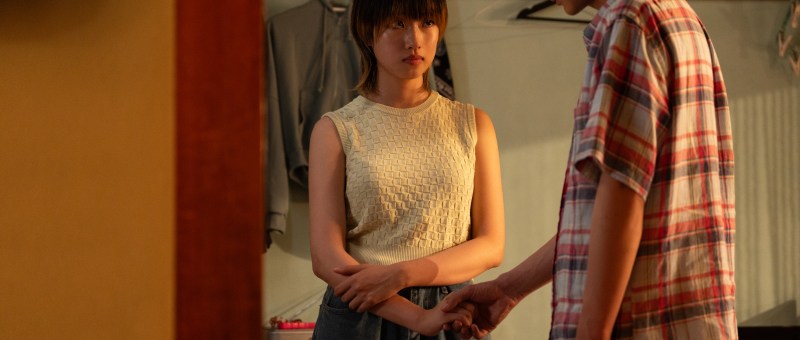
A well-meaning social worker finds himself dragged into an exploitative yakuza scam after trying to expose a colleague’s misconduct in Hideo Jojo’s adaptation of the novel by Somei Tamehito, A Bad Summer (悪い夏, Warui Natsu). Sasaki’s (Takumi Kitamura) colleagues are beginning to doubt he has what it takes for the job primarily because he is “too nice” and has trouble dealing with those who, to his superiors at least, are obviously misusing the system to claim benefits they aren’t entitled to. According to his hard-nosed colleague Miyata (Marika Ito), social welfare exists for those who find themselves “unavoidably” thrown into dire living conditions, which necessarily implies a degree of moral judgement on her part, while Sasaki is it seems keener to give people the benefit of the doubt and wants to try to help them even if it turns out they have been defrauding him.

“We must survive as bulwarks against moral decay,” Miyata intones, somewhat ironically, while pointing out that people who misuse the system make everything more difficult for “honest” clients. Sasaki later asks what exactly her morality is, but all she says is that the rules are the rules and any breach of them should be punished. The real world, however, is rarely so black and white. The truth is that it’s become too difficult to survive in this capitalistic society and a regular job alone no longer pays enough to support a single person let alone a family. 

While Sasaki falls deeper into an abyss of exploitation, a widowed single mother struggles to find a job while caring for her son that will keep them fed and a roof over their head. A woman at the factory where she eventually finds employment tells her about the welfare system, but she says she feels bad about taking other people’s money. That she later succumbs to shoplifting out of desperation suggests it was more the shame, humiliation, and stigma that kept her from applying. When she does eventually ask for help, she finds Sasaki in a downward spiral shouting at her for being an irresponsible mother and emphasising that benefits are only for those who’ve exhausted all other options, which she of course has, but is still made to feel like criminal just for reaching out. Though she is a prime example of the people they exist to help, Sasaki turns his back on her with potentially tragic consequences.

Other people had suggested to the widow that she simply remarry, laying bare to the extent to which women are still expected to remain economically dependent on men even in the 21st century. Another single mother, 22-year-old Aimi (Yumi Kawai), was convinced to apply for benefits by her friend Rika (Yumena Yanai), a bar hostess in a similar situation, but is sexually exploited by her case worker Takano (Katsuya Maiguma) who threatens to expose that she’s been working more ours than permitted meaning her benefits would stop. It’s also Rika who convinces her to get her yakuza boyfriend Ryu (Masataka Kubota) involved to sort out Takano, but he has another clever plan to use Takano as part of a popular yakuza scam in which they round up homeless people who may not know the benefits system exists and get them to apply so they can take most of their money while housing them in shelters they own. The plan is foiled when Miyata claims to have received a tip-off about Tanako exploiting his clients and enlists Sasaki to help investigate.

Sasaki seems genuinely interested in Aimi’s welfare along with that of her five-year-old daughter Misora which makes him the target of a side scam being run by Yamada (Pistol Takehara), one of his own clients who’s been fraudulently claiming on the grounds of an old back injury. The tragic thing is that Aimi, who seems to have had a disordered childhood herself, positively responds to the compassionate care offered by Sasaki who drifts into a relationship with her that is romantic and borderline inappropriate, though he is not her social worker and hasn’t done anything wrong. Aimi begins to see a more settled, ordinary life for herself which is eventually disrupted by destructive force of yakuza violence as Ryu forces Sasaki to process claims for the homeless people he’s exploiting. 

The wretchedness of his situation begins to destroy Sasaki’s integrity, which was according to Miyata their only real weapon against those who cheat the system. Unable to tell whether Aimi’s feelings for him were ever genuine, something she isn’t entirely sure of either, he sinks into a moral abyss having become all too aware of the chain of exploitation which exists in the contemporary society. The farcical, expressionist conclusion may signify that even when you fight back, nothing really changes and the only people who lose out are the most vulnerable, but there does at least seem to be a better life in sight for Aimi and Misora having escaped at least of the forces which were constraining them.


A Bad Summer screens as part of this year’s Japan Foundation Touring Film Programme.

Love Doesn’t Matter to Me (愛されなくても別に, Aya Igashi, 2025)

Two young women find solace and solidarity in each other after escaping toxic familial environments in Aya Igashi’s adaptation of the novel by Ayano Takeda, Love Doesn’t Matter to Me (愛されなくても別に, Aisarenakutemo Betsuni). Though some might say that parents always love their children even if that love was not conveyed in the optimal way, the two women struggle with their contradictory impulses in craving the love of a parent who in other ways they know is past forgiveness.

The problem for Hiiro (Sara Minami) is that the roles have become reversed. She is effectively the parent of her irresponsible mother (Aoba Kawai) who treats her like a housekeeper and is intent on exploiting her labour. Hiiro’s mother didn’t want her to go to university and is still charging her rent and board to live at home while Hiiro works several part-time jobs to jobs to support them. She believes that her mother lives beyond her means, but is unaware of the extent to which she’s been financially abusing her by keeping both the child support her absent father had been sending and the student loan she’d taken out as a safety net. Having to work so hard also means that Hiiro is tired all the time and is prevented from taking part in normal university life or social activities which leaves her unable to make friends. At times she resents her mother so much she’s worried she might end up snapping and killing her to be free, but at the same time loves her and therefore puts up with her ill-treatment.

Enaga (Fumika Baba), meanwhile, is ostracised because her father is on the run after killing someone, though the reason she is resentful of her family is a history of sexual abuse and exploitation that have left her feeling worthless. As she later says there’s no point comparing your unhappiness to that of other people, otherwise you just end up making yourself more miserable as if you were trying to win an unhappiness competition. Nevertheless, learning of Enaga’s situation wakes Hiiro up to the possibility that other people are unhappy too and her life may not have been as comparatively bad as she felt it to be in the depths of her isolation. 

Yet what both women seem to crave is the positive maternal relationship they’ve each been denied. Hiiro gets to know another student, Kimura (Miyu Honda), who also has no friends partly owing to a judgemental attitude and poor social skills whom she later discovers to be from a wealthy background despite her being desperate to find a job and working alongside Hiiro at the convenience store. Kimura resents her mother (Shoko Ikezu) for being overly controlling and possessive. She’s come all this way to university to escape her, yet her mother calls every few hours and is angry if she doesn’t answer and makes frequent visits leaving Kimura with no freedom or social output. To Hiiro, Mrs Kimura’s actions seem to come from an obviously loving place and she might have a point that Kimura is naive, having been kept sheltered all life by her own helicopter parenting, which is why she’s been sucked into a cult. Hiiro sees in Mrs Kimura the love and affection she’d have liked from her own mother and is jealous rather than seeing how seeing Kimura feels suffocated and is driven to despair in being unable to escape her mother’s control.

Lady Cosmos (Yoko Kondo), the cult leader in whom Kimura has found salvation, tells each of the girls that they were loved by their imperfect parents and ought to love them back, but they seem to know better. Though she makes some perspicacious comments, Lady Cosmos also tells them exactly what they want to hear and attempts to occupy a more positive material space to be the loving mother they never had. But, of course, not so different from Hiiro’s mother, she’s bleeding Kimura dry by forcing her to pay extortionate amounts for readings and holy water. Ironically she’s still controlling her much like her own mother had, but Kimura thinks she’s found freedom in cult and resents any attempt to undercut Lady Cosmos’ belief system even if she’s at least on one level forcing herself to believe it rather than being a true believer. 

What might be surprising is that the two women effectively break free of the “cult” of family in accepting that their parents aren’t good for them and the decision to cut them out of their lives is valid rather than the breaking of a taboo or an unnatural rejection of the sacred bond between a mother and a child. Instead they effectively remake the image of family for themselves as one of mutual solidarity and unconditional love between two people who aren’t related by blood but have discovered a much deeper bond rooted in shared suffering.


Love Doesn’t Matter to Me screens as part of this year’s Japan Foundation Touring Film Programme.

Trailer (English subtitles)

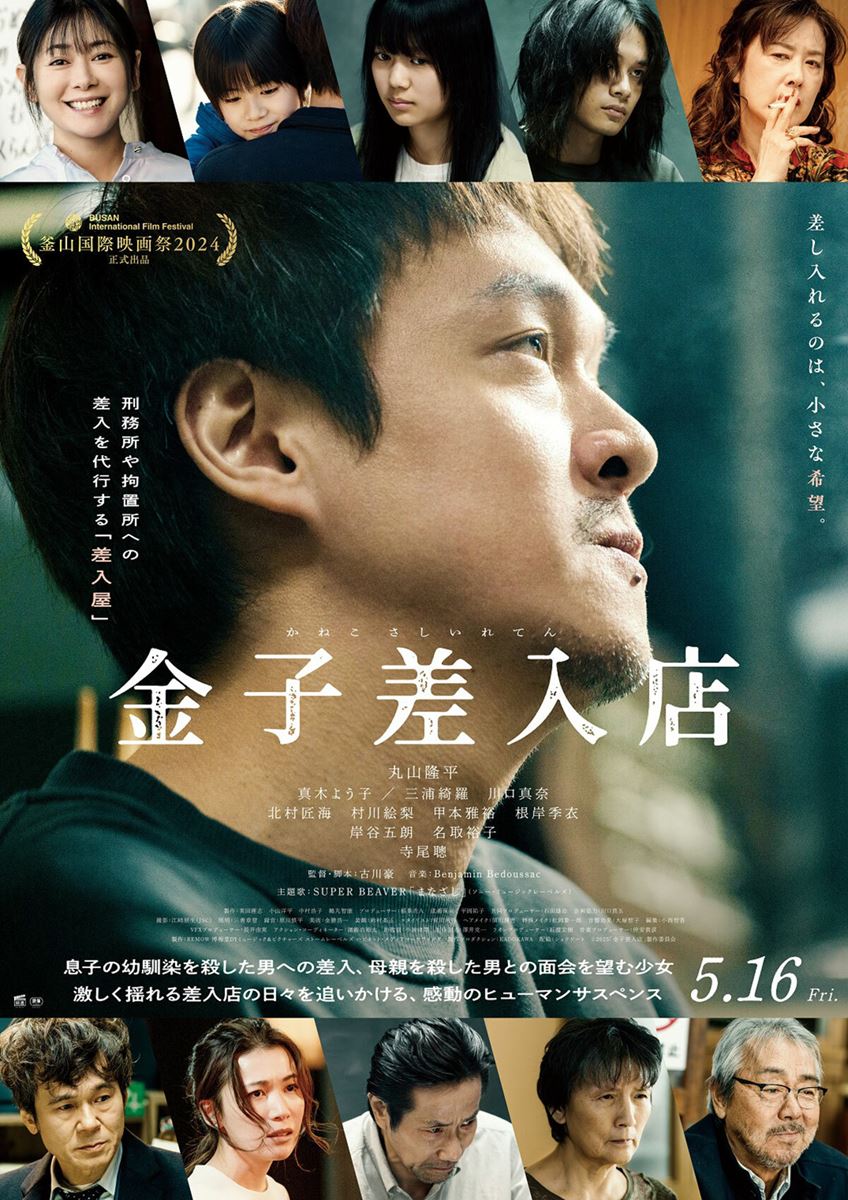
Kaneko’s Commissary (金子差入店, Go Furukawa, 2024)

The tranquil life a man has built for himself after leaving prison is disrupted by unexpected tragedy in Go Furukawa’s social drama Kaneko’s Commissary (金子差入店, Kaneko Sashiireten). The commissary of the title refers to a service run by those like Shinji (Ryuhei Maruyama) which handles deliveries to people in prison and arranges visits by proxy. In Japan, visiting hours only take place during the day on weekdays making it difficult for visitors who work regular jobs or live far away. There’s no way to make an appointment, either. Visitors must simply show up and wait with the possibility that it might not be possible so see their friends and relatives after all given that there are only so many meeting rooms available.

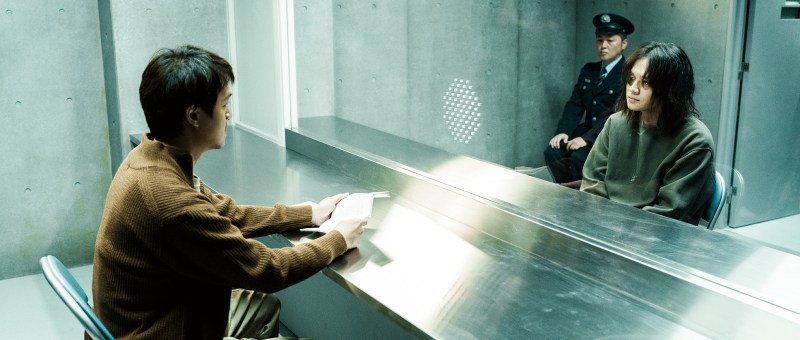
The commissary service is intended to mitigate this inconvenience by acting as a bridge between the imprisoned and their families, educating them about the prison system and advising them on what can and can’t be delivered. For Shinji it seems to be a means of atonement. Sent to prison for a violent crime when his wife Miwako (Yoko Maki) was pregnant with their first child, he’d angrily lashed out her when she skipped a visit little knowing it was because she was busy giving birth. Nevertheless, several years later he’s bonded with his son and is living a happy, peaceful life. The film subtly suggests that his is partly because he’s gained a strong and supportive familial environment anchored by his formerly estranged uncle who occupies the paternal space Shinji may otherwise have been lacking. He has a complex relationship with his mother who mainly visits when he’s not home to pressure Miwako into giving her money which she fritters away on toy boys much to Shinji’s embarrassment. It’s these complex feelings towards his mother that seem to fuel his fits of rage and threaten the integrity of his new family.

But by the same token, there is external pressure too in the low-level stigma and prejudice which surrounds them simply by virtue of their proximity to crime. Though they appear to be well accepted by the community, when their son Kazuma’s friend Karin in murdered by a young man with mental health issues, it refocuses the rage of the community on them too. Someone keeps smashing the flower pots outside their home, while Miwako is ostracised by the other women in the neighbourhood and de facto sacked from her part-time job because the other employees refuse to work on the same shift as her. Kazuma starts getting bullied at school because someone found out his father had been in prison, though what his father did is obviously nothing at all to do with him. 

In Japanese society, the extended family of those who’ve committed crimes is dragged into the spotlight. The mother of Karin’s killer Takashi is hounded by the media though as she says, much as she can’t understand why he did something like this, he’s a grown man and she’s not really to blame for his actions. Though we might originally feel sorry for her, especially as Takashi coldly rejects all her efforts on his behalf, she quickly becomes entitled and almost threatening. She pressures Shinji for news about her son, while he tries to avoid telling her that Takashi rejects her gifts and isn’t interested in her letters. Being forced to visit him tests the limits of his compassion as he too wonders if the man who killed Karin is really worthy of this level of care.

At the prison, he runs into another young woman who repeatedly tries to get in to see a prisoner despite the fact he keeps denying her requests. The lawyer Shinji works with has a theory about the girl, Sachiko (Mana Kawaguchi), and the yakuza she wants to wants to see. Now institutionalised, the yakuza discovered there was no place for him on the outside. His old boss was no longer around and he had no status in the underworld, so he probably committed a crime to be put away again, but at the same time maybe there was more to it than that. People save each other in unexpected ways, even it’s just with gentle acceptance and patience with a world that it is itself often lacking in the same.


Kaneko’s Commissary screens as part of this year’s Japan Foundation Touring Film Programme.

Trailer (no subtitles)

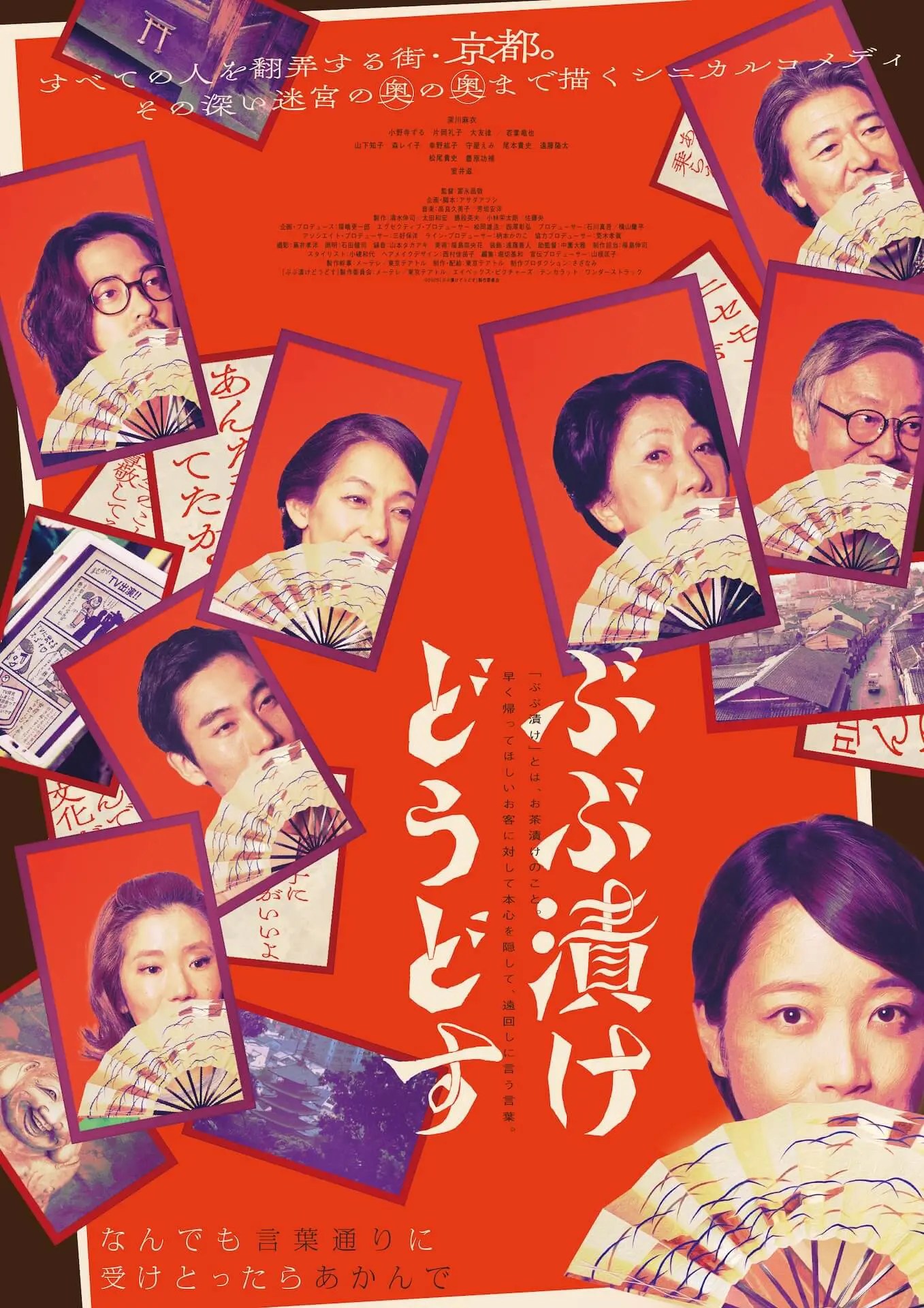
Strangers in Kyoto (ぶぶ漬けどうどす, Masanori Tominaga, 2025)

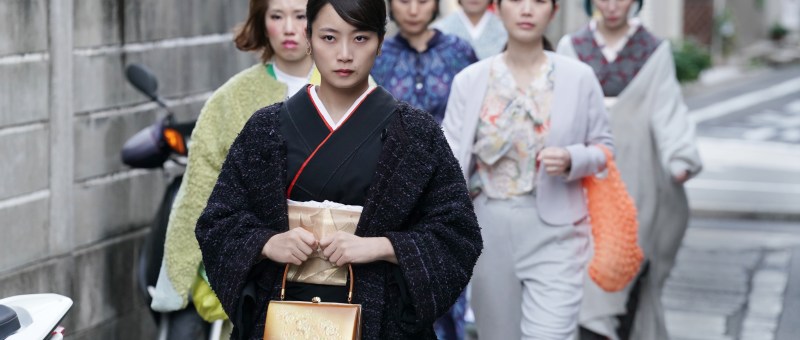
A former capital city, Kyoto is renowned as a historical centre and seat of tradition. But on the other hand, no one wants to live in a museum and while some of these old-fashioned ways of life might seem quaint or comforting, they’re also burdensome and for some an unwelcome imposition. Madoka (Mai Fukagawa), the wife of the 14th heir to a Kyoto fan seller is full of earnest wonder, but she’s also an outsider here and bringing with her own preconceptions and anxieties. 

To begin with, she’s come as a kind of cultural anthropologist directly interviewing local people to gain material for the manga she’s drawing with a friend. When one of the ladies she’s talking to explains that she runs a cafe in a former bathhouse that’s been sensitively adapted so that his traditional space can find new purpose in the modern world, Madoka is visibly disappointed which of course causes offence to her interviewee. Something similar happens when she interviews a woman running a traditional sweet shop who explains that their top-selling items are their halloween specials. They no longer sell anything that would have been on sale when the shop opened a few centuries ago. 

Madoka, who is not from Kyoto, is obsessed with preserving the city’s “true face” and fails to see that these businesses have survived because they’ve been able to adapt to the times when others could not. Repurposing old buildings to house modern businesses is one way of keeping the city alive. Meanwhile, she idolises her mother-in-law’s traditional lifestyle, but is after all experiencing it from the perspective of a guest. It may very well be much nicer to eat rice cooked over an open flame, but she’s not the one who’s got to get up early to stoke the fire or spend hours stirring the pot. She takes her responsibility as the wife of the 14th heir so seriously in part because she doesn’t understand what it entails. Her husband, Mario, meanwhile is keen to remind his mother that he has a life in Tokyo and won’t be returning to take over the shop, at least as long as his father is alive. 

Mario tries to warn Madoka about the complex nature of Kyoto social etiquette, but she fails to understand and makes a series of embarrassing faux pas that gradually destabilise the local equilibrium. In Kyoto, a particular brand of politeness rules in which one’s true feelings are never expressed openly but only through barbed comments that everyone nevertheless understands. So, when someone wants you to know that the party’s over and it’s time you went home, they’ll politely ask if you want any green tea over rice. This level of subtlety is lost on Madoka who comes from a city where size of the community means you have to be explicit.

It never really dawns on her that mother-in-law might have become so fed up with her that it’s easier just to sell the house and end 450 years of tradition than to tell her go home. Then again, it seems like she may be missing some social cues in Tokyo too, while it’s also fairly obvious in any culture that putting her awkward interactions into the manga could end up upsetting those around her. They do, after all, have a point that it’s inappropriate for her to make herself the self-appointed guardian of a place she’s isn’t from and doesn’t live in, disregarding the thoughts and feelings of those who do (not that they really told her what they were). 

Perhaps as she said she’s beginning to understand Kyoto in this regard by fighting back passive aggressively to claim her right to take over the fan shop. She might have a point about the comparatively ugly and utilitarian apartment blocks taking over the city as old buildings are bulldozed to make way for the new, but on the other hand it may not be possible to continue this business as it is and simply bringing in more tourists who’ll just clutter up the place and not buy anything may not be the answer. What the answer is may not be clear, but Madoka at least seems to have found her little niche in the heart of Kyoto, even if it is no longer so polite as to keep its irritation to itself.


Strangers in Kyoto screens as part of this year’s Japan Foundation Touring Film Programme.

Trailer (English subtitles)

Images: ©2025 Strangers in Kyoto Film Partners