Jeans Blues: No Future (ジーンズブルース 明日なき無頼派, Sadao Nakajima, 1974)

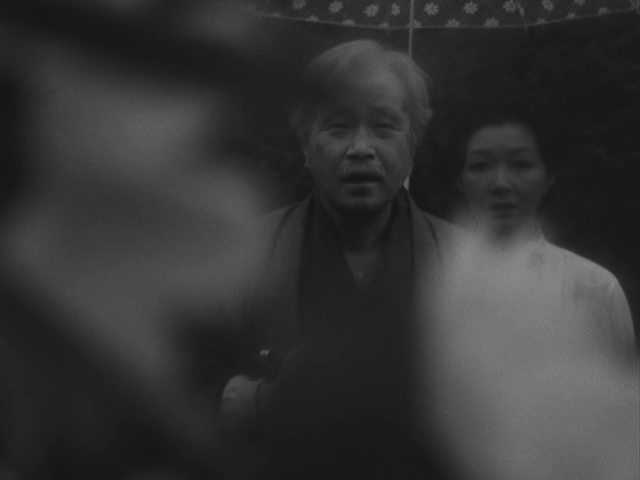
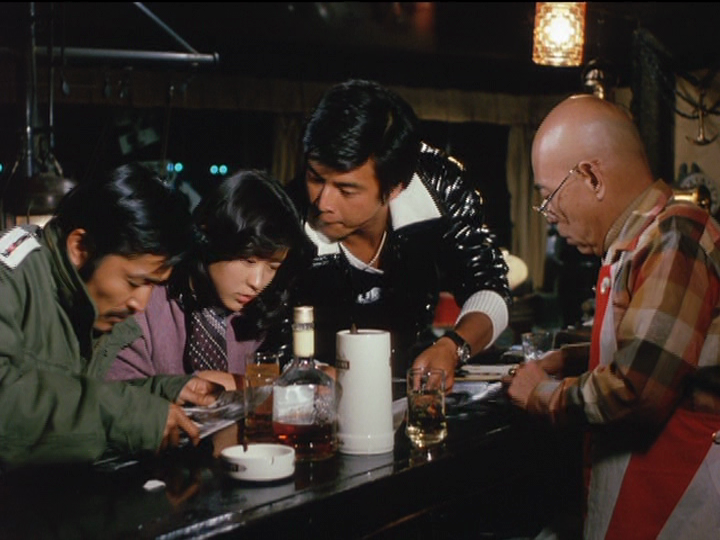
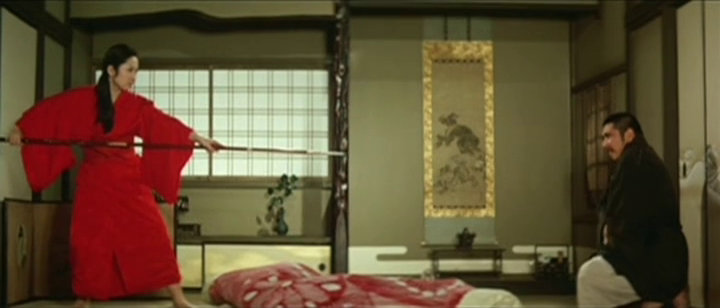
Nihilistic lovers on the run make a break for the sea only to find their pathway blocked in Sadao Nakajima’s anarchic love tragedy, Jeans Blues: No Future (ジーンズブルース 明日なき無頼派, Jeans Blues: Asu naki Buraiha). As the title suggests, the heroes find themselves devoid of hope, pressing the accelerator as far it’ll go with no clear destination in sight and nothing really left to lose while discovering a twisted kind of salvation in their unlikely connection.

Sensing danger in the air, grave-digging drifter Jiro (Tsunehiko Watase) decides to run off with all the money after his gangster friends off a moneylender on the orders of a businessman. Meanwhile, across town, bar lady Hijiriko (Meiko Kaji) decides to walk out on her unsatisfying life taking some money from the till and her boyfriend’s car for good measure. The pair quite literally collide, but realise that they are much the same in their growing sense of emptiness and impossibility. Nothing really really interests Hijiriko anymore, and watching the car burn after Jiro tossed a cigarette is the only thing that’s made her feel alive in eons. Running through his many and various jobs, Jiro reflects that work is “no fun” either and that the reason he wanted the money was for his sister who he says has run up huge debts paying for medical treatment for a close friend and is now facing the threat of being forced into sex work. 

His sense of impotence is palpable in his desperation and the knowledge that there is no good way to come by large amounts of money especially for a young man from the country with limited prospects. At one point he is beaten by a man with a golf club, a symbol of the class privilege and middle class success that will always elude him. The money, much more than he needs for his sister, gives him a new sense of confidence and possibility even if he remains somewhat frugal, picking up an old banger from a second hand car salesman that immediately blows a tire and apparently belonged to “Koji the murderer” which explains the huge dent in the bonnet. Yet he does at least pay his way, even leaving a collection of notes next to the body of a man he ran over intended to pay for medical treatment which casts him as something of a naive innocent cast adrift in a corrupt society and driven into criminality by desperation.

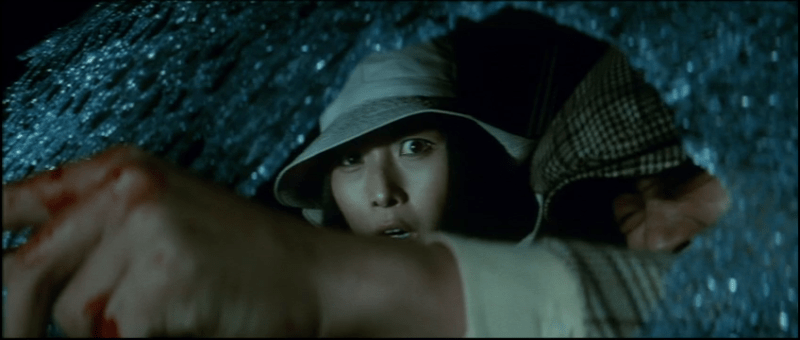
Trapped inside a shipping container and fearing he may be about to die, Jiro comes to see his fate as karmic retribution for having taken the money that was earned by killing others. Inside the container, the pair are in a sense already dead but also undergo a kind of rebirth if only one fuelled by desperation and the connection that has arisen between them. Hijiriko appears to be suffering from some kind of trauma, experiencing a flashback to the orgy going on at the bar which she had been invited to join but declined much to her customer’s disappointment. He remarks that she always did before, a comment which seems to annoy her though perhaps not as much as the arrival of an older woman a male voice tells her on the phone is a actually quite wealthy and doesn’t need the money but does sex work as a kind of hobby. 

It’s Hijiriko who begins to fight back against the world, dressed in the stylish black leather suit Jiro buys her while he struts around in a cap and three-piece tartan suit. Jiro does not actually kill anyone, but Hijiriko does without a second thought perhaps because she herself is already dead. Using her sexuality as a weapon, she asks a hunter if she can hold his gun and trying his luck he lets her only to end up getting shot when he tries to fight back. The pair rob a petrol station for money but come up with only a few notes and coins while the attendant reveals they’ve already made their daily deposit at the bank signalling just how out of luck these lovers really are. They’re bound for the sea, but travel to the mountains and find there only danger and disappointment. Nakajima lends their flight from a dissatisfying existence a kind of desperation in its breakneck pace and frenetic camera work but equally injects a sense of cosmic irony in the many coincidences and reversals that frustrate the lovers’ escape and in the end leave them only one way out from the society which constrains them.


Original trailer (no subtitles)
The Parades (パレード, Michihito Fujii, 2024)

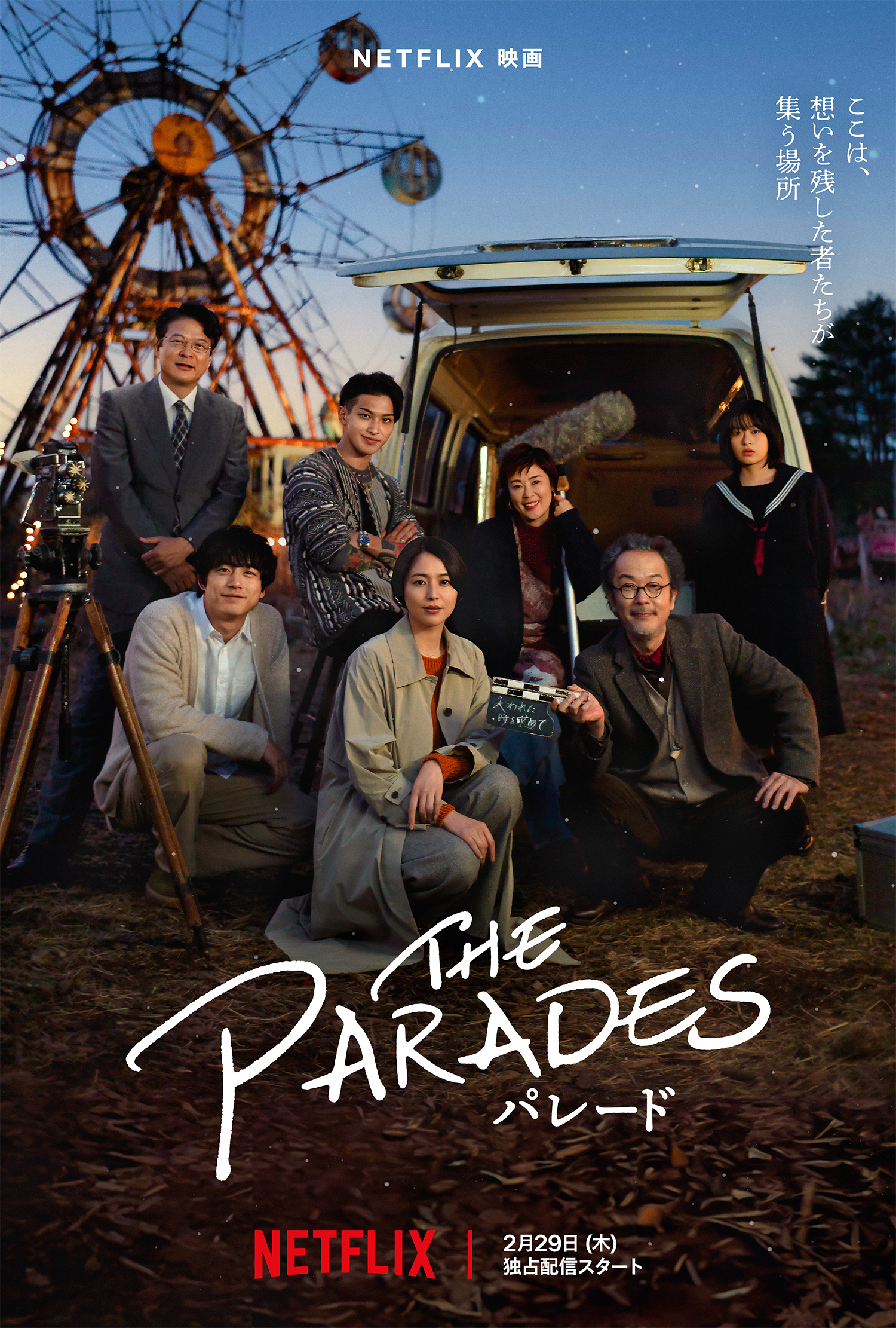
Living a life without regrets is easier said than done. The protagonists of Michihito Fujii’s The Parades (パレード, Parade) each have unfinished business that prevents them moving on from this world, but what they discover is an unexpected sense of solidarity among similarly lost souls as they try to lay themselves to rest. After all, all they can do now is observe and reflect while helping others like them with their own lingering doubts and regrets.

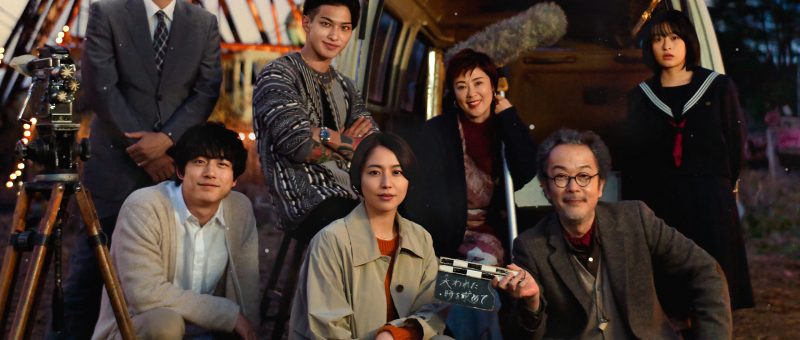
Drawing inspiration from the 2011 earthquake and tsunami, Fujii first introduces us to Minako (Masami Nagasawa). A 35-year-old single mother, she wakes up on a beach and frantically looks for her seven-year-old son Ryo (Haru Iwakawa) little realising that the reason no one seems to be able to hear or react to her is because she’s already dead. Picked up by fellow ghost Akira (Kentaro Sakaguchi), she’s taken to a disused fairground that doubles as a hub for wandering souls. Though it takes her a while to accept her new situation, she gradually bonds with others at the camp each of whom have their own unfinished business which isn’t all that different from her own in that they mostly want to be sure the people they left behind will be alright.

The film takes its name from the monthly processions in which wandering souls meet by lantern light to look for their missing people together. This sense of solidarity and empathy seems to echo the best of humanity along with a melancholy longing. There appears to be little rancour in this afterlife, a yakuza who was killed in a gang war simply feels sorry for his father and so guilty about the girlfriend he left behind that he’s been afraid to face her for the last seven years, and a high school girl who took her own life because of bullying first thinks her unfinished business is vengeance on the bullies but later accepts is actually a desire to apologise to her best friend who then had to take the brunt of the bullies’ cruelty on her own.

What the film seems to say is that we should have more of this fellow feeling in life. Former film producer Michael (Lily Franky) constantly references his days as a student protestor remarking that they might not have amounted to very much but at least they had unity. His regret is less his failed revolution than a moment of emotional cowardice that saw the woman he loved marry someone else instead. Constant references to the end of Casablanca echo their plight as if Maiko (Yuina Kuroshima / Hana Kino) married Sasaki (Ayumu Nakajima / Hiroshi Tachi) for the good of the revolution though she really loved Michael who unlike Rick just walked out on it because in the end he wasn’t brave enough to risk the consequences of its success or failure. 

The world building may not always be consistent and the rules of this universe appear unclear. It seems that in general the ghosts don’t linger long. Even the heavenly liaison Tanaka (Tetsushi Tanaka) appears to have been dead not longer than 40 years with Michael seemingly the only other long-stayer with the others’ deaths fairly recent. In general they are only really waiting for themselves or others, wanting to make sure that their loved ones will be alright in their absence even though there’s nothing more they can do for them now other than observe. Though they can walk through this world and interact with physical objects, their presence is otherwise invisible unless the person they wish to contact happens to be in an altered state. To this extent, the resolution may seem like a bit of a cop-out but does lend an additional poignancy and imply that these lessons learned in limbo can still be taken into the mortal realm creating additional empathy and solidarity among the living so that they may be able to live their lives freely and fully perhaps not entirely without regrets but at least with fewer of those that would prevent them from moving on when their time comes. But even if they find themselves trapped in limbo, they’ll hopefully find others like themselves and a gentle sense of hopefulness about what’s to come even as they prepare to leave this world.


Trailer (English subtitles)

Lightning (稲妻, Mikio Naruse, 1952)

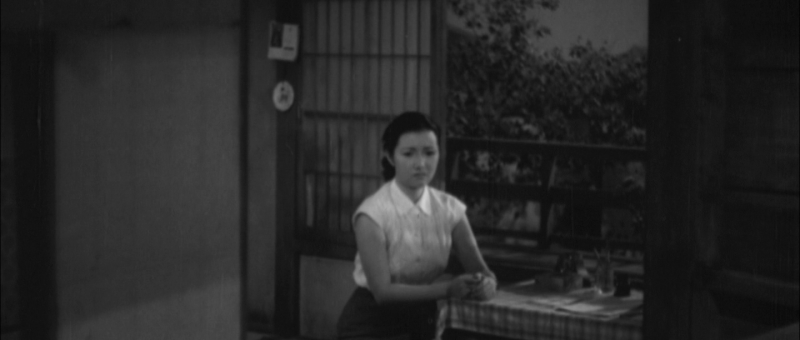
In many ways despite its matter of fact bleakness, Lightning (稲妻, Inazuma) is among the more optimistic of Mikio Naruse’s films ending on a note of cheerfulness and hope in which the storm has been broken and the heroine seems to have rediscovered a sense a faith in humanity. Yet the attitudes she displays are often contradictory and firmly at odds with the kind of Shitamachi spirit one might find in the films of a director such as Yoji Yamada in films like The Sunshine Girl released a decade later.

The qualities that most define Kiyoko (Hideko Takamine) are, as her mother Osei (Kumeko Urabe) suggests, an inner strength that eludes her older sister Mitsuko (Mitsuko Miura) and a forthrightness that sees her struggle to pursue the kind of life she wants rather than that she is expected to lead. Yet some might see her as snobbish and judgemental, at times attacking her mother for having married four times and given birth to four children each with different fathers. In this she sees a particular moral failing on the part of Osei, but perhaps also expresses a deeper distrust in her mother’s repeated attempts to find stability only through harnessing herself to a man. 

Echoing Takamine’s role in Hideko the Bus Conductor, Kiyoko has a job as a tour guide showing off the sites of bustling Ginza though explaining that this part of the city only really comes alive at night. The job gives her a sense of independence and self-sufficiency a woman in this era is not really permitted to have. Her oldest sister, Nui (Chieko Murata), asks if she contributes to the household but the meeker Mitsuko replies that she wanted to but they told her to save her money instead. In any case, it’s towards marriage that she’s pushed when Nui attempts to play matchmaker brokering an engagement with a 35-year-old baker, Goto (Eitaro Ozawa), who has aspirations of opening a love hotel into which Nui and her feckless husband Ryuzo (Kenzaburo Uemura) have invested. Of course, it turns out that Nui is herself having an affair with the baker who is oily in the extreme and disliked by most of the family though eventually manages to make his way into the beds of two of the sisters.

Kiyoko has little desire to marry and asks her mother if any of her four marriages made her happy, but her mother only says that happiness is not an important concept hinting the hardship she’s faced in her life and that a woman of her generation may have had to put up with a certain of degree dissatisfaction to keep a roof over her head and food on the table. While working on the bus, Kiyoko spots Mitsuko’s husband talking to another woman in the street but decides to say nothing only for him to suddenly die and the woman turn up with a baby asking for financial support. Kiyoko tells her sister that marriage is hell, but she smiles and says Kiyoko will be the exception in an expression of the various ways in which women enforce these arcane social codes against each other despite their own misery. Mitsuko too wants to escape but admits she doesn’t have Kiyoko’s courage which is how she too eventually falls into the clutches of Goto much to her sister’s disappointment. 

There is something undeniably poignant in Kiyoko’s frustrated defiance, looking longingly at the paintings and books of their lodger, a young woman from a more middle-class family working her way through university. Kiyoko says she wants to study too, but her mother shoots her down. She’s already 23, and it’s a little late to be picky about marriage let alone strike out for a more stereotypically middle-class life with a white collar job and nice house in the suburbs. It’s the suburbs though to which she eventually moves, without even bothering to tell any of her family. When the nice landlady asks if she has any she admits she has but also has nothing to do with them, which earns her a confused frown. She later says something similar to the pair of piano-playing siblings who live next-door in a kind of suburban utopia, quite clearly ashamed of her humble Shitamachi roots and family members she sees as common and immodest.

In any case, her admiration of the siblings and obvious attraction to the brother (Jun Negami) who is so much more sensitive and caring than her own (Osamu Maruyama) who appears to use the wartime bullets lodged inside him as an excuse not to move on with his life, suggest that she is still in the end looking for a conventional family only one she sees as more positive (or just posher). Perhaps it’s not so much marriage she rejects but dependency and subjugation, believing a marriage to a man like this might be one more of love and equality than the dissatisfying relationships experienced by her mother and sisters. The expressionistic bolt of lightning which appears during a difficult conversation with her mother is like the breaking of a storm, a kind of letting go in which her resentment begins to melt away and her mother agrees to retreat realising that unlike Mitsuko she can take care of herself and to that extent at least is an independent post-war woman. Ambivalent, but in its way warm and forgiving the film gives Kiyoko permission to embrace her aspiration, defy the social codes which constrain her and seek her own happiness, but also allows her to shed her cynicism in rediscovering a faith in humanity and re-embracing her admittedly imperfect mother all while leaving her behind. 


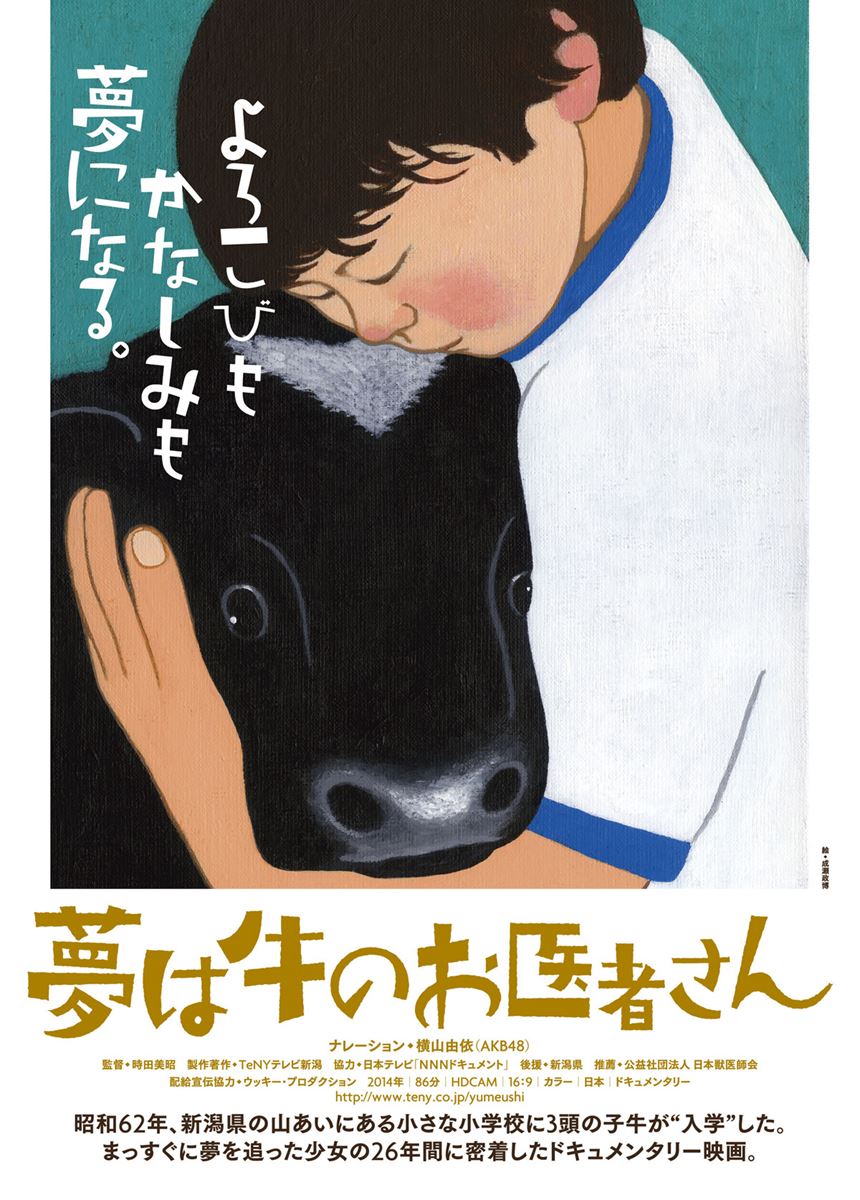
A Little Girl’s Dream (夢は牛のお医者さん, Yoshiaki Tokita, 2014)

The Japanese title of Yoshiaki Tokita’s observational documentary A Little Girl’s Dream (夢は牛のお医者さん, Yume wa Ushi no Oisha-san) is “I Want to be a Cow Doctor”. Following his heroine over a period of 25 years, Tokita attempts to tackle such varied themes as rural depopulation, the difficulties faced by those working in the agricultural industry in the late 20th century, and the changing ways of life in the countryside while essentially telling an inspirational story about a little girl who managed to achieve her childhood dream through hard work and perseverance and is now living a happy and successful life. 

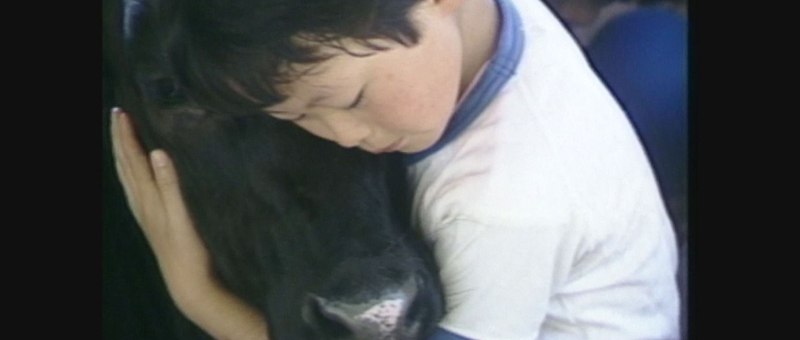
As might be imagined, these competing themes produce a tension in Tokita’s filmmaking, not least among them the paradox in that by becoming a “cow doctor” Tomomi will necessarily become complicit with an industrial system in which it can never be forgotten that these are “economic animals”. Tokita opens the film with scenes from 1987 when he first began the documentary while filming a piece for NHK about a rural school which took on three calves as “new students” because there were no pupils admitted that year and therefore no graduation ceremony. These are all rural children and perhaps they are under fewer illusions about where their meat comes from, but it can’t be denied that raising an animal that will later be sold is emotionally difficult even for adults let alone nine-year-old children. 

Consequently many of them cry during the “graduation ceremony” they hold shortly before the cows are to go to auction (we later find out they were all bought by the same local dairy farmer who agreed to the children’s request they be kept together like siblings). Having become quite attached to them, Tomomi determined to become a vet after noticing many of the cows suffered from health problems. She adopts a “pet” cow at home, along with various other animals including a rabbit, though her family also raises cattle and it isn’t clear what actually happened to the calf in the long term. 

The documentary only briefly touches on the difficulties of rural living on remarking that the family, who were primarily rice farmers, began raising cows as a means of supporting themselves through the winter so that Tomomi’s father would not have to leave the village to look for other work as many of the other farmers are forced to do leaving their wives and children behind. It also only briefly touches on the problems of rural depopulation in referencing the small number of pupils in the school which eventually closed a short time after Tomomi graduated while she had to leave home at 15 and live in a dorm to attend high school because there was no local access to continuing education. By the time the documentary concludes, there are only 20 houses still occupied in her home village, her parents’ among them. 

Meanwhile, Tomomi’s father remarks on the change in his business circumstances following international trade deals which have made it more difficult for local farmers to compete. Despite the compassion that gave birth to Tomomi’s dream, it is impossible to escape the reality that these are “economic animals” and that there is a monetary value placed on their lives. She has to make life or death decisions based on cost effectiveness rather than what is kindest and inform the farmer when the treatment costs would exceed the amount they could expect to earn from the animal in the future whether in terms of meat, births, or milk. Tomomi’s father had originally objected to her desire to become a vet in part because of the physical demands of dealing with large animals but also the emotional in an uncertainty that a woman will be able to set compassion aside in the course of her work. 

There is then a minor irony, in that Tomomi achieves her dream of becoming a cow doctor but does so by switching focus in deriving the pride she feels in her work from her ability to assist farmers and their continuing faith in her. The passage of time is evident in Tokita’s changing media from the home video-style VHS of 1987 to a more commercial widescreen in the closing stretches, yet his scattershot capture of the key moments in Tomomi’s path towards fulfilling her childhood dream occasionally robs them of their power while he remains otherwise torn between his inspirational tale and the grimness that sometimes lies behind it.


The Twilight Years (恍惚の人, Shiro Toyoda, 1973)

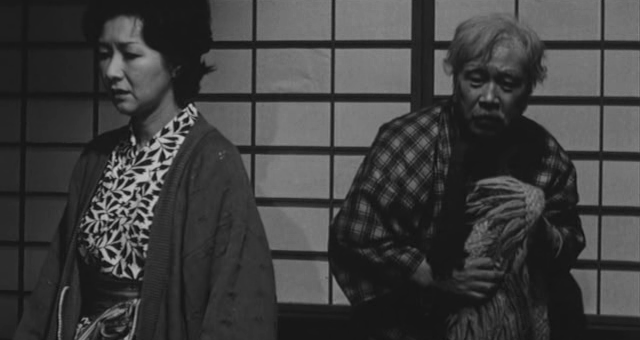
In the early 1970s Japanese society was not as concerned with population slowdown as it would come to be, but Shiro Toyoda’s sympathetic ageing drama The Twilight Years (恍惚の人, Kokotsu no Hito) is evidence of a growing consciousness that traditional ideas about how one cares for the elderly may now be becoming incompatible with the functioning of modern society. Based on a best-selling novel by Sawako Ariyoshi, the film has profound empathy both for the ageing patriarch once apparently a tyrant but now a meek and frightened child, and the daughter-in-law to whom his care largely falls.

In fact, it’s caring for Shigezo (Hisaya Morishige) that some believed shortened the lifespan of his late wife who passes away in the film’s opening scenes. Already somewhat detached from reality, Shigezo simply reports that his wife won’t wake up no matter how much he tries to wake her, much like a child who’s discovered someone no longer living. While his daughter-in-law Akiko (Hideko Takamine) rushes to her room with a sense of foreboding, Shigezo merely stays in the kitchen eating boiled potatoes straight out of the pan. It’s the odd behaviour that seems to irk his son Nobuyoshi (Takahiro Tamura) but it’s only now that the couple seem to be realising that there’s something wrong especially as Shigezo does not appear to understand that his wife has died. Pitiably, he chides her for lounging around so late in the day when she’s already been laid out for her funeral.

When his daughter, Kyoko (Nobuko Otowa), arrives having actually missed the funeral itself due to transport issues and a conflicting responsibility to act as a matchmaker at a wedding, Shigezo doesn’t recognise her. He continues to ask for Akiko and gradually forgets most of the other people in his life, screaming when encountering Nobuyoshi and instructing Akiko to call the police to report a burglar in their home. According to both women, Shigeyoshi had treated Akiko poorly ever since she joined their family, which makes caring for him so much harder. The reason he becomes so attached to Akiko is likely simply that she is the person who is always around him so he has less time to forget her. He may realise on some level that she may not wish to care for him given his previous behaviour which may be why he becomes preoccupied with the idea she may “disappear” and cries out in the night when he can no longer see her.

But Akiko also has other responsibilities including a job outside the home and a teenage son studying for his exams. Nobuyoshi expresses regret that he hasn’t been more help and voluntarily tries to pitch in, but lets himself off the hook given that his father doesn’t recognise him and becomes anxious in his presence. Satoshi (Izumi Ichikawa) meanwhile does try to do his bit but is young and a little resentful of the responsibility. As his dementia becomes more severe, Shigezo begins calling Satoshi “Dad” as if he were a child again. Which is all to say, Shigezo becomes Akiko’s responsibility and the strain of caring for him begins to affect her own mental and physical health leading her to fear that she too may die younger than she otherwise might have. 

Yet in exploring her options, Akiko finds little by way of support. Most nursing homes won’t accept patients with complex needs like Shigezo and conditions such dementia are often regarded as mental illnesses meaning her only option might be to put him in an asylum. Shigezo was attending an old person’s daycare centre, but later says he doesn’t want to go anymore because it’s full of old people and therefore no fun. While the film is sympathetic towards Akiko and the difficulties she is facing in caring for her father-in-law it also has profound empathy for Shigezo for though he has so many people who are doing their best to look after him, his increasing mental confusion quite obviously leaves him isolated and he must be incredibly lonely while trapped within his own reality. He develops a habit of saying “hello, hello,” as if he were answering the telephone which may be his attempt to communicate while he is also fascinated with a caged bird which may reflect his own sense of being constrained by his condition.

Later, the bird seems to symbolise Akiko too, trapped as she is within the domestic environment where all responsibility seemingly falls to her. Even so a young student couple she rents the annex to for a lower price in exchange for keeping an eye on Shigezo during the day remark that he may be in the ideal state for a human being having returned to early childhood in which there are no concerns or responsibilities and he is therefore unburdened by the weight of what is to live. Toyoda often uses handheld camera to symbolise the desperation and destabilisation of Shigezo’s existence in which Akiko has become his only fixed point. One of Nobuyoshi’s friends remarks that perhaps it was better when the average life expectancy was 50 and Nobuyoshi’s mother might have been lucky passing away peacefully while otherwise in good health. Still, as Nobuyoshi says, it comes for us all in the end and we should all try to be kinder to each other while we’re here.


A Muse Never Drowns (ミューズは溺れない, Nozomi Asao, 2022)

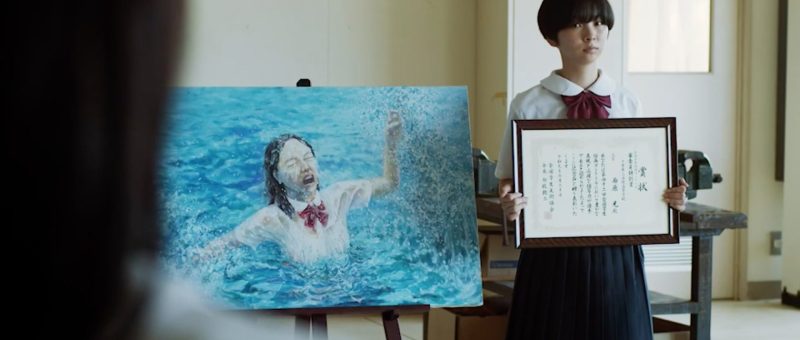
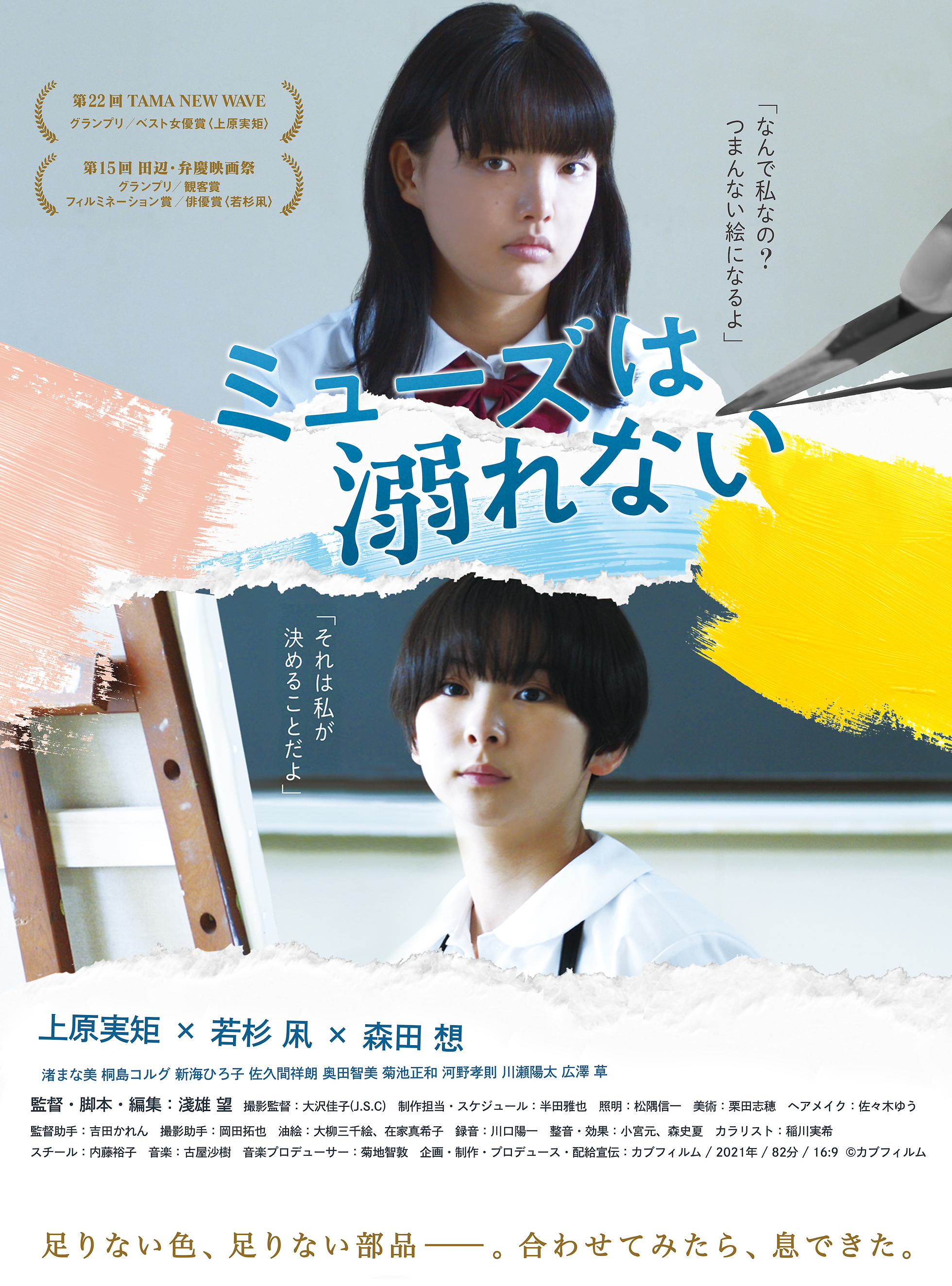
A teenage girl flounders amid a series of changes in her life while questioning her future and identity in Nozomi Asao’s empathetic coming-of-age film, A Muse Never Drowns (ミューズは溺れない, Muse wa Oborenai). Saku (Miku Uehara) is however drowning, a fact brought home to her by the relentlessly aloof Saibara (Mimori Wakasugi) who captures a sense of her panic and despair in a painting of her falling into the local harbour. Yet through their rather tumultuous friendship the pair eventually discover that they aren’t so different after all.

Saibara’s perfectly executed painting destabilises Saku on more than only level, firstly in her discomfort in having been seen and secondly in the insecurity it causes her in her own talent as an artist. Saku had wanted to go to art college, but a teacher harshly corrects her drawing style as if trying to push her towards a more authentic form of expression that’s less worried about getting it right than capturing a sense of what she sees and feels. Lacking confidence that she’ll get in, Saku is thinking about quitting the club in embarrassment but is persuaded to try making something else for the cultural festival while simultaneously receiving an unexpected entreaty from Saibara who wants her to pose for her next painting.

Most of the other students seem to resent Saibara for what they see as her superiority complex, believing she is aloof because she thinks she’s better than them. Because of her blunt manner, Saku too had thought her to be ultra confident and is surprised to realise that Saibara too is filled with doubts and anxieties even if she makes a point of pushing through them. Echoing her teacher’s words, Saibara admits that the lines don’t always come out the way she wants them either but all she can do is try to connect the dots. The reason for her aloofness is a vicious circle of deep-seated loneliness that convinces her she will ultimately be rejected, mirroring Saku’s conviction that she is a “boring” person, and therefore it is easier to remain alone from the start. 

Part of Saibara’s self-rejection is borne of internalised homophobia uncertain if others will accept her sexuality while harbouring a crush on Saku she doesn’t know how to articulate other than through her art while Saku too struggles with her feelings and is confused by the attention she receives from Saibara. Saku’s feelings of insecurity are informed by a sense of embarrassment that she has never experienced a romantic crush like her friend Emi (Kokoro Morita) who likes baseball player Endo despite knowing that likes he Saku, though Emi has also picked up on the way she looks at Saibara and is drawing conclusions about her lack interest in boys. Emi tells her that she accepts her whatever her sexuality is, but is hurt and confused when Saku remains silent and declines the opportunity to open up to her though perhaps partly because she does not really know the answer herself. 

Other than Saibara, Saku is the only one who hasn’t yet returned her careers survey still uncertain of the future direction of her life. Her father has recently remarried and he and her step mother Satomi (So Hirosawa) are expecting a baby all of which has Saku feeling somewhat adrift, displaced within her family and soon to lose her home which has been bought out for a new development project meaning they’ll soon be moving to a new house shorn of the memories of her birth mother and primed for her father’s new start. 

Yet through all her experiences, slowly bonding with Saibara and repairing her friendship with Emi, Saku begins to discover a path towards a more authentic art born of the desire to take things apart and put them back together again while quite literally feeling her way forward with her hands. Coming to terms with her new family circumstances, she builds herself a boat and is no longer drowning but drawing strength from her new found friendships with a renowned sense of possibility for the future while her friends do much the same in the knowledge that they are all scared and uncertain but doing their best to join the dots towards a happier future. 


Trailer (English subtitles)

Golden Partners (黄金のパートナー, Kiyoshi Nishimura, 1979)

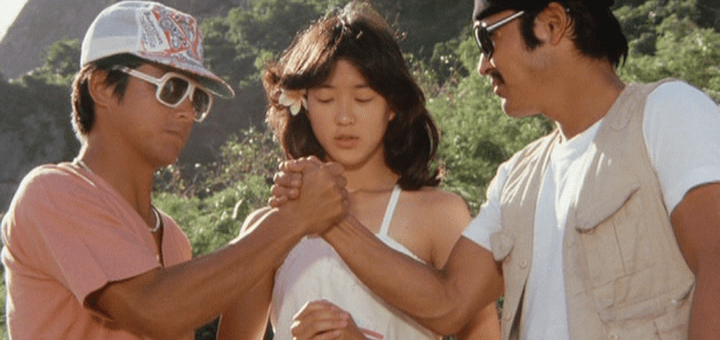
Kiyoshi Nishimura began his career in the action genre with a series of paranoid thrillers so it feels particularly odd to see him tackle similar themes in such a breezy, lighthearted way as 1979’s Golden Partners (黄金のパートナー, Ogon no Partner). Though based on a novel by Kyotaro Nishimura, the film seems to have been envisioned as an homage to Robert Enrico’s Les Aventuriers in following two men and a young woman on a quest to track down a missing person and also find a large amount of gold supposedly contained in a downed submarine. 

Kosuke (Tomokazu Miura) is a rather aimless young man who lives on a fishing boat and has a career as a freelance photographer taking photos of things people would rather weren’t photographed, while his best friend Shusaku (Tatsuya Fuji) is a motorcycle-riding policeman who has a strong sense of civic duty yet mostly spends his time giving out tickets to locals traveling slightly over the speed limit. They’re both good friends with the landlord at the Polestar bar whom they affectionately refer to as Pops (Taiji Tonoyama). Pops has let them run up a significant tab even though he doesn’t appear to have any other customers. In any case, their aimless days are interrupted when Kosuke begins hearing a strange SOS message but can’t seem to identify where it’s coming from to be able to help. Meanwhile, a young woman arrives looking for Pops and explains that her father, an old friend of his, has gone missing which may be connected to the mysterious stash of gold bars Pops is fond of talking about every time he has too much to drink. 

Figuring out that the SOS message is using a code employed by the Imperial Navy during the war, the trio embark on trying to solve the mystery partly to help the young woman, Yukibe (Misako Konno), and partly because they want to find the gold. Basically a buddy movie, the film has a childlike quality as it mainly follows the trio hanging out on the beach in Saipan solving puzzles and getting into minor arguments. Things take a slightly darker turn when Shusaku decides to stay on even after his paid leave from the police force ends despite realising it’s unlikely they’re going to find the gold bars or even figure out what’s happened to Yukibe’s father. Having realised that Yukibe likes Kosuke and despite his own feelings for her, he’s beginning to feel like a third wheel but in the end cannot bring himself to leave this unending holiday adventure.

But after making a shocking discovery, what they stumble on is a wartime conspiracy in which a corrupt spy killed the other men assigned to transport the gold and took it for himself. He then used it to become a rich and powerful man in post-war Japan, apparently suffering no consequences for his actions hinting at the essential corruption of the post-war society. Realising he likely can’t be prosecuted nor would justice really be served if he went to prison for a few years, they decide on blackmail as their way of recovering the gold little realising how far someone who has killed before will go to protect their secrets. Nevertheless, despite the conspiratorial overtones the atmosphere remains largely cartoonish rather than dark or threatening right up until another tragedy occurs and brings the whole thing to an end.

This laidback sensibility is aided by the soundtrack provided by Takao Kisugi who briefly appears at the end of the film as his city pop folk songs run constantly throughout. Nishimura’s use of a ghostly zero fighter as the gang investigate the former airbase on Saipan proves slightly uncomfortable though ties in with some ghostly imagery as an evocation of a past that’s apparently still very present and largely unresolved. In any case, like a classic children’s adventure story the film does not particularly engage with its larger themes but concentrates on the trio’s attempts to solve the mystery along with their zany plans and crazy stunts culminating in the guys parachuting out of a private plane after aiming it right at that of the bad guys in a moment of extreme irony. A little bit sad and more tragic than it perhaps ought to be, the film is nevertheless a warmhearted tale of male friendship, the childish glee of solving a mystery, and the satisfaction of getting one over on the bad guys even if it comes at a very high price.


Trailer (no subtitles)

Wonderwall: The Movie (ワンダーウォール 劇場版, Yuki Maeda, 2020)

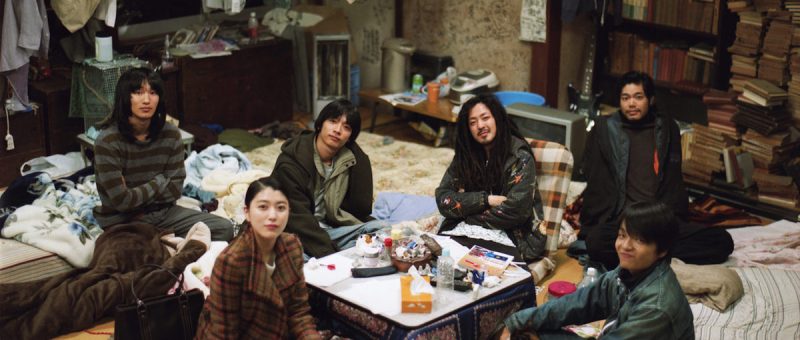
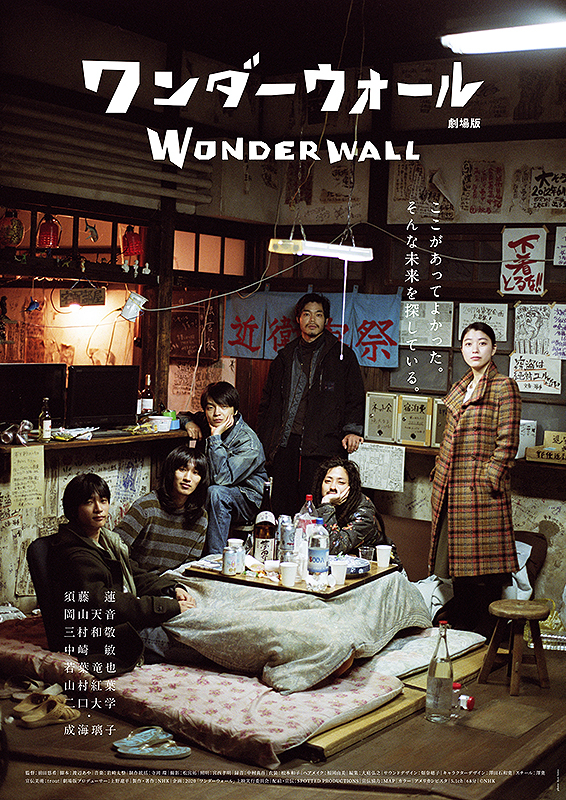
It’s funny, in a way, that young people are often the ones fighting to preserve the old while those in middle-age and beyond are largely keen to bulldoze the past for future gain. Yuki Maeda’s campus drama Wonderwall (ワンダーウォール 劇場版, Wonderwall: Gekijoban) sees a collection of students take a stand against the bureaucratic capitalism of their university in their attempt to save a much loved dorm but largely finding their efforts frustrated by an implacable hierarchy. 

The Konoe Dorm at Kyoto University was built in 1913, which is to say the beginning of the Taisho era in which arts and culture flourished in a rapidly modernising and international nation. As one of the students tells us, Konoe is run not by the faculty but the students themselves and operates like a commune in which there is no hierarchy, all are equal and equally responsible. They have regular “meetings” about various domestic problems such as refuse collection which can go on for hours because all decisions must be unanimous while they also operate gender neutral bathrooms so that everyone really can be equal and free to be themselves. It’s impossible not to see the university’s attempts to destroy it as an attempt on the students’ autonomy and an attempt to impose order on their bohemian existence. 

At more than one point, a student remembers walking past the alley that leads to the dorm in the dark and seeing the light glowing from its doors as if beckoning them in. In this space, the students inherit what has been passed down to them while teaching each other and the next generation what they know including the negotiation skills they’ve been using to argue their case in their ongoing battle with the faculty. The film’s title refers to a plastic screen that was placed in the student affairs office separating the students from the staff so that they could no longer meet them on their own terms. The narrator likens the wall to the one that fell in Berlin in 1989 and laments that back then we knocked walls down but now we only throw them up. The students argue that the dorm is well built and of architectural interest while it would otherwise be possible to renovate and bring it up to current earthquake codes if only the university would agree. Tragically, a sympathetic teacher who is forced to agree with them is then compelled to reverse his decision and shockingly dies not long after presumably from the stress of the situation along with his own inner conflict regarding the treatment of the students. 

Mifune (Satoshi Nakazaki), the leader of the protests, eventually becomes disheartened. They managed to oust the old battleaxe from the front desk and assumed they could take a step forward to the next boss, but she was merely replaced and by a pretty young woman to boot leaving the guys feeling like they’ll never win. It transpires that the university wants the land the dorm sits on to build a high rise along with additional medical and engineering labs as these are the subjects that bring in funding which is otherwise thin on the ground from the current government. Yet as a visitor says, if prosperity made you happy there wouldn’t be so many young people who feel they have no option other than to take their own lives. If so many people are fighting for its survival, the dorm must have something essential for human happiness. Mifune comes to describe his feeling for the building as something like love in the warmth with which it inspires him.

Quite poignantly, Maeda ends on a series of title cards revealing that the university now refuses to speak to the student body at all and has in fact silenced them, even going so far as to sue 15 tenants who refused the order to move out. Another of the students wonders if the dorm was a victim of its own success, that their “utopian” thinking left them unable to unite for a common goal and perhaps it would have been better if they’d turned to the dark side and gone in all guns blazing in a show of violent defiance. The action shifts to a pair of musical set pieces in which the students and well-wishers play the “Wonderwall” song as a makeshift orchestra breathing life into the rapidly dilapidating building’s walls while continuing to fight for the survival not only of the Konoe Dorm but everything it represents in the freedom and community the students fear will soon disappear from the their lives. 


Original trailer (English subtitles)

Let’s Have A Dream (九ちゃんのでっかい夢, Yoji Yamada, 1967)

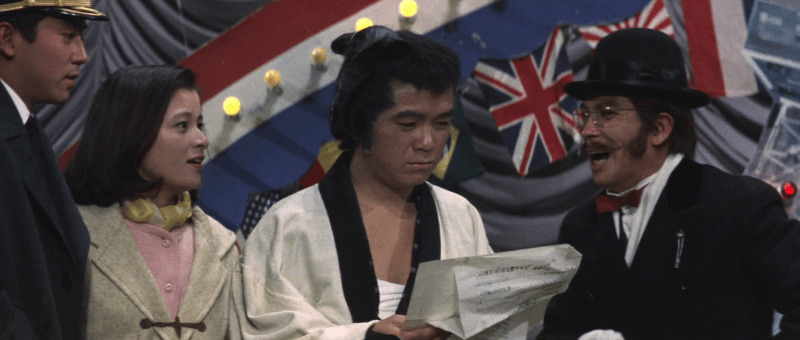
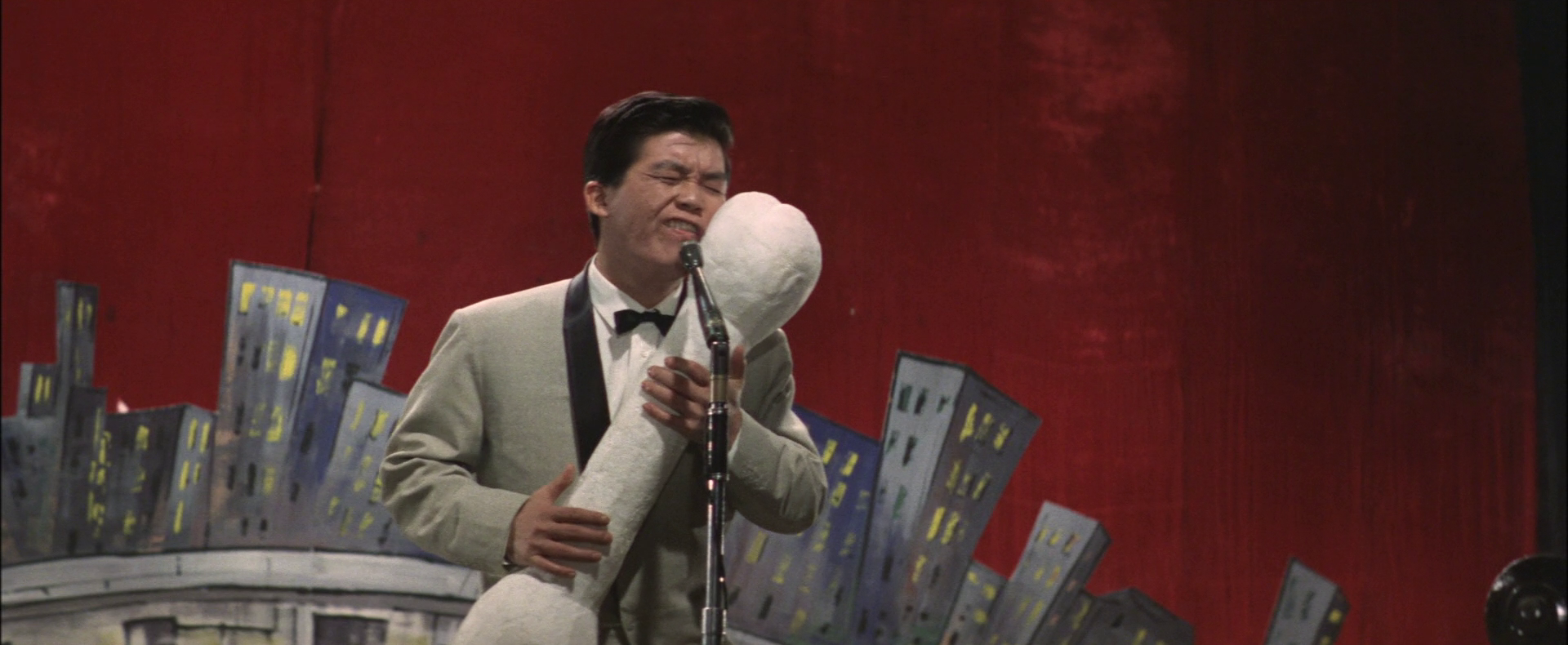
Convinced he’s dying of a terminal illness, a young nightclub singer yearns for death in Yoji Yamada’s romantic farce, Let’s Have a Dream (九ちゃんのでっかい夢, Kyu-chan no Dekkai Yume). In fact, the Japanese title is “Kyu’s Big Dream,” directly putting the name of the star into the name of the picture though he does in fact play a character called “Kyutaro” whose music career is starting to take off just as he convinces himself that his life is hopeless. Best known for “Ue o Muite Aruko”, Kyu Sakamoto was a huge singing star throughout the 1960s until his death in a plane crash at the very young age of 43.

Based on a novel by Nobuhiko Kobayashi who was working with Sakamoto on a television show at the time (and asked for a pseudonym because he wasn’t sure how the movie would turn out), the film is however partly an exploration of the nation’s growing internationalism. Indeed, the film opens with the Pan Am logo and then immediately travels to Switzerland where an elderly lady is dying having apparently never married or had children but still attached to the memory of her first love, a man from Japan. Accordingly, she decides to leave her entire fortune to that man’s grandson, Kyutaro (Kyu Sakamoto), which comes as a total shock to her closest living relative, “The wicked Mr Edward Allan Poe.” Her butler then vows to travel to Japan to tell Kyutaro the good news, but ends up sitting next to the hit man Edward Allan Poe hires on the plane.

But Kyu has already hired a hitman to take himself out because he thinks he’s suffering from a terminal disease and feels nothing other than fear and hopelessness. Though all he wants to do is die, he is unable to take his own life and so has decided this is the best way. He’s also in love with a childhood friend who works in a diner at the docks, but unbeknownst to him Ai (Chieko Baisho) has just got engaged to their other friend Kiyohiko (Muga Takewaki), a sailor. To add to the sense of European romanticism, Kyu writes long notes to himself about his sadness and melancholy all while the countess’ right-hand man continues to refer to him as the luckiest man in the world. 

In a running gag, the hitman speaks mainly in French and the Countess’ butler in cod German hinting at a new kind of internationalism. The hitman Kyu hires through shady local guy Pon (Kanichi Tani) is, however, much less sophisticated. He can’t afford a gun and fails to kill Kyu several times in other ways usually injuring himself in the attempt which again makes Japan look somewhat inferior to the rest of the world just as the opulent vistas of the Countess’ castle contrast so strongely with the down and dirty nature of the docks where Kyu lives and works. 

Despite being so desperate to die, Kyu pulls away when the hitman he hired tries to kill him which along with his inability to take his own life may suggest that he really does want to live after all. Though she evidently does not return his romantic feelings, Ai clearly cares for him deeply describing Kyu as like oxygen for her while trying to get to the bottom of what’s with wrong with him but it takes Kyu a little longer to figure out that people care about him even if not quite in the way he was hoping they would. Even so, there’s no denying the farcical quality of all that’s befallen him as he finds himself “the luckiest man in the world,” caught between two hitmen, and staving off eventual romantic heartbreak.

Still, even this plays into the melancholy sense of romanticism and elliptical ending as Kyu eventually gets to fulfil one of his big dreams by going to Europe and getting to live the life of a heartbroken count from a 19th century romantic novel. As a vehicle for Sakamoto, the film also features several of his songs along with dance routines and some otherwise goofy clowning while Chieko Baisho also performs a short but sweet rendition of My Bonnie Lies Over the Ocean. It’s all undoubtedly very silly but somehow heartfelt and wholesome for all its buried melancholy and deeply felt romanticism. 


Original trailer (no subtitles)
Wicked Priest 5: Breaking The Commandments (極悪坊主 飲む打つ買う, Buichi Saito, 1971)

The Wicked Priest returns for his final adventure and once again finds himself tackling the corruptions of the mid-Meiji society. Titled in English “Breaking the Commandments” (極悪坊主 飲む打つ買う, Gokuaku Bozu – Nomu Utsu Kau), the Japanese title refers to something Shinkai (Tomisaburo Wakayama) admits part way through, that his ironically non-buddhistic life revolves around drinking, gambling, and women all vices he seems unable to give up even as he continues to fight justice for the oppressed little guy amid the burgeoning capitalist society of the new Japan.

Indeed the film opens with him in a brothel where he’s exhausting one woman after another and demanding she be replaced with a fresh model while simultaneously covering for petty crook Hideji (Teruo Ishiyama) who is hiding his sex worker girlfriend in the cupboard to save her from a local gangster. In the first few instalment, Shinkai is a lecherous yet lovable rogue who in his own way respects women but in these last two instalments is certainly less kind, treating these sex workers more or less as disposable while later threatening to rape a lady gambler who tried to trick him. In any case, after realising that even Hideji who he went out of his way to help is trying to deceive him, Shinkai ends up getting involved with a local dispute over transportation licences and a nefarious land-sharking plan run by thuggish gangsters with the collusion of the police chief.

The land sharks want to take over the abandoned mansion where Hideji and his family of crooks are currently living in the company of a former samurai lord who seems to be suffering with some kind of delusion that it’s still the Sengoku era. The police chief isn’t up for the idea at first but the gangsters falsely imply that those living in this area of town are merely “jobless people and criminals” that they don’t need to worry about. But their plan depends on bringing on board Wajima who holds the license for running freight carts but Wajima is an honest man who isn’t interested in bribes and has no respect for those who exploit others. He refuses to participate in the project.

Shinkai too refuses to let the gangsters get away with mowing over Hideji and the others and is once again saved by Ryotatsu (Bunta Sugawara) who agrees to put off their final fight until Shinkai is finished cleaning up this dirty little town. He largely does this by donning an elaborate disguise and teaming up with lady gambler Gin to trick conspirator Kawashima into giving back Wajima’s (Takashi Shimura) license after setting him up so he’d lose it. Meanwhile he also tries to repair another broken father-son relationship between Wajima and his errant boy Ryutaro (Kyosuke Machida) whom he’d kicked out some years previously after he became a yakuza and got into trouble with the law. 

What seems clear is that the chaos of Meiji has allowed the greedy to profit over the changing orders of the hierarchical society, no longer bound by traditional notions of good conduct or basic humanity. The police chief first objects to the plan, stating that many people living in the area the gangsters have earmarked for their docks are honest and hardworking and shouldn’t be lumped in with “criminals”, but is soon won over by a bribe and is also supporting a mistress in a separate household. Yet even so, Shinkai turns this same weapon back on Kawashima (Fumio Watanabe) in pretending to be a general from Tokyo who will soon be his father-in-law, leveraging his social advancement to bring him back into line in appealing to his greed and ambition while hinting at a militarist future in reminding him that Wajima’s carts were essential during the Satsuma Rebellion and may be so again should the occasion call.

After seeing off a series of bounty hunters, one sent in via a honey trap that suggests the gangsters really know their enemy, Shinkai has no option but to clear out the corruption himself at the point of a sword culminating in another bloody showdown which is also in its own way a means of protecting Ryutaro from a pointless revenge. “If I die the devil in hell will be in for a big surprise!” Shinkai cooly remarks as he marches off to fight for justice, but then there’s another battle waiting for him in the postponed grudge match with Ryotatsu as the two men tussle atop a sand dune ironically trapped in a co-dependent cycle of vengeance and salvation while Shinkai’s wandering most likely will never end.