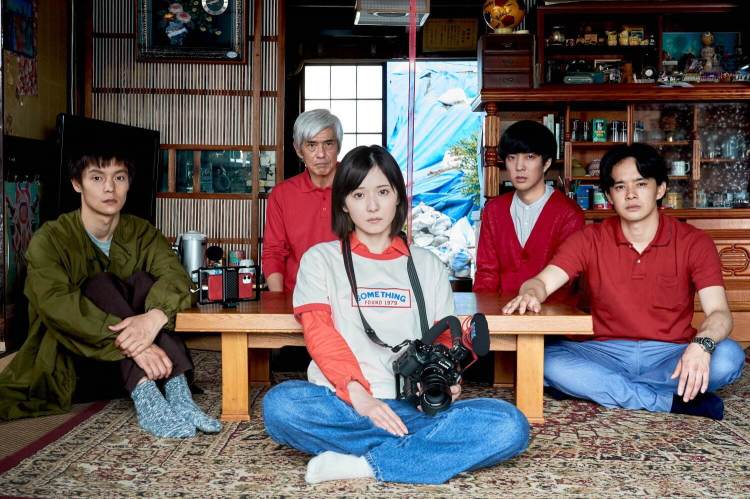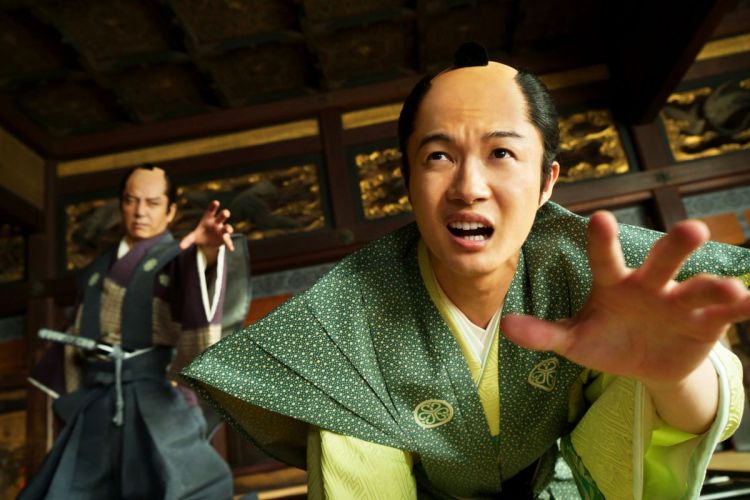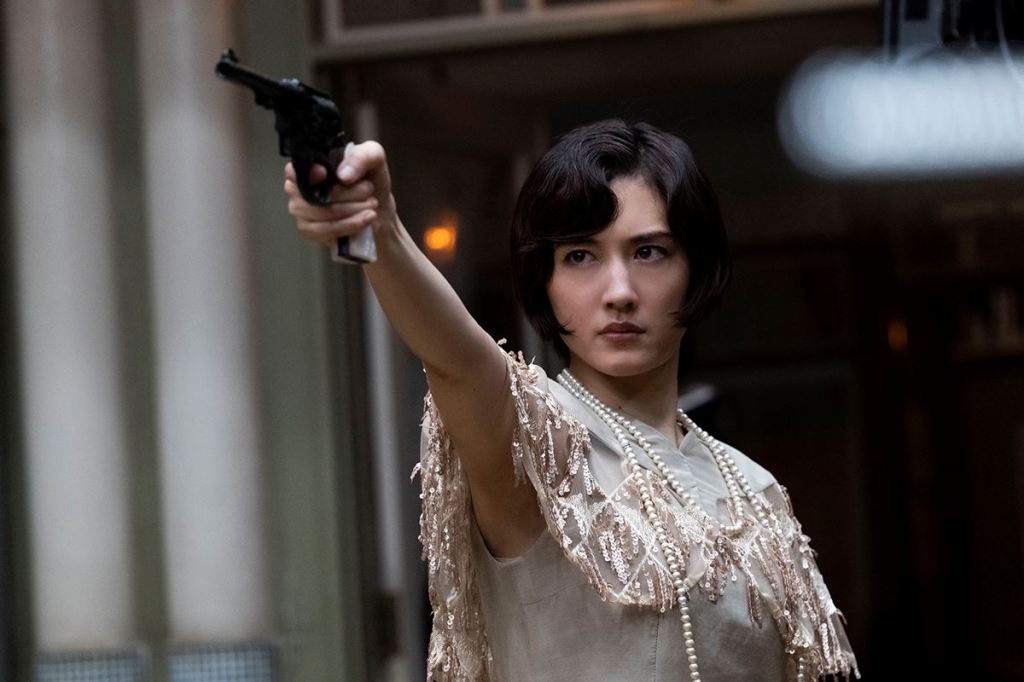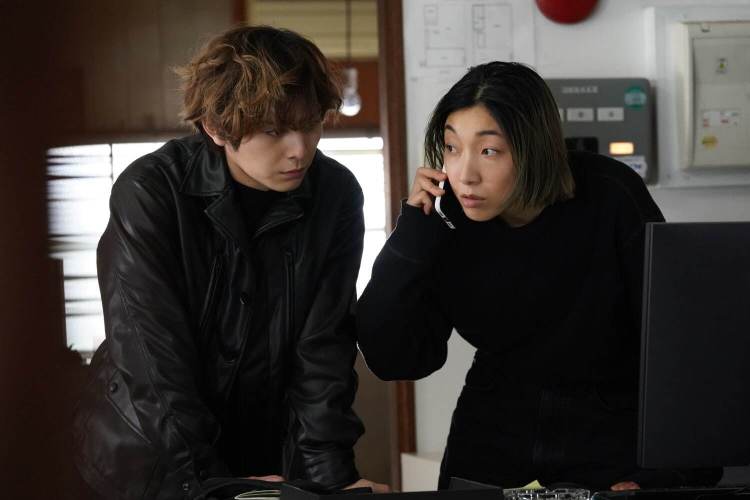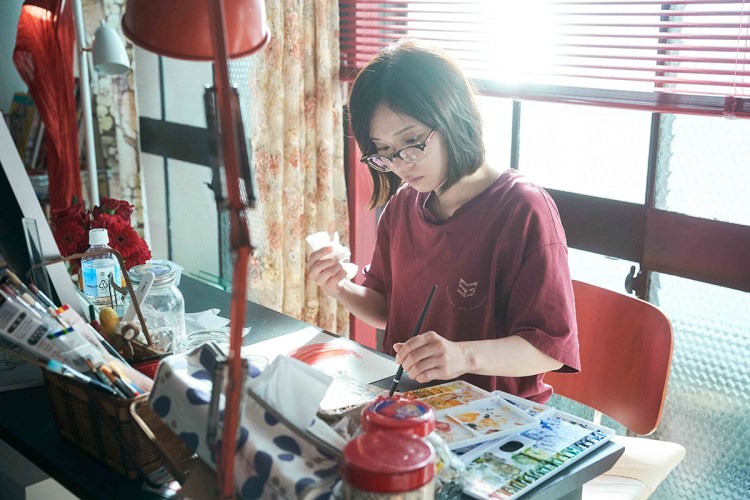
The Petrified Forest (化石の森, Masahiro Shinoda, 1973)

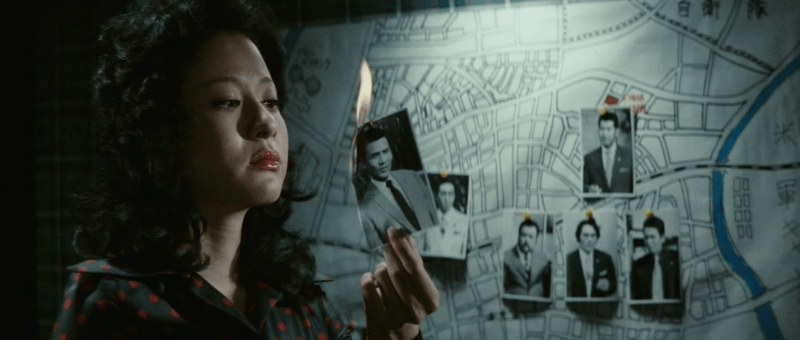
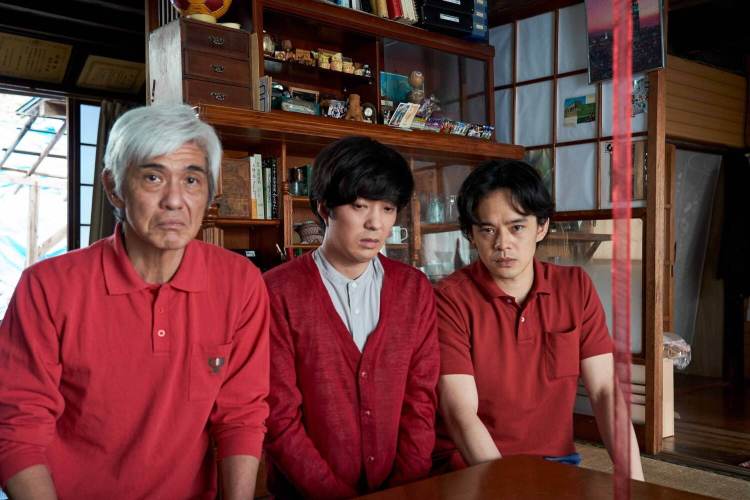
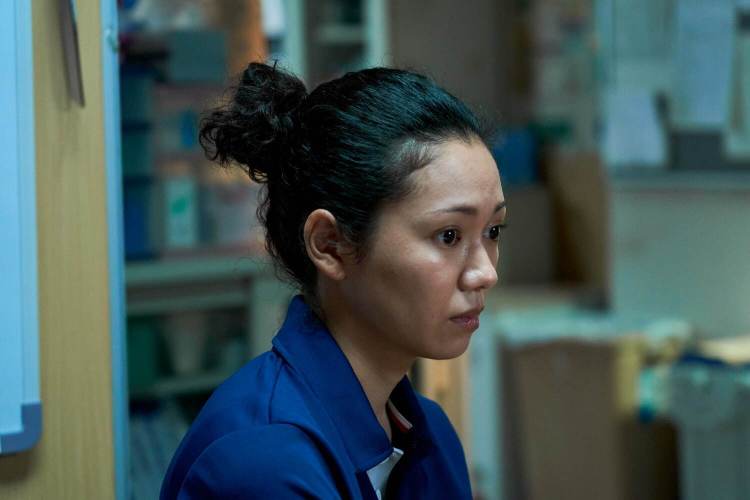
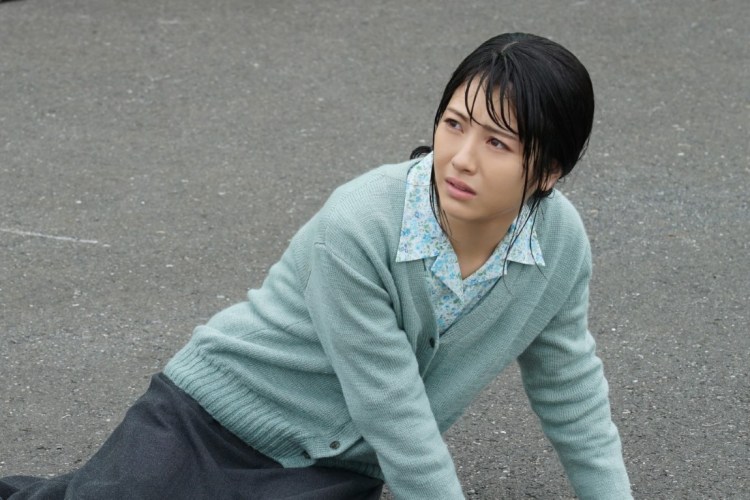
An angst-ridden medical student wrestles with truth and responsibility while drawn into a toxic relationship with a childhood friend and trying to avoid the estranged mother he resents in Masahiro Shinoda’s dread-laden melodrama The Petrified Forest (化石の森, Kaseki no Mori). Based on a novel by Shintaro Ishihara who later became a very conservative mayor of Tokyo and made his name with a series of “Sun Tribe” novels centring on the nihilistic hedonism of wealthy post-war youth, Shinoda’s noirish drama paints contemporary Tokyo as a duplicitous place in which hate is the only possible emotion and self-delusion the only path out of existential loneliness. 

Haruo’s (Kenichi Hagiwara) first conflict, however, is with the medical profession. He objects to the old-fashioned methods of his professor, Miyaji (Torahiko Hamada), who adopts the position of the physician as god only giving his patients the information he thinks they should have rather than the truth. A young boy, Kazuhiko (Masami Horiuchi ), is brought in with an aggressive brain tumour. Given how how quickly it regrows, there is a possibility that the boy cannot be cured while operating will likely mean he will lose his hearing. Though Miyaji knows all of this, he continues to give false reassurance to the boy’s mother, Kikue (Masako Yagi), even after making a snap decision on the table to excise the tumour knowing it will leave him deaf telling her that her son’s hearing might come back in time. Pressed for an answer, Haruo gives her the more honest prognosis that it “might”, “if he’s lucky”, but resents himself for “lying” knowing that Kazuhiko will be deaf all his life and the tumour may still recur. One of the reasons he wants Miyaji to tell the truth is so that the family can accept the situation and start working on the best ways to help Kazuhiko adjust, but Miyaji refuses to explain and in fact threatens to fire him if he won’t do as he’s told.

This resistance to a male authority figure might explain why he identifies so closely with childhood friend Eiko (Sayoko Ninomiya) now in Tokyo working at a barber’s offering male beauty treatments. Eiko is being sexually harassed by her middle-aged boss who is jealous and possessive. At one point she claims that he beat her and locked her up in a cupboard for two days after she told him she had slept with Haruo. The pair agree that he boss needs to die, rebelling against his corrupt and patriarchal authority. ”When you hate you must hate all the way” Haruo insists, explaining that the human race is “petrified”. They can only hate and loathe and lie to themselves in order to bear it. Haruo suggests they’ll eventually come to hate each other, but Eiko is certain that he’s her one exception though as will be revealed hate is eventually where they will end up. 

Fascinated by a high tech pesticide supposedly discovered by the Germans while they were testing poisonous gases but perfected by Japan Pharma, Haruo decides to use it poison to Eiko’s boss suggesting she put it in nail varnish and offer him a manicure. But once the deed is done he finds himself conflicted, unable to live with himself as a murderer which he now is seeing as he was present and applied the gauze soaked in the poison to the boss’ face while “treating” him after he had been “taken ill”. He distances himself from Eiko who irritates him by bringing over her hoover, somehow confused by her intention to move in now that they are married not least by their crime. Eiko, however, allies herself with his estranged mother Tatsuko (Haruko Sugimura) who is desperate to live with Haruo as it turns out by any means possible. 

There is an undeniable whiff of misogyny in the depiction of the two women, Eiko less damsel in distress than wilful manipulator and Tatsuko a classic overbearing mother though one apparently indifferent to her other two children including an apparently doting younger son. Haruo is caught between the two while otherwise drawn to Kikue in part because of her relationship with her son laying bare the apparent mother complex which defines his life as Eiko eventually points out calling him a coward who secretly craves his mother’s approval. Haruo’s resentment towards Tatsuko stems from having caught her with another man, his reaction both sexual jealously and puritanism unable to forgive for the transgression of adultery. Yet history later repeats itself, Kazuhiko who is at that point deaf walking in on Haruo and his mother. Haruo hugs him and covers his eyes only for the boy to later lose his sight and Kikue to go out of her mind wailing that she has destroyed her son through her sexual transgressions. 

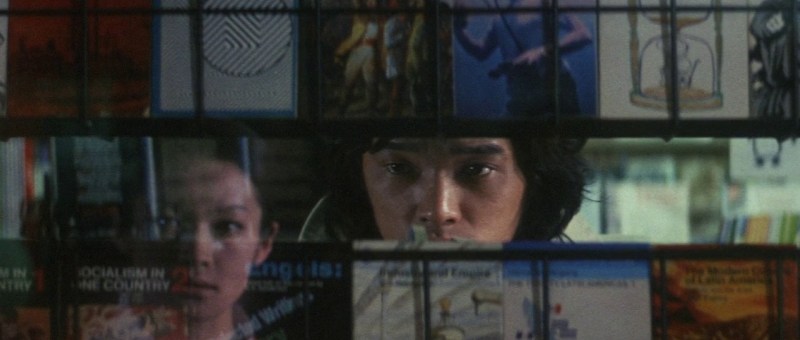
Kikue had taken Haruo to a strange cult where she hoped Kazuhiko would be cured though he wouldn’t enter the church and later got into a conversation with the monk who is a former doctor but now believes medicine is a con because it cannot offer you salvation tacitly agreeing with Haruo’s assertion that doctors too are dishonest. This tendency to hate has rendered everyone lonely, Tatsuko’s daughter reminding her that she is lonely too even with her husband and children while Tatsuko later cruelly uses Eiko’s loneliness against her as a tool of manipulation. “Eiko trusted me too much” she explains, her attempt at female solidarity and forging a bond through their shared desire to possess Haruo obviously failing to overcome Tatsuko’s matriarchal machinations. The eerie blue colour of the poison vial, mirrored in the nebuliser forever used by Tatsuko, seems to loom behind them as a reminder of human loathing while mother and son are frequently caught in multiple mirrors in an echo of their duplicity yet in the end as Tatsuko says they share the same sin and it seems Haruo will never really be able to escape the matriarchal net.


Sword of Destiny (孤剣は折れず 月影一刀流, Yasushi Sasaki, 1960)

A wandering swordsman winds up in intrigue on returning to his fencing school to find his old master murdered in Yasushi Sasaki’s Sword of Destiny (孤剣は折れず 月影一刀流, Koken wa Arezu: Tsukage Ittoryu). A classic jidaigeki adventure, it nevertheless has to be said that this one is a little more sexist than most in actively pushing its series of female warriors into the background as the hero by turns sends them all back to typically feminine roles while declaring that he will be the one to claim vengeance and clear up corruption in the court itself caused by a woman’s apparent forgetting of her place. 

At least, this is what Mikogami Genshiro (Koji Tsuruta) is told by an old friend, Izu, after an altercation with the fiery princess Kazu (Hibari Misora). The Shogun’s nurse, Lady Kasuga, has apparently taken an interest in politics and has most of the inner palace in her grasp enriching herself in the process. Izu believes that she may also be behind the assassination of Geshiro’s former mentor Ono while working in league with the Yagyu who coveted the position of fencing master to the Shogun. He asks Genshiro to kill her which he’s only too happy to do while seeking vengeance for Ono, but later gains a second reason after meeting the two orphaned daughters of a former retainer forced to take his own life thanks to Lady Kasuga’s machinations. 

Itoya (Yoshiko Fujita) wanders round with a gun and disrupts Genshiro’s first assassination attempt. He later tells her to leave the killing business to him and live “the life of a woman” insisting that one girl has no power to kill Lady Kasuga anyway. Meanwhile, he also makes an enemy of the Shogun’s sister Princess Kazu after challenging her in the street on seeing her callous disregard for a peasant her horse had run over. Princess Kazu falls in love with him after he defeats her in a duel, temporarily rebelling in insisting she will resist a dynastic marriage and take no other husband though he eventually rejects her partly on the grounds of their class difference and partly because he is a wandering sword who lives in the moment and may know no tomorrow. 

Nevertheless, she is later seen capitulating to her proper role as a princess who exists largely to continue the family line, marrying a man chosen by the Shogun and his advisors with no real power to chose anything other than her obedience. In much the same way he does with Itoya, Genshiro pushes her back towards the typically feminine while falling for Itoya’s meek, sickly sister Mine (Hiroko Sakuramachi) who is otherwise an idealised image of femininity in her softness and naivety while like every other woman in the picture falling for Genshiro because of his robust manliness and ability to protect her by gaining the sisters’ vengeance on their behalf. 

Meanwhile, Genshiro also facing off against the rival Yagyu school whom he suspects of having killed Ono to usurp his place as the shogunate fencing master with the assistance of underling Takagaki who has now taken over leading to a mass exit of students fed up with his authoritarian teaching methods. Interestingly enough, Genshiro is temporarily imprisoned by the Yagyu alongside a dissident Christian whose death they’d faked while keeping him alive in order to torture the names of other Christians out of him. On fulfilling his request to take his cross to his daughter who has become a sex worker, Genshiro succeeds only in endangering her while she also falls in love with him. 

All in all, he’s not much of a responsible hero also reckless with the life of his former burglar sidekick Kurobei (Shin Tokudaiji) who uses his ninja tricks to get him out of prison. As expected, it all ends with in a battle against a treacherous swordsman and the spineless Takagaki with the final revelation that Lady Kasuga (who just dies of old age) had not much to do with anything anyway despite having been a “meddling” old woman who forgot her proper place. Even Mine is forced to admit that she can’t come between Genshiro and his sword so she plans to become a nun while Kazu sends him an elaborate katana to remember her by certain that he will not accept a place in the Shogun’s household but will return to the road to continuing his training. In any case, a kind of justice is done and order restored even if that order is in itself fairly unideal. 


The Geisha (陽暉楼, Hideo Gosha, 1983)

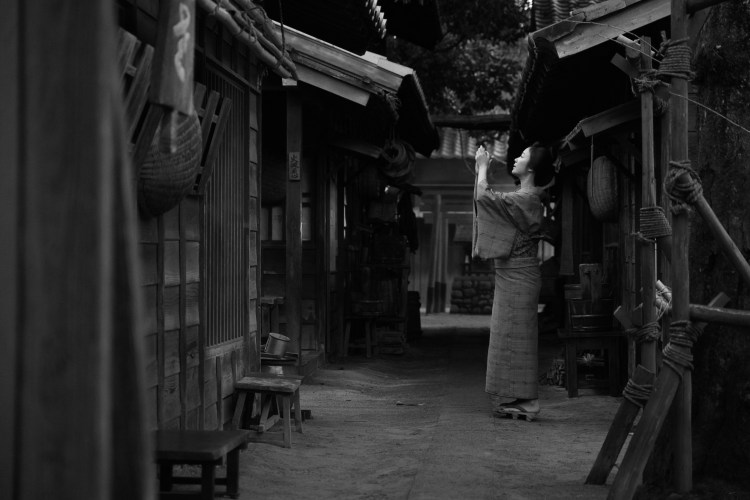
The coming of the railroad spells doom for one of the most prestigious geisha houses in Japan in Hideo Gosha’s adaptation of the Tomiko Miyao novel, The Geisha (陽暉楼, Yokiro). Miyao’s novels had often provided the inspiration for Gosha’s films and she had herself been the daughter of a “flesh broker” in pre-war Kochi though later escaping to another town to be a substitute teacher. Though the English title may focus more on plight of the the individual geisha at its centre, the Japanese hints more at the destructive cycle of the Yokiro itself in the persistent legacy of exploitation.

Then again as he later points out, if you’re looking for a villain in this story then the responsibility lies largely with Daikatsu (Ken Ogata) himself. In a prologue set in 1913, Daikatsu has eloped with geisha Otsuru but the pair are discovered by gangsters sent after them by the Yokiro. Daikatsu kills all of their assailants and assures Otsuru that they are finally “free” but it appears to be too late. Holding their baby daughter in one arm, Otsuru collapses into his other and presumably dies either then or shortly after while Daikatsu is later sent to prison for 10 years. 20 years later in 1933, the daughter, Fusako (Kimiko Ikegami), has become the number one geisha at the Yokiro under the name Momowaka though her career flounders because she is regarded as too emotionally distant to keep a patron. 

Daikatsu is also himself in Kochi at this point and working as a procurer brokering the sale of young women to the Yokiro and other geisha houses and brothels. When a school teacher comes to him to sell his wife, he taps her teeth to check for malnutrition much as one would examine a horse before running a hand underneath her kimono to check everything is at is should be before offering a valuation. Her husband only looks at him anxiously enquiring if a body such as hers which has as he later reveals born three children will fetch a good price. Daikatsu lets them go so the woman, Masae, can spend a final night with her family explaining that he cannot force someone to work if they do not want to do so and is well aware they will likely take his money and never be seen again which is what almost what happens. As it turns out the husband is killed in a fight and the woman ends up becoming a geisha anyway, only in the pay of prominent Osaka yakuza led by Inaso. 

Inaso (Mikio Narita) and buddies want in on the construction of the railroad that will shortly be coming to Kochi, but need to take over the town first which means getting around the mistress of the Yokiro, Osode (Mitsuko Baisho), who is apparently running every game town. The entire local economy is underpinned by female exploitation and facilitated by a woman, a former geisha, seizing the only power that is available to her. Isano later uses Masae as a kind of spy, getting her to initiate a relationship with Osode’s weak willed husband in an attempt to humiliate her which largely backfires as Osode boldly reclaims her man through a violent brawl in a hot spring though it does not appear that she is especially fond of him so much as he serves a particular purpose.

The brawl emphases the way in which women are pitted against each other by the nature of a patriarchal society along with the ways in which they are forced to mediate their power through men. Fusako also gets into an intense physical fight with Tamako (Atsuko Asano), a surrogate daughter of Daikatsu’s and emblem of a coming modernity, who insists on becoming a sex worker at the area’s most prominent brothel. In a strange moment of confrontation, both the geishas of the Yokiro dressed in their traditional regalia, and the sex workers of Tamamizu, arrive at a modern club where the heir to a banking empire courted by the Yokiro, Saganoi, dances the Charleston he learned while studying abroad in America. The geisha who dances with him struggles to pick up the moves, Saganoi lamenting that the dance is just not suited to a woman wearing a heavy kimono, elaborate wig, and clumsy geta. Tamako immediately gets up from her table and kicks off her shoes, gathering the hem of her own kimono to free her legs for the high level kicks of the modern dance. 

Fusako reclaims her authority by interrupting the dance immediately before its conclusion and insisting on retrieving their guest. Tamako appears to resent Fusako, perhaps frustrated in her relationship with Daisuke who does not appear to have had much contact with the daughter he sold at 12 years old. They too end up in an elaborate brawl in which Tamako rips off Fusako’s wig and splits her lip, symbolically freeing her to transcend the constraints of her “geisha” persona. Meeting Saganoi at Western-style bar, she boldly dances on the counter and sleeps with him of her own volition. But in doing so she conceives a child and leaves herself in a difficult position. She has betrayed her patron, and though she could simply have kept the fact from him and allowed him to think the baby was his, Fusako does not want to bring her child up in lies while simultaneously hanging on to a naive dream that Saganoi will one day return to her despite being made aware he has left for Europe. 

“All men are enemies of women,” she writhes in childbirth while swearing that no one will take her child from her, but she is still an indentured woman and her daughter is by rights the property of Osode. Her illness, presumably consumption, began long before her pregnancy and seems to an echo of the suffering she has been forced to endure as a geisha. As her health weakens, so the Yokiro declines. First it is ravaged by a literal storm, but also under threat from the Osaka gangsters desperate to take over Kochi to gain access to the lucrative construction contracts extending in its direction. Even so, as Daikatsu admits much of the fault lies with him. He chose to elope with Otsuru and was unable to protect either her or their daughter whom he allowed meet the same fate by entering the geisha world. He continued to earn his money by selling women into what is essentially slavery, and cannot escape his part in their continued exploitation while his entanglement with gangsters later disrupts the more settled life Tamako has begun to build for herself. 

“Wait all you want, the train’s not coming,” Tamako is later told, as if signalling that there really is no way out of this destructive and disappointing existence. Truly epic in scope, Gosha’s pre-war drama draws together patriarchal exploitation and societal corruption to critique a burgeoning modernity, but ends exactly as it started among the vibrant cherry blossoms only this time undercutting the melancholy of the oft repeated song with a more cheerful scene hinting at least symbolically at a long-awaited reunion. 


Original trailer (English subtitles)

An Osaka Story (大阪物語, Kozaburo Yoshimura, 1957)

A man who tries to escape his poverty ends up imprisoning himself in Kozaburo Yoshimura’s tragicomedy An Osaka Story (大阪物語, Osaka Monogatari). Inspired by the work of Saikaku Ihara, Kenji Mizoguchi had intended to direct but sadly passed away before shooting started with Yoshimura appointed to take over. The broadly comic overtones may be at odds with Mizoguchi’s signature style but ultimately lend weight to the film’s ironic conclusion in which the hero finds himself essentially oppressed by his own wealth in being entirely unable to relate to other people or see the world in ways undefined by money. 

It may be possible to understand Omiya’s (Ganjiro Nakamura) mania as a reflection of his intense fear of poverty, that he is so terrified of possible destitution that he can never really have enough or allow himself to enjoy what he has in case there is no more to come in the future. Even as so his daughter later says, wealth changes him. As the film opens, Omiya is a peasant farmer with a bad harvest who can’t pay the onerous taxes demanded by his exploitative lord. He decides to flee to Osaka with his family but is soon rebuffed by the man he’s gone to see who has just become a samurai and wants nothing to do with him. Wandering around the city, the kids eventually discover a thin layer of discarded rice at a storage area they manage to sweep up giving Omiya a new idea of how to save their family. 

In some ways, his fate is foreshadowed when he alone is unable to slip through the fence while his wife and children mop up grains from the floor. The image of him on one side of the bars is repeated in the closing scene, while his loyalty to the family he tried so hard to save is weakened by the influence of money. Yoshimura shows us a world founded on exploitation. “Those who worked so hard to grow it won’t see a single grain,” Omiya bitterly laments watching workmen unload vast quantities of rice while the peasants starve. When the rest of the family have finished sweeping up what others so casually discarded, Omiya does not use the rice to feed them but sells it to a broker and gives them millet instead. His life is then ruled by the doctrine of good enough, living in painful, penny-pinching austerity even after becoming wealthy as a dodgy tea merchant/loan shark. 

Omiya is one of those people who know the price of everything but the value of nothing. Back at their farm, he’d firmly rejected his wife’s offer to sell herself into sex work to save the family, asking “How could I carry on happily knowing you were suffering for it?”, but this is exactly what he proceeds to do. Omiya no longer cares about his family’s feelings and thinks only abut money but simultaneously refuses to spend any of it. One has to wonder what the point of the money is when he’s living a life not all that different from a peasant farmer save being free of the anxiety of immediate starvation. The only person he has any kind of respect for is a widow much like himself who is equally obsessed with penny-pinching and maximising profits. 

The pair bond in their parsimonious natures, but the mutual desire to get a good deal necessarily comes between them especially when Omiya decides to marry off his daughter (Kyoko Kagawa) to Mrs. Abumiya’s foppish playboy son Ichinosuke (Shintaro Katsu) who has been secretly spending money in the red light district without her knowledge. He too is being exploited, in his case by a geisha who manipulates him into getting the money to buy out her contract by threatening suicide. Meanwhile, Omiya’s meanness means he’s never actually taught his son much about handling money. His invitation to the pleasure quarters by Innosuke eventually provokes his rebellion as he starts to question his father’s philosophy and what money is for if you still can’t live a comfortable life. 

HIs daughter Onatsu asks him something similar, pleading with him to learn to understand other people’s feelings before leaving the shop to be with a kindhearted clerk, Chunzaburo (Raizo Ichikawa), with whom she has fallen in love. So little does he care for people that Omiya doesn’t even bother to live up to the image of a wealthy man. The man who turned him away after becoming a samurai eventually racks up large debts and loses his title allowing Omiya to buy his house as an act of revenge despite his wife and daughter’s protestations that they already have “enough” and did not need more. He refuses contracts the previous owners had set up, throws out a hairdresser who comes to give the ladies a more class-appropriate haircut, and refuses a loan to the daimyo in incredibly rude fashion not to mention embarrassing just about everyone by refusing to serve any food at a wake. 

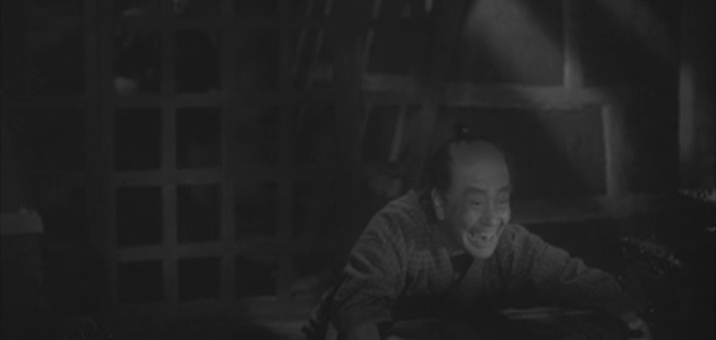
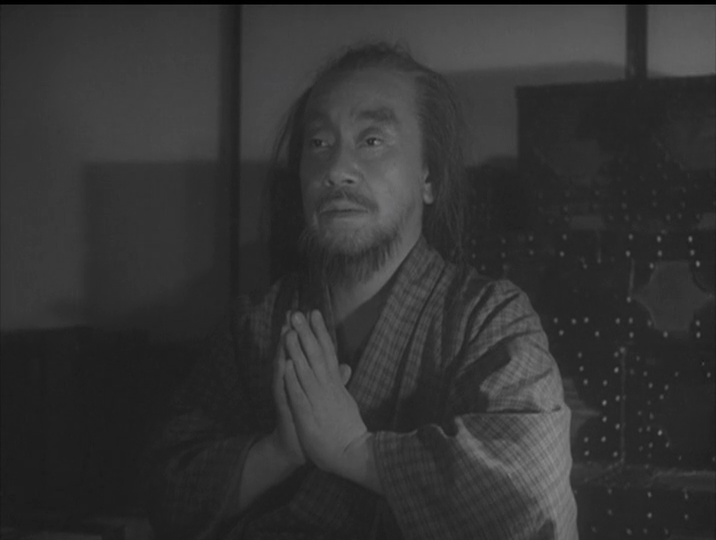
After ruining all of his personal relationships (except that with Mrs. Abumiya), Omiya experiences a kind of mental breakdown throwing himself over the chests of money in his vault and locking himself inside raving that everyone’s out to get their hands on his wealth. He’s just as much of a prisoner of this system as he was as a peasant farmer and has now imprisoned himself within a destructive delusion of capitalistic wealth. “Do what you have to do for a comfortable life,” Omiya’s son Kichitaro (Narutoshi Hayashi) had advised his sister, but this is what Omiya was trying to do too only for it massively backfire no matter what your personal definition of a “comfortable life” may be. Mrs. Abumiya tearfully wonders who’s going to inherit her money if not for her feckless son, but all Omiya can do is cackle wildly one like one possessed insisting that the money is his and his alone and not even death shall part him from it. In part a humorous take down of the contemporary society’s economic obsessions in a bid for ceaseless acquisition, the film is also a tragic tale of a man laid low by his addiction to money and the illusionary sense of comfort it provides him. 


The Boy and the Heron (君たちはどう生きるか, Hayao Miyazaki, 2023)

Sales of Genzaburo Yoshino’s 1937 novel How Do You Live? (君たちはどう生きるか, Kimitachi wa Do Ikiru ka? went through the roof when it was announced that the no longer retired Hayao Miyazaki would be directing a new film with the same title. Predictably, Miyazaki’s film turned out not to be an adaptation at all, or at least not a literal sense, but was intensely interested in the question not so much how do you live but how will you? Will you allow the past to make you bitter and live in a world of pain and resentment, or will you choose to live in a world of peace and beauty free of human malice?

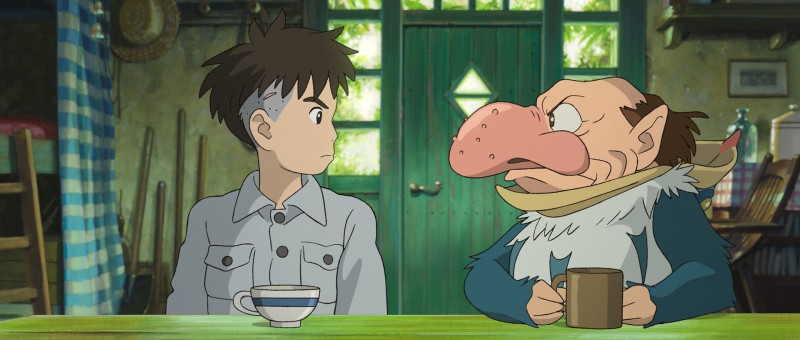
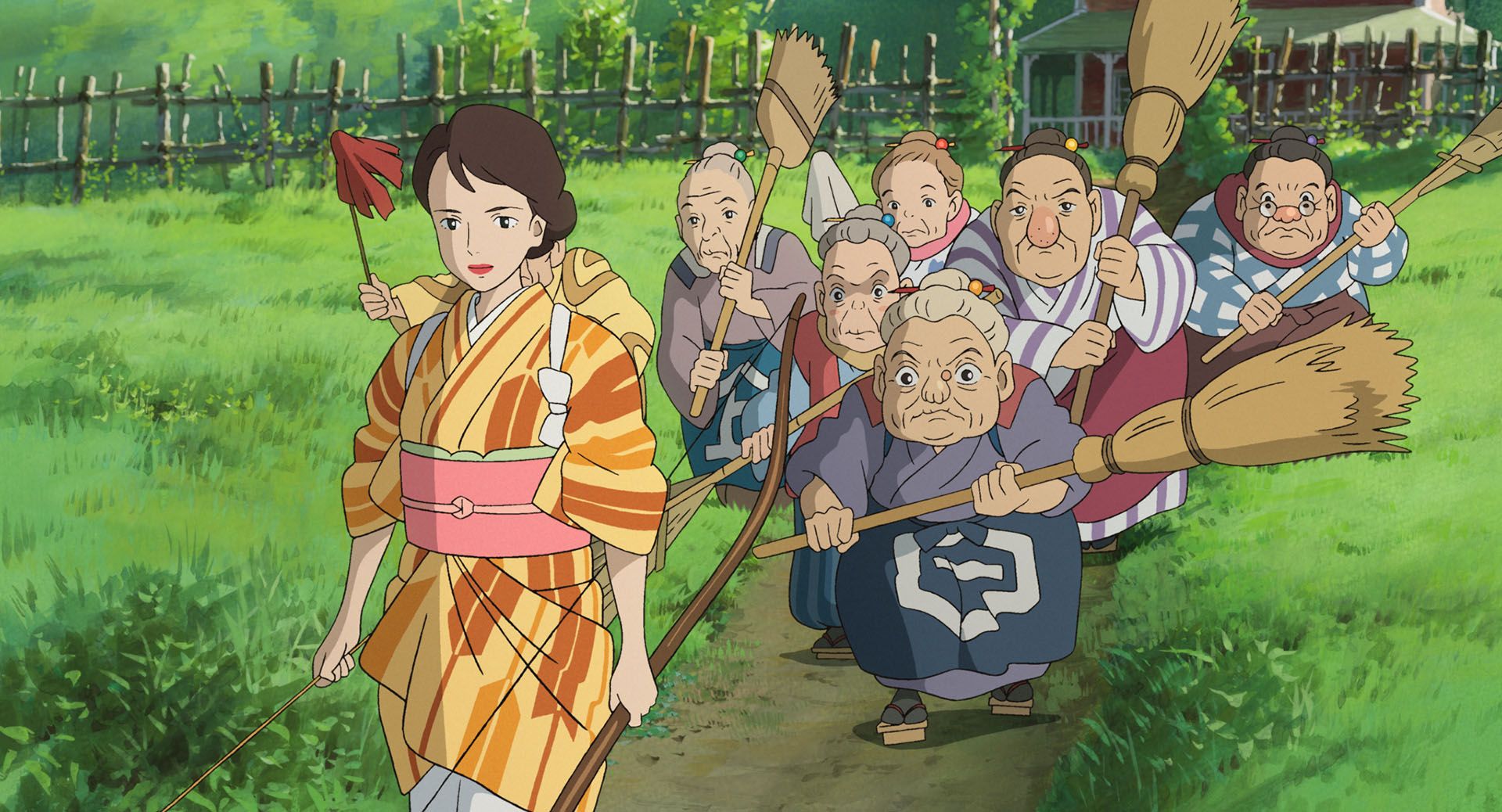
These are of course the questions faced by a post-war generation, the children of Miyazaki’s own era who came of age in a time of fear and suffering. Mahito (Soma Santoki), the hero, loses his mother in the firebombing of Tokyo. He runs through a world of shadows to save her from the flames but of course, he cannot. A year later everything has changed. His father has remarried, taking his mother’s younger sister Natsuko (Yoshino Kimura) as his new wife. Natsuko is now pregnant which suggests the relationship began some time ago though Mahito knew nothing of it and had no recollection of ever having met Natsuko before being sent to live in her giant mansion in the country more or less untouched by the war. 

It’s here that Mahito’s own malice rises. He is polite, if sullen, but cannot warm to his new stepmother and resents his father’s relationship with her. Perpetually bothered by a grey heron (Masaki Suda) his first thought is to kill it, crafting a bow and arrow from bamboo and one of the heron’s own feathers. Shunned as the new boy at school he hits himself on the head with a rock while his father, Shoichi (Takuya Kimura), comically vows revenge and lets him stay home. As he points out, there’s not much “education” going on anyway with most of the students pulled away from their studies for “voluntary” labour in service of the war effort in this case agricultural. 

Shoichi has moved to the country to open a factory which it seems produces canopies for fighter planes which is all to say that he is profiting from the business of war, though transgressively referencing the failure in Saipan over breakfast with the mild implication that it might work out alright for him. There is after all a grim reason they’ll be in need of large numbers of aircraft parts in the near future. Mahito’s dark impulses are directly linked to those of militarism and the folly of war. When he finally enters the tower of madness apparently constructed by a great-uncle who went insane through reading too many books, he discovers that his enemies are an ever expanding clan of fascistic, man-eating parakeets led by a Mussolini-like despotic leader attempting to manipulate the Master of the tower. 

Inside the tower is a land out of time, a place for those already dead or in essence an eternal past. It’s here that Mahito is presented with a choice, how will he live? Will he choose malice and destruction, or will he choose to leave and build a new world of beauty and peace above? In many ways, the important point is that the choice is his as it is ours, that we are free to decide and that our choices create the world in which we live. Through his adventures in the tower, Mahito begins to come to terms with his situation and resolves to accept Natsuko as a mother and make friends of those he once considered enemies. When the tower itself crumbles, it takes with it the last vestiges of authoritarianism and tyranny.

Prompting his epiphany, Mahito discovers a copy of How Do You Live? in his room, a present from his late mother inscribed to the grown-up Mahito. He is surrounded by the world’s ugliness, forced into a surprisingly graphic fish gutting session that leaves him wiping away blood, recalling his profusely bleeding head injury and the scar it will forever mark him with. Pelicans imprisoned in the other world meanwhile tell him that they have no choice but to behave as they do for the Master of the Tower neglected to put enough fish in the rivers intending them to destroy rather nurture new life while their young too learn all the wrong lessons. Yet there is beauty and strangeness here too, along with kindness and humanity. Boundlessly inventive, Miyazaki couples surrealist visions of murderous birds and the hellish scenes of a city on fire with Mahito the only figure visible in his pale blue school uniform darting through the soot and the shadows. A vivid symphony of life, the film may in its way be about grief and the pain of moving on but finally discovers a kind of serenity in an accommodation with the present and the eternally unfinished question of how you yourself will live. 


The Boy and the Heron screened as part of this year’s BFI London Film Festival.

Criminal Woman: Killing Melody (前科おんな殺し節, Atsushi Mihori, 1973)

“Five women like us could take on the whole world!” a woman exclaims after a very successful mission of revenge in which they didn’t have to do very much at all except play on male pride and yakuza honour. Criminal Woman: Killing Melody (前科おんな殺し節, Zenka onna: Koroshi-bushi) stars the two main players of Toei’s pinky violence line, Reiko Ike and Miki Sugimoto, and plays with their star rivalry by casting them as a pair of women eventually divided by the conflicting loyalties presented by the heroine’s desire for revenge. 

Ike stars as Maki, an intense young woman first seen hiding behind a door in the classic club scene that opens the film. Eventually she darts inside and slashes some yakuza with a knife, but her assassination attempt is very unsuccessful landing her in prison for a number of years where she largely spends her time glaring at the bars and plotting her revenge. Nevertheless, it’s the solidarity she finds with her cellmates that eventually allows her to carry out her plan. On her arrival, she first clashes with cell boss Masayo (Miki Sugimoto), a former yakuza moll inside for slashing some guys with a razor after they caught her cheating at hanafuda, but eventually wins her respect after a prison test of strength in which each woman is armed with a glass shard and grips a rope between their teeth until the loser gives in and lets go. Maki is not a skilled fighter and easily wounded by Masayo but refuses to surrender, getting right back up again every time Masayo knocks her down until Masayo finally concedes defeat.

The early prison fight is repeated at the end of the film only without the rope and with real knives, drugs replacing the white chalk that clouded around them as they fought in the prison yard. This time they are more evenly matched. Maki is no good with a knife, but more than able to hold her own and the fight is more about settling a score than it is about revenge so neither really wants to harm the other anyway. Though they found themselves temporarily on opposing sides, inevitably it turns out that Masayo is the woman of the yakuza Maki is trying to bring down, the sense of solidarity between them as women eventually wins out and though Masayo is unable to betray Oba (Ryoji Hayama) she cannot betray Maki either and ends up helping in her in quest for revenge if in a round about way.

It’s this sense of solidarity that brings the other cell mates back to the prison when Maki is released already having decided to help her get her revenge on the yakuza who forced her father to traffic drugs and then had him killed. Maki first refuses their help, as she had the opportunity of getting legal justice by telling the police everything that had happened including her own gang rape at the hands of the same yakuza, because it’s important that she’s the one who takes down Oba but later accepts their gesture and forms a tightly knit gang of her own fronted out of former sex worker Kaoru’s (Yumiko Katayama) bar. To fund the mission, Maki goes on a two week sex work spree mostly bedding American servicemen with whom she later makes a deal to buy a large number of guns and grenades she eventually sells to hotheaded yakuza son Tetsu (Takeo Chii) who is already resentful towards Oba for having stolen his father’s turf.

All Maki has to do to is light the touch paper on a simmering gang war between old school yakuza and the amoral corporatising Oba. She antagonises him by expertly offing one of his guys in a rain drenched assassination scene and getting one of the other girls to strongly hint it was Tetsu’s doing, then pretending to come to Tetsu’s rescue with the guns only to further provoke Oba. The girls even joke they’re doing a public service by cleaning up the town in taking out the corrupt politician who was propping up Oba for his own financial gain. It’s all expertly planned by Maki who appears in a series of quite stunning power suits and sporting giant hair, battling yakuza with killer style and an expert understanding of the way their brains work. But the reason the plan succeeds is the shared sense of solidarity between the women, Masayo included, as they strike back together against an oppressive and patriarchal society.


Blue Ribbon Awards Announces Nominations for 66th Edition

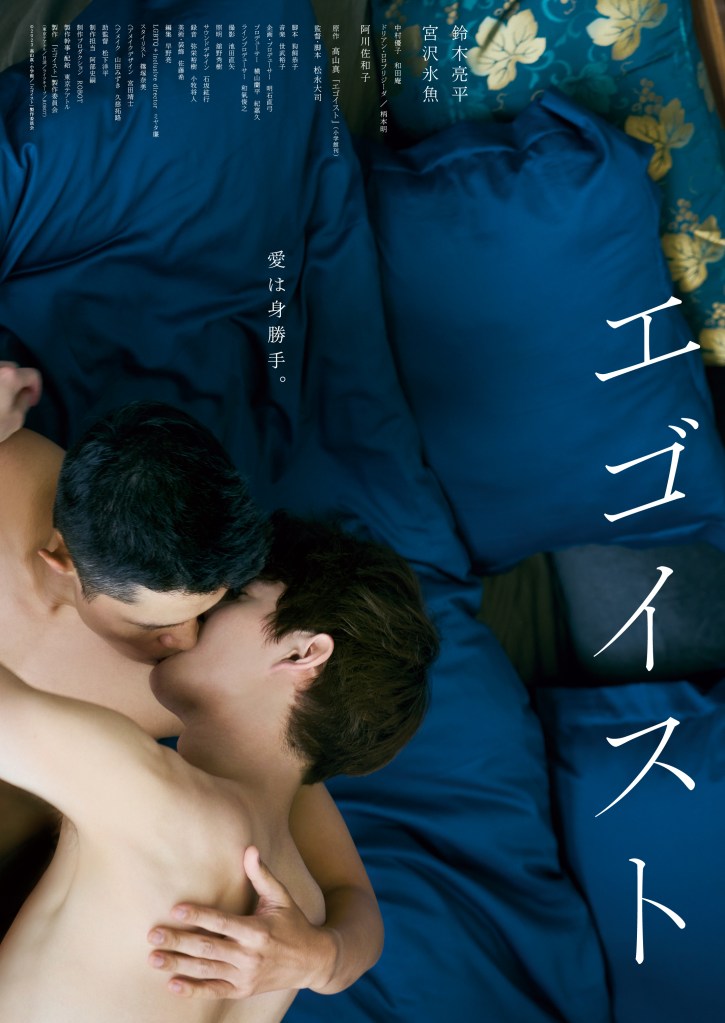
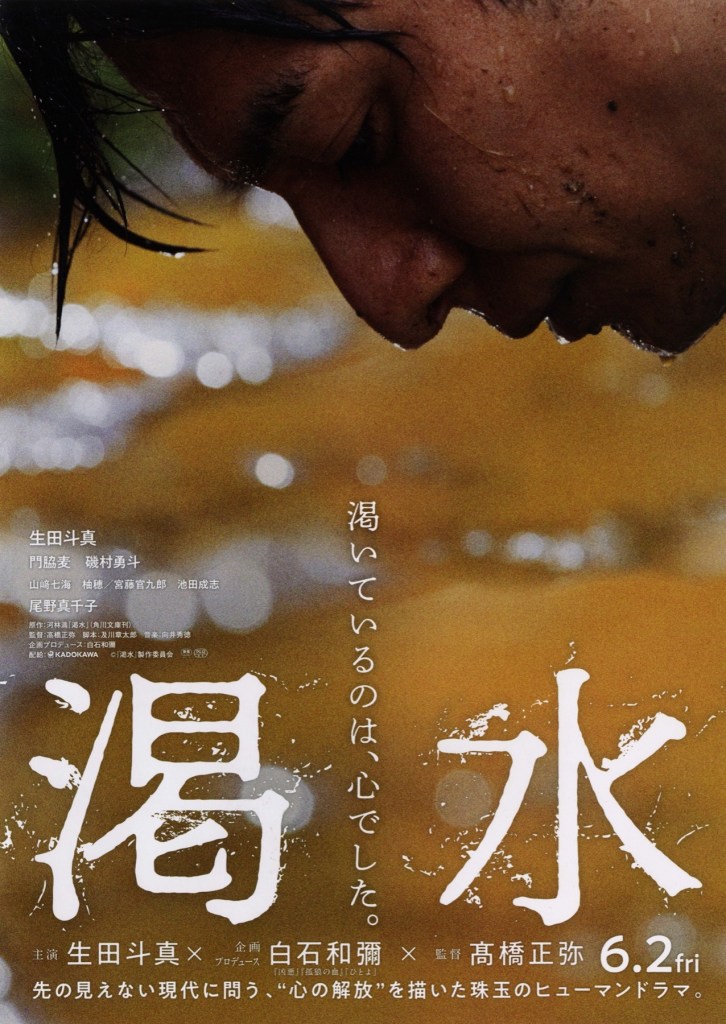
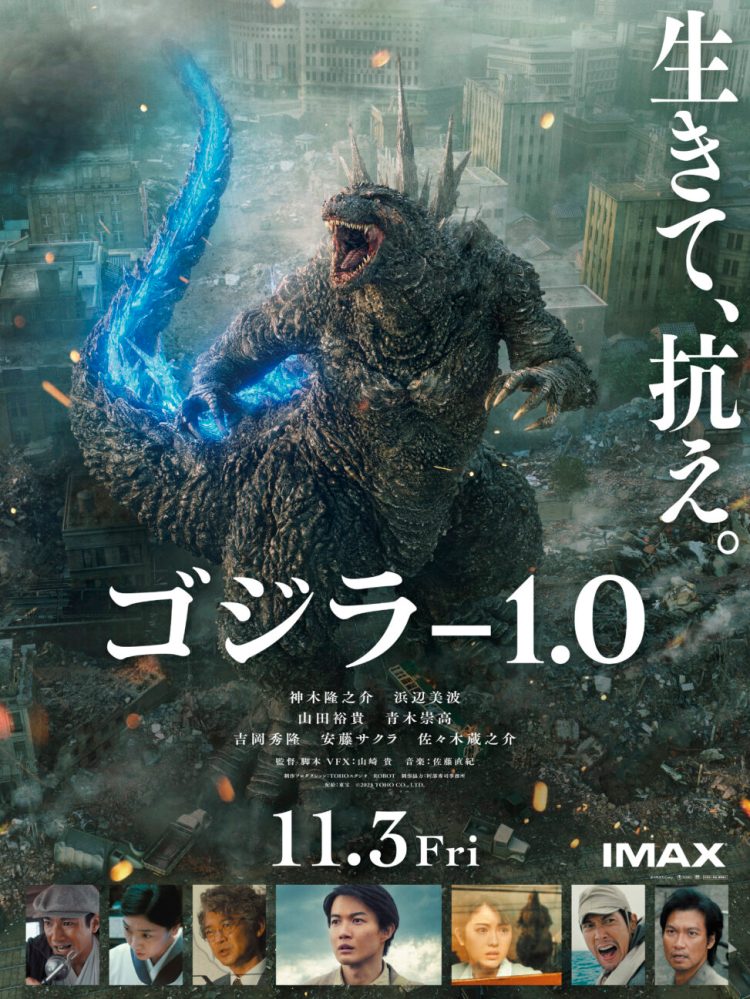
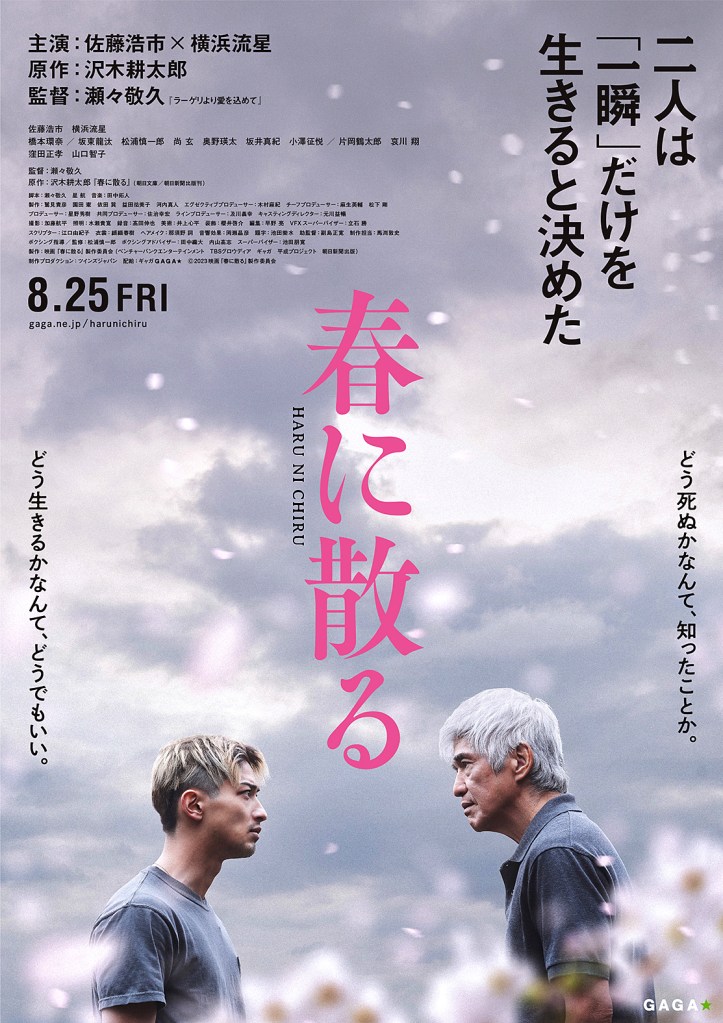
Presented by the Association of Tokyo Film Journalists, the Blue Ribbon Awards has announced its nominations for the 66th edition honouring films released in 2023. This year’s front runners are Yuya Ishii’s The Moon and Daishi Matsunaga’s Egoist which each pick up five nominations while Ishii also scores four for Masked Hearts.

Best Film 

  • Masked Hearts – raucous comedy from Yuya Ishii in which a struggling film director returns home.
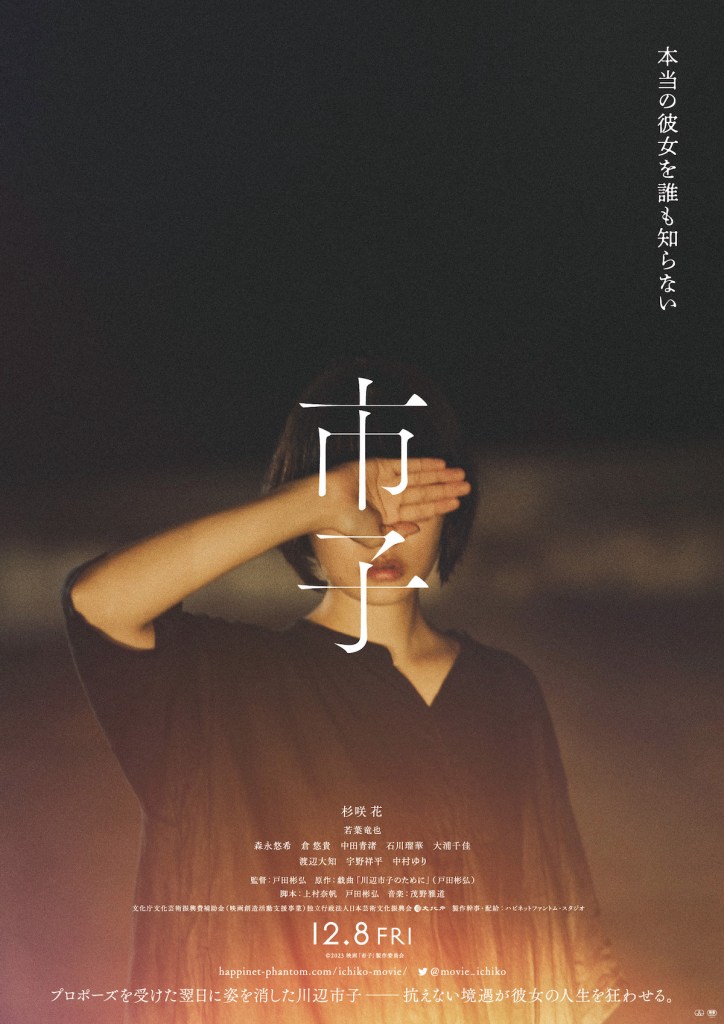
  • Ichiko – stage play adaptation starring Hana Sugisaki as a mysterious woman who suddenly disappears.
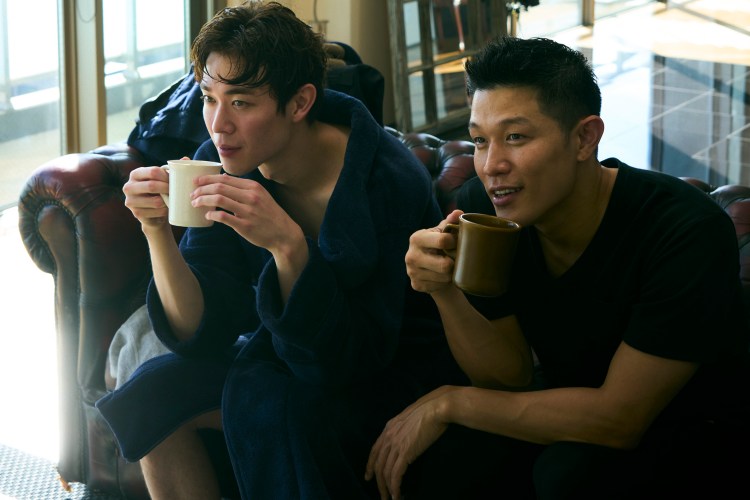
  • Egoist – a fashion editor reflects on the nature of love after falling for a personal trainer in Daishi Matsunaga’s deeply moving romantic drama.
  • Monster – latest from Hirokazu Koreeda starring Sakura Ando as a mother who confronts a teacher after noticing changes in her son’s behaviour.
  • The Dry Spell – a literal drought becomes a metaphor for bureaucratic heartlessness in Masaya Takahashi’s empathetic social drama.
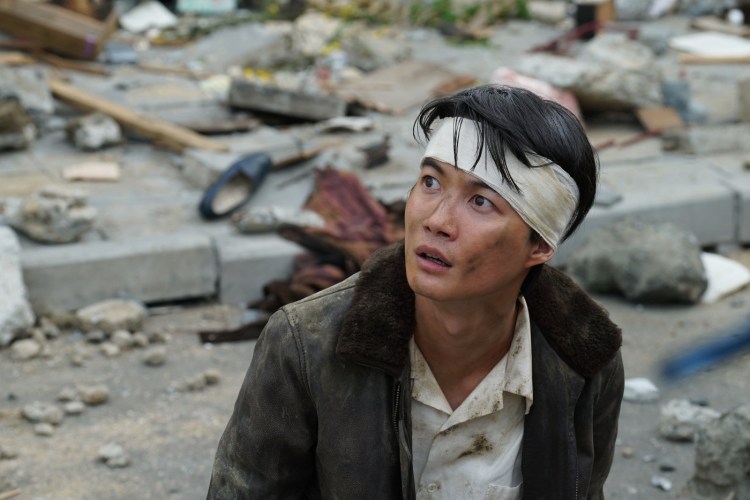
  • Godzilla Minus One – a kamikaze pilot finds himself haunted by the manifestation of his war trauma in Takashi Yamazaki’s entry into the classic franchise.
  • Mom, Is That You?! – touching drama from Yoji Yamada starring Sayuri Yoshinaga and Yo Oizumi as mother and son.
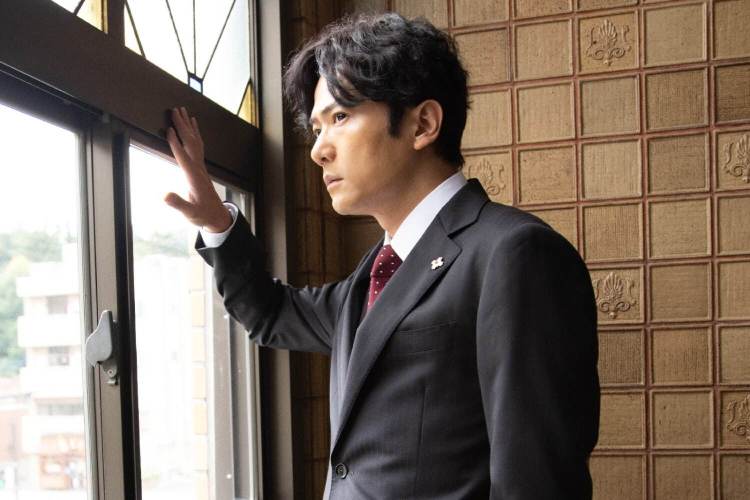
  • (Ab)normal Desire – Yoshiyuki Kishi’s adaptation of the novel by Asai Ryo starring Goro Inagaki and Yui Aragaki which explores the effects of a fetish on the lives of two former classmates.
  • The Moon – drama from Yuya Ishii starring Rie Miyazawa as a formerly successful writer who begins working at a facility for the severely disabled.
  • One Last Bloom – boxing drama in which a former contender who lost a match to due to an unfair decision begins training a man who suffered something similar.
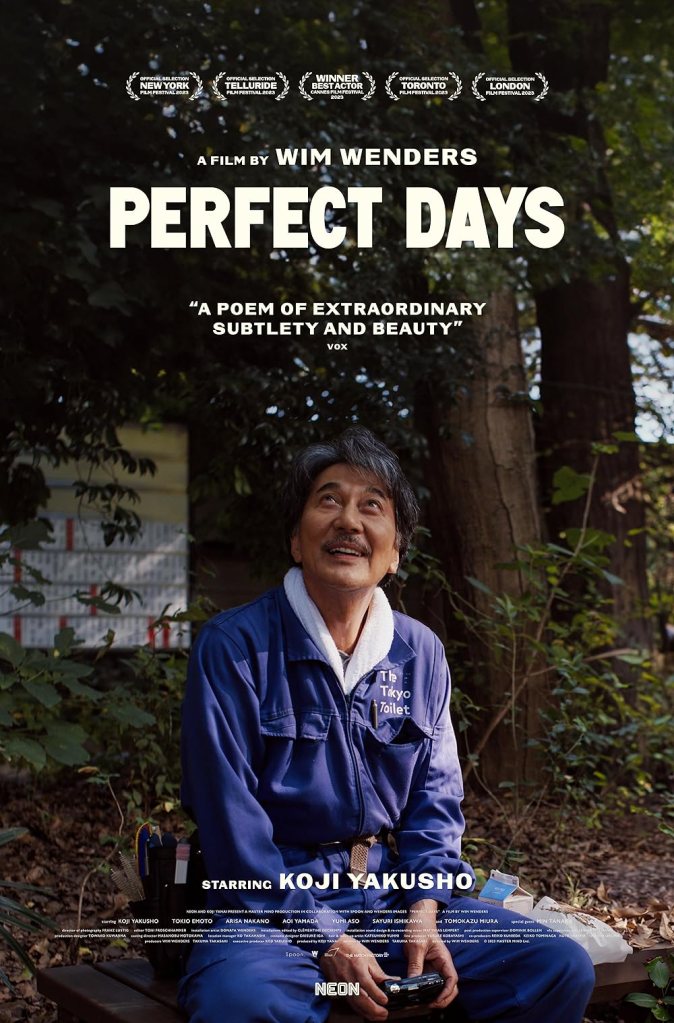
  • Perfect Days – a man in late middle-age quite obviously living in the past begins to wake up to the possibilities of change in Wim Wenders’ Tokyo-set drama.
  • Bad Lands – fast paced crime thriller from Masato Harada starring Sakura Ando as a conwoman in over her head.
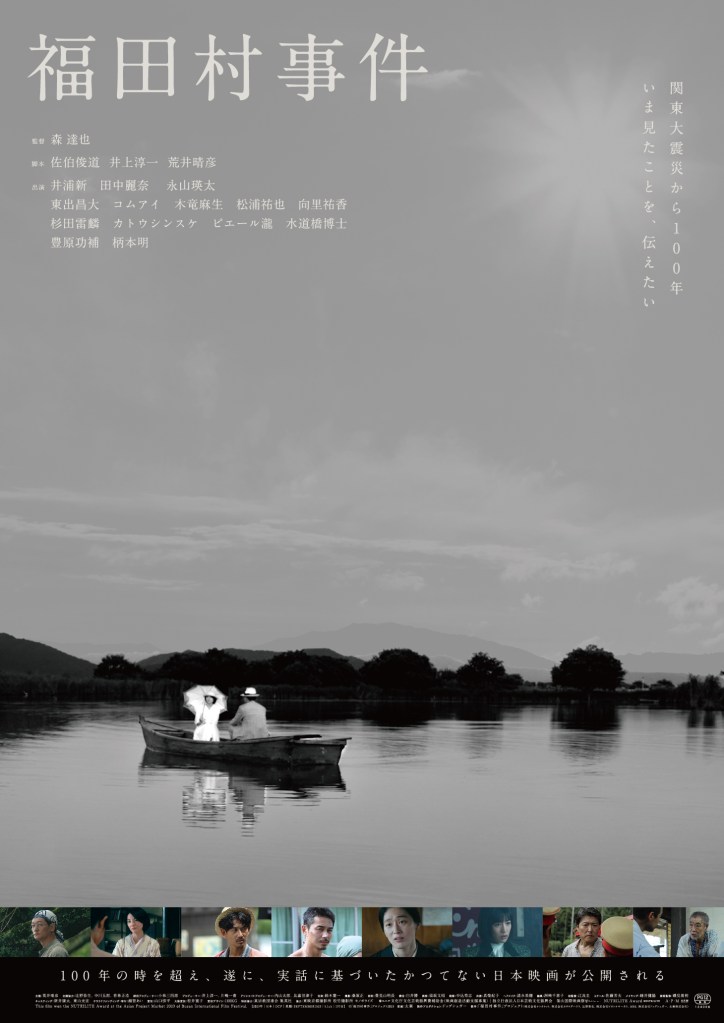
  • September 2023 – drama depicting the pogroms against Koreans which took place after the 1923 Kanto earthquake.
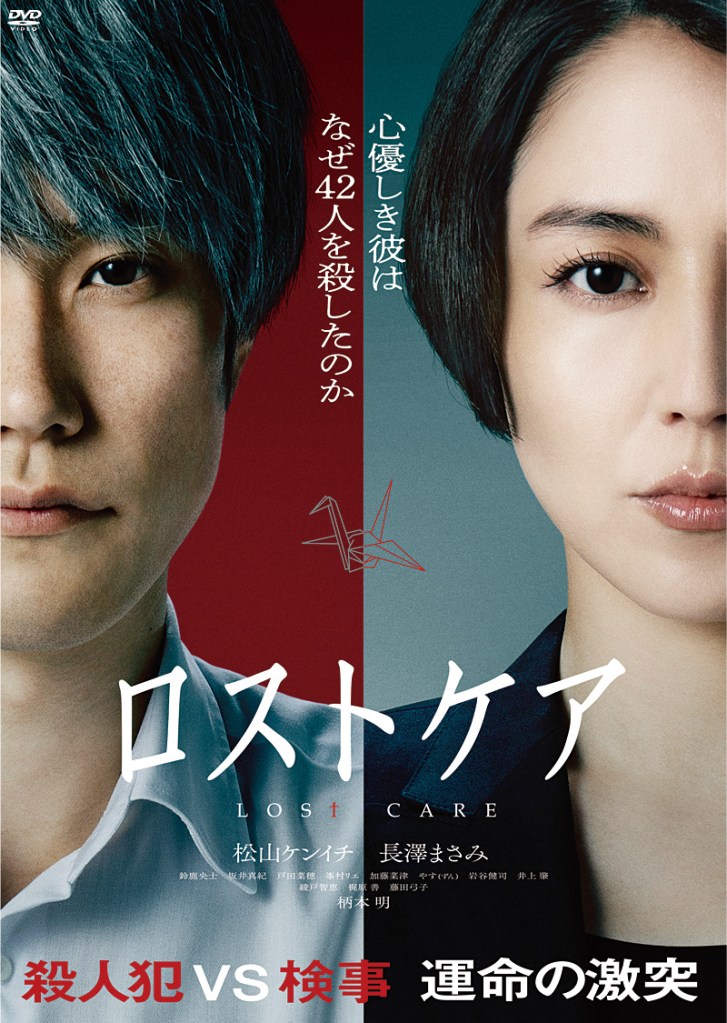
  • Do Unto Others – mystery thriller directed by Tetsu Maeda in which a caregiver becomes prime suspect in a series of unexplained deaths.
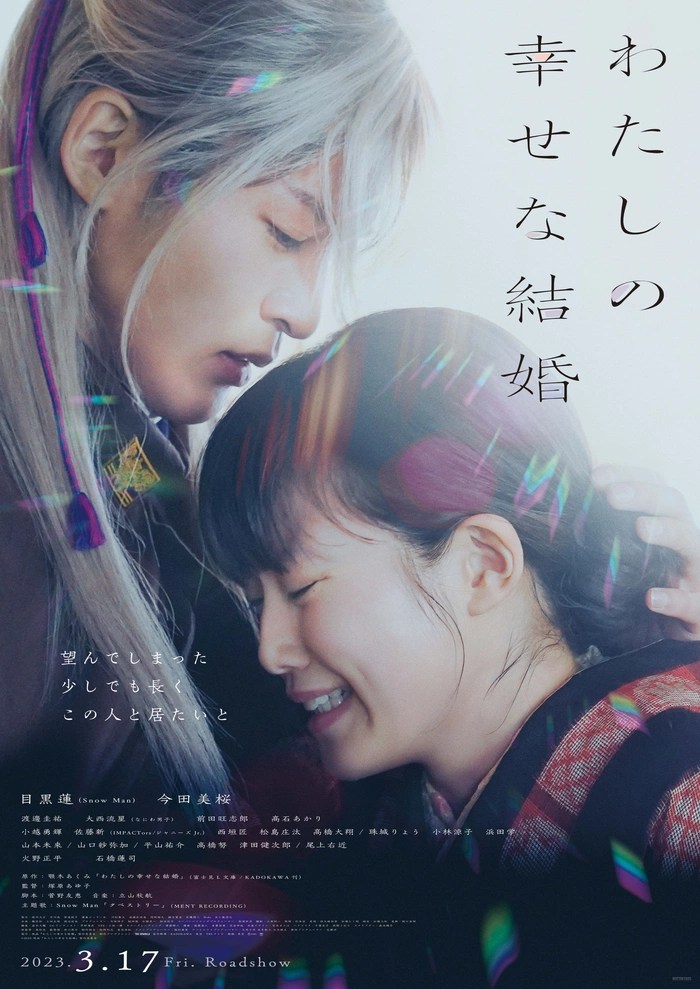
  • As Long as We Both Shall Live – a young woman with chronically low self-esteem learns to love herself after bonding with a taciturn nobleman in Ayuko Tsukahara’s adaptation of the light novel series.

Best Director

  • Yuya Ishii (The Moon, Masked Hearts)
  • Hirokazu Koreeda (Monster)
  • Daishi Matsunaga (Egoist)
  • Takashi Yamazaki (Godzilla Minus One)
  • Yoji Yamada (Mom, Is That You?!)

Best Actor

  • Goro Inagaki ((Ab)normal Desire)
  • Ryunosuke Kamiki (Godzilla Minus One, We’re Broke, My Lord!)
  • Ryohei Suzuki (Egoist, Tokyo MER: Mobile Emergency Room)
  • Masahiro Higashide (Winny, The Flower in the Sky, Trapped Balloon)
  • Kenichi Matsuyama (Do Unto Others)
  • Koji Yakusho (Perfect Days, Father of the Milky Way Railroad, Familia)
  • Ryusei Yokohama (One Last Bloom, The Village)

Best Actress

  • Haruka Ayase (Revolver Lily)
  • Sakura Ando (Bad Lands)
  • Mayu Matsuoka (Masked Hearts)
  • Rie Miyazawa (The Moon)
  • Sayuri Yoshinaga (Mom, Is That You?!)

Best Supporting Actor

  • Hayato Isomura (The Moon, The Dry Spell, Ripples, Hard Days)
  • Yo Oizumi (Mom, Is That You?!)
  • Jo Odagiri (The Moon, Yoko)
  • Masataka Kubota (One Last Bloom, Yudo: The Way of the Bath)
  • Koichi Sato (Masked Hearts, Okiku and the World, We’re Broke, My Lord!, Familia, etc)
  • Hio Miyazawa (Egoist, The Legend & Butterfly)

Best Supporting Actress

  • Sawako Agawa (Egoist)
  • Haru Kuroki (Ichikei’s Crow: The Movie, The Village, Okiku and the World, Fly On, Kyrie)
  • Yuko Tanaka (Monster)
  • Fumi Nikaido (The Moon)
  • Kanna Hashimoto (One Last Bloom)
  • Minami Hamabe (Godzilla Minus One, Shin Kamen Rider)
  • Haru (Analog)
  • Suzu Hirose (Kyrie)

Best Newcomer

Best Foreign Film

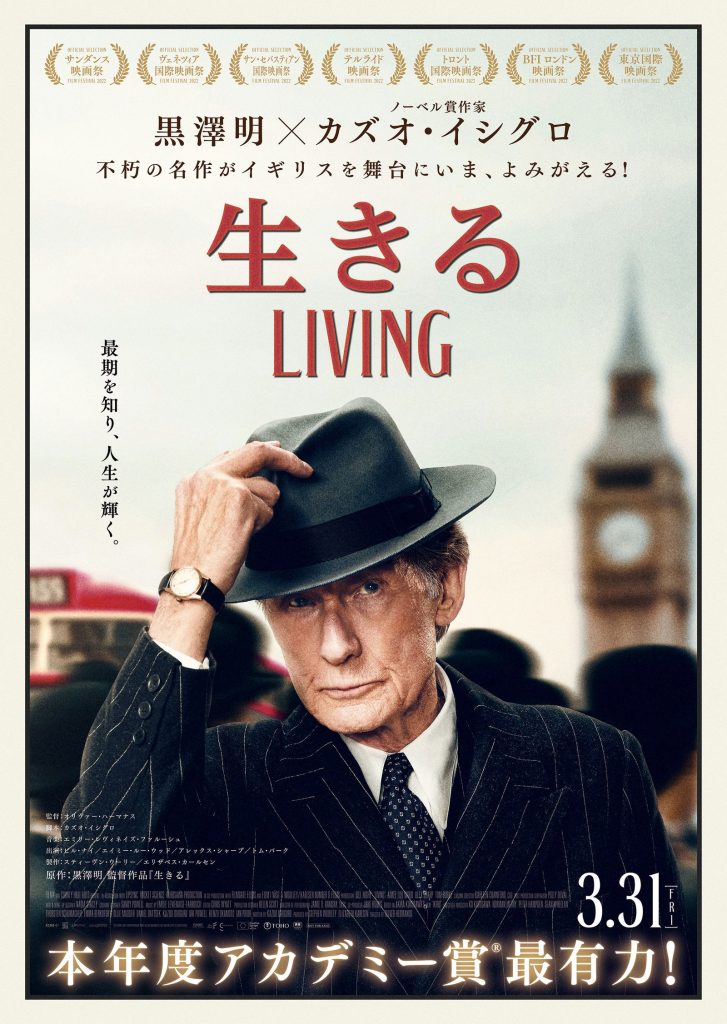
  • Living
  • Air
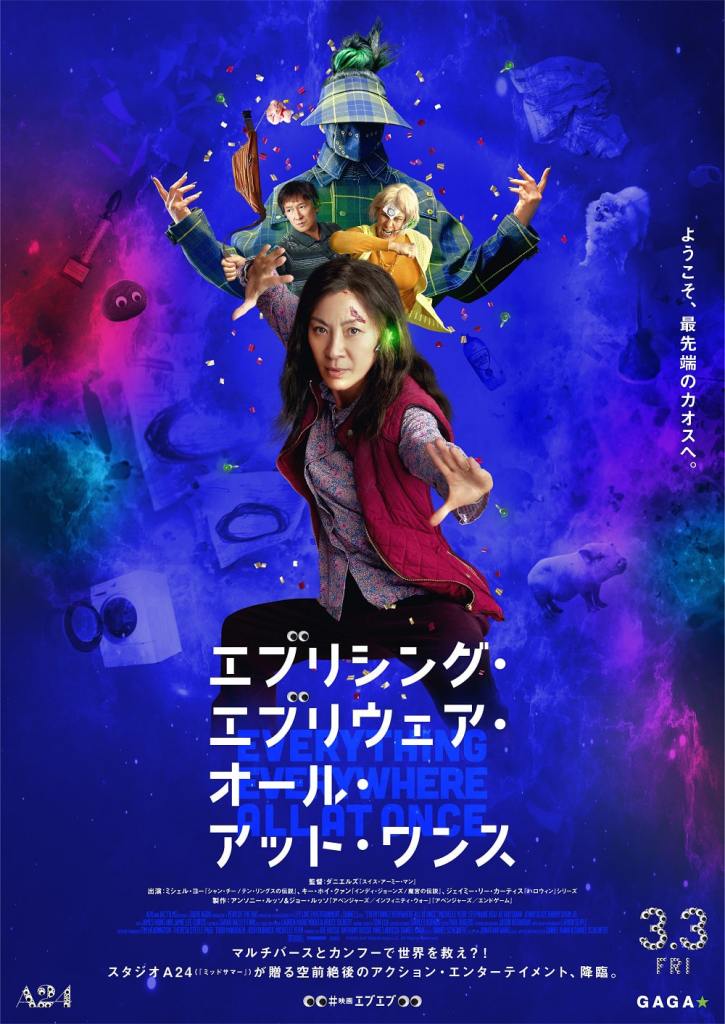
  • Everything Everywhere All at Once
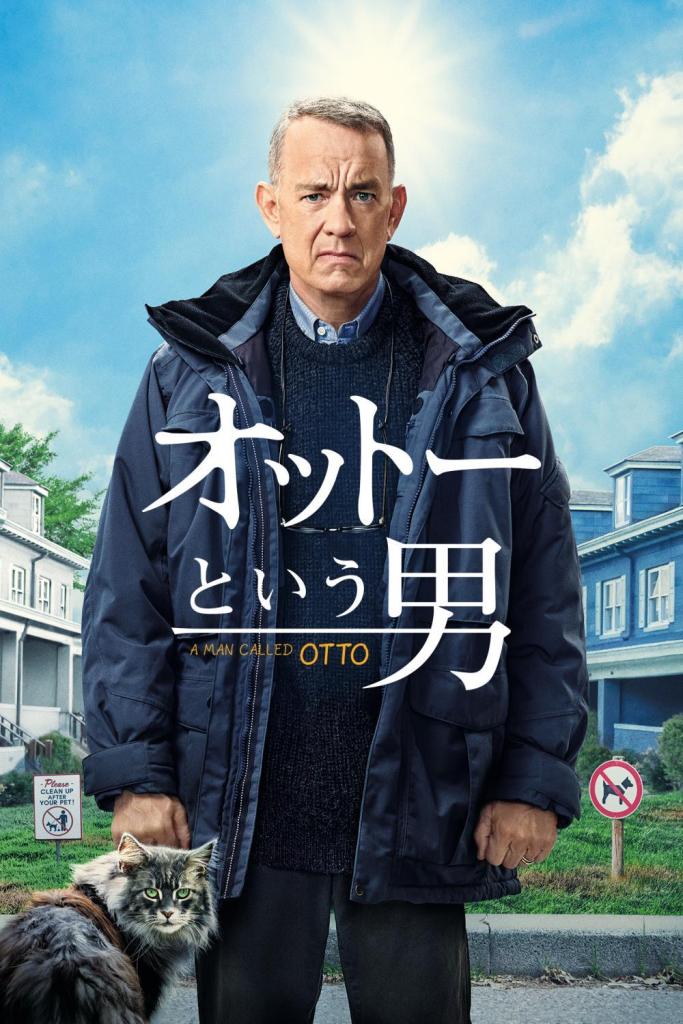
  • A Man Called Otto 
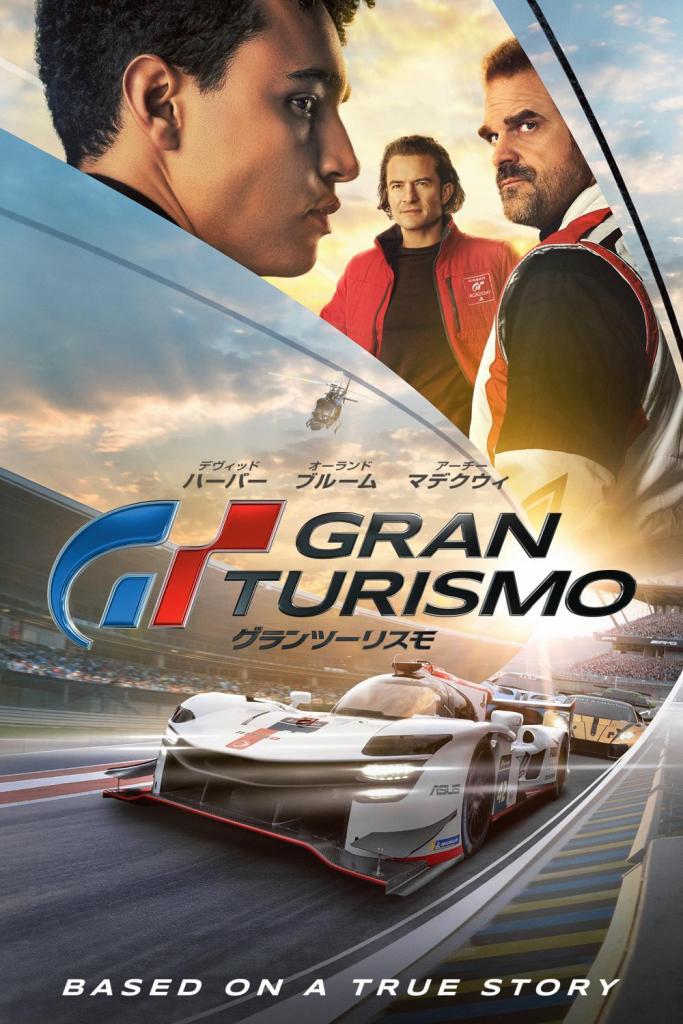
  • Gran Turismo
  • The Super Mario Bros. Movie
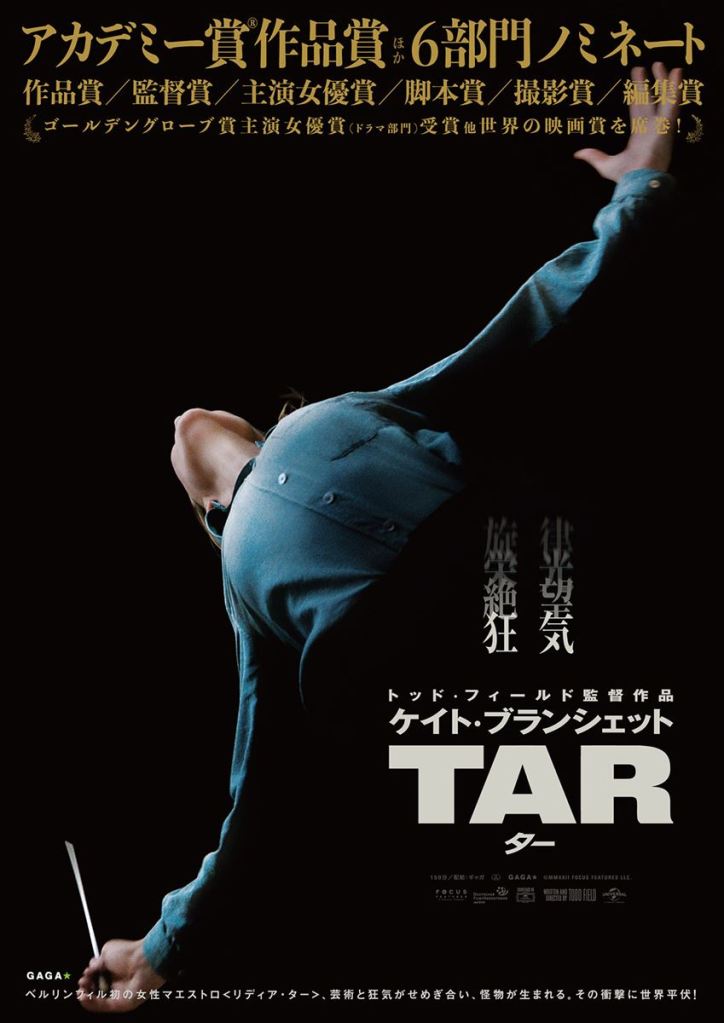
  • Tar
  • Napoleon
  • Barbie
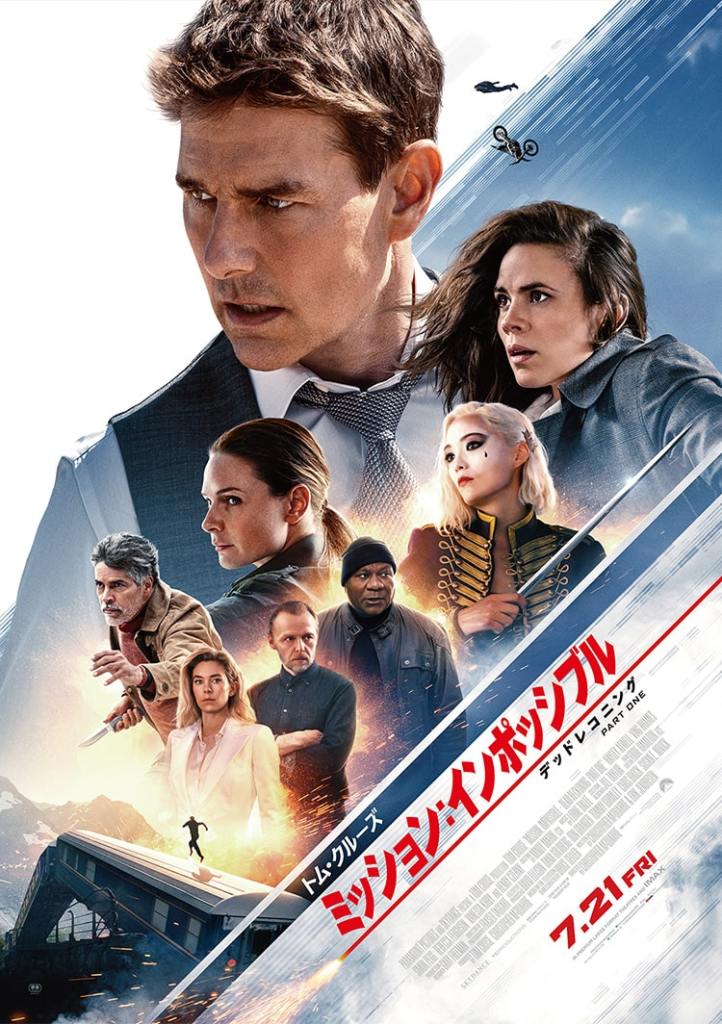
  • Mission: Impossible – Dead Reckoning Part One

Source: Sponichi

The Beauty and the Dragon (美女と怪龍, Kozaburo Yoshimura, 1955)

A clever princess takes advantage of a courtly crisis to save the kingdom and arrange her own marriage in Kozaburo Yoshimura’s adaptation of the well-known kabuki play Narukami, The Beauty and the Dragon (美女と怪龍, Kabuki Juhachiban: Narukami – Bijo to Kairyu), produced in celebration of the 25th anniversary of the Zenshinza kabuki troupe and starring many of its actors. Scripted by Kaneto Shindo, the film mines a deep seam of irony in the classic tale while allowing its heroine to take centre stage outwitting most of the feckless men from the palace with some clever manoeuvring and utilising the key asset of her femininity.

In a meta touch, Yoshimura opens in a kabuki hall where young lord Toyohide (Chiyonosuke Azuma) is called to perform a dance for the regent, Mototsune, only the show is soon interrupted by a procession of peasants who’ve come to protest the ongoing drought. The earth is cracked and the rivers run dry, but still they are told that they will be informed about the outcome of their petition at a later date. The peasants clearly believe that the emperor really is a god and expect him to fix this problem as soon as possible but in private Motosune is irritated if perhaps accurate in stating that the weather is not their responsibility and they can’t seriously be expected to deal with it. Annoyed by the noise of the protests around the palace, he orders that the peasants be sent away though his courtiers are more sympathetic and know that the peasants simply have no one else to turn to for help. If something isn’t done they will have no choice but to escalate their rebellion.

But as it turns out, the problem actually is their responsibility and is rooted in the misogynicistc patriarchy of the feudal world along with a dose of courtly intrigue. When shinto priest Narukami (Chojuro Kawarasaki) was consulted about the birth of a royal child and prophesied that it would be female, he was hired to alter its destiny and miraculously changed its sex to male through the power of prayer. In return, he was promised that a shrine would be built for him but now it’s 30 years later and he’s sick of waiting. Accordingly, he’s taken the Dragon God who brings the rains hostage and refuses to release him so the rain can return until he gets what he was promised. 

It seems that Mototsune has a very bad habit of promising people whatever their heart desires but conveniently forgetting about it once the job is done. This time though the problem is that disgraced prince Hayakumo (Kunitaro Kawarazaki) stopped the building of the shrine in fear of offending a rival temple, Ezian, which contains a large number of very intimidating bandit monks. Hayakumo is intent on using the courtly chaos to improve his own position, hoping that other lords will fall from favour leaving a space for him to fill. He’s also been obsessively courting princess Taema (Nobuko Otowa) who refuses him because he’s so obviously oily, and in any case she’s in love with Toyohide but can’t marry him seeing as he is already betrothed to another woman whom he does not care for. In a bizarre twist of fate, a scholar insists that the only way to break Narukami’s magic is by learning to read a scroll that once belonged to Taema’s grandfather so they charge her with deciphering it offering to give her whatever her heart desires if she ends the drought which is of course Toyohide’s hand in marriage. 

The ironic thing is that Taema doesn’t for a second believe that reading the scroll will make any difference to anything and quite clearly thinks the scholar they brought in who said it would is a charlatan who actively looks down on her. Yet she, like everyone else, does in fact believe that the cause of the drought is the Dragon God’s imprisonment and Narukami’s dark magic. Advised by her trusty maid, she learns to see opportunity in what could otherwise be a dangerous situation and ably out manoeuvres the foolish men at the court. She wields her femininity, the reason they discount her, as a weapon against the repressed masculinity of Narukami who is said to have been a monk since childhood and has never touched a woman. 

After getting her maid to do a sexy dance for his underlings so that they get drunk and pass out, she then sells Narukami a tragic love story pretending that she simply wants to wash some clothes that belonged to her late husband. Essentially she seduces him, but also targets his weakness in his repressed desires as a monk causing him to transgress his vows and in effect break his own magic by destroying his powers. On seeing her bared ankles he faints, and then ends up telling her how to break the curse after becoming drunk and randomly assuming they are now married. 

As she’d somewhat dangerously told Toyohide, the real problem is that the Regent is weak. Indifferent to the fates of his people and in any case an ineffective leader, he invites intrigue in the court. Yet court itself is weak precisely because it is rooted in patriarchy and defined by male weakness. Even Taema’s beloved Toyohide is preening and jealous, suddenly irritated to discover that Hayakumo had been courting her while later suspicious that she will be alone with Narukami. He was also denied romantic freedom in an inability to escape the marriage arranged for him by his father at three and reliant on Taema finding a way for them subvert the feudal order and be together. The play in fact ends with the rage of a scorned man as the aptly named Narukami is transformed into the god of thunder and vows vengeance against the woman who humiliated him. 

Taema, by contrast, is able to seize control ridding herself of Hayakumo while securing her marriage to a man she choses (the betrothed bride is herself similarly freed and appears not to mind the dissolution of her engagement having had no particular feelings for Toyohide, a man she barely knew) in addition to saving the kingdom along with the lives of peasants by unleashing the Dragon God. Having begun in the theatre, Yoshimura soon moves out to the court and then the country but eventually cycles back for the climactic dance of anger with which the film closes as if echoing a howl of pain from the wounded feudal era circumvented, if not ended, by a clever woman leveraging her only sources of power in a world defined by corrupted male authority. 


The Phoenix (火の鳥, Kon Ichikawa, 1978)

The people of early Japan contemplate different visions of immortality in Kon Ichikawa’s sprawling adaptation of the first chapter in Osamu Tezuka’s manga series, The Phoenix (火の鳥, Hi no Tori). Featuring a mix of animation and live action, the film takes place in an ancient, pre-modern Japan in which just about everyone chases the mysterious fire bird in belief that drinking its blood will confer eternal life. They each want it for different reasons, some more to stop someone else getting it than for themselves but all discover that there are other ways of living on than the strictly literal. 

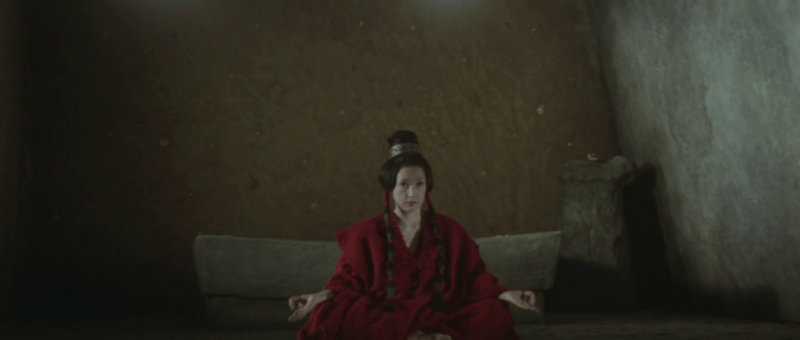
Broadly speaking the film takes place during the era of possibly mythical sorceress queen Himiko (Mieko Takamine) who rules over the nation known as Yamatai which is the name given to a kingdom in Japan in ancient Chinese sources. Himiko wants the phoenix because she fears that her power is founded on a youth and beauty which has begun to fade while the people are beginning to lose faith in her magic, not least because her rule is oppressive and authoritarian. She also fears that should the Chinese emperor drink the phoenix blood first, they will forever be under his yoke yet the seal that confers her rule was in fact given by him so perhaps they are already. Her brother, Susano (Toru Emori) whom she also fears may usurp her, enlists famed hunter Yumihiko (Masao Kusakari) from the state of Matsuro to help them capture the phoenix seeing as the two nations have some kind of treaty. Yumihiko says he doesn’t really care about that, but ends up helping anyway.

In any case, Matsuro is soon overrun in a surprise attack by warlord Jingi (Tatsuya Nakadai) from Takamagahara who is set on colonisation, which is in its way another bid for “immortality” if culturally rather than literally. After all, he claims “I will implant our civilisation in these lands” before explaining that “not even the greatest kings live forever” but history will. Meanwhile, Yamatai doctor Guzuri (Ryuzo Hayashi) is washed up on the shores of remote kingdom Kumaso where Uraji (Masaya Oki) is hunting the phoenix in the hope of saving his seriously ill wife Hinaku (Reiko Ohara). Uraji is soon burnt to a crisp by the Phoenix’s light, but Guzuri is able to save Hinaku using “modern” medicine, that is by applying “blue mould” which as the onscreen text explains contains penicillin. Perhaps feeding someone mould doesn’t sound much more scientific than the bizarre folk medicine proposed by the witchdoctor which involves rubbing the severed heads of cats and ravens together and putting fish bones on the patient’s head while burning their buttocks, but it works which is not exactly a means of “immortality” but does promise the ability of temporarily overcoming death without the Pheonix’s help. 

But medicine can’t help you with an invasion, and when the Yamatai suddenly turn up and raze the village to get better access to the phoenix after realising it lives in a nearby volcano only Hinaku and her brother Nagi (Toshinori Omi) survive. Hinaku reluctantly remains with Guzuri and vows to rebuild her kingdom through childbirth vowing that she will enable the survival of Kumaso by passing her culture on through successive generations. Uzume (Kaoru Yumi), a dancer from Matsuro, later says something similar to Jingi in reminding him that “women have their own weapons” and he will “never be able to destroy life” as an abstract concept. There might be something a little uncomfortable in the implication that the phoenix is an allegory for childbirth in suggesting that one body is born in the ashes of another, but it is in the end the continuity of a lifecycle which wins out as the natural order of things. In the film’s concluding moments, the son of Hinaku and Guzuri in a sense experiences a kind of rebirth as, guided by the phoenix, he climbs out of the cave in which he has lived all his life and gazes at the vast expanses of a new world all around him. 

Ichikawa originally trained as an animator and includes several animated sequences throughout the film from cartoonish special effects when an elderly courtier bangs his head to a trio of foxes dancing to pink lady. His visual design is also heavily influenced by Tezuka’s manga with the young boy Nagi in particular striking Tezuka-esque poses and otherwise resembling Astroboy who does in fact make a surprise appearance in a brief animated sequence in which Nagi is kicked by a horse. Similarly, the conflicted general Saruta (Tomisaburo Wakayama) later gains a ridiculous Tezuka-style nose after being locked in a room filled with wasps, and Ichikawa’s vistas sometime echo the centrefold of a manga with the heroes reduced to tiny figures dwarfed by the majesty of the landscape. Even so, a rain-soaked battle pays ironic homage to Seven Samurai, while Ichikawa otherwise keeps violence to a minimum. The heads are chopped off horses and fall like cushions, entirely bloodlessly, but there is also a scene of implied attempted rape which may be out of keeping with the otherwise family-friendly approach. Despite the sense of defeat which may colour some of the closing scenes, the film ends on a note of optimistic wonder in a new journey for humanity emerging from scenes of desolation towards a bright new world. 


Twilight Saloon (たそがれ酒場, Tomu Uchida, 1955)

A generational divide echoes around a beer hall filled with a defeated sense of bonhomie until finally finding a point of rest in Tomu Uchida’s elliptical single set drama, Twilight Saloon (たそがれ酒場, Tasogare Sakaba). The melancholy title captures the feeling of finality which seems to overhang the bar but equally the shift that is taking place as the old must decide whether they will allow the young to be free or forever trap them with the legacy of their own mistakes. 

The tensions are obvious as a once feared military colonel nicknamed “Demon” Onitsuka (Eijiro Tono) strides into the bar cutting a slim, anxious figure evidently a shadow of his former self. Puffing out his chest, he lives on memories of past glory claiming that though he may now be a lowly estate agent, he will rise again should the occasion call and will never lose his soldier’s spirit. Kibe (Daisuke Kato), a regular at the bar, is excited to run into him, his former commanding officer, and evidently still holds Onitsuka in some esteem but the pair of them seem ridiculous, even a little pitiable, as relics of the wartime generation unable to move into the post-war era. Onitsuka has a minor apoplexy when the table of students across from them begin singing a communist song explaining it as evidence of the absence of morality in the contemporary society. Somewhat embarrassingly, he and Kibe begin singing along to what they thought was a classic military ballad sung by someone outside only to abruptly realise that it is the communists once again. Strapped for cash, Onitsuka makes an abrupt exit leaving a confused Kibe to chase after him yelling “put it on my tab.” 

“Put it on my tab” might as well be the life philosophy of regular patron Umeda (Isamu Kosugi) who unlike Onitsuka and Kibe is wracked with guilt over his wartime experiences and has dedicated the remainder of his life to making amends by paying it forward. Once a famous painter, he feels he sullied his art by wilfully depicting warfare in a manner that sought to glorify it and may have led others astray ultimately costing them their lives. Umeda feels he no longer has a right to practice his art and has made a sacrifice of it in atonement, his earnestness leant a poignant quality by the fact that he is played by Isamu Kosugi who had himself starred in a propaganda film co-produced by Nazi Germany. 

Yet he’s far from the only one who’s abandoned or compromised his art because of what he sees as a moral failing. All knowing, Umeda recounts the history of accompanist Eto (Hiroshi Ono) who he claims once lives under a different name and returned from abroad to found a revolutionary opera company only to be betrayed by his protégé who left to set up his own revolutionary company taking Eto’s wife with him. Eto later stabbed her in jealously and like Umeda has lived the rest of his life in quiet contemplation slumming it in this backstreet bar while training up a new protégé, Kenichi (Takuya Miyahara), said to be the son of a former bandmate. Eto is a vision of defeat, Umeda remarking that his time has most likely come, walking around in a Russian tunic unable to let go of the past. Emi (Keiko Tsushima) is much the same. Once a promising ballet dancer she feels she’s lost the right to dance after becoming a stripper apparently because of a bad man who later breaks into the bar and slashes her arm with a knife echoing Eto’s dark crime of passion. 

This might in part be why she is so keen to ensure that Eto will not prevent Ken from taking advantage of a valuable opportunity because of his own jealousy and resentment. The offer comes from Nakaoji, the leader of a national opera group and the man who once betrayed Eto though as the snippy “intellectuals” at another table point out he may once have been a “revolutionary” but is now an old man and has in effect become the establishment. The dilemma brings things full circle, the generational divide which once existed between master and pupil has now been eclipsed by a turn of the wheel. Eto cannot help but recognise Nakaoji, the cause of all his suffering, but Nakaoji does not acknowledge him and after all he has another name. 

Umeda pleads with him to allow Kenichi to go, not to ruin his life in the same way his was ruined by holding on to his pettiness and resentment as the man who took all from him returns to take his surrogate son too. His call is to those of his generation who bear the responsibility for wartime folly that they should accept that the world now belongs to the young and it is their duty to nurture them while setting them free to pursue their own destiny. The young customers in the bar are universally cheerful, still drunk on the exuberance of youth while those a little older are mostly defeated and melancholy, meditating on their own failed revolutions unable to move forward or let go of the past. 

Yet the youngsters who work there aren’t quite so happy, barmaid Yuki (Hitomi Nozoe) caught between the posturing of current and former gangster boyfriends while simultaneously discovering that her mother has been taken ill. She lost her father in the war and her home to the bombing and claims she has nothing other than the love of Masumi (Ken Utsui), a young tough who wants her to abandon her mother and schoolgirl sister to go with him to Osaka. Umeda adds 3000 yen to his tab, Yuki’s monthly salary, when the manager vacillates over granting her request for an advance to pay for her mother’s medical care seeing as they no longer even have rice at home. Later he runs into an old journalist friend who simply gives him the same amount of money from his wallet as if it were mere pocket change. The fact that Yuki doesn’t go with Masumi is not because she is afraid to or constrained by the burden of her family but an active choice to embrace her responsibility to others over her personal desire much as Umeda has already been doing. 

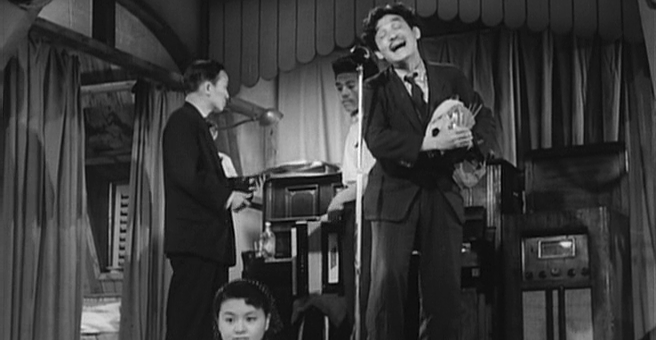
This maybe a twilight place, peopled by the hopeless and downtrodden, but there’s life here in all of its confusing randomness. A young man at one point runs in and jumps over the balcony to the stairs eventually chased by an older one, an incident otherwise unexplained just like the minor argument between a woman clutching a cat and the man who may be a patron of sorts who also brush through the bar. Uchida gives the snobbish left-wing intellectuals quite a kicking in their pithy discussions about existentialism and mocking of the students for trying to actually do something rather than just talk about it even if it’s singing in the street. Shot as if the action were unfolding in real time, the camera floats around the saloon as if it were itself a ghost lighting on the small moments of action that contribute to the incongruously warm atmosphere before ending up more or less where it started with a man singing on stage to an empty room. Even so, it does it with equal measures of hope and melancholy as age quite literally retreats and surrenders the space those who may still fill it.


Original trailer (no subtitles)