Extraneous Matter – Complete Edition (異物-完全版-, Kenichi Ugana, 2021)

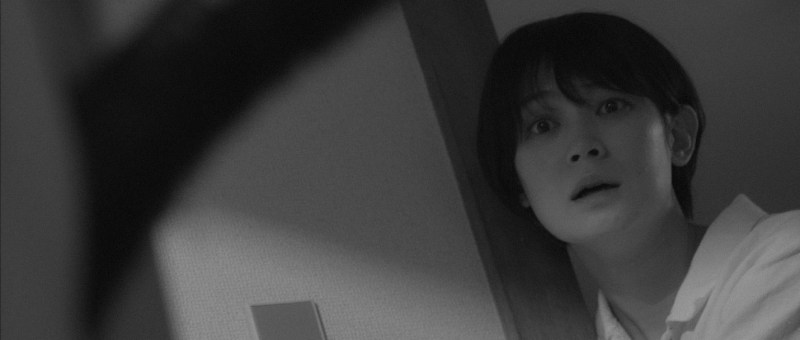
If you suddenly encountered a weird, decidedly alien, octopus-like creature living in your wardrobe what would you do? Would it frighten or intrigue you, would you want to get rid of it as quickly as possible or look after it for the rest of your life? The presence of these strange creatures provokes different responses from each of the heroes of Kenichi Ugana’s Extraneous Matter – Complete Edition (異物-完全版-, Ibutsu – Kanzenban-), an expansion of his earlier short of the same title. Drawing inspiration from the early work of Shinya Tsukamoto, Ugana’s crisp, academy ratio black and white photography makes use of an ironic score mimicking classic Hollywood melodrama lending a mythic quality to this lowkey tale of alien sex fiend invasion and human loneliness. 

For Kaoru (Kaoru Koide), heroine of the first segment, the creature seems to signify her sexual frustration and sense of existential inertia. For her, every day is the same. She wakes up alone, makes herself a cup of coffee and eats a pastry in front of the television which always seems to be carrying news of a celebrity sex scandal, and then starts work with her friends (for some reason working at her apartment) who gossip about their various sugar daddies. Her boyfriend (Shunsuke Tanaka) apparently lives with her, but immediately disappears right after dinner and actively avoids intimacy. Were it not for later events, we might wonder if the creature is somehow a transformation of the boyfriend, Kaoru herself unsure whether it was a dream, first violated but then apparently satisfied by the alien tentacles which later begin satisfying all of her friends. 

If the “extraneous matter” of Kaoru’s life was indeed her unfulfilled desire and internalised shame, then for the barmaid (Momoka Ishida) of the second sequence it’s perhaps a lack of excitement while for the young man (Kaito Yoshimura) who brings a creature zipped into a holdall to a pub to meet his ex-girlfriend (Makoto Tanaka) it’s more a desire for familial intimacy or a sense of commitment that may previously have frightened him. He appears to want to get back together with the young woman, apologising for his past behaviour while explaining that he found the creature in his wardrobe scary to begin with but later became fond of it and is convinced he could raise it with her help, ordering a parfait to feed it because he’s discovered it has a sweet tooth and particularly likes strawberries. He swats the errant tentacles away as if shushing a naughty baby as the woman too begins to coo over it, shovelling cream from the parfait into its mouth with a spoon. 

But then, the extraneous matter of the lives of others can also present a challenge to the social order. Some wish to eliminate the alien threat, a young man working at a factory (Shuto Miyazak) charged with disposing of alien bodies eventually conflicted on discovering one alive sure that he can hear the creature begging him for help. Together with a like-minded colleague (Duncan) he determines to save it and help it return to its people, culminating in an unexpected ET moment which perhaps realigns the “alien” threat with a social other as the two compassionate employees evade the authorities to get the creature to safety despite having been betrayed by their female colleague (Mizuki Takanashi). 

So, what is the “extraneous matter” of our lives, a kind of loneliness, a sense of “alienation”, or of emptiness in an “absurd” world of infinite mundanity? Perhaps all of the above, Kaoru returning to her lonely life apparently missing the strange and unidentified creature only to re-encounter it in an unexpected place and discover it has not forgotten her. Gently ironic, Ugana’s sci-fi-inflected aesthetic begins with grim body horror before progressing into something warmer, for good or ill becoming fond of its alien invaders as compassionate humans refuse to reject them embracing in a sense these “extraneous” sides of themselves they may have previously found disturbing in search of more fulfilling lives. Elegantly composed in its classic academy ratio frame with its ironic bonsai pillow shots and continuing sense of unease, Extraneous Matter nevertheless ends on a note of hope rather than threat even as the invaders apparently lurk among us but bringing with them comfort even in the reflection of our unmet desires. 


Extraneous Matter – Complete Edition streamed as part of this year’s Nippon Connection.

Original trailer (English subtitles)
BOLT (Kaizo Hayashi, 2019)

“We have to trust the bonds that tie us” intones a voice from the control room, “if you can’t tighten that bolt the water will pollute the future”. A series of post-Fukushima tales, Kaizo Hayashi’s tripartite portmanteau movie BOLT is less about the radiating effects of a nuclear disaster than their legacy, insisting that if you can’t pull together you can’t move forward but then in the end the bolt cannot be tightened or the deluge stemmed. It is perhaps too late, but still you have to live. 

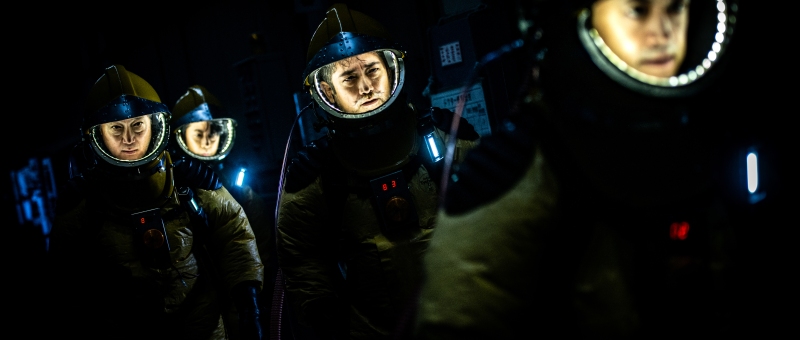
Set in the immediate aftermath of the tsunami, the first of the three tales follows a series of selfless engineers sent in to tighten a bolt on a leaking tank. They are informed their suits will protect them but not completely, they have only half an hour of oxygen, and should work in pairs for no longer than a minute before changing over. The older men tell the younger to wait behind, hoping to spare them from harm while the young men bristle wanting to do their bit. In any case, one of the young men later freezes, his feet rooted to the spot as if under some kind of spell while his friend begins to go quietly mad when a second bolt works it way out seconds after he’s fixed the first. The unnamed chief (Masatoshi Nagase) refuses to return with his team, staying to ensure he’s done all that can be done but in the end they cannot stop what is already in motion. 

A few years later the chief has apparently moved on, now working as a house clearer in the exclusion zone. His job is to tidy up and sanitise the home of a man who refused the evacuation order and has since passed away alone. As he’s been told, he carefully saves important documents and personal items such as photo albums for the family only to be told there is no family to take them, they were all taken by the tsunami. His cynical partner asks him why he got into this kind of work. He doesn’t have much of an answer for him save that someone’s got to do it and can offer only the declaration that he has to go on living for further direction of his life. 

On Christmas Eve 2014 however he’s still alone, living in an auto garage making some kind of metal device while a pair of children outside set the scene for a ghost story claiming there’s a mermaid living in the tank inside. Like the deceased man, the chief also seems to have lost someone, a black and white photograph sitting on the desk behind him, while apparently attempting to return to his former life as a nuclear technician only to be told he’s taken too much radiation already though the plant is short staffed seeing as many prefer to work on the Olympics, forging the future while neglecting the past. His Christmas gets off to a strange start when a beautiful woman in a red convertible bedecked with festive lights literally crashes into his life. An echo of someone else her arrival and subsequent departure hint at the strange and ethereal impermanence of post-disaster life in the continuing impossibility of moving on from irresolvable trauma. 

Beginning in science fiction with the high concept opener and its cyber punk design, Hayashi posits the nuclear threat as a kind of supernatural curse which can perhaps never be undone. Crackles of electricity take on a spiritual air while the permanent pinking of the sky seems to hint at a world forever changed as if something has been unleashed and can never again be caged. Tormented by cosmological unease, the chief chooses action, trying to his best to live even when action fails. The bolt can’t be tightened, the water pollutes the future, and all he can do is continue to stem the tide, tightening the bolts wherever they fray. With occasional flashes of psychedelic surrealism, Hayashi’s three tales offer a bleak and melancholy vision of life in the shadow of an almost supernatural disaster, but find finally a determination to live no matter how futile it may turn out to be. 


BOLT streamed as part of this year’s Nippon Connection.

Original trailer (no subtitles)

Images: ©L’espace Vision, Dream Kid, Kaizo Production

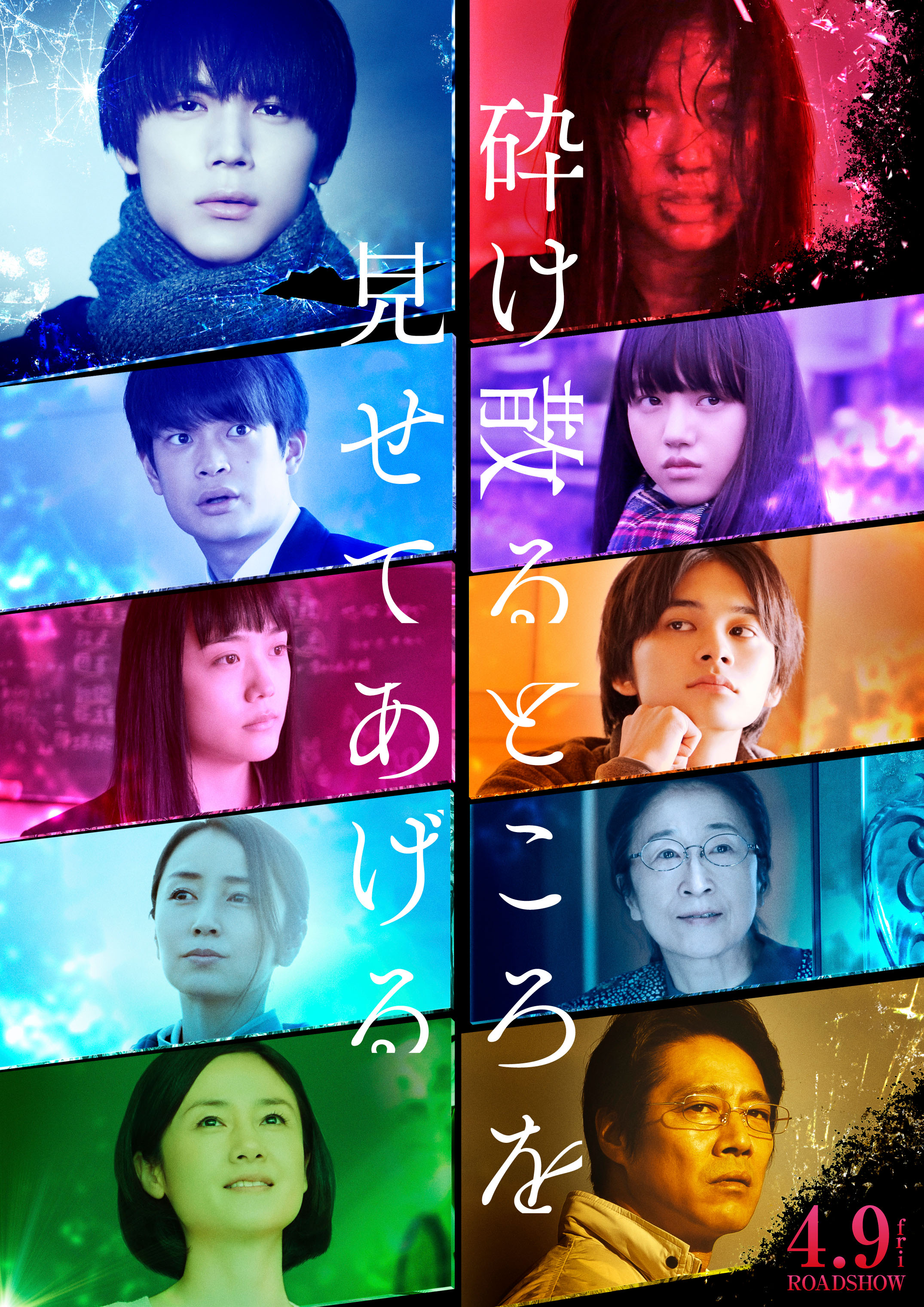
My Blood & Bones in a Flowing Galaxy (砕け散るところを見せてあげる, SABU, 2020)

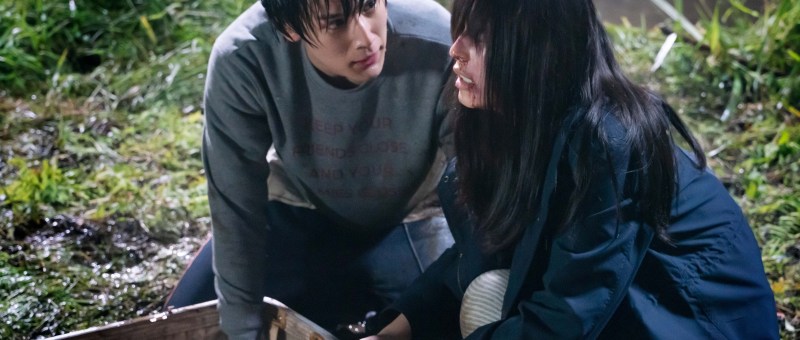
“Do heroes need a reason to be heroes?” asks the hero of SABU’s adaptation of the light novel by Yuyuko Takemiya My Blood & Bones in a Flowing Galaxy (砕け散るところを見せてあげる, Kudakechiru Tokoro wo Misete Ageru). A little lighter than the Japanese title which translates as “I will show you a broken place”, SABU’s latest collaboration with EXILE TRIBE is a sometimes surreal tale of the great confluence of love, undercutting and repurposing a traditional idea of masculinity as the young man at its centre tries and fails to overcome himself to be the hero he longs to be while finally discovering that true heroism lies in the capacity to lend courage to others in a world often haunted by violence and despair. 

SABU opens, however, with a brief framing sequence in which another young man (Takumi Kitamura) meditates on the legacy of his father who died a hero trying to save a little girl from a submerged car. A flashback to sometime in the ‘90s introduces us to Kiyosumi (Taishi Nakagawa) running full pelt late for school and surreptitiously joining the back of the assembly hall behind a class of younger students hoping to avoid detection. Once there, however, he witnesses a young woman being relentlessly bullied by her classmates and intervenes. After the assembly concludes he tries to make sure the girl is OK, but when he touches her in comfort she begins screaming uncontrollably and leaves the room. Kiyosumi, however, is undeterred and continues trying to protect her, eventually earning her trust after rescuing her when she’s doused in water and locked up in a bathroom storage cupboard. The pair soon become friends, Kiyosumi apparently falling for the melancholy young woman but naively failing to realise that her problems may be bigger than he realises and that there are some monsters you can’t fight alone. 

During one of their early conversations, Hari (Anna Ishii), the young woman, outlines her UFO theory of universe in which she visualises each of the forces which oppress her as alien spaceships floating ominously in the sky above. Standing in for unresolved trauma, the ever present threat of violence, and the pain of loneliness, the presence of the UFOs both brings the pair together and overshadows their growing romance, Kiyosumi’s voiceover hinting at an unhappy ending in which he will not fulfil his dream of being forever by her side. He continues to doubt himself, unsure if he can really be the hero that Hari believes him to be while she draws confidence from his kindness to become one herself. 

There is, it has to be said, an air of chauvinism and a mild saviour complex in Kiyosumi’s otherwise altruistic desire to stand up to injustice. He doesn’t stop to ask himself if Hari wants saving or if his intervention may end up making things worse for her as it eventually does if in an unexpected way. Childishly naive, he fails to look beyond the immediate problem of high school bullying, recalling his own days as a lonely first year rejected by the cool crowd only later finding a friend, while certain that he can protect Hari solely with the force of his presence. To begin with, he may be right, his initial intervention allowing other like-minded souls to stand up against the school’s bullying culture and earning Hari another friend in the equally defiant Ozaki (Kaya Kiyohara). But only too late does he begin to realise that the bruises on her wrists may not be caused in class and that her victimisation does not end at the school gates. 

Rescued from the storecupboard, Hari tried to defend her aggressors citing the fact that they used clean tap water the last bucket of which was even warm as a sign of “kindness”. So brutalised is she that she expects nothing more. The irony is Kiyosumi cannot in the end protect her, but does perhaps lend her the strength to protect herself as she in fact saves him. Yet as Kiyosumi points out, the “UFOs” do not simply disappear in the midst of red rain but may strike again at any moment, his attempts to rescue a drowning girl a kind of metaphor for his desire to drag Hari free of the source of her trauma and show her “the glowing beauty of this world”, a desire he can only realise by becoming one with a galaxy of eternal love. True heroism, he eventually realises, is just being there if only in spirit as a source of constant support and reassurance in a world of dizzying anxiety. At times infinitely bleak but coloured with teenage sunniness and youthful naivety, SABU’s empathic drama both recognises and forgives its hero’s chauvinistic self-obsession while allowing the heroine to save herself each bolstered by a sense of mutual solitary born of a deep compassion with love perhaps the best weapon against the circling UFOs of a sometimes cruel existence. 


My Blood & Bones in a Flowing Galaxy streamed as part of this year’s Nippon Connection.

Original trailer (English subtitles)

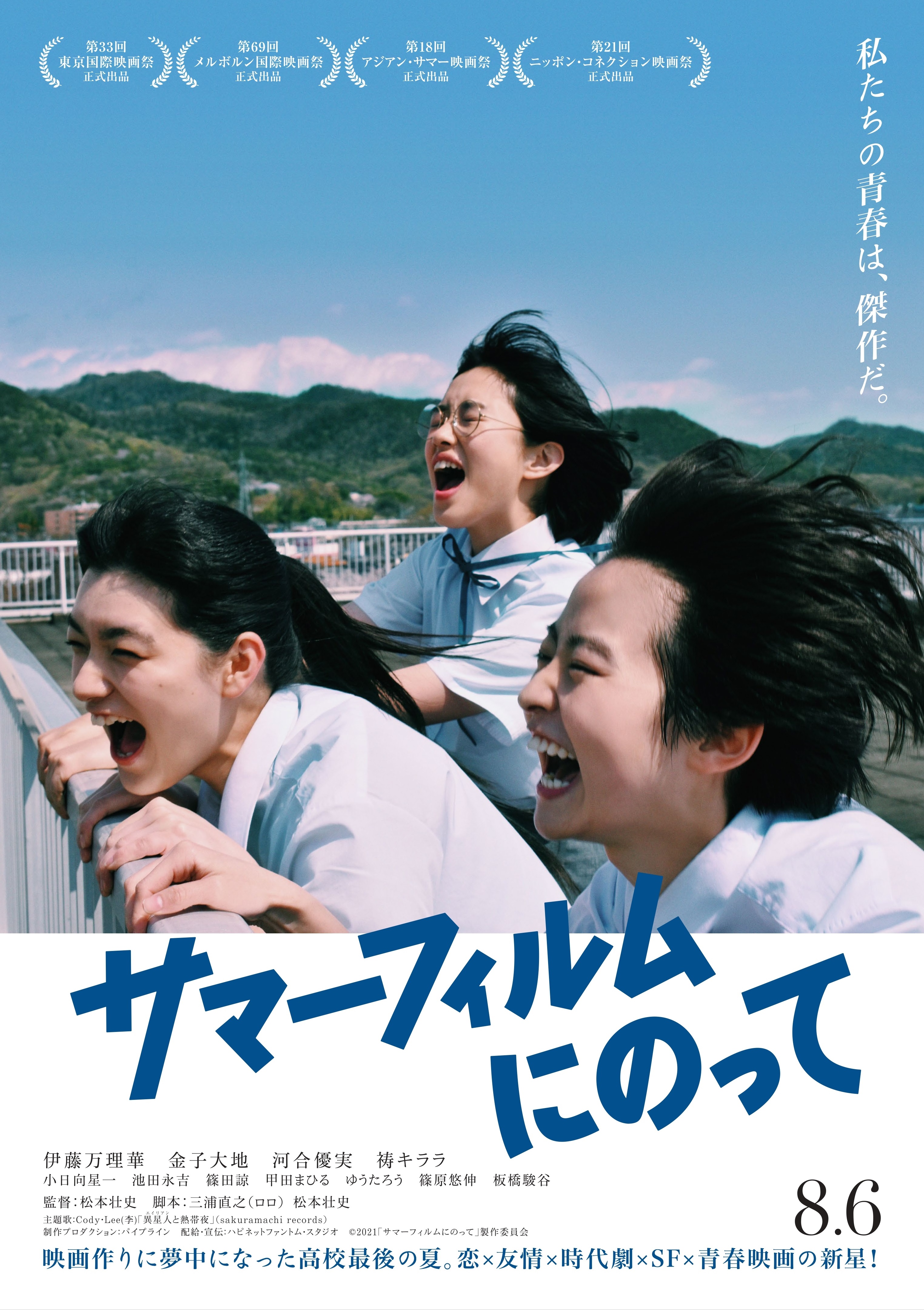
It’s a Summer Film! (サマーフィルムにのって, Soshi Matsumoto, 2020)

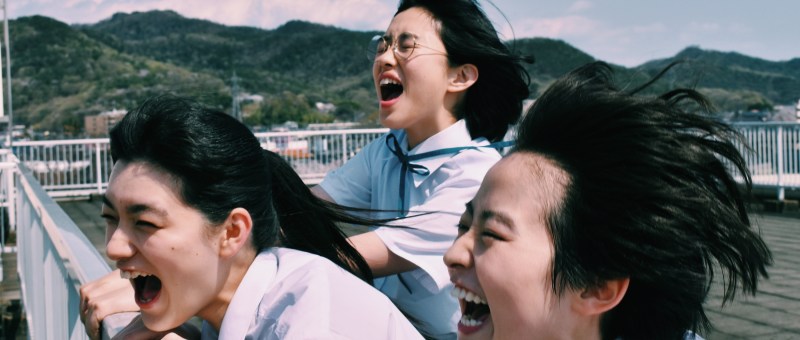
“Movies connect the present with the past through the big screen” according to the jidaigeki-obsessed heroine of Soshi Matsumoto’s charming sci-fi-inflected teen movie It’s a Summer Film! (サマーフィルムにのって, Summer Film ni Notte). True to its title, Matsumoto’s whimsical drama very much belongs to the grand tradition of high school summer movies as its youthful heroines contemplate eternity, romantic heartbreak, and artistic fulfilment while secretly plotting to best their vacuous rival by filming their very own teen samurai movie ready in time for the all-important school cultural festival. 

Aspiring director Barefoot (Marika Ito) is completely obsessed with classic samurai movies, arguing with her similarly devoted friends about who is hotter Shintaro Katsu or Raizo Ichikawa. She is a key member of the school movie making club, but intensely resentful of star player Karin (Mahiru Coda) who won the tender to make the film for this year’s cultural festival with a sappy teen romance which mostly seems to involve repeated scenes of the central couple loudly declaring their love for each other. Barefoot thinks a film should convey love without words and has written a script for a teen samurai movie in which adversaries become too emotionally invested in each other to engage in the expected final confrontation. All she’s lacking is a star and after spotting a handsome guy apparently as moved by a local rep screening as she is decides she’s found her man. What she doesn’t know is that Rintaro (Daichi Kaneko) is a secret time traveller from a future in which she has become a renowned master filmmaker but film itself sadly no longer exists. 

Being from the future and all explains Rintaro’s reluctance to star in the film, dropping accidental hints that he’s from another place as in his amusement that humans still staff removal companies and total mystification by the word “Netflix”. Yet he too is completely obsessed with classic jidaigeki from the heyday of the genre which had largely gone out of fashion by the early 1980s. As many point out, Barefoot’s hobby is slightly unusual, though she learned her love of chanbara from her grandma, receiving messages from the past she hoped to pass on to the future. Gathering most of the other rejected, outsider teens from a boy who looks about 40 to a pair of baseball nerds who can correctly guess the player from the sound of a ball hitting a glove and a bleach blond biker, she assembles a team to make her movie dreams come true as if to prove there’s something more out there than the, as she sees it, vacuous high school rom-coms favoured by the likes of Karin. 

Among the series of lessons she finally learns is that Karin need not be an adversary but could be a friend if only she look beyond her snootiness and resentment of the popular crowd even if Karin’s all pink, needlessly extravagant and egotistically branded crew shirts don’t do much to dispel Barefoot’s perception of her as entitled and self-obsessed. Another lesson she learns is that she’s not as disinterested in romance as she thought she was, though falling for Rintaro leaves her with a secondary dilemma realising that he’ll eventually have to return to his own times while also contemplating what the point of the future even is if they don’t have movies there. What she’s going to do with the rest of her life if the art of cinema is already obsolete? 

With some ironic help from Karin, what she realises is that even if something is destroyed it doesn’t disappear, films live on in the memories of those who saw them who can then take their memories with them into the future. Where her first draft had ended with an emotional anti-climax that saw her heroes too emotionally involved to engage in conflict, she now realises that samurai movies are love stories too and that “killing is a confession of love” in a slightly worrying though not altogether inaccurate take on the homoerotic subtext of the chanbara. A charmingly whimsical coming-of-age tale filled with meta touches from the constant references to classic jidaigeki to the heroine’s sci-fi-obsessed sidekick who seems to have an unrequited crush on her best friend idly reading The Girl Who Leapt Through Time, It’s a Summer Film! more than lives up to its name in its cheerful serenity as the teenage old souls defiantly learn to claim their own space while connecting with each other as they contemplate love and transience in the eternal art of cinema. 


It’s a Summer Film streamed as part of this year’s Nippon Connection.

Original trailer (English subtitles)
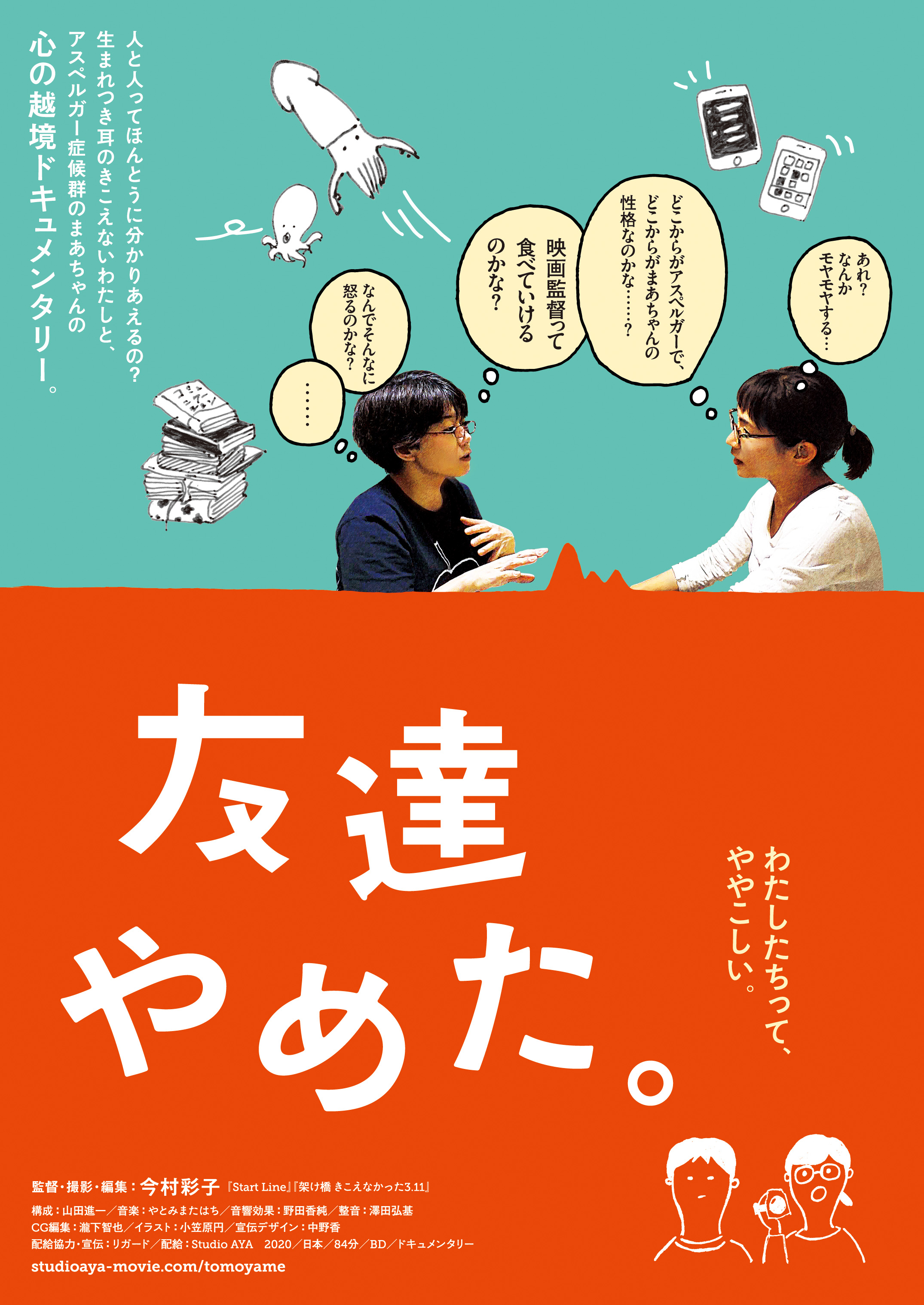
I Quit, Being “Friends” (友達やめた。, Ayako Imamura, 2020)

“I thought we could understand each other because we’re both minorities, but that was wrong”, director Ayako Imamura admits in her revealing, self-reflective documentary I Quit, Being “Friends” (友達やめた。, Tomodachi Yameta) in which she contemplates her sometimes awkward relationship with a friend who has Asperger’s and struggles with communication. Imamura herself was born deaf and so also faces daily communication barriers living in a hearing society but often has difficulty understanding Ma-chan’s sense of anxiety and social rejection becoming increasingly irritated by seemingly trivial examples of what she sees as rudeness or lack of consideration. 

Ayako apparently met Ma-chan a few months before the film began at a screening of her previous film, Start Line, which charted her journey across Japan by bicycle. Ma-chan had become involved with social welfare issues in university, making friends with deaf students and learning sign language. At the event, Ma-chan was supposed to be her interpreter, but as the screening began ahead of schedule she arrived after it started and simply sat in the front row of the audience not knowing what else to do. This seems to have irritated Ayako, put off by her supposed bad attitude. 

It is then a minor irony that part of Ayako’s growing resentment stems from something she did not even notice directly in that Ma-chan never says “itadakimasu” as is customary and polite before eating. Ayako’s grandmother pointed this out to her, taking against Ma-chan thinking her rude or ungrateful while Ayako herself who obviously couldn’t hear if she said it or not tried to defend her if superficially on the grounds of her disability. Later Ma-chan explains that she believes not saying itadakimasu is not (directly) related to her neurodivergence but simply because her family did not say it and so she never learned the habit, while Ayako gradually realises that she has perhaps become fixated on “Asperger’s” to the extent that she stopped seeing Ma-chan as person rather than an embodiment of her “condition”. 

She had perhaps assumed that as two people who experience similar problems with communication they would be on the same wavelength, but finds it increasingly difficult to accept Ma-chan’s atypical behaviour, perhaps irrationally upset by the itadakimasu issue while otherwise put out by her tendency to eat other people’s snacks without asking and smack her on the back of the head when she’s done something silly. For her part, Ma-chan reveals she prefers using sign language because there’s less need for superficial politeness and therefore less chance of causing offence. Ayako consciously affects tolerance, wary of turning into one of those people who ask a deaf person if they haven’t just tried listening harder in railroading Ma-chan into neurotypical behaviour patterns but eventually decides to end their friendship explaining that she’s “done with trying to act like a nice person”. 

While Ayako only obliquely addresses some of the problems she faces in the hearing world, using a relay system to book tickets over the phone for example, she is surprised to realise that Ma-chan has similar problems, too anxious to order food in a restaurant for example and reluctant to use the telephone even if not physically incapable. We’re told that Ma-chan also suffers from depression and see her expressing suicidal thoughts in despair of being constantly told that she needs to change in order to adapt to neurotypical society and knowing that she can’t. What occurs between the two women is perhaps an ironic kind of miscommunication informed by a degree of culturally specific rigidity in which rudeness deliberate or otherwise is an unforgivable sin. 

Despite having elected to end their friendship, Ayako eventually changes her mind and decides to try again, more directly, with a little mutual understanding each stating bluntly what behaviour they find puzzling or hurtful and attempting to explain why it occurs, drawing up something like a set of ground rules and boundaries for their relationship. Attending a meeting in Tokyo in which disabled activists express solidarity with the LGBTQ+ community following a politician’s crass remark that “unproductive” (ie those who do not contribute to solving the declining birthrate problem) people do not deserve social support, both women are forced to reconsider their views on and as minorities addressing some uncomfortable thoughts they too may have had about their place in society and that of others. Nevertheless, in the end they each resolve to struggle against any unconscious prejudice they may have, actively striving to forge a friendship based on mutual understanding and brokered by resolute honesty rather than allow pettiness and resentment to drive them apart. 


I Quit, Being “Friends” streamed as part of this year’s Nippon Connection.

Original trailer (English subtitles)
Sumikkogurashi: Good To Be In The Corner (映画 すみっコぐらし とびだす絵本とひみつのコ, Mankyu, 2019)

Cute characters are ubiquitous in Japan and though many may associate them with merchandising aimed at small children, a more recent trend has expressly targeted dejected adults perhaps longing for an escape into a kinder, more innocent world. San-X has been at the forefront of this trend with its hugely popular merchandising lines often featuring characters who just want to take things easy and enjoy life such as the lazy bear Rilakkuma or the roly-poly Tarepanda. Featuring an entire cast of neurotic characters, Sumikkogurashi has been one of the studio’s most successful collections appearing on everything from stationery items to cookware and clothing. 

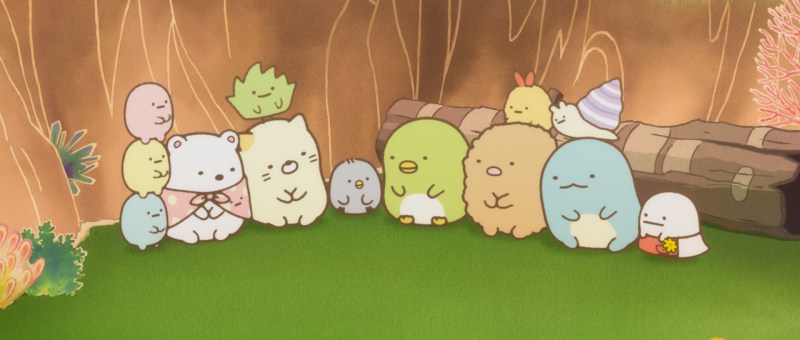
Sumikkogurashi: Good To Be In The Corner (映画 すみっコぐらし とびだす絵本とひみつのコ, Eiga Sumikkogurashi: Tobidasu Ehon to Himitsu no Ko) is the franchise’s first animated movie and at just over an hour long is aimed squarely not at the regular adult audience but at small children (or perhaps the small children of the same overly anxious adults), taking inspiration from various international fairytales as the guys go on an improbable adventure to help a lost little duckling trapped inside a book. For those not already familiar with the world of Sumikkogurashi, the picture book-style narrators (Yoshihiko Inohara & Manami Honjo) introduce each of the characters who never speak themselves but communicate with each other through onscreen text mimicking that which appears on their character goods later interpreted by the narrators. The central theme of the Sumikkogurashi franchise is that each of the characters is intensely neurotic and has retreated from the world in favour of the relative safety of the corner of the room where they find solidarity with other similarly troubled souls which include a polar bear afraid of the cold, a shy cat, the remnants of a tonkatsu cutlet too oily to finish and his shrimp tail buddy, a bunch of tapioca pearls left in a cup of bubble tea, and a green penguin who is confused about their identity wondering if they are actually a lost kappa. 

It’s to Penguin? that the main drama belongs as he bonds with the lonely duckling who has come loose in a book of fairytales and wants to find out where they belong. Sucked into a pop-up book, the Sumikkogurashi guys find themselves taking on the roles of the main characters with shy cat Neko cast as fierce yet tiny warrior Momotaro, Shirokuma as The Little Match Girl forced to face the cold, Tonkatsu and Ebifurai no Shippo in Little Red Riding Hood, secret dinosaur Tokage as The Little Mermaid, and Penguin? thrown into the world of the Arabian Nights. Together they pledge to help Hiyokko, the lost duckling, find where they belong and hopefully some friends along the way facing their own fears as they go.

The irony is that the guys have to leave the corner and go on an adventure where they do not exactly overcome their fears but perhaps learn that there’s not so much to be afraid of, Neko for instance making friends with the scary demon who chases them to offer some “onigiri” (a minor pun) in return for the gift of dumplings rather than fighting him as in the Momotaro folktale, even if they obviously need to return to the corner in the end. The message is that no one is really alone, even if they’re lonely in the corner lots of other people are too and you can find comfort in all being lonely together. The simple, water colour-inspired animation style is a perfect match for the series’ “healing” aesthetic with its gentle humour and random puns appealing both to small children drawn in by the cuteness of the characters and jaded adults looking for a little comfort who are presumably the targets of the more sophisticated gags. A simple bedtime story, Sumikkogurashi: Good to Be in the Corner is filled with wholesome warmth that belies its neurotic premise as the guys find solace in friendship and kindness while contending with an unfamiliar and sometimes hostile world.


Sumikkogurashi: Good To Be In The Corner streamed as part of this year’s Nippon Connection.

Original trailer (no subtitles)

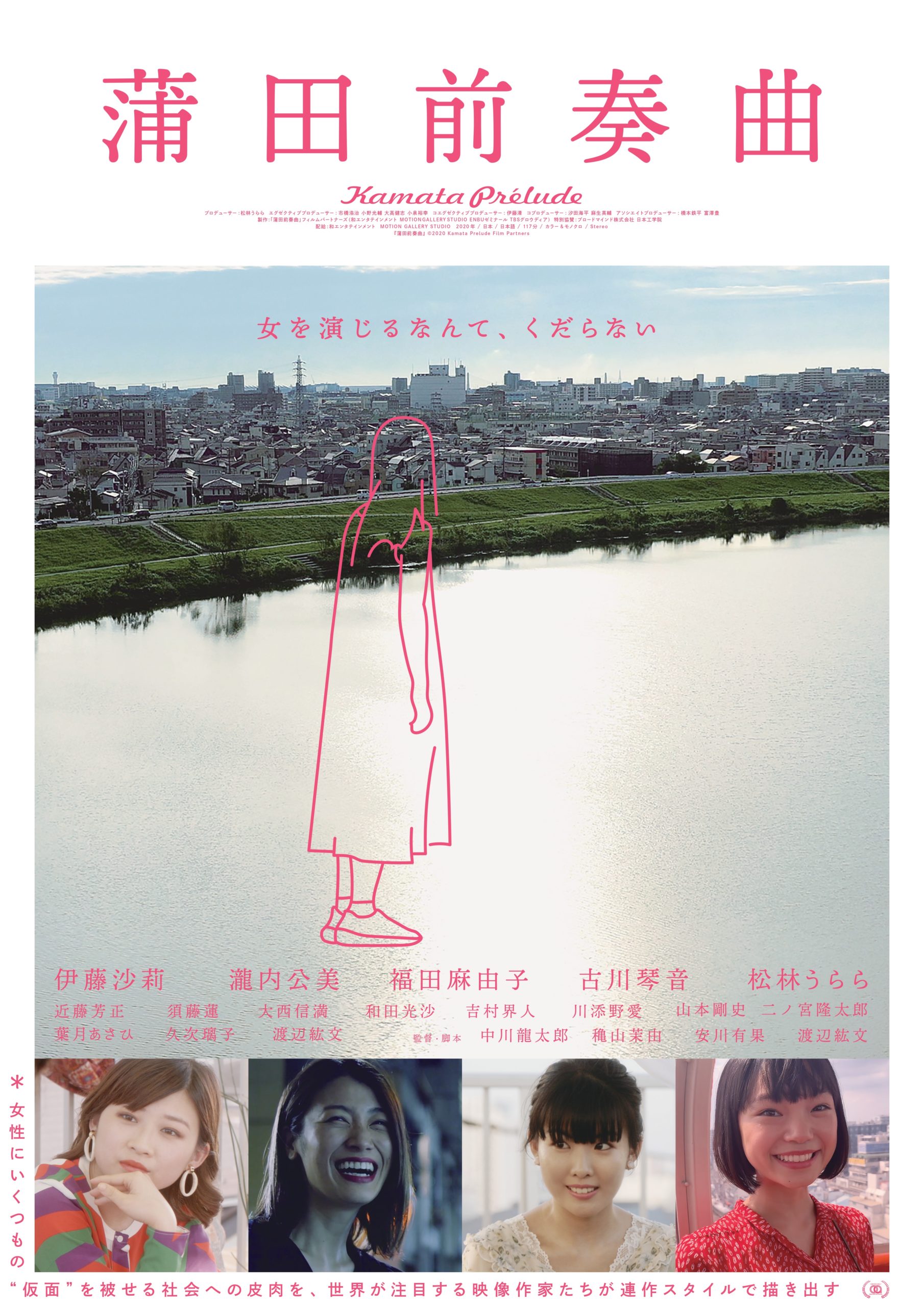
Kamata Prelude (蒲田前奏曲, Ryutaro Nakagawa, Mayu Akiyama, Yuka Yasukawa, Hirobumi Watanabe, 2020)

A quiet suburb of Tokyo, Kamata is in someways the birthplace of modern Japanese cinema home to Shochiku’s prewar studio where the “Kamata Style” which aimed to introduce a note of cheerful naturalism to an artform defined by shinpa gloominess was forged. Produced by actress Urara Matsubayashi who hails from the area and stars in three of the four segments, omnibus movie Kamata Prelude (蒲田前奏曲, Kamata Zensokyoku) asks some tough questions about what it means to be a woman and an actress today in the contemporary capital as the heroine, “Machiko Kamata”, contends with various demands from the economic to the emotional. 

Directed by Ryutaro Nakagawa, the first segment finds Machiko (Urara Matsubayashi) introducing herself as she takes part in a strange audition dressed in an inappropriately short cosplay-style nurse’s outfit. After the audition is over, her agent tells her to say “hi” to the director, a theme which will recur in the third chapter as Machiko finds herself feeling uncomfortable, forced to ingratiate herself in order to get ahead. Annoyed after the eccentric director asks her out for dinner, she can’t help asking him why she has to wear the suspiciously skimpy nurse’s outfit provoking him into a worryingly violent outburst. At home, meanwhile, her world is rocked by her younger brother’s revelation that he’s got a girlfriend who is, ironically, a nurse at local hospital. Jealous and resentful, Machiko can’t warm to Setsuko (Kotone Furukawa) who seems improbably sweet and innocent, almost as if she came from another time (the mid-August dating and ornaments for the Bon festival might clue us in as to why). Spending a day bonding with her, however, the two women generate a kind of sisterhood which pushes Machiko into a realisation of the emptiness she feels in her life of constant struggle as an aspiring actress supporting herself mainly with her part-time job at a ramen bar. 

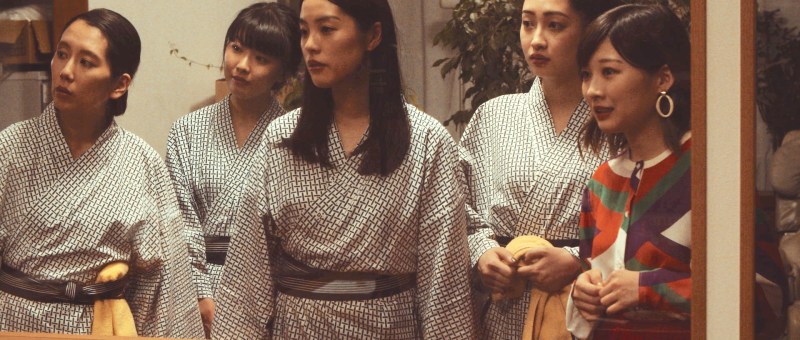
The themes of alienation and insecurity are only depend in the second segment, directed by Mayu Akiyama, in which Machiko reunites with a group of high school friends who are each less than honest about the state of their lives and their unfulfilled desires. Machiko gives the impression that she’s just been in a major movie with a big star, but it turns out she only played a corpse while the rest of the group are scandalised by the bombshell that their friend Marippe (Mayuko Fukuda) has got engaged to a guy from work she’s been seeing secretly for only six months. Besides being somewhat hurt not to have known she was seeing someone, the gang have different reactions to the news with hard-nosed career woman Hana (Sairi Ito) put out by Marippe’s traditional view of conventional gender roles in which she intends to let her career slide to concentrate on being a wife. A trip to a hot spring (the same hot spring seen advertised on Machiko’s T-shirt in part one) brings things to a head with a possibly cheating boyfriend eventually offering the excuse that he is merely a hot spring enthusiast sharing his hobby with a friend of the opposite sex rather than a two-bit louse indulging in the patriarchal double standard. 

Patriarchal double standards are out in force in part three, directed by Yuka Yasukawa, in which Machiko attends another odd audition where she and the other auditionees are asked to outline an episode of sexual harassment they have personally experienced. In fact, we have already seen her be inappropriately propositioned by a middle-aged producer who ran out on her in a coffee shop after she turned him down leaving her with the bill, but the episode she recounts is darker still. As she feared they might, the men in the room quickly figure out who she might have been talking about but proceed to put the blame on her implying that she sleeps around to get ahead and was only offended by the producer’s actions because he wasn’t powerful enough to be useful. It’s another woman however, Kurokawa (Kumi Takiuchi), who kicks things into gear by relating that she was assaulted by a man in a club whom she later reveals to have been the director himself only he doesn’t remember her. The director brings both women back and makes them re-enact Machiko’s tale of being inappropriately propositioned in a producer’s office, increasingly exasperated that the situation seems “too scary” as if he’s entirely missed the point of his own exercise or is actively getting off on the actress’ discomfort. The male cameraman (Ryutaro Ninomiya) is the one who eventually points out that the audition itself has descended into a protracted act of sexual harassment, seemingly conducted solely for the entertainment of the director and his assistant. 

Largely disconnected from the other three chapters, the fourth does not feature Urara Matsubayashi and is in fact set not in Kamata but in director Hirobumi Watanabe’s familiar Tochigi. The opening of his segment, characteristically filmed with static camera and in black and white, finds him once again playing a version of himself ranting about not knowing what to do with this unusual project he has taken on for the money even though he doesn’t generally make shorts, has never done an omnibus movie before, and remains suspicious of the concept. He relates all of this to his 10-year-old niece Riko (star of I’m Really Good), who says absolutely nothing while he continues to treat her as if she were the most famous actress in Japan. Somewhat poignantly, a photograph of Watanabe’s late grandmother sits on a stool off to the side, implying perhaps that little Riko has in some senses taken over her role as silent observer. The main thrust of the action follows Watanabe as he attempts to film a sci-fi movie about an alien invasion with local non-actors, but is finally linked back to the omnibus by Riko’s cheerful letter to Machiko in which she states that she wants to become an actress just like her. Ending on such an upbeat moment seems to imbue a sense of hope for the future that was perhaps previously absent, implying that the hopes and dreams of a little girl at least are worth fighting for if only to live up to her sense of expectation for the magic of the movies. 


Kamata Prelude streamed as part of this year’s Nippon Connection.

Original trailer (English subtitles)
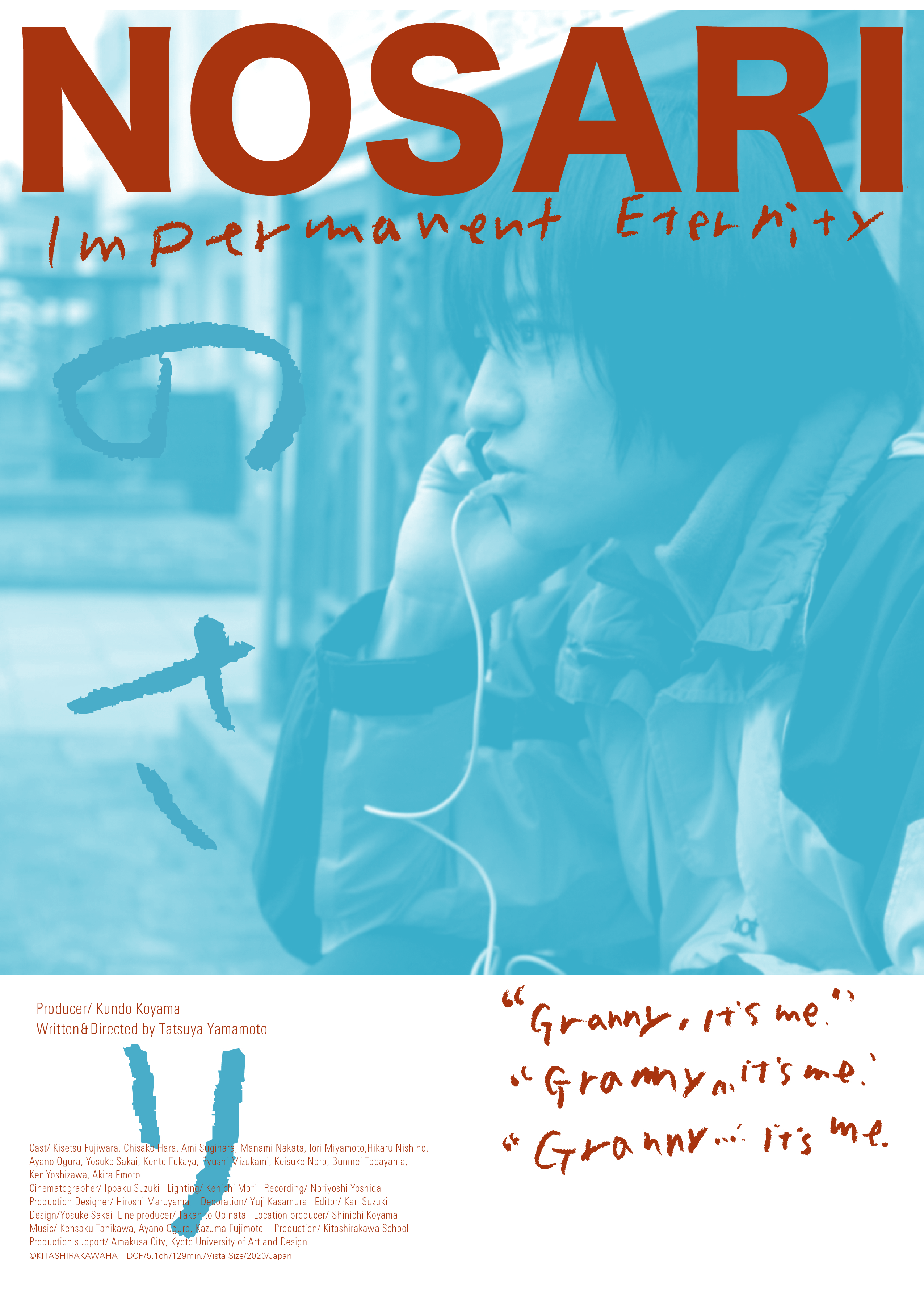
Nosari: Impermanent Eternity (のさりの島, Tatsuya Yamamoto, 2020)

“This is an illusion” a boatman explains to a lost young man “but sometimes people need it”. Produced by the Kyoto University of the Arts Department of Film Production, Tatsuya Yamamoto’s Nosari: Impermanent Eternity (のさりの島, Nosari no Shima) is the latest in a minor trend of indie dramas which see meandering young men find their feet while hiding out in moribund communities where the people are kind, honest, and willing to lend them space in which to figure themselves out enough to get back on the right path. 

This particular young man (Kisetsu Fujiwara) is an “ore ore” scammer, a popular form of telephone fraud in which the caller rings an elderly person and claims to be their grandson explaining in a panic that they’re in trouble and need money right away. The elderly person on the other end of the phone usually complies, either too estranged to realise that it isn’t their grandson’s voice or too anxious to give it much thought. On this particular occasion, however, the woman that the man rings after arriving on the small island of Amakusa appears not to understand, believing that he really is her grandson, Shota, suddenly arrived for a visit. The young man ends up going along with it, warming to the old woman, Tsuyako (Chisako Hara), and more or less forced to stay after she hides his phone and wallet (which contains money he’d already stolen from the honesty box in her music store). 

In some senses, “Shota’s” previous life as a cruel exploiter of the elderly is painted as a symptom of urban disconnection, that his alienated city life has robbed him both of empathy and basic morality though we know nothing of his wider circumstances save that he seems to be on the run from a series of similar crimes along the rail line out from Tokyo. It’s never exactly clear how much Tsuyako knows at any one time, though the movement of a photograph in the closing moments makes plain that she does indeed on some level realise that the man isn’t Shota no matter how much she’d like him to be. As the opening title card explained, the local people have a habit of simply accepting whatever it is that comes their way which is perhaps what Tsuyako decides to do with Shota, realising that he’s in trouble and wanting to help him by taking him into her home which does at least restore his sense of empathy for the elderly. 

The truth is however that Tsuyako is one of many elderly people left behind in a rapidly depopulating rural Japan, her son having moved away to the city and her husband presumably already passed away. Hers is the only shop still open in an eerily empty shopping arcade where she sits on a small stool waiting for customers that presumably rarely come, leaving an honesty box on the counter should she need to nip away. A parallel plot strand finds the host of a local radio programme, Kiyora (Ami Sugihara), desperately trying to find footage from back when the area was filled with life and industry but more or less coming up short. On her travels, she interviews an old man (Akira Emoto) who was once a master craftsman of noh masks but has recently turned to making lifelike scarecrows whose eerie presence attempts to make up for the sense of absence in the moribund town where, he points out, the elderly residents once played together as children. 

Kiyora also meets with a series of businessmen who have their own ideas about how to reinvigorate the town but comes up with few solutions to Japan’s ongoing rural depopulation crisis and is perhaps herself also lonely as one of the few youngsters remaining behind. She loves Amakusa for its serenity, often playing the calming soundscape on air for harried Tokyoites trapped on their cramped commuter trains but for her friend Yukari (Manami Nakata) country life seems stifling. She realises that those from the city long for the connection and kindness of the countryside, but she can’t stand the seasonal rhythm of rural life or the feeling of being under constant watch, peer pressured into dull activities she might not have much interest in solely to keep up appearances. 

For Shota, however, country connection seems to be exactly what he needed. “I don’t know what’s real and what’s false” he later complains, perhaps too invested in his temporary existence as Shota to fully appreciate the contradictions of his life. Gently cared for by Tsuyako he begins to realise that the world can also be kind, touched by her generosity as she tells him that on occasion there is more money in her honesty box than there should be but even if there were less it would be alright it just means that someone was in need. Arguing that something has been lost in the fracturing of communities, Nosari longs for a return to a more innocent, connected time in which people knew and supported each other, something of which seems to return in the busier Amakusa streets even if Kiyora finds herself suddenly surrounded by scarecrows in the loneliness of the empty arcade, striking up a friendship with a bashful harmonica player who later finds her way to Tsuyako’s store. For Shota, however, Amakusa has perhaps given him a better sense of himself, ready to head back out into the world with kindness and empathy in place of hardened cynicism. 


Nosari: Impermanent Eternity streamed as part of this year’s Nippon Connection.

Original trailer (no subtitles)

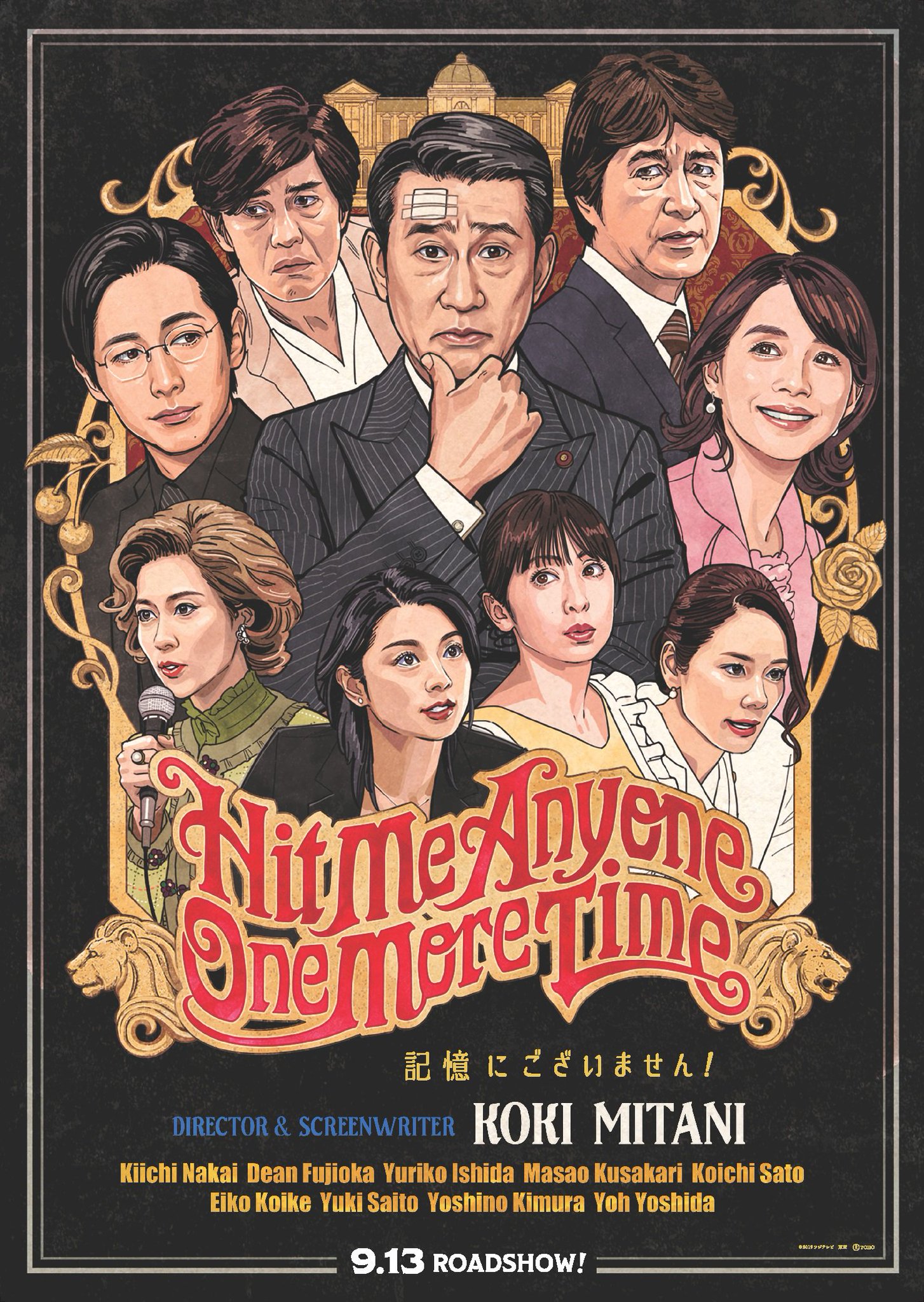
Hit Me Anyone One More Time (記憶にございません!, Koki Mitani, 2019)

Imagine if you woke up one day and found out you’re actually the national leader of your country and not only that absolutely everyone, including your wife and son, hates you with furious intensity. The hapless protagonist of Koki Mitani’s lowkey political satire Hit Me Anyone One More Time (記憶にございません!, Kioku ni Gozaimasen!) finds himself in just this stressful situation having lost all of his memories since he made the fateful decision to enter politics, rendered infinitely naive as he tries to keep up appearances while internally conflicted by the direction both his life and his country under his stewardship seem to have taken. 

Regarded as the “all-time worst prime minister” in Japanese history, Keisuke Kuroda (Kiichi Nakai) is known as a venal bore, a ghastly misogynist and all-round arsehole. To put it bluntly the very fact that a man like Kuroda could ever have become prime minster in the first place hints at a deep-seated rot in the political order. Aside from his gaffe-prone personality, the chief complaints against his administration are a sales tax hike and welfare cuts both of which target those with the least means, not that Kuroda cares very much about them. His big legacy idea is to build a second Diet building right next to the first Diet building only with spa facilities, illicitly teaming up with a childhood friend turned construction magnate who has been supplying him with hefty “donations”. 

After insulting the electorate during an outdoor balcony speech, Kuroda is hit on the head by a rock thrown by a disgruntled voter. Having lost his memory he regresses to a state of innocence from before he was corrupted by the cutthroat world of Japanese politics, now a nice, polite, slightly mild-mannered man who stuns his staff with his newfound consideration for others including a widely televised moment in which he stops to help up a female reporter who trips while chasing him in the lobby. Few believe he’s really changed, assuming this is some sort of bit intended to help rehabilitate his reputation. His new attitude, however, eventually fosters a new sense of hope for political change among his previously jaded, cynical staff who had long since given up hope of building a better Japan. 

Unsurprisingly, Mitani mostly avoids direct allusions to real world politics but adopts a mildly progressive stance as he sends a virtual innocent into the lion’s den of contemporary politics. It’s not long before Kuroda’s asking sensible questions about policy that wouldn’t go down so well with his (presumably) centre-right party including lowering the sales tax and raising the corporate, taking the time to greet constituents including a contingent of cherry farmers which contributes to his later decision to turn down a tariff-free trade deal for American cherries endangering diplomatic relations with the Japanese-American US President. No longer a ruthless political animal but a rueful middle-aged man who actually cares about ordinary people, Kuroda attempts to change the course Japanese politics largely by taking on the king maker, Tsurumaru (Masao Kusakari), his Chief Cabinet Secretary and the true holder of power in this infinitely corrupt political system. 

All sorts of sordid politics is on display from Kuroda’s womanising and a potential blackmail plot involving his wife’s affair to Tsurumaru’s yakuza ties and an even worse secret he would find personally ruinous should it get out. The ironic Japanese title of the film takes its name from that most universal of political get out of jail free cards, “I do not recall”, Kuroda’s standard response when questioned in the Diet about any of his extremely dodgy dealings. Instructing Kuroda that he should drop this “shallow humanism”, Tsurumaru can offer only the motivation that he wants to “remain in politics for as long as possible” while discovering that his old-school methods of political manipulation may no longer work when those around him find the courage to shed their cynicism and embrace a cleaner, kinder politics. 

Throwing in random gags such as a foreign minister who can’t speak English and has large ears with a pot belly that give him the appearance of Buddha while taking minor potshots as the usually toothless TV media through his series of acerbic anchors only too keen to criticise the PM live on air, Mitani’s comedy is characteristically inoffensive with its mix of slapstick and goodnatured farce but nevertheless makes a subtle plea for decent, compassionate politics which puts the interests of the people first rather than those of the governing elite. 


Hit Me Anyone One More Time streamed as part of this year’s Nippon Connection.

Original trailer (English subtitles)
Company Retreat (ある職場, Atsushi Funahashi, 2020)

“You can’t be suspicious of your team” an older woman insists, trying to defuse a rapidly devolving situation of mistrust among co-workers away on a “Company Retreat” ostensibly to cheer up a female employee who has recently become the centre of an online storm after her name and photos were leaked in relation to a report of sexual harassment at a prominent hotel chain. Inspired by true events, director Atsushi Funahashi originally planned to make a documentary exploring the fallout from an accusation of sexual harassment but discovered that few were willing to put themselves on camera opting instead to craft a docudrama in part improvised by his cast of actors. 

Shot documentary style and in black and white save one colour flashback, the action is split between two distinct company getaways four months apart taking place at a coastal town the first in the winter and the second in spring. Saki (Saki Hirai), a young female employee, made an accusation of sexual harassment against her male middle-aged boss, Kumanaka (Makoto Hada), and has been receiving constant online abuse after being outed by an unknown figure for unknown reasons. While her colleagues are largely supportive, they may also be harbouring an unspoken resentment that her decision to speak up has indirectly endangered their jobs as the company continues to suffer a loss of reputation with the public. When another of the employees reveals that he’s tracked the IP address of a persistent troll and discovered they’ve been posting from nearby it invites the suspicion that one of her friends is behind the online hate campaign possibly at the behest of the hotel chain keen to blacken her name and reputation in order to safeguard their own. 

The sexual harassment accusation exposes the gulf between what people say and what they really feel with some of the other employees eventually losing their cool and taking their frustrations out on Saki, partly for spoiling the holiday with her gloominess but also for her tendency to isolate herself from the group now viewing each of them as a potential enemy. She later accuses Noda (Yoshio Taguchi), a placid company man she feels may have chosen to sacrifice her in order to save the company’s reputation and with it his own job. Noda is upset to realise Saki sees him as a heartless corporate drone but later claims to have forgiven her. At the second retreat, however, he begins to voice quite a different opinion, exposing a deeply held set of patriarchal values in playing devil’s advocate wondering if it wasn’t all a misunderstanding and the boss, who has been demoted and transferred but not fired, has had his life “ruined” over something that wasn’t “that big of a deal”. He says this, in part, because his new girlfriend who also happens to be an employee has advised him that he is inappropriately touchy feely in the office and has little understanding of boundaries or personal space. Noda doesn’t see a distinction in the way he interacts with men and women and feels that’s just how he is, laying the blame on the other party if they ever felt uncomfortable while tacitly sympathising with another man who he believes may have had no “bad intentions” and is simply the victim of a “misunderstanding”. 

Perhaps paradoxically, he also blames Saki for her complicity that she may have smiled or laughed and said it was fine on previous occasions giving the boss the green light to think there was nothing inappropriate in his behaviour. In this she finds herself agreeing, that is perhaps the way it works in the workplace. Another older woman in a senior position advises her to transfer to another department, eventually explaining she thinks that might be easier seeing as the bosses are all men unlikely to be sympathetic. Ushihara (Mikoto Yoshikawa) is not unsympathetic herself, but is also willingly complicit, among the contingent of older career women who feel that sexual harassment is something you just have to put up with while simultaneously claiming that nothing will change until there are more women in a position of power. Attempting to take her side, Kinoshita (Megumi Ito), a divorced senior employee, tells Saki to do the “right thing” and refuse the transfer but is shot down by Noda who exposes even more misogyny when he tells her that her “emotional” and “righteous” tone is “unattractive”, insisting that she needs to “win the respect of men” in order for her arguments have weight. 

For some, however, and particularly the younger men this sort of hypocrisy becomes too much to bear. A company is supposed to be a family, but no one trusts anyone. Several employees from the original retreat resign after a decision is taken to try ringing the troll to prove they aren’t among the group unable to bear the sense of mistrust and suspicion from their close friends and teammates. Another employee, Taku (Taku Tsujii), brings his boyfriend to the first retreat though closeted at work losing confidence to come out to his colleagues in case they reject him and worst case scenario it costs him his job. Eventually he makes the decision to explain, realising he’s placed his boyfriend in a difficult position, and is relieved to discover he is immediately accepted by all, but continues to sympathise with Saki knowing how devastating it can be to be outed while also irritated by her tendency to reject them while they are only trying to help her. Meanwhile, another awkward young man struggles to confess his crush on the increasingly paranoid young woman, overly invested in a patriarchal ideal of masculinity that women are in need of male protectors mistakenly believing that Saki will be impressed by his attempt to safeguard her which ironically becomes a secondary act of harassment even as he, like Kinoshita, attempts to convince her to rebel against her complicity with a relentlessly rigged, conformist and conservative social order. 

The conclusion that she comes to, however, is that she has to “survive in this world” rather than striving for a better one. She has been unfairly demonised as if the real problem is her speaking up rather than her boss’ inappropriate behaviour and is understandably weary with fighting a battle she doesn’t understand, willing to accept a level of complicity in order to end the hate and suspicion. Kinoshita fears she will never see a “safe workplace” while others relentlessly “try to make society work for them” rather than for everyone. A bleak picture of contemporary society ruled by oppressive social pressure and aggressively patriarchal norms, Funahashi’s empathetic drama offers no real answers but advocates for the right to say no in a society where dissent is an untouchable taboo. 


Company Retreat (ある職場, Aru Shokuba) streamed as part of this year’s Nippon Connection.