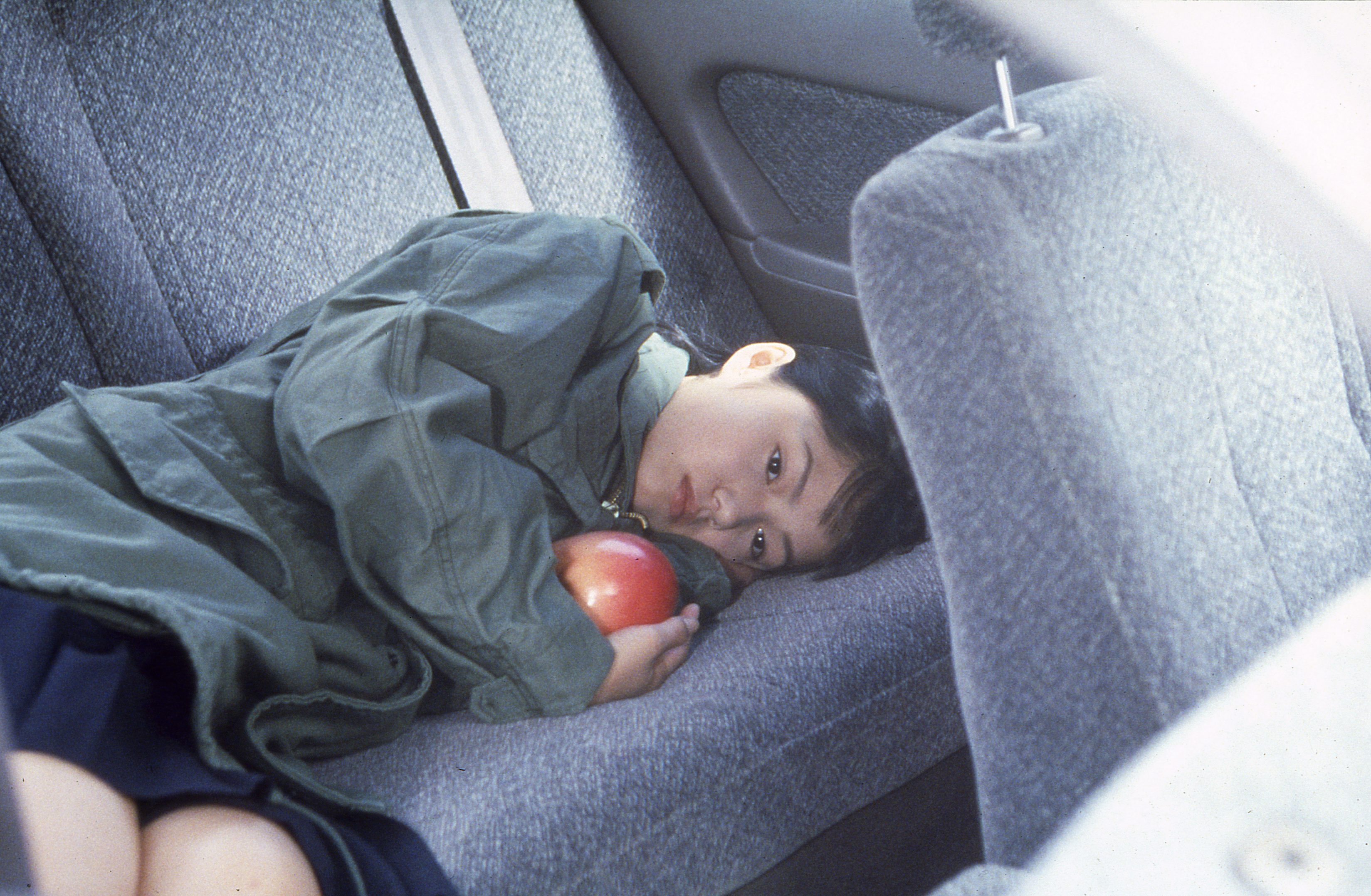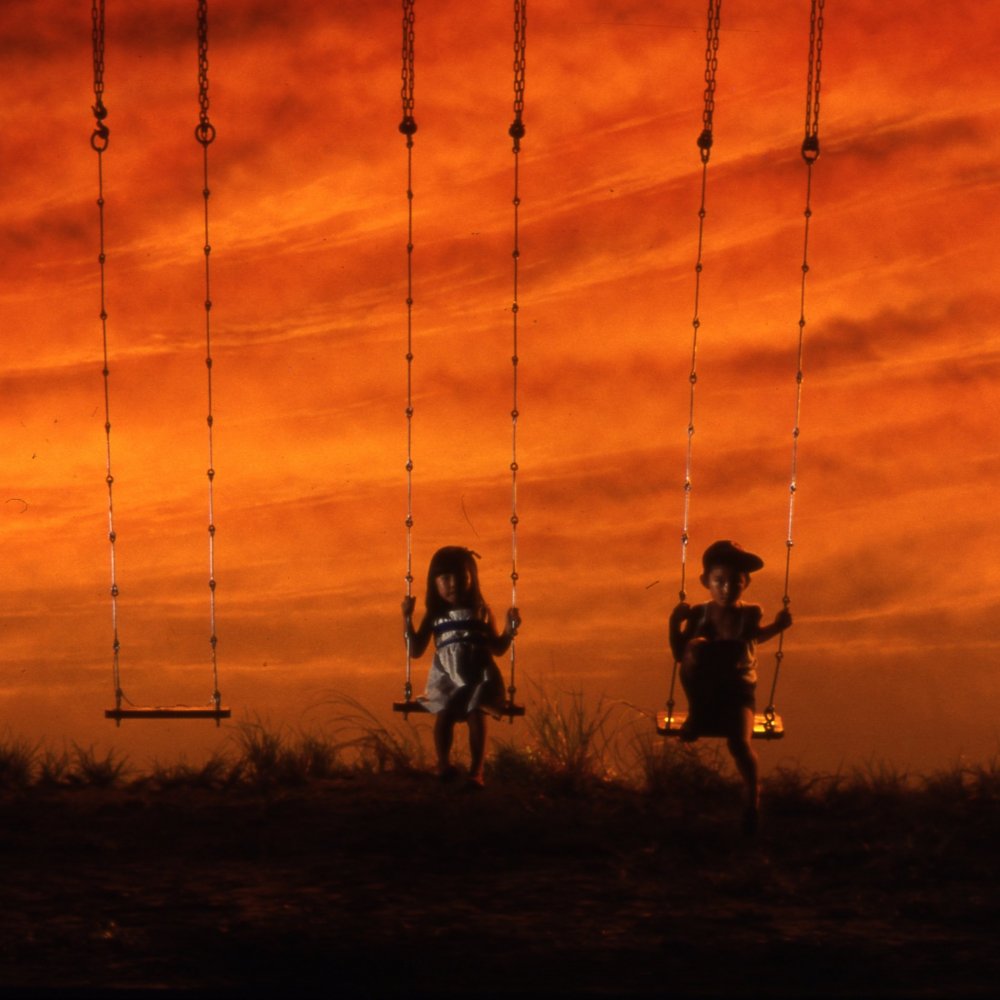
The New Morning of Billy the Kid (ビリィ★ザ★キッドの新しい夜明け, Naoto Yamakawa, 1986)

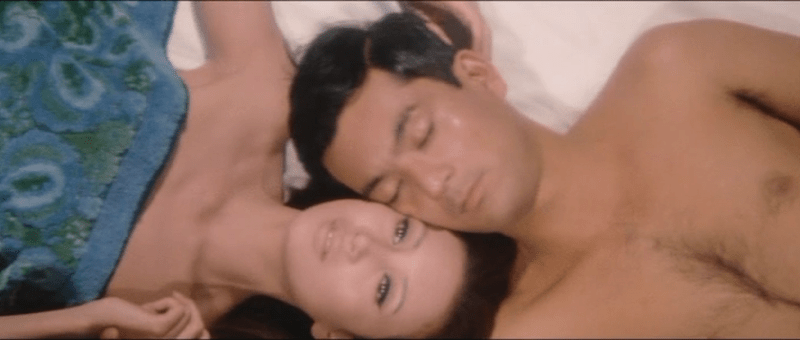
“Isn’t this style called surrealism?” a little girl asks, watching a WWII GI giving John Ford’s Monument Valley a post-modern makeover depicting John Lennon and a Martian in preparation for a live concert by hip girlband ZELDA. Arriving at the beginning of the Bubble era, Naoto Yamakawa’s 35mm commercial feature debut The New Morning of Billy the Kid (ビリィ★ザ★キッドの新しい夜明け, Billy the Kid no Atarashii Yoake) was the first film to be produced by the entertainment arm of department store chain Parco (along with record label Vap) which also distributed and draws inspiration from several stories by genre pioneer Genichiro Takahashi who at one point appears on screen proclaiming singer-songwriter Miyuki Nakajima, a version of whom appears as a character, as one of the three greatest Japanese poets of the age. What transpires is largely surreal, but also a kind of post-modern allegory in which the world is beset by the “anxiety and destruction” of salaryman society. 

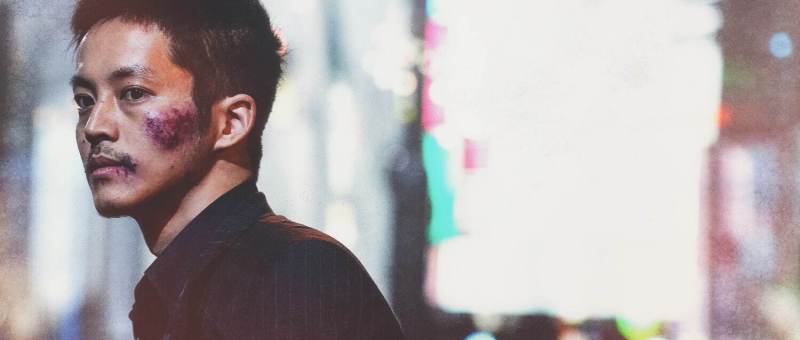
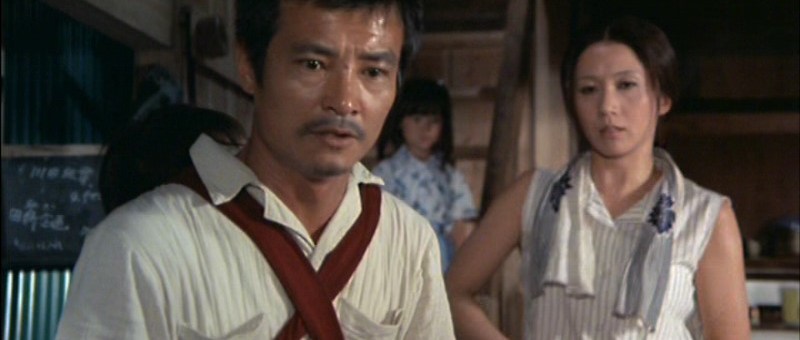
Yamakawa opens in black and white and in Monument Valley in which only the figure of a young man in a cowboy outfit is in vivid colour while a voiceover from the American President warns that a savage band of gangsters is currently holding the world to ransom. Yet “Monument Valley” turns out to be only an image filling the wall of Bar Slaughterhouse, the cowboy, Billy the Kid (Hiroshi Mikami) stepping out of the painting having lost his horse and apparently in search of a job. The barman (Renji Ishibashi) is reluctant to give him one, after all he has six bodyguards already ranging from the legendary samurai Miyamoto Musashi to an anthropomorphism of Directory Enquiries, 104 (LaSalle Ishii). Nevertheless, after threatening to leave (through the front door) Billy asks for a job as a waiter instead in return for food and board while collecting the bounty for any gangsters he kills in the course of his duties. 

The bar is in some senses an imaginary place, or at least a space of the imagination, the sanctuary of “construction and creation” where half-remembered pop culture references mingle freely. In that sense it stands in direct opposition to the salaryman reality of Bubble-era Japan where everyone works all the time and the only interests which matter are corporate. Billy takes a liking to a young office lady, “Charlotte Rampling” (Kimie Shingyoji), who complains that she’s overcome with a sense of anxiety in the crushing sameness of her life, often woken by the sound of herself grinding her teeth that is when she’s not too tired to fall asleep. The “gangsters” which eventually crash in (literally) are businessmen and authority figures, one revealing as he raids the till that he’s a dissatisfied civil servant who determined that in order to become the best of the salarymen you need an “interesting” hobby so his is being in a gang. Another later gives a speech remarking again on this sense of inner anxiety that in their soulless desk jobs they’re moving further and further away from this world of “creation and construction”, and that the sacrifice of their individuality has provoked the kind of violent madness which enables this nihilistic “terrorist” enforcement of the corporatist society against which Miyuki (Shigeru Muroi), another of the bodyguards dressed as a retro 50s-style roller diner waitress, rebels through her poetry. 

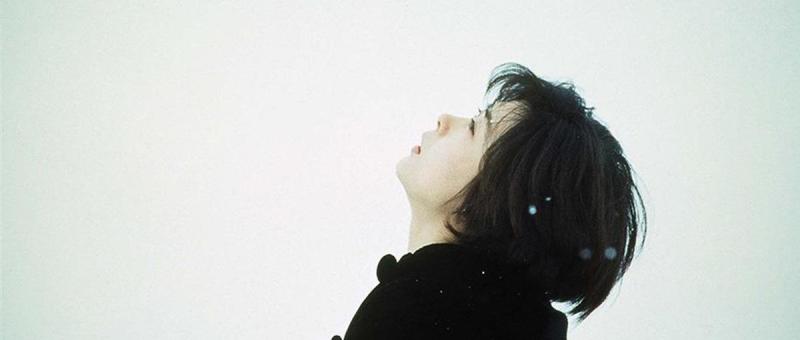
Envisioned as a single set drama (save the bookending Monument Valley scenes apparently filmed on location in Arizona) Yamanaka’s drama is infinitely meta, in part a minor parody of Seven Samurai featuring a Miyamoto Musashi inspired by Kurosawa’s Kyuzo who was himself inspired by Miyamoto Musashi as the seven pop culture bodyguards stand guard over a saloon-style cafe bar beset by the forces of “order” turned modern-day bandits intent on crushing the artistic spirit in order to facilitate the rise of a boring salaryman corporate drone society. Yet for all of its absurdist humour, Harry Callahan (Yoshio Harada) telling a strange story about being a race horse, there is something quietly moving in Yamakawa’s ethereal transitions, the camera gently pulling back as a little girl who wanted to travel is suddenly surrounded by snow or the face of anxious young office lady fading into that of a prairie woman telling a bizarre tale of her life with a venomous snake. Equally a vehicle for girlband ZELDA whose music recurs throughout, the first stage number a hippyish affair set in a summer garden and the second an emo goth aesthetic more suited to what’s about to happen, Yamakawa’s zeitgeisty, post-modern drama is an advocation for the importance of the creative spirit if in another meta touch itself a rebellion against the corporate and consumerist emptiness of Bubble-era Japan. 


The New Morning of Billy the Kid streams worldwide 3rd to 5th December with newly prepared English subtitles alongside two of Yamakawa’s earlier shorts courtesy of Matchbox Cine.

Original trailer (English subtitles available via CC button)

Miyuki Nakajima’s debut single, Azami-jo no Lullaby (1975)

ZELDA’s Ogon no Jikan

Hold Me Back (私をくいとめて, Akiko Ohku, 2020)

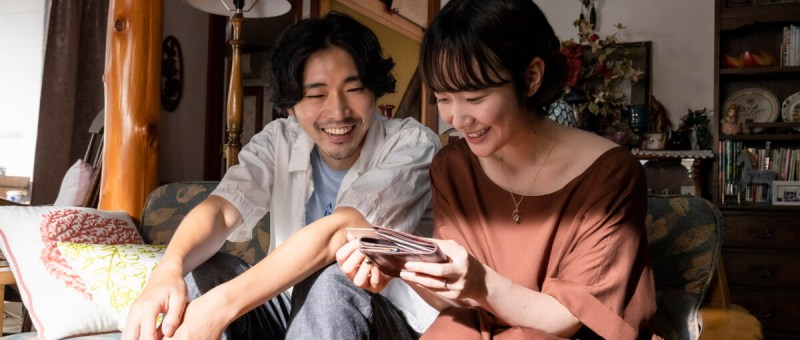
“Humans fly solo from the day we are born. You need to make an effort to be with someone” the heroine of Akiko Ohku’s latest chronicle of the contemporary woman’s inner loneliness, Hold Me Back (私をくいとめて, Watashi wo Kuitomete), is reminded. Like the heroine of Ohku’s mega hit Tremble All You Want, 31-year-old office worker Mitsuko (Non) is an introverted lonely soul through unlike the slightly older protagonist of My Sweet Grappa Remedies she is clearly much less happy with her single life than she likes to pretend often talking over her existential worries with an inner voice she refers to as “A” for “Answers”. 

As we first meet Mitsuko she’s taking part in a weekend workshop making fake food samples out of wax, later stopping off to pick up take out tempura on her way home because it saves stinking out her kitchen frying for one. She spends her free time thinking up things to do on her own on the weekends, but always seems to carry a degree of anxiety about her culturally taboo singledom. Having decided to try out a popular sandwich place, she finds herself leaving a nearby park because she feels awkward taking up a picnic table for four surrounded by couples and families on a day out. For similar reasons she nixes an idea to go to the beach, frightened she’d stand out as a lone woman. She finds herself asking A what she could do to make people like her more, clearly hungry for company but also afraid of it admitting it’s much easier to relax when she’s on her own and presumably free from the pressures of potential judgement.  

It’s potentially because of this awkwardness that she ends up in an ill-defined non-relationship with an equally diffident salaryman who often visits her office. The perfectly pleasant Tada (Kento Hayashi) is a young bachelor surviving off cutlets from a food stand in the neighbourhood where they both coincidentally live. Mitsuko tells a few fibs about her gourmet lifestyle but is actually a good cook though her probably made out of politeness invitation to make Tada dinner somewhat backfires as she finds herself cooking him “takeout”, preparing a meal while he waits awkwardly in her hallway before taking it home to eat on his own. A conversation with A reveals she does indeed have a crush on Tada and would like to ask him to stay but is fearful of ruining the non-relationship they already have if he should suddenly mention a girlfriend or refuse her invitation. 

Unrevealed even with her conversations with herself is a potential history of personal trauma, recalling a bad date with middle-aged dentist who told her he didn’t want to date a patient in public but had already booked a hotel room while getting handsy in the bar. On an onsen getaway she’s gifted by a friend who got it at wedding she doesn’t want to spend time thinking about, Mitsuko witnesses a comedian stage rushed by a pair of creepy guys and desperately wants to say something but finds herself unable. Talking it over with A she berates herself for her internal complicity with a patriarchal society, remembering all the times she let it go when a sleazy boss grabbed at her, an older co-worker who tried to convince her that it wasn’t OK eventually forced out of her job. She takes refuge in the fact her supportive female boss has managed to carve out a career for herself, believing she will eventually triumph over sleazy and incompetent men who take credit for the work done by their talented female subordinates but also assumes that Ms. Sawada (Hairi Katagiri) must be a lonely workaholic who sacrificed her personal life for the professional. 

An invitation from uni best friend Satsuki (Ai Hashimoto), meanwhile, who married an Italian and moved to Rome further deepens her sense of early life crisis, especially on discovering that Satsuki had neglected to mention that she was pregnant in any of their correspondence. It’s telling in a sense that A seems to desert her when she has someone “real” to talk to, absenting himself for the entirety of her time in Italy during which she realises that happy as she is Satsuki is also lonely living in an unfamiliar country and understandably anxious about the birth of her first child so far from home. Yet A’s frequent absences only exacerbate her fear of abandonment, after all if even her inner consciousness is jumping ship what possible hope is there for anyone else? 

But then as he tells her “You cannot escape being you”, her inner voice will always be there even if she doesn’t really need him anymore. “It was easier fighting loneliness alone” she exclaims in panic, suddenly getting cold feet about a possible step forward in terms of human intimacy, only later calming down after a final pep talk with A convinces her it’s worth the risk. Less surreal than Tremble All You Want while less rosy than My Sweet Grappa Remedies, Hold Me Back embraces its heroine’s internal vulnerabilities with a relatable realism as she tearfully asks the absent A “I’ll be OK this time, right?” before daring to find out come what may. 


Hold Me Back screens in Brisbane (Nov. 14), Melbourne (Nov. 20/24), and Sydney (Nov. 27 / Dec. 3) as part of this year’s Japanese Film Festival Australia.

Teaser trailer (English subtitles)

Seven Samurai (七人の侍, Akira Kurosawa, 1954)

An eclipse of the accepted order allows a temporary truce in the ongoing class conflict that defines feudal society in Akira Kurosawa’s seminal post-war historical epic, Seven Samurai (七人の侍, Shichinin no Samurai). Set in the late 16th century, the action takes place in a world on the brink of collapse. The Sengoku era is drawing to a close but is also in a moment of intense crisis which has left large numbers of highly skilled warriors essentially orphaned, wandering the land torn between their basic needs for food and shelter and their dignity as members of a theoretic aristocracy. 

Plagued by bandits, many of whom may be these orphaned swordsmen, a small village contemplates the unthinkable in hiring samurai, otherwise their oppressors and uniquely responsible for the chaos which surrounds them, for protection. “Land tax, forced labour, drought…and now bandits!” one woman exclaims shortly before suggesting they simply surrender all their grain and then hang themselves. As they can offer only expenses in the form of rice, the only samurai they can hope to recruit are already desperate, so hungry that they may be willing to deign to defending their social inferiors with whom they would not usually mix unwilling to accept that they are both victims of the inherently corrupt social order. This explains why the villagers’ early entreaties are met with such scorn and cynicism, either rudely rejected out of hand or ending only in deception. 

In this there is an echo of the world of 1954 which was beginning edge away from the chaos and privation of the immediate post-war society, bandits standing in for thieves and profiteers themselves a product of intense food insecurity. Yet here it’s desperation that allows a temporary merging of the world of lord and peasant, brokered finally by unexpected compassion on the part of a noble samurai who, in an act of extreme transgression, symbolically erases his elite status by shaving his head in order to save a child taken as a hostage by another desperate man. Kambei (Takashi Shimura) may be somewhat reduced in circumstances but refuses to give in to the immorality of the world around him, finally agreeing to help the villagers essentially out of a sense of pity willing to accept only the gift of sustenance moved by the villagers’ sacrifice in discovering that they give him the last of their white rice while subsisting only on millet. 

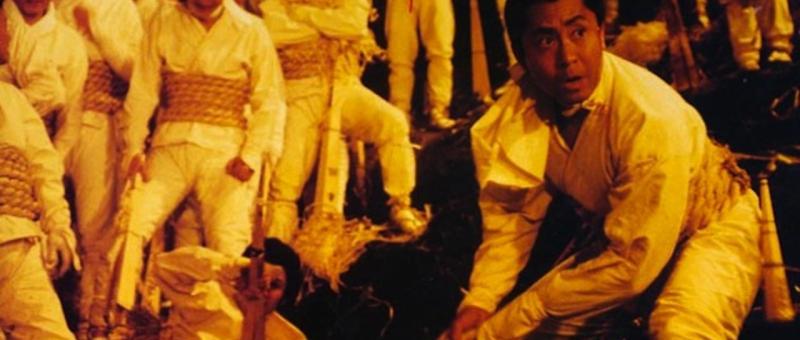
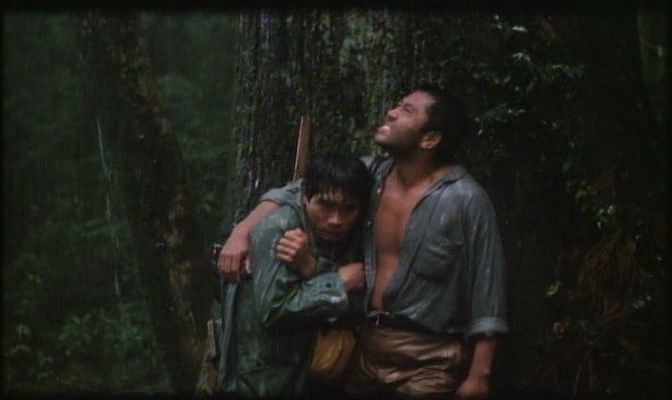
Yet having taken this step, the villagers remain uncertain they can really trust the men they’ve hired to protect them who are after all each trained in death. Later we discover that they have, like many of the time, occasionally finished off the odd lone samurai fleeing the battlefield in order to loot the bodies as a large stockpile of samurai armour later discovered by the samurai-pretender Kikuchiyo (Toshiro Mifune) testifies. On being confronted with this uncomfortable reality, the samurai fall silent knowing this armour was stripped from men much like themselves, but can ultimately offer little by way of defence when presented with an angry rant from Kikuchiyo who points out that they are themselves responsible in having created this world of chaos through their internecine quests for power. “In war you burn their villages, trample their fields, steal their food, work them like slaves, rape their women, and kill ‘em if they resist. What to you expect ‘em to do?”

When Kambei and the others first arrive in the village, there is no welcoming committee. The villagers all hide, frightened to leave their homes partly because of paranoia spread by widowed father Manzo (Kamatari Fujiwara) convinced that randy samurai are going ravish all of their daughters who will, doubtless, be overcome with awe by these sophisticated men of the elite. In an echo of Kambei’s transgression, Manzo forces something similar on his teenage daughter Shino (Keiko Tsushima), roughly cutting her hair while she cries and resists before dressing her up as a boy so that she’ll be safe from lusty samurai. The plan, however, backfires in that she later engages in a doomed romance with the young Katsuhiro (Isao Kimura). Their eventual union is the symbolic merging of the two worlds, a moment of eclipse in the usual hierarchy, but it’s born of the same impulses than brought Kambei and the others to the village. In fear and desperation, they behave as if there’s no tomorrow, only tomorrow must come and just as sun and moon must eventually move apart and resume their regular orbits so the relationship between Katsuhiro and Shino is an impossibility. 

Like Kambei, Katsuhiro had occupied a slightly liminal position because of his relative youth, neither boy nor man. He first encounters Shino while marvelling at the natural beauty of the forest, only to berate her for doing the same. “Is this any time for an able-bodied man to be picking flowers?”, he ironically asks her, yet he is repeatedly forced back towards conventional masculinity as marker of adulthood virtually ignoring her when tasked with carrying a dummy to the ridge, while she later returns the same gesture reassuming her femininity in joining the rice planting, a peasant woman once again. “What’s wrong with two people in love?” the wounded Rikichi (Yoshio Tsuchiya) asks Manzo, trying to smooth over this moment of cross-class crisis, only for Monzo to ask what he’s supposed to now his only daughter has become “damaged goods”, unfit for marriage in a fiercely patriarchal society in which it is impossible to survive without a husband. 

Katsuhiro cannot marry her, this sense of solidarity if not quite equality can be only temporary. Kambei himself admits as much as he reflects that the battle has been won but the victory belongs not to them but to the peasants, anticipating his a sense his own obsolescence the end of the Sengoku era bringing about a change in the nature of the samurai that two centuries later will lead to its abolition. Our sympathies might shift, witnessing Kambei’s obvious disapproval of the peasants’ relish in taking revenge on the bandits who have caused them so much misery in their own way perhaps perpetuating the cycle of violence and resentment that drives the feudal engine. One cannot help but pity him, displaced once again returning to a life of ceaseless wandering, his presence in the village now no longer necessary and in fact inappropriate. 

Returning to the world of 1954, there might be something a little uncomfortable in this lament for the death of the samurai who can have no place either in the modern society or in a peasant village in 1587, as there may be in the implication that the peasants are savage and vindictive while Kambei alone is good and kind even if the roots of his compassion lie in his willingness to literally sever himself from his elite status. The roles had in a sense been reversed, the samurai hired hands to peasant bosses, but the inversion can be only temporary. In insisting that only by protecting others can one hope to protect oneself, Kambei may be advocating for a more compassionate society but as much as he has attempted to remove himself from the class system he can not in the end overcome it. Nevertheless, in the gruelling battle scene that closes the film, all rain, mud, death and misery, Kurosawa himself deals the final blow to the samurai in the nihilistic futility of violence manifesting itself once again in the lingering feudalism of the mid-century society. 


Seven Samurai is re-released in UK cinemas in its recent 4K restoration as part of BFI Japan on 29th October.

BFI re-release trailer (English subtitles)

SUMODO ~The Successors Of Samurai~ (相撲道~サムライを継ぐ者たち~, Eiji Sakata, 2020)

“Every day is a traffic accident” according to a sumo wrestler describing the motion of two men colliding each trying to shove the other out of a protected area. Often regarded as a quintessentially Japanese combat sport, sumo has also come in for its share of misconceptions sometimes mocked or dismissed as a pastime popular mainly among the elderly or else a source of comedy in which in two large men clumsily grapple with each other. It’s precisely these unfair stereotypes that Eiji Sakata’s documentary SUMODO ~The Successors Of Samurai~ (相撲道~サムライを継ぐ者たち~, Sumodo ~Samurai o tsugu monotachi~) hopes to correct in gaining unprecedented access to the usually secretive world of professional sumo. 

He does this largely through focussing on two very different sumo stables and two key tournaments, one at New Year and the other in May. Though he interviews several of the rikishi at each, he adopts two main subjects who eventually clash in the ring but otherwise avoids clear narrative for an overview of what it’s like to live as a professional sumo wrestler in the present day which is to say a lifestyle that is largely unchanged over hundreds of years. Perhaps surprisingly, he even stops to appreciate the way in which a sumo tournament has also become something of a fashion show in which an audience comes expressly to appreciate the traditional kimono modelled by the rikishi as they make their way towards the auditorium. Living communally at the stable where they train, sumo wrestlers are expected to dress in traditional clothing at all times and wear their hair in a traditional style. 

Their diet is of course strictly monitored in order to help them maintain their weight. At the second of the stables, Takadagawa, food is a particular issue one rikishi stating that the high quality of the cuisine is one reason he chose to train there and while the chef explains that he keeps the vegetable content high and is keen to encourage healthy, nutritious eating the stable master is also determined that the meals be tasty rather than an austere exercise in body building. Sumo wrestlers do nevertheless eat quite a lot, the director perhaps regretting his decision to take the rikishi from the first stable Sakaigawa out for Korean barbecue when they literally eat the place out of its entire stock of meat generating a bill for US$8000 for under 50 people. 

Even so, despite their size the sumo wrestlers are necessarily extremely fit and spend much of their time deliberately building muscle. Whereas Sakaigawa is more traditional in its rather austere outlook, the master at Takadagawa, a former rikishi himself, explains that the sport has in a sense changed in keeping with the modern society in that he’s moved away from an aggressive coaching style that some might regard as bullying or harassment towards something kinder that values endurance and perseverance. The contrast is also visible in the choice of the two protagonists, Goeido being much more the traditional image of a sumo wrestler with his rather intense demeanour and emphasis on manly stoicism, whereas Ryuden is a surprisingly cheerful man with a joyful laugh and aura of serenity. 

Yet even Goeido describes the tournament process as mentally and physically exhausting despite fighting only one bout a day. At one particular tournament he tears a muscle in his upper arm but refuses to have it strapped unwilling to expose his area of weakness to an opponent later criticising younger wrestlers for making too much fuss over injury advising them that they should remain stoical without complaint like “true men”. Despite his more progressive coaching style, the master of Takadagawa says something similar in regarding injuries as tests from god or else a clear sign that more training is necessary. Ryuden himself suffered recurrent problems from a broken pelvis that saw him temporarily demoted but worked his way back to health by concentrating on “the basics”, later advising younger rikishi that there’s no hurry what’s important is to keep pushing through and avoid giving up too easily. The spirit of sumo, however, never changes at least according to the closing text. Illuminating the sport’s ancient history and ties to shinto ritual through a brief animated sequence, Sakata is most interested in the everyday lives of sumo wrestlers and the physical, emotional toll the sport can take on their lives as they push their bodies to the absolute limit of their capabilities. 


SUMODO ~The Successors Of Samurai~ screens in Canberra (Oct. 31), Perth (Nov. 7), Brisbane (Nov. 14), Melbourne (Nov. 20/23) and Sydney (Nov. 26/28) as part of this year’s Japanese Film Festival Australia.

Original trailer (English subtitles)
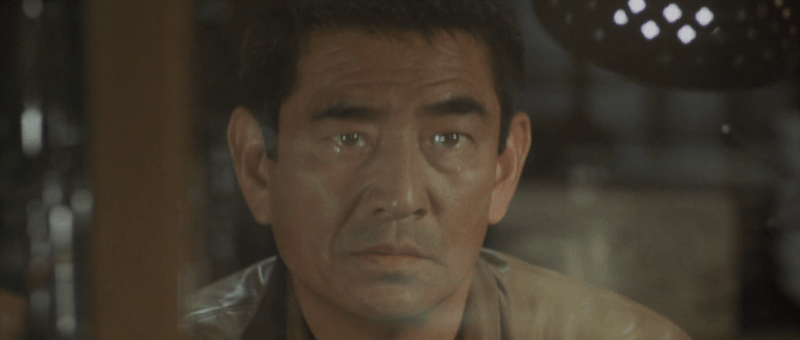
Zokki (ゾッキ, Naoto Takenaka, Takayuki Yamada, & Takumi Saitoh, 2020)

“Thanks to secrets carefully kept by people the world keeps turning” according to one of the many heroes of Zokki (ゾッキ), a series of intersecting vignettes adapted from the cult manga by Yoshiharu Tsuge and directed by three of Japan’s most prominent actor-directors, Naoto Takenaka (whose Nowhere Man also adapted Tsuge), Takayuki Yamada and Takumi Saitoh. According to the philosophical grandpa who opens the series of elliptical tales everyone has their secrets and without them you may die though each of the protagonists will in fact share their secrets with us if by accident or design. 

Seamlessly blended, the various segments slide into and around each other each taking place in a small rural town and primarily it seems around 2001 though as we’ll discover the timelines seem curiously out of joint as motifs from one story, a broken school window, an awkward moment in a convenience store, the retirement of a popular gravure model/AV actress etc, randomly appear in another. This is however all part of the overarching thesis that life is an endless cycle of joy and despair in which the intervals between the two gradually shrink as you age before ceasing to exist entirely. 

Or so says our first protagonist, Fujimura (Ryuhei Matsuda), a socially awkward man heading off on a random bicycling road trip in which he has no particular destination other than “south” or maybe “west” as he later tells a potential friend he accidentally alienates. Fujimura’s unspoken secret seems to link back to a moment of high school trauma in which he betrayed one burgeoning friendship in order to forge another by joining in with bullying gossip and eventually got his comeuppance. Meanwhile the reverse is almost true for Makita (Yusaku Mori) who relates another high school tale in which he overcame his loneliness by befriending Ban (Joe Kujo), another odd young man rejected by teachers and the other pupils for his often strange behaviour such as his tendency to shout “I want to die”. Ban claims to have heard a rumour that Makita has a pretty sister and Makita goes along with it, eventually having to fake his sister’s death in order to seal the lie only for Ban to find happiness in his adult life largely thanks to Makita’s act of deception. 

The broken window which brought them together turns up in another tale, that of Masaru (Yunho) whose adulterous father Kouta (Takehara Pistol) took him on a midnight mission to steal a punching bag (and some adult DVDs) from the local high school only to encounter a sentient mannequin/ghost who is later likened to the young woman from Fujimura’s past. Bar some minor embarrassment there’s no real reason the ghost sighting would need to be kept secret, the deception in this case more to do with Kouta’s affair and his subsequent departure from his son’s life only to make an unexpected return a decade later. The affair also makes him a target for fisherman Tsunehiko, the betrayed husband and one of the fisherman celebrating the birthday of a colleague along with an existentially confused Fujimura. Meanwhile, Fujimura’s fed up neighbour secretly writes a rude word on a note to himself instead of the usual “good morning” only to realise it’s been moved when he opens the local video store the next morning. 

Eventually coming full circle, Zokki insists what goes around comes around, everything really is “an endless cycle”, and that in the grand scheme of things secrets aren’t always such a bad thing. They keep the world turning and perhaps give the individual a sense of control in the necessity of keeping them if running with a concurrent sense of anxiety. The criss-crossing of various stories sometimes defying temporal logic hints at the mutability of memory while allowing the creation of a zany Zokki universe set in this infinitely ordinary small town in rural northern Japan. As the various protagonists each look for an escape from their loneliness, unwittingly spilling their secrets to an unseen audience, the endless cycle continues bringing with it both joy and sorrow in equal measure but also a kind of warmth in resignation. Beautifully brought together by its three directors working in tandem towards a single unified aesthetic, Zokki defies definition but rejoices in the strange wonder of the everyday in this “obscure corner of the world”.


Zokki streamed as part of this year’s New York Asian Film Festival. It will also screen in London on 24th October as part of this year’s London East Asia Film Festival.

Original trailer (no subtitles)

NYAFF intro

Early Spring (早春, Yasujiro Ozu, 1956)

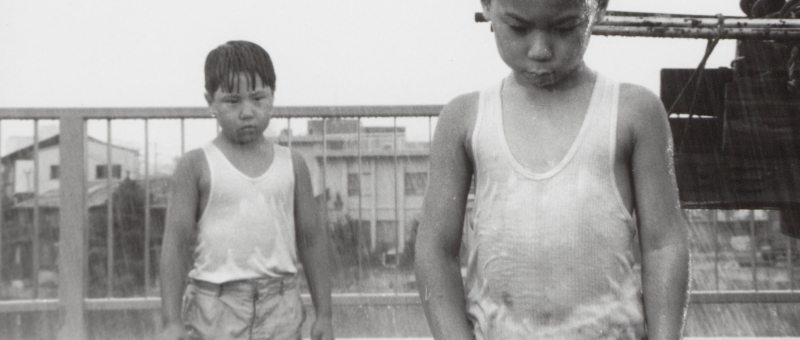
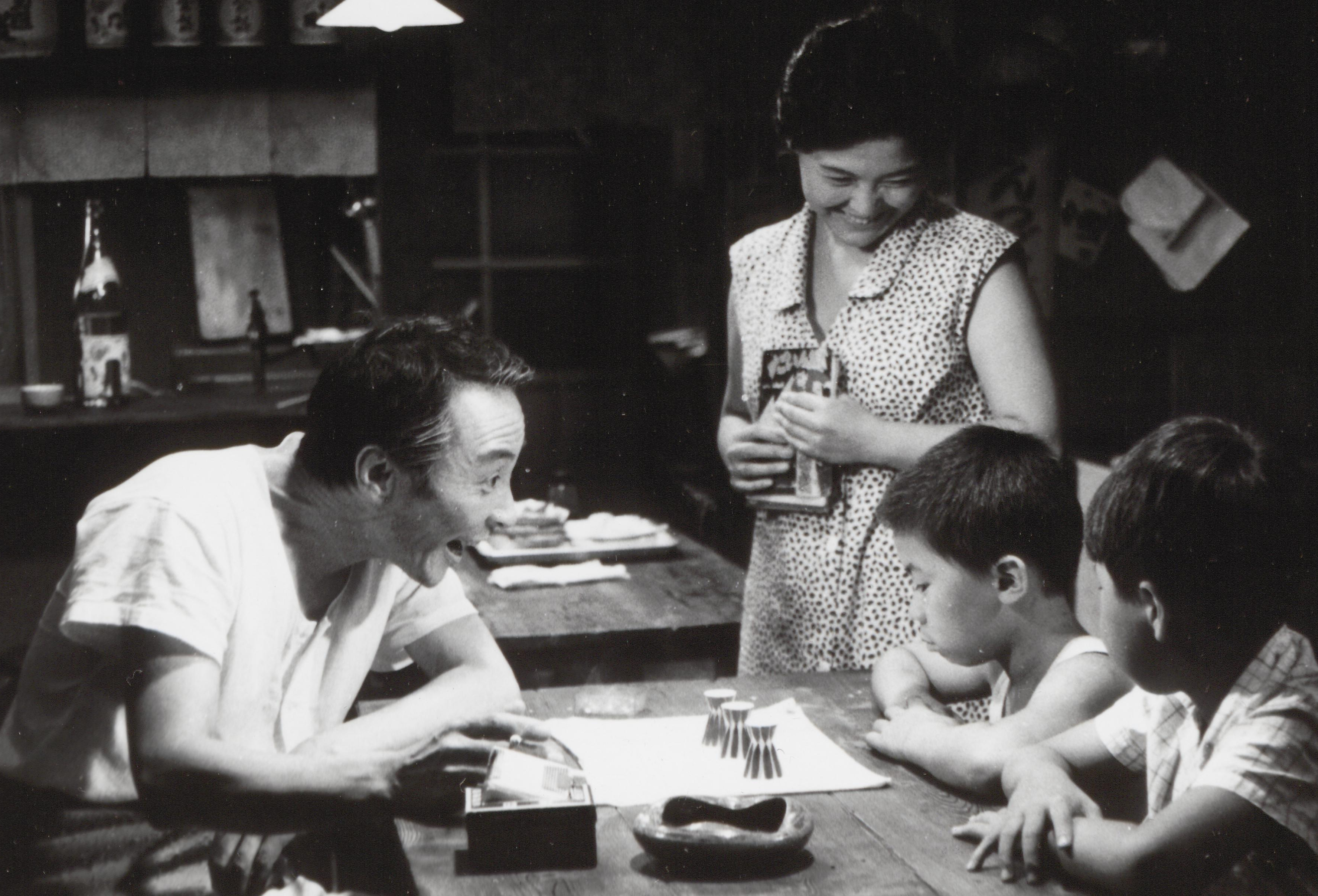
By the mid-1950s, Japan’s economy was beginning to improve but now that the desperation that went with hunger had dissipated it freed those who’d managed to climb out of post-war privation to wonder just what the point of their ceaseless toil was. Yasujiro Ozu’s primary subject matter remained the modern family, but 1956’s Early Spring (早春, Soshun) sees him heading in a darker direction as he weighs up the delusions of the salaryman dream and discovers that whichever way you swing it, life is disappointing. 

So it seems to be for salaryman Shoji (Ryo Ikebe). He and Masako (Chikage Awashima) married for love a long time ago, but it’s clear that there is distance in their relationship. They sleep in the same room but their futons are slightly too far apart, and the few words they exchange with each other in the morning are terse in the extreme. The truth is that for many a salaryman for whom long hours and interoffice bonding sessions are compulsory, work is the new family. Wives are welcome to join the Sunday hiking outings but it seems few do. Masako too declines, telling her mother she felt it to be too expensive, already irritated with her husband’s irresponsible spending on mahjong games and drinking with friends. 

Money is certainly a constant worry for her and as we learn from her mother they’re behind on the rent despite it being “very cheap”. Masako had made a visit home in part to ask for another loan, which her mother seems reluctant to give, offering her daughter a takeout of the oden her restaurant sells which is first declined but then accepted. Her mother also flags up the other problem in their marriage which is that they sadly lost a child in infancy and have had no more. Sorrow may have killed their love, but the fact her husband stays out all hours and wastes the little money he earns while failing to win promotions only makes the situation worse. 

As for Shoji, he is becoming very aware of the delusions of the “salaryman dream”. He is one of thousands of men identically dressed in white shirts and grey trousers that board the packed rush hour trains every day heading into the city. His life is one of pointless drudgery and its only victory is that keeps hunger from the door, not even quite stretching to a roof over his head. “All that’s waiting for us is disillusion and loneliness” according to a veteran salaryman growing close to his retirement and realising that he has little left to live on, his dream of buying a small stationary shop all but unobtainable. He was dead set against his own son joining the ranks of the salaryman, but in the end failed to prevent it.

It is perhaps this sense of frustration and impotence that draws Shoji into an affair with a younger woman, Chiyo (Keiko Kishi), who is admittedly very pretty but seems to hold little interest for him aside from her youth and beauty. Chiyo openly pursues her older colleague, declaring that she doesn’t care he has a wife but has come to hate her after the first time they slept together. Shoji meanwhile remains guilty and conflicted. He evidently continues seeing Chiyo, lying to Masako that he’s visiting a sick friend, but otherwise regards her as an irritation. When his co-workers figure out what’s going on they try to stage an intervention, but Shoji doesn’t show up and Chiyo angrily denies everything before arriving at Masako’s looking for Shoji only this time he really is out visiting a sick friend. 

Miura (Junji Masuda), the sick friend, is a true believer in the salaryman dream. Now that he’s ill, he misses the packed trains and elevators, not to mention his old workplace friends. All he wants is to be well enough to return to the office and his predicament perhaps has Shoji thinking that at least he has his health and things aren’t so bad for him after all. Masako, meanwhile, turns to other women for advice. The woman across the way recounts how she caught her husband out with his mistress and made a scene that’s rendered him docile and obedient ever since (a rare man in an Ozu film putting his socks neatly in the laundry basket and hanging up his own coat rather than throwing it on the floor for his wife to deal with). Her widowed friend is more sanguine, admitting that caution is necessary but it’s a little dark to envy the life of a widow for its “freedom”, while her mother thinks she’s overreacting because that’s just how men are in this generation or any other. 

Shoji’s old mentor agrees that “everyone’s disappointed” and all that remains is to try and make the most of it, but still he sees that Shoji has been reckless and inconsiderate in his treatment of both women. He avoids his wife because of the emotional distance between them born of grief, and only really has an affair with Chiyo because it was easier than refusing her. He didn’t even enjoy it, and doubtless it did not quite quell the sense of despair he feels with the utter pointlessness of the “salaryman dream”. Masako, in turn, is disappointed with married life, with her husband’s emotional cowardice, and with her own lack of options. Ultimately, Ozu sides with the mother, not quite condoning Shoji’s behaviour while perhaps excusing it as a direct consequence of dullness of his life while forcing Masako to accept complicity in her husband’s weakness. They may reunite, the stressors of their Tokyo life from the high cost of living to the lure of mahjong now absent, but there is a sense of futility in their eventual insistence that they will “make it work” through starting over in a new place while gazing at the train that, they assume, will eventually carry them back to the city and all of its false promises of a brighter future. 


Early Spring screens 19th/20th/21st October & 20th/23rd November at London’s BFI Southbank as part of BFI Japan. It is also available to stream in the UK via BFI Player and in the US via Criterion Channel.

I’m Flash! (Toshiaki Toyoda, 2012)

A conflicted cult leader’s existential crisis plays havoc with the “family business” he’s unwillingly inherited in Toshiaki Toyoda’s ironic contemplation of life, death, and everything in-between, I’m Flash!. Taken from a Sheena & The Rokkets song, the slightly awkward title refers not to the hero’s taste for visible wealth, but to the briefness of life. Shot in the wake of the 2011 earthquake, Toyoda apparently intended the film to “shake off death” but ultimately casts off only its shadow while suggesting once again that “death is the ultimate salvation” and the only true path to freedom. 

As the film opens, “guru” Rui (Tatsuya Fujiwara) literally collides with destiny as the bright red sports car he’s driving meets a motorcyclist coming in the other direction. The unnamed cyclist (Tasuku Emoto) is killed instantly and thereafter callously forgotten while the girl in the passenger seat next to him (Kiko Mizuhara) who’d he’d only met that evening in a bar is now in a coma with no indication of when or if she may wake up. Rui is shaken, however, most in being confronted with the real world cost of his phoney religion something which he has perhaps been ignoring in order to continue living his life. “If you want to make serious money there’s nothing better than religion” he’d cynically joked, playing the playboy enjoying the attention his gurudom grants him, particularly with the opposite sex, while living a life of undeserved luxury built on exploiting the vulnerability of others. 

Yet as we come to realise his troubles are not only moral or spiritual but personal in realising that he is but a puppet of his own organisation which is in reality run by his pragmatic mother (Michiyo Okusu) and hard-nosed sister (Mayu Harada) to whose marketing genius he attributes the cult’s recent success. One of three bodyguards hired to protect him quips that Rui is “kind of like a mob boss”, and he’s not far off except that Rui is only the face of the organisation with no real power to affect change. The cult, which runs under the slogan “Life is Beautiful”, was apparently founded by his grandfather and can only be inherited through the male line but Rui later discovers that both his grandfather and father whose skulls sit in his ossuary may have died unnatural deaths suggesting perhaps that they too came to experience this same sense of existential impotence or fell victim to the machinations of others. Feeling emasculated, Rui was forced to become the guru when his middle sister decided to transition, joining older sister Sakura and his mother as part of the matriarchal governing body while refusing the burden Rui must now carry. 

“Everyone needs something to cling to” Rui’s mother rationalises, justifying herself that the members of the cult would merely have joined another organisation if not theirs. Veteran hitman Kamimura (Shigeru Nakano) says something similar when the bodyguards are asked to switch sides and take Rui out of the picture, insisting that if they don’t do it someone else will. Rui’s decision to dissolve the church sparked by his meeting with the girl in the bar creates a serious business problem for his mother and sisters, yet reflecting he realises that he had plenty of opportunities to change his life and let each of them pass him by. “Is life supposed to be enjoyable?” zen hitman/bodyguard Fujiwara (Ryuhei Matsuda) answers when Rui asks him if he’s happy living on the sidelines, but it’s he alone who seems to see the value of living in the present ironically embodying the cult’s central messages that it’s only the fear of death that prevents one living a happy life while also correcting Rui’s minder that the contemplation of mortality shouldn’t be as “effortless” as the solutions they offer profess.  

Rui’s only escape lies in the ocean, in a sense diving into life while swimming towards the sun in search of rebirth while Fujiwara asks himself if he’s completely free if the world is but a fleeting dream and after death everything disappears as if it never existed. The guru may have fallen victim to his own philosophy, looking for salvation in death while perhaps selfishly prioritising his own liberation rather than destroying the corrupt system of which he was a part and in which he will simply be replaced. “Not at any time will the illusion of hope be destroyed” according to an ethereal voiceover casting doubt over its own message of positivity even while its hero swims toward the light. 


I’m Flash! is released on blu-ray in the UK on 18th October as part of the Toshiaki Toyoda: 2005 to 2021 box set courtesy of Third Window Films accompanied by a typically insightful commentary from Tom Mes.

Original trailer (English subtitles)

Monsters Club (モンスターズクラブ, Toshiaki Toyoda, 2011)

“I’m disappointed in you. Very disappointed. You’re still in love with the world” a young man is told in a dream or perhaps delusion by a man he respected but by whom he may also in a sense have been betrayed. Partly inspired by the life and writings of the Unabomber, Toshiaki Toyoda’s Monsters Club (モンスターズクラブ) is less a treatise on post-millennial Japan than it is a profoundly moving character study in trauma and isolation in which an orphaned young man struggles to find meaning in world in which he feels he has no control over his existence. 

The second son of a noble family, Ryoichi Kakiuchi (Eita Nagayama) has retreated from “this stench-filled society” to live alone in a small cabin in the woods. In an opening voiceover he reads from a manifesto railing against the “industrial society” which he believes railroads those born into it towards a life of wage slavery from the day they are born. Yet his existence is more 19th century than it is a primitive return to the land, his appearance meticulously well maintained in an incongruous clash with his rejection of social conformity, and he must necessarily in some sense still be connected with the outside world given that he will need to obtain batteries and gunpowder used for constructing the bombs he’s been mailing to CEOs of advertising and entertainment companies, not to mention the cigars he is often seen smoking after repurposing their packaging. 

Though he is aware people have died because of his bombs, Ryoichi regards them not as murder but as a “message”, later penning a letter to the prime minister which he ultimately discards in favour of sending him the poems of Kenji Miyazawa instead. Ryoichi’s dilemma is that, as one of the ghosts who visits him suggests, he still wants to save a world he believes is beyond salvation. The bombs are therefore a wake up call, but an awkward one which fails to deliver the message he intended in urging a corrective course away from empty capitalism towards a less regimented social order in which he is master of his own destiny. “Freedom is power” he later writes, resentful of a society he feels infantilises him by removing his “right to self-determination” while his life “depends on the decisions of others” whom he doesn’t even know. 

It might be easy to sympathise with his philosophy in the Japan of 2011 entering another decade of a stagnant economy in a rigid and conformist social culture in which the rewards of playing by the rules have all but disappeared. But Ryoichi’s nihilism is born as much of his successive traumas as it is by dissatisfaction with a world devoid of meaningful opportunity. Formerly the son of a wealthy man with no need to worry about the future, uncertainty enters his consciousness with the death of his father, followed soon after by his mother’s from illness, his younger brother’s in an accident, and his older’s by suicide leaving only he and his younger sister (whom he has also abandoned) as the last of his line. Literally orphaned he finds himself unanchored, forced into retreat and choosing self-isolation. Yet if retreat was all he wanted he could have achieved it, living quietly alone in the woods with no need for bombs or indeed any kind of communication at all. Taunted by the ghost of his brother Yuki (Yosuke Kubozuka), he at once takes aim at the “system” which drives those who cannot accommodate themselves with it to suicide, while flirting with the nihilism that suggests suicide is the only true expression of freedom in an oppressive society. 

Nevertheless, Ryoichi eventually loses faith in his brother’s philosophy rationalising that if he had managed to find the pathway to the ideal world he spoke of he would not have needed to take his own life and could have lived in “relative happiness” even if in “a forest of monsters”. He claims to have found this happiness himself and urges his sister to do the same, ignoring the ghosts of their brothers should they visit. Haunted both by familial trauma and a maddening demon, Ryoichi makes a monster of himself but is ironically later chased out of the forest and back towards civilisation, gradually removing his mask as he goes. In an ending he would later repeat in the similarly themed anti-Olympic treatise Day of Destruction, Toyoda leaves his hero screaming in the centre of the city left with no other outlet for his rage and grief, but uncertain if this represents defeat or victory, defiance or surrender. Elegiac and in its own way profoundly sad, Monster’s Club is the story of a man haunted by himself, unable to break free from the legacy of trauma and embracing his loneliness all alone surrounded by snow but ultimately still in love with an imperfect world and finally learning to play “that pipe organ made of light that fills the sky”. 


Monsters Club is released on bluray in the UK on 18th October as part of the Toshiaki Toyoda: 2005 to 2021 box set courtesy of Third Window Films and is accompanied by a richly detailed audio commentary by film scholar Jasper Sharp.

Original trailer (English subtitles)
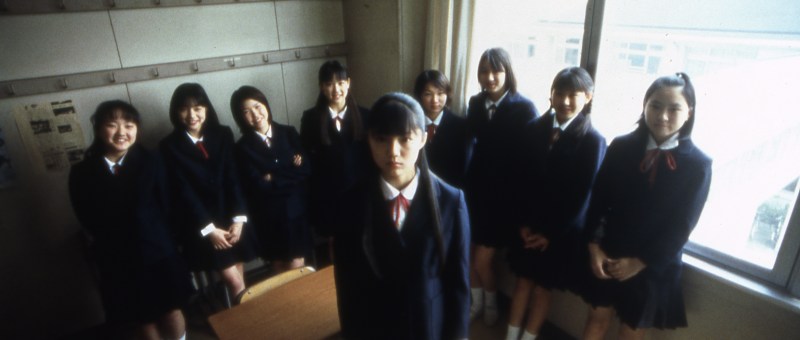
White Building (ប៊ូឌីញ ស, Kavich Neang, 2021)

“I never thought you’d all leave one by one” a disappointed mother laments, “I thought we’d live here all together” mourning the home she’s just lost while realising that it can never, in that sense at least, be remade. In his 2019 documentary Last Night I Saw You Smiling, Kavich Neang explored the slow destruction of Phnom Penh’s iconic White Building in which he had himself grown up. Revisiting it once again in his fiction feature debut titled simply White Building (ប៊ូឌីញ ស), Neang contemplates the radiating effects of forced displacement, the failed dreams of a more optimistic era, and the destructive power of rampant capitalism as young one man gradually sees his world dismantled all around him. 

Young Nang (Piseth Chhun) prays to his household deity for protection from car accidents, which seems infinitely practical, but also success in an upcoming dance competition. Very much of the contemporary generation, Nang and his friends Ah Kha (Chinnaro Soem) and Tol (Sovann Tho) try their luck on TikTok as a street dance trio while picking up extra money convincing cabaret restaurant owners to allow them to perform. Their choice of music does not seem entirely appropriate for the candlelight dinner crowd, the boys appearing after a woman singing a melancholy love ballad and announcing they’ve come to show off “a new kind of hip hop dance”, but they are able to make enough for a few drinks and snacks especially after Nang cheekily announces that they are all orphans dancing to support their studies. This is obviously not true, though Nang will in one sense if not the literal soon find himself orphaned as friends and neighbours begin to move away, his community scattered when the famed White Building can avoid its inevitable demolition no longer. 

Built on reclaimed land, the iconic housing complex was completed in the early ‘60s as a symbol of a new and aspirant nation. It first began to fall into disrepair, equally symbolically, during the repressive years of the Khmer Rouge. The tenants began to return after the regime fell, the building once again a vibrant space populated by artists and civil servants, but the structure continued to deteriorate and was finally declared unsafe in 2015. Attempts to preserve the building for its architectural merits failed, and it was finally torn down two years later. For those who lived there, however, like Nang and his family, the White Building was home, where were they supposed to go now? Many of those who’d lived in the building for decades had been government employees, Nang’s father (Sithan Hout) a sculptor working for the ministry of culture. Yet now they seem to have been abandoned, left at the mercy of an increasingly capitalistic society. 

Still young, at first Nang does not seem to pay much attention to the political debates going on around him but witnesses the discord and divide among the residents as his father attempts to chair a community meeting to discuss the latest compensation offer from the developers who’ve bought the land the building sits on. Breaking a cultural taboo he tries to talk to his parents about their predicament, but they prefer not to explain themselves. The problem is that even with the latest increase, those in the smaller apartments in particular will struggle to find comparable accommodation in the contemporary city, effectively priced out of the centre and pushed back towards the periphery or further into the country. For many this means a wholesale reorganisation of their lives, requiring a change in employment or living circumstances, as well as the loss of community as families who’ve lived together for decades are scattered throughout the land. Many want to hold out for a fairer deal, but those in the bigger apartments are growing weary and minded to accept if only to begin moving forward. 

After Ah Kha leaves to live with family in France and Tol gives up dancing, Nang begins having nightmares about his broken dreams later haunted by an ominous image of his father in a suit turning and walking away from him down the now empty corridors of the decaying building. He discovers that his father is suffering from the complications of untreated diabetes, a disease which ravages him as the building continues to decline his eventual exit from it quite literally like losing a limb. Tired of arguing with her parents, Nang’s sister has already struck out on her own, her relationship with her mother apparently strained in part by the uncertainty that destabilises their home. The family is eventually forced back to its rural hometown, the parents contemplating the offer of land on a family farm further into the mountains while Nang knows that to seek his own future he must return to the city where his sister has already found him somewhere to live. Robbed of its home, the family is scattered. An ethereal voyage through a changing Phnom Penh, Kavich Neang’s unconventional coming-of-age drama finds its young hero mired in a world of collapse, navigating haunted corridors of perpetual unease and left finally only with confusion and anxiety if perhaps tempered by a new sense of freedom. 


White Building screened as part of this year’s BFI London Film Festival.

Clip (English subtitles)

Wheel of Fortune and Fantasy (偶然と想像, Ryusuke Hamaguchi, 2021)

It might be frightening, when you think of it, how much of life is dependent on coincidence. Chance encounters, some sparking lifelong connection others destined only for aching memory, are after all what life is all about. Given a little imagination, the heroes of Ryusuke Hamaguchi’s triptych of accidental meetings Wheel of Fortune and Fantasy (偶然と想像, Guzen to Sozo) each begin to work through their personal traumas, easing their loneliness in fleeting yet profound connections with others. “I’m glad I met you” one woman says to another, imagination and reality for a moment blurred as they role-play themselves towards a greater accommodation with the missed opportunities of the past. 

“Could you dare to believe in something less assuring than magic?” the anti-heroine of the first episode asks her former lover, undermining the central thesis in suggesting that sometimes coincidence is just that and everything else mere fantasy an attempt to convince oneself that life is grander than it is. Her friend, Tsugumi (Hyunri), excitedly tells her about the best night of her life born of a serendipitous meeting with a man who might be her soulmate but was also wounded, frightened of falling in love, still carrying the scars of betrayal after being cheated on two years previously.

What Tsugumi didn’t know is that Mieko (Kotone Furukawa) is the cheating girlfriend who broke the heart of her star-crossed lover Kazuaki (Ayumu Nakajima), but now Mieko’s sense of betrayal is two-fold. Tellingly, Mieko refers to her friend as “Gumi”, but to Kazuaki she’s the “Tsu” to his “Ka”, literally torn in two while Mieko both fears the loss of her friend and resents the love she herself discarded being picked up by another. The thought of the two of them, a perfect whole as she later admits, together near destroys her. When Kazuaki unwittingly invades their private space she has a choice, indulging in a moment of destructive fantasy which threatens to torpedo her friendship only for Hamaguchi to pull a Hong Sang-soo, zoom in and rewind, to allow her to make a more mature decision albeit one that leaves her exiled but allows a more positive path towards a freer future having let go of this brief moment of emotional trauma. 

But what if your emotional trauma is longer lasting, leaving you feeling isolated unable to understand why it is you’re not quite like everyone else and for some reason they won’t forgive you for it. Married housewife and mother Nao (Katsuki Mori) has gone back to college and is having an illicit affair with a much younger student but is frustrated not to be included in campus life in part blaming her sense of alienation on being so much older while also internalising a sense of discomfort that tells her it’s always been this way. Her lover, Sasaki (Shouma Kai), suggests it’s all her own fault, that she doesn’t know how to “go with the flow” and “puts up walls”. He meanwhile, is shallow and entitled, resentful towards a stuffy professor, Segawa (Kiyohiko Shibukawa), who held him back a year because his grades in French, a required subject, weren’t good enough.

To get back at him, he emotionally blackmails Nao into helping him set up a scandal but Segawa has a literal open door policy and their meeting eventually turns into something deeper even if Nao is forced to admit that a part of her craved this kind of seduction fantasy. Only Segawa, a distant, pensive man, meets her as an equal, tells her that he thinks her inability to go with the flow is no bad thing but a strength in that she lives by her own desires rather than those of an overly conformist society. An ironic mistake, however, later cheapens their profound connection spelling disaster for both while Sasaki it seems, as men like him often do, unfairly prospers plunging Nao into an even deeper sense of despair and self-loathing. “My own stupidity makes me want to cry” she confesses, offered hope only by another chance encounter with the unresolved past. 

Then again, do you actually need to meet to find resolution or is fantasy enough to overcome a sense of loss or missed opportunity? In the midst of a freak technological disaster in which the internet has been temporarily disabled, IT systems engineer Natsuko (Fusako Urabe) attends her 20-year high school reunion but the person she wanted to see wasn’t there. She thinks she sees her in fleeting moment passing each other on an escalator. The other woman seems to recognise her too, the pair of them caught in an escalator loop one chasing the other and thereafter visiting the other woman’s home. But as they talk they realise their chance encounter was mutual case of mistaken identity if one that exposes the similarities between them, connected Natsuko later puts it by an unfillable hole in the heart. Aya (Aoba Kawai), a middle-aged housewife, lives comfortably in a well-appointed suburban home but confesses herself wondering why she’s alive at all, feeling as if “time is slowly killing me”.

Not wanting to waste the “dramatic meeting” they role-play the conversation they might have had, Natsuko regretting having given up too easily on her high school love not wanting to cause her further pain but now realising that her care was mistaken, the pain was necessary for them both and its absence has condemned them to kind of limbo of unresolved longing and regret. Aya meanwhile reveals something else, a “boyish” friend for whom her feelings remain unclear though the final moment of connection in which she remembers her long forgotten name which literally translates as “hope” proves profoundly moving in the momentary connection between these two women, strangers but not, meeting by chance and bound by imagination each restoring something to the other if only in fantasy. 

A meditation on distance and intimacy, Hamaguchi’s series of empathetic character studies owes an obvious debt to Rohmer with a dash of Hong Sang-soo but is perhaps kinder allowing the randomness of life to provoke a gradual liberation in each of these wounded souls if only temporarily. The question might less be if you can believe in something less assuring than magic, than if you can learn to trust the strange mysticism of serendipity. 


Wheel of Fortune and Fantasy screened as part of this year’s BFI London Film Festival.

International trailer (English subtitles)