Temptation (誘惑, Ko Nakahira, 1957)

Ko Nakahira made his name with the seminal Sun Tribe movie Crazed Fruit, a nihilistic tale of bored, affluent post-war youth. Released a year later, Temptation (Yuwaku), adapted from a novel by Sei Ito, is in some ways its inverse pitting a melancholy widower harping on dreams of lost love against his relentlessly practical daughter for whom “Sex is life. Art is money” but finding in the end perhaps more commonality than difference save for the fact the youth of today may have no real dreams to betray. 

Now 55 years old, Sugimoto (Koreya Senda) is the proprietor of the Sugimoto Dried Goods store in upscale Ginza. Father to an only daughter, Hideko, now that his wife has passed away he finds himself carried back towards the past and is planning to turn the upstairs space in the store into a small gallery. For her part Hideko (Sachiko Hidari) and her coterie of artist friends are hoping to convince him to allow them to exhibit in the gallery for cheap, but he, slightly more conservative in his old age, views them all as low class Bohemians and fails to understand why Hideko hangs out with them in the first place. He has, it seems, an internal conflict symbolised by the beret he’s taken to wearing in which he is unable to let go of the broken dreams of his youth when he was a struggling artist forced to give up his first love, Eiko (Izumi Ashikawa), because he had no money or prospects while she eventually consented to an arranged marriage.  

The world of 1931 being very different, Sugimoto and Eiko never did anything beyond holding hands (later a key plot point), though in her parting letter she laments that she regrets not having let him kiss her and mildly berates him for not having been more forceful. A slightly uncomfortable sentiment, but diffidence seems to be the force defining Sugimoto’s life. At the store he finds himself dissatisfied with his senior salesgirl Junko (Misako Watanabe) whose brusque manner with customers and refusal to wear makeup he fears are harming sales, but is unable to say anything until his rather half-hearted attempt to talk to her provokes a mutual misunderstanding, he thinking she may be anxious about being fired and she wondering if he’s about to make a proposal. 

For unclear reasons, Junko seems to have a crush on Sugimoto, something which becomes a minor problem when he also becomes a target for Kotoko (Yukiko Todoroki), a middle-aged woman/insurance agent from Hideko’s floral arrangement class. Privy to their interior monologues, we can hear the two women squaring off against each other, Junko complaining that Kotoko is “meddling, talkative, and fat”, while Kotoko fires back that Junko wears “no makeup at all and is so stuck up” as they glare at each other through the shop window. Yet it’s not Sugimoto who eventually provokes a change in Junko, but another eccentric, struggling artist, Sohei (Shoji Yasui), who bluntly tells her that she is pretty and so should put some makeup on to bring it out. 

Junko later characterises this intervention as an act of salvation that sees her re-embrace her femininity, not only wearing makeup and having her hair styled but beginning to talk warmly with customers, improving the business but ironically giving Sugimoto the mistaken idea her friendly new demeanour may be partly for his benefit. For his part, Sohei, an unkempt artist suffering a seemingly permanent lice infestation, claims not to have cared very much about money or possessions which led him to accidentally abuse the generosity of his artist friends but has now been awakened, it seems, to a kind of consumerist mentality thanks to the interest of Junko and recognition of his art when some of Sugimoto’s old friends (well known artists Taro Okamoto, Seiji Togo, and critic Kimihide Tokudaiji) praise his paintings on seeing them in the gallery leading to them fetching a high price from prominent collectors. 

“The value of a work of art hinges on whether or not it sells” one of Hideko’s friends points out while she adds “We should be proud that art is profitable”, a sentiment that hugely offends Shohei (Ryoji Hayama), the beret-wearing leader of another artist circle the gang enlist to help them pay for the rental of the gallery. Though he concedes to Hideko’s argument that her father’s gallery is a business enterprise, not a charity, Shohei is somewhat horrified by the casual equation of art and commerce, shocked that the girls view their flower arranging as a practical more than an aesthetic skill. Still, in another irony it turns out that his talent is for business rather than art, shrewdly steering Sohei’s success rather than his own when it’s clear his work is the standout in the gallery. Just like Sugimoto had, he eventually resolves to give up his artistic dreams after falling in love with Hideko, planning to marry into her family and take over the Sugimoto store. She meanwhile, had described him as not good marriage material, “no poor painters for me, only rich men” but is apparently in favour of his selling out if only in that it ironically makes him more himself. 

As we discover there are more than a few reasons besides the beret that Sugimoto keeps feeling Shohei reminds him of someone else even as he finds himself wary of him, pointlessly trying to set Hideko up with someone more “suitable” just as she makes a point of inviting a series of alternative widowed, middle-aged ladies to the gallery opening not so much because she particularly objects to Kotoko but she’s worried her dad might get bamboozled into something without properly surveying his options. While Sugimoto remains maudlin and filled with regret though perhaps putting the past aside through a symbolic act of closure, the youngsters are cheerfully cynical, practical in the way the older generation are always telling them to be but are perhaps disappointed in them for not having dreams or aspirations beyond those of claiming or maintaining or their chosen status in life. “Art is money” Hideko is fond of saying, and it’s true enough in so much as money is an art and the one which seems at least to have captivated the post-war generation eagerly awaiting the advent of the consumerist revolution. 


The Munekata Sisters (宗方姉妹, Yasujiro Ozu, 1950)

Though they may eventually turn melancholy, the films of Yasujiro Ozu are often cheerful affairs in which kindhearted people bear life’s troubles with stoic dignity. There are few villains, only those trying to live even while living is hard. The Munekata Sisters (宗方姉妹, Munekata Shimai) adapted from a story by Jiro Osaragi and produced for Shintoho rather than home studio Shochiku, however, strikes a much less happy tone, ambivalently condemning its heroine to unhappiness through her own adherence to the codes it otherwise insists are noble. 

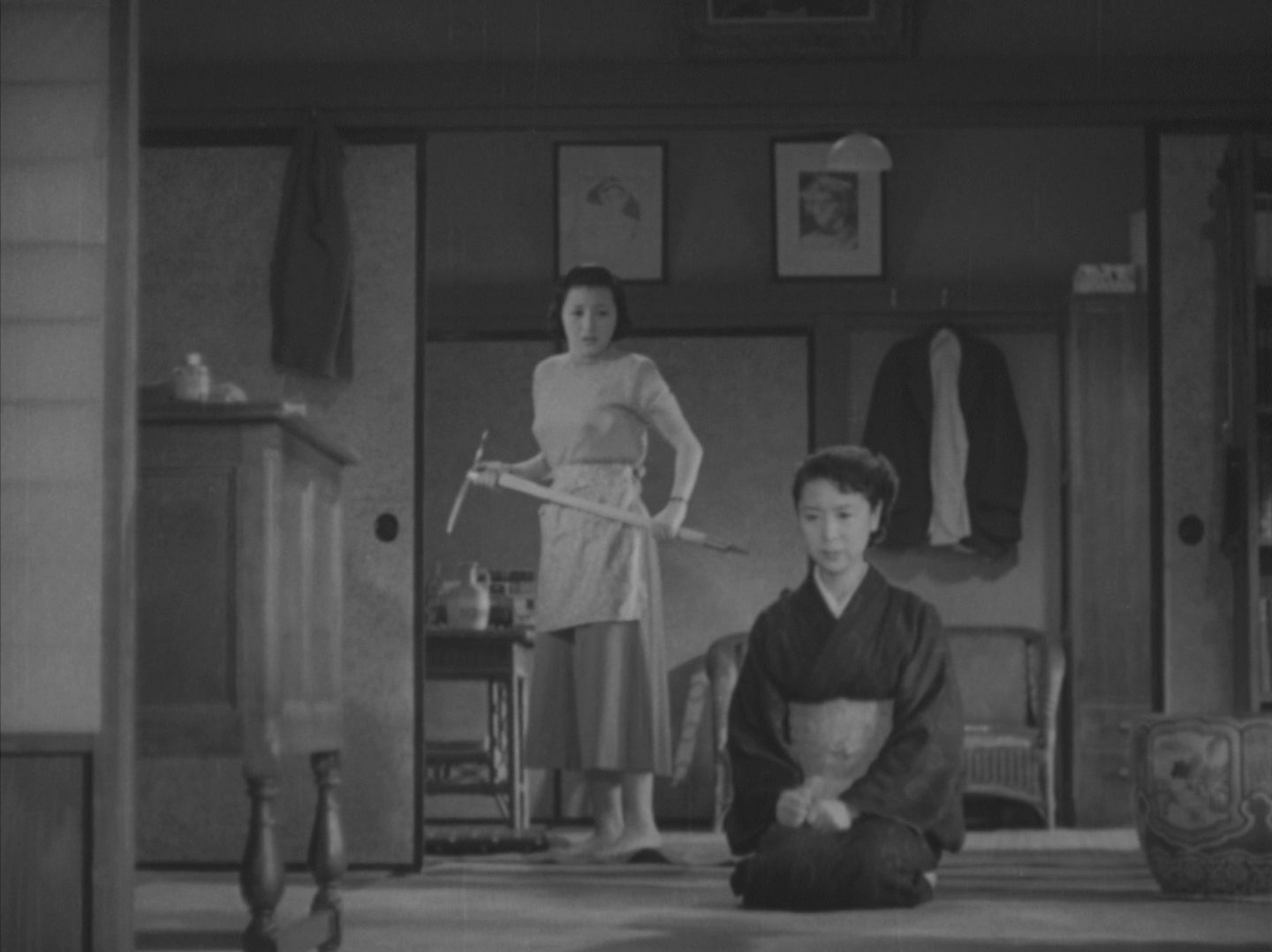
The two titular sisters, Setsuko (Kinuyo Tanaka) and Mariko (Hideko Takamine), live in Tokyo where Setsuko runs a small bar which supports the family while her moody husband Mimura (So Yamamura) has long been out of work. Their father, Mr. Munekata (Chishu Ryu), has returned to Kyoto where, a doctor informs Setsuko in the opening scenes, he is suffering from terminal cancer but surprisingly healthy all things considered. Like his oldest daughter, Kyoto suits Mr. Munekata because as he puts it it is full of the beauty of old Japan, though Mariko has soon had enough of temples and palaces and longs to return to the modernity of the contemporary capital. Whilst in the city, however, they run into an old friend from Manchuria, Hiroshi (Ken Uehara), with whom Mariko soon realises her sister had been in love but he left for France before they could declare their feelings while she was already engaged to her present husband. 

Mariko, a youthful woman dressing exclusively in modern Western fashions, is quite taken with the idea of her sister’s failed romance and determines to get the pair back together. She has only resentment for her moody brother-in-law and has long been aware that Setsuko’s marriage is a failure. Within her seeming modernity, Mariko is surprisingly conservative when it comes to traditional gender roles, resenting Mimura for failing to provide for the family as a man is expected to do. Overcome with despair, he spends his days in a drunken stupor playing with stray cats rather than seriously looking for a job, defined by wounded male pride in his obvious discomfort with the fact that his wife is supporting him through the business that she operates herself. Mariko tells him to man up, tired of the way he leaves each of the women anxious in their own home, but Setsuko, more conservative still, reminds her younger sister that marriage isn’t all sunshine and rainbows and that sometimes all you can do endure. 

Mariko regards her sister’s way of thinking as “old-fashioned”, while Setsuko disapproves of her vacuous “modernity” which she sees as little more than social brainwashing that leads her to blindly follow only what is “fashionable” without thinking for herself. Mr. Munekata had said those who refused to see the beauty in old things were simply “ignorant”, but when asked to arbitrate between the sisters adopts a more equivocal position. You are you and your sister is your sister, he insists, you have your own ways of thinking and neither of you is wrong, you have simply to choose the path which suits you best. He does however caution against Mariko’s “fashionable” mindset, reminding her that it isn’t good to be mindlessly swayed by the prevailing trends, what’s important is to think deeply and value your own life. Those who only do what’s fashionable are boring, he tells her.

Later Mariko describes “modernity” as “not growing old despite the years” perhaps to counter Setsuko’s earlier dismissal that new things never become old because they don’t last. In any case, she is still in many ways a child with an underdeveloped appreciation for complex emotions which might explain why she suddenly proposes to Hiroshi herself as if she means to marry him on her sister’s behalf. She also unfairly takes against a wily widow, apparently a “friend” of Hiroshi’s from Paris who may or may not be in love with him but has obviously not replaced Setsuko in his heart. Setsuko however is conflicted, accepting financial help from Hiroshi to keep the bar open but resentful of her husband’s suggestion there is anything improper between them. She is an “old-fashioned” woman after all. Like What Did the Lady Forget?, Munekata Sisters also posits domestic violence as a reset button on a marriage as Mimura angrily slaps his wife across the face several times, but thankfully here it signals the death knell rather than rebirth of their relationship. Mimura has reasserted his manhood, but it has only shown him just how desperate and empty he has become. His wife no longer has respect for him, let alone love. 

Yet Mimura continues to control her feelings, implying that the failure of the relationship is her fault alone because she never loved him. He has slowly destroyed himself out of resentment and romantic disappointment. It seems that, though he was too cowardly to confess his feelings, Hiroshi has never forgotten his love for Setsuko and the possibility remains that she may be able to claim a happier future through abandoning her “traditional” way of thinking (“fashionable” in its own way), separating from her husband to marry for love. But in the end her code will not allow it. Guilt casts a shadow over her heart, leaving her feeling that she is no longer allowed happiness and must sacrifice her true desires to atone for the failure of her marriage. A glimmer of hope remains in Hiroshi’s determination to wait, trapping himself within the repression of patriarchal social codes, but in the end even Mariko is forced to recognise her sister’s nobility as she too tours the beauty of old Japan without complaint in new contemplation of its ambivalent charms.


True Mothers (朝が来る, Naomi Kawase, 2020)

Perhaps surprisingly and in contrast with many other developed nations child adoption remains relatively rare in Japan with most children who for whatever reason cannot be raised by their birth families cared for by institutions while the adoption of adults is unusually common usually for the purposes of securing an heir for the family name or business. This might be one reason that the “secret” of adoption is touted as a subject for blackmail in Naomi Kawase’s adaptation of the mystery novel by Mizuki Tsujimura True Mothers (Asa ga Kuru), though in this case it will prove to be a fruitless one as the adoptive parents have already made an effort towards transparency having explained to their son that he has another mother while their friends, family, and the boy’s school are all fully aware that he is not their blood relation. 

The Kuriharas, Satoko (Hiromi Nagasaku) and Kiyokazu (Arata Iura), are a settled, wealthy married couple who are shocked to discover that they are unable to conceive a child naturally because Kiyokazu is suffering from infertility. After a few unsuccessful rounds of painful treatment, they decide to give up and resign themselves to growing old together just the two of them, but after accidentally stumbling over a TV spot about an adoption service which focuses on finding loving homes for children rather than finding children for couples who want to adopt they begin to consider taking in a child who is not theirs by blood. As Kiyokazu puts it, it’s not that he’s obsessed with the idea of having a child, but they have the means and the inclination to raise one and could be of help when there are so many children in need of good homes. After enrolling in the programme, they adopt a little boy, Asato (Reo Sato), and somewhat unusually are encouraged to meet the birth mother, Hikari (Aju Makita), who they discover is a 14-year-old girl tearfully entrusting her baby to them along with a letter to give him when he’s old enough to understand. 

The central drama begins six years later as Asato prepares to leave kindergarten for primary school. A crisis occurs when Satoko is called in because a boy, Sora, has accused Asato of pushing him off the jungle gym. Thankfully, Sora is not seriously hurt though according to the school Asato admits he was there at the time but says he doesn’t remember pushing anyone. The teachers don’t seem to regard him as a violent or naughty boy and wonder if he might have accidentally knocked Sora off without realising, while Satoko for her part tries to deal with the matter rationally neither leaping to his defence without the full facts or prepared to apologise for something that might not have been his fault. The other mother, however, somewhat crassly asks for compensation, bringing up the fact that the family live in a nice apartment and can’t be short of a bob or two. Stunned, Satoko does not respond while the other mother instructs her son not to play with Asato anymore. It’s around this time that she starts receiving anonymous calls that eventually turn out to be from a young woman claiming to be Hikari who first petitions to get her son back and then like Sora’s mother asks for monetary compensation. Only on meeting her the young woman seems completely different from the heartbroken teen they met six years’ previously and Satoko can’t bring herself to belief it’s really her, but if it isn’t who is she and what does she want?

Less a tug of love drama between an adoptive and a birth mother as in the recent After the Sunset, True Mothers places its most important clue in the title in that there need not be a monopoly on motherhood. A woman brought out at the adoption agency open day reveals that she’s explained to her son that he has three mothers, herself, his birth mother, and Asami (Miyoko Asada), the woman who runs “Baby Baton”. Asami encourages her prospective parents to explain to the children the circumstances of their birth before they enter primary school, keen both that they avoid the trauma of suddenly discovering the truth and that the birth mother not be “erased” from the child’s life and history. 

Though founded in love and with the best of intentions, Baby Baton also has its regressive sides in reinforcing conservative social norms, open only to heterosexual couples who’ve been married over three years (Japan does not yet have marriage equality or permit same sex couples to adopt) and requiring one parent, though it does not specify which, to give up their career and become a full-time parent. Its residential requirement is also not a million miles away from a home for unwed mothers hidden away on a remote island near Hiroshima which seems to be the way it is used and viewed by Hikari’s parents who force her to give up the baby more out of shame than practicality, telling people that she’s in hospital recovering from pneumonia. Nevertheless it’s at Baby Baton that Hikari finally finds acceptance and a sense of family, feeling rejected by the birth parents who have sent her away rather than embracing or supporting her in the depths of her emotional difficulty. Asami was there for her when no one else was, later explaining that unable to have children herself she founded Baby Baton as means of helping other women who found themselves in difficulty in the hope of “making sure all children are happy”. 

Like Hikari many of the other women at Baby Baton are there because of a corrupted connection with their own maternal figures, often rejected or abandoned many of them having participated in sex work as a means of survival. Reminiscent of her documentary capture of residents of the old persons’ home in The Mourning Forest or the former leper colony in Sweet Bean, Kawase films the scenes at Baby Baton with naturalistic realism as one young woman celebrates her 20th birthday sadly wondering if any one will ever celebrate her birthday again. A testament to female solidarity, the home presents itself as a kind of womb bathed in golden light and protected by a ring of water providing a refuge for often very young women at a time of intense vulnerability until they are eventually rebirthed by the surrogate maternal figure of Asami. 

The film’s Japanese title “Morning Will Come” as echoed in the song which plays frequently throughout hints at an eventual fated reunion while also pointing towards Asato the first character of whose name literally means “morning”, lending an ironic quality to its English counterpart which invites the conclusion that there are somehow false mothers while simultaneously evoking a sense of a great confluence of maternity in the unselfishness of maternal love. Immersed in a deep well of empathy, Kawase’s bittersweet drama is infinitely kind if not without its moments of darkness and pain resolute in its sense of fairness and the insistence there’s love enough to go around if only you’re brave enough to share it.


True Mothers streams in the UK from 16th April exclusively via Curzon Home Cinema.

UK trailer (English subtitles)

Goto-san (ゴトーさん, Hiroshi Gokan, 2020)

It doesn’t take much to remind you that even the most stable of lives can be upended in an instant, often not even by disaster or tragedy just the vagaries of life, but for those living on the margins certainty is an unattainable luxury. The eponymous hero of Hiroshi Gokan’s Goto-san (ゴトーさん) seems happy enough living his day-to-day life, not really worrying too much about the future but perhaps mourning a hidden past or in flight from something or other no one else knows, never suspecting that the rug may suddenly be pulled from under him. 

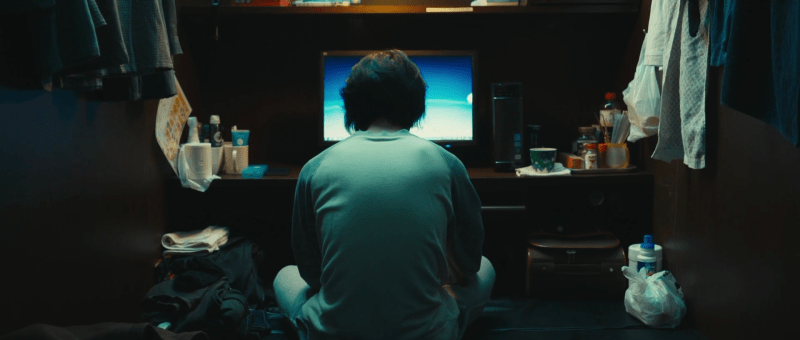
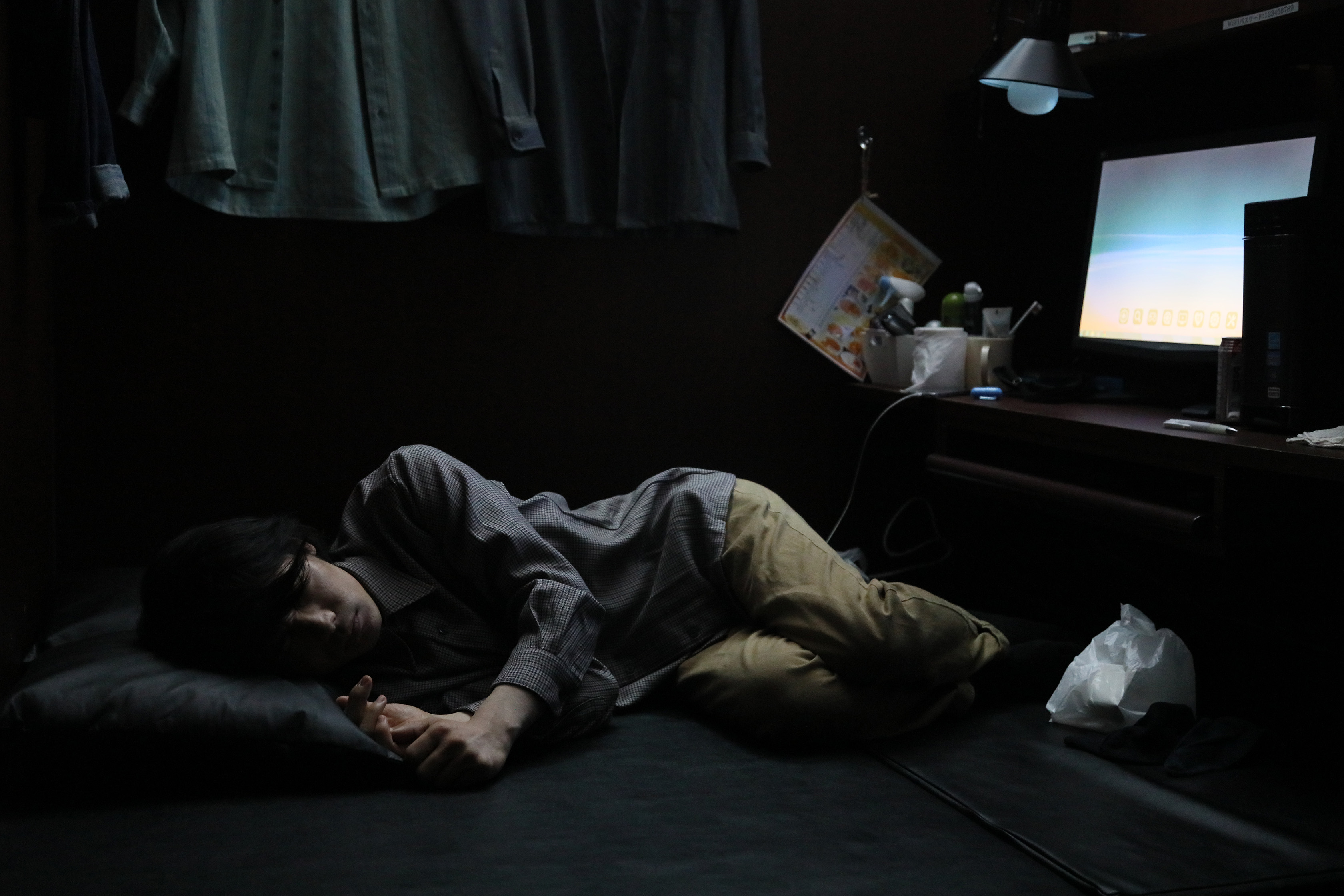
Goto (Hirofumi Suzuki) has been living and working at 24-hour mangacafe Sunflower for at least two years, no one knows exactly how long because he’s “always” been there. The first sign of trouble arrives when an old man who often frequented the cafe and was thought to be homeless is found dead in his room. The panicked manager asks “clean-freak” Goto to sort it all out for him, surprised that he seems to have taken a death on the premises in his stride. Meanwhile, a young woman, Riko, is renting room 208 on a daily basis eschewing the weekly rate presumably because she’s hoping to move on either today or tomorrow or someday at least and a longterm agreement seems like admitting defeat. 

Gokan opens the film with scenes of a Tokyo under construction, busy in the run up to the 2020 Olympics while Goto’s boss and an official-looking man in a suit make ominous comments about “that virus” and its capacity to mess up their business. A small group of men are currently holding a protest, flying a banner reading “never forgive corporate exploitation of dead end job labour” while announcing statistics over a megaphone to the effect that one in seven children lives in poverty, one in five elderly people is struggling, and one in three single women face hardship as do a majority of young people. Can you really say that holding the Olympics in these circumstances is a good idea? The protest group at least seems to think it’s a bit of a slap in the face to low income workers who might be experiencing a temporary bounce but are also facing potential exploitation and will likely be forgotten once the construction frenzy’s over. 

Taking their battle off the streets, the protest group decide to take the message into the manga cafe which is perhaps insensitive, preaching to the converted, or a potential annoyance to this drop out community who may be well aware of the oppressive nature of modern day capitalism and have decided not to participate. For his part, Goto’s motives remain ambiguous though he seems happy enough with his quality of life until he gets a coupon for sex services and ends up accidentally meeting Riko. Perhaps recalling an old dream, owning a boating license and fascinated by a wind-up toy of an ocean liner left behind by the dead man, he tells her he’s a first mate on a cruise ship, pretending to live in another part of town little knowing that they live in the same building. Wanting to get to know her socially, he ends up looking for extra work, but his job-hunting experience later comes to nothing when he has to leave the cafe abruptly discovering that it’s almost impossible to find work without access to online resources and a permanent address. Some might think a change in his circumstances is an opportunity to reset, but Goto seems not to take it ironically ending up in much the same position he was before.

Riko, meanwhile, seems to think differently eventually spring-boarded into the determination to change her life escaping the world of sex work and manga cafes she finds disappointing to chase something better though we might wonder what exactly it is she finds as she crosses Shibuya scramble inches from an oblivious Goto who might dream of sailing overseas but remains ironically landlocked to the local area. Opening with a jaunty detachment, the whimsical score perfectly matching the surreality of life at the manga cafe, Gokan’s screenplay becomes progressively darker as Goto finds himself at the mercy of his times trapped by economic malaise, running aground while the river flows on all around him.  


Goto-san screened as part of the 2021 Osaka Asian Film Festival

Original trailer (no subtitles)

A New Wind Blows (新しい風, Yutaro Nakamura, 2021)

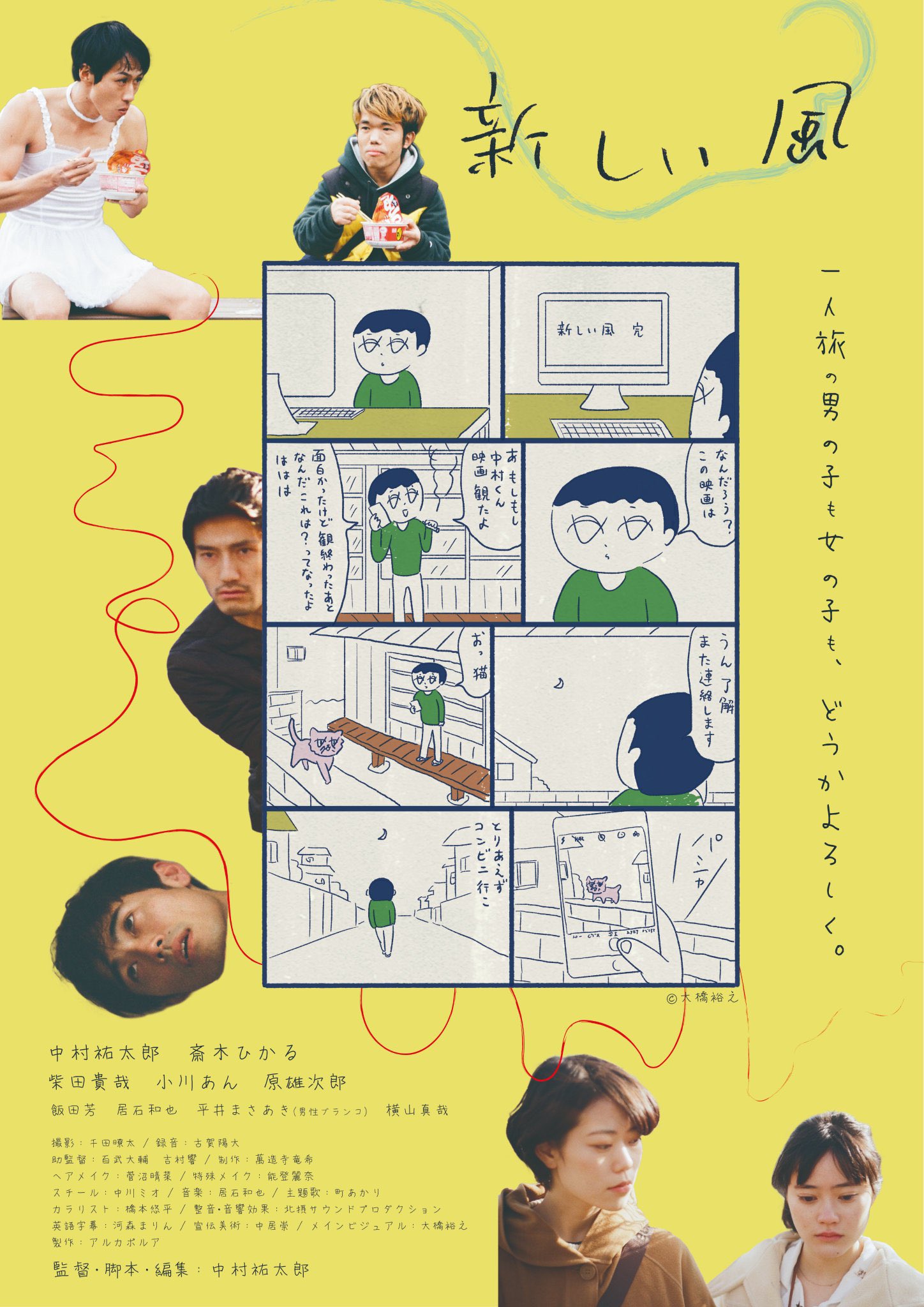
Seemingly brought together by fate, a collection of lovelorn Tokyoites have a very weird New Year in Yutaro Nakamura’s absurdist farce, A New Wind Blows (新しい風, Atarashii Kaze). A collection of interesting, sometimes contradictory vignettes, Nakamura’s various tales of frustrated love and interpersonal tension are perhaps variations on a theme illustrated, sometimes literally, with an ethereal logic in which events repeat themselves from differing angles or familiar faces recur in slightly different roles. “What kind of future, if any at all, can we picture?” the opening title asks us, suggesting that this strange night might be imagined but in the end at least filled with a kind of possibility.

Opening in long shot, the first scene follows a pair of teenage friends who forcibly begin trying to play football with a boy who quite clearly wants to play on his own. Eventually, they give him his ball back, and he cries. In an apparent flash forward we find ourselves in contemporary Tokyo as Hikari (Hikaru Saiki), the young woman, goes on a non-date with a friend, Kotaro (Yutaro Nakamura), who confesses his feelings to her at the end of the evening and immediately apologises but gets no real reply. In any case, the moment is later interrupted as Hikari runs into an old friend, Yujiro (Yujiro Hara), the young man, who now works as an Uber Eats driver. Realising they’ve missed the last train, Hikari decides to hit up an old friend, Anzu (An Ogawa), to see if they can stay with her. Anzu is not very welcoming, it is New Year’s Eve after all, but eventually lets them in which is when we realise there is tension in the house. It turns out that Hikari used to live with Anzu until a couple of weeks previously when she kicked her out, presumably to move in the boyfriend, Takaya (Takaya Shibata), who wastes no time at all behaving like a complete tool firstly irritated to have guests at all and then apparently challenged by the double masculine presence of the extremely tall Yujiro and the smaller Kotaro who, equally, is somewhat inappropriately fussed over and infantilised by Anzu who asks him a series of insensitive questions and later brands him a “fairy”. 

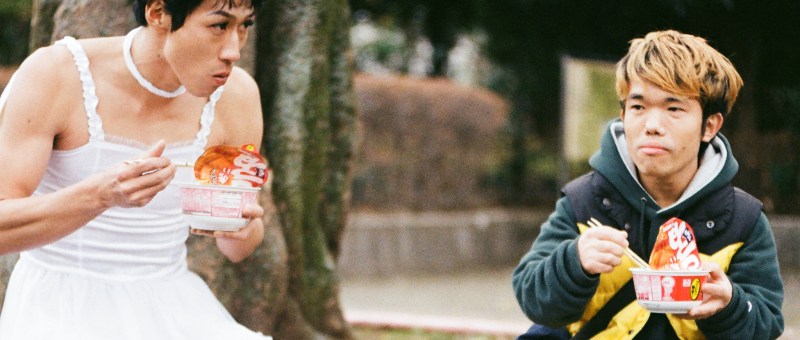
Before the evening’s out, Takaya, the lonely solo footballer, has burst into tears once again after trying to start several fights, threatening to kill people, demanding that someone kill him and then making an unexpected declaration of love to a surprise third party. Taking to the streets in a random angel costume he ups the hyper-masculine act, turning up shortly after another street harasser to harass Hikari as a song plays describing her, presumably, as a “princess running away from desire and dominance”. Kotaro and Hikari had been continuing their non-date with typical New Year activities such as visiting a shrine, yet he is the only one willing to sit with the obviously distressed Takaya and attempt to talk him down with the aid of some instant udon and gentle wisdom. “The sky is blue today. The sun is warm. But we shouldn’t take it for granted. Such quiet days can often bring happiness.”

That is perhaps in a sense the lesson. The weird New Year crisis eventually begins to fade, a kind of calm finally returning and then giving way to a second possible flashback or merely a waking up returning to the opening scenes as the teens, slightly changed, attempt to heal the gaping wound while Takaya cries into his sleeve. Is this present a dream of the past or vice versa? In any case, romantic crises apparently pass and some find their feelings are returned after all, assuming it is not also a dream. Making frequent use of music accompanied by fun karaoke-style onscreen lyrics as well as stylish graphics and illustrations, Nakamura’s quiet indie dramedy revels in everyday strangeness and the pathos of frustrated dreams be they going to London to play guitar, making a friend, or having your feelings returned. Quiet days can indeed bring happiness if of a quiet kind despite the madness of everyday life allowing a new wind to blow carrying new possibility for a hopefully happier future. 


A New Wind Blows screened as part of the 2021 Osaka Asian Film Festival

Original trailer (no subtitles)

POP! (Masashi Komura, 2021)

You’ve heard “turn that frown upside down”, but are you ready for turn that heart into a…well, perhaps that’s a sentence not worth finishing. The heroine of Masashi Komura’s MOOSIC LAB venture Pop! finds herself in a world of existential confusion on realising that what she assumed to be a heart symbolising love was in fact a giant bum intended to moon an indifferent society. Suddenly she doesn’t know up from down, her entire existence rocked as she contemplates life, love, and the pursuit of happiness on the eve of her 20th birthday. 

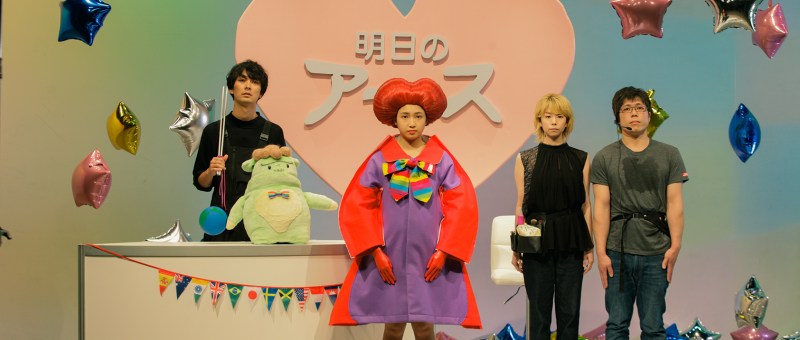
19-year-old Rin (Rina Ono) is currently the presenter/mascot character of local TV charity program “Tomorrow’s Earth Donation” which aims to collect money for the world’s disadvantaged children. Meanwhile, she also has a part-time job as a car park attendant which she takes incredibly seriously even though almost no one ever turns up (including her mysterious co-worker Mr. Numata). In fact, its Rin’s earnestness and youthful naivety which seem to set her apart from her colleagues, makeup artist Maiko later complaining that she makes others uncomfortable with her goody two-shoes act while her bashful present to puppeteer Shoji on his birthday of a framed portrait she’d drawn of him seems to elicit only confusion and mild embarrassment from her bantering co-workers. 

Nevertheless, she’s beginning to wonder about love, in her own way lonely and unfulfilled simultaneously confused and disappointed by the direction of her life. She dreamed of becoming an actress, but is now little more than a front for this strange enterprise in which she, characteristically, believes with her whole heart. Deep down, she just wants everyone to be happy and is sure that if people smiled more the world would be a brighter place. Wearing a giant red wig shaped like a heart, she reads out messages purporting to be from children outlining their dreams for the future even when they’re as banal and materialistic as wanting to become a race car driver. Unfortunately, however, she continually stumbles when asked to read a cue card featuring her own dream, fully scripted for the character she’s supposed to be playing. 

On her first audition, she was shouted out of the room by a director insisting her admittedly over the top improvised death scene was nothing more than attention seeking. The TV news attributes a similar motive to a mysterious bomber currently plaguing the city whom Rin accidentally witnesses one day fleeing the scene of his crime. For some reason struck by his strange presence, and perhaps disillusioned with her brief foray into online dating, Rin develops a fondness for him believing he is just like her because the pattern of his bombings corresponds to the shape of a giant heart enveloping the city. “We must get serious about saving the world!” she announces to her colleagues, “Let’s do it with a bang!” she ironically adds. She may, however, have slightly misunderstood his mission statement especially as when questioned as to his motives he tells her that he does it for the benefit of all because no one else will. 

In any case, she remains hopelessly naive, confused by a strange man who brings his van to the car park presumably for “privacy” and strangely unconcerned by an alarming message on an abandoned car left with its door open which states the driver won’t be needing it anymore. She role-plays direction and agency, but in the end goes nowhere until literally carried away by her “adult” realisation that it’s probably not possible for everyone to smile all the time and it’s not her job to make them. Caught up in the slightly duplicitous world of the cynical program makers who perhaps mean well but are hamstrung by the problems of contemporary Japan, desperate for pictures of smiling children only to realise that none are writing in and hardly any of them know any to ask, she maintains her desire for world peace even while privately conflicted in having lost sight of her own dream. Adopting a little of the bomber’s anarchist swagger, she allows herself to be swept up by a final flight of fancy towards a more cheerful world. Shot with a colourful “pop” aesthetic and a hearty slice of absurdist irony Komura’s strange fairytale is stuffed full of heart and has only infinite sympathy for its earnest heroine’s guileless goodness.


POP! screened as part of the 2021 Osaka Asian Film Festival.

Original trailer (no subtitles)

yes, yes, yes (Akihiko Yano, 2021)

“If everything goes, then why are we even alive?” the young hero of Akihiko Yano’s yes, yes, yes asks himself as his family finds itself struggling under the weight of intense grief. Yet it’s in family that he finally finds his solace and the will to continue living even if life is meaningless or hard or sad. Hard and sad is an accurate description of their life at the present time as each of the family members tries to process the imminent loss of their mother who has recently entered a hospital she seems to fear she may not leave.

To begin with, the family are trying to remain cheerful as they move mother Sayuri (Nahoko Kawasumi) into her new hospital room, but youngest son Takeaki (Kazuma Uesugi) finds he cannot stomach the false jollity especially after his mother attempts to say a prayer for him. Walking off in a huff, he returns home only to take out his frustrations on a patch of flowers before dramatically taking a pair of scissors to his hair which he then dyes blond much to his father’s consternation. Meanwhile, oldest daughter Juri (Minami Inoue), ironically a hairdresser and pregnant with her first child which she plans to raise alone, does the family shopping, her father Masaaki trying to keep it together waiting in the car. 

There are perhaps already cracks in the family structure, patriarch Masaaki (Kazunari Uryu) seemingly a violent authoritarian who physically attacks his son after spotting his improvised new hairstyle, sending him running up the stairs to barricade himself in his room by jamming the door with his bed in a manoeuvre which seems somewhat practiced. Masaaki also doesn’t like it that his daughter plans to have a child out of wedlock, angrily reexplaining that he won’t stand for it though this is clearly not the the time. Juri reiterates that she’s made her decision, but takes offence at his apparent reasoning that he somehow blames her and the baby for his wife’s death as if only so many places are available in their family and they’re awarded on a first in first out basis. For him it’s as if the baby is here to replace Sayuri, kicking her out in a peculiar slice of cosmic irony. 

Yet as she tells Takeaki who asks her a similar question, he should be happy that their family is expanding. She resents the way the men seem to have monopolised their grief, feeling that it’s hardest of all for their mother and for her part she’s made up her mind not to cry. Sayuri meanwhile is struggling to accept her terminal diagnosis on her own, brought to a sudden realisation during an emotional phone call with Takeaki in which she tries to reassure him that she won’t die while he insists that if it’s come to this immense grief he’d rather that they’d never met at all. He can’t bear that his mother’s existence will be reduced to mere objects, the old voicemails and photos, the gifts and heirlooms. If all that’s left of us is stuff, he asks, what was the point of any of it?

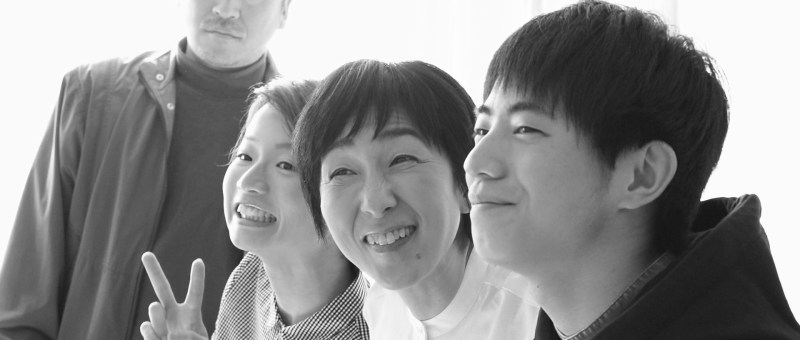
Nevertheless, it’s in transitory human warmth that he eventually finds his reason. Chastened by his wife who tearfully apologises for having married him and subjected him to this grief, Masaaki begins to reassume his role as the father, taking responsibility for his family in finally deciding to welcome Juri’s child as one of his own while embracing his wounded son even as the ghost of the still living Sayuri inhabits their living room looking on at their fierce battle of grief. Shooting in a crisp black and white, somehow detached from the intense emotions at the film’s centre, Yano contrasts the family’s disparate sense of existential loneliness with brief pillow shots of cherry blossom in bloom, the rolling seas on the beach where the family took their last happy photo, and blinking fireworks as if to signal the brevity but also the force, joy, and colour of an ordinary existence. As Sayuri comes to accept death, her son comes to accept life, determined to live to the full so that he can be grateful he was born. A moving tale of learning to live with grief, yes, yes, yes, eventually makes makes the case for life even if it’s hard or sad but also for the saving power of human warmth however transitory it may be.


yes, yes, yes screened as part of the 2021 Osaka Asian Film Festival.

Original trailer (English subtitles)

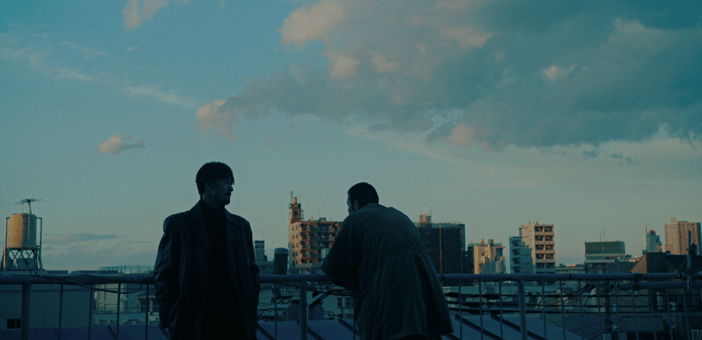
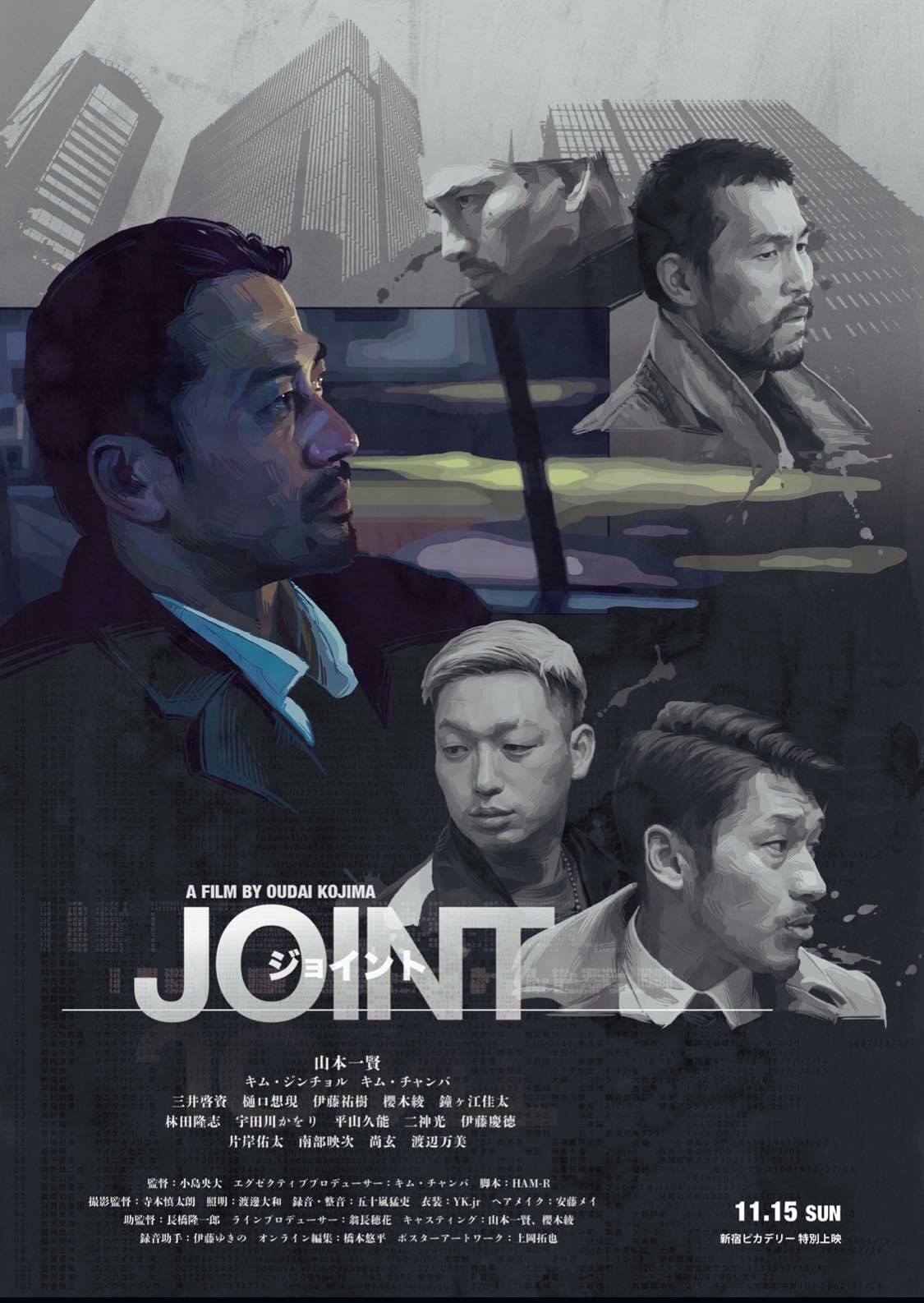
JOINT (Oudai Kojima, 2020)

The yakuza is in some senses at least an outdated institution long thought to be on its way to extinction, some positing that the coronavirus pandemic may be the final nail in the coffin. Organised crime is however nothing if not resourceful and facing post-war decline has long been sliding into corporatised legitimacy. As Oudai Kojima’s JOINT points out, however, the line between legitimate business and illicit enterprise has become increasingly thin especially when it comes to the usage of today’s most valuable commodity, our data. 

Emerging from two years in prison, middle-aged Take (Ikken Yamamoto) took a job ripe with symbolism in “deconstruction” on the invitation of a friend who has apparently managed to escape the criminal underworld for a respectable life as a “financier” with a wife and child. Having saved a small nest egg, however, Take soon makes his way back to the Tokyo underworld, good jobs being hard to find for ex-cons, where he attempts to remain on the fringes of the gangster world working as a kind of freelancer for the Oshima clan while not technically a member of the yakuza. Getting back in touch with an old underling and a Korean friend running a restaurant as a hub for the migrant community, he finds himself getting involved in the yakuza’s latest big business innovation trafficking big data to be used to facilitate large-scale fraud usually against the elderly. The thing about data is that it’s only pieces of a puzzle, the various lists of names with phone numbers, emails, and addresses etc are not worth much individually but coupled with related datasets giving a fuller picture of an individual life they are a veritable goldmine. Pulling together his various resources Take soon becomes a major data broker known for comprehensive documents. 

Ultimately, however, he wants out of the criminal underworld and decides to invest his money in venture capital through a start up working with, yes, big data but this time to be used for the purposes of advertising and marketing. His gangster life and supposed fresh start are in fact based on the exact same source, and who’s to say that illicitly collecting information and using it to sell us more stuff we don’t want or need is really any better than using it to commit fraud. Big data is indeed big business, and its possession it turns out to be as dangerous and contested as any other illicit substance from drugs to black market booze back in the post-war yakuza heyday. 

To signal their commitment to moving on, the Oshima gang has already attempted to clean up its act by exiling old school, violent elements but their efforts have only created a further destabilisation in the criminal underworld as the “traditional” yakuza fight back by founding their own gang rooted in violence and vice. Take has one foot in one foot out of the yakuza life, yet sees fit to pontificate on the code of gangsterdom unable to understand why his old contacts have become so toothless unwilling to take a stand or claim revenge when one of their own is murdered by a rival intent on taking over both their turf and the big data business. Meanwhile, Jinghui, the Korean restaurant owner struggles to support the migrant community who, like Take, find it difficult to secure legitimate work, and ends up working with a third gangster conglomerate which is entirely staffed by foreign nationals themselves intensely marginalised in an often hostile society. They see fit to take things one step further by tapping data at source through tampering with routers to funnel it directly to them. 

The “information war” sees no sign of slowing down, though ironically enough having just got out of the “joint”, Take finds himself trapped in the liminal space somewhere between gangster and legitimate businessman even as that space seems to be shrinking so much that it may soon disappear entirely from beneath his feet. Shooting mainly with handheld, Kojima deglams the yakuza underworld surveying it with a documentary naturalism that suggests it is in fact perfectly ordinary while playing with the trappings of the classic jitsuroku throwing up onscreen text featuring the names of the main players along with details of their roles and affiliations. Though the moody score and twilight neon might hint at neo-noir there’s not so much fatalism here as a sense of sorry impossibility, yet in contrast to the perhaps expected nihilism there is a degree of hope for Take brokered by his internationalism even if it exists only outside of Japan. 


JOINT screened as part of the 2021 Osaka Asian Film Festival.

Original trailer (no subtitles)

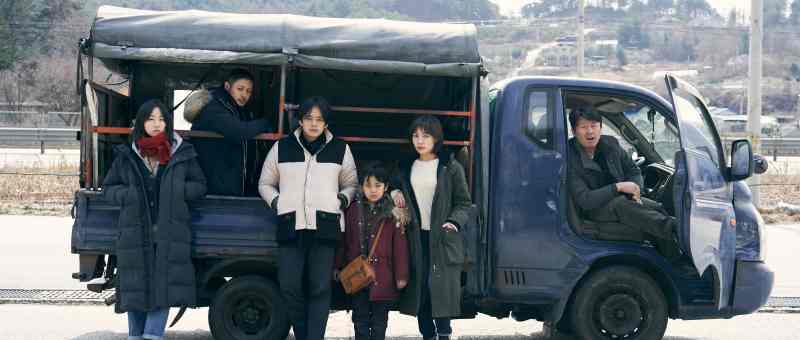
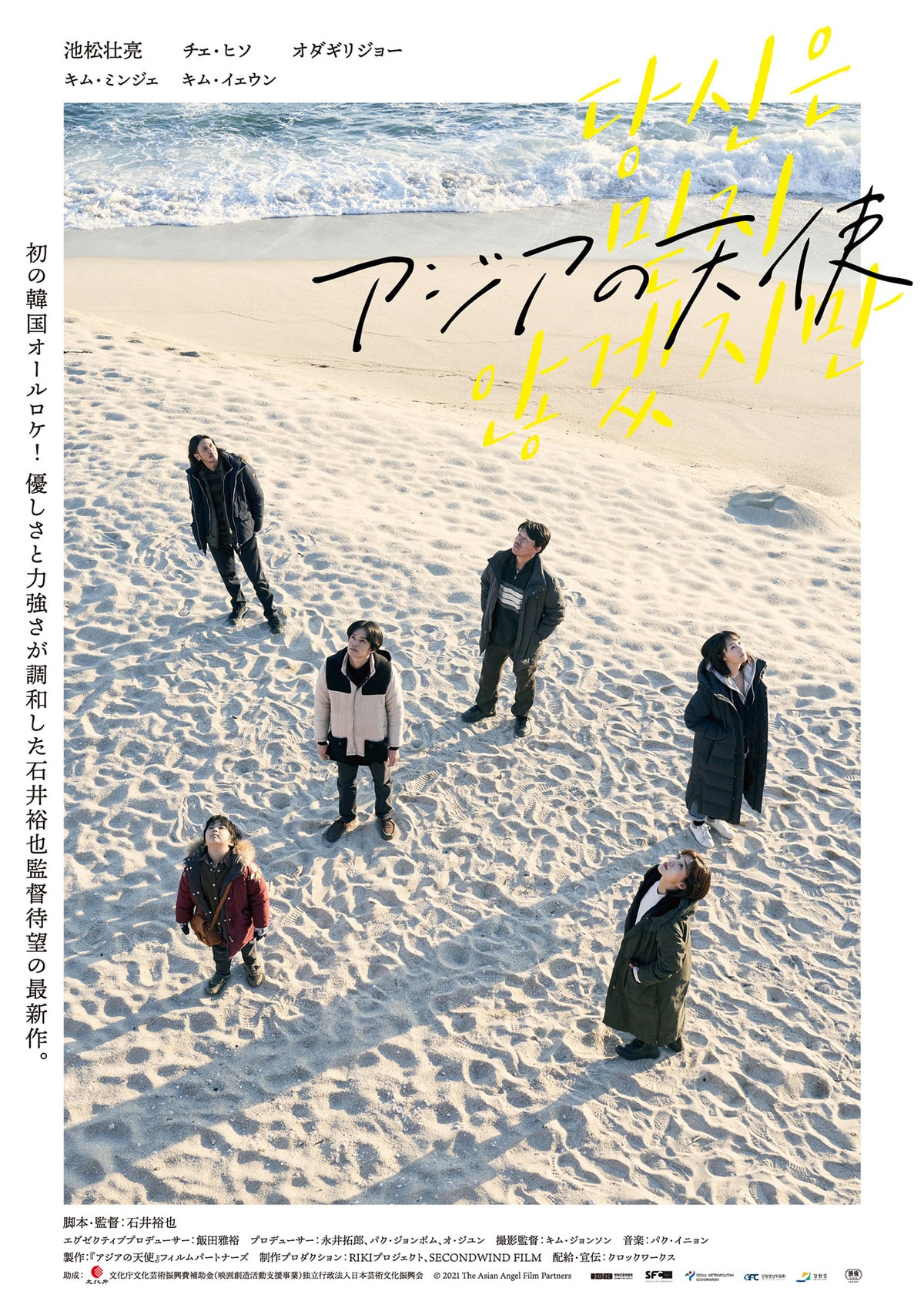
The Asian Angel (アジアの天使, Yuya Ishii, 2021)

A collection of lonely souls is brought together by angelic intervention in Yuya Ishii’s grief-stricken appeal for “mutual understanding”, The Asian Angel (アジアの天使, Asia no Tenshi). Brokering the sometimes difficult subject of Japan-Korea relations, Ishii makes a plaintive case for a pan-Asian family while his wounded protagonists each search for meaning and possibility in the wake of heartbreak and disappointment. Yet what they discover is less the urge to move forward than the gentle power of solidarity, bonding in shared sense of displacement and forging a new home from an apparently fated connection. 

Displacement is a feeling which immediately hits struggling author Tsuyoshi (Sosuke Ikematsu) as he struggles to make himself understood to a grumpy Seoul taxi driver after taking his brother up on an offer to relocate to Korea with his young son following the death of his wife some time previously. Toru (Joe Odagiri), however, has not quite been honest about his life in the Korean capital, housed above a church where they always seem to be rehearsing the hymn Angels We Have Heard on High. Wandering into the apartment, Tsuyoshi is physically thrown out by Toru’s grumpy business partner (Park Jung-bum) obviously unaware they were coming as even Toru himself seems to have forgotten inviting them. In any case, the trio eventually find themselves on the street after Toru’s Korean friend with whom he’d started an illicit business smuggling cosmetics betrays them. 

Meanwhile, across town melancholy songstress Sol (Choi Moon) has been supporting her brother and sister with her music career which seems to be on the slide with a faintly humiliating gig in a shopping mall which briefly brings her into contact with Tsuyoshi, apparently captivated by her sadness. Abruptly informed her contract has been terminated, she tries to take the matter up with her manager/lover but gradually realises she’s merely one of several ladies on his books. Feeling lost, she agrees to follow up on a suggestion from her brother Jun-woo (Kim Min-jae) to pay a visit to the grave of their parents who passed away while she was only a child. 

Running into each other on the train after Toru talks Tsuyoshi into a possible seaweed venture in Gangwon, the two trios end up travelling together if originally struggling to find the “mutual understanding” that Tsuyoshi had been looking for. The first message Tsuyoshi sees on his phone on after arriving informs him that Korean-Japanese relations are at an all time low, though perhaps one would think national tension might not descend to the interpersonal level even if he appears to feel slightly awkward as a Japanese man in Korea aside from his inability to speak the language, but after a few too many drinks at a Chinese restaurant Jun-woo starts in on how 69.4% percent of Koreans apparently disapprove of Japan while 61% of Japanese apparently disapprove of Korea which is one reason he wouldn’t be keen on his sisters dating a Japanese guy. Describing himself as a “progressive”, he claims it’s the relatives who wouldn’t accept it but ends the conversation by cheerfully looking forward to when they can finally “part from these Japanese forever”. 

Yet, they do not part despite several opportunities and in fact end up travelling together for a significant distance during which they begin to bond, discovering that they have much in common including the loss of loved ones to cancer and the improbable sighting of angels who appear not like those on the Christmas cards but a weird old Asian man with a tendency to bite. Several times they are told they shouldn’t be together, Toru lamenting that love between Japanese and Koreans is as impossible as that between angels and humans while a police officer later bemusedly remarks that they don’t look like a family but family is in a sense what they become as they each sort out their respective traumas and resentments to reach a healthy equilibrium. Perhaps you couldn’t quite call it love, but almost and it might be someday if only you let it. “Seeing the world through your eyes I might come to like it a little more” Tsuyoshi admits, while Sol too begins to awaken to a new sense of freedom and possibility brokered by an angelic intervention. Marrying the melancholy poetry of The Tokyo Night Sky is Always the Densest Shade of Blue with the gently surreal sense of humour of his earlier work, Ishii’s deeply moving drama makes a quiet plea for a little more “mutual understanding” between peoples but also for the simple power of human connection as evidence of the divine. 


The Asian Angel screened as part of the 2021 Osaka Asian Film Festival.

Images: (c) 2021 The Asian Angel Film Partners

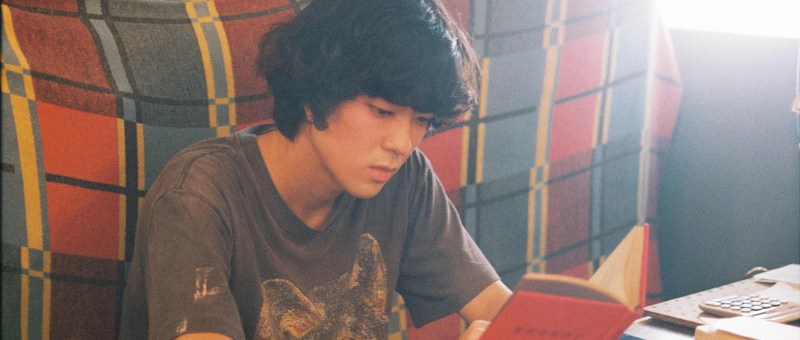
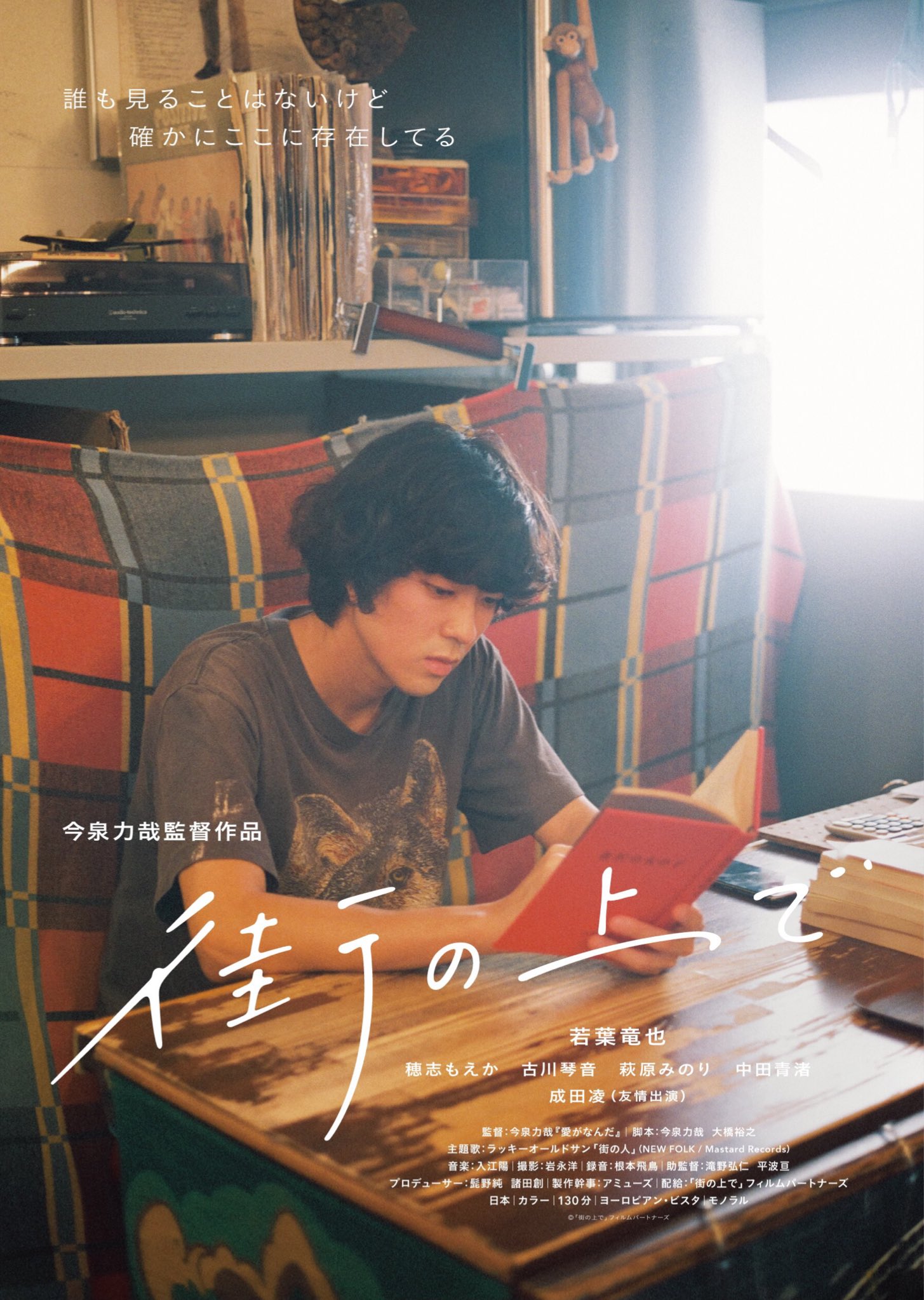
Over the Town (街の上で, Rikiya Imaizumi, 2019)

Frustrated youngsters chase an unrealisable dream of idealised romance in Rikiya Imaizumi’s ode to Shimokitazawa, Over the Town (街の上で, Machi no Uede). For the moment at least known as the bohemian, avant-garde artists quarter of the contemporary capital beloved for its slightly retro quality replete as it is with narrow lanes and period buildings, Shimokitazawa is also a place of constant change but as the hero later points out even if “parts change and disappear that doesn’t mean they never existed”. Nevertheless, he seems to be marked by a particular anxiety, as do many of his age struggling to make meaningful connections in an ever shifting world. 

Ao’s (Ryuya Wakaba) world begins to crumble when he’s unexpectedly dumped by his beloved girlfriend, Yuki (Moeka Hoshi), on her birthday. Unceremoniously telling him that she’s met someone else, Yuki rationalises that breaking up is the only option but Ao tries to resist only for her to tell him that he can go on deluding himself that he still has a girlfriend but from now on she’ll be hanging out with someone new. From then on, Ao seems to be surrounded by frustrated couples and worryingly outdated ideas of romantic politics such as those of the students who drop into the vintage clothing shop where he works. Ao assumes they’re a couple, but a row slowly brews as the girl, Asako, declares herself bored with helping the guy, Shigeru, try on clothes that turn out to be for the purpose of impressing a different girl altogether despite knowing that Asako fancies him. Eventually Shigeru makes a highly inappropriate suggestion, almost akin to a bet, that if the woman he has a crush on rejects him he’ll deign to dating her even though Asako is “a distant second” in his heart. The shocking thing is that Asako agrees, a slightly mournful look in her eyes as she finally reaffirms that she really hopes it works out with the other girl. 

Throughout the exchange during which Ao looks on as an awkward bystander, it becomes increasingly difficult to see what’s so great about Shigeru. Meanwhile, not even Ao comes off particularly well, struggling to deal with his breakup and refusing to accept Yuki has moved on. So hung up on her is he that she eventually ends up contacting the barman at his favourite haunt to ask him to have a word, explaining that it’s inappropriate to go on texting your ex even if she doesn’t reply. Meanwhile, he finds himself at the centre of romantic missed connection, captivated by a sad woman at a concert who gives him a menthol cigarette he keeps in his ashtray as a kind of talisman for the rest of the picture. Infinitely awkward, he talks himself out a potential date with the cute girl at his favourite used bookstore (Kotone Furukawa) by asking an inappropriate question, later doing something similar to a woman (Seina Nakata) with whom he makes a more platonic connection as they each reflect that for some strange reason it’s much easier to open up to someone you have no romantic interest in. 

Perhaps that’s why a melancholy policeman keeps stopping random people in the street to ask their advice on his peculiar romantic dilemma in having inconveniently fallen in love with his “niece” (by marriage and the same age as he is, so maybe it’s “OK”, he’d like to think). Shimokitazawa, which Ao rarely leaves, is indeed a small world, the various strands of his romantic entanglements strangely connected from a young woman’s unrequited longing for her sumo wrestler childhood sweetheart to a TV actor’s (Ryo Narita) troubled love life and a young film director’s (Minori Hagiwara) attempt to deflect her own sense of romantic disaffection. Just as Yuki used another man as an excuse to break up with Ao, Ao finds himself recruited as a fake boyfriend to help a young woman shake off a controlling ex whose refusal to accept the relationship is over in the absence of another man skews even darker than his own signalling perhaps like that first vintage shop exchange the dangerously outdated sexual politics which continue to underpin modern dating. Perhaps boring love is the real kind of fun, comfortable and balanced marked by true connection and mutual vulnerability rather than a giddy anxiety. A stubborn holdout where everything’s secondhand in a continual circulatory process of exchange and return, Shimokitazawa is the kind of place where love finds you even if it takes a while to wander on its way. A charming ode to this timeless yet ever-changing district, Imaizumi’s quirky dramedy keeps the neurosis of young love on the horizon but suggests that romance, like a well baked cake, keeps much better than you’d think when cooled.


Over the Town screened as part of the 2021 Osaka Asian Film Festival.

Original trailer (no subtitles)