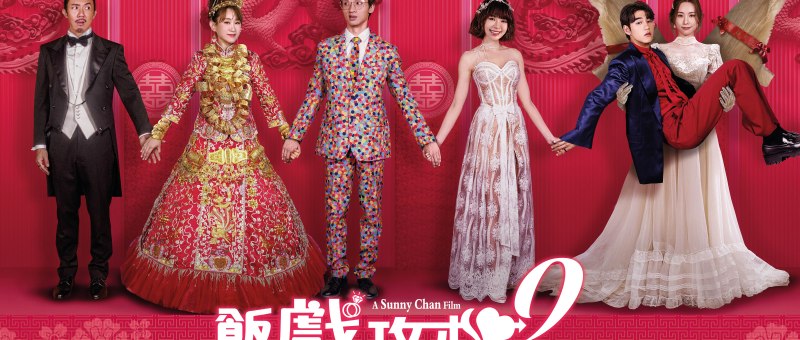
Table for Six 2 (飯戲攻心2, Sunny Chan Wing-Sun, 2024)

“It’s okay to be screwed, we’ll unscrew you later,” youngest brother Lung (Peter Chan Charm Man) comforts his dejected brother in an accidental advocation of what means to be a family in Sunny Chan’s followup to the phenomenally successful comedy  Table for Six. Like the previous film and in true Lunar New Year fashion, Table For Six 2 (飯戲攻心2) explores the concept of family in a wider sense along with contemporary attitudes to marriage and traditional gender roles.

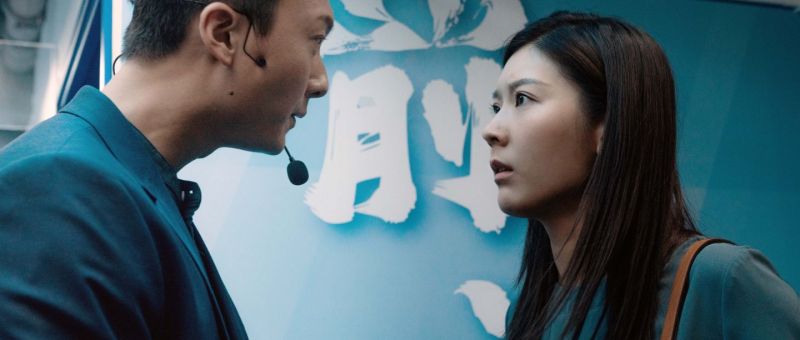
Even so, it has to be said this table is now uneven as oldest brother Steve has literally run away from his romantic dilemmas taking off for Africa leaving new girlfriend Miaow (Lin Min-Chen) behind claiming she’s too far out of his league and it’s not fair of him to waste her youth. Ironically enough, Bernard (Louis Cheung) has now started a wedding business helping people pull off extravagant public proposals such as the sort of fake one he prepares for Monica (Stephy Tang Lai-yan) as a publicity stunt featuring him dancing in a 90s-style music video. As part of the campaign, they’ve set up Lung and Miaow as a fake couple hoping to build a following for their romance online much to unexpected chagrin of Josephine (Ivana Wong) who has begun to embrace her dreams by becoming a well-known quirky chef who makes food disguised as other food. Though they had agreed to separate so the could both follow three dreams at the end of the previous film, Josephine suddenly proposes leading Bernard to put on an extravagant wedding as promotion for his business. 

In a way, Bernard’s company symbolises the performative qualities of marriage as couples put themselves through a stressful and expensive ritual more out of obligation than real desire. When Lung is prevented from reaching the ceremony on time, Bernard ends up impersonating him in a full body costume making plain that the spectacle is more for show than sentiment and it could really be anyone up there simply fulfilling a role. In fact, no one even checks the certificates were properly signed. Then again, just as in Josephine’s cooking sometimes the “fake” and can actually contain the “real” just in a different way than expected. She may say that once a relationship has cooled the spark can’t be regained, but that doesn’t necessarily mean a new, different, spark couldn’t be found. 

Perhaps that’s what happened for Bernard and Monica who’ve now overcome the awkwardness of Monica having been in a longterm relationship with oldest brother Steve. Ironically enough, they’d more or less decided not to get married only to be blindsided by their reactions to the “fake” proposal but as it turns out more because of the emotional baggage from their parents’ failed relationships that have left them too afraid to get married. Monica is still traumatised by her father’s extra marital affair which resulted in a half-brother she’s never met but has since become a Cantopop star, while Bernard still has bad memories of being treated as a “red-headed” child and like Steve is preoccupied with a desire to keep the family together while worried that he isn’t really up to it. 

The lesson Bernard learns is that family is a burden that’s carried together so he didn’t need to save it on his own and that it’s alright to mess things up because his family will be there to take care of him. Miaow meanwhile is left in the same place as Steve had been in the first film, wondering how long she should wait for love or if Steve is ever coming back, trying to decide whether to accept a promising job offer in Japan or stay in Hong Kong. Part of her reluctance to move on is that she’s become wedded to the family and fears losing her place within it but as Monica says her status wasn’t dependent on blood or relationships and that she’s already been accepted into the family just for being herself. 

Then again, families can also be annoying as Bernard remembers after inviting his gangsterish uncles to one of the weddings only for them to muscle in as a major sponsor for another own insisting on designs the dress themselves complete with a par of shark fin wings to promote their business none of which meshes well with Monica’s passion for conservation. In any case, as Monica reflects family means you can embarrass yourselves together so maybe wearing a stupid dress for a few minutes isn’t such a big deal. Heartfelt and zany, Chan’s farcical drama shifts past the performative aspects of marriage and family to what lies beneath which, like Josephine’s cooking, may not always be what it first appears.


Table for Six 2 is in UK cinemas from 9th February courtesy of CineAsia.

UK trailer (English subtitles)

Lonely Eighteen (我們的十八歲, Tracy Choi Ian-Sin, 2023)

Looseley inspired by the experiences of star Irene Wan, Tracy Choi’s meandering drama Lonely Eighteen (我們的十八歲) charts the friendship between a pair of women trying to make their way in the ‘80s Hong Kong entertainment industry. Somewhat incoherent, the film positions itself awkwardly in its complicated gender politics while also ambivalent about the heroine’s commitment to her art and the things it may have cost her if also selling a mild message about female empowerment and independence.

Elaine and Ying meet as children, each from poor families and bonding in a shared sense of frustration. While Ying later moves away, Elaine’s family plan to sell her to a wealthy man though this does not appear to actually take place and she remains under the roof of her incredibly moody and abusive father. It’s her father who wanted to sell her and who makes her life a misery, yet the later part of the film will focus heavily on her love for him and guilt that her job prevented her from getting to the hospital in time when he passed away. In any case, after reuniting as teenagers, Ying introduces Elaine to a film producer she’s met through her clubland connections and the pair are signed as fledging starlets at a studio that mainly produces Cat III erotic movies. 

The film is very clear on the dichotomy between Elaine, wholesome and transcending her humble origins, and Ying who is earthier and trapped by the bad patterns of her childhood. Elaine soon progresses towards success as an actress, but Ying is somewhat traumatised by being cajoled into full frontal nudity by producer Ben and thereafter unable to shake off the label of erotic actress. Meanwhile she’s also trapped by her relationship with Shing, a guy she met at the club and wants to spend her life with but has a destructive gambling problem that disrupts her career.

In the film’s present day, it’s Elaine (now in her 50s) who is vacillating over marriage and what it might mean for her work as an actress and independence as a woman. Her manager seems to imply she won’t be getting work after the wedding, though her fiancé also seems rather controlling and disapproving of her career preferring she become a stereotypical housewife. It’s this that Elaine begins to rebel against, wanting to rediscover herself as an actress by taking on more challenging work even if her agent would prefer she stick to the commercial, while uncertain if she really wants to get married at the price of her career. The film ends with a fantasy wedding that reechoes the film’s lowkey conservative attitudes as Elaine’s fiancé effectively gives her permission to continue acting but only if she’s “transparent” with him. 

Elaine keeps saying that she wasn’t successful as an actress and feels guilty about letting her father down, though she appears to be working steadily and lives in a well appointed home whereas Ying has struggled with mental health issues and now works part time in a supermarket. The pair of them are subject to a hypocritical double standard and the vagaries of a sexist, largely unregulated industry. Ying never escapes the label of erotic actress, while Elaine’s attempt to break out of stereotypical roles in TV drama by agreeing to appear nude in a CATIII slasher backfires and leaves her exasperatiedly explaining that what she’s made is art and not porno. 

There are rumblings in the background, mentions of the Handover and the clearing of the slum where Elaine grew up which her father defiantly resists, yet the film can’t seem to find much of a through line or sense of purpose save the implication that the two women’s lives were largely defined by their family background with the perhaps unpalatable suggestion that Elaine used hers to propel herself forward while Ying’s continued to drag her down. Meanwhile, it’s also implied that Elaine’s “obsession” with acting has cost her in terms of her relationships, not only with Ying but not having said goodbye to her father because she needed to finish a scene while also remaining childless and unmarried at a comparatively late age. The resolution may point to her gaining the best of both worlds, claiming happiness on her own terms but also skews somewhat conservative in her fiancé’s chauvinism and the notion that she should be married even if she doesn’t really want to be. Even so, it does gesture at the enduring qualities of female friendship as Elaine and Ying patch up their differences while preparing to move on to a happier future.


Lonely Eighteen screened as part of this year’s London East Asia Film Festival.

Original trailer (Traditional Chinese / English subtitles)

In Broad Daylight (白日之下, Lawrence Kan, 2023)

A jaded investigative reporter rediscovers a sense of purpose even as her industry flounders while exposing systematised abuse and neglect in privately run care homes in Lawrence Kan’s hard-hitting drama, In Broad Daylight (白日之下). The film’s title hints at its pervasive sense of despair, the problem isn’t so much that no one knew the state of affairs but that no one cared enough to do anything about it while the journalists too find themselves at the mercy of a hyper-capitalistic society. 

A whistleblower close to the end of the film reveals that they’d been anonymously sending photos from the care home where they work because they wanted “to feel human again” and “treat others as humans” only until now no one had taken any notice. They weren’t really expecting that anyone ever would. Top investigative reporter Kay (Jennifer Yu Heung-Ying) is one of only a handful of reporters left on her paper which is threatening to shut down the investigative department altogether if they can’t bring in a big scoop. Kay’s boss is similarly conflicted, not wanting to crush the idealism of rookie recruit Jess in insisting that their work has value in telling the stories that should be told while privately reminding Kay that the care home scandal might not be “explosive” enough to earn them a reprieve from their boss. 

For her own part, Kay is already jaded explaining to Jess that nothing really matters and nothing they write makes any difference when wrongdoers generally get off scot-free. Her desire to pursue the care home story is partly personal in that she’s dealing with a degree of guilt and grief over the death of her grandfather who took his own life in a privately run facility. To investigate one she’s been tipped off is particuarly bad, she poses as the granddaughter of a patient with dementia, Kin-tong, explaining that she’s not visited before because her family moved to Canada when she was a child, and thereafter making an offer to volunteer on seeing how bad things really are there witnessing not only a dead rat in Kin-tong’s room but physical abuse of the residents. 

It would be easy enough to assume that the faults are “isolated incidents” as the regulatory body likes to describe them and mostly down to the presence of the head nurse, Mrs Fong, who is clearly not someone who should be working in a care facillity, but the truth is that these are systemic problems largely born of governmental indifference. A government source tells her that the waiting list for a publicly funded homes stands at 15 years leaving many families little choice but to take what they can afford in the private sector. They are often unable to take care of elderly relatives themselves because they cannot take time off work to do so, or are simply not equipped to respond to their loved ones’ needs. 

But neither are the care homes. The manager, Chief Cheung who is blind himself, in part justifies the existence of his facility on the grounds that it is difficiult for people with disabilities to find homes to take them, painting the community as a happy family home doing its best rather than a callous attempt to exploit the vulnerable run by a dodgy businessman who admits that even if they’re exposed they’ll just change their name and start again somewhere else. Kay asks Kin-tong why he stays but he tells her that they’re all the same anyway. Even when she uncovers evidence of sexual abuse of a resident with learning difficulties she discovers that it’s almost impossible to prosecute because no one wants to put a vulnerable person on the stand opposite their abuser which allows them the confidence to think they can do whatever they want because they’ll never face dismissal let alone criminal proceedings. 

Kay begins to wonder what the point is if, as people are fond of telling her, no one really cares, but also is also forced to reflect on the moral difficulties of the situation. If the home is closed down, it will leave many of the residents with nowhere else to go. Mostly likely they will end up on the streets or in another equally bad private care home while she at least might earn herself a temporary reprieve in achieving the kind of scoop her money-minded editor was looking for. Her boss insists that she can’t change the world, the system won’t change overnight even if people are temporarily outraged. The truth is that these are people who’ve been abandoned by their society and often by their families especially with so many younger people emigrating leaving relatives behind with no one to watch over them. Though somewhat jaded, Kay comes to empathise with the people she meets at the care home and rediscovers a sense of purpose in her work that reminds her it’s worth the fight even if in the end nothing really changes. In many ways bleak, Kan’s empathetic drama is otherwise undespairing in its gentle advocation for mutual compassion and world in which we can truly take care of each other.


In Broad Daylight screened as part of this year’s New York Asian Film Festival. It will also be screening in Chicago on Sept. 16 as part of the 17th season of Asian Pop-Up Cinema.

Original trailer (English subtitles)

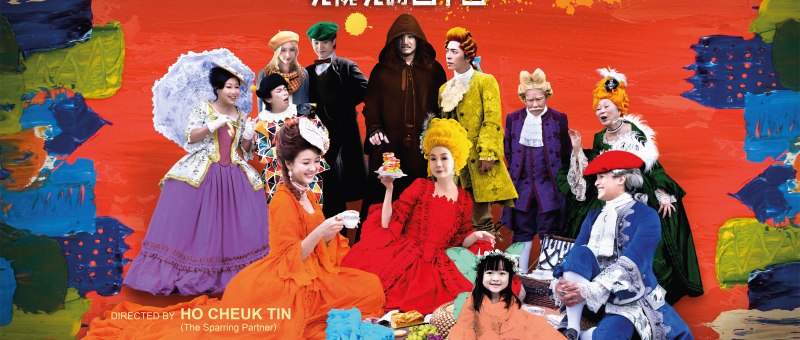
Over My Dead Body (死屍死時四十四, Ho Cheuk-Tin, 2023)

As the opening voiceover of Ho Cheuk-Tin’s darkly comic farce Over My Dead Body (死屍死時四十四) points out, the world is already quite an absurd place. A lot of us know that it’s absurd, but somehow we just roll with it without really asking why. If you stop to think about it, it really is absurd to spend every waking minute scrabbling for money to pay a mortgage on a flat you barely occupy because you’re always at work, but at least it’s less absurd than living with the constant uncertainly of arbitrary rent rises and sudden eviction. 

At least that’s the way it’s always seemed to the residents of 14A Seaside Heights, a swanky apartment block with all the mod cons and a touch of European sophistication. Technically the flat is owned by Ms. So (Teresa Mo Sun-Kwan), though home to daughter and son-in-law Yana (Jennifer Yu Heung-Ying) and Ming (Wong Yau-Nam) plus their small daughter Yoyo and Yana’s paranoid brother Kingston (Alan Yeung Wai-Leun) who is in the process of launching a “brand” selling a special “stealth suit” that can make you invisible to surveillance cameras. The obvious fact is, the flat is far too small for all these people and Ming and Yana want to move out not least so they stop having to sneak around like teenagers to get a little personal time. 

They have each, however, suffered amid the precarities of the post-pandemic economy with Yana losing her job as an air hostess when the airline she worked for went bust, while Ming’s removals business has taken a serious hit and is unlikely to recover as Mrs So points out with so many people leaving Hong Kong due to the ongoing political uncertainty. The young couple propose mortgaging Mrs. So’s flat for the downpayment on their own which they’d be paying a second mortgage on, which is why it’s incredibly bad news when they discover the naked corpse of a random man propped up against their door. 

The film plays with a minor pun in which the word for male corpse sounds like that for “Blue Ribbon”, a name for pro-government supporters during in the protests, the implication being you wouldn’t want one of those turning up on your doorstep either. In any case, any idea of calling the police or an ambulance is quickly abandoned on realising the flat would become known as a “murder house” and dramatically drop in value. The only thing to do is drag the unfortunate man to a neighbour’s door instead and let them deal with it. This goes about as well as could be expected with the whole floor eventually involved in the plan to move the body until they eventually hit on the idea of dumping it on a rundown social housing estate where people often go to commit suicide because no one’s going to notice one more corpse and no one owns those flats anyway so it doesn’t really matter if they ruin their property value. 

It is an incredibly dark and cynical sense of humour, but in its own cheerfully absurd in all the farcical shenanigans trying to remove the body from the building with no one really stopping to ask how it got there in the first place beyond connecting it with the mad streaker the security guard has been desperately trying to catch. Ho’s previous film, stylish true crime drama The Sparring Partner, had similarly had an absurdist vein of dark comedy running underneath it but Over My Dead Body does eventually rediscover a sense of hope if only in irony as it leans in to a New Year comedy-style celebration of family and community as the neighbours find themselves having to work together to protect their property investments. Even the materialistic Mrs So is forced to reflect that actually she’s lucky to be able to feel tired and frustrated, giving her blessing to her daughter and son-in-law to move out, while they in turn reflect that maybe it’s not that bad if they have to stay a little longer. It might seem like an overly saccharine conclusion for a biting satire about the rabid capitalism of a status obsessed, consumerist society but then again as an equally cynical ironic twist reveals maybe the residents are the ones who haven’t quite woken up despite their newfound solidarity. 


Over My Dead Body opens in UK cinemas on April 21 courtesy of CineAsia.

UK trailer (Traditional Chinese / English subtitles)

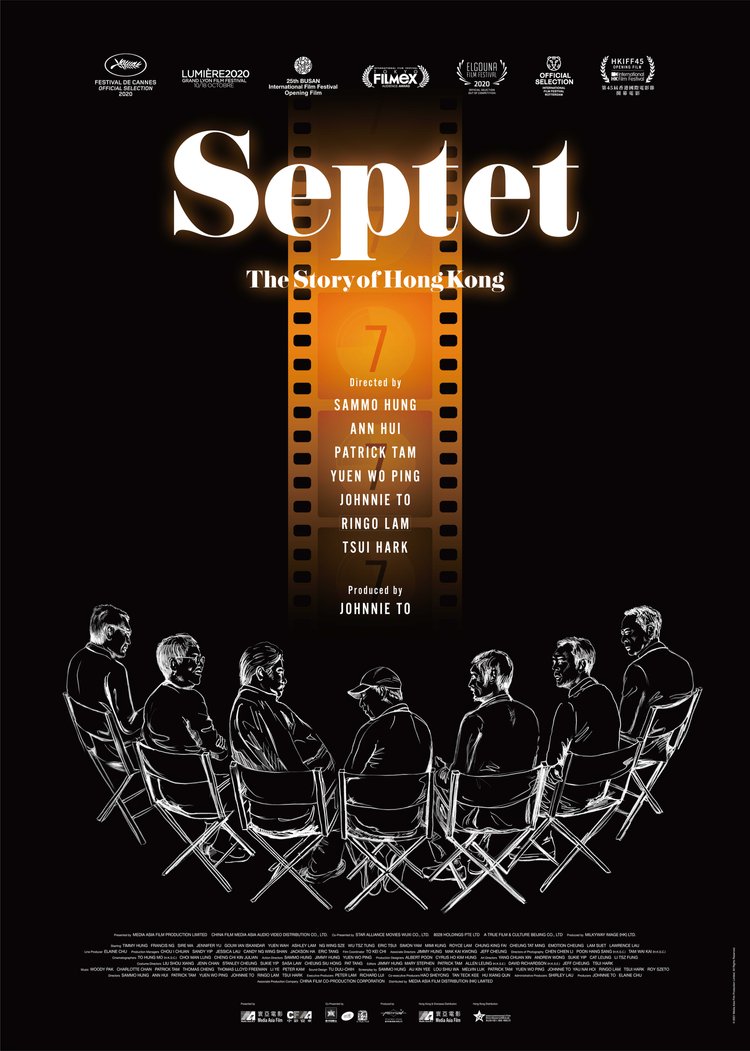
Septet: The Story of Hong Kong (七人樂隊, Sammo Hung, Ann Hui, Patrick Tam, Yuen Wo Ping, Johnnie To, the late Ringo Lam, Tsui Hark, 2022)

Seven of Hong Kong’s most prominent directors come together for a collection of personal tales of Hong Kong past and present in the seven-part anthology film, Septet: The Story of Hong Kong (七人樂隊). Produced by Johnnie To’s Milky Way, the film was first announced several years ago and originally titled Eight & a Half though director John Woo sadly had to leave the project due to his wife’s ill health which explains why there is no short set in the 1970s.

Each of the segments reflects the director’s personal nostalgia for a particular moment in time and there is certainly a divide between the 1950s and 60s sequences directed by Sammo Hung and Ann Hui respectively and those of the 80s and 90s which are imbued with a sense of Handover anxiety along with the closing meditation on the various ways the city has or has not changed. In any case, Sammo Hung’s opener Exercise is a slice of personal nostalgia which looks back to the heyday of Hong Kong kung fu as the young Sammo learns to buckle down and train with discipline under the guidance of his authoritarian teacher played by his own son, Timmy Hung. Similarly education-themed, Hui’s Headmaster echoes the documentary aesthetic seen in the later stages of Our Time Will Come in her naturalistic capture of a primary school reunion taking place in 2001 before flashing back to the early ‘60s as the headmaster and the children reminisce about a kind and idealistic young teacher who sadly passed away at 39 from a longterm illness exacerbated by misapplied traditional medicine. Essentially a tale of old-fashioned reserve in the unrealised desires of the headmaster and the teacher who elected not to marry because of her illness in the knowledge she would die young, Hui’s gentle melodrama harks back to a subtler age. 

Patrick Tam’s 80s segment, Tender is the Night, perhaps does the opposite in its incredibly theatrical tale of love thwarted by political realities as a lovelorn middle-aged man looks back on the failure of his first, and last, love for the teenage girlfriend who like so many of that time emigrated with her parents to escape Handover anxiety. Rich in period detail and imbued with the overwhelming quality of adolescent emotion, Tam’s maximalist romance is a tale of love in the age of excess but also of middle-aged nostalgia and personal myth making which nevertheless positions the looming Handover as a point of youthful transition. 

The 1997 sequence itself, Homecoming directed by Yuen Wo-ping, is in someways subversive in again presenting a young woman who firmly believes her future lies abroad rather than in post-Handover Hong Kong and placing her at playful odds with her traditionalist grandfather, a former martial arts champion who spends his days watching old Wong Fei-Hung movies. The eventual resolution that the girl, who insists on going by her Western name Samantha, returns to Hong Kong a few years later to care for the grandfather who has aged quite rapidly undercuts the sense of anxiety, yet there is something in the cultural and generational conflict that exists between them eased by mutual exchange as she teaches him basic English and he teaches her kungfu that hints less that the traditional is better than the modern than that there’s room for both hamburgers and rice rolls. 

Moving into the 2000s, Johnnie To’s Bonanza then takes aim at the increasingly consumerist mindset of the contemporary society in picking up a theme from Life Without Principle as three young Hong Konger’s become obsessed with getting rich quick through financial investment beginning with the dot-com bubble and shifting into property profiteering during the SARS epidemic. The trio fail every time before hitting the jackpot with some shares they bought by mistake during the 2008 financial crisis suggesting that it all just luck after all. One of the guys comically switches business opportunities in line with each of the crises/opportunities, firstly getting into mobile phones, then peddling healthcare products, and finally investing in self-storage in an echo of his society’s scrappy entrepreneurial spirit. 

The final film from Ringo Lam who completed his segment Astray shortly before passing away 2018 continues the theme in meditating on the modern city as its hero is literally killed by a sense of cultural dislocation after getting lost in a very changed Hong Kong having emigrated to the UK and returned with his family for a New Year holiday. While ironically remembering his own father complaining that times had changed, he finds himself bewildered by the absence of familiar landmarks and adrift in his home city. He dreams another life for himself in the countryside in which his son decides to emigrate to America while his wife would prefer he find a job in Hong Kong but his final message to him that it’s not difficult to live happily perhaps frees him of the sense of nostalgia which has led to his father’s death.

The best and final episode, however, Tsui Hark’s Conversation is set at no particular time and my in fact take place in the future as a mental patient, who might actually be a doctor pretending to be a mental patient, suddenly gives his name as Ann Hui followed by Maggie Cheung and a string of Hong Kong directors from Ringo Lan to Jonnie To and John Woo and challenges the doctor, who might be a mental patient, as he struggles to keep up with him. Tsui and Hui make reflective cameo’s at the segment’s conclusion perhaps hinting that this has been a deep conversation with the history not only of Hong Kong but its cinema through the eyes of those who helped to make it what it is.


Septet: The Story of Hong Kong screens in Chicago on Nov.6 as part of the 15th season of Asian Pop-Up Cinema.

Original trailer (English subtitles)
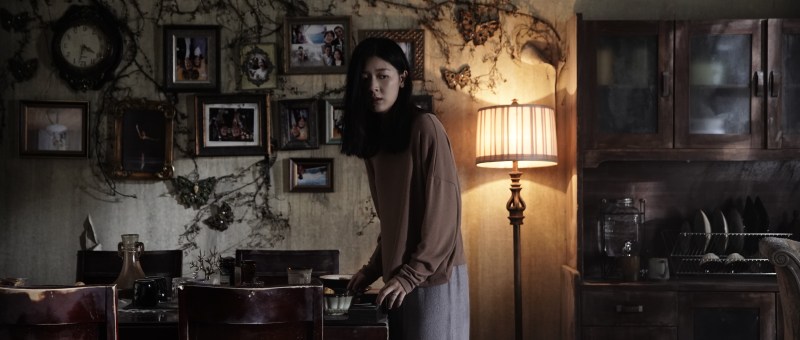
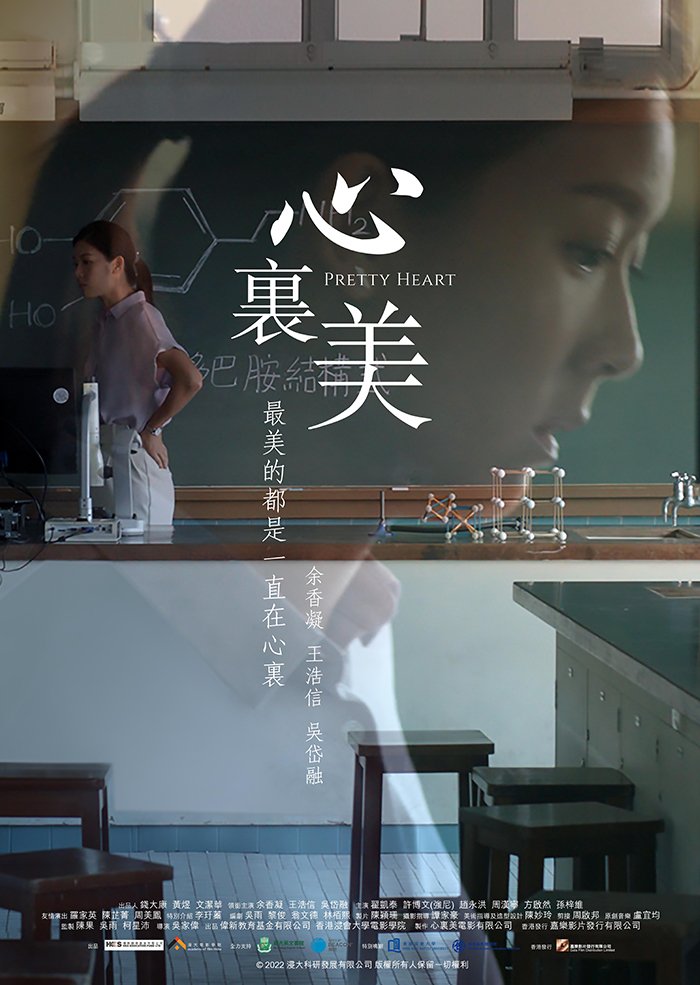
Pretty Heart (心裏美, Terry Ng Ka-wai, 2022)

An idealistic teacher finds herself questioning her views on education while confronting her traumatic past in Terry Ng Ka-wai’s gentle drama, Pretty Heart (心裏美). Partly a contemplation of the nature of education, the film has some serious questions to ask about the contemporary school system and in its inbuilt inequalities along with the complicated relationships between parents and children while ultimately opting for a kind of balance in which there is room for many kinds of learning. 

For Chloe (Jennifer Yu Heung Ying) education shouldn’t just be about passing tests but learning about how to live life, gaining the ability to think critically and enriching one’s existence. But at her school, which is funded by both public and private means, she’s regarded as something of a troublemaker by Mrs. Tsang, the wealthy head of the board who seems to have the headmaster well under her thumb. Mrs. Tsang is so hands on because her son Chi Kit is a pupil though a somewhat indifferent one sure that his money and connections will engineer his success. A small fight breaks out when a young girl, Shu Ting, who comes from an impoverished single parent family, tries to hand out tickets for video lectures by top cram school teacher K.K. Ho with Chi Kit insisting that only the elite who have the means to pay deserve a place in the room. 

The incident at once lays bare the fallacy that education is a levelling force enabling social mobility under in meritocracy when kids like Chi Kit will always be able to game the system in ways that those like Shu Ting cannot even if, as Mr. Ho tells another pupil, at the end of the day it’s the effort you put in that counts. What annoys Chloe about the elite cram school with its good-looking teachers and flashy showmanship is its devaluing of education in giving kids tips on how pass exams while telling them that they can safely ignore half of the syllabus to focus on the bits that are most likely appear to on the test paper without actually needing to understand much of what they’re memorising. Defending himself, Ho eventually argues that he merely provides a complementary service intended to run in concert with the kind of education Chole offers which is less geared towards test scores than comprehensive learning. 

Yet he also takes Chloe to task for her lack of connection with the kids and image of herself as a teacher pointing out that she has never really bothered to learn much about their lives outside of the classroom. Much of her animosity towards the cram school stems from the fact is it is run by her estranged father whom she assumes to be cynical and unfeeling yet has generated a fatherly relationship with Shu Ting and is doing his best to support her while she contends with difficult family circumstances trying to balance her need to support herself and her mother financially with her education. 

Witnessing Ho’s innate kindness to those around him forces Chloe to rethink her preconceptions while accepting that her reserve has sometimes interfered with her intentions as an educator. Re-encountering her father also causes her to revisit longstanding childhood trauma which may in part have been born of a childish misunderstanding she may be better placed to process as an adult woman. As her father says, the most important thing to learn may be the art of forgiveness and it seems that she has been poisoning herself with hate and resentment as manifested in her literal heart problems. 

The conclusion that the film comes to is that it’s not all so black and white and perhaps the good comes with the bad. Having begun to deal with her emotional trauma, Chloe seems to have become a better and more engaging teacher committed to helping her students in all aspects of her lives. It may not solve the problems of social inequality in the school system or fix the commodification of education symbolised in the existence of the cram school but does at least seem to generate a shift in the general environment which sees even a relieved Mrs Tsang step back from her elitism. Admittedly a little contrived in its melodramatic narrative, the film nevertheless has its heart in the right place as the melancholy heroine learns a few lessons of her own in dealing with the traumatic past.


Pretty Heart screens in Chicago on Nov.6 as part of the 15th season of Asian Pop-Up Cinema where actress Jennifer Yu Heung Ying will be in attendance to collect her Bright Star Award.

Original trailer (English subtitles)

Far Far Away (緣路山旮旯, Amos Why, 2021)

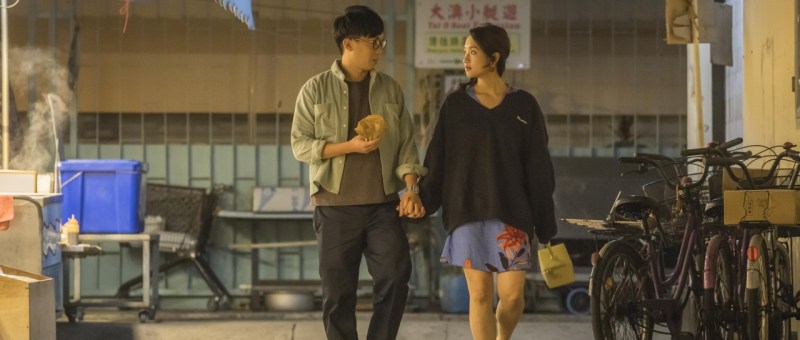
An introverted IT specialist gets a crash course in romance when he accidentally ends up dating a series of women from the far flung corners of the land in Amos Why’s charming romantic comedy, Far Far Away (緣路山旮旯). An occasionally subversive love letter to a disappearing Hong Kong, Why’s elegantly scripted romance also presents a snapshot of the contemporary society in exploring the various reasons each of the women has rejected the high status, consumerist lifestyle of the cities in favour of a more bespoke happiness elsewhere. 

At 28, Hau (Kaki Shum) has had only one relationship and is still unsure why his previous girlfriend, a former co-worker, broke up with him. His sympathetic hometown friends are forever trying to set him up while he nurses a gentle crush on another woman from the office, A Lee, but is too shy to say anything and worried that her reluctance when colleagues suggest he drive her home after a night out implies that she finds his company uncomfortable. That is not as it turns out quite the case, the reason she didn’t want him to drive her home is that she’d moved from an upscale, prestigious area to a small rural town far out of the city because she broke up with her boyfriend and couldn’t afford the rent but didn’t want anyone to know. 

The constant obsession with men driving women home becomes a minor plot point with several of the women actively questioning why it’s necessary and occasionally even offended while forcing Hau to admit that in most cases he’s offering because he wants to spend more time with them rather than out of a general concern for their safety or simple convenience. Having abandoned the dating app he was working on at work to concentrate on a delivery/map service, he ends up bouncing all around Hong Kong visiting various women even venturing to places so far out he needs to apply for a separate permit to enter while beginning to rethink his life choices realising that the reason he’s so set on stubbornly occupying his family’s flat in the city is rooted in his childhood trauma of having lost his mother to illness and his father to the Mainland in a symbolic orphanhood that hints at the anxieties of contemporary Hong Kong. Hau’s recently married friends discuss the possibility of having children but admit that they don’t really want to do it unless they can move abroad, Hau later speculating they will go to Taiwan while his friend who goes by the ironic name “Jude Law” has a British National (Overseas) Passport. Hau himself admits that he’d never really given it much thought until recently when a prospective partner asks him if he’d ever considered moving abroad mostly to confirm he won’t suddenly announce he’s leaving once they start dating seriously because almost no one can see a future for themselves in a changing Hong Kong.

Meanwhile, each of the women has made a decision to prioritise something else rather than join the city rat race from a youthful young woman living in an idyllic coastal town while determined to marry at 29 to Hau’s college friend Melanie (Jennifer Yu Heung-Ying) who chose to work for an NGO because of the better work/life balance that meant she wouldn’t be pressured into endless overtime. Then again another of Hau’s suitors appears to be just as ambitious as any other city dweller while viewing herself superior because her family bought a flat in a provincial area 25 years previously at a preferential rate and then sold it to her at below market value but more than they paid originally which strikes Hau as an odd arrangement between parent and child but speaks to the penny pinching mean spiritedness that leads her to blow up at him because he left a nice tip at a restaurant where service was included in the bill. An artist friend is willing to put up with primitive conditions in a remote mountain village because she’d rather have the stars than city lights, while each of the women also worry that any attempt at romance is always doomed to failure because no matter how keen they are or claim to be sooner or later the guys all ask them to move back to the city prioritising their own convenience while ignoring all of the reasons they chose to live in these very specific places. 

Eventually Hau becomes the exception, realising that the where isn’t the most important question acknowledging that perhaps he’s the one who ought to move in deciding to let go of the childhood trauma in his family home in order to make a new one of his own having figured out what he wants out of life and who he wants to spend it with which in the end dictates the where. Sometimes, love is just around the corner if you’re willing to go and have a look. A gentle celebration of a disappearing Hong Kong both literally and metaphorically, Why’s charming rom-com sends its hero on a roundtrip to love figuring out his place in the world in finding that home really is where the heart is. 


Far Far Away screened as part of Osaka Asian Film Festival 2022

Original trailer (English subtitles)
Images: (C)2021 DOT 2 DOT CREATION LIMITED

Shadows (殘影空間, Glenn Chan, 2020)

Are humans innately good or innately evil, and when we do good do we do it altruistically or to make ourselves feel better? These are all questions which occur to an idealistic yet conflicted forensic psychiatrist in Glenn Chan’s twisty psycho-noir, Shadows (殘影空間). Burdened both by a medical condition which apparently conveys a kind of superpower and by her own unresolved trauma, Ching (Stephy Tang Lai-Yan) wants to believe that people are at heart good but is herself caught in a complex web of manipulations in which even her well-meaning interventions may have unintended consequences. 

Ching’s big case is that of a 34-year-old social worker, Chu, who suddenly bludgeoned his entire family, three generations of women, to death with one of his many trophies which had a small heart on its top before calling the police and jumping over his balcony. As he only lived on the second floor, Chu survived but appears remarkably nonchalant about his crime. Police officer Ho (Philip Keung Ho-man) brings in Ching to figure out if Chu was really in a state of mental distress when he committed the murders, or if his certainly survivable suicide attempt is part of a smokescreen to help him evade justice. Possibly caused by a brain tumour, Ching’s special power is the ability to insert herself into her patients’ traumatic memories which is where she hears Chu recall a mantra that all humans are selfish and only think of themselves. This statement is meant not as censure but affirmation, Ching recalling a similar sentiment uttered by a rival psychologist, Yan (Tse Kwan-Ho), whom Chu had also been seeing, to the effect that mental imbalance lies in an inability to embrace one’s shadow self including “negative” impulses such egotism. 

In truth, the investigation into Chu’s case soon recedes into the background more or less forgotten as Ching embarks on an ideological battle with Yan who, we are told, has recently returned from many years living in the individualistic West and is peddling a kind of hyper individualist will to power which she regards as abetting his patients, a surprising number of whom go on to commit violent crime. Yan argues that humans are born evil and that the individual has the right to be selfish, abandoning conventional morality to pursue their own desires including those which necessarily harm others. Ching believes she’s doing the opposite, yet her attempt to help a victim of domestic violence by convincing her that she has the right and power to escape her abusive familial environment eventually places her in the same position as Yan. 

Given her own traumatic history, she may have to consider there’s something in Yan’s assertion that her intentions are also “selfish” in that she helps others in order to help herself feel better. When her investigation leads her, somewhat improbably, towards a serial killer with a Silence of the Lambs-esque taste for “beautiful” corpse tableaux she exposes him doing something much the same, claiming that he’s “saving” elderly people from the pain and suffering of old age but in reality trying to make himself feel better for failing to prevent the suffering of someone he loved while selfishly avoiding the pain of losing them. 

Determined to prove Yan is a serial killer by proxy manipulating his patients by encouraging them to embrace their darkest desires, Ching fails to see the degree to which she is also being manipulated, possibly for much longer than she might have realised. Yan’s patients refuse their responsibility towards others, rejecting the consequences of their actions in insisting that everyone makes their own choices. His hyper individualist philosophy might be seen as a stand-in for the increasingly selfish impulses of a previously collectivist society, a shift away from conventional morality towards the primacy of the self, yet it also darkly suggests that altruism is also cynical and born either of guilt or the selfish desire for reciprocity. In the end the verdict is in a sense left to a legitimate authority, Ho asked to decide if he thinks Yan is a crazed libertarian mad scientist, or if Ching is merely a traumatised and deluded woman pursuing some kind of personal vendetta. Featuring fantastic production design and stand out performances from Stephy Tang and Philip Keung, Shadows has no easy answers for the nature of the human soul but nevertheless casts its various protagonists on a noirish journey through the traumatic past guided only by duplicitous voices and ambivalent authority. 


Shadows screens at the BFI Southbank on 25th July as part of this year’s Chinese Visual Festival.

Original trailer (English subtitles)
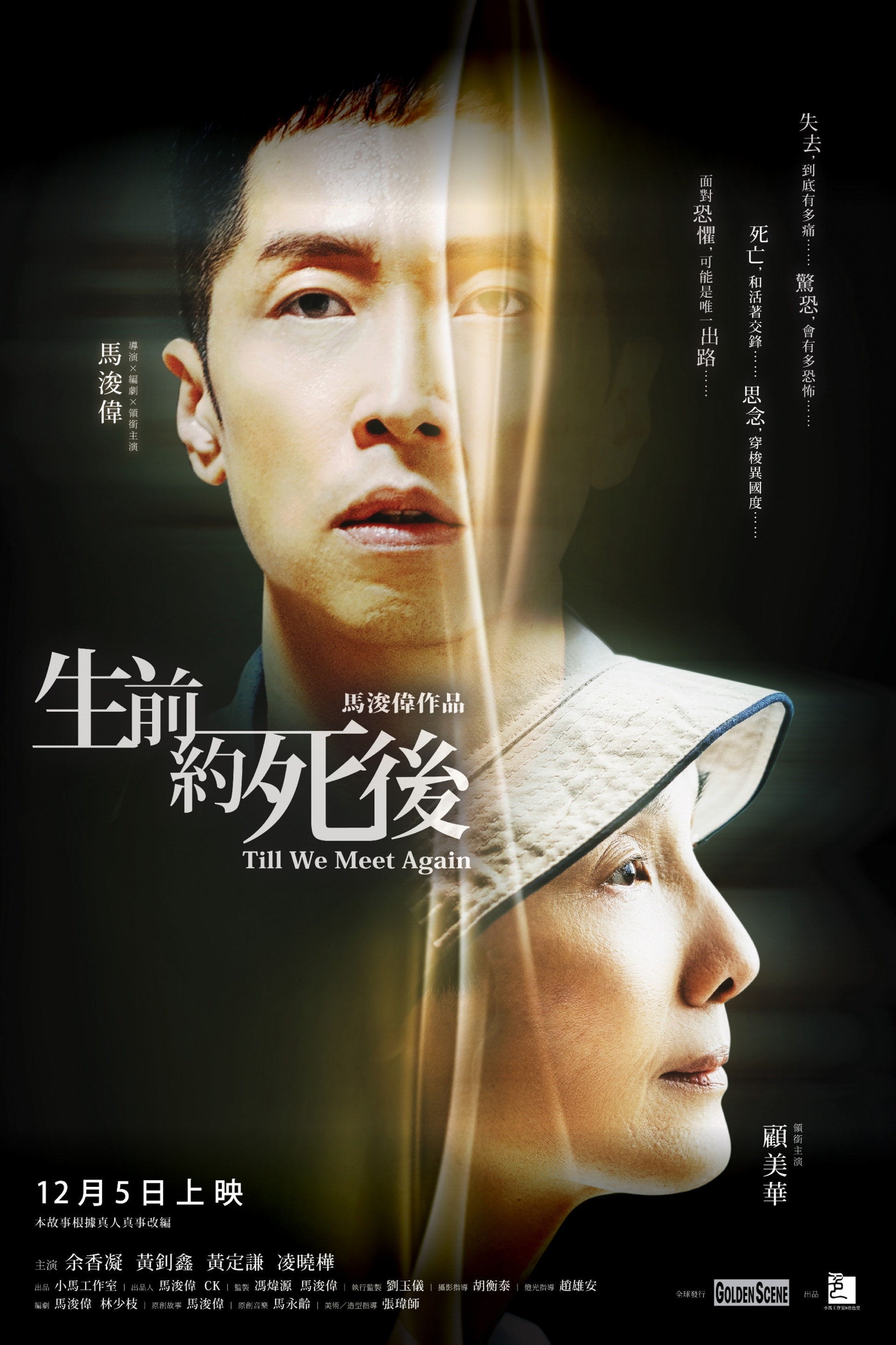
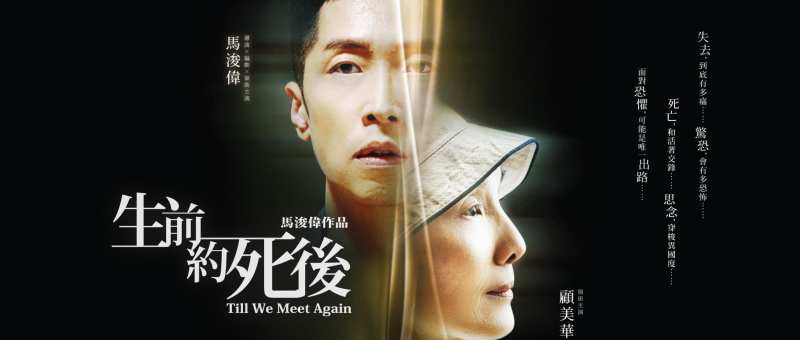
Till We Meet Again (生前约死后, Steven Ma, 2019)

“What if you let go of my hand and I get lost?” an over anxious little boy asks his mother. “Then you should stay where you are,” she tells him, “Mum will definitely come back for you.” It’s an instruction the now adult Wai (Steven Ma Chun-Wai) has perhaps taken too literally, struggling under the weight of grief and filial guilt while standing still waiting for his mother to find him again in the hope of earning her forgiveness for a sin he does not quite want to remember. Semi-autobiographical, Steven Ma’s Till We Meet (生前约死后) again is at once a dark psychodrama of man undone by loss but also a deeply touching evocation of an unbreakable mother son bond. 

Now a solitary salesman, 30-something Wai has only one wish – to reunite with his mother whom he hasn’t seen in over 10 years fearing that she bears some kind of grudge against him. We in fact see Mui (Josephine Koo Mei-Wah), his mother, angrily telling another woman, Lai (Bee Wong Chiu-Yam), that she refuses to see her son though the scene is not quite as it first seems. After abruptly quitting his job, Wai wanders out into the street and endures some kind of mental breakdown after which he visits his psychiatrist who reminds him that his mother is dead and has been for some time. 

Wai avows that he doesn’t like taking his medication because it makes him feel “sluggish” but increasingly finds his mental universe fracturing, shifting between sepia-tinted memories of his early childhood during which his mother first became ill and his life as a young man during which she suffered a relapse and later passed away. We begin to doubt Wai’s perception, uncertain if people and events he encounters are “real” or a product of his psychosis. His mother, ghost or merely spectre of memory, hovers on the sidelines apparently unwilling to see him though perhaps for his own good in hoping he will finally be able to move on and learn to be happy in acceptance of his loss. 

Tracey (Jennifer Yu Heung-Ying), his perhaps unrealistically invested psychiatrist, reminds Wai that he isn’t the only person who’s ever been bereaved or felt abandoned, left behind by those who have gone far away. She herself lost her mother young and was then abandoned by her father who left her in the care of an uncle who too abandoned her and ran off with all her father’s money. Another ghostly, perhaps imagined, conversation with Mui reveals that again Tracey may not have the full story and may never get it but unlike Wai may still have the chance to achieve a kind of closure with the traumatic past. He meanwhile carries the burden of his repressed guilt as it slowly works its way to the surface, cutting through his fragile psyche like a knife. 

While Mui’s conversations with third parties presumably taking place entirely within Wai’s mind may hint at a deeper psychological crisis they are essentially attempts to work out his guilt and shame, one-sided dialogues that eventually guide him back towards an acceptance of the truth he was intent on forgetting beginning with the traumatic fact of his mother’s death. Perhaps to some Wai’s maternal attachment may seem extreme, as the psychiatrist echoes in reminding him he’s not the only son to suffer such catastrophic loss, but it’s underpinned by a sense of filial guilt that lies at the heart of their bond in his worry that his own distress pushed Mui into pursuing a path she may otherwise have rejected on the grounds it would only cause her more pain for an additional few weeks of life. 

Trapped in his grief and guilt, Wai staggers through a nightmarish existence elegantly manifested in Ma’s abrupt tonal shifts as Wai finds himself staggering along a darkened corridor complete with faulty lighting and a single exit, while the sky itself seems to brighten to more romantic tones as he embraces a fantasy of a happier time drawing closer either to a kind of closure or the victory of his delusion whichever way you wish to read it. A painful journey through guilt and grieving, Ma’s unsparing drama provides few easy answers for living with loss but does perhaps allow its hero a degree of escape if only in unreality. 


Till We Meet Again streams in the UK until 15th February as part of Focus Hong Kong

Original trailer (English / Traditional Chinese subtitles)

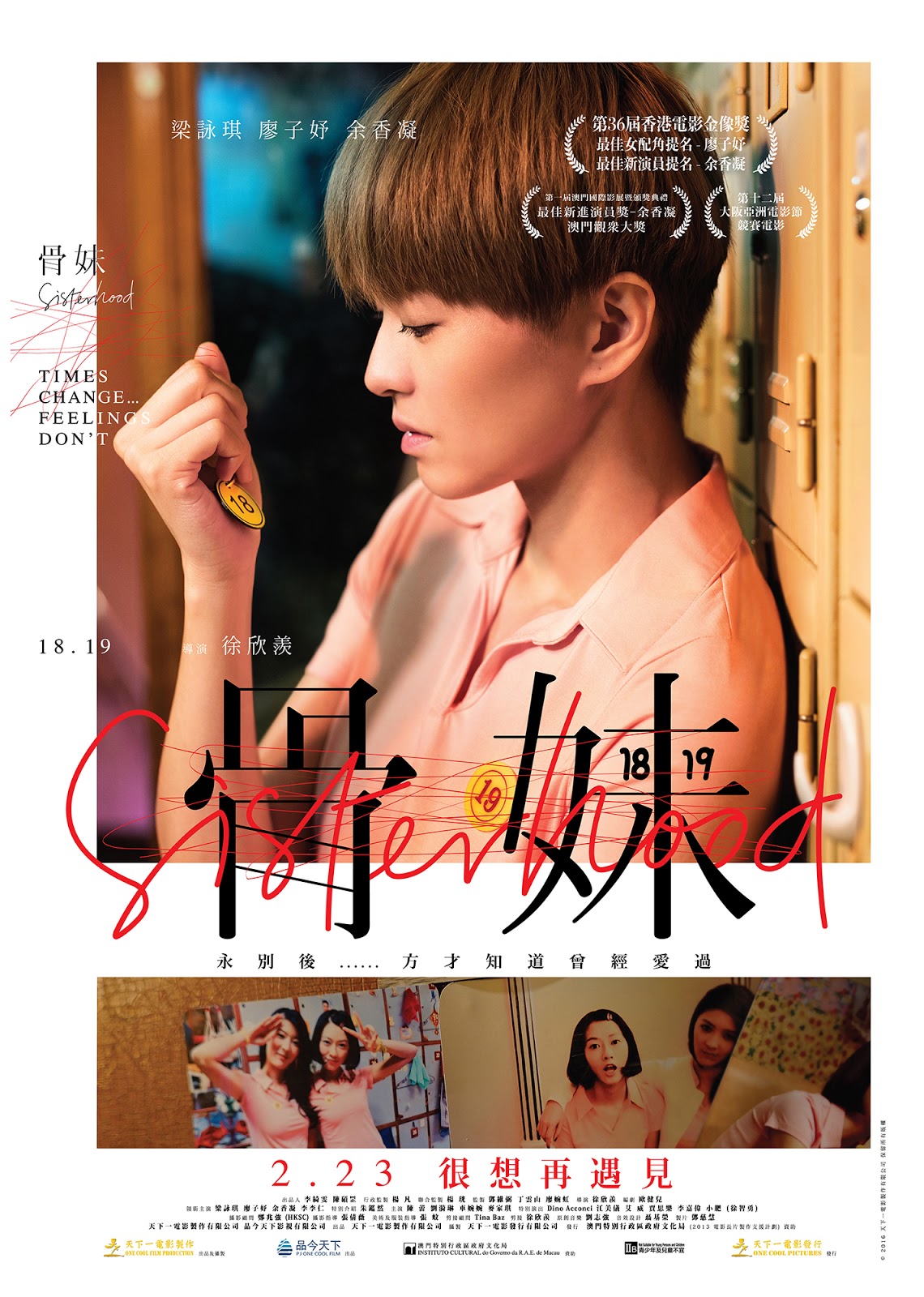
Sisterhood (骨妹, Tracy Choi, 2016)

Middle-aged regret and irreconcilable loss bring one lonely woman home from exile in Tracy Choi’s melancholy exploration of impossible love and illusionary futures, Sisterhood (骨妹, Gwat Mui). Moving from present day Taiwan to pre-handover Macao, Choi’s emotionally complex drama is both a chronicle of changing times and not as the collection of women at its centre attempt to protect themselves from a relentlessly patriarchal society through female solidarity only to see their fragile bonds disrupted by a political sea change. 

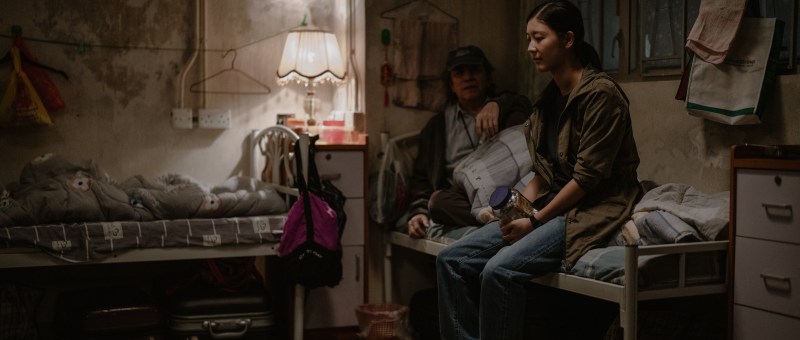
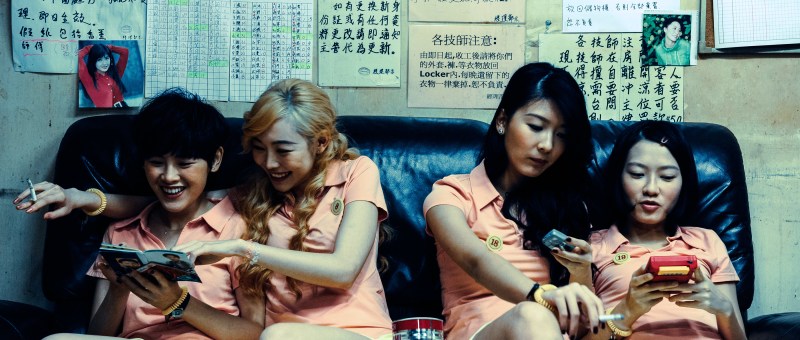
Choi opens in the present day with a now almost middle-aged Sei (Gigi Leung Wing-kei) visiting a doctor’s surgery after fracturing her wrist, apparently the result of an all too common drunken accident. Now living in Taiwan and running a small inn with her devoted husband who is perhaps overly supportive in his willingness to enable her drinking on the grounds that it keeps her “happy”, Sei appears to be quietly miserable. Spotting an ad in a newspaper telling her that an old friend, Ling (Jennifer Yu Heung-ying), with whom she’d long since lost touch has passed away jolts her out of her inertia, journeying back into the past as she finds herself travelling to a very different Macao to that of her youth in which the young Sei (Fish Liew) worked as a masseuse and was part of a quartet of close friends trying to survive the indignities of life on the margins through shared sisterhood. 

Sei’s “breakup” with Ling occurs on the very day that Macao returns to China, her friends seemingly thereafter scattering as she finds herself agreeing to a rebound marriage with an earnest Taiwanese customer who abruptly proposed on their very first date. We hear Ling tell her that she has found a man willing to marry her, but that her son Lok is an obstacle and so she plans to send him to the Mainland, cruelly ignoring the part that Sei has been playing in their lives as a co-parent even if, as we discover, the relationship between the two women goes largely undefined. Having moved in with her after losing her apartment, it is Sei who is there to support Ling when she becomes unexpectedly pregnant by a casual boyfriend/customer, eventually convincing her to have the baby by assuring her they’ll raise it together, but despite their pledges to stay together always the spectre of heteronormativity hangs over them constantly. Mocked in the street by a couple of old busybodies, Ling reacts with extreme sensitivity to the word “lesbian”, quickly moving her hand away from Sei’s as they push their son together in his pushchair lest conclusions be drawn from their closeness. Sei, by contrast, pays it no mind though this could easily be because she knows it isn’t “true”, at least in any concrete sense. The two women are evidently not lovers, if perhaps in love, but so impossible does their relationship seem to them that they lack the ability to recognise it let alone envisage its future. 

It is perhaps this degree of internalised shame that leads Ling to push Sei away, believing either that she will be “happier” in a heterosexual relationship, that she is in some way preventing her from living a more socially conventional life, or just afraid of her own feelings in assuming they are not returned and that she does not in any case deserve romantic happiness. The irony being that Sei’s married life seems to have been one of miserable emptiness and regret, stubbornly attempting to make the conventional work without quite knowing what the cause of her pain really is. On her return to post-handover Macao, she’s confronted with the failed futures of all her friends, one now a young grandmother owning her own business but forced to work herself to the bone to provide for her family, and the other near destitute and alone, floundering in the casino paradise of the upscale modern city. Meeting the now grown Lok she confides that she’s happy for him because lost as he is he has choices they never had in their young lives in which they did anything they could just to survive. 

The female solidarity which had enabled the four women to navigate a world in which they were encouraged to believe that their only option was to gain access to male economic power has thoroughly broken down in the post-handover society, and so Sei’s return is also a healing in helping to repair the broken bonds between her friends and restore the “sisterhood” which had been ruptured by the passing of an era. She can no longer repair her relationship with Ling and is perhaps left with a sense of longing and regret for an irretrievable past, but in coming to an understanding of her youth, her own feelings and desires, she gains the self-knowledge denied to her during her 15 years of exile, finally in a sense returning “home”. 


Sisterhood is available to stream in the UK 23rd October to 5th November via Barbican on Demand as part of this year’s Queer East Film Festival.

Original trailer (English subtitles)