
Sweet Rain: Accuracy of Death (Sweet Rain: 死神の精度, Masaya Kakehi, 2008)

“What do you think about death?” a charming grim reaper awkwardly asks, seemingly taking into account the answers given when deciding whether his “subject” should survive or if the untimely death they’re about to meet should be final. Adapted from the novel by Kotaro Isaka, Masaya Kakehi’s Sweet Rain: Accuracy of Death (Sweet Rain: 死神の精度, Sweet Rain: Shinigami no Seido) contemplates what it means to live well, how to go on living in the midst of pain and suffering, and finally how to know when it’s time to accept the finality of death. 

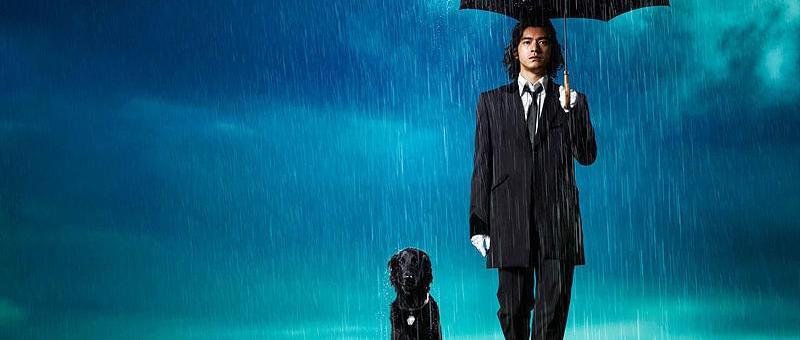
Chiba (Takeshi Kaneshiro) is a grim reaper and it’s his job to decide whether those involved in unexpected deaths, those not due to old age, illness, or suicide, should be allowed to live. According to his partner, who appears alternately as a black dog or raven, Chiba always chooses to “proceed” but something is obviously a little different with his latest job monitoring customer services representative Kazue (Manami Konishi) in the seven days leading up to her demise. Kazue is currently being harassed by a repeat caller who keeps calling the helpline asking for her personally and has recently graduated to pestering her about meeting up in person. It’s easy to see which way this could go, though luckily for her she ends up meeting Chiba who acts as a kind of protector when she’s hassled yet again by a different set of creeps in a park. As he gets to know her, Chiba learns of Kazue’s loneliness and sense of despair having endured more than her fair share of loss which has convinced her that everyone around her dies and she’s destined to be alone. But whether down to Chiba’s interference or otherwise, a surprising twist sees her offered a gig as a top idol star, leading Chiba to conclude that she has not yet fulfilled her purpose and should be granted more time. 

The expected romance does not quite take place, though Chiba is indeed becoming more interested in human life along with death while fascinated by music which he describes as humanity’s greatest invention. As we gradually gather, Chiba’s three jobs occur at lengthy temporal intervals, though the music store he frequents appears to be a constant and almost unchanged. Bar a hyper-realistic humanoid robot appearing in the final section in which Chiba is sent to assess an elderly hairdresser (Sumiko Fuji), these different temporal spaces are in another sense an extension of the present in which technology does not otherwise change substantially. Chiba picks up an iPod belonging to a petty yakuza on job two but continues to listen to CDs while the hairdresser seems to be doing her job the old-fashioned way and the kids that come to her store all collect Pokémon/Top Trumps-style paper cards. 

Yet Chiba is also a fish out of water, constantly confused by contemporary slang and with a strong tendency towards taking things literally. His discombobulation with language and custom is perhaps enhanced by the casting of Takeshi Kaneshiro who is half-Taiwanese and grew up in Taiwan speaking Mandarin as his first language, later working predominantly in Chinese-language cinema. In the audience perception he carries with him a quality of otherness that adds to the ethereality of his existence as a grim reaper. His appearance changes with each of his subjects, firstly appearing as a handsome young man, then as a grizzled yakuza complete with sunshades, and finally as a slacker student with each of his portals mirroring his destination from telephone booths to emergency exits and shopfront doors. As a grim reaper he has long unruly hair and wears a suit a loosened tie, but perhaps has little identity of his own and laments that he has never seen a blue sky because it is always raining whenever he is in the mortal world.  

The rain might well symbolise the pain and suffering around him as he lives among those who are about to die, but he himself feels that death is nothing special. As the old lady points out, that might be because it’s all he sees, he never visits people while they’re alive and knows nothing of life nor what it is to leave it. The old lady too experienced a lot of loss in her life and came to the conclusion that she was in some way cursed, severing her connection with those she truly loved believing she could only bring them harm and choosing to live all alone. “The sun in the sky’s nothing unusual but it’s important that it be there,” she adds, “death’s like that, maybe”. In any case she seems to have lived a long life that was happy enough even if it was “nothing special” and she can die with no regrets while Chiba too begins to learn something of the world’s ordinary beauty in his first glimpse of a sunny sky even if one overshadowed by the spectre of death. 


Trailer (no subtitles)

Still the Water (2つ目の窓, Naomi Kawase, 2014)

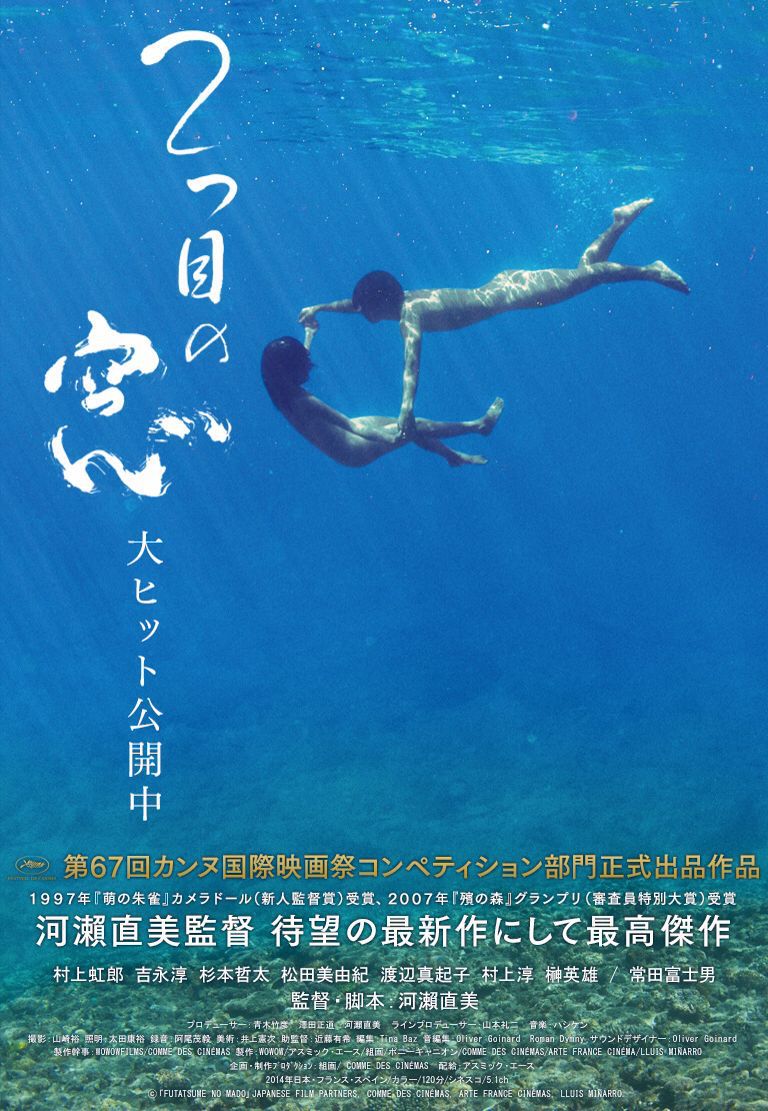
“Why is it that people are born and die?” asks the heroine of Naomi Kawase’s existential odyssey Still the Water (2つ目の窓, Futatsume no Mado). It’s a question with which the director has long been wrestling, though this time more directly as her adolescent protagonists ponder life’s big questions as they prepare to come of age. Moving away from the verdant forests of Nara Prefecture with which her work is most closely associated, Kawase shifts to the tropical beaches of Amami Oshima, a small island somewhere between Kyushu and Okinawa as two youngsters discover life and death on the shore while contemplating what lies beneath the sea. 

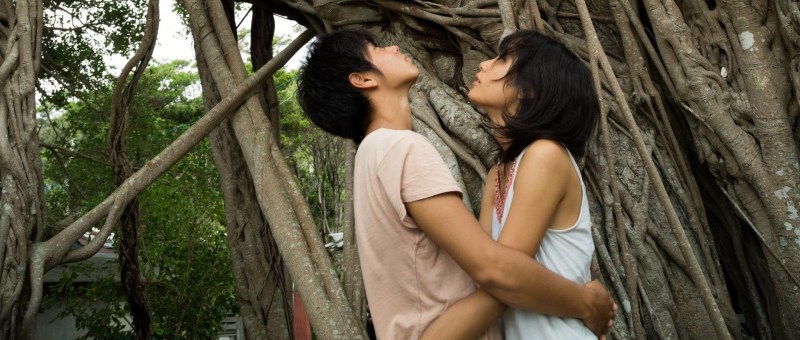
Opening with rolling waves and the graphic death of a goat, Kawase’s trademark visions of nature soon give way to night and the discovery of a tattooed man washed up on the shore made by moody teen Kaito (Nijiro Murakami) who leaves abruptly, walking past the confused figure of his tentative love interest Kyoko (Jun Yoshinaga) with whom he was supposed to meet. The next morning the townspeople are all aflutter with news of the body, confused by the sight seeing as there are few crimes in this community but admittedly many accidents. The cause of death however is an irrelevance, the import is in the body and what it represents. 

First and foremost, it turns the ocean into an active “crime” scene, placed off limits to the locals but Kyoko, a bold and precocious young woman, dives right in in her school uniform and all merely laughing as Kaito remains on the jetty asking her if she isn’t afraid. Raised in they city, Kaito finds the sea disquieting, apparently squeamish of its “stickiness”, describing it as something “alive” only for the bemused Kyoko to point out that she is a living thing too, exposing his essential fear of her as she kisses him and he freezes. On the brink of adulthood, Kaito is afraid to live, afraid of the “death” that change represents, and most of all afraid of the sea inside in the infinite confusion of human feeling. 

That confusion spills over into animosity towards his mother, Misaki (Makiko Watanabe), who, obviously at a different stage of life, exists in a world inaccessible to him. He’s at school during the day while she works evenings at a restaurant so they are rarely together and he’s quietly resentful on coming to the realisation that his mother is also a woman, berating her for daring to have a sex life and flying to Tokyo to attempt a man-to-man conversation with his absent father to figure out why their marriage failed. His dad, however, spins him some poetic lines about fate and romance which don’t really explain anything, paradoxically affirming that he feels more connected to Misaki now that they’re apart while admitting that age has shown him “fate” is less soaring emotion and more an expression of something which endures. 

Kyoko meanwhile is considering something much the same as she tries to come to terms with her shaman mother’s terminal illness, reassured by another priest that although her mother’s body will leave this world her warmth will survive. She and Kaito are treated to a lesson in nature red in tooth and claw as an old man slits the throat of a goat while the pair of them watch something die. “How long will it take?” Kaito asks in irritation, while Kyoko looks on intently until finally exclaiming that “the spirit has left”. Later she is forced to watch as her mother dies but even on her deathbed is painfully full of life, listening to plaintive traditional folksongs and moving her arms in motion with the music as the others dance. 

The old man, Kame, tells the youngsters that as young people they should live life to the full without regret, do what they want to do, say what they want to say, cry when they want to cry, and leave it to the old folks to pick up the pieces. But he also admonishes them for not yet understanding what lies in the sea. It’s Toru, Kyoko’s equally new age father, who eventually talks Kaito out of his fear which is in reality a fear of life, explaining that the ocean is great and terrible swallowing many things but that when he surfs it’s akin to becoming one with that energy and achieving finally a moment of complete stillness. Kaito needs to learn to “still the water”, to bear the “stickiness” of being alive to enjoy its transient rewards while the far more active Kyoko finds solace in her mother’s words that they are each part of a great chain of womanhood which is in itself endless, something Kame also hints at in mistaking the figure of Kyoko walking on the sand for that of her long departed great grandmother. 

Nature eventually takes its course and in the most beautiful of ways as the young lovers learn to swim in the sea in spite of whatever it is that might be lurking under the surface. Death and life, joy and fear and misery, the sea holds all of these and more but they roll in and out like waves hitting the shore and the key it seems is learning to find the stillness amid the chaos in which there lies its own kind of eternity.


Trailer (English subtitles)
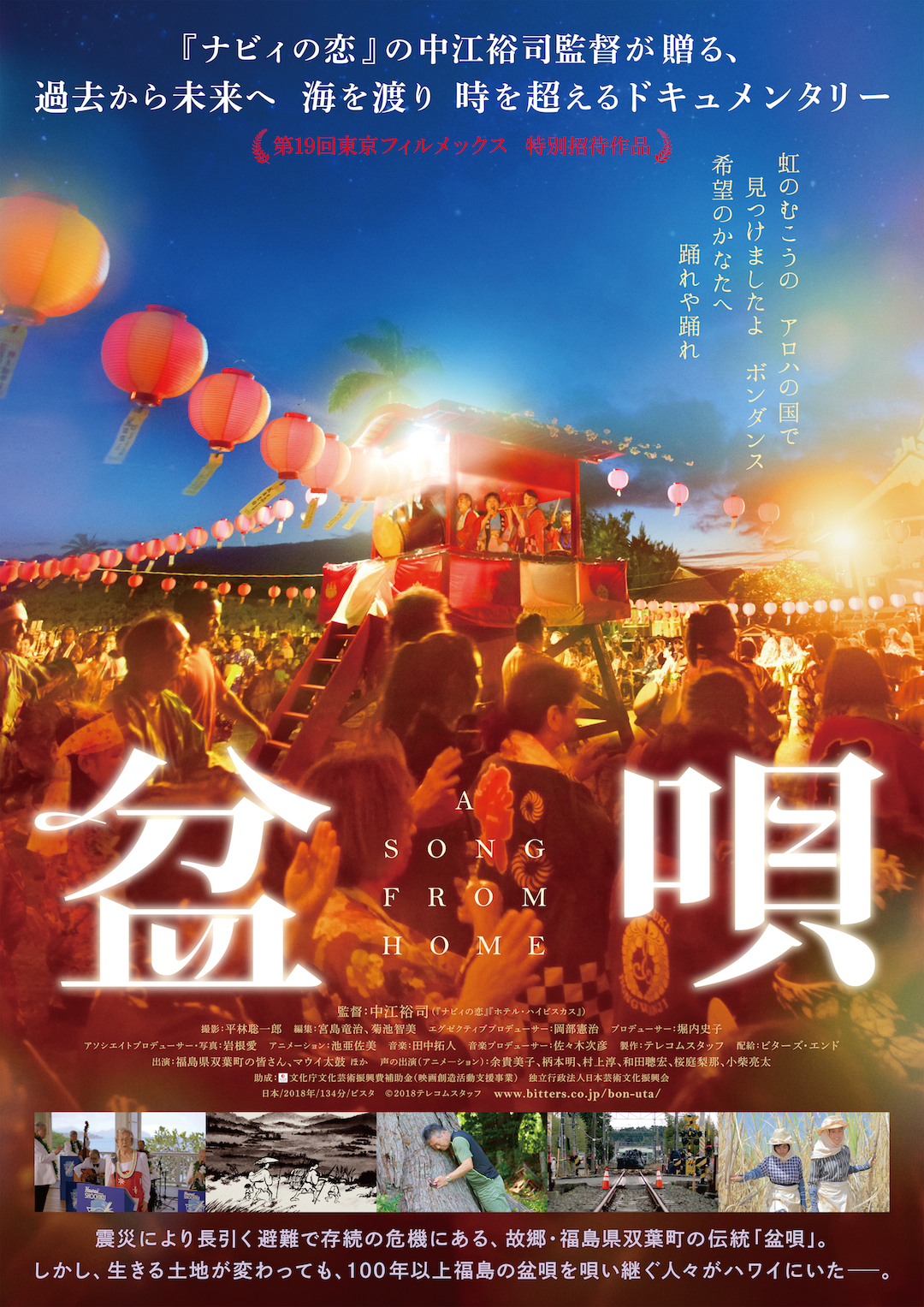
BON-UTA, A Song from Home (盆唄, Yuji Nakae, 2019)

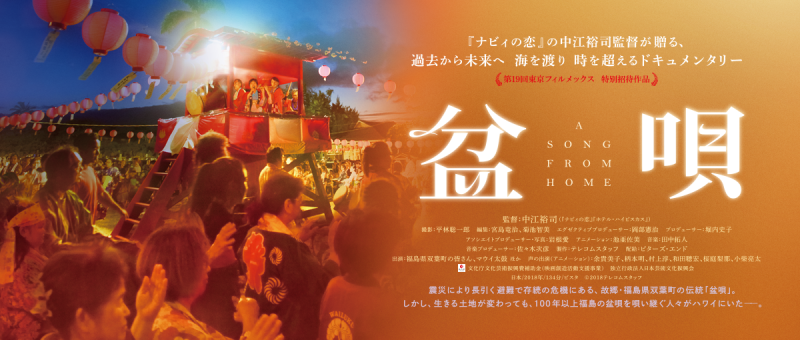
Exiled from their homes, the residents of Futaba lost more than just their material possessions when the area was declared uninhabitable following the Fukushima nuclear disaster. With former residents scattered all over the country never knowing when or if they will be able to return, a community has been ruptured and its history is in danger of dying out. Yuji Nakae’s poignant documentary Bon-Uta (盆唄) explores this sense of loss through the prism of the Bon dance while meditating on the notion of exile in comparing the experiences of migrants and Hawaii and their descendants. 

A photographer, Ai, has been photographing Bon dances in Japan and Hawaii and was struck by the Hawaiian response to the 2011 earthquake, seeing as many of the Japanese-Americans living in Hawaii traced their ancestry back to the Fukushima area. Hisakatsu and Haruo, childhood friends from Futaba, travel to Hawaii and observe the Bon dance, reflecting that it is different from that in Japan but perhaps in some ways better. Seeing how they have incorporated many different styles of Bon dance gives them the idea that they could save the Futaba dance by teaching it to the Hawaiian dancers, placing it in a kind of depository so that in 50 or a 100 years if Futaba becomes habitable again, their descendants could relearn it. But what they quickly discover is that it’s difficult to teach something that each of them has spent their whole lives learning in a matter of days, while the fact is that the community itself is central to the dance which loses its meaning when performed by those who’ve never been there. 

Nakae begins to meditate on insiders and outsiders as an older woman returns to her family home in the exclusion zone and uncovers papers from the 19th century which recount the discrimination her own family faced on being encouraged to move to the village following a massive famine which had reduced its population by two thirds. Now outsiders in the areas in which they have resettled, the former Futaba residents lament that they can no longer practise their art because their homes are in much more urbanised locations where neighbours are in close proximity and they fear disturbing them with the noise. The film equates their yearning for their lost community to that felt by those who emigrated to Hawaii in the 19th century hoping to escape rural poverty but often found themselves trapped, unable to return because of the low pay and exploitative conditions of the island’s sugar plantations. 

The Hawaiian migrants sang songs of exile, of how they missed their homes and families and how hopeless felt in the false promises that had been made to them of better lives abroad. Even in this, their culture survived while another, now elderly, woman recounts singing for a Japanese orchestra during the war when such songs were technically forbidden as other young men keen to claim their identity as Japanese-Americans enlisted in the military. The former Futaba residents begin to see new hope that they too could find a way to preserve a sense of their hometown even if they can’t return to it, deciding to organise a Bon dance of their own in another town bringing together the unique dances of each district while honouring the spirits of those who have passed away. 

Hisakatsu writes a new Bon song of his own from the point of view of a cherry tree in Futaba to ward off the “ogres” which stand in for radiation as the tree looks forward to blossoming once again, hoping the people will eventually return. Featuring a lengthy animated sequence recalling the experiences of the 19th migrants to Futaba who found themselves rejected as outsiders while reflecting on the contemporary exile of the former residents, the film eventually discovers a note of positivity and hope that even now scattered and unable to return to their homes the community can survive through the practice of its culture in passing on the unique local Bon dance to successive generations just as the migrants in Hawaii passed theirs on to their children in the hope they too might one day be able to return home.


Trailer (English subtitles)

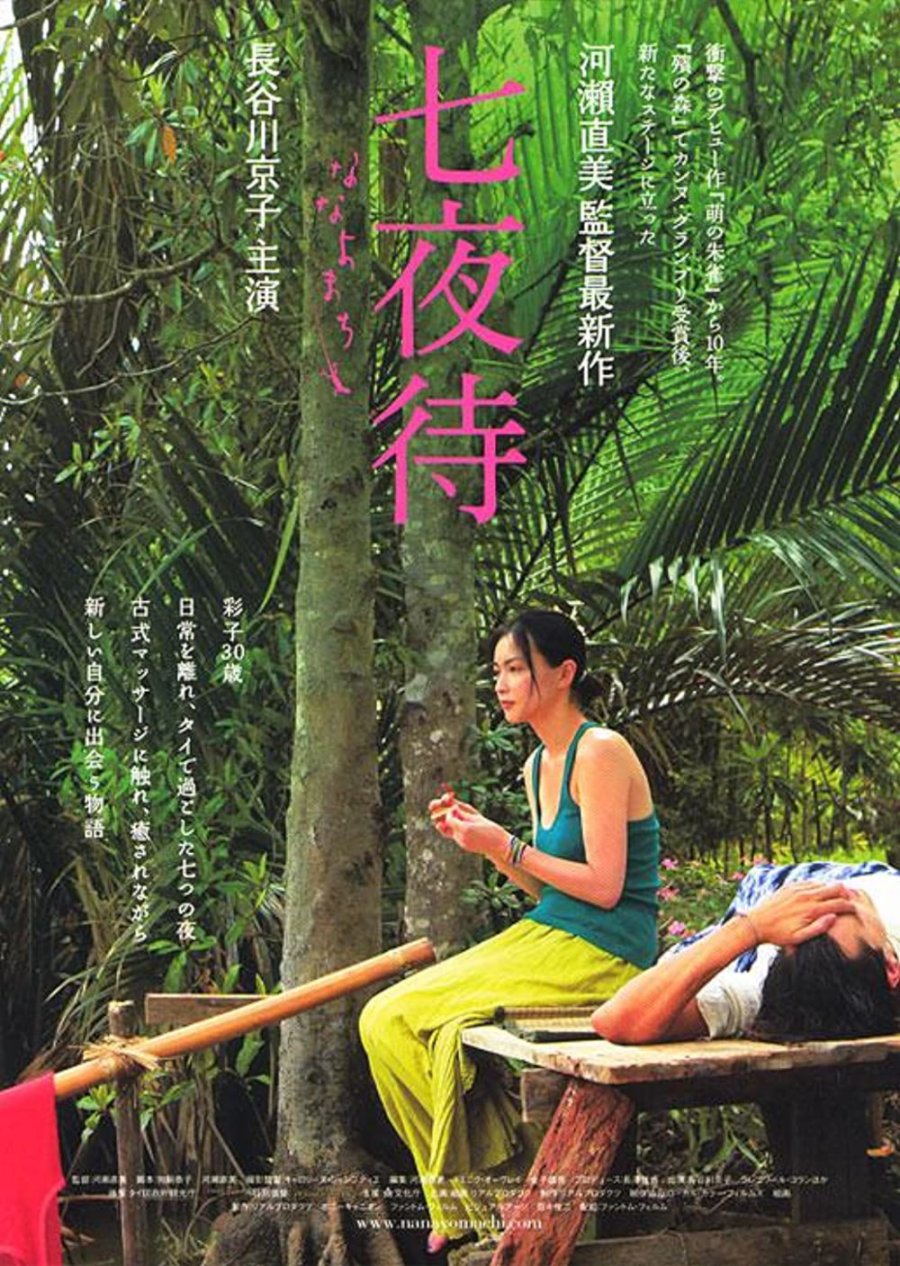
Nanayo (七夜待, Naomi Kawase, 2008)

Naomi Kawase had provoked a minor upset with her unexpected Grand Prix win for 2007’s The Mourning Forest and has since earned a reputation as a festival darling. Her followup film, 2008’s Nanayo (七夜待, Nanayomachi), however, failed to make much of an impact in the international festival scene and seems to have been more or less forgotten, considered among the most minor of Kawase’s disparate filmography. In some ways it picks up where The Mourning Forest left off as a young woman looks for meaning in the primitive beauty of nature, but it’s also a major departure in being the first of her films made outside of Japan and dealing with far broader themes from her familiar focus on familial disconnection to oblique references to the traumatic legacies of colonialism and the inefficiency of language as a tool for communication. 

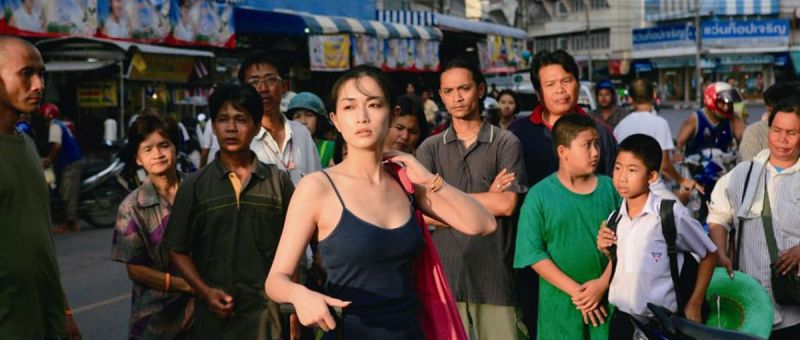
The heroine, Saiko (Kyoko Hasegawa), arrives in Thailand it seems without much of a plan or a clear idea of where she’s going. Largely unable to communicate in any language other than Japanese, she wanders around lost looking for her hotel until someone is able to explain to her that she’s in completely the wrong place, and as the hotel is too far to walk she’d best take a taxi. The taxi driver, however, can’t understand her either but for some reason agrees to take her. Saiko falls asleep and wakes up sometime later to realise he’s driven her out to the middle of nowhere, belligerently insisting she get out of the car. Understandably fearing the worst, she manages to dodge past him and run off into the forest leaving her bags behind. Eventually she encounters a random Frenchman, whom she can’t understand either, who takes her back to the small guest house he’s staying at to learn Thai massage. Later the taxi driver, Marwin (Netsai Todoroki), turns up too and in a weird coincidence it turns out that he’s the brother of the woman running the massage school, Amari (Kittipoj Mankang). 

Despite having no common language, the four of them along with Amari’s half-Japanese son Toi (which in Japanese anyway means “far”) become an odd kind of family, relying on universal human gestures in an effort to communicate. To this extent, it is perhaps a shame that the film is subtitled in that the impossibility of true understanding through verbal communication seems to be a key theme. At one point, Frenchman Greg (Grégoire Colin) opens up to Saiko about his reasons for coming to Thailand, that he’d been in denial of his homosexuality and is finally beginning to accept himself. Perhaps he tells her precisely because she will not understand, but it’s an immense irony that her first question is to ask if the pretty bracelet on his wrist was a gift from a girlfriend. In their shared mix of broken English, she thinks he’s saying “lovely” when he’s really just trying to say that it looks like rain. 

Meanwhile, Amari has some Japanese, presumably learnt from Toi’s absent father of whom she gives no further details. Marwin later implies that she met him through some kind of sex work, and we later see him fall out with his daughter over something much the same in accusing her of being in a compensated relationship with a foreigner while she fires back that it’s none of his business seeing as he failed as a father in proving unable to support her financially. When Saiko makes the perhaps unwise decision to get in Marwin’s cab, it’s in the process of being vacated by a drunk and extremely rude Englishman who yells some vaguely racist abuse at him and then walks off with a Thai beauty. The prevalence of sex work appears as an extension of contemporary colonialism, something of which both Greg and Saiko may be accidentally guilty in coming to Thailand to look for something as nebulous as spiritual awakening, beckoned in by orientalist notions of Eastern mysticism. Amari, while never resenting Saiko, perhaps sees in her an echo of her absent lover, repeatedly asking her son if he’d want to meet his father or to visit Japan. The climactic fight which emerges seemingly out of nowhere is fought over Amari’s decision to send Toi to a temple to train as a monk, affirming that Saiko wouldn’t understand because her country is “beautiful and rich”, explaining that she wants her son to grow up rich spiritually not to be materialistic, though Saiko herself describes Japan only as “peaceful” lacking the warmth that she feels in the Thai people.  

Saiko of course cannot understand because she has absolutely no idea what anyone is saying, realising only that Toi has gone missing and everyone is so intent on arguing in several languages that no one’s bothering to look for him. She doesn’t understand why everyone’s shouting at her when she’s only a bystander, perhaps another comment on the legacy of colonialism, while to Marwin it seems obvious that the boy’s run off because he doesn’t want to be a monk and is sad thinking his mum doesn’t want him anymore. When Saiko finds him, it seems that he’s particularly preoccupied with whether or not his father loved his mother, perhaps beginning to understand the complexities of his birth and his dual nationalities. 

Once again adopting an elliptical structure, Kawase builds slowly towards the scenes which opened the film in which Toi and Marwin prepare to enter the temple as monks, the moment attaining a kind of spiritual catharsis which seems at odds with the conflicts of the preceding scenes which asked if Amari was right to separate from her son and force him to become a monk against his will. The temple scene is followed by a ritual dance similar to that in Shara in which Saiko seems to cast off her gloominess in spiritual release, building on earlier scenes in which she idly fantasised about intimate massages from a Japanese monk (Jun Murakami) apparently achieving an entirely different kind of enlightenment. Touch, Kawase seems to say, is the only true communication, leaving it to former soldier Marwin to expound on how we’re all different and speak different languages but we should love each other rather than kill in war. There is danger everywhere he explains, though Kawase’s gentle pan to the tranquility of life on the wide river might seem to contradict him.  


Trailer (no subtitles)

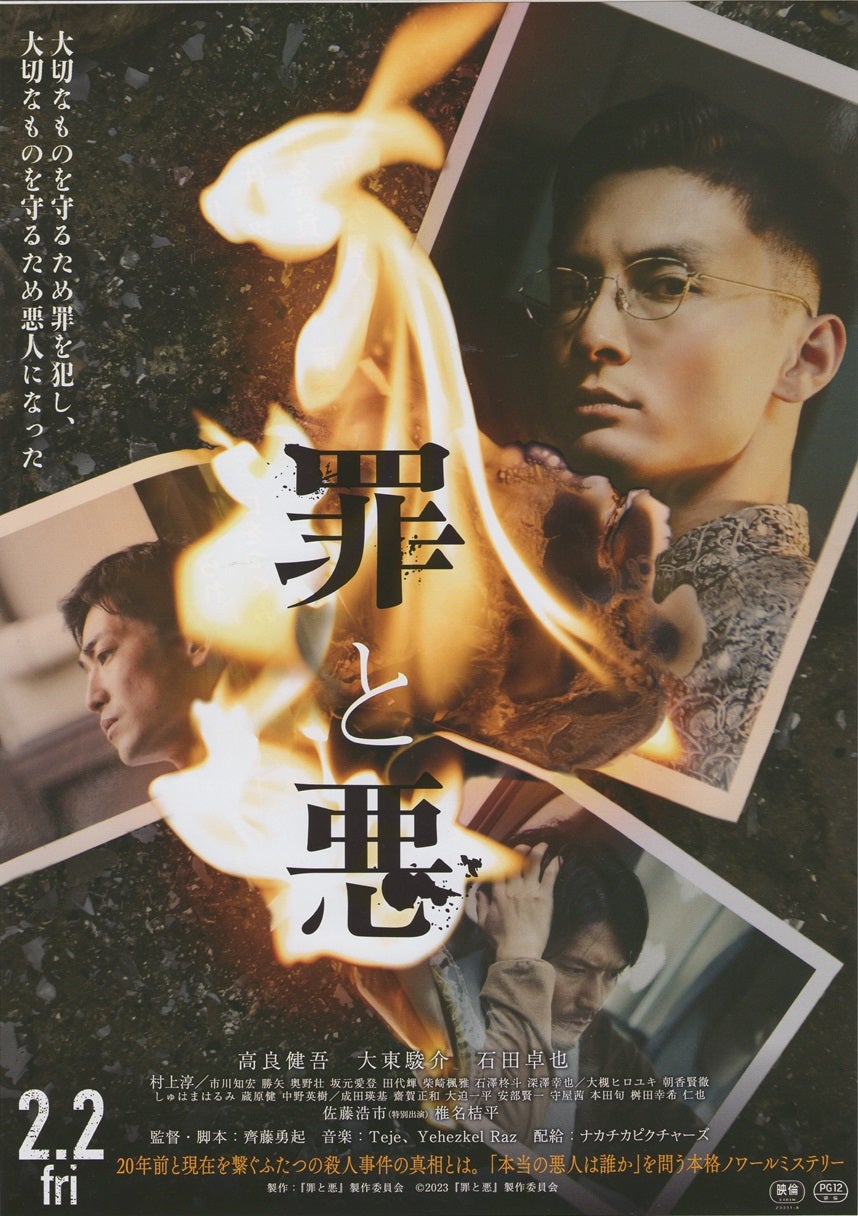
Sin and Evil (罪と悪, Yuki Saito, 2024)

A man not quite a yakuza and perhaps even what might be termed an ethical gangster tells one of his underlings that it isn’t a sin unless you believe it it is, which might in a sense be true in same way as Socrates says that no one does wrong willingly. Yet the heroes of Sin and Evil (罪と悪, Tsumi to Aku), Yuki Saito’s small-town crime drama, are marked by their guilt while trying to come to terms with traumatic events of 20 years earlier and their mutual decision to cover them up.

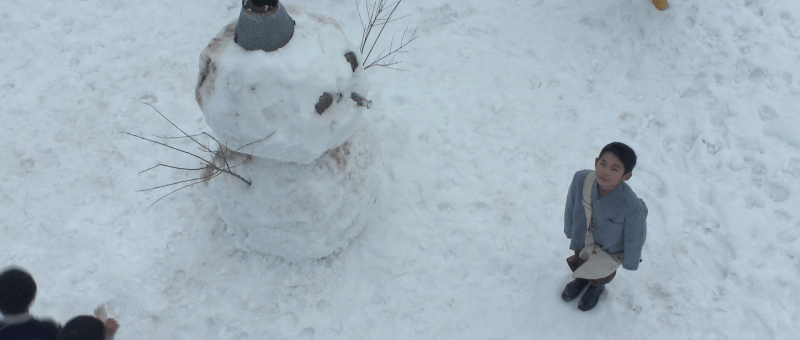
Echoing similarly themed films such as Stand By Me, Saito opens with idyllic scenes of the boys riding their bikes with the only hint of darkness offered by a disturbing conversation about an elderly man who is rumoured to be abusing children. However, it seems that Haru is living in a difficult domestic situation following the death of his sister with an abusive father and apparently neglectful mother. His best friend, Akira, is the son of a local policeman while the boys are also friends with a pair of twins, Saku and Naoya, whose family operate a tomato farm. Rounding up the group is Masaki who also seems to be living in difficult circumstances though his backstory is never fully fleshed out as he’s eventually found dead in a local river. Saku jumps to the conclusion that the old man must have abused Masaki, who was known to be friendly with him, and then killed him to keep him quiet. He drags Haru and Akira to the old man’s shack where he attacks and eventually kills him with a shovel. Haru decides to take the blame and torches the place, telling the other two boys to flee the scene.

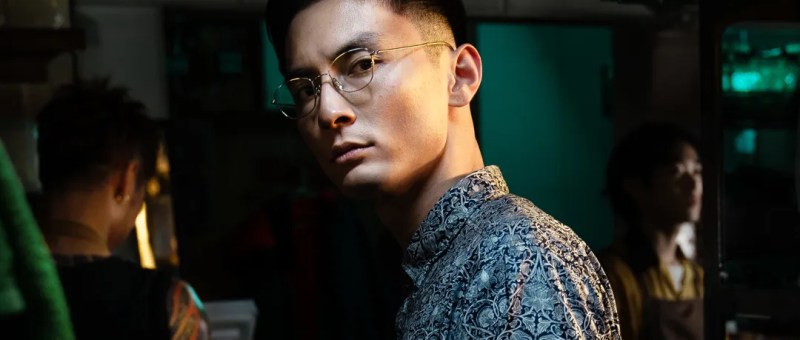
20 years later, it’s clear that each of them are still marked by what happened that day though Haru (Kengo Kora) appears to have built a good life for himself after serving time in juvenile detention even if the construction company he runs is friendly with local yakuza and gets its contracts through small-town corruption. He also operates a cafe where he employs delinquent boys while secretly using them as thieves but also in a more genuine sense looking after them and concerned for their welfare. His machinations are seen to be key in keeping order, working in tandem with police Inspector Sato (Kippei Shiina) who explains to a more idealistic Akira (Shunsuke Daito) how things are done around here which is essentially keeping ordinary people safe by managing crime rather than punishing or preventing it. The balance is only disrupted by some of Haru’s boys who stupidly steal far too much money from the local yakuza. Haru attempts to protect the young man concerned, but his body soon ends up in the river in exactly the same place as Masaki raising a series of questions about the nature of the earlier crime. 

What the film is trying to do is paint the world in shades of grey while looking for the parts where it’s darkest. It seems it’s not in doubt that the old man abused local children, though Haru and Akira now doubt he killed Masaki raising further questions about their killing of him. As the yakuza underling had said, it’s not a sin unless you think it is and Haru feels that he deserved to die for what he did to other kids so doesn’t feel any remorse for his actions even if he didn’t kill Masaki. But for Akira, the trauma lingers in other ways and he’s disturbed on learning his father may have been involved in covering up their crime and at least complicit in police corruption essentially teaching Sato how things are done in small-town policing. The conclusion Haru comes to is that they are all victims of the town itself, unable to break free of its provincial mores and petty prejudices.

Those would largely be a lingering homophobia and deep shame stemming from suffering sexual abuse as a child. As usual with these kinds of mysteries, the solution lies in the desire to prevent the truth being exposed though in this case the resolution is not entirely convincing when using one killing to cover up another couldn’t help but expose the truth anyway even when attempting to pin it on someone else who can no longer defend themselves. It also sidesteps the themes of small-town corruption and the dark heart of suburbia even as Haru points out that someone should have stepped in to support both himself and Masaki when they could see their families were struggling rather than just closing their curtains and pretending not to notice. The disruption of the friendship, which ought to be the heart of the drama, therefore lacks poignancy muddied by the various overlapping plot lines from the present day yakuza drama to the lost paradise that Haru longs to reclaim despite the otherwise apparently happy life he seems to be living now. Sin, the film seems to say, is in the eye of the beholder along with justice and retribution, and evil maybe just the same or merely invisible to those who choose not to see it.


Sin and Evil screened as part of this year’s Camera Japan.


International trailer (English subtitles)

Every Trick In The Book (鳩の撃退法, Hideta Takahata, 2021)

A down on his luck writer finds himself at the centre of a mystery only how much is truth and how much “fiction”? Based on the novel by Shogo Sato, Hideta Takahata’s Every Trick in the Book (鳩の撃退法, Hato no gekitai-ho) ponders the possibilities of literature as the hero seems to create a fictional world around him in which it is largely unclear whether he is solving a real world mystery or simply imagining one based on his impressions of the strange characters he encounters through the course of his everyday life.

That everyday life is however eventful just in itself. Tsuda (Tatsuya Fujiwara) once won a prestigious literary prize and was destined to become a popular author but hasn’t written anything of note for some time and in fact now largely works as a driver ferrying sex workers around on behalf of his shady boss. The mystery begins when he approaches a man, a rare solo reader in an overnight cafe, and promises to lend him a copy of Peter and Wendy by JM Barrie only to later discover that the man went missing along with his wife and the daughter he had explained was fathered by another man. 

Like many of his subsequent encounters it isn’t entirely clear if this meeting really took place or at least as Tsuda said it did or is only part of the novel he is beginning to write. The man, Hideyoshi (Shunsuke Kazama), asks him if it’s a novelist’s habit to begin imagining backstories for everyone he sets eyes on and there may well be some of that even as Tsuda is fond of claiming that amazing things happen around us every day to which we are mostly oblivious. Still, Tsuda probably didn’t expect to be pulled into the orbit of local gangster Kurata (Etsushi Toyokawa) after accidentally passing on counterfeit currency he found by chance. It’s true that most of what’s happening to him is the result of a series of bizarre coincidences or cosmic confluence which has accidentally united this collection of people in an unintended mystery which Tsuda intends to solve in either literal or literary terms. 

“It’s all a novelist can do” he later claims in trying to write a better ending for “characters” he has come to like than the one he assumes they “actually” met. But then his editor Nahomi (Tao Tsuchiya) chief worry is that, like his previous novel, Tsuda’s story will contain too much of the “literal” truth which could cause his publishers some legal problems. Part of the reason Tsuda left the industry is apparently because his last book was inspired by a real life affair which was then considered somewhat hurtful and defamatory. For that reason it comes as quite a blow to Nahomi as she begins to investigate and discovers that much of Tsuda’s story lines up with “real” places and events, but then again as he says if you can draw connections between known facts then you begin to see a “hidden” truth which may in its own way be merely his invention. 

The film’s Japanese title translates more literally as something like “how to fend off a dove” which does indeed have its share of irony especially considering the meaning the dove symbolism turns out to have in the film but perhaps also hints at the essential absurdity of trying to fight back against something that is otherwise harmless and in fact represents peace. Tsuda may be onto something and nothing, embracing the bizarre serendipity of a writer’s life while trying to recover his creative mojo but embellishing it with more danger and strangeness than it actually has to offer. Then again as his editor discovers, there really is an incinerator it seems anyone can just walk up and use to burn whatever they want including dead bodies, while people in general are full of duplicities all of which keeps the “fake” money circulating as people use it to try to buy things that can’t really be bought. Hideyoshi calls them “miracles”, embracing the strange serendipity of his life as an orphan longing for a family to call his own and unexpectedly finding one which is “real” in someways and “fiction” and in others. Then again, if you believe in something does it really matter if it’s “real” or not? Hideyoshi and Tsuda might say it doesn’t, the publishing company’s lawyers might feel differently, but it seems there really are amazing things going on around us every day if only you stop to look. 


Original trailer (English subtitles)
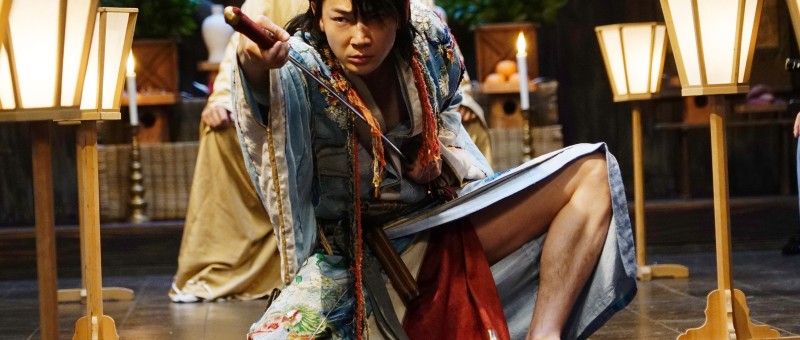
Heaven’s Story (ヘヴンズ ストーリー, Takahisa Zeze, 2010)

“When your family’s murdered, aren’t you entitled to happiness?” remarks a bereaved husband trying to move on from tragedy to a similarly bereaved little girl who is determined not to. “I don’t think so”, she coldly replies, dragging him back into a dark world of hate and vengeance. At that time perhaps best known for his career in pink film, Takahisa Zeze’s 4.5-hour epic Heaven’s Story (ヘヴンズ ストーリー) weaves a tale of interconnected hurts born of violence and its legacy, parental betrayals, and irreconcilable loss. The only victory is survival, but it’s a prize none of us will win. The best we can hope for is continuity, and perhaps leaving something more behind us than fear or rage. 

Our heroine, Sato (Moeki Tsuruoka), is orphaned when her parents and older sister are brutally murdered by a disgruntled employee exacting some kind of petty revenge on her father. The killer is later found dead in a hotel room, presumed to have taken his own life. The tragedy is however just one of many. Passing by a TV screen, Sato catches a report detailing the death of her family members and their murderer which is immediately followed by a press conference with a very angry young man whose wife and infant daughter were killed in random attack by a passing drifter who has been given an indeterminate sentence on account of the fact that he was underage and suffered greatly during his childhood. Tomoki (Tomoharu Hasegawa), the bereaved husband and father, vows revenge angrily insisting he won’t ask for the death penalty because he wants the killer, Mitsuo Aikawa (Shugo Oshinari), released as soon as possible so he can kill him with his own hands. Only eight years old, Sato identifies with his rage. The man she wants to kill is already dead and she’s been robbed of the chance of closure through vengeance so vicariously latches on to Tomoki’s quest for retribution, making him something of a personal hero. 

Tomoki’s words were offered in the raw pain of his loss. His reaction is understandable, but as he later says, people started to lose sympathy for him once he called for the killer’s death. As time moves on, he perhaps starts heal, marrying again and having another little girl, starting a new life in a new place which of course does not overwrite his past loss but is a new start. That’s something Sato can’t allow or understand. She feels irrationally betrayed by Tomoki’s decision to leave his loss in the past and move on to a new life. Rocking up at his tranquil island home, she accuses him of forgetting the dead, guilting him into thinking he’s betrayed the memories of his wife and child by not knowing that Mitsuo has been released from prison let alone not having taken his revenge. 

Mitsuo, however, has also attempted to move on. It can’t be denied that he committed a heinous, unforgivable crime, but he is also, in a sense, a victim himself. His mother took her own life when he was 13 because his father was abusive and he carries that abuse with him, which of course does not excuse his crime but might help to explain it. Kyoko (’70s folk singer Hako Yamasaki), a lonely doll maker, is taken by his enigmatic statement that he wants to be remembered by the unborn and begins writing to him in prison, eventually agreeing to adopt him as her son though she is already suffering with the early stages Alzheimer’s. Later in a tense conversation with Tomoki, Mitsuo describes Kyoko as a woman of great warmth and if it were not for her he might perhaps have killed again. Her positive maternal presence gives Mitsuo the sense of anchoring through parental love that he had never had, restoring him towards a more normal kind of existence as he diligently cares for her while her condition continues to deteriorate. 

Time swindles them all. Kyoko desperately tries to remember something she’s forgotten, while Sato is locked into a pleasant childhood memory of walking with her parents to see a newly completed housing estate which seems to be the very embodiment of a post-war utopia, a large green space surrounded by neatly arranged, identical blocks with well appointed family homes piled one on top of the other. The conclusion takes us somewhere similar, only inverted, in the empty shell of a disused danchi, once a home to a bustling mining community now abandoned by the modern era. In the monologue which opens the film, Sato recounts a folktale about a monster who lived in the hills and attacked people, but did so only accidentally in his loneliness and longing to be a part of the world around him, but the people were afraid and so they rejected him and his monstrousness intensified. Tomoki destroys his second family in an internecine need to avenge the first driven by Sato’s demonic need for vicarious retribution, while Mitsuo’s attempt to move into the light is frustrated by an inability to escape his past. All the fear, and hate, and suffering, breeds only more of the same. “Heaven’s Story” may be in many ways the story of violence, but violence is not its resolution. Sato makes a kind of peace with the past, but will also carry that legacy of pain back into the complicated urban world as far from the heavenly vistas of tranquility which exist now only in her memory as it’s possible to be. 


Original trailer (no subtitles)

Punk Samurai (パンク侍、斬られて候, Gakuryu Ishii, 2018)

Gakuryu Ishii began his career under the name Sogo as a representative of the youth voice, in fact still a college student when invited by Nikkatsu to film a feature-length version of his Panic High School short though they paradoxically saddled him with the more experienced Yukihiro Sawada as a co-director in case his voice turned out to be more youthful than anticipated. In any case, he went on to make his name with a series of anarchic punk films such as Burst City and The Crazy Family before retreating from filmmaking in the early 2000s. When he returned in 2012 with Isn’t Anyone Alive?, he did so under a new name, Gakuryu, as if signalling a new phase in his artistic career that seemed to have left punk behind.

Like 2015’s That’s it, Punk Samurai is billed as a kind of return to Ishii’s anarchic roots while also harking back to surreal samurai movie Gojoe. Even so, Punk Samurai isn’t really a punk samurai film even in its irreverence towards the genre so much as an ironic jidaigeki comedy which eventually positions its hero’s nihilistic outsider status as his saving grace in a “fake” world where nothing has true meaning. “This world might be fake, but I’m alive” he insists, claiming not to ask anything of it, simply stating that he is “different” because he belongs to no group and has been a lonely a wanderer.

Nevertheless, Kake (Go Ayano) had wanted to join a clan so desperately that he spun a tale of dangerous cult rebellion to a naive retainer of a useless lord whose inability to rule has ruined his fiefdom. After killing a pilgrim he believed to be a member of the Bellyshaker Party, Kake is taken in by the Kuroae where he is enlisted by duplicitous councillor Naito (Etsushi Toyokawa) who seizes on the idea of the Bellyshaker threat as a means of undermining his rival, Ohura (Jun Kunimura), to seize the reins from overly serious lord Kuroae (Masahiro Higashide). 

The Bellyshaker cult believes that this “fake” world exists within a giant tapeworm and seeks escape though being excreted by it into the “real” world as a means of achieving some kind of spiritual enlightenment. Their furious belly shaking is deliberately meaningless in an effort to antagonise he tapeworm to such a degree that it gives it spasms to “spew” the believer into a more authentic existence. Not even the cult leader believed this to be true, and as Kake later suggests the appeal lies in a kind of Manichaeanism that allows the believer to believe nothing is their fault it’s just that this “fake” world is wrong. In the end, the conflict comes down to a battle between “monkeys and idiots”, while even an enlightened ape (Masatoshi Nagase) finds his revolution failing and is left with no option other than to retreat to the Heavens. 

The world is indeed in disarray, Kuroae is constantly plagued by his own poor decision making, or failure to make decisions at all, while there are constant allusions to the decline of his clan from persistent famine to military weakness after having made most of his foot soldiers redundant as part of an austerity programme. Many of the recruits to the “fake” Bellyshaker cult resurrected by Naito with the assistance of former devotee Chayama (Tadanobu Asano), who has two telepathic servants who speak for him, are in fact refugees from Kuroae who fled its disorder. Kake prides himself on being an outsider but in reality had wanted to join the clan, and there is perhaps something in the sudden collapse of the world around him along with a return to blue skies the moment his rebellion is ended. 

Yet for all its weirdness and incomprehensibility, for much of is running time Punk Samurai is a typical jidaigeki comedy about a useless lord, his clever underlings, and a chaotic ronin if one that also hints at the absurdist meaninglessness of the hierarchical samurai society. Only in its closing moments does the film truly embrace its punk spirit with psychedelic kaleidoscope backgrounds, electric swords, and the true slash down of the social order as Kake’s life comes full circle proving that even in this “fake” and meaningless world there are some things from which there is no escape.


Punk Samurai is released on blu-ray in the UK on 13th March courtesy of Third Window Films.

Original trailer (English subtitles)
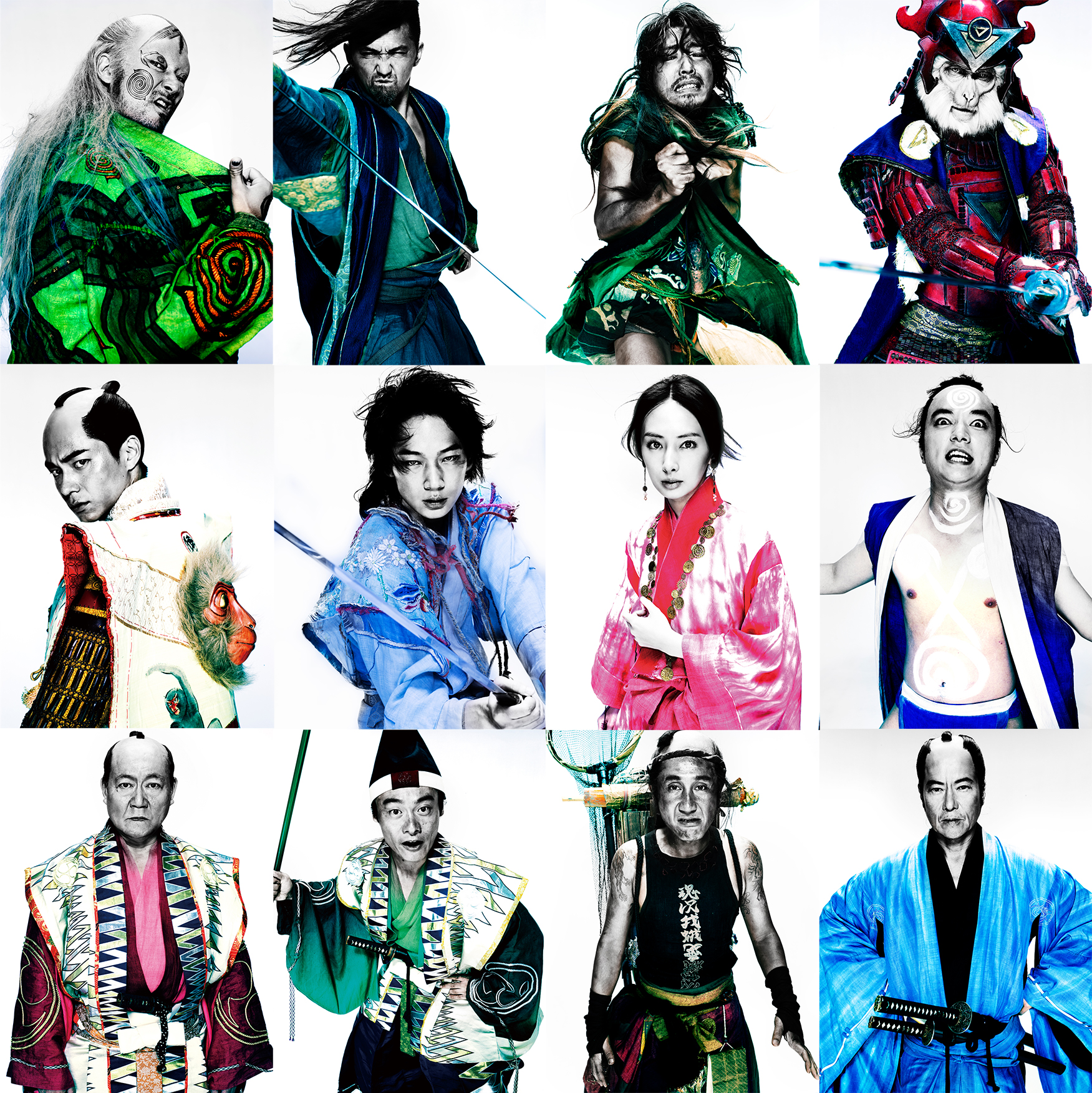
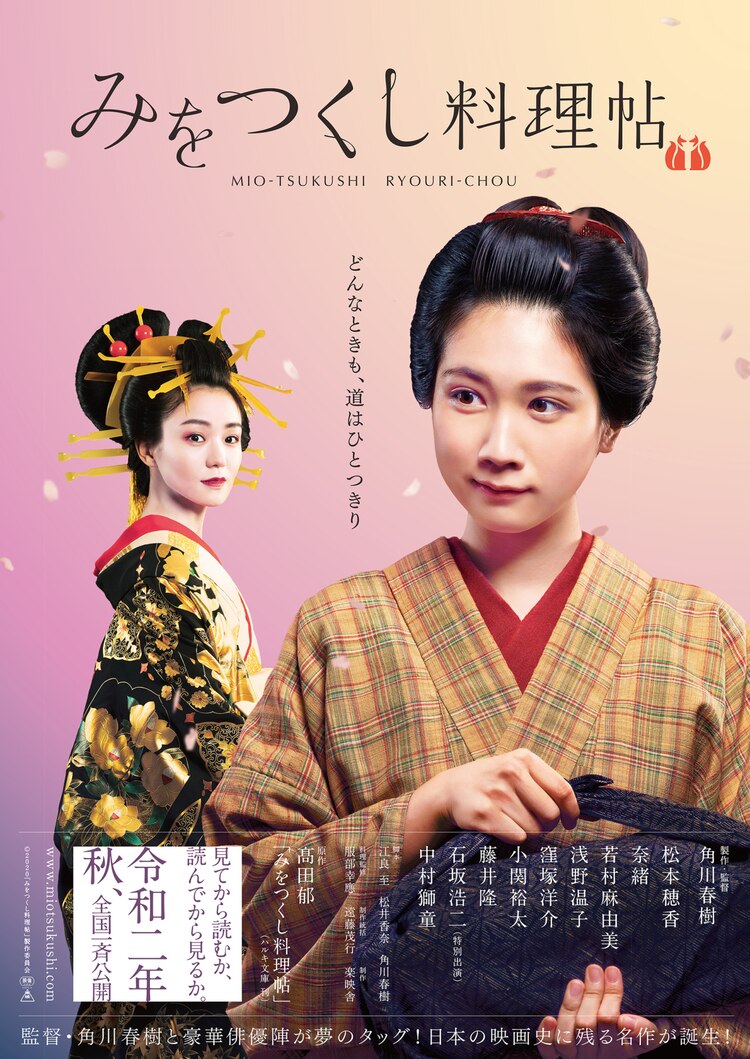
Mio’s Cookbook (みをつくし料理帖, Haruki Kadokawa, 2020)

“Food nurtures like heaven” according to a piece of advice from a local doctor which quickly becomes a catchphrase of the heroine of Haruki Kadokawa’s slice of foodie cinema Mio’s Cookbook (みをつくし料理帖, Mi wo Tsukushi Ryoricho). Adapted from the novel by Kaoru Takada, the Meiji-era drama is at once a tale of a pioneering young woman making her way in fiercely patriarchal society, and a heartwarming exploration of chosen and re-formed families discovering new senses of solidarity in the of wake tragedy while resolving to extend that sense of community to other lonely souls. 

The titular Mio (Honoka Matsumoto) meanwhile has had her share of loss, orphaned during a catastrophic flood and thereafter separated from childhood best friend Noe (Nao Honda) who simply disappeared. 10 years later, Mio and her adoptive mother Yoshi (Mayumi Wakamura) have relocated from Osaka to Edo though their lives have not been easy, Yoshi’s son having run off never to be seen again following the failure of the family restaurant. Mio is now working in a small cafe owned by a kindly older gentleman, Taneichi (Koji Ishizaka), but struggling to adapt to the sophisticated tastes of the capital with customers flatly refusing to eat her overly subtle oysters. A sullen samurai, Komatsubara (Yosuke Kubozuka), points her on her way by explaining that her food lacks “foundation” which is why she hasn’t yet found her groove. 

Mio’s culinary journey is also one of growing confidence as she learns to reorient herself in her new city life eventually realising that the key lies in uniting the tastes of Osaka and Edo as if integrating the two cities into her essential identity. A fortune teller had once told her that she would suffer many hardships but eventually reach “blue sky beyond clouds”, discovering a taste of that in her unexpected success even as those around her marvel at the female chef, a hitherto unheard of phenomenon, as she climbs the ranks of the local restaurants with her innovative cuisine after taking over from Taneichi. 

Yet her success also brings her enemies in the conservative and increasingly greedy Edo society. A rival restaurant rips off her signature dish and charges twice the price, a customer admitting that many will gladly pay more just to be seen doing so, less interested in the quality of the food than what is fashionable (times it seems do not change all that much). Even so “food is only as good as the cook” Yoshi is fond of saying believing that a bad person can’t make good food, something brought out by Mio’s compassionate nature as she continues to help those around her, vowing to “take vengeance through food” in concentrating on perfecting her craft and nourishing people’s souls rather than allowing herself to be beaten into submission by elitist intimidation. 

Meanwhile she continues to wonder whatever happened to Noe, reflecting that she was lucky in having found Yoshi who took her in out of compassion and continues to stay with her all these years later while gaining a surrogate father in the kindly Taneichi who himself lost a daughter. Noe’s prophecy was that she would “rise like the sun” and achieve “world-conquering fortune” though as it turns out she was not so lucky even if the prophecy did in fact come true if ironically. Both women continue to suffer because of the world in which they live each prevented from pursuing their romantic freedom, Mio forced to give up on her probably impossible love for samurai Komatsubara in order to embark on a quest to save her friend through achieving true success with her restaurant while Noe is constrained by her inescapable life as an oiran.  

Even so the film never really digs into the division placed between the women by the existence of the Yoshiwara into which one cannot enter and from which the other can never leave while the open ended conclusion that only advances a hope that the division may be breached perhaps suggests that it may never be, in part because it depends on Mio’s success as an independent woman in a feudalistic, patriarchal society. Meanwhile the two women continue to support each other in ways they can, Mio trying to raise her friend’s spirits with frequent care packages designed to remind her of home and their more innocent childhood smuggled in by supportive friends while each of them have in their own way found new families based on mutual compassion as a means of overcoming despair to rediscover a sense of hope for a better future founded on human solidarity. 


Mio’s Cookbook streams until 27th February in several territories as part of Japanese Film Festival Online 2022.

Original trailer (English subtitles)

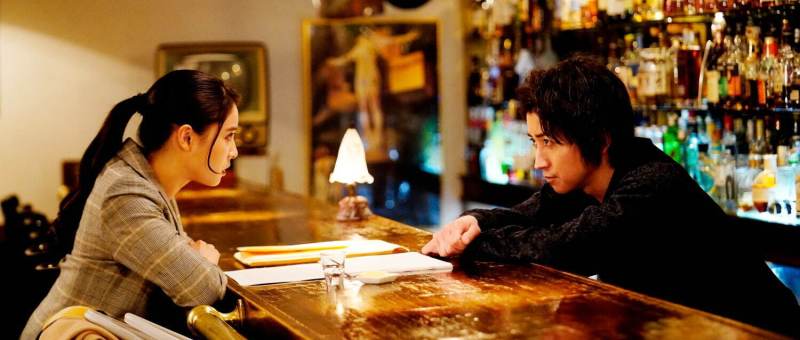
Wonderful Paradise (脳天パラダイス, Masashi Yamamoto, 2020)

A moribund Tokyo mansion becomes the scene for an orgy of life, death, love, and rebirth in Masashi Yamamoto’s surrealist party movie Wonderful Paradise (脳天パラダイス, Noten Paradise). Sometimes you have to learn to say goodbye and move on, other times you have to learn to forgive and let go of past resentment. Of course, sometimes you have to do both of those things at the same time, which is perhaps appropriate for the former home of the Sasayas which seems to exist between the realms of life and death, a perpetual Bon festival where departed spirits and lost souls congregate for one almighty party. 

Dad Shuji (Seiko Ito) has had a run of bad luck and unfortunately lost the family home he inherited from his parents meaning he and his two adult children, son Yuta (Soran Tamoto) and daughter Akane (Mayu Ozawa), are having to move on though who knows where to. Resentful that she’s having her life uprooted by her father’s fecklessness, Akane takes to social media and Tweets that there’s a party at hers and everyone’s invited as kind of goodbye to the house. Meanwhile, a series of strange events occur from a weird old monk (Akira Emoto) who keeps trying to pray to the various neoclassical statues on the property going nuts at a belligerent removal man and then apparently dropping dead, to the resurfacing of mother Akiko (Kaho Minami) who apparently left the family some years previously for a man who ran a coffee shop but has since passed away. 

The first people to arrive for the party are a gay couple looking for somewhere to celebrate their marriage, a minor irony in that the event will later descend into an elaborate funeral for two people who may or may not be dead. As more and more guests arrive, along with a series of opportunistic commercial food stands and other businesses, the party begins to get out of hand becoming ever stranger as the night wears on. 

At the heart of it all are the tensions in the family, an unresolved resentment directed at son Yuta who is, according to his brash aunt Yuka (Sonomi Hoshino), overly preoccupied with his family circumstances to the extent that it prevents him from getting a regular job and moving on with his life. Shuji has quite clearly failed both as a son and as a father, eventually betting one of his dad’s precious antiques in a card game run by yakuza loansharks setting up shop in the house. Akane appears exasperated, but is also harbouring an intense resentment towards Akiko for her abandonment that prevents her being able to “move on” from her former family home. 

Moving on is also a problem for a few of the ghosts, the line between the living and the dead becoming increasingly blurred. One random surreal moment to the next, Yamamoto careers between absurdist episodes culminating in a fight between a murderous sentient coffee bean and a statue come to life. What began as a lowkey wedding eventually becomes a bizarre funeral enacted through the medium of Bollywood song and dance transitioning into a traditional enka festival number all of which happens before a couple of hapless crooks who’ve been operating a drug factory on the family’s property for the last two years without them ever knowing turn up with their “super mandala drug of paradise” to send the evening in a psychedelic direction. 

Yet for all the surreality of death, violence, sex, and rebirth when dawn arrives it brings with it a kind of calm brokering a new peace between friends and family members as they learn to accept each other and the past in an unburdened sense of openness. Possibly deceased monks, talking cats, kids who can’t figure out how to stop swinging and mysteriously turn themselves into sticks or dissolve in bath water, scorned lovers, unrepentant thieves, ghosts and family secrets descend on this weird gothic mansion in the middle of a city, creating a “wonderful paradise” for one night only filled with surrealist magic and unforgettable strangeness that nevertheless pushes the family back together through dream logic and a taste of the absurd. A weird, sometimes incomprehensible, journey into an etherial, psychedelic twilight psychodrama rave, Yamamoto’s charmingly bizarre nighttime odyssey is a law unto itself but one filled with wonder for the uncanniness of the everyday. 


Wonderful Paradise streamed as part of this year’s Nippon Connection.

Original trailer (English subtitles)