

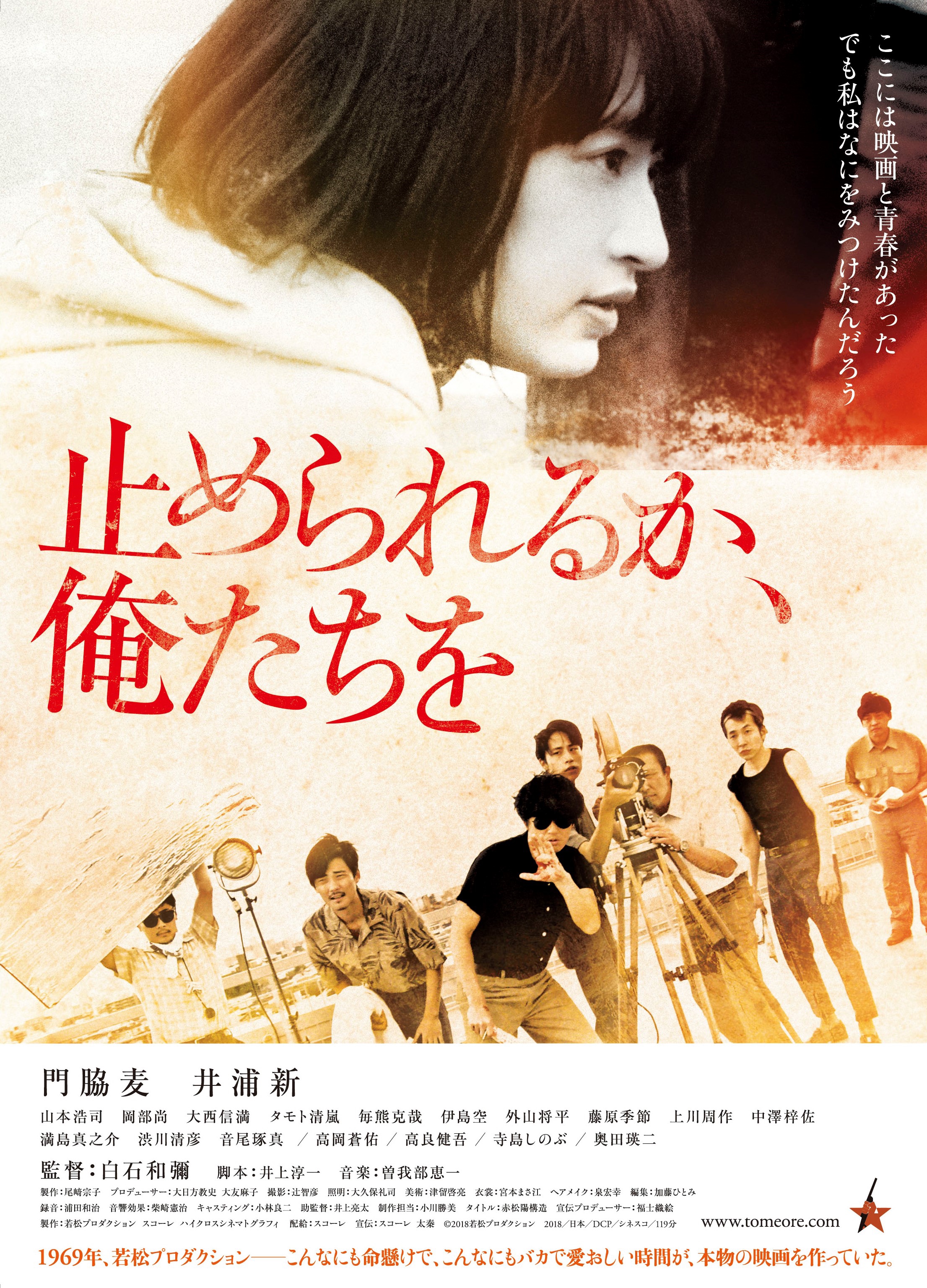
A loose sequel to 2018’s Dare to Stop Us, Hijacked Youth (青春ジャック 止められるか、俺たちを2, Seishun Hijack Tomerareruka, Oretachi wo 2) picks up a decade later with an autobiographically inspired tale from writer director Junichi Inouchi but in its way also becomes the latest in a series of indie films to offer a celebration of Japan’s mini theatres still struggling with the fallout from the COVID-19 pandemic while exploring the origins of the contemporary independent film scene.
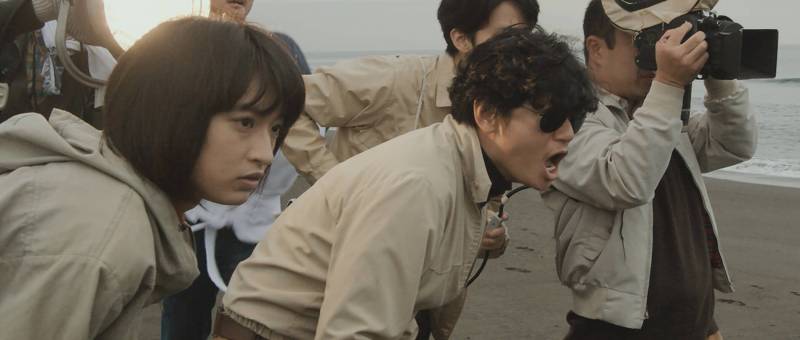
The allusion seems clear even from the film’s opening in which cinephile and former programmer Kimita (Masahiro Higashide) fears for the future of cinema amid the arrival of the VCR. Having quit his job to support a young family, he is puzzled but eventually won over when unexpectedly contacted by notorious film director Koji Wakamastu (Arata Iura) who has apparently decided to open a cinema in provinciail Nagoya after the screening of Ecstasy of the Angels was restricted because someone bombed a police box for real. Kimita wants to run it as a rep cinema, but Wakamatsu sees it partly as a vanity project and a side business so has his eye on the bottom line. Making the mistake of programming films he thinks are good rather than ones people want to see quickly puts them in the red with Wakamatsu pressuring Kimita to give in and agree to screen pink films even though he himself had admitted that pink cinema had had its day.
Wakamatsu is forever taking Kimita to task for having a prejudice against these kinds of films which are after all the kind that Wakamatsu makes though he does concede that there are talented directors working in pink film who may someday become the leading lights of the Japanese cinema industry. Some of that is hindsight, but what the film is working towards is a link between pink film, which was independently produced in contrast to something like Roman Porno which was made by a studio with much higher budgets and production values, and the rise of independent cinema which is largely dependent on the mini cinema ecosystem to it keep going.
But then the film is also a nostalgic memoir revolving around the director’s teenage dreams and his eventual meeting of Wakamatsu thanks to the cinema in Nagoya. The irony is that the first film had been titled “Dare to Stop Us,” focussing on Wakamatsu Pro during the turbulent days before Asama-sanso as an anarchic force in a sometimes staid film industry. But the through line here is that everyone gives up far too easily. Kimita abandoned his dreams to sell video recorders, while the young woman who works for him believes she has three strikes against her, the first being her gender, the second a lack of talent, and the third which she does not disclose that she’s a member of the Zainichi community of ethnic Koreans often discriminated against even the Japan of the 1980s and in fact today.
Junichi gives up a bit easily too after making a twit of himself on Wakamatsu’s film set, though the picture he paints of him is larger than life. Fatherly and compassionate, he gives him solid advice to go to a proper uni and learn filmmaking with him while otherwise taking him under his wing, but also pretty much takes over after giving him his first opportunity to make a film and has a tendency to take no prisoners when it comes to his crew members. At least as far as the film would have it, he’s become a rather lonely figure now that his more politically minded friends have scattered following he decline of the student movement in Japan. As much as anything else, the film is a sort of hagiography as evidenced by the surreal coda which seems to reference the director’s early death in traffic accident in 2012, jumping forward 30 years to find the cinema still open and celebrating his legacy more literally yet also in its existence in supporting the indie scene Wakamatsu helped to birth. According to Wakamatsu, the most important thing is finding your own angle and sticking to it, something his rebellious spirit at least may have fostered in the many directors who started their careers at Wakamatsu Pro and not least Inoue himself.
Hijacked Youth – Dare to Stop Us 2 screened as part of this year’s Nippon Connection
Original trailer (English subtitles)
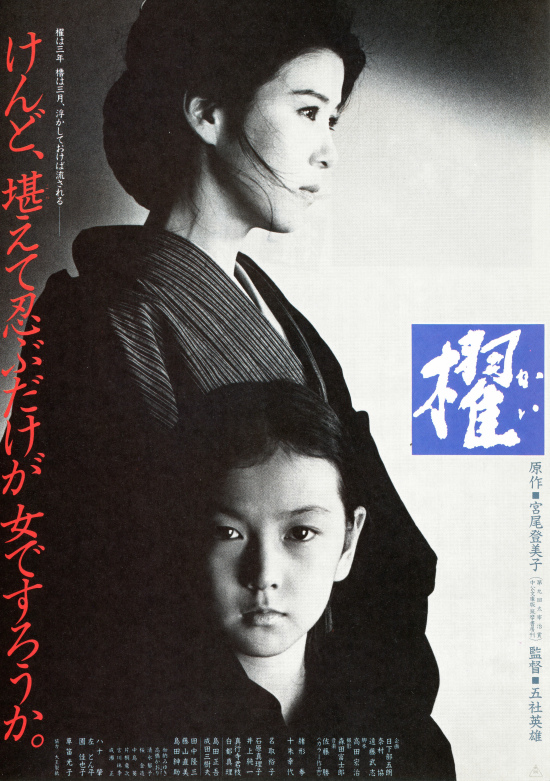 Until the later part of his career, Hideo Gosha had mostly been known for his violent action films centring on self destructive men who bore their sadnesses with macho restraint. During the 1980s, however, he began to explore a new side to his filmmaking with a string of female centred dramas focussing on the suffering of women which is largely caused by men walking the “manly way” of his earlier movies. Partly a response to his regular troupe of action stars ageing, Gosha’s new focus was also inspired by his failed marriage and difficult relationship with his daughter which convinced him that women can be just as devious and calculating as men. 1985’s Oar (櫂, Kai) is adapted from the novel by Tomiko Miyao – a writer Gosha particularly liked and identified with whose books also inspired
 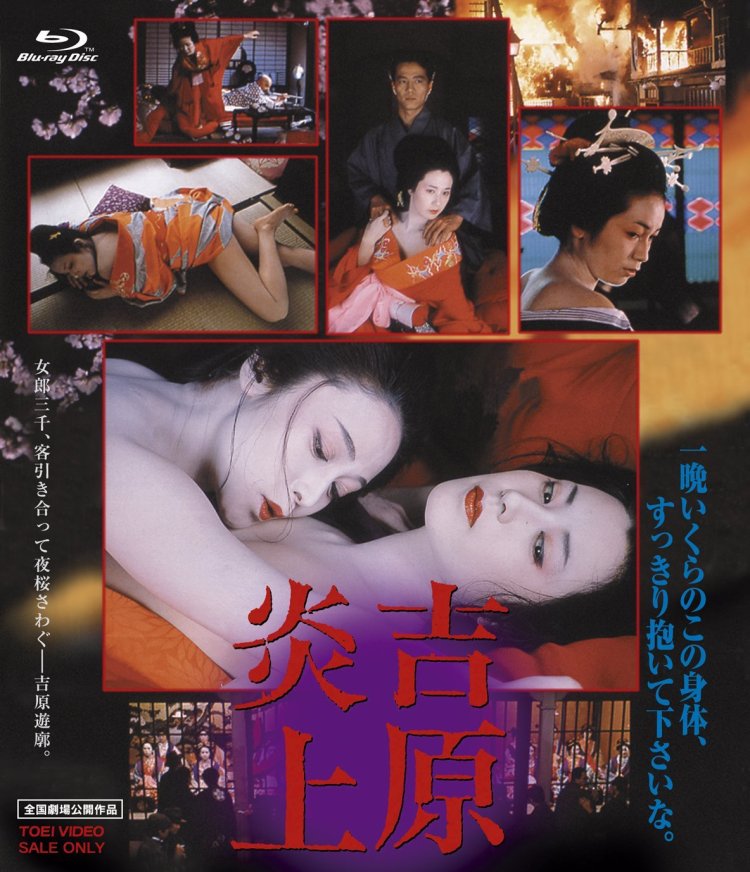 Hideo Gosha maybe best known for the “manly way” movies of his early career in which angry young men fought for honour and justice, but mostly just to to survive. Late into his career, Gosha decided to change tack for a while with a series of female orientated films either remaining within the familiar gangster genre as in Yakuza Wives, or shifting into world of the red light district as in Tokyo Bordello (吉原炎上, Yoshiwara Enjo). Presumably an attempt to get past the unfamiliarity of the Yoshiwara name, the film’s English title is perhaps a little more obviously salacious than the original Japanese which translates as Yoshiwara Conflagration and directly relates to the real life fire of 1911 in which 300 people were killed and much of the area razed to the ground. Gosha himself grew up not far from the location of the Yoshiwara as it existed in the mid-20th century where it was still a largely lower class area filled with cardsharps, yakuza, and, yes, prostitution (legal in Japan until 1958, outlawed in during the US occupation). The Yoshiwara of the late Meiji era was not so different as the women imprisoned there suffered at the hands of men, exploited by a cruelly misogynistic social system and often driven mad by internalised rage at their continued lack of agency.
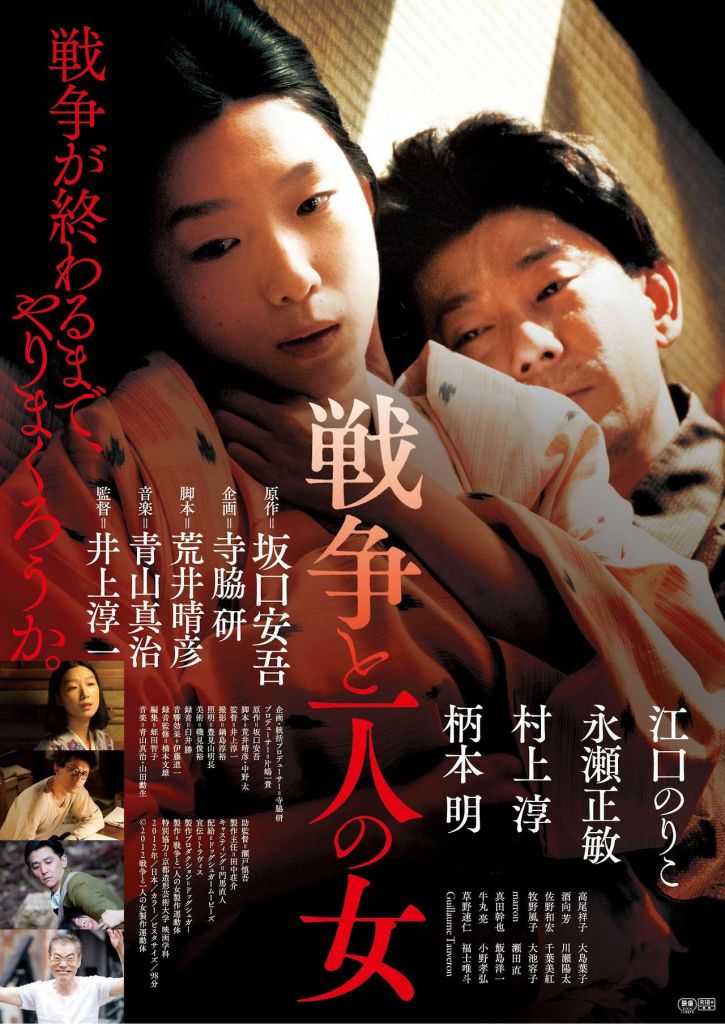 Junichi Inoue is better known as a screenwriter and frequent collaborator of avant-garde/pink film provocateur Koji Wakamatsu. A Woman and a War (戦争と一人の女, Senso to Hitori no Onna) marks his first time in the director’s chair and finds him working with someone else’s script but staying firmly within the pink genre. Adapted from a contemporary novel by Ango Sakaguchi published in 1946, A Woman and a War is an intense look at domestic female suffering during a time generalised chaos.
 Windows on Worlds