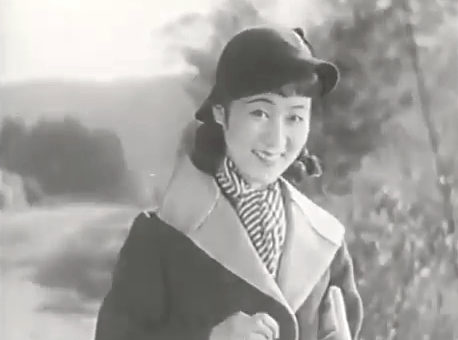
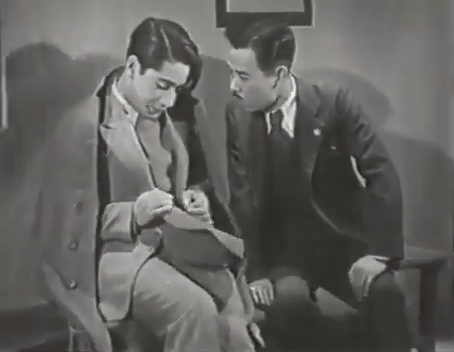
A wastrel son and runaway daughter get a few lessons in filiality in Yasujiro Shimazu’s genial ‘30s comedy, My Elder Brother (私の兄さん, Watashi no Niisan). Reflecting the changing the times, the film is in many ways about navigating the sometimes fraught relationships among a blended family though like many hahamono, it’s the stepson who is most devoted to his mother while the birth son is consumed by a sense of guilt and inadequacy in his accidentally awkward positioning within the family hierarchy.
The filial piety of eldest son Shige (Reikichi Kawamura) is established early on by the fact he’s not at work because his mother is ill and he’s off visiting her. He does in fact return late at night, though there’s a question mark over his qualities as a boss as the drivers at the taxi firm he runs remark that he’s been ignoring their attempts to negotiate with him for better conditions not least the provision of assistants which has been given additional weight by one driver’s experience with a disturbed fare who attempted to strange him with his belt.
The strange and violent opening sequence in which a cabbie is attacked by a crazed passenger is never referenced again and out of keeping with the otherwise lighthearted tone of the film though does add to a sense of danger later echoed in the appearance of two guys who first seem like yakuza but are actually just two grumpy old men trying to retrieve a young woman who’s run away in defiance of an arranged marriage. In any case, tearaway brother Fumio (Kazuo Hasegawa), who arrives drunk in the back of a cab, has indeed fallen into bad company with yakuza whom he describes as his friends though Shige warns him they’re probably just after his money.
Fumio has returned because he’s learned his mother is ill, though he’s reluctant to see her given his present condition. When he does actually meet her, she says that she hates him and calls him a good-for-nothing, worthless man. It seems her animosity is partly motivated by a sense of guilt and embarrassment that her biological son has brought shame to the family she married into and especially to Shige. For his part, Shige acknowledges that he also felt resentful when Fumio and his mother moved in but explains that he was still a child clinging to the memory of his late birth mother. Fumio explains to the young woman he picks up, Sumako (Kinuyo Tanaka), who is on the run from her uncle and the man her stepmother wants her to marry, that he left home because of his precarious status and sense of inadequacy but liked the sense of freedom his independence gave him even if he is ashamed of the kind of life he’s lived on the fringes of the underworld.
Sumako is experiencing a similar dilemma as she feels herself unable to bond with her stepmother to the extent that she has not been able to articulate that she objects to the arranged marriage her relatives have set up for her. She laments that if it were her birthmother she should be able to tell her everything, but Fumio counters that Shige had been jealous of him because he could exchange harsh words with his mother because of their closeness in a way he never could because he is not her biological son. Reinforcing a sense of obligation between parents and children might have been an important message in the mid-1930s, but the film is perhaps unexpectedly progressive in its openness and desire to embrace these then considered less usual family arrangements born of second marriages in emphasising the brotherly bond between the two men and Sumako’s successful escape from an unwanted marriage simply by speaking her true feelings to her mother not to mention the suggestion of a cross class romance between rich girl Sumako and the middle-class Fumio.
Meanwhile, the film also has an international bent in the prominent signs for Chevrolet and Hollywood-esque aesthetics, drawing inspiration from American and European crime films for the violent opening sequence and underworld setting. Shimazu hints at the shadiness of Fumio’s backstreets life, but equally of Sumako’s uncle and his moustachioed friend lending an undertone of darkness to the mid-30s society but otherwise keeps things light in the innocent courtship between Fumio and Sumako who can mediate their attraction only by remarking on the beauty of a sunset.
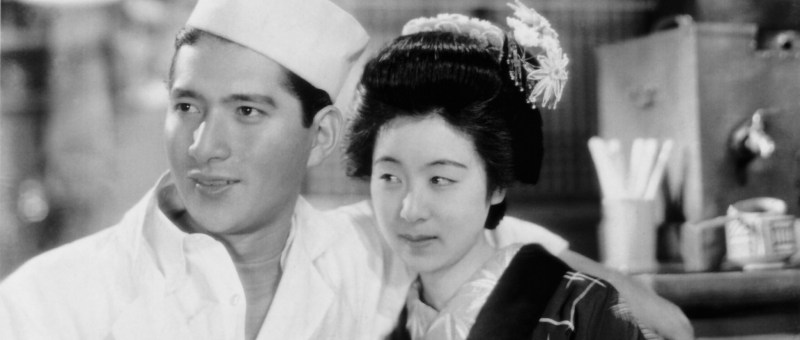

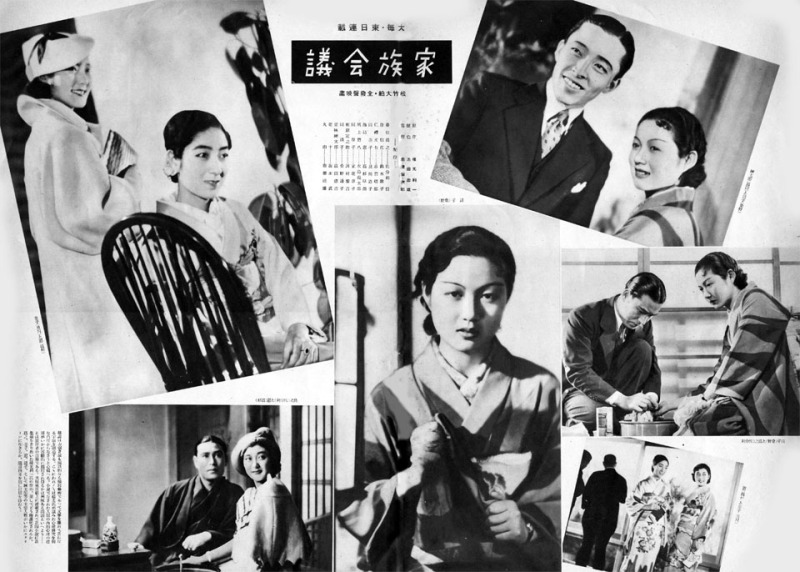
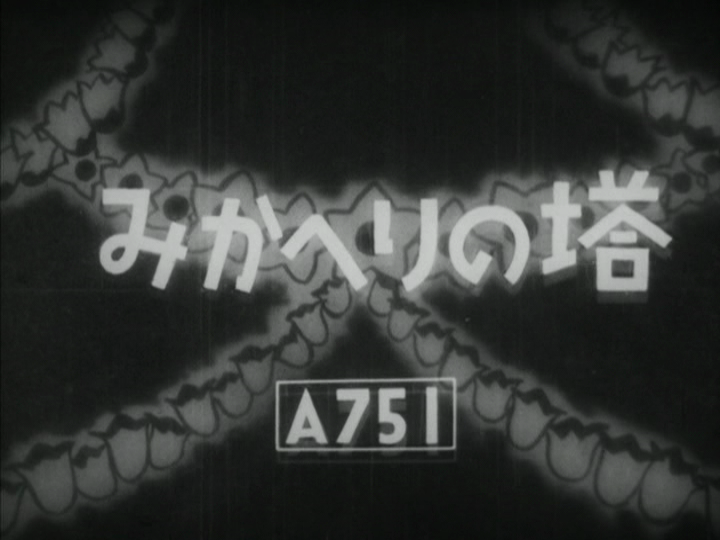 Shimizu, strenuously avoiding comment on the current situation, retreats entirely from urban society for this 1941 effort, Introspection Tower (みかへりの塔, Mikaheri no Tou). Set entirely within the confines of a progressive reformatory for troubled children, the film does, however, praise the virtues popular at the time from self discipline to community mindedness and the ability to put the individual to one side in order for the group to prosper. These qualities are, of course, common to both the extreme left and extreme right and Shimizu is walking a tightrope here, strung up over a great chasm of political thought, but as usual he does so with a broad smile whilst sticking to his humanist values all the way.
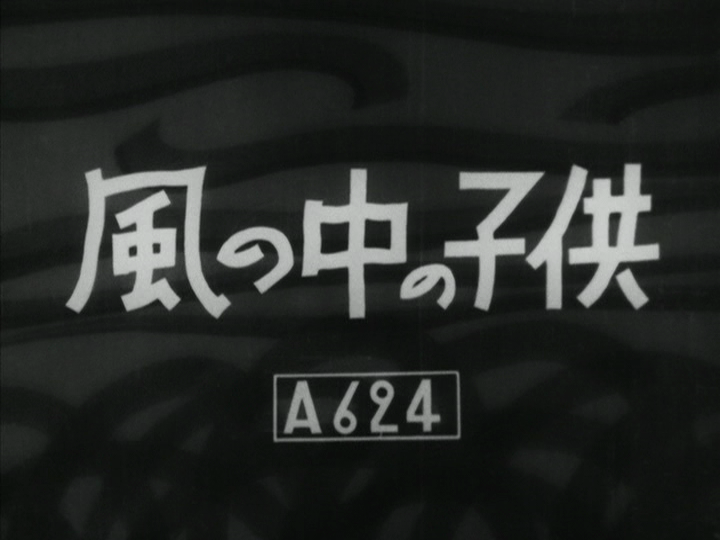 It would be a mistake to say that Hiroshi Shimizu made “children’s films” in that his work is not particularly intended for younger audiences though it often takes their point of view. This is certainly true of one of his most well known pieces, Children in the Wind (風の中の子供, Kaze no Naka no Kodomo), which is told entirely from the perspective of the two young boys who suddenly find themselves thrown into an entirely different world when their father is framed for embezzlement and arrested. Encompassing Shimizu’s constant themes of injustice, compassion and resilience, Children in the Wind is one of his kindest films, if perhaps one of his lightest.
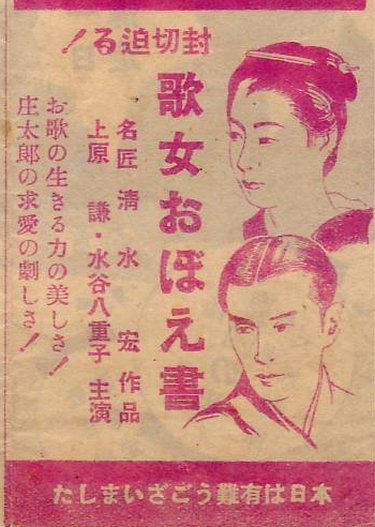 Filmed in 1941, Notes of an Itinerant Performer (歌女おぼえ書, Utajo Oboegaki ) is among the least politicised of Shimizu’s output though its odd, domestic violence fuelled, finally romantic resolution points to a hardening of his otherwise progressive social ideals. Neatly avoiding contemporary issues by setting his tale in 1901 at the mid-point of the Meiji era as Japanese society was caught in a transitionary phase, Shimizu similarly casts his heroine adrift as she decides to make a break with the hand fate dealt her and try her luck in a more “civilised” world.
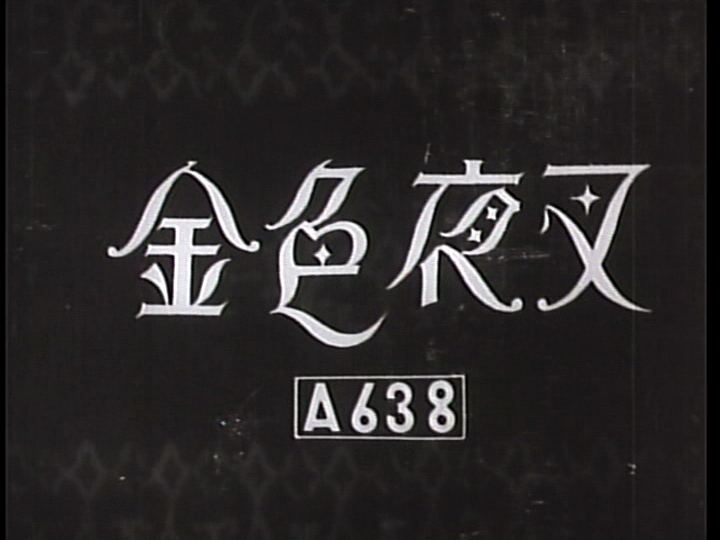 Perhaps best known for his work with children, Hiroshi Shimizu changes tack for his 1937 adaptation of the oft filmed Ozaki Koyo short story The Golden Demon (金色夜叉, Konjiki Yasha) which is notable for featuring none at all – of the literal kind at least. A story of love and money, The Golden Demon has many questions to ask not least among them who is the most selfish when it comes to a frustrated romance.
 The debut film from Yasuzo Masumura, Kisses (くちづけ, Kuchizuke) takes your typical teen love story but strips it of the nihilism and desperation typical of its era. Much more hopeful in terms of tone than its precursor and genre setter Crazed Fruit, or the even grimmer The Warped Ones, Kisses harks back to the more to wistful French New Wave romance (though predating it ever so slightly) as the two youngsters bond through their mutual misfortunes.
 Windows on Worlds