The Wolves (狼, Kaneto Shindo, 1955)

Post-war desperation drives a collection of otherwise honest men and women towards a criminal act that for all its politeness they are ill-equipped to live with in Kaneto Shindo’s biting social drama The Wolves (狼, Okami). “Wolves” is what the criminals are branded, but the title hints more at the wolfish society which threatens to swallow them whole. After all, it’s eat or be eaten in this dog eat dog world, at least according to a cynical insurance salesman hellbent on exploiting those without means. 

Each of the five “criminals” is an employee at Toyo Insurance where they’re immediately pitted against each other, reminded that in order to qualify for a full-time position they need to meet their quotas for six months. The orientation meeting is cultilke in its intensity, the boss insisting that only in insurance can you become a self-made man while recounting his own epiphany as to the worthiness of his profession. They are told that the only two things they need are “faith and honesty”, and then “faith and pursuasion”, while encouraged to think of their work as an act of “worship”, “for the salvation of everyone”. 

Yet they’re also told to exploit their friends and family by pressuring them into taking out life insurance policies in order to help them meet their quotas. As one man points out, friends and relatives of the poor are likely to be poor themselves, but these are exactly the kind of people they’re expected to target. They’re told there’s no point going after the weathly because they’re already insured, but there’s something doubly insidious in trying to coax desperate people who can’t quite afford to feed themselves into paying out money they don’t have on the promise of protecting their families from ruin. One man even asks if the policy covers suicide and is told it does if you pay in for a year, sighing that he doesn’t want to wait that long.

“Suicide or robbery, choose one,” one of the salespeople reflects after failing to make their quota once again. They each have reasons to be desperate, all of them already excluded from the mainstream society and uncertain how they will find work if the job falls through. Akiko (Nobuko Otowa) is a war widow with a young son who is being bullied at school because of his cleft palate for which he needs an expensive operation. She’s already tried working as a bar hostess but is quiet by nature and found little success with it. Fujibayashi (Sanae Takasugi) is widowed too with two children and five months behind rent for a dingy flat in a bomb damaged slum where the landlord is about to turn off her electric. Harajima (Jun Hamamura) used to work in a bank but was fired for joining a union and is trapped in a toxic marriage to woman looking for material comfort he can’t offer. Mikawa (Taiji Tonoyama) too is resented by his wife, a former dancer, having lost his factory job to a workplace injury while the ageing Yoshikawa (Ichiro Sugai) was once a famous screenwriter but as he explains people in the film industry turn cold when you’re not hot stuff any more. 

Their unlikely descent into crime has its own kind of inevitability in the crushing impossibility of their lives. They may rationalise that what they’re doing is no different from the insurance company that exploits the vulnerable for its own gain, thinking that if they can just get a little ahead they’d be alright while feeling as if robbery and suicide are the only choices left to them and at the end of the day they want to survive. Perhaps you could call them “wolves” for that, but they’re the kind of wolves that give the guards from the cash van they robbed their train fare home after bowing profusely in apology. The real wolves are those like Toyo who think nothing of devouring the weakness of others, promising the poor the future they can’t afford while draining what little they have left out of them. As the film opens, Akiko looks down at a bug writhing in the dirt attacked by ants from all sides and perhaps recognises herself in that image as the sun beats down oppressively on both of them. Breaking into expressionistic storms and unsubtly driving past a US airbase to make clear the source of the decline, Shindo paints a bleak picture of the post-war world as a land of venal wolves which makes criminals of us all. 

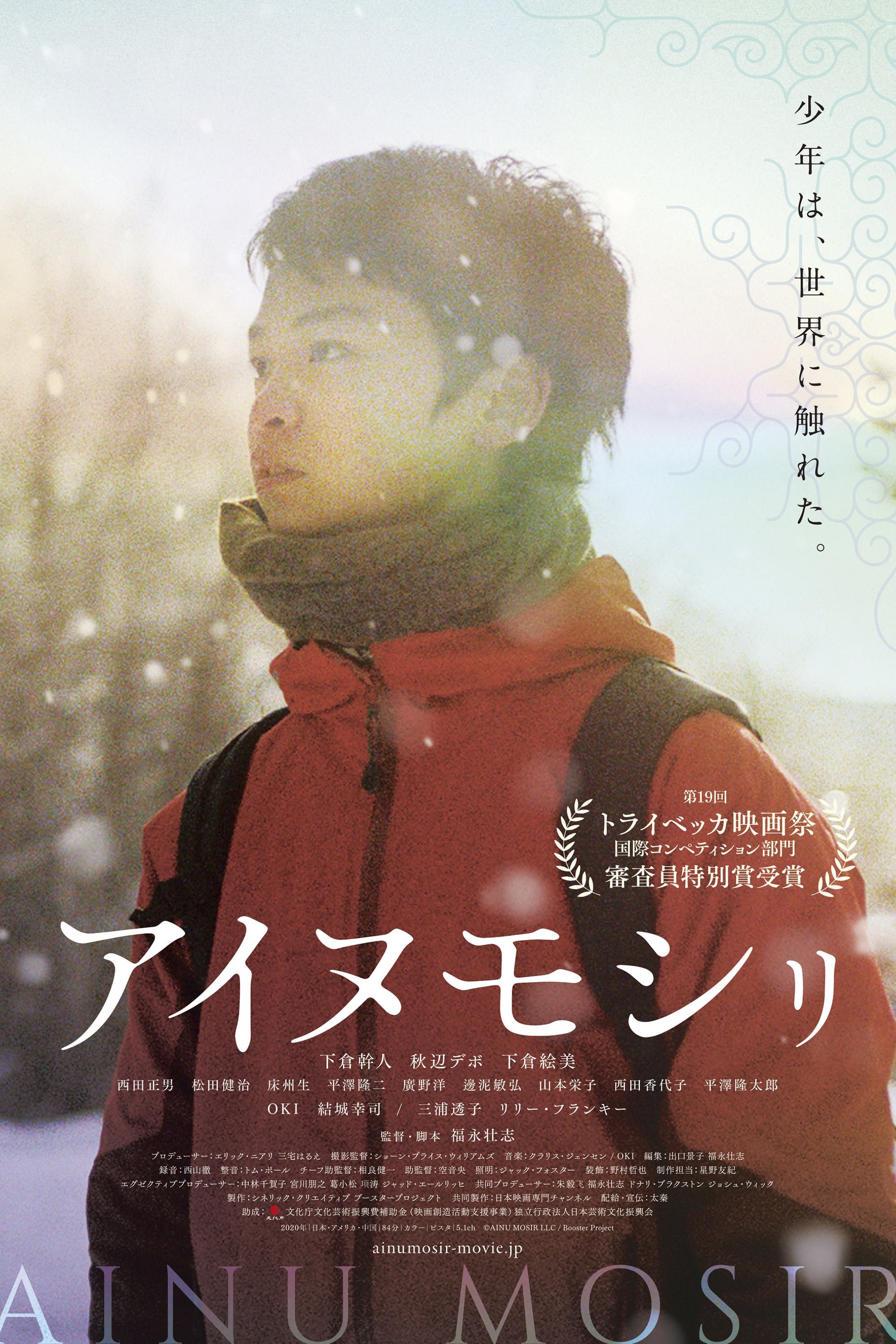
Ainu Mosir (アイヌモシㇼ, Takeshi Fukunaga, 2020)

Despite its continuing preoccupation with the conflict between tradition and modernity, Japanese cinema has often been reluctant to address the nation’s relationship with marginalised communities such as the Ainu, the indigenous people of Hokkaido which was in essence the site of Japan’s first colonial expansion at the beginning of the Meiji era. Set very much in the present day, Takeshi Fukunaga’s Ainu Mosir (アイヌモシㇼ) takes its title from the indigenous name for the island and is both coming-of-age tale and exploration of the position of the Ainu people within the context of modern Japan. 

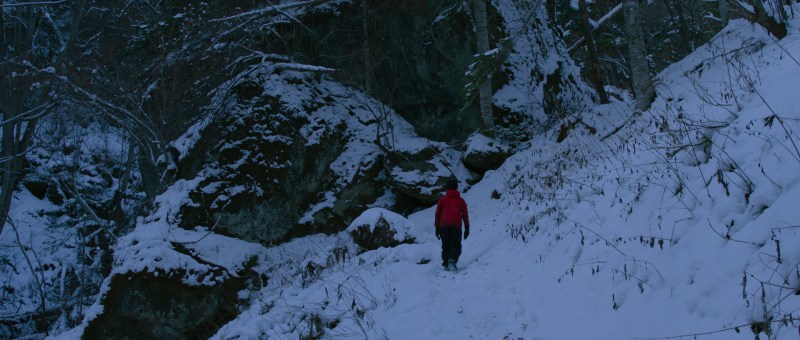
14-year-old Kanto (Kanto Shimokura) lives in the quaint Ainu tourist village of Akan and has not long lost his father. Questioned about his plans for the next stage of his education, Kanto replies that he’s fine with anything as long as it involves leaving Akan, later explaining to his understandably upset mother Emi (Emi Shimokura) that his desire to leave is because the town is “tiny” and “they make you do Ainu stuff”. Emi points out that neither she nor anyone else has ever forced him to participate in Ainu culture, but still the boy insists that he’d prefer to go somewhere more “normal” spending his time playing classic American rock on an electric guitar rather than engaging with his cultural roots. His attitude begins to change, however, when Debo (Debo Akibe), an elder acting as an uncle, begins introducing him to various aspects of Ainu culture such as the remote cave in the Forest of Light which leads to the land of the dead, teaching him how to catch and gut fish, and finally enlisting him in a project to look after a captive bear, Chibi, hidden in a cage in the woods. 

Bears are sacred in Ainu culture, but what Debo has not explained to the boy is that he’s raising Chibi as part of an ancient ritual last performed over forty years previously which involves sacrificing the bear in the belief that his spirit will then return to the land of the gods filled with tales of how wonderful humans are after being so lovingly looked after during his time in the mortal world. In a series of documentary-style sequences, Fukunaga captures the ambivalence present within the community on learning of Debo’s plan to carry out an Iomante ritual, pointing out that they live in different times and bear sacrifice is unlikely to be accepted by the outside world which will undoubtedly view it as primitive and cruel. Aside from a concern as to how the indigenous community is viewed by mainstream society, some of the council are acutely worried because they are economically dependent on the tourist trade. Young Kanto is frustrated by the idea of growing up in a museum, the town of Akan something like a theme park repackaging Ainu culture for curious Japanese tourists. His own mother works in a shop selling traditional crafts as souvenirs while appearing in a stage show adapting ancient ritual as entertainment for visiting audiences. 

A man in Emi’s shop stops to ask her if she herself is Ainu, but seems ambivalent on being told that yes she is while a female customer somewhat crassly compliments her on the quality of her Japanese which is particularly ironic as we’ve just seen her attending evening classes to relearn the Ainu language which is in constant danger of dying out. Warming to Ainu culture, Kanto is more receptive towards the idea of adding traditional instrumentation but his bandmate is, as he was, embarrassed by “Ainu stuff” and wants nothing to do with it. Debo’s betrayal sets Kanto on a collision course with his newly found appreciation for his indigenous roots in presenting him first hand with something dark and cruel that proves difficult for him to understand but perhaps finally allows him to come to terms both with his father’s death and with his own identity as a member of an indigenous community. 

Using a cast of mainly non-professional actors from the local area, Fukunaga switches between documentary-style capture of Ainu life and the cinematic naturalism of Kanto’s path towards self-acceptance filled as it is with the wonder of the natural world. Juxtaposing the reality of the Iomante ritual with the repackaged stage show, he shows us what it costs to preserve traditional culture within a surrounding modernity even as scholars descend to record the songs of the Ainu for prosperity badgering old women to offer up long forgotten lullabies for a lonely tape recorder. Kanto has however perhaps found his path in knowing he is not alone as he steps into a less innocent adulthood having integrated both sides of himself into a more complete whole. 


Ainu Mosir streams in Germany 1st to 6th June as part of this year’s Nippon Connection. It is also available to stream in the UK (and possibly elsewhere) via Netflix.

International trailer (English subtitles)