Black Kiss (ブラックキス, Macoto Tezuka, 2006)

Black KissThe somewhat salaciously titled Black Kiss (ブラックキス) comes appropriately steeped in giallo-esque nastiness but its ambitions lean towards the classic Hollywood crime thriller as much as they do to gothic European horror. Directed by the son of the legendary father of manga Osamu Tezuka (not immune to a little strange violence of his own) Macoto Tezuka, Black Kiss is a noir inspired tale of Tokyo after dark where a series of bizarre staged murders are continuing to puzzle the police.

We witness the first of them as a sleazy producer type takes a prospective new sign out for a night on the town. He promises to make her a star but predictably the evening ends in a fairly grim love hotel. This early episode is brought to an abrupt halt as the man is conked on the head in the bathroom only to wake up tied to the bed for a spot of vivisection.

However, it turns out there is an unexpected witness to the crime in the form of aspiring model, Asuka, who we now meet by hopping back week as she moves into the flat opposite with the rather sullen and reluctant street punk Kasumi. The pair then get involved with the police as well as with a local paparazzo but what does Kasumi’s missing former roommate have to do with all of this and why does all the evidence keep pointing back to her? The reason may surprise you.

Black Kiss is playing with several genres during its running time but it certainly packs in its fair share of red herrings. Far too many, in fact, leaving its ultimate explanation feeling oddly hollow. Given this amount of build up and a careful arrangement of clues, Tezuka’s decision to end as a standard slasher leaves the viewer feeling cheated as our intrepid heroines make an admittedly exciting final run for it across the rooftops of Kabuki-cho. After throwing so many possible solutions on the screen, the one that is finally offered seems extremely dull in comparison and makes little to no internal sense.

That said, Black Kiss is actually quite good at painting its shady world with an appropriate layer of detail. Tezuka returns to the ideas of duality which play into his Vertigo homage, casting his two leading ladies as alike in some senses – both having been involved in the fashion industry, both half Japanese, both adrift in terms of their lives and ambitions, but is also careful place them on opposing sides as Asuka dresses in light colours to bring out her sweetness and innocence whereas Kasumi is all punk/goth darkness and aggression borne of self loathing. Though originally reluctant roommates, Asuka and Kasumi eventually bond though it’s another weakness of the film that aspects of their relationship appear curiously unresolved adding yet another layer of ambiguity to the already hard to pin down central narrative.

What Tezuka really seems to want to do is use the central mystery to explore notions of genre rather than actually follow or even blend them. He quotes Hitchcock both overtly onscreen with the oddly named “Bats Motel” and Vertigo night club as well as in his Rear Window and Dial M for Murder plot elements but then he veers widely off course into the world of giallo with his semi-explicit sex scene and leather clad avenging murderess. As an exercise in style, Black Kiss is frequently impressive with its innovative cinematography and unusual composition but dramatically it can’t unify its underlying concerns in a way which makes both visual and narrative sense.

A noble failure, there is much to admire in Black Kiss which is only let down by its non-sensical finale. Deliberately or otherwise, Tezuka constantly undercuts himself and pulls his punches just when it seems as if he may be about to move into a more interesting area. The final mystery makes no sense at all and, in what may be Tezuka’s biggest failed ambition, leaves the murders themselves as an odd kind of McGuffin. Quite a big ask in what is, essentially a serial killer movie with a significant lean towards giallo inflected horror. Nevertheless, though Black Kiss fails on many levels it does prove intriguing enough to maintain interest even if it ultimately loses all of the good will it accrues with its dramatically unsatisfying slide into slasher territory in the final quarter.


Unsubbed trailer:

Border Line (Lee Sang-il, 2002)

border lineThroughout his career Lee Sang-il has shown himself adept at creating ensemble character dramas but nowhere is this as much in evidence as in his well crafted debut, Border Line. Focussing on the unlikely overlapping stories of a number of people who each find themselves crossing a threshold of a more spiritual nature, Border Line traces back each of the fractures in contemporary society to the broken cord of the parental bond.
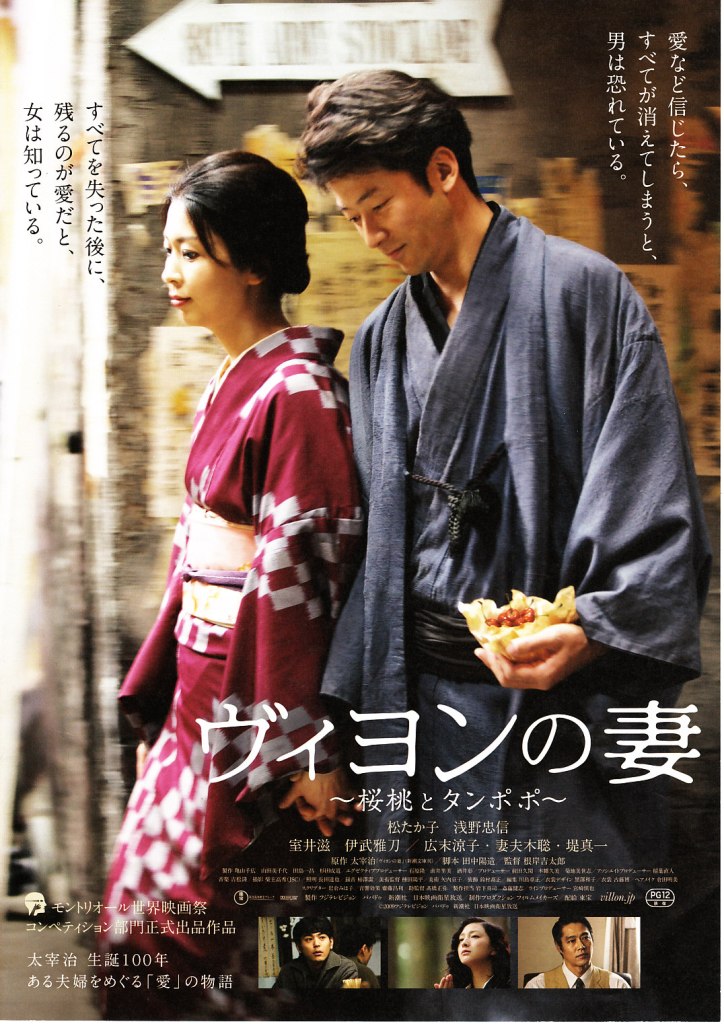
We begin with teenage technical school student Matsuda (Sawaki Tetsu) who’s been in trouble for refusing to wear the required overalls. Later he runs away after his father is murdered only to be knocked down by drunken taxi driver Kurosawa (Murakami Jun) who ends up driving him half way to Hokkaido which is where he said he was from. Meanwhile, housewife Aikawa (Aso Yumi) has just started a new job at the combini but her son keeps skipping school and she soon realises it’s down to aggressive bullying. If that wasn’t enough, her husband has gone incommunicado after abruptly revealing via telephone that he lost his job a month ago and hasn’t found another one. Taking a step down to the underworld, we also meet low life gangster Miyaji (Mitsuishi Ken) who’s having a very bad as his partner ran off with the takings from a pachinko parlour to pay for expensive medical treatment for his daughter.

These are the lives of ordinary modern day people each facing extreme stress from all angles be they financial, societal, or existential. Matsuda is a young man and it’s only natural that he rebels a little to try and figure out who he is but it seems there may have been more going on in his life than just not wanting to wear a uniform. His mother left when he was a child and we don’t find out much about his relationship with his father but he spends the rest of the film looking for parental figures to essentially give him the permission to become an adult. The first of these is the taxi driver, Kurosawa, who, for various reasons isn’t able to help him (and only really decides he wanted to when it was too late). Finally, after a series of coincidences, he runs into Miyaji who is still grieving over having lost contact with his daughter after running out on his suicidal wife. Miyaji is not a great role model in many ways but still has some wisdom to impart to the younger man which may save his life in ways both literal and figural.

Miyaji and Aikawa are both coming from the other direction but struggling with their parental responsibilities. Aikawa has taken the job at the combini to help pay their mortgage – the house is very important to her as she was always ashamed of the modest home she grew up in with her parents. Like Miyaji, her husband seems to have more or less abandoned his family in his shame over losing his job, leaving Aikawa to bear all the responsibility for herself and her son. Eventually the pressure becomes so intense that Aikawa’s typical Japanese housewife persona starts to crumble resulting firstly in fantasies of violence before a crime filled rampage and kidnapping plot threaten to destroy what’s left of her life.

Back with the kids, another coincidence turns up Miyaji’s estranged high school aged daughter now also orphaned following the death of her mother leaving her with no other option than visiting hotel rooms with dodgy businessmen. Shunned at school and alone at home, hers is a lonely life marred by the failure of her parents. Both she and Matsuda, whom she eventually meets through another set of random coincidences, have had their futures ruined by poor parenting but, ironically, it maybe Miyaji who is able to help them even in his continued absence.

For a debut film, Border Line is a remarkably assured affair. Elegantly shot with decent production values, it handles its complicated set up with ease affording each of its distressed protagonists a degree of sympathy and understanding without the necessity of moral judgement. However, Lee does seem to want to lay the ills of modern society at the feet of the crumbling family unit only to present his younger protagonists with the idea of salvation as self actualisation. Decidedly low key, Lee’s debut film has a less commercial, deeper sensitivity than his subsequent efforts but still offers the compassionate sense of humanity which continues to inform his filmmaking.


Villon’s Wife (ヴィヨンの妻 〜桜桃とタンポポ, Kichitaro Negishi, 2009)

Villon's Wife2009 marked the centenary year of Osamu Dazai, a hugely important figure in the history of Japanese literature who is known for his melancholic stories of depressed, suicidal and drunken young men in contemporary post-war Japan. Villon’s Wife (ヴィヨンの妻 〜桜桃とタンポポ, Villon no Tsuma: Oto to Tampopo) is a semi-autobiographical look at a wife’s devotion to her husband who causes her nothing but suffering thanks to his intense insecurity and seeming desire for death coupled with an inability to successfully commit suicide.
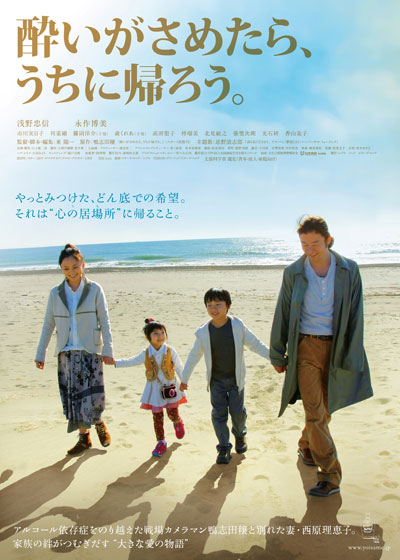
Beginning in the immediate post-war period of 1946, Sachiko (Takako Matsu) is a fairly ordinary housewife with a young son who generally waits around the house for her husband’s return. Only, she’s married to one of the most brilliant writers of the age, Joji Otani (Tadanobu Asano), whose book on the French poet François Villon is currently a best seller. Despite his obvious literary talents, Otani is a drunkard who spends most of his time (and money) in bars and with other women. When he crashes home one night only to be pursued by two bar owners who reveal that he ran off with their takings (around 5000 yen), Sachiko is not exactly surprised but still embarrassed and eventually takes matters into her own hands by volunteering to offer herself as a “hostage” by working at the bar until the debt is repaid.

“Men and women are equal now, even dogs and horses” says one customer, impressed with this sudden arrival of a beautiful woman in a low life drinking spot. To her own surprise, Sachiko actually enjoys working at the bar, it gives her purpose and proves more interesting than being stuck at home waiting to see what her drunken fool of a husband has got up to next. She’s good at it too – Sachiko is a beautiful and a fundamentally decent and kind person, in short the sort of woman that everyone falls a little bit in love with. That said, she isn’t a saint. She’s perfectly aware of the power she is able to wield over men and is unafraid to make use of it, though only when absolutely necessary.

Otani himself is a fairly pathetic figure. He may be a great artist but he’s a hollow human being. He admits the reason for all of his vices is fear – he’s a afraid to live but he’s also afraid to die. He seems to love his wife, though he’s insecure about losing her and dreads the embarrassment involved in becoming a cuckold. So afraid to face the possibility of failure, Otani satisfies himself in an underground world of drunks and easy women rather than facing his own self loathing as reflected in the faces of his unconditionally loving family.

Perhaps because Villon’s Wife is a commemorative project, the film has been given the prestige picture treatment meaning the darker sides of Dazai’s original novella have been largely excised. The chaos of the post-war city with its starving population, soldiers on the streets and generalised anxiety is all but hidden and some of the more serious travails Sachiko undergoes in devotion to her husband as well as Otani’s tuberculosis (from which Dazai also suffered in real life) have also largely been removed. What remains is the central picture of a self destructive husband and the goodly wife who’s trying to save him from himself but risks her own soul in the process.

The one spot of unseemliness of post-war life that the film lets through is in a brief scene which features a group of pan pan girls hanging around ready to try and snag some passing GIs. Sachiko buys some lipstick from them to use in attempt to convince an ex who is also a top lawyer to try and help her husband after his latest escapade lands him in jail on a possible murder charge. After visiting him, Sachiko wanders out slightly dazed to see the pan pans atop a military jeep cheerfully waving and shouting “goodbye” in English. Sachiko is confused at first but eventually shouts “goodbye” back in a way which is both excited and a little bit sad, perhaps realising she is not so different from them after all. Finally she wipes the lipstick from her face and leaves the small silver tube behind where the pan pans were sitting, hoping to bury this particular incident far in the past.

In actuality the pan pan girls are depicted in a fairly matter of fact way rather than in the negative light in which they are usually shown, just another phenomenon of occupation. At the end of the film Otani calls himself a monster whilst acknowledging that he’s a terrible father who would steal the cherries from his own son’s mouth. Sachiko replies that it’s OK to be a monster – as long as we’re alive, it’ll be alright. Oddly for someone so suicidal, this fits in quite well with Dazai’s tenet of embracing the simple gift of a dandelion. The film ends on an ambiguous note in which there seems to have been some kind of restoration but it’s far from a happy one as the couple remain locked in a perpetual battle between light and darkness albeit with the balance a little more equalised than it perhaps was before.


The R3 Hong Kong DVD release of Villon’s Wife includes English subtitles.

Audition (オーディション, Takashi Miike, 1999)

audition-posterReview of Takashi Miike’s Audition (オーディション) – first published by UK Anime Network.


The world was a much more innocent place back in 1999. Takashi Miike already had 34 films to his name before Audition became his breakout hit even whilst seeing him branded “sick” by a disgusted audience member at the film’s otherwise successful screening at the Rotterdam film festival. Based on the book of the same name by Japan’s master of the nasty psychological thriller Ryu Murakami, Audition is the twisted romantic nightmare to end all twisted romantic nightmares.

Aoyama is a widower with an almost grown-up child. Now that his parental responsibilities are changing, and spurred on by his encouraging son, Aoyama perhaps feels ready to move into another phase of his life by considering the idea of getting married again. However, Aoyama is a sensitive and romantic man who’s actually a little naive when it comes to matters of the heart and obviously hasn’t had much experience in the dating world in the last twenty years. He turns to an old friend who happens to be a casting director and comes up with the novel (if somewhat inappropriate) idea of letting Aoyama sit in on an audition to look for a new wife.

In glancing over the headshot resumés, one catches his eye – that of a former ballet dancer who equates having had to abandon her dream of becoming a professional dancer because of an injury with a sort of spiritual death. This deep sense of loss strikes a chord in the widowed Aoyama and despite his friend’s warnings that she gives him the creeps, Asami is the one he’s set his heart on. However, Asami is not the sweet and innocent girl she first appears to be…

In the intervening 15 years since its original release, Audition has amassed something of a reputation which is to say that viewers will almost certainly be aware of its “extreme” nature. However, Audition arguably works best when seen blind as it begins as a fairly straightforward romantic drama in which a broken hearted widower begins to live again thanks to the attentions of a shy young woman. Of course, Miike is peppering the otherwise anodyne love story with subtle (and not so subtle) clues all the way through, planting doubts in our minds right away. Is Aoyama just an old fool who’s lost his head over a young beauty or is he right to grow suspicious in the face of the ever increasing, yet circumstantial, evidence of Asami’s strangeness?

Is Asami hiding a dark secret, or is Aoyama projecting his fears of romantic entanglements onto her  silhouette and therefore creating, in some sense, a villainess worthy of his anxieties? According to Miike himself, Audition is not a horror movie (Japanese horror movies are linked with the supernatural and Audition’s terrors are very much of the real world) – Murakami in fact wrote the book as a strange kind of “love letter” to a woman he had wronged. Miike sought to envisage her reply and gives her an opportunity to offer a series of extremely dark explanations of her own. Neither Aoyama or Asami have been honest with themselves or each other. Aoyama is looking for a cookie cutter ideal to fit into the pre-made box marked “wife”, and well, it would be better not to go into all the various ways Asami has misrepresented herself but she does have a point when she calls Aoyama on how easy it was to make him fall for her meek and feeble innocent act.

Asami and Aoyama are always working at cross purposes to each other, engaged in a macabre dance where Asami leads by stealth, waltzing Aoyama into her spider’s web of vengeance by neatly subverting his ideas of femininity. However, this is not to cast Asami as a vile temptress or the predatory female born of male fears of emasculation (though these ideas are definitely in play), nor is she an avenging feminist warrior so much as a lonely, damaged woman. At the very end of the film the pair have perhaps reached a kind of understanding as, according to Asami, only in extreme pain does one understand one’s own mind. Left maimed and helpless, each is scarred and broken but alive and, perhaps, at peace at last.


Audition is now re-released on blu-ray in the UK from Arrow Films in a significantly better transfer than the previous US blu-ray from Shout Factory.


Wandering Home (酔いがさめたら、うちに帰ろう, Yoichi Higashi, 2010)

wandering homeAlcoholism is not a theme which has exactly been absent from the history of cinema. From the booze drenched regret of Days of Wine and Roses to the melancholic inevitability of Leaving Las Vegas and the disdaining irony of Barfly, there has been no shortage of unsympathetic portrayals of drunkenness when it comes to the silver screen. Yoichi Higashi’s Wandering Home (酔いがさめたら、うちに帰ろう, Yoi Ga Sametara, Uchi Ni Kaerou) walks something of a middle road here as it embraces the classic “issue drama” mould but also aims for a naturalistic character study in adapting the true life memoirs of photojournalist Yutaka Kamoshida (husband of well known mangaka Reiko Saibara).

The film begins with a touch of magical realism as Tsukahara (Tadanobu Asano) literally falls off his barstool and has a vision of his wife and two children urging him to get up. Of course, they aren’t “real”. Tsukara lives with his mother after his marriage to a successful mangaka broke down due to his alcoholism. Returning home and ignoring his mother’s advice to get something to eat, Tsukarahara has another drink whilst swearing that this time he’ll be sober when he sees his kids but shortly after retreats to the bathroom to vomit where he experiences a massive haemorrhage and is taken to hospital. Things have already gone too far, he’s told he’s lucky to be alive and the next time this happens he will die.

Swearing to finally come off the booze, Tsukahara goes home but is immediately tempted by a side dish in a restaurant which contains alcohol. He makes the wise choice not to buy the vodka in the off-licence but eventually talks himself into buying beer which he drinks right away and then falls over and hits his head on the way home. His ex-wife, Yuki (Hiromi Nagasaku), and his long suffering mother have gone through this too many times before to even be disappointed. Eventually, they ship Tsukahara off to a residential facility in the hope that they can finally help him beat the booze for good.

Wandering Home is inspired by the real life story of a photojournalist which has also inspired a few other films including the following year’s Kaasan which told the same story from the point of view of Kamoshida’s mangaka wife. Therefore, the ending of this story might perhaps be known to you already but needless to say it isn’t an altogether happy one. The film doesn’t go into the reasons Tsukahara started drinking save for emphasising that it’s rarely one root cause that starts someone on the road to alcohol addiction. Tsukahara’s father had been an alcoholic and had also behaved violently in the home – something which Tsukahara despised and yet he ultimately became exactly like his dad. Having started to drink as a young teenager he drifted into an aimless life and then witnessed a number of traumatic events in his career as a photojournalist which also left their mark on him.

Though the film is never shy about the disruption Tsukahara’s drunkeness causes to his family, it mitigates the effects by casting them as surreal episodes such as the only scene in the film where Tsukahara is shown to be violent towards his wife in which another soot covered version of himself emerges from a zipper in his back to shout abuse and trash the place as his children retreat in horror to their bedroom. It’s not Tsukahara, it’s the alcohol, the film tries to say but actually lays the message on a little thick and often neglects the trauma that his behaviour is, in turn, causing to his own son and daughter.

That said, there is remarkably little animosity between Yuki and her ex-husband despite the way that he has behaved. Yes, the pair are divorced but Yuki is called right away when Tsukahara is taken to hospital and when she brings the children to visit him the couple talk warmly with no bitterness or recrimination. The children too are happy to see their father and do not seem afraid of him in any way at all.

Higashi does, however, fall into standard “issue drama” tropes and perhaps spends too much time exploring the rehab facility where Tsukahara is sent for treatment. Though hearing something of the other characters’ paths to alcohol dependency is enlightening, it can’t help but feel more like a public information film at times than the affecting character drama it should be. Small touches like Tsukahara’s longing for something a simple as being able to enjoy curry again like everyone else on the ward or his more frequent difficulties of being able to distinguish a hallucination from something he’s doing for real lend weight to the central story but they can’t quite save it.

Higashi’s tone is generally straightforward and mostly avoids melodrama or sentimentality except during the film’s ending. This sounds like a strength but turns out to be a weakness as something about Tsukahara’s plight never quite grabs the heartstrings in the way it seems to want to. The film’s unsentimental depiction of alcohol dependency and one man’s struggle to try and regain his place within his own family is an admirable one, but Wandering Home ultimately falls far short of its intended destination.


The Japanese dvd/blu-ray release of Wandering Home includes English subtitles!

Unsubtitled trailer:

Megane (めがね, Naoko Ogigami, 2007)

119236783696916311605When considering their next holiday destination, many people like to peruse some brochures, have a read of trip advisor or head to a well known tourist spot that is likely to impress the guests at their next soirée but then there are always others who just simply show up somewhere and hope for the best. The central character of Megane, Taeko (Satomi Kobayashi), perhaps wishes she’d done a little research before heading out to a very strange inn on a very strange island but the longer she stays, the more the ways of the laid-back islanders seem to make sense to her.

The film begins as inn owner Yuji (Ken Mitsuishi) plays with his dog on the beach before suddenly realising “She’s here!” – referring to a favourite, annual guest who operates a shaved ice stand on that very same beach but for the spring only. Sakura (Masako Motai) has, indeed, arrived but unexpectedly there is also a second visitor, Taeko, all the way from the big city. Yuki seems impressed Taeko managed to find the out of the way hotel and points out their tiny sign (if they had a bigger one there would be too many customers).

Taeko might have been looking for an escape but this is a little more than she bargained for. First off, she gets a wake up call every morning in the form of Sakura kneeling next to her bed and commenting on the weather and she’s sort of expected to attend meals at the same time as everyone else, convenient or not. Sakura also leads a strange callisthenics session on the beach each morning which Taeko is encouraged to join as well as constantly being offered Sakura’s shaved ice which she always declines.

There isn’t much to do in this strange place, Yuji, Sakura and another woman who isn’t a guest but hangs round all the time anyway are convinced Taeko has come for the purpose of “twilighting” which Taeko doesn’t quite understand and they refuse to elaborate on but apparently this weird island is very good for it. Getting sick of these strange people and their odd habits Taeko decides to just check out and try another hotel. BIG MISTAKE. The other hotel on the island turns out to be an even more bizarre cult commune which makes Yuji and co seem much more appealing all of a sudden. Returning humbly to the extremely relaxed hotel and sacrificing her suitcase in the process, Taeko finally begins to embrace the odd ways of the island and open herself up to its benign indifference.

However, part way through she’s rudely interrupted by one of her students who’s managed to track her down despite her having chosen this place specifically for its remoteness and lack of cellphone signal. Yomogi (Ryo Kase) takes to the weird ways of the island like a fish to water, in fact his hipsterish adaptability is a little odd in itself, but against expectations his arrival only slightly irritates Taeko and creates no major drama of its own. The mystery of the overly jealous hanger on, Haruna (Mikako Ichikawa), is partially solved towards the end though her gentle possessiveness of the inn bound family and passive aggression to Taeko’s gradual acclimatisation is also more of the comic variety and eventually works itself out in a gentle way.

“Gentle” may well be the best way to describe Megane. Someone should probably market a “calm” mix which consists entirely of the relaxing island sounds of this film. These people take things slow and are all the happier for it. They know the pleasure of a sunset, shaved ice on the beach on a sunny day, drinking beer outside or enjoying a barbecue with friends. Mellow to the core, Megane is the ideal way to find your own spot of serenity at the end of a busy day and is sure to ease even the heaviest of hearts with its subtle, absurd humour.


The Japanese region A blu-ray release of Megane includes English subtitles!


Midnight Diner (深夜食堂, Shinya Shokudo, Joji Matsuoka, 2015)

mainvisualYaro Abe’s manga Midnight Diner (深夜食堂, Shinya Shokudo) was first adapted as 10 episode TV drama back in 2009 with a second series in 2011 and a third in 2014. With a Korean adaptation in between, the series now finds itself back for second helpings in the form of a big screen adaptation.

Midnight Diner is set in a cosy little eatery which only opens between the hours of midnight and 7am. Presided over by the “Master”, a mysterious figure himself with a large unexplained scar running down one side of his face, the restaurant has only one regular dish on its menu but Master is willing to make whatever his customers want provided he has the ingredients. Regulars and newcomers mingle nightly each with their own, sometimes sad, stories while Master offers them a safe place to think things through coupled with his gentle, all knowing advice.

The big screen movie plays just like a series of connected episodes from the television drama yet manages unify its approach into something which feels consistently more cinematic. Keeping the warm, nostalgic tone the film also increases its production values whilst maintaining its trademark style. The movie opens with the same title sequence as its TV version and divides itself neatly into chapters which each carry the title of the key dish that Master will cook for this segment’s star. A little less wilfully melodramatic, Midnight Diner the movie nevertheless offers its gentle commentary on the melancholy elements of modern life and its ordinary moments of sadness.

Fans of the TV drama will be pleased to see their favourite restaurant regulars reappearing if only briefly, but the film also boosts its profile in the form of some big name stars including a manager of another restaurant in town played by Kimiko Yo who seems to have some kind of history with Master as well as a smaller role played by prolific indie star of the moment Kiyohiko Shibukawa and the return of Joe Odagiri whose character seems to have undergone quite a radical change since we last saw him.

The stories this time around feature a serial mistress and her dalliance with another, poorer, client of the diner; a young girl who pulls a dine and dash only to return, apologise and offer to work off her bill; a lovelorn widower who’s come to Tokyo to chase an aid worker who probably just isn’t interested in him; and then there’s strange mystery of a mislaid funerary urn neatly tieing everything together. Just as in the TV series, each character has a special dish that they’ve been longing for and through reconnecting with the past by means of Master’s magic cooking, they manage to unlock their futures too. As usual, Master knows what it is they need long before they do and though he’s a man of few words, always seems to know what to say. One of the charms of the series as a whole which is echoed in the film is that it’s content to let a few mysteries hang while the central tale unfolds naturally almost as if you’re just another customer sitting at the end of Master’s counter.

Shot in more or less the same style as the TV series favouring long, static takes the film still manages to feel cinematic and its slight colour filtering adds to the overall warm and nostalgic tone the series has become known for. Once again offering a series of gentle human stories, Midnight Diner might not be the most groundbreaking of films but it offers its own delicate insights into the human condition and slowly but surely captivates with its intriguing cast of unlikely dining companions.


Obon Brothers (お盆の弟, Akira Osaki, 2015)

Obon BrothersReview of quirky comedy Obon Brothers (お盆の弟 Obon no Ototo) from this year’s Raindance up at UK Anime Network. I was also lucky enough to interview the director, Akira Osaki, while he was at Raindance to introduce the film which you can also read over at UK Anime Network.


Sometimes you think everything is going to be alright, but then several calamities arrive all at once. Down on his luck film director and stay at home dad Takashi has only been able to get one film made so far and it doesn’t look good for another any time soon. Right now he’s spending sometime apart from his wife and daughter as his elder brother Wataru is ill with colon cancer and as his brother never married, both their parents are dead and they have no other family Takashi has gone to look after him. However, Wataru is anything but grateful and proceeds to mope about the house repeatedly asking when Takashi plans to go home.

When he finally does go home, Takashi’s wife realises she liked it better when he wasn’t there and asks for a divorce. With nowhere else to go except back to Wataru’s, a confused and heartbroken Takashi goes home to Gunma where he reconnects with his screenwriting partner who’s finally met a girl through internet dating. Persuaded to come on a double date, Takashi strikes up a friendship with Ryoko despite still harbouring hopes for a reconciliation with his wife. No job, no home, no wife – what does the future hold for a mild mannered man like Takashi?

Like last year’s Raindance highlight And the Mudship sails away, Obon Brothers stars Kiyohiko Shibukawa though this “Takashi” is a little more sympathetic than the completely apathetic character from Watanabe’s film. With a sort of gentleness of spirit, Takashi is the sort of person who enjoys taking care of others like his ailing brother and cute little daughter and is just as happy keeping house as anything else. For his wife, his passivity becomes a major issue as she finds herself taking on a more independent role and comes to feel she needs someone with more drive at her side rather than the meek Takashi who’s content just muddling through.

Indeed, just muddling through ends up becoming an accidental theme of the film. Every morning, Takashi stops at the local shrine, throws a coin in the donation box and prays for everything to work out…and then goes home and waits for things to happen. However, things don’t just happen no matter how much you want and pray for them – at the end of the day you have to put the effort in which goes for all things in life from marriages to friendships and careers. If anybody gets anything at all out of Takashi’s religious practices, it’s ironically the older brother Wataru who thinks all this religious stuff is hokum – even going so far as to urinate into a sacred pond!

Also like Watanabe’s And the Mudship Sails Away, Obon Brothers is shot in black and white with a preference for long takes and static camera. Consequently it has an innately sophisticated indie comedy feeling which, coupled with its naturalistic tone, bring a kind of warmth and familiarity that it’s hard to resist. Though the film touches on some heavy themes – cancer, the breakdown of a marriage, it treats them all with a degree of matter of factness that never lets them overshadow the main narrative. After all, these things happen and life carries on while they do.

A loving tribute to the prefecture of Gunma from which many of the cast and crew originate including the director Akira Osaki, scriptwriter Shin Adachi and leading actor Kiyohiko Shibukawa, Obon Brothers has more than a little autobiographical content though it doesn’t reflect the actual circumstances of any of the creative team’s lives. It’s a gentle comedy, though one with shades of darkness creeping in around the edges, and moves at an equally gentle pace which gives you ample time to see into these characters and their lives. Osaki’s camera is unjudgemental, it gives equal sympathy and understanding to everyone and even the eventual end of Takashi’s marriage is accomplished with the utmost amicability. Whether or not Takashi has actually changed very much by the end of the film or has just gained a little more knowledge about who he is as a person, Obon Brothers gives you the feeling that it’s alright to start all over again – even if you’re just muddling though!


Obon Brothers is getting a UK release from Third Window Films next year(?) – highly recommended, especially if you like gentle, indie comedies!


Wood Job! (Wood Job(ウッジョブ)神去なあなあ日常, Shinobu Yaguchi, 2014)

ff20140516a1aHe’s a lumberjack and he’s OK! Well, after a while anyway – climbing trees all day is not quite as much fun as it sounds in Shinobu Yaguchi’s latest comedy which sees a streetwise city kid randomly decide on a career on forestry. Not so much fish out of water as duck in a tree, Wood Job! is a heartwarming comedy drama which more than lives up to the puntastic comedy of its title.

Yuki Hirano is your typical slacker teenager. Like many guys his age, he’s run into something of a life crisis as he didn’t get into university and he hasn’t really thought about what to do. At first he thinks it’s no big deal, he’ll just take the tests again next year but after being abandoned by his girlfriend and seeing all his friends set off without him Yuki feels a little lost. That is until he notices a shiny magazine advertising a new life in the open air – “come and work with me!” it says next to a picture of a pretty girl. Yuki’s packed his bags and caught the next train before you can even say “Where’s the nearest combini”? but his new found occupation is a little more intensive than he was expecting and Yuki’s not sure he’s cut out for this no frills life. Then however he meets the girl from the advert herself – can Yuki really stick around long enough to convince her he’s not some city boy layabout but a real mountain man?

Wood Job! is that rare film that manages to mix a fair amount of slapstick comedy with the kind of naturalistic, everyday humour that can’t help but give it an endearingly warm quality. Taking the classic fish out of water approach as its basis, the film highlights the absurdity of country life (at least to eyes more accustomed to the city) but crucially never mocks it and seems to have a profound respect for the rural way of life and all that entails. Neither does it shy away from the fact forestry is hard work which is often dangerous and requires an extremely specific skill set – you can’t just rock up one day because you’ve seen a picture of a pretty girl on a poster and instantly become a man of the mountains over night. The villagers are all too used to people who turn up in the country with romantic ideas about getting back to the land or living a more simple life but go home after a week or so because they can’t adapt to this very different environment. Already pre-conditioned to expect disappointment, their approval is hard to win but worth all the more because of its rarity.

Yuki Hirano is something of a departure for Sometani who ranks as one of Japan’s most promising young actors. Having hitherto made a name for himself playing “intense” characters, Wood Job!’s laid back slacker couldn’t be more different than the tortured soul of Himizu though Sometani carries off this seeming 180 degree turn with aplomb further proving his versatility as an actor. He’s also surrounded by an equally talented cast including Hideaki Ito (most recently seen as the sociopathic teacher in Lesson of Evil, also alongside Sometani in a small role) as his hard tasking forestry mentor as well as Ken Mitsuishi and Akira Emoto in smaller roles and Masami Nagasaki as Yuki’s longed for poster girl for the world of forestry. Filled with realistically drawn characters near perfectly pitched by its well put together cast, Wood Job! manages to achieve just the right comedy-drama balance which makes some its more outlandish moments seem perfectly plausible.

It may be a very conventional film in many ways, but Wood Job! succeeds in doing what it set out to do incredibly well. Filled with warmth and good humour, director Shinobu Yaguchi manages to breath new life into this old idea to create a charming and engaging tale of the virtues of country life. Any film which manages to pack not one, but two distinct puns into its title alone has to be worth a look but Wood Job! more than lives up to the comedic promise of its name.


This is playing as part of the Japan Foundation Touring Film Programme so it’ll be a bunch of places between now and the end of March including:

  • MAC Birmingham (24th February)
  • Dundee Contemporary Arts (25 February)
  • Tyneside Cinema Newcastle (15th march)
  • Nottingham Broadway (25th March)
  • Brewery Arts Centre Cumbria (25th March).

So if you’re near any of these be sure to check it out! Also because people always say this – if the festival isn’t coming near you it’s most likely not Japan Foundation deliberately snubbing you, get in touch with your local indie cinema and try and convince them to book some of these films. If you don’t have a local indie cinema you’re probably out of luck though as the big chains often won’t take these kinds of special screenings :(. In short, support your local indie (or a not so local one if it’s your only option).

http://www.youtube.com/watch?v=ypQi69XGs6U

Review of the forestry themed comedy Wood Job! up at UK Anime Network. I love how many puns they managed to pack into the title of this film, it wins just for that.