Ballerina (발레리나, Lee Chung-hyun, 2023)

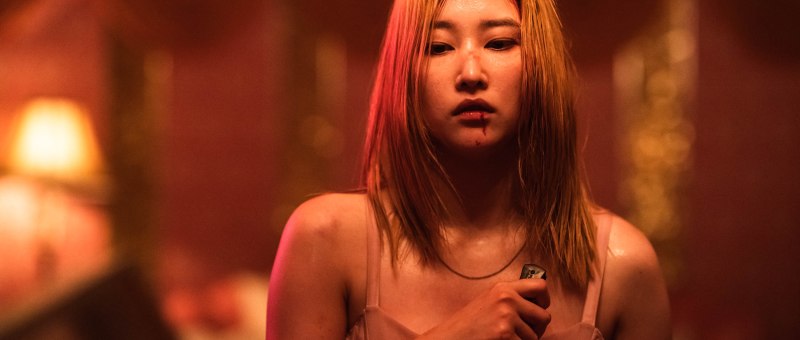
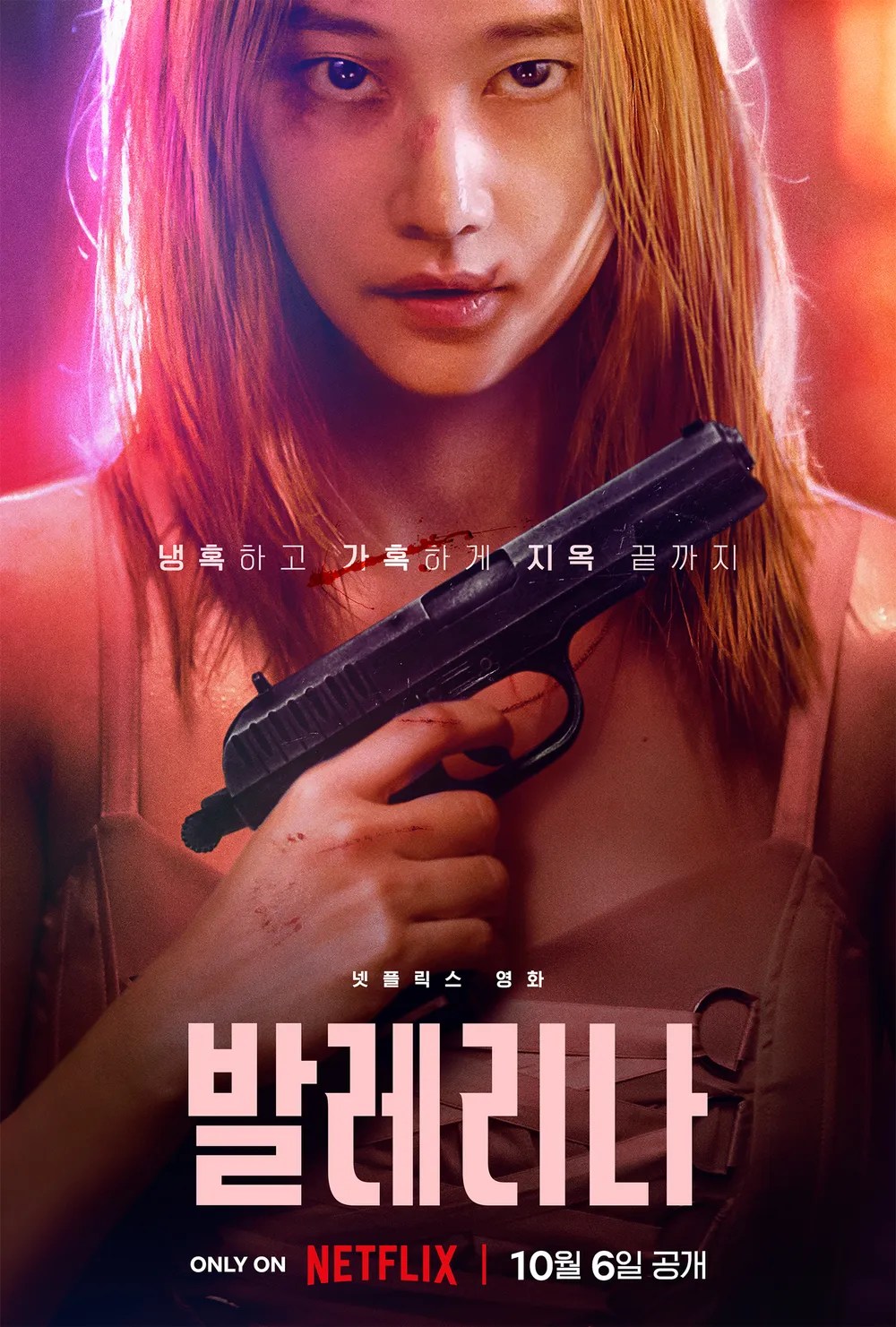
“You’ve blown things way out of proportion,” according to a man who still doesn’t think he’s done anything to deserve dying for. But as his boss told him, though they may exploit women, sell drugs, and kill people, they have rules. Lee Chung-hyun’s pulpy action thriller Ballerina (발레리나) sees a former bodyguard go after the gangster who drugged and raped her friend with the consequence that she later took her own life.

In recent years there have been a series of real life scandals involving women being drugged in nightclubs and sexually assaulted with videos either uploaded to the internet or used as leverage for blackmail often to force women to participate in sex work. Ballerina Min-hee (Park Yu-rim), seemingly the only friend of bodyguard Ok-ju (Jeon Jong-seo), was raped by drug dealer Choi (Kim Ji-hoon) and thereafter quite literally robbed of the ability to dance. Preoccupied with her trauma, she missteps and injures herself ruining her dance career and leaving her with nothing. There is something quite poignant in the fact Choi sells the drugs in the small, fish-shaped bottles that usually house soy sauce in pre-packed sushi given that Min-hee later says that she wants to come back as a fish in her next life and live in the ultimate freedom of the sea. Dance to her seemed to be a means of finding a similar kind of free-floating freedom, but the trauma of Choi’s assault has taken that from her.

Meanwhile, the loss of Min-hee has robbed Ok-ju of something similar. On first re-connecting with her former high school friend, Ok-ju says she worked as some kind of corporate bodyguard but the organisation is clearly larger than that and involved with some additionally shady stuff that suggests her job may actually have involved some sort of spy and assassin work. In any case, it had left her feeling empty as if she were slowly dying inside. Only on meeting Min-hee does she finally start to feel alive again and has apparently left the organisation she was working for in order to live a more fulfilling life though she may not actually have achieved that just yet. There is nothing really to suggest there is anything more between the two women than friendship, though the intensity of Ok-ju’s feelings suggests there might have been.

Even so, there’s more to Ok-ju’s mission than simple revenge as she finds herself taking down the entire organisation in order to make her way towards Choi. She’s aided by another young woman dressed as a high school student (Shin Se-hwi) who looks to her for salvation, explaining that she has a plan, she’s just been waiting for someone like Ok-ju to show up and help her while the former handler Ok-ju turns to in search of support is also a woman making her mission one of female solidarity against ingrained societal misogyny. “You thought we were easy prey,” Ok-ju challenges Choi making it clear that he made a huge mistake though he continues to taunt her about Min-hee and deflect his responsibility insisting that he hasn’t done anything to warrant this kind of treatment because the abuse and trafficking of women is not something he regards as a big deal.

Ok-ju and the girl obviously feel differently. There’s something very satisfying about the way Ok-ju methodically cuts through a host of bad guys without granting them any kind of authority over her. The action sequences are often urgent and frenetic while showcasing Ok-ju’s skills and the lack of them in the male henchmen, but there’s also a fair bit of humour such as her using tins of pineapple to block knife attacks in the convenience store opener. The film indeed has its share of quirkiness such as the geriatric couple who arrive to supply Ok-ju with weapons but mainly have buckets full of revolvers that look like something out of the wild west before grabbing a flamethrower from the back, while the aesthetic also has a stylish retro feel with its purple and yellow colour palette. Pulpy in the extreme, the film’s stripped-back quality provides little background information and keeps dialogue to a minimum but more than makes up for it in its visual language and often beautiful cinematography.


Trailer (English subtitles)
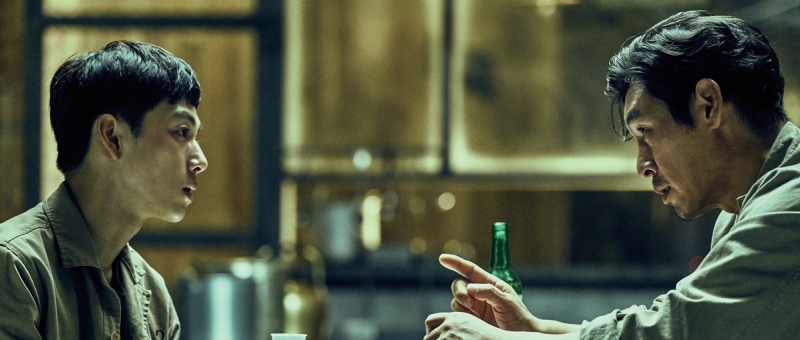
The 12th Suspect (열두 번째 용의자, Ko Myoung-sung, 2019)

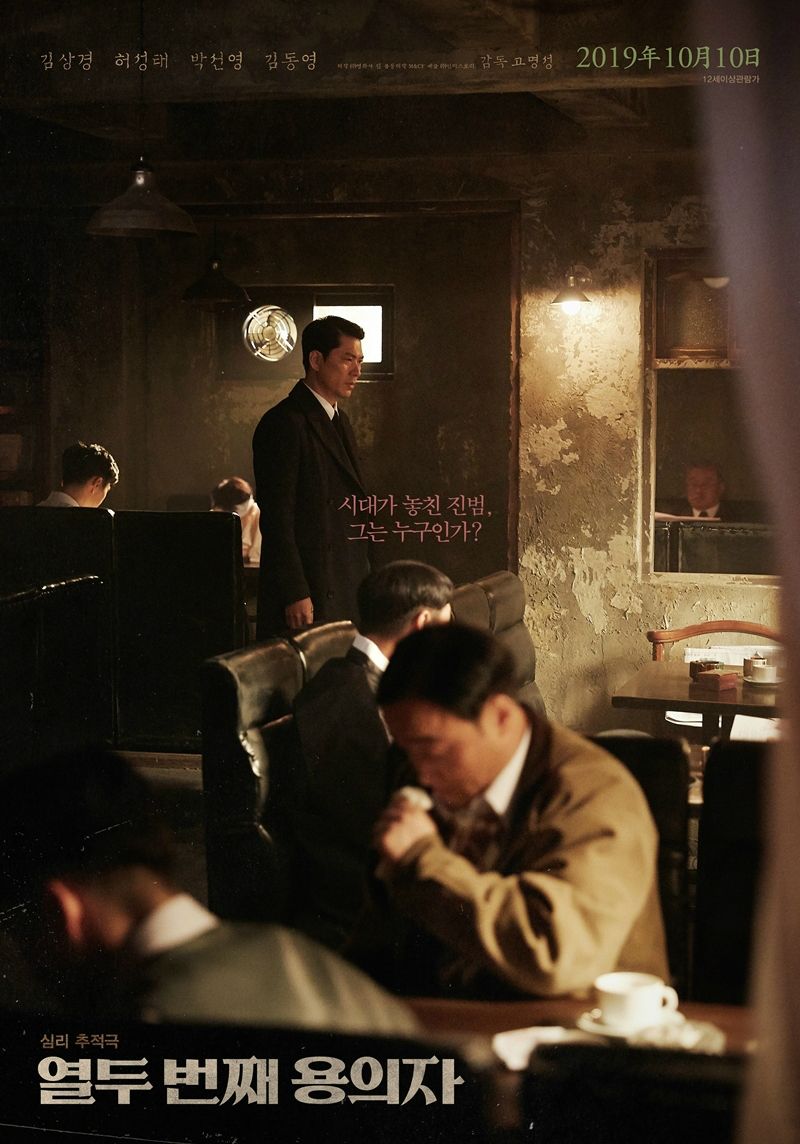
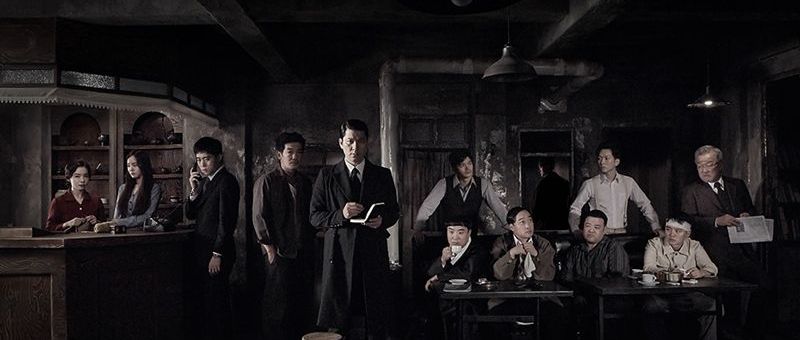
An inspector calls on a small group of artists in the immediate aftermath of the Korean War in Ko Myoung-sung’s taut psychological thriller, The 12th Suspect (열두 번째 용의자, Yeoldu beonjjae Yonguija). Set almost entirely within a tiny tea house, Ko’s steely drama lays bare the contradictions of the new society in slide towards authoritarianism which is itself a product of the failure to deal with the legacy of the colonial past while preoccupied about the “communist” threat in the quite literally divided nation. 

The Oriental Teahouse is home to a collection of poets, painters, and Bohemians seeking refuge from the everyday difficulties of life in the post-war city. Their peaceful idyll is rocked by the revelations that one of their number, Doo-hwan, died on a mountain the previous evening most likely murdered. As it turns out, no one seems to have liked Doo-hwan very much. He was “hateful and ignorant” not to mention a bad poet though many are sceptical of the story wondering if he might simply have had an accident. In any case, the newcomer to the cafe turns out to be a policeman, Ki-chae (Kim Sang-kyung), who confirms that Doo-hwan died of a gunshot wound and sets about asking a series of increasingly intense questions about his relations with the cafe’s denizens. 

To begin with, Ki-chae seems to be a Columbo-like avuncular detective, polite and sympathetic in his questioning until revealing his true purpose at which he turns into something of a firebreathing demon with a very particular vision of “justice”, hunting down “communist spies” in order to keep the South safe. As the murder weapon appears to be a Soviet-issue pistol, he assumes the killer(s) may be linked to the North accusing one of the patrons of having aided and abetted a cousin who was on the other side while throwing a book on Stalin at a university professor who desperately tries to explain that he’s had it since studying in Russia in his youth when times were different. 

Meanwhile, the policeman’s authoritarian sense of justice is gradually exposed as a kind of fascim born of his experiences under Japanese colonial rule. Doo-hwan may have died because of his actions during in the war when he collaborated with Japanese officers agreeing to send young men from his village as conscript soldiers to die for Japan on the frontlines or else as exploited slave labour in the coal mines. Ki-chae is hiding his own dark past while his quest for justice is riddled with corruption masked as patriotism as he vows to wipe out the “communist” threat in order to build a more secure Korea. “The existence of communists is a great misfortune to this country and also a danger” he adds before descending into a violent rage stamping on the face of his interviewee. 

His almost hysterical anti-communism is manifested in a general hatred for the kind of people who frequent the Oriental Teahouse, firstly taking them to task for their lifestyles in a time of chaos and privation while later viewing them as cowardly shirkers evading their duty to go to war. “I won’t let you ruin our country” he snarls while simultaneously embarking on an ill thought through argument that the communists are unfairly benefitting from the dire economic situation to “provoke good people”. He justifies his actions in insisting that everything he does is in order to prevent another “horrible war” while continuing to intimidate them into some kind of confession. His questioning reveals the petty jealousies and minor tensions between the artists along with the unreliability of their testimony while eventually exposing their small acts of resistance, cafe owner Suk-hyeon (Heo Sung-tae) determined to stand up to authoritarianism rather than forever be oppressed by it though others it seems are frightened enough by the potential dangers of rebellion to consider turning on their friends and allies. Locked in the tiny cafe with two soldiers blocking the exit, the artists are cornered and terrified as Ki-chae pits one against the other while all around them the prognosis looks bleak in a society in which men like Ki-chae wield ultimate power controlling the future through burying the past.


Original trailer (English subtitles)

May 18 (화려한 휴가, Kim Ji-hoon, 2007)

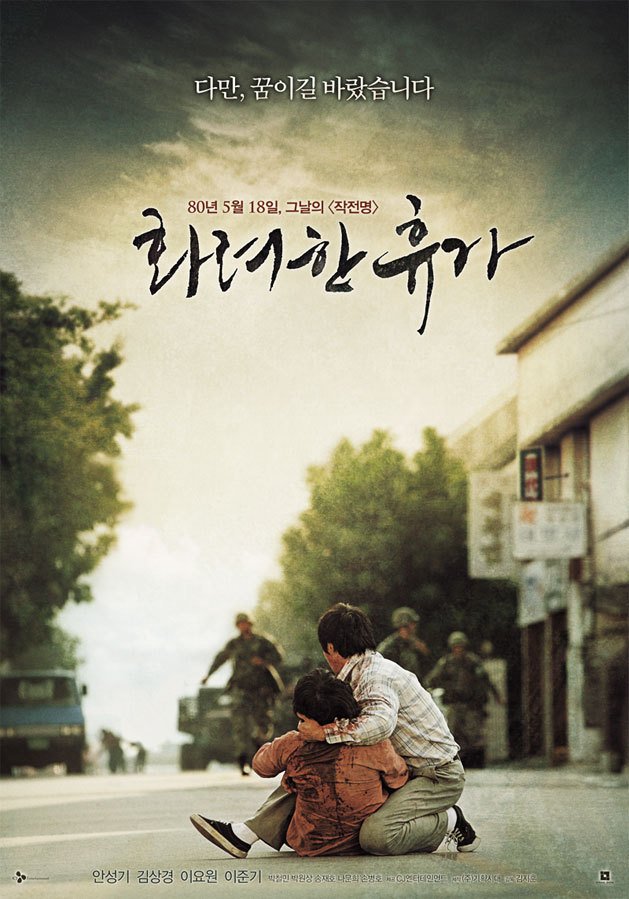
Following the assassination of president Park Chung-hee in 1979, many assumed that democracy would return and that the society would be liberated from its authoritarian past. That did not, however, come to pass. While the government floundered, general Chun Doo-hwan launched a coup that led to nothing other than a second military dictatorship. Citizens continued to press for democratisation and the lifting of the martial law that had been declared in the wake of Park’s death. In order to cement his authoritarian rule, Chun embarked on an oppressive crackdown of resistance activity, actually expanding martial law and sending troops to monitor universities where the majority of protests were taking place.  

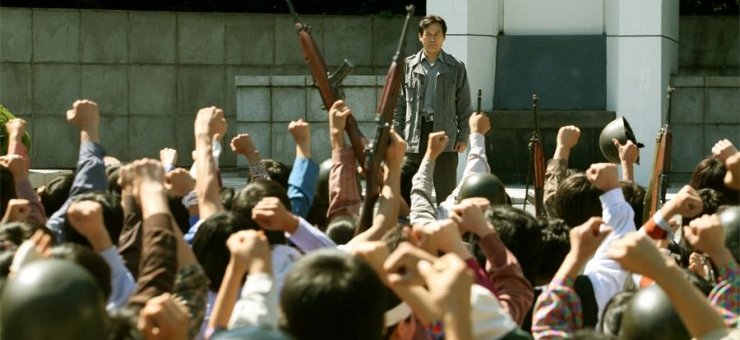
It’s against this backdrop that Kim Ji-hoon’s May 18 (화려한 휴가, Hwaryeohan hyuga) unfolds, so named for the first day of Gwangju Uprising in which citizens of the small provincial city were subject to beatings, torture, rape and murder at the hands of military forces. He opens however with pleasant scenes of the local countryside as taxi driver Min-woo (Kim Sang-kyung) heads back into the city eventually arriving to pick up his younger brother Jin-woo (Lee Joon-gi) from high school and deliver him to the local church. Min-woo also has a crush on mutual friend and fellow attendee, Shin-ae (Lee Yo-won), who works as a nurse at the local hospital. For some reason even though this is a fairly small place, Min-woo also seems to be unaware that Shin-ae is the daughter of his boss Heung-su (Ahn Sung-ki ), a former army captain now retired and running a taxi firm. 

In an attempt to make the political personal, Kim spends the first hour on Min-woo’s awkward romance which by modern standards is quite problematic in that he basically ends up following Shin-ae around and offering to give her free lifts even though she seems annoyed to see him and isn’t keen on him effectively deciding where she doesn’t and doesn’t go. Meanwhile, as he and his brother are orphaned he’s adopted a paternal role towards Jin-woo who is bright and studying hard with the aim of getting into Seoul University to study law while Min-woo most likely had to give up school to drive the taxi so he could support them both. This is also in its way a little uncomfortable in its emphasis on Jin-woo’s bright future which is about to be destroyed by the uprising as if his life is worth more because of all the ruined potential rather than just because he was an ordinary human betrayed by his government and trapped by hellish atrocity. Even so, it hints at a conflict within Min-woo as he wants to keep his brother safe but also has a natural desire to resist injustice and is moved when Jin-woo explains that one of his best friends has been murdered by state violence. 

Then again, the film’s framing is also in a sense reactionary in Jin-woo’s intense offence against being branded as a “rebel” or a “communist” rather refocusing on the fact the military’s actions are inhuman and the their attempt to slur the local people only a means of justification. As the local priest accurately suggests, the military provokes them in order to have an excuse to crack down with extreme prejudice ensuring that there will be no further resistance to increasing authoritarianism. Some army officers begin to ask questions but are quickly shut down by their overzealous commander who claims the North may be on its way to link up with these “communists” and is quite clearly prepared to wipe out the entire town rather than back down and risk a further escalation of their resistance. 

While the soldiers are faceless and implacable, the townspeople are sometimes depicted as naive bumblers with significant time spent on a “loudmouth” comic relief character who is nevertheless one of the first to pick up a gun and join the town’s civilian army led by Heung-su who like the priest is under no illusions and assumes troops will soon storm the town. The comedic tone and melodramatic undercurrent often undercut Kim’s attempts to depict the horror of the massacre even in the irony of their juxtaposition as bullets suddenly rip into a cheerful crowd which had been laughing and joking only seconds before. The closing scenes in which a man refuses to surrender and is killed are framed as heroic but in the end seem futile, as if he’s thrown his life away for no reason. Even so there is something Shin-ae’s loudspeaker pleas to remember the citizens of Gwangju who stayed strong and resisted to the last rather than consent to their oppression even if she is in a sense condemned to be the storyteller bearing the horror of it all alone along with the loss of her own happy future crushed under the boots of violent authoritarianism.


International trailer (English subtitles)

The Roundup: Punishment (범죄도시 4, Heo Myeong-haeng, 2024)

There’s a moment in the fourth instalment of the Roundup series when monster cop Seok-do’s boss asks him what good his fists are in the age of cyber crime. More so than in previous episodes, Punishment (범죄도시 4, Beomjoedosi 4) seems to lean hard into the idea that Seok-do iMa Dong-seok) is a dinosaur stuck in the 1970s and unable to understand the modern world. He’s a bruiser cop in an era of supposedly compassionate policing, a thug sent to catch a thug. Yet he’s also presented, as is actually said by his superior officer, as everything a good cop should be in his determination to nail the bad guys to keep a promise to a murder victim’s devastated mother.

But as in the previous films, the victim largely gets forgotten until the very end when Seok-do and his colleagues pay a visit to his grave. Set in 2018, the film is apparently inspired by a real life case and in an echo of the kinds of explanatory title cards seen at the end of Chinese films, ends with a reminder that the government began cracking down on cybercrime in that year. Reminiscent of anti-gambling drama No More Bets, the victim here is also a computer programmer effectively enslaved after being lured to the Philippines on a promising job offer only to be forced to work on casino websites by organised crime. Seok-do is mostly concerned with catching the bad guys rather than exposing this nefarious practice or its effects on those who fall victim to its addictive gambling scam. 

In any case, a running joke sees Seok-do once again cast as a dinosaur apparently unable to grasp simple concepts of modern technology. “Right, we’ll go get it before it closes, then,” he replies when informed the villains used “open source software”. He thinks syncing to the cloud means a crowd of people will come help you set up your phone and he never replaces his because it’s a bother to put in all those numbers into your contacts again. The team end up having to recruit a new team member from cybercrime, the only woman in the room which comes in handy when they need her to pose as the girlfriend of familiar comic foil Jang Yi-soo (Park Ji-hwan) who is tricked into thinking he’s been deputised with a shiny badge that looks like it fell out of a serial packet and has the telltale letters FDA at the top which Seok-do convinces him stands for Police Dark Army.

Despite all the thuggery, there’s something essentially childlike about Seok-do’s roguishness that sees him delight in playing a trick on Jang Yi-soo. After wrecking the first class cabin of a soon to depart plane, he walks off sheepishly like naughty little boy ignoring his boss’ frantic calls to come back and explain himself. In this instalment, we get less of the overt references to police brutality with one brief scene of Seok-do putting a motorbike helmet on a suspect and beating him over the head while his colleague keeps watch outside as we peek in through the widow. To remind us he’s still the good neighbourhood cop, we see several scenes of him visiting a restaurant run by the widow of a colleague killed in the line of duty and secretly slip his teenage daughter wads of cash to buy something nice for herself. 

What it all amounts to is a slightly awkward advocation for the police who are directly stated to be always there to protect the citizens and catch criminals who harm them even if they do It abroad. To this extent, Seok-do is a good cop literally smacking some sense into bad guys because it turns out his giant fists can fight “digital” crime after all and there’s no denying that it does feel good to see Ma Dong-seok smack bad guys. The action scenes this time around are visceral and surprisingly bloody not to mention loud with the sound of Ma’s thunderous fists flailing around. The film’s distinctly retro sensibility is echoed in the ‘70s score which seems to hark back to an era of maverick cop movies about men like Seok-do who keep order on the streets while Seok-do himself seems increasingly like a man out of time, a throwback to a bygone era perhaps uncomfortably romanticised in the quasi-authoritarian sensibility which seems to underpin it.


Festival trailer (English subtitles)

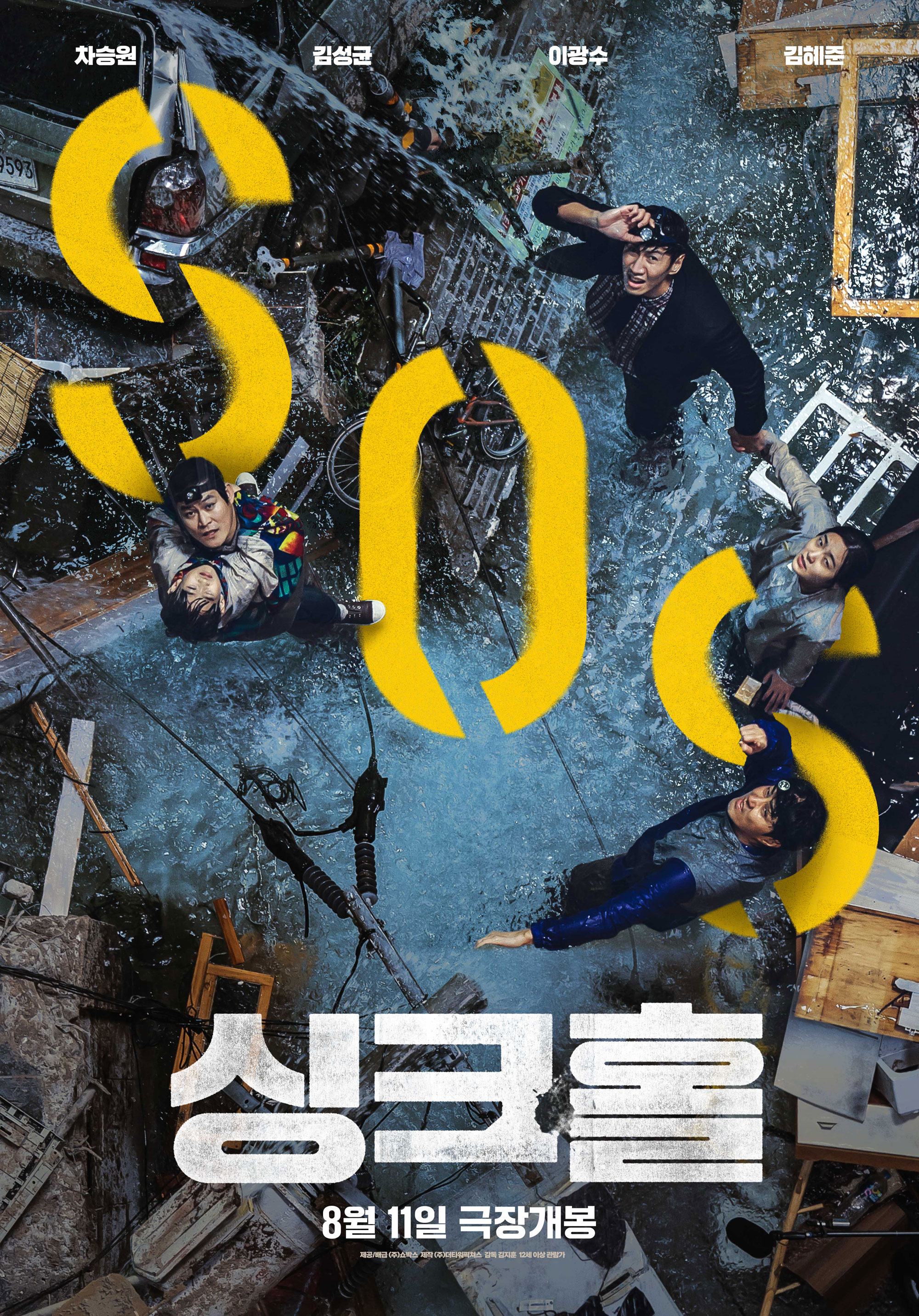
Sinkhole (싱크홀, Kim Ji-hoon, 2021)

Financial security is built on shaky ground in Kim Ji-hoon’s harrowing disaster dramedy Sinkhole (싱크홀) in which one man’s home-owning triumph quite literally crumbles beneath his feet. The latest in a recent series of movies lamenting the sometimes lax safety culture of the Korean construction industry, Sinkhole is also a crushing indictment of a society ruled by house prices in which social status is largely defined by the owning of property while the young in particular struggle to climb out of a deep well of societal despair. 

As the film opens, the Park family is about to move in to their new flat, the first they’ve ever owned albeit with a frighteningly large mortgage, in the middle of a seasonal downpour. Only when they arrive, they discover the movers haven’t even started unloading because their apparently irresponsible neighbour Man-su (Cha Seung-won) has inconsiderately parked his car in front of the entrance and isn’t answering his phone. Patriarch Dong-won (Kim Sung-kyun) ends up in an awkward confrontation with the abrasive apartment dweller which is inconvenient because Man-su apparently works in just about every business in the area which means he continues to run into him just about everywhere he goes. 

Anyway, that’s the the least of his problems because, having made this giant investment, Dong-won can’t help thinking there’s something wrong with his new dream home especially when his adorably polite young son Su-chan points out that his marbles roll across the floor of their own accord. Worried they may have a subsidence problem, Dong-won checks his windows open properly and records evidence of ominous cracks in the pavement outside but struggles to get the other residents to agree to maintenance checks in fear that not getting the answer they want will bring down the value of their property. 

Property prices are apparently everything. Homeownership is an unobtainable dream for many, yet Dong-won already feels insecure in his purchase especially as his colleagues seem relatively unimpressed by the fact his flat is in a recently gentrified area and comparatively modest. Bamboozled into hosting a housewarming, he’s mildly embarrassed to realise the view from his balcony is of nicer, much more expensive luxury flats just across the river which are likely to remain far out of his reach. Nevertheless, his colleague, Seung-hyun (Lee Kwang-soo) declares himself jealous in part because he’s still renting a studio flat and feels that dating let alone marriage is impossible without being in a position to get a multi-room apartment. His colleague Eun-ju (Kim Hye-jun) is in the same predicament but prefers to see it as simply being at a certain stage on the ladder.  

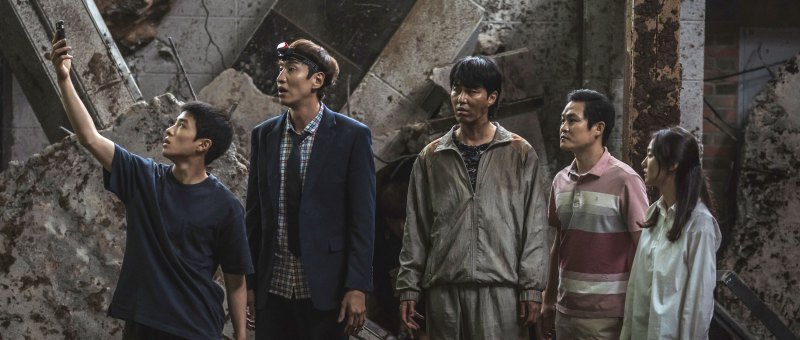
This dream of future security is however quite literally built on shaky ground. There are definitely problems with Dong-won’s new apartment which become increasingly severe from the tilting floors to cracked glass and interruptions with the water supply presumably caused by cost-cutting and shoddy construction practices. When the building collapses into a sinkhole, Dong-won is trapped inside with work colleagues Seung-hyun and Eun-ju along with Man-su and his teenage son Seung-tae (Nam Da-reum). Despite the inherent horror of the situation, Kim keeps the atmosphere light as the small band of survivors attempts to manage as best they can, finding an awkward solidarity while trying to attract the attention of the emergency services and eventually making a daring escape using whatever tools are available to them. 

Even so, as much as the small band of almost strangers bond thanks to their desperate circumstances, there is an uncomfortable conservatism at play especially in the film’s treatment of a working class single mother and her son living in an apartment on the floor below Dong-won’s. That aside, Sinkhole offers a fierce criticism of an increasingly consumerist society in which house prices are all anyone talks about and homeownership is the only badge of social success. 11 years of patient sacrifice is swallowed in an instant, sucked into an abyss of corporate malfeasance, while Dong-won is left to climb out of the hole he’s in on his own. It’s small wonder that some of the survivors decide to drop out of the system altogether, ditching the idea of rooted homeownership for nomadic freedom in buying a small caravan rather than participate in the property market or climb the corporate ladder. “Don’t be happy in 10 years, be happy today!” they enthusiastically chant. The entire society is, it seems, sitting on a sinkhole which might give any minute, what’s the point in investing in a future which could disappear from beneath your feet without reason or warning? 


Sinkhole screened as part of this year’s New York Asian Film Festival.

International trailer (English subtitles)

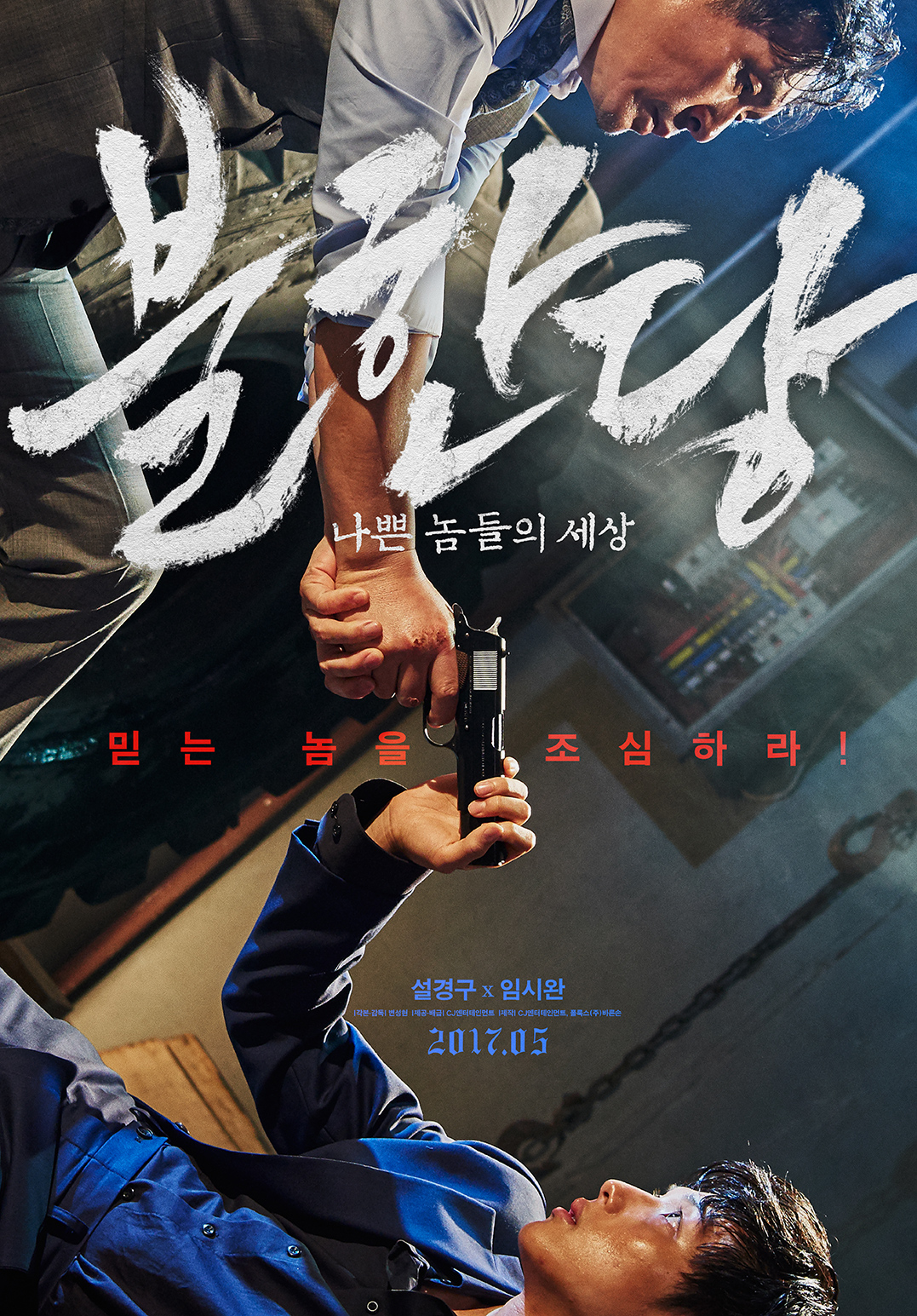
The Merciless (불한당: 나쁜 놈들의 세상, Byun Sung-hyun, 2017)

merciless posterHeroic bloodshed is alive and well and living in Korea. The strange love child of Na Hyun’s The Prison, and Park Hoon-jung’s New World, the first gangster action drama from Byun Sung-hyun (previously known for light comedies), The Merciless (불한당: 나쁜 놈들의 세상, Boolhandang: Nabbeun Nomdeului Sesang) more than lives up to its name in its noirish depiction of genuine connection undercut by the inevitability of betrayal. Inspired as much by ‘80s Hong Kong cinema with its ambitious, posturing tough guys and dodgy cops as by the more immediate influence of the seminal Infernal Affairs, Byun’s brutal tale of chivalry is, as he freely admits, an exercise in style, but its aesthetics do, at least, help to elevate the otherwise generic narrative.

That would be – the complicated relationship between young rookie Hyun-su (Im Siwan) and grizzled veteran Jae-ho (Sol Kyung-gu). Hyun-su proves himself in prison by besting current champions bringing him to the attention of Jae-ho – the de facto prison king. Sharing similar aspirations, the pair form a tight, brotherly bond as they hatch a not so secret plan to take out Jae-ho’s boss, Ko (Lee Kyoung-young), leaving Jae-ho a clear path to the top spot of a gang engaged in a lucrative smuggling operation run in co-operation with the Russian mob and using the area’s fishing industry as an unlikely cover.

We’re first introduced to Jae-ho through reputation in the film’s darkly comic opening scene in which Ko’s resentful, cowardly nephew Byung-gab (Kim Hee-won), has a strange conversation with a soon to be eliminated colleague. Byung-gab says he finds it hard to eat fish with their tiny eyes staring back at you in judgement. He admires Jae-ho for his ice cold approach to killing, meeting his targets’ gaze and pulling the trigger without a second thought.

Jae-ho is, indeed, merciless, and willing to stop at nothing to ensure his own rise through the criminal underworld. He will, however, not find it so easy to pull that trigger when he’s staring into the eyes of sometime partner Hyun-su. Neither of the two men has been entirely honest with the other, each playing a different angle than it might at first seem but then caught by a genuine feeling of brotherhood and trapped in storm of existential confusion when it comes to their individual end goals. Offering some fatherly advice to Hyun-su, Jae-ho recites a traumatic childhood story and cautions him to trust not the man but the circumstances. Yet there is “trust” of a kind existing between the two men even if it’s only trust in the fact they will surely be betrayed.

Byun rejoices in the abundance of reversals and backstabbings, piling flashbacks on flashbacks to reveal deeper layers and hidden details offering a series of clues as to where Jae-ho and Hyun-su’s difficult path may take them. Truth be told, some of these minor twists are overly signposted and disappointingly obvious given the way they are eventually revealed, but perhaps when the central narrative is so fiendishly convoluted a degree of predictability is necessary.

The Merciless has no real political intentions, but does offer a minor comment on political necessity in its bizarre obsession with the fishing industry. The police know the Russians are involved in drug smuggling and using the local fishing harbour as a front, but as fishing rights are important and the economy of primary importance they’d rather not risk causing a diplomatic incident by rocking the boat, so to speak. The sole female presence in the film (aside from Hyun-su’s sickly mother), determined yet compromised police chief Cheon (Jeon Hye-jin), is the only one not willing to bow to political concerns but her methods are anything other than clean as she plants seemingly vast numbers of undercover cops in Jae-ho’s outfit, only to find herself at the “mercy” of vacillating loyalties.

Heavily stylised, Byun’s action debut does not quite achieve the level of pathos it strives for in an underwhelming emotional finale but still manages to draw out the painful connection between the two anti-heroes as they each experience a final epiphany. An atmosphere of mistrust pervades, as it does in all good film noir, but the central tragedy is not in trust misplaced but trust manifesting as a kind of love between two men engulfed by a web of confusion, betrayal, and corrupted identities.


Screening as part of the London Korean Film Festival 2017 at Regent Street Cinema on 3rd November, 6.30pm. The Merciless will also screen at:

and will be released by StudioCanal on 13th November.

International trailer (English subtitles)


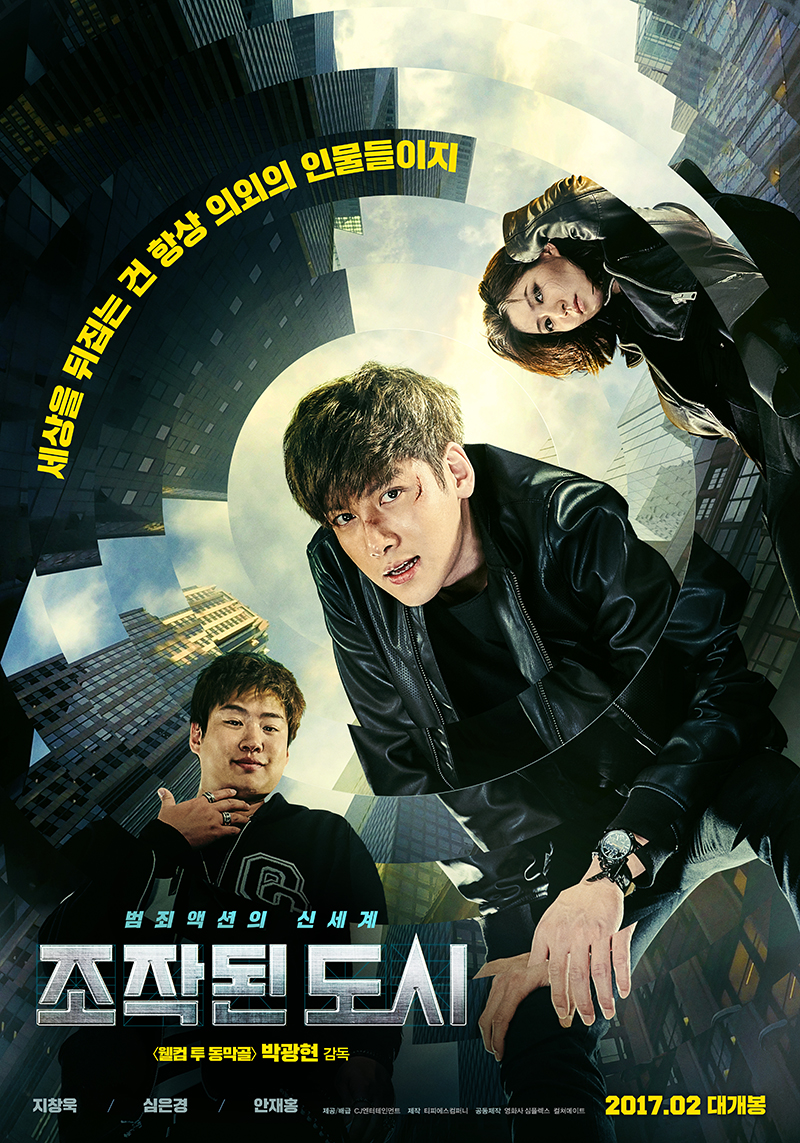
Fabricated City (조작된 도시, Park Kwang-hyun, 2017)

fabricated cityThe real and the unreal. In the era of fake news, it’s become ever harder to draw a clear line between the two but when you live online, the borders are even more permeable. Twelve years after the wartime comedy Welcome to Dongmakgol, director Park Kwang-hyun finally makes a return to the director’s chair with an action packed cyberpunk thriller which joins the ranks of recent Korean films bemoaning the country’s hardwired tendency to social inequality where the rich and powerful are free to run roughshod over the merely ordinary. Fabricated City (조작된 도시, Jojakdwen Doshi) refers to more than just the literally manufactured online world, but to the social reality in which unseen forces govern and define the lives of others, operating in secret behind a government backed curtain.

Kwon Yoo (Ji Chang-wook) was once a national athlete – a rising star of the Korean Taekwondo team. Starting fights when he wasn’t supposed to put paid to that dream and now Kwon Yoo is an aimless wastrel. Too sad and ashamed to have anything more to do with Taekwondo, Kwon Yoo spends all his time in gaming cafes, living a more successful life online. In his favourite game he’s known as the Captain, and the dashingly heroic leader of his party known as Resurrection.

One evening someone leaves their phone behind. It rings and Kwon Yoo answers it. Irritated, he’s about to hang up on the frantic sounding woman who wants him to bring the phone to her but her offer of money changes his mind. Kwon Yoo delivers the phone but the whole thing seems weird especially as the door was open and the woman in the shower when he arrived. Next thing he knows, Kwon Yoo is arrested for a brutal rape and murder. The police have a lot of evidence against him, and so Kwon Yoo winds up in jail where he’s branded a sex offender. Luckily a crazed serial killer realises this kid is no killer and helps him get out whereupon his loyal Resurrectionists valiantly come to the aid of their Captain in the real world, exposing the impressive fit up job that got him put away in the first place.

The deeper Kwon Yoo and his team dive the more corruption they discover. Kwon Yoo is not the only innocent sacrificed for someone else’s grand plan, there are others and the pattern is disturbing. Like Kwon Yoo, the other victims are usually people living on the margins – ones that no one would miss or the uncharitable might say were “unnecessary”, lives that can be exchanged for those of the rich and famous finding themselves in a fix. Kwon Yoo’s fate becomes an extreme version of that meted out to the young men and women of Korea unlucky enough to have been born without wealth, connections, or familial status – expendable and condemned to live without hope.

The fabricated city, in its more literal sense is the online world Kwon Yoo and his team have chosen and in part created for themselves in an attempt to escape the aspects of their lives and personalities which most disappoint them. Kwon Yoo, kicked off the Taekwondo team, has made a warrior hero of himself online, backed by a similarly escapist squad he doesn’t really know. His saviour turns out to be a shy computer genius who can only bear to talk via telephone even when in the same room yet has broken out of her self imposed isolation in order to save the life of her online friend. Other members of the team follow suit bearing similar backstories, attempting to live up to their fantasy selves for real with varying levels of success. Yet the fantasy world was all they had, locked out of all means of escape or advancement by the rigid social codes which make their present predicament possible, even if the fact remains that Kwon Yoo was doing a pretty good job of wasting his life all on his own.

Fabricated City’s biggest selling point is in its unusually well developed production design which takes its cues from the video game world with fantastical images from a prison carved into a mountain to the relatively more familiar cyberpunk influenced technological hybridity as floors become giant computer screens and everything really does exist online. Jumping genres from the classic wrong man to prison drama and eventually techno thriller, Fabricated City bites off more than it can chew but its well choreographed action and typically Korean sense of subtly ironic humour help to smooth over some of the film’s more outlandish moments.


Fabricated City was screened at the 19th Udine Far East Film Festival.

International trailer (English subtitles)

Missing (미씽: 사라진 여자, E Oni, 2016)

missing posterSince ancient times drama has had a preoccupation with motherhood and a need to point fingers at those who aren’t measuring up to social expectation. E Oni’s Missing plays out like a Caucasian Chalk Circle for our times as a privileged woman finds herself in difficult circumstances only to have her precious daughter swept away from her just as it looked as if she would be lost through a series of social disadvantages. Missing is partly a story of motherhood, but also of women and the various ways they find themselves consistently misused, disbelieved, and betrayed. The two women at the centre of the storm, desperate mother Ji-sun (Uhm Ji-won) and her mysterious Chinese nanny Han-mae (Gong Hyo-jin) are both in their own ways tragic figures caught in one frantic moment as a choice is made on each of their behalves which will have terrible, unforeseen and irreversible consequences.

Ji-sun is a busy woman. Recently divorced from her philandering doctor husband, Ji-sun is in the middle of a nasty custody battle over her daughter, Da-eun, which she has technically already lost though refuses to concede. Seeing as Ji-sun is barely ever at home (and when she is, she’s often still working), Chinese nanny, Han-mae is on hand to help her out. Han-mae’s Korean is imperfect, but she’s good with Da-eun and seems to have the knack for calming both the little one and her mum.

Other than the custody battle heating up as Ji-sun’s mother-in-law is intent on getting her grand-daughter away from her son’s awful former wife, Ji-sun’s life was functioning pretty well, all things considered. When she comes home one day and realises Han-mae and Da-eun aren’t around she’s a little put out but assumes they’re just delayed, have stopped off with friends, or are off somewhere having a lovely time without her. When they haven’t comeback by nightfall Ji-sun starts to worry.

Missing does its best not to judge either of the women. Though there is the subtle criticism of Ji-sun’s parental absenteeism, it’s largely manifested through her own feelings of guilt and fear as she’s placed in the difficult position of unexpected, middle-aged single parenthood. Divorced from her cold-hearted, selfish, lothario of a husband, Ji-sun would have needed to get a high paying job and maintain a middle class lifestyle to have any hope of keeping her daughter though the need to maintain both of those things would necessarily mean that she won’t be able to spend a lot of time with her child. Torn between the need to prove she can support herself alone and the need to play a fuller role in her daughter’s life, Ji-sun is understanably squeezed from both ends and left with little choice about any of it.

The problems both she and Han-mae face are those of an inherently sexist and intolerant society which forces them to prove themselves as women and judges them harshly when it believes they’ve deviated from the expected course. Ji-sun’s bosses make overtly sexist comments towards her, exclaiming that this is why they “don’t like employing mothers”, the police don’t want to believe her kidnap story because she’s just another hysterical woman, and her ex-husband knows he can take their daughter simply because he’s a man with a good job and a ready home.

Han-mae’s life has been darker and crueller, though hers is a greater struggle as she finds herself in an even lower status through being non-Korean and having poor language skills. Language skills are something she’s actively been denied in order to keep her from trying to escape a life of serfdom but in any case Han-mae’s prospects are not good. Ji-sun’s investigations take her to some very dark places as she searches for her child and begins to understand the reasons why she was taken. As a mother, as woman, and as a human being it is impossible to not to understand why Han-mae’s story ends the way it does, but it’s also impossible to not acknowledge a degree of unwittingly complicity in her ongoing suffering.

The last scene brings us unwelcomely back to that early debate surrounding the true mother and the unbreakable bond between a parent and a child, solving a complex problem neatly and smoothing it over with the gloss of emotion. Early on in the courtroom, Ji-sun says she’d do whatever it it took to keep her daughter, even run away with her if she had to. Later she says so again to a shady guy in a police cell who has more idea of what “anything” might mean, but Ji-sun was already doing quite a lot for Da-eun in running herself ragged just for the right to be near her. Neither Ji-sun or Han-mae were in any way at fault in the series of events which brought them to this point, a decision was made for them which was to have terrible, irreversible consequences. The two women are victims of the same oppressive social codes, but life is very different for each of them and if Ji-sun had been guilty of anything at all it was a blinkered way of living in which women like Han-mae are a barely visible presence except when needed to fulfil their allotted role.


Reviewed as part of a series of teaser screenings for the London Korean Film Festival 2017 the next of which, Queen of Walking, takes place at Regent Street Cinema on 22nd May 2017 at 7.30pm.

Original trailer (English subtitles)